How the Brain Processes Music
How the Brain Processes Music — an illustrated stories story. 10 illustrated pages, free to read on Wonder Books.
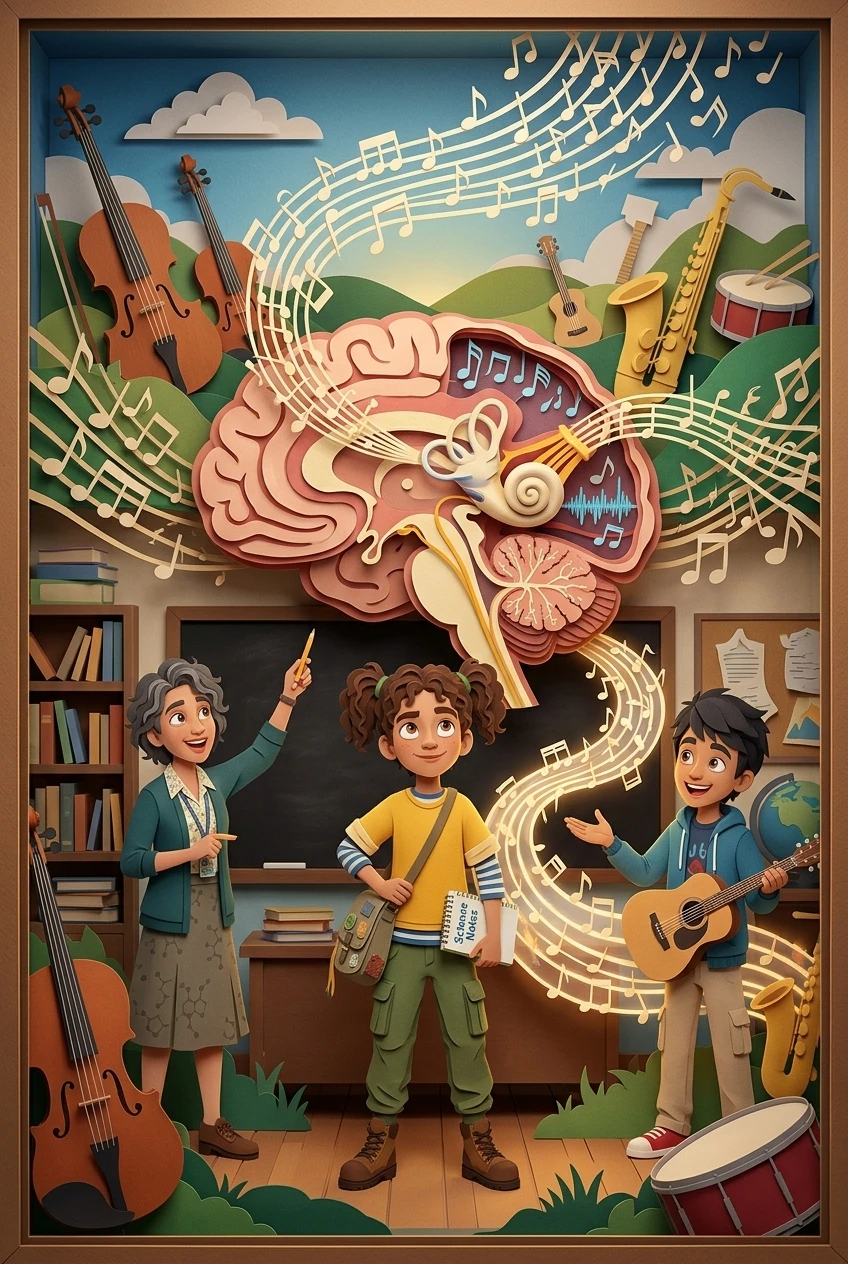
Page 1
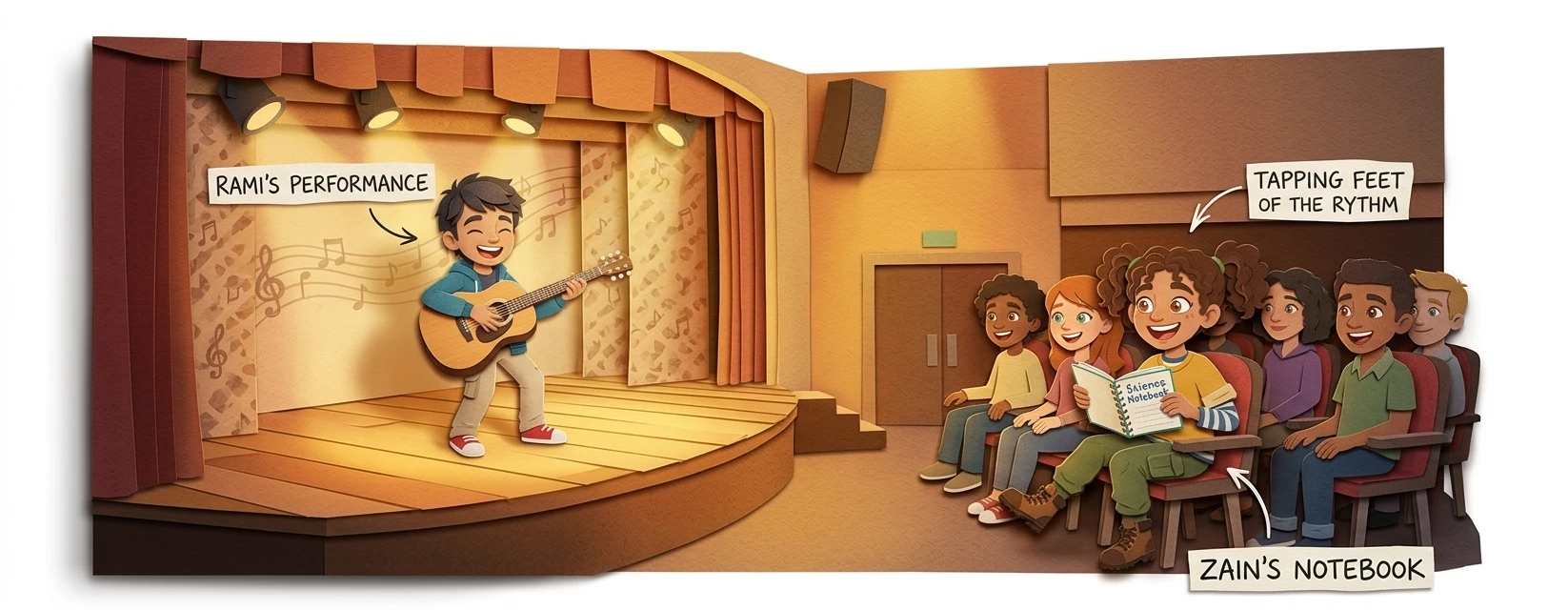
In the bustling auditorium of Everett Middle School, Zain watched her friend Rami strum a fast, joyful tune on his guitar for the talent show. The powerful rhythm made her tap her feet, a huge smile spreading across her face. "Wow, Rami, that was amazing!" Zain exclaimed as he took a bow. "But why does a fast song make me want to dance, and a slow song makes me feel so calm?"
Page 2
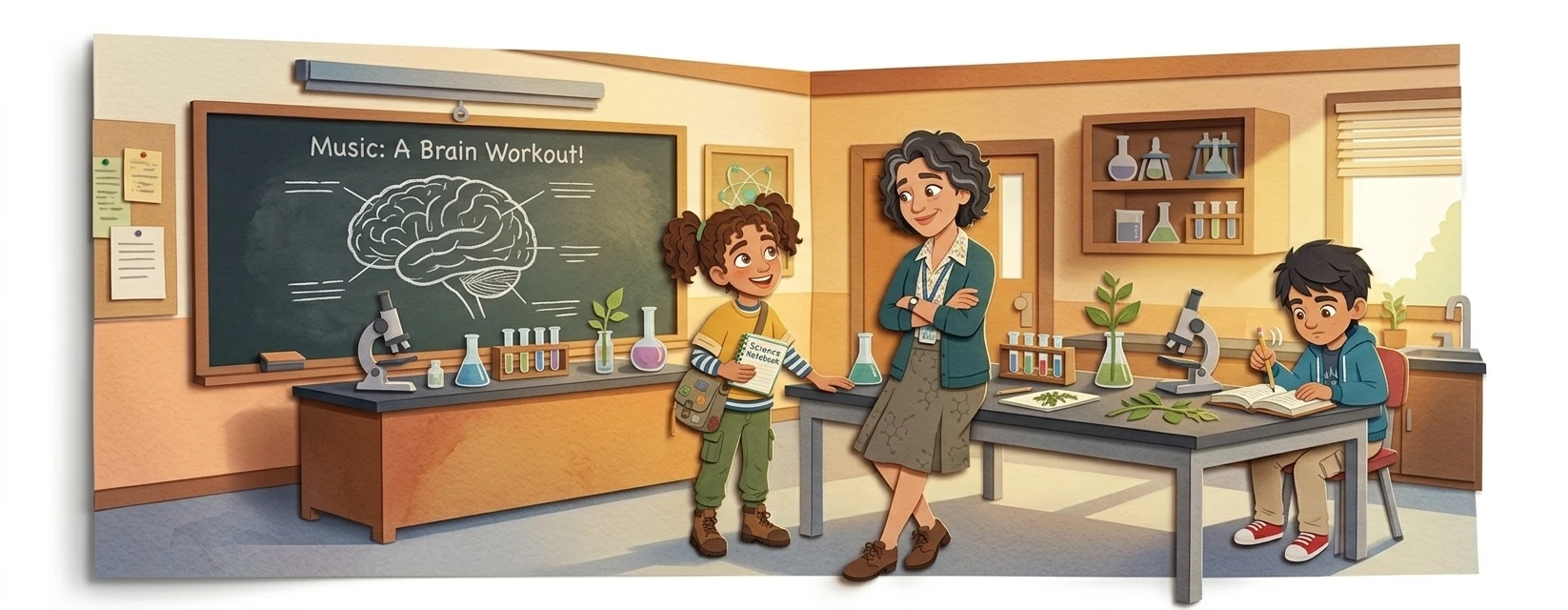
Later, in their science classroom, Zain asked their teacher, Camila, the same question. "That's a fantastic question, Zain," Camila said, leaning against a lab table. "It's because music is like a full workout for your brain, engaging many different parts at once, not just your ears." Rami tapped a pencil on the table, creating a beat. "So my brain is basically a rhythm machine?"
Page 3
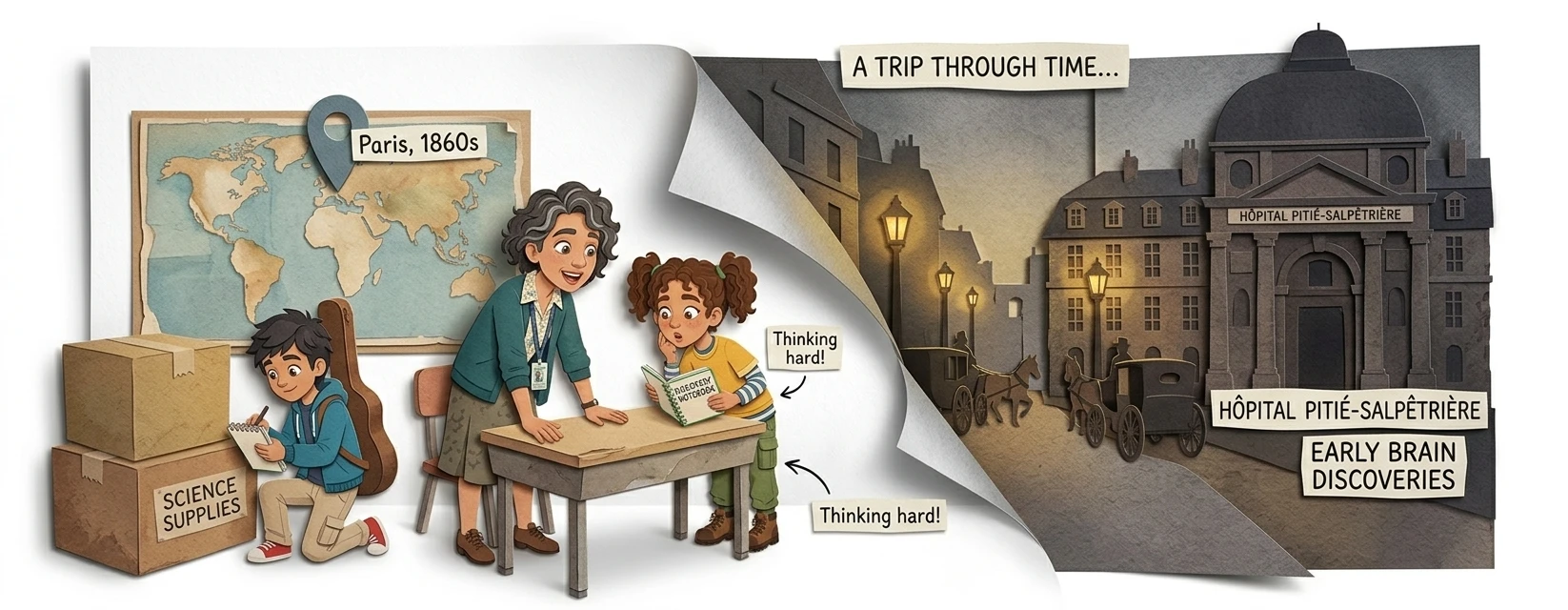
"To understand how, we have to go back to Paris, France, in the 1860s," Camila explained, as the classroom scene seemed to fade away. "Scientists were just beginning to realize that the brain wasn't one big lump of tissue. They suspected different parts had different jobs, but they couldn't prove it." Zain imagined the gaslit streets and the clatter of horse-drawn carriages outside a large stone hospital.
Page 4
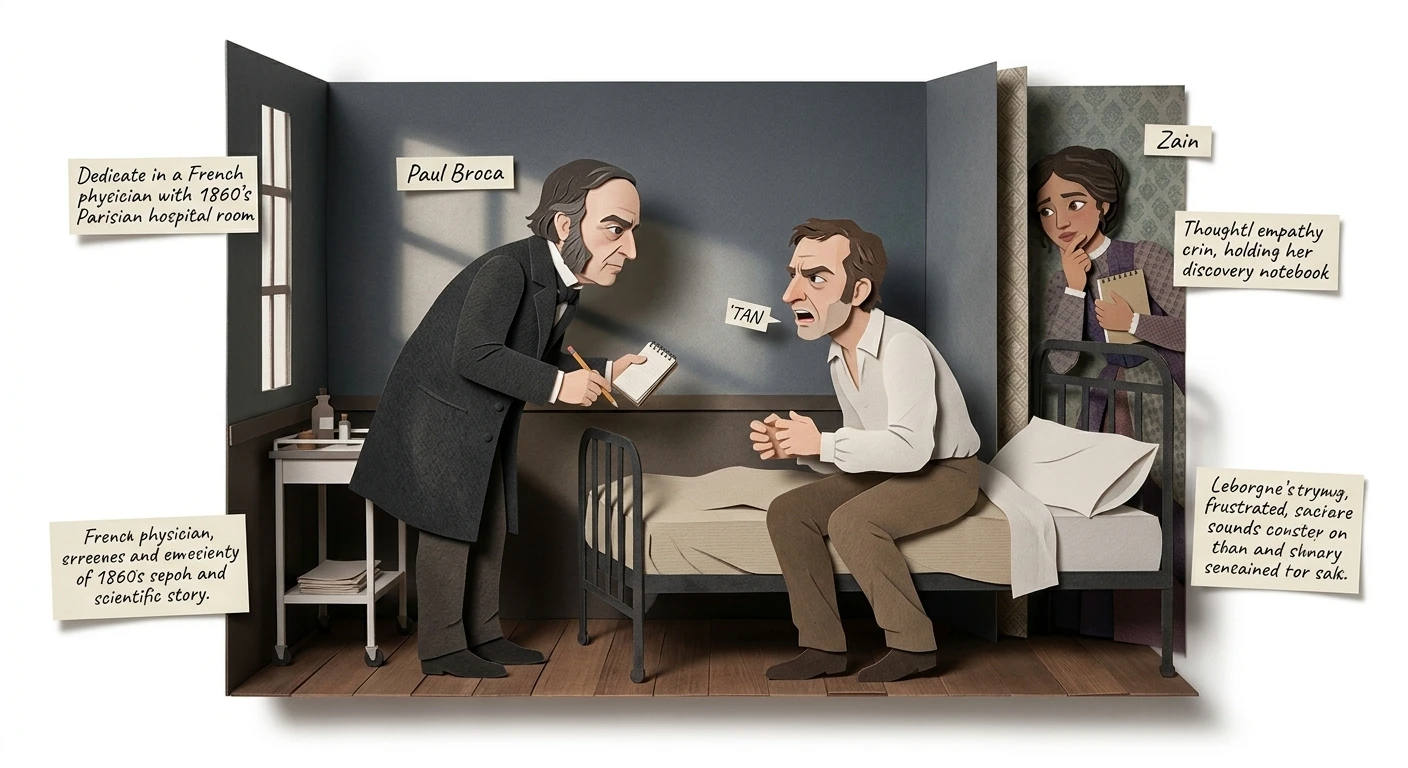
"A French physician named Paul Broca was working there, and he was fascinated by patients who had lost their ability to speak," continued Camila's voice-over. "He met one man who could understand everything but could only say a single word: 'Tan'." Broca spent countless hours with this patient, trying to solve the mystery locked inside his mind.
Page 5
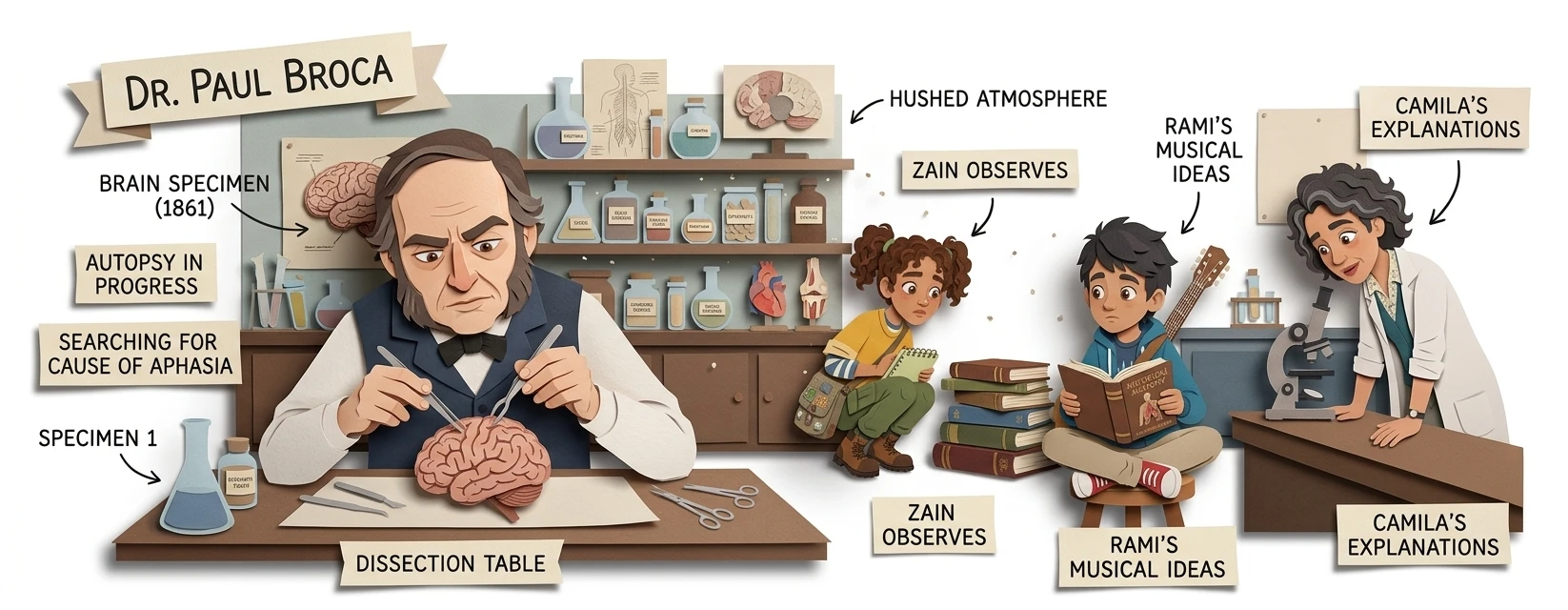
"After the patient, Leborgne, passed away, Broca performed an autopsy, which was a new and vital tool for science," Camila's voice explained. "He carefully examined the brain, searching for a clue, a physical reason for the man's lost speech." Zain imagined the intense quiet of the laboratory, the weight of the moment hanging in the air.
Page 6
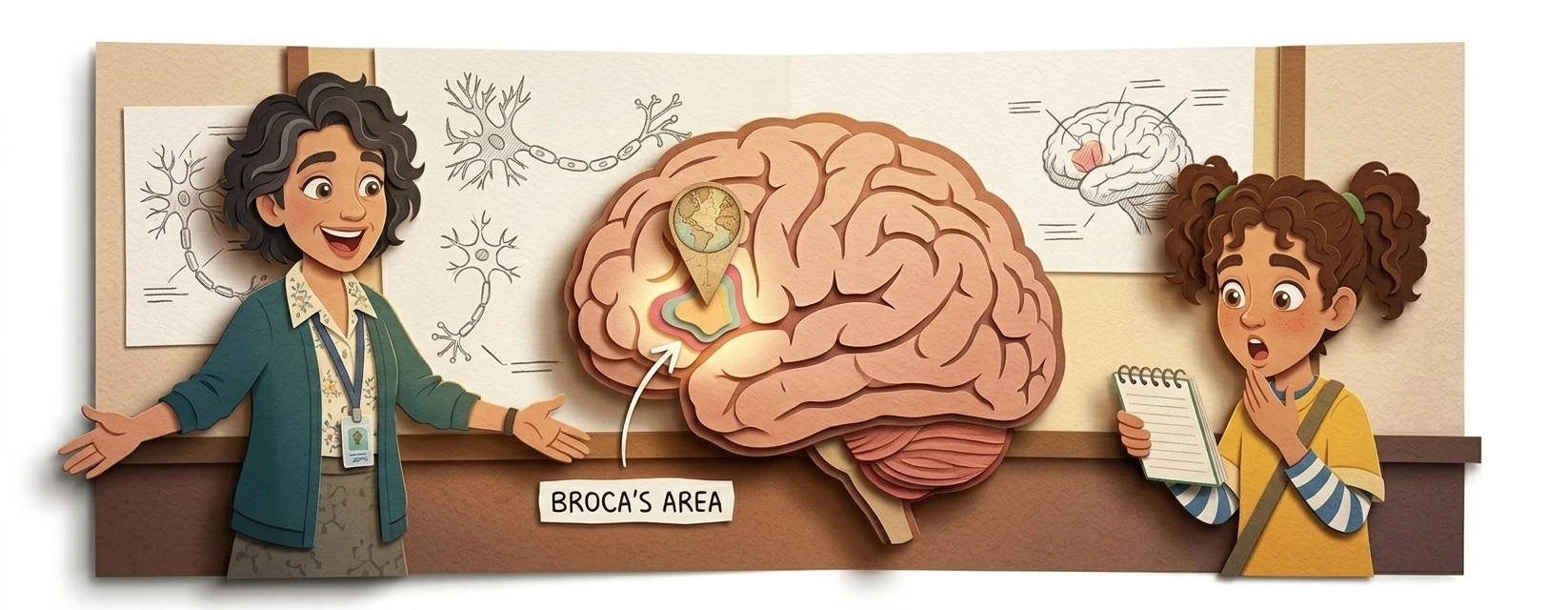
"And then he found it!" Camila declared. "A specific, damaged area in the front part of the brain's left side. Broca realized this one tiny spot was the center for producing speech." This was the first solid proof that a complex function like language lived in a specific physical place in the brain. "He'd put a pin in the map of the human brain!"
Page 7
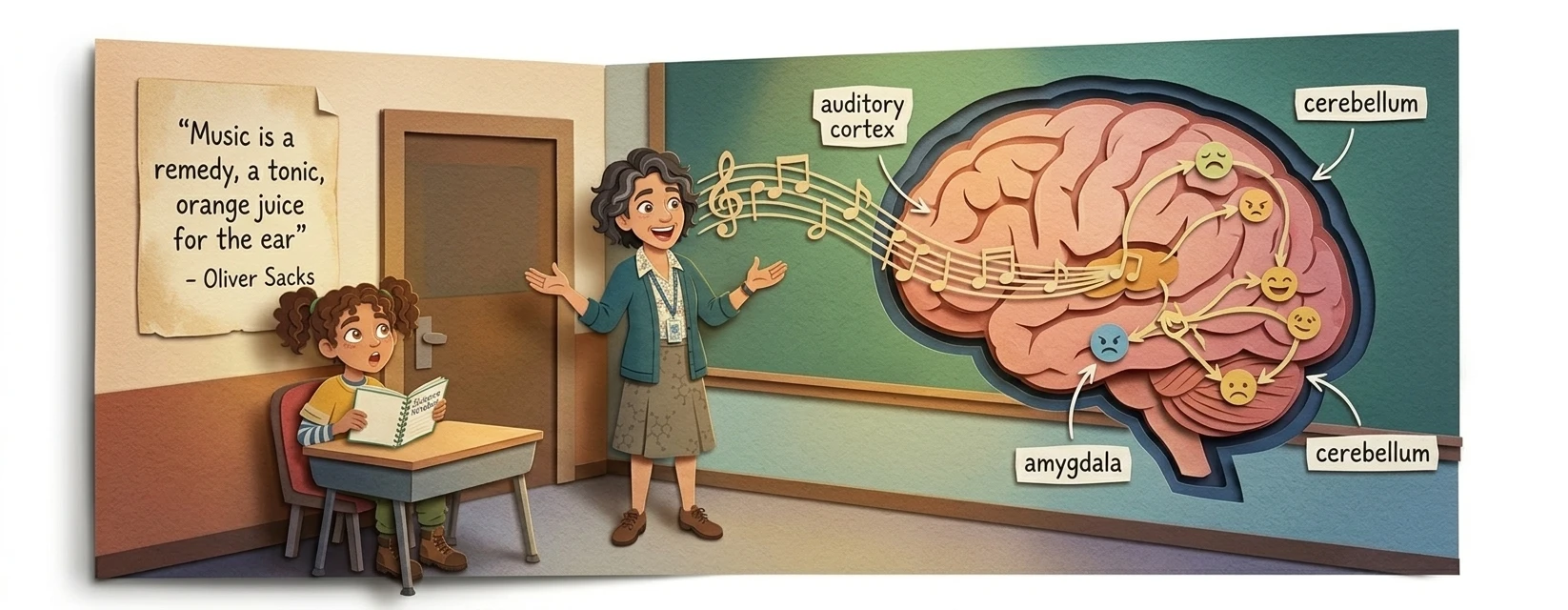
"Broca's discovery opened the floodgates!" Camila said, her voice full of excitement. "Scientists then found the 'auditory cortex' for hearing, the 'cerebellum' for rhythm, and the 'amygdala' for emotion. Music lights up all these areas, which is why it can make you dance or even make you cry." Zain remembered what the neurologist Oliver Sacks once wrote, whispering, "'Music is a remedy, a tonic, orange juice for the ear.' He meant it literally!"
Page 8
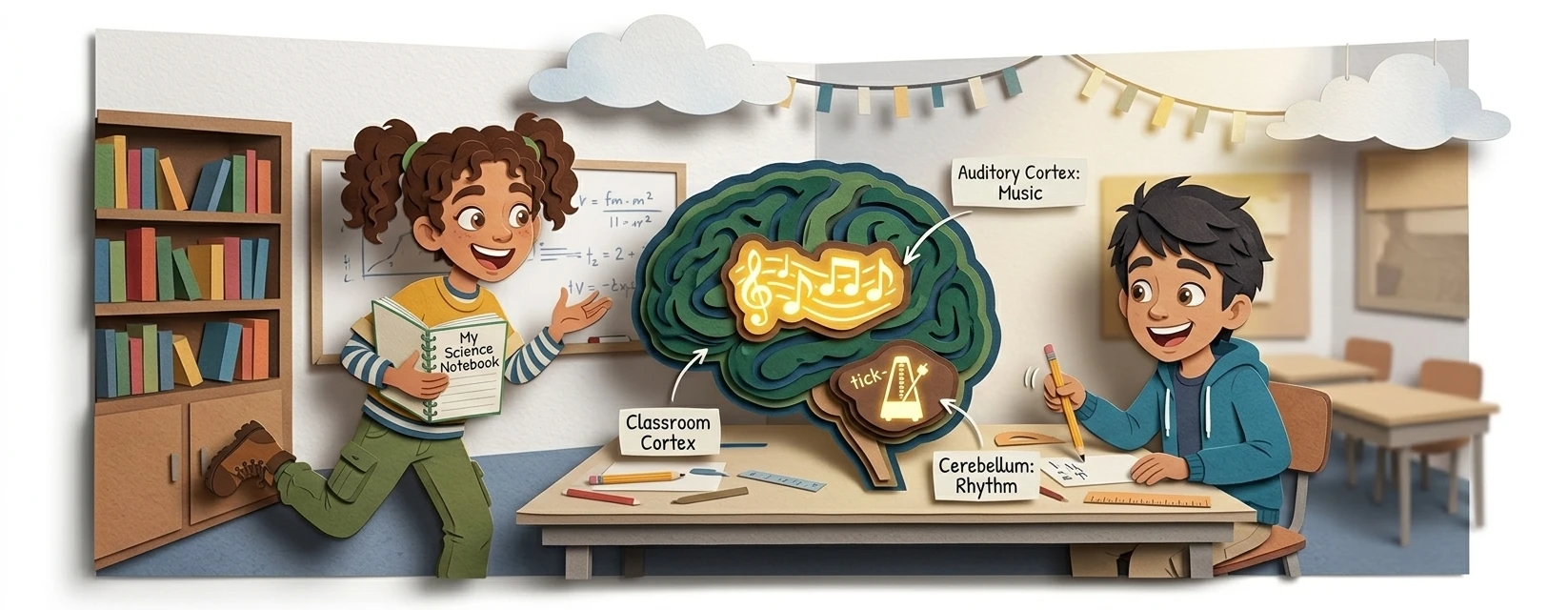
Back in the classroom, Zain turned to Rami, her eyes wide with understanding. "So when you play that fast song, my auditory cortex processes the notes, but my cerebellum is what locks onto the beat!" Rami grinned, tapping his pencil again. "So my guitar is talking directly to your cerebellum! It's like your brain has its own built-in metronome."
Page 9
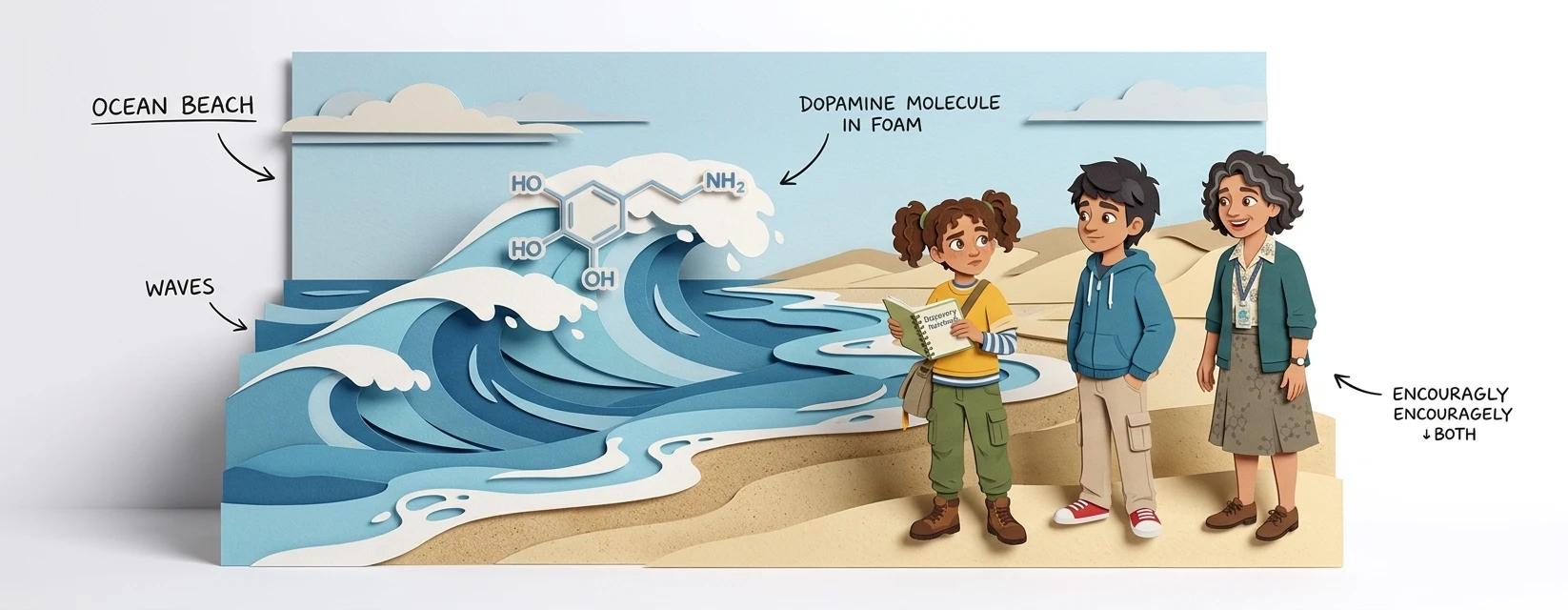
That afternoon at Ocean Beach, the three of them watched the waves crash onto the shore. "The rhythm of the ocean... I bet that's processed by our cerebellum, too," Rami said thoughtfully. "Exactly!" said Camila. "And that peaceful feeling you get is your brain releasing a chemical called dopamine, the same one you get from a good meal or a hug."
Page 10
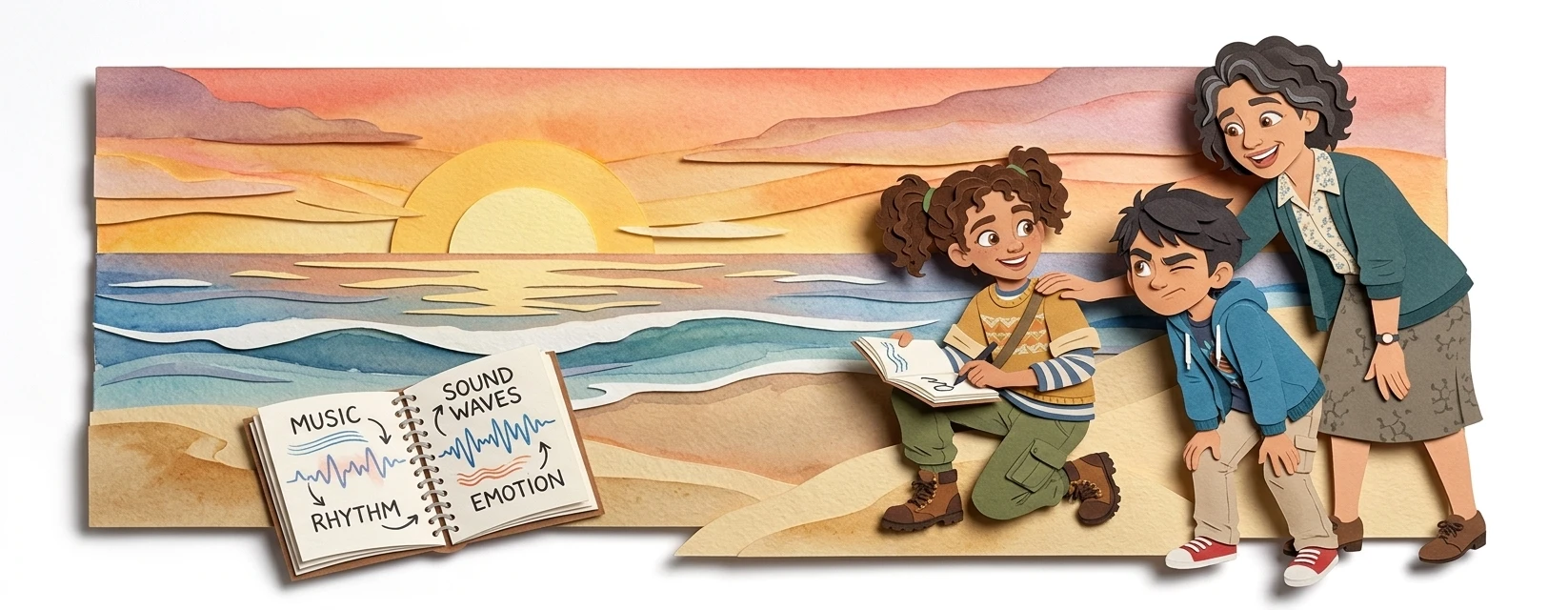
Zain looked from the waves to her friends. "So music isn't just one thing, it's a full-brain workout that connects sound, rhythm, and emotion!" She finished her note with a flourish. Rami squinted at the setting sun, a new question forming. "If our brains are so good at processing sound waves from music, how do they process the light waves that let us see a sunset?"
About this story
- Audience: kids (ages 6–12)
Questions and answers
Read Wonder Books on your phone
Wonder Books is available on Android and iPhone and iPad. Get Wonder Books on Google Play · Get Wonder Books on the App Store.