The Colossi of Memnon
The Colossi of Memnon — an illustrated history story. 10 illustrated pages, free to read on Wonder Egypt.
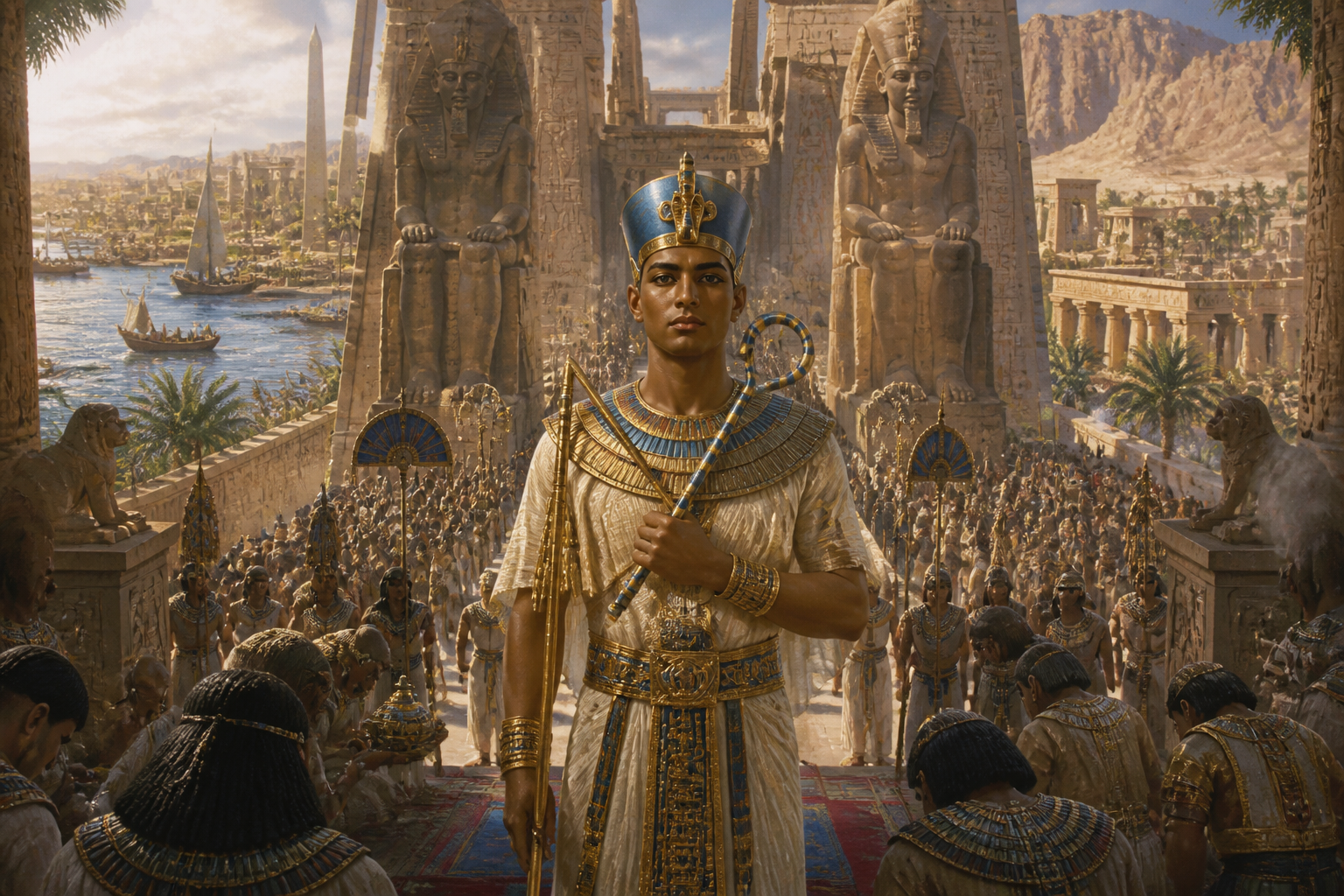
Page 1 — Guardians of the Sands
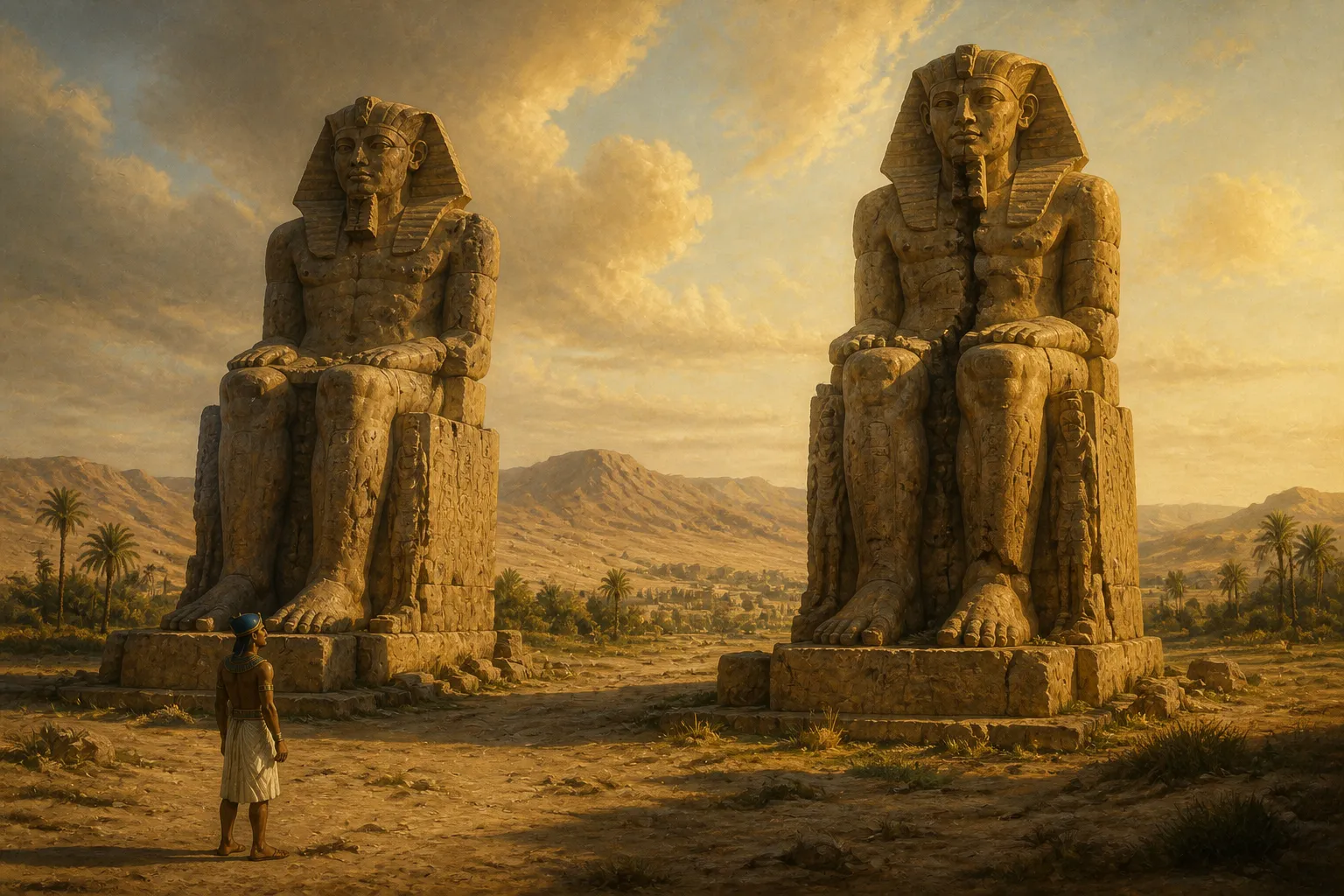
The Colossi of Memnon, towering guardians of the Theban sands, rise majestically against the desert landscape. Crafted from enduring quartzite, their surfaces gleam under the penetrating sun, a vestige of their past magnificence. Standing eighteen meters tall, these sentinels once heralded the entrance to the Mortuary Temple of Amenhotep III, a complex that once rivaled Karnak in its grandeur. Visitors of antiquity would have approached with reverence, viewing the statues as both art and protectors. The earthquake-ravaged northern colossus, known for its melodic murmurs at dawn, contrasts with its silent southern twin, undisturbed through millennia. The temple complex that sprawled here three millennia ago has vanished, leaving only these monumental giants to whisper the stories of a civilization's zenith and decline.
The winds of time have carried our voices far.
Page 2 — Echoes of the Earthquake
In the year 27 BC, the northern Colossus of Memnon transformed into an acoustic marvel due to a catastrophic earthquake. This natural disaster fractured the mighty statue, enabling it to emit an ethereal, melodic sound each dawn, drawing throngs of intrigued travelers from across the Mediterranean. Ancient Greeks believed the sound to be the lament of Memnon, a son of Eos, mourning his tragic fate. This belief turned the site into a revered pilgrimage destination, merging myth with geological curiosity. Esteemed geographer Strabo recorded this phenomenon, ensuring it resonated beyond the confines of ancient empires, a blend of history and mythology immortalized in stone.
Strabo remarked, 'I have heard the sound that springs from the statue at dawn.'
Page 3 — The Emperor's Restoration
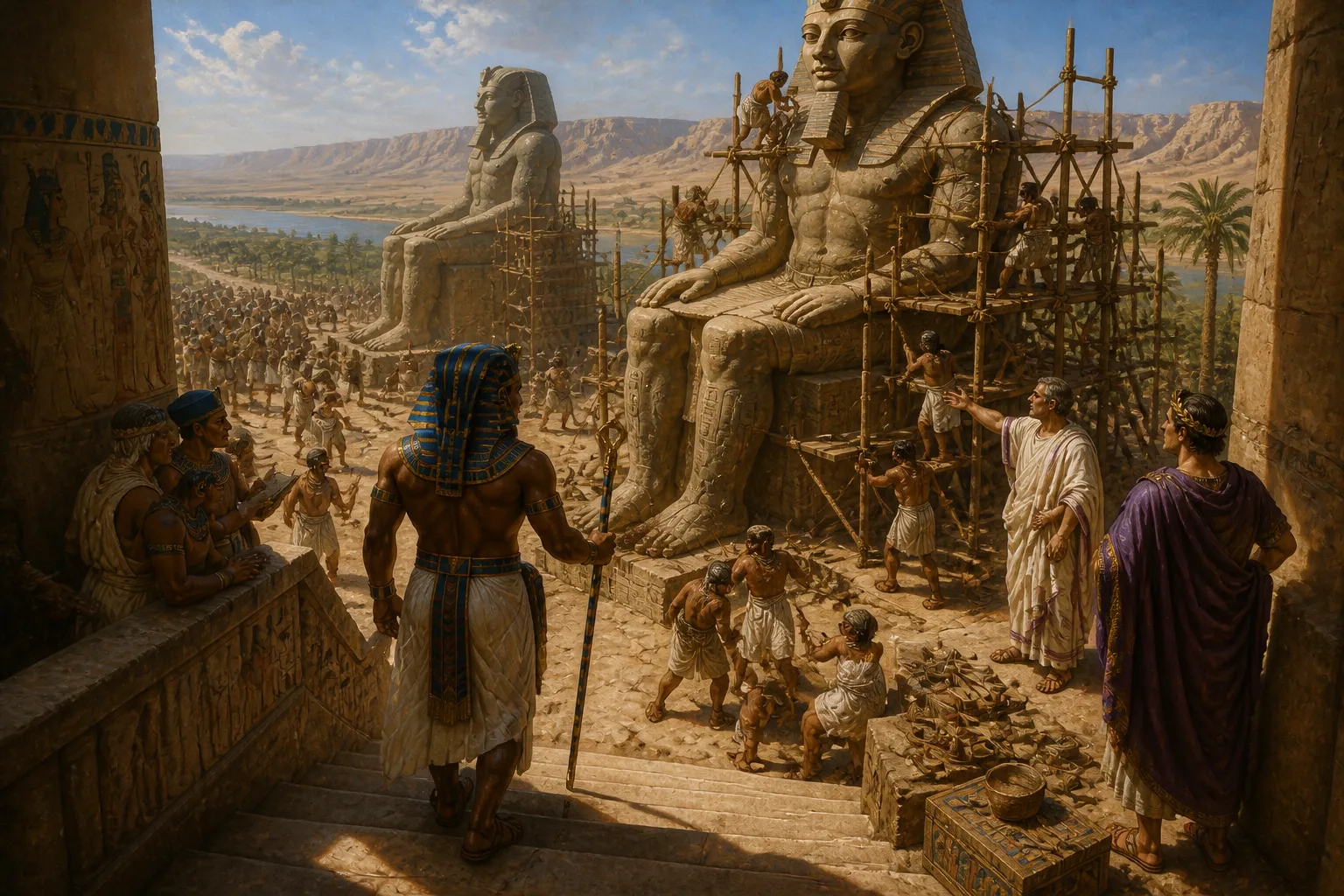
In AD 199, when the Roman Emperor Septimius Severus visited the Colossi of Memnon, he was profoundly moved by the statues' splendor and the mystical song of the northern giant. His engineers, tasked with restoring these monumental relics, sealed the fissures, inadvertently silencing the dawn chorus forever. This restoration ended a legendary era, shifting the focus of visitors from the auditory spectacle to the silent majesty of stone. Despite the lost music, Severus's intervention preserved these ancient sentinels against further decay, carving his legacy into their history. His name, alongside many others, remains etched as a testament to admiration transcending time.
Severus declared, 'Let these giants stand as testament to Rome’s might and respect for history.'
Page 4 — Legacy in Stone
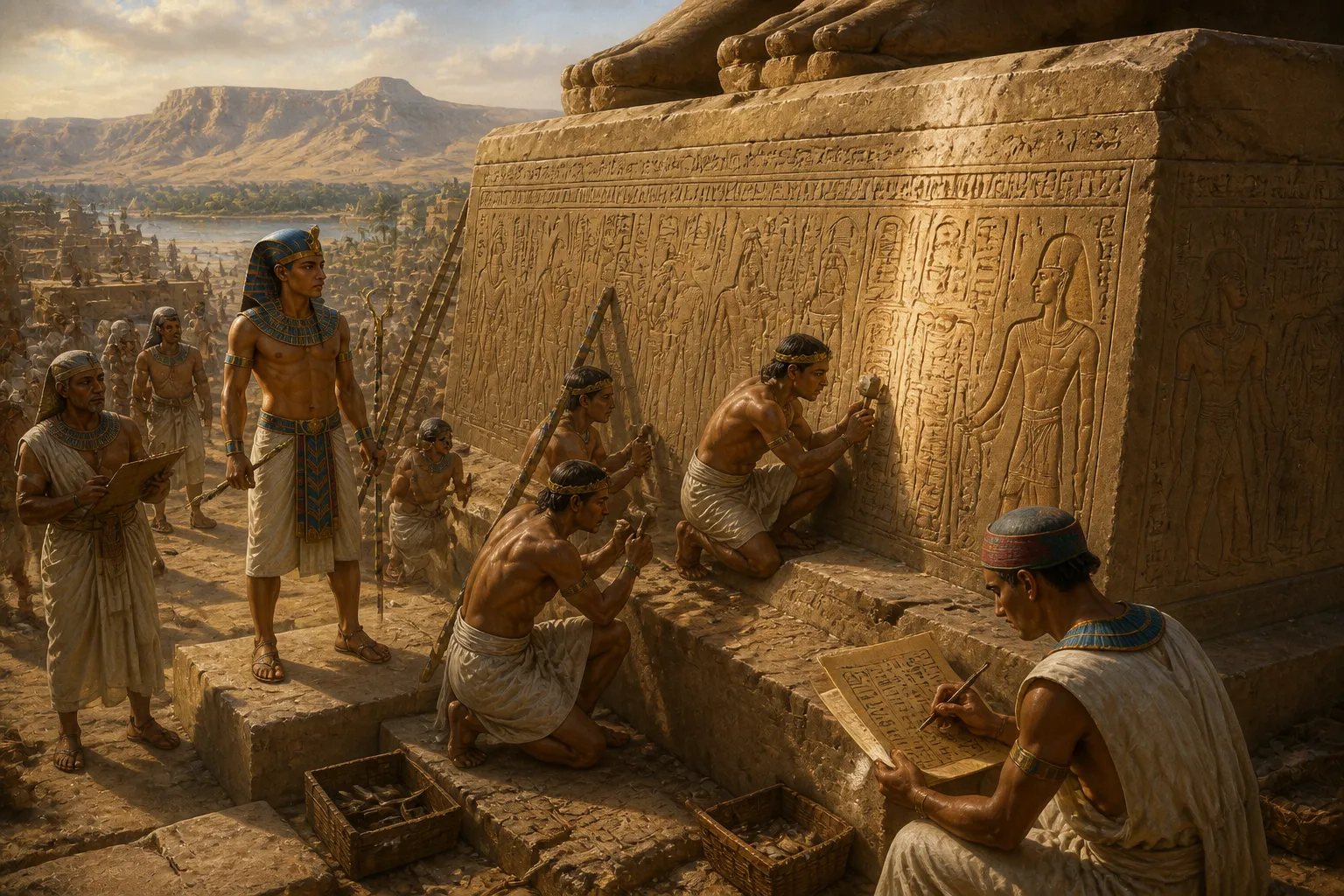
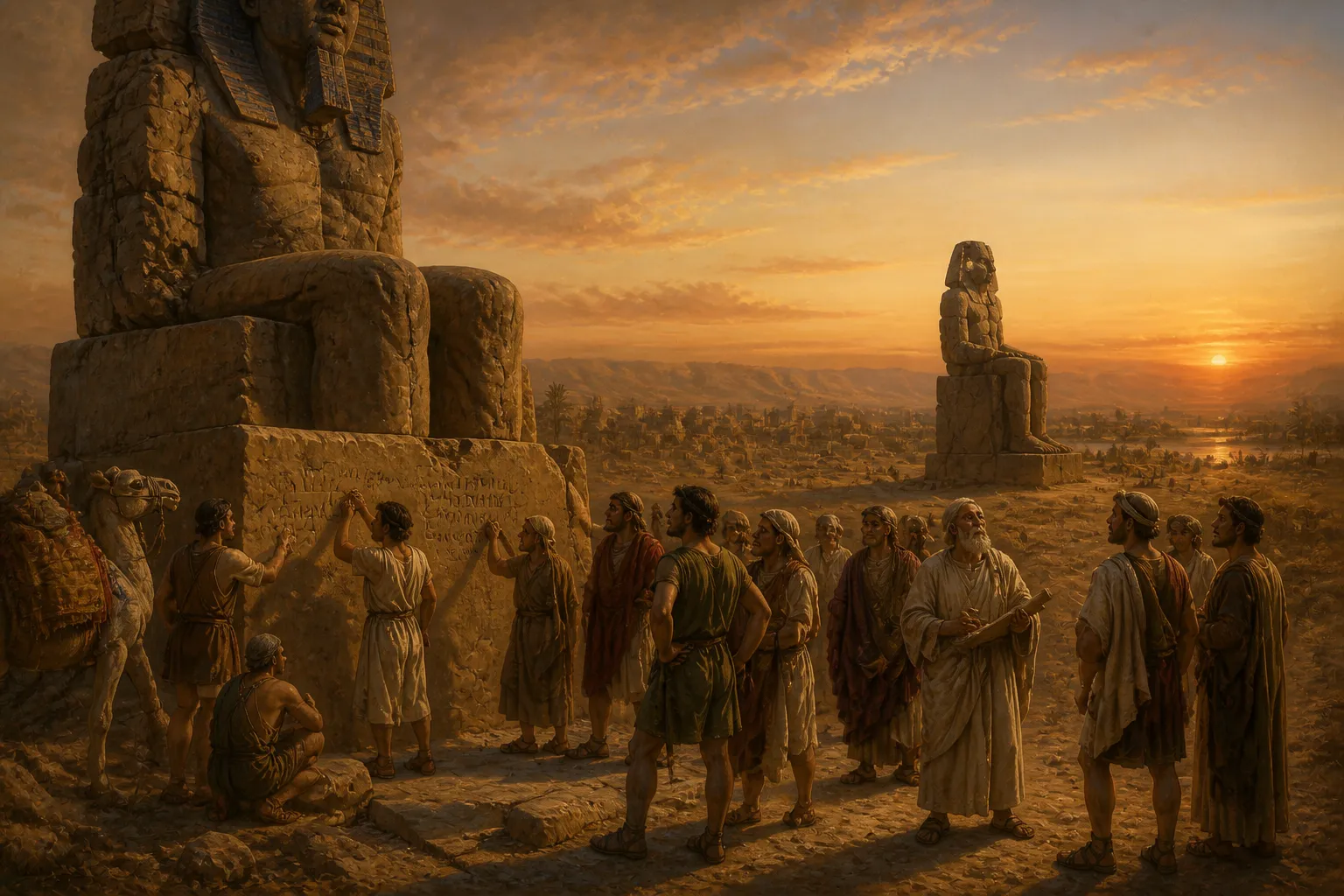
The bases of the Colossi of Memnon are etched with a tapestry of ancient graffiti left by Greek and Roman tourists. These inscriptions offer a portal to the past, where travelers immortalized their awe and reverence for these once-singing statues. Lines of Greek and Latin text weave stories of wit and wonder, capturing personal narratives that intersect with broader historical moments. These engravings, now preserved as historical records, speak to the cultural exchanges at this crossroads of civilizations. Here, at this monumental site, Egypt's enduring legacy continues to fascinate, fueled by human curiosity and the desire to leave a mark on history.
A Greek traveler etched: 'We heard the music of Memnon; our souls are forever marked.'
Page 5 — The Temple That Was
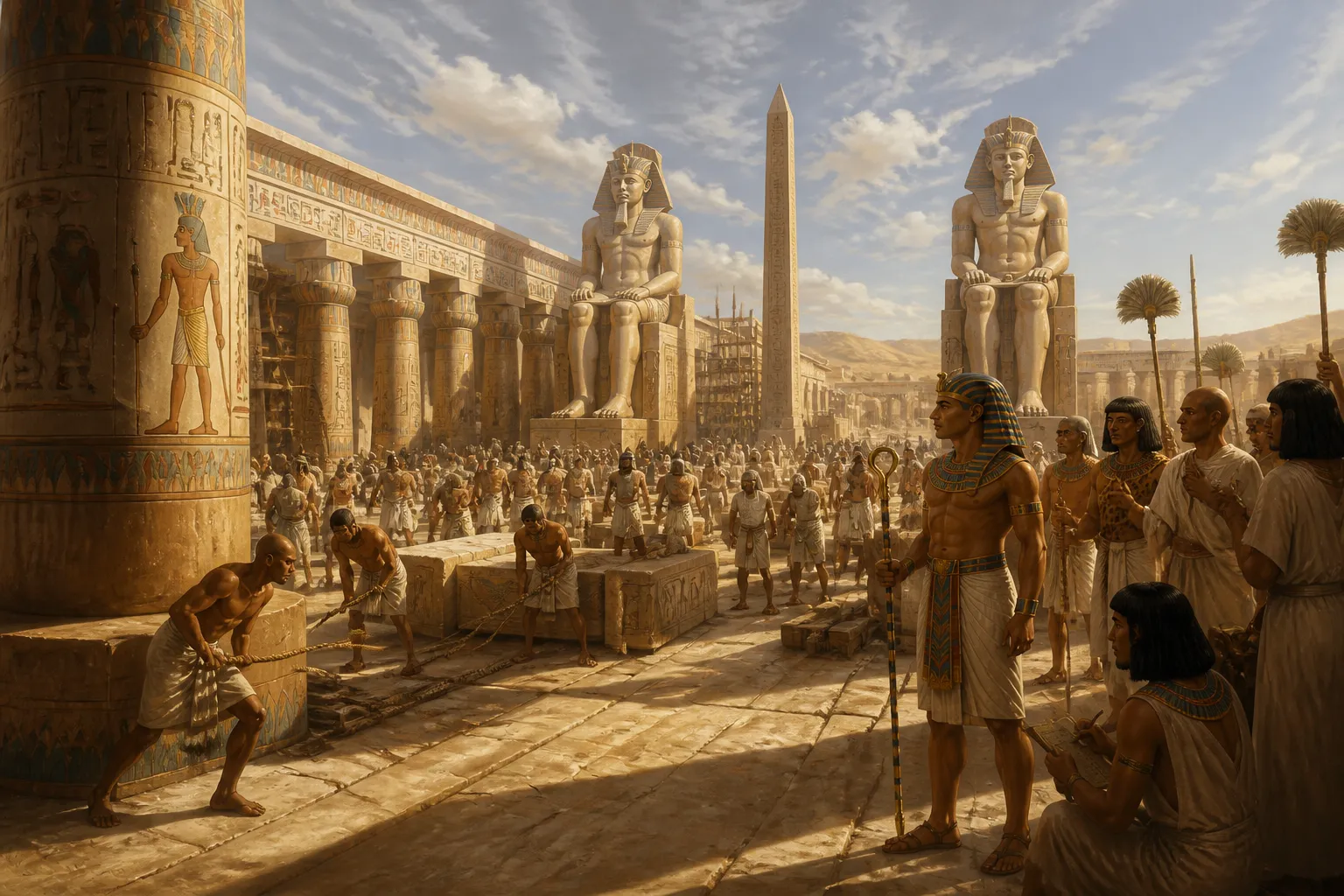
The Mortuary Temple of Amenhotep III once stood as a testament to the zenith of Egyptian influence and spirituality. Its vast courtyards and colossal halls echoed the ambition of a ruler who sought to leave an indelible mark on history. The temple was adorned with intricate carvings and imposing statues, which were the result of countless artisans' labor. Despite the relentless passage of time and the destructive forces of nature, the colossal statues that remain evoke the lost grandeur. Visitors today, walking through the sparse ruins and feeling the desert wind upon their faces, can only imagine the majestic splendor that once flourished here under the clear, enduring Egyptian skies.
Amenhotep proclaimed, 'Let my temple rival the greatness of Karnak.'
Page 6 — Amenhotep’s Vision
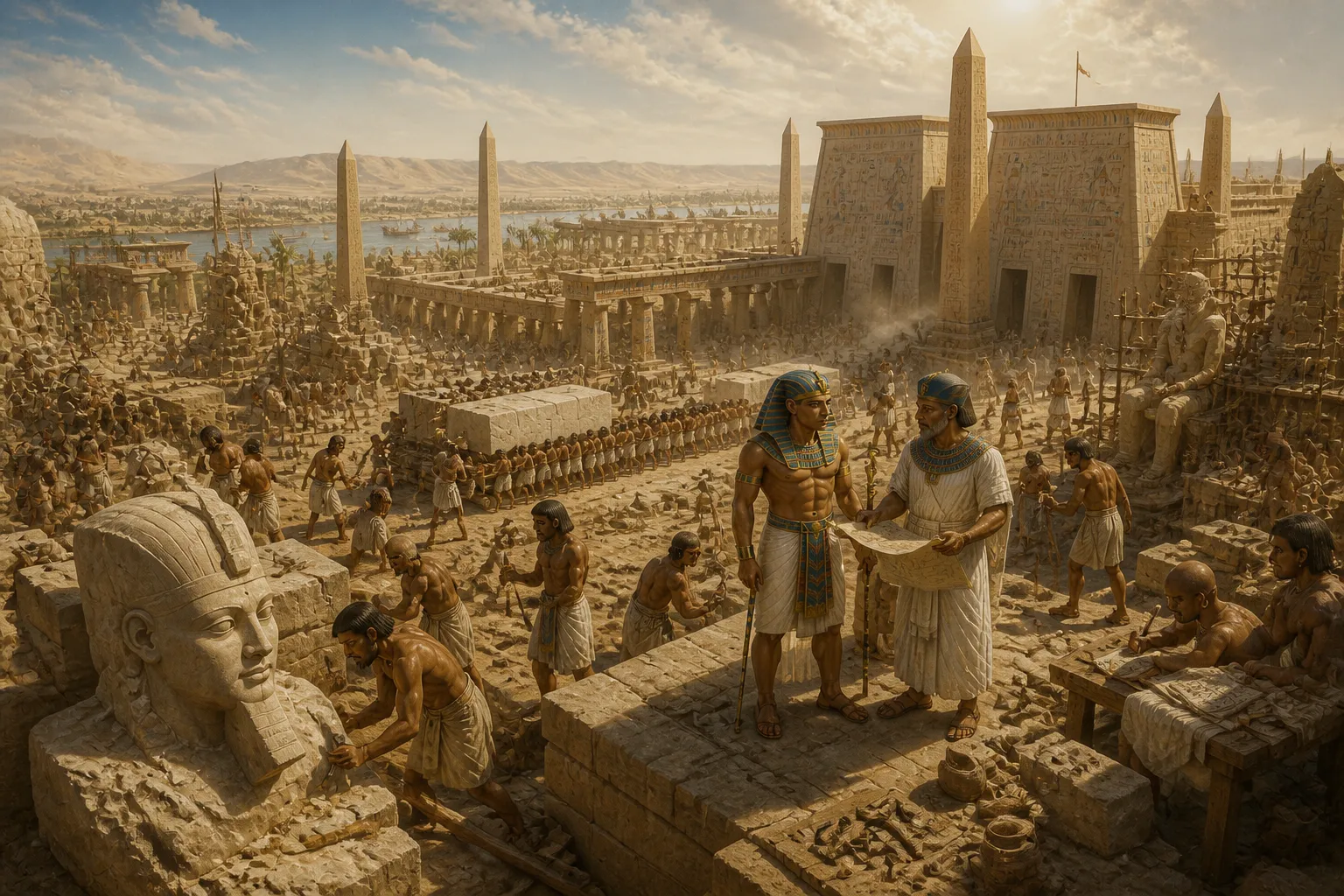
In the thriving city of Thebes, Amenhotep III embarked on an ambitious building campaign to immortalize his reign. Amidst the lively clamor of construction, the city's skyline transformed as colossal monuments rose. The pharaoh, in collaboration with his esteemed advisor, Amenhotep, son of Hapu, carefully oversaw each project's development, ensuring it resonated with divine homage and artistic excellence. The construction site was a hive of activity, with workers from various parts of the kingdom donning simple linen garments as they toiled under the sun. Crafting enduring symbols of power and richness, these structures were designed to uphold the pharaoh's godly lineage, marking a civilization that bridged mortal existence and divine presence.
Architect Amenhotep advised, 'Let each stone echo the power of your reign.'
Page 7 — The Stela of Record
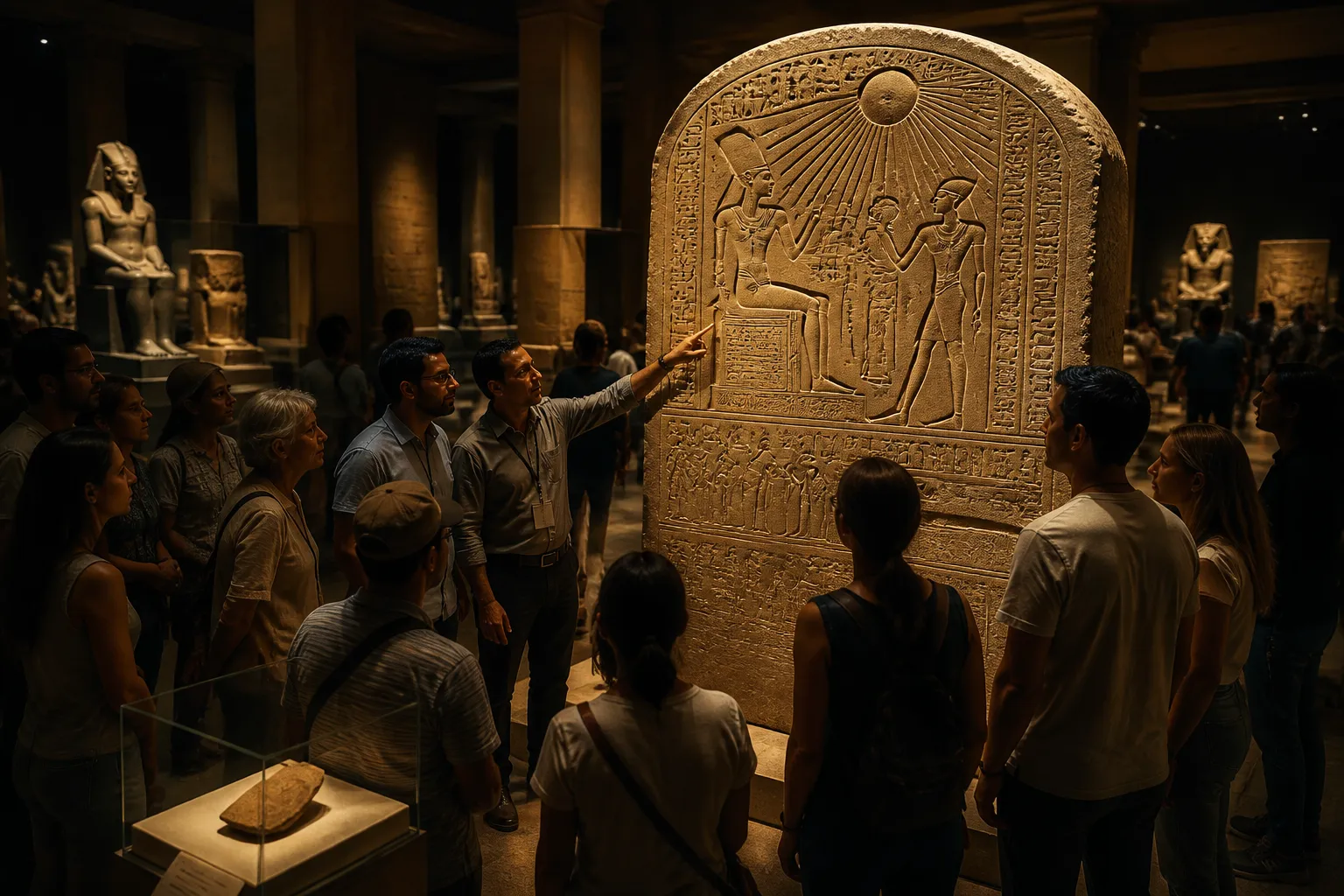
In the corridors of Cairo's Egyptian Museum, a solitary stela stands as a testament to the majestic aspirations of Amenhotep III. Adorned with meticulously carved hieroglyphs, it chronicles the pharaoh's ambitious endeavors to craft a legacy of divine architecture. This slab, a surviving relic from the past, speaks of grand temples and elaborate rituals that once marked the Theban landscape. Its inscriptions, capturing the reverence for Amun-Ra, offer invaluable insights into a time when kings sought to etch their divine narratives into eternity and where spirituality intertwined with regal authority. Visitors walk through these halls, witnessing history unfold in stone.
The scribe intoned, 'These words shall echo through the ages.'
Page 8 — A Silent Testament
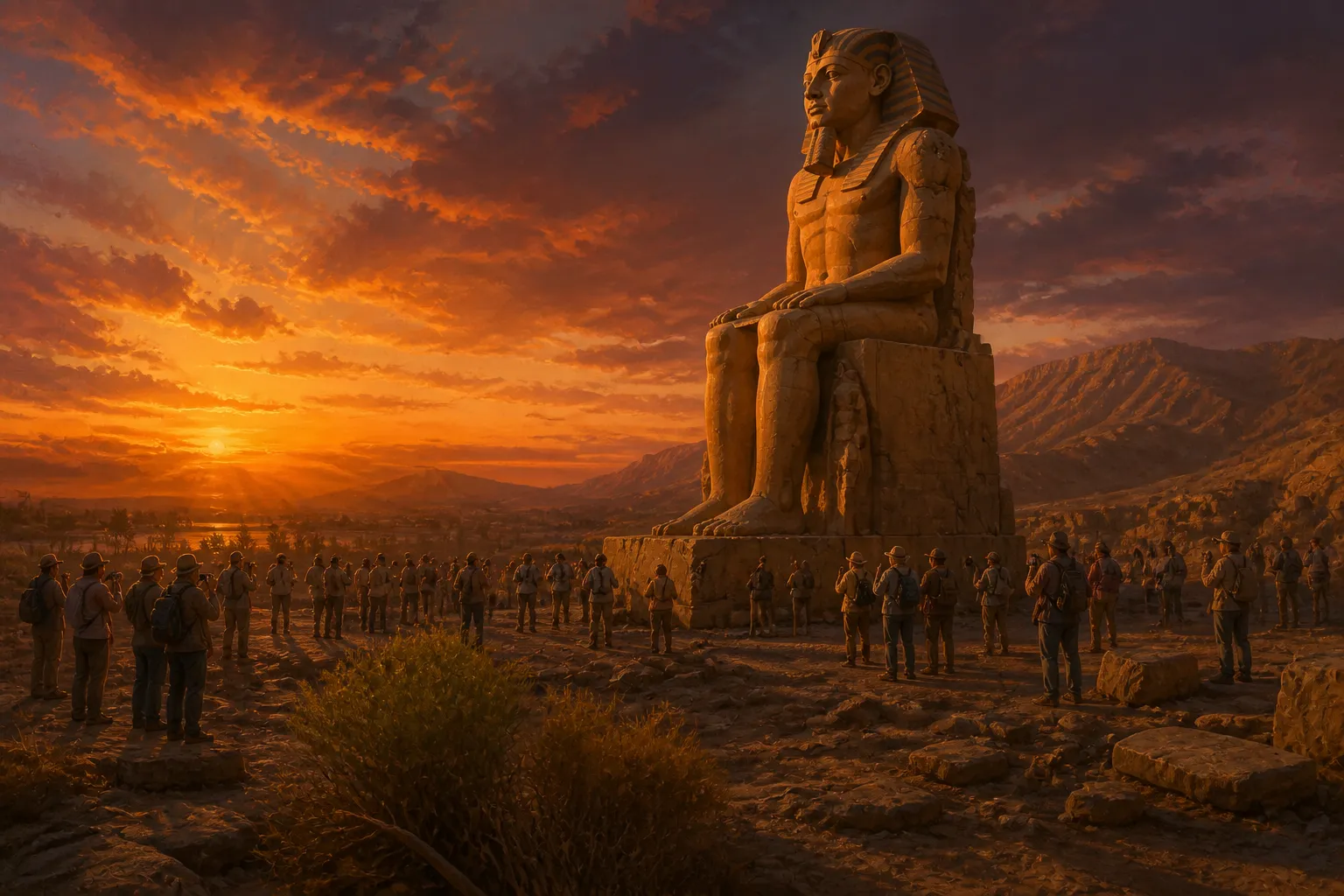
Standing solemnly against the twilight sky, the southern colossus of Amenhotep III offers a silent testament to the enduring legacy of its patron. Unlike its famous twin, known for its intermittent song, this statue has remained mute through the centuries. Its unyielding silence and stoic presence speak volumes about the resilience and unbroken continuity of ancient Egyptian artistry. As the setting sun casts long, haunting shadows over the desert sands, the colossal figure stands as a sentinel, its features defined by the play of light and shadow. Here, visitors gather in contemplation, drawn by a civilization's achievements carved into stone, echoing the profound mysteries of time.
Visitors whisper, 'Even in silence, it speaks volumes.'
Page 9 — Rediscovery and Reverence
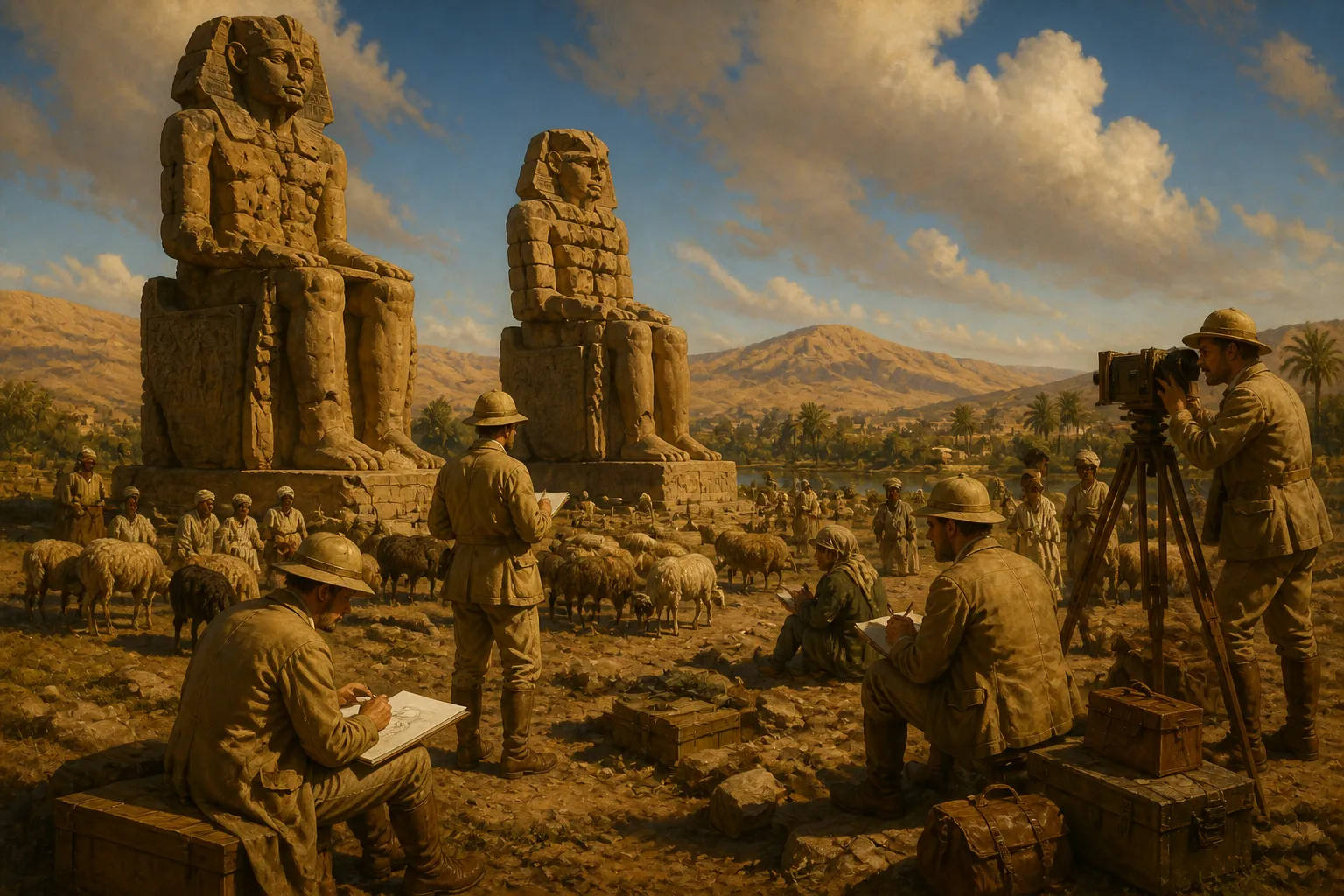
In the 19th century, explorers were captivated by tales of Egypt's ancient wonders, leading them to the site of the Colossi of Memnon. These monumental statues, shrouded in mystery, drew them like moths to a flame, igniting a resurgence of interest in Egypt’s profound history. As the explorers' excavation efforts unearthed more secrets, these colossal figures stood as timeless guardians of a bygone era, their enigmatic presence sparking a new wave of scholarship and artistry. The allure of these ancient giants sparked a global curiosity, motivating scholars and artists alike to uncover and preserve the narratives of Egypt's illustrious past for generations to come.
An explorer marveled, 'These giants have seen the rise and fall of empires.'
Page 10 — Immortal Guardians
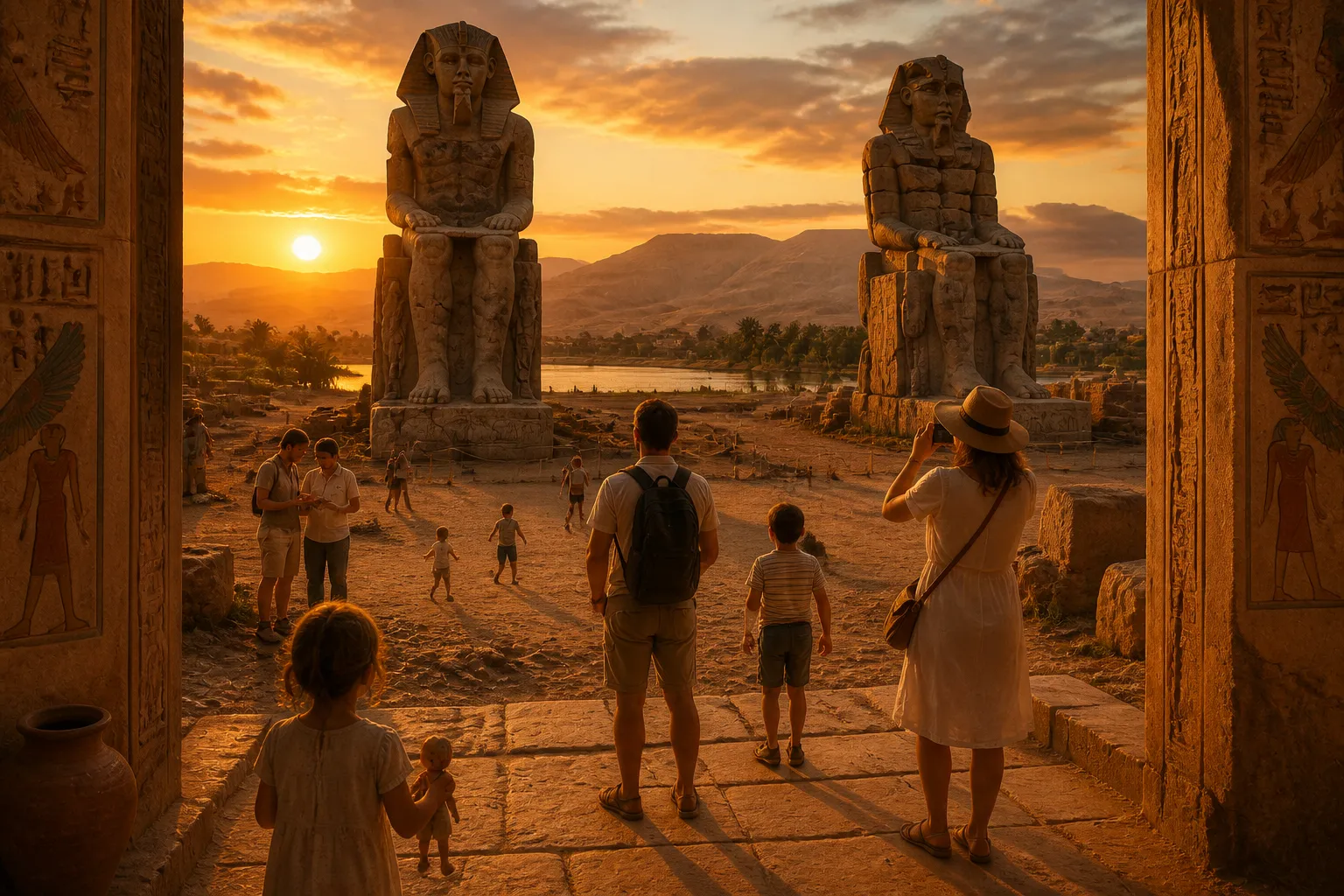
Once more standing before the Colossi of Memnon on the Theban sands at sunset, one cannot help but feel the profound connection to the ancient past. These immense statues, silent yet powerful, link observers to an enduring chain of human effort and accomplishment. They represent the grand achievement of Amenhotep III's era, the allure of ancient legends, and the insatiable curiosity of those who have come to witness them. As the sun sets, casting a fiery embrace over the horizon, the colossi remain as they have for millennia: vigilant guardians against the passage of time, offering an open invitation to all who approach to seek understanding and wonder at the imprint of a civilization that shaped history.
A visitor reflects, 'In their silence, the past whispers.'
About this story
- Audience: general readers
Read Wonder Egypt on your phone
Wonder Egypt is available on Android. Get Wonder Egypt on Google Play.