The Dendera Zodiac
The Dendera Zodiac — an illustrated history story. 10 illustrated pages, free to read on Wonder Egypt.
Page 1 — A Sky Divided
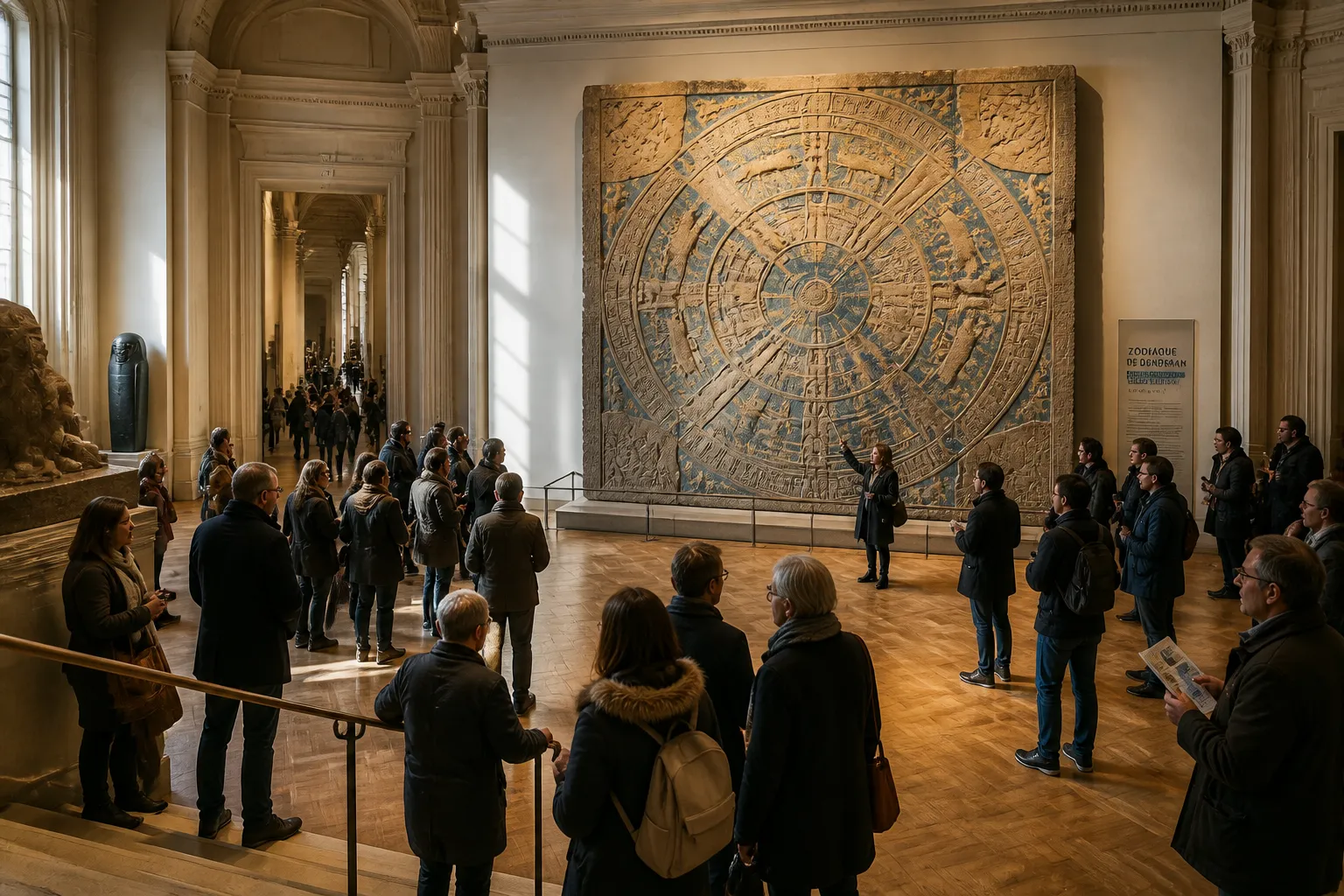
Within the echoing halls of the Louvre's Sully wing, visitors stand beneath an awe-inspiring artifact: the Dendera Zodiac. This circular bas-relief, crafted circa 50 BC, looms at 2.5 meters in diameter, capturing an intricate tableau of Egyptian, Greek, and Babylonian constellations. Carved during a time when the world was a mosaic of cultures and beliefs, its sandstone surface, pocked from time and harsh removal, narrates a story of celestial fusion and the intellectual debates that followed its discovery. The room's subdued lighting enhances the zodiac's dramatic reliefs, compelling every gaze towards the divine figures that chart an ancient understanding of the heavens. Its history is one of displacement, removed from the sacred shelter of the Dendera temple ceiling by force, leaving a void now symbolically filled by a plaster cast back in Egypt. Visitors, intrigued by the artifact's journey from a sacred Egyptian temple to a Parisian museum, marvel at how this stone, once part of a temple roof in Dendera, commands presence and provokes thought in Paris, a city itself brimming with history and culture.
Saulnier remarked, 'A piece of eternity, now bound to France.'
Page 2 — The Roof Chapel's Echo
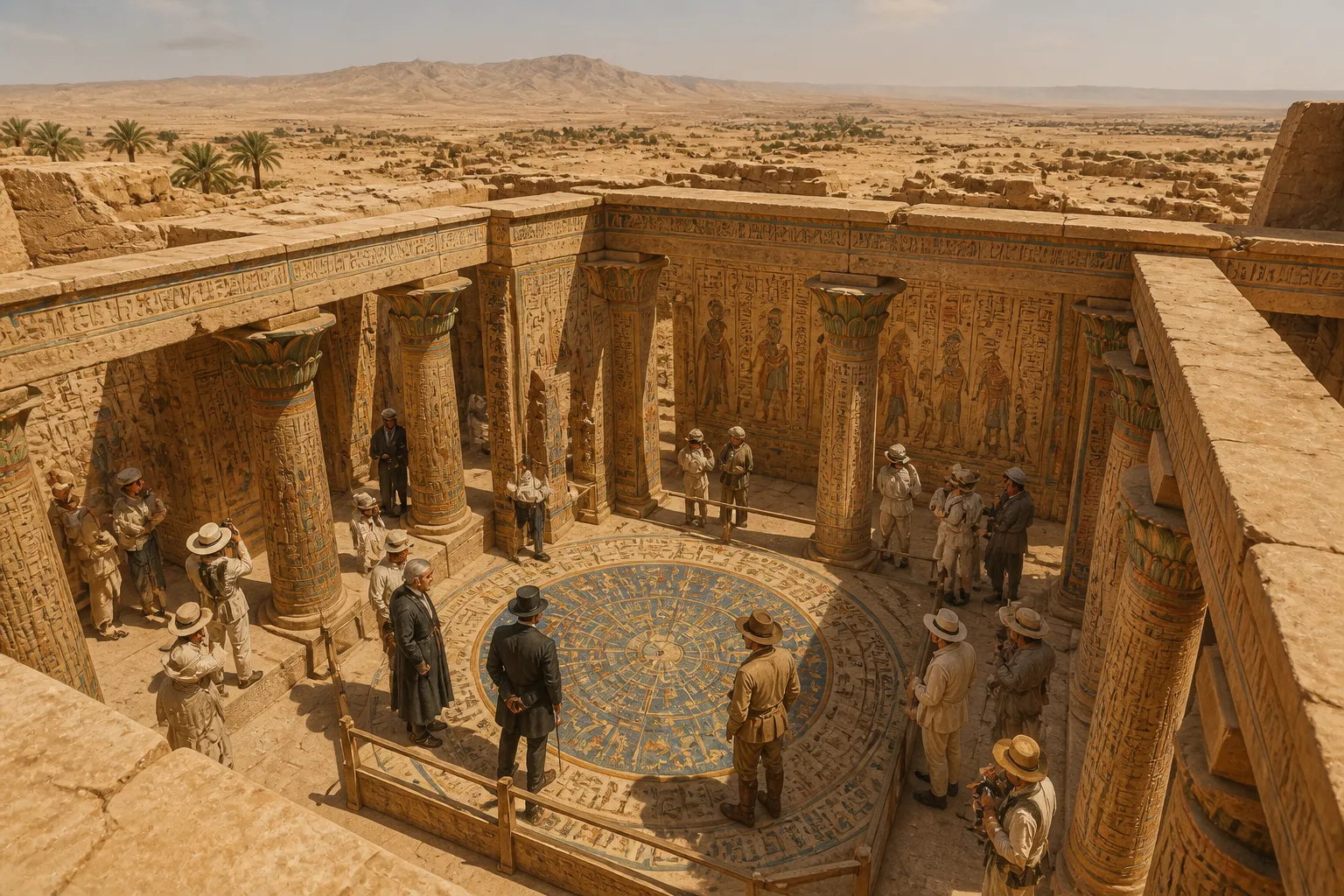
The roof chapel of Osiris at Dendera stands open to the sky, where once the zodiac lay, a solemn reminder of the celestial dome that guided ancient rituals. The plaster copy that now spans the gap echoes the original's presence but lacks its transcendence. This sacred space, imbued with the whispers of long-gone temple astronomers, reverberates with their chants as they studied the stars, seeking divine guidance. The temple complex, a legacy of the Ptolemaic Dynasty, resonates with history, its reliefs vibrant even in their weathered state. Here, under the relentless Egyptian sun, the lines between Greek and Egyptian religious practices blurred, manifesting in the art and architecture that surrounded worshippers. Pilgrims, clad in light linen garments, traversed its corridors, leaving offerings in hopes of securing favor from the gods. The chapel's absence of its original celestial map leaves an indelible mark, yet it continues to inspire those who tread its ancient stones, its walls still whispering secrets of the cosmos to those who listen.
An ancient priest would intone, 'The stars guide our lives as they guide the gods.'
Page 3 — Cut from the Heavens
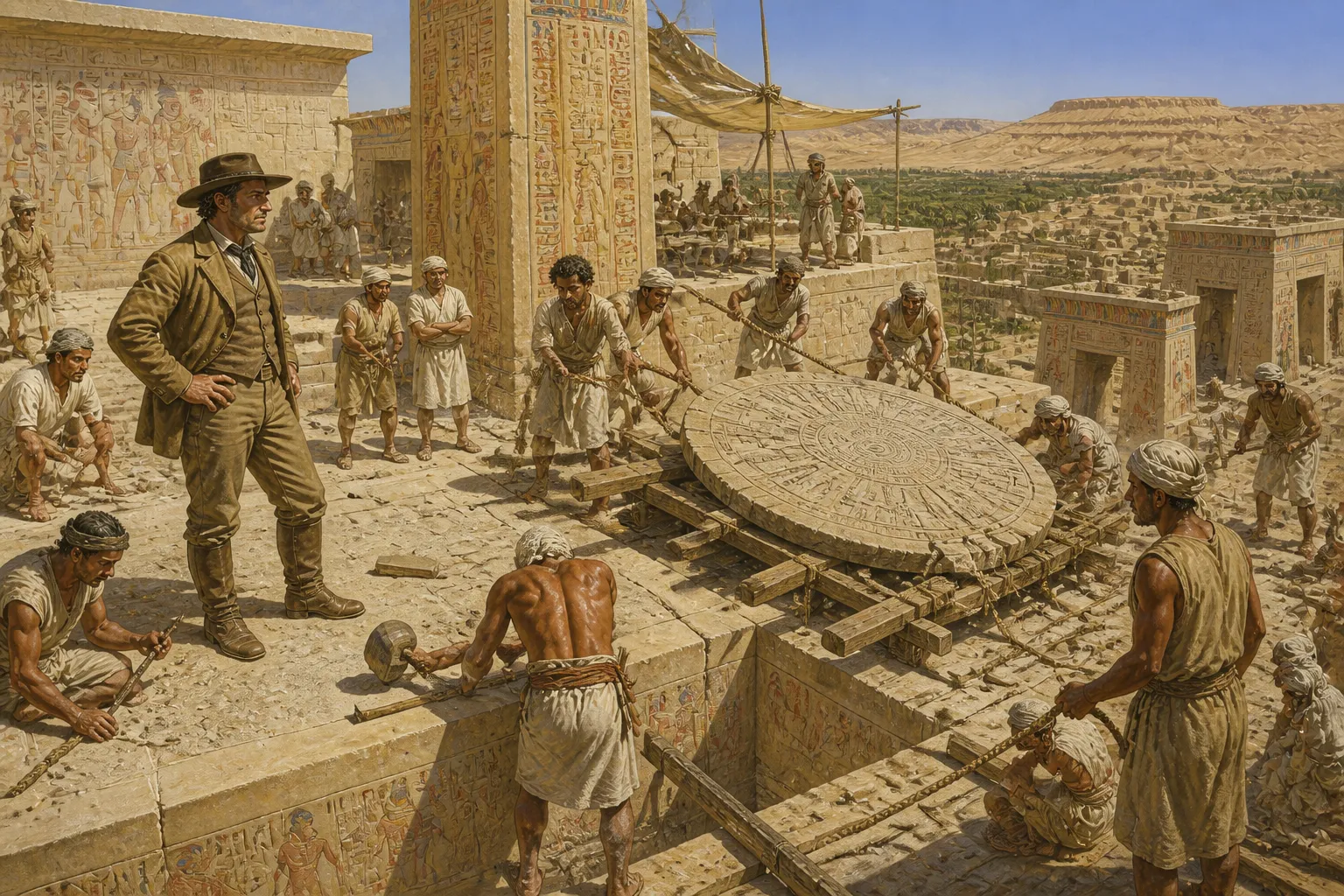
In 1821, under the burning Egyptian sun, Jean-Baptiste Lelorrain and his team meticulously labored to extract the zodiac from the temple roof. The operation was not merely a technical endeavor but a cultural upheaval, marking the intersection of European curiosity and Egyptian heritage. Saws and gunpowder etched their mark in the stone, a destructive yet determined method reflecting the zeal of a Europe eager for enlightenment, irrespective of cost. This moment, fraught with tension, sparked controversy and discontent among Egyptians who saw in it the severing of a sacred bond that connected them to the heavens. The sandstone piece, detached from its millennia-old perch, embarked on a transcontinental journey across seas and lands, finally anchoring itself in Paris. Lelorrain, a man driven by conviction and an unyielding belief in the value of scholarship, saw his actions as preservation, though they left behind a lasting void and echoes of the past mingling with the dust that filled the air as the piece departed its ancient resting place.
Lelorrain declared, 'History demands its rightful place in the world.'
Page 4 — A Scholar's Conviction
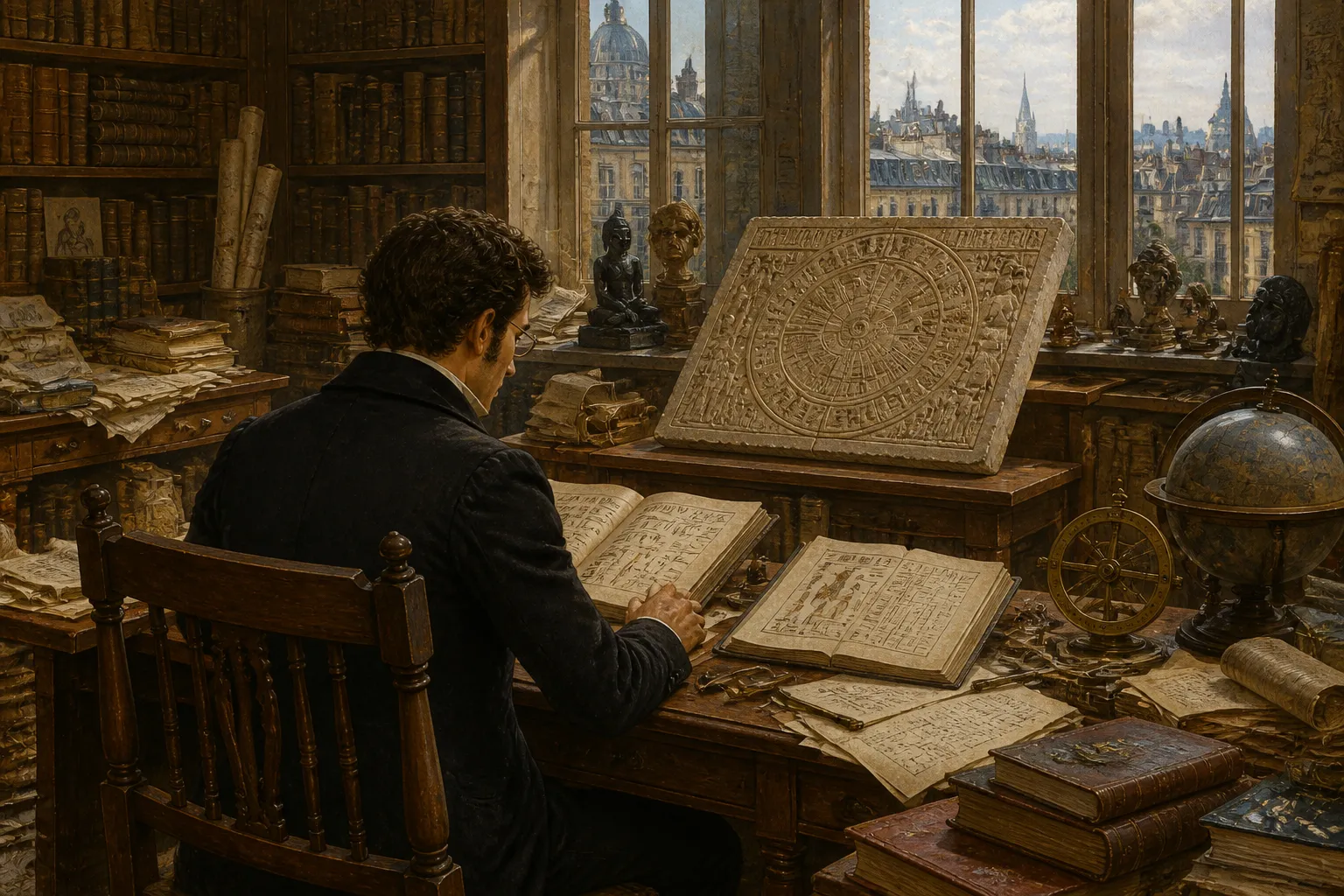
In a sunlit Parisian study, Jean-François Champollion, a luminary in the field of Egyptology, leaned over ancient texts and the newly arrived Dendera Zodiac. His fingers traced the figures, deciphering this intricate hybrid of astronomical traditions. Renowned for deciphering the Rosetta Stone, Champollion saw in the zodiac a key to unlocking the synthesis of cultures that characterized ancient Egypt during the Ptolemaic period. His examination stirred scholarly debates on the artifact's origins and age, positioning him at the epicenter of academic contention. Versed in hieroglyphs, Champollion sought to unravel its mysteries, confident that this artifact held celestial secrets that could illuminate the past. Outside, the city of Paris, vibrant with life, remained unaware of the cosmic revelations unfolding within this quiet room, where centuries-old histories met the scrutiny and curiosity of the modern age.
Champollion mused, 'In these stars, the ancients spoke to us.'
Page 5 — The Debate of Ages
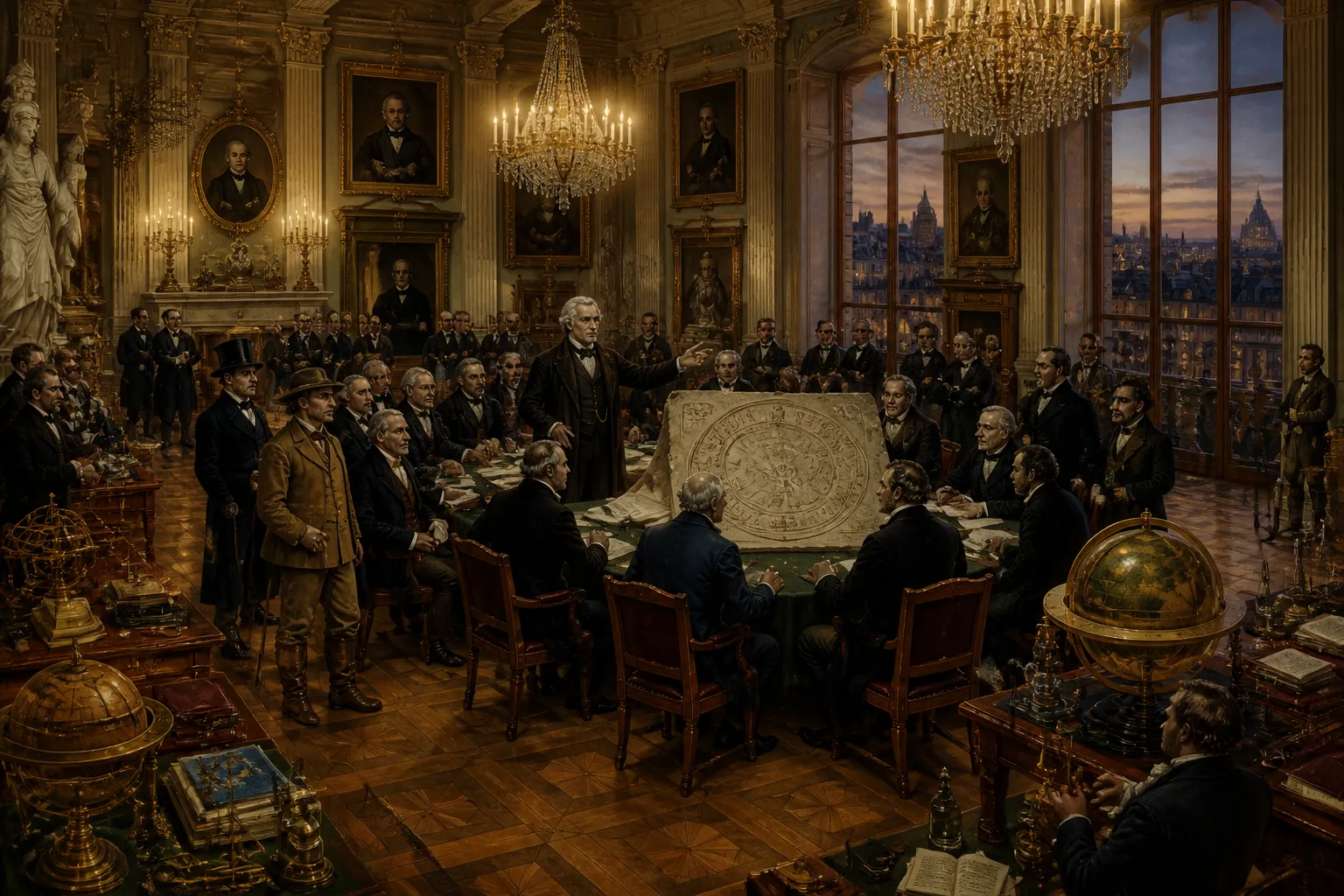
Georges Cuvier, an eminent naturalist of his time, entered the fray over the Dendera Zodiac's age with the authority and conviction that marked his scholarly pursuits. Within the opulent setting of the French Academy of Sciences, Cuvier and fellow scholars engaged in rigorous debate, presenting theories and counterarguments that challenged the prevailing timelines of human history. The zodiac's Hellenistic influences were unmistakable, yet its deeper Egyptian roots were undeniable, offering a complex tapestry of cultural assimilation over the ages. The arguments extended beyond the walls of academia, capturing public interest and touching theological nerves, for the implications of such debates stretched into realms of faith and understanding. Cuvier, with his commanding presence, wielded evidence and logic deftly, yet the mystery of the artifact persisted, echoing the broader struggle of the time to reconcile science, faith, and history in post-Enlightenment Europe.
Cuvier asserted, 'The stars cannot lie, yet interpretations may mislead.'
Page 6 — Celestial Reconstruction
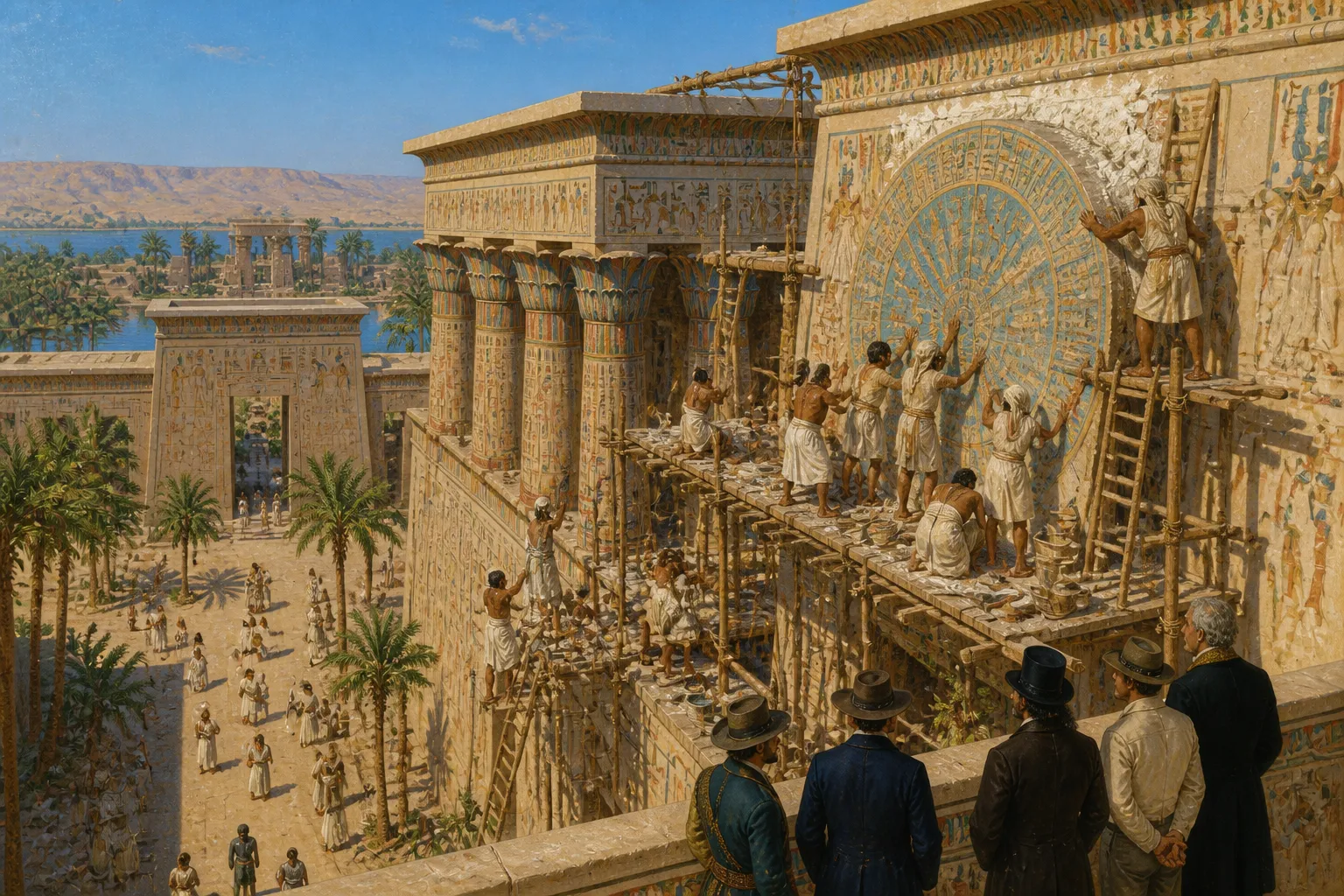
Back in Egypt, on the rooftop of Dendera's temple, skilled artisans carefully mounted a plaster replica of the zodiac, a symbol of restoration and resilience. This act, though performed under the temple's sacred silence, was more than a mere replication; it was a heartfelt gesture to bridge the gap left by the original's removal. The artisans, dressed in simple tunics, marked by the dust and the golden hues of the Egyptian sun, worked with unwavering precision. Amid the age-old scent of stone mingled with the distant hum of prayer, they strove to emulate the original's grandeur, aware of the legacy they were helping to preserve. The replica, while imperfect, stood as a testament to continuity, rekindling the temple's celestial connection and inviting pilgrims to once again look to the heavens. It was a poignant reminder of the temple's enduring role as a link between the earthly and the divine.
An artisan noted, 'Though a replica, it mirrors the heavens anew.'
Page 7 — Mystical Misinterpretations
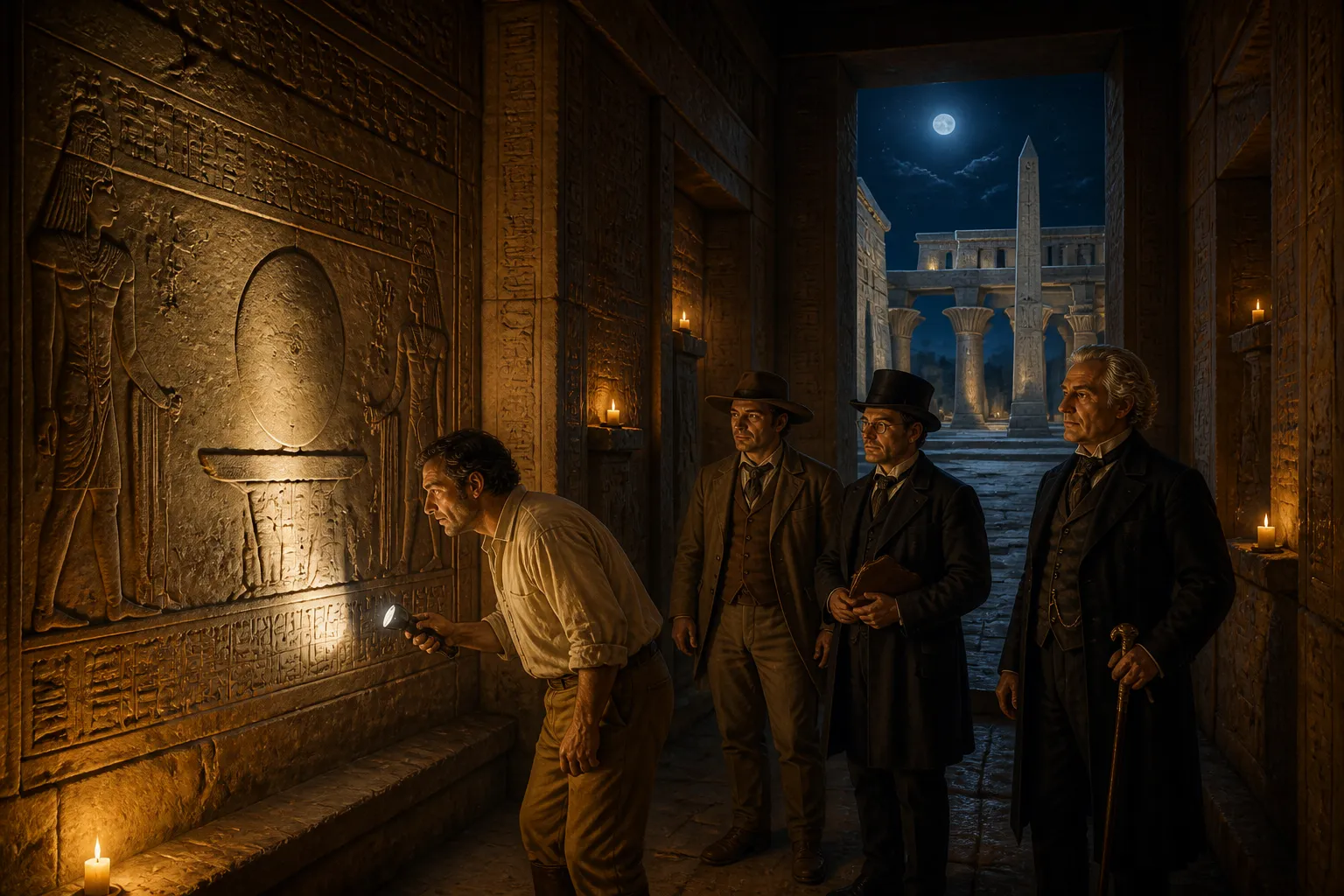
In a shadowed corridor of the Dendera temple, a curious visitor stands before the enigmatic relief known as the Dendera lamps. The depiction, often misread as evidence of ancient electrical technology, has long perplexed and captivated those who venture into this sacred space. Featuring lotus-shaped structures held by priestly figures, the relief continues to challenge modern interpretations while cloaked in the temple's air, heavy with incense that enhances its surrounding mystery. Its true symbolism, residing within the realm of creation myths and cosmic order, is often obscured by contemporary misconceptions. As the flickering torchlight plays across the carvings, the visitor ponders the ancients' profound grasp of life, death, and rebirth, unmindful of the modern myths being woven around this ancient art. The corridor's dim ambiance invites deep reflection, a poignant setting where history and myth meet in whispered echoes.
A hopeful visitor exclaimed, 'Perhaps, they knew more than we can fathom.'
Page 8 — Journey to the West
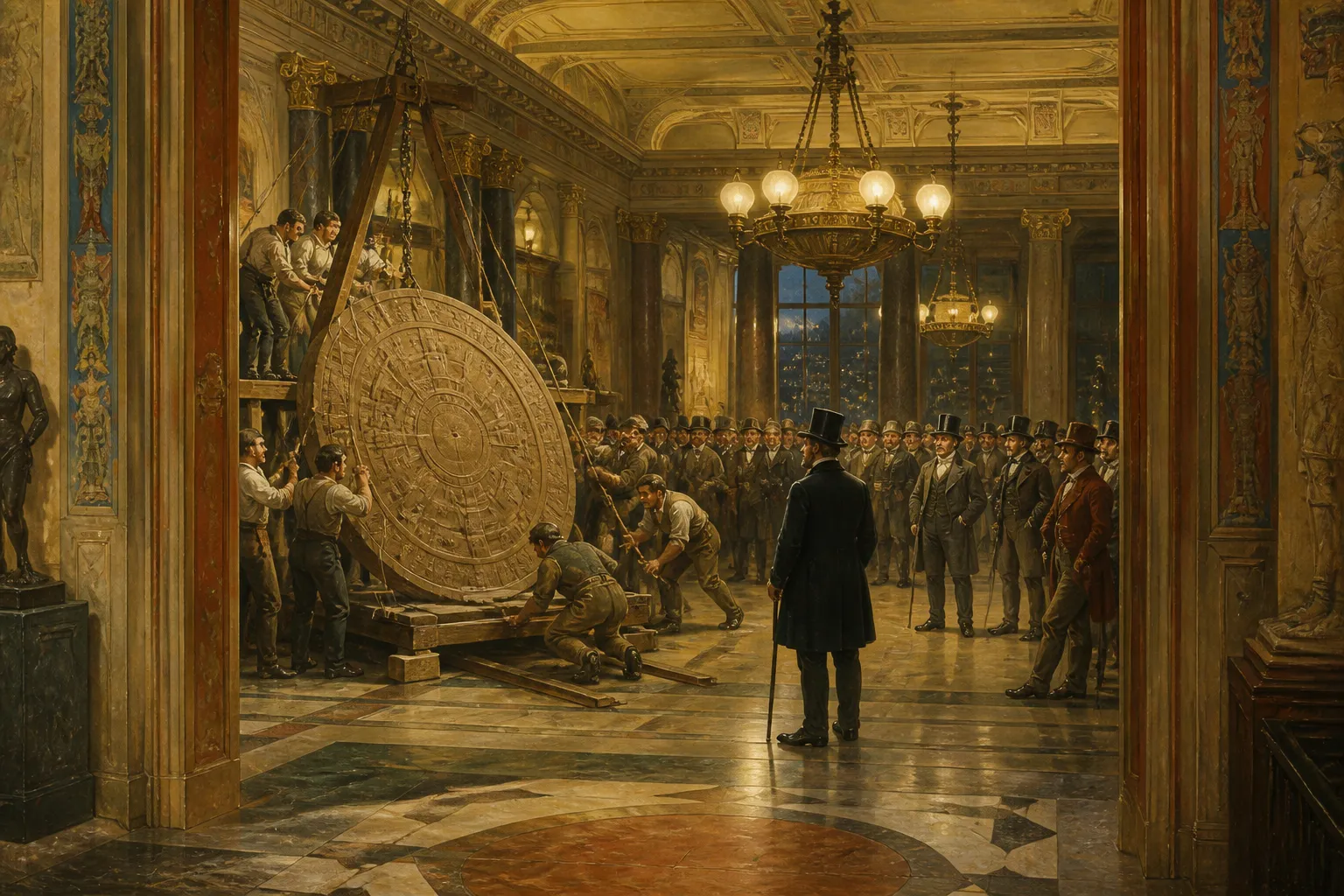
In 1822, amidst the anticipation in Paris, Jean-François Champollion oversaw the arrival of the zodiac at the Louvre—an event that marked a monumental chapter for French Egyptology. As the zodiac was carefully positioned within the revered gallery, crowds gathered, their murmurs of excitement echoing against the grand walls. The gallery was a flurry of activity, crates and ropes scattered about, their presence marking not only the practicalities of such an undertaking but also the sheer weight of the cultural and scholarly significance it carried. Champollion, wrapped in a dark overcoat against the Parisian chill, directed the placement with resolute authority, acutely aware of the controversies and debates its presence would ignite within scholarly circles. The zodiac, striking under the gallery's gas lamps, stood as a beacon of both academic triumph and cultural diffusion, embodying the journey of ancient wisdom into the heart of Europe.
Champollion instructed, 'Gently now; the heavens must rest securely.'
Page 9 — Reunited in Spirit
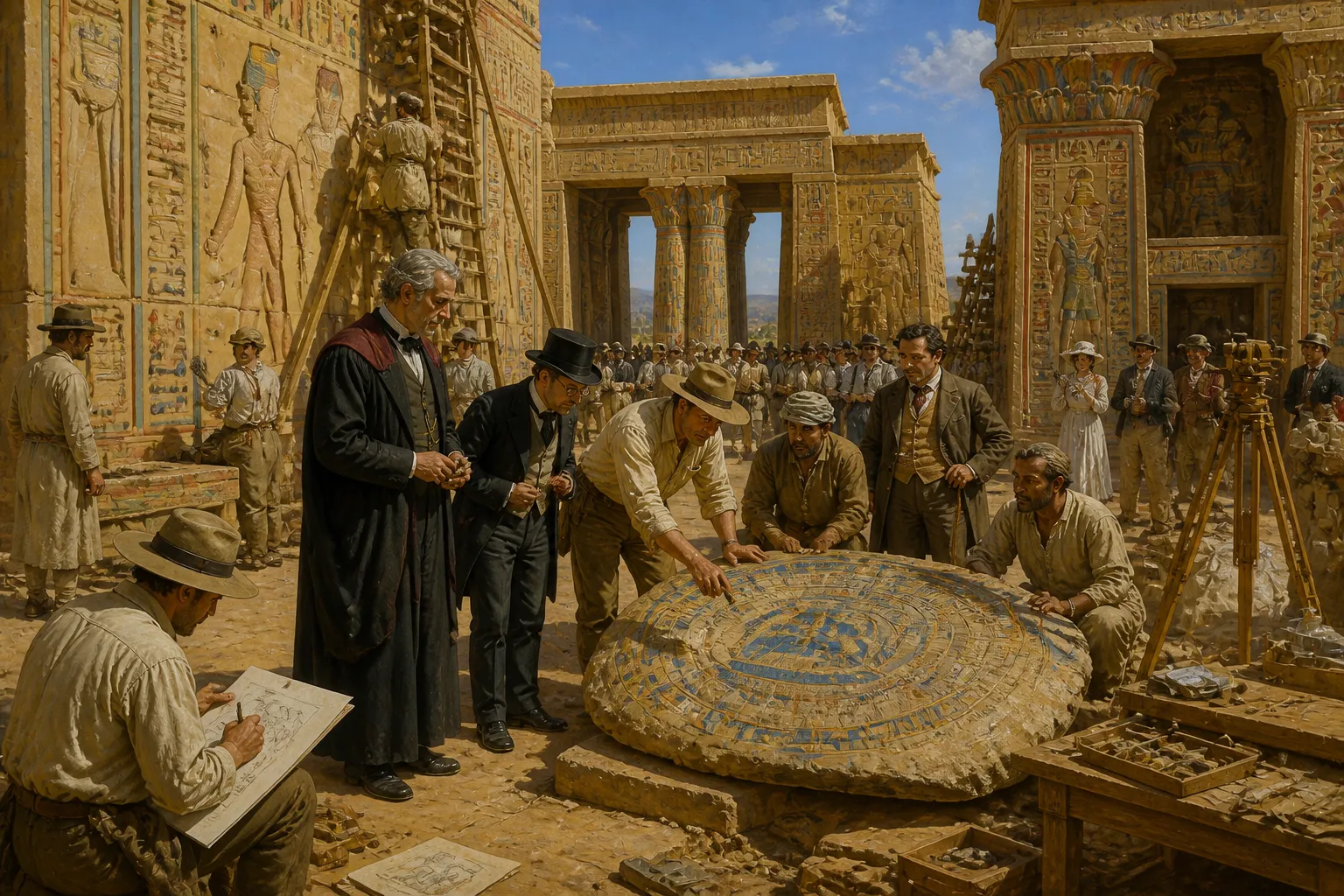
Decades later, the Dendera temple, a cornerstone of Egypt's historical heritage, bustles once more with life as restoration efforts persist. Scholars from around the globe, their attire blending modern functionality with respect for tradition, gather to study, debate, and unravel the site's mysteries. The plaster ceiling, in place of the original zodiac, captures attention, a focal point for discussions about its ancient meanings and modern interpretations. The atmosphere is one of collaboration and discovery, a symbolic bridge between past and present, where intellect and inquiry unite to shed light on ancient practices. Underneath Egypt's blazing sun, the spirit of the Zodiac remains vibrant, inviting new generations to unravel its celestial secrets and to forge connections with the past.
A young scholar remarked, 'Here, we connect with the ancients through shared skies.'
Page 10 — A Divided Legacy
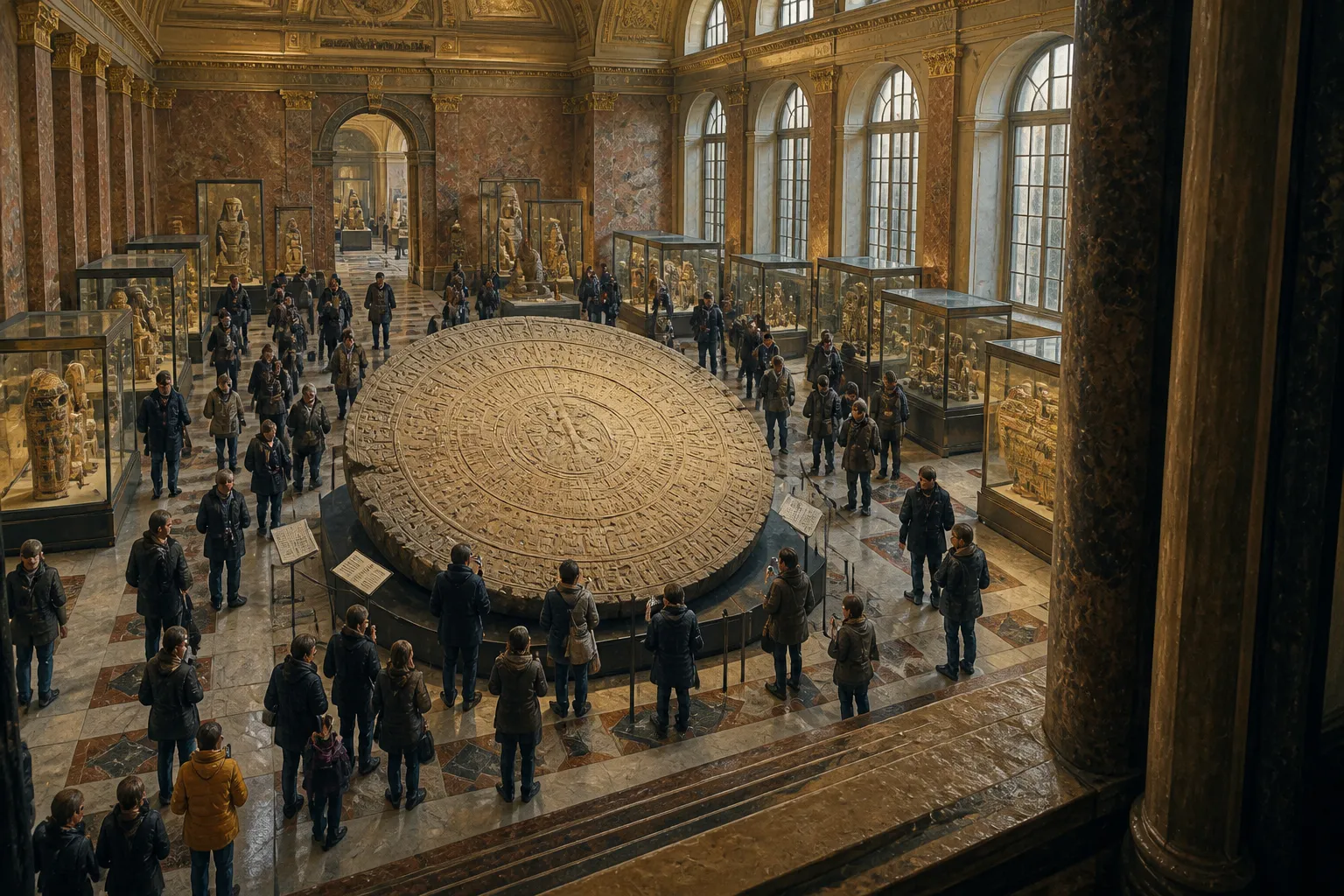
Back in the Louvre, beneath the original Dendera Zodiac, visitors pause in contemplation, reflecting on the long journey this artifact has taken from Egypt to France. This ancient object, its presence now uniquely split between two nations, stands as a testament to history's complex intertwining of preservation and division, a narrative of cultural exchange that continues to unfold. As the afternoon light filters through the museum's grand windows, the zodiac's reliefs cast intriguing shadows that dance across the polished floor, each constellation weaving a tale. These tales unite diverse cultures under a shared sky, inviting visitors to ponder the convergence of time, place, and belief. It serves as a constant reminder of humanity's shared quest to understand the cosmos and our place within it.
A visitor whispers, 'Here, the stars speak across time and space.'
About this story
- Audience: general readers
Read Wonder Egypt on your phone
Wonder Egypt is available on Android. Get Wonder Egypt on Google Play.