The Karnak Cachette
The Karnak Cachette — an illustrated history story. 10 illustrated pages, free to read on Wonder Egypt.
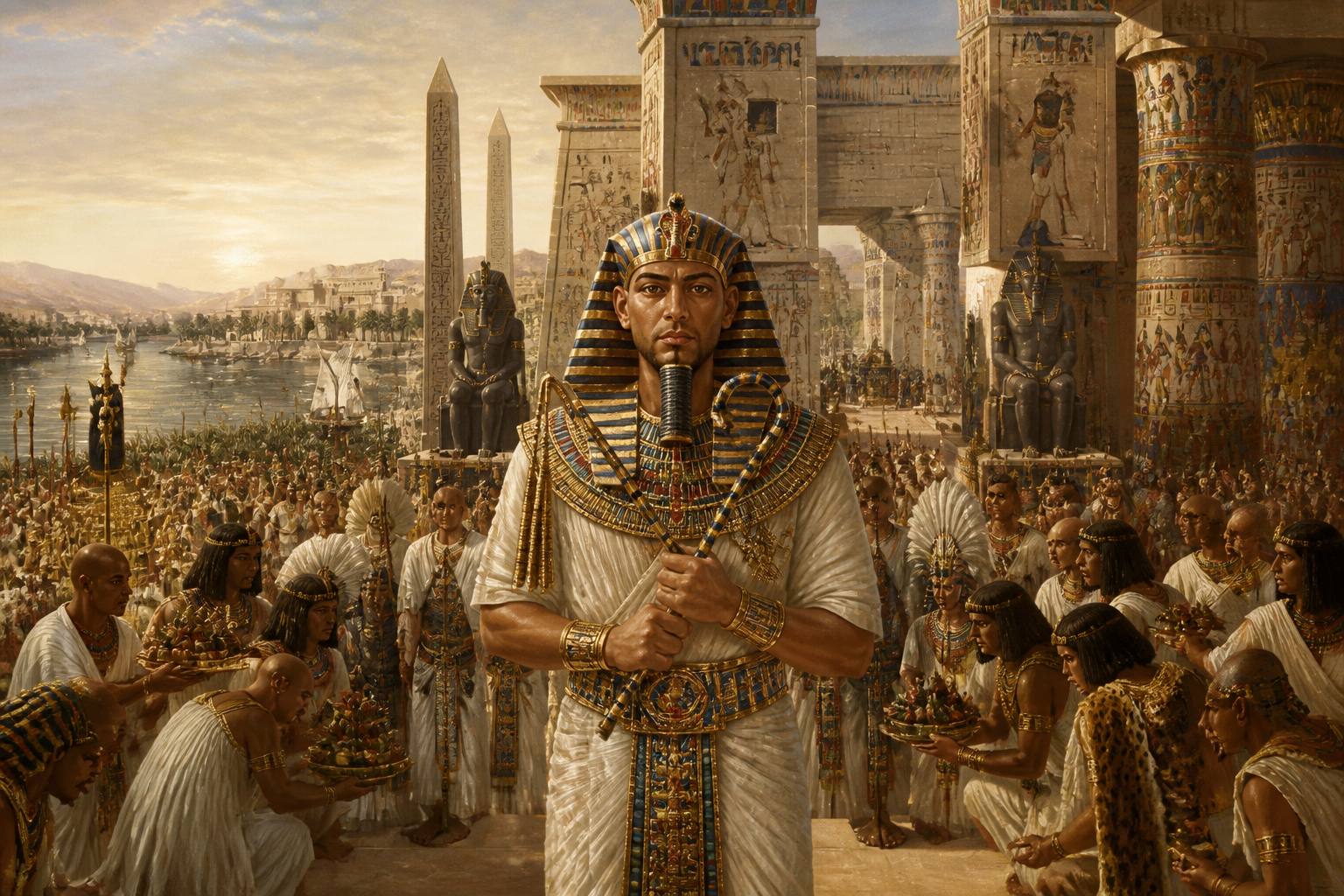
Page 1 — The Hidden Pit
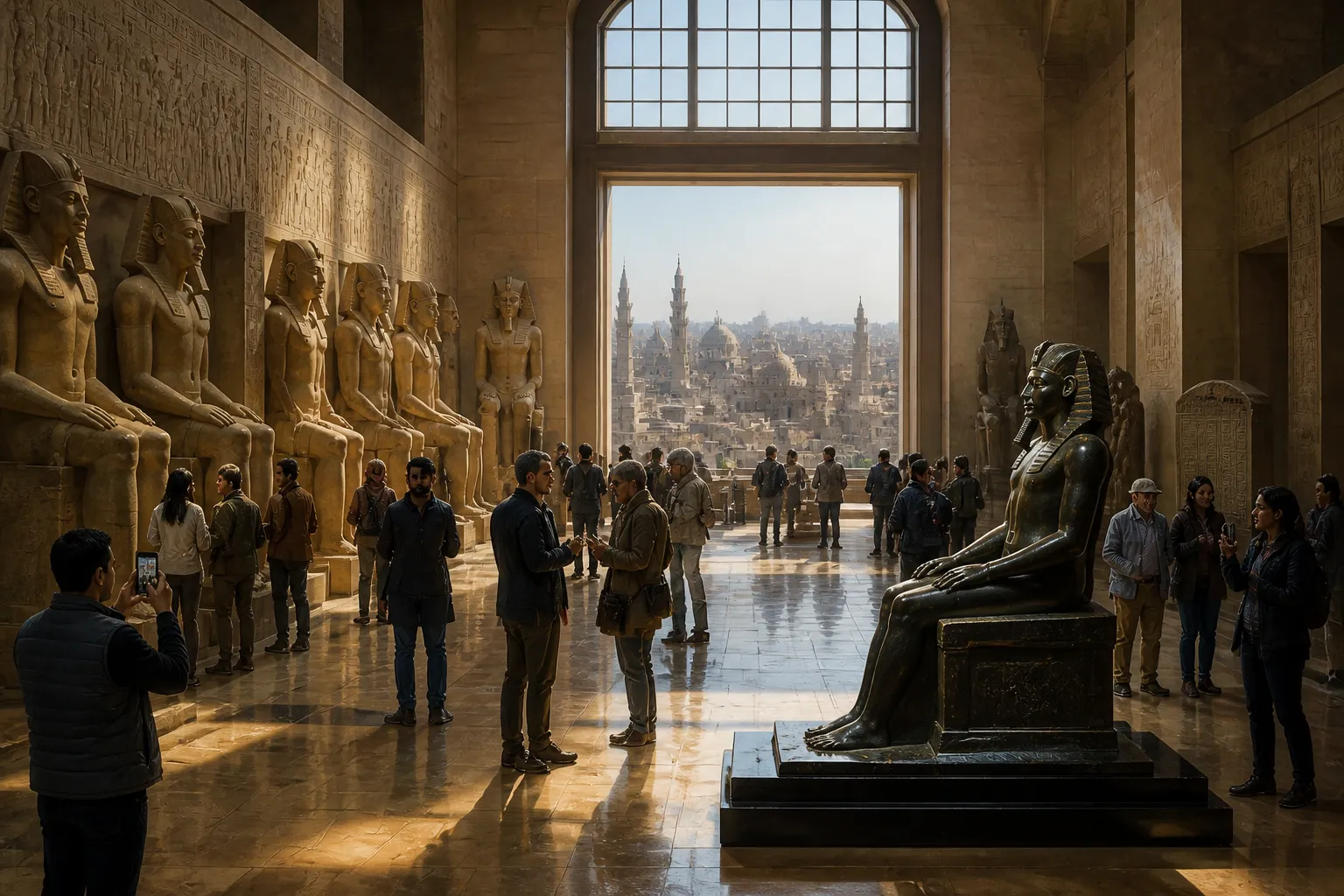
Before you stands the Egyptian Museum in Cairo, where the secrets of a civilization echo through corridors adorned with history. The museum is a grand edifice, its sandstone walls echoing the architectural grandeur of ancient Egypt. In a serene hall, the space reverberates with whispers of the past; here, a pit from Karnak is meticulously recreated. Unearthed in 1903 at Luxor, the pit originally harbored over 800 statues crafted from stone and a staggering 17,000 bronze artifacts. Central to this collection is the statue of Thutmose III, a masterpiece that captures the artistic zenith of Egypt's bygone eras. The pit's depth and origin remain clothed in mystery, a shaft beneath a once-busy courtyard, now exposing the relentless march of history rather than shattered relics. Theories abound regarding the burial of these statues, mysteries fueling an eternal intrigue into Egypt's bygone world.
"We preserve these pieces not as remains, but as voices of the ancients," remarks a curator, gesturing towards the grand display.
Page 2 — Unearthing Karnak
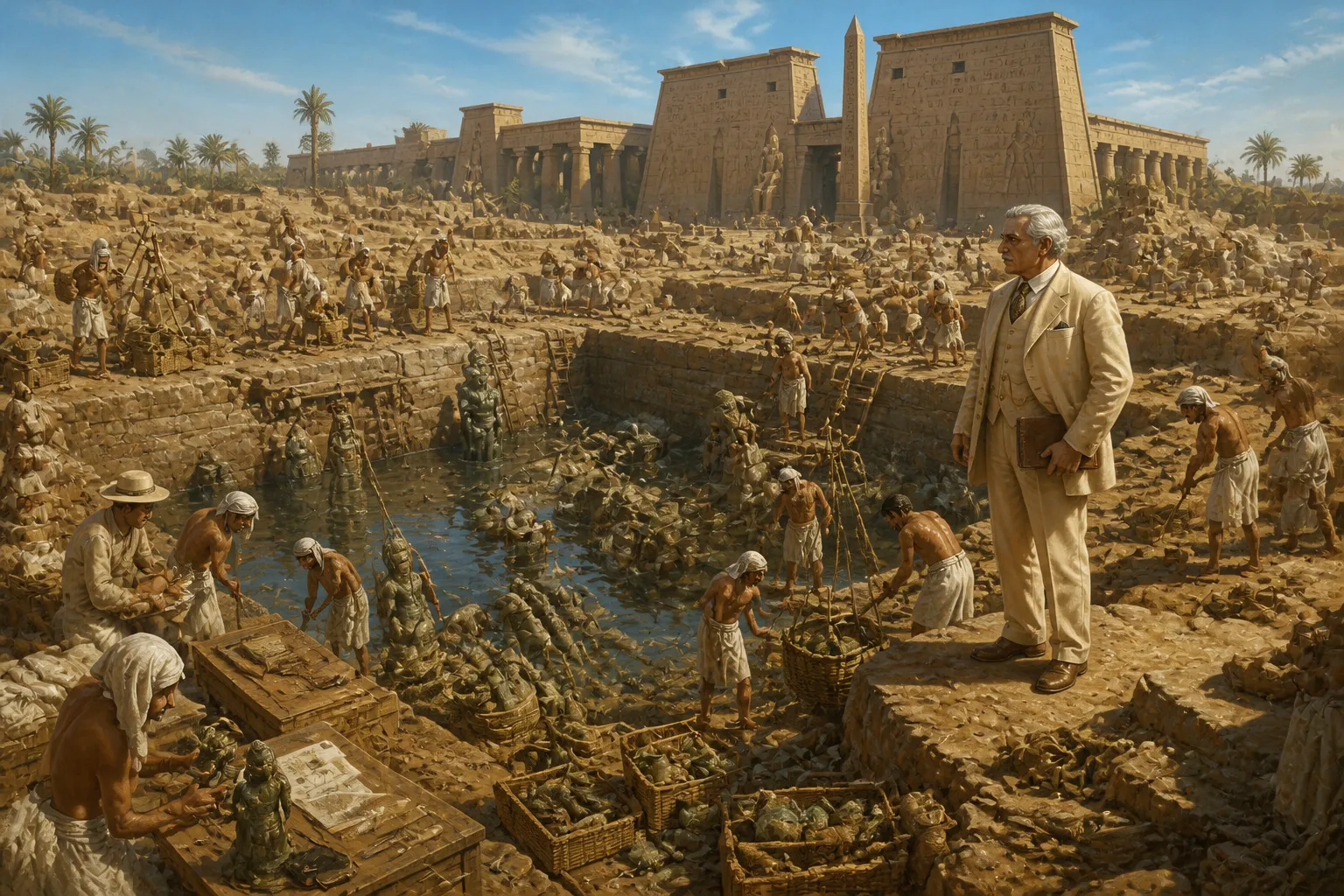
In the court of the seventh pylon at Karnak, Luxor, the air is thick with anticipation, hanging heavily over the dusty terrain. The year is 1903, a pivotal moment for archaeology. Georges Legrain, a distinguished French Egyptologist, leads the excavation with an air of authority. His team, robust and determined, labors tirelessly, removing layers of sand and silt to reveal the pit's extent. Each statue, carefully stacked and preserved by time, symbolizes an ancient tradition of retiring sacred images once the temple's floor brimmed with offerings. The pit murmurs of centuries past, a concealed chronicle of Egypt's enduring veneration for its gods. As groundwater is pumped away, the statues emerge, spectral and commanding, their silent narratives yearning to be unraveled.
"Handle them gently," Legrain instructs, his voice carrying over the din of shovels and pumps. "These are not mere stones, but the voices of our ancestors."
Page 3 — A Pharaoh's Image
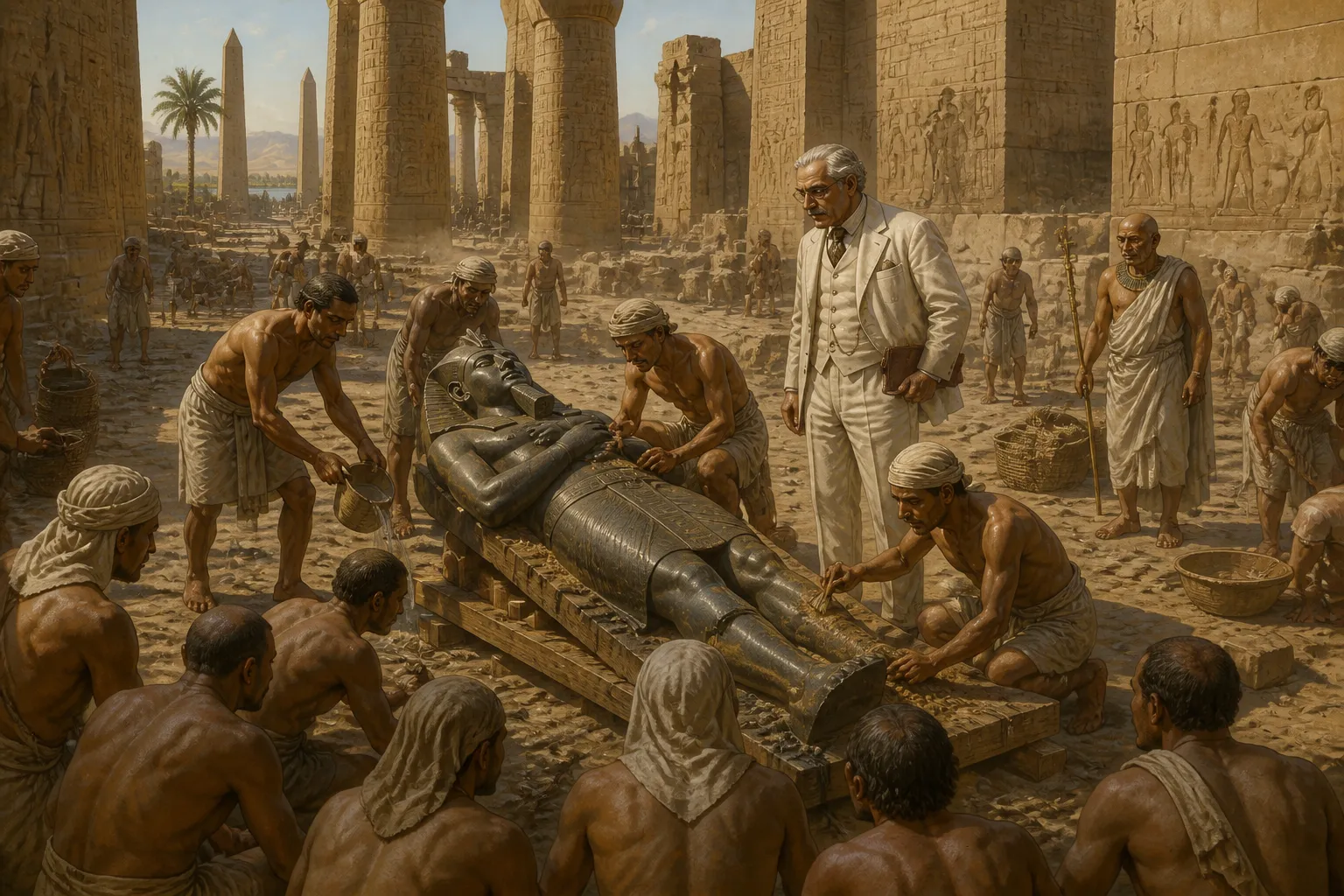
The statue of Thutmose III emerges from the pit's depths, a regal figure that embodies the strength and command of a ruler whose influence once stretched across realms. Finely sculpted with exquisite precision, the statue presents the pharaoh in a posture of authority, capturing the essence of his enduring legacy. As the workmen carefully lift it from the pit, Legrain stands transfixed, marveling at the craftsmanship of a long-gone era. Carved from stone that radiates under the intense sunlight, the statue tells a tale of a period when pharaohs were venerated as divine, their likenesses immortalized in enduring stone. The recovery of such treasures unveils the complexity of ancient Egyptian society, where art, devotion, and political power intersected in harmonious unity.
"Behold the face of a king," Legrain whispers in awe, his eyes tracing the statue's serene expression.
Page 4 — The Priests' Legacy
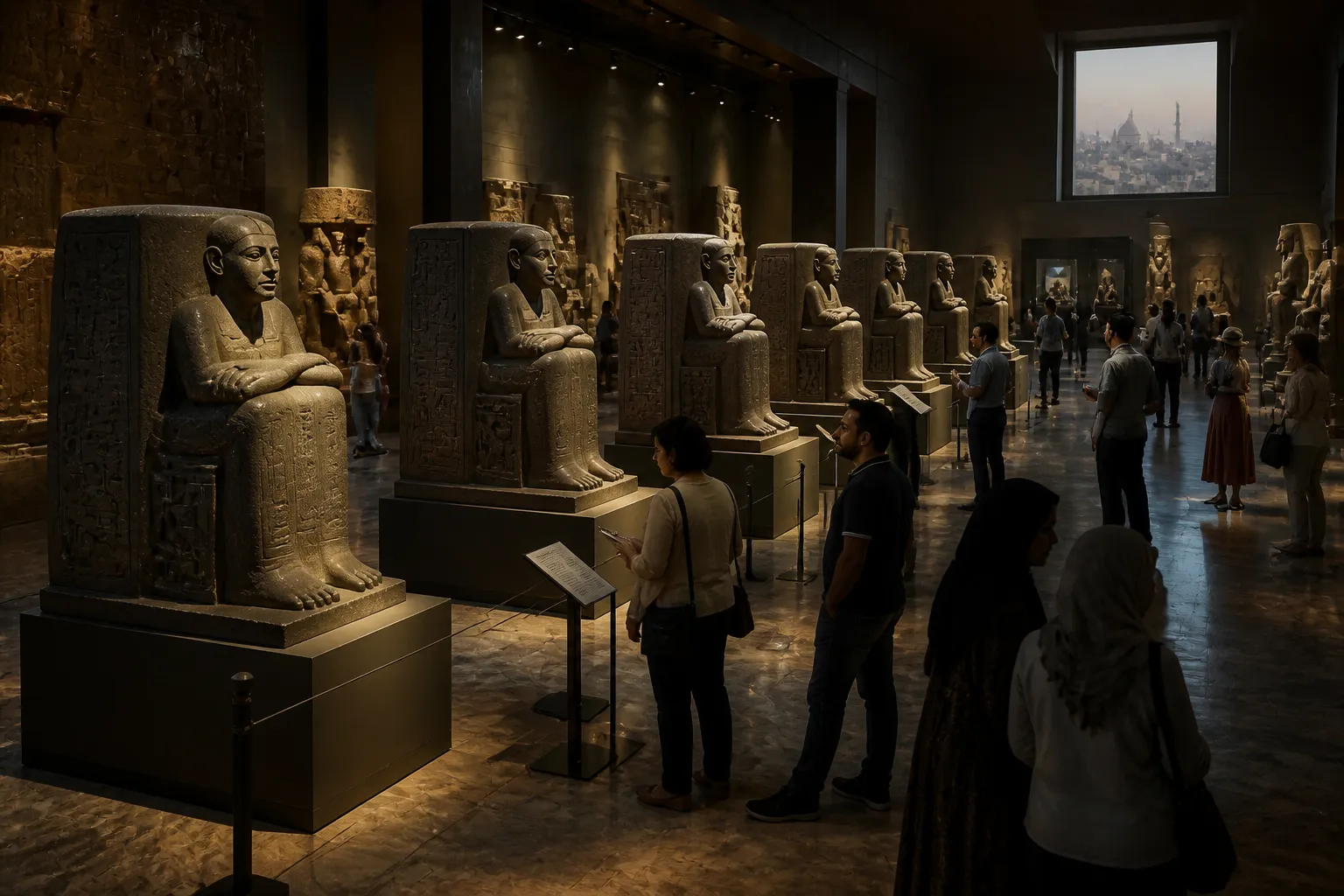
In the dim glow of the Egyptian Museum, a line of block statues stands vigil, their silent presence commanding reverence. These cube-shaped figures represent the distinguished priests of Amun, each statue meticulously inscribed with autobiographies that chronicle a life devoted to piety and the service of the gods. Each face, skillfully carved and expressionless, bears testament to the fusion of religious obligation and personal ambition. These priests once traversed the sacred halls of Karnak, their roles pivotal in the temple's vibrant life. Now, in the museum's quietude, their stone visages stand as custodians of a continuous worship tradition, enduring even as time erodes both stone and memory. As visitors wander through the space, the statues silently recount their histories, an eternal dialogue bridging the expanse of time between past and present.
"In stone, we find eternity," a guide remarks to a group of tourists, pointing to the intricate hieroglyphs on a statue.
Page 5 — Divine Offerings
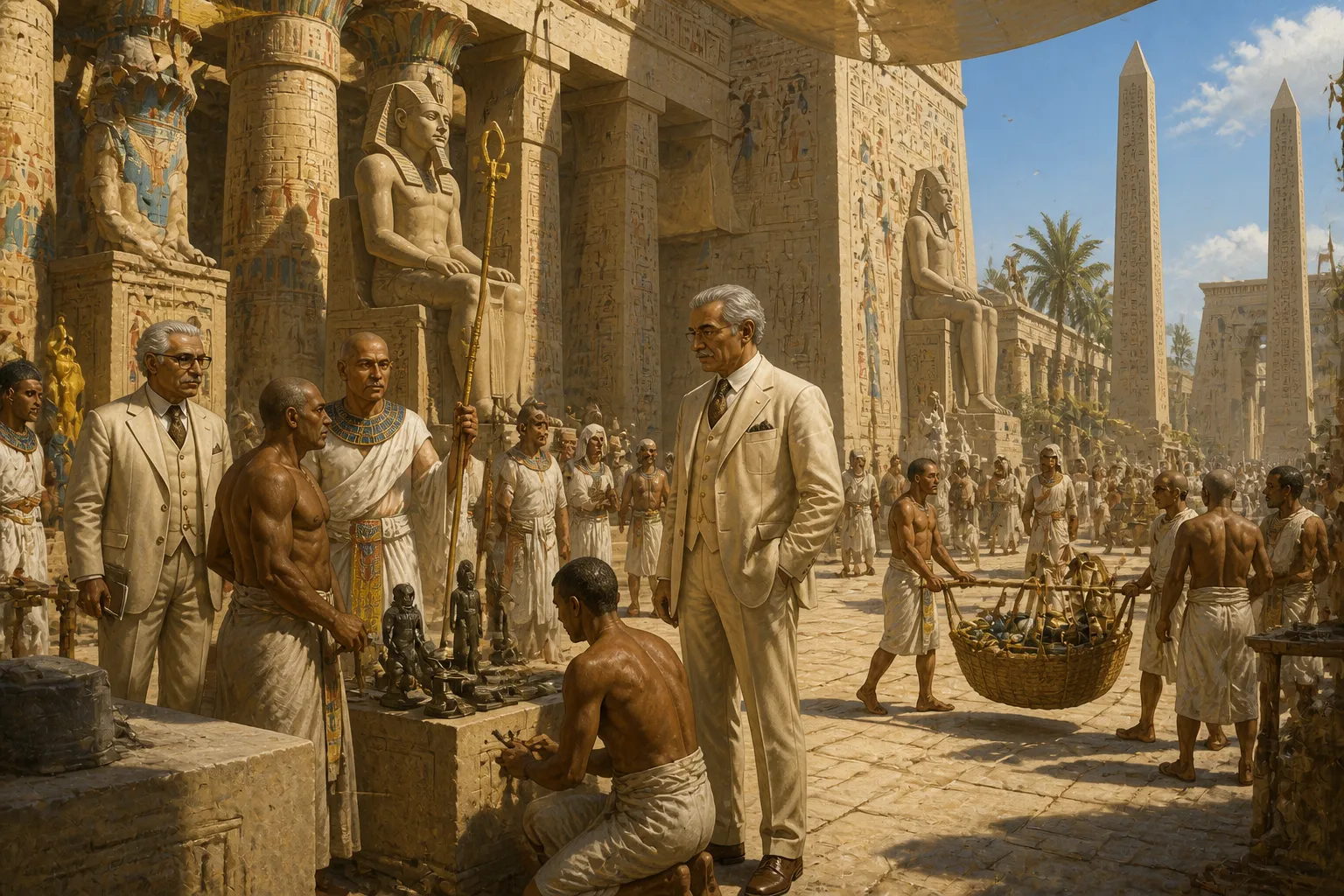
Amidst the awe-inspiring grandeur of the Karnak temple complex, the accumulation of offerings over centuries became a testament to the enduring faith and piety of ancient Egypt. The air is thick with incense as priests and dedicated craftsmen assemble under the imposing gaze of colossal statues of Amun and Ra. The ground is layered with sacred dust, a testament to the passage of countless devotees. Here, in the sacred heart of the temple, dedications overflow—statues of serene deities, intricately carved stelae, and amulets imbued with spiritual significance—each one a profound expression of devotion. As the sun descends, casting elongated shadows across the expansive courtyards, the priests reach a solemn decision: the oldest offerings, revered yet burdensome, must be gently retired to a hidden sanctuary, a deep pit chosen to cradle these sacred objects. In doing so, they are not forsaken but rather cherished, continuing their timeless guardianship of Egypt's spiritual heritage.
"We must honor them as we would our own ancestors," a priest intones, his voice steady and reverent.
Page 6 — Preservation in Crisis
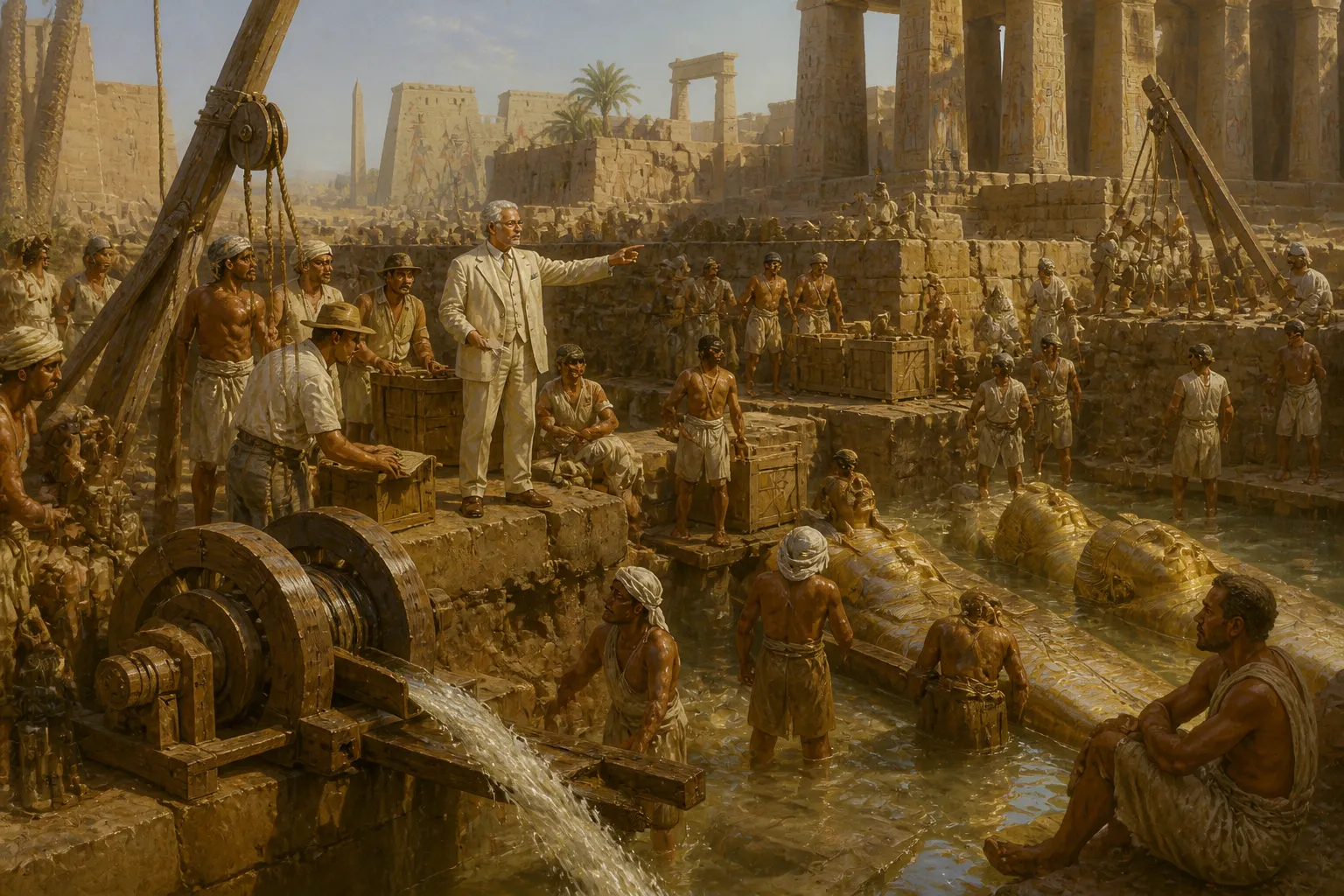
In the relentless battle against time, the pit of Karnak becomes a focal point in the preservation of Egypt's treasures, as the inexorable creep of groundwater threatens its integrity. Under the leadership of a dedicated team, pumps operate tirelessly, expelling water to safeguard the ancient artifacts within. The air is electrified with urgency, each moment saturated with the pressure of preservation. Workers, their hands skilled and practiced, handle relics with reverence and care. Each relic is meticulously cataloged before being extracted, a delicate maneuver balancing preservation against the elements. Statues once submerged rise anew, their surfaces glistening as the sounds of shifting water create a resonant backdrop. As the waters gradually recede, the secrets of Egypt's spiritual legacy emerge, unveiled by each ascending artifact.
"Quickly now, we mustn't let the water claim them again," a leader urges, orchestrating the operation with precision.
Page 7 — A Temple's Burden
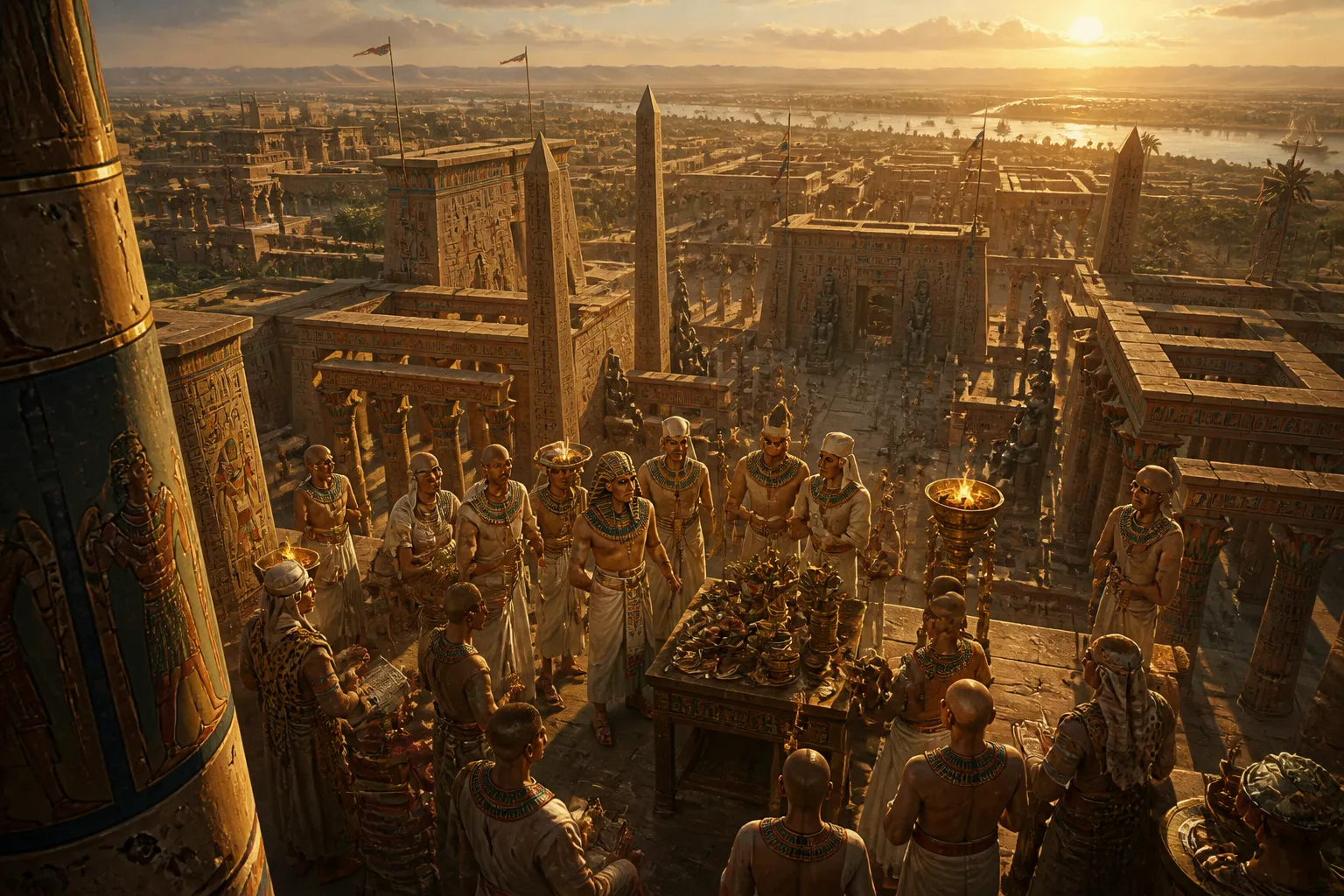
As the Karnak temple complex expanded over the centuries, so too did the sheer volume of offerings entrusted to its sanctuaries. Each artifact symbolized an act of devotion, gradually transforming the temple into a vast repository of faith. The inner sanctuaries, laden with statues, groaned under the weight of accumulated gifts. The air within these chambers is heavy with the scent of ancient incense, mingling with the dust of ages. Amidst the ongoing debates among priests and temple officials, a cautious yet inevitable decision emerged: these sacred relics required a new abode, unseen yet deeply valued. The chosen pit was a paradoxical resting place—a burial that honored rather than condemned, ensuring that the fervor of devotion remained undiminished, reverberating through the corridors of history.
"We carry the weight of the gods, yet still they bless us," a priest reflects, observing the filled courtyards.
Page 8 — The Return to Light
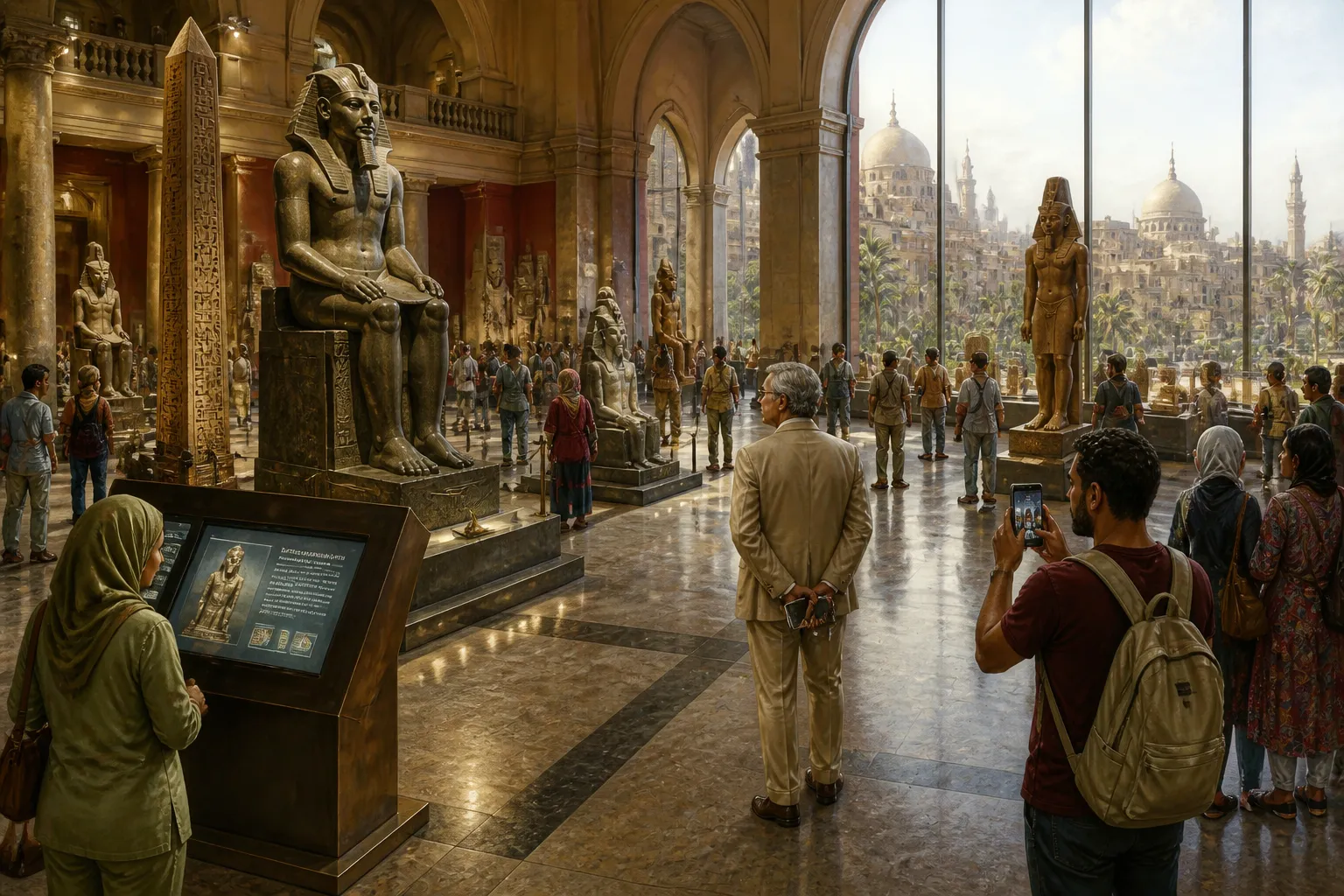
After spending decades shrouded in darkness, the statues from the Karnak Cachette step into the illumination of a new era. Transported with utmost care to Cairo, they find renewed purpose within the prestigious halls of the Egyptian Museum, where their narratives continue to inspire. The museum itself transforms into a sanctuary, not just for the statues but also for the legacy they carry, shedding light on the intricate tapestry of ancient Egypt. Visitors stand, captivated, as they forge connections with the souls of those who once revered these objects millennia ago. The polished floors echo with footsteps, a reminder of their return to prominence. Within the museum's walls, history echoes, bridging the ancient and the modern, granting life anew to the past.
"In their faces, we see our own history," a visitor remarks, gazing at the statues with awe.
Page 9 — A Legacy Unearthed
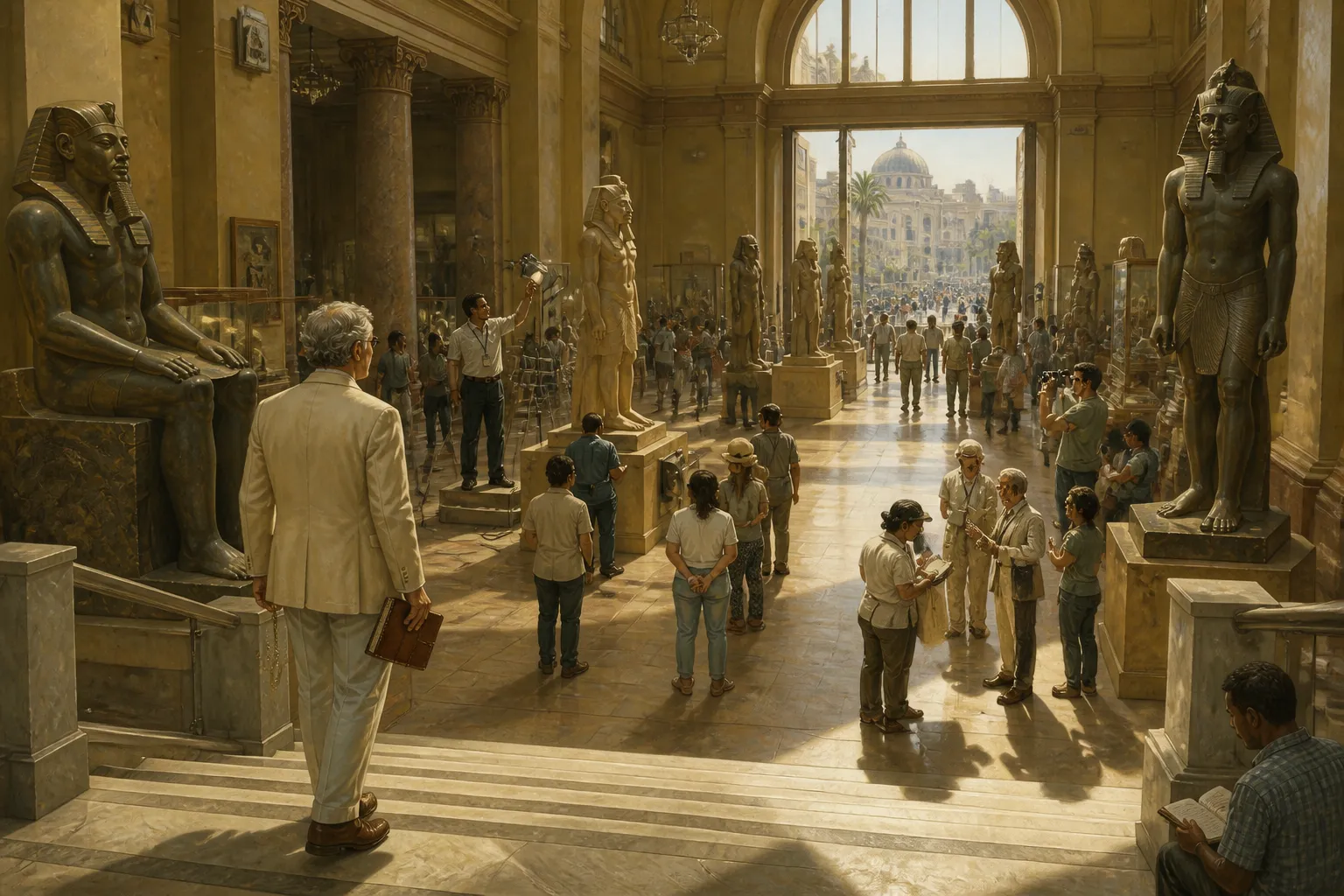
From the sands of Karnak to the halls of Cairo, the journey of these statues is a testament to the resilience of cultural heritage. Each piece, crafted with meticulous care and artistry, bears not just the weight of history, but the spiritual essence of a civilization that revered its gods and its past. The statues, made of stone and imbued with the divine, narrate stories through their intricate carvings and hieroglyphs. In the museum, curators and historians work diligently, ensuring these artifacts are more than relics; they are ambassadors of ancient Egypt's glory. As the dust of ages settles around them, the past stands firm, whispering its secrets to those who seek to learn and understand, connecting millions of minds across generations. This is the bridge between what was and what is yet to be.
"Our duty is to the future, to safeguard the past," a curator states, as they oversee the careful placement of statues.
Page 10 — Timeless Witnesses
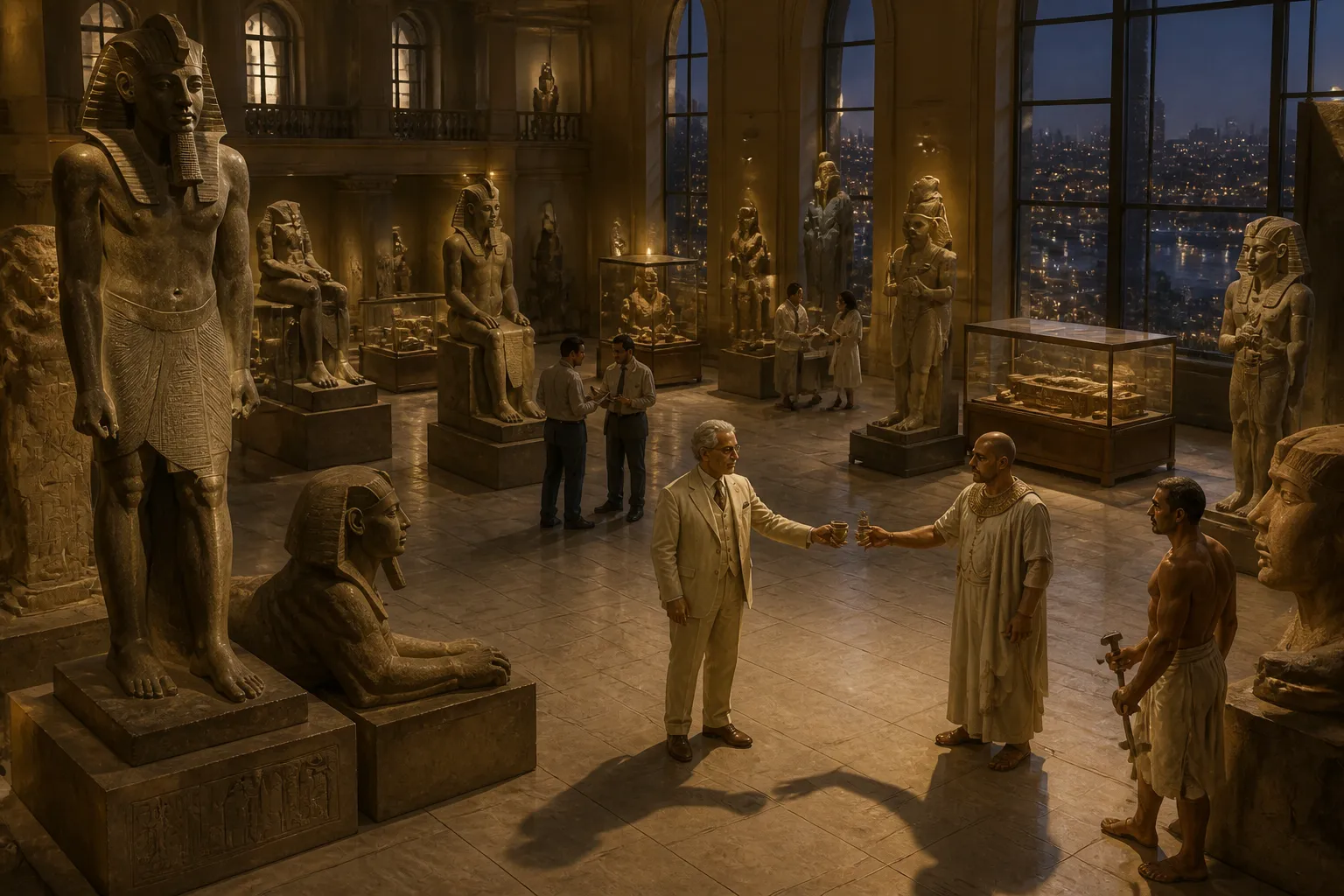
Standing again before the Karnak Cachette's remnants, its significance is now profound. These statues, once buried beneath sands and time, now stand as timeless witnesses to Egypt's enduring civilization. Carved from the finest stone, each figure, imbued with the spirit and skill of ancient artisans, endures as a beacon of cultural identity. As the museum quiets and the last visitors depart, leaving only the echo of their footsteps, the statues remain, guardians of history, keeping silent vigil over the past and inspiring endless discovery. In their silent, eternal gaze, the story of an ancient people lives on, offering insights and wisdom to all who stand before them, an unbroken lineage of human experience.
"They have seen ages pass and still stand resolute," a historian muses, as they close the museum for the night.
About this story
- Audience: general readers
Read Wonder Egypt on your phone
Wonder Egypt is available on Android. Get Wonder Egypt on Google Play.