The Papyrus of Ani
The Papyrus of Ani — an illustrated history story. 10 illustrated pages, free to read on Wonder Egypt.
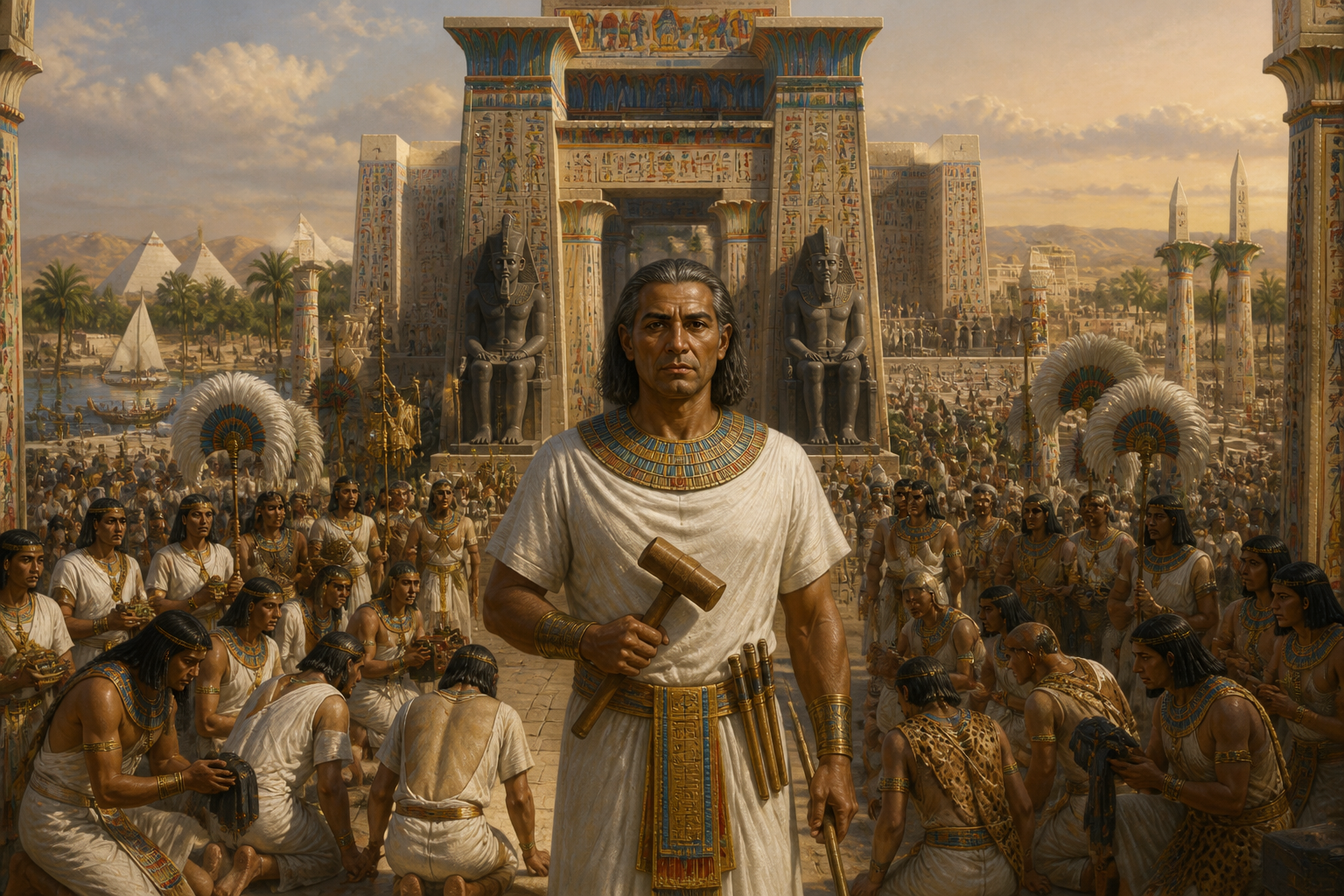
Page 1 — The Scroll Unfurled

In the softly lit expanse of Room 62 at the British Museum, the Papyrus of Ani commands attention, drawing visitors into a tableau of ancient truths and sacred journeys. This 78-foot funerary papyrus, skillfully fragmented into 37 sheets, showcases vibrant scenes of judgment and paradise, each panel a gateway to eternity. Visitors marvel at the vivid depictions of Ani, a meticulous scribe of ancient Thebes, as he navigates the perils of the afterlife with a calm resolve. Each sheet represents a journey, with hieroglyphs intricately narrating spells intended to protect Ani’s soul from the dangers that lurk in the Duat, the Egyptian underworld. The intricacy of the artwork, teeming with myriad gods and the trials of the afterlife, captivates onlookers, encouraging deep reflection on the ancient Egyptians' profound faith in their afterlife beliefs, where morality and piety were believed to dictate one's fate beyond the mortal realm.
Behold, the spells grant me passage to the Field of Reeds.
Page 2 — Ani's Journey

In the bustling streets of ancient Thebes, Ani, a respected scribe, commissions his Book of the Dead, a compendium of magic and spells crucial for navigating the afterlife. He stands inside a vibrant workshop, where artisans labor on scrolls destined for eternity, with each stroke of the reed pen reflecting both skill and devotion. The air hums with the murmur of scribes transcribing sacred spells onto papyrus, the quiet rustling interspersed with the occasional bout of laughter or debate. Ani, guided by unwavering faith and duty, selects passages tailored for his journey beyond, ensuring each incantation meets his spiritual needs. The workshop, a sanctuary of knowledge and craftsmanship, holds the promise of immortality, each brushstroke a safeguard in the Field of Reeds, the Egyptian paradise. His wife, Tutu, awaits the completion with bated breath, knowing these spells will accompany them both to the realms of Osiris, binding their souls eternally.
Let this scroll be my guide, my voice in the halls of Ma'at.
Page 3 — The Heart's Truth

Deep within the sanctum of a temple, Ani presents a heart scarab to the priest, an offering of profound spiritual importance. Carved from shining green stone, the beetle-shaped amulet is elegantly inscribed with sacred texts designed to command his heart's silence at the moment of divine judgment. The priest, robed in pristine white linen that shimmers in the dim light, intones blessings, his voice reverberating through the temple's hallowed halls, ensuring the scarab’s power to weigh Ani’s virtues accurately. Surrounding pillars, engraved with meticulous hieroglyphs and scenes of gods and pharaohs, echo his chants, creating an atmosphere of solemnity and reflection. Ani clutches the scarab, both a symbol of hope and a source of anxiety, pondering the scales of Ma'at where truth and righteousness shall be relentlessly tested.
May this heart of stone ensure my silence before the scales of Ma'at.
Page 4 — The Workshop's Craft

In a sun-drenched courtyard workshop, artisans meticulously carve shabti figures, each creation a pledge to spare Ani from eternal labor in the afterlife. These small, clay servants promise labor in the Fields of Reeds, a critical component of the Egyptian vision of the afterlife. Each figure, shaped with careful precision, bears miniature tools and hieroglyphic inscriptions compelling their duty to the deceased. The lead craftsman oversees the delicate process, his discerning eye ensuring each shabti is worthy of Ani's favor, for an improperly made figure might fail in its duties. This bustling scene, filled with rhythmic hammering and the earthy smell of sun-warmed clay, reflects the Egyptians’ deep belief in a well-provisioned afterlife, where status and comfort mirror those enjoyed in the land of the living.
May these shabtis serve in my stead, as guardians in the fields beyond.
Page 5 — A Ritual Farewell

In the grand hall of Ani's household, preparations for his burial reach their peak, a sacred ritual of passage imbued with deep cultural significance. Ani, now aged and contemplative, lies on a bier surrounded by mourners and priests. Incense smoke curls through the air as priestly chants invoke Osiris’ protection, creating an ethereal atmosphere of devotion and hope. Tutu, steadfast and adorned in mourning attire, places the heart scarab over Ani’s heart, a tangible link between them in this life and the next, ensuring his heart remains silent in judgment. The room brims with offerings—bread, beer, fruits—a testament to the sustenance required for Ani’s journey into the afterlife. This poignant scene captures a moment when the living and the dead coexist in a sacred harmony, a testament to the enduring bonds of love and duty.
May Ra guide your soul across the celestial river, beloved.
Page 6 — Entombed in Eternity

In the shadowed depths of Ani's tomb, priests and workers finalize the meticulous preparations for the afterlife journey. The walls, adorned with vibrant murals, illustrate Ani's passage, telling the story of a soul's quest for immortality. A priest, bearing a golden ankh, recites invocations that resonate through the tomb as shabti figures are carefully placed around the sarcophagus, each a servant ready to accompany Ani. The tomb resonates with sacred chants, intertwining with the soft rustling of linen wrappings that cocoon the body in preservation. As the final stone is sealed, marking the completion of this sacred rite, Ani’s journey begins anew, secured by ancient rituals and the enduring faith of his people, a faith that transcends time and space.
By Osiris' grace, these rites shall guide you to the horizon's embrace.
Page 7 — A Scroll's Journey

Millennia later, the sands of time part to reveal Ani's scroll, long buried and forgotten. Discovered by E. A. Wallis Budge in 1888, the papyrus lay preserved in the sun-drenched ruins of Thebes, a treasure hidden beneath layers of history. Budge, an astute Egyptologist with a keen eye for ancient relics, recognized its significance as a masterful artifact of an ancient civilization's spiritual life. The papyrus, brittle and faded by time's relentless passage, undergoes careful examination, each delicate fragment revealing glimpses of Ani's spiritual voyage. The scenes, painstakingly unrolled, reawaken the past, echoing the hopes and fears of a humble scribe from Thebes, bridging the gap between ancient belief and modern understanding.
This scroll shall unveil the mysteries of ancient beliefs.
Page 8 — Divided Legacy

In the late 19th century, the Papyrus of Ani reaches London, where the city is alive with curiosity and a growing hunger for the mysteries of the ancient past. The scroll, a testament to a civilization long vanished, is meticulously divided into 37 panels for display, each piece a window into the enigmatic world of Egypt. Curators and scholars, with an air of solemn duty, debate its preservation, striving to honor the work’s integrity while making it accessible to the public. In the stony silence of the museum, Ani’s story unfolds anew, as visitors gaze upon scenes of divine judgment, often unaware of the scroll’s fragmented journey to this room. Each panel serves as a silent emissary of the past, speaking volumes of the beliefs and rituals that shaped ancient Egyptian life.
Each panel must speak as vividly as the whole.
Page 9 — A Scholar's Vision

In the quiet confines of his study, E. A. Wallis Budge ponders the papyrus, now an integral part of the British Museum’s collection, a sacred text amidst the scholarship of centuries. Amidst shelves of leather-bound texts, each tome a testament to human knowledge and exploration, he delves into translating the hieroglyphs, each character a key to unlocking Ani’s fervent beliefs. Budge’s dedication to preserving these enigmatic symbols fosters a new understanding of ancient Egyptian spirituality, creating a bridge across millennia. Through his labor, the papyrus becomes not just a relic, but a living narrative alive with wonder and insight, a repository of ancient wisdom that continues to intrigue and educate.
These scriptures are the whispers of a civilization, spoken through time.
Page 10 — The Scroll Today

Returning to the present, Room 62 of the British Museum holds the Papyrus of Ani, a masterpiece of ancient Egyptian belief and artistry, commanding the same reverence it did when it was first created. Visitors stand transfixed, each panel a testament to Ani’s unwavering faith and the craftsmanship of its creators, who infused each stroke with life and meaning. The papyrus, though fragmented, embodies a continuity of human thought and spiritual contemplation, a timeless dialogue between the past and present. As the day wanes, shadows lengthen, and the papyrus stands as both artifact and narrative, a lingering question of the afterlife, echoing through history and inviting each new visitor to ponder their own beliefs and mortality.
In these lines, Ani speaks to us across time.
About this story
- Audience: general readers
Read Wonder Egypt on your phone
Wonder Egypt is available on Android. Get Wonder Egypt on Google Play.