The Sphinx Before the Nose
The Sphinx Before the Nose — an illustrated history story. 10 illustrated pages, free to read on Wonder Egypt.
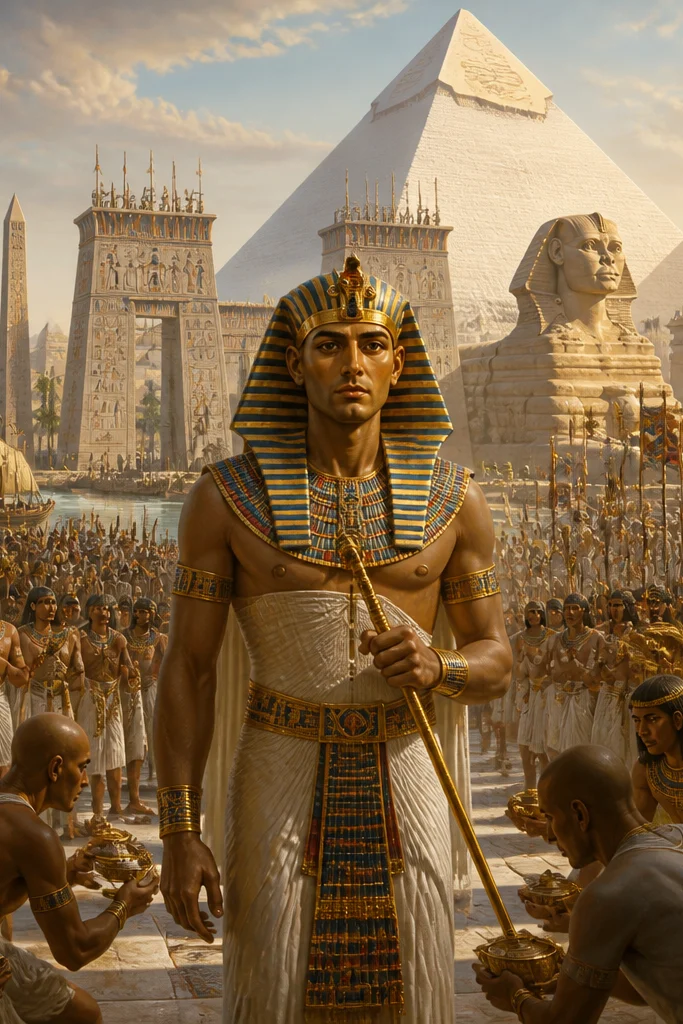
Page 1 — The Sphinx in the Sand
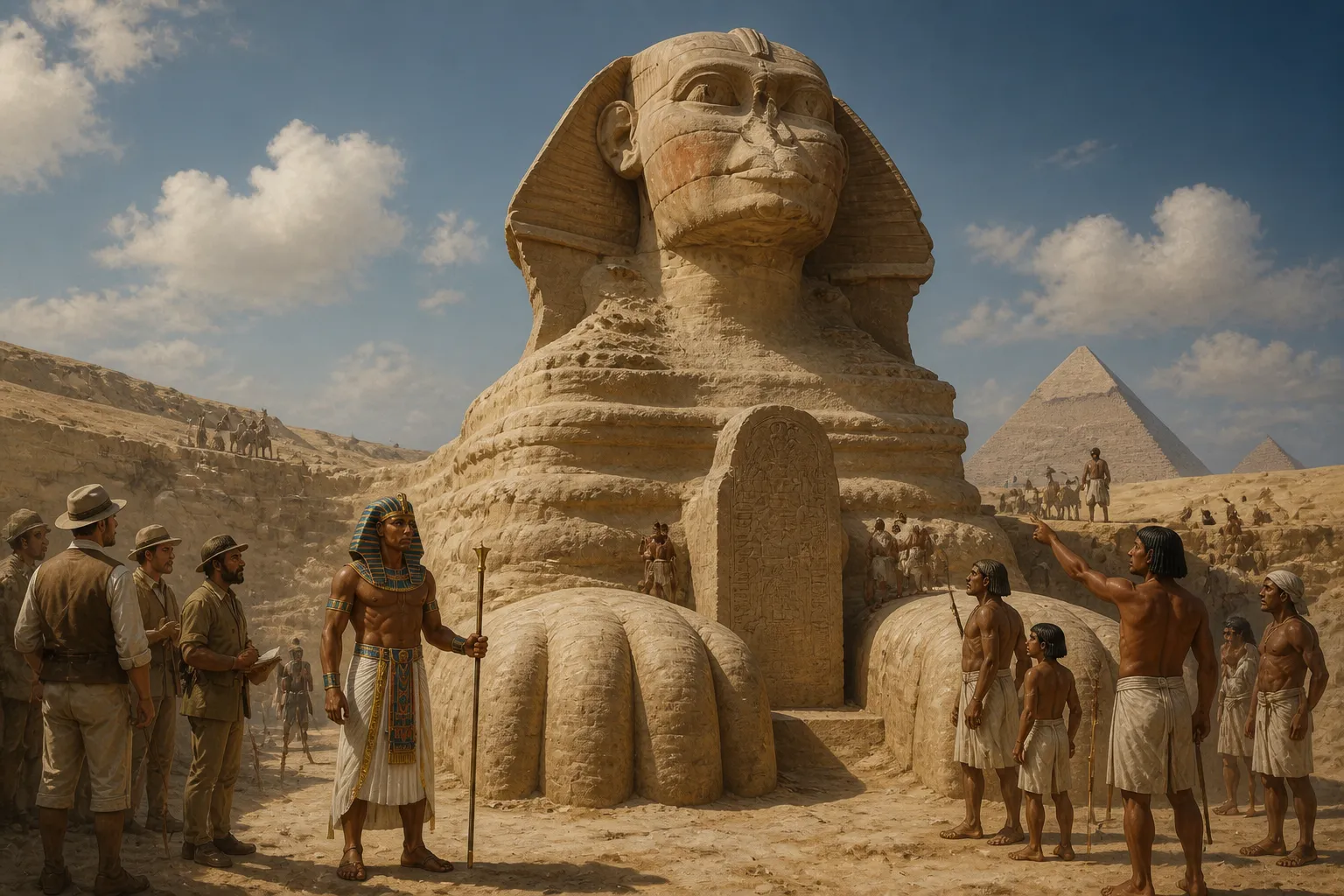
Amidst the golden sands of Giza, the Great Sphinx stands, a sentinel of ancient Egypt and the mysteries it harbors. Once, it was buried up to its shoulders, only the enigmatic face peering over the Sahara's undulating dunes. Crafted from a single limestone ridge, its visage features a proud, regal nose — now missing — and originally adorned with a ceremonial beard, hinting at its former glory. In the soft contours of its weathered cheeks, traces of red pigment whisper of a painted identity, vibrant and daunting, speaking to the artistry and reverence of its creators. Today, visitors stand in awe before its towering form, pondering the millennia of history that have swept over its stoic presence, leaving their marks both bold and subtle. The enduring gaze of the Sphinx invites reflection on time's passage and the civilizations that have come and gone beneath its watchful eyes.
Thutmose IV once declared, 'By freeing the Sphinx, I gain the favor of the gods, and my reign shall be long.'
Page 2 — Thutmose IV’s Dream
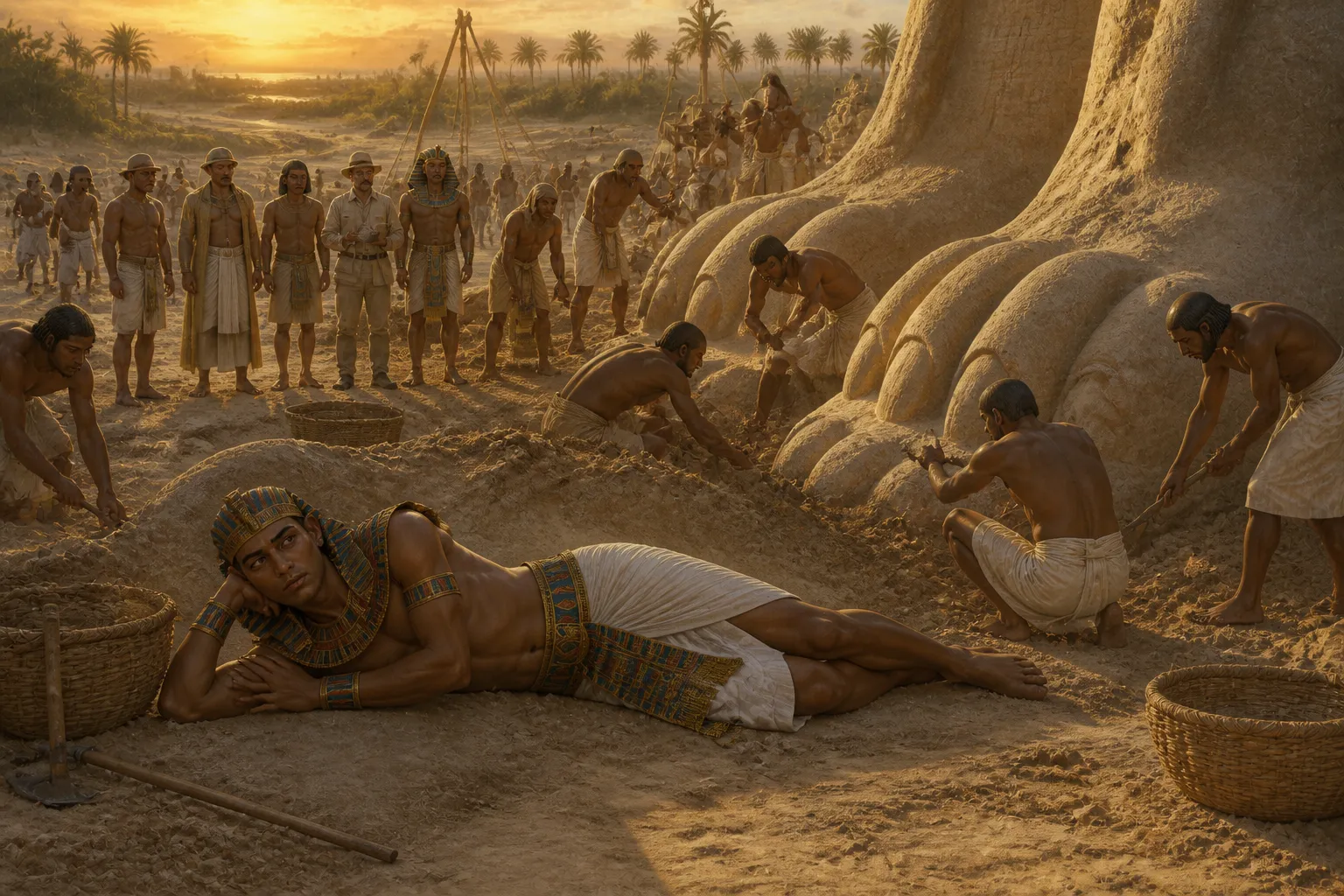
In the heart of ancient Egypt, Prince Thutmose drifts into a deep slumber beneath the mammoth paws of the Sphinx, enveloped in the cool shadow it casts. The creeping sands whisper across the stone, cloaking its majesty from the world and veiling its ancient mysteries. In his dream, the Sphinx's voice reverberates with an ethereal command, promising the prince the throne if he frees it from its sandy tomb. Upon awakening, Thutmose IV's resolve is unyielding, vowing to uncover the Sphinx, an act that will secure his divine right to rule. Heeding the call of the gods, he mobilizes an industrious cadre of workers who labor tirelessly under the scorching sun, revealing the grandeur of the lion-bodied guardian and cementing Thutmose's legacy in both stone and throne. This decree of the divine shapes his destiny and carves his name into the annals of history, celebrated for his devotion and his monumental achievement.
'Awake, my prince,' the Sphinx beckons in Thutmose's dream, 'free me from this sand, and you shall become king.'
Page 3 — The Roman Restoration
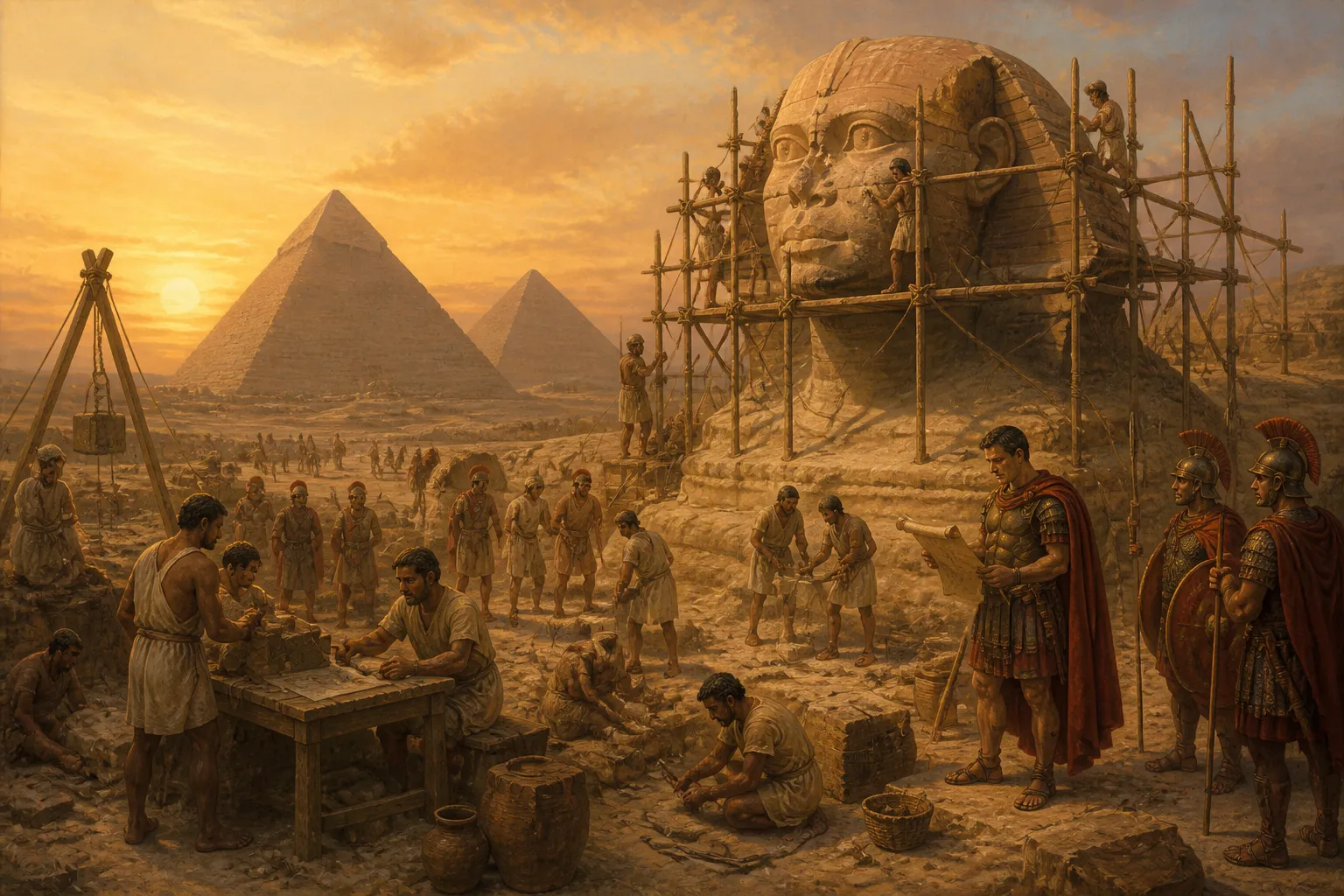
Centuries later, beneath the rule of the sprawling Roman Empire, a cadre of engineers and skilled laborers gather at the weathered feet of the Sphinx. With the vast resources of Rome at their disposal, they aim to restore the guardian of Giza, its visage marred by time, sandstorms, and neglect. Their tools may seem primitive by modern standards, yet their determination is steadfast, striving to invoke the splendor of Rome in honoring Egypt's past. Stone masons work with meticulous precision, chiseling and reinforcing the ancient structure, their hands deftly tracing the lines of history. Soldiers stand vigilant, watching over both the diligent workers and the drifting sands, their presence a testament to the Empire's commitment to preserving the grandeur of the past. The Sphinx, once again, begins to emerge from its sandy shroud, a testament to the enduring admiration for Egypt's monumental legacy across cultures and epochs, a convergence of civilizations spanning millennia.
'Let us preserve the glory of Egypt,' declares the leading Roman engineer. 'Our empire will honor this ancient colossus.'
Page 4 — The French Survey
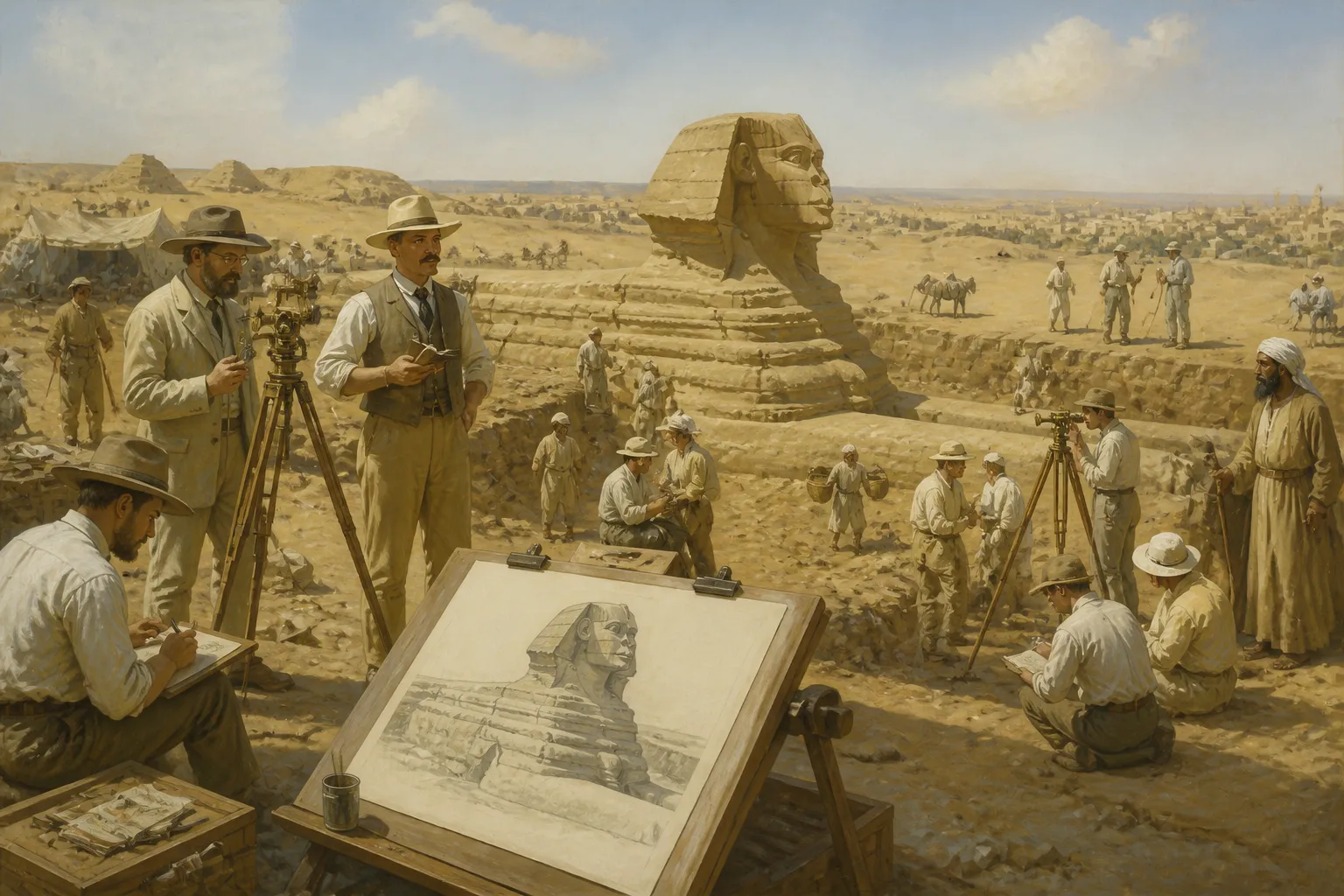
In the late 19th century, the relentless sands of time have once again claimed the Sphinx, its majestic features obscured under layers of wind-swept sediment. French archaeologist leads a dedicated team of surveyors and artists, each meticulously contributing to the study of this ancient wonder. With the precision afforded by modern instruments, they document every dimension of the Sphinx, noting the advanced erosion, the faint remnants of paint still clinging to stone, and the absence of its once-proud nose. The scent of ink and paper mingles with the desert heat as sketches and notes are rigorously compiled, laying the groundwork for future exploration and preservation efforts. This monumental task, bridging the past with the present, encapsulates the relentless pursuit of knowledge and the desire to preserve history for future generations, ensuring that the secrets of the Sphinx endure.
'We must capture every detail,' Mariette insists, 'for posterity and for history.'
Page 5 — The Mystery of the Nose
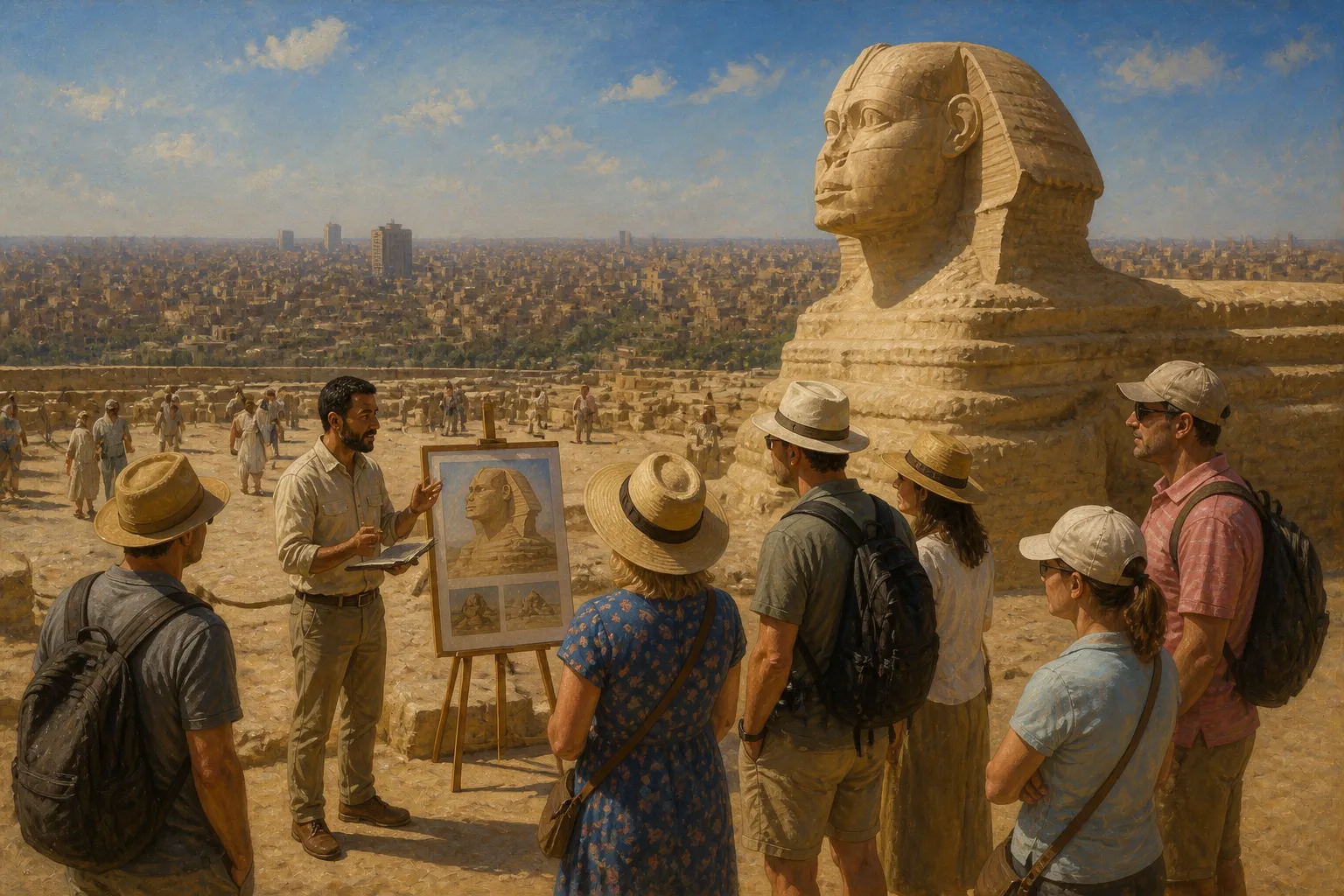
The Sphinx's missing nose remains an enduring enigma that captivates both scholars and casual visitors. While rumors attribute its absence to Napoleon’s artillery or acts of iconoclasm, definitive proof is elusive. Today, a distinguished Egyptologist stands at the base of this colossal monument, enveloped by the whispers of the desert breeze and the murmurs of intrigued tourists. Dressed in crisp linen garments suited for the arid climate, the Egyptologist meticulously examines ancient texts and carvings, each hypothesis adding layers of complexity to the mystery. The Sphinx, unyielding and enigmatic, stands watch over this quest for truth, its expression unchanging amidst the shifting sands, an eternal keeper of secrets waiting to tell its tale.
'The truth lies buried in history,' the Egyptologist muses, 'waiting for the right question to unearth it.'
Page 6 — The Discovery of Paint
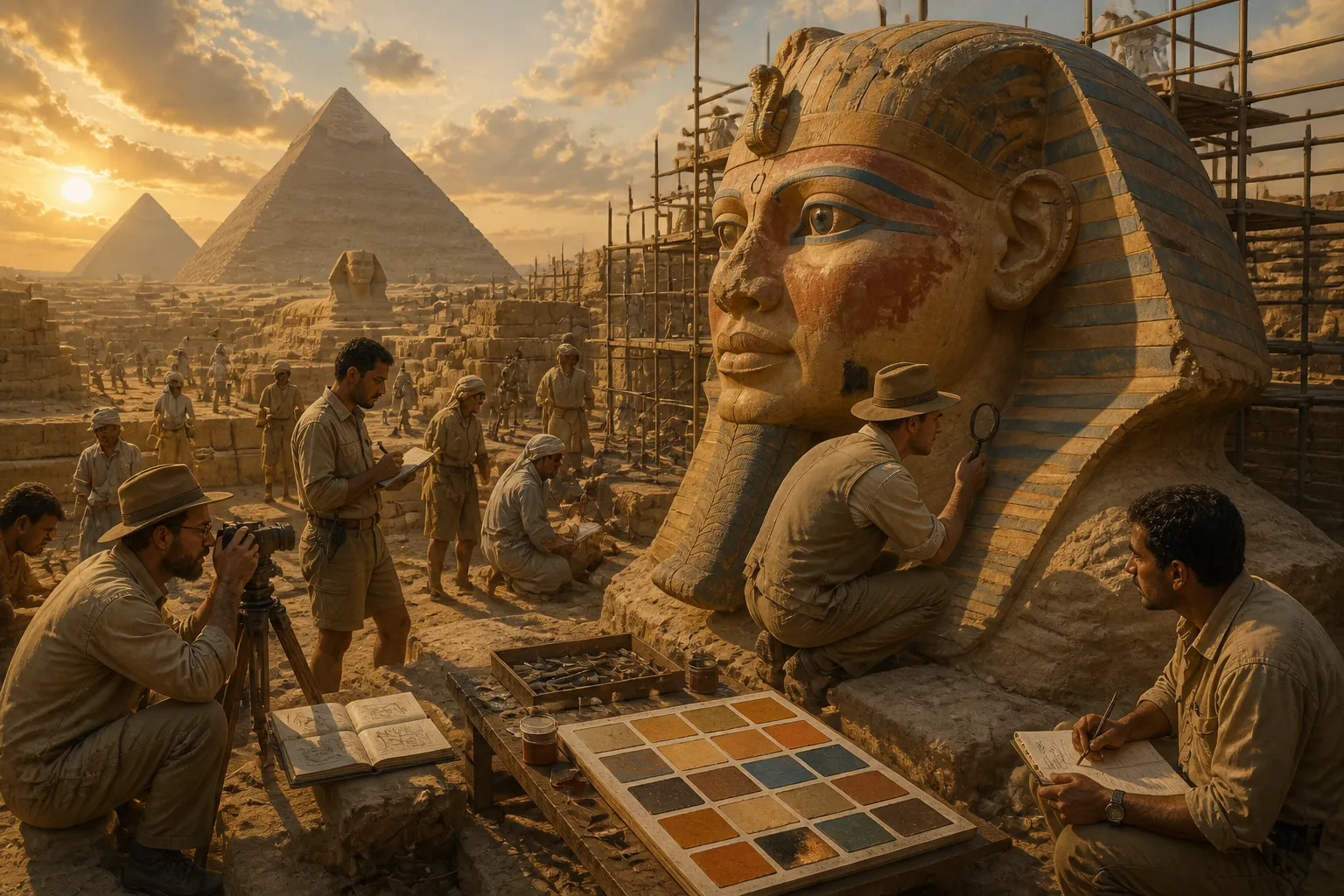
In the bustling early 20th century, the Sphinx unveiled another secret as German archaeologist Ludwig Borchardt made a groundbreaking discovery. While meticulously examining the weathered surface, he found remnants of ancient pigment, particularly vibrant red, which once adorned the Sphinx's majestic countenance. This revelation challenged the monochrome perception of ancient monuments, unveiling a civilization rich in color and artistic expression. As dusk fell over Giza, Borchardt's team, armed with brushes and delicate instruments, worked tirelessly under the fading light to carefully preserve these traces, their discovery reframing our understanding of Egypt's visual legacy and adding a vivid dimension to the ancient world.
'Imagine this colossus, alive with color,' Borchardt exclaims, 'a testament to the artistry of ancient Egypt.'
Page 7 — A Symbol Restored
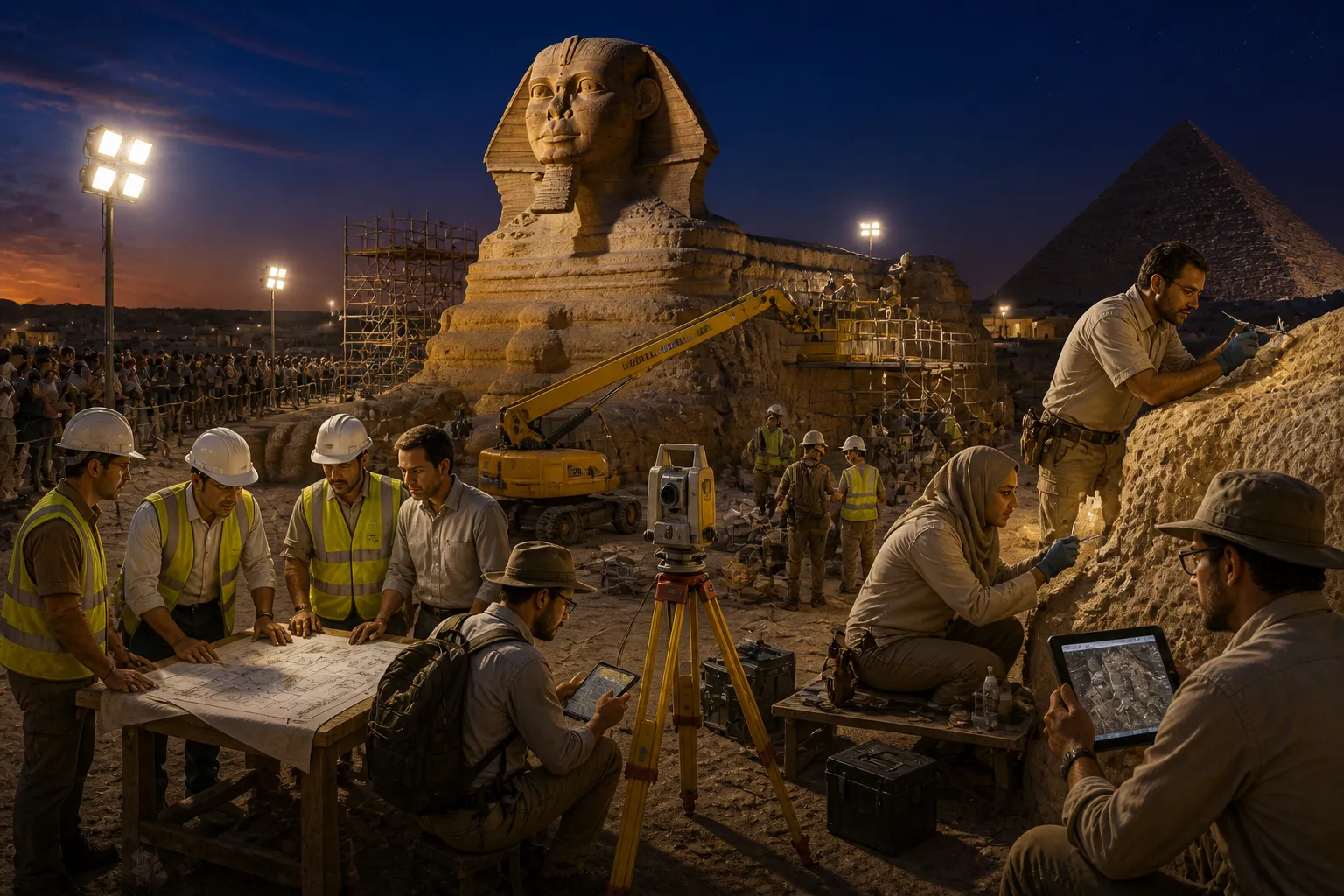
In contemporary times, the safeguarding of the Great Sphinx is a continuous, unified endeavor involving global expertise. Beneath the watchful gaze of this timeless guardian, a diverse consortium of engineers, archaeologists, and conservationists unite, dedicated to fortifying its ancient structure against both nature and human intervention. Advanced technologies, including state-of-the-art scanning and monitoring systems, are deployed to assess its condition, while cultural advocates strive to balance tourism with preservation. Amid the hum of machinery and scholarly dialogue, this resilient symbol of ancient grandeur stands, steadfastly bridging time, an enduring testament to human achievement and the relentless pursuit of historical preservation.
'We are guardians of history,' a conservator asserts, 'protecting the legacy of those who came before.'
Page 8 — The Tourist Perspective
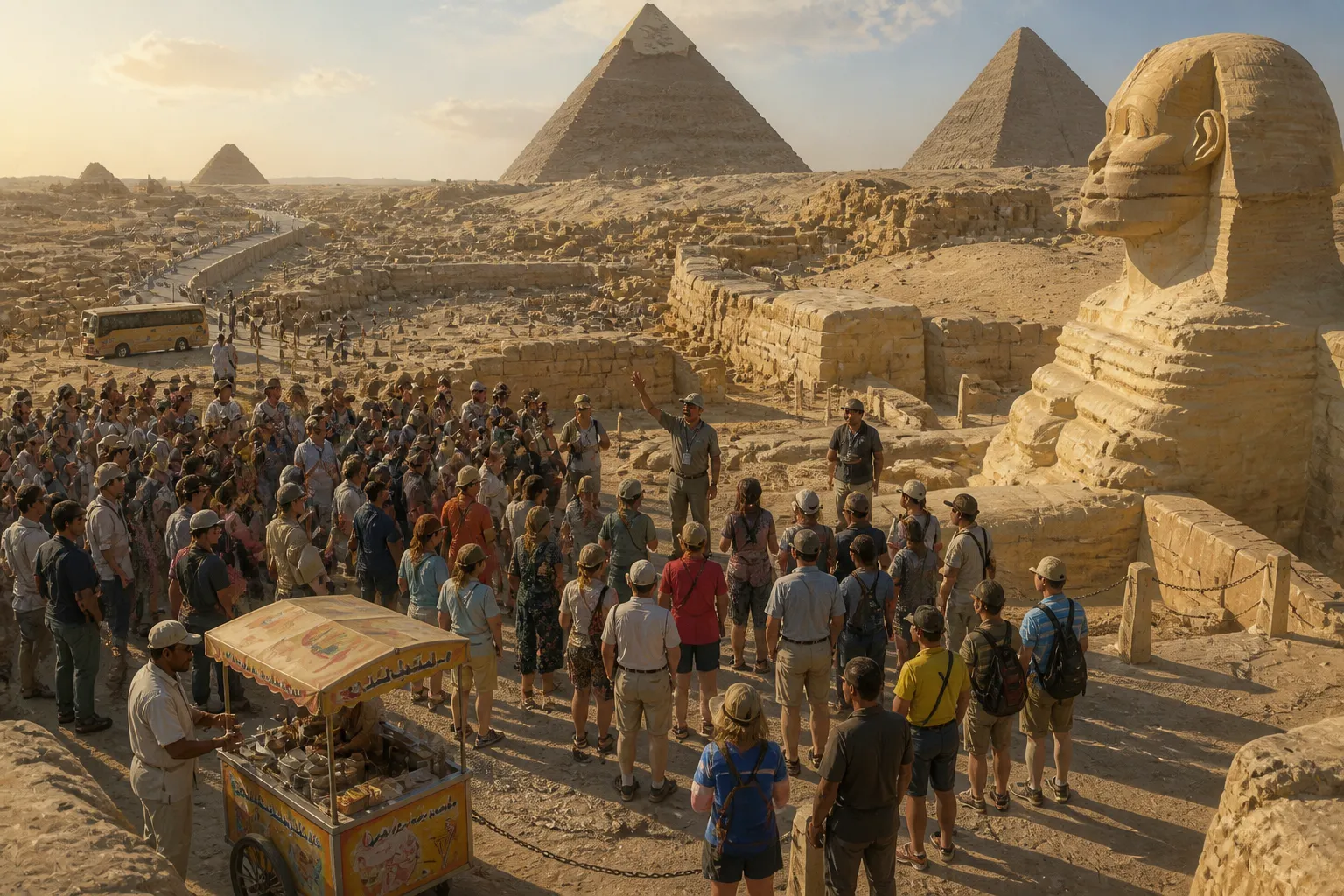
Visitors from across the globe flock to Giza, drawn by the mysteries of the Sphinx and the allure of its ancient gaze. They stand in awe, cameras capturing fleeting moments of wonder as the desert sun casts long shadows across the monument’s timeless features. Guides recount tales of pharaohs, gods, and the eternal sands, weaving narratives that bring the stone figure to life. The scent of dry desert heat mingles with excitement as crowds move through the space, each person seeking a personal connection to this legacy of ancient grandeur. The Sphinx remains, an eternal witness to countless stories and dreams.
'To see the Sphinx is to touch history,' a guide tells his group, gesturing towards the regal face.
Page 9 — The Sphinx's Legacy
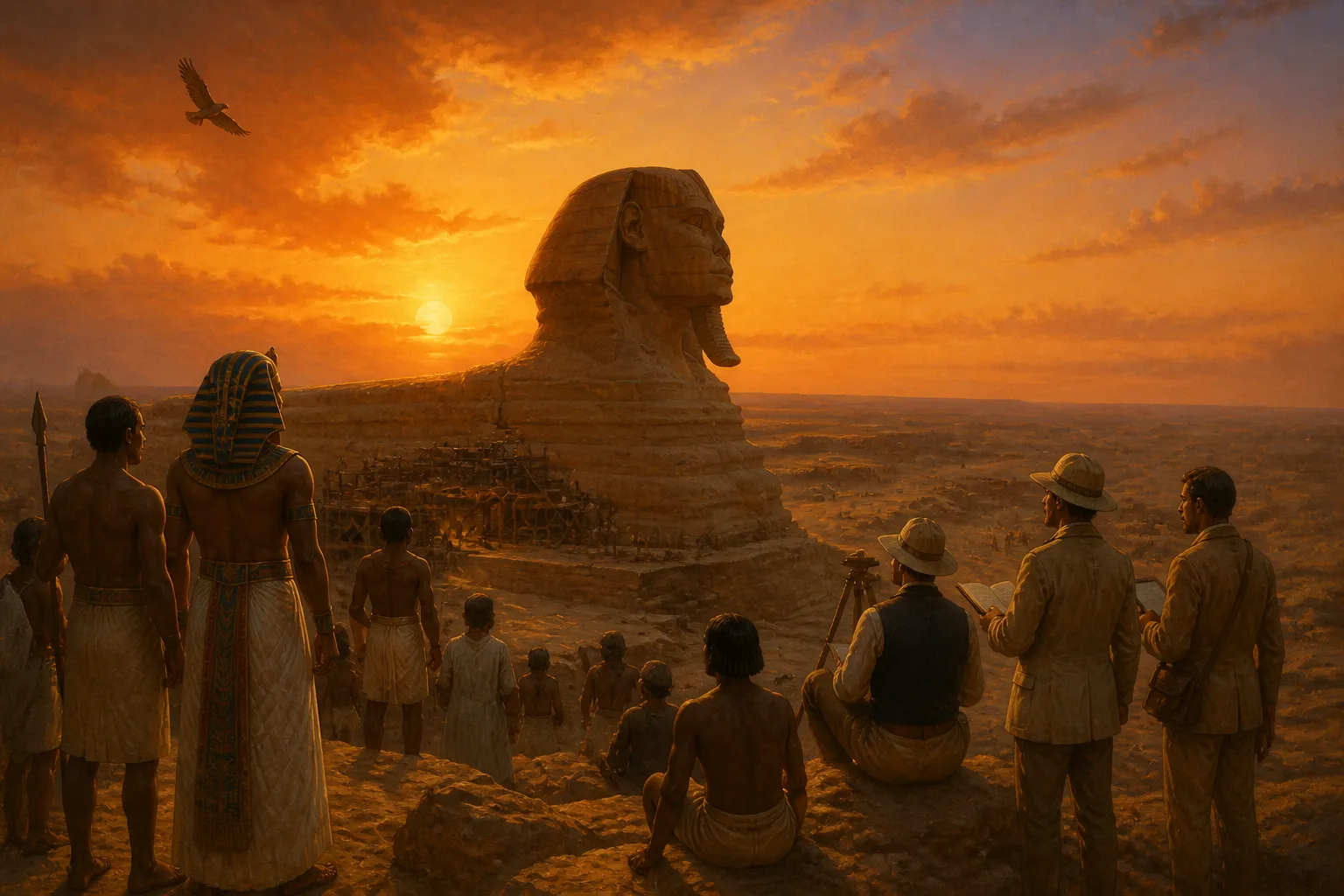
The Great Sphinx stands as an enduring symbol of ancient Egyptian civilization, a testament to human ingenuity and the passage of time. Its enigmatic face, once vivid with color and bearing traces of red, has inspired countless myths, stories, and scholarly inquiries. Carved from a single limestone ridge, the Sphinx has witnessed millennia pass, a sentinel in the shifting sands. The monument's legacy extends beyond its physical presence, influencing art, literature, and culture worldwide. As the sun rises and sets, it casts ever-changing shadows across the desert, reminding us of the transient nature of life and the permanence of stone. The Sphinx, a steadfast guardian, continues to embody the mysteries of the past and the curiosity of the future.
'Its secrets are its gift to us,' muses a scholar, 'a riddle for each generation to unravel.'
Page 10 — Return to the Present
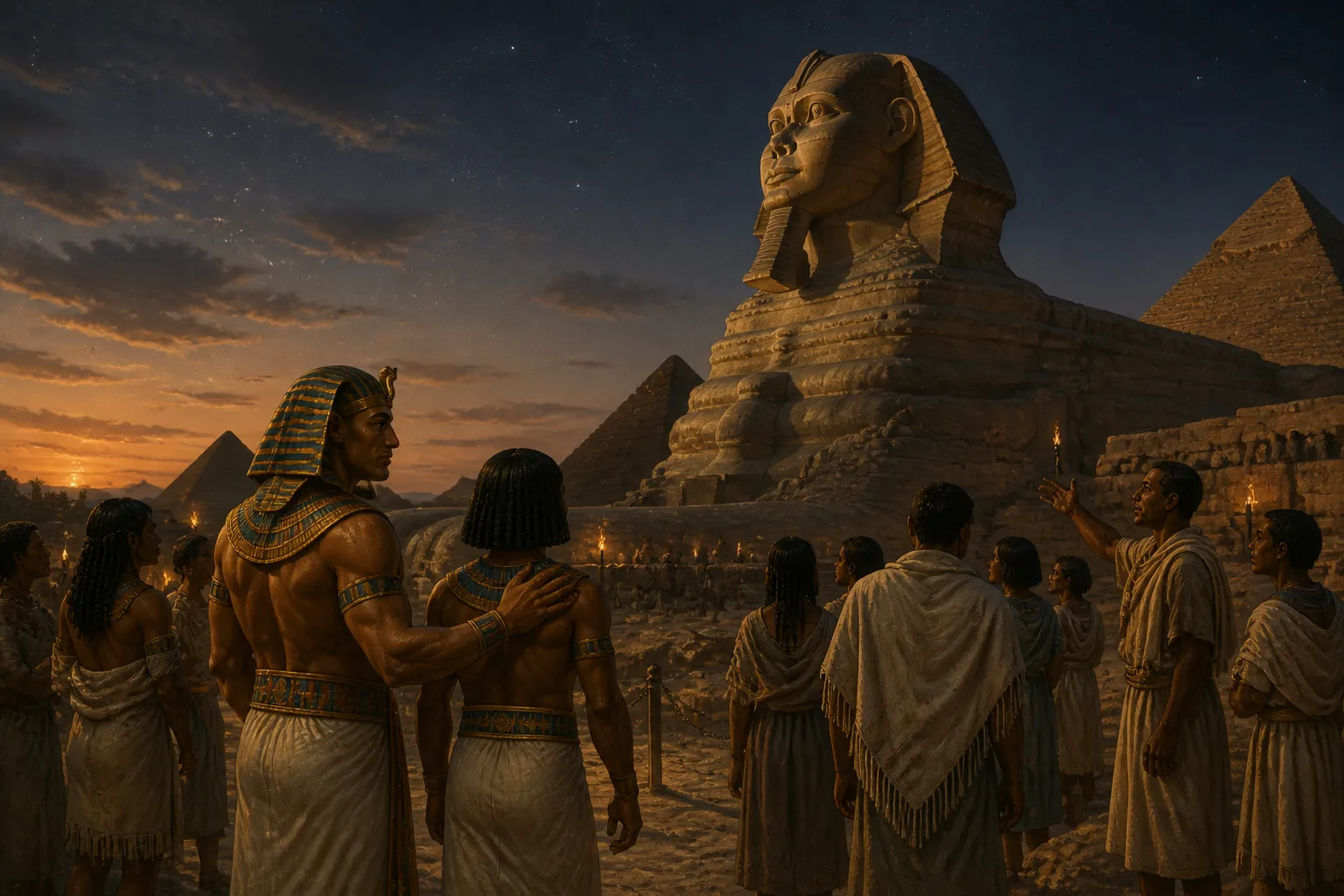
Standing once more before the Great Sphinx, the passage of time feels almost tangible, as if each grain of sand carries echoes of the past. The monument, though aged and weathered by the desert winds, remains as commanding as ever, a silent sentinel over the vast sands. Visitors stand captivated, pondering its vast history—from its creation in the Old Kingdom, through eras of pharaohs and conquerors, to modern restoration efforts preserving its majesty. The gentle whispers of the desert breeze seem to carry ancient voices, stories of gods and rulers that once resonated across the Nile. As the day fades, the Sphinx remains, a timeless guardian watching over Giza, a beacon of the ancient world that continues to capture the imaginations of all who behold it.
'In the presence of the Sphinx, time stands still,' reflects a visiting historian, 'bridging past and present.'
About this story
- Audience: general readers
Read Wonder Egypt on your phone
Wonder Egypt is available on Android. Get Wonder Egypt on Google Play.