The Strike at Deir el-Medina
The Strike at Deir el-Medina — an illustrated history story. 10 illustrated pages, free to read on Wonder Egypt.
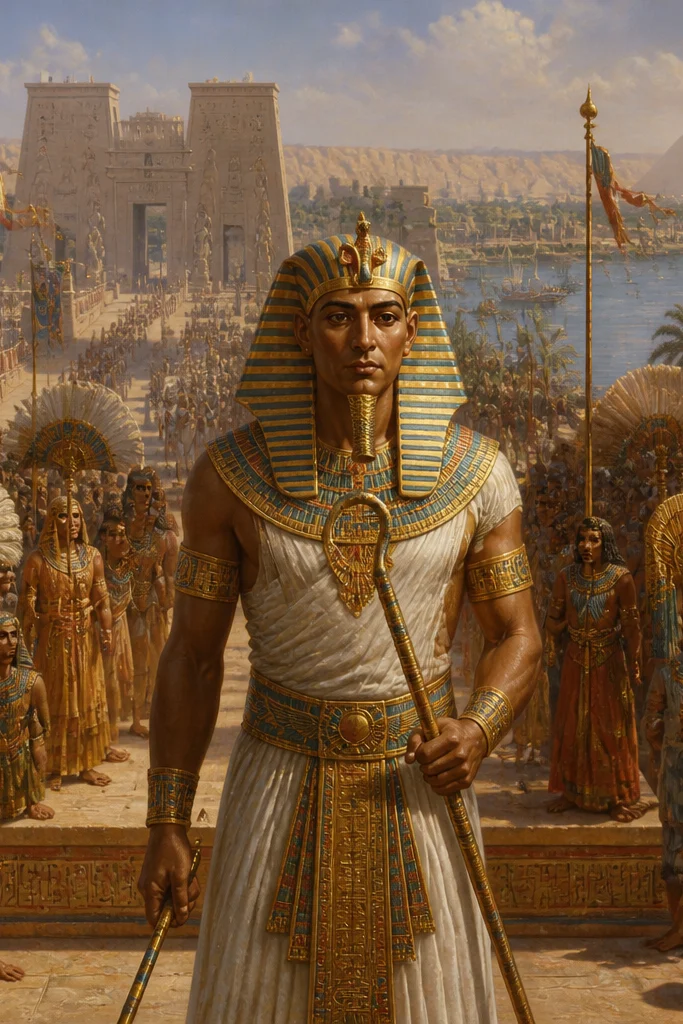
Page 1 — The Gathering of the Unpaid
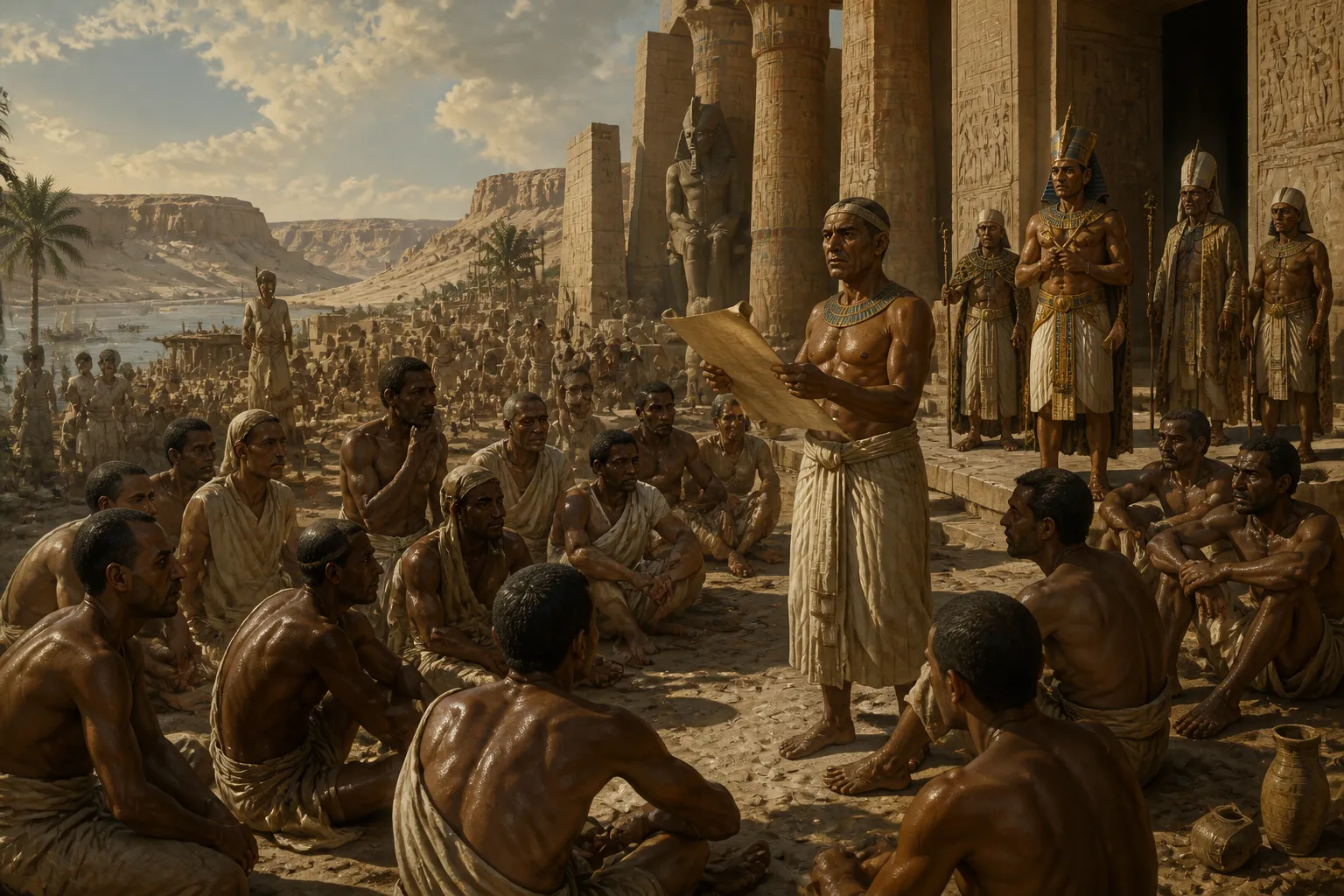
On a sweltering day in 1170 BC, a crowd of workmen, weary and aggrieved, gathered at Deir el-Medina. For eighteen long days, their wages had been overdue, a haunting reminder of their strife. At the epicenter stood Amennakht, the steadfast scribe, his stylus poised to record this unprecedented event—history's first recorded strike. These artisans, who meticulously crafted the eternal resting places of pharaohs, now voiced their grievances behind the majestic Ramesseum. The scene was one of stark reality, the sunbaked stone beneath them mirroring the hardness of their resolve. The air was thick with anticipation, their voices merging in a solemn chant, demanding what was rightfully theirs.
Amennakht declares, 'We shall not labor until our dues are met!'
Page 2 — Whispers of Dissent
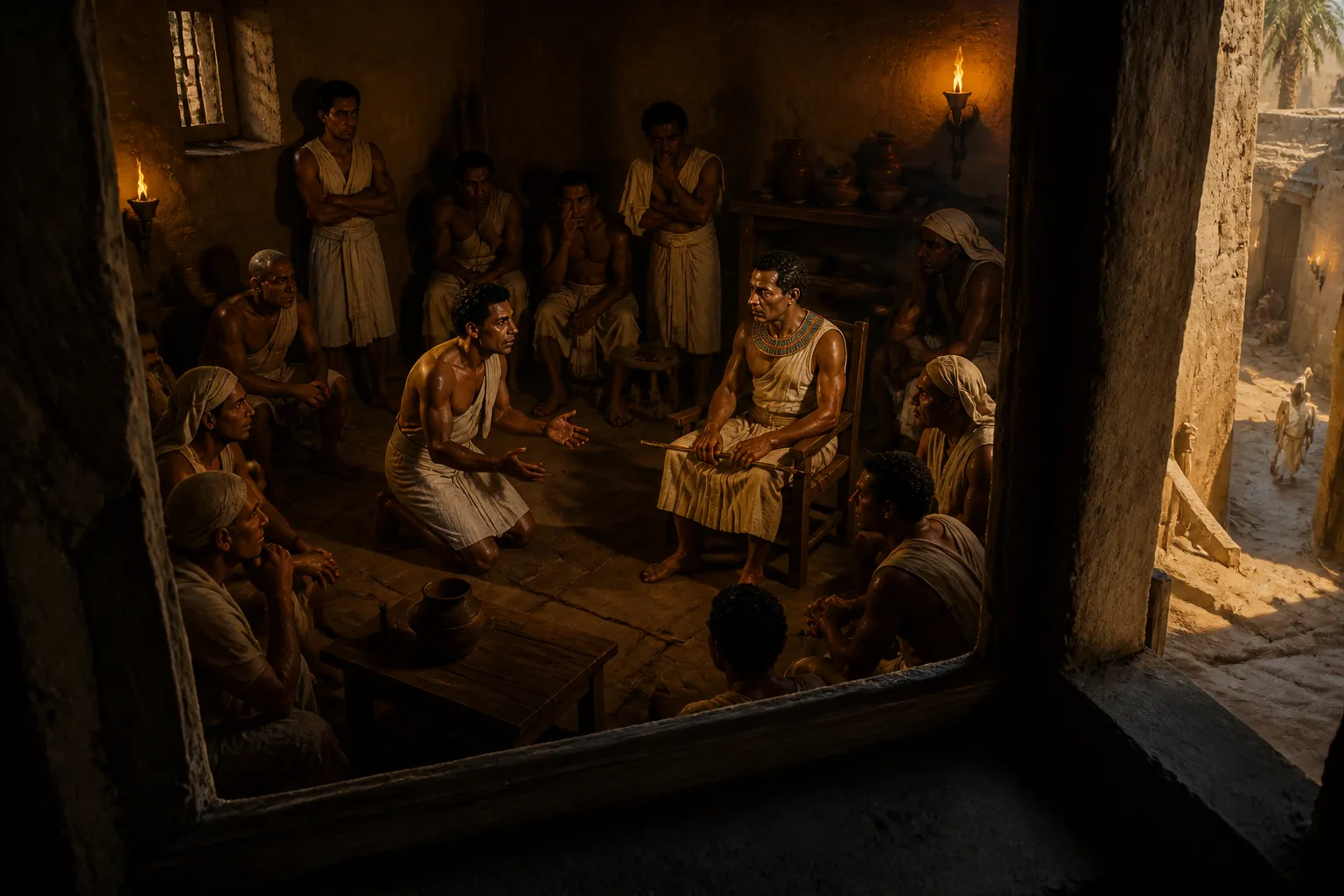
Amid the limestone cliffs of Deir el-Medina, whispers of dissent ripple through the cramped dwellings. Inside a modest mud-brick house, Amennakht meets with his peers under the flickering torchlight. The small room, with its thick air of anticipation, is filled with the murmuring voices of scribes and artisans alike, their fears and frustrations palpable. Linen garments cling to their perspiring bodies, a testament to the oppressive heat and tension. In these hushed tones, one persistent question echoes: how much longer can they withstand this delay? The decision is made—they will carry their plight to the gates of the Ramesseum, hoping for change.
A worker murmurs, 'Without bread, our families starve.'
Page 3 — March of the Determined
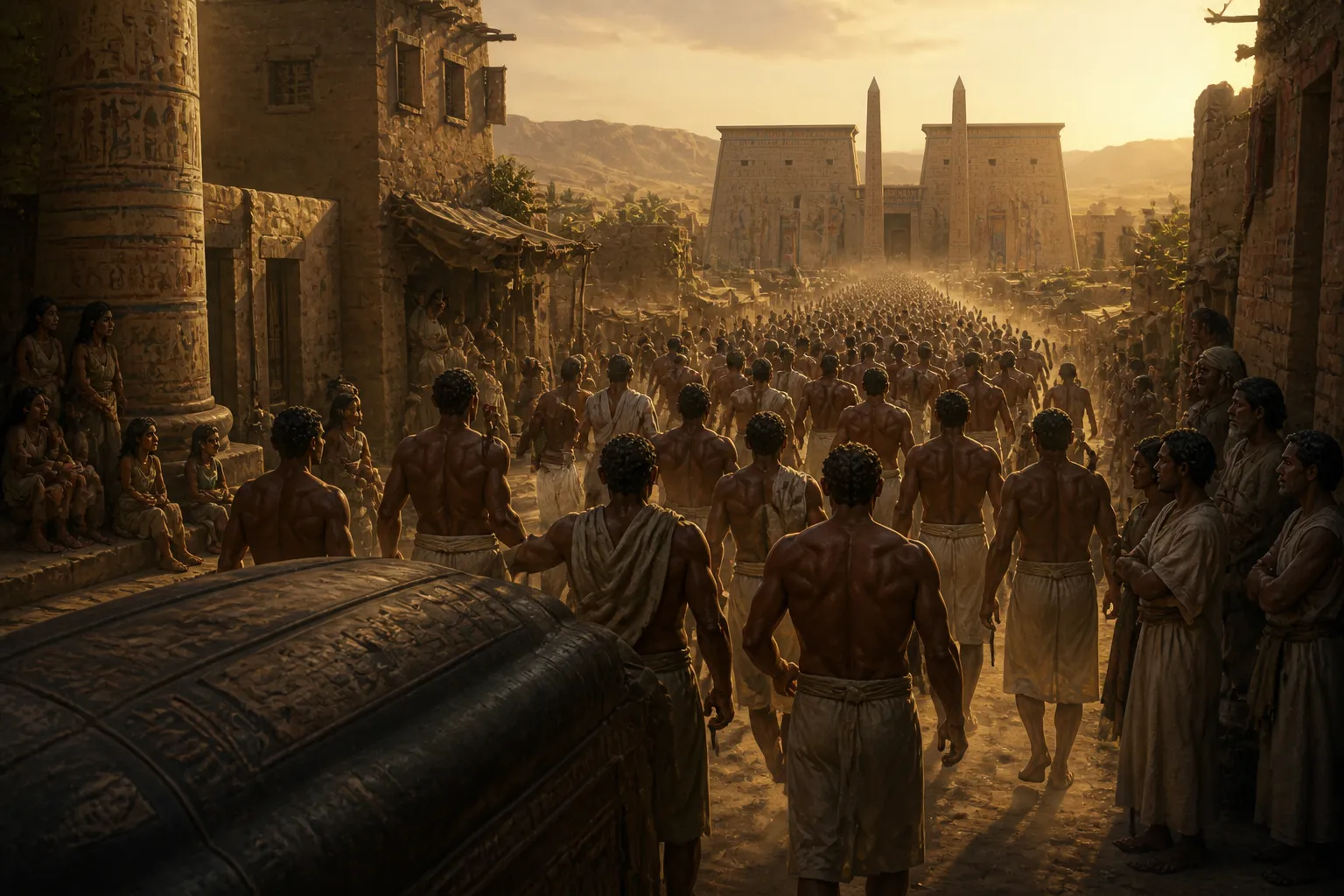
As dawn breaks over Thebes, a determined procession of artisans and laborers strides resolutely through the dusty streets, their tools abandoned but their spirits unyielding. The early morning sun blazes, casting elongated shadows as they make their way from Deir el-Medina toward the imposing Ramesseum. With each step, their numbers swell, a testament to their unity and shared suffering. Their collective voices rise in unison, a symphony of demand that echoes across the sands, a sound both haunting and inspiring. Villagers watch from the shadows, their whispers carried on the desert breeze, the air electric with the need for justice and acknowledgment.
A leader calls out, 'Forward, for our rights!'
Page 4 — The Confrontation
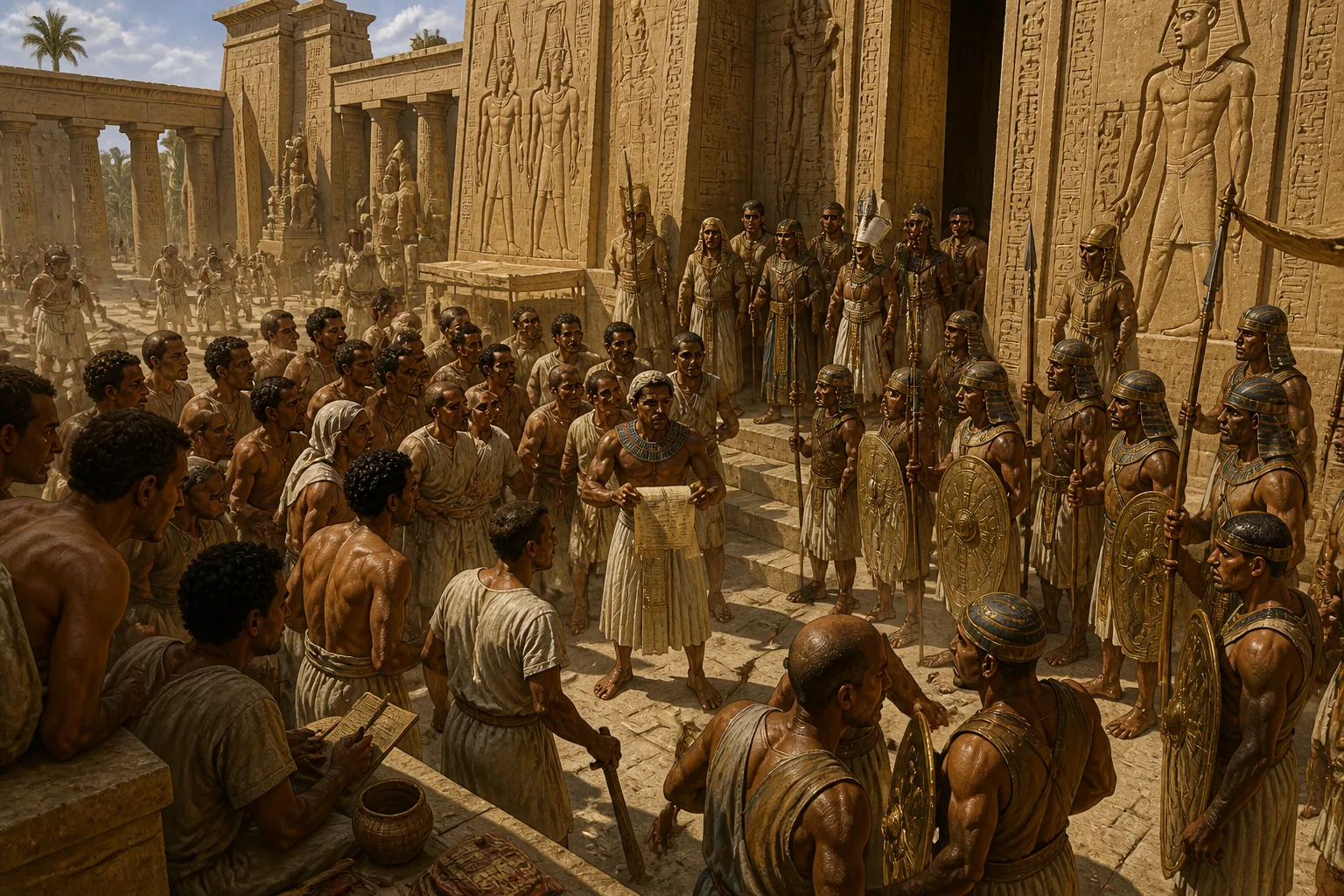
At the gates of the Ramesseum, the procession halts abruptly, confronted by the steadfast line of imposing guards. These guards, clad in leather skirts and brandishing spears, form a formidable barrier to the entrance. Behind them looms the colossal visage of Ramesses III, carved in enduring stone, a silent witness to the unfolding drama. Tension crackles in the hot, dry air as Amennakht steps forward, his weathered hand clutching the papyrus scroll that carries their demands. This gathering of laborers, once silent artisans, now stands resolute, the demand clear and uncompromising: their voices must reach the ears of the pharaoh.
Amennakht proclaims, 'We seek an audience with the king!'
Page 5 — Entreaty to the Vizier
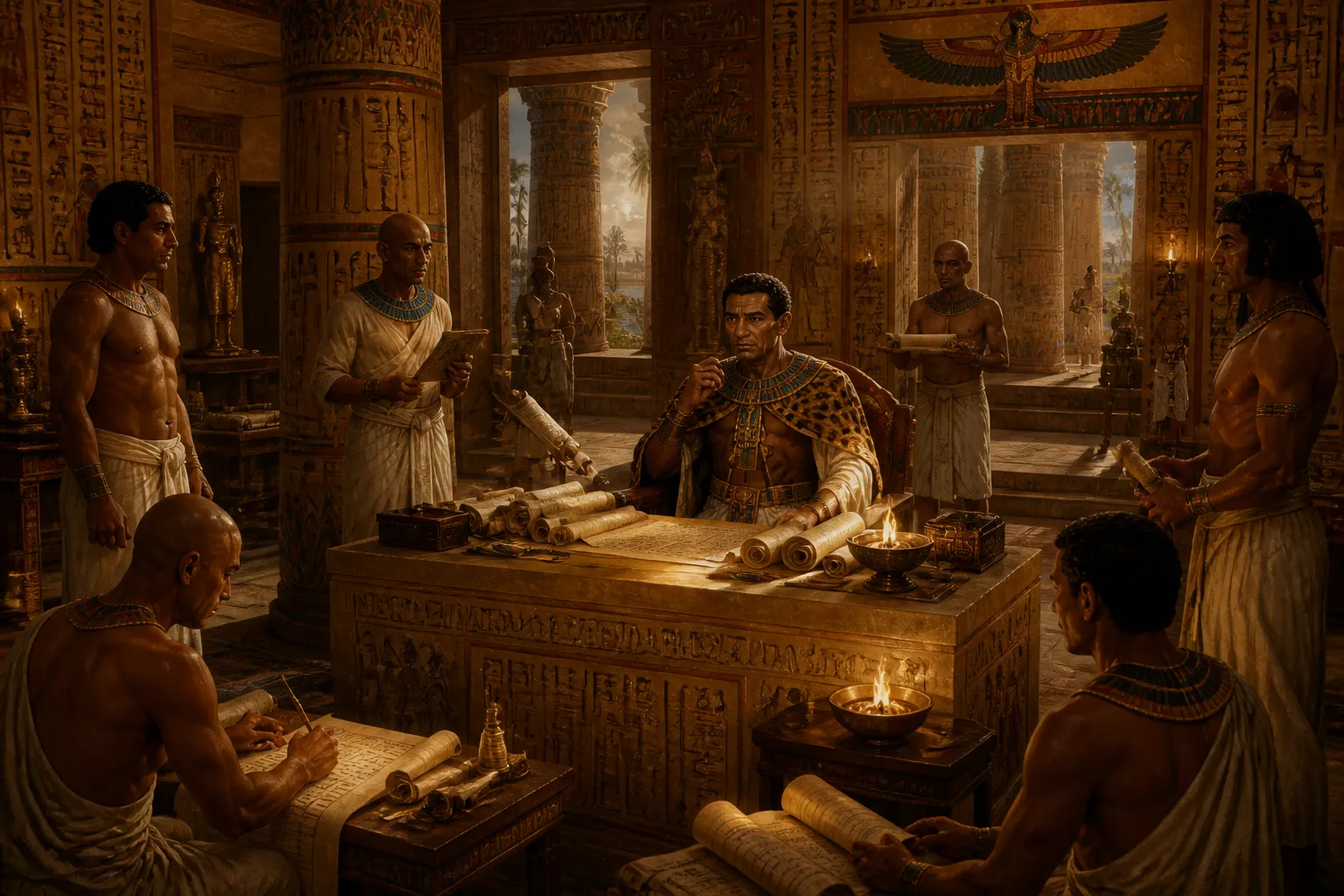
Within the cool stone halls of the vizier's residence, the atmosphere is fraught with tension and anticipation. Vizier To, the pharaoh's right hand, sits in silent contemplation amidst a gathering of scribes and officials. The echoes of the workers' demands reverberate within these walls, the weight of responsibility heavy upon his shoulders. To understands the gravity of this moment; he must navigate the subtleties of power with wisdom and tact. These workers, they who build the tombs meant to secure the pharaoh’s eternal legacy, cannot be ignored. The path forward must be carefully considered, for the balance of the kingdom is tenuous.
Vizier To murmurs, 'We must maintain harmony, but at what cost?'
Page 6 — The Scribe's Record
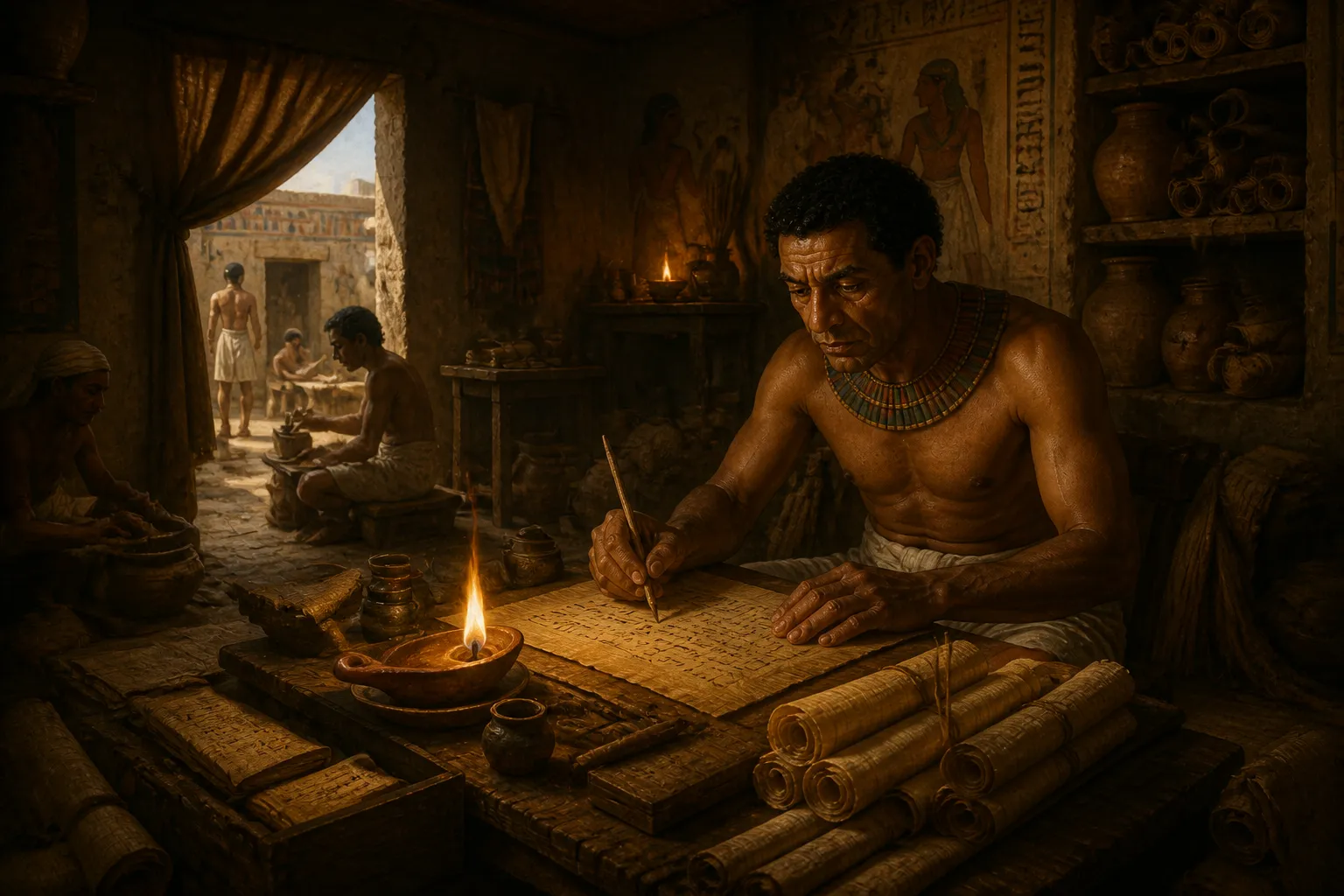
Back at Deir el-Medina, Amennakht the scribe sits in his modest chamber, where the flicker of an oil lamp illuminates his focused expression. His stylus moves with deliberate intent across the papyrus, capturing the unrest, the pleas, and the silence that followed the confrontation at the temple. Each word becomes a testament to their struggle, immortalized for generations yet to come. As he pauses, the full weight of history seems to settle in his ink-stained hands. This record is not merely a document for now, but a legacy for the ages, a reminder of the voices that rose against oppression.
Amennakht writes, 'Let this be remembered, the day our voices rose.'
Page 7 — Under the Gaze of Amun
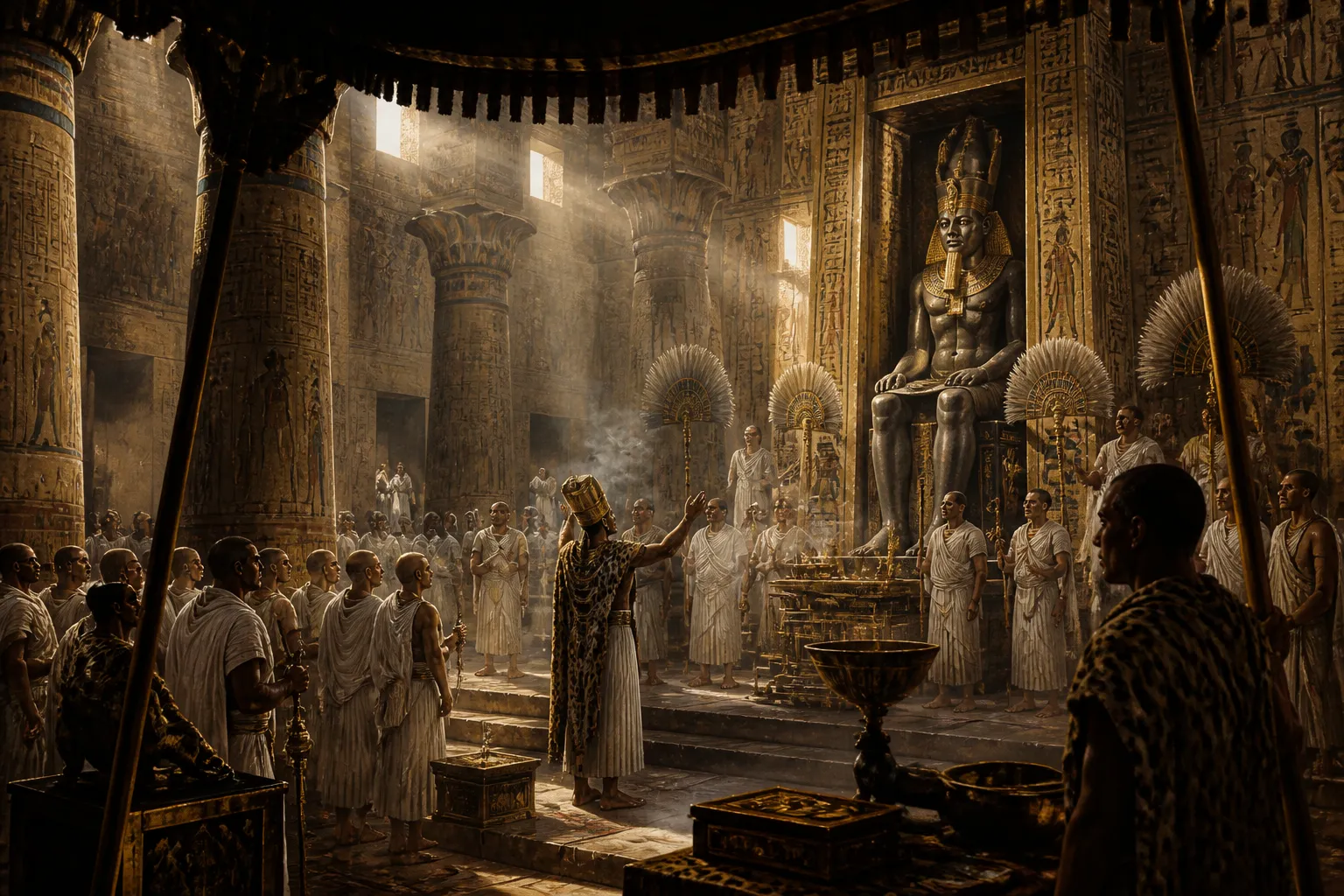
In the sacred hall of Karnak, the air is thick with the scent of incense, a fragrant offering to the divine. Majestically tall columns rise like ancient stone giants, bearing witness to the earnest entreaties of the high priest, Usermaatranakht. His gaze is fixed upon the colossal statue of Amun, seeking divine favor to resolve the unrest that threatens the kingdom's harmony. Priests clad in pristine linen chant in unison, their voices a rhythmic tapestry of faith that echoes through the cavernous space. The fate of the kingdom hangs in the balance, and the gods' guidance is fervently sought.
Usermaatranakht prays, 'Amun, grant us wisdom to restore peace.'
Page 8 — The King's Decision
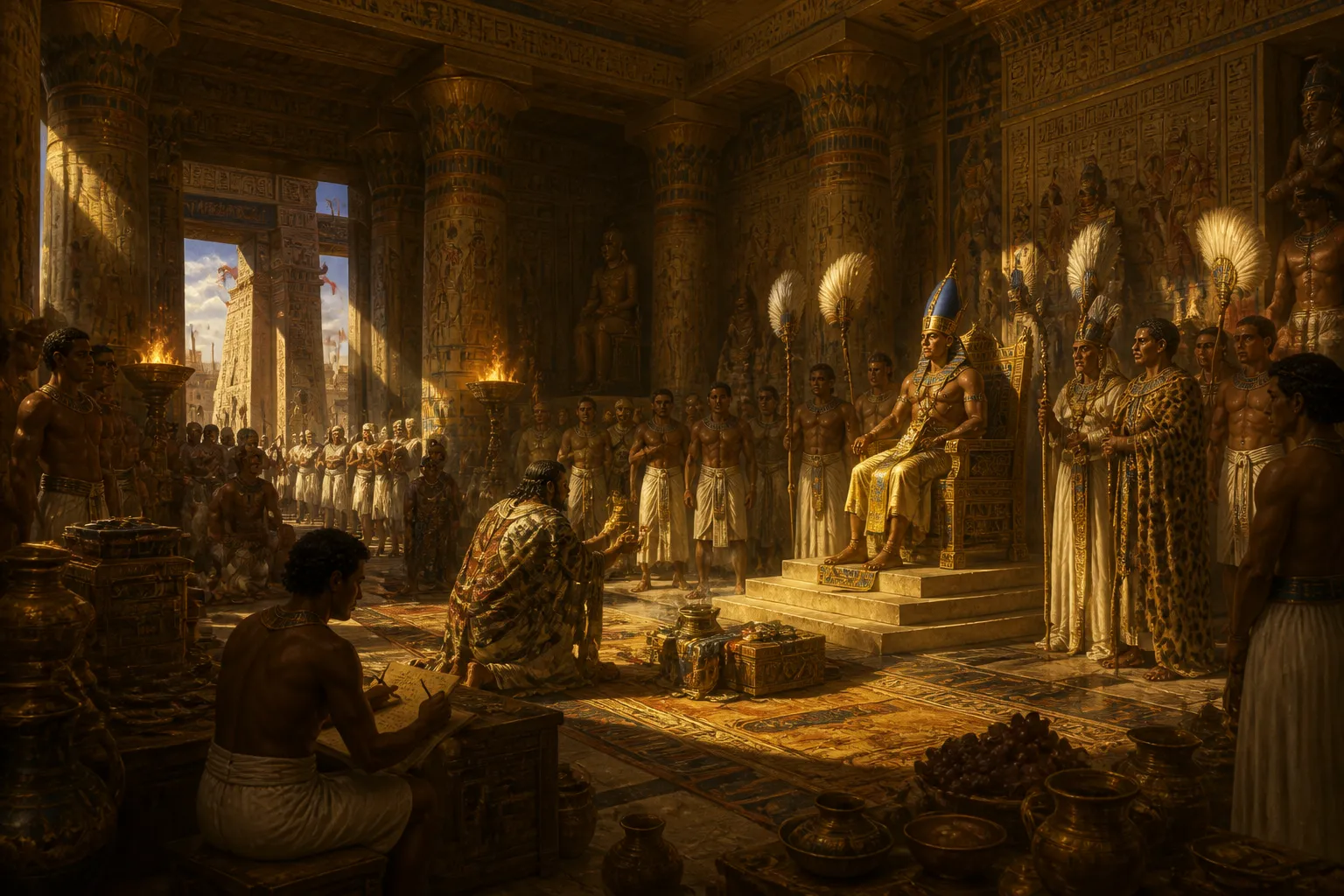
In the opulent throne room of Pi-Ramesses, Ramesses III deliberates with his council amidst the splendor that befits a pharaoh. His presence is commanding, yet lines of concern crease his brow beneath the gleaming khepresh, the tall blue war crown that signifies his authority. He listens intently as Vizier To recounts the grievances of the workers, whose labor is critical to the kingdom's legacy. The room is hushed, filled with officials and courtiers, all eyes fixed on the sovereign. A decree must be issued; the stability of the kingdom, so delicately poised, depends upon it. The decision, as tangible as the scepters held by the guards, must be swift and just.
Ramesses III commands, 'Bring forth justice and quell this disquiet.'
Page 9 — Wages Restored
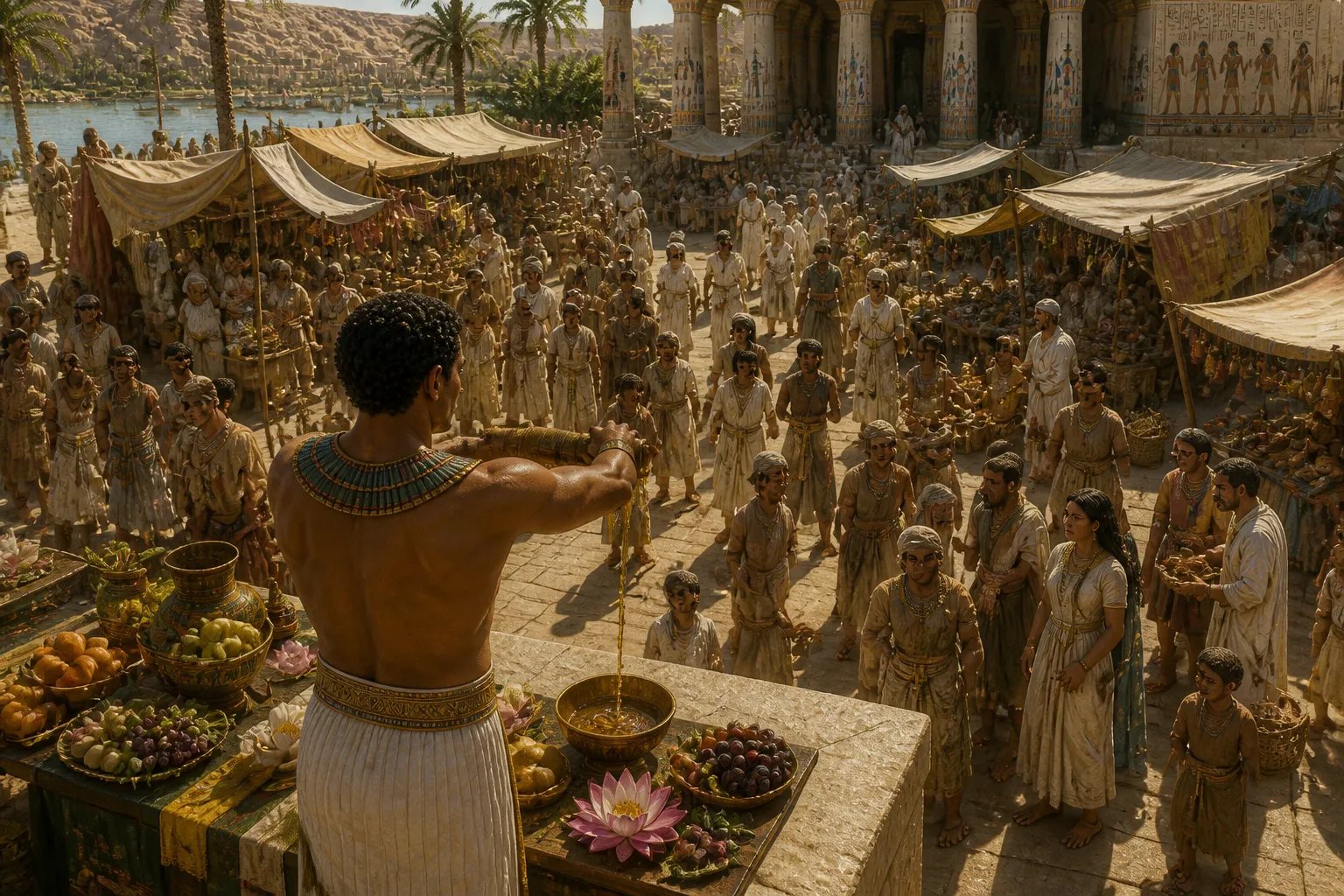
In the bustling marketplace of Thebes, the news spreads like wildfire, a decree from the pharaoh himself: the workers' wages are to be restored. An air of celebration permeates the scene as vendors energetically hawk their wares, their voices mingling with jubilant whispers of relief. Amennakht stands amidst the throng, a satisfied smile touching his face, reflecting the triumph of justice. As the sun shines brightly overhead, casting the marketplace in a golden hue, the kingdom breathes a collective sigh of relief, the tension of recent days dissolving into a shared moment of joy and unity.
A vendor exclaims, 'The pharaoh has heard our cries!'
Page 10 — Legacy of the Unseen
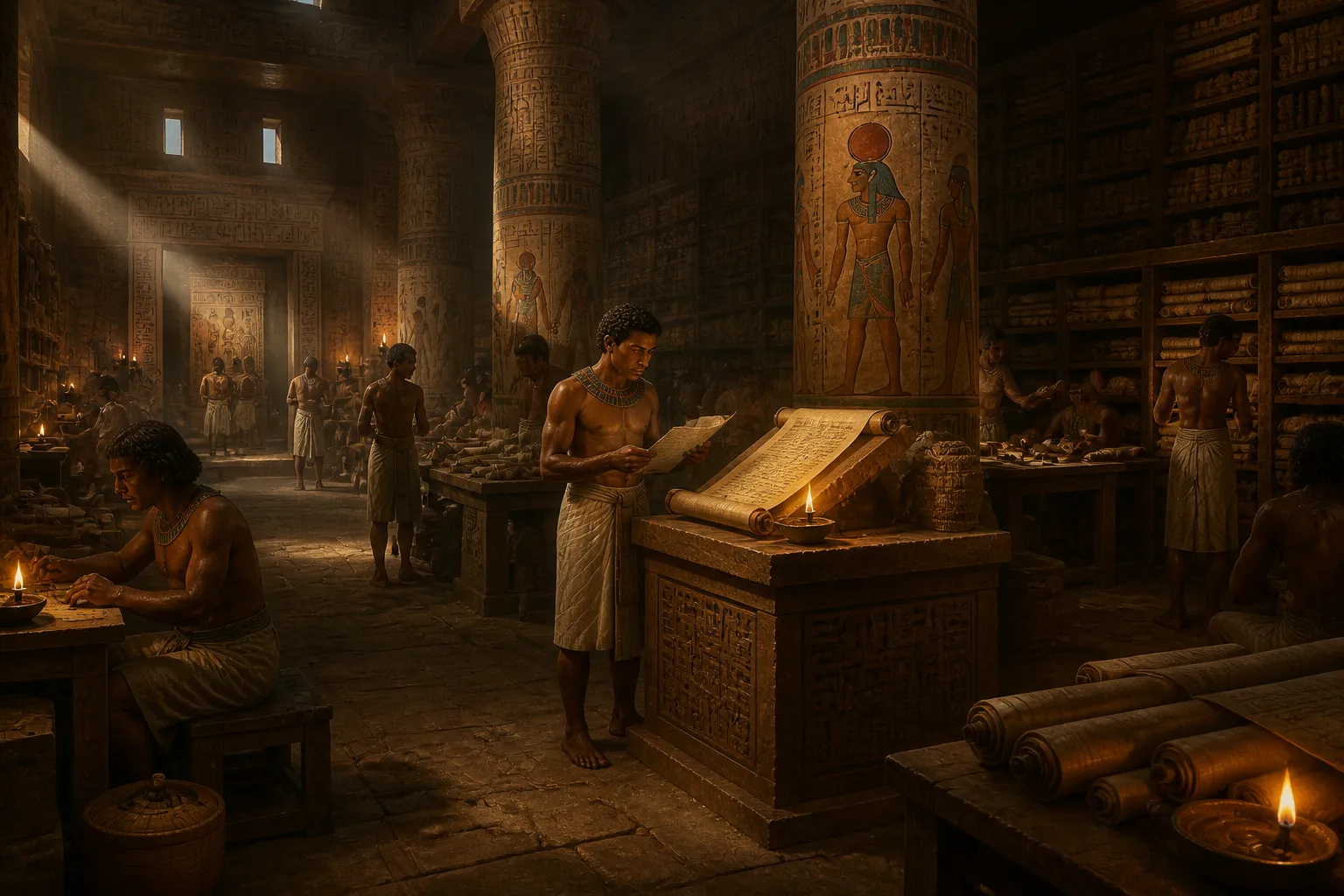
Years have passed, and Deir el-Medina stands as a testament to the enduring resilience of its workers. Their struggle continues to reverberate through time, a powerful reminder of the strength found in collective voice. Amennakht's papyrus, now aged and brittle, rests within the grand library at Karnak, preserving the memory of those who dared to demand justice. The tombs they crafted, masterpieces of stone and devotion, stand as enduring monuments to their skill and determination, their echoes whispering through history. Though the scribes and artisans are long gone, their legacy endures, a chapter of history etched in time.
A young scribe muses, 'Their voices still speak to us.'
About this story
- Audience: general readers
Read Wonder Egypt on your phone
Wonder Egypt is available on Android. Get Wonder Egypt on Google Play.