The Writing Nobody Photographs
The Writing Nobody Photographs — an illustrated history story. 10 illustrated pages, free to read on Wonder Egypt.
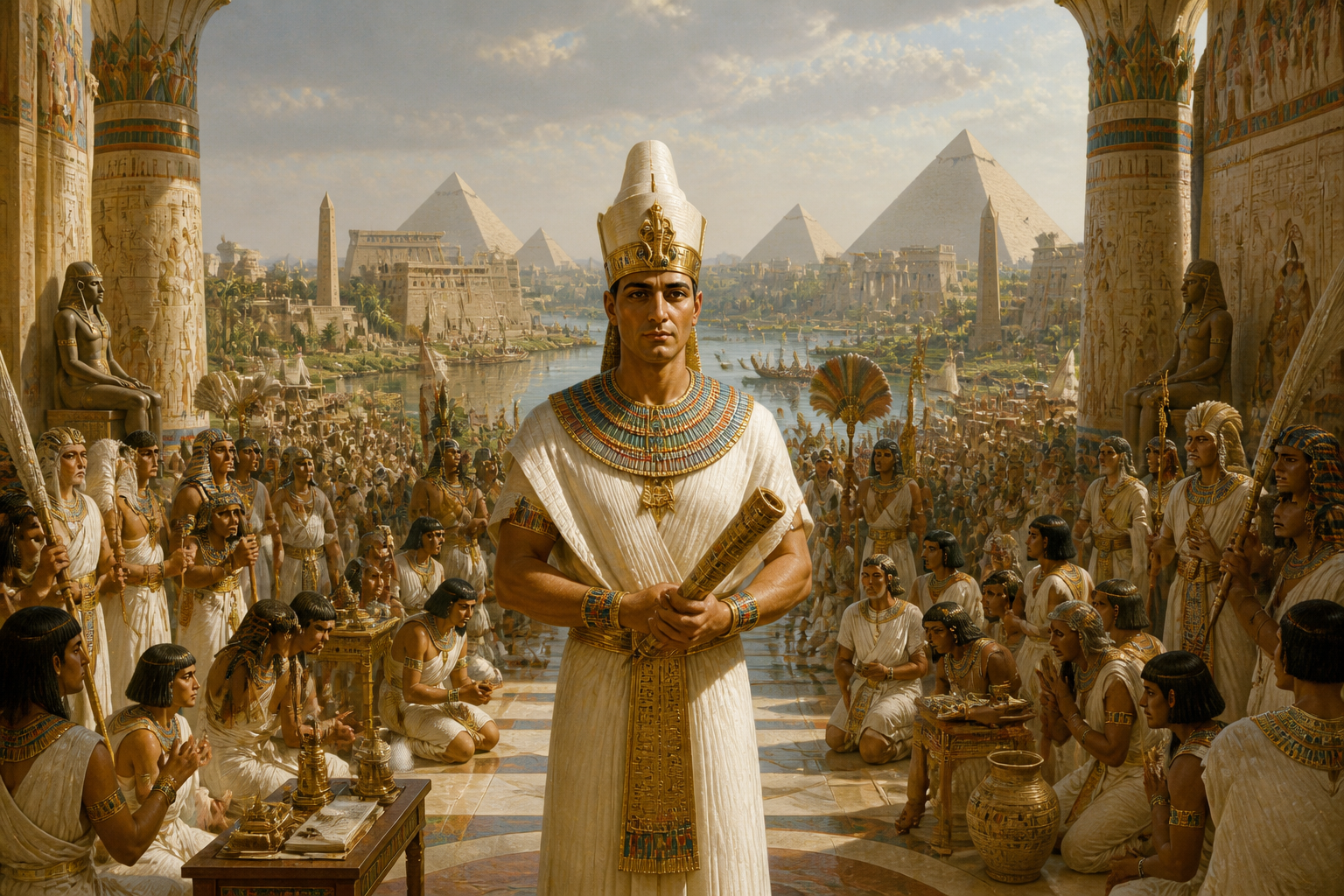
Page 1 — The Script of Life
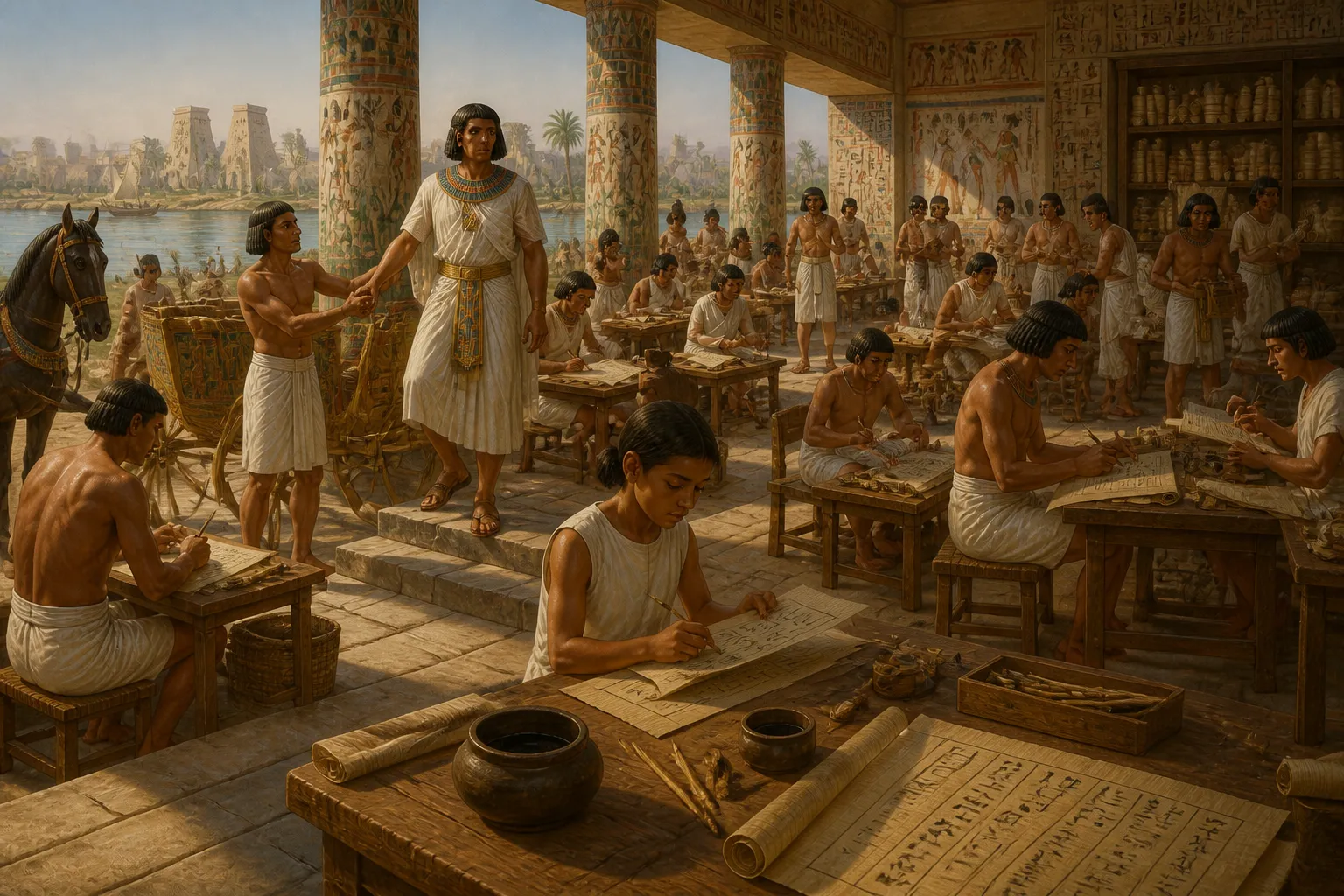
Hieratic writing, born in the shadows of the Old Kingdom around 2600 BC, thrived for nearly three millennia. It was a monumental era where the majesty of Egypt spoke not only through its pyramids but through the ink-stroked scrolls of everyday life. Unlike the monumental hieroglyphs, hieratic writing flourished in the bustling offices and temple stores, capturing the rhythmic pulse of Egyptian work and trade. This script belonged to the scribes and clerks, rendering edicts of pharaohs from Djoser to Ramses and beyond. In this civilization, words, not stone, bore the weight of the nation’s daily affairs, from grain tallies to royal decrees. The lively exchange between scribes and officials, the scratching of quills against papyrus, and the soft hum of conversation painted a vivid picture of daily life in ancient Egypt.
"We write what time will remember," declared a scribe as he dipped his reed in ink, shaping the future with each stroke.
Page 2 — The Apprentice's Path
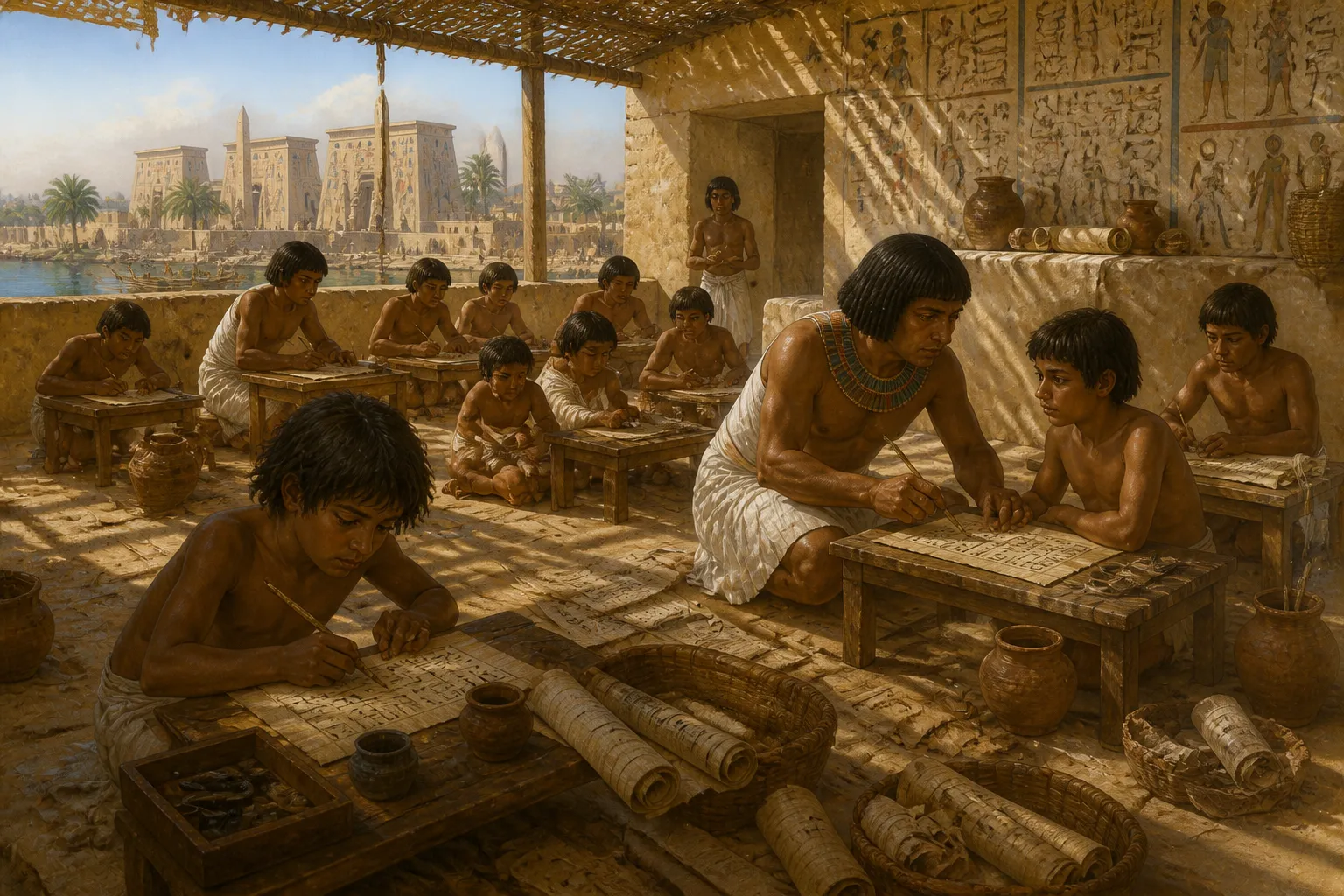
Within the bustling scribe school, apprentices learned the sacred art of hieratic writing. Under the watchful eyes of master scribes, these young learners, some as early as ten, practiced tirelessly on scraps of pottery and wooden shards. The school resonated with the sound of reeds scratching against papyrus, a melody of ancient commitment to craft. As generations passed, these apprentices would master the swift strokes needed for efficient recording, from detailed tax ledgers to royal correspondences. Hieratic, the script of everyday life, was their gateway to power and prestige, a testament to their place in Egypt’s complex social fabric. As they honed their skills, the apprentices understood that mastering the script could elevate them from mere students to trusted aides of pharaohs, guardians of Egypt's administrative secrets.
"Your strokes must flow like the Nile," instructed the master scribe, his voice a blend of patience and authority.
Page 3 — The Grain Scribe
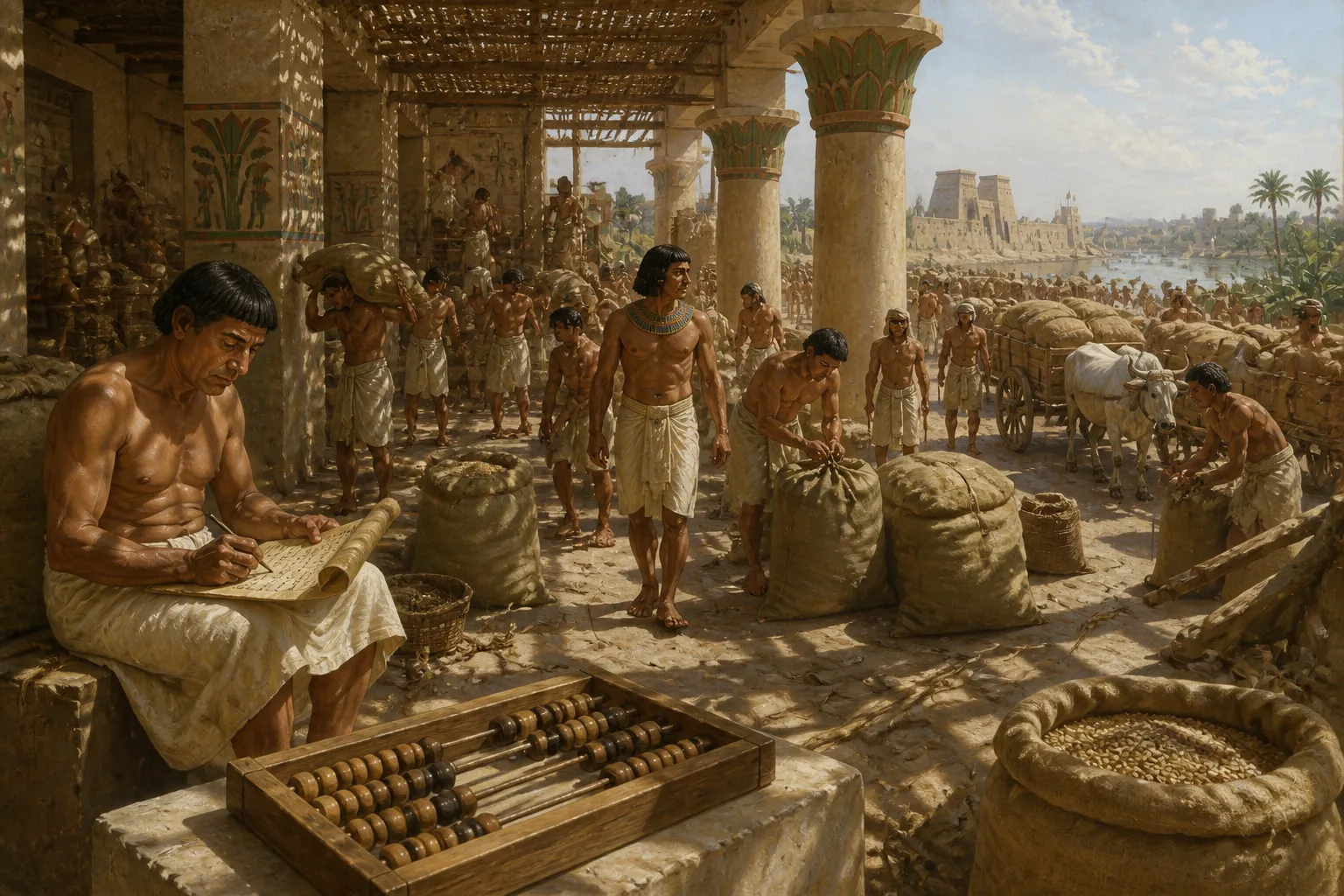
At the bustling granaries of Memphis, scribes played a vital role in Egypt's economy. These scribes, dedicated recorders, stood among the piles of golden grain, meticulously documenting each transaction in hieratic script. Their skill ensured that the state's wealth was precisely accounted for, from the pharaoh's coffers to the humble farmer's fields. The scribe's calculations determined the kingdom's grain reserves, a necessity for both feasts and famines. These records, etched in ink, were as valuable as the grain itself, securing Egypt's prosperity and survival during times both plentiful and lean. Each mark on a papyrus scroll represented not just a quantity of grain, but the sustenance and future of an entire nation, a testament to the crucial role of scribes in Egyptian society.
"A single mark can feed a hundred mouths," mused the grain scribe, eyeing the ledgers with a practiced gaze.
Page 4 — Orders from the Palace
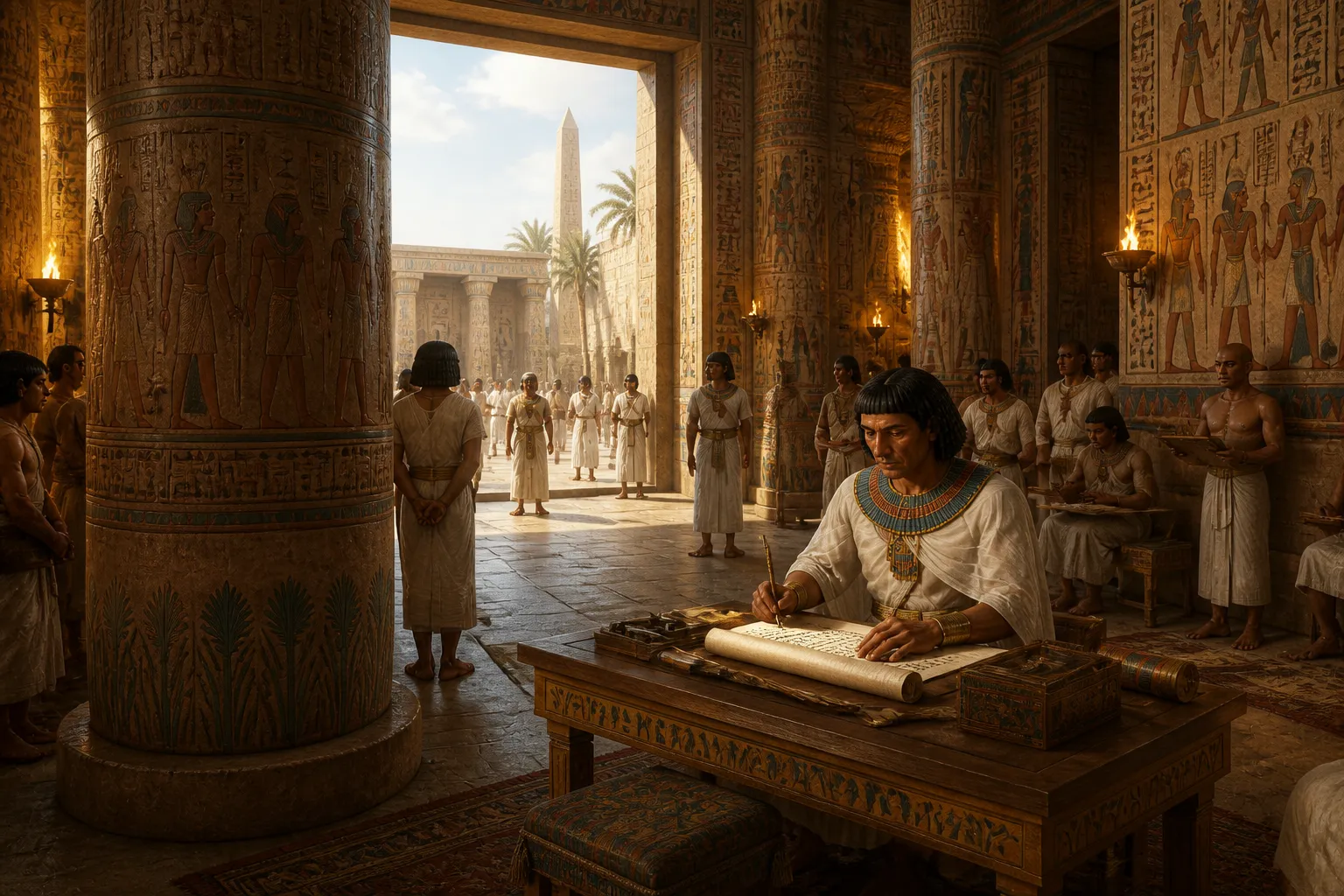
In the opulent halls of Karnak Temple, a high scribe stood as the conduit through which the pharaoh’s decrees were made known to the world. Within this sacred space, the high scribe meticulously translated the divine ruler's words into hieratic script, capturing the essence of each command with precision. These documents held immense power, embodying the pharaoh's voice and intent. Across Egypt, from bustling cities to distant settlements, these mandates would command new constructions, establish laws, and dictate societal norms. The audience chamber, resplendent with its echoing grandeur and whispering reverence, emphasized the gravity of the task. The scribe's role was not merely administrative; it was a sacred duty to immortalize the will of the king.
"The pharaoh's will is the breath of life," proclaimed the high scribe, as he inscribed the edict with an unwavering hand.
Page 5 — The Builders' Chronicle
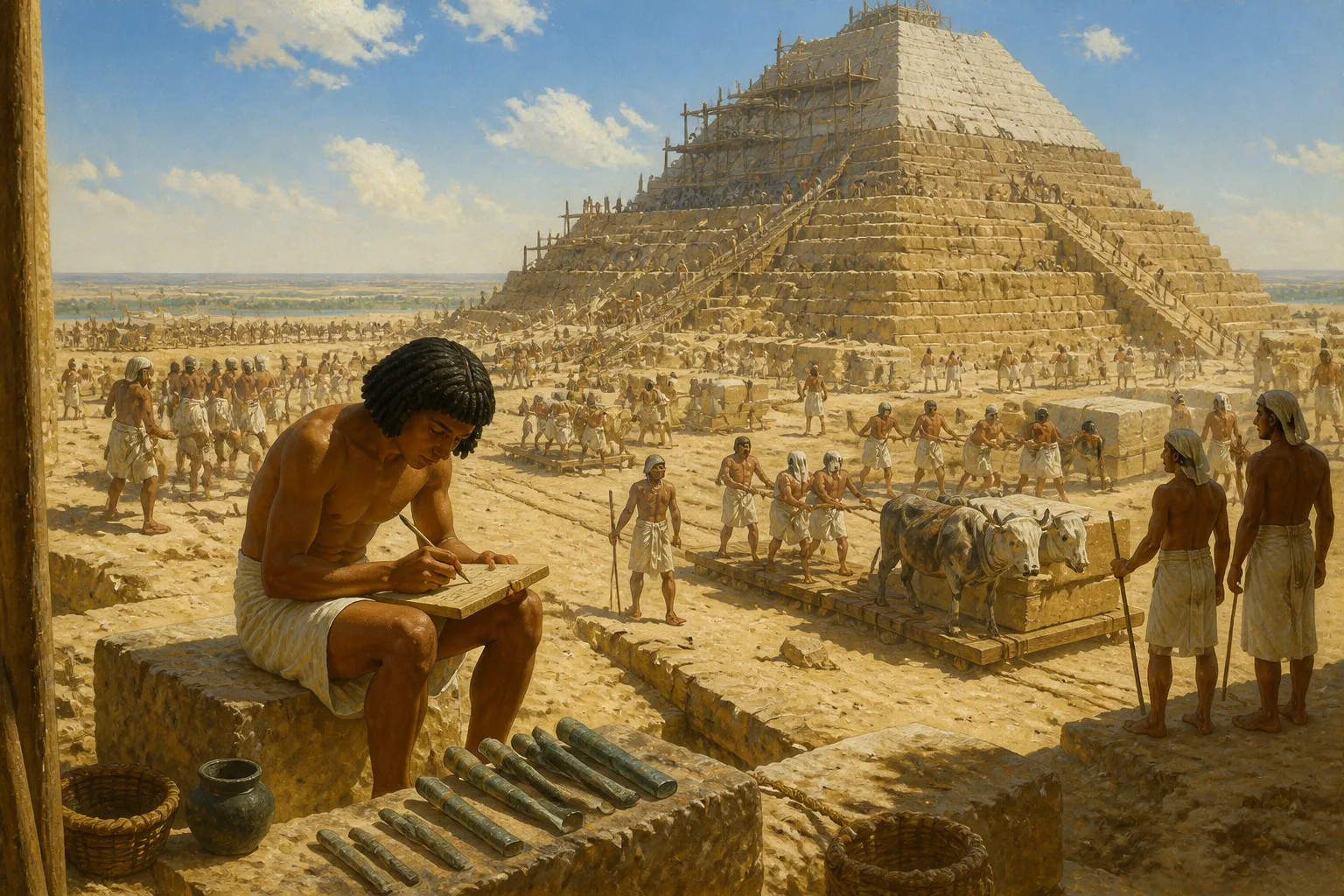
At the bustling construction sites of Giza, the air was filled with a cacophony of sound. The relentless rhythm of chisels against stone blended with the murmur of laborers dedicated to their monumental task. Here, amid the noise and dust, scribes played a pivotal role. Clad in simple linen kilts, they documented every precise detail on papyrus and ostraca, their records critical to the project's success. Each entry tracked attendance, wages, and provisions, ensuring that the grand enterprise of pyramid construction progressed with precision and order. Under the fierce Egyptian sun, these scribes captured not only the grandeur of the endeavor but also the personal stories of the workers, each contributing to the legacy of the pyramids beneath the golden sky.
"Each stone placed is as counted as your day's wage," the construction scribe reminded the foreman.
Page 6 — The Temple Accountants
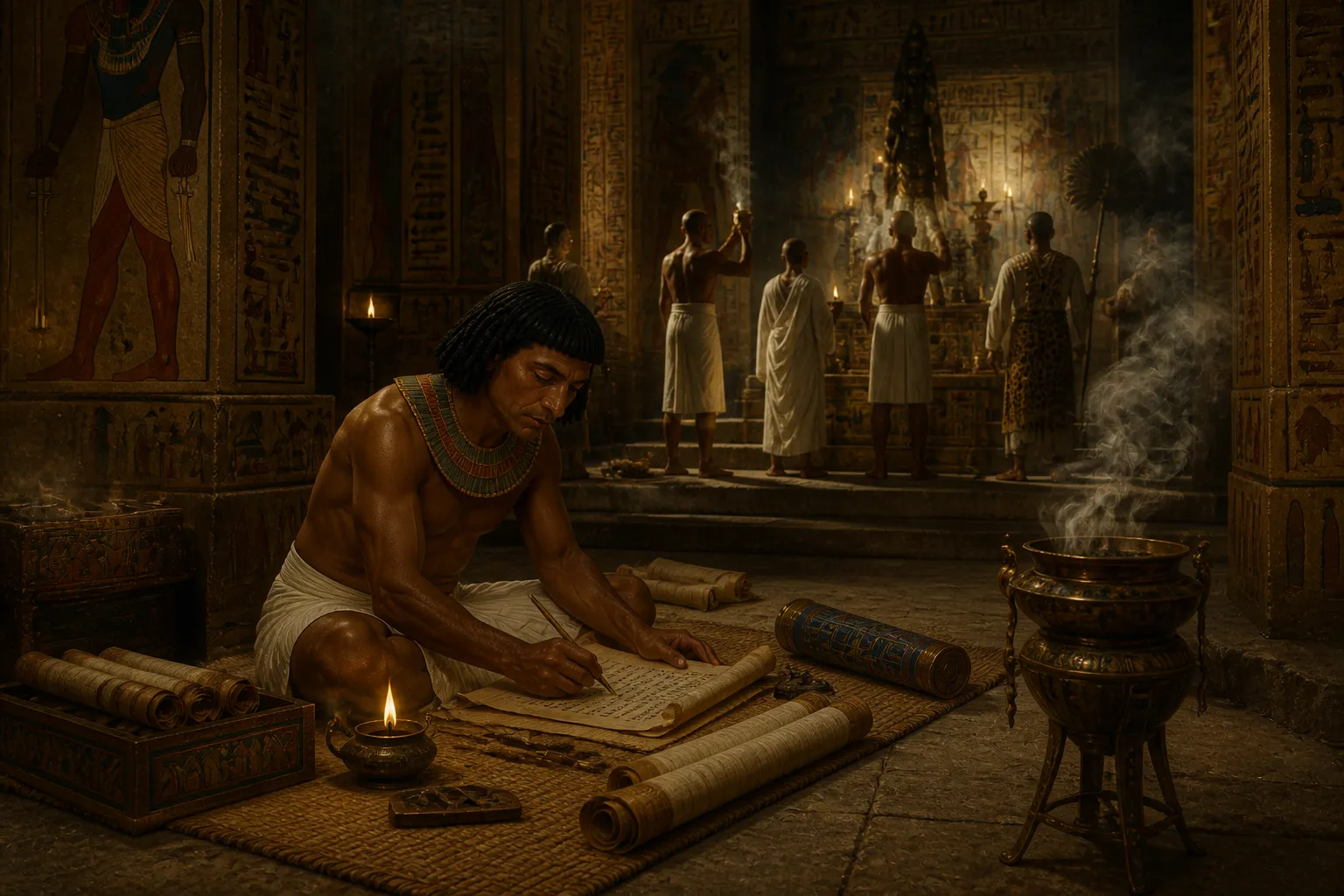
Inside the sacred precincts of the Karnak Temple, the air was thick with the scent of incense, mingling with the solemn chants of priests engaged in ancient rituals. Here, in this hallowed space, scribes performed a task of equal sanctity. Dressed in pleated kilts and with their heads shaved in deference to custom, they diligently recorded the temple's financial activities. Their papyrus scrolls detailed the intricate economic web that sustained the temple, documenting offerings, tributes, and various expenditures. The wealth that flowed into the temple came from lands far and wide, and it was the scribes' meticulous records that ensured each transaction was accounted for, supporting both the spiritual and societal functions of the temple.
"Our records are the lifeblood of the god's house," voiced the senior temple accountant, his hands steady on the scroll.
Page 7 — The Chancellery's Letters
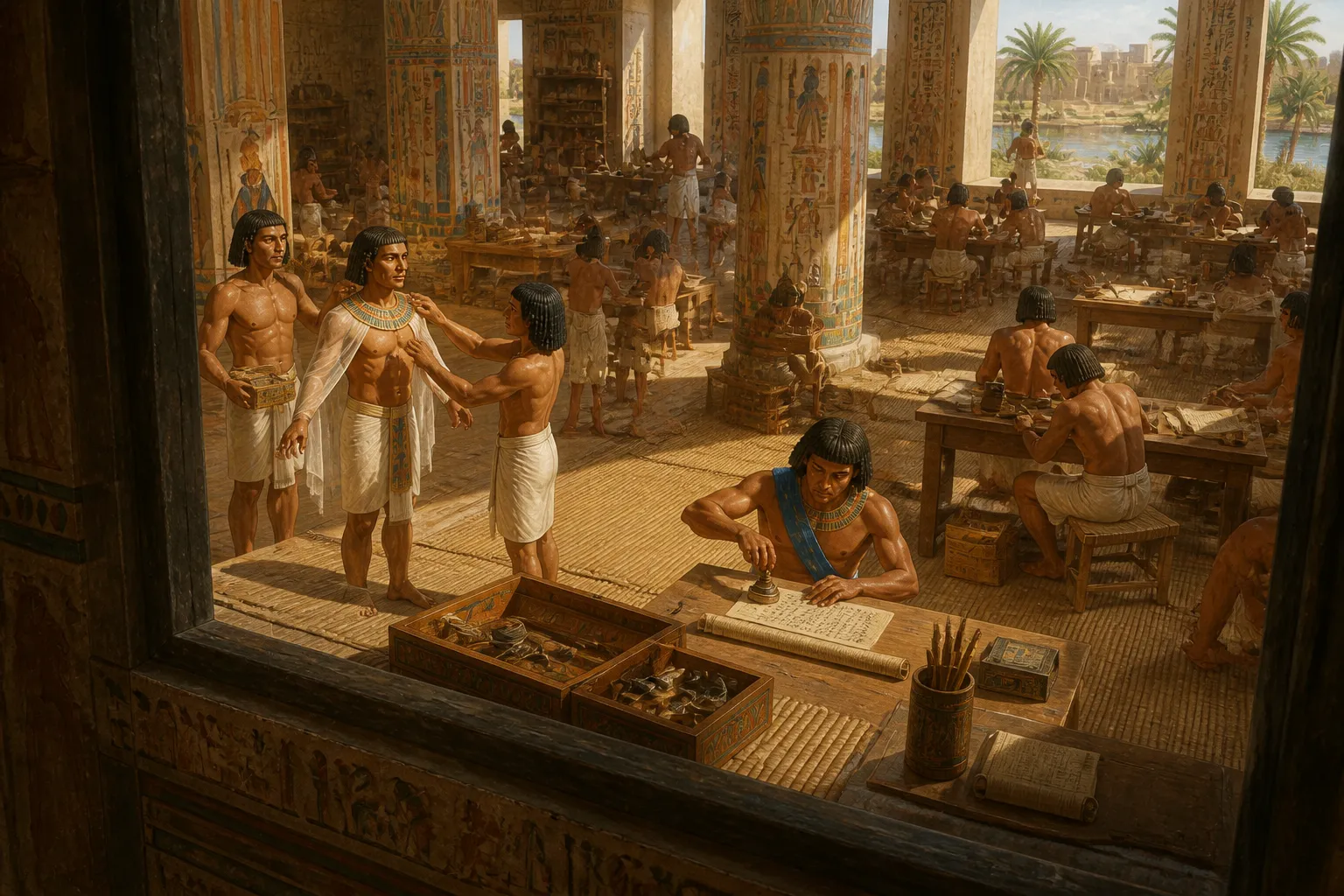
In the grand royal chancelleries of Thebes, a meticulous process unfolded as scribes, clad in crisp linen robes and adorned with distinctive blue sashes, composed diplomatic missives and governance edicts. These scribes were the unseen hands of the pharaohs, tasked with crafting letters that carried Egypt's authoritative voice to foreign realms, establishing alliances or issuing declarations of war. The swift hieratic script employed on papyrus scrolls enabled rapid communication, crucial for preserving Egypt's global influence. Each carefully penned missive, sealed with the royal cartouche, was a testament to the power that extended far beyond the Nile, serving as a silent ambassador of Egypt’s authority and strategic prowess across the known world.
"In words, we fashion empires," the chief scribe remarked, as he sealed a letter with the pharaoh's cartouche.
Page 8 — A Scholar's Life
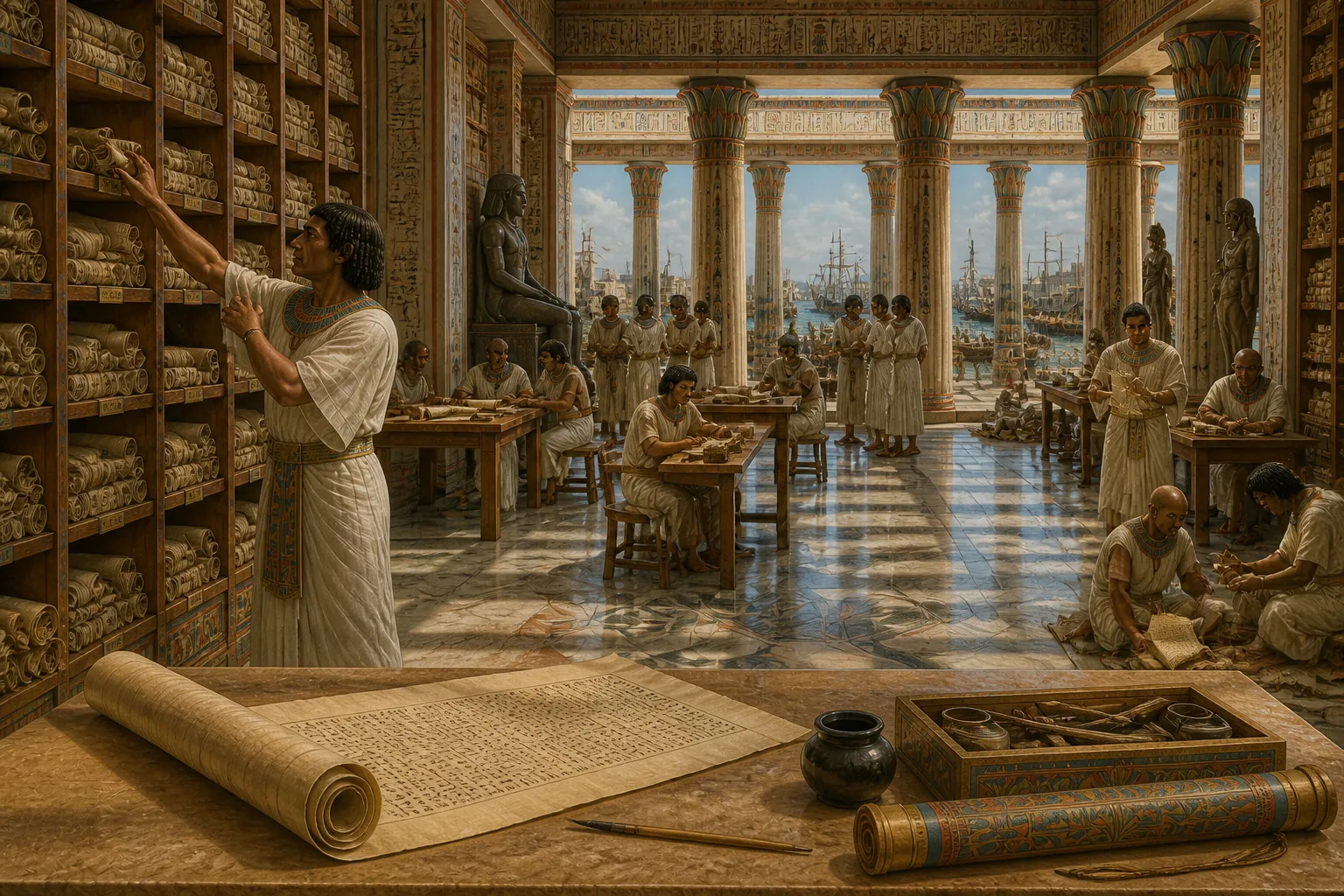
Within the revered walls of the Alexandria Library, a hub of intellectual activity thrived as scribes and scholars collaborated to preserve the vast expanse of human knowledge. Clad in white linen gowns, these scribes curated and copied texts ranging from ancient treatises on medicine to philosophical discourses. The library's marble halls resonated with the whispers of history and the gentle hum of discovery, as the wisdom of ages was meticulously chronicled. Their work transcended mere academic endeavor, evolving into a mission to ensure Egypt's status as a beacon of learning and enlightenment. The library served as a repository of the world's knowledge, safeguarding it for future generations.
"Each line we pen is a bridge to eternity," declared the head librarian, as he watched over the scribes' diligent work.
Page 9 — The Papyrus Merchants
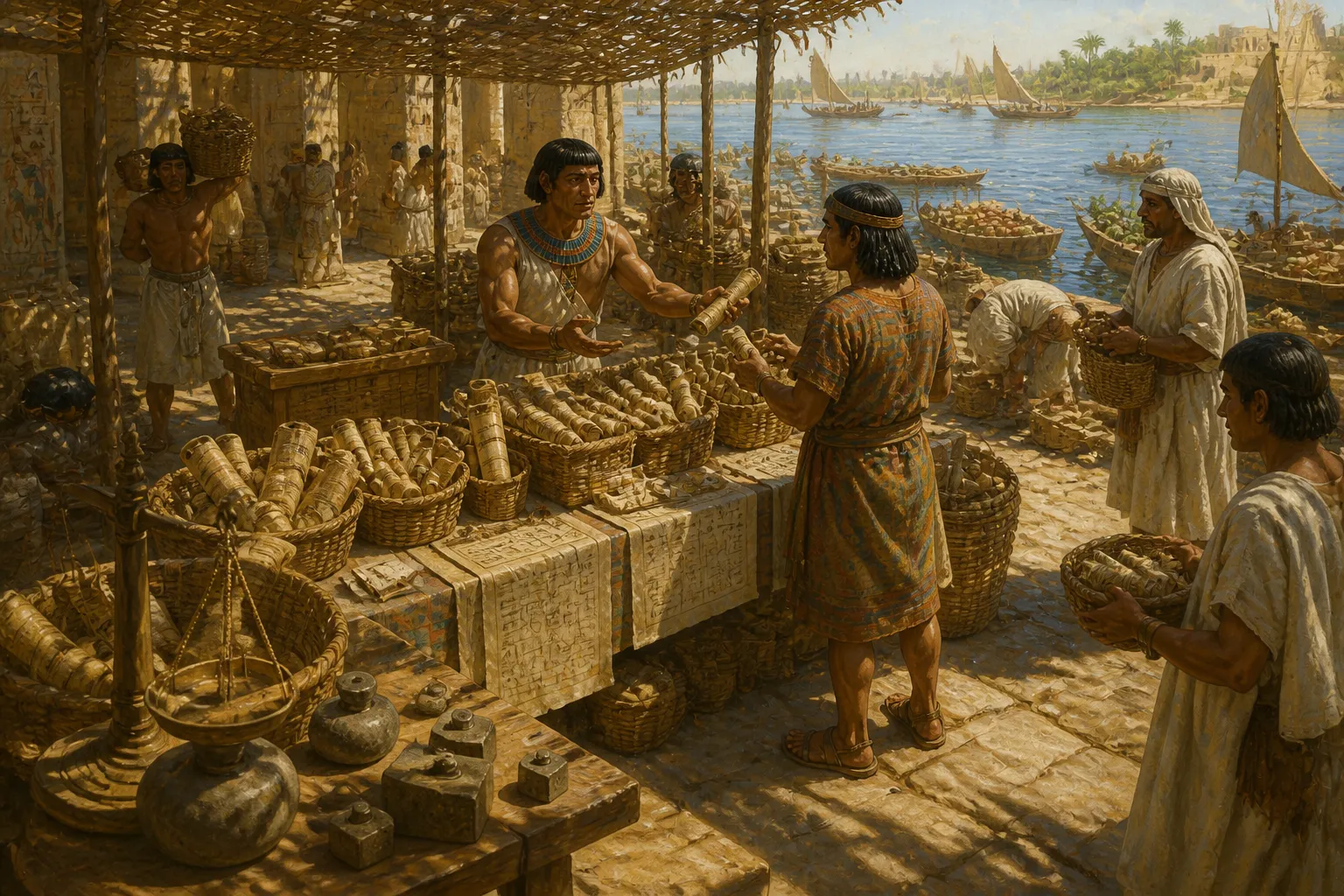
In the vibrant, bustling markets of Elephantine, papyrus merchants thrived amidst a cacophony of voices and the rich aroma of spices. These merchants were pivotal in supplying the essential writing material that bore the weight of Egypt’s intellectual and administrative lifeblood. In the shadow of towering sandstone structures, they bartered and negotiated, each scroll a potential vessel for the scribes' labors. The papyrus trade was a lucrative, indispensable enterprise, its demand fueled by an insatiable need for documentation across a vast kingdom. These merchants navigated the Nile's gentle currents, their wares spreading Egyptian culture and knowledge to distant lands and distant peoples, reinforcing Egypt's influence far beyond its borders.
"In these sheets, we barter with history," the merchant quipped, as he weighed the papyrus bundles.
Page 10 — The Legacy of Ink
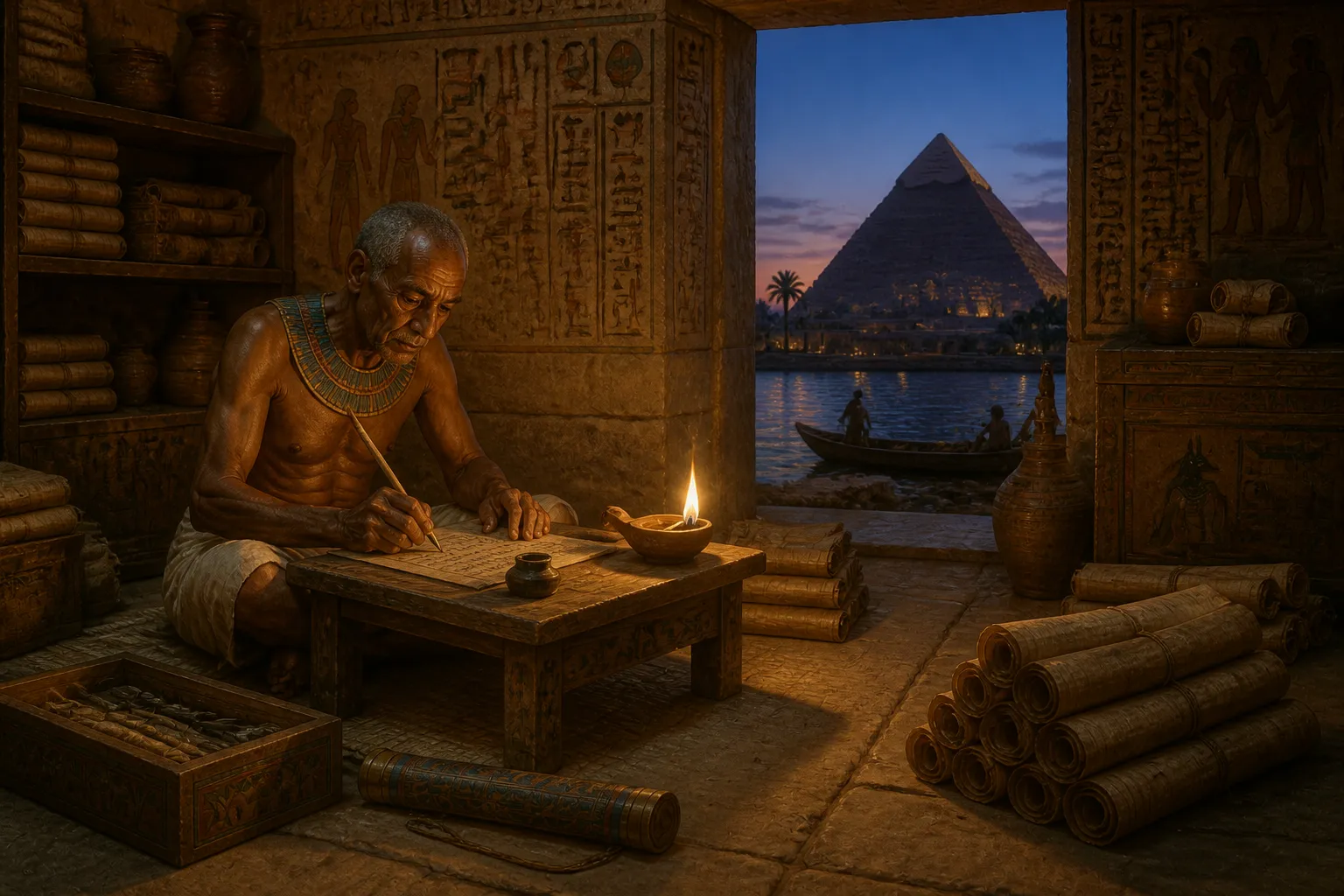
As dynasties rose and fell across Egypt's sweeping historical stage, the hieratic script endured, steadfast and unyielding. By 700 BC, it had evolved, adapting to the changing tides of time, but remained a vital thread binding Egypt's illustrious past to its present. In palaces rich with history, temples echoing with prayers, and workshops humming with activity, scribes continued their revered craft. They etched the narrative of a civilization whose voice resonated through the flow of ink. Their records, meticulously inscribed with simple reed pens on papyrus, have withstood the passage of centuries, offering modern scholars invaluable glimpses into the daily lives, governance, and aspirations that shaped ancient Egypt.
"Long after stone crumbles, ink persists," a seasoned scribe reflected, dipping his pen into the dark, viscous ink.
About this story
- Audience: general readers
Read Wonder Egypt on your phone
Wonder Egypt is available on Android. Get Wonder Egypt on Google Play.