What Killed Tutankhamun
What Killed Tutankhamun — an illustrated history story. 10 illustrated pages, free to read on Wonder Egypt.
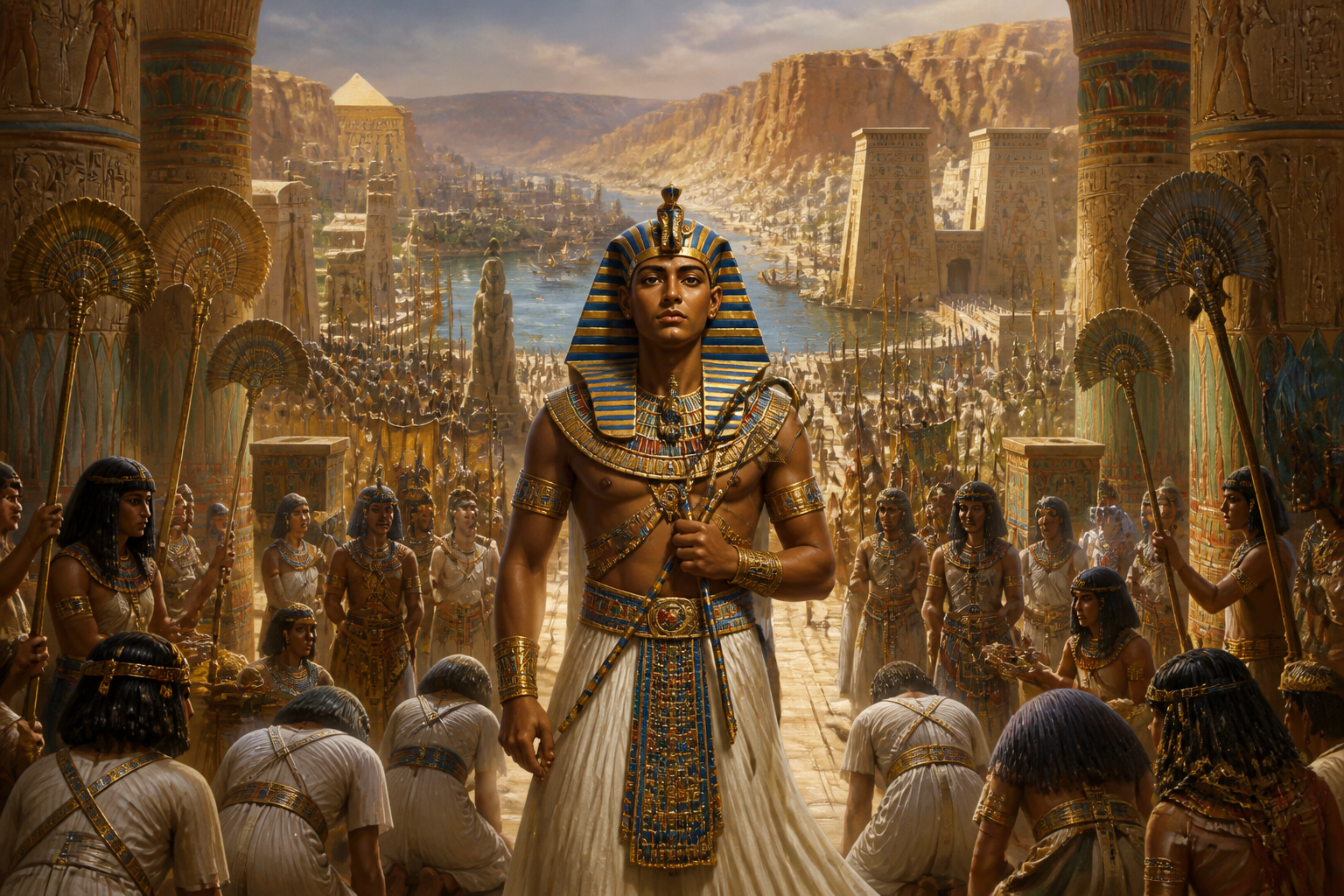
Page 1 — The Unraveling of a Mystery
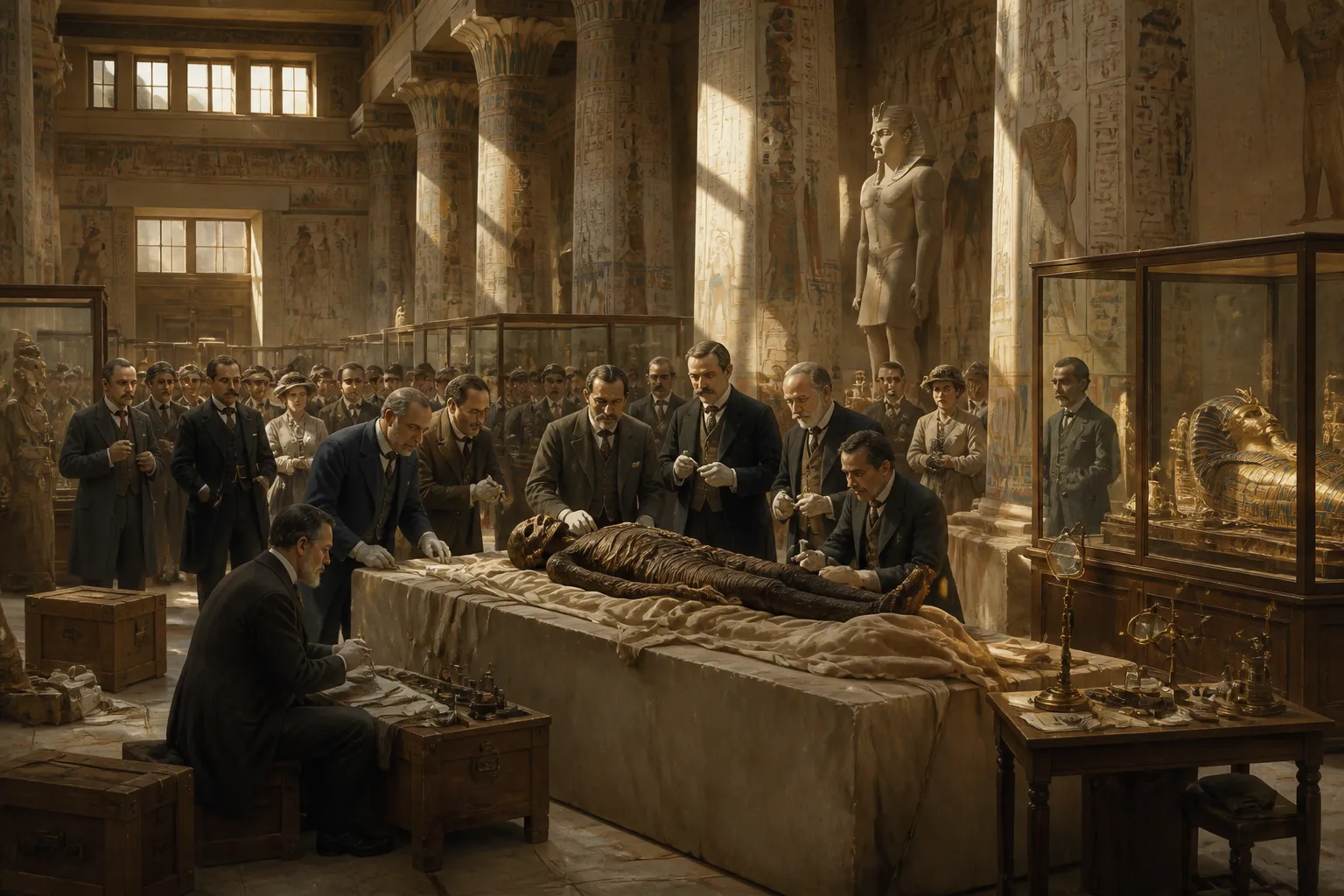
In the bustling hall of the Cairo Museum, amidst towering columns and hushed whispers, the moment is electric. A team of anatomists, their tools gleaming under the vaulting skylights, carefully unwraps the mummy of Tutankhamun. The hall is filled with an air thick with anticipation; shadows dance over the ancient stone floor. This is 1925, and each layer of the linen bandages peeled away reveals not just fragments of a bygone era, but whispers of a story yet untold. Suddenly, a fragment within the skull clinks softly, a sound like fate. The world waits with bated breath, questioning whether this is the evidence of a long-debated murder or something more ordinary, more tragic. The mummy, fragile testament to a once-living boy king, lies exposed, illuminated by the hazy light above, his serene visage belying the turbulent speculations swirling about his death.
"This bone fragment changes everything," one anatomist whispers, eyes wide with revelation.
Page 2 — A Boy on the Throne
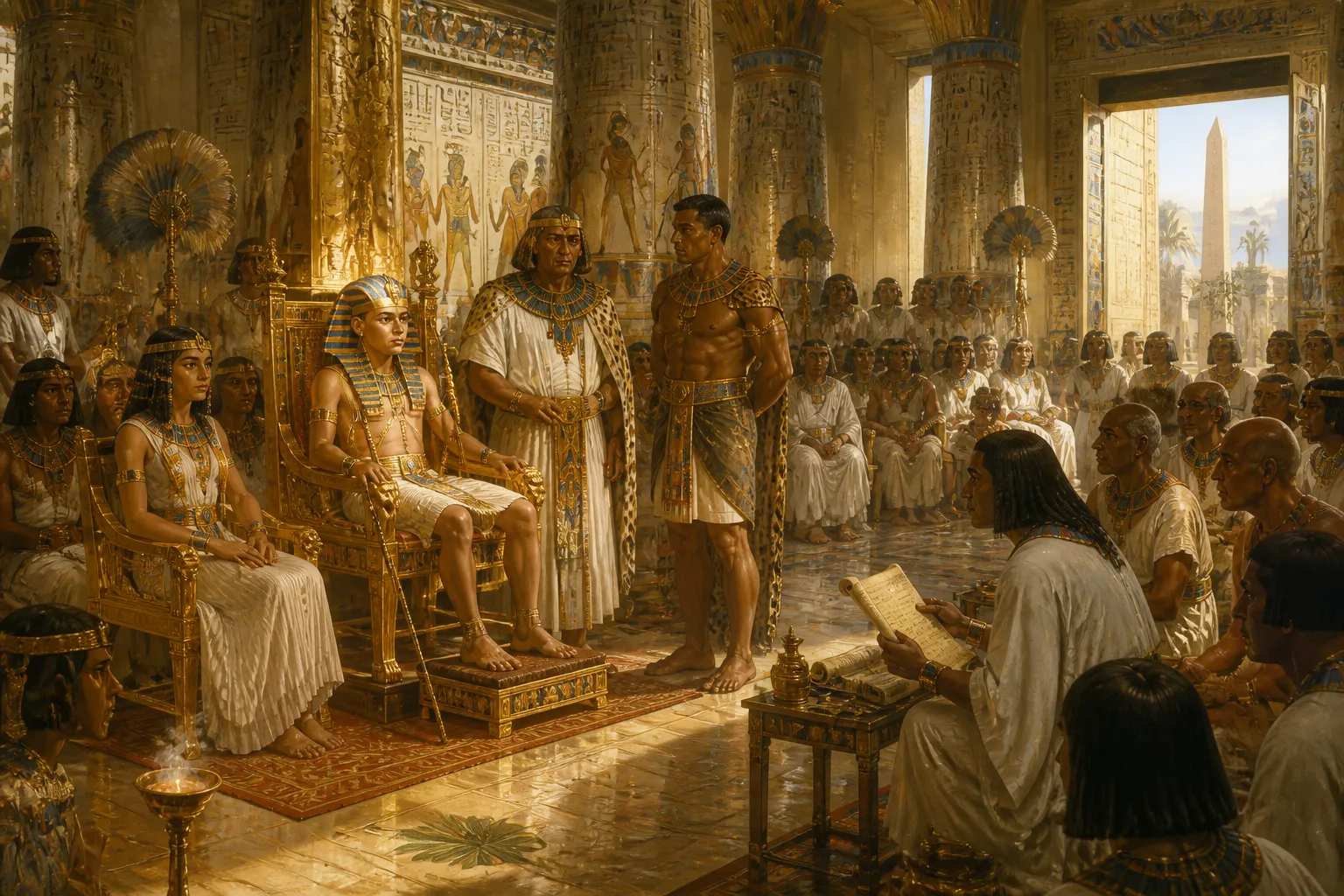
In the grand halls of Thebes, a young Tutankhamun, barely nine years old, is crowned Pharaoh, the weight of a nation upon his slight shoulders. The court gathers, a sea of linen and gold, whispering prayers to the gods that echo off the stone walls shrouded in the dim glow of torchlight. His half-sister, Ankhesenamun, stands by his side, her eyes solemn and supportive, a silent promise of familial solidarity in a world of political intrigue. Advisors like Ay and Horemheb look on, their ambitions concealed under layers of ceremony and tradition. Thebes is alive with celebration, yet beneath the joy lies the challenge of restoring Egypt's traditional ways after Akhenaten's reign. The boy king, diminutive in stature yet regal in spirit, with his slight build and clubfoot subtly supported, ascends to power amid colossal statues and the watchful eyes of his elders, the flicker of torches illuminating the path to a future yet unwritten.
"May the gods guide you, young Pharaoh," Ay intones, his voice resonating through the hall.
Page 3 — Restoration Efforts
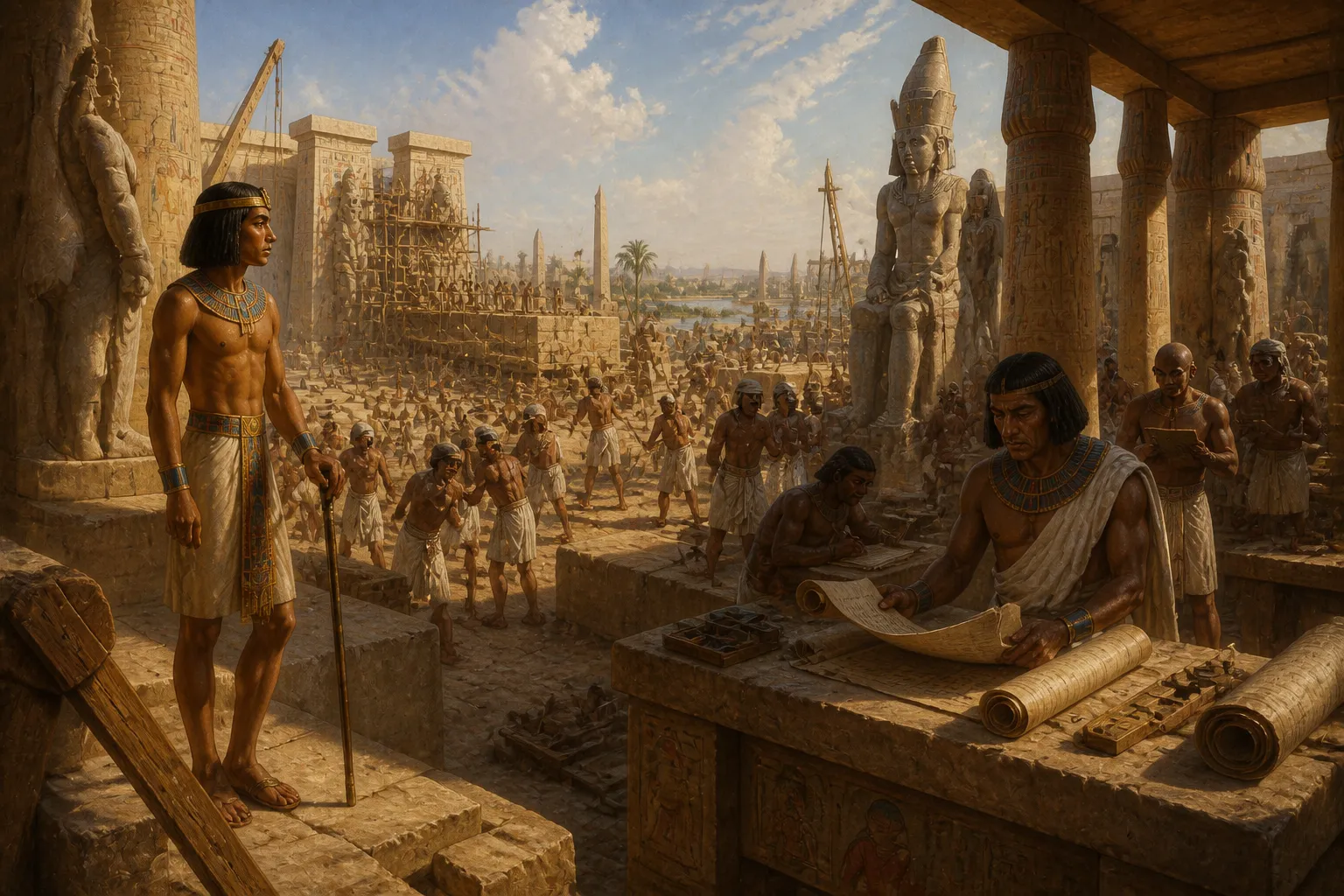
At the temple of Karnak, the clamor of hammer against stone echoes through the air, a symphony of restoration that reverberates through the ancient columns. Tutankhamun, now a teenager, oversees the reconstruction of the grand edifices celebrating Egypt's gods. He stands amidst this sacred chaos, his frail figure dwarfed by the colossal statues of Amun, yet his presence commanding respect. Workers clad in linen kilts toil tirelessly under the relentless sun, chiseling hieroglyphs to resuscitate ancient prayers once silenced. Nearby, Maya, the diligent treasurer, unrolls papyrus scrolls, ensuring resources are directed wisely, his brow furrowed in concentration. The traditional pantheon, toppled by radical reforms, is painstakingly reinstated, each stone a testament to the resilience of faith. Under a sky as vast as his ambitions, the young Pharaoh aspires to heal the fractured beliefs of his people, each chisel mark a step towards restoring harmony.
"These walls will sing the old hymns once more," Maya assures, his gaze steady upon the Pharaoh.
Page 4 — The Malady Strikes
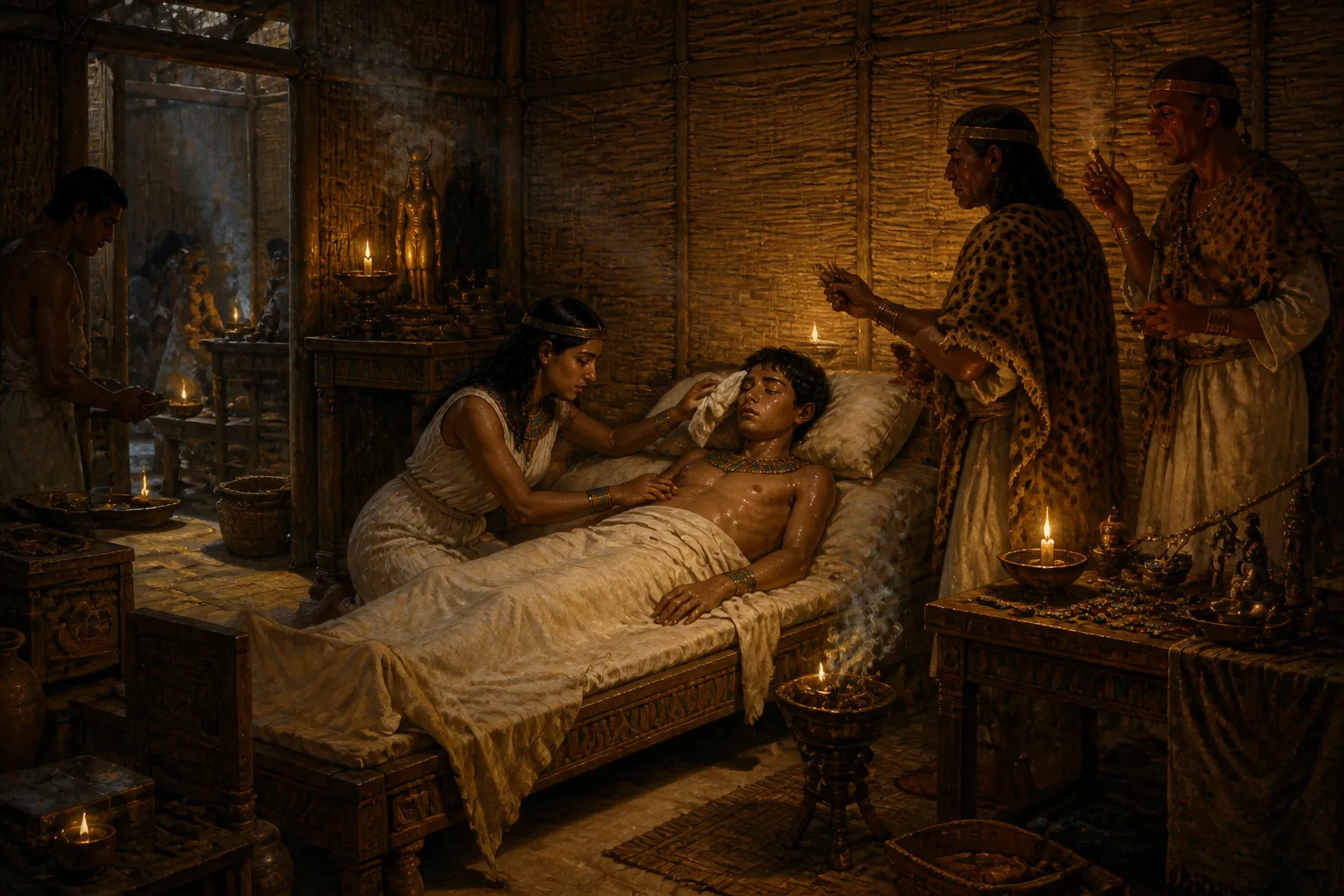
In the private chamber at Thebes, Tutankhamun lies on a bed of woven reeds, his face pale and beaded with sweat as shadows play upon the walls. The pharaoh, once a symbol of resurgent strength, now succumbs to the relentless fevers of malaria, his youthful vigor ebbing away. Priests chant incantations, their voices harmonizing with the flicker of oil lamps casting a dim, golden glow that echoes the whisper of ancient rites. Ankhesenamun, her eyes a well of concern, brushes a cool cloth across his brow, her touch a tether to life. The sounds of the bustling city fade away, replaced by the soft incantations meant to coax life back into the young king. Outside, the eternal Nile flows indifferent to the unfolding drama, its waters a reminder of life’s continuity. Inside, hope flickers, a fragile flame against the encroaching shadow of mortality, each breath a defiant statement against fate.
"Hold on, my brother," Ankhesenamun whispers, her voice a gentle plea against the darkness.
Page 5 — The Sudden End
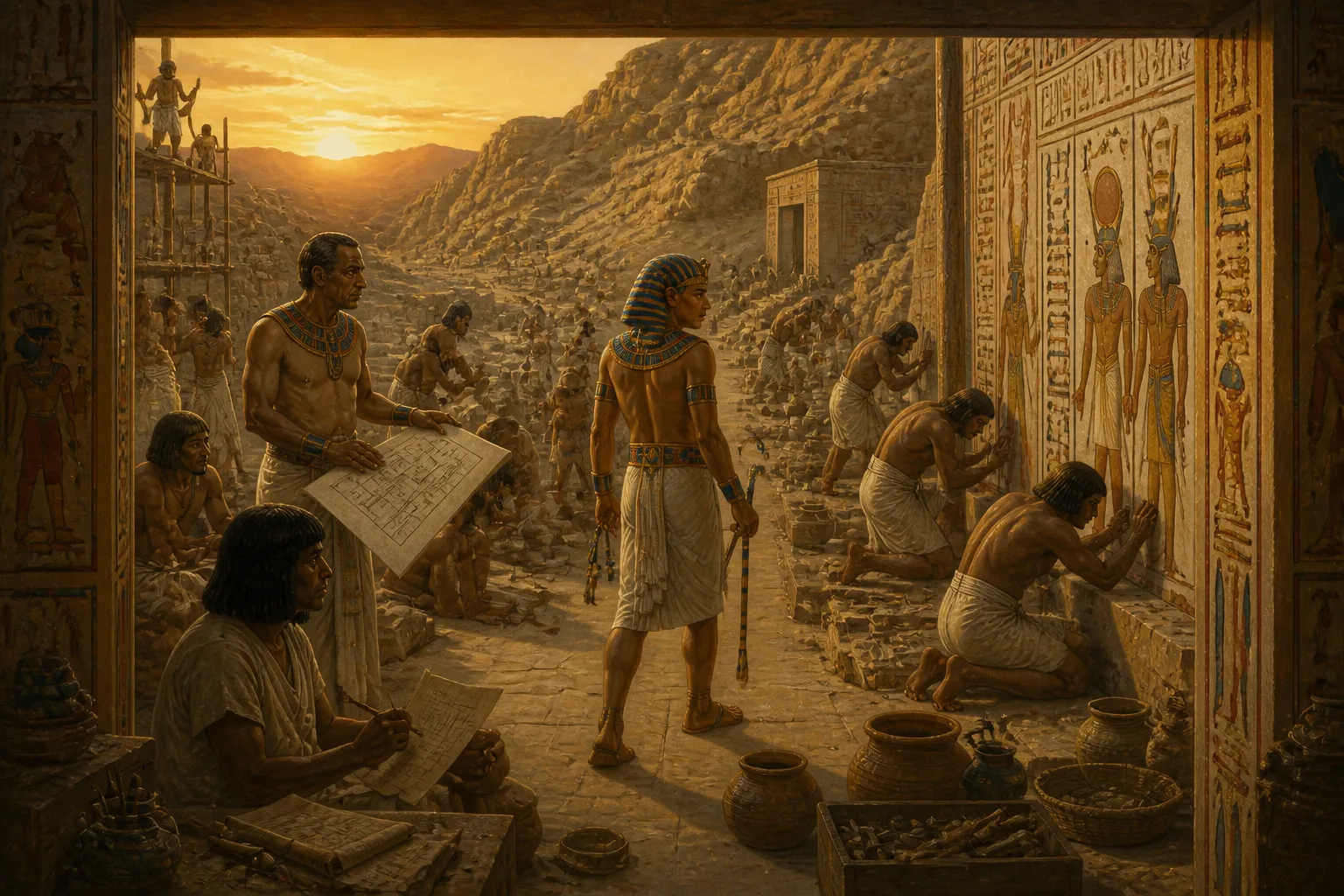
In the Valley of the Kings, shadows stretch long as the sun descends, casting an amber hue over the valley's rugged terrain. Workers, clad in simple linen kilts, their skin bronzed by long hours under the sun, labor with urgent dedication. Their tools—chisels and brushes—echo against stone surfaces as they race against time to finish a modest tomb for a king unexpectedly departed. Ay, the steadfast advisor, stands amidst this flurry, his presence a pillar of focused resolve. His gaze sweeps over the scene, lingering on the fractured left thigh of Tutankhamun as it speaks mutely of a life severed too soon. The tomb, rapidly adorned with sacred symbols and hieroglyphs, transforms into a solemn refuge, its walls whispering secrets of the afterlife.
"We must honor him swiftly, for time is not our ally," Ay declares, urgency sharpening his words.
Page 6 — The Legacy of a Young King
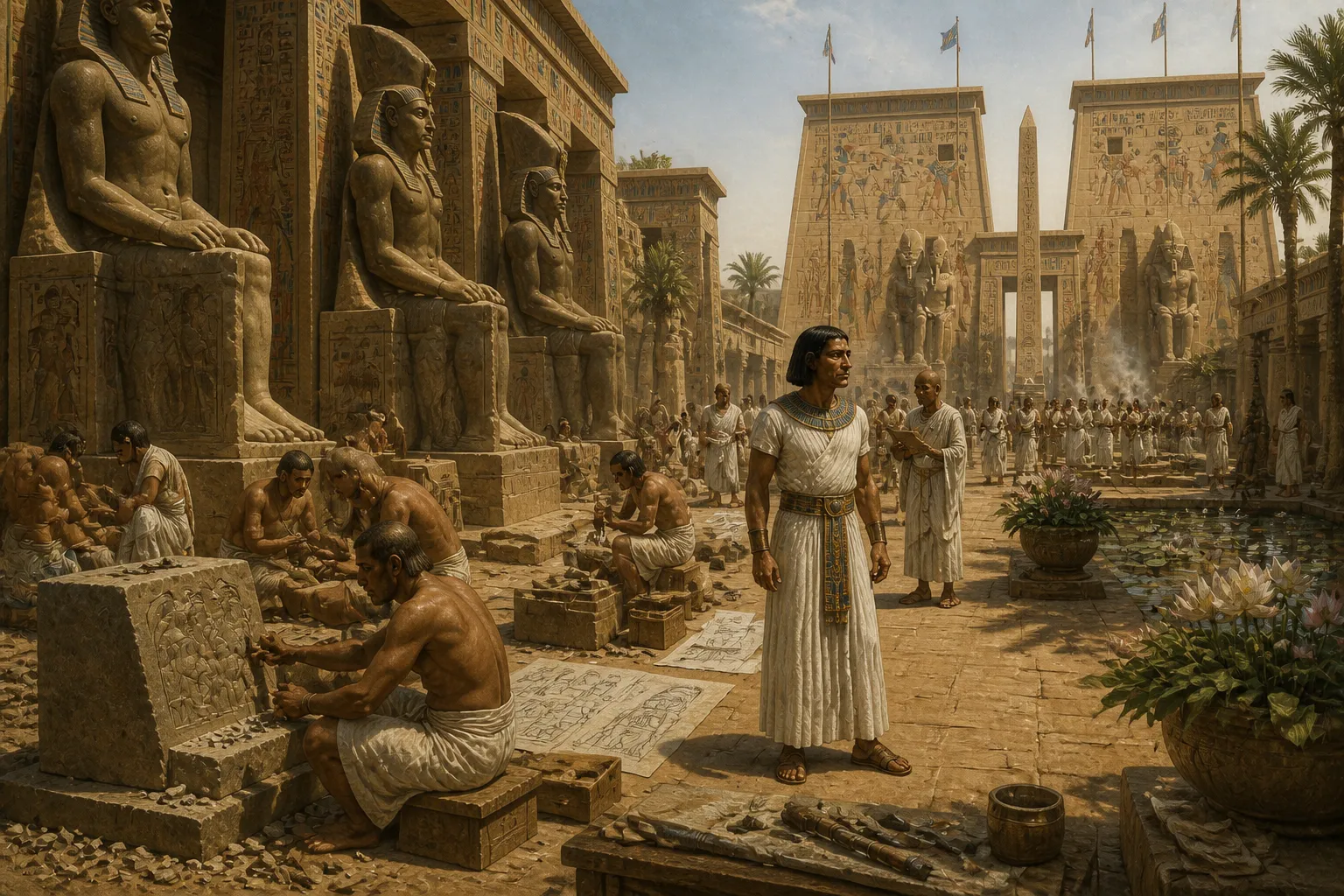
Within the sacred precincts of Luxor, time stands still among giants of stone. Colossal statues of bygone pharaohs, carved from enduring granite, seem to watch over the earth with an eternal gaze. Here, Horemheb, a robust figure of strength, stands among these stone sentinels, reflecting on the legacy of the young king Tutankhamun. With the return to venerating traditional gods, stability has quieted the lands, yet uncertainties linger, like phantoms. Horemheb, with military prowess, envisions the reclamation of territories and the echoes of ancient victories. Nearby, artisans once tasked with immortalizing Tutankhamun's image now set their chisels to the likeness of a new era, continuing the lineage of kingship through art. As the morning breeze wafts through, it carries with it a gentle murmur, the distant voices of priests and the tranquil assurance of roots firmly grounded.
"We shall continue his vision," Horemheb vows, casting his gaze towards the horizon.
Page 7 — Mysteries of the Tomb
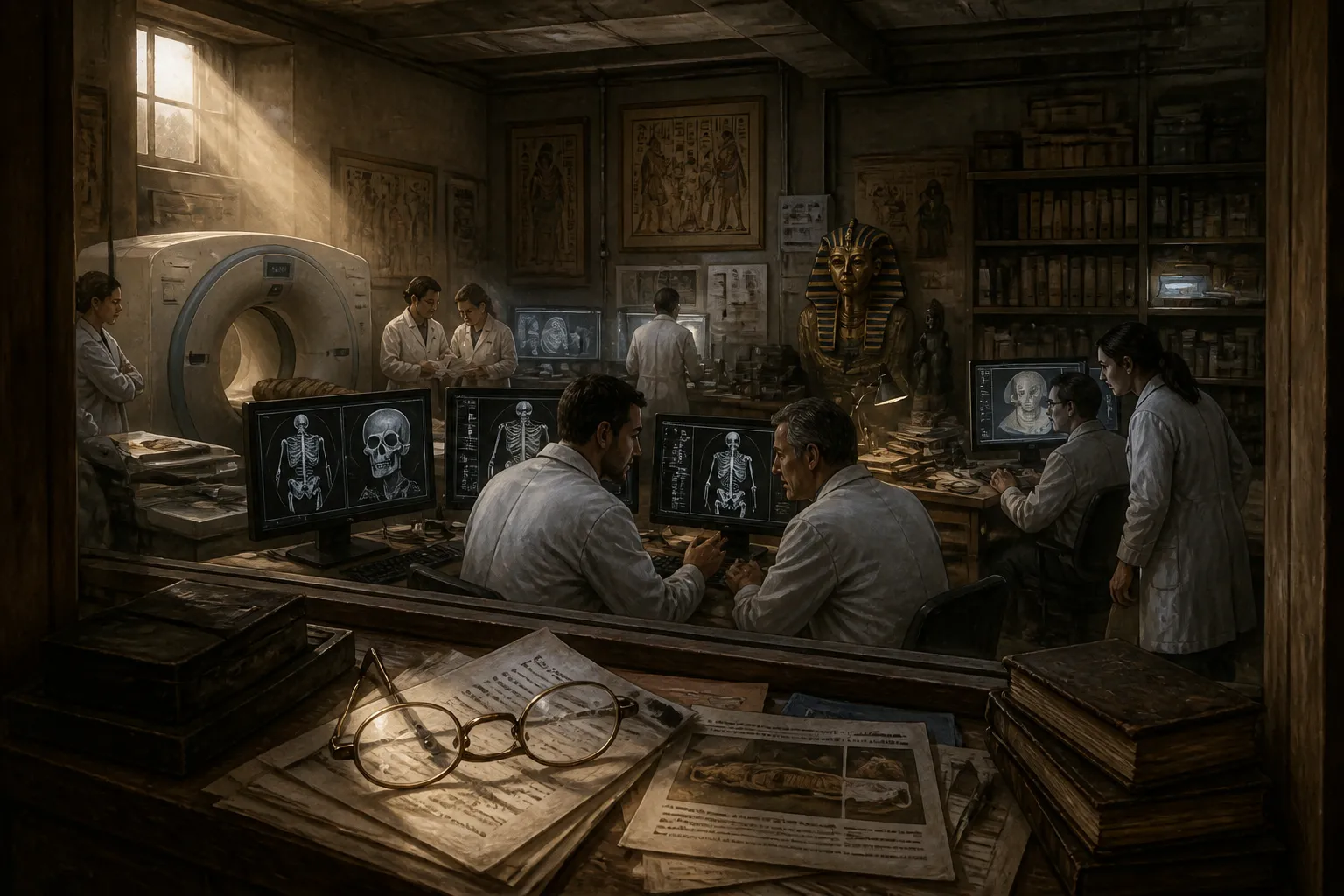
In the calm seclusion of the Cairo Museum's archives, dim light envelops rows of meticulously organized shelves. Here, modern science converges with ancient enigma as scientists delve into the mysteries surrounding Tutankhamun. Under the glow of screens, CT scans reveal the telltale fracture of a young king's left thigh and traces of malaria that might have hastened his end. Yet, the modest tomb, with its hurried embellishments, raises more questions than answers. Speculations of foul play and untimely demise stir the air, invigorated by those who favor thrilling tales over mundane realities. In this quiet sanctuary, scholars pause, pens hovering above notebooks, as the echoes of history murmur softly in the stillness.
"Could such simple ailments topple a king?" a researcher muses aloud, skepticism coloring their voice.
Page 8 — A King Remembered
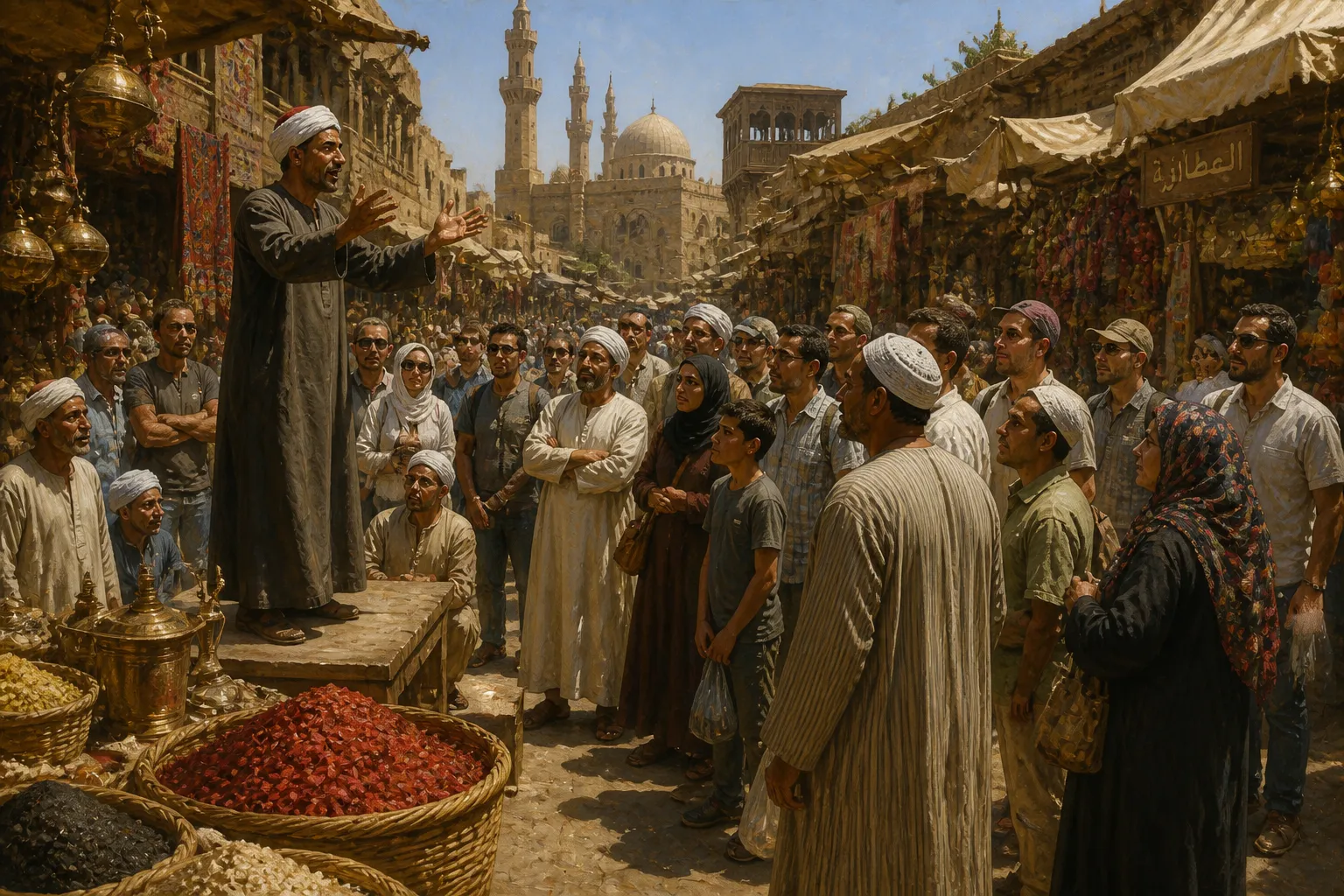
The bustling markets of Cairo come alive with vibrant energy, as vendors, surrounded by an array of colorful wares—from fragrant spices to intricate papyrus scrolls—tout their offerings. The air is thick with the scent of cardamom, cumin, and coriander, blending with the aroma of fresh mint and citrus fruits. Amidst the lively throng, a storyteller commands attention, his voice a rich tapestry weaving tales of Tutankhamun. His hands move expressively, emphasizing the drama of the boy king's rise and the cultural resurgence he championed in his short reign. The marketplace, a kaleidoscope of colors and sounds, transforms into a living chronicle, with the chatter of bargaining and the calls of merchants forming a backdrop to the narrative. Through the passage of time, the allure of the young Pharaoh’s story continues to echo, unwavering in its fascination and mystery, a testament to the enduring legacy of ancient Egypt.
"Hear the story of the boy who became king, and whose life was cut short by fate," the storyteller proclaims, gesturing theatrically.
Page 9 — Unveiling the Past
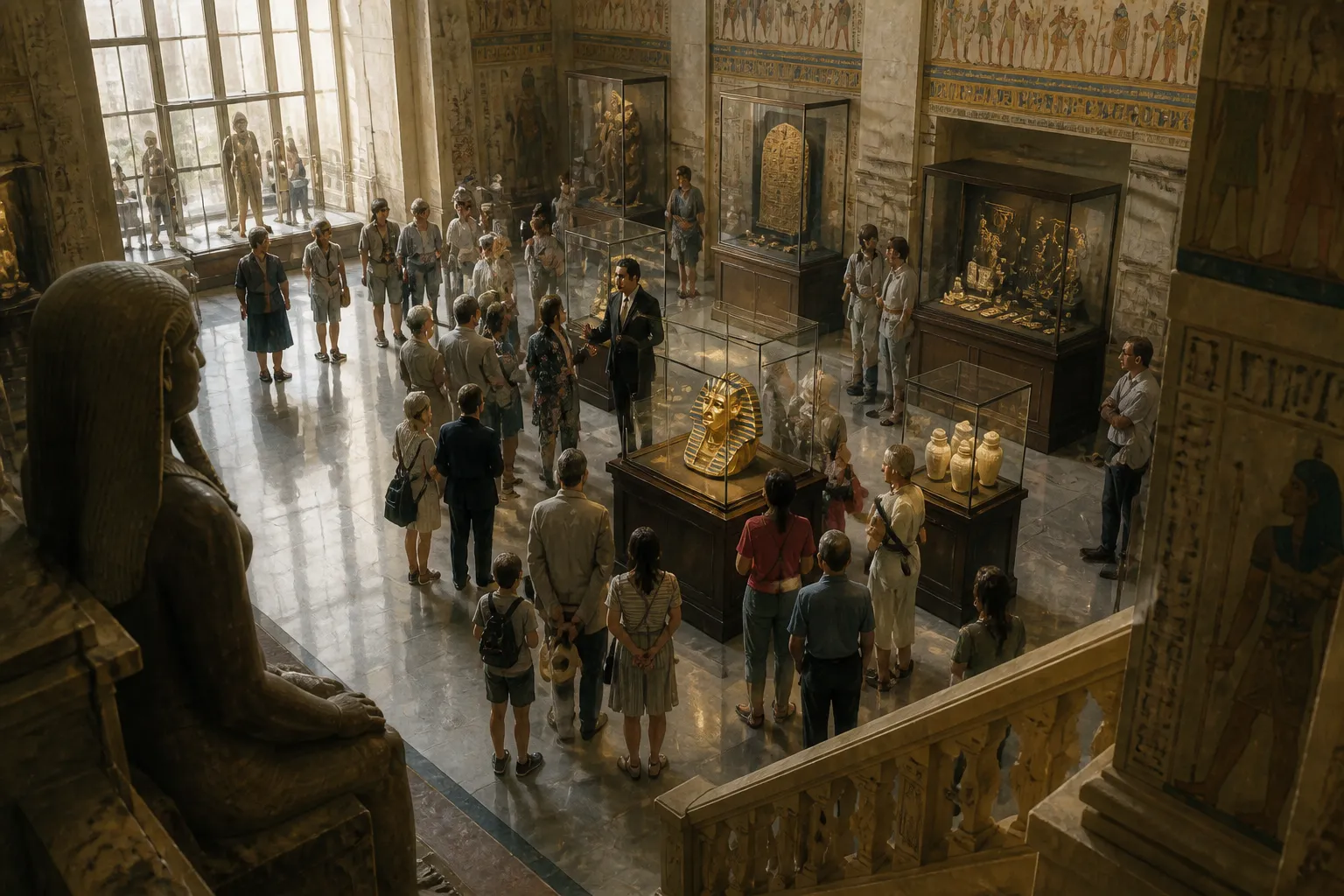
In a sunlit gallery of the British Museum, an exhibit dedicated to Tutankhamun draws throngs of visitors beneath a canopy of golden light. Glass cases meticulously arranged, showcase the breathtaking treasures of his tomb: the iconic golden mask, its surface embossed with intricate hieroglyphics, alongside delicately carved canopic jars, each a testament to the artistry of ancient craftsmen. Nearby, a fragile alabaster lamp sits, its ghostly glow echoing the ambiance of a bygone age. As museum-goers navigate the displays, their reflections entwine with their imaginations, creating a symphony of light and shadow. The insightful curators, guardians of history, enrich the visitors' understanding with narratives that weave through time. In this sacred space, the legacy of the boy king emerges from the sands of time, linking disparate ages with tales of majesty and mystery.
"This golden mask was the face of a king whose story still fascinates the world," a curator explains, gesturing towards the case.
Page 10 — The Enduring Enigma
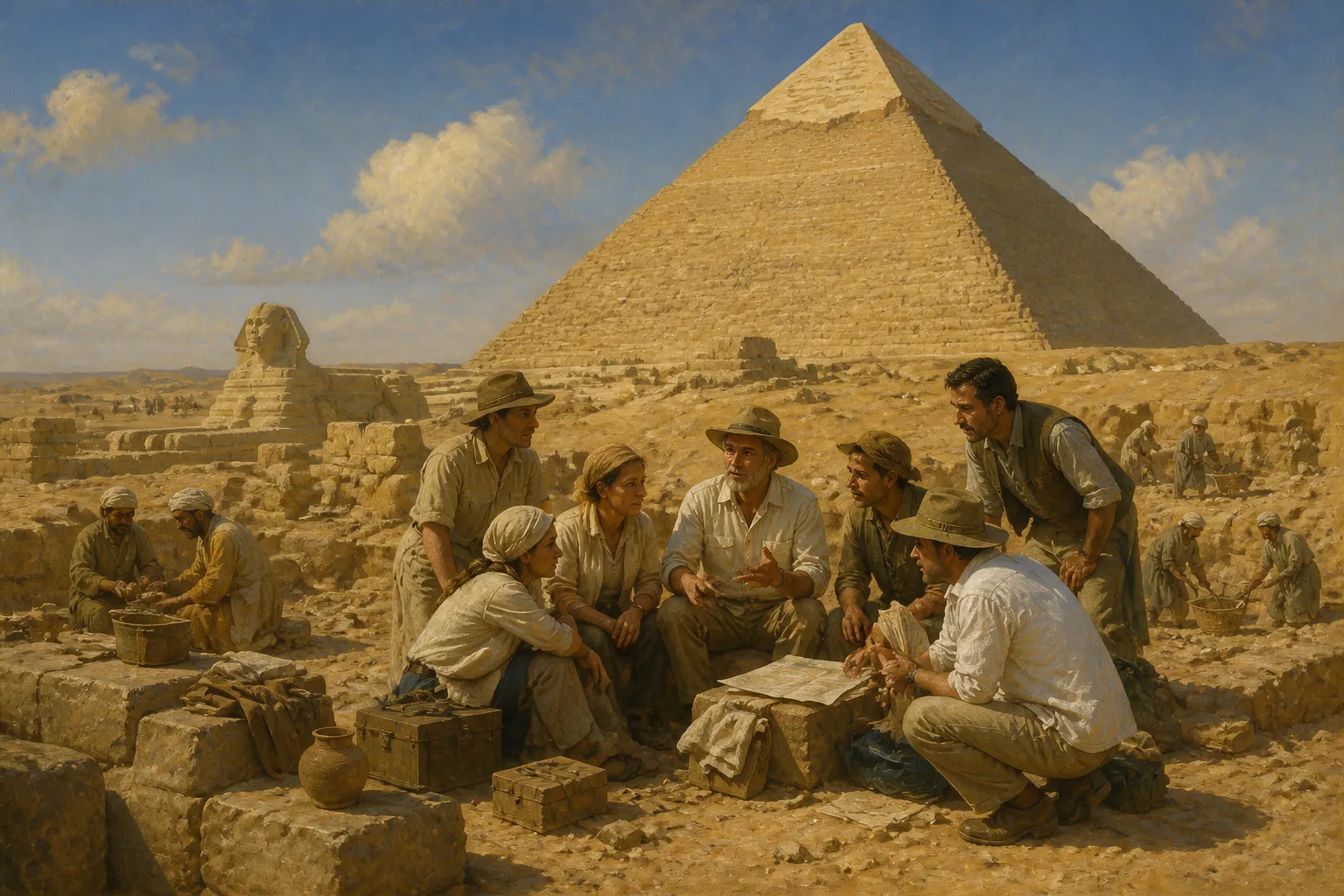
In the expansive shadow of the Great Pyramid of Giza, a congregation of archaeologists assembles, their voices mingling with the whispers of the desert wind. They deliberate the latest findings on Tutankhamun's enigmatic demise, examining theories ranging from illness to fatal injury. The imposing grandeur of the pyramid serves as a timeless backdrop, a monument to a civilization whose mysteries are as vast as the sands that surround it. As the sun arcs across the sky, the archaeologists' discussions weave through the air, casting shadows that dance along with the shifting sands. Despite advances in modern technology, the true cause of the young king's death eludes their grasp, a fragmented puzzle awaiting completion. The afternoon sun, casting elongated shadows, serves as a poignant reminder of history's enduring enigmas.
"Until we find new evidence, the truth of his death remains as shrouded as the sands we stand upon," an archaeologist states, gaze fixed on the distant horizon.
About this story
- Audience: general readers
Read Wonder Egypt on your phone
Wonder Egypt is available on Android. Get Wonder Egypt on Google Play.