The Year Egypt Had One God
The Year Egypt Had One God — an illustrated history story. 10 illustrated pages, free to read on Wonder Egypt.
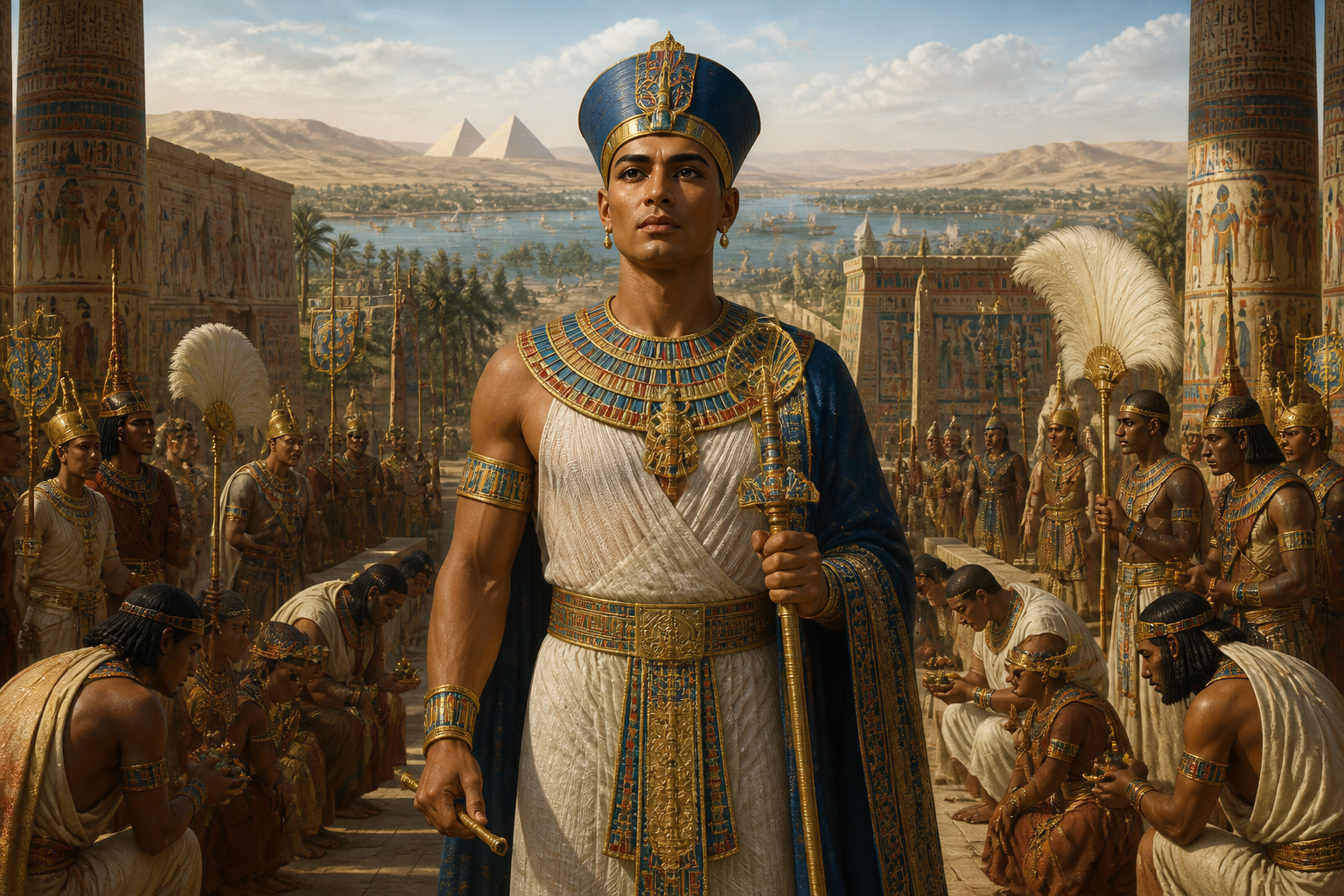
Page 1 — The Sun God Rises
In the fourteenth century BC, Egypt underwent a profound religious transformation led by Pharaoh Akhenaten. He abandoned the pantheon of traditional gods, declaring Aten, the sun disc, as the sole deity. This seismic shift dismantled the established religious order and greatly diminished the power of the once-dominant Amun priesthood. Akhenaten constructed a new capital, Akhetaten, on virgin land, orchestrating an unparalleled artistic and cultural revolution. The city, with its innovative architecture and open courtyards, reflected his devotion to Aten. Yet, this radical era was fleeting. Within a generation of Akhenaten's death, the old gods were reinstated, and his revolutionary city was deserted, leaving behind a legacy of intrigue and debate.
"By the power of Aten, we reshape Egypt," Akhenaten proclaimed to his court.
Page 2 — Counsel in the Throne Hall
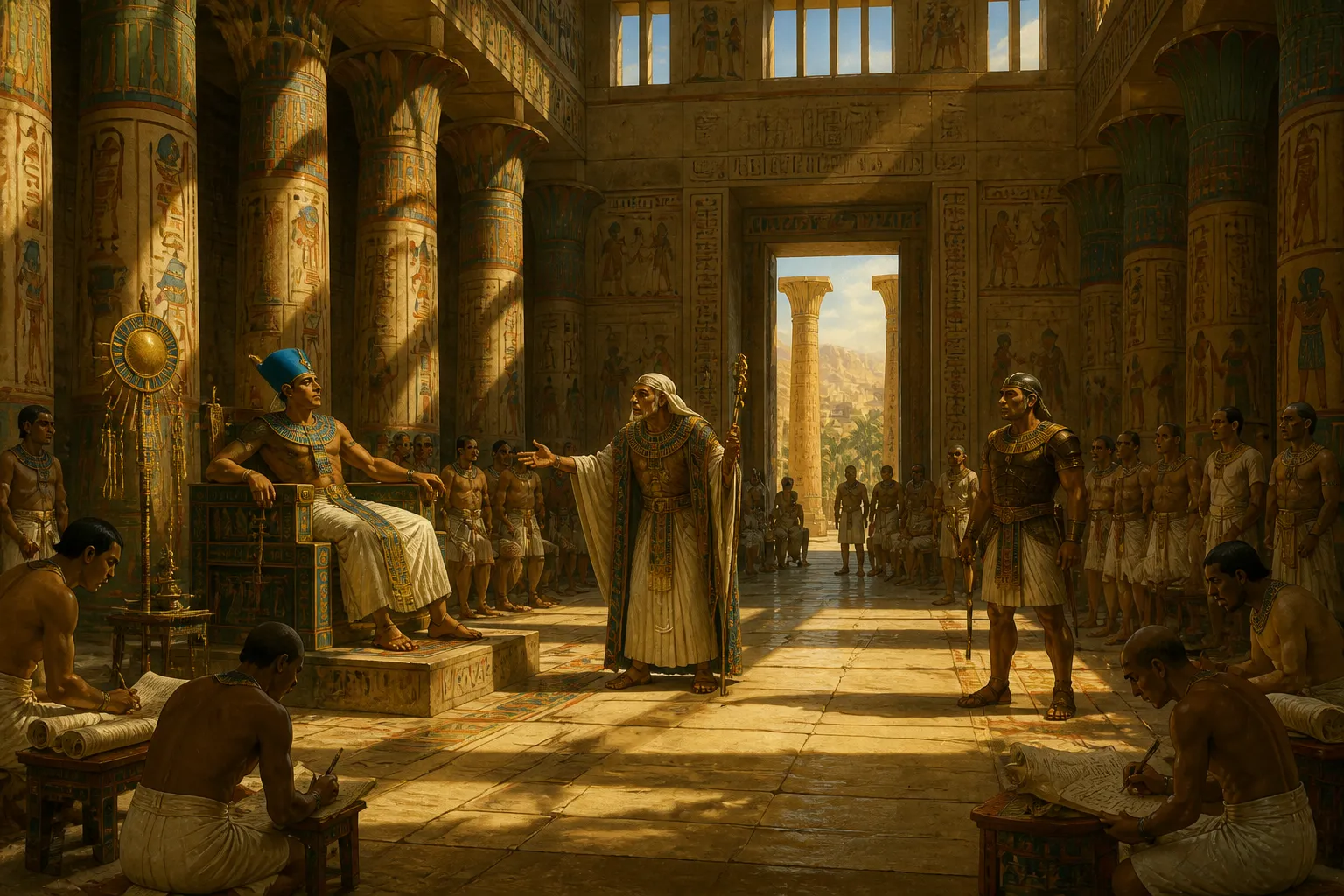
In the grand throne hall, Akhenaten gathered his most trusted officials. Ay, his advisor, and Horemheb, the formidable general, discussed the empire's affairs. Meryra, High Priest of Aten, observed silently. The deep shadow of tension lay over the room, a reflection of the uncertainty beyond Akhetaten. The hall was decorated with vibrant murals depicting the sun disc, while Akhenaten, depicted with elongated features and full lips in the art of his reign, listened intently. The throne, a symbol of a new world order, was flanked by pillars adorned with Aten's rays. An empire shifted under their feet as they debated the tenets of monotheism and the cost of its defense.
"The old gods resist our reforms," Ay cautioned. "We must be vigilant."
Page 3 — Nefertiti's Vigil
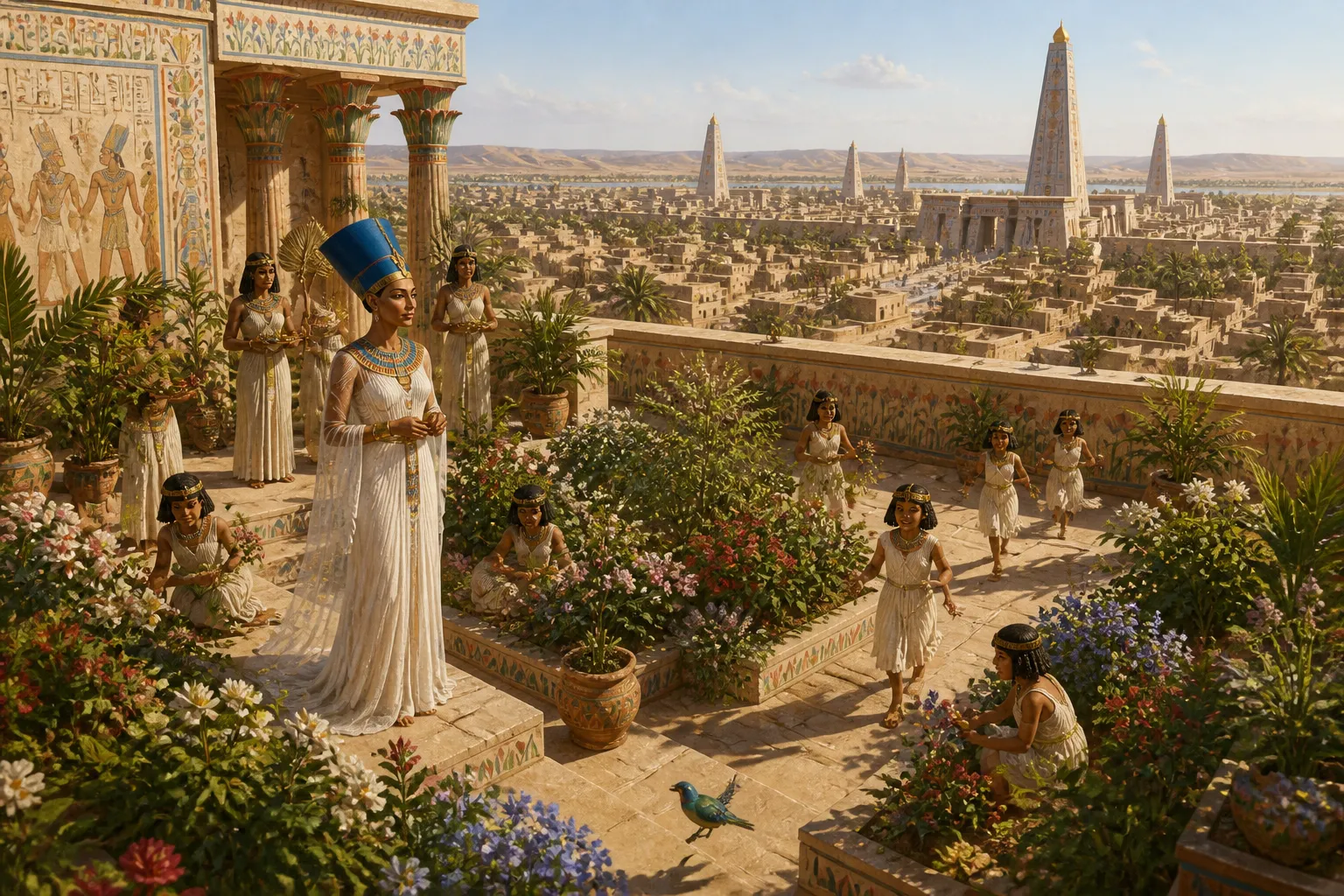
Queen Nefertiti, Akhenaten's chief wife, stood resolutely in the gardens of Akhetaten, her presence as striking and commanding as the sun's warm glow cascading over the lush blooms. Renowned throughout the land for her captivating beauty and considerable influence, she often adorned the tall blue crown depicted in countless elegant reliefs. Her role extended far beyond that of a consort; she was a powerful partner in the pharaoh's ambitious religious revolution and a devoted mother to their six daughters. The political isolation of Akhetaten weighed heavily on her shoulders. In the midst of blossoming flowers and fragrant herbs, she pondered the shifting sands of power and the delicate nature of their radical religious reforms. Her daughters played joyously nearby, their carefree laughter resonating as a poignant reminder of the fragile future they stood to inherit amidst the swirling turmoil and uncertainty.
"We are the keepers of a fragile flame," Nefertiti whispered to herself.
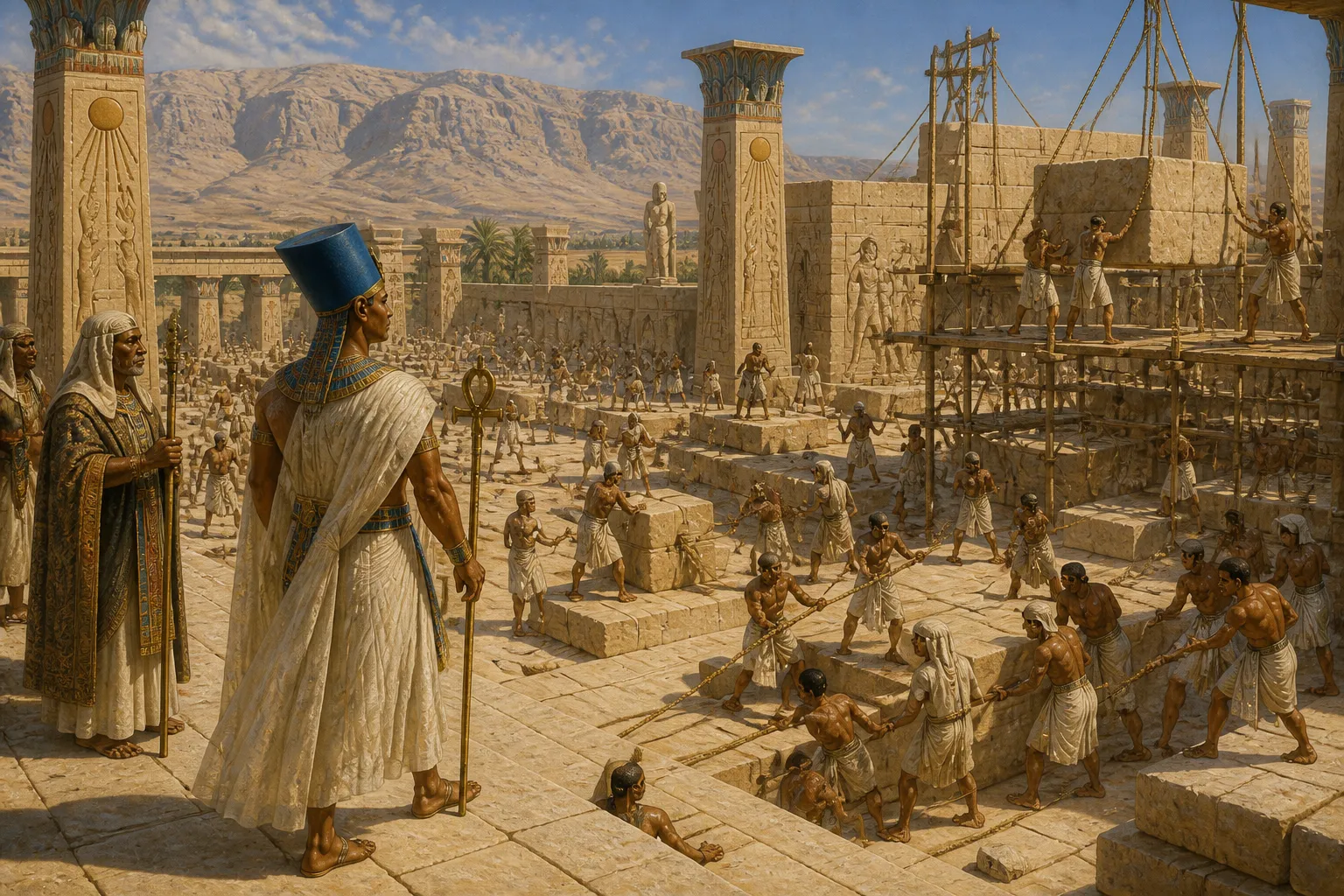
Page 4 — Building a New Faith
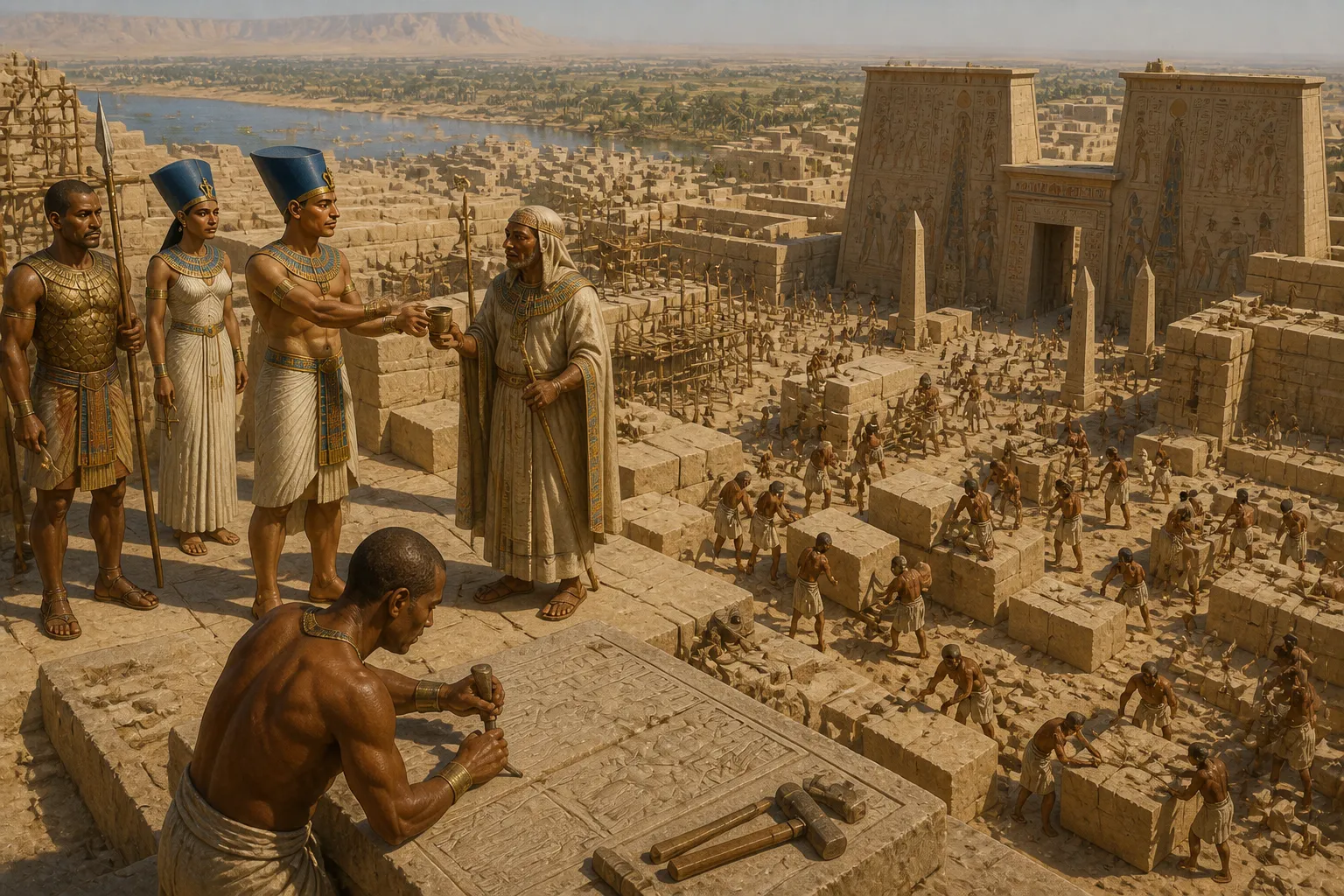
The Great Temple of Aten, a monumental embodiment of Akhenaten's visionary zeal, rapidly ascended from the desert sands. Erecting this massive structure demanded an enormous workforce, encompassing skilled stonecutters and dedicated artisans laboring side by side. Unlike any previous temple, this sacred space was exposed to the open sky, filled with towering pylons and altars unshaded by traditional roofs. Panehesy, the honored Chief Servitor of Aten, meticulously supervised the procedures, ensuring each stone's perfect alignment within the temple's divine architecture. The sun's radiant beams caressed every corner of the temple, serving as a constant reminder of Aten's omnipresence and signaling the pharaoh's profound spiritual conviction. Clad in simple kilts, the workers toiled tirelessly, their unwavering devotion to Aten's cause etched permanently into the stone.
"Each stone is a prayer to Aten," Panehesy instructed his crew.
Page 5 — Artisans of Change
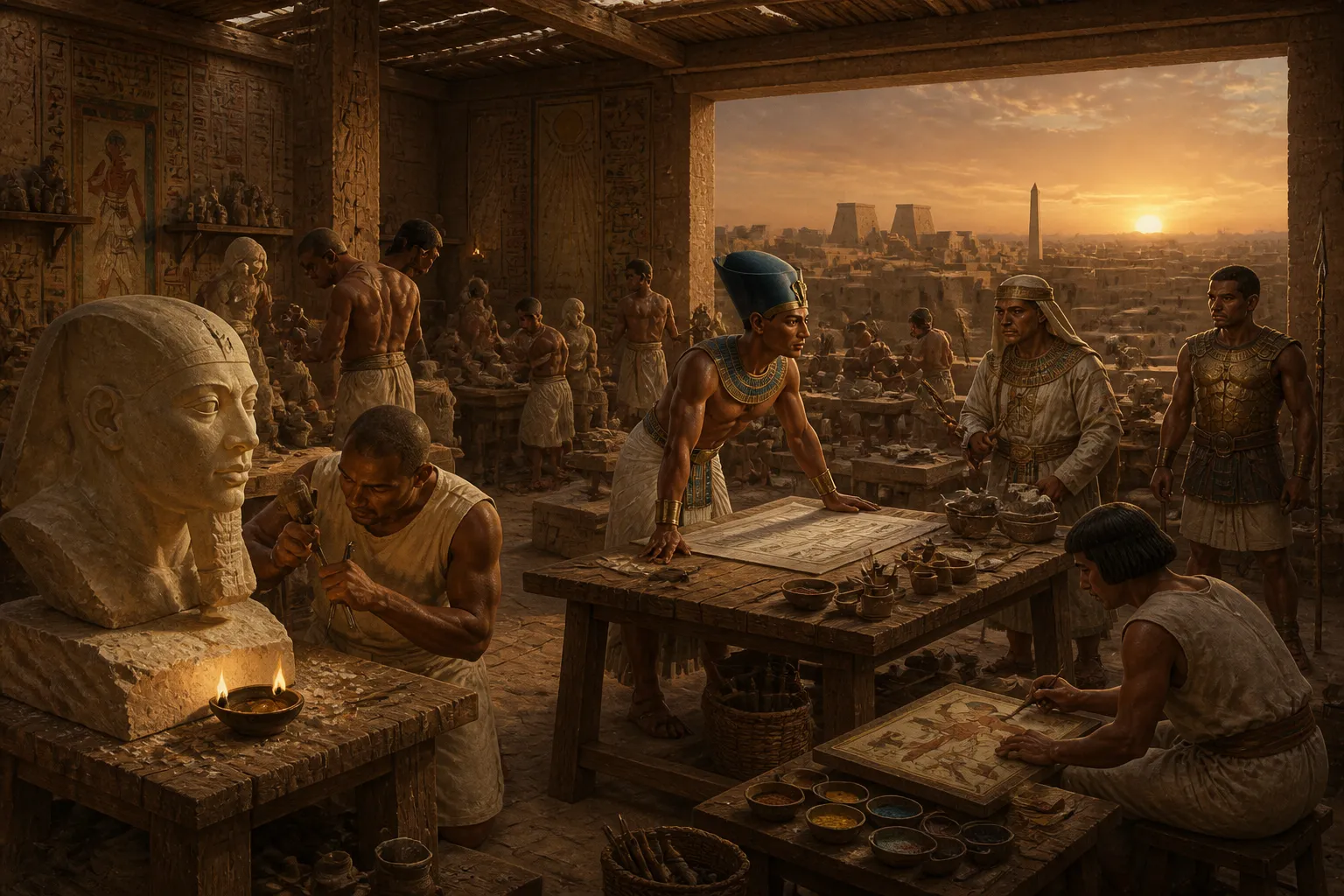
Within the heart of Akhetaten, the air was filled with the rhythmic sounds of chisels against stone and the soft rustle of brushes on plaster. Artisans, dressed in simple linen tunics, devoted themselves to creating extraordinary works that marked a departure from the past. Under Akhenaten's revolutionary vision, the Amarna artistic style blossomed, focusing on naturalism and intimacy. In these bustling workshops, the elongated, sophisticated features of the royal family and scenes of daily life were rendered with a divine aura through vibrant pigments. One masterpiece, the Berlin bust of Nefertiti, became emblematic of the era's exquisite craftsmanship. Despite debates over whether these artistic strides were motivated by genuine religious devotion or political propaganda, one truth remained unchallenged: these artisans were crafting an enduring legacy amid the very essence of creativity—clay shavings and vibrant colors.
"Capture their likeness, but let Aten's light touch them," instructed a master sculptor.
Page 6 — The Diplomat's Task
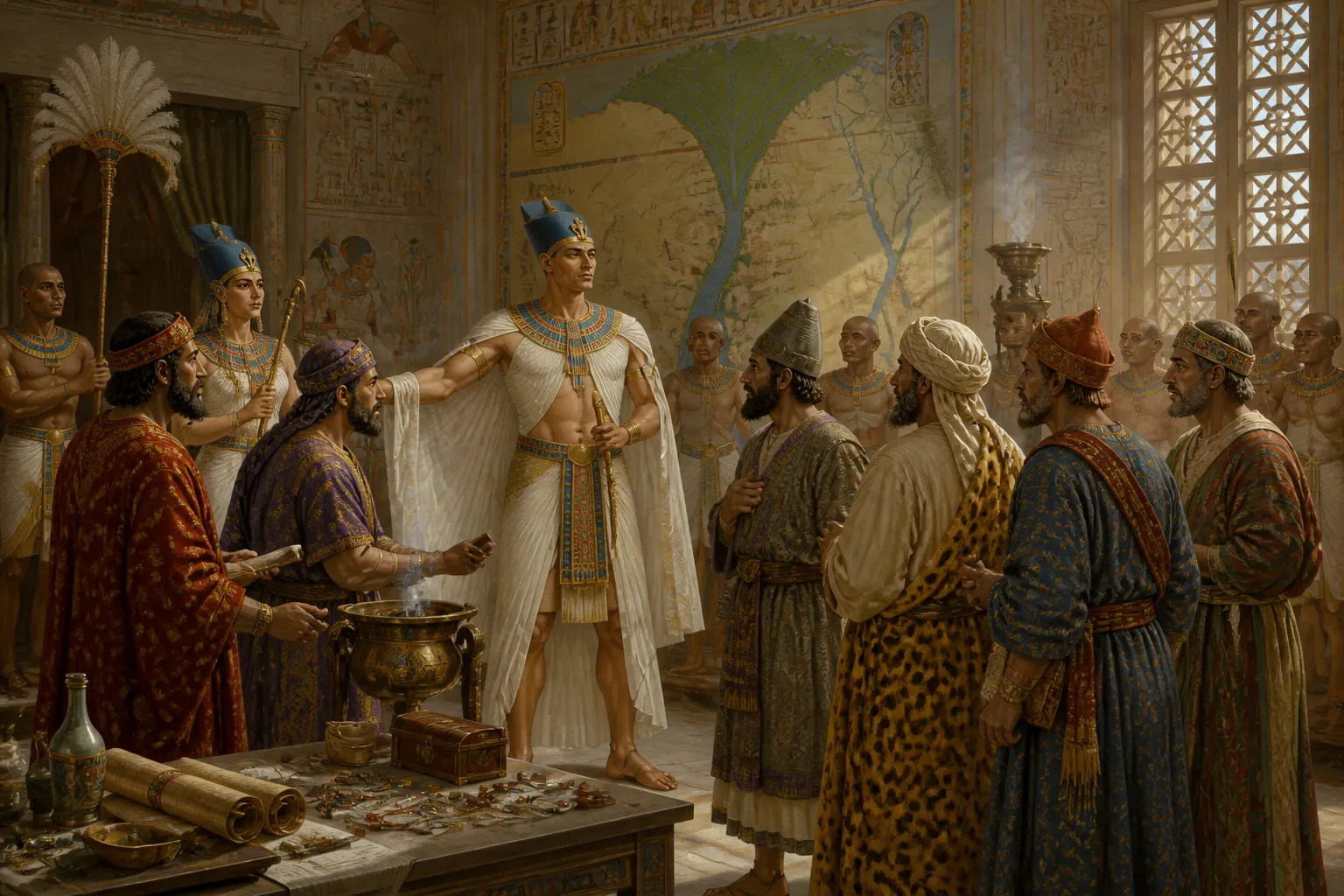
In the understated yet richly adorned diplomatic chamber of Akhetaten, representatives from various territories gathered at Akhenaten's invitation. Within this modest setting, where the atmosphere was thick with the scent of incense and tension, diplomacy met the challenge of evolving religious paradigms. Envoys from Mitanni and the Hittite territories, clad in garments reflecting their diverse cultures, voiced their unease regarding the disruptions in trade caused by the Pharaoh's religious reforms. Akhenaten, embodying the elongated aesthetics of the time, listened intently, poised to reconcile the worlds of faith and politics. The chamber's ambiance resonated with the potential for both unity and division, as the fabric of Egypt's long-standing alliances was tested.
"Our gods intertwine with commerce," a Mitanni envoy pressed. "Harmony is prosperity."
Page 7 — The General's Concerns
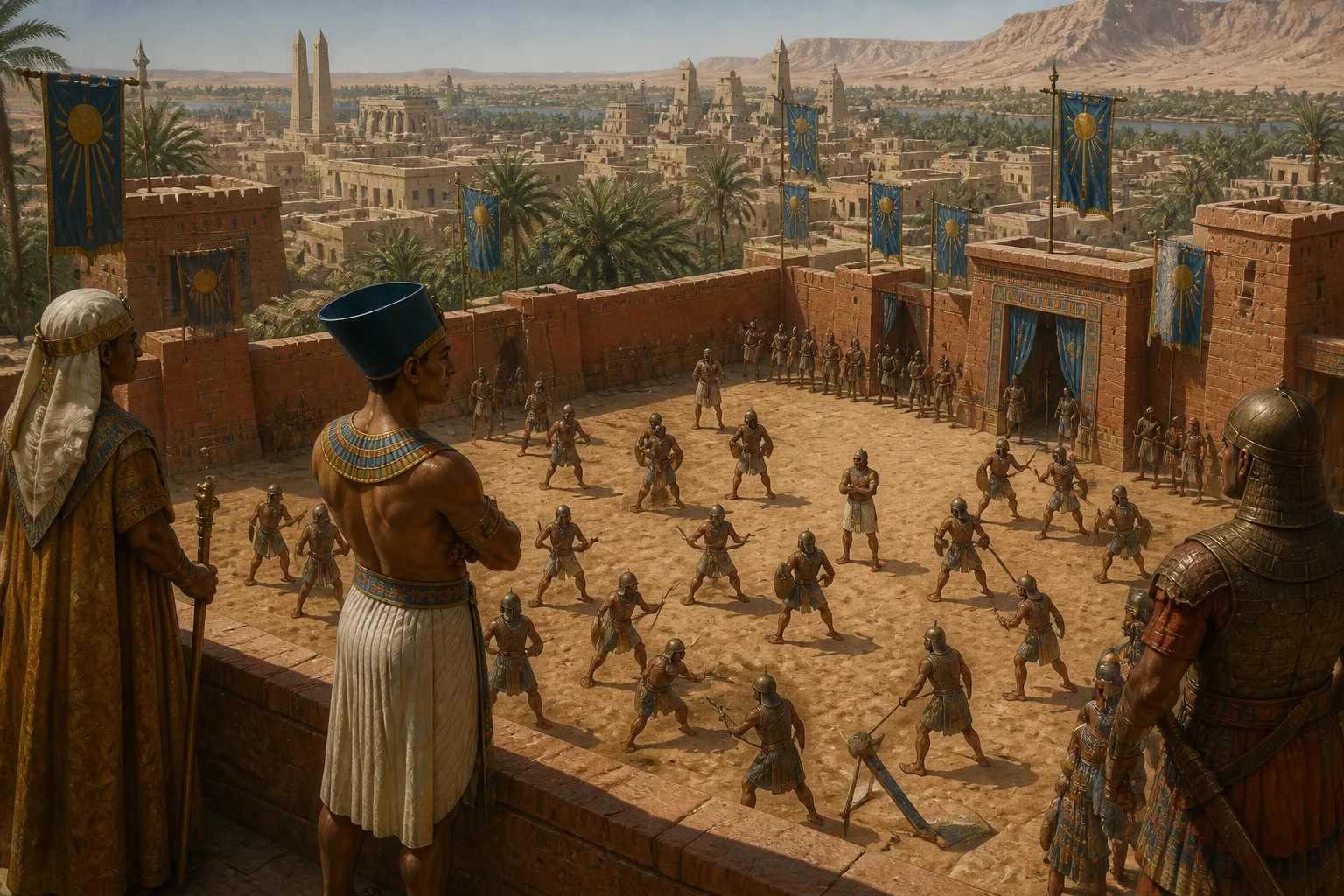
Amidst the resonant terracotta confines of the bustling garrison courtyard in Akhetaten, the empire's chief military commander, an imposing figure of considerable authority, mulled over the uncertain future ahead. The courtyard pulsed with the vigorous training of soldiers clad in protective leather skirts, each session a stark testament to the myriad challenges eroding Egypt's formidable military prowess. Under the relentless, scorching sun, bronze weapons glinted ominously, reflecting both light and the mounting concerns of the commander. This man, known for his dominant stature and commanding presence, weighed the serious implications of dwindling resources and lowered morale, consequences of the Pharaoh's intense focus on religious matters. The soldiers' dedication, once deeply rooted in Egypt's traditional pantheon, now wavered under Aten's singular, unyielding light, creating a palpable tension akin to the oppressive heat that enveloped them on all sides.
"An army marches on more than faith," Horemheb mused to his captains.
Page 8 — Festival of Aten
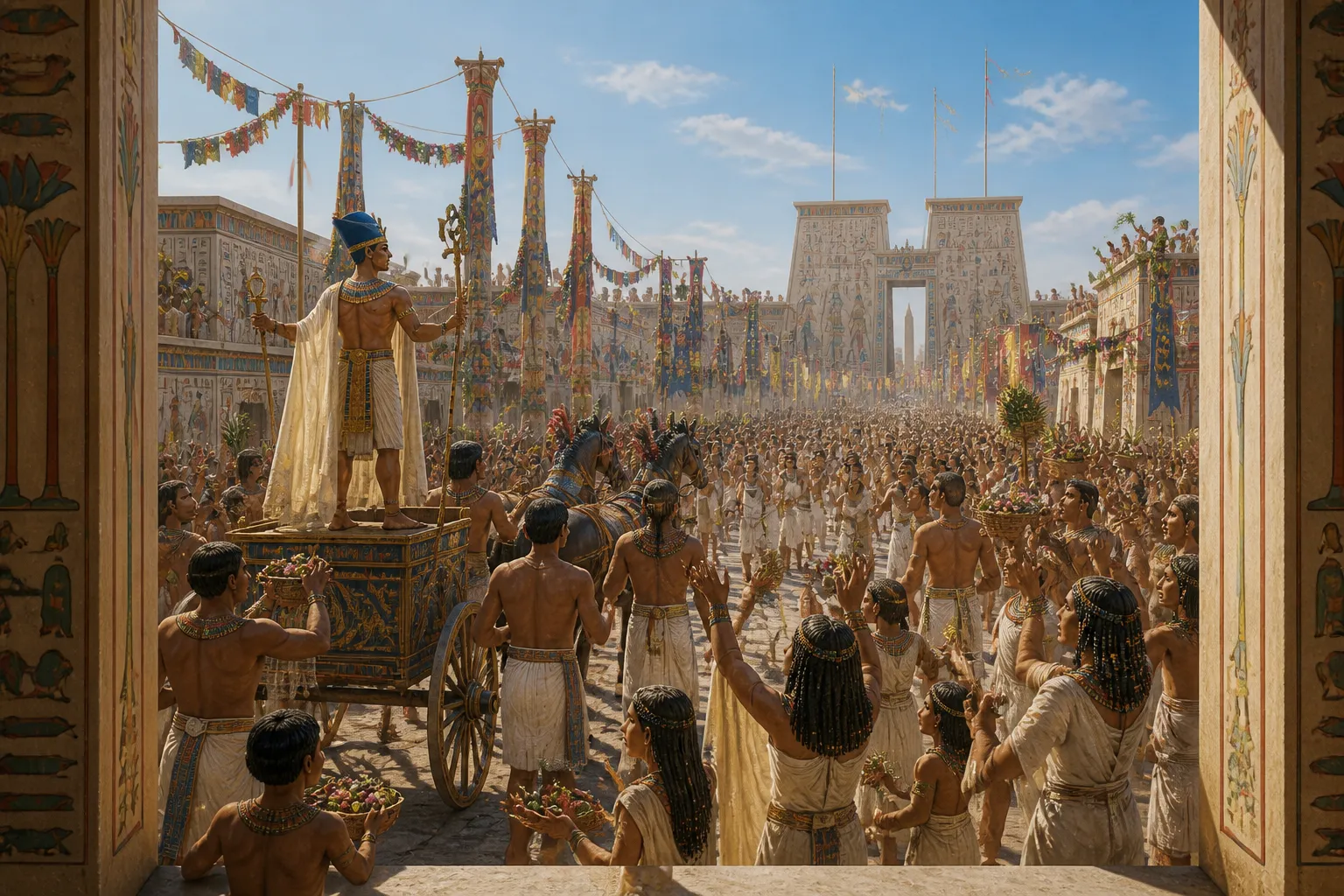
The Festival of Aten transformed the city of Akhetaten into a vibrant tapestry of colors and sounds. Streets were awash with decorations as citizens joined in grand processions to celebrate the sun disc deity. The air was alive with the melodies of music and rhythmic chants, mingling with the sweet aroma of incense. Leading the spiritual celebration was Panehesy, the Chief Servitor, clad in ceremonial attire as he invoked Aten's blessings. The city's populace, in bright and varied garments, offered floral tributes and food, embodying Akhenaten's vision of unity under a singular divine entity. However, beneath the festive veneer lingered whispers of dissatisfaction, hinting at the city's precarious isolation from broader Egyptian society.
"In Aten's gaze, we find unity," Panehesy proclaimed to the gathered crowd.
Page 9 — Whispers of Dissent
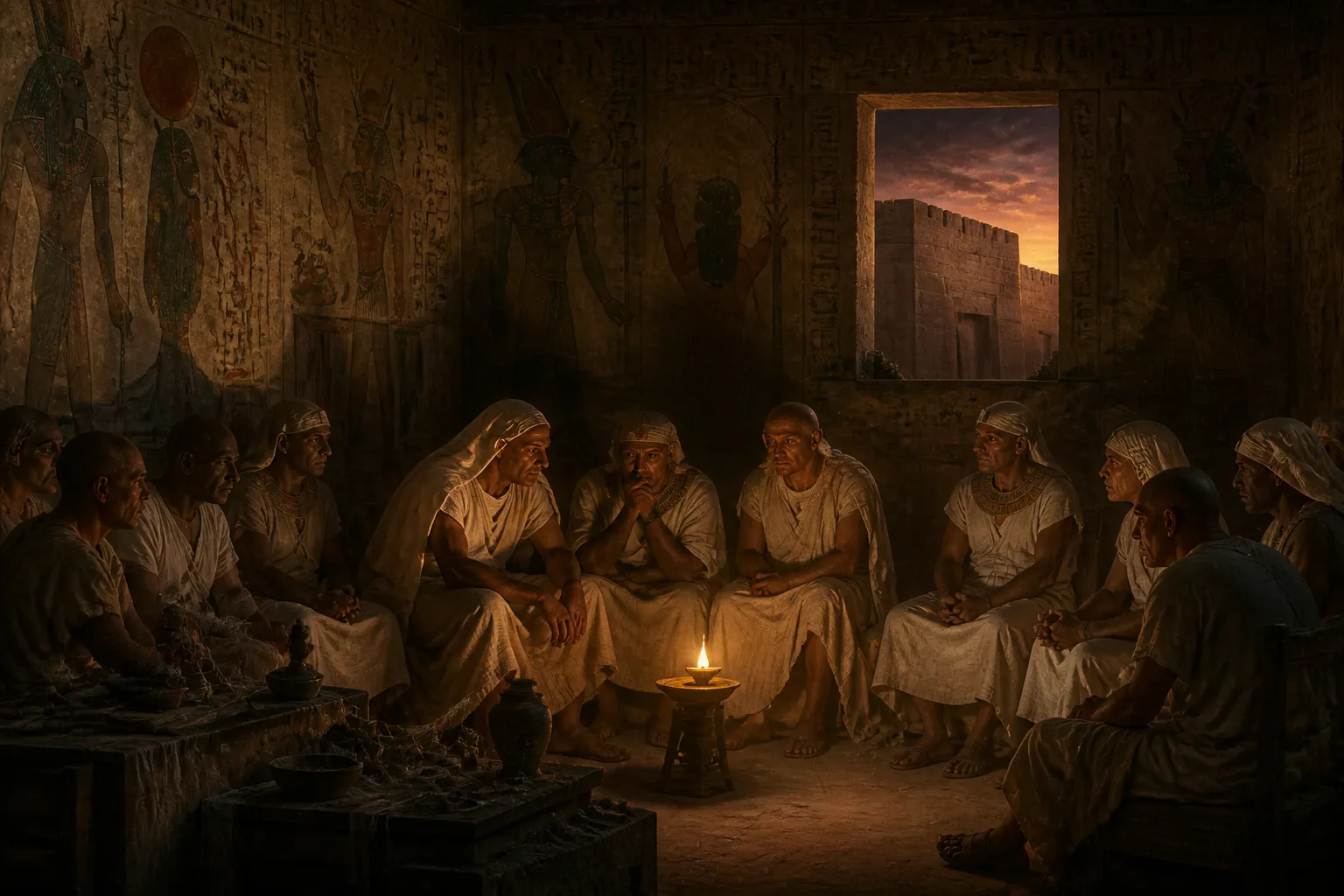
In the shadowed corridors of Akhetaten, dissent brewed quietly among the displaced priesthood of Amun. Gathered in secret within a hushed chamber, they lamented the loss of their grand temples and waning influence. These priests, once resplendent in vibrant robes adorned with gold, now wore simple, unadorned garments that mirrored their reduced status. The return of traditional worship was their whispered goal. Gathered around a modest altar, their leader, a man of imposing presence, plotted quietly, fully aware of the ever-watchful eyes of Akhenaten’s vigilant guards. Beyond the chamber, the city's grand architectural marvels loomed, serving as a silent, ever-watchful sentinel. Amid furtive conversations, a steely resolve emerged: patience and subterfuge would restore the old ways, even as Aten's rays seemed unassailable.
"The sun sets, as do all things," an elder priest intoned softly.
Page 10 — Legacy in Ruins
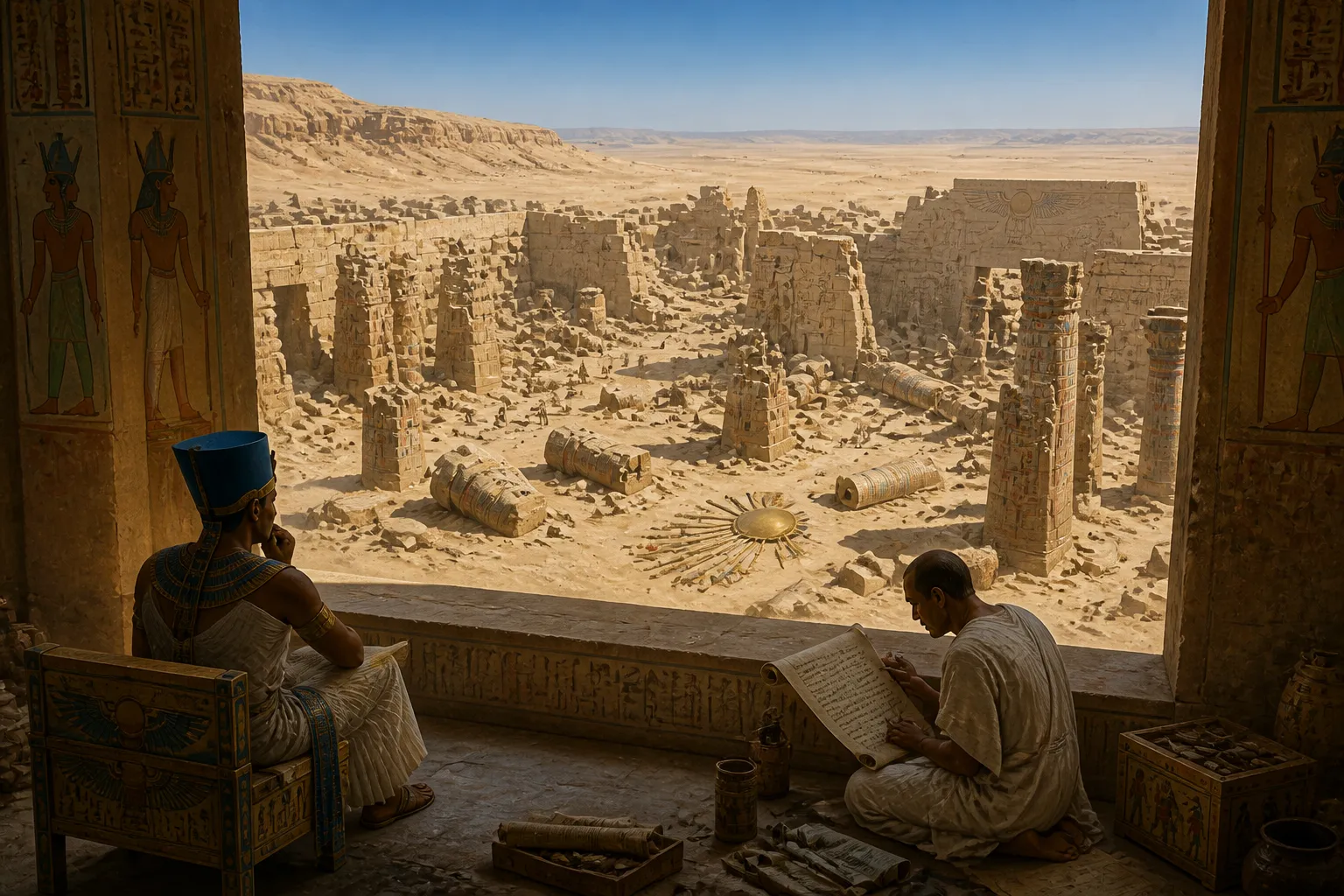
As Akhetaten succumbed to time's inexorable passage, the city's former grandeur faded like a whisper in the desert wind, leaving behind a relic of Akhenaten's audacious vision. Under the succeeding reign of Tutankhamun, the traditional pantheon was restored with fervor. Monuments to Aten were methodically dismantled, and once-bustling streets lay eerily silent and abandoned. The Pharaoh's name was erased from official annals, an obliteration etched painstakingly into the city's very stones. Yet, the artistic and architectural innovations that characterized Akhetaten endured, their influence creating ripples through history. In the haunting silence of the desert, the legacy of Akhetaten's brief reign persisted as both a cautionary tale and a testament to the boundless scope of human ambition.
"Dust reclaims all, yet memory endures," a scribe mused as he cataloged the ruins.
About this story
- Audience: general readers
Read Wonder Egypt on your phone
Wonder Egypt is available on Android. Get Wonder Egypt on Google Play.