The Restoration of the Gods
The Restoration of the Gods — an illustrated history story. 10 illustrated pages, free to read on Wonder Egypt.
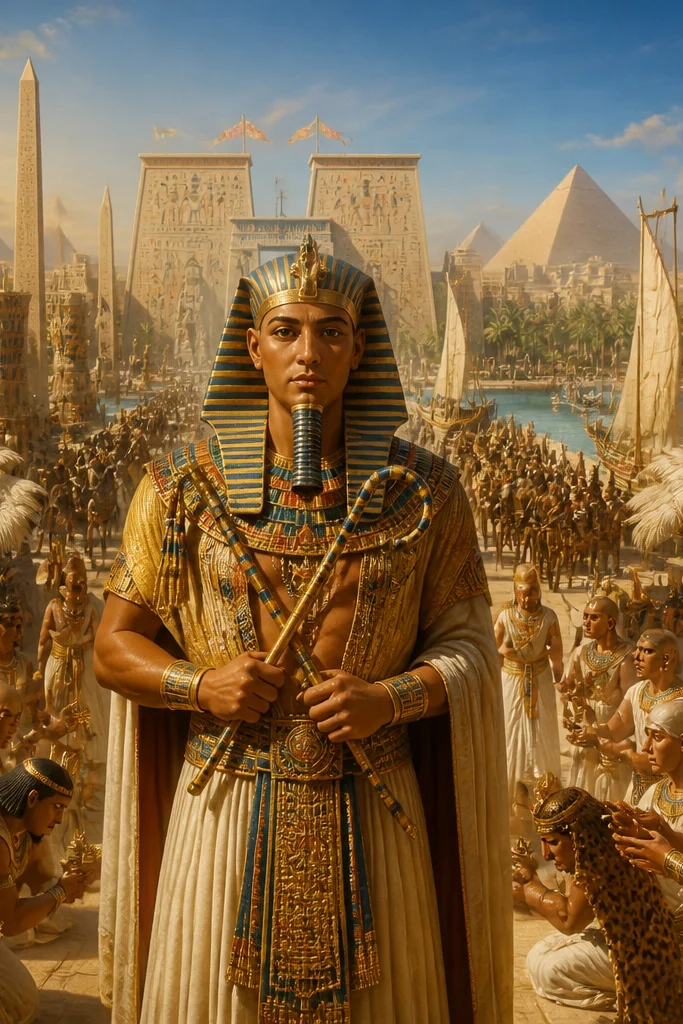
Page 1 — Decree at the Temple
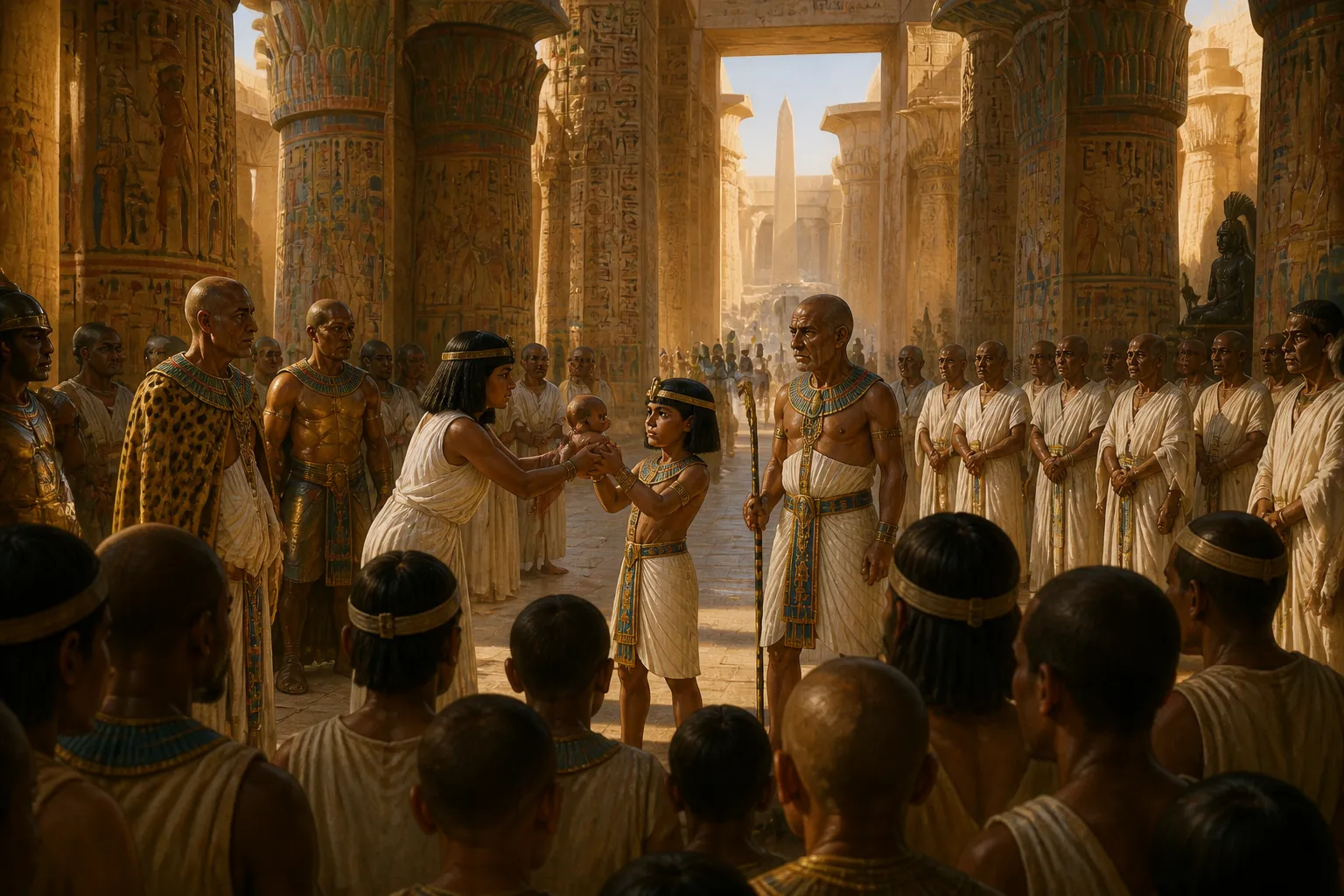
The grand hall of Karnak stands resplendent under the blazing Egyptian sun as multitudes gather for a momentous proclamation. Young Tutankhamun, adorned in a simple white linen kilt and the dignified nemes headdress, stands dwarfed by towering columns inscribed with the deeds of gods. Each column is a testament to the incredible artistry and devotion of ancient craftsmen, the hieroglyphics telling stories of creation and divine intervention. The decree rolls in his trembling hands, its words crafted by the experienced hands of Ay and Horemheb, both looming like shadows behind him, their presence a reminder of the political weight resting on the young pharaoh's shoulders. The papyrus, made from the finest reeds of the Nile, rustles softly. He announces the reopening of temples and restoration of traditional worship, an act reversing his father Akhenaten's radical religious reforms. The air vibrates with the mixed chorus of murmurs and chants from a sea of priests and nobles, clad in robes that reflect their status. The scent of incense drifts through the hall, mingling with the dust of ages, as the congregation processes the magnitude of the declaration, knowing it's the dawn of a new era.
"Let the temples open once more, and the gods return to their rightful places," proclaims Tutankhamun, his voice steady despite his youth.
Page 2 — The Ruined Temples
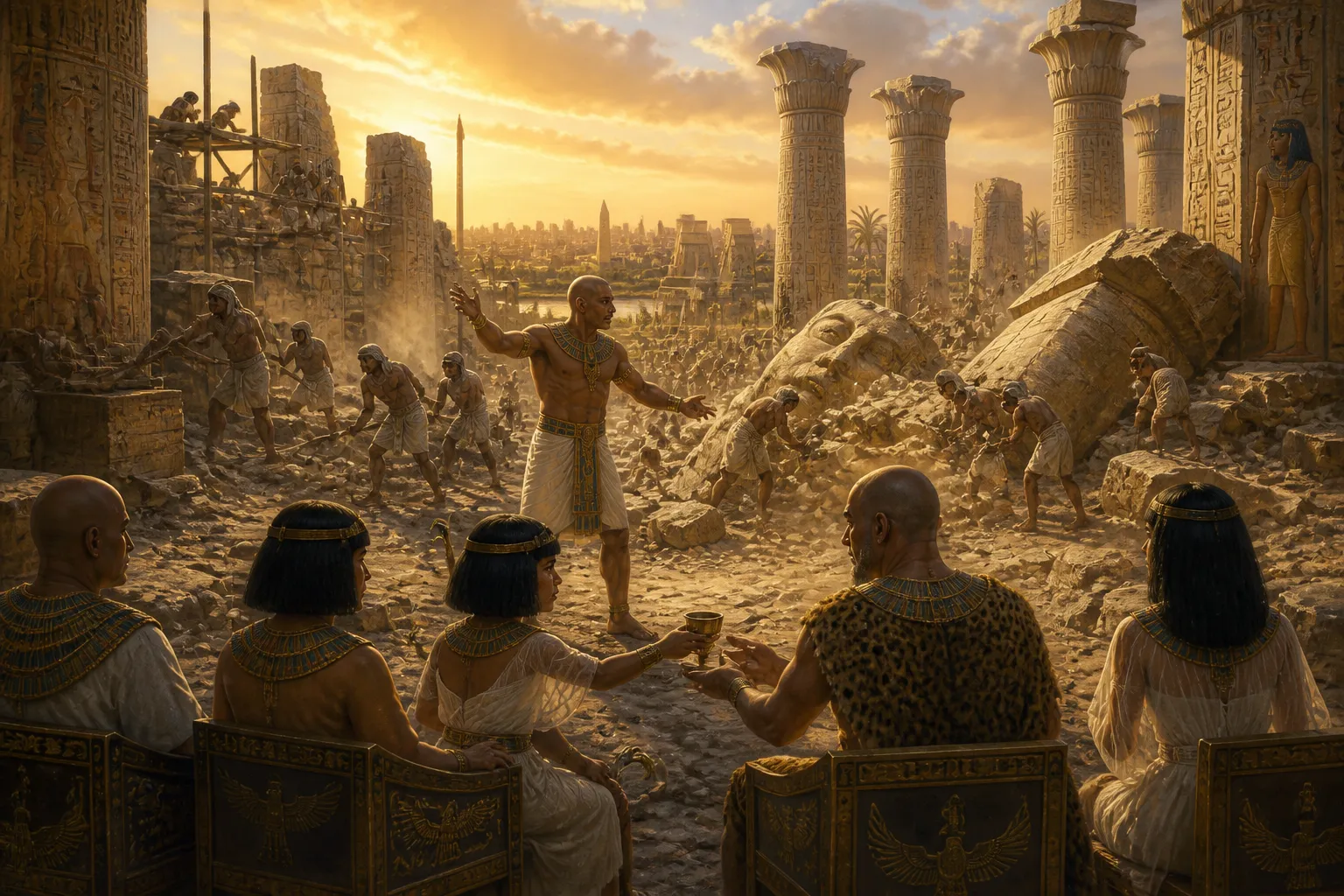
Outside Thebes, at the sacred site of Karnak, the devastation of Akhenaten's reign is palpable. The temple complex lies in disrepair, its once majestic altars stripped bare, and its revered statues defaced, the faces and limbs removed in a deliberate act of iconoclasm. The inscriptions on temple walls, now weathered and eroded, speak of forgotten gods and abandoned rituals. Horemheb inspects the damage, his steps echoing off the cracked stone floors, assessing the colossal task ahead. Laborers bustle in every direction, hefting heavy blocks of sandstone, their tanned skins glistening with sweat under the relentless sun. Strings of papyrus plans detailing the restoration flutter in the breeze, a testament to human ambition and reverence. The scent of dust mingles with incense, a sign of the ongoing religious rites, an attempt to maintain some semblance of divinity amid chaos. Horemheb envisions the temple’s future glory, a center of devotion restored to its ancient splendor, as he orders skilled craftsmen to begin the meticulous task of carving new figures of Amun and his fellow deities, aiming to resurrect the gods' honored presence in stone.
Horemheb commands, "Raise these walls anew, rebuild what was lost, so the gods may look upon us with favor once more."
Page 3 — Consultation in Memphis
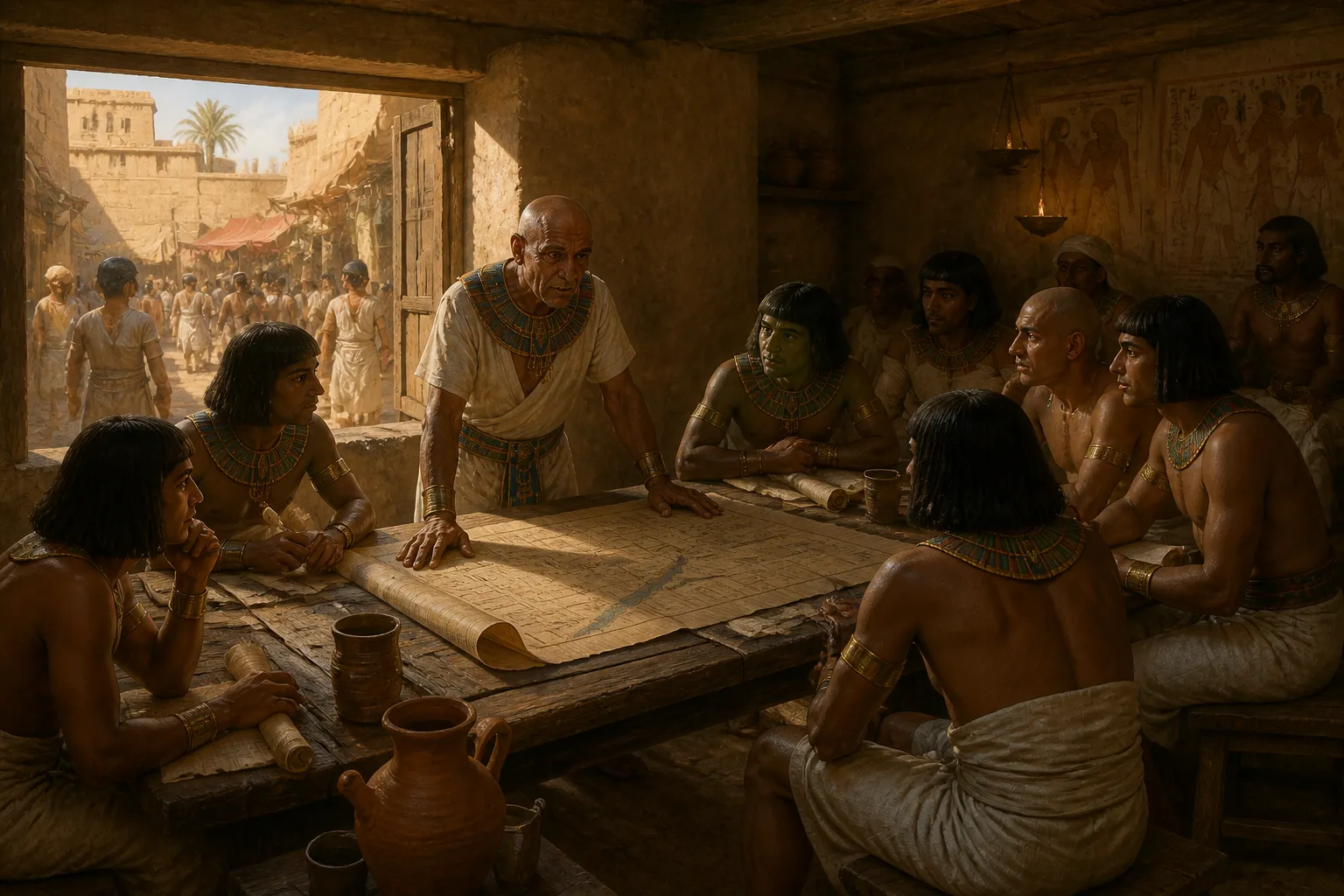
In the bustling port of Memphis, amid the labyrinthine streets lined with mud-brick houses, Ay meets with prominent scribes and priests at a quiet corner tavern. The air is heavy with the rich smell of roasting barley, mingling with the sweet fragrance of baked bread from nearby ovens. The low din of the city vibrates around them, creating a backdrop of life and commerce. The discussion centers around the complex logistics of transporting materials for temple reconstruction, essential for the ongoing restoration efforts. Ay, wearing a ceremonial wesekh collar that reflects his status, stands before the group, his fingers tracing the scroll maps with ink-stained hands, each stroke deliberate and authoritative. The men debate fervently, their voices rising and falling like the distant river, but Ay's voice rings decisive, emphasizing the divine duty to restore what the heretic pharaoh destroyed, urging them to unite resources and toil together in a unified effort.
Ay insists, "The hearts of the people and the will of the gods demand we rebuild with haste and dedication."
Page 4 — A Queen's Support
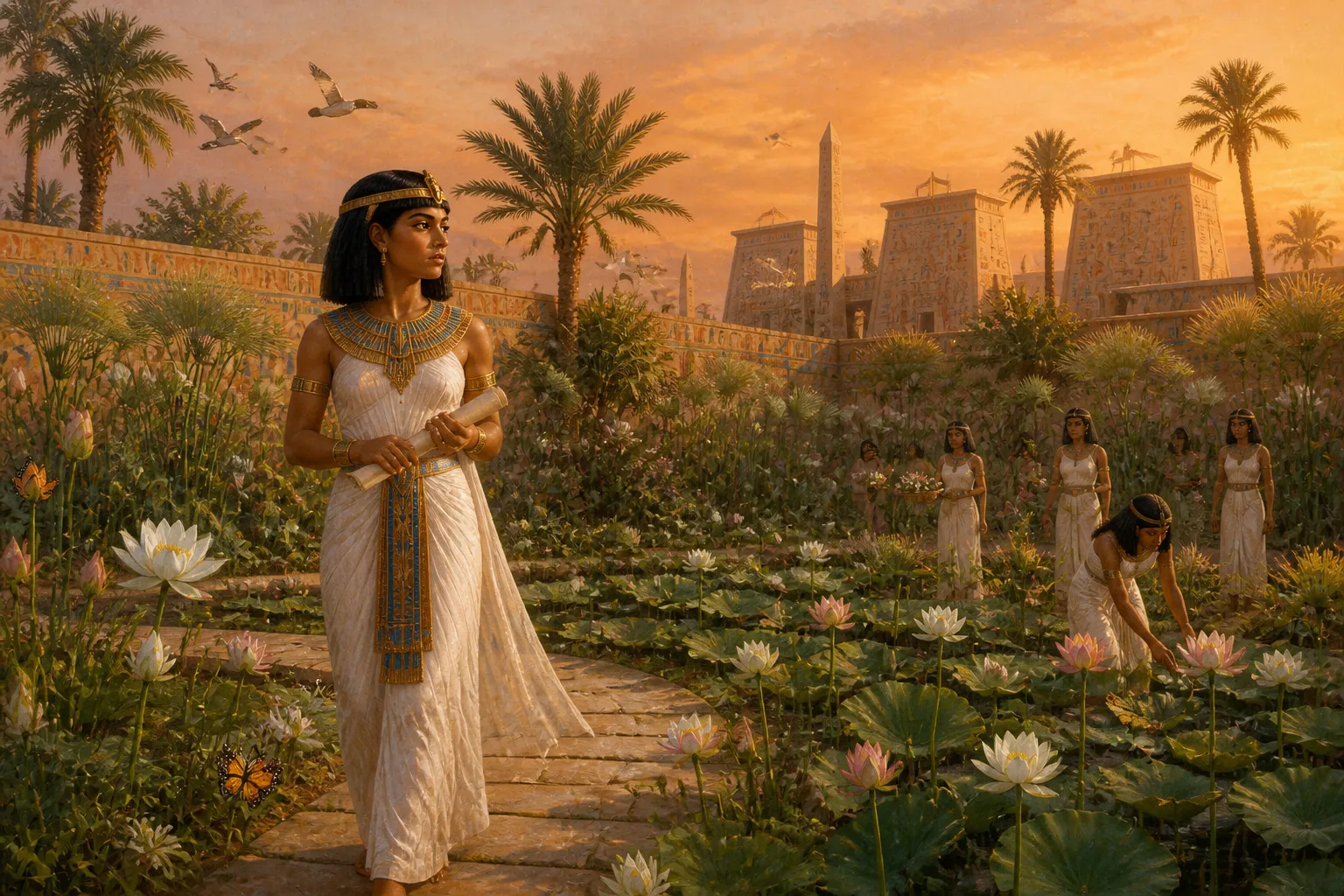
Ankhesenamun, Tutankhamun's young queen, strolls through the garden of the royal residence in Thebes, her linen dress flowing like the Nile, reflecting the fluid grace of her movements. The garden is a secluded oasis, filled with the sweet fragrance of lotus blossoms and the melodic rustle of papyrus leaves in the gentle breeze. Birds chirp among the branches, a symphony of natural music that accompanies her thoughtful steps. Holding a delicate correspondence scroll, she reads messages of support from neighboring territories, the fine ink and papyrus a testament to their solidarity, pledging resources for the temple restoration. Her role as a mediator and supporter strengthens her young husband's position, encouraging alliances vital to the kingdom's renewal. As she reads, the gentle breeze carries the echoes of restoration prayers from the temple complex beyond, and she reflects on her duty to ensure the gods' favor and her lineage's future, knowing that the balance of power and peace rests delicately in her capable hands.
"May the gods bless our efforts and guide us towards prosperity," Ankhesenamun whispers, her resolve unwavering.
Page 5 — The Artist's Vision
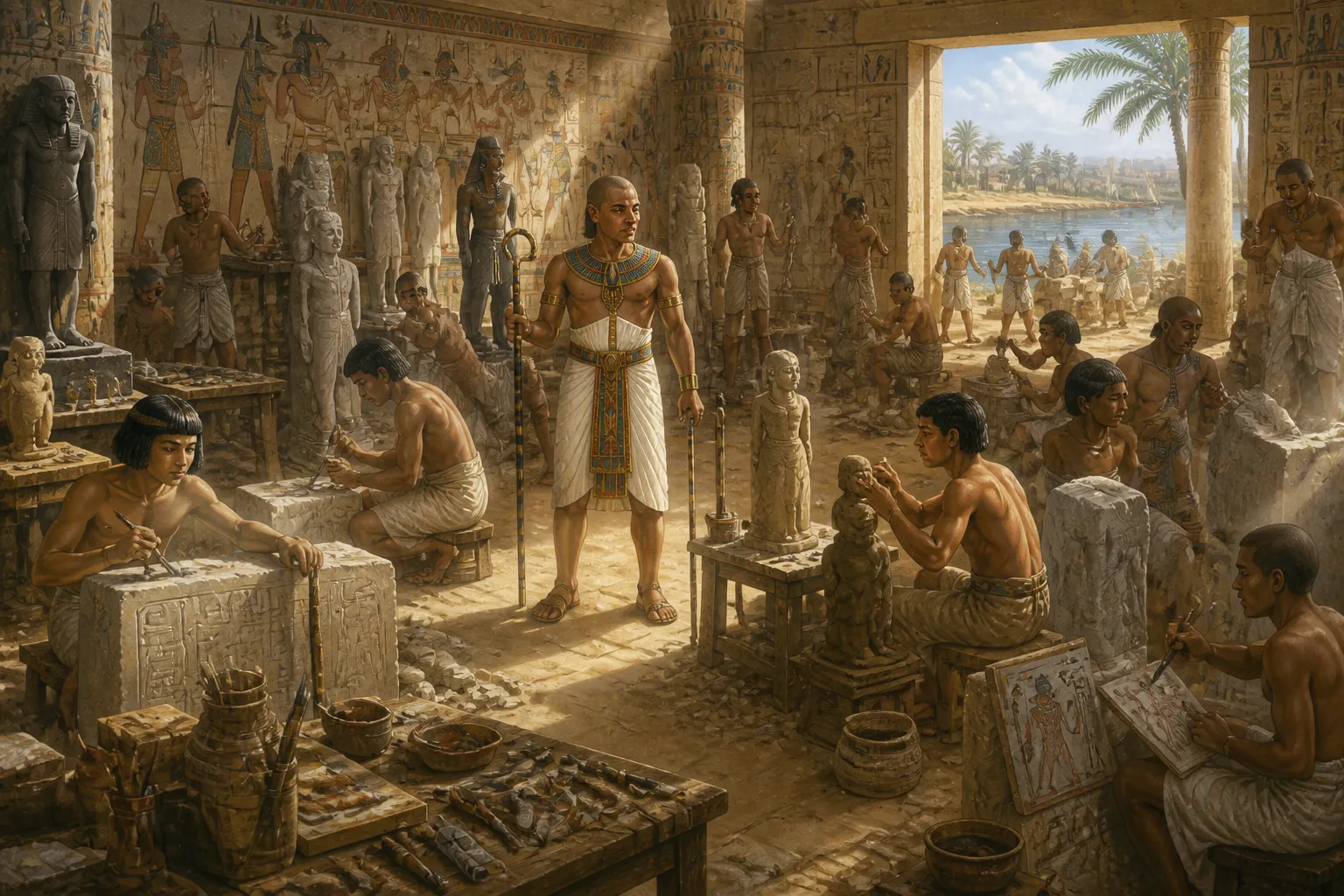
In a workshop near the banks of the Nile, under the watchful eye of master sculptor Thutmose, artisans labor intently to create new statues of Amun. The air is thick with the smell of wet clay and the fine dust of chiseled stone, punctuated by the relentless, rhythmic sound of chiseling—a sound both hypnotic and industrious. Thutmose, a man whose hands bear the calluses of decades spent honing his craft, inspects their progress with a critical eye, ensuring that each form captures the divine grandeur that has been lost. Apprentices, their youthful hands caked with earth, work fervently, their muscles rippling under the strain of transformation, the raw material slowly assuming the shapes of gods. Thutmose envisions these figures standing proud in Karnak, a testament to the skill and devotion of those who craft them, embodying a divine rebirth that will serve as a beacon for the faithful and a statement of renewal.
"Shape the stone with reverence," urges Thutmose, his voice a blend of passion and authority, "for they are the gods reborn."
Page 6 — A Strategic Council
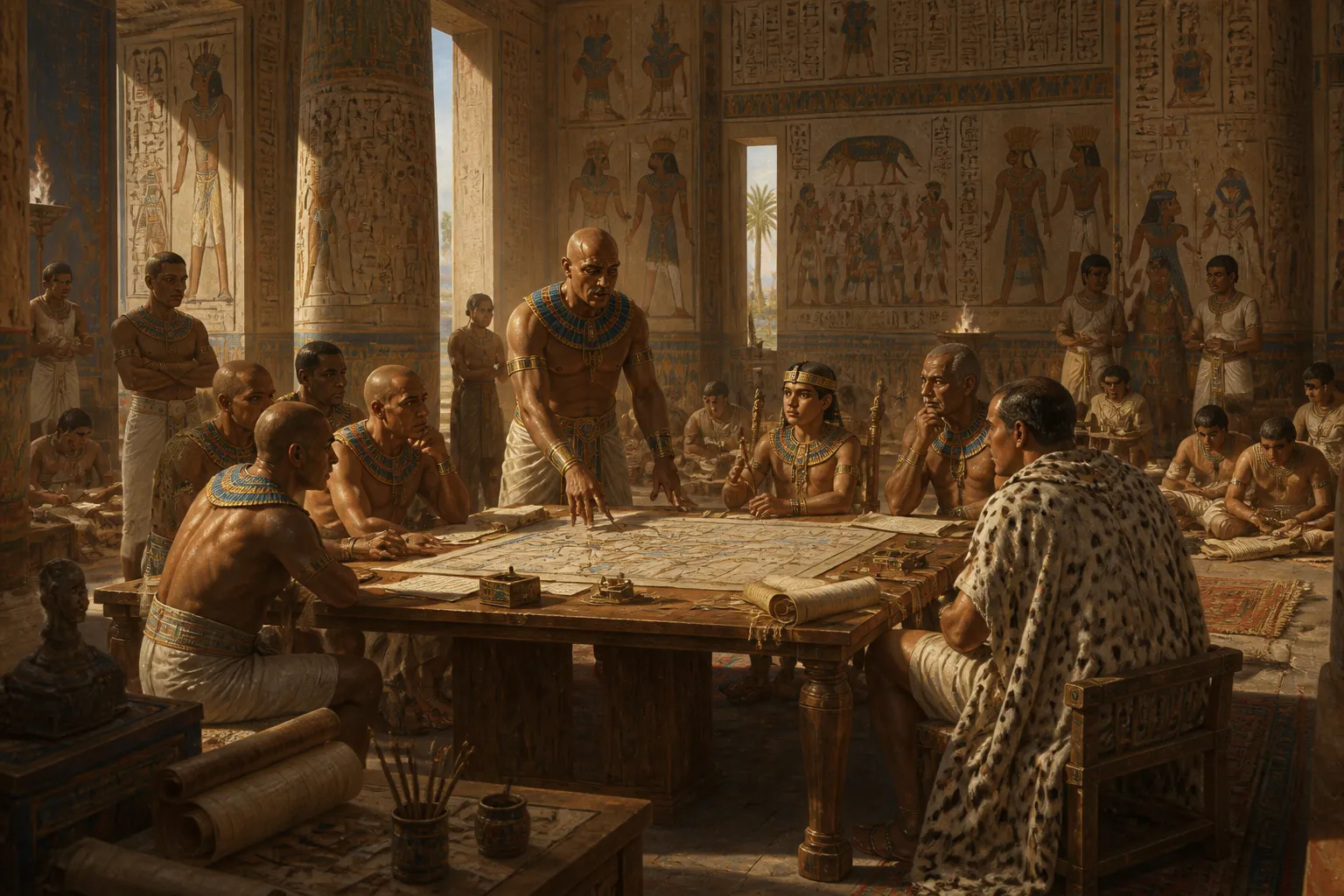
Beneath the soaring ceilings of a Memphis council hall, advisors convene to strategize the next phase of temple restorations. The high, vaulted ceiling, an architectural marvel, amplifies their discussions, resonating with the gravity of their decisions. Light filters through narrow slits, casting beams of illumination upon the council table strewn with papyrus diagrams, each one depicting meticulous plans for reconstruction. Horemheb and Ay preside over the meeting, seated on intricately carved wooden chairs, their expressions intense as they discuss logistics, manpower, and security with the precision of military generals. The clatter of amulets and the scratch of reed pens punctuate the air, each sound a contribution to the history being forged. Horemheb stands, pointing to marked routes on a map with a sense of urgency, insisting on fortified paths for safe transport. The atmosphere is charged with urgency, as each decision shapes the future of their civilization, the room heavy with the weight of a kingdom's destiny.
"Let us secure our paths and hasten our efforts," Horemheb declares, his voice firm and resolute.
Page 7 — A Royal Inspection
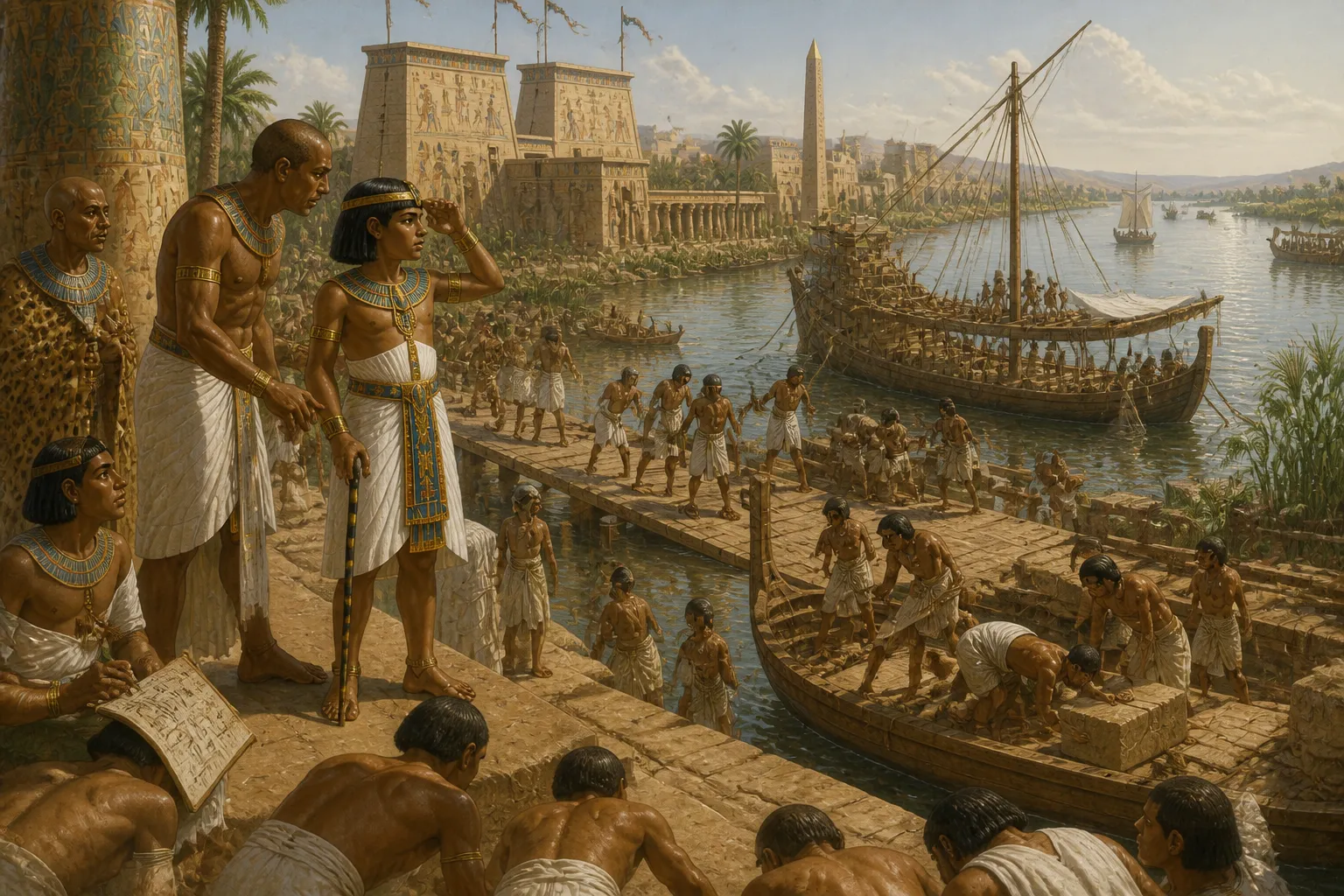
On the bustling banks of the Nile, where ships laden with stone dock, Tutankhamun surveys the tireless activity. The river shimmers in the midday sun, its surface like a silver ribbon winding through the landscape, a testament to Egypt's lifeblood. Laborers, their bodies honed by years of toil, unload cargo with practiced efficiency, while craftsmen carve intricate designs on fresh stone, their tools clinking in a harmonious symphony of creation. The youthful pharaoh, slightly built, leans on a cane, a symbol of both his fragility and authority, his royal regalia reflecting the sunlight in vibrant flashes. His gaze sweeps over the scene, noting the vigor and dedication of his people, a tableau of industriousness against the backdrop of the eternal river. Beside him, Horemheb offers counsel, emphasizing the importance of this labor in securing Egypt's future. The symphony of hammers and the creak of ropes fill the air, punctuating a moment of cautious optimism, the promise of restoration within reach.
"See their strength and unity; it is the promise of our rebirth," Horemheb affirms, his voice encouraging the young king.
Page 8 — The Ceremonial Offering
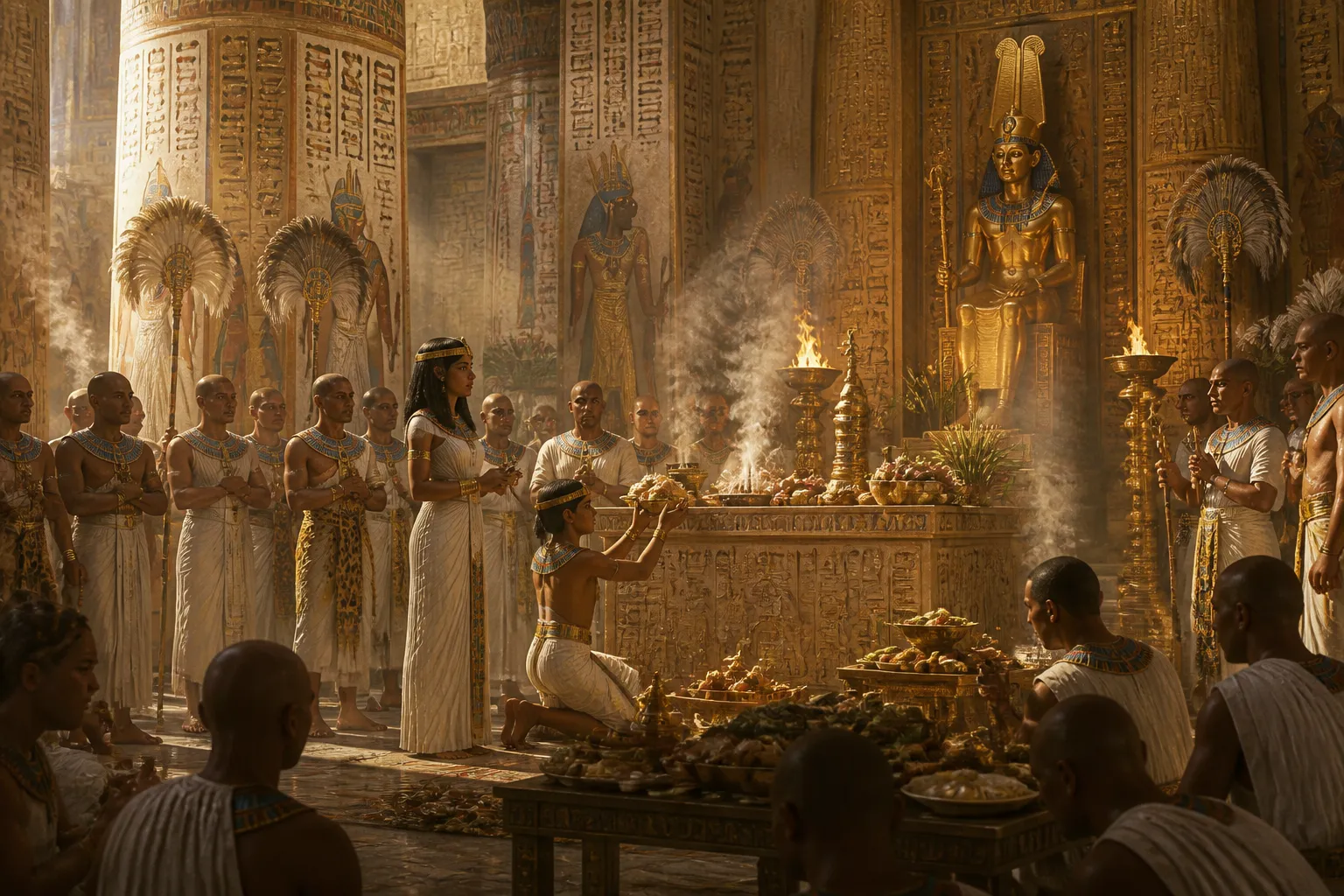
In the heart of Karnak, priests in immaculate white robes chant solemn hymns, their deep, resonant voices echoing off towering columns carved with the stories of gods. The central altar, a stone platform laden with offerings of bread, beer, and incense, stands before a magnificent golden statue of Amun. The statue, polished to perfection, gleams with divine radiance, its features a masterful depiction of might and serenity. Tutankhamun, flanked by Ankhesenamun and the sagacious Ay, approaches solemnly, his presence elevating the ritual to a moment of celestial reverence. The scent of incense swirls in the air, a divine aroma rising like prayers to the heavens. As the young king presents offerings, the crowd of nobles and priests bows in reverence, their collective breath held in suspended anticipation. This ceremony marks the symbolic return of prosperity and divine favor to Egypt, a powerful testament to the ongoing restoration and a promise of renewed unity.
"With these offerings, may the gods bless our land once more," Tutankhamun intones, his voice steady with reverence.
Page 9 — The People's Response
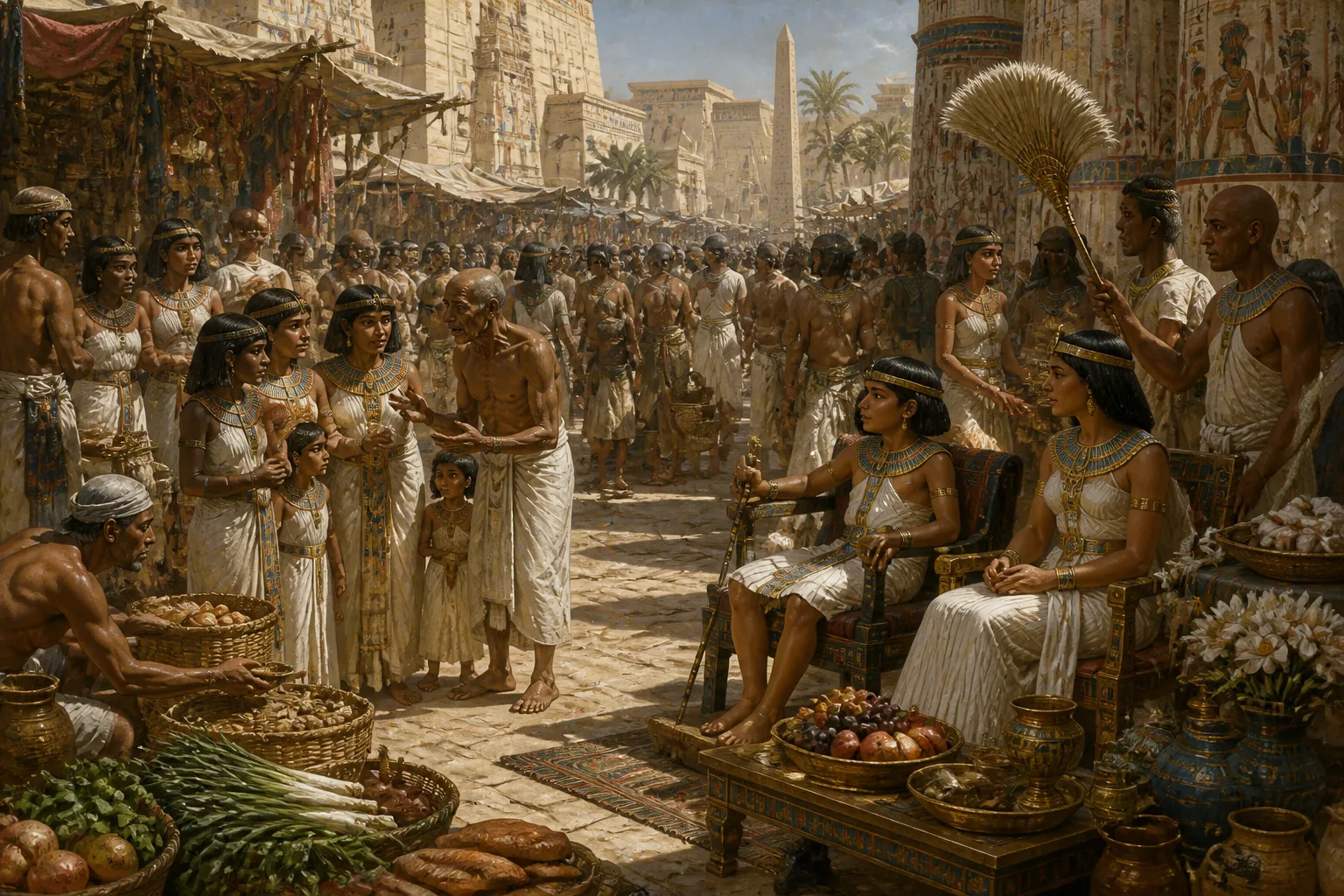
In the bustling markets of Thebes, common citizens gather to discuss the recent royal decrees with a mix of hope and skepticism, their conversations a tapestry of emotion and expectation. Vendors line the streets, their stalls brimming with goods—fresh, vibrant produce, woven baskets adorned with bright patterns, and pottery etched with intricate designs. The air is alive with the scent of exotic spices mingling with the warm aroma of baked bread freshly pulled from ancient ovens. Elderly men, their weathered faces marked by time and experience, recall the turbulent days of Akhenaten’s upheaval, their voices rich with tales of hardship and resilience, mingling with the chatter of animated merchants. Young mothers, clad in simple dresses of woven flax, their children weaving through the crowd like darting fish, express cautious optimism about the restored worship and the promise of stability. The restoration projects fuel local economies, bringing a sense of renewal and opportunity, and a hopeful murmur runs through the masses like a quiet river.
"May the gods bless our Pharaoh for restoring what was lost," an elder says, nodding to murmurs of agreement.
Page 10 — Legacy of Rebirth
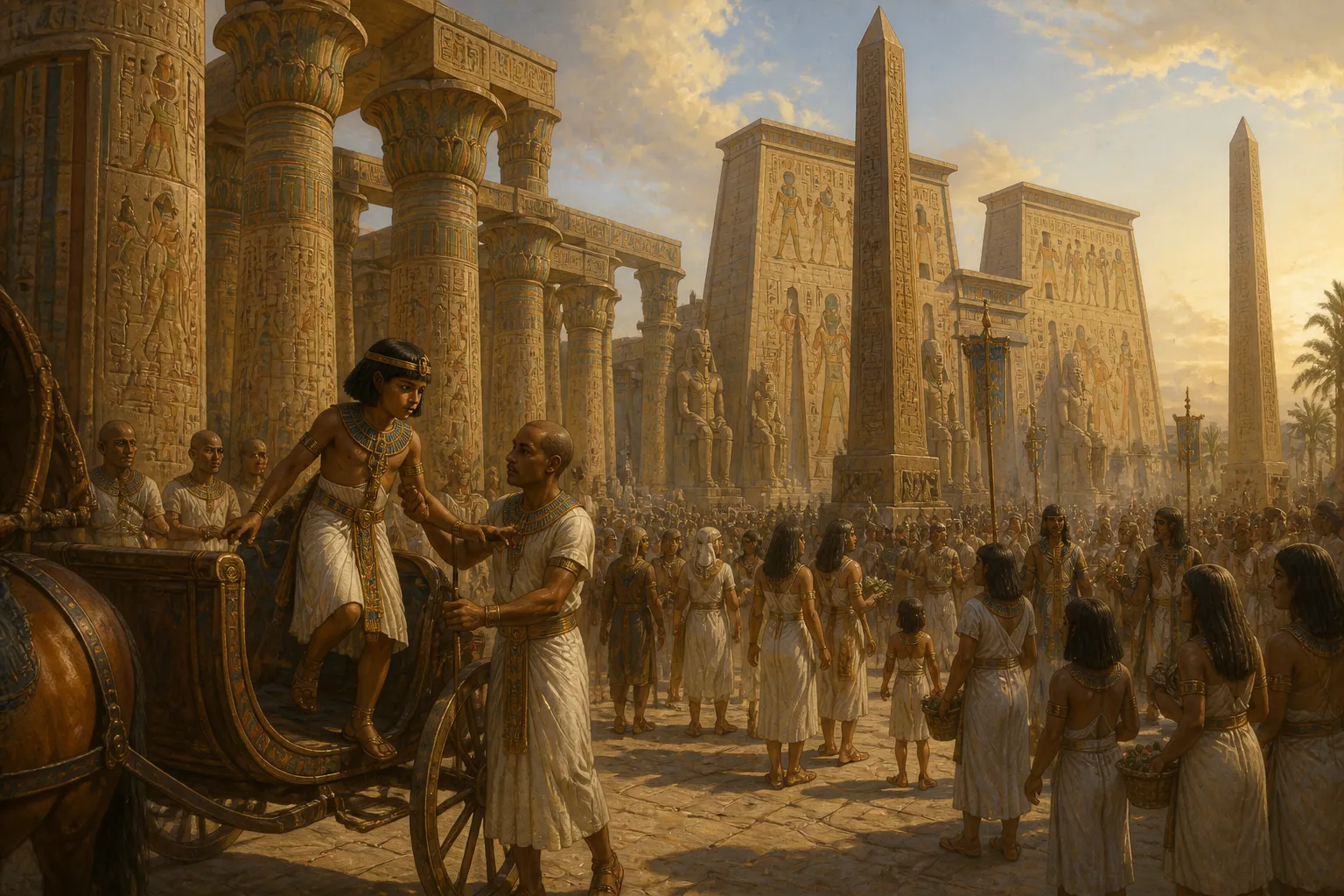
Years later, the newly restored temples of Karnak stand as a proud testament to an era of reclamation and renewal. Under the vast azure sky, pilgrims gather to pay homage, their footsteps softly echoing across the stone floors as their prayers rise like the incense smoke curling heavenward, a fragrant tribute to the gods. Statues and obelisks, each one a work of art, gleam in the sunlight, their surfaces engraved with the majestic history of a young king who dared to restore the ancient ways. Ankhesenamun, though no longer queen, walks among the throngs of pilgrims, her presence both dignified and reflective, her gaze tracing the engravings that echo her husband’s enduring legacy. The stones whisper stories of resilience and unity to every soul that passes, their silent testimony a solidified tribute to the spirit of Egypt's storied history. As Ankhesenamun reflects, her heart swells with pride, knowing that the legacy she helped shape continues to inspire generations to turn to tradition and faith.
"His spirit lives on in every stone, in the heart of every believer," Ankhesenamun reflects, her voice filled with pride.
About this story
- Audience: general readers
Read Wonder Egypt on your phone
Wonder Egypt is available on Android. Get Wonder Egypt on Google Play.