The Shipwrecked Sailor
The Shipwrecked Sailor — an illustrated history story. 10 illustrated pages, free to read on Wonder Egypt.
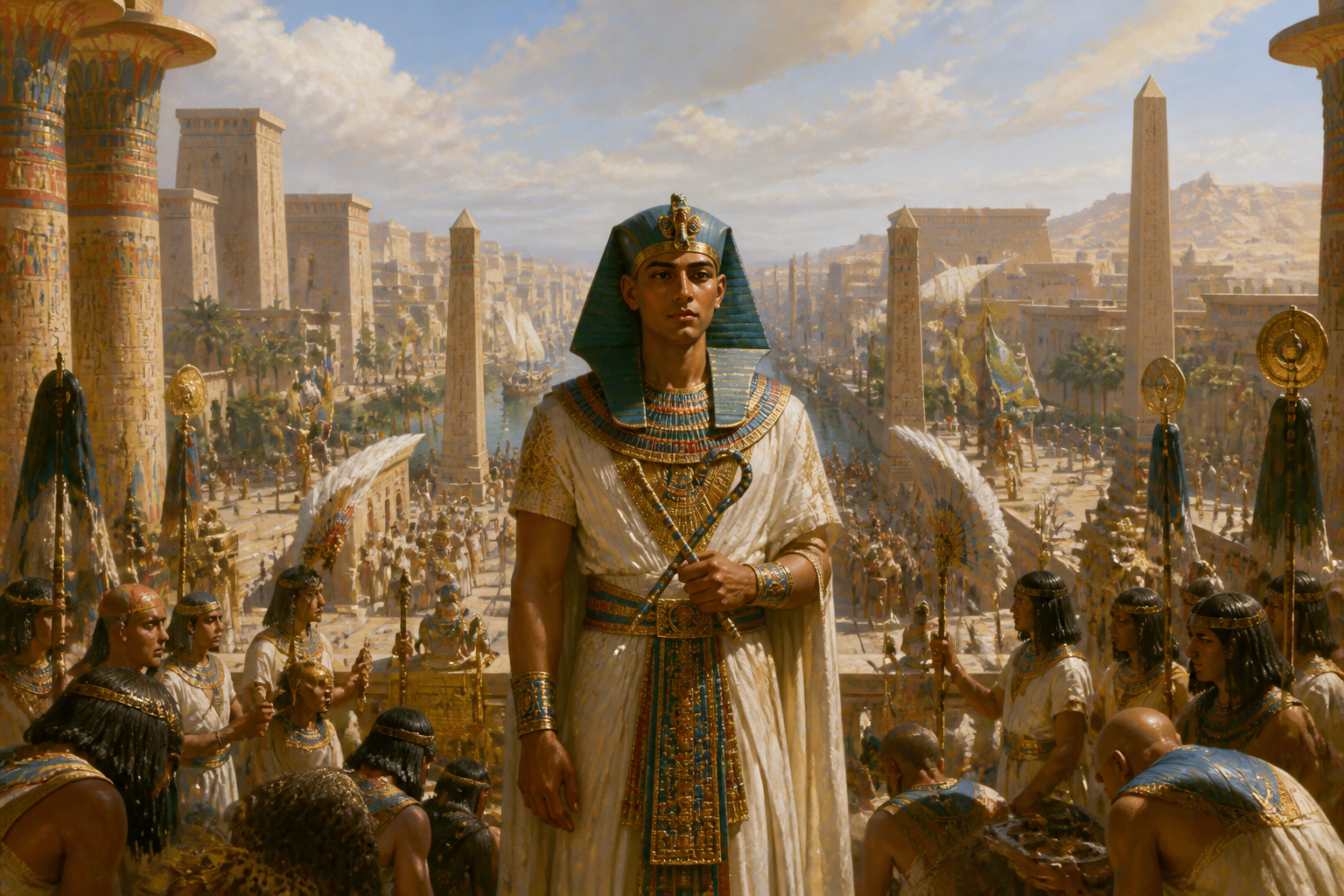
Page 1 — The Dawn of Dynasty 12
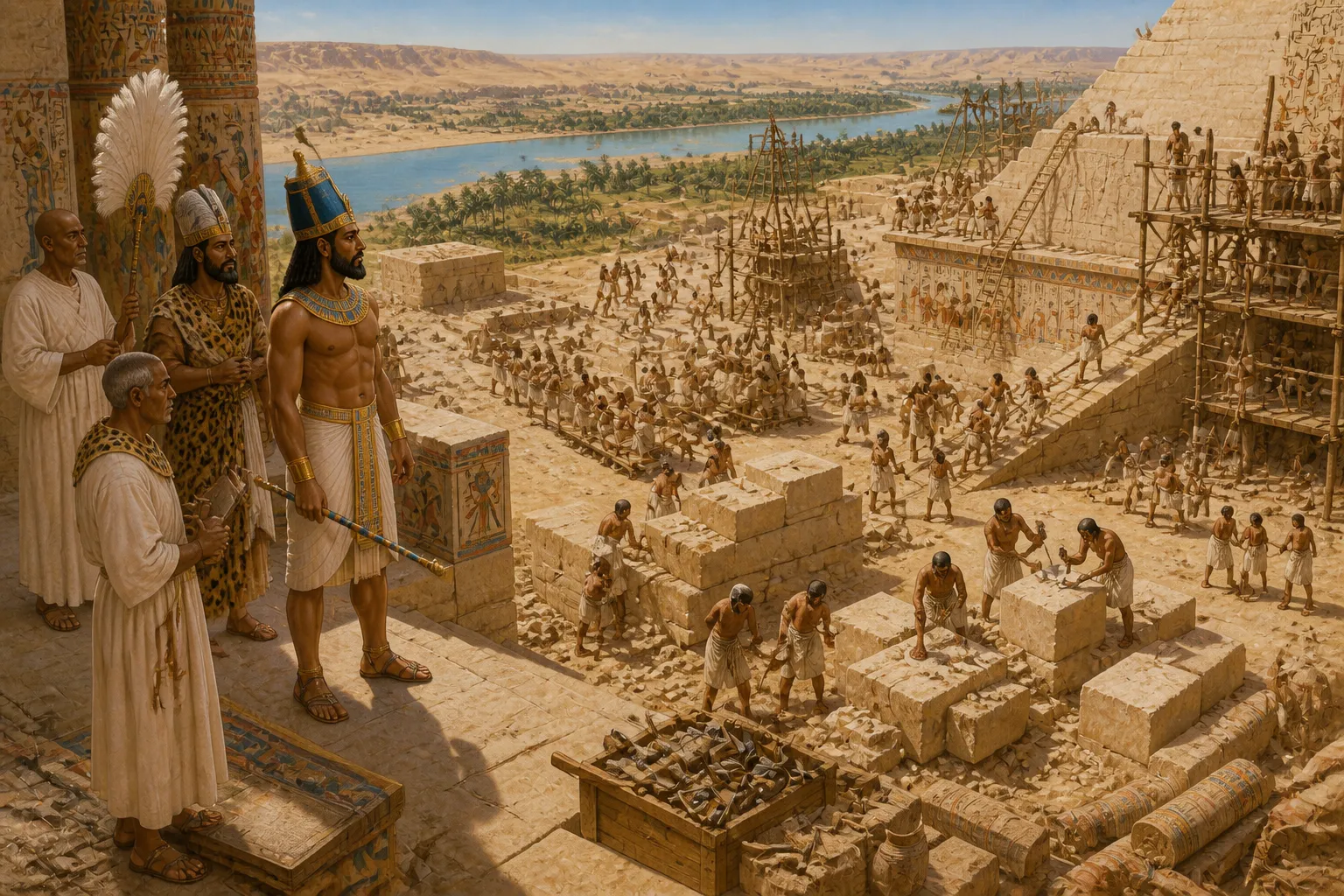
In the resplendent courts of ancient Egypt, a new era dawned with the establishment of Dynasty 12, around 1991 BC. This epoch, known as the Middle Kingdom, ushered in profound transformations in governance, culture, and architecture. Pioneered by Amenemhat I, who founded Itjtawy, the capital whose precise location remains a mystery, this period was marked by the centralization of political power. Under Senusret II and his successors, the economy flourished with increased trade networks and monumental projects, including the pyramid complex at El-Lahun. Skilled artisans and laborers were employed in vast numbers, each contributing to the grandeur of constructions that were as costly as they were ambitious. A cultural renaissance blossomed, as the Coffin Texts evolved, illuminating the funerary practices and religious ideologies that dominated the Egyptian psyche. The people wore simple, yet elegant linen garments, their lives intertwined with the spiritual and the temporal. The visual splendor of newly built structures was matched by the deep cultural significance they carried, as they carved out a legacy that would echo through time.
"Let us build our legacy in stone," declared Senusret II, envisioning his pyramid at El-Lahun.
Page 2 — The Pharaoh's Circle
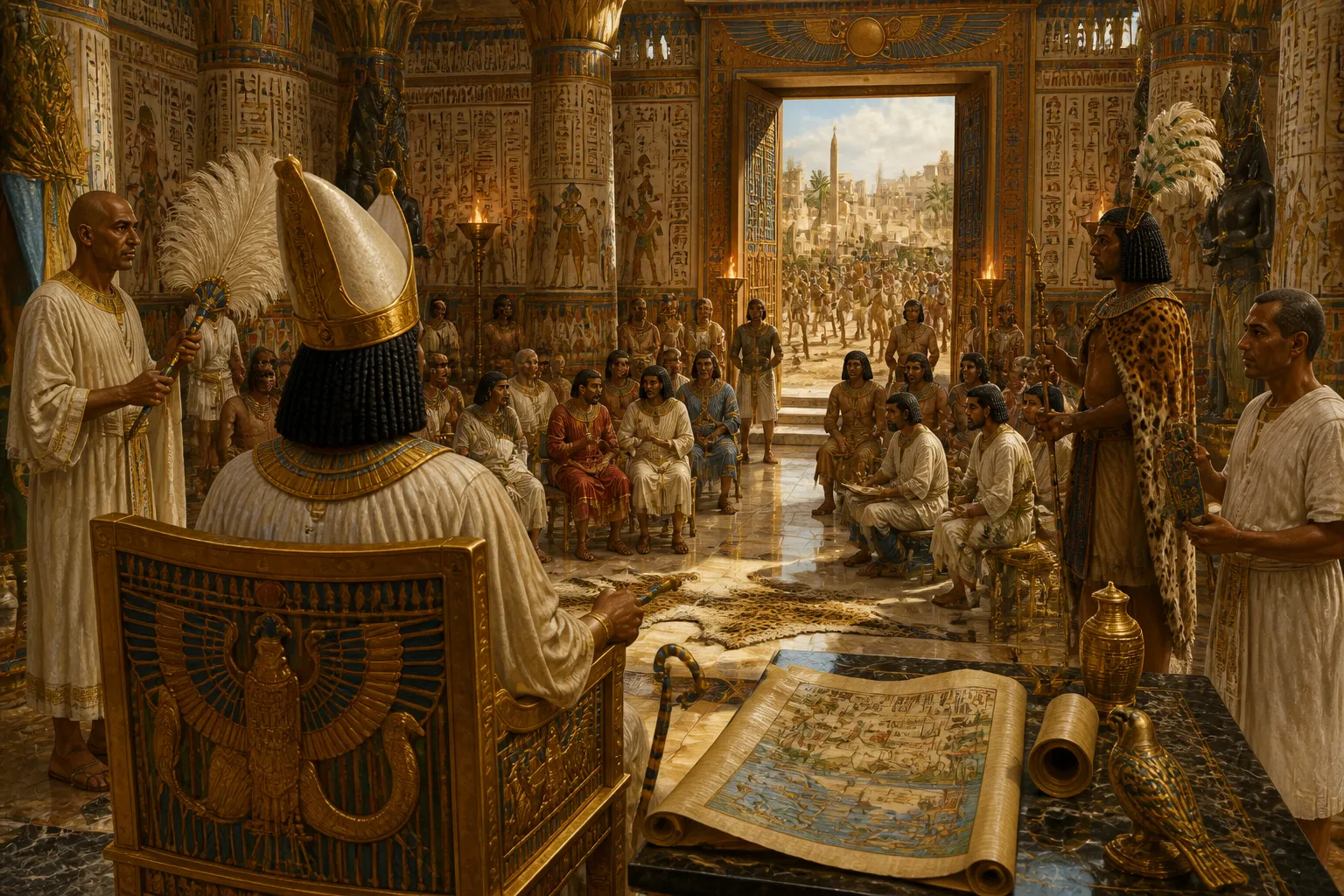
Within the grand halls of Itjtawy, Pharaoh Senusret II presided over a court filled with luminaries. Among them was the Vizier Ameny, an astute counselor instrumental in executing the king's visions. The arch-high priest of Amun, Userwer, ensured the deities' favor, while the royal architect, Khnumhotep, orchestrated the construction of majestic edifices. The court was alive with the colors and sounds of the kingdom, a vibrant blend of ambition and tradition. Courtiers thronged the hall, bearing tidings from afar, as the kingdom's administrators meticulously planned economic strategies that would enrich Egypt. It was a time of collaborative effort, where the interplay of power and intellect fostered an age of prosperity. The air was thick with the scent of incense, and the rustle of papyrus as scribes documented the proceedings.
"Our future depends on unity," counselled Vizier Ameny, his voice steady and wise.
Page 3 — The Cult of the Afterlife
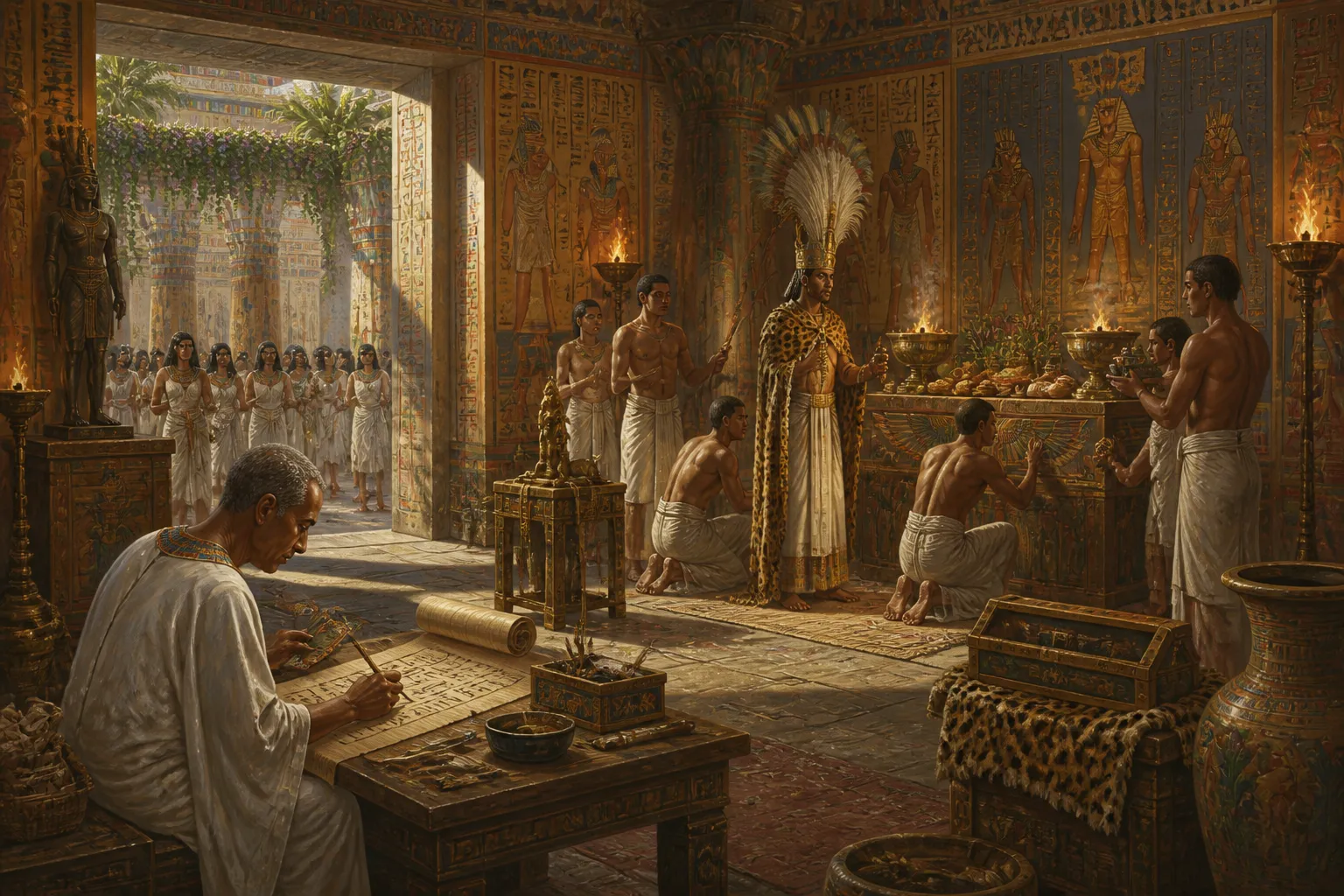
In the shadowed interior of a temple dedicated to Osiris, priests solemnly chanted invocations, their voices resonating through the stone-hewn sanctuary. The Middle Kingdom saw an intensified belief in the afterlife, manifesting in the evolution of Coffin Texts, which promised safe passage to the netherworld. The high priest, adorned in a leopard-skin cloak, orchestrated the rituals, while initiates prepared offerings of bread and beer, essential for the deceased's journey. Anubis, the jackal-headed guardian, watched from statues as scribes inscribed sacred spells onto papyrus. Incense smoke curled through the air, mingling with the flickering light of oil lamps, casting long shadows that danced upon the walls. It was a world where the living engaged fervently with the dead, ensuring their immortality and the continuation of the soul's journey.
"May Osiris grant you passage," intoned the high priest, his voice echoing in devotion.
Page 4 — Trade Winds Across the Nile
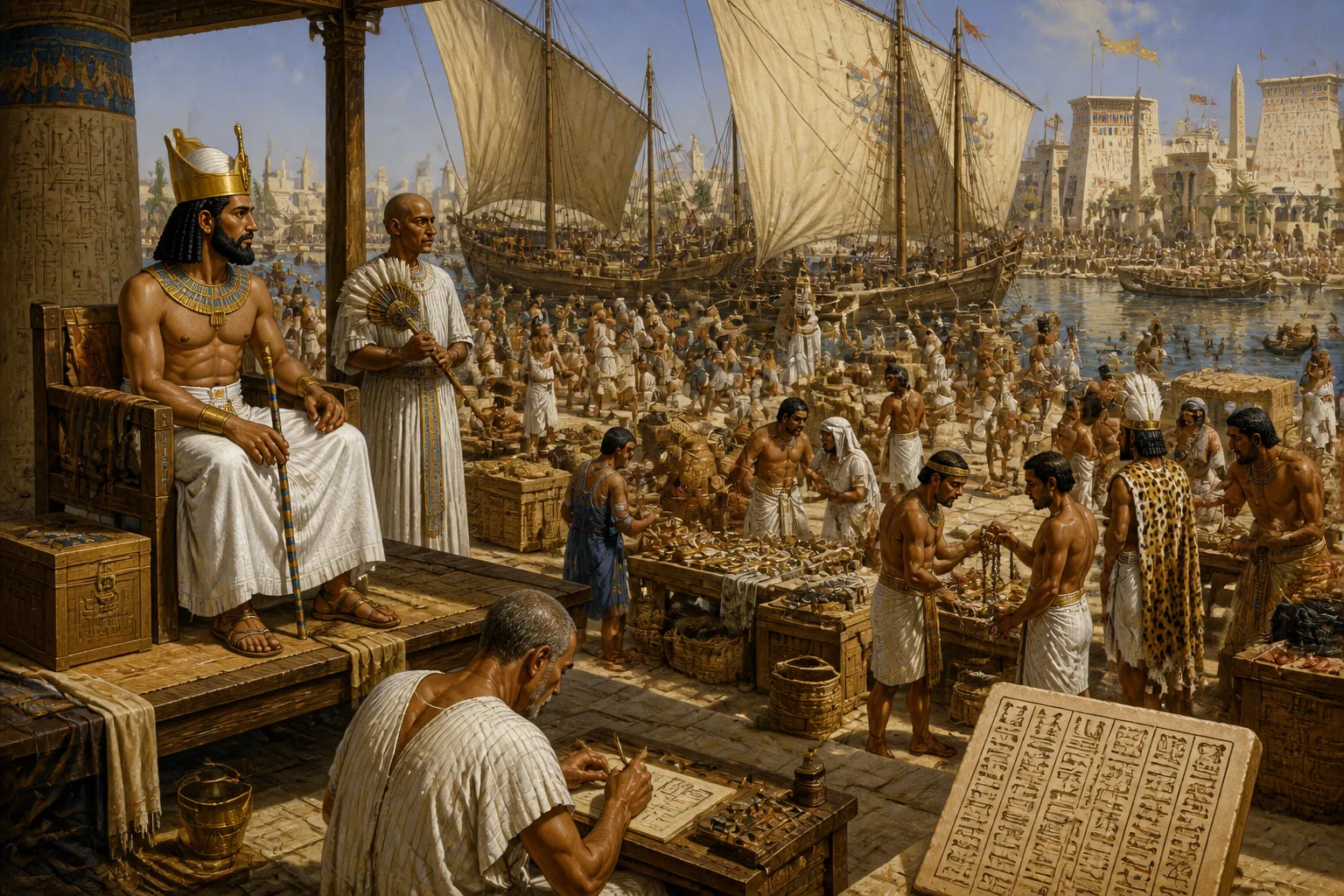
At the bustling docks of Itjtawy, ships laden with exotic goods from Nubia and the Levant arrived with rhythmic frequency. Trade routes extended Egypt's influence, bringing prosperity and foreign wonders. Merchants bartered under shaded awnings, their stalls overflowing with ebony, incense, and precious metals. Overseen by the royal treasurer, transactions were meticulously recorded on clay tablets. The constant flow of goods ensured the city's coffers remained full, facilitating grandiose state projects and ensuring the pharaoh’s favor. Skilled craftspeople worked nearby, fashioning items of luxury from the imported materials. The docks were a hub of activity, where the vibrancy of international exchange was palpable. Egypt, a hub of commerce, thrived as a center for trade in the ancient world.
"Every cargo enriches our realm," declared the royal treasurer, overseeing the bustling trade.
Page 5 — The Granaries of Prosperity
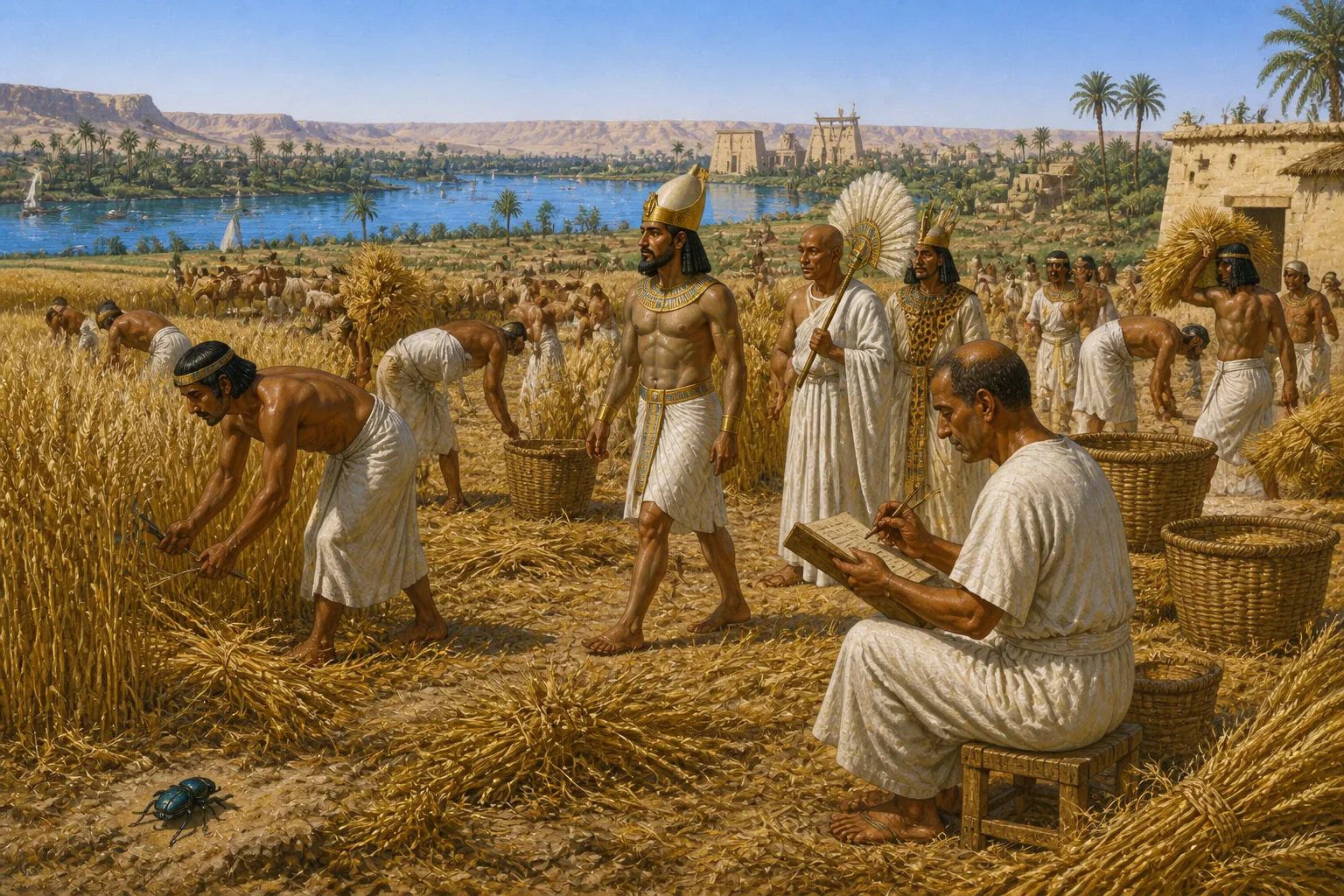
In the fertile fields along the Nile's banks, the sun cast a golden hue over the expansive landscape as laborers toiled diligently, reaping the abundant agricultural wealth of Egypt. During the Middle Kingdom, the granaries overflowed, a testament to the advanced irrigation techniques and state-sponsored agricultural projects that defined the era. The head scribe, a figure of authority and precision, meticulously oversaw the record-keeping of the bountiful harvests, ink-stained fingers deftly guiding the stylus over clay tablets. Farmers, clad in simple linen kilts and carrying woven baskets, sang traditional songs, while vivid scarabs, symbols of rebirth, glistened in the rich soil. The prosperity from each harvest was a cornerstone of Egypt's dominance and crucial for sustaining its burgeoning population.
"The land provides; the scribe records," mused the head scribe, his stylus poised over a tablet.
Page 6 — The Voice of Amun
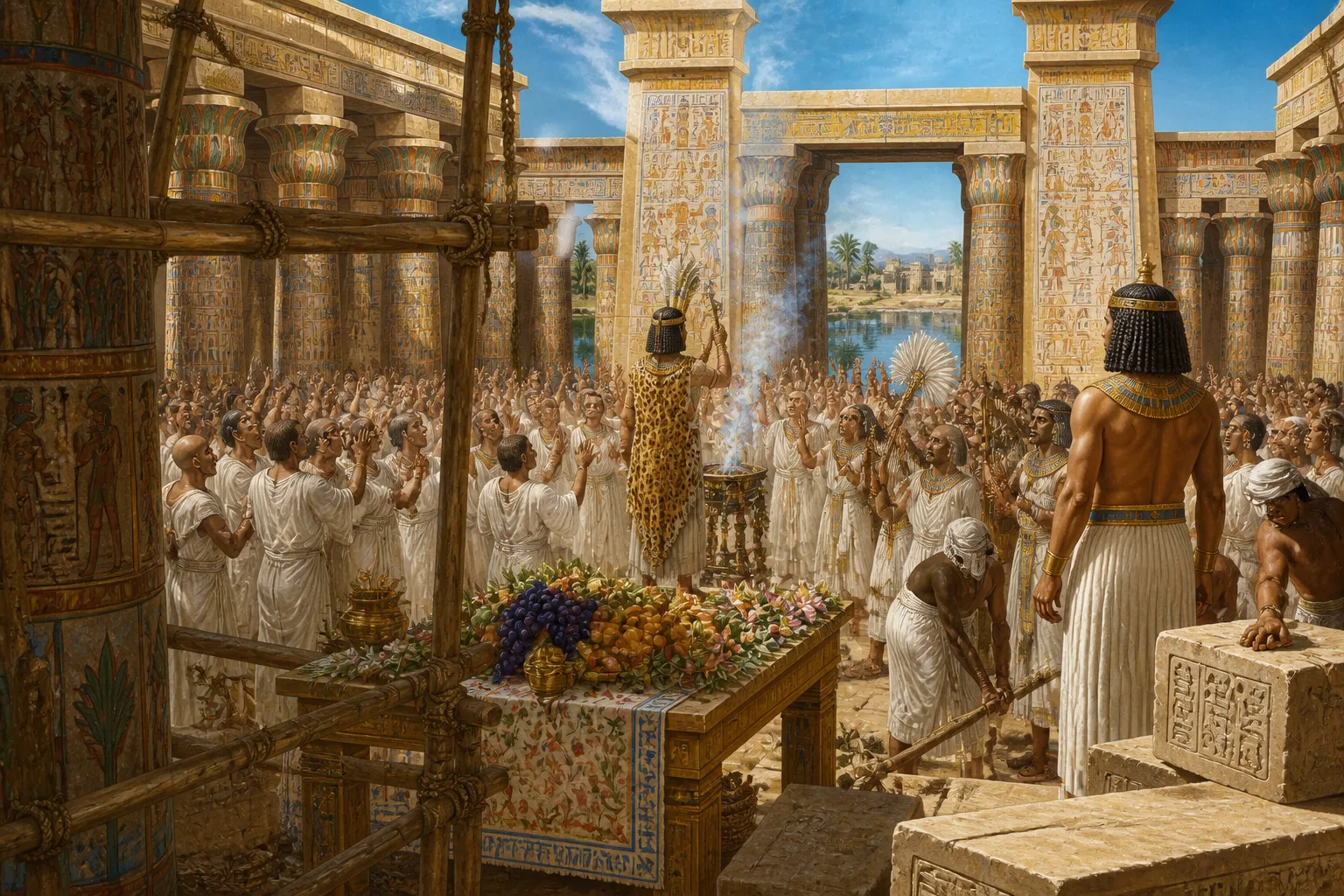
At the colossal temple of Karnak, an architectural marvel of the ancient world, the high priest of Amun performed sacred rites with solemn reverence. The Middle Kingdom heralded an era where Amun's cult found centralization, elevating the god to unparalleled prominence. As fragrant incense permeated the sacred space, offerings of food, flowers, and precious stones were presented to the deity, reaffirming the pharaoh's divine mandate. Pilgrims and priests filled the vast courtyard, their voices harmonizing in a hymn that echoed off the stone walls. Towering statues of Amun gazed down upon the congregation, embodiments of divine power that inspired both awe and devotion. This intertwining of religion and governance influenced policies and cemented the pharaoh's authority.
"Amun’s favor is our strength," proclaimed the high priest, raising his arms in reverence.
Page 7 — A Sculptor's Influence
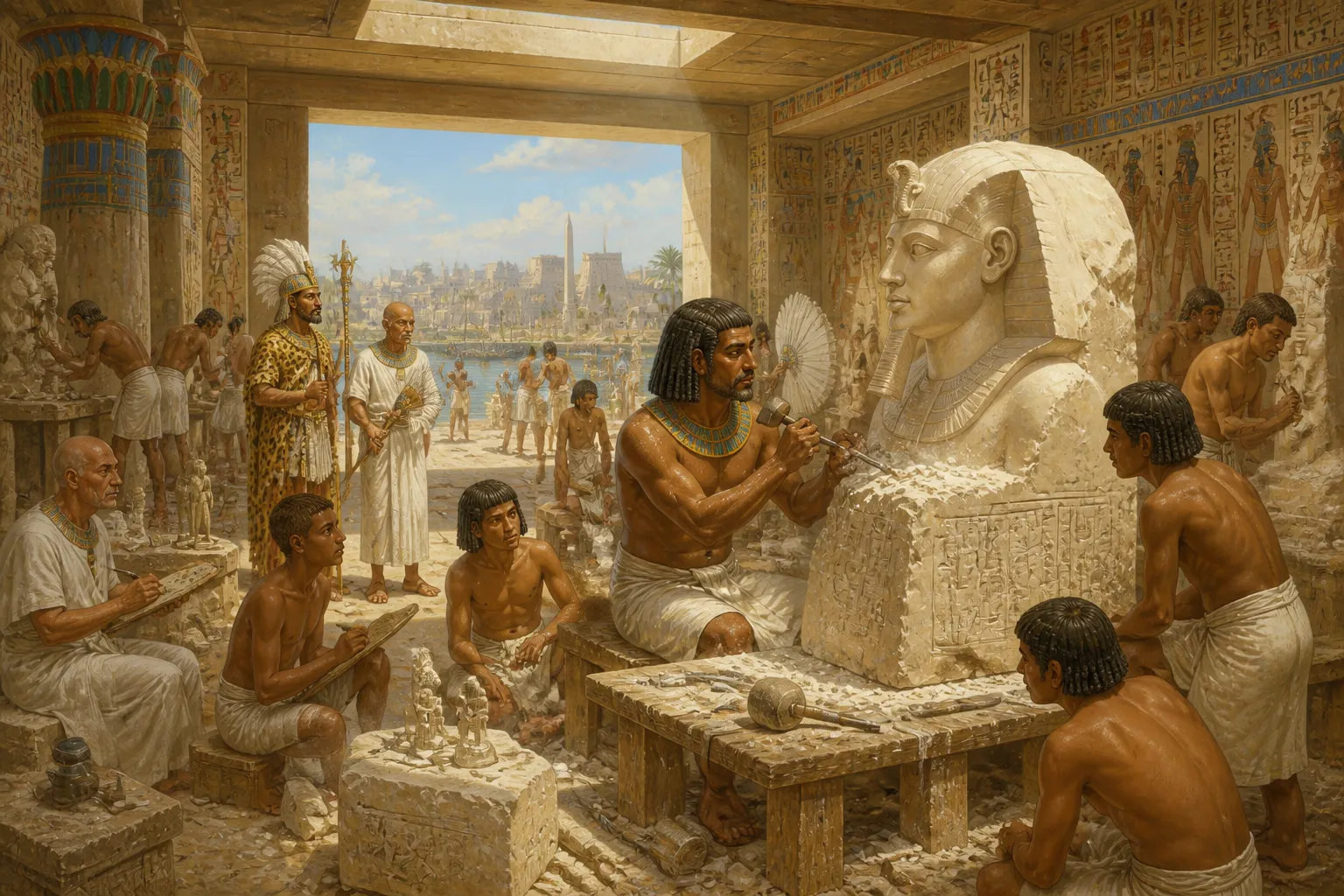
In the bustling heart of Memphis, the royal sculptor presided over a workshop alive with creative energy. The Middle Kingdom's artistic renaissance was marked by a commitment to realism, capturing the nuanced essence of its subjects. Master sculptor Hepset, with well-practiced hands, meticulously chiseled a statue of Senusret II, coaxing the pharaoh’s likeness from the stone with each deliberate stroke. His apprentices, clad in simple tunics, hovered nearby, absorbing the intricacies of an art that immortalized the divine and mortal alike. The workshop floor was cluttered with clay models, stone blocks, and tools, while the rhythmic sound of chiseling resonated, a symphony of creation and reverence. Art during this era transcended decoration, becoming a potent agent of political narrative and cultural identity.
"Every stroke preserves eternity," instructed Hepset, guiding his apprentices’ hands.
Page 8 — Warfare on the Frontiers
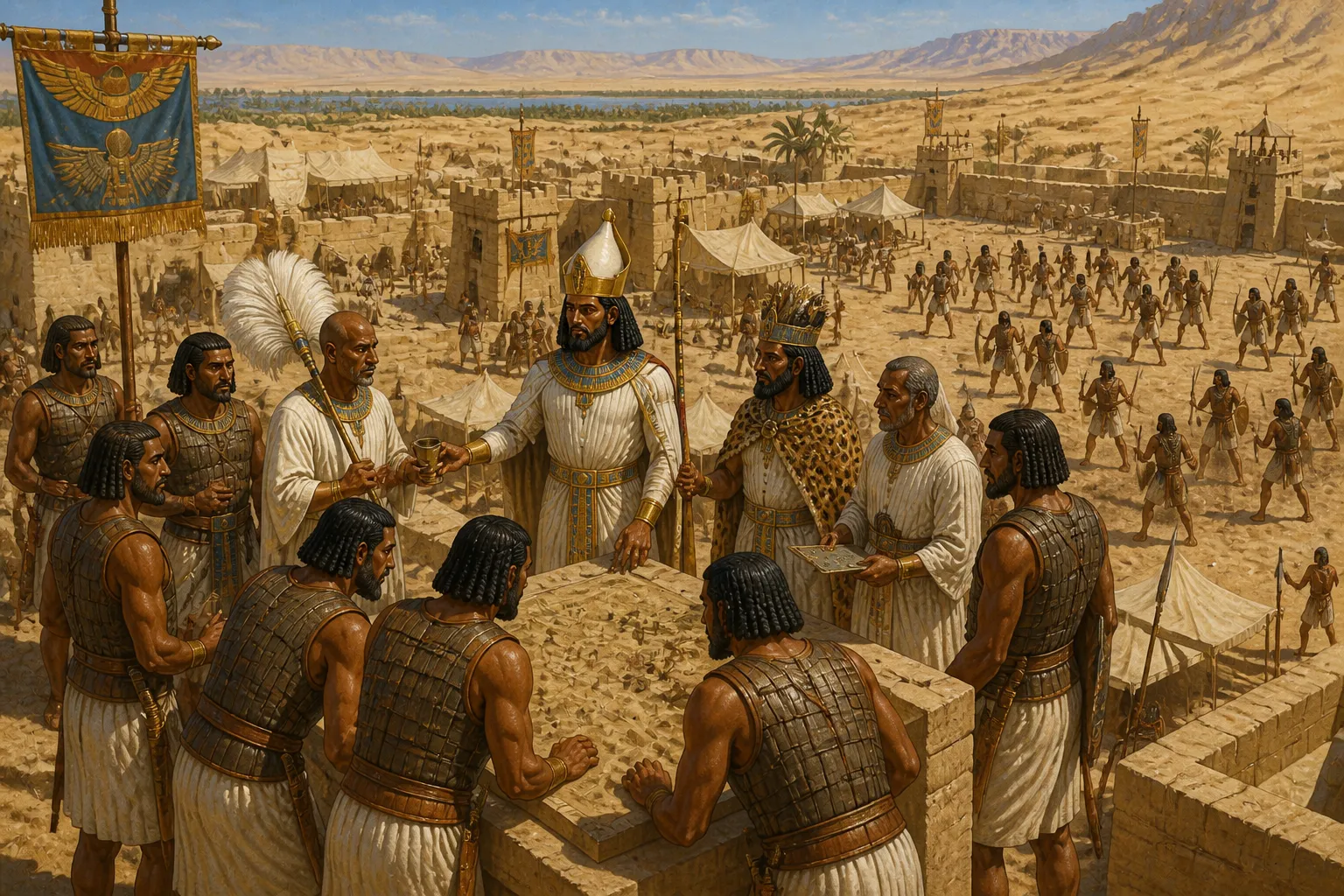
At a fortified outpost along Egypt's frontier, the air buzzed with the disciplined preparation of soldiers poised for a military campaign. The Middle Kingdom was characterized by strategic military expeditions that expanded Egypt’s borders and fortified its wealth. The general, an imposing figure with a seasoned gaze, strategized with his officers, gesturing purposefully over a map etched in the sand representing potential conquests. Soldiers clad in sturdy leather armor and wielding wooden shields trained relentlessly, their synchronized movements creating a cacophony of clanging weapons and shouted commands that filled the dry, arid air. Warfare was not only a necessity for protecting and expanding Egypt's territories but also a means of asserting the pharaoh’s dominion over foreign lands.
"Victory will strengthen our borders," declared the general, pointing to the map.
Page 9 — The Scribe's Legacy
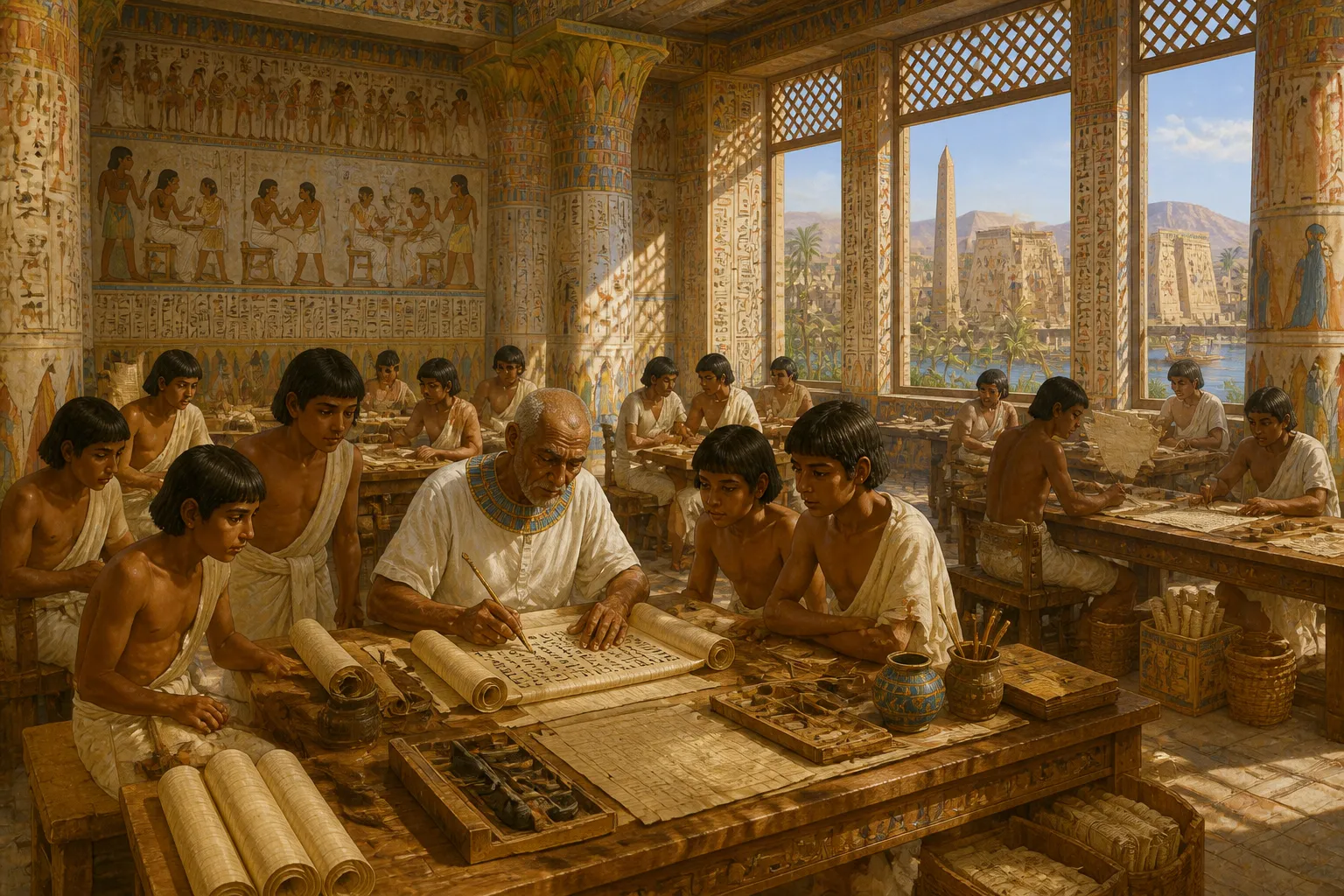
In the serene scriptorium of Thebes, where the air hummed with the murmurs of history, scribes inked the annals of Egypt's greatness onto delicate papyrus scrolls. This space, marked by the fragrant blend of ink and ancient papyrus, was a cradle of intellect during the Middle Kingdom, a golden age for literature. Works such as the Coffin Texts and 'The Tale of Sinuhe' were diligently penned, enriching Egypt's cultural heritage. An esteemed figure in this scholarly haven, Amenaa, a renowned scribe, meticulously transcribed sacred hymns and royal decrees, ensuring their preservation for eternity. The room was alive with the disciplined rustling of apprentices, who learned the sacred art of writing, a skill reserved for the elite, making this a sanctum of knowledge where stories of gods, kings, and daily life were immortalized—a testament to the civilization’s enduring legacy. Here, Amenaa imparted wisdom, instilling in his pupils a respect for words and their power to defy the ravages of time.
"Words are the breath of immortality," taught Amenaa to his eager pupils.
Page 10 — The Pharaoh's Final Rest
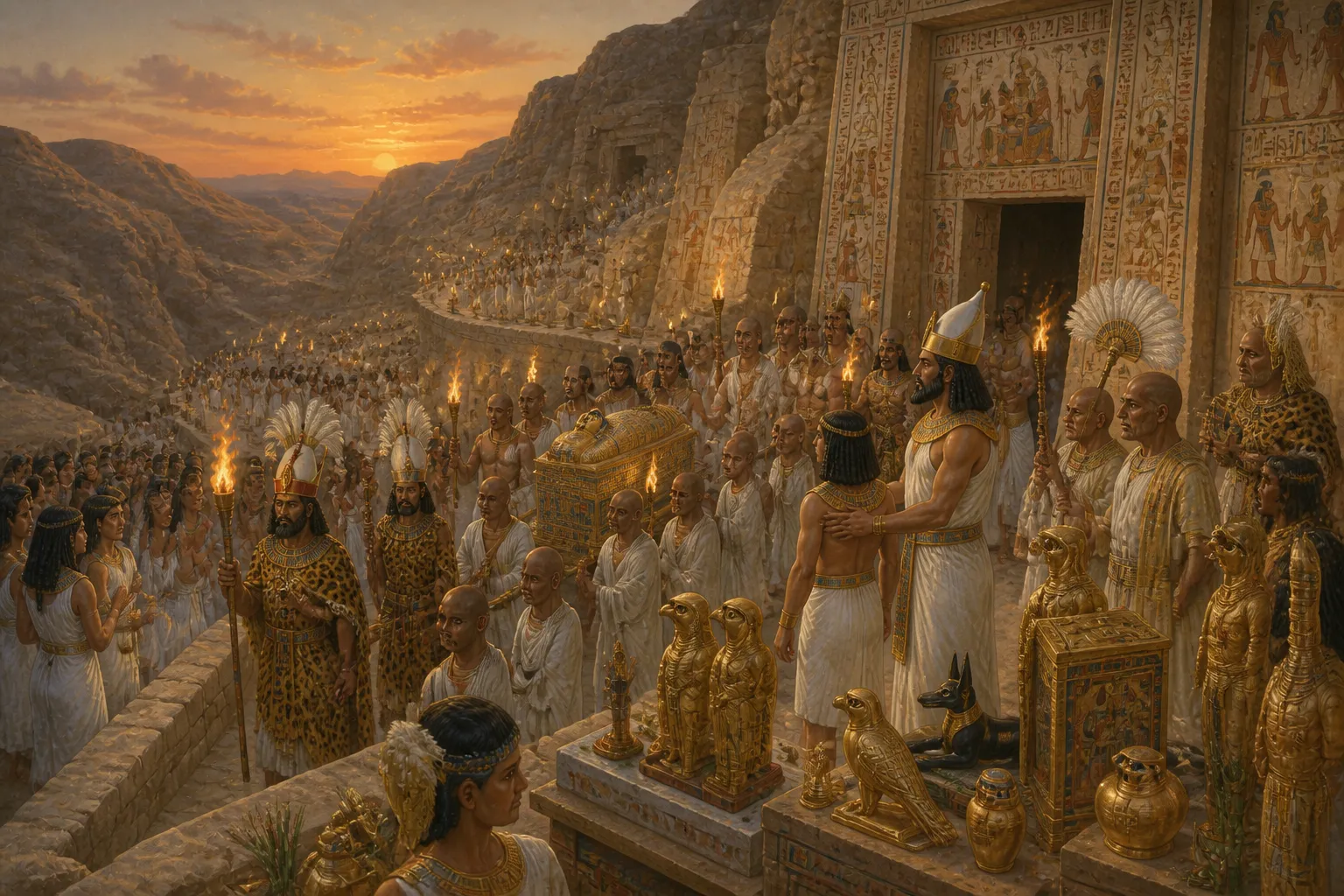
In the hallowed Valley of the Kings, a solemn procession carried the pharaoh to his eternal resting place, a poignant moment marking the conclusion of Dynasty 12 and an era's end. Draped in opulent ceremonial attire, mourners moved with solemn grace, each step resonating with the weight of tradition. They bore offerings to accompany the departed ruler into the afterlife, as priests, their voices echoing with reverence, recited sacred texts that bridged the mortal and divine realms. The tomb, a labyrinthine marvel, awaited its royal occupant, brimming with treasures meant to assure safe passage to the afterlife. Under flickering torchlight, the stone walls revealed vibrant depictions of the pharaoh's illustrious life and his anticipated journey beyond. This resting place was a testament to the Middle Kingdom's unrivaled prosperity and cultural flowering, ensuring its legacy would be immortalized for eternity.
"May the gods guide you beyond," intoned the chief priest, completing the sacred rites.
About this story
- Audience: general readers
Read Wonder Egypt on your phone
Wonder Egypt is available on Android. Get Wonder Egypt on Google Play.