The Seated Scribe
The Seated Scribe — an illustrated history story. 10 illustrated pages, free to read on Wonder Egypt.
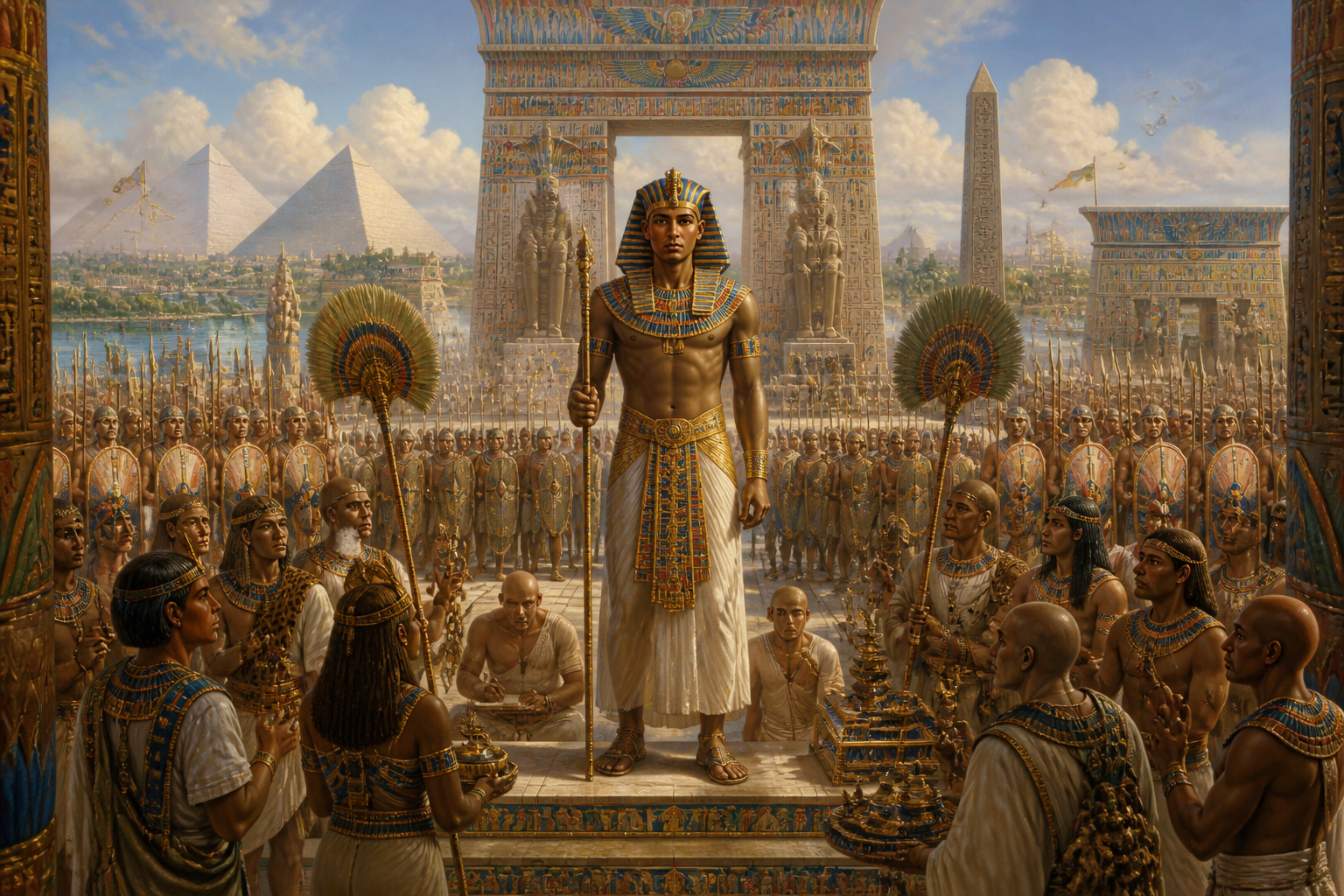
Page 1 — The Enigma in Limestone
In the heart of the Louvre, within the storied Sully wing, resides The Seated Scribe. This painted limestone figure, standing at 53 cm, commands attention with its strikingly lifelike presence. The figure's corpulent midsection hints at the scribe's status, where literacy was power in an ancient world dominated by god-kings. The eyes, a mesmerizing blend of copper, rock crystal, and magnesite, seem to follow you with an unwavering gaze, reflecting the artistry of Old Kingdom craftsmen. These craftsmen, guided by a precise understanding of human form and expression, infused the statue with an alertness and readiness to inscribe history. The scribe’s anonymity, highlighted by the base’s erasure, amplifies its message—a testament to the enduring legacy and duty of a scribe beyond a single identity.
Mariette remarked, 'In every chisel mark, a story of duty unfolds.'
Page 2 — A Rival in Saqqara
In Cairo stands another testament to the scribe’s art—the statue of Kai from Saqqara, a near-contemporary of The Seated Scribe. This statue, preserved with vivid color, shows Kai in his official role, adorned with intricate details capturing his dignity and purpose. The fine lines and shades define his painted skin and clothing, telling of an era that prized realism to reflect divine order in earthly duties. The scribe, a crucial figure, formed the backbone of bureaucratic life, vital for recording decrees and managing resources in a complex society. His presence in the temple complex at Saqqara, a hub of spirituality and authority, mirrored a serene authority. Sitting with a calm demeanor, the papyrus in his hand was more than a tool—it was an emblem of intellectual power in a world where the pen was indeed mightier than the sword, an acknowledgment of the scribe's sacred role in shaping the continuum of history.
A visiting priest declared, 'Kai’s hand guides the very breath of Ra onto papyrus.'
Page 3 — Tools of the Trade
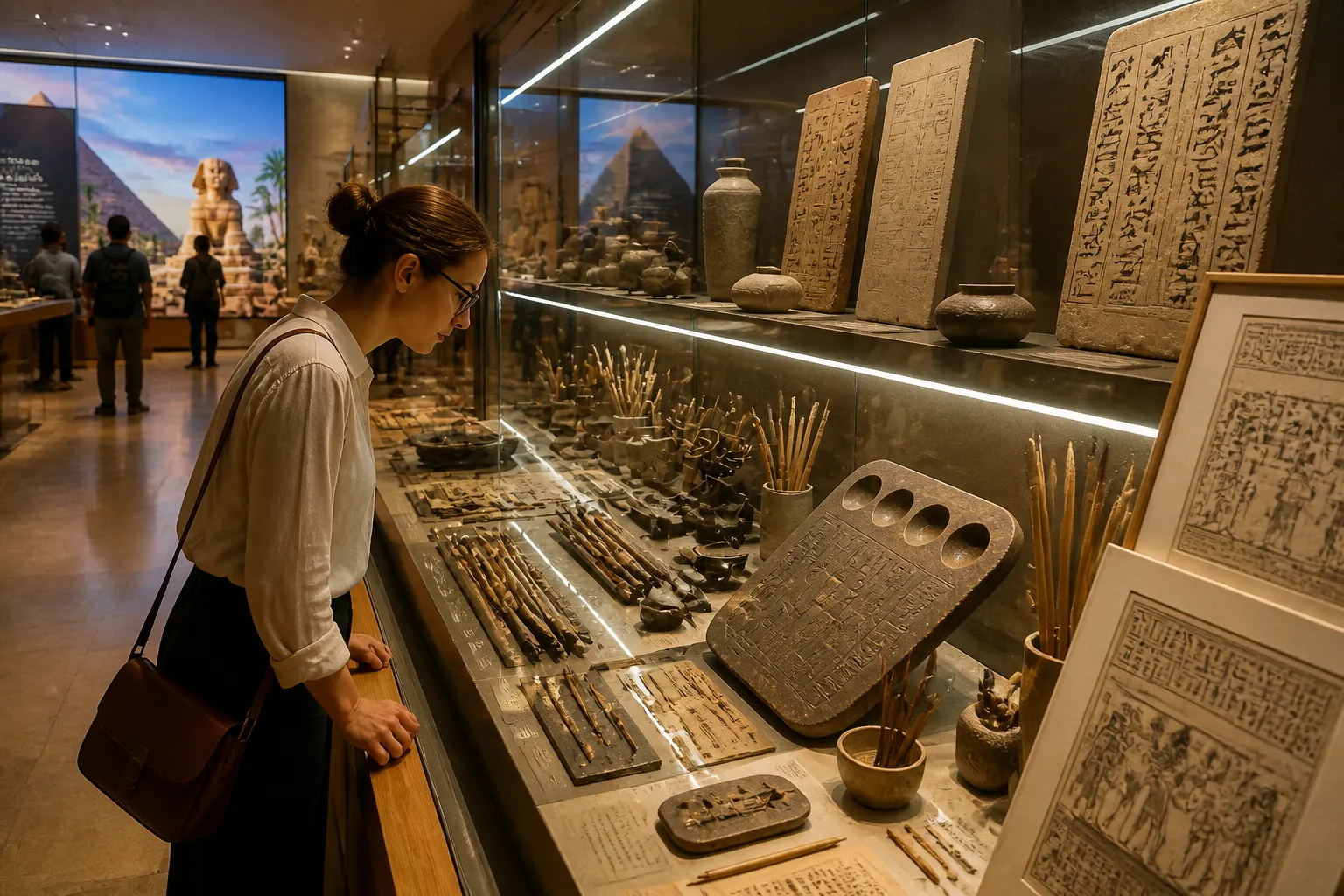
The tools of a scribe were as revered as the roles they played. At the Louvre, a collection displays a palette and reed pens, much like those held by The Seated Scribe, these implements essential for the art of writing on papyrus. The palette, stained with residues of ancient ink, narrates tales of decrees and transactions, the currency of royal and divine communiques. Often crafted from ivory or wood, such tools were prized not just for their utility but as symbols of the scribe’s esteemed status. They transformed mere words into an everlasting legacy, etching history with graceful strokes. In the hands of the skilled, these tools became conduits of divine and royal will, immortalizing the memories and edicts of Pharaohs, ensuring their stories endured across millennia.
A master craftsman speaks, 'In every stroke, the scribe breathes life into stone.'
Page 4 — The Sculptors' Domain
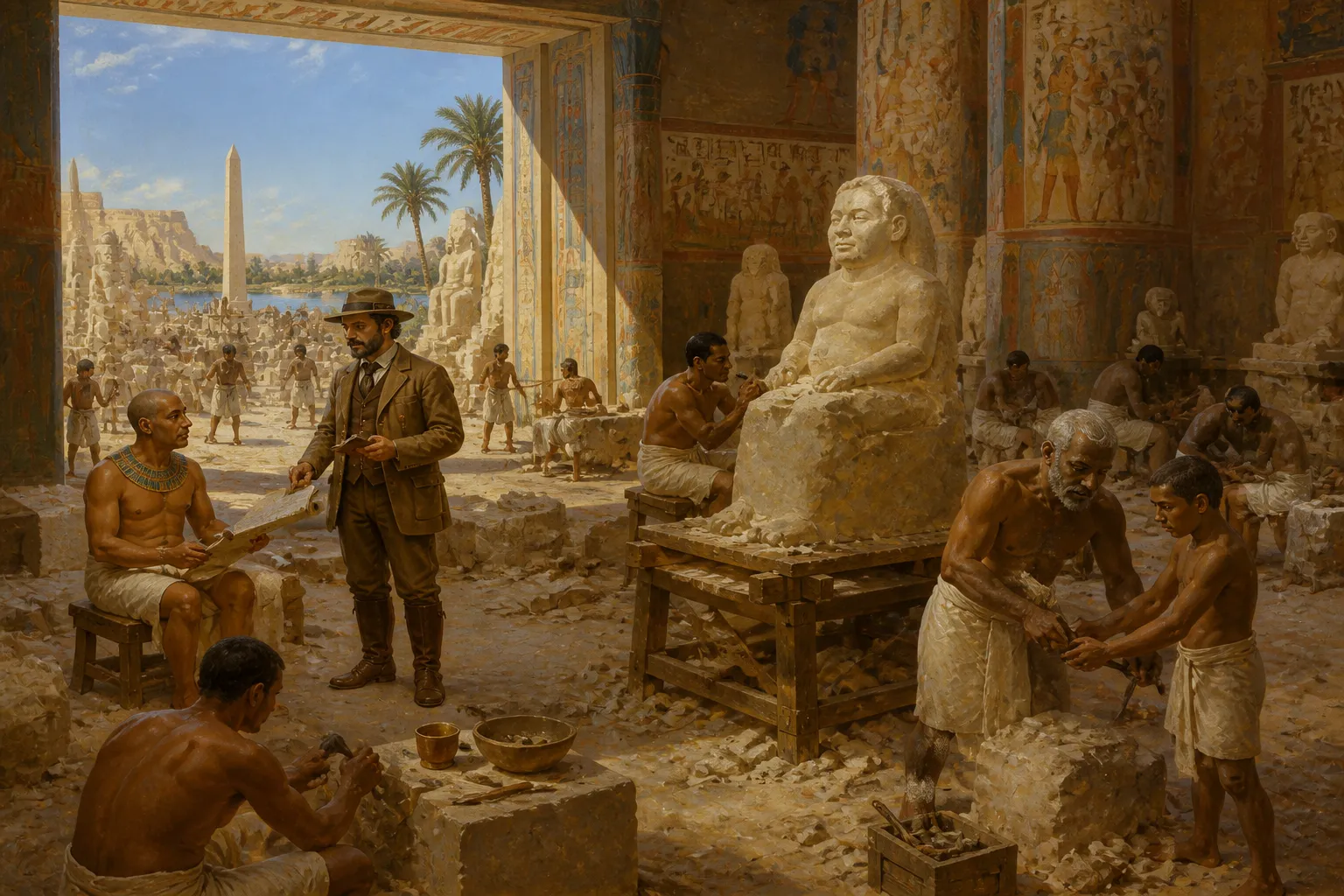
In the ancient workshops of Saqqara, under the watchful eyes of the sculptors, figures like The Seated Scribe were born. These workshops resonated with the rhythm of artistic creation, the air filled with the soft cadence of chisels upon stone. The artisans and apprentices, unrecorded yet indispensable, worked tirelessly, their every movement a dance of dedication and craft. They toiled amidst the bustle of creativity, their chisels and mallets whispering secrets to stone, carving lifetimes into limestone with precision and respect. These spaces were living entities, brimming with the echoes of intent and the dust of creation—where the divine and the mundane intertwined seamlessly. In these sacred halls, the artisans' skills transformed visionary concepts into tangible reality, each statue a testament to their collective expertise and unwavering devotion to craft, a silent homage to the gods and their patrons.
A sculptor instructs, 'Feel the stone's soul, and let it reveal the scribe within.'
Page 5 — A Lost Name's Power
The scribe's anonymity, a reflection of his time, echoes in the corridors of history, emphasizing his role over his identity. The Seated Scribe, though unnamed, embodies the quintessence of the scribe’s role—a custodian of words and will, a testament to the literate elite who wielded significant power. The loss of a name carries poignant symbolism, yet it amplifies the universality of the scribe’s duty. In this anonymity lies resilience and endurance, an acknowledgment of the collective power wielded by the literate elite who shaped the course of civilization. Their legacy, meticulously etched in stone and ink, transcends the need for personal recognition, standing as an emblem of a society where words held kingdoms together, maintaining order and continuity across generations.
A philosopher muses, 'In namelessness lies the seed of eternity.'
Page 6 — Auguste Mariette's Discovery
In 1850, amidst the shifting sands of Egypt, Auguste Mariette, a visionary in the field of Egyptology, unearthed a treasure trove of antiquities. Among these finds was The Seated Scribe, a piece that would later journey to Paris and become a bridge between the ancient and modern worlds. Mariette, with his profound passion for unraveling the secrets of the past, dedicated his life to uncovering the whispers of history. His discoveries unveiled insights into a civilization where literacy was a sacred conduit between the earthly and the divine. The scribe's journey from Egypt to Europe reflects a broader narrative of exploration and the sharing of cultural heritage across continents, a testament to the enduring allure of ancient Egyptian culture and its snippets of eternity that continue to captivate and inspire scholars and enthusiasts alike.
Mariette exclaimed, 'In these sands, the whispers of time reveal their stories.'
Page 7 — The Nile's Gift
The Nile, the lifeblood of Egypt, nurtured the society that revered scribes like the one immortalized in stone. Along the bustling docks of Memphis, scribes worked tirelessly, recording the movement of goods and people, ensuring the prosperity and meticulous organization of the kingdom's economy. The river carried not just water essential for survival, but also culture and knowledge, serving as the main artery through which civilization flowed. Here, scribes executed their duties with precision and dedication, their records maintaining the delicate balance of trade and tribute in a land where the river was both life-giver and archive. These legacies, inscribed onto clay and papyrus, sustained the continuity of a civilization intertwined with the rhythms of the Nile.
A merchant declares, 'The Nile feeds us, but the scribe sustains us.'
Page 8 — The Scholar's Sanctuary
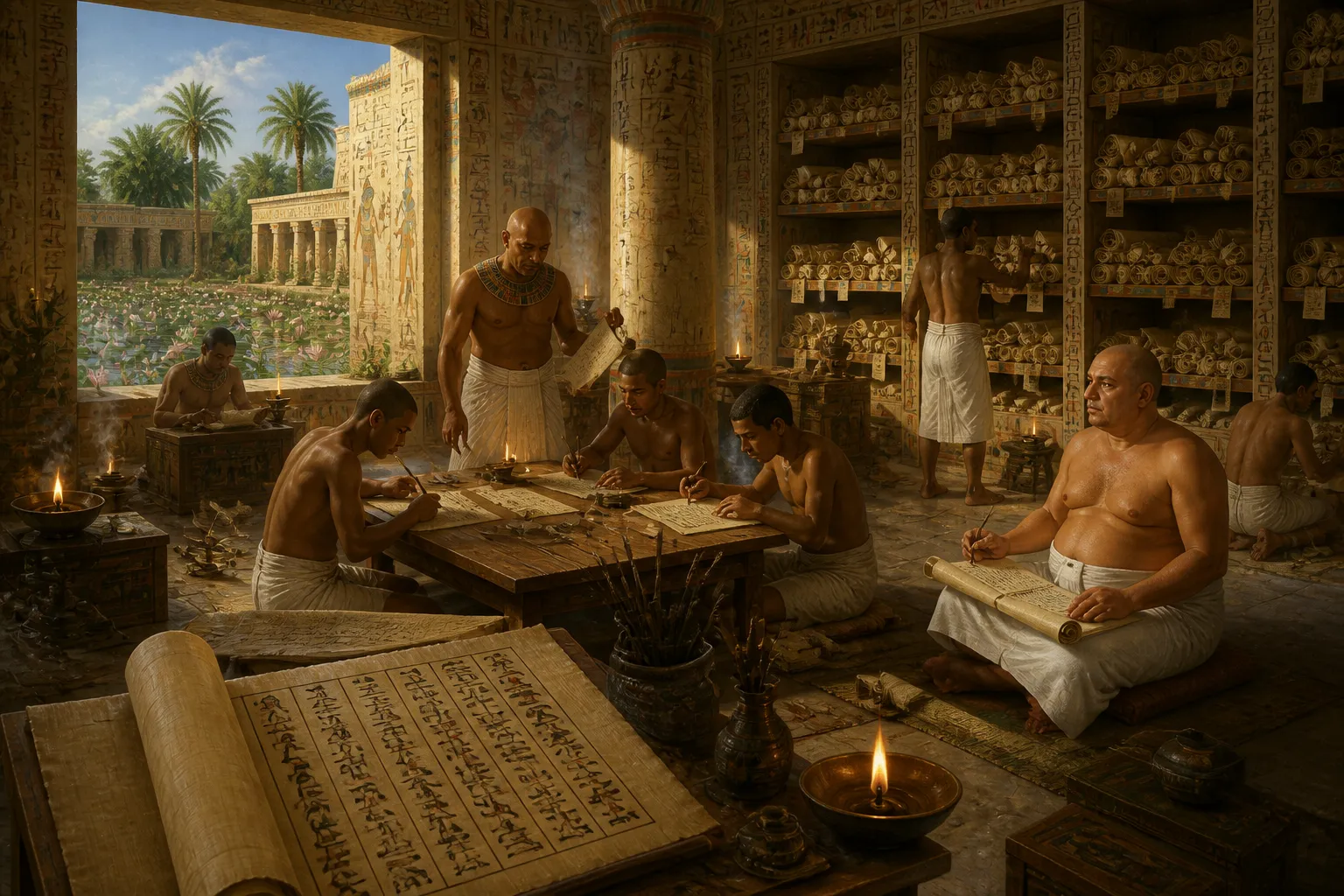
In the temple libraries, the heart of knowledge pulsed with a vibrant energy that served as the intellectual bedrock of ancient Egyptian society. Here, scribes honed their skills, surrounded by countless papyrus scrolls containing hymns, decrees, and scientific treatises, repositories of both sacred and secular wisdom. These libraries were sanctuaries, humming with the convergence of learning and spirituality, where the sacred and the secular found harmony. The air was infused with the rich scent of incense, enhancing the atmosphere of reverence, while the sound of reeds scratching papyrus created a constant melody, a background score to the pursuit of knowledge. Scribes, regarded as guardians of wisdom, ensured that the Pharaoh's decrees reached every corner of the kingdom, weaving their words into the fabric of time, preserving them for posterity.
A young scribe whispers, 'Here, the gods' words find their voice.'
Page 9 — Home in Paris
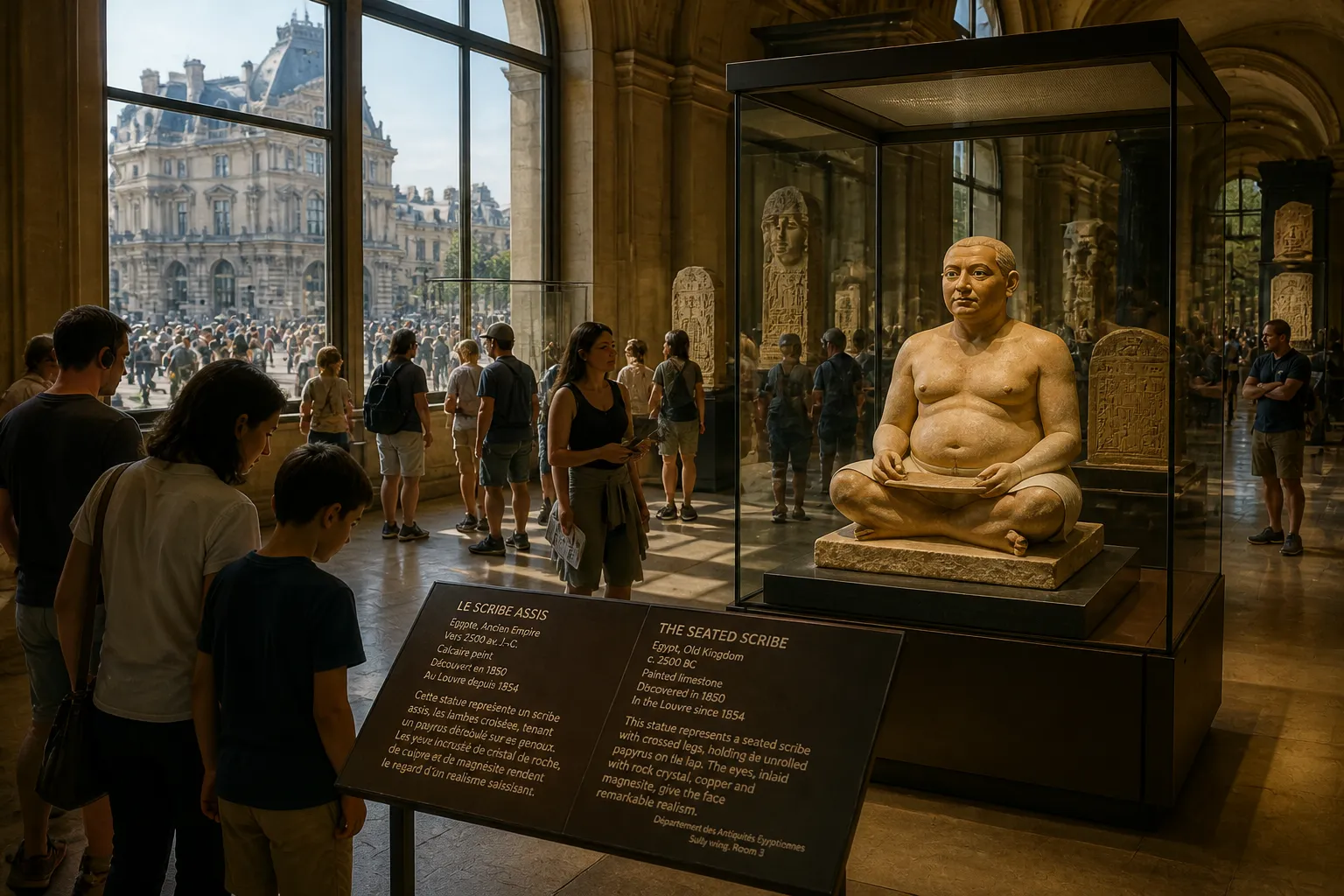
Centuries after its creation, The Seated Scribe finds its home in Paris, within the protective embrace of the Louvre. Here, amidst elegant marble floors and towering columns, it stands as a bridge between worlds, connecting the inquisitive minds of modern visitors to a civilization long passed. The statue's presence evokes reflections on the nature of knowledge, power, and the timeless influence scribes wielded. Visitors, entranced by its timeless gaze and the vibrant colors still visible on the limestone, ponder the mysteries and achievements of ancient Egypt and the pivotal role of scribes who crafted legacies through both ink and stone. The statue's journey from the sands of Egypt to a Parisian gallery is a testament not only to its enduring allure but also to the universal quest for knowledge and understanding, which transcends time and borders.
A curator remarks, 'Even in silence, the scribe speaks volumes.'
Page 10 — Legacy in Limestone
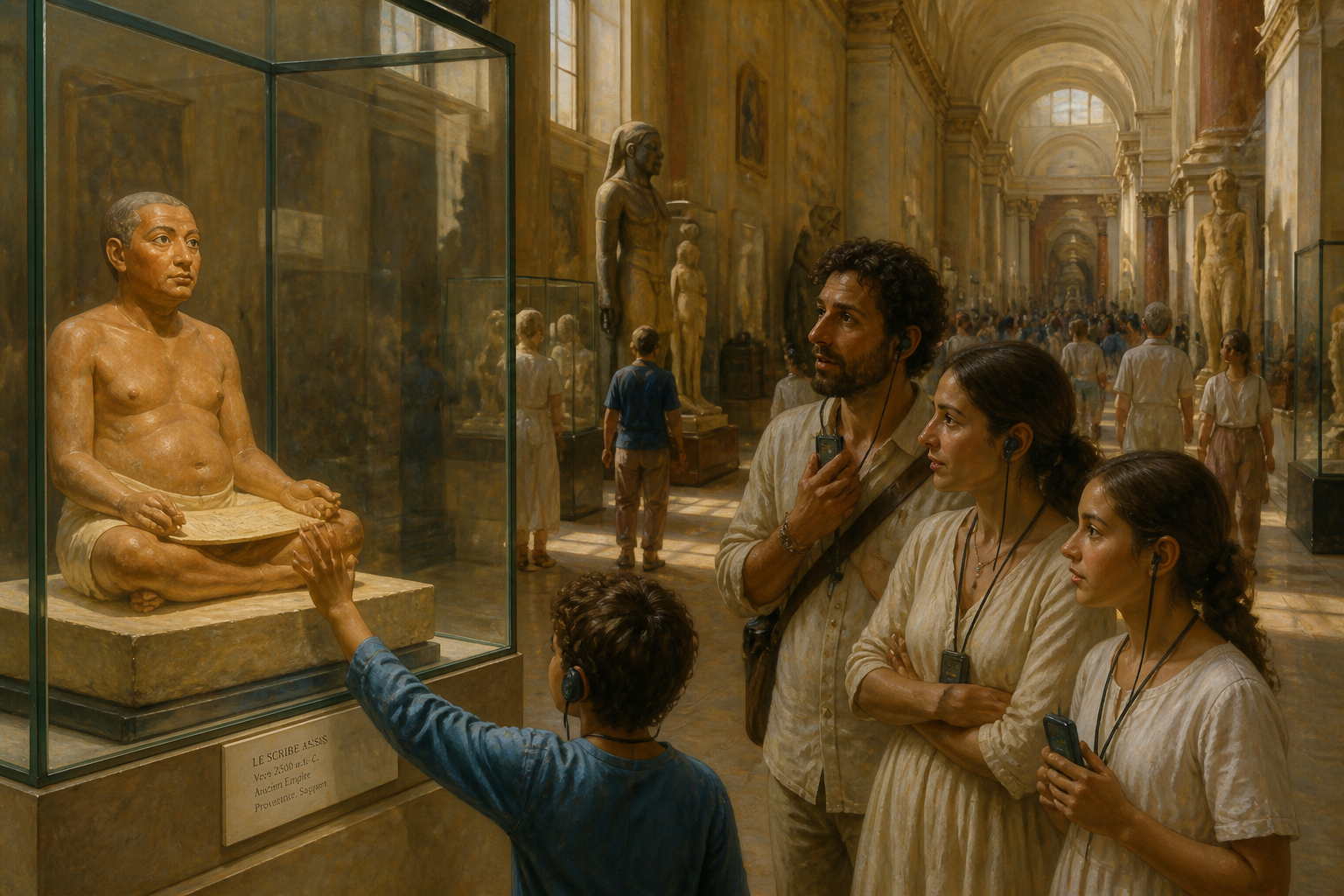
Returning to The Seated Scribe, now seen anew, readers appreciate its enduring significance and the profound messages it conveys. The modest figure, carved from limestone and remarkably preserved with traces of color, stands as a symbol of the timeless influence of literacy and culture in ancient Egypt. This nameless scribe, serving as an everyman of his profession, is a poignant reminder of the countless others who toiled in anonymity, yet played pivotal roles in shaping history's course. His presence in the Louvre ensures that the stories and legacies of Old Kingdom scribes continue to inspire countless generations, reminding us of the eternal bond between knowledge and legacy, a bond that transcends time, culture, and geography.
A historian states, 'In each carved line, echoes of history multiply.'
About this story
- Audience: general readers
Read Wonder Egypt on your phone
Wonder Egypt is available on Android. Get Wonder Egypt on Google Play.