The Satire of the Trades
The Satire of the Trades — an illustrated history story. 10 illustrated pages, free to read on Wonder Egypt.
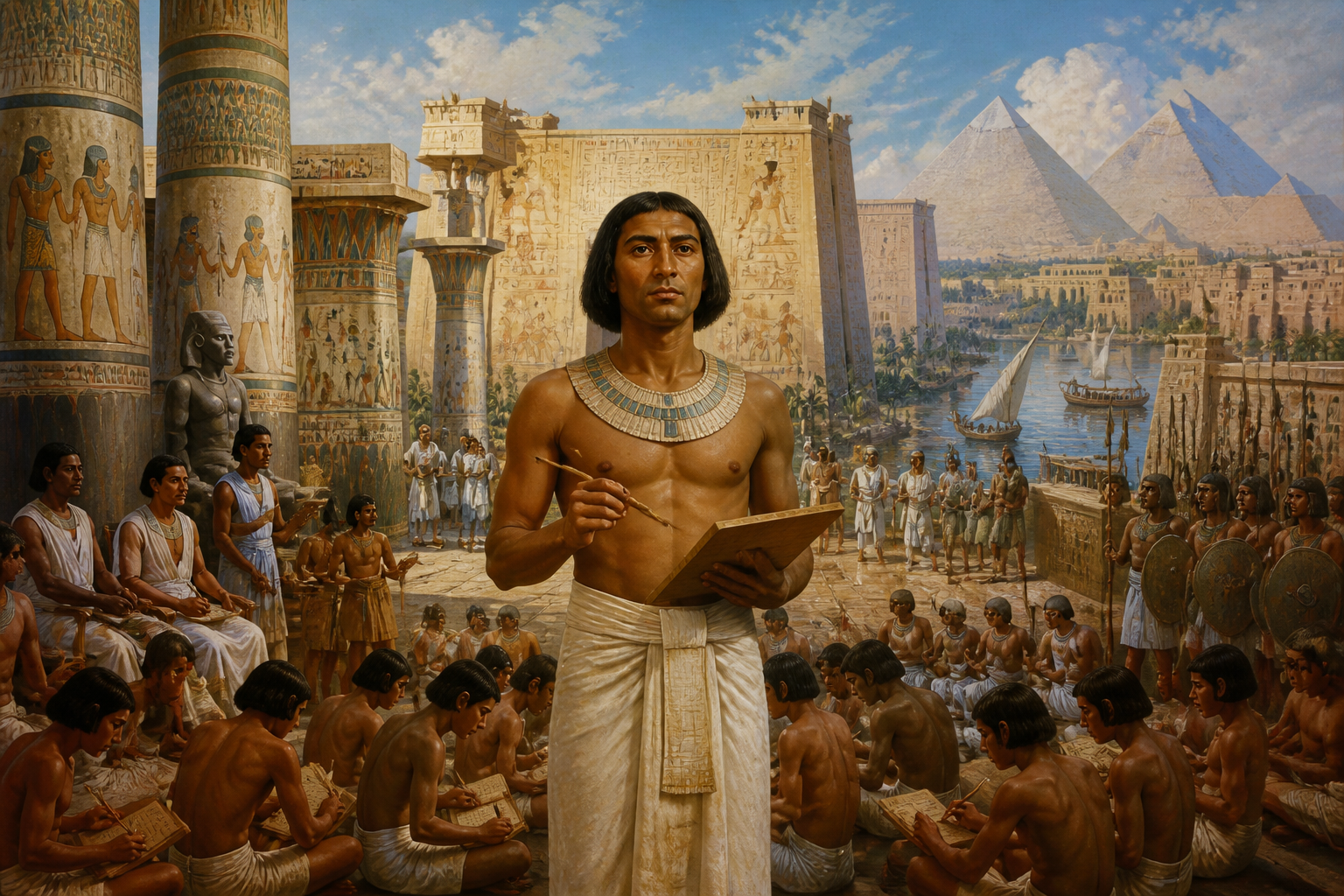
Page 1 — The Age of Insight
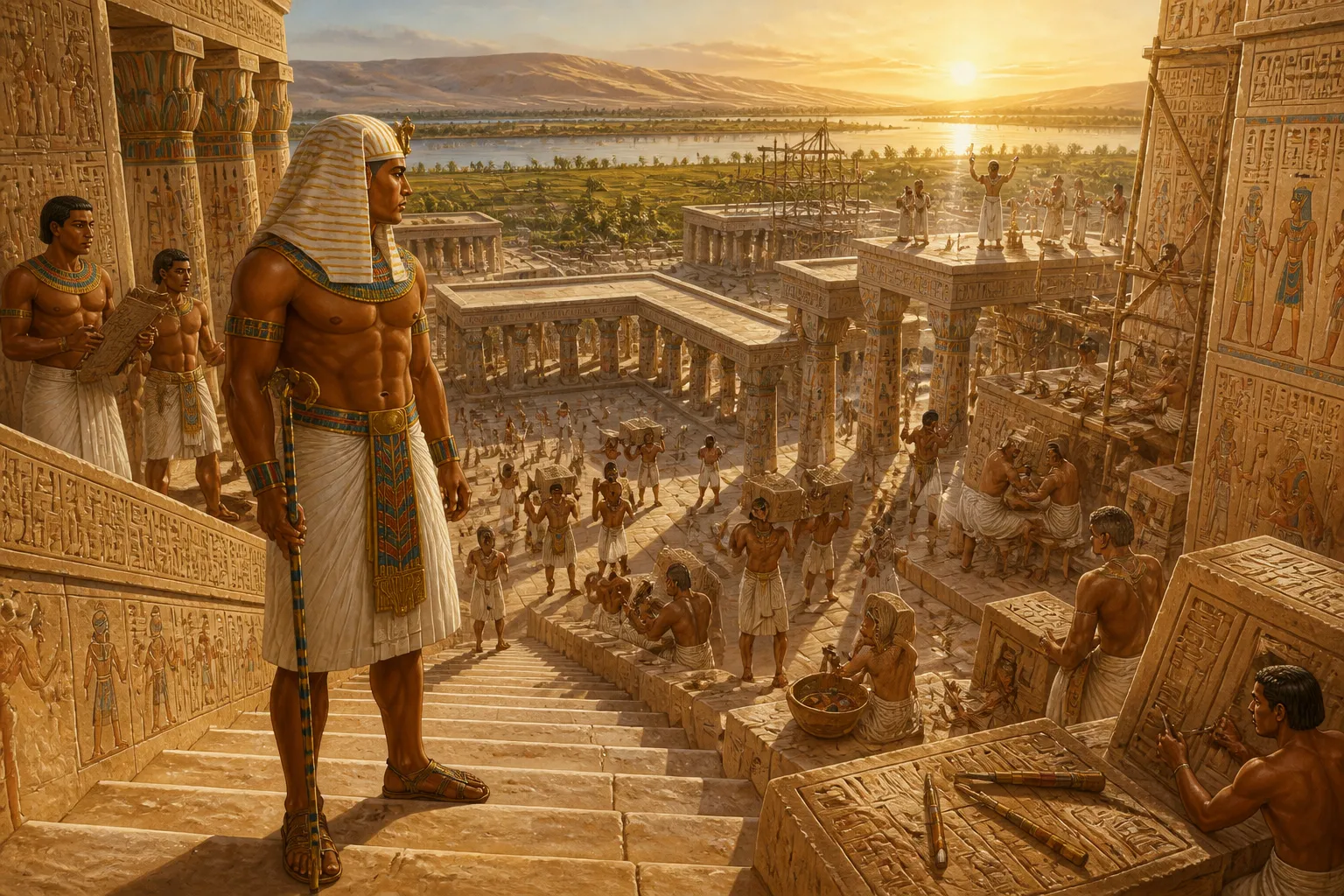
The Middle Kingdom of Egypt, spanning from around 2050 to 1710 BCE, was a time of flourishing art, religion, and architecture. It began with the reunification of Egypt under Mentuhotep II, of the 11th Dynasty, after years of division and chaos. This era is marked by the construction of magnificent structures such as the Mortuary Temple of Mentuhotep II at Deir el-Bahari and the expansion of the Temple of Karnak. The age saw the centralization of power in Thebes and significant developments in religious practices with Amun rising as a principal deity. Known for its rich and distinct cultural achievements, the Middle Kingdom set the precedents for art and architecture that would influence later generations. It concluded as power shifted and the Hyksos began their ascent, ushering in the Second Intermediate Period.
Mentuhotep II proclaimed, 'Let the temples rise, uniting the gods with our great endeavors.'
Page 2 — The Scribe's Path
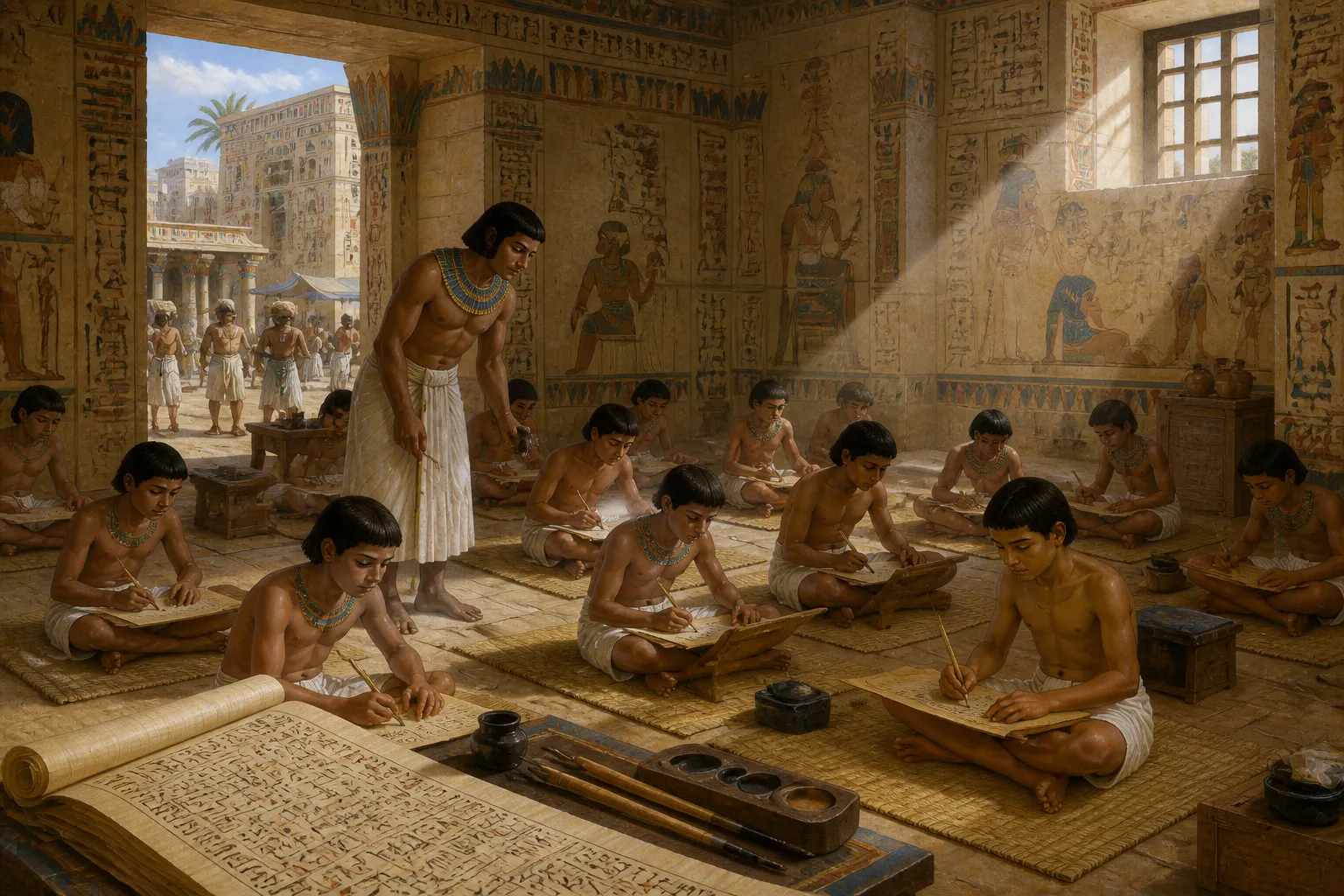
In the bustling schoolrooms of ancient Egypt, nestled within the vibrant city of Thebes, a father earnestly guided his son along the esteemed path to becoming a scribe. This era, around 1900 BCE, placed immense value on literacy and the written word, vital for sustaining the complex bureaucracy that governed the state. The renowned text 'The Satire of the Trades' serves as a testament to this educational push. Within its passages, a father vividly outlines the trials and tribulations of various trades, ultimately portraying the life of a scribe as superior. Students were encouraged to meticulously copy this text, embedding within them the paramount importance of literacy. This practice elevated scribes to the status of elite members within society, weaving together the fabric of state administration and cultural identity.
'My son, heed my words,' the father insisted, 'and learn the scribe's art, for it is a life of ease compared to the toil of potters and fishermen.'
Page 3 — The Potter’s Struggle
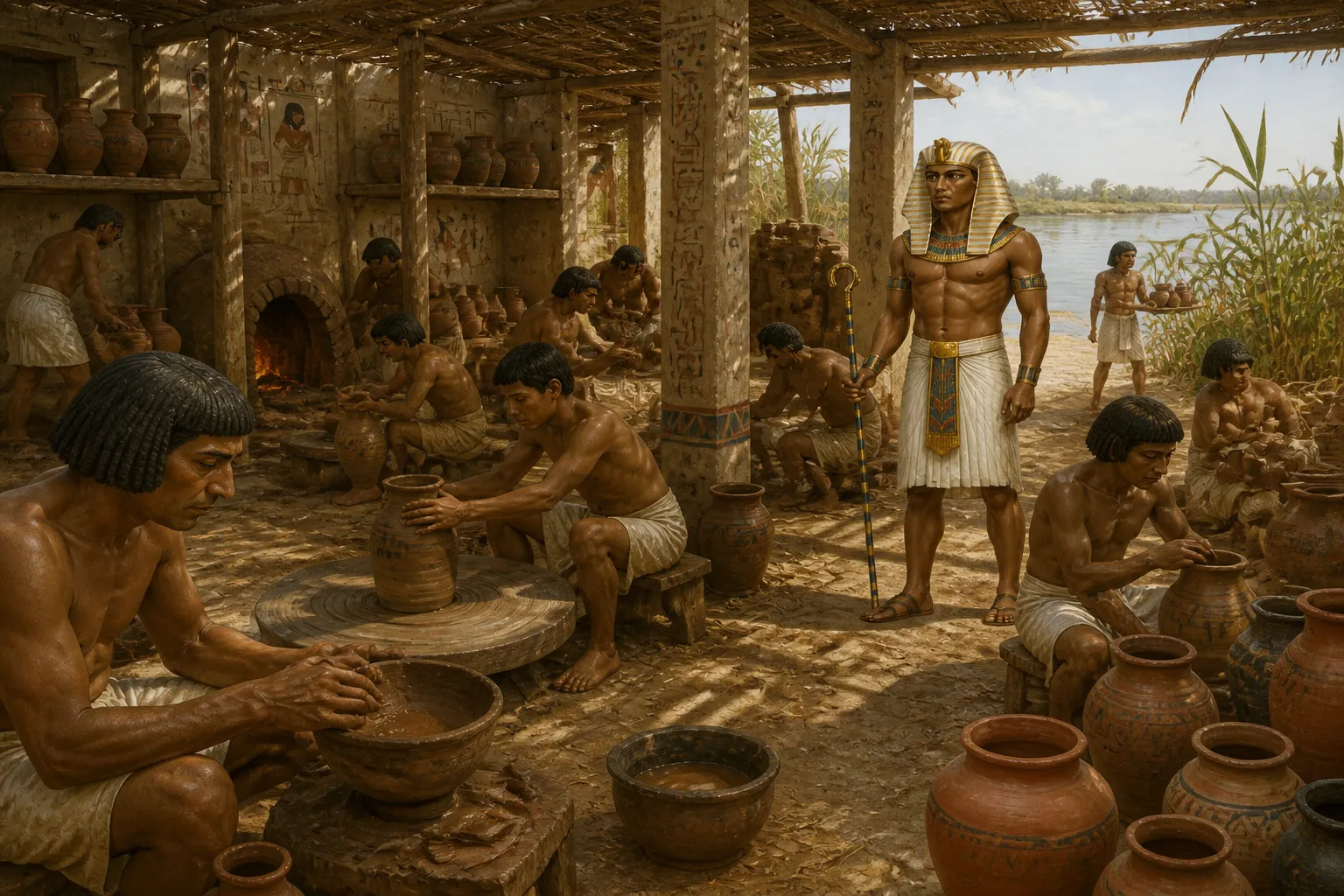
The life of a potter in ancient Egypt was far from glamorous, a reality starkly depicted in 'The Satire of the Trades.' In a humble workshop near the life-giving Nile, men labored under the oppressive heat of the midday sun, fashioning vessels from the river's malleable clay. The hardships endured by these craftsmen were vividly chronicled, portraying their existence as an unyielding struggle. Their days were consumed by the laborious process of gathering clay, skillfully shaping it by hand, and firing it in searing ovens. Despite their indispensable role in society, providing essential wares for daily life, their work was often undervalued in a society that exalted the intellectual pursuits of the scribes. The text underscores the stark disparities in social standing and labor, highlighting the societal preference for the scribe's more esteemed role.
'Feel the clay, let it shape you as you shape it,' one potter said, his hands covered in mud.
Page 4 — Voyage of the Fisherman
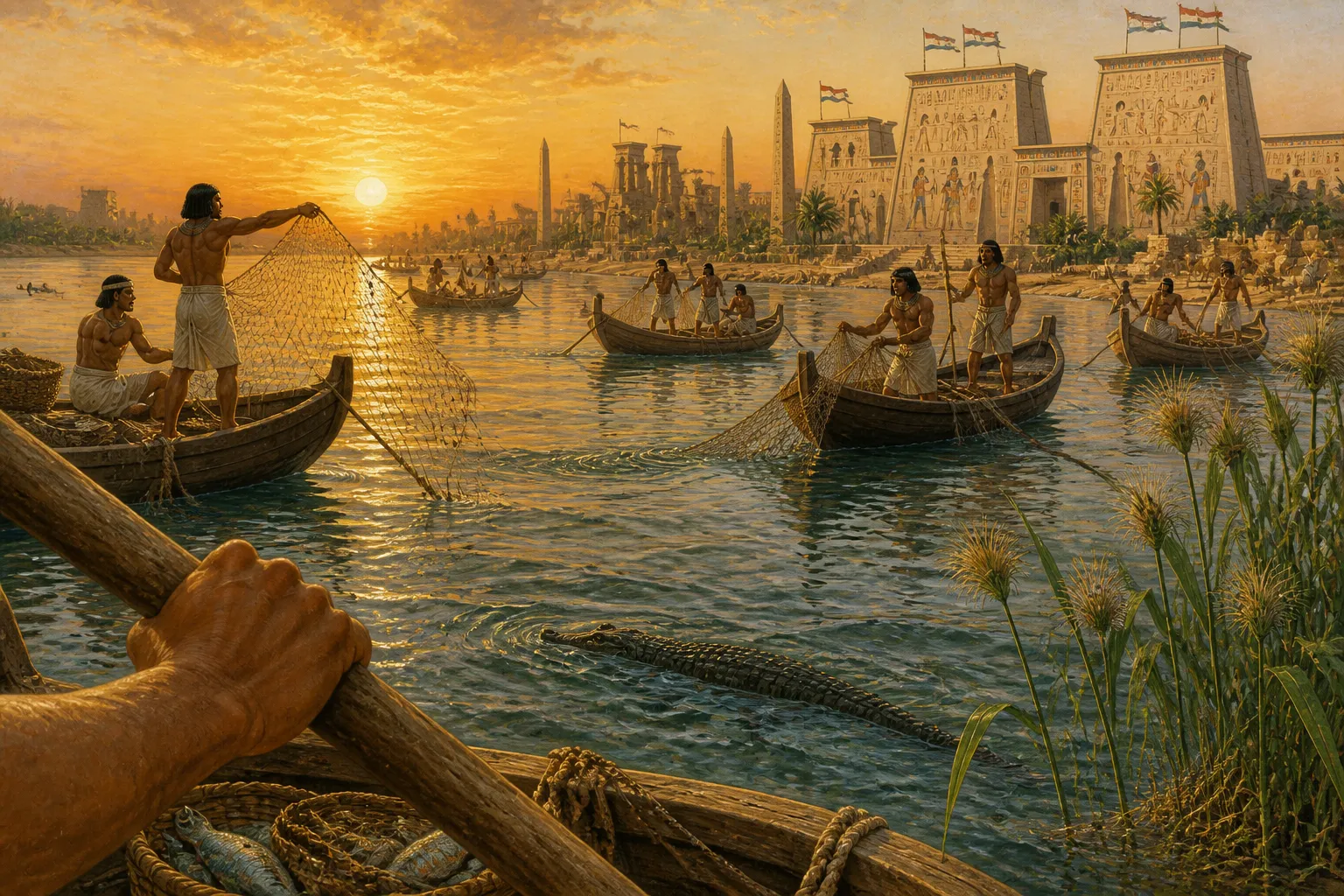
In the soft glow of dawn, fishermen embarked upon the Nile, their boats heavy with nets and laden with hopes. This river, the very lifeblood of ancient Egypt, held both promise and peril. Beneath the deceptively tranquil surface lurked dangers, from the stealthy crocodiles to the river's formidable current. Within 'The Satire of the Trades,' fishermen are poignantly depicted as having pitiful fortunes, risking their lives for a meager catch. Their labor was relentless, as they cast their nets and navigated the tumultuous waters. Yet, despite the ever-present peril, their role was vital, providing sustenance for an entire populace. The text's vivid descriptions of their plight served as a stark reminder that the scribe's life, secure within the confines of ink and papyrus, was infinitely preferable.
As the sun rose, the elder fisherman warned, 'Keep your wits about you, for the river is as cunning as a fox.'
Page 5 — The Barber's Burden
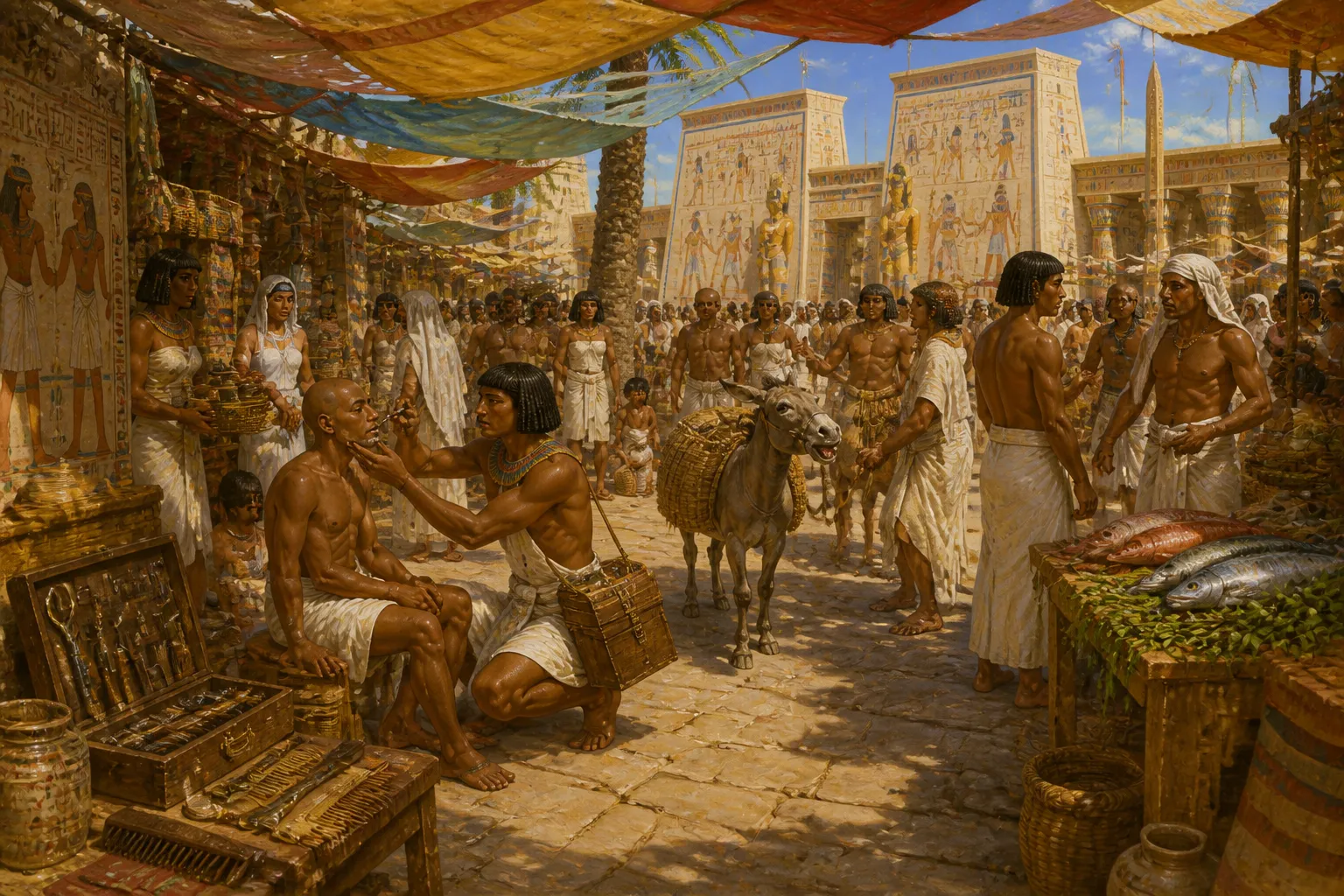
In the teeming streets of ancient Thebes, barbers were a ubiquitous presence, their movements as constant as the flow of commerce around them. 'The Satire of the Trades,' while depicting them with a degree of disdain, nonetheless reveals the essential role they played within society. Their work was transient and mobile, involving a constant trek from house to house, attending to the hair and hygiene needs of the populace. The barber's burden was not only the weight of his tools but also the endless chatter and bargaining that accompanied his trade. The text portrays their existence as tiresome, suggesting that the steady occupation of a scribe was infinitely preferable. Yet, despite this portrayal, barbers served as vital social hubs, privy to tales and secrets as they expertly clipped and shaved, weaving the social fabric of the community in their own unique way.
A barber, laden with tools, called to a passerby, 'A trim, a shave — bring out the best of you!'
Page 6 — The Caravan's Trek
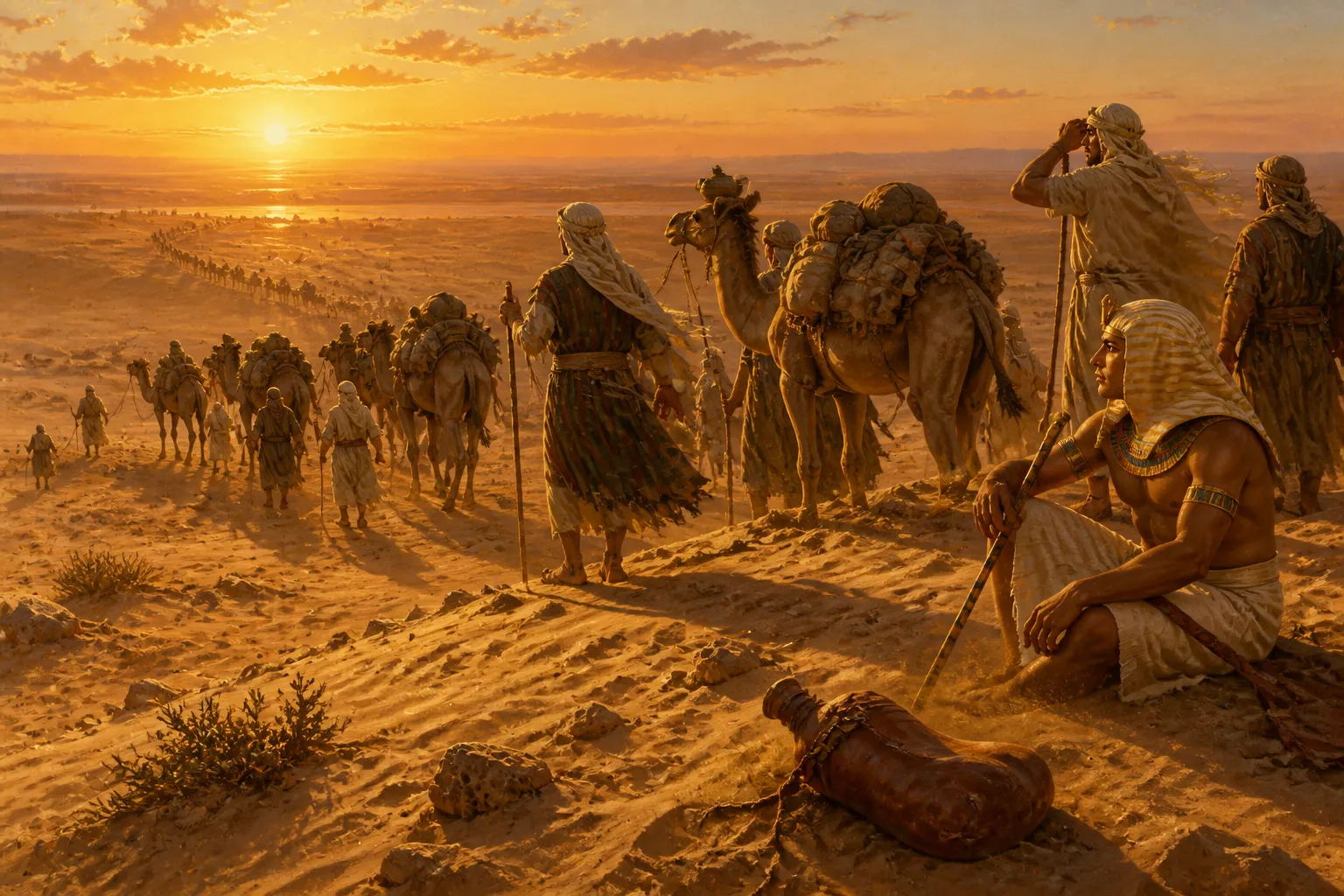
The life of a merchant trader in ancient Egypt was one of long and arduous journeys, filled with both adventure and peril. Caravans, often comprised of camels laden with goods, would traverse vast expanses of the unforgiving desert, under the relentless glare of the sun. Items such as incense, gold, and lapis lazuli were essential to Egypt's prosperity, making the risks worthwhile. Ancient texts like 'The Satire of the Trades' depict the trader's life as fraught with danger—from the threat of bandits to the harshness of sandstorms. Yet, these traders were indispensable, forging connections with distant lands and peoples. Despite their struggles, their ventures were the lifeblood of the Egyptian economy, contrasting sharply with the more stationary and secure life of the scribe.
A seasoned trader advised, 'Guard your wares and your companions, for the sands take all unprepared.'
Page 7 — The Weaver’s Loom
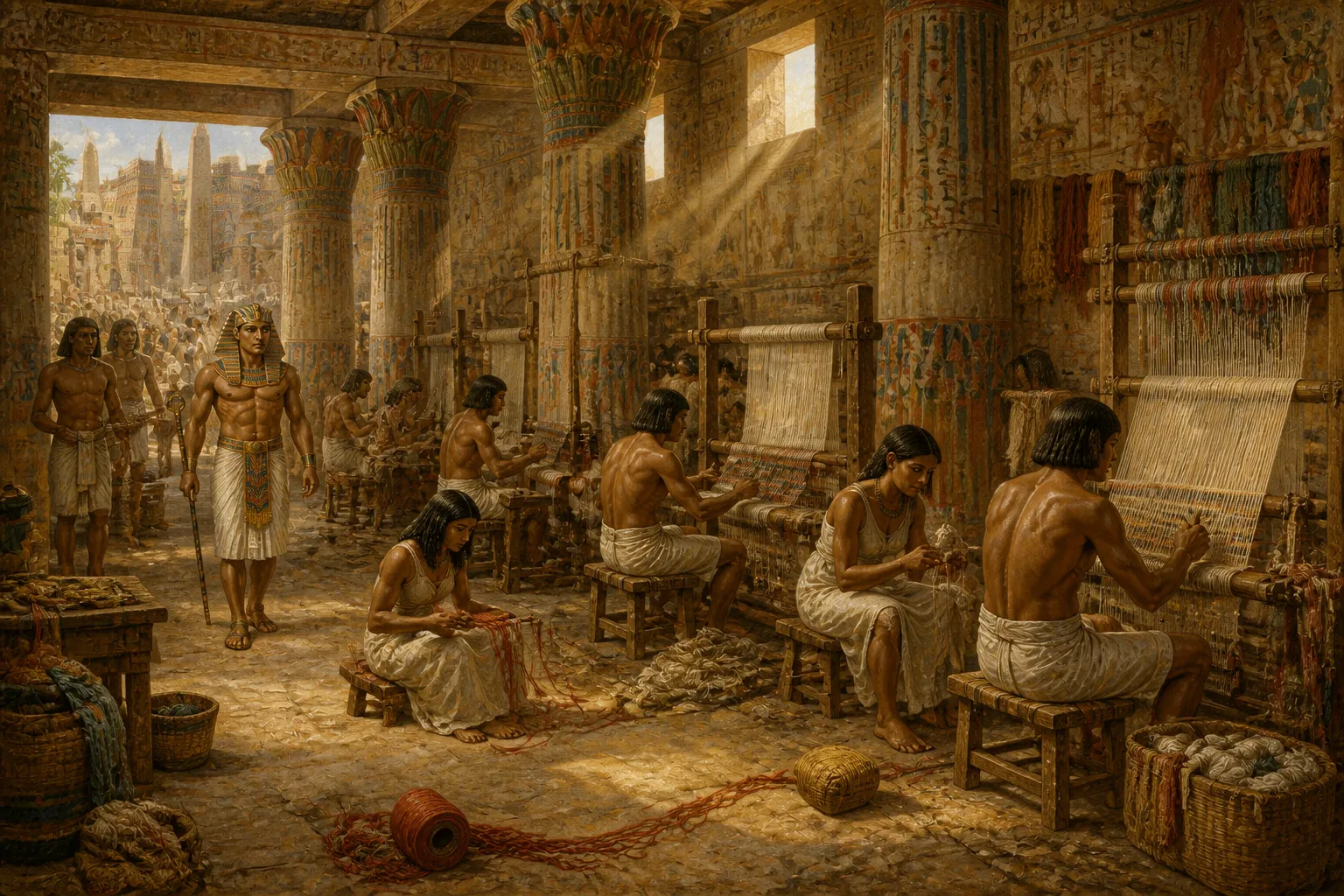
In the shadowed corners of Thebes, within a bustling weaving workshop, the air resonated with the rhythmic clatter of looms as voices mingled with the soft hum of spinning wheels. Weavers, dressed in loose, undecorated linen, toiled diligently, spinning threads into the essential fabrics of daily Egyptian life. These artisans, both women and men, hunched over their looms, transformed simple flax into fine linen, a staple of clothing and trade, highly prized for its quality and versatility. The 'Satire of the Trades' casts their toil as monotonous, a perpetual cycle of weaving, contrasting their life of hard work with the intellectual pursuits of a scribe. Yet, the skill of these weavers was vital, underpinning the cultural and economic fabric of Egypt. Through their hands, threads became narratives intertwined, clothing a civilization and imbuing it with stories told through threads.
A young weaver mused, 'Each thread tells a story, woven into the tapestry of our lives.'
Page 8 — The Carpenter's Craft
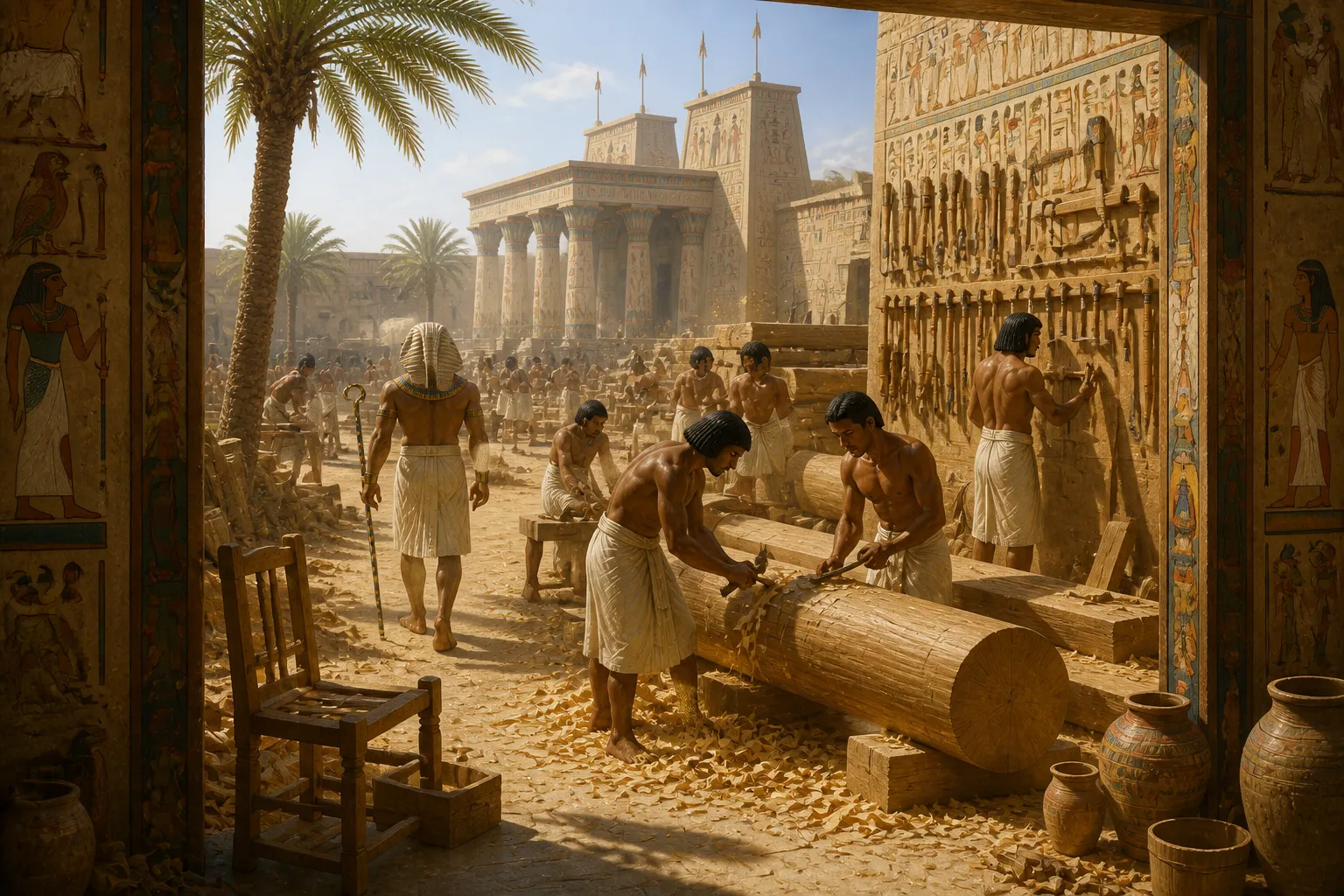
In a sunlit courtyard filled with the musk of fresh sawdust, carpenters meticulously crafted the structures that defined ancient Egyptian life, where the scent of newly felled wood blended with the earthy aroma of the surrounding landscape. Their workshop, alive with the scent of newly cut wood, was a place where artistry met utility. According to 'The Satire of the Trades,' their existence was marked by the laborious effort of shaping wood, a task deemed inferior to the intellectual life of a scribe. Yet, the carpenters' craft was essential, from the beams that held up homes to the columns that supported majestic temples. With every precise stroke of the adze, these artisans left a tangible legacy, their contributions standing bold against the Egyptian skyline, casting shadows over the golden sands of time.
An experienced carpenter advised his apprentice, 'Shape it with care, for our work outlives us all.'
Page 9 — The Stone Cutter's Strain
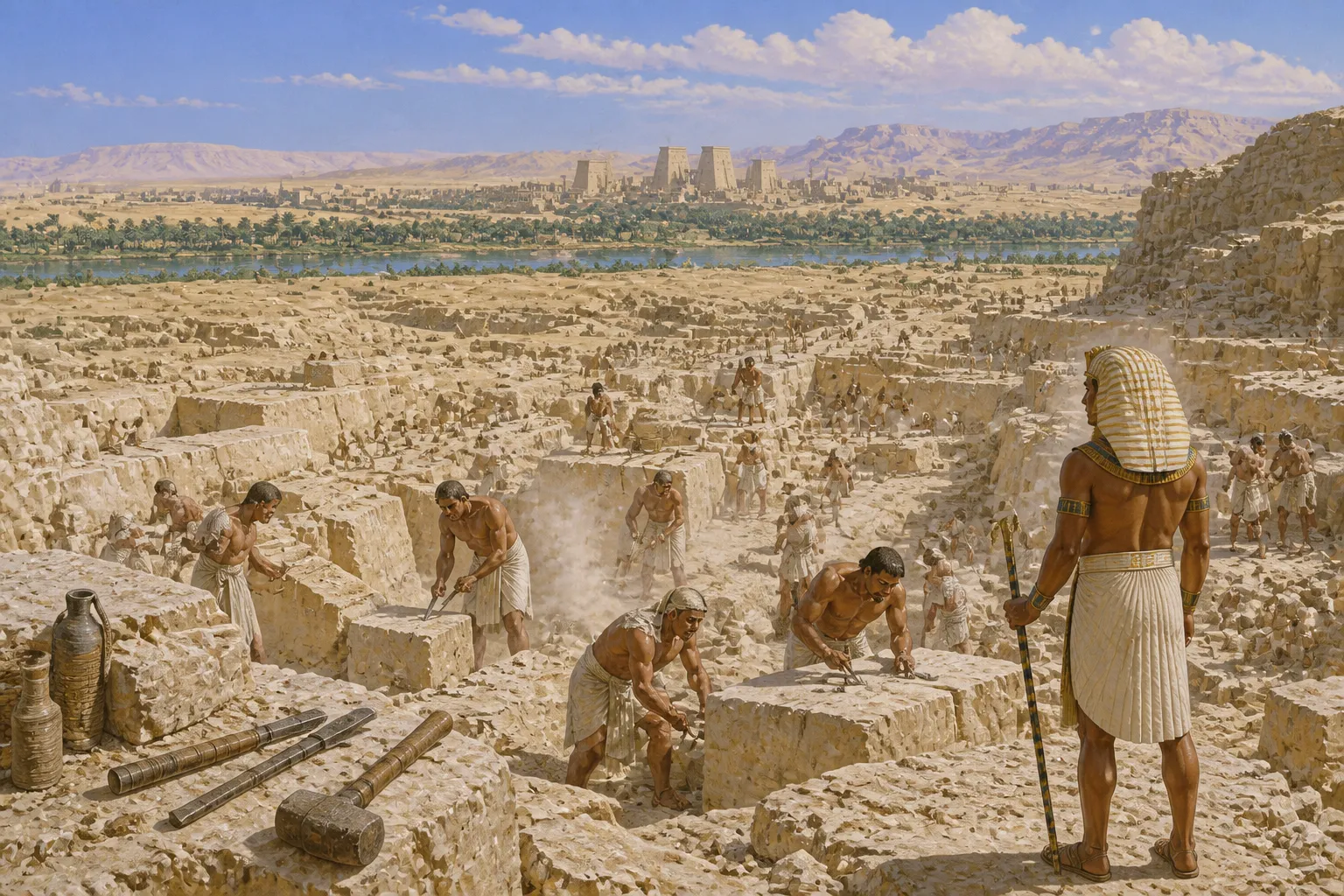
In the vastness of a sunlit desert quarry, stone cutters toiled relentlessly against the massive limestone blocks that would become the backbone of Egypt's monumental architecture. The air was filled with the sound of chisels striking stone, each rhythmic blow a testament to the workers' strength and endurance, a cacophony that reverberated across the barren expanses. 'The Satire of the Trades' narrates their labor as grueling, yet essential, contrasting with the more leisurely life of a scribe. Their skill transformed raw stone into the grand edifices that would stand for millennia, each cut a testament to their enduring craft. As sweat mixed with dust, their legacy was inscribed into the very landscape, each stone cut a marker of enduring civilization, shaping an empire that dared to touch eternity.
A stone cutter grunted to his comrade, 'Every block we hew builds eternity.'
Page 10 — Final Words of Wisdom
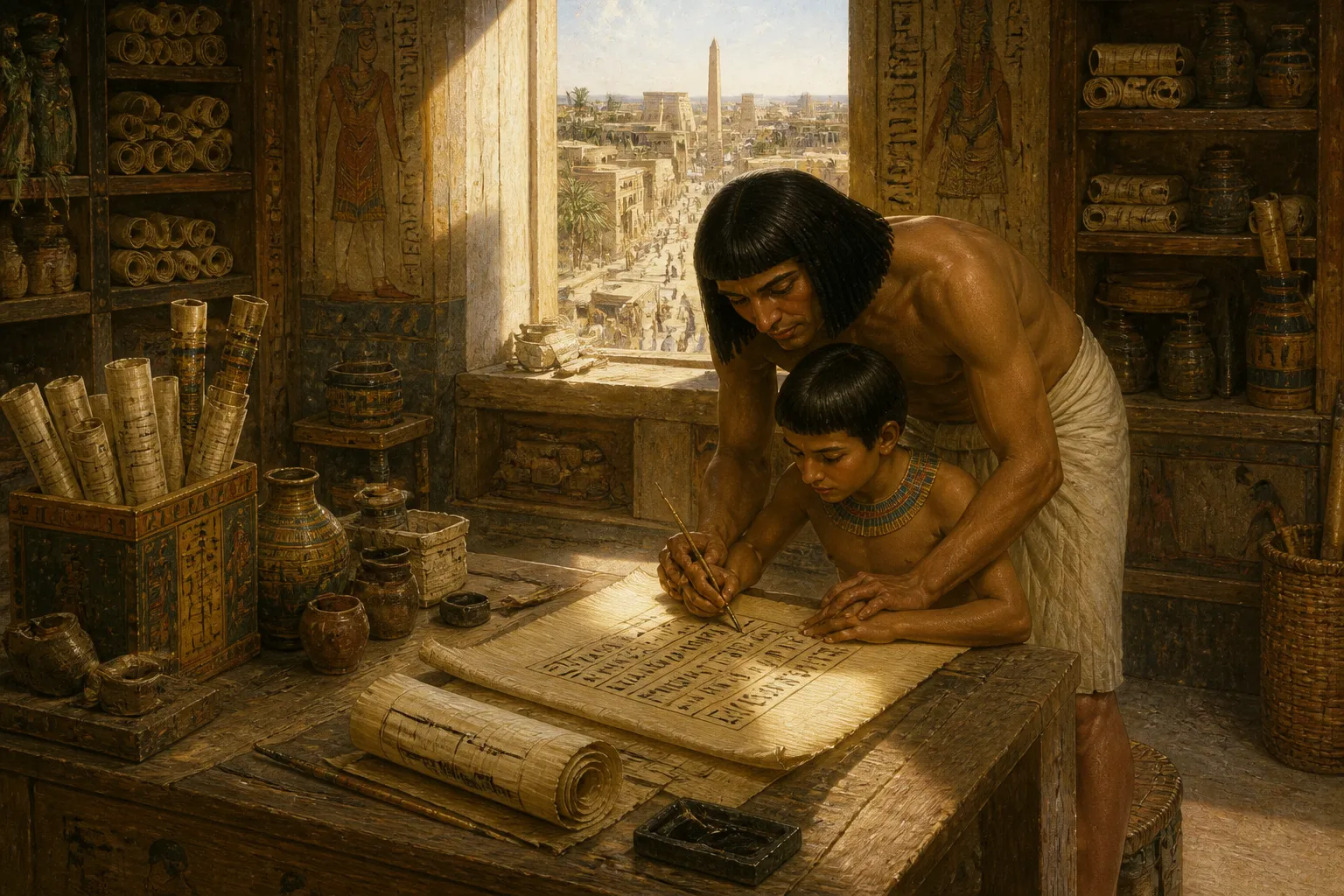
In the final lines of 'The Satire of the Trades,' the father reiterates the supremacy of the scribe's life with a gravitas that transcends time. He offers his son a legacy steeped in wisdom, urging him to choose the pen over the plow, and ink over clay vessels, as symbols of enduring legacy and intellectual wealth. The father's words, strategically crafted, serve as a crucial piece of state rhetoric, ensuring a continuous flow of literate individuals essential for the sustenance of Egypt’s intricate bureaucratic mechanisms. This text, filled with hyperbolic imagery and vivid narratives, underscores the profound significance of education in maintaining the stability and progression of Egyptian society. Through generations, students meticulously copied these lines, safeguarding not only the father's wisdom but also the subtle warnings and enticing allure of the scribe's profession.
The father urged, 'Let your life be counted in lines, not labor.'
About this story
- Audience: general readers
Read Wonder Egypt on your phone
Wonder Egypt is available on Android. Get Wonder Egypt on Google Play.