The Nile Year
The Nile Year — an illustrated history story. 10 illustrated pages, free to read on Wonder Egypt.
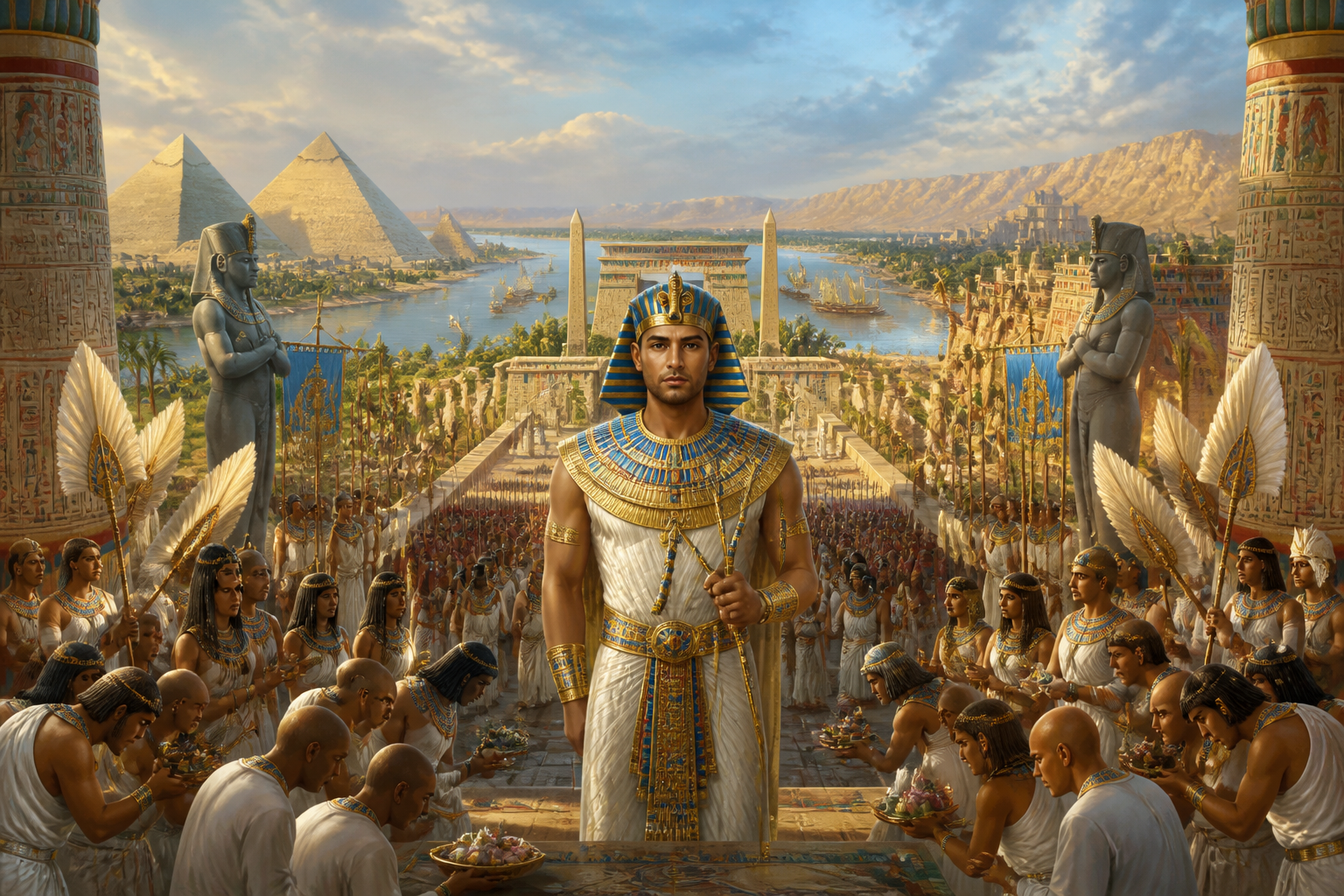
Page 1 — The Rhythm of the River
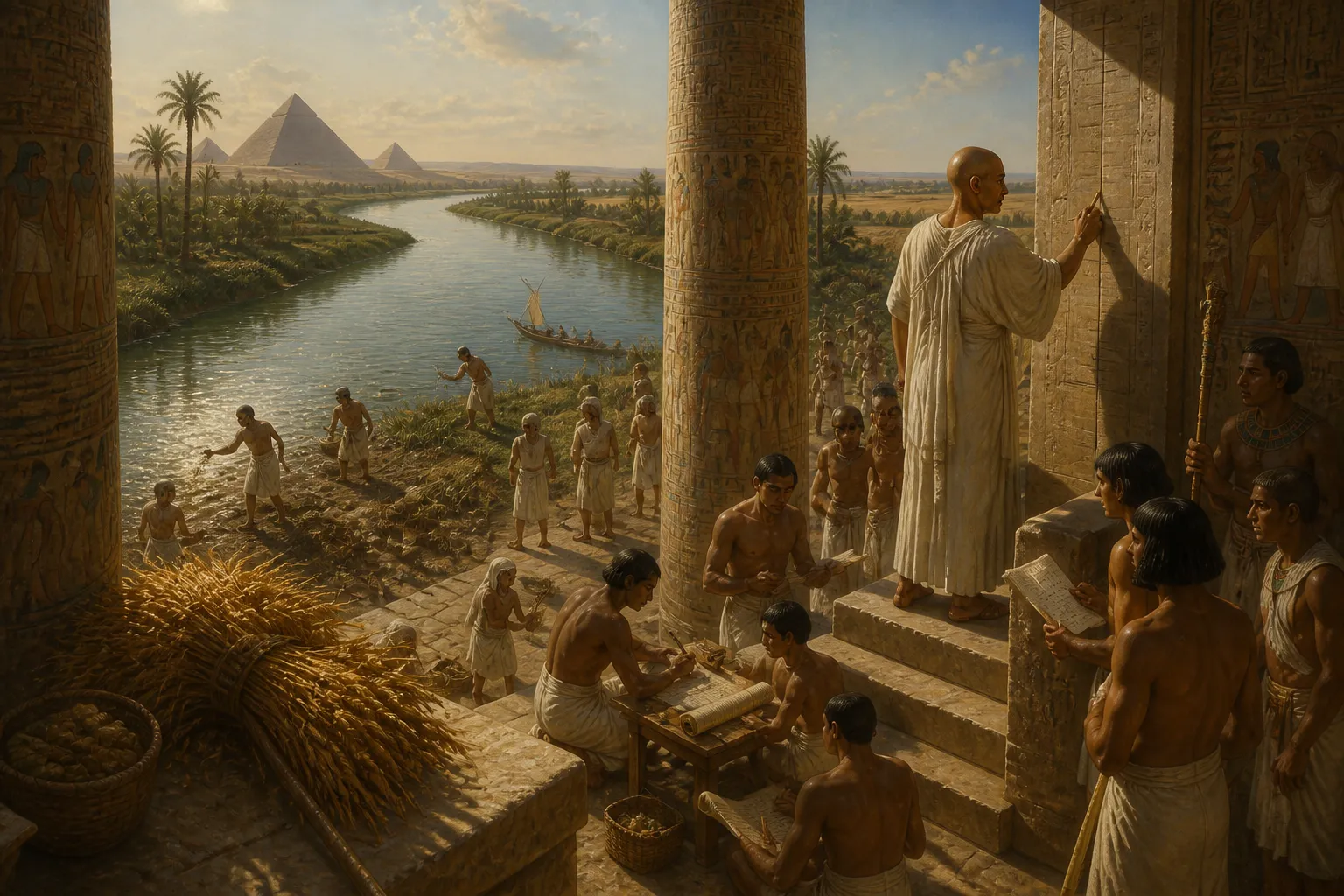
For three millennia, the Nile served as the lifeblood of Egypt, dictating cycles of prosperity and challenge through its seasonal flooding and recession. The inundation, known as Akhet, submerged fields, enriching the soil with nutrient-rich silt. This was followed by Peret, when seeds were carefully sown into the welcoming earth, transforming the valley into a lush expanse. The season of Harvest, or Shemu, saw grains harvested and stored. Priests, clad in ceremonial garb, ascended the nilometer's stone stairs to record the river's rise. These etchings determined taxes based on the extent of the floodwaters, balancing divine bounty with human effort. Scribes diligently chronicled these records, while farmers tended to their fields and priests offered prayers to align their lives with the river's rhythm—a natural cadence that sustained an entire civilization.
The high priest of the Nile proclaimed, "The flood is our lifeblood, yet how we manage it defines our fortune."
Page 2 — Building the Monuments
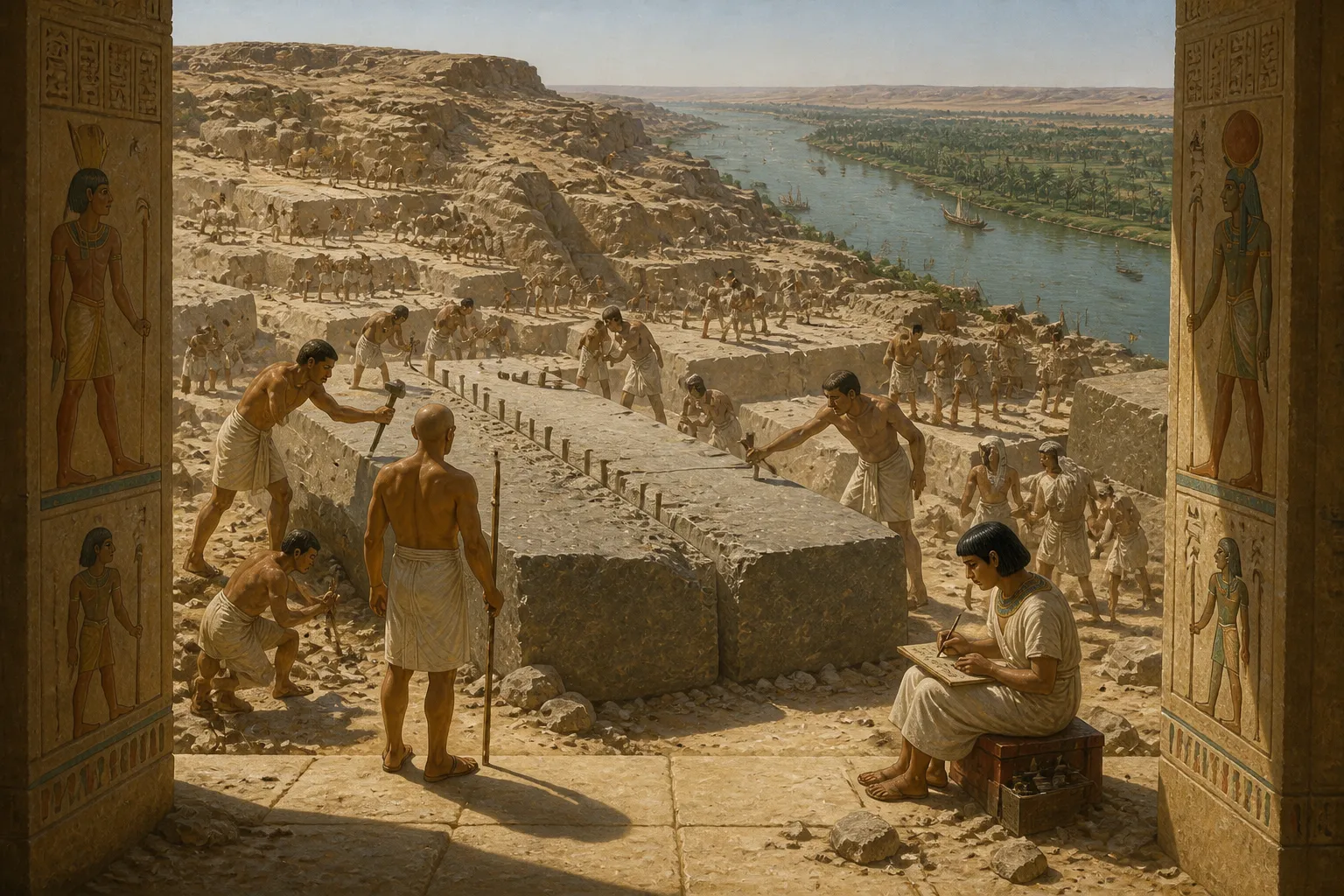
During Akhet, when the fertile lands lay submerged by the annual inundation, the focus of labor shifted dramatically from agriculture to the grand endeavor of construction. In the vast and bustling quarries of Aswan, colossal stone blocks were painstakingly extracted, each destined to become part of the enduring monuments that would immortalize the pharaohs. The resonant clanging of copper tools striking granite filled the air, echoing across the arid landscape as a testament to human perseverance and determination. Overseers, with stern and commanding presences, ensured the precision of each strike, for these stones would bear inscriptions that conveyed the divine mandate and eternal glory of their ruler. The laborers, their skin bronzed and weathered by the relentless sun, toiled tirelessly, motivated by the promise of essential grain rations and refreshing beer as recompense. This was a season where the transformative power of water enabled monumental creations, turning fields of agriculture into vast fields of stone, each carved block a testament to human endeavor.
The overseer shouted, "Strike true, for these stones will tell of our pharaoh for eternity!"
Page 3 — The Harvest of Shemu
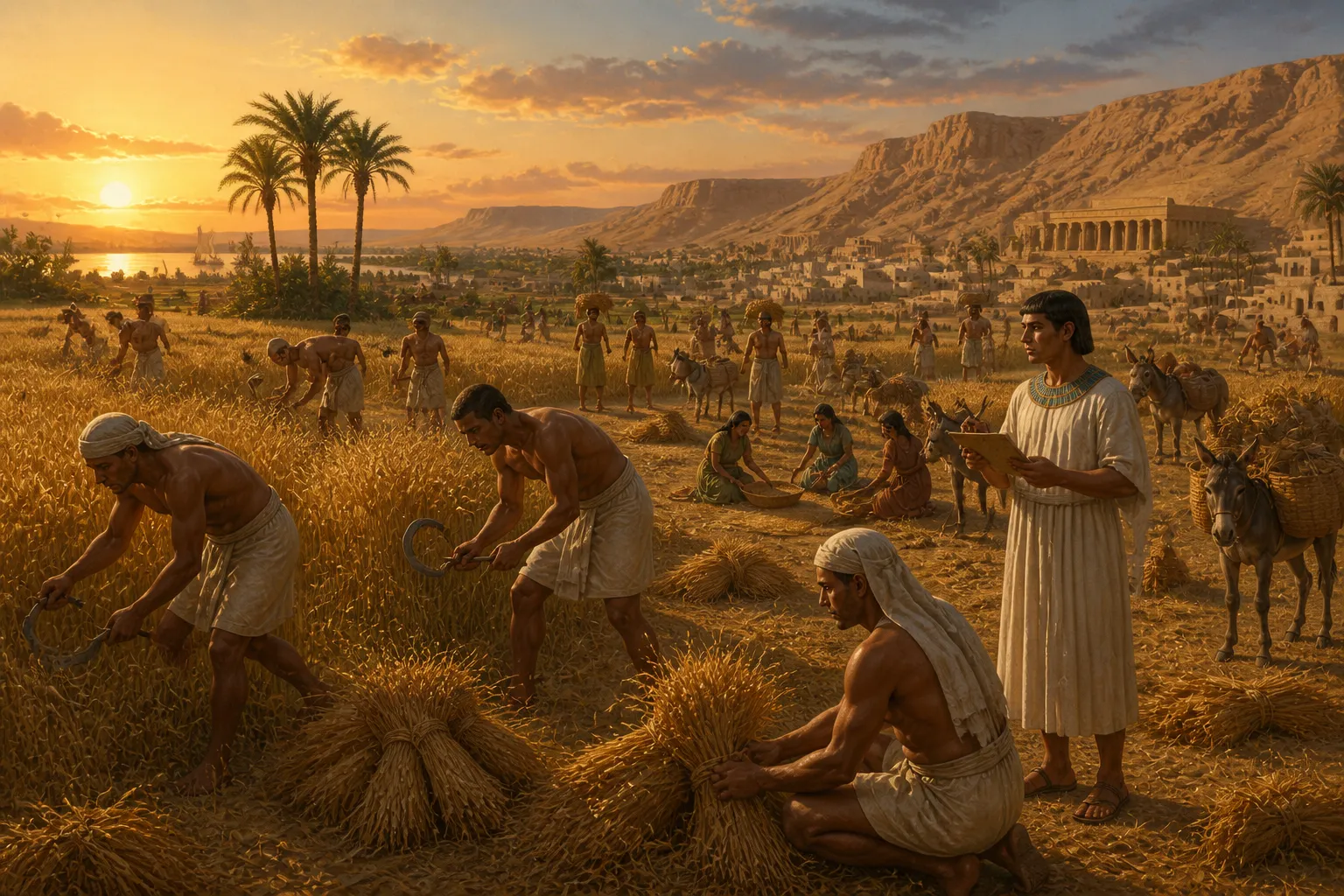
Shemu, the revered season of harvest, transformed the verdant landscape into a magnificent tapestry of gold. Fields that once flourished with vibrant greenery now bowed under the weight of ripened grain, ready for harvest. The air vibrated with the harmonious sounds of families working in unison, their efforts an orchestrated dance of reaping and gathering. Throughout the fields, songs of gratitude resonated, offered to the gods in thanks for the bountiful yield. As dusk approached, baskets laden with grain were meticulously carried to the waiting granaries. Scribes, ever-present and vigilant, calculated the harvest's yield and appraised the corresponding taxes to ensure the pharaoh's rightful due. Women, dressed in vivid linen shawls, meticulously sorted the grains with practiced hands, while children scurried about, collecting stray ears of wheat. The harvest was not only a time of thanksgiving and celebration but also a vital necessity, uniting the community in a shared ritual of survival and abundance.
A farmer declared, "Every grain carries the life of our land, a blessing of the Nile."
Page 4 — The Call of the Quern
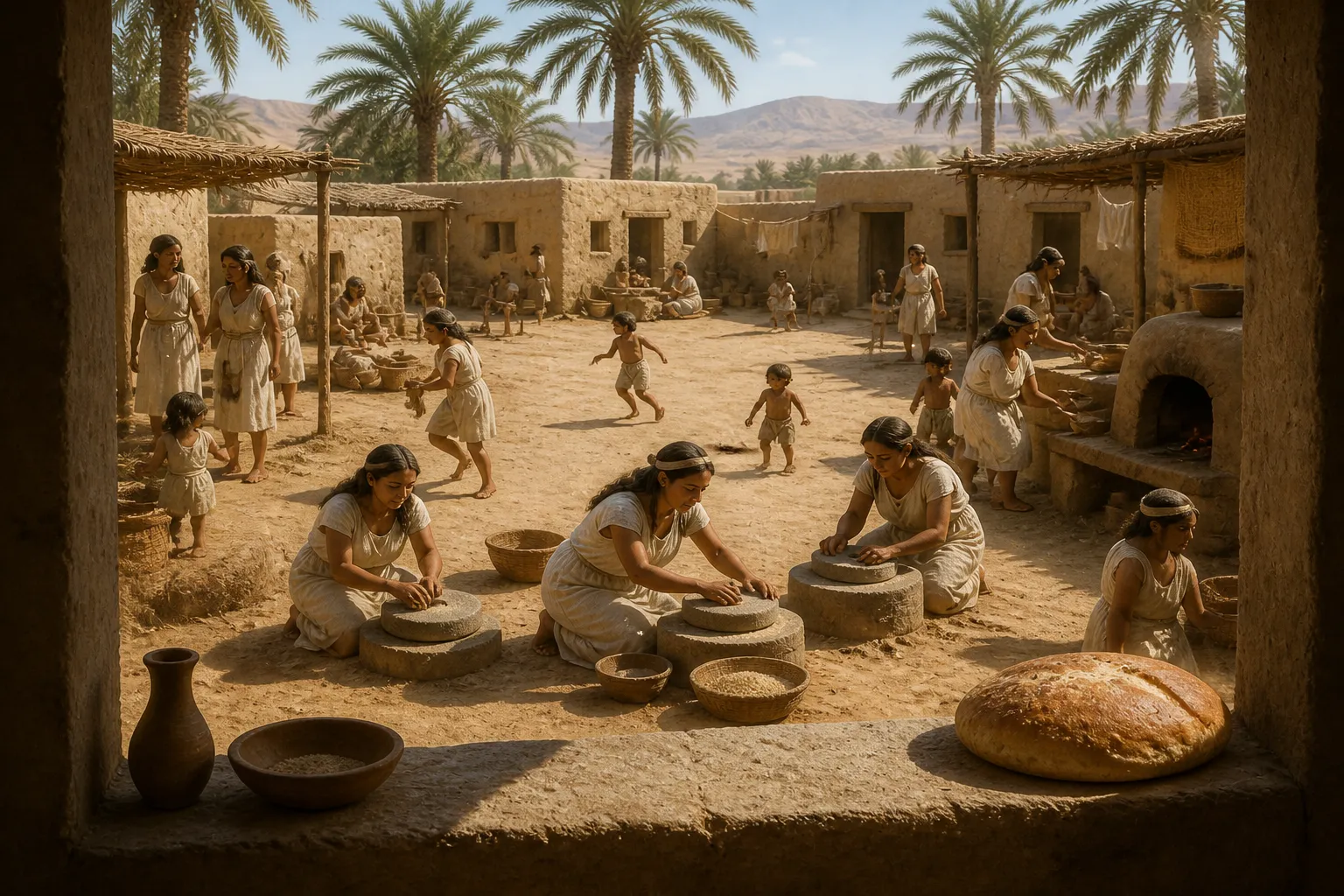
In the villages nestled near the ancient city of Thebes, the morning sun cast its golden rays, illuminating the rhythmic movement of women laboring with the quern stones. With practiced precision, they transformed grain into fine flour, their strong arms moving in harmony with the daily needs of their families. This essential task provided the sustenance needed for daily life, and the air was filled with the comforting aroma of freshly baked bread mingling with the earthy scent of clay ovens. Nearby, children played, their joyful laughter a lively counterpoint to the steady grinding sounds. A soft haze of flour dust filled the air, a testament to the daily ritual that transformed the river's bountiful gift into life-sustaining food. Each handful of flour carried the story of the Nile, a sacred and abundant gift that nourished a thriving civilization.
A mother instructed, "Grind it fine, for it must feed us well."
Page 5 — The Scribe's Ledger
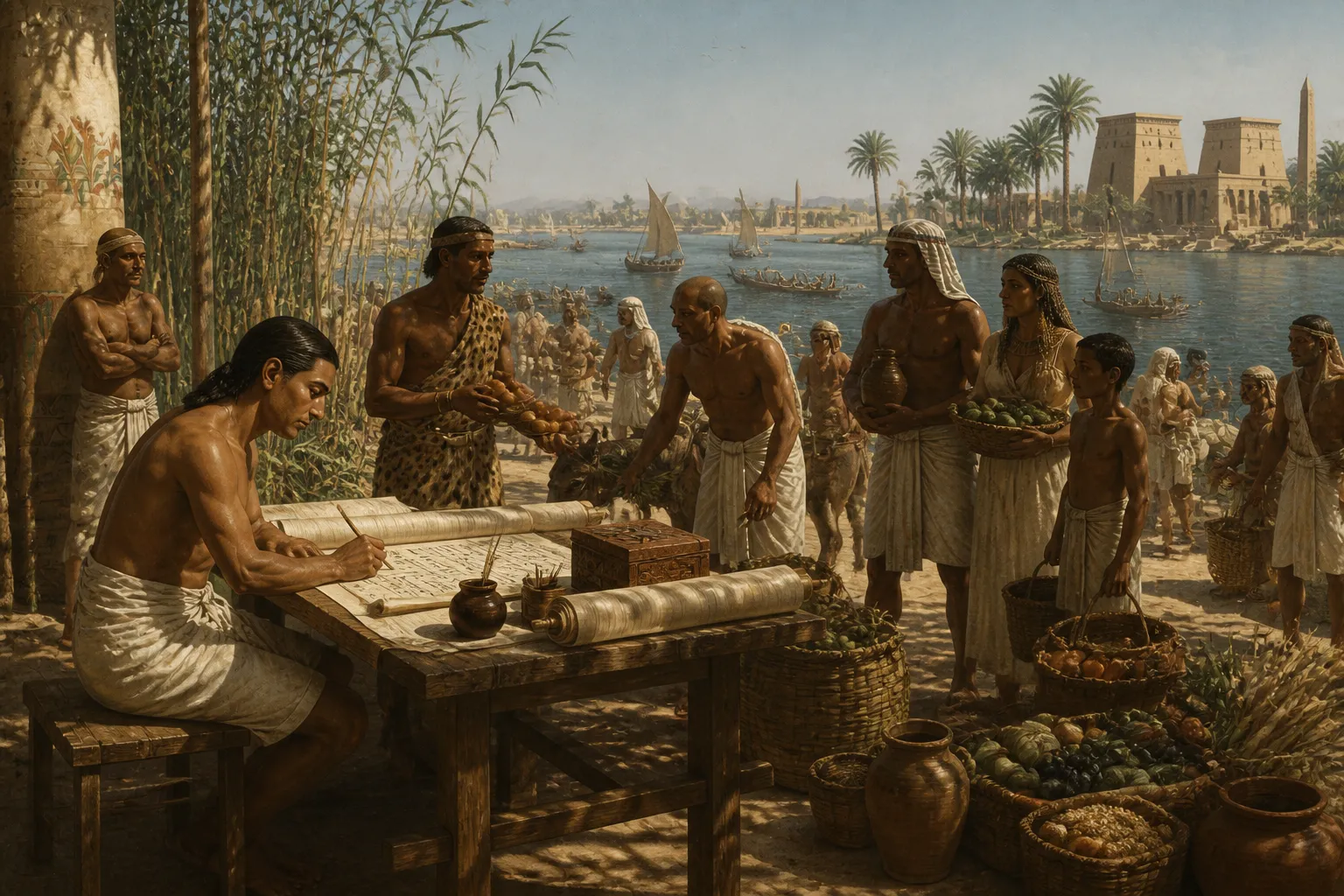
In a shaded alcove by the river near Memphis, the scribe’s benched area was a nucleus of methodical activity. The reed pen in his hand, crafted precisely for its task, glided effortlessly over the carefully prepared papyrus, each stroke a testament to meticulous accounting. The alcove, a modest space of smooth stone, was transformed into the kingdom’s nerve center of administration. Papyrus scrolls, their edges slightly curled by the humidity, lay unrolled, each densely inscribed with the economic narrative of the land. Merchants approached, their faces a blend of reverence and anxiety, laden with goods. Farmers, sun-baked and weary, presented their harvest tallies. This ballet of commerce and agriculture spun tirelessly, reinforcing the realm’s intricate financial dance.
The scribe admonished, "Accuracy is the backbone of the realm."
Page 6 — The Temple's Offering
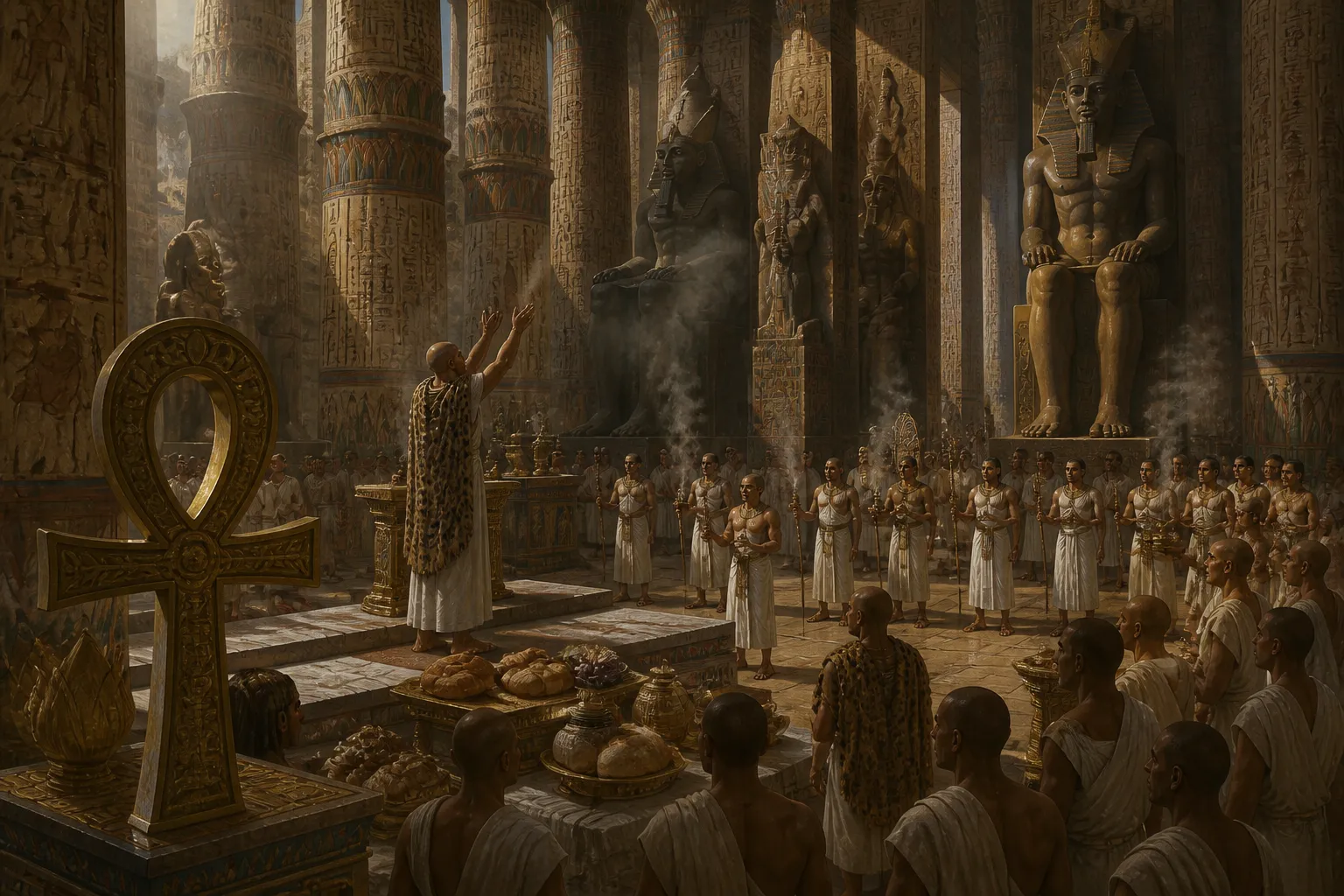
Within the immense temple hall at Karnak, the air was thick with the scent of incense and the solemnity of ritual. Priests, their white linen garments flowing, moved with grace, orchestrating the ancient ceremonies that linked the earthly and the divine. The high priest, distinguished by his ceremonial leopard skin cloak, led the invocation with unwavering focus, his voice a steady murmur against the backdrop of sacred statues. Every offering, from the meticulously arranged bread to the sweetest fruits, spoke of gratitude and supplication. Devotees, a sea of bowed heads, whispered prayers, their hopes riding on the tendrils of incense, ascending toward the heavens. This confluence of spirit and substance reaffirmed Egypt’s cosmic balance.
The high priest intoned, "May the Nile’s gift honor us and the gods."
Page 7 — The Market's Buzz
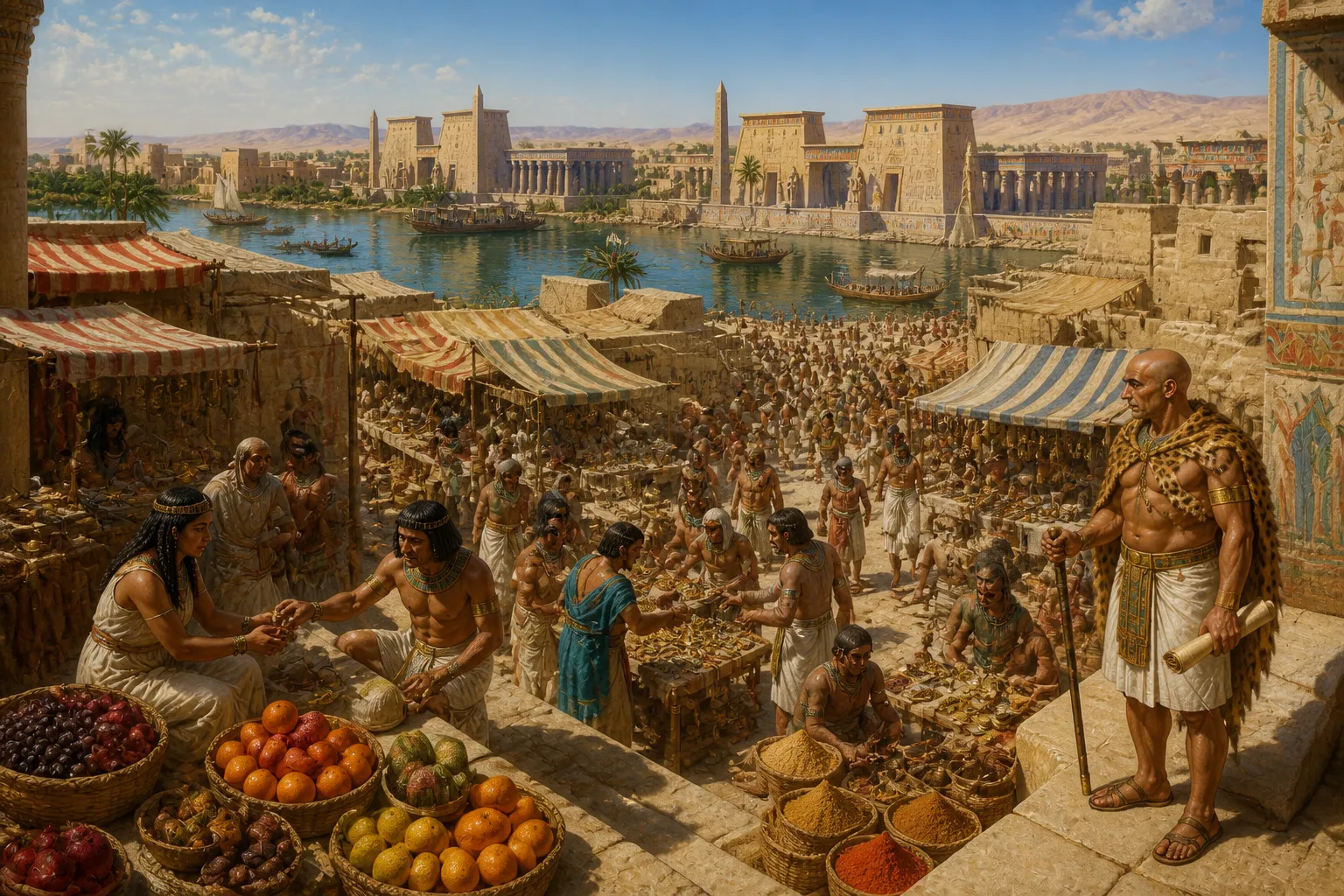
In the vibrant market square of Thebes, the air was alive with the symphony of trade. Stalls overflowed with an array of goods, each item a witness to Egypt's extensive trade networks. The scents of spices, robust and inviting, wove through the earthy essences of leather and grain. Merchants, clad in bright textiles that mirrored the vivid colors of their merchandise, extolled the virtues of Nubian gold, the resonance of Levantine cedar. Buyers navigated the crowded paths, their bargaining voices rising and falling in a melodic flow. Children, their eyes alight with wonder, darted between adults, absorbing the vibrant tapestry of commerce. This market was a microcosm of Egypt’s wealth and connectivity, a bustling hub of cultural and economic exchange.
A merchant boasted, "Only here do you find the finest of the world’s treasures."
Page 8 — The Architect's Vision
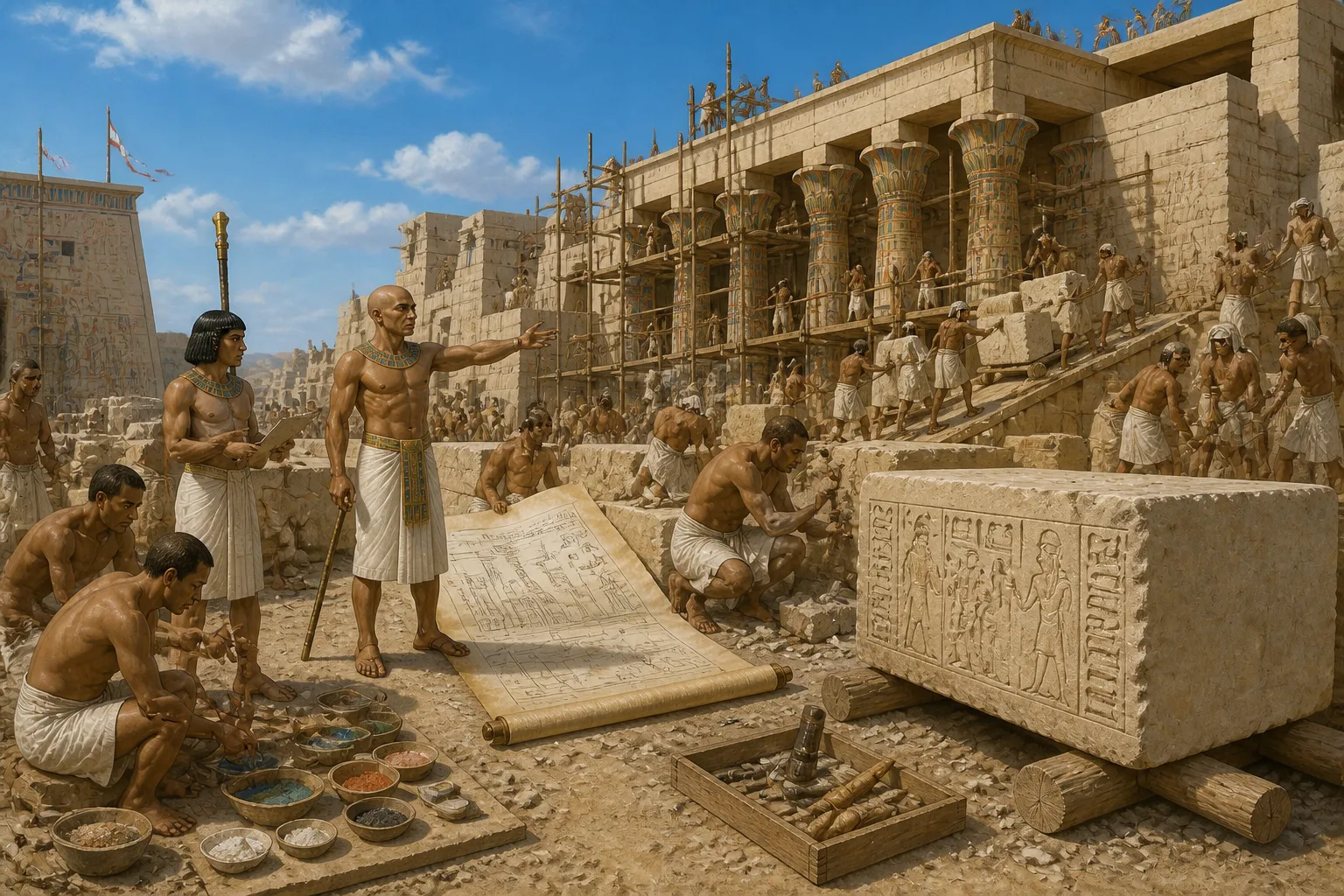
At the temple construction site near Luxor, the royal architect stood, a solitary figure against the backdrop of a burgeoning masterpiece. Amidst the sun-baked expanse of rising stone, his vision took tangible form. Plans, intricate and detailed, lay spread at his feet, depicting an architectural dream of towering columns and arching portals. Craftsmen, their tools an extension of their artistry, chipped away at sandstone blocks, while artists poised to breathe color onto freshly plastered walls. The architect, swathed in immaculate linen, gestured with authority, guiding his workers in a symphony of creation. This edifice was more than a structure; it was an eternal testament to divine order, a monument to the pharaoh’s enduring legacy.
The architect declared, "Here, the gods and the pharaohs shall meet for all eternity."
Page 9 — The Sailor’s Journey
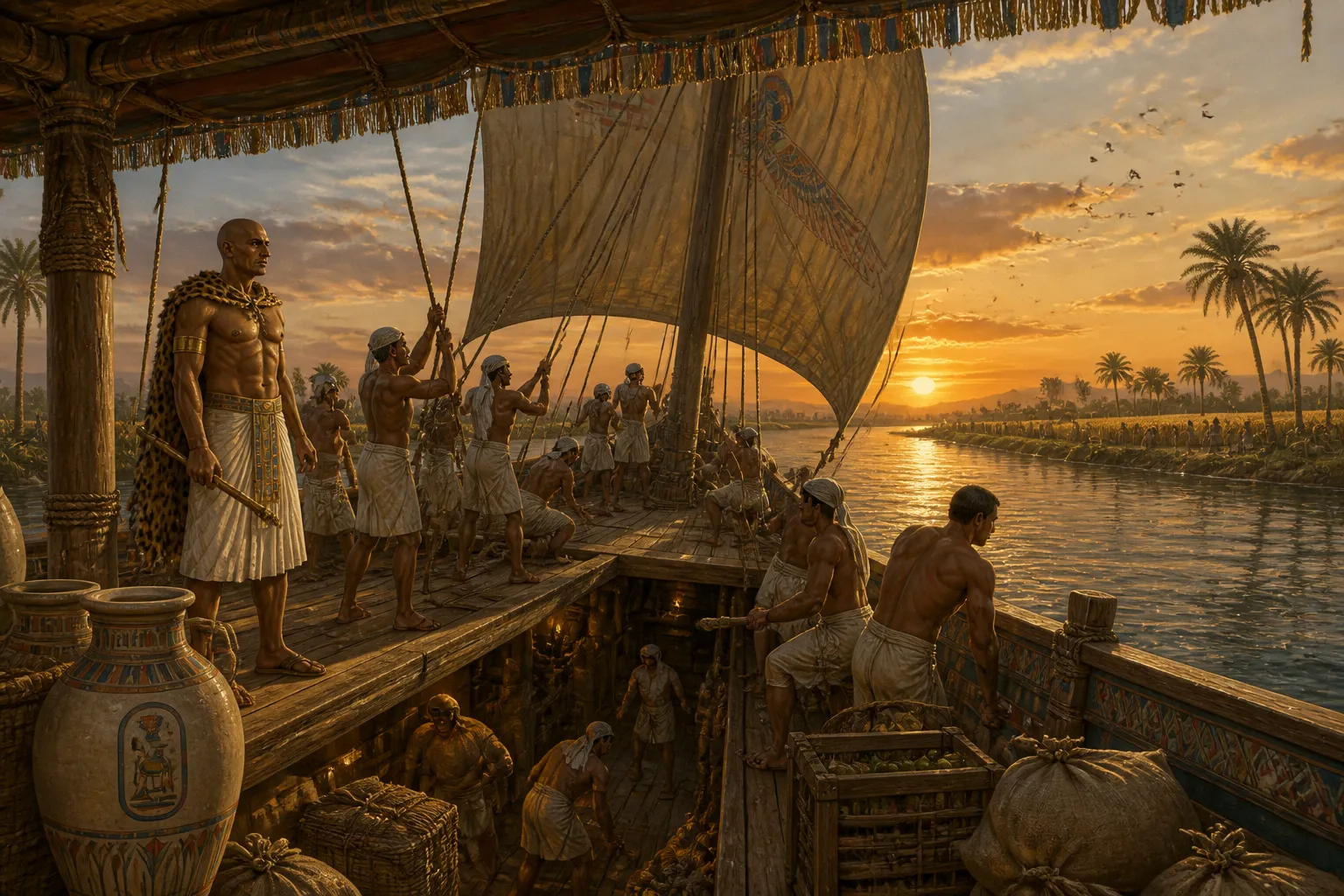
Upon the Nile’s sacred waters, a merchant ship sailed north, laden with an array of Egypt’s finest goods destined for bustling coastal ports eager for trade. The sun-kissed sailors, their skin bronzed and muscles honed by years of labor under the sun, adjusted the massive sail with practiced precision, their eyes steadfastly fixed on the distant horizon. The vessel, both sturdy and sleek, glided effortlessly past banks adorned with swaying palms, while the rhythmic dipping of oars into the river maintained a hypnotic cadence. Overhead, the cries of birds intertwined with the gentle splashes of water against the wooden hull, creating an orchestral symphony of nature. In the hold lay treasures of Egypt’s abundant lands—grains, linens, and precious stones—awaiting exchange in lands far beyond the delta. This life of river and sea bound Egypt to the world beyond, with its renown and prosperity carried on the Nile’s eternal flow.
A sailor exclaimed, "The river guides us, as she always has, to new horizons."
Page 10 — The Eternal Circle
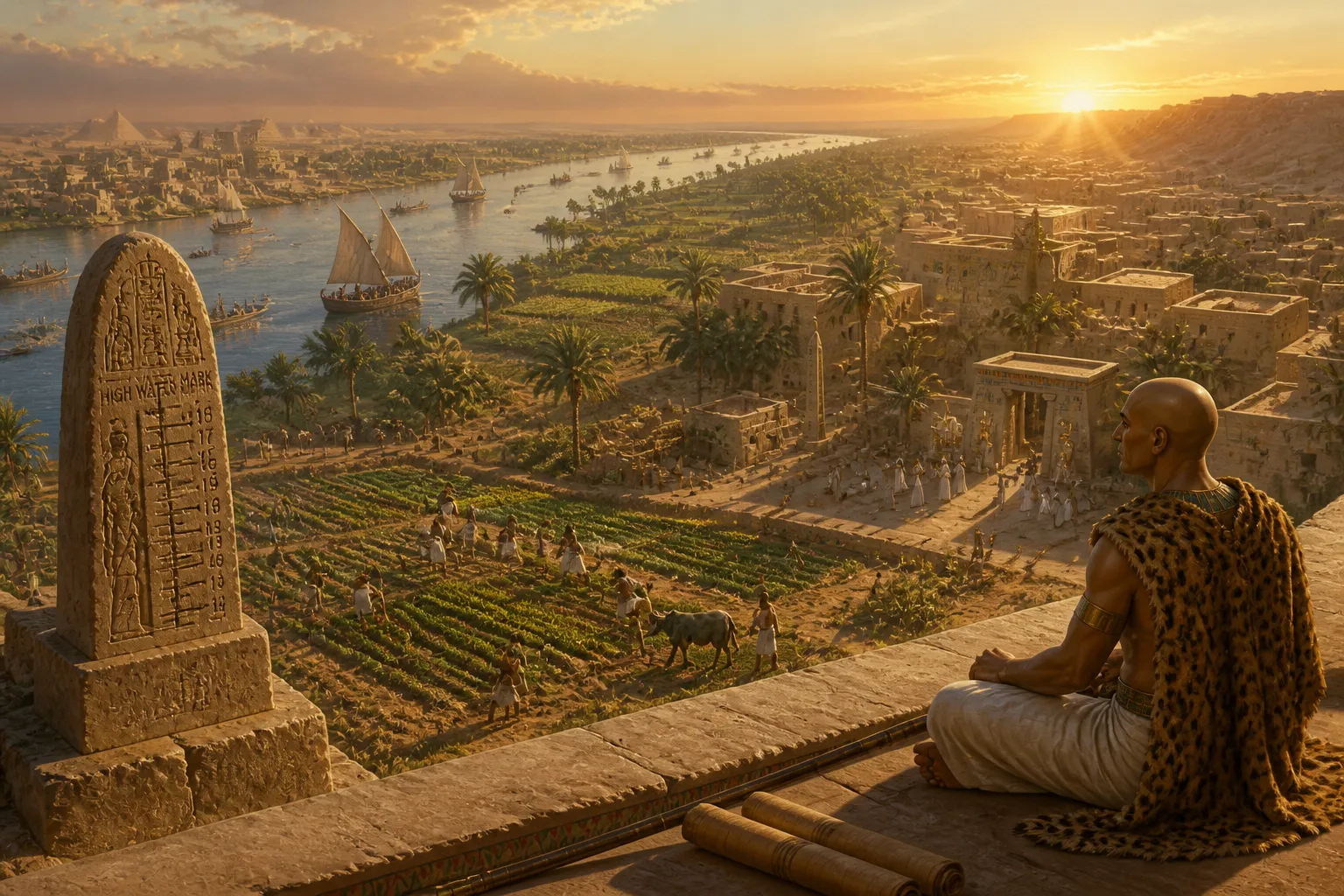
As the sun descended over the majestic Nile valley, it drenched the landscape in a warm, golden glow, illuminating the timeless cycle of seasons that seemed as eternal as the stars. The river, with its predictable rise and fall, both nurtured and dictated the life of the land, weaving itself into the very fabric of existence for all who dwelt along its banks. Farmers diligently sowed their seeds, priests conducted sacred rituals, scribes recorded the day's events, and builders crafted enduring monuments—all contributed to this grand, millennia-spanning drama. Despite the rise and fall of countless dynasties, the Nile’s generosity remained unwavering, its rich, dark silt the true treasure of Egypt's bountiful lands. It was upon this river that life thrived, and within its rhythmic current, Egypt found its harmonious, enduring song.
A scribe mused, "The river is time, endless and renewing, carrying Egypt on its eternal course."
About this story
- Audience: general readers
Read Wonder Egypt on your phone
Wonder Egypt is available on Android. Get Wonder Egypt on Google Play.