The Linen Makers
The Linen Makers — an illustrated history story. 10 illustrated pages, free to read on Wonder Egypt.
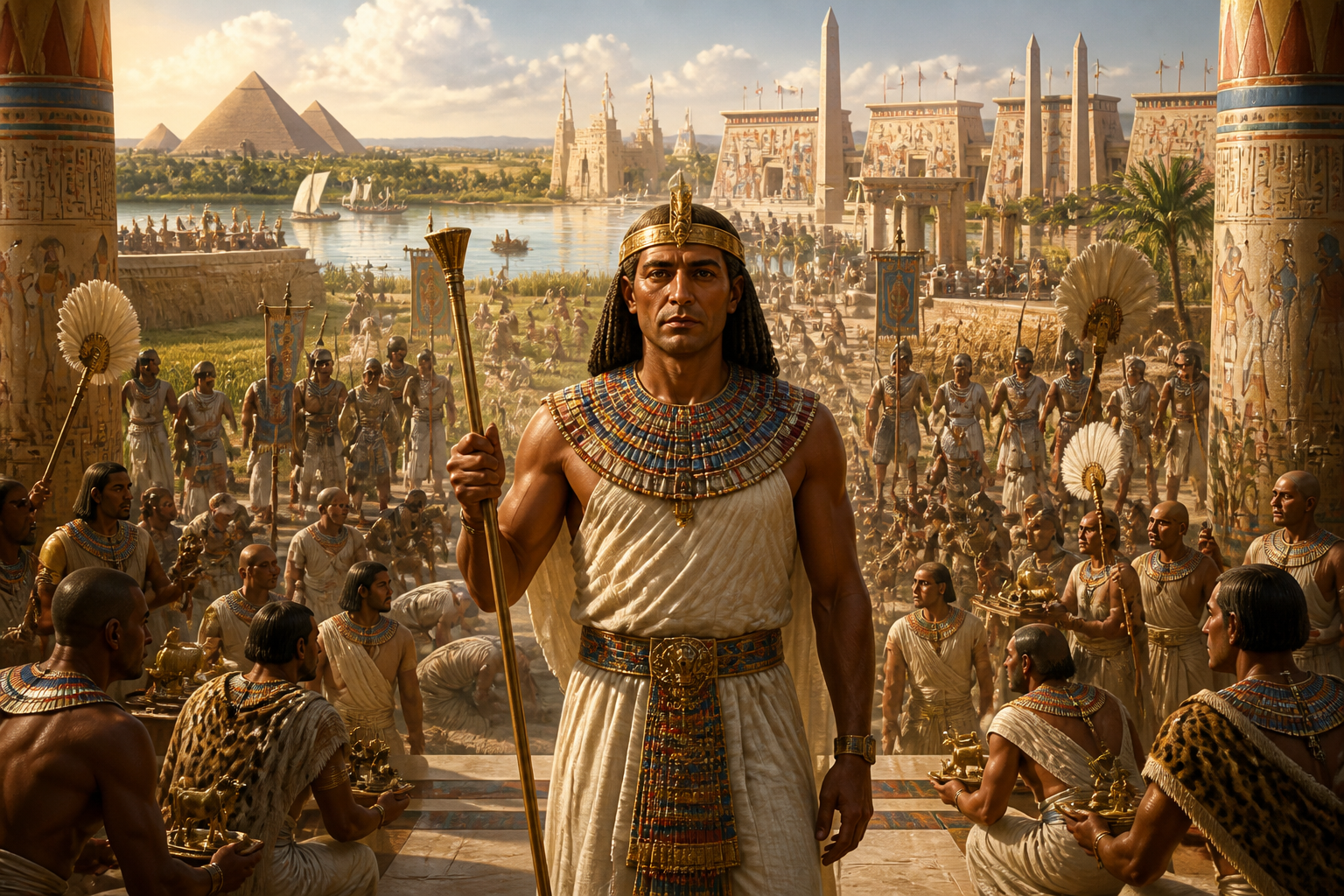
Page 1 — Threads Through Time
Spanning the millennia from 3000 to 1000 BC, Egypt, nourished by the life-giving Nile, wove a narrative deeply entwined with flax cultivation. The expansive Delta plains, verdant and fertile, served as the backdrop, where laborers, under the relentless sun, meticulously uprooted flax. This era saw linen evolve beyond mere fabric; it was a precious commodity, a sacred offering, and a hallowed shroud. The journey from field to loom demanded not only skill but also an intergenerational mastery of craft. By the peak of the Old and New Kingdoms, royal linen, boasting exquisite craftsmanship of over sixty threads per centimeter, became a symbol of prestige. Temples meticulously curated vast linen stores, reflecting its profound reverence.
"The finest royal linen," said the overseer, "holds secrets our hands must respect."
Page 2 — The Weaving Sheds
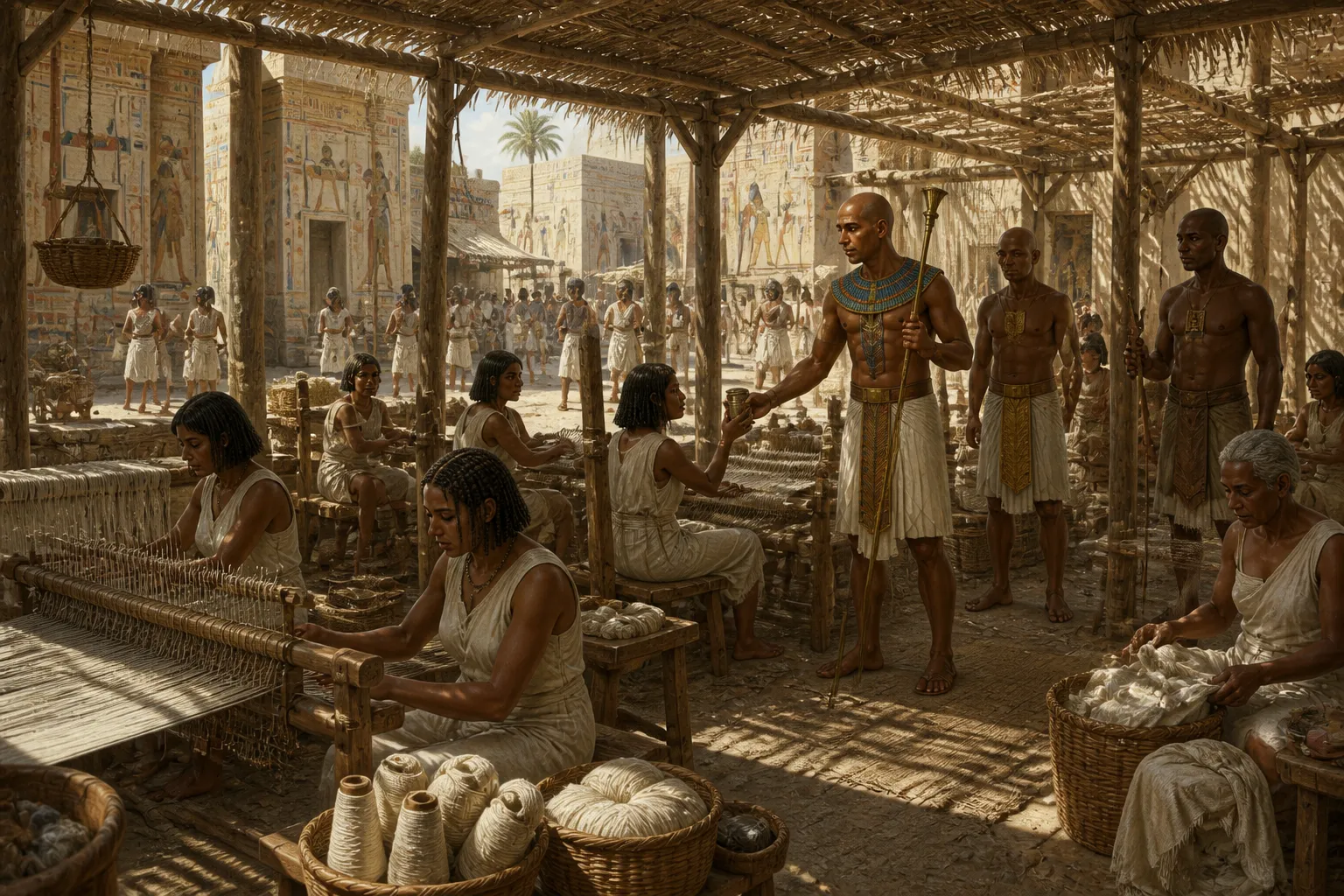
Within the bustling weaving sheds of Thebes, an entrancing symphony of rhythm and movement pervaded the air. The horizontal looms, innovations of their age, became extensions of the weavers' skillful hands. Here, a collective of women, both young and seasoned, harmonized their efforts to produce the cloth destined to enrobe deities and dignitaries alike. Each shed, a microcosm of activity, resonated with laughter, spirited discussions, and the rhythmic shuttle dance. The air was punctuated by the rustling of linen and the soft thud of wooden frames. Under the vigilant and discerning gaze of their foreman, estate weavers crafted linen that transcended mere utility, symbolizing Egypt’s artistic prowess and dedication. These textiles, rich in quality, were esteemed not just as cloth but as regal gifts, expanding the Nile's reach through trade and diplomacy.
"Hold the tension steady," instructed the head weaver, "for the gods demand perfection."
Page 3 — The Temple's Bounty
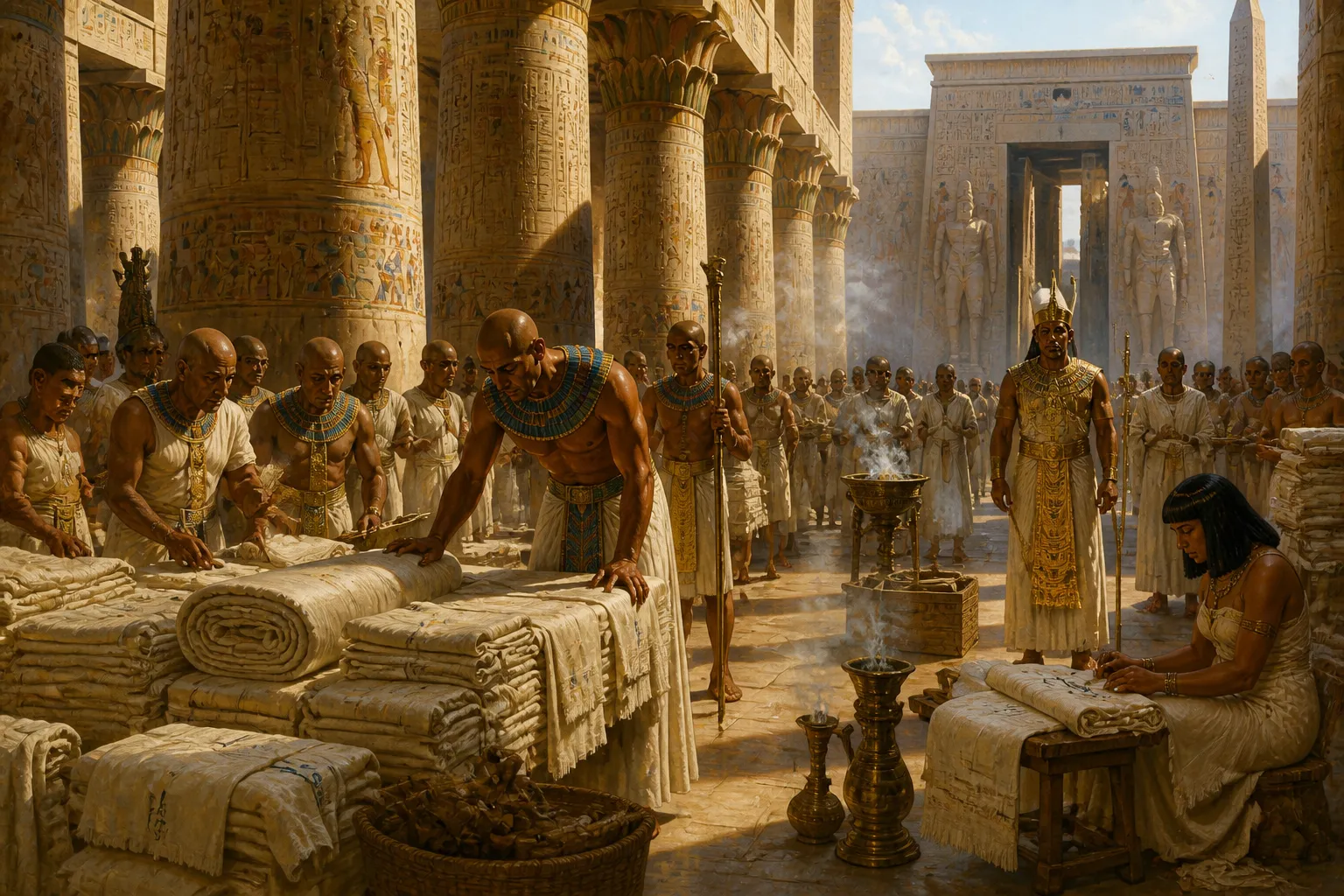
Before the imposing grandeur of Karnak's columns, the custodians of the temple linen storerooms congregated. Linen offerings, presented by the faithful, filled the storerooms to capacity, serving as currency, tribute, and revered duty. In the presence of supervising priests, offerings of linen bolts, each inscribed with familial symbols, were apportioned for the divine and the royal. This abundance stood as both a testament to a kingdom's faith and a tangible expression of its spiritual devotion. Linen draped statues, adorned priests, and cocooned the deceased with honor. Amidst these pious exchanges, prayers reverberated through the temple, while the scent of burning incense mingled with the dust, sanctifying each sacred thread crossing the temple threshold.
"These bolts carry blessings," intoned the high priest. "Each thread woven with devotion."
Page 4 — Trade Winds
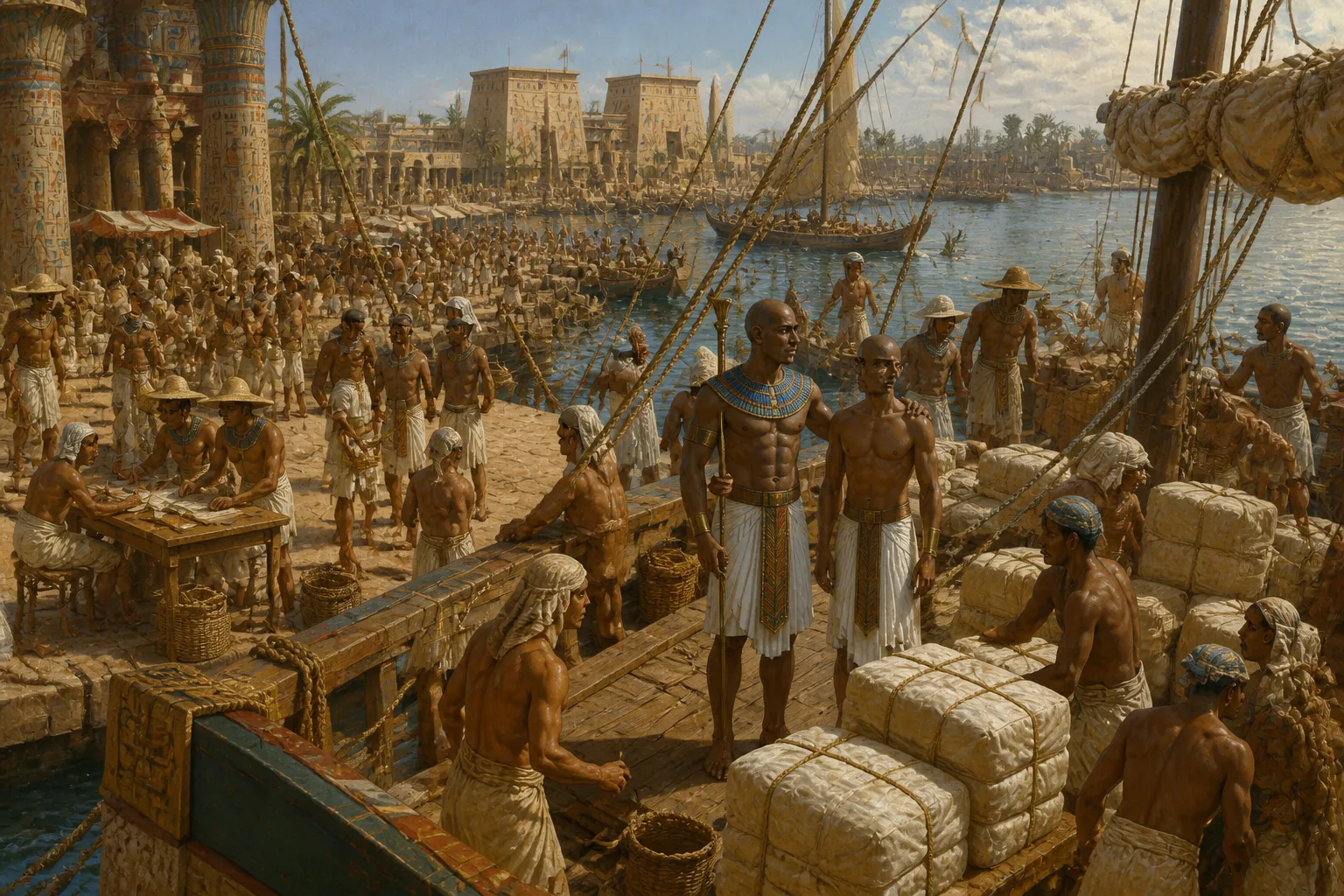
At the thriving docks of Memphis, the cacophony of trade reverberated through the air. Here, linen bales, meticulously weighed and documented, found their way to foreign shores. The vigilant overseers, upholders of the Pharaoh’s wealth, scrutinized each consignment, ensuring impeccable quality. Merchants engaged in animated negotiations, their voices rising above the din, as scribes meticulously recorded each transaction on papyrus. Ships, laden with gold, ivory, and linen, embarked on voyages, their sails filled with the promise of the Nile's gentle guidance. This was trade at its most magnificent, a testament to Egyptian efficiency and ambition, fostering an intricate web of connections across the Mediterranean, where Egyptian linen, esteemed for its quality, symbolized opulence and affluence.
"We trade in threads that bind empires," proclaimed the dockmaster, overseeing the loading.
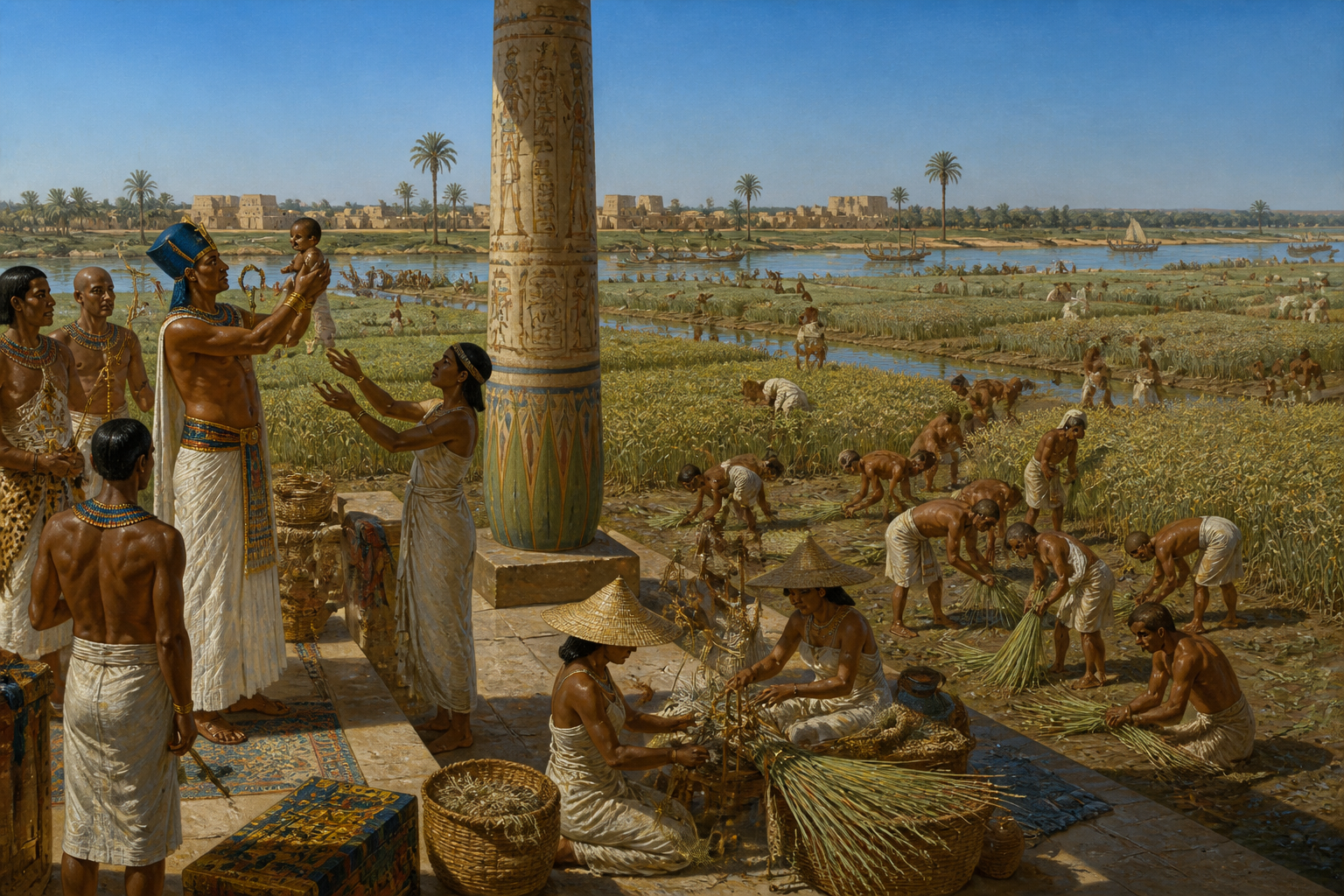
Page 5 — The Fields of Harvest
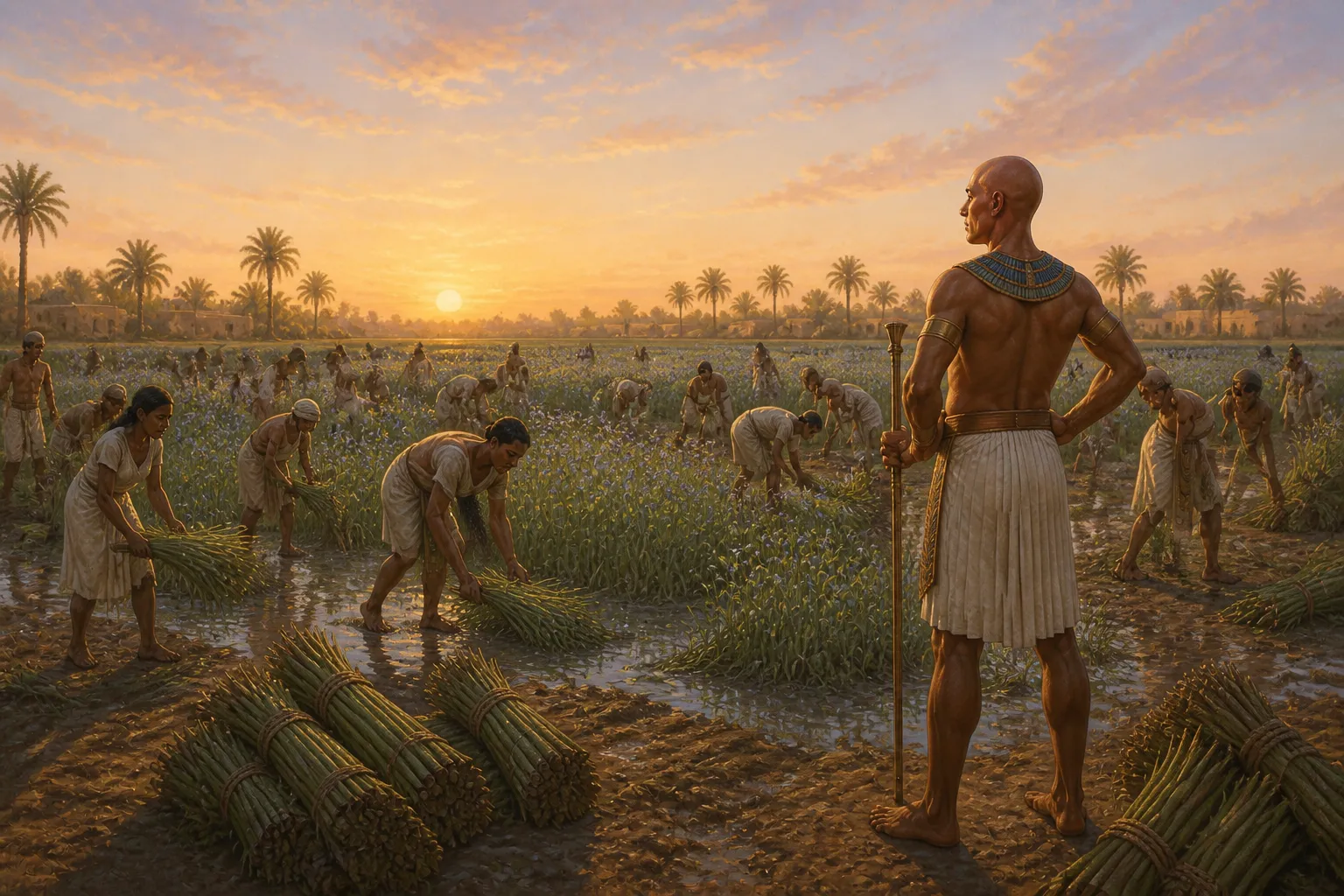
In the fertile lands of the Nile Delta, the flax harvest was underway, an event as anticipated as the flooding of the Nile itself. The flax pullers, men and women alike, labored at dawn, wearing simple linen kilts and shifts that allowed freedom of movement as they yanked stalks from the rich, dark earth. This labor was grueling but vital, as the length and strength of the stalks determined the quality of the linen produced. The overseer, clad in a practical linen kilt, moved among them, urging speed and care, his eyes sharp for any laxity. They worked in rhythm, a harmony of effort and tradition, singing songs of the harvest, their voices merging with the rustling of the wind through the blue flax flowers swaying in the gentle breeze. By sundown, bundles of flax lay ready for the next stage in the linen’s journey from field to weave, a journey as ancient as the civilization itself.
"Pull with care, for the Pharaoh demands only the finest," the overseer called out.
Page 6 — The Estate Looms
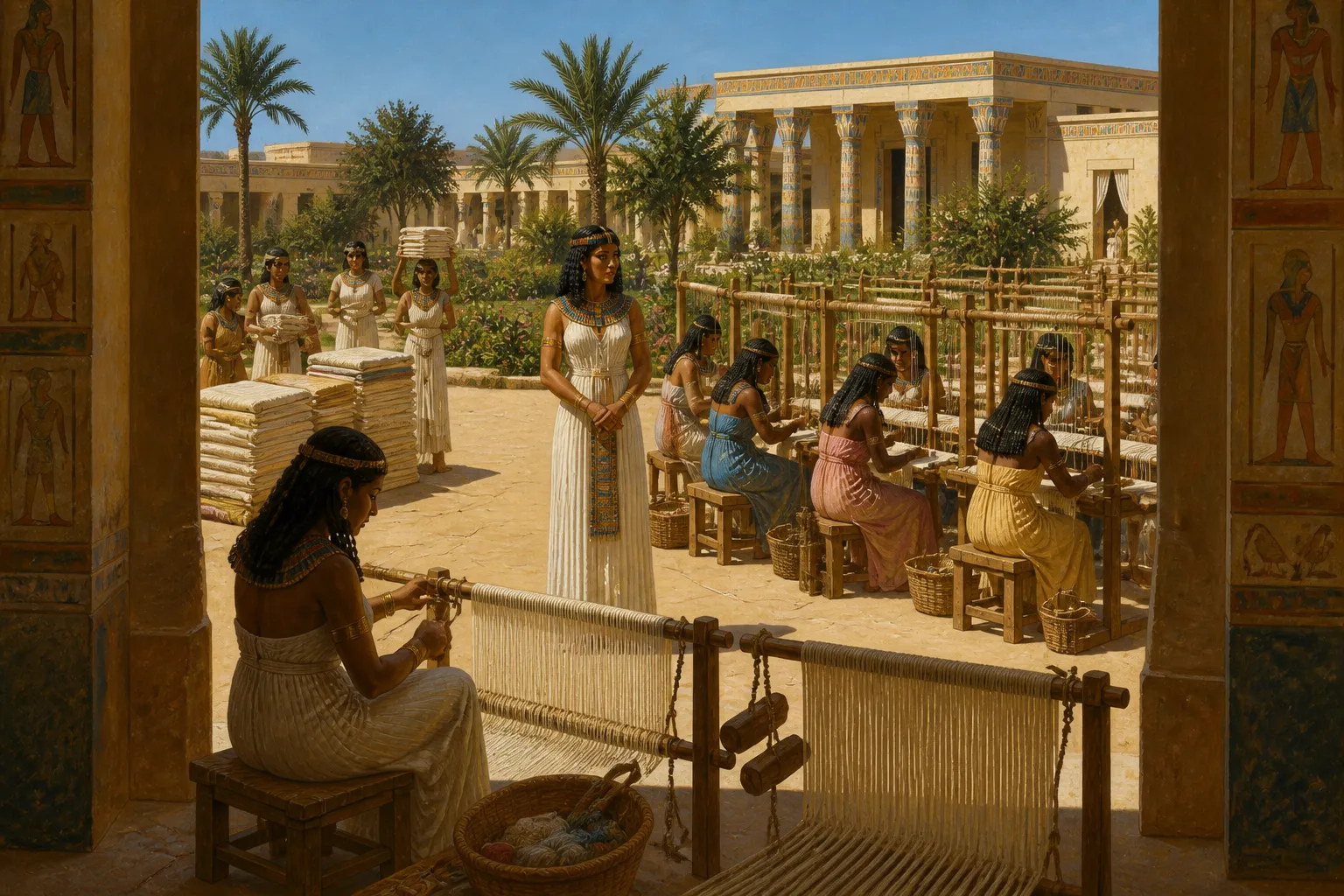
In the expansive estate of a noble household, the sound of looms echoed rhythmically, a constant symphony that filled the air with purpose. Women in bright-colored linen shifts worked beneath open skies, their garments a lively contrast to the earthy tones of the courtyard. Each one was a master of her craft, weaving cloth destined for the bustling markets and sacred temples of the land. The estate’s mistress, adorned in a finely pleated sheath that shimmered in the sun, moved with a blend of authority and grace, her eyes attentive to the rhythmic motions of the weaving. This was more than labor; it was the lifeblood of estate economics, a meticulous process that sustained wealth and status. Under their nimble fingers, the threads of flax transformed into the invaluable linen that clothed a kingdom and adorned its most sacred spaces.
"Weave swiftly, yet with perfection, for our work dresses gods and men," instructed the estate mistress.
Page 7 — The Linen Market
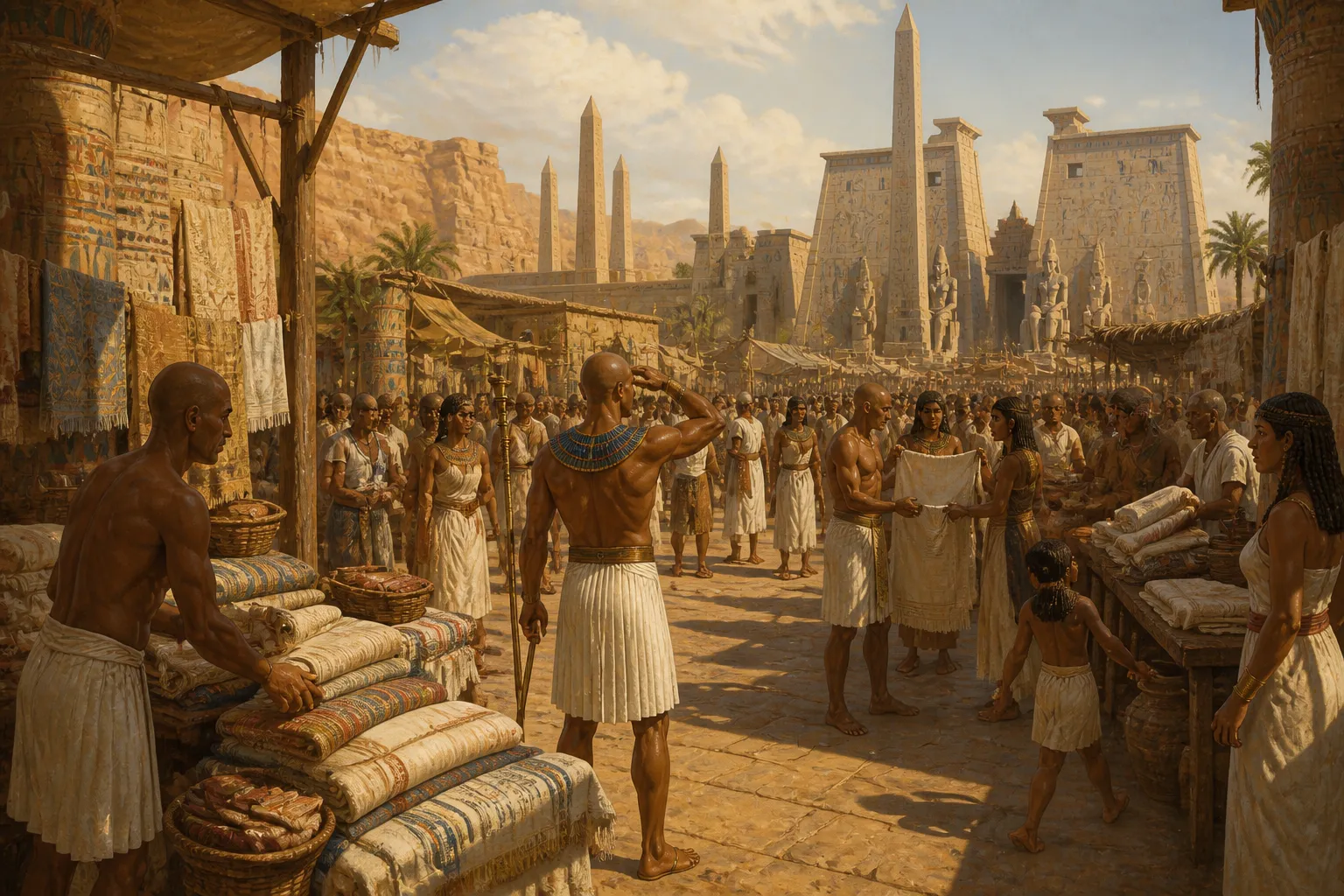
The market at Thebes was a kaleidoscope of sound and color, where linen was both a commodity and a testament to the artistry of those who crafted it. The air buzzed with the voices of traders, each proudly adorned in their finest linen, advertising their weaves with enthusiasm and force over the cacophony. Buyers, their eyes discerning and faces focused, inspected the fabric's quality by touch and sight, their expertise honed over countless transactions. Scribes, positioned strategically, recorded sales to ensure a fair trade, their styluses moving swiftly across papyrus. Meanwhile, children, unburdened by commerce, darted between stalls, their laughter a joyful counterpoint to the bustling clamor. This was the heart of trade, where linen not only clothed the living but held stories of its making, stories woven into every thread. The market thrived as a testament to the skill of Egypt’s spinners and weavers, connecting people across the empire in a tapestry of tradition and commerce.
"Feel the weave, see the craftsmanship, it tells its own tale," a trader explained to a discerning buyer.
Page 8 — The Embalmer's Art
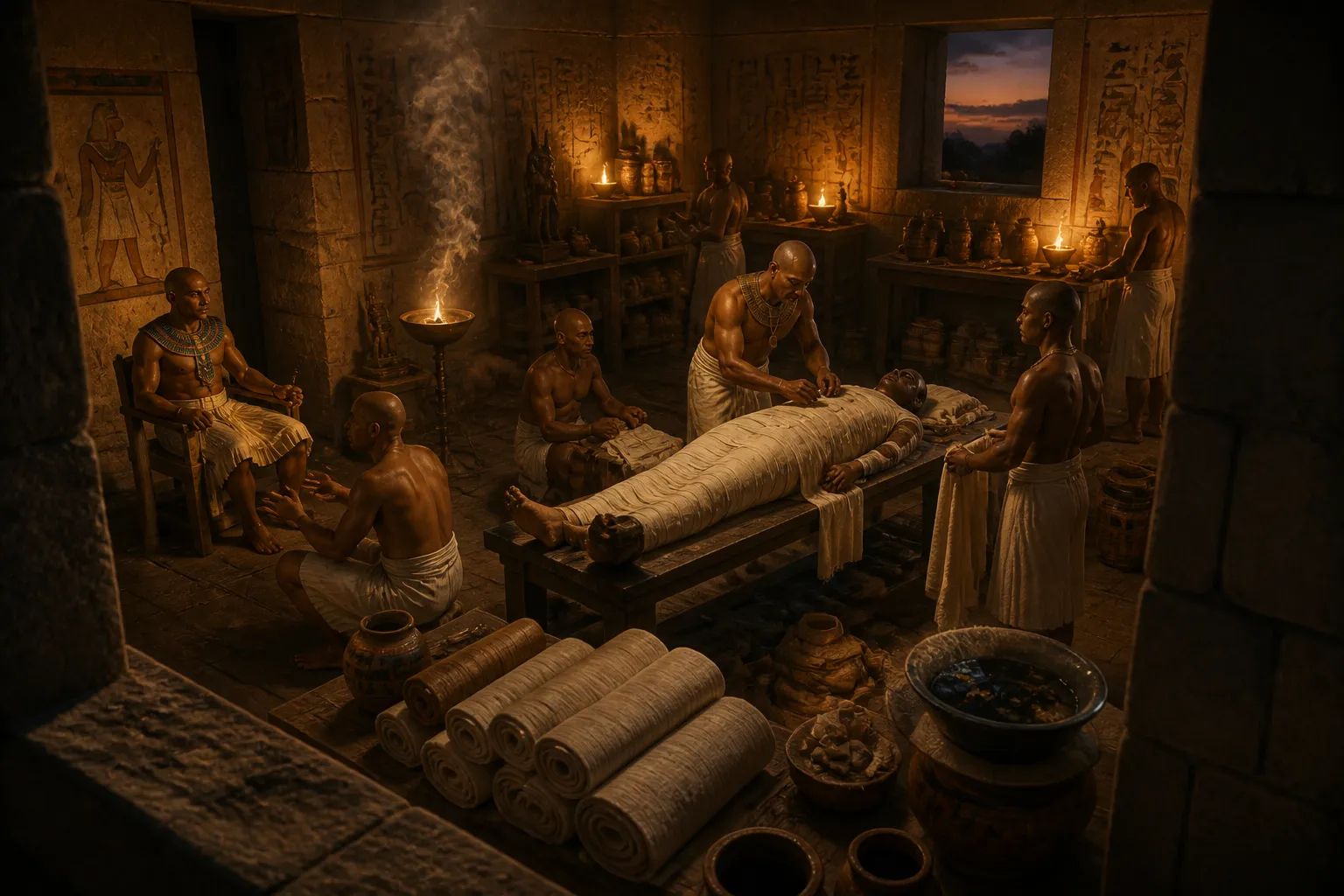
In the dim confines of a Theban embalming house, linen took on a sacred significance that transcended its everyday utility. Here, priests dedicated to the divine task prepared the dead for eternity, wrapping bodies in linen strips meticulously soaked in resin. This ritual, performed with a solemnity that echoed through the ages, ensured the safe passage of the deceased to the afterlife. The chief embalmer, a figure of quiet authority and wisdom, moved with practiced precision, ensuring each layer was perfect, following traditions handed down through generations. Around him, assistants clad in simple shifts tended to their duties with reverence, handing strips of fine linen and pots of resin as incense perfumed the air, its sweet tendrils rising to the heavens. Under the flickering lamplight, each body became a work of devotional art, linen binding them to eternity and ensuring their immortality amidst the sands of time.
"This linen is a bridge between worlds," intoned the chief embalmer, preparing a shroud.
Page 9 — Royal Tribute
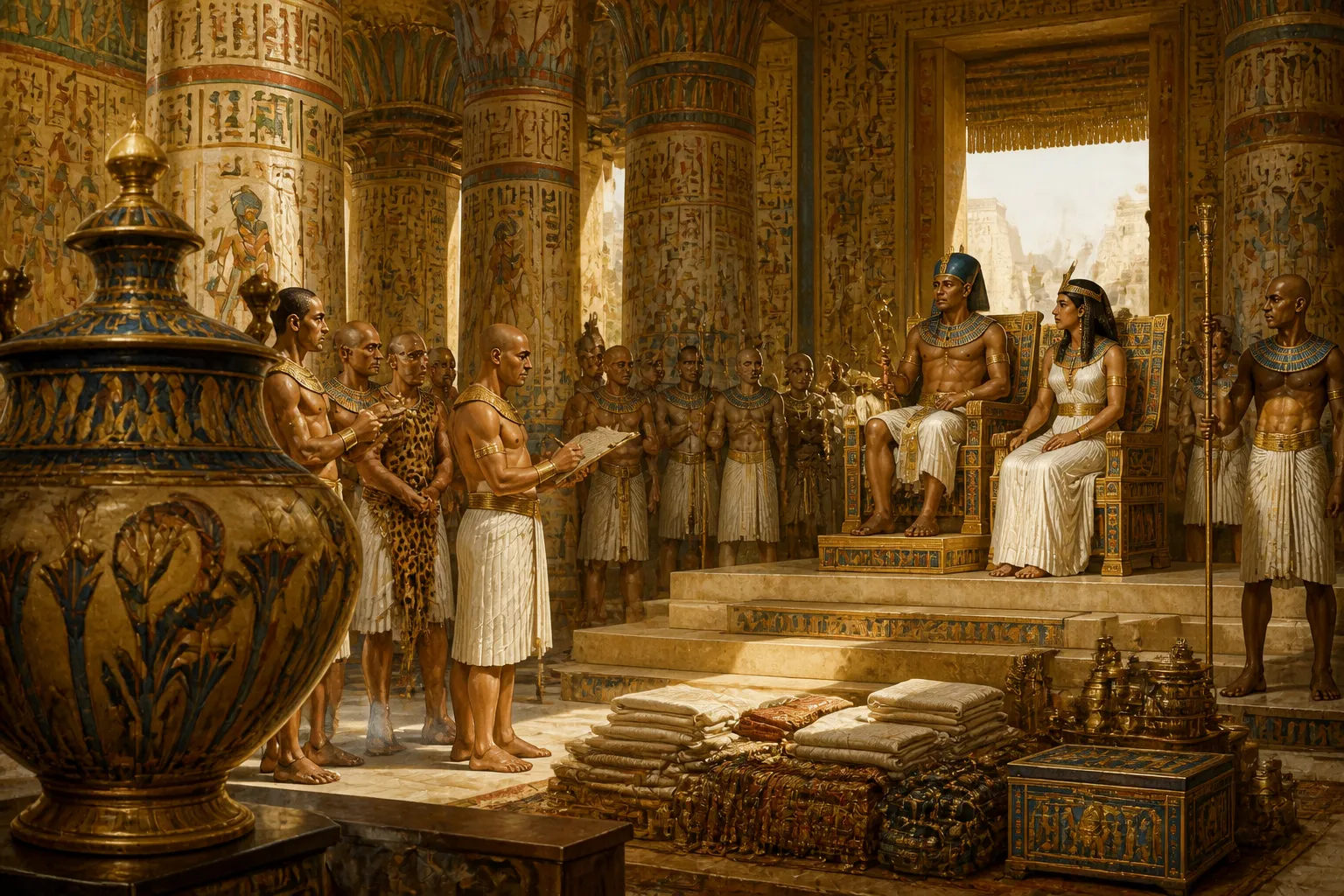
Within the grandeur of Pharaoh's audience chamber, the atmosphere was thick with anticipation as linen offerings were ceremoniously presented. The chamber itself was an imposing space, dominated by towering columns adorned with hieroglyphs that chronicled the divine right of rule. Representatives from the farthest corners of the empire, clad in garments that signified their status, approached the Pharaoh with carefully folded linen, a token of their unwavering allegiance. The Pharaoh, resplendently seated in a blue khepresh, regarded the procession with an air of solemn authority. Courtiers, bedecked in attire laden with gold-adorned collars, exchanged hushed remarks, each mindful of the opulence surrounding them. The royal chief steward, an epitome of meticulousness, catalogued these tributes with fastidious care, ensuring the finest linen would grace the palace stores, a testament to Egypt’s wealth and the fabric that wove together the empire's prosperity and tradition.
"These offerings speak of our vast dominion," declared the chief steward, recording the gifts.
Page 10 — Eternal Wrap
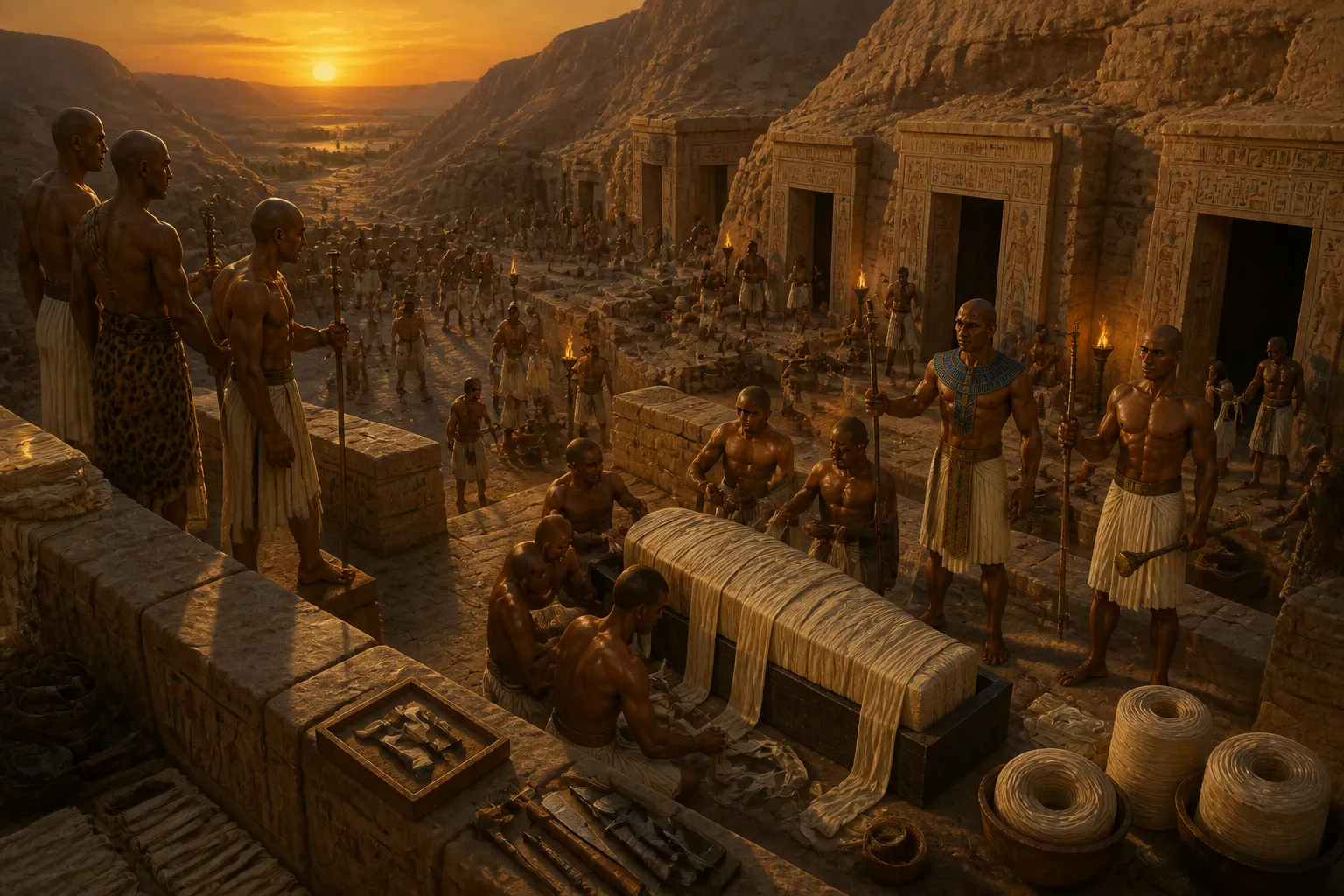
In the Valley of the Kings, where the legacy of Pharaohs was eternally preserved, linen served its ultimate purpose. The tombs, carved into the rugged hillsides, stood as silent sentinels awaiting their royal occupants. Here, under the diligent supervision of the foreman, workers prepared linen shrouds, essential for the sacred journey into the afterlife. Each layer was applied with precision, a testament to the artisans' dedication and reverence. The foreman, embodying unwavering resolve, guided the laborers, ensuring that every movement honored the deceased. As the sun descended behind the Theban hills, casting a warm glow on the silent tombs, they stood as eternal monuments to lives that were intricately wrapped in linen, a fabric that symbolized the eternal threads of the afterlife.
"Wrap with reverence, for these are the garments of eternity," urged the foreman, overseeing the workers.
About this story
- Audience: general readers
Read Wonder Egypt on your phone
Wonder Egypt is available on Android. Get Wonder Egypt on Google Play.