The Battle of Stalingrad (1942–1943, Soviet Union)

The Battle of Stalingrad (1942–1943, Soviet Union) — an illustrated history story, featuring Vasily Chuikov, Friedrich Paulus, Adolf Hitler, set in Soviet Union. 10 illustrated pages, free to read on Wonder History.
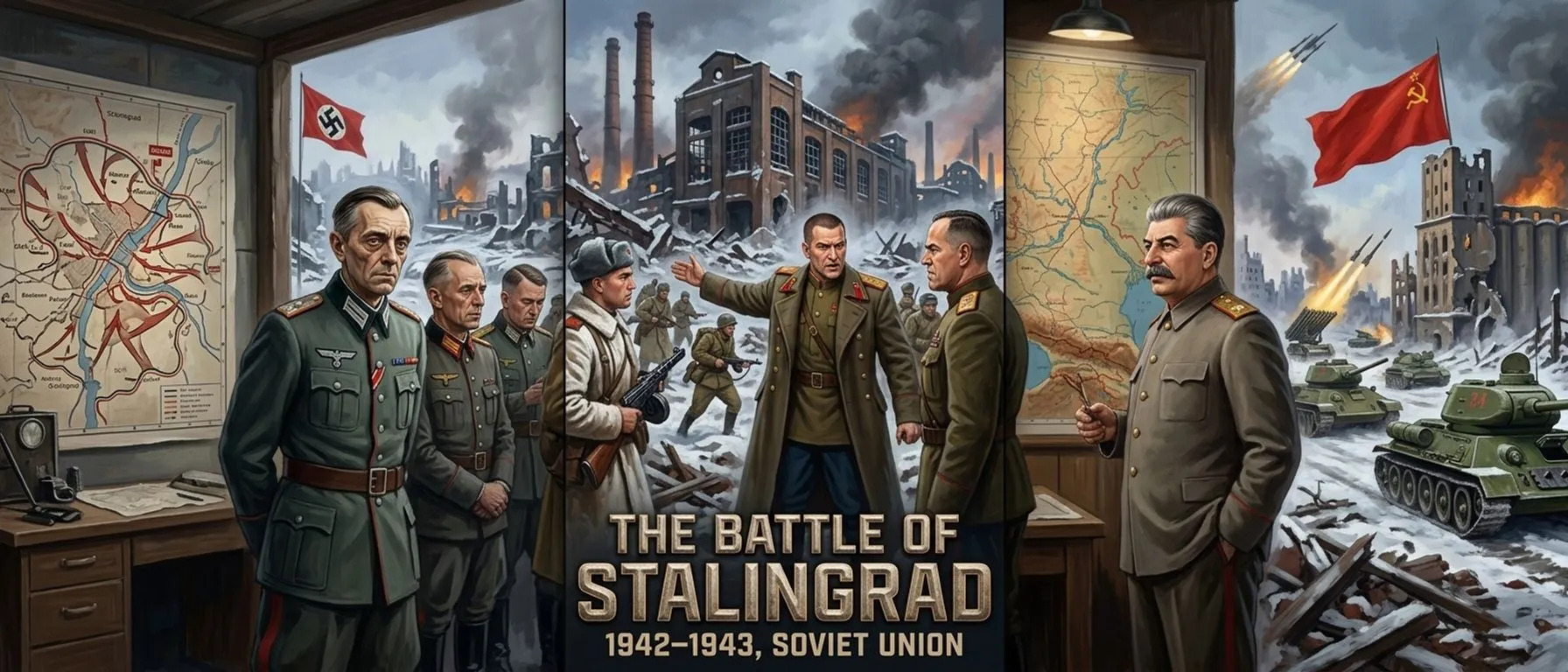
The Battle of Stalingrad (1942–1943, Soviet Union) — book cover — Wonder History
The Battle of Stalingrad (1942–1943, Soviet Union) — an illustrated history story, featuring Vasily Chuikov, Friedrich Paulus, Adolf Hitler, set in Soviet Union. 10 illustrated pages, free to read on Wonder History.

Page 1

The roar of Stuka dive bombers filled the air as the earth erupted in fire. In the shattered ruins of Stalingrad's railway station, Vasily Chuikov, commander of…
The roar of Stuka dive bombers filled the air as the earth erupted in fire. In the shattered ruins of Stalingrad's railway station, Vasily Chuikov, commander of the 62nd Army, rallied his exhausted troops. "Hold this line!" he bellowed, his voice barely audible above the explosions. The fate of the city, and perhaps the war, hung in the balance. But how did this once-proud city descend into such a hellish landscape?

The roar of Stuka dive bombers filled the air as the earth erupted in fire. In the shattered ruins of Stalingrad's railway station, Vasily Chuikov, commander of the 62nd Army, rallied his exhausted troops. "Hold this line!" he bellowed, his voice barely audible above the explosions. The fate of the city, and perhaps the war, hung in the balance. But how did this once-proud city descend into such a hellish landscape?

Page 2
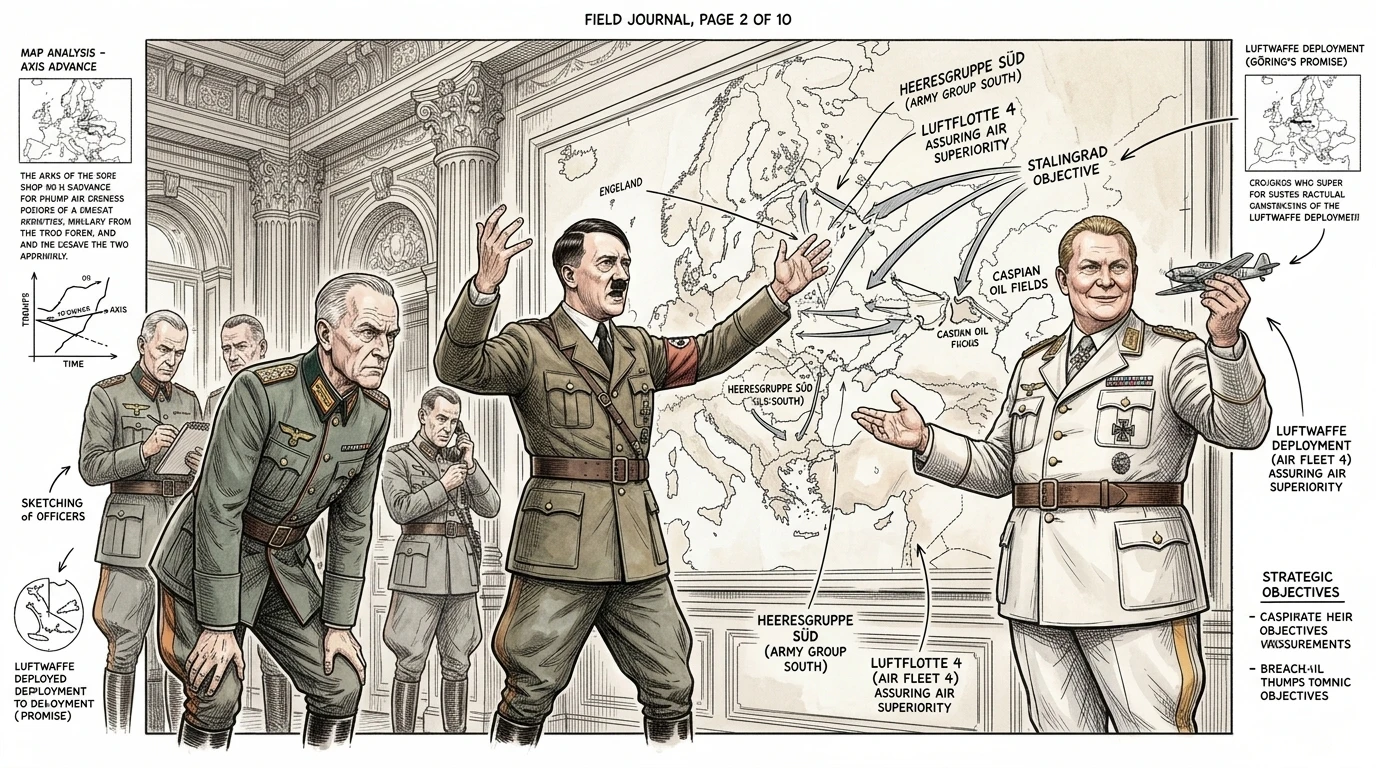
In Berlin, 1942, Adolf Hitler, fueled by ambition and a thirst for conquest, addressed his generals. "Stalingrad will fall!" he declared, his voice echoing…
In Berlin, 1942, Adolf Hitler, fueled by ambition and a thirst for conquest, addressed his generals. "Stalingrad will fall!" he declared, his voice echoing through the opulent hall. "It is the gateway to the Caucasus and its vital oil fields." Walther von Brauchitsch, Commander-in-Chief of the Army, listened with a grim expression, knowing the risks involved in such a massive undertaking. Hermann Göring, head of the Luftwaffe, confidently assured Hitler of air superiority.

In Berlin, 1942, Adolf Hitler, fueled by ambition and a thirst for conquest, addressed his generals. "Stalingrad will fall!" he declared, his voice echoing through the opulent hall. "It is the gateway to the Caucasus and its vital oil fields." Walther von Brauchitsch, Commander-in-Chief of the Army, listened with a grim expression, knowing the risks involved in such a massive undertaking. Hermann Göring, head of the Luftwaffe, confidently assured Hitler of air superiority.

Page 3

Across the vast Eastern Front, in Moscow, Joseph Stalin, the Soviet leader, received reports of the German advance. "Stalingrad is not just a city," he declared…
Across the vast Eastern Front, in Moscow, Joseph Stalin, the Soviet leader, received reports of the German advance. "Stalingrad is not just a city," he declared to Georgy Zhukov, his trusted general. "It is a symbol! We must defend it at all costs." Stalin then commanded, "Not one step back!" Zhukov, a man with a strong, determined face, nodded in agreement, already formulating a plan to counter the German offensive.

Across the vast Eastern Front, in Moscow, Joseph Stalin, the Soviet leader, received reports of the German advance. "Stalingrad is not just a city," he declared to Georgy Zhukov, his trusted general. "It is a symbol! We must defend it at all costs." Stalin then commanded, "Not one step back!" Zhukov, a man with a strong, determined face, nodded in agreement, already formulating a plan to counter the German offensive.

Page 4
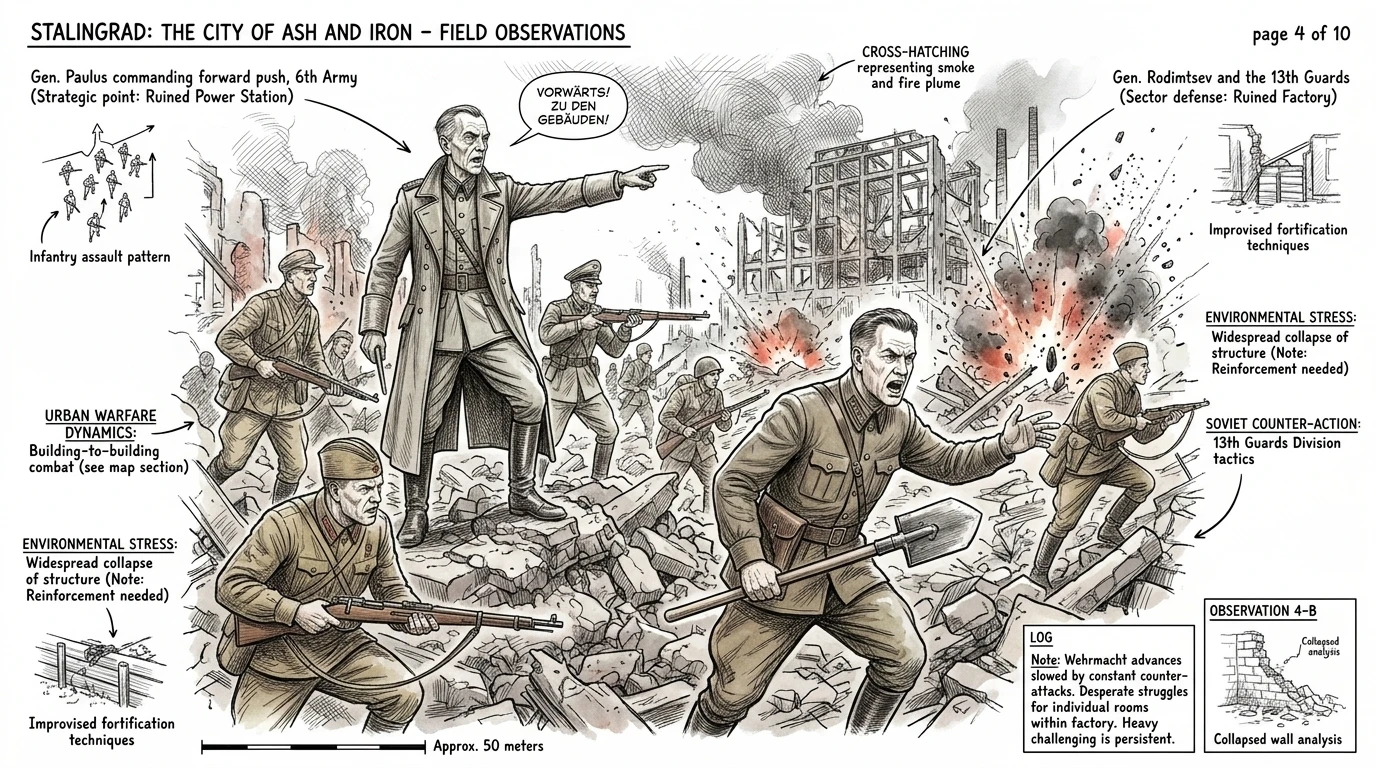
As the German 6th Army, led by Friedrich Paulus, approached Stalingrad, fierce fighting erupted on the outskirts of the city.
As the German 6th Army, led by Friedrich Paulus, approached Stalingrad, fierce fighting erupted on the outskirts of the city. "Every building, every street, must be taken," Paulus ordered his troops. Alexander Rodimtsev's 13th Guards Rifle Division mounted a desperate defense, turning houses into fortresses and factories into killing fields. The battle for Stalingrad had begun in earnest.

As the German 6th Army, led by Friedrich Paulus, approached Stalingrad, fierce fighting erupted on the outskirts of the city. "Every building, every street, must be taken," Paulus ordered his troops. Alexander Rodimtsev's 13th Guards Rifle Division mounted a desperate defense, turning houses into fortresses and factories into killing fields. The battle for Stalingrad had begun in earnest.

Page 5

Inside the city, Vasily Zaitsev, a steely-eyed sniper, stalked the ruins, picking off German officers one by one. "Every shot counts," he muttered to himself…
Inside the city, Vasily Zaitsev, a steely-eyed sniper, stalked the ruins, picking off German officers one by one. "Every shot counts," he muttered to himself, as he peered through the scope of his rifle. His actions boosted the morale of the Soviet troops and struck fear into the hearts of the invaders. Zaitsev became a symbol of Soviet resistance, proving that even one man could make a difference.

Inside the city, Vasily Zaitsev, a steely-eyed sniper, stalked the ruins, picking off German officers one by one. "Every shot counts," he muttered to himself, as he peered through the scope of his rifle. His actions boosted the morale of the Soviet troops and struck fear into the hearts of the invaders. Zaitsev became a symbol of Soviet resistance, proving that even one man could make a difference.

Page 6
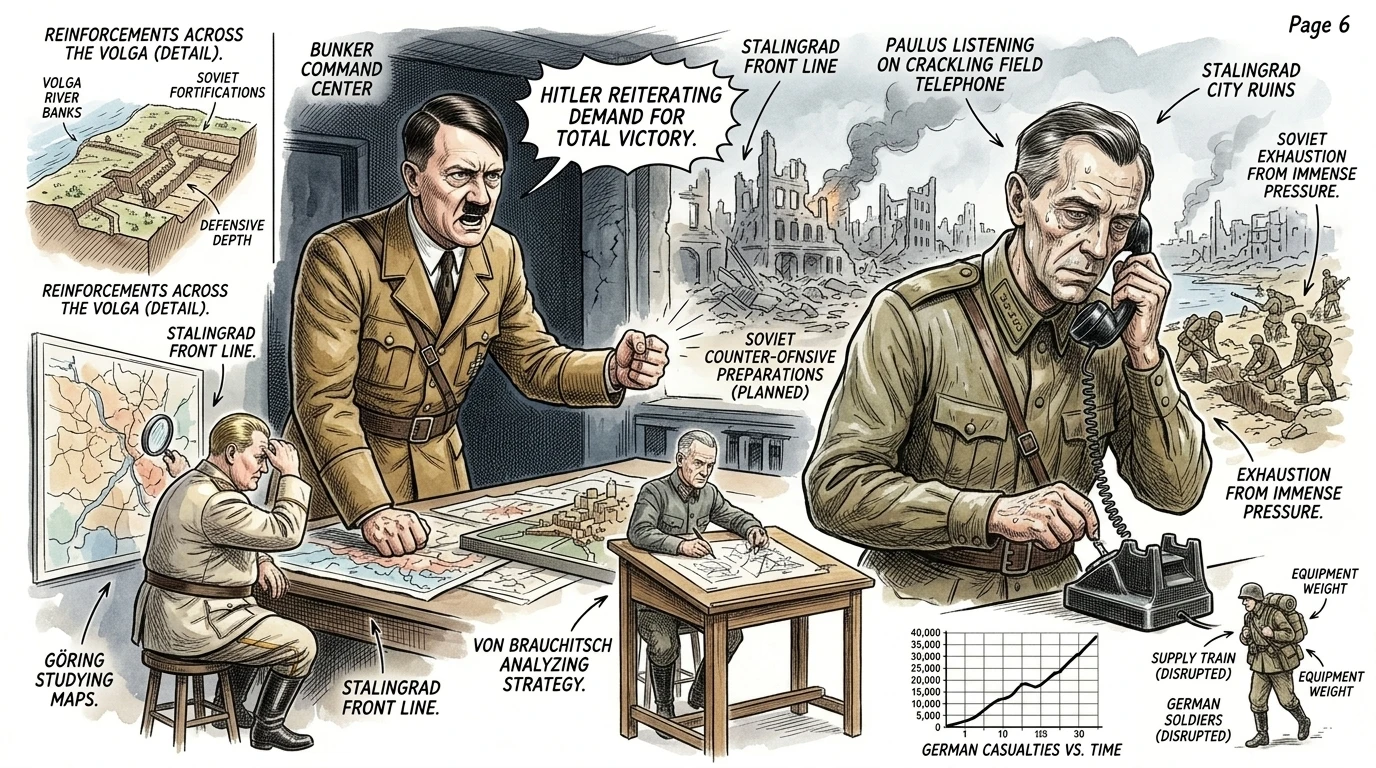
Despite heavy losses, the German forces pushed deeper into Stalingrad, reaching the Volga River. Hitler demanded total victory, refusing to accept any…
Despite heavy losses, the German forces pushed deeper into Stalingrad, reaching the Volga River. Hitler demanded total victory, refusing to accept any compromise. "Stalingrad must be taken!" he reiterated to Paulus, placing immense pressure on the beleaguered general. But the Soviet forces, reinforced by fresh troops and supplies, were determined to hold their ground.

Despite heavy losses, the German forces pushed deeper into Stalingrad, reaching the Volga River. Hitler demanded total victory, refusing to accept any compromise. "Stalingrad must be taken!" he reiterated to Paulus, placing immense pressure on the beleaguered general. But the Soviet forces, reinforced by fresh troops and supplies, were determined to hold their ground.

Page 7
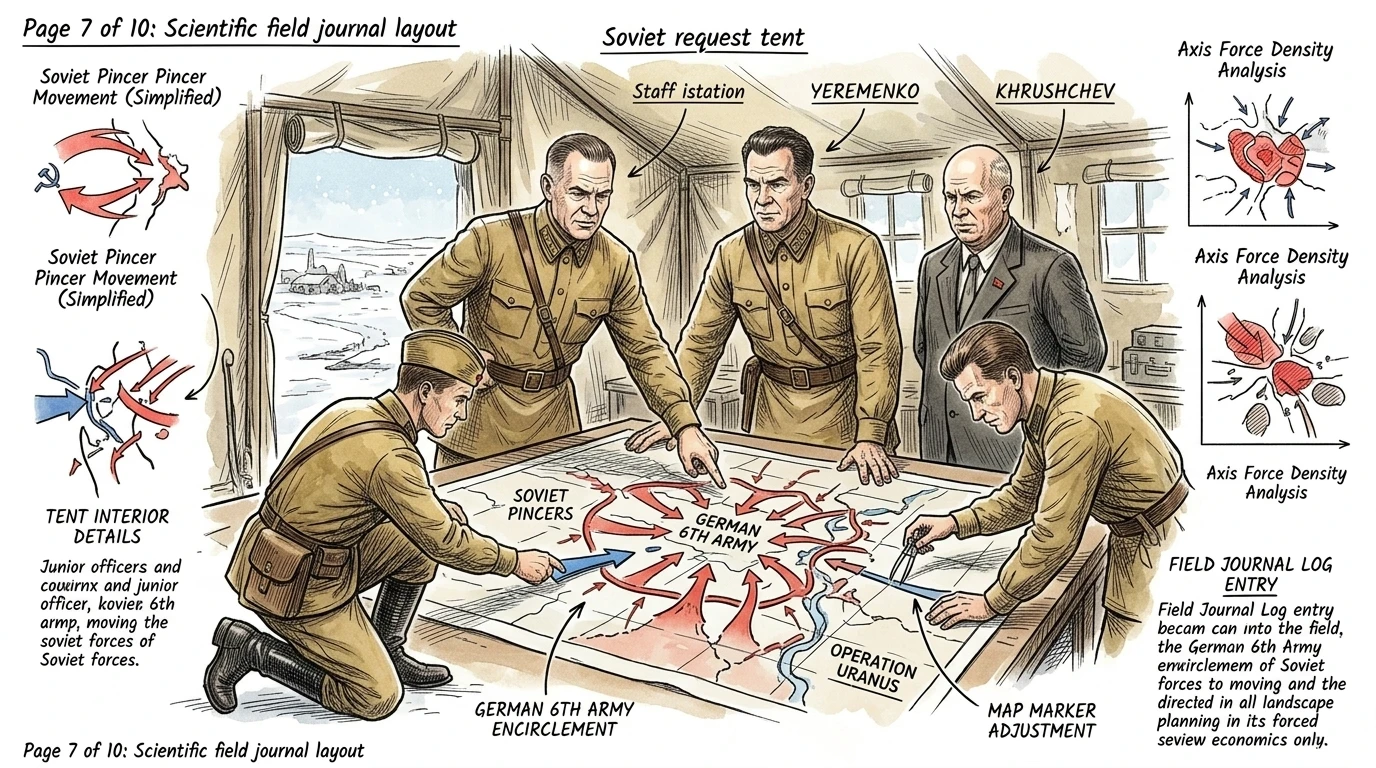
As winter approached, General Andrey Yeremenko and Nikita Khrushchev launched Operation Uranus, a massive counteroffensive aimed at encircling the German 6th…
As winter approached, General Andrey Yeremenko and Nikita Khrushchev launched Operation Uranus, a massive counteroffensive aimed at encircling the German 6th Army. "We will trap them in Stalingrad," Yeremenko declared to his staff, "and crush them!" The Soviet pincers moved swiftly, cutting off Paulus's forces from the outside world. A quote from Sun Tzu came to mind, "Let your plans be dark and impenetrable as night, and when you move, fall like a thunderbolt.

As winter approached, General Andrey Yeremenko and Nikita Khrushchev launched Operation Uranus, a massive counteroffensive aimed at encircling the German 6th Army. "We will trap them in Stalingrad," Yeremenko declared to his staff, "and crush them!" The Soviet pincers moved swiftly, cutting off Paulus's forces from the outside world. A quote from Sun Tzu came to mind, "Let your plans be dark and impenetrable as night, and when you move, fall like a thunderbolt.

Page 8
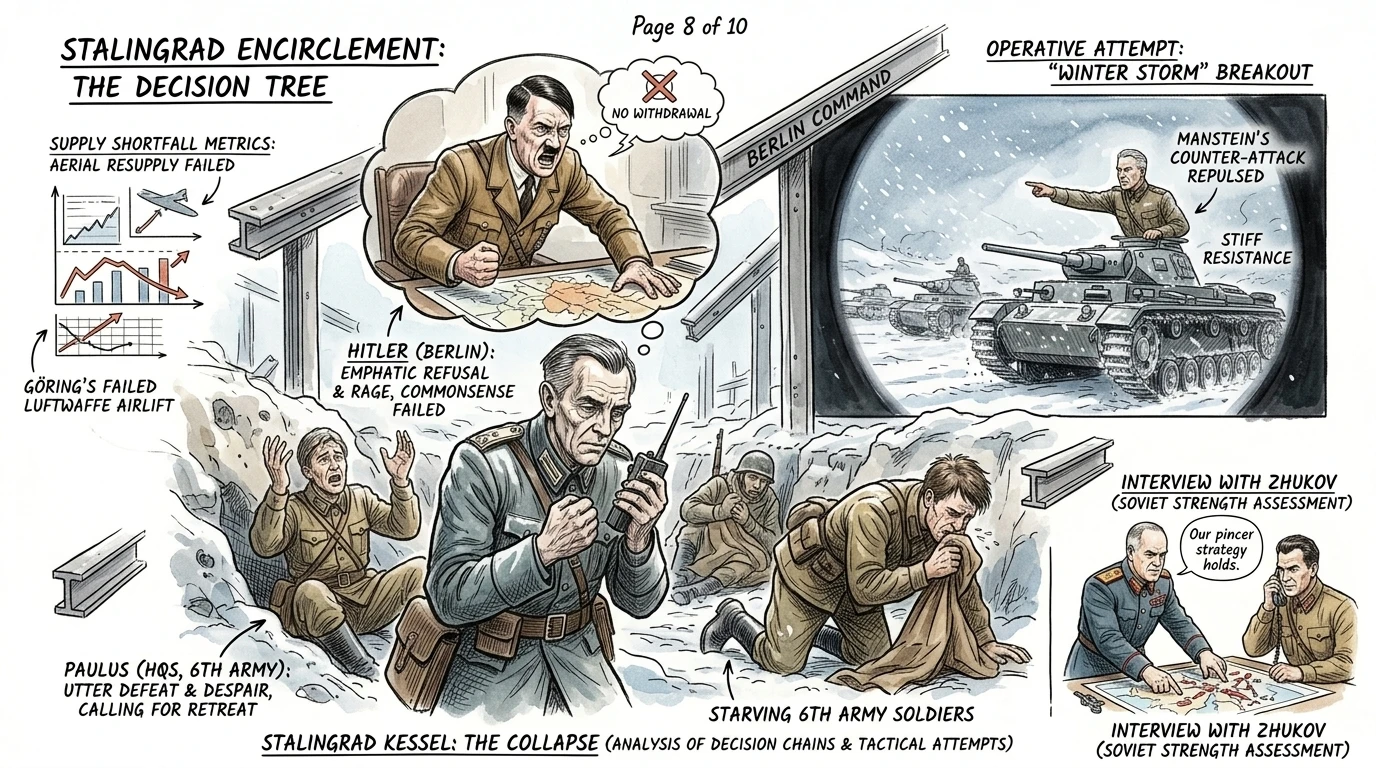
Cut off and surrounded, the German 6th Army was trapped in Stalingrad, facing starvation and relentless Soviet attacks. Erich von Manstein attempted to break…
Cut off and surrounded, the German 6th Army was trapped in Stalingrad, facing starvation and relentless Soviet attacks. Erich von Manstein attempted to break through the encirclement with Operation Winter Storm, but his forces were ultimately repulsed. Paulus requested permission to withdraw, but Hitler refused, demanding that he fight to the last man. "There is no surrender. The army must hold its position," he declared.

Cut off and surrounded, the German 6th Army was trapped in Stalingrad, facing starvation and relentless Soviet attacks. Erich von Manstein attempted to break through the encirclement with Operation Winter Storm, but his forces were ultimately repulsed. Paulus requested permission to withdraw, but Hitler refused, demanding that he fight to the last man. "There is no surrender. The army must hold its position," he declared.

Page 9
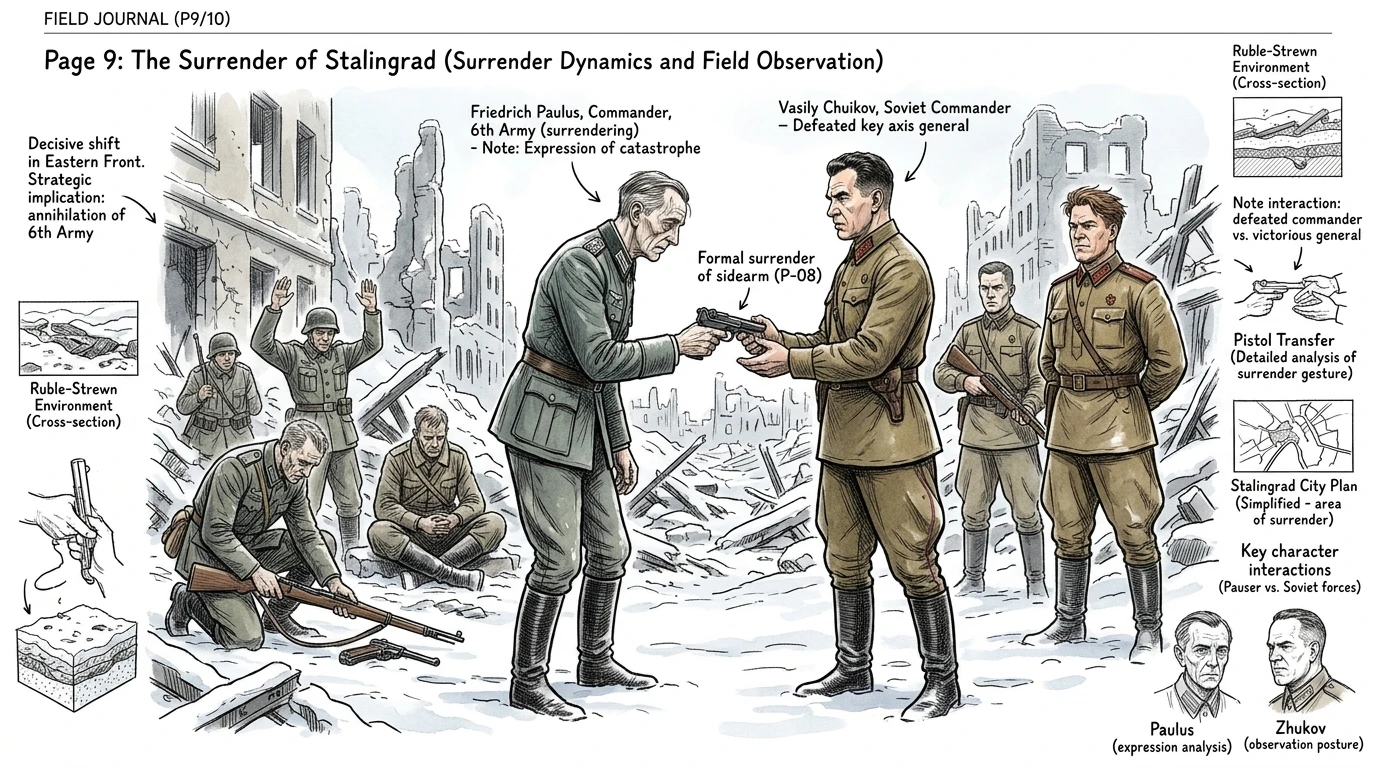
In January 1943, with his army decimated and supplies exhausted, Friedrich Paulus surrendered to Soviet forces. The Battle of Stalingrad was over.
In January 1943, with his army decimated and supplies exhausted, Friedrich Paulus surrendered to Soviet forces. The Battle of Stalingrad was over. Defeated, humiliated, and utterly broken, Paulus realized the magnitude of the catastrophe that had befallen him. The strategic initiative on the Eastern Front had shifted decisively in favor of the Soviet Union.

In January 1943, with his army decimated and supplies exhausted, Friedrich Paulus surrendered to Soviet forces. The Battle of Stalingrad was over. Defeated, humiliated, and utterly broken, Paulus realized the magnitude of the catastrophe that had befallen him. The strategic initiative on the Eastern Front had shifted decisively in favor of the Soviet Union.

Page 10
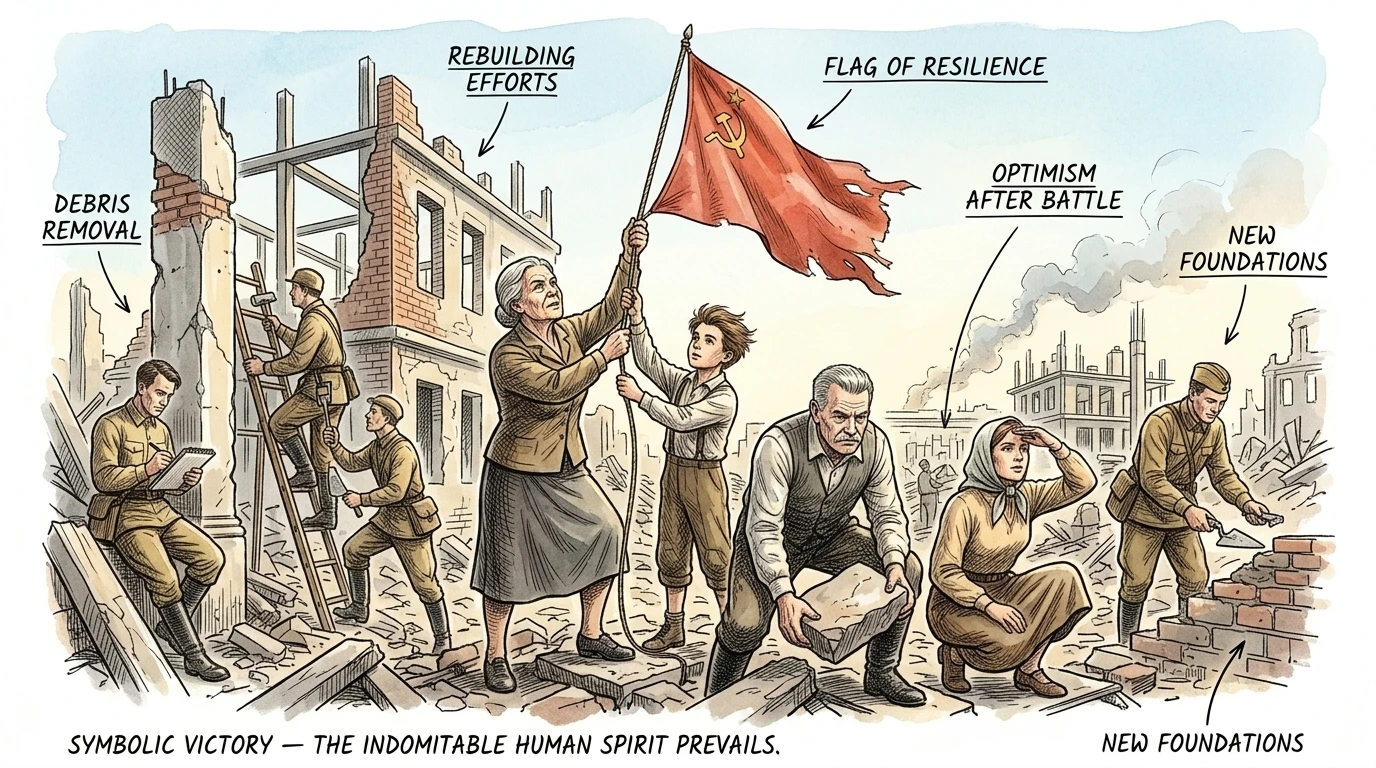
The Battle of Stalingrad became a turning point in World War II, marking the beginning of the end for Nazi Germany. The resilience and courage of the Soviet…
The Battle of Stalingrad became a turning point in World War II, marking the beginning of the end for Nazi Germany. The resilience and courage of the Soviet people had stunned the world. The victory at Stalingrad stands as a testament to the human spirit's ability to endure even the most horrific circumstances, demonstrating the heavy price of war, and the determination of those who resisted tyranny. It was a defeat Hitler could not recover from.

The Battle of Stalingrad became a turning point in World War II, marking the beginning of the end for Nazi Germany. The resilience and courage of the Soviet people had stunned the world. The victory at Stalingrad stands as a testament to the human spirit's ability to endure even the most horrific circumstances, demonstrating the heavy price of war, and the determination of those who resisted tyranny. It was a defeat Hitler could not recover from.

About this story

  • Historical figures: Vasily Chuikov, Friedrich Paulus, Adolf Hitler
  • Location: Soviet Union
  • Period: Modern
  • Audience: general readers

Questions and answers

Questions and answers about The Battle of Stalingrad (1942–1943, Soviet Union)

Read Wonder History on your phone

Wonder History is available on Android. Get Wonder History on Google Play.

More Wonder History stories

All Wonder History stories · Open the library