The Fall of the Ming Dynasty — China (1644)
The Fall of the Ming Dynasty — China (1644) — an illustrated history story, featuring Zhu Youjian (Chongzhen Emperor), Li Zicheng, Wu Sangui, set in China. 10 illustrated pages, free to read on Wonder History.
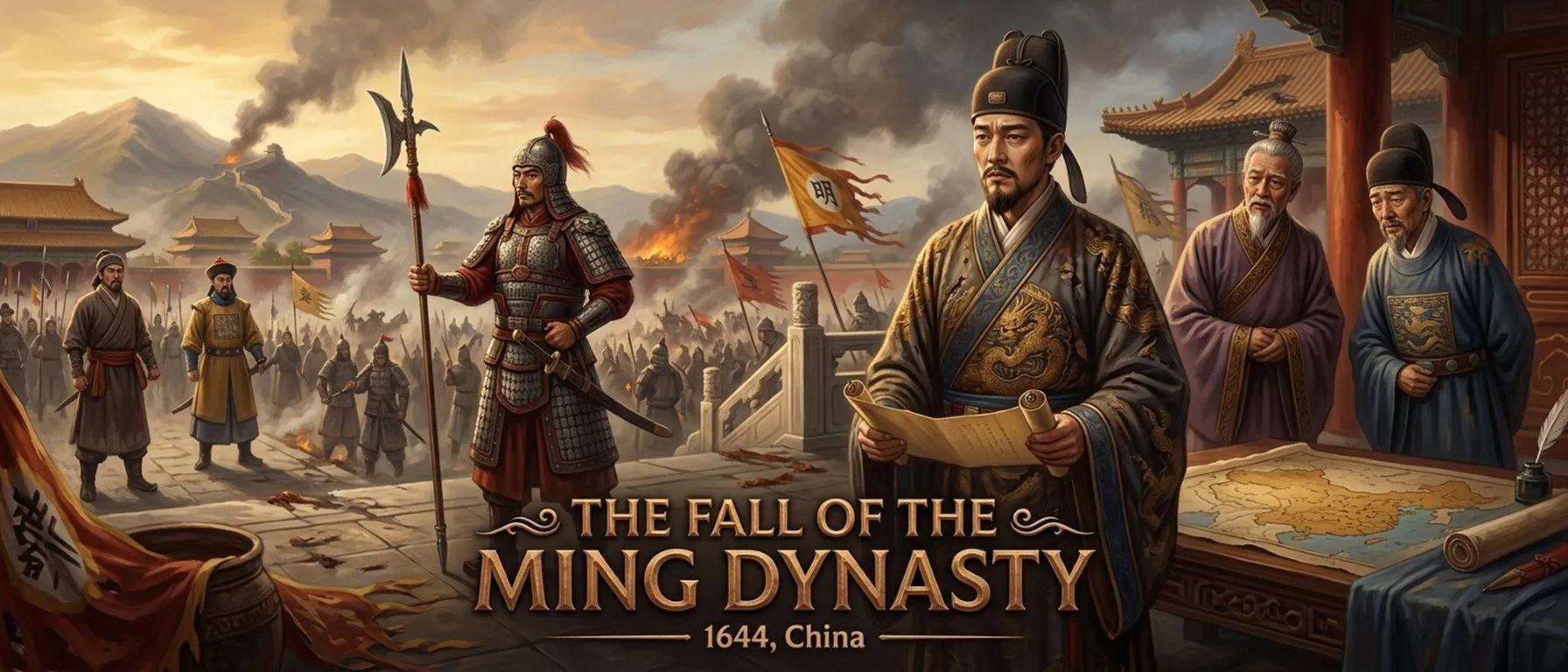
Page 1
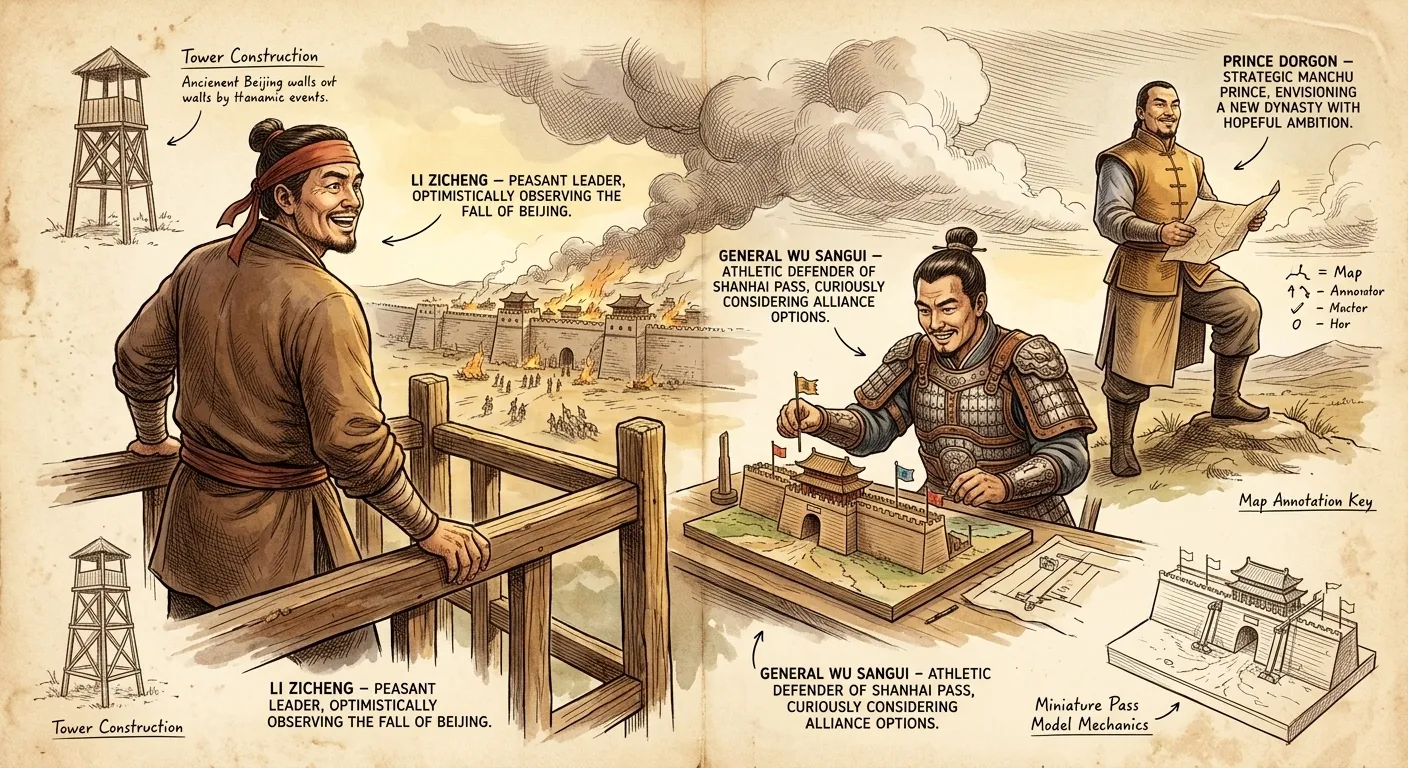
On April 25, 1644, Beijing, the grand capital of China, finally fell. Emperor Zhu Youjian, known as the Chongzhen Emperor, faced the ultimate collapse of his 276-year-old dynasty as rebel forces, numbering over 100,000, breached the city walls. Rebel leader Li Zicheng, observing the chaos from a captured tower, knew his moment had arrived, while General Wu Sangui, far to the northeast guarding Shanhai Pass, pondered his impossible choice; the future of China, and the ambitions of the Manchu prince Dorgon, now hung in the balance. But how did this once-mighty empire reach such a catastrophic breaking point?
Page 2
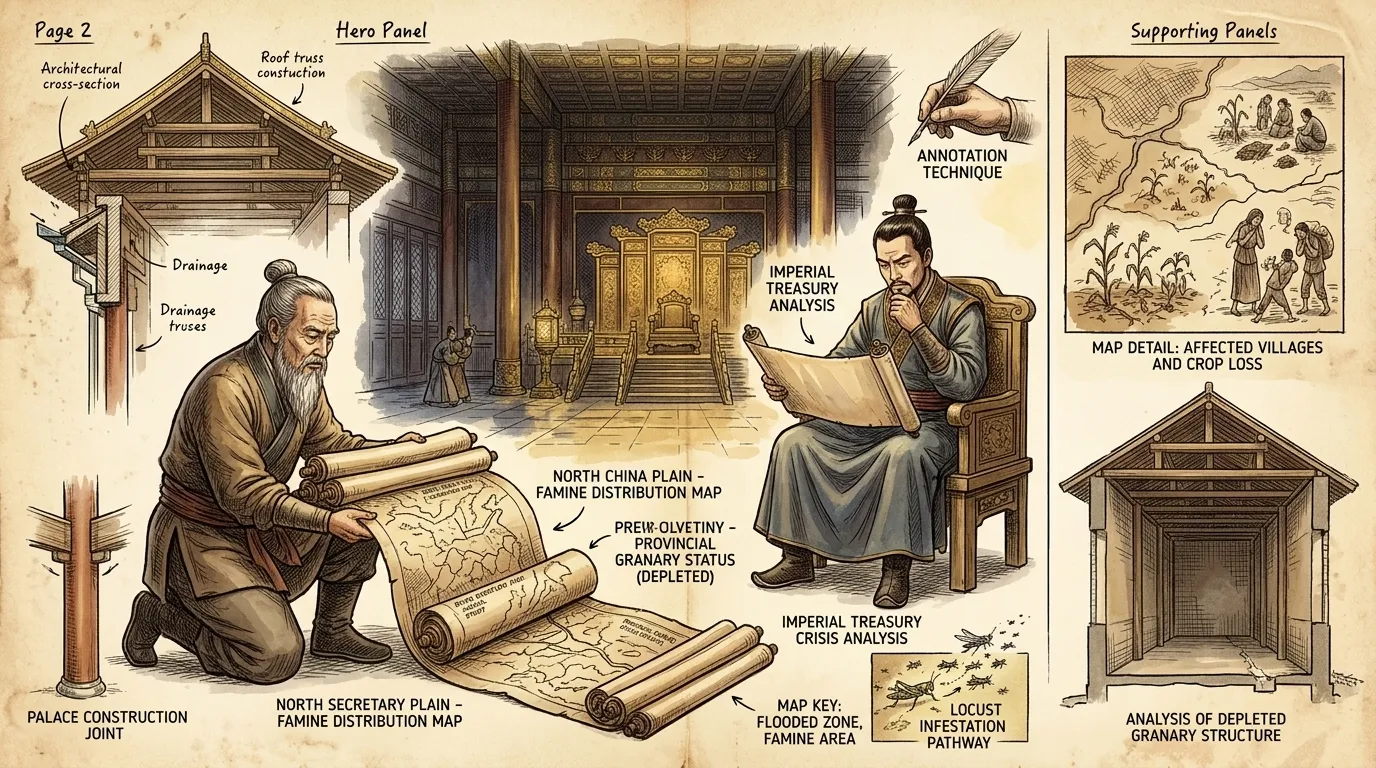
Decades before the capital's fall, the Ming Dynasty, though outwardly grand, faced internal decay. Emperor Zhu Youjian, a slim man in his late 30s, often found himself isolated in the opulent halls of the Forbidden City, grappling with mounting corruption and increasingly severe natural disasters. Grand Secretary Chen Yan, a wise official with a long grey beard, nervously presented scrolls detailing widespread famine and a collapsing economy, yet effective action remained elusive amidst court factionalism.
"'Your Majesty,' Chen Yan began, his voice strained, 'the reports from the provinces speak of widespread hunger, the Yellow River's floods are relentless, and the national granaries are depleted.'"
Page 3
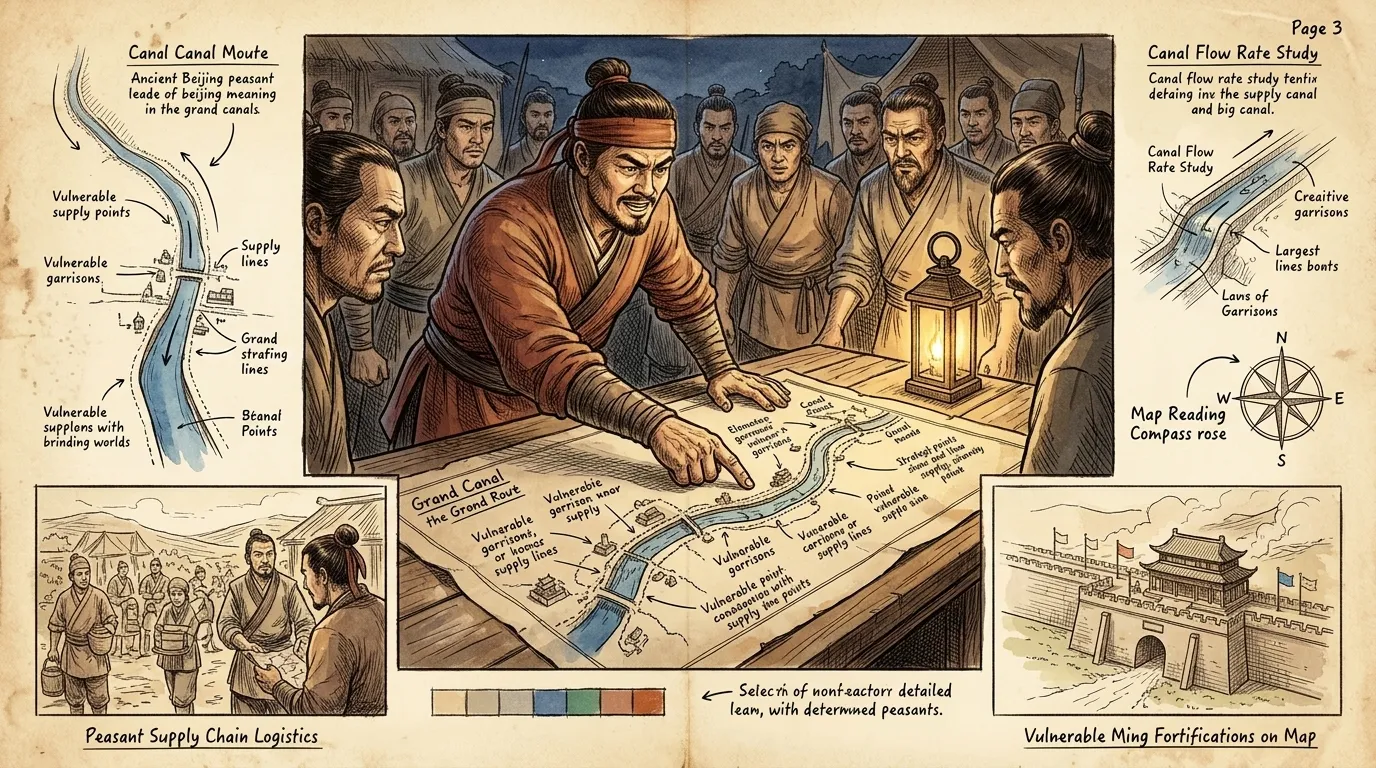
While the court squabbled, desperate peasants, driven by starvation and hardship, began to organize across the northern provinces. In 1636, the charismatic Li Zicheng, a former Ming courier, rallied thousands to his banner, forming the 'Dashing King's' army. He carefully studied maps of the region, emphasizing the Ming's reliance on the Grand Canal, a critical supply route, and the vulnerability of their scattered garrisons, a strategy he called 'striking the serpent's head by severing its body.'
"'Brothers, sisters, look!' Li Zicheng declared, pointing a calloused finger at a detailed map spread across a rough wooden table. 'The Ming snake has a long, vulnerable body: the Grand Canal. If we cut it, Beijing starves!'"
Page 4
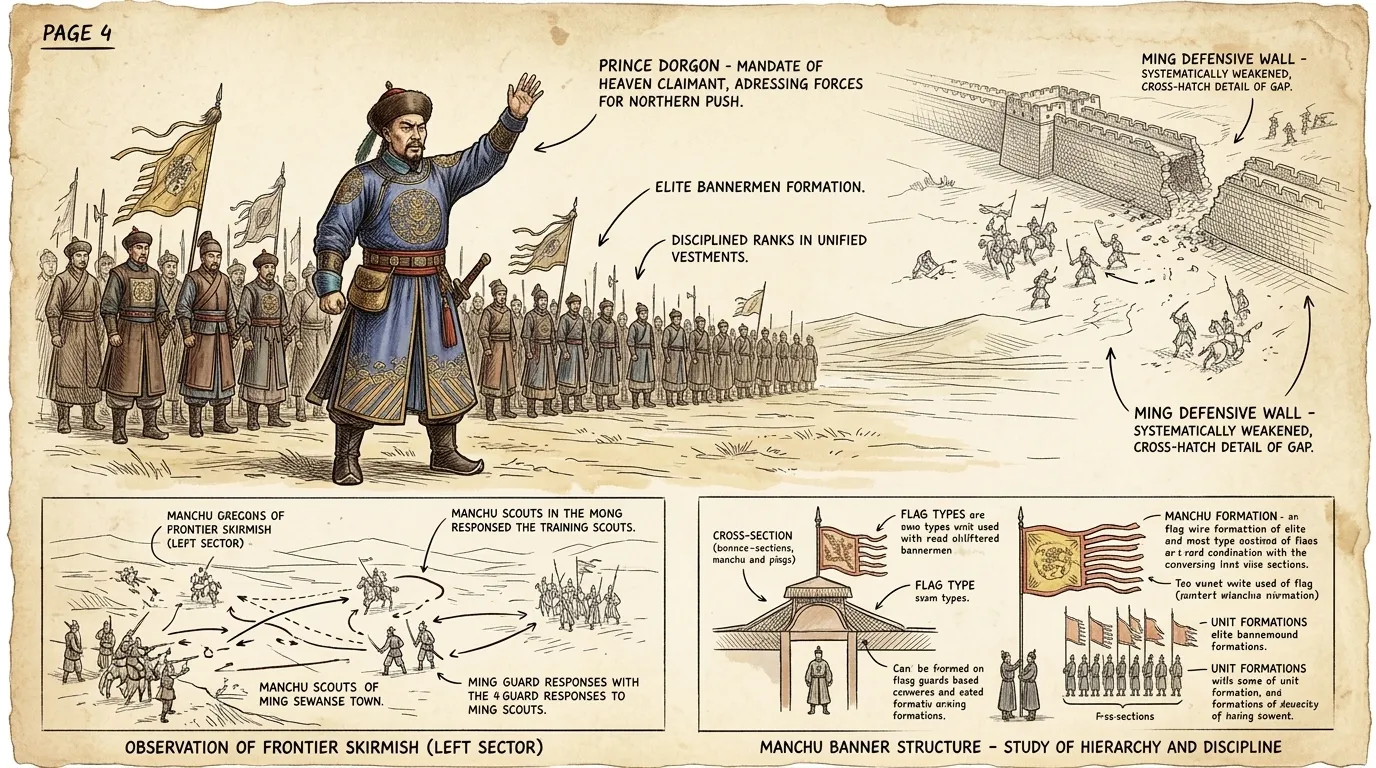
To the northeast, beyond the Great Wall, another formidable power was coalescing: the Manchu, led by figures like Prince Dorgon. Since 1636, they had declared their own Qing Dynasty, openly challenging Ming supremacy. Dorgon, a commanding prince in his early 30s, regularly led his elite Bannermen in raids and skirmishes, systematically weakening Ming defenses along the northern frontier, demonstrating a disciplined military force far superior to the Ming's internal garrisons.
"'Our target,' Dorgon proclaimed, his voice echoing across the training grounds, 'is not merely land, but the will of the Ming! Every raid, every victory, erodes their spirit.'"
Page 5
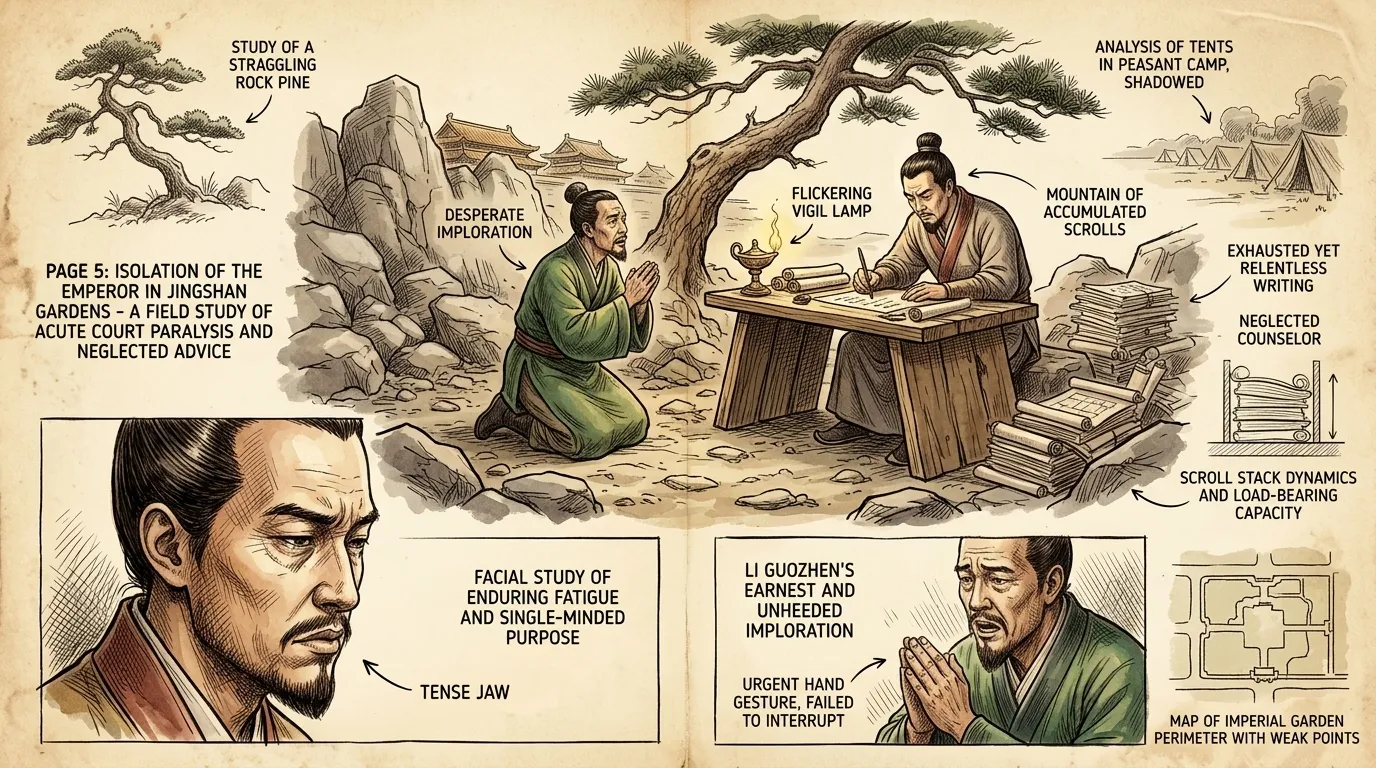
By the early 1640s, Emperor Zhu Youjian was overwhelmed. He tirelessly sought solutions, often working late into the night, but his efforts were constantly undermined by court eunuchs and corrupt officials who prioritized personal gain over imperial stability. Minister Li Guozhen, a loyal but weary courtier with a faint grey mustache, knelt before the emperor, his pleas for decisive military action against the rebels falling on deaf ears, trapped by a court paralyzed by mistrust.
"'Your Majesty,' Minister Li Guozhen implored, hands clasped, 'the rebels grow stronger daily! We must consolidate our forces, even if it means sacrificing distant garrisons, as Sun Tzu himself advised: 'He who wishes to fight must first count the cost.''"
Page 6
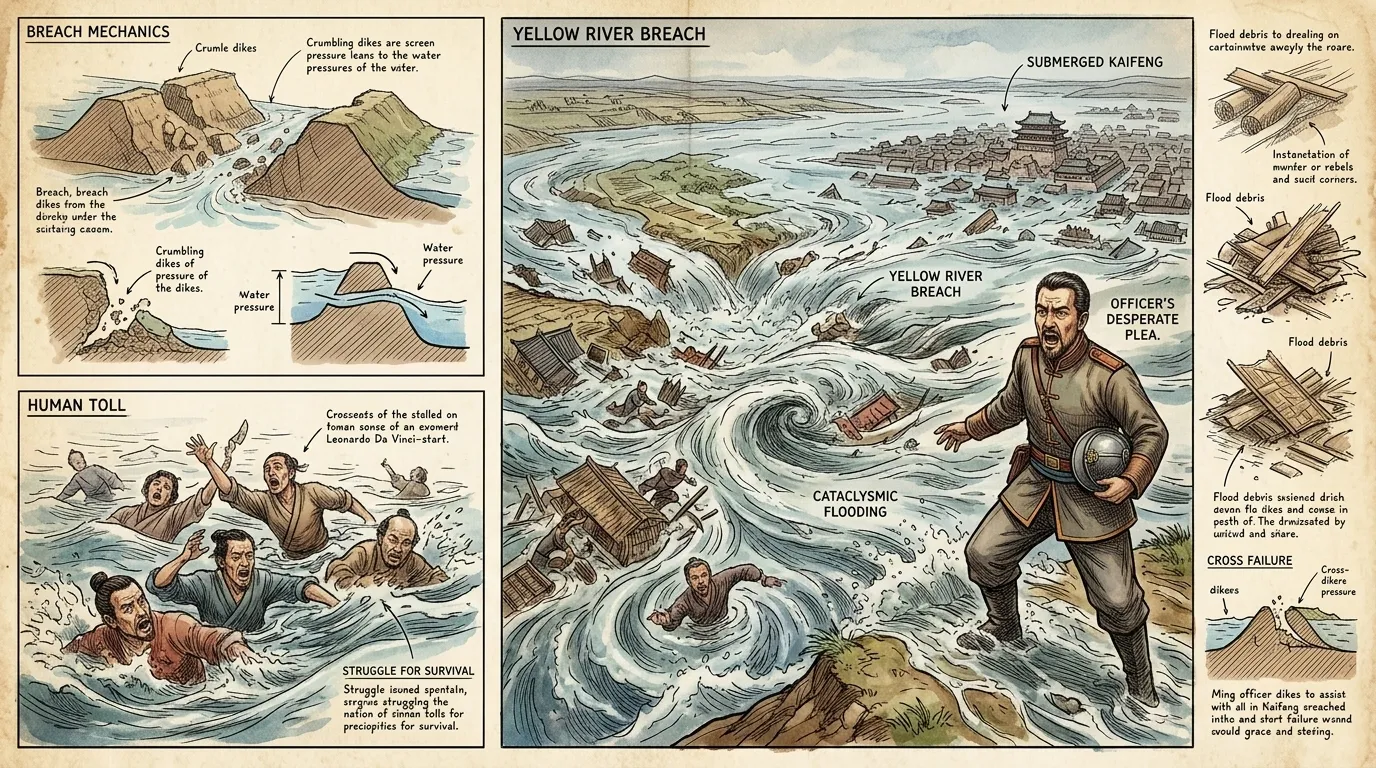
In 1642, Li Zicheng's forces laid siege to Kaifeng, a strategic Ming city, for months. The Ming defenders, desperate to break the siege, controversially breached the Yellow River dikes, unleashing a catastrophic flood. Although it temporarily repelled the rebels, the act tragically drowned hundreds of thousands of civilians and devastated fertile lands, further eroding Ming authority and revealing the desperate measures the dynasty was willing to take.
"'The river claims thousands!' a Ming officer shouted, clutching his helmet. 'But the rebels are also swept away! It was our only choice, a terrible one!'"
Page 7
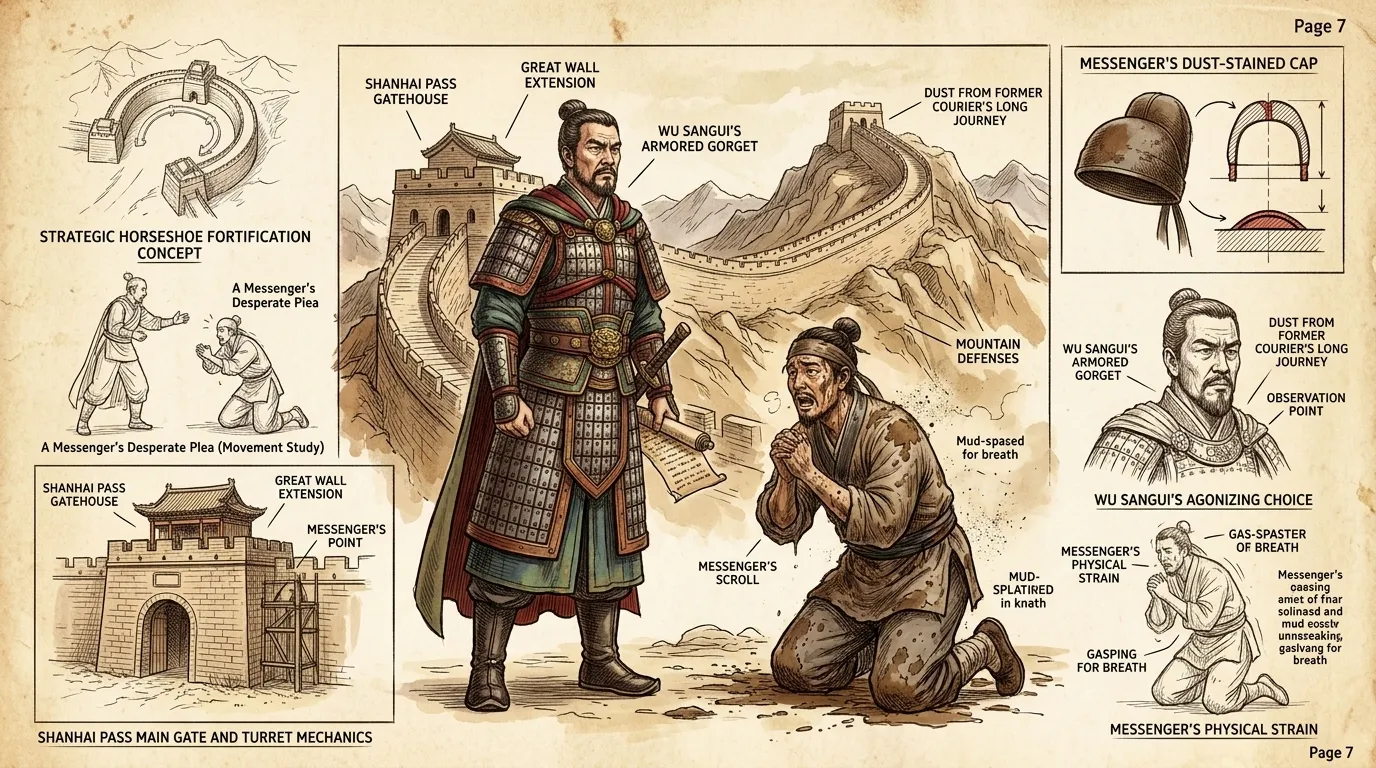
By early 1644, General Wu Sangui, charged with defending Shanhai Pass, the crucial eastern section of the Great Wall, found himself caught between two overwhelming forces. A mud-splattered messenger, exhausted from travel, arrived with a desperate plea from the Chongzhen Emperor: defend the capital at all costs against Li Zicheng's approaching rebel army. Wu Sangui knew that abandoning the Pass would leave the northern frontier open to the Manchu, but remaining meant Beijing's certain fall.
"'Beijing is in grave peril, General!' the messenger gasped, collapsing before Wu Sangui. 'The Emperor implores you: march to the capital! Li Zicheng's rebels are at the gates!'"
Page 8
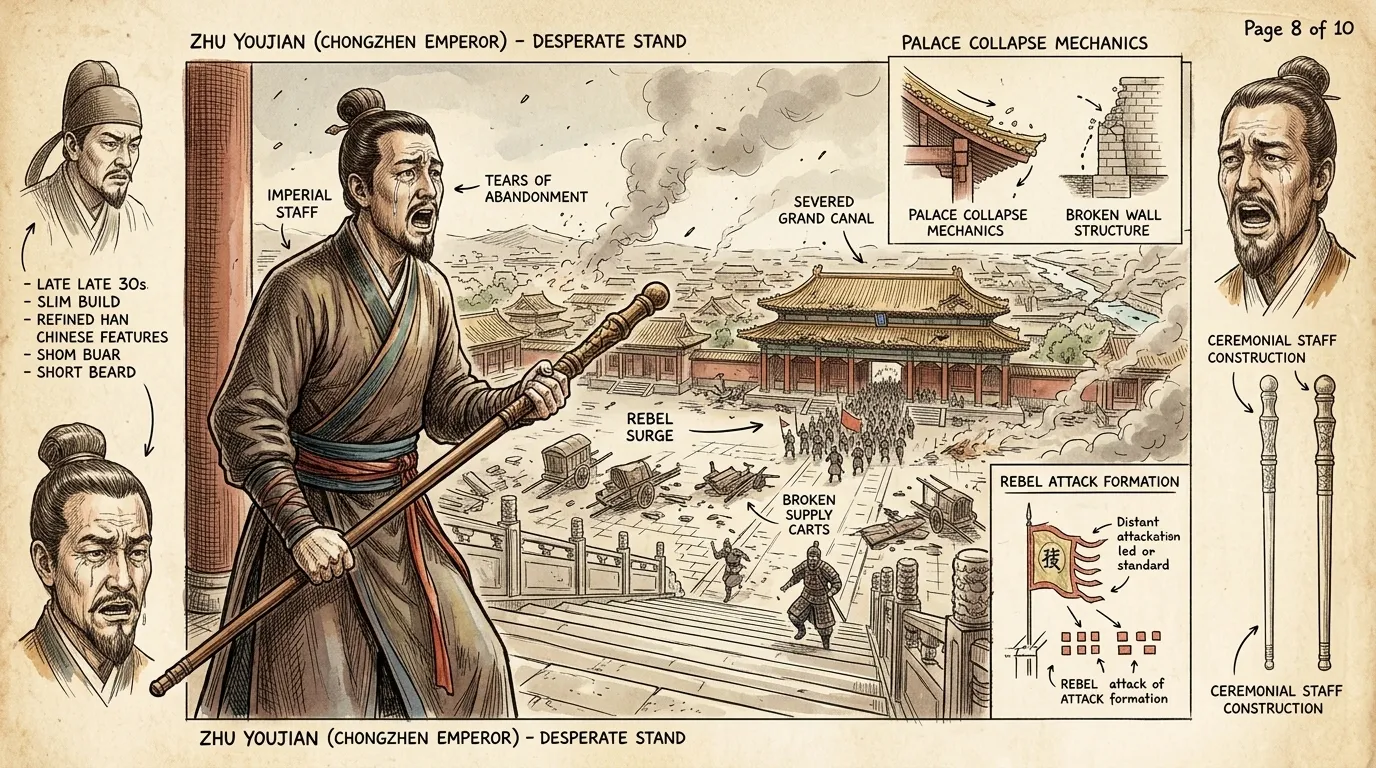
As Li Zicheng's army surged into Beijing on April 25, 1644, executing their strategy of 'severing the body,' the Ming capital collapsed. The rebels had successfully intercepted numerous supply convoys on the Grand Canal, starving the city's defenders and weakening their resolve. Emperor Zhu Youjian, seeing all hope lost, ordered his family to commit suicide and attempted to rally his remaining loyal eunuchs, but it was too late.
"'Is there no one left?' Emperor Zhu Youjian cried out, his voice hoarse with despair, clutching a ceremonial sword. 'Will you abandon your Emperor, even in death?'"
Page 9
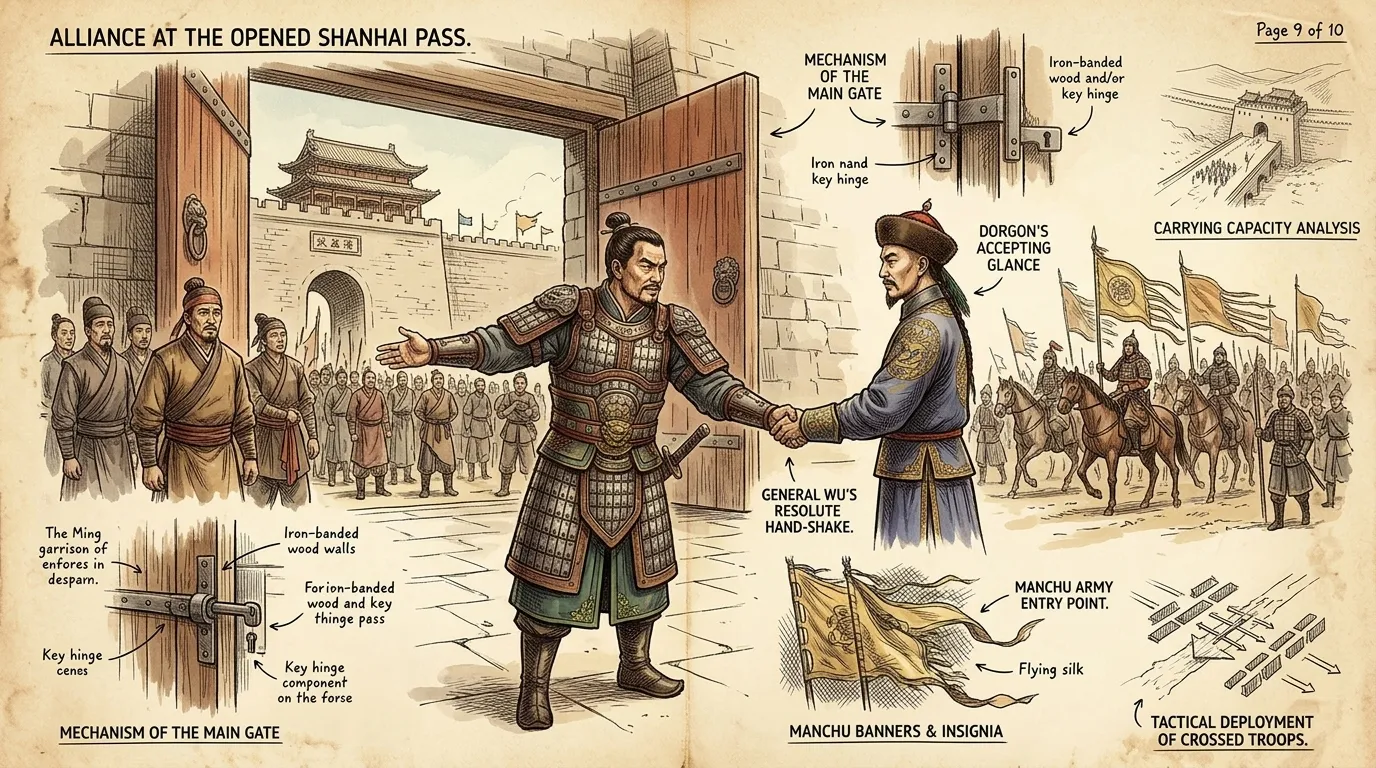
Upon learning of Beijing's fall and the Emperor's demise, General Wu Sangui made his fateful decision. Rather than submit to Li Zicheng's rebel regime, he dispatched an urgent message to Prince Dorgon, inviting the Manchu forces through Shanhai Pass. In a swift, strategic alliance, Wu Sangui and Dorgon joined forces, turning their combined might against Li Zicheng, forever altering the course of Chinese history by allowing the Manchu to enter China proper.
"'Prince Dorgon,' Wu Sangui declared, gesturing towards the open pass, 'the Ming is fallen, but a new tyranny rises. I offer you Shanhai Pass, and my allegiance, to crush Li Zicheng!'"
Page 10
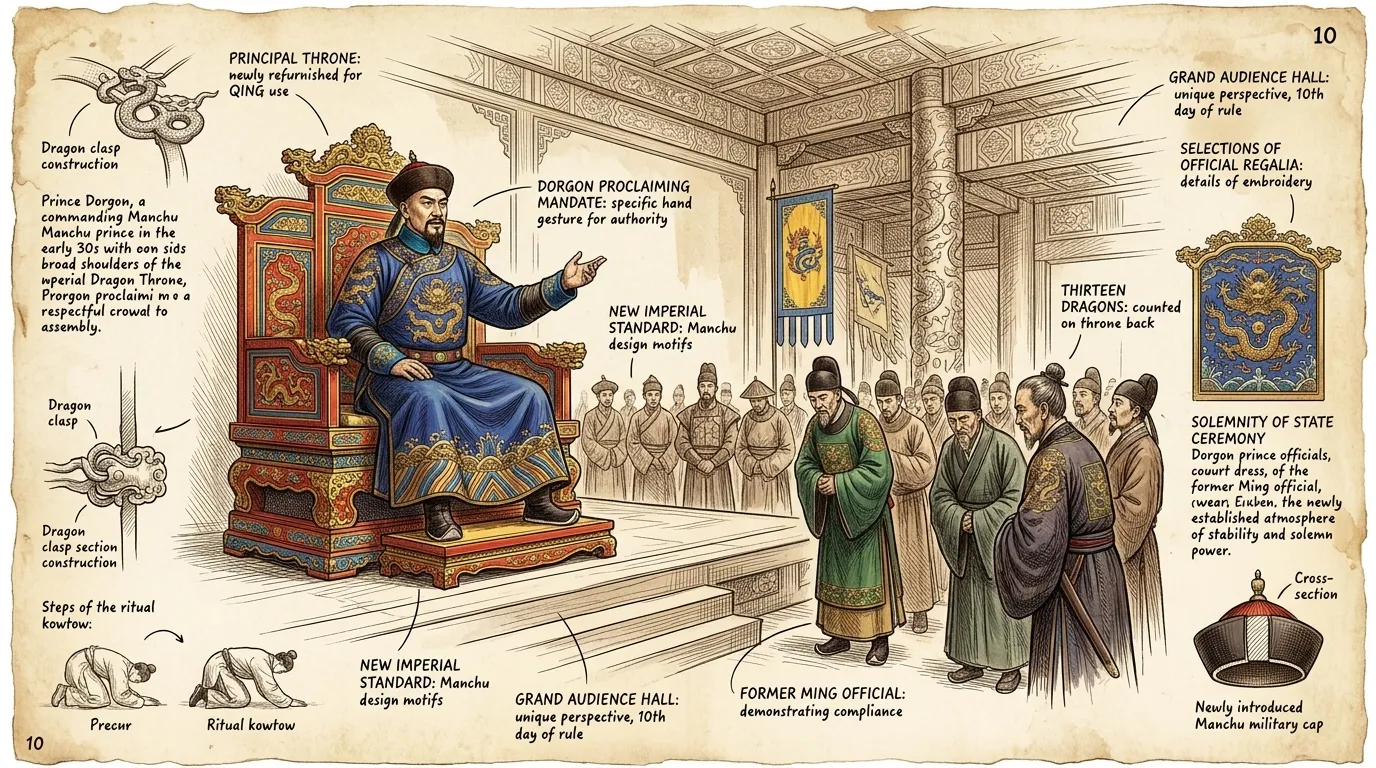
The alliance proved decisive; Li Zicheng's rebel forces were quickly routed, and Beijing was swiftly retaken. Prince Dorgon, acting as regent for his young nephew, established the Qing Dynasty, claiming the Mandate of Heaven. This pivotal moment in 1644 marked the end of the Ming era and the beginning of over 260 years of Manchu rule, fundamentally reshaping Chinese society, governance, and culture, leaving a lasting legacy of imperial transformation.
"'The Mandate of Heaven has shifted,' Prince Dorgon proclaimed from the newly adorned throne, his voice resonating through the hall. 'A new era, the Qing, has begun, promising stability and order after years of turmoil!'"
About this story
- Historical figures: Zhu Youjian (Chongzhen Emperor), Li Zicheng, Wu Sangui
- Location: China
- Period: Early Modern
- Audience: general readers
Questions and answers
Questions and answers about The Fall of the Ming Dynasty — China (1644)
Read Wonder History on your phone
Wonder History is available on Android and iPhone and iPad. Get Wonder History on Google Play · Get Wonder History on the App Store.