The Fall of Tokugawa Shogunate (1868, Japan)
The Fall of Tokugawa Shogunate (1868, Japan) — an illustrated history story, featuring Tokugawa Yoshinobu, Emperor Kōmei, Emperor Meiji, set in Japan. 10 illustrated pages, free to read on Wonder History.
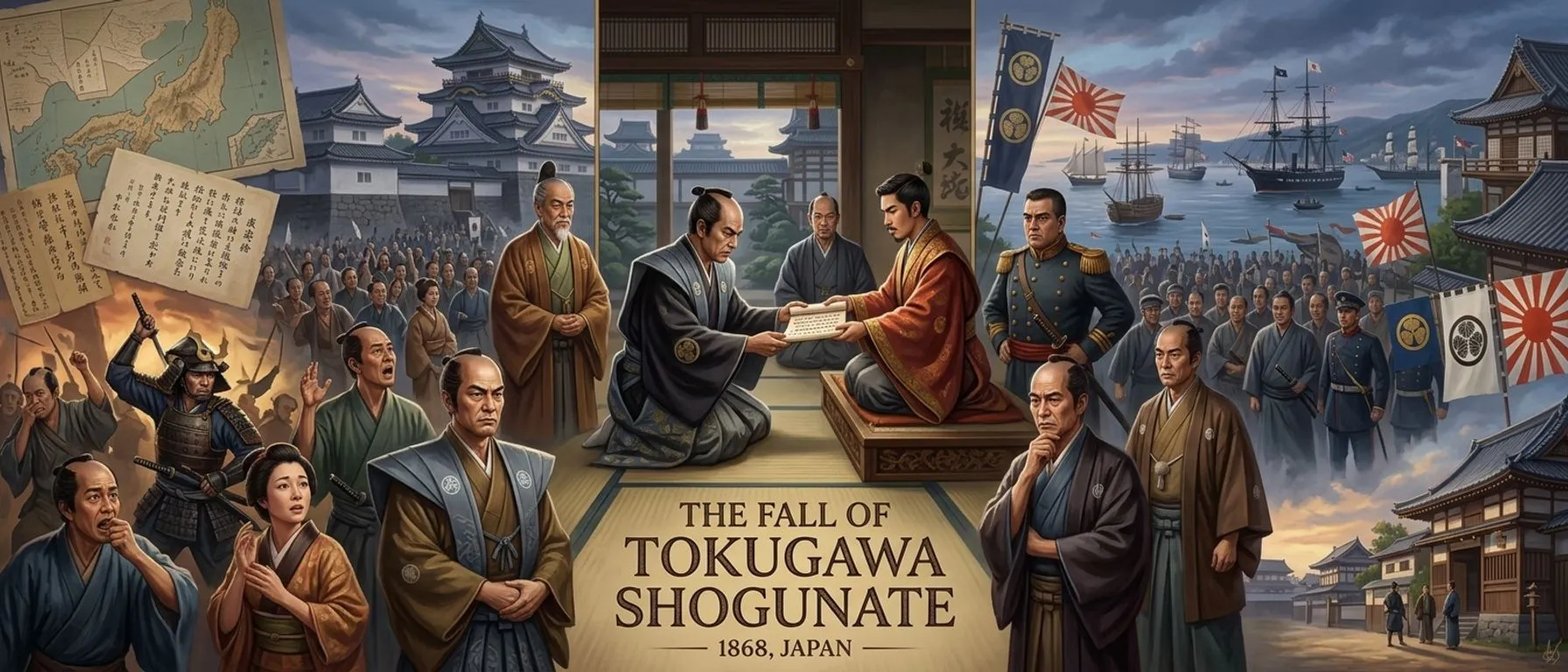
Page 1

Edo Castle blazed, a symbol of the crumbling Tokugawa Shogunate. Tokugawa Yoshinobu, the last Shogun, stood resolute amidst the chaos, his face grim. Katsu Kaishu, his loyal advisor, pleaded for surrender to spare the city. But where did this inferno of rebellion ignite?
Page 2

In the labyrinthine mirror halls of Kyoto, Emperor Kōmei, his face etched with worry, observed the growing foreign influence. Ii Naosuke, the Grand Councillor, knelt before him, vowing to quell the dissent with an iron fist. The mirrors reflected alternate futures, a fractured vision of a nation on the brink.
Page 3

"These foreigners seek to undermine our traditions!" Emperor Kōmei declared to Iwakura Tomomi, a key advisor. "We must resist their influence." Iwakura, his face grave, bowed deeply. "Your Majesty's wisdom is our guide," he replied, his eyes reflecting the Emperor's resolve.
Page 4

Ii Naosuke's crackdown intensified. "Silence the rebels!" he thundered, ordering the arrest of anti-Tokugawa activists. Saigō Takamori, a charismatic samurai, barely escaped capture, vowing revenge against the Shogunate.
Page 5

Emperor Meiji, the young successor to Kōmei, listened intently to Okubo Toshimichi. "The Shogunate must yield," Okubo argued. "The time for a modern Japan is at hand." The mirrors reflected Emperor Meiji's youthful face, uncertain yet resolute.
Page 6

Edo Castle blazed anew, the flames reflecting in the thousand mirrors of the burning city. Tokugawa Yoshinobu, his authority crumbling, watched as Katsu Kaishu negotiated the terms of surrender. Saigō Takamori's forces surrounded the castle, their victory imminent.
Page 7

"Further bloodshed is pointless," Katsu Kaishu urged Tokugawa Yoshinobu. "We must yield to the Emperor's will." Yoshinobu, his shoulders slumping, finally relented. "Very well," he said, his voice heavy with defeat.
Page 8
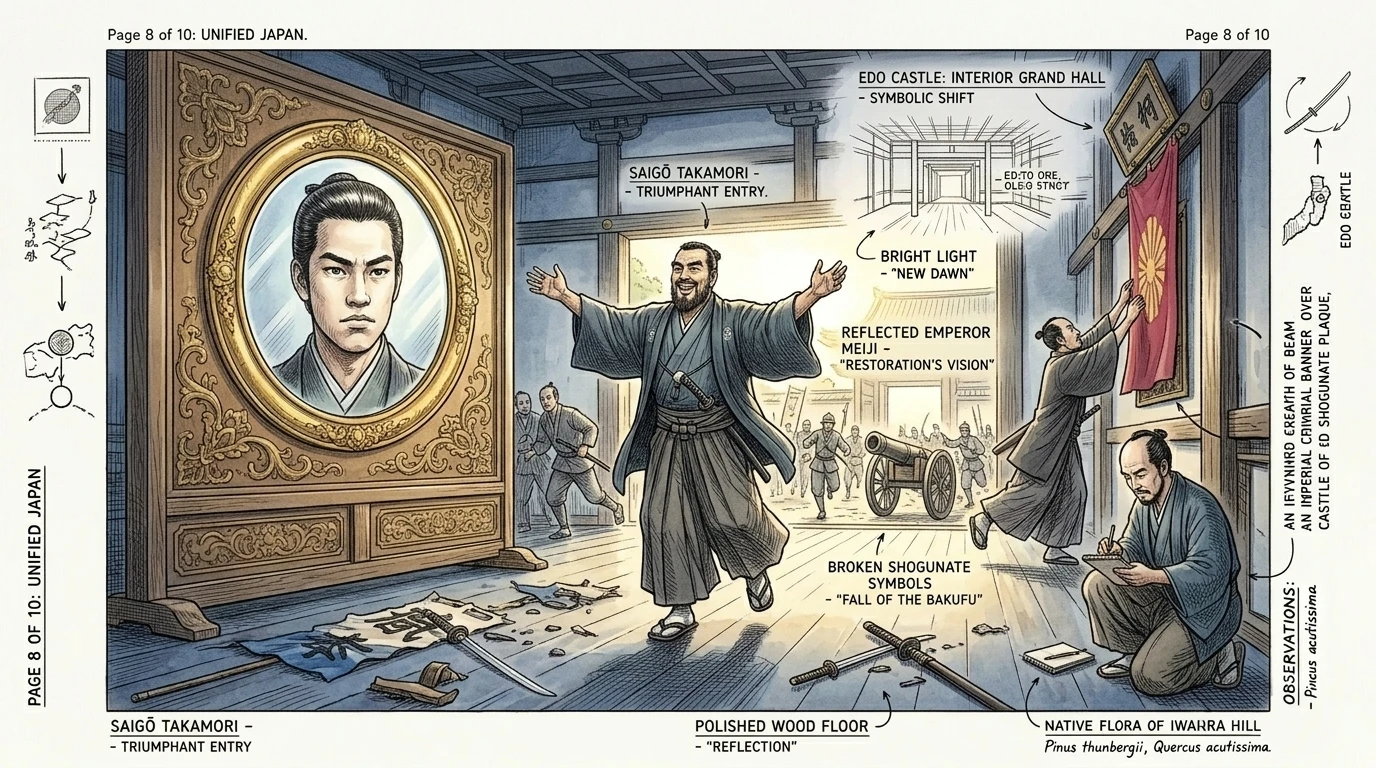
Saigō Takamori marched triumphantly into Edo Castle. Emperor Meiji's forces had prevailed, ending the Shogunate. The mirrors reflected a new dawn, a unified Japan under imperial rule.
Page 9
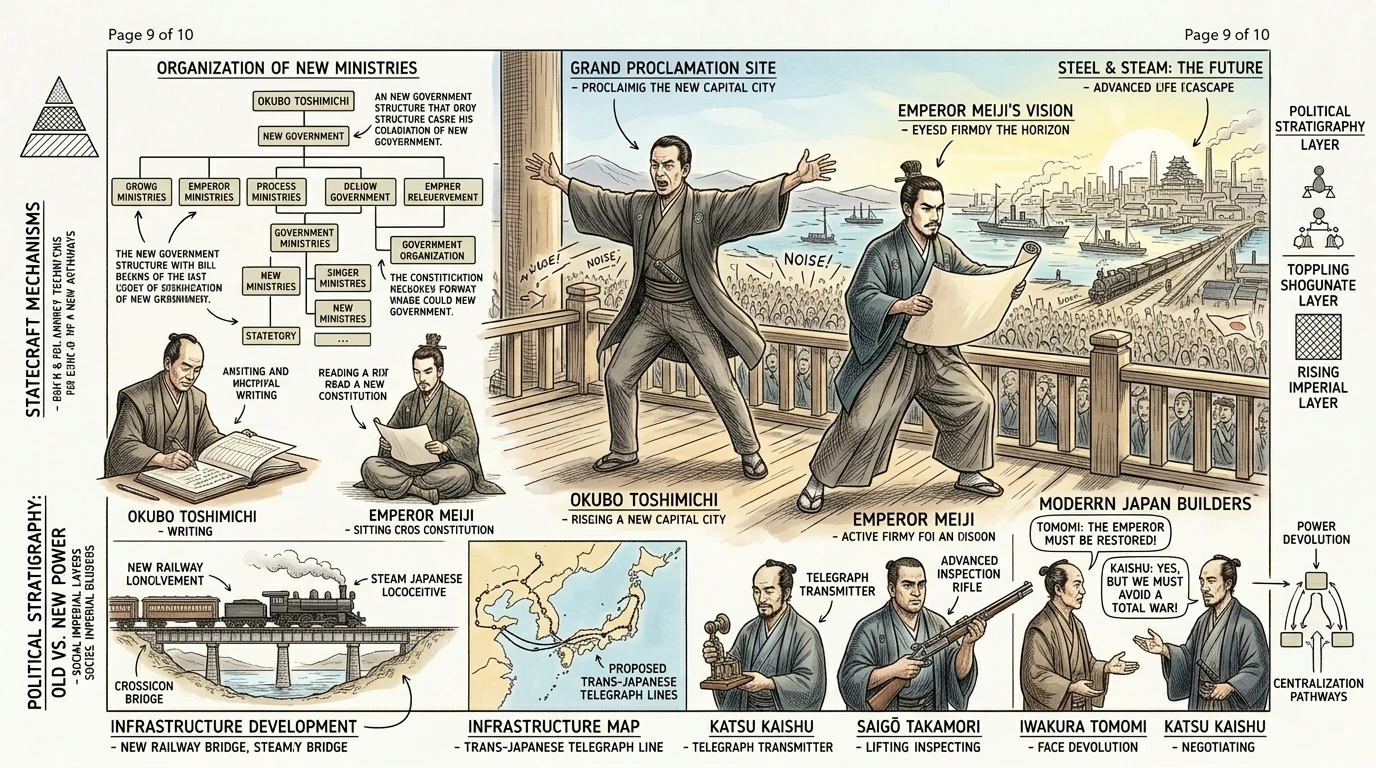
Okubo Toshimichi, standing beside Emperor Meiji, addressed the nation. "A new era has begun!" he proclaimed. "Let us learn from the West and build a strong, modern Japan!" The young Emperor Meiji listened with determination, his eyes fixed on the future.
Page 10
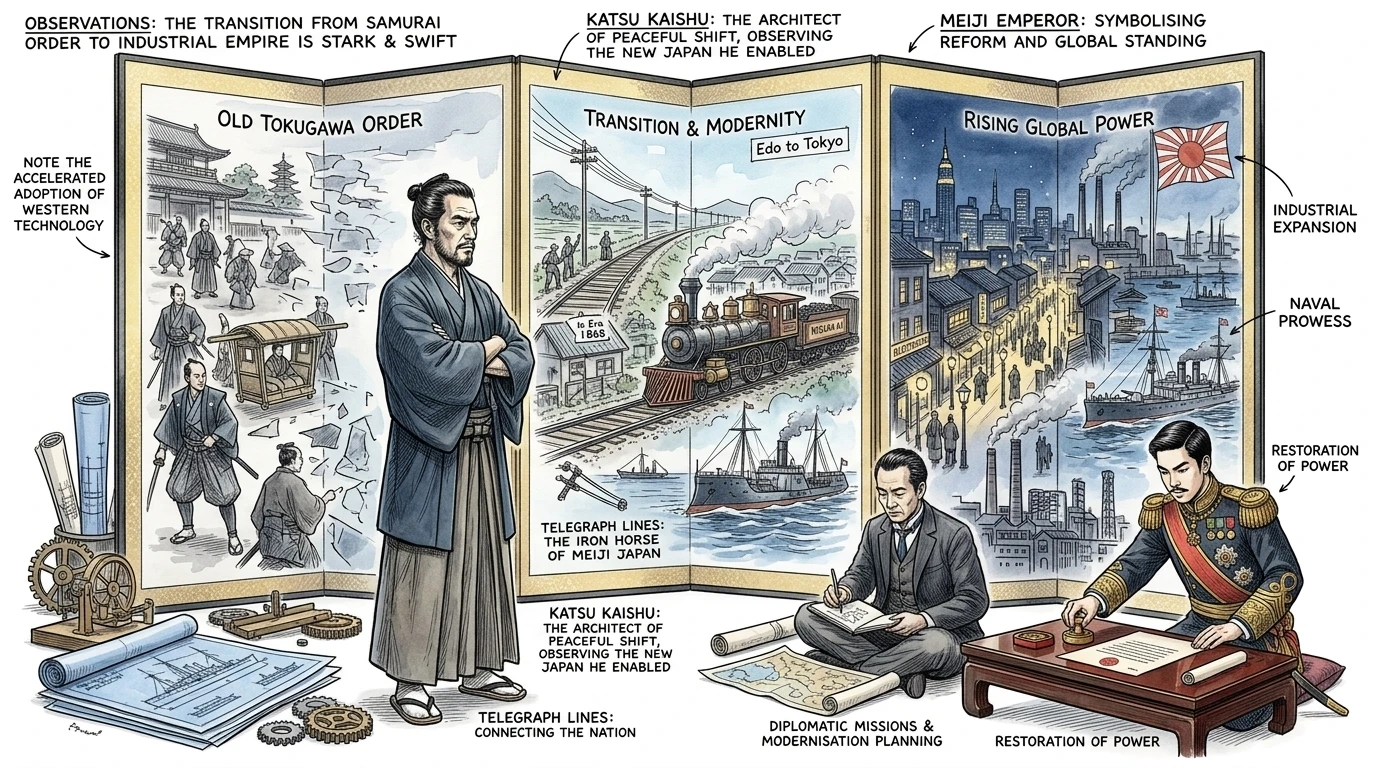
The Tokugawa Shogunate was gone, replaced by the Meiji Restoration. The mirrors of history reflected the rise of a new Japan, one that would soon become a global power. As Katsu Kaishu reflected later, echoing the words of Charles Darwin, "It is not the strongest of the species that survives, nor the most intelligent that survives. It is the one that is most adaptable to change."
About this story
- Historical figures: Tokugawa Yoshinobu, Emperor Kōmei, Emperor Meiji
- Location: Japan
- Period: Modern
- Audience: general readers
Questions and answers
Questions and answers about The Fall of Tokugawa Shogunate (1868, Japan)
Read Wonder History on your phone
Wonder History is available on Android. Get Wonder History on Google Play.
More Wonder History stories
- The First Ascent of Mount Everest (1953, India)
- The First Crusade is Declared (1095, France)
- The First Public Water Systems (312 BC, Rome)
- The First Schools: How Education Began (3200 BC, Mesopotamia)
- The First Voyage of Christopher Columbus (1492) - Bahamas (1492, Bahamas)
- The Franco-Prussian War — France & Germany (1870, France & Germany)