The First Public Water Systems (312 BC, Rome)
The First Public Water Systems (312 BC, Rome) — an illustrated history story, featuring Tara, Astrid, Noor, set in Rome. 10 illustrated pages, free to read on Wonder History.

Page 1

"We are in Rome, two thousand years ago," I whispered, staring at the ancient pipes. Behind me, a massive aqueduct stretched across the landscape in a painting, now seeming to shimmer with life. I wondered how such a system was created in the first place.
Page 2

Tara, a curious 7-year-old with tawny brown skin, gasped as she saw workers laying clay pipes. "Look, Astrid! They're building something amazing!" Astrid, a young woman with porcelain skin, smiled, pointing to a nearby architect's plans. "They are, Tara. They're building the Aqua Appia, one of the first public water systems in Rome, around 312 BCE."
Page 3

"But why?" Tara asked, tilting her head. Astrid explained, "Before this, people got water from the Tiber River or private wells. The river wasn't always clean, and wells could dry up! This aqueduct will bring fresh water directly to the city, and into fountains!"
Page 4

Noor, a spirited 9-year-old, piped up, "My father says some people stole water from the aqueducts! Is that true?" Astrid sighed. "Sadly, yes. People would tap into the pipes illegally. But Roman officials called 'curatores aquarum' were in charge of maintaining the system and preventing theft."
Page 5
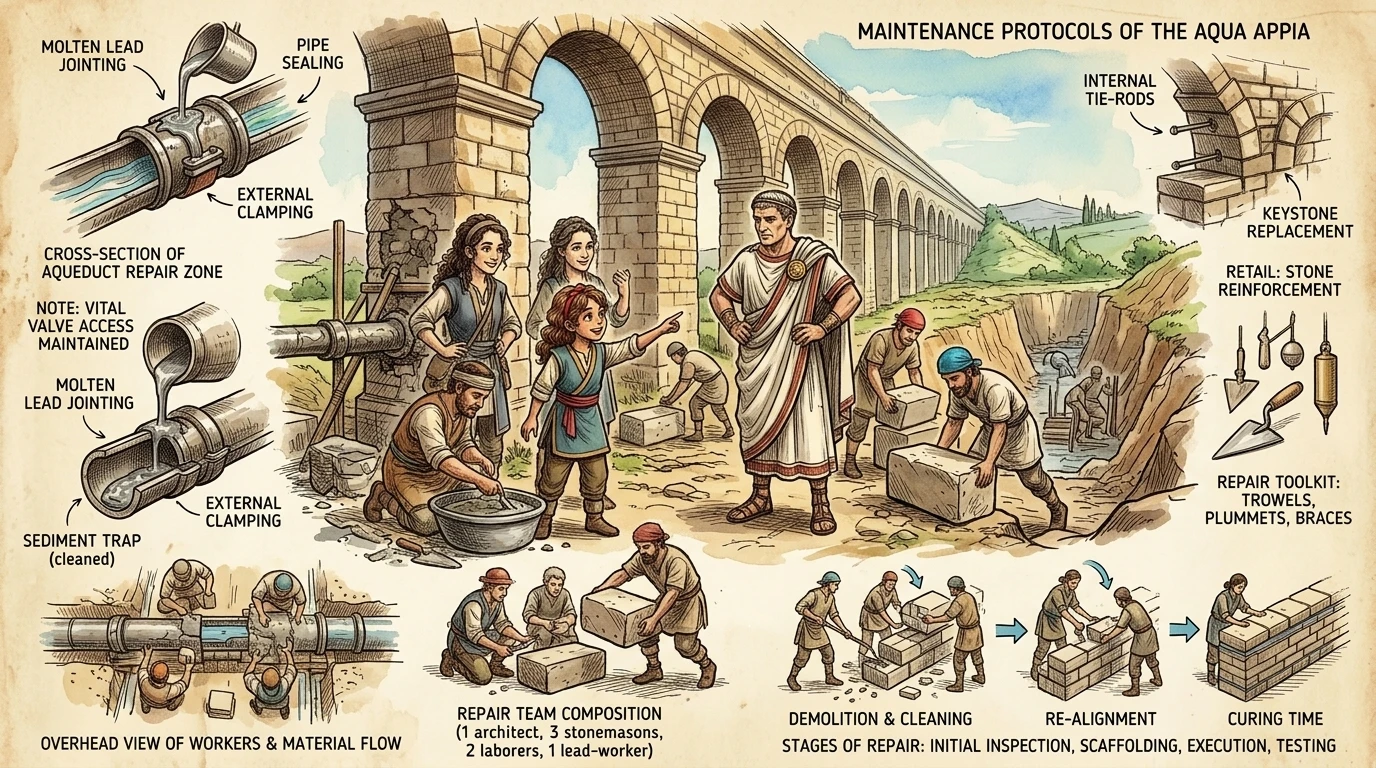
Tara pointed at a Roman official supervising repairs. "He looks important!" Astrid nodded. "That's Marcus, one of the 'curatores aquarum.' His job is to make sure the aqueducts are working properly. The Aqua Appia was a huge undertaking for its time, and keeping it running was vital."
Page 6

Noor, her eyes wide with curiosity, asked, "How did they even build these huge things?" Astrid smiled. "They used surveying tools, like groma, to make sure the aqueducts sloped downwards just enough for the water to flow using gravity. It was brilliant engineering!"
Page 7
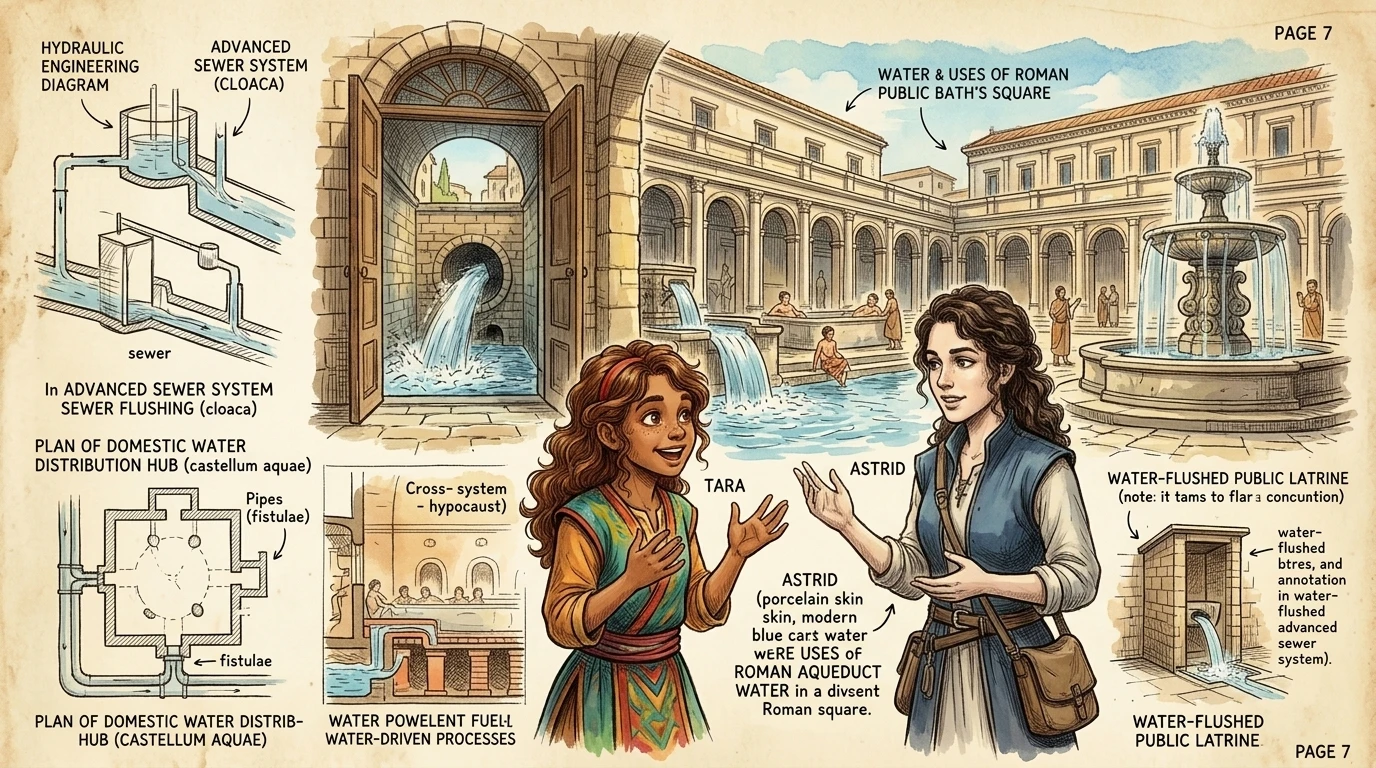
"It's amazing!" Tara exclaimed. "Did they use this water for everything?" Astrid confirmed, "Yes, Tara. Not just for drinking and cooking, but also for public baths, fountains, and even flushing sewers! Public health improved dramatically because of systems like the Aqua Appia."
Page 8
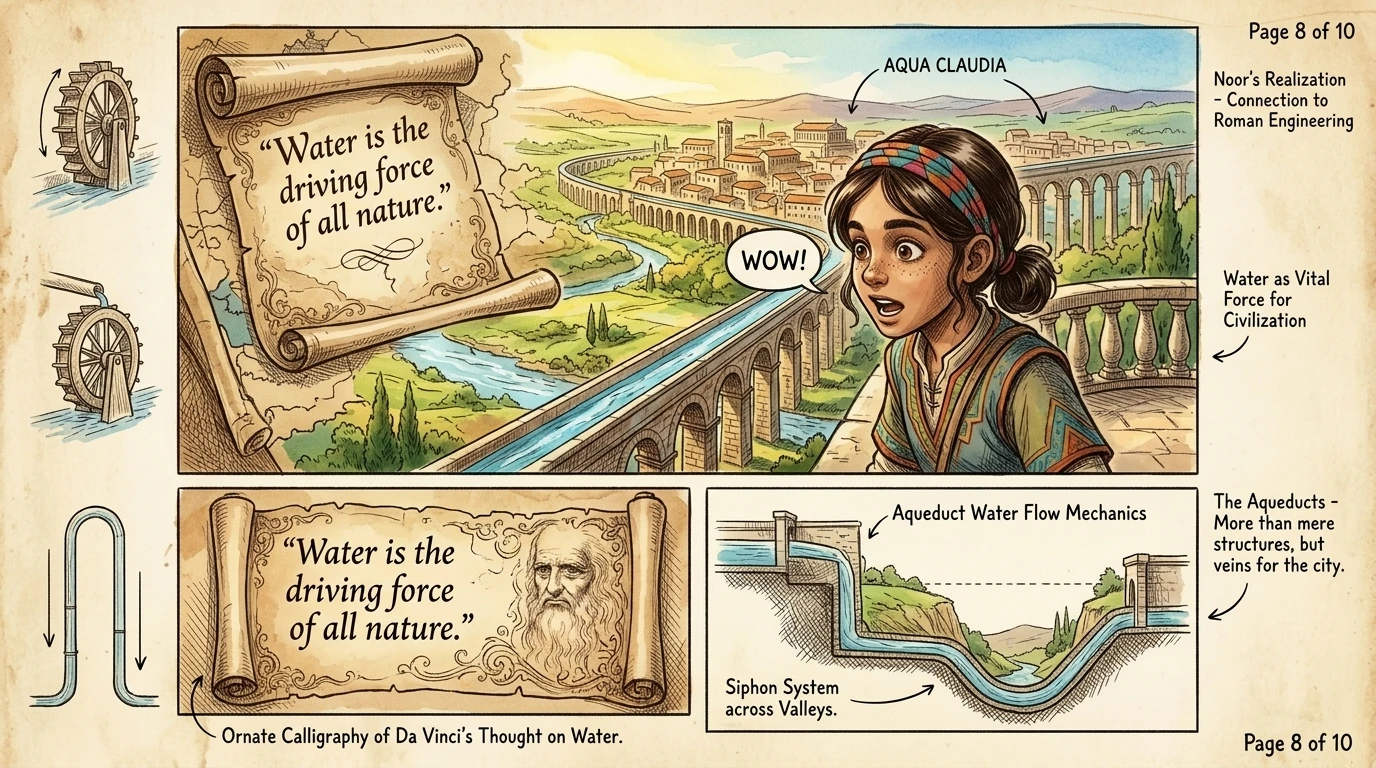
"Wow!" Noor said. "It's like Leonardo da Vinci said centuries later: 'Water is the driving force of all nature.' Without clean water, Rome wouldn't have been so great!"
Page 9
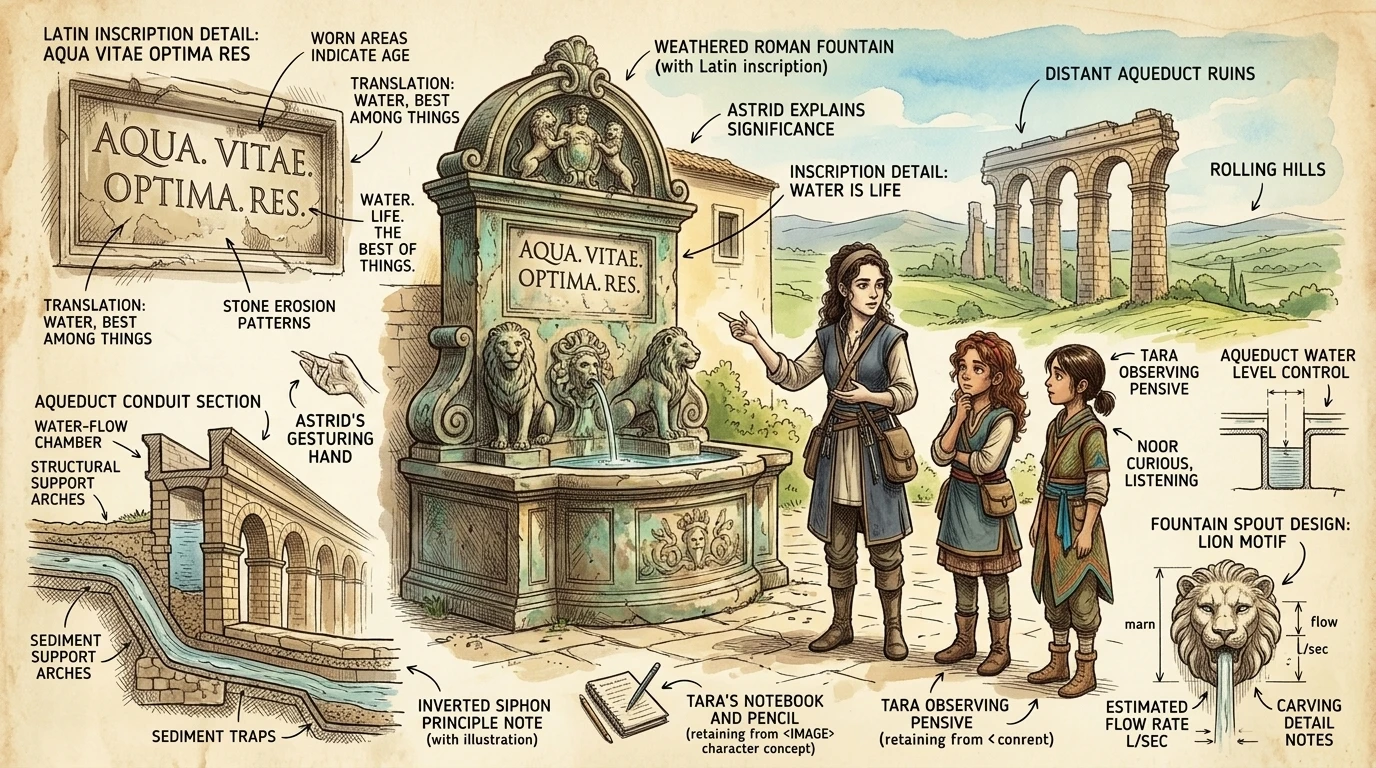
Astrid pointed to an inscription on the fountain. "Even today, we can see how important clean water was to the Romans. They built these systems to last. We can still see the ruins!"
Page 10
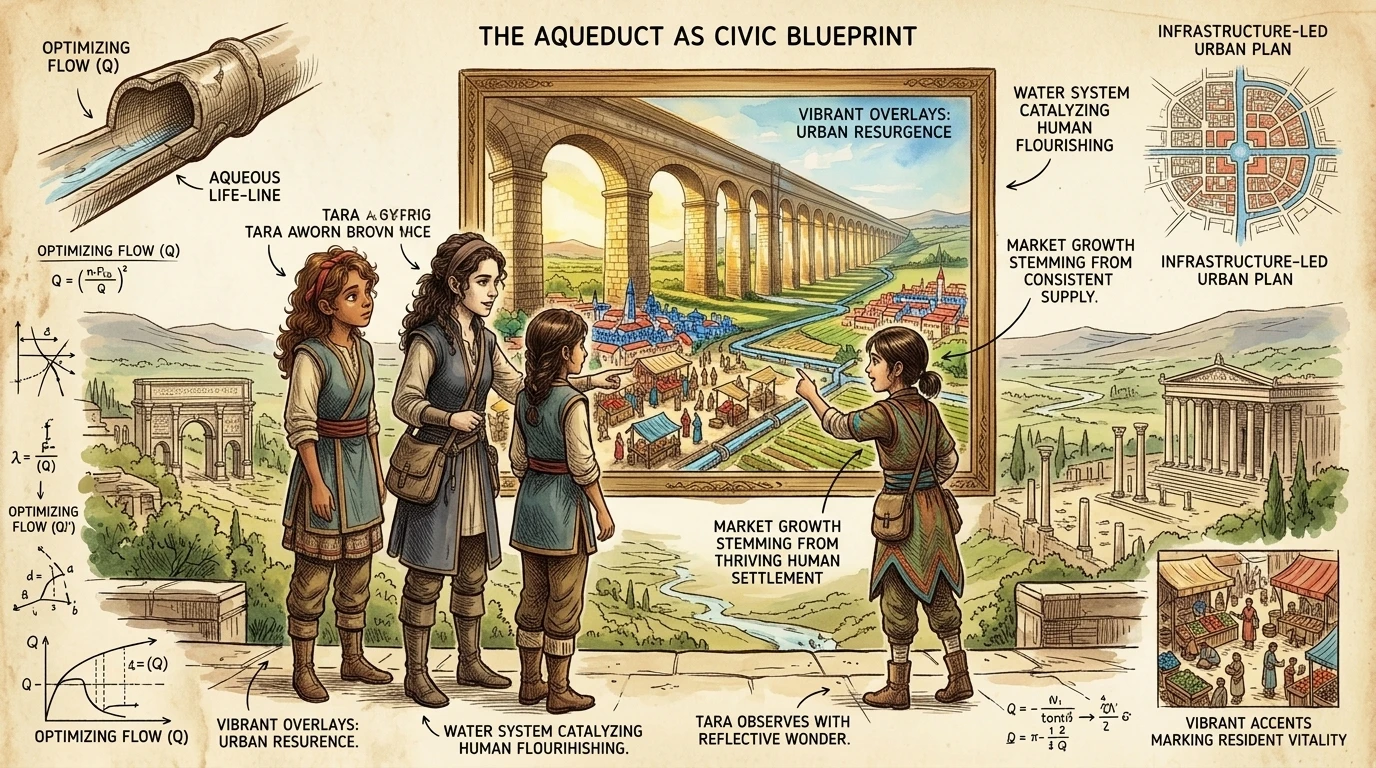
Looking back at the painting, I realized how crucial these systems were. Without them, civilizations could never flourish. These aqueducts set the blueprint for a society to flourish.
About this story
- Historical figures: Tara, Astrid, Noor
- Location: Rome
- Period: Ancient
- Audience: kids (ages 6–12)
Questions and answers
Questions and answers about The First Public Water Systems (312 BC, Rome)
Read Wonder History on your phone
Wonder History is available on Android. Get Wonder History on Google Play.
More Wonder History stories
- The First Schools: How Education Began (3200 BC, Mesopotamia)
- The First Voyage of Christopher Columbus (1492) - Bahamas (1492, Bahamas)
- The Franco-Prussian War — France & Germany (1870, France & Germany)
- The Glorious Revolution (1688, United Kingdom)
- The Greco-Persian Wars — Greece & Persia (490 BC, Greece & Persia)
- The Haitian Declaration of Independence (1804, Haiti)