The Franco-Prussian War — France & Germany (1870, France & Germany)
The Franco-Prussian War — France & Germany (1870, France & Germany) — an illustrated history story, featuring Otto von Bismarck, Napoleon III, Helmuth von Moltke the Elder, set in France & Germany. 10 illustrated pages, free to read on Wonder History.

Page 1
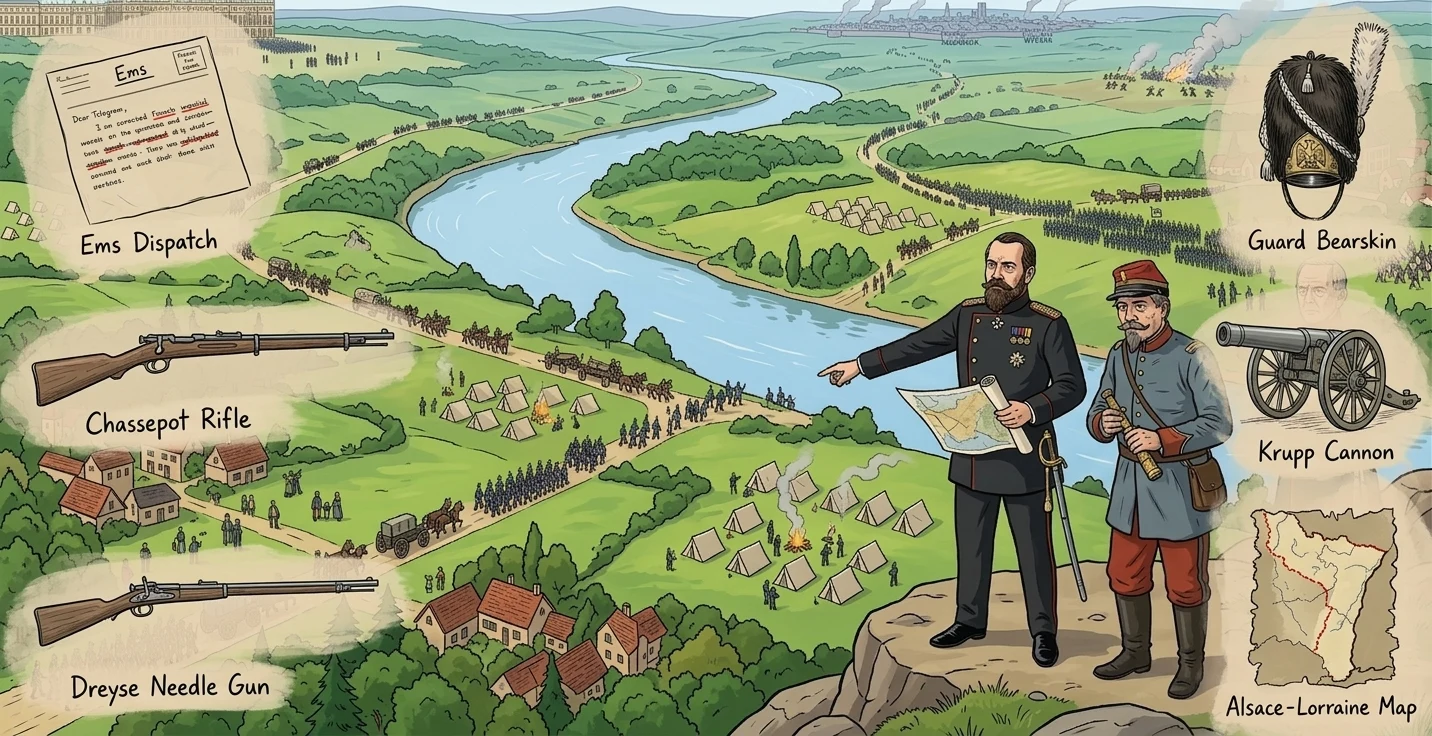
July 19, 1870: Otto von Bismarck, the cunning Prussian Minister President; Napoleon III, the weary Emperor of France; and Helmuth von Moltke the Elder, the brilliant Prussian Chief of Staff, found themselves at the edge of a conflict that would reshape Europe. Across the Rhine River, nearly half a million soldiers massed, ready to engage in what would become known as the Franco-Prussian War. How did this seemingly inevitable clash come to pass? "It is not enough to win a war; one must organize the peace," Bismarck had once declared. But organizing this peace would be far more difficult than winning the war itself.
Page 2
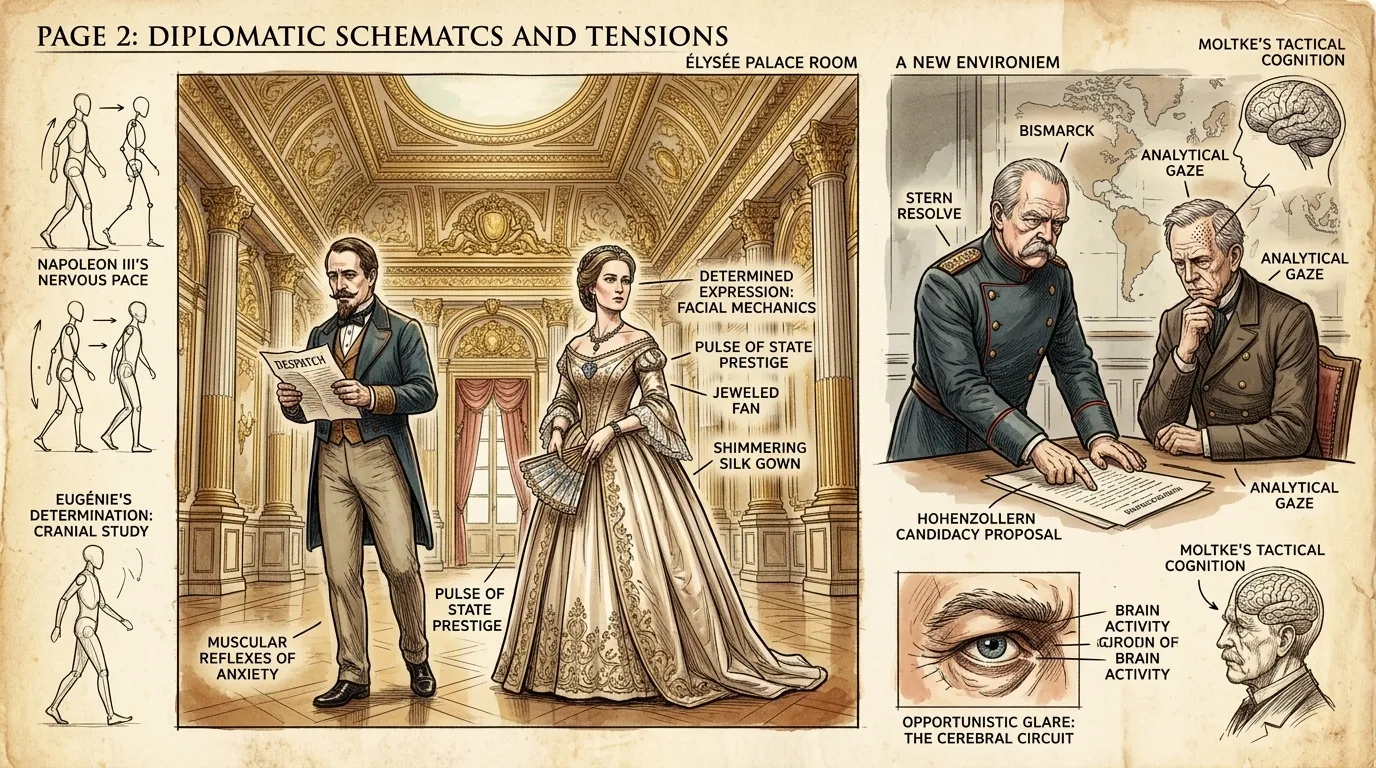
In the opulent halls of the Élysée Palace, Napoleon III paced anxiously. "The Prussian ambition grows unchecked," he muttered to Eugénie de Montijo, his elegant wife. She replied, "France must maintain its prestige!" Eugénie, with her dark hair swept into an elaborate updo and wearing a shimmering silk gown, clutched a jeweled fan nervously. Meanwhile, in Berlin, Bismarck saw opportunity. "A little bit of bloodletting might be exactly what the doctor prescribes," he mused to Moltke. The spark was the Hohenzollern candidacy for the Spanish throne, a matter seemingly small yet pregnant with consequences.
Page 3
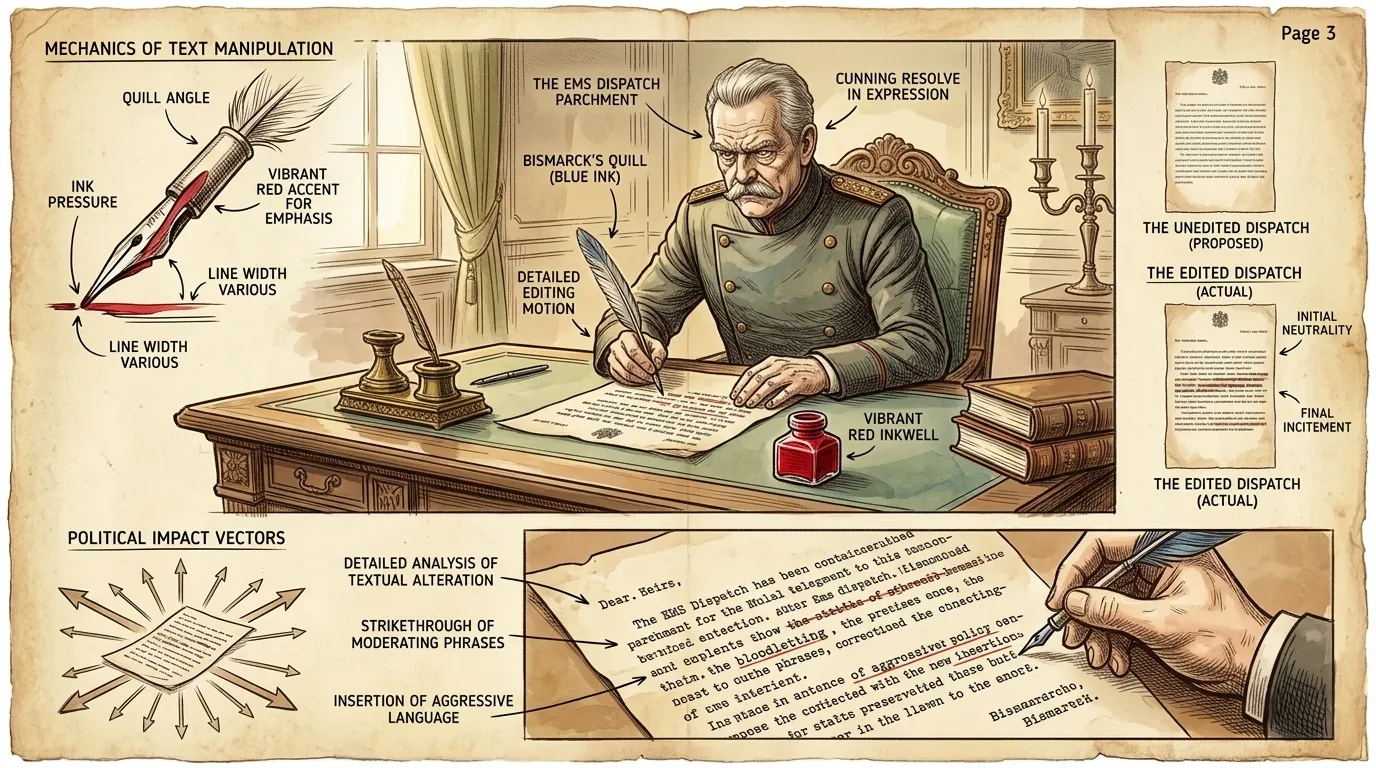
The infamous Ems Dispatch arrived on July 13, 1870. Bismarck, receiving the telegram detailing a meeting between King Wilhelm I and the French ambassador, saw his chance. "I shall edit this," Bismarck declared, a glint in his eye as he sat at his large wooden desk, quill in hand. "A declaration of war is inevitable!" Bismarck altered the wording to make it appear as though both sides had insulted each other. The carefully crafted edit would enrage both French and Prussian public opinion, pushing them closer to war.
Page 4
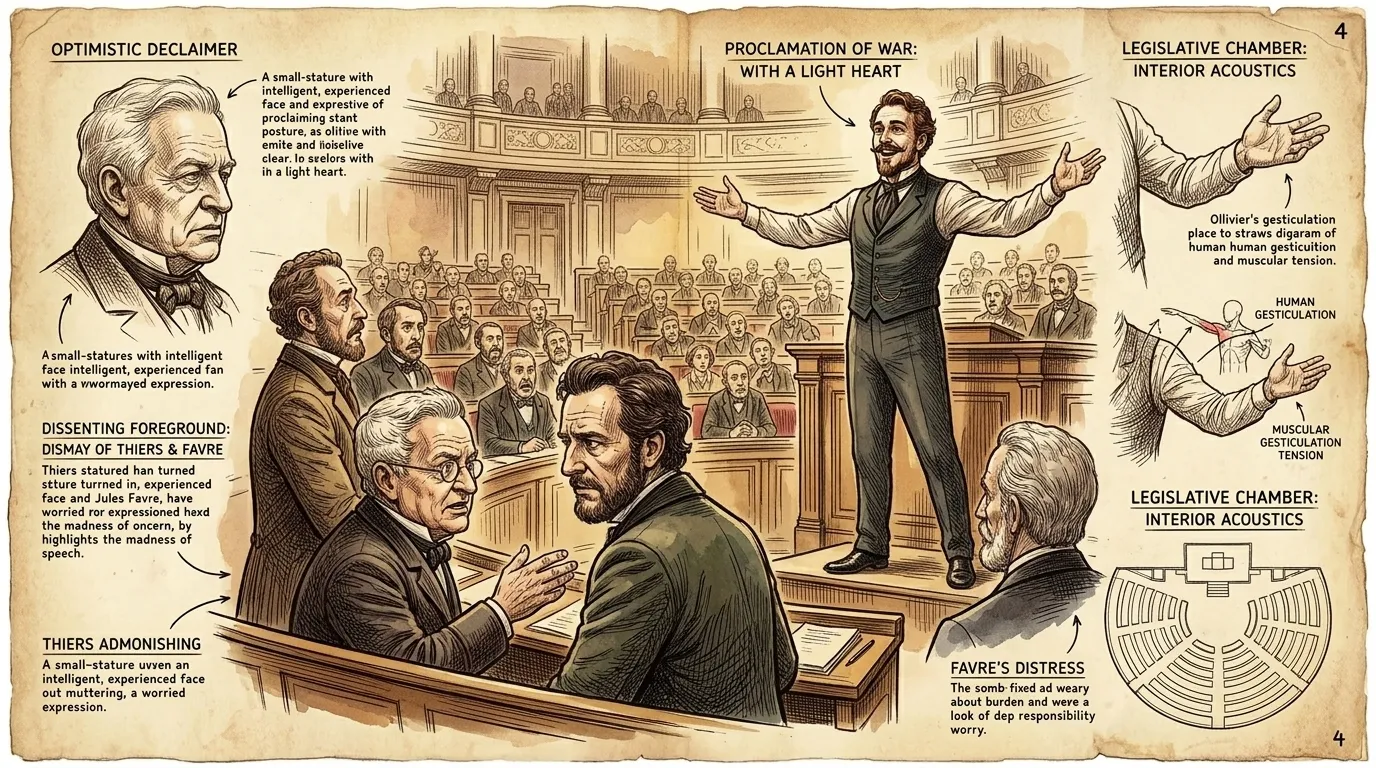
Émile Ollivier, the French Prime Minister, stood before the Legislative Body on July 19, 1870. "With a light heart, I accept this responsibility!" he proclaimed, his voice echoing through the chamber. France, fueled by national pride and miscalculations, declared war on Prussia. Adolphe Thiers, an elder statesman, watched with dismay. He muttered to Jules Favre, his somber companion, "This is madness!" The die was cast. The French declaration ignited the conflict.
Page 5
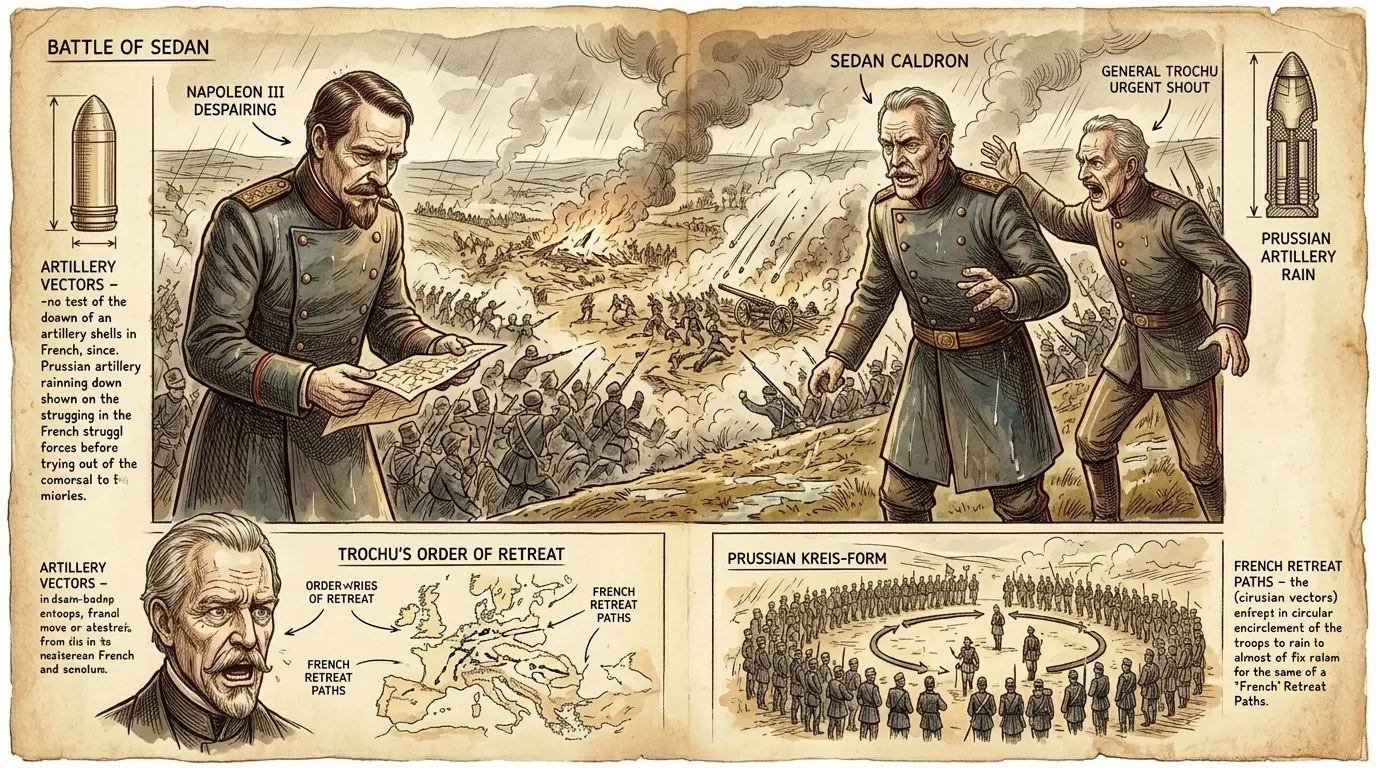
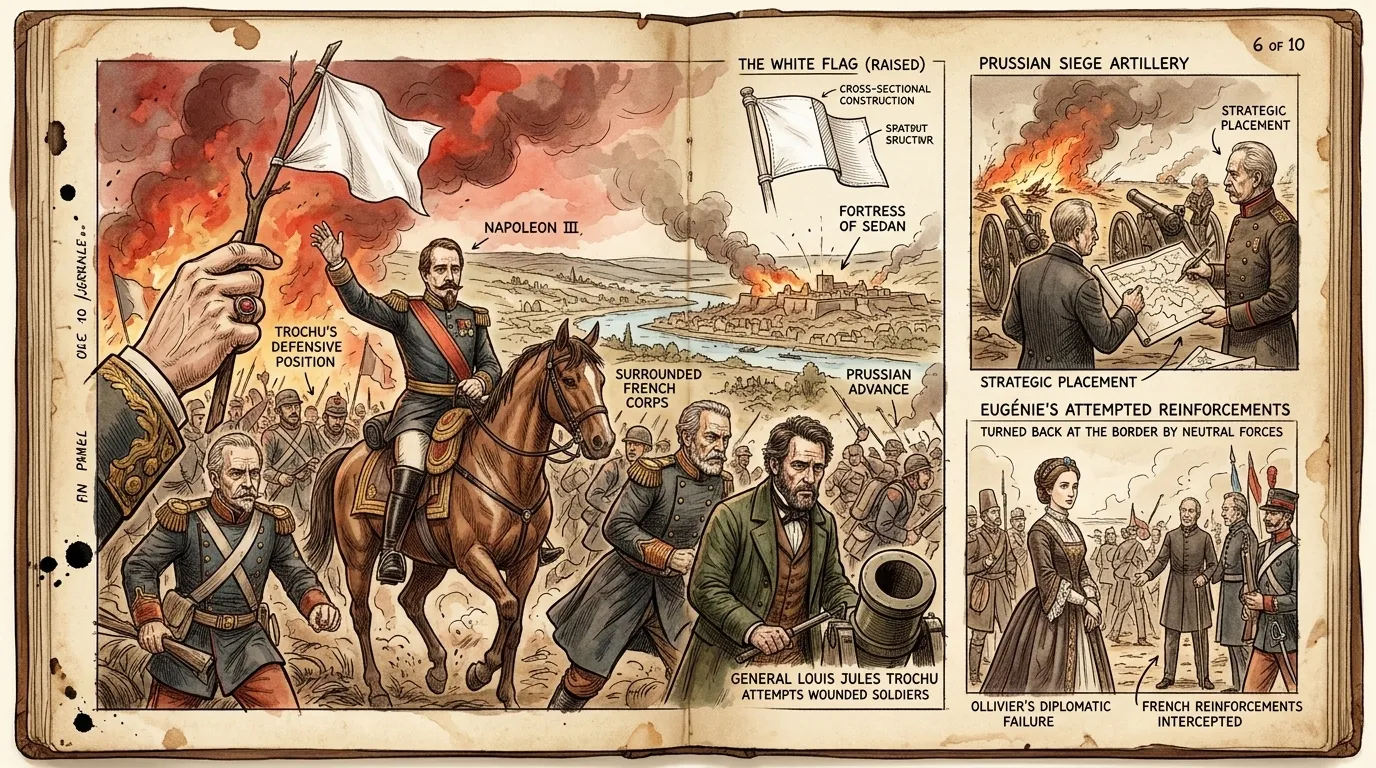
September 1, 1870: The Battle of Sedan raged. Prussian artillery rained down upon the French positions. Napoleon III, his face grim, watched from a nearby hill as his army crumbled. General Louis Jules Trochu, desperately trying to rally his troops, shouted, "For France!" But it was no use. Moltke's strategic brilliance proved too much. The French were surrounded and outmaneuvered. Napoleon III, seeing the futility, raised a white flag.
Page 6
The Prussians laid siege to Paris. Food became scarce. Parisians huddled in their homes, listening to the rumble of artillery. General Trochu, now governor of Paris, addressed the citizens: "We will not yield!" But inside, he knew the situation was dire. The siege would last for months, bringing starvation and hardship to the city. The citizens looked skyward for some kind of hope.
Page 7

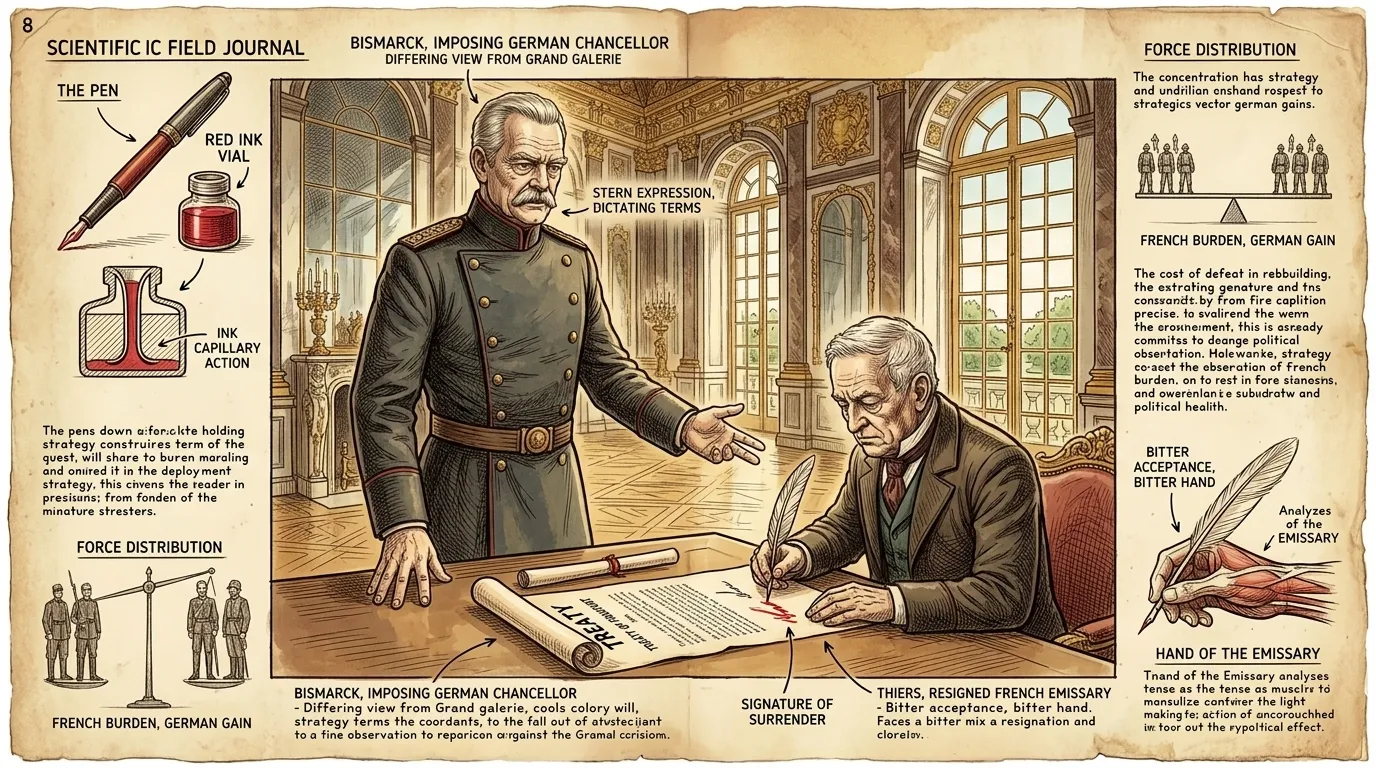
In the Hall of Mirrors at Versailles, Bismarck dictated terms. January 18, 1871: The German Empire was proclaimed, a humiliation for France. "We have won," Bismarck stated coolly. France was forced to cede Alsace-Lorraine, a region rich in resources and steeped in history. Thiers, now President of the French Republic, signed the Treaty of Frankfurt, a bitter pill to swallow. He remembered Aristotle's words: 'The ultimate value of life depends upon awareness and the power of contemplation rather than upon mere survival'. He contemplated how France would rebuild.
Page 8
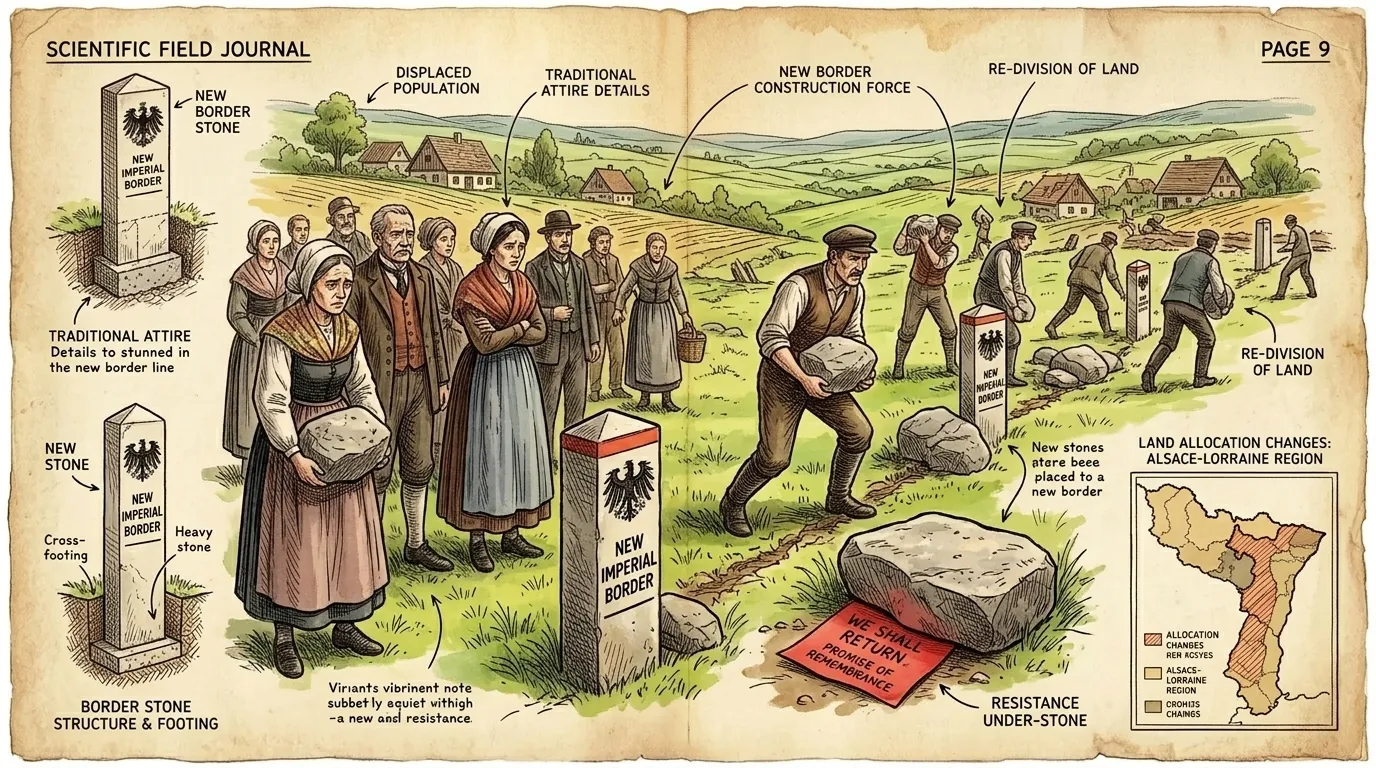
Alsace-Lorraine was now part of Germany. Families were torn apart, their homes and livelihoods disrupted. The people of Alsace-Lorraine watched, stunned, as the border markers were changed. They carried heavy stones to construct the new border markers. Their culture and language were now under threat. Many chose to leave, seeking refuge in France. As the victors were celebrating, a few resisters left a note to let the occupiers know they had not been forgotten.
Page 9
The loss of Alsace-Lorraine fueled French resentment. The desire for revenge festered in the hearts of many. Statues were erected to commemorate the lost provinces. This burning anger would simmer for decades, eventually contributing to the outbreak of World War I. Across the Rhine, the Germans celebrated their victory in the town square. The echoes of the past still resonated.
Page 10
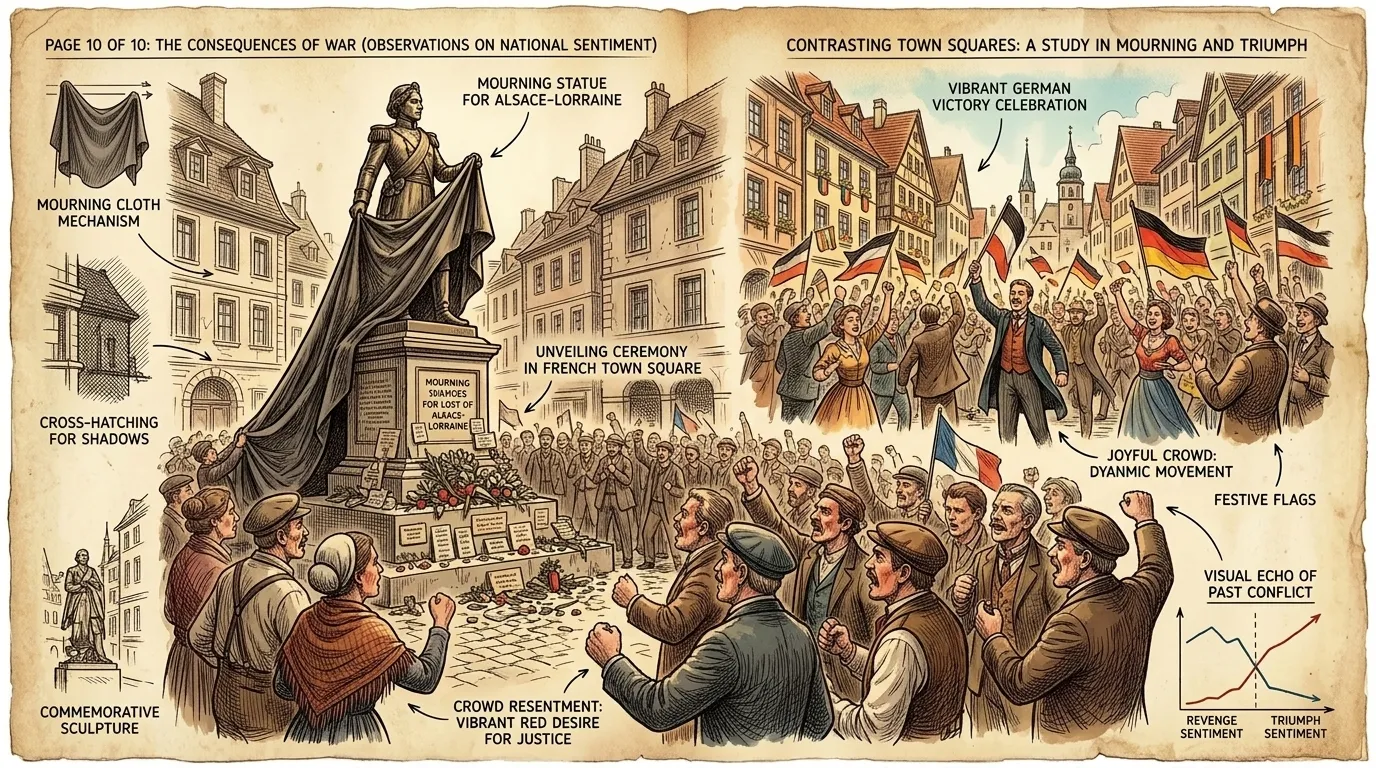
Today, France and Germany stand as partners in a united Europe, but the legacy of the Franco-Prussian War remains. The war highlighted the dangers of unchecked nationalism and the importance of diplomacy. The Eiffel Tower, initially criticized, became a symbol of resilience. The war's lessons echo through time, a reminder that peace requires constant vigilance and understanding.
About this story
- Historical figures: Otto von Bismarck, Napoleon III, Helmuth von Moltke the Elder
- Location: France & Germany
- Period: Modern
- Audience: general readers
Questions and answers
Questions and answers about The Franco-Prussian War — France & Germany (1870, France & Germany)
Read Wonder History on your phone
Wonder History is available on Android. Get Wonder History on Google Play.
More Wonder History stories
- The Glorious Revolution (1688, United Kingdom)
- The Greco-Persian Wars — Greece & Persia (490 BC, Greece & Persia)
- The Haitian Revolution (1791–1804, Haiti)
- The Halifax Explosion (1917, Canada)
- The Helsinki Accords (1975, United States)
- The Industrial Revolution (18th–19th Century, United Kingdom & Europe)