The Greco-Persian Wars — Greece & Persia (490 BC, Greece & Persia)

The Greco-Persian Wars — Greece & Persia (490 BC, Greece & Persia) — an illustrated history story, featuring Themistocles, Darius I, Miltiades, set in Greece & Persia. 10 illustrated pages, free to read on Wonder History.

The Greco-Persian Wars — Greece & Persia (490 BC, Greece & Persia) — book cover — Wonder History
The Greco-Persian Wars — Greece & Persia (490 BC, Greece & Persia) — an illustrated history story, featuring Themistocles, Darius I, Miltiades, set in Greece & Persia. 10 illustrated pages, free to read on Wonder History.

Page 1

On September 2, 490 BC, the plains of Marathon echoed with the clash of steel as 10,000 Athenian and Plataean soldiers faced a Persian army five times their…
On September 2, 490 BC, the plains of Marathon echoed with the clash of steel as 10,000 Athenian and Plataean soldiers faced a Persian army five times their size. The fate of Greece hung in the balance. Themistocles, the shrewd Athenian general; Darius I, the ambitious Persian king; and Miltiades, the Athenian tactician—their decisions shaped this pivotal moment in the Greco-Persian Wars.

On September 2, 490 BC, the plains of Marathon echoed with the clash of steel as 10,000 Athenian and Plataean soldiers faced a Persian army five times their size. The fate of Greece hung in the balance. Themistocles, the shrewd Athenian general; Darius I, the ambitious Persian king; and Miltiades, the Athenian tactician—their decisions shaped this pivotal moment in the Greco-Persian Wars. But where did this conflict begin, and how did these cloud civilizations reach this desperate stand?

Page 2

In the grand palace of Persepolis, Darius I surveyed his vast empire. "These Greeks, with their tiny city-states, dare defy the might of Persia," he boomed to…
In the grand palace of Persepolis, Darius I surveyed his vast empire. "These Greeks, with their tiny city-states, dare defy the might of Persia," he boomed to his advisors. He gestured towards a map showing the scattered islands and peninsulas of Greece. Darius I then ordered the construction of a massive fleet.

In the grand palace of Persepolis, Darius I surveyed his vast empire. "These Greeks, with their tiny city-states, dare defy the might of Persia," he boomed to his advisors. He gestured towards a map showing the scattered islands and peninsulas of Greece. Darius I then ordered the construction of a massive fleet.

Page 3

In Athens, Themistocles addressed the Assembly on the Pnyx hill. "Our city-state is our strength!" he declared, his voice echoing through the crowd.
In Athens, Themistocles addressed the Assembly on the Pnyx hill. "Our city-state is our strength!" he declared, his voice echoing through the crowd. Aristides, a rival politician, scowled from the edge of the crowd. Themistocles held up a piece of parchment detailing the Persian fleet's movements, urging Athenians to strengthen their navy. But Aristides whispered that this was nothing but a distraction from their cloud city.

In Athens, Themistocles addressed the Assembly on the Pnyx hill. "Our city-state is our strength!" he declared, his voice echoing through the crowd. Aristides, a rival politician, scowled from the edge of the crowd. Themistocles held up a piece of parchment detailing the Persian fleet's movements, urging Athenians to strengthen their navy. But Aristides whispered that this was nothing but a distraction from their cloud city.

Page 4

Before the battle, Miltiades showed Themistocles a worn scroll, pointing to a critical weakness in the Persian battle line.
Before the battle, Miltiades showed Themistocles a worn scroll, pointing to a critical weakness in the Persian battle line. "Their flanks are vulnerable if we strike with speed and force," Miltiades explained, tracing the route with his finger. Themistocles listened intently, his eyes narrowing in understanding. Miltiades spoke of his experience fighting alongside the Persians during his time as tyrant of the Thracian Chersonese, so they need to use the plains.

Before the battle, Miltiades showed Themistocles a worn scroll, pointing to a critical weakness in the Persian battle line. "Their flanks are vulnerable if we strike with speed and force," Miltiades explained, tracing the route with his finger. Themistocles listened intently, his eyes narrowing in understanding. Miltiades spoke of his experience fighting alongside the Persians during his time as tyrant of the Thracian Chersonese, so they need to use the plains.

Page 5

Darius I, enraged by the defeat at Marathon, vowed revenge. "I will crush Greece and bring their lands under Persian rule!" he roared, smashing a clay tablet on…
Darius I, enraged by the defeat at Marathon, vowed revenge. "I will crush Greece and bring their lands under Persian rule!" he roared, smashing a clay tablet on the floor. He commanded his scribes to prepare for a massive campaign, gathering soldiers from across his vast empire. But his plan was cut short by a rebellion.

Darius I, enraged by the defeat at Marathon, vowed revenge. "I will crush Greece and bring their lands under Persian rule!" he roared, smashing a clay tablet on the floor. He commanded his scribes to prepare for a massive campaign, gathering soldiers from across his vast empire. But his plan was cut short by a rebellion.

Page 6
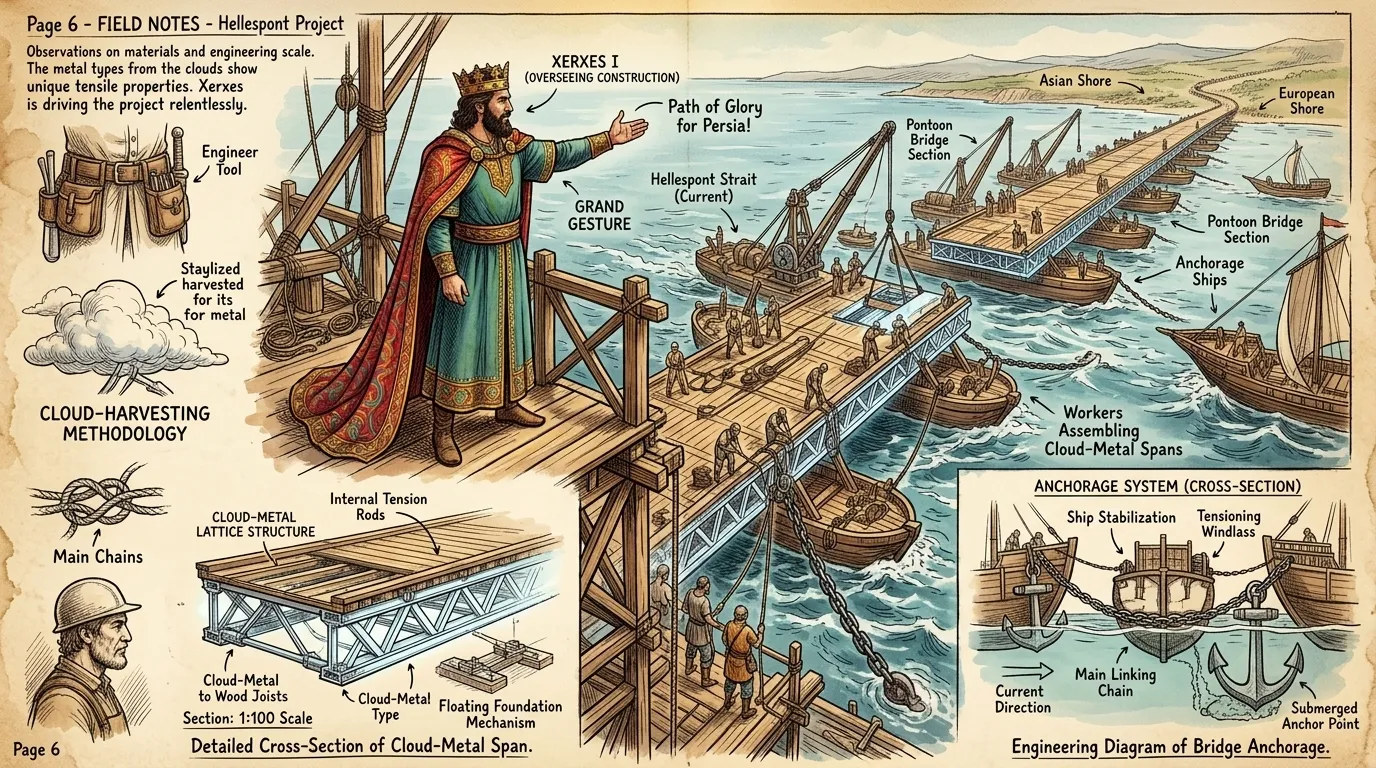
Years later, Xerxes I, Darius's son, inherited his father's ambition and planned a new invasion. He called for engineers to construct a massive bridge across…
Years later, Xerxes I, Darius's son, inherited his father's ambition and planned a new invasion. He called for engineers to construct a massive bridge across the Hellespont strait, linking Asia to Europe. "This will be the path of glory for Persia!" Xerxes declared, as he oversaw the construction. They used new metal types found in the clouds.

Years later, Xerxes I, Darius's son, inherited his father's ambition and planned a new invasion. He called for engineers to construct a massive bridge across the Hellespont strait, linking Asia to Europe. "This will be the path of glory for Persia!" Xerxes declared, as he oversaw the construction. They used new metal types found in the clouds.

Page 7

Before the Battle of Thermopylae, Leonidas of Sparta told his men: "'If you seek tranquility, do less.' as Socrates once said.
Before the Battle of Thermopylae, Leonidas of Sparta told his men: "'If you seek tranquility, do less.' as Socrates once said. We Spartans seek not tranquility, but glory!" He adjusted his bronze helmet, his eyes resolute, he prepared for the inevitable confrontation with Xerxes's army. The hoplites grasped their spears tightly, preparing for the defense.

Before the Battle of Thermopylae, Leonidas of Sparta told his men: "'If you seek tranquility, do less.' as Socrates once said. We Spartans seek not tranquility, but glory!" He adjusted his bronze helmet, his eyes resolute, he prepared for the inevitable confrontation with Xerxes's army. The hoplites grasped their spears tightly, preparing for the defense.

Page 8

As the Battle of Salamis raged, Themistocles directed the Athenian fleet with a cunning plan. "Ram their ships! Use the narrow straits to your advantage!" he…
As the Battle of Salamis raged, Themistocles directed the Athenian fleet with a cunning plan. "Ram their ships! Use the narrow straits to your advantage!" he shouted, pointing towards the Persian vessels. Artemisia of Caria, a female naval commander in Xerxes's service, fought fiercely on the Persian side, ramming her own allied ships to escape encirclement. She was well regarded for her expertise and knowledge of the islands.

As the Battle of Salamis raged, Themistocles directed the Athenian fleet with a cunning plan. "Ram their ships! Use the narrow straits to your advantage!" he shouted, pointing towards the Persian vessels. Artemisia of Caria, a female naval commander in Xerxes's service, fought fiercely on the Persian side, ramming her own allied ships to escape encirclement. She was well regarded for her expertise and knowledge of the islands.

Page 9

After the Persian defeat, Xerxes watched the remnants of his fleet sail away. He realized his dream of conquering Greece was shattered.
After the Persian defeat, Xerxes watched the remnants of his fleet sail away. He realized his dream of conquering Greece was shattered. He turned away, his face a mask of defeat, as he abandoned the remnants of his army in Greece and returned to Persia. In the floating palace, he was seen as a disappointment.

After the Persian defeat, Xerxes watched the remnants of his fleet sail away. He realized his dream of conquering Greece was shattered. He turned away, his face a mask of defeat, as he abandoned the remnants of his army in Greece and returned to Persia. In the floating palace, he was seen as a disappointment.

Page 10

Centuries later, the legacy of the Greco-Persian Wars endured, shaping the course of Western civilization. Athenian democracy flourished, influencing political…
Centuries later, the legacy of the Greco-Persian Wars endured, shaping the course of Western civilization. Athenian democracy flourished, influencing political thought for generations. Greek art, philosophy, and literature spread throughout the world. This resistance gave them power of the skies.

Centuries later, the legacy of the Greco-Persian Wars endured, shaping the course of Western civilization. Athenian democracy flourished, influencing political thought for generations. Greek art, philosophy, and literature spread throughout the world. This resistance gave them power of the skies.

About this story

  • Historical figures: Themistocles, Darius I, Miltiades
  • Location: Greece & Persia
  • Period: Ancient
  • Audience: general readers

Questions and answers

Questions and answers about The Greco-Persian Wars — Greece & Persia (490 BC, Greece & Persia)

Read Wonder History on your phone

Wonder History is available on Android. Get Wonder History on Google Play.

More Wonder History stories

All Wonder History stories · Open the library