The Halifax Explosion (1917, Canada)
The Halifax Explosion (1917, Canada) — an illustrated history story, featuring Sir Robert Borden, Charles E. Townsend, Francis Mackey, set in Canada. 10 illustrated pages, free to read on Wonder History.
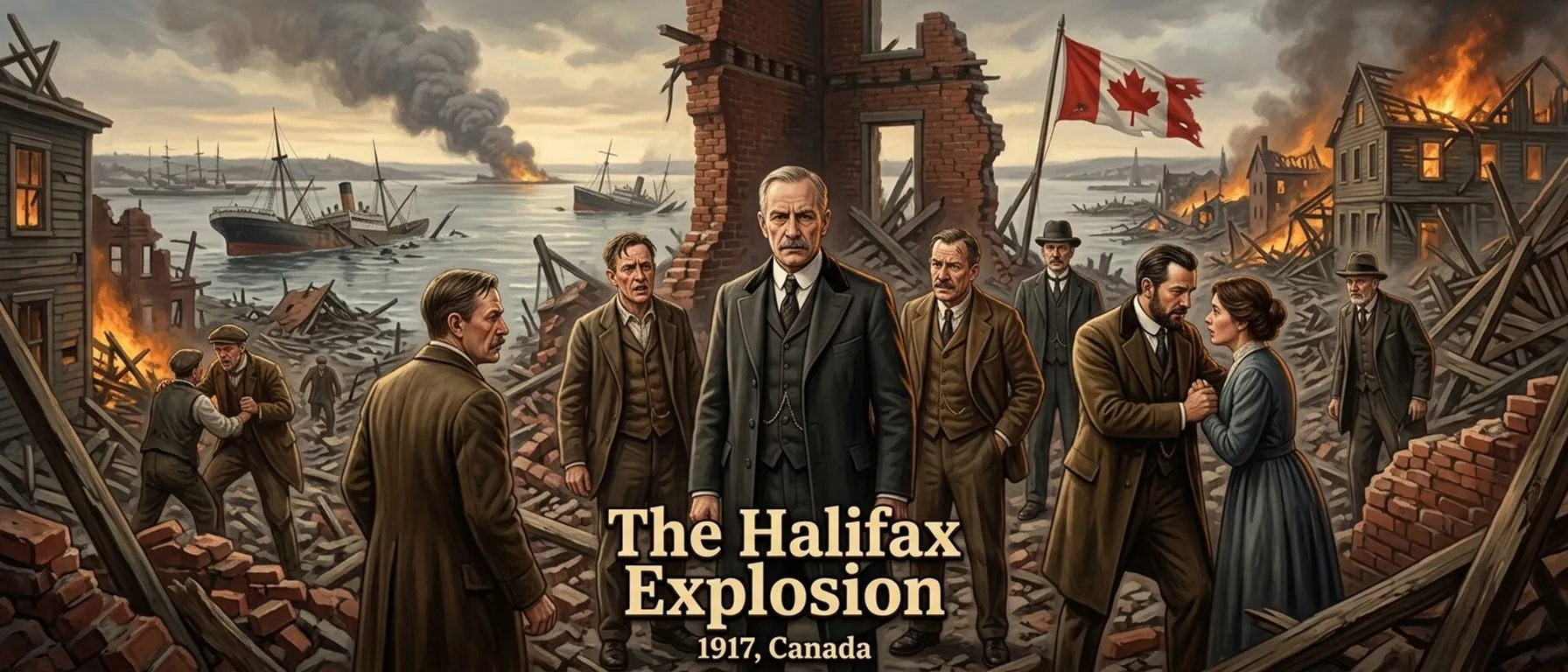
Page 1
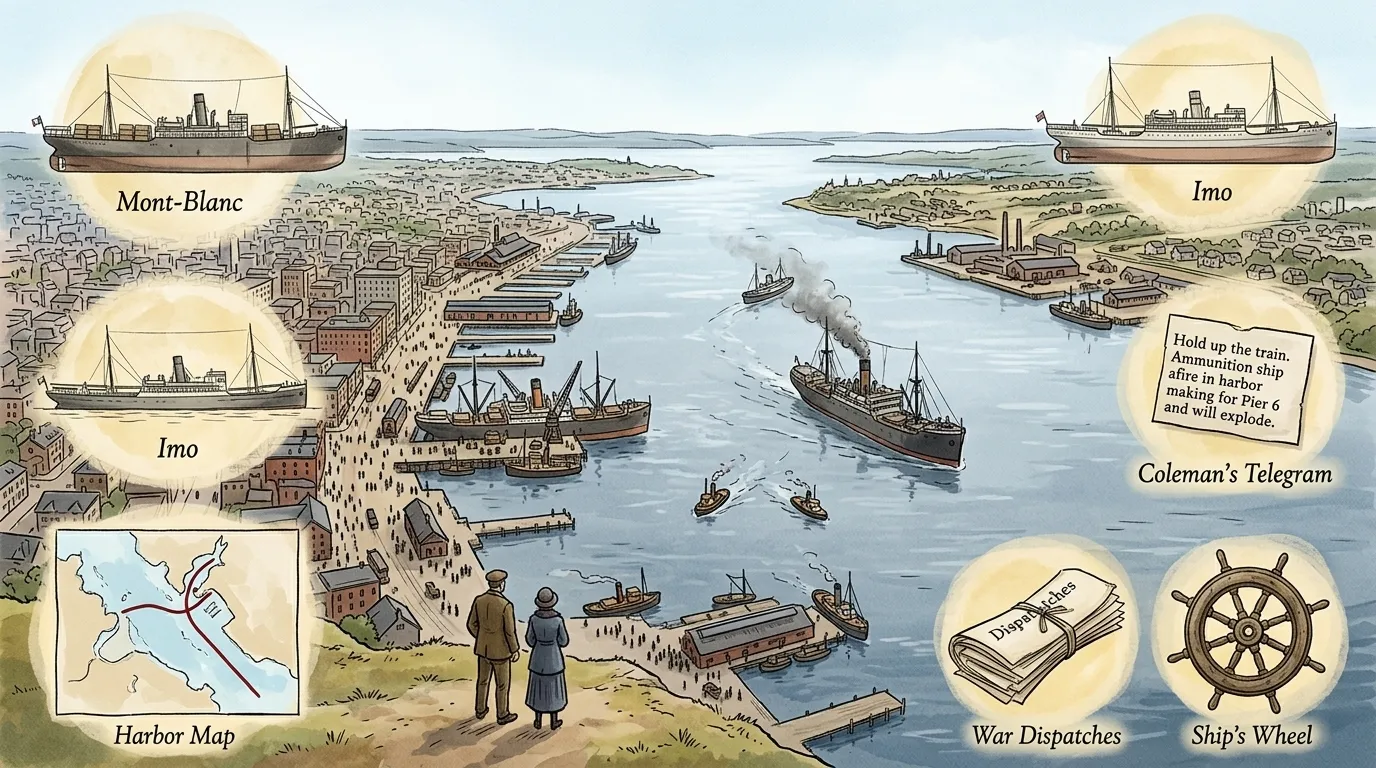
The bakery shook. Glass shattered. Aimé Le Médec, the captain of the Mont-Blanc, wrestled with the wheel, but it was too late. Vincent Coleman, a dispatcher for the Intercolonial Railway, hammered out a desperate message: 'Hold up the train. Ammunition ship afire in harbor making for Pier 6 and will explode.' How had Halifax, Nova Scotia, reached this catastrophic moment?
Page 2
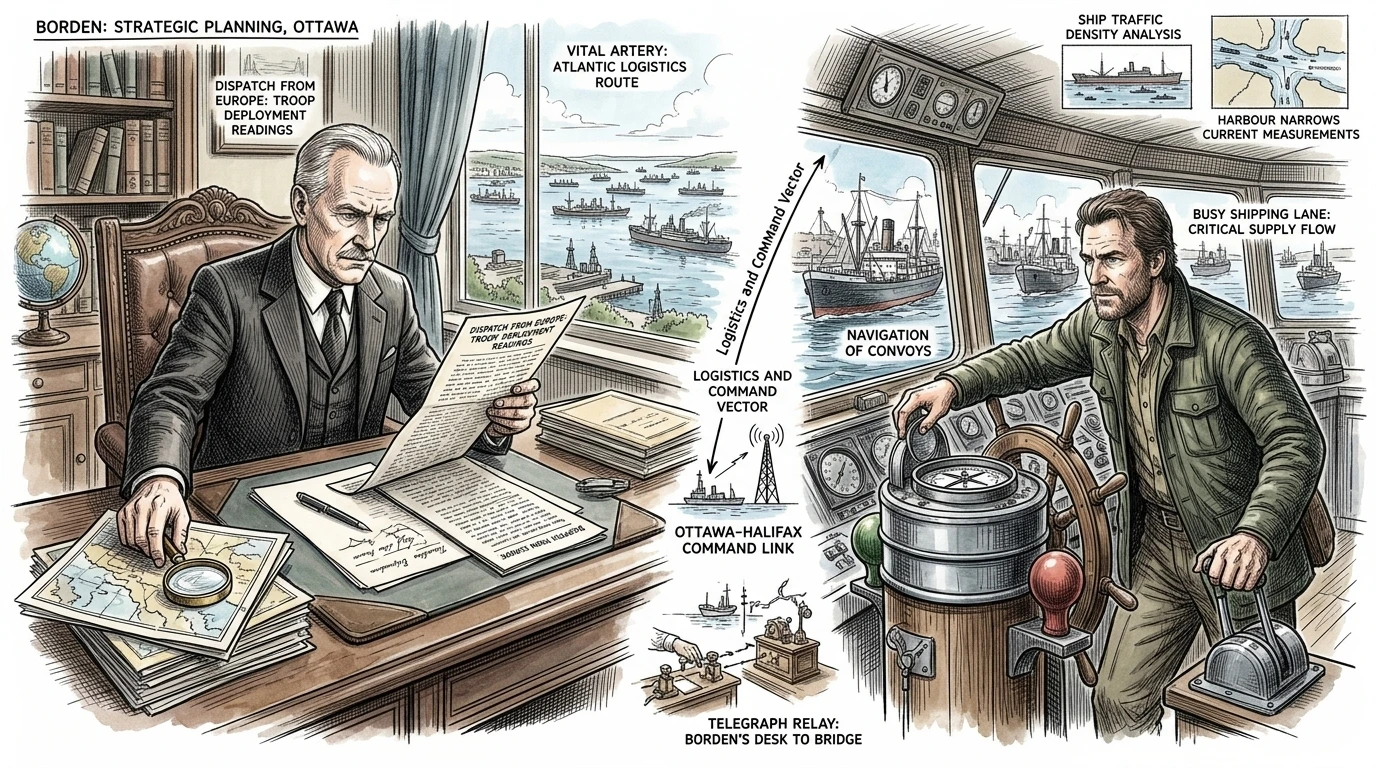
In Ottawa, Sir Robert Borden, the Prime Minister of Canada, read dispatches detailing the relentless war in Europe. Halifax, a key naval base, bustled with ships carrying vital supplies. The harbor was a crucial artery, but also a potential chokepoint. Francis Mackey, a harbor pilot, expertly guided ships through the narrows every day.
Page 3
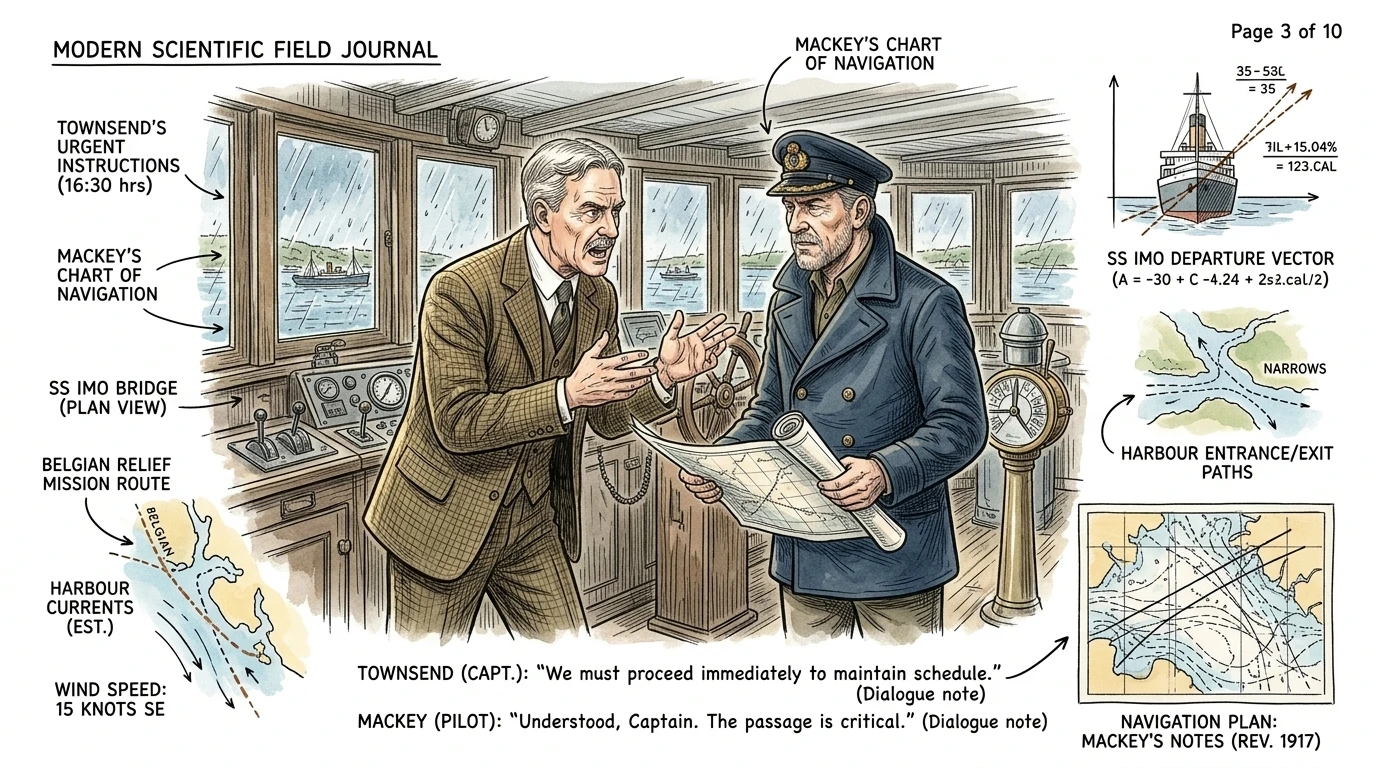
Charles E. Townsend, captain of the Norwegian vessel, Imo, felt the pressure to depart Halifax quickly. The Imo, chartered to the Belgian Relief Commission, needed to reach New York for supplies. 'Time is of the essence, Mr. Mackey,' Townsend said, his brow furrowed. 'Every day lost means more suffering in Belgium.' Mackey nodded grimly.
Page 4
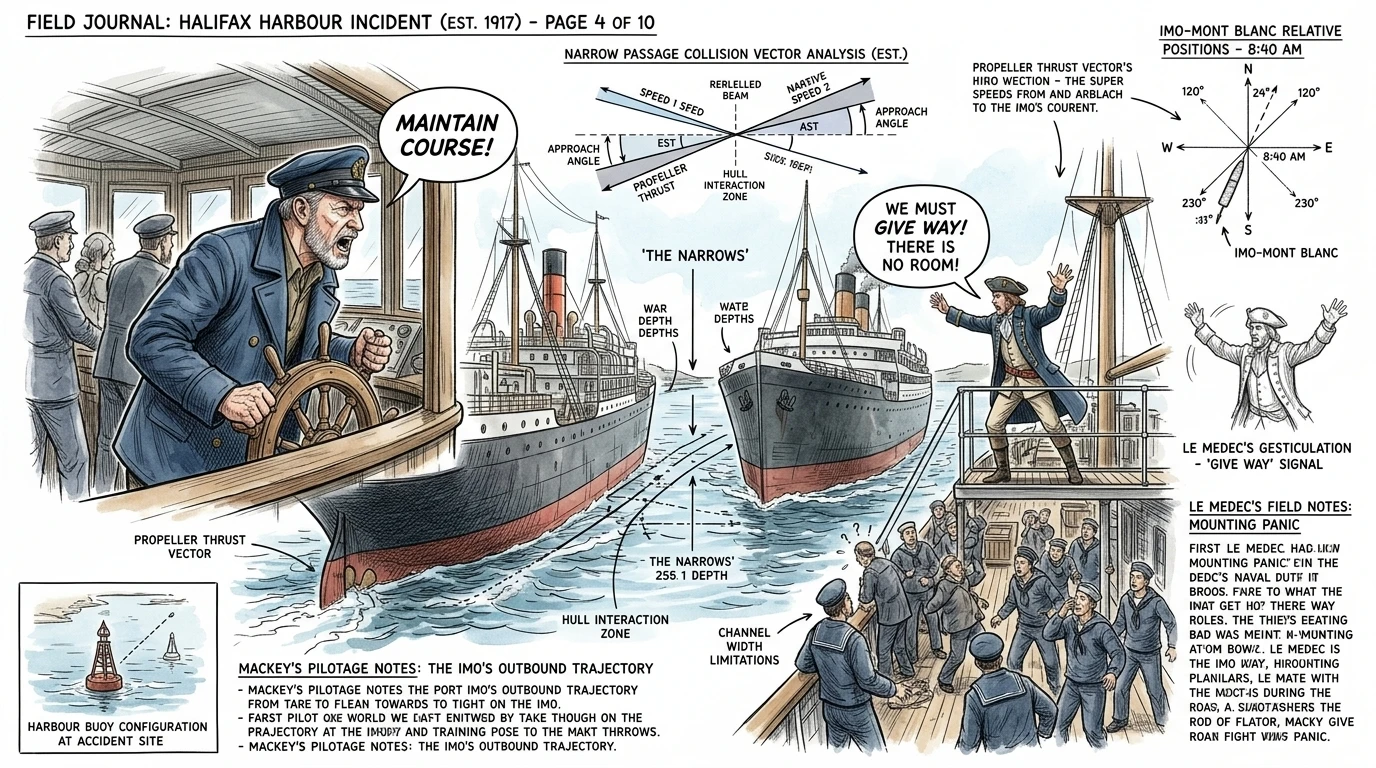
On December 6, 1917, the Imo, with Mackey at the helm, began its journey out of the harbor. At the same time, the Mont-Blanc, loaded with explosives, was entering the narrows. 'Maintain course!' Mackey shouted, his voice tight. Le Medec responded, 'We must give way! There is no room!'
Page 5
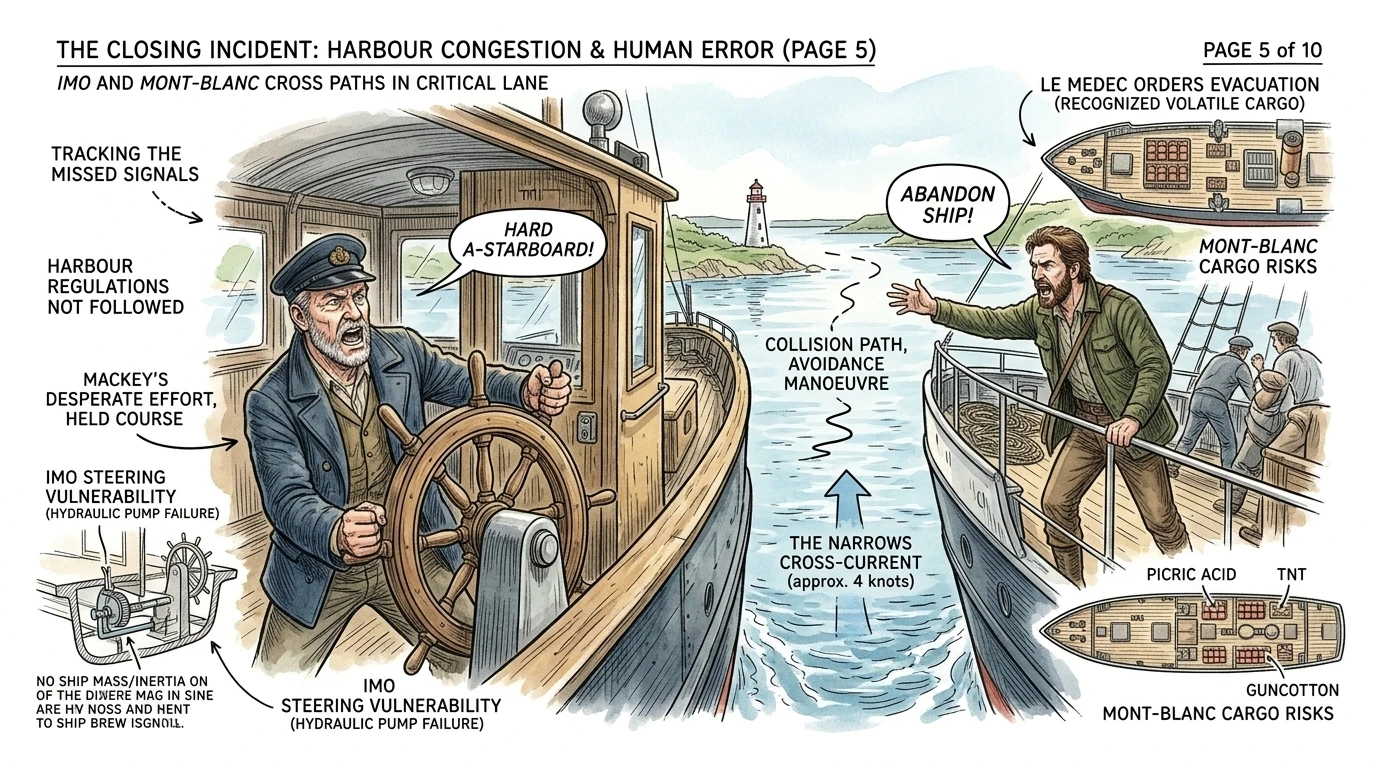
The Imo, hugging the Dartmouth side, and the Mont-Blanc, laden with wartime explosives, miscommunicated their intentions. A collision was unavoidable. 'Hard a-starboard!' Mackey roared, fighting to steer the Imo away. 'Abandon ship!' Le Medec yelled, knowing what his cargo would do.
Page 6
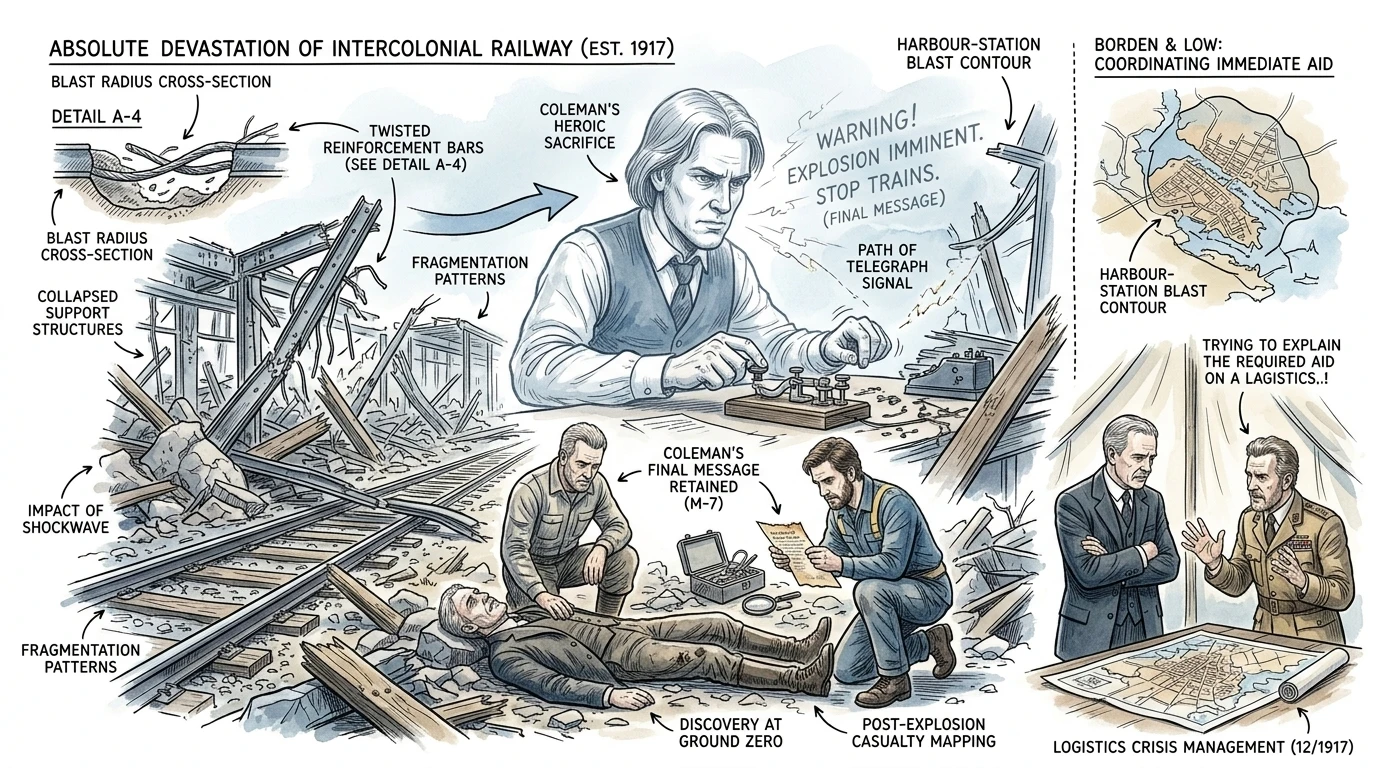
The explosion ripped through Halifax. The Intercolonial Railway station was leveled. Buildings crumbled. Vincent Coleman, true to his post, continued to send his warning until the very end. As Coleman's body was recovered, a transcript of his railway telegram was found clutched in his hand.
Page 7
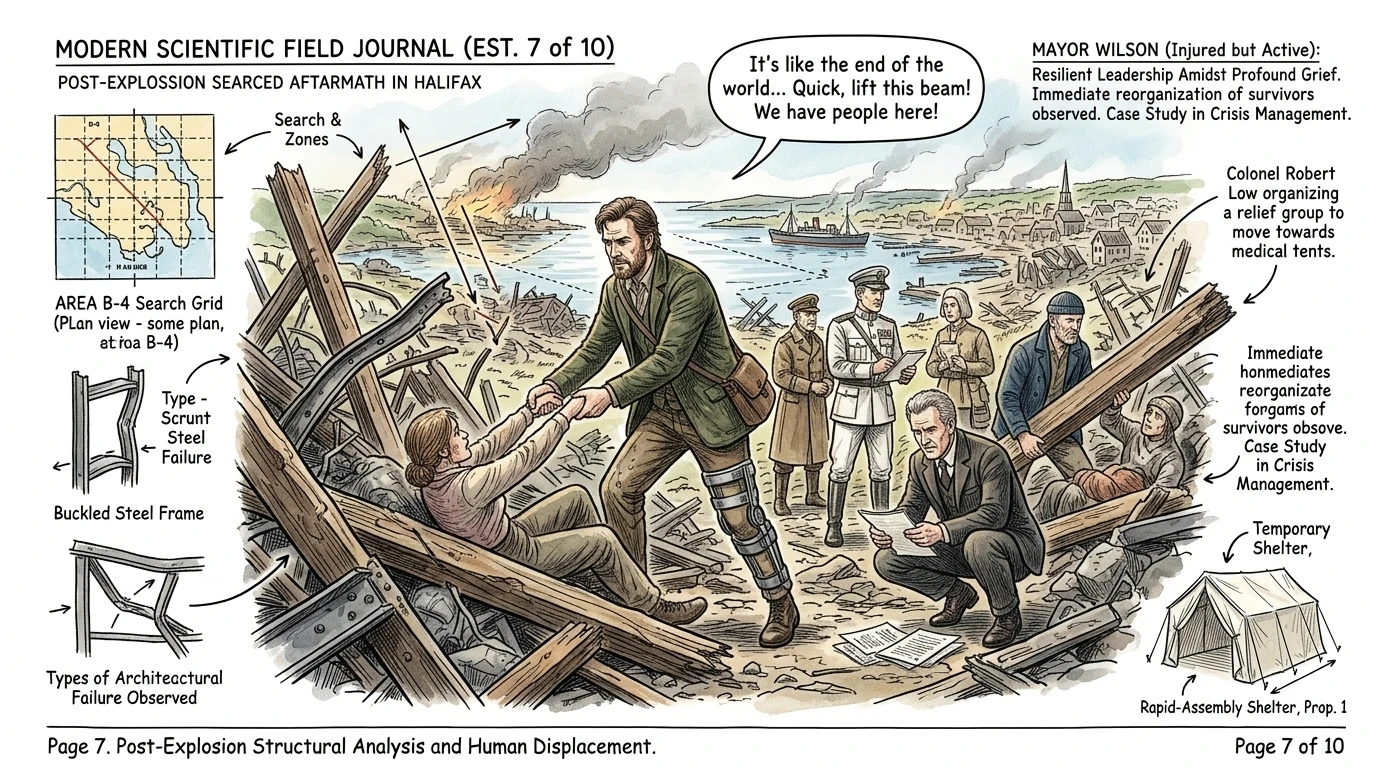
'It's like the end of the world,' John Somers Wilson, a survivor, murmured, staring at the destruction. Yet, amidst the chaos, Wilson, a former soldier, began organizing rescue efforts. He led the survivors in the painful work of pulling others from the wreckage, all whilst limping from a broken leg from the blast.
Page 8
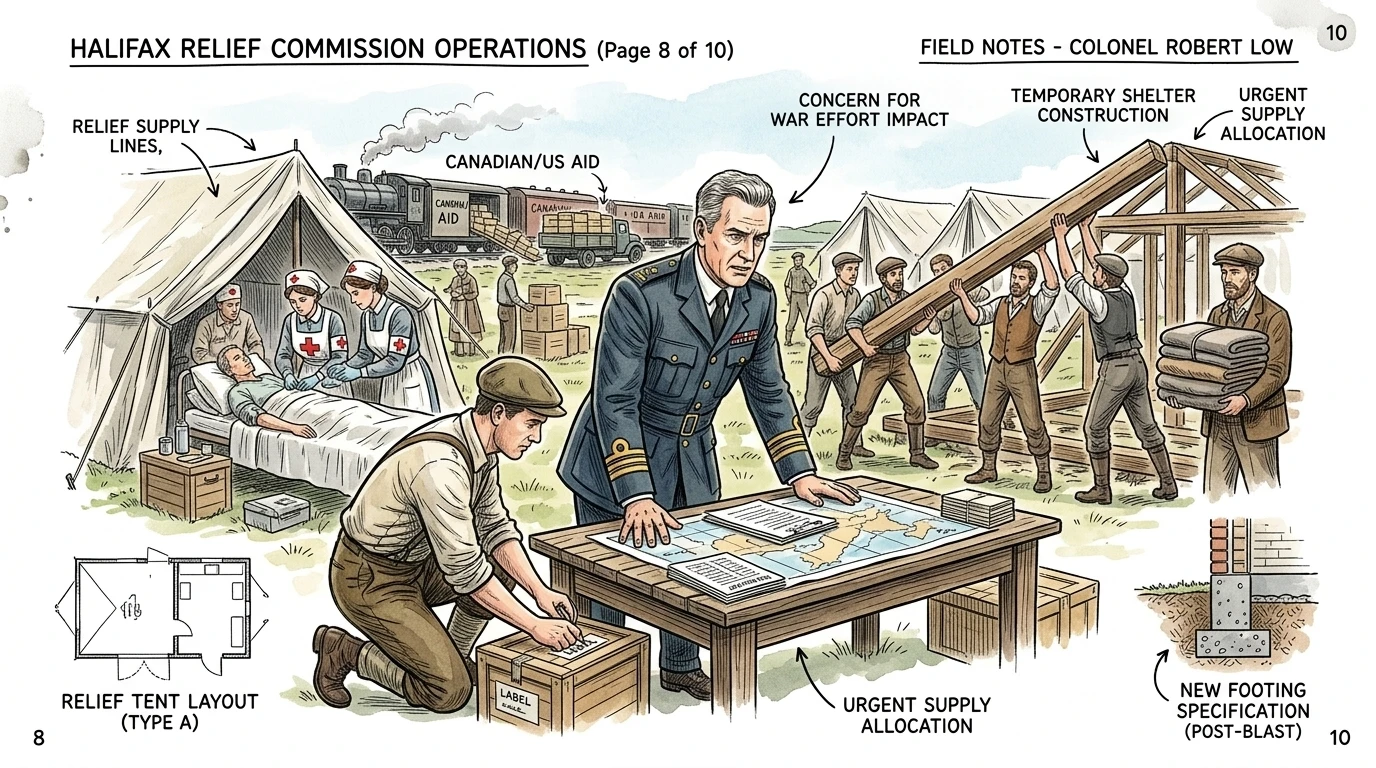
Colonel Robert Low, in charge of the militia, coordinated the arrival of aid from across Canada and the United States. Supplies poured in, medical teams arrived, and temporary shelters were erected. However, Low worried that the disaster would set the war effort back, and that the troops would be without supplies.
Page 9
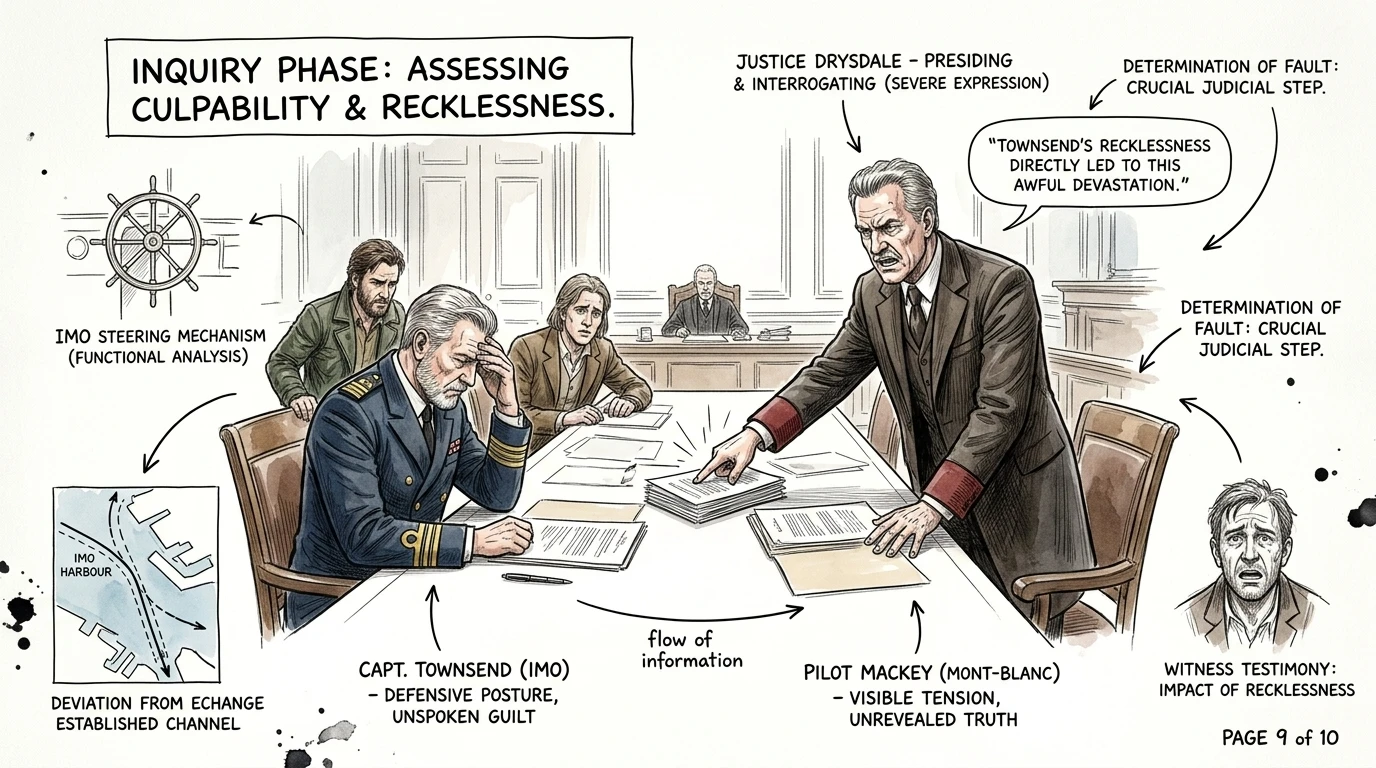
Justice Arthur Drysdale led the Inquiry into the disaster. Blame was assigned, but the deeper questions lingered: Could the collision have been avoided? Drysdale declared, 'Townsend's recklessness directly led to this awful devastation.' But Mackey's and Le Medec's culpability lingered, unspoken.
Page 10
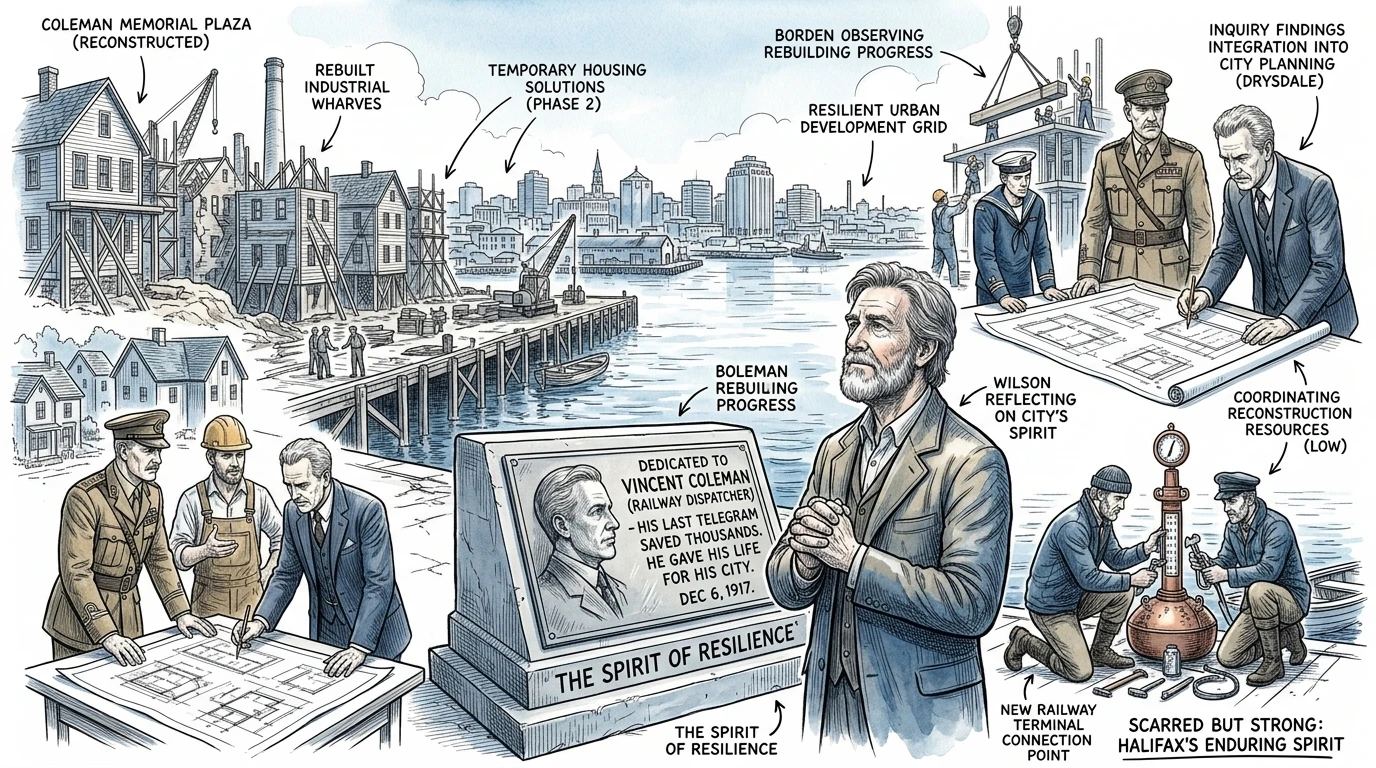
Halifax rebuilt, but the scar remained. Coleman's selfless act saved countless lives, a testament to courage in the face of disaster. As Wilson Somers would say years later, paraphrasing Shakespeare, 'Though this be madness, yet there is method in it.' The Halifax Explosion stands as a grim reminder of the fragility of life and the enduring power of human resilience.
About this story
- Historical figures: Sir Robert Borden, Charles E. Townsend, Francis Mackey
- Location: Canada
- Period: Modern
- Audience: general readers
Questions and answers
Questions and answers about The Halifax Explosion (1917, Canada)
Read Wonder History on your phone
Wonder History is available on Android. Get Wonder History on Google Play.
More Wonder History stories
- The Helsinki Accords (1975, United States)
- The Industrial Revolution (18th–19th Century, United Kingdom & Europe)
- The Maratha Empire Expansion — India (1761, India)
- The Meiji Restoration — Japan (1868, Japan)
- The Mongol Conquests — Asia & Europe (1241, Asia & Europe)
- The Norse Discovery of North America (1000, North America)