The Hundred Years’ War — United Kingdom & France (1337)
The Hundred Years’ War — United Kingdom & France (1337) — an illustrated history story, featuring King Henry V, King Edward III, King Philip VI, set in United Kingdom & France. 10 illustrated pages, free to read on Wonder History.
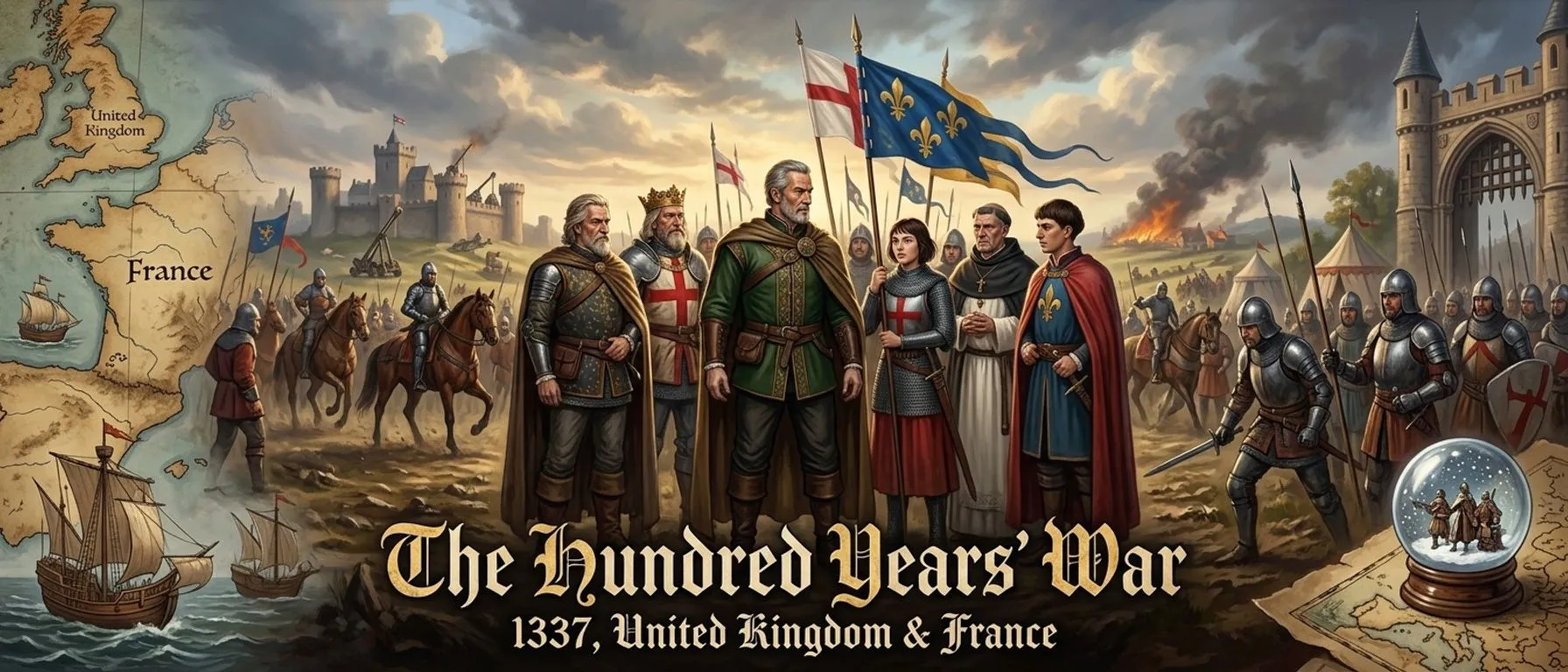
Page 1
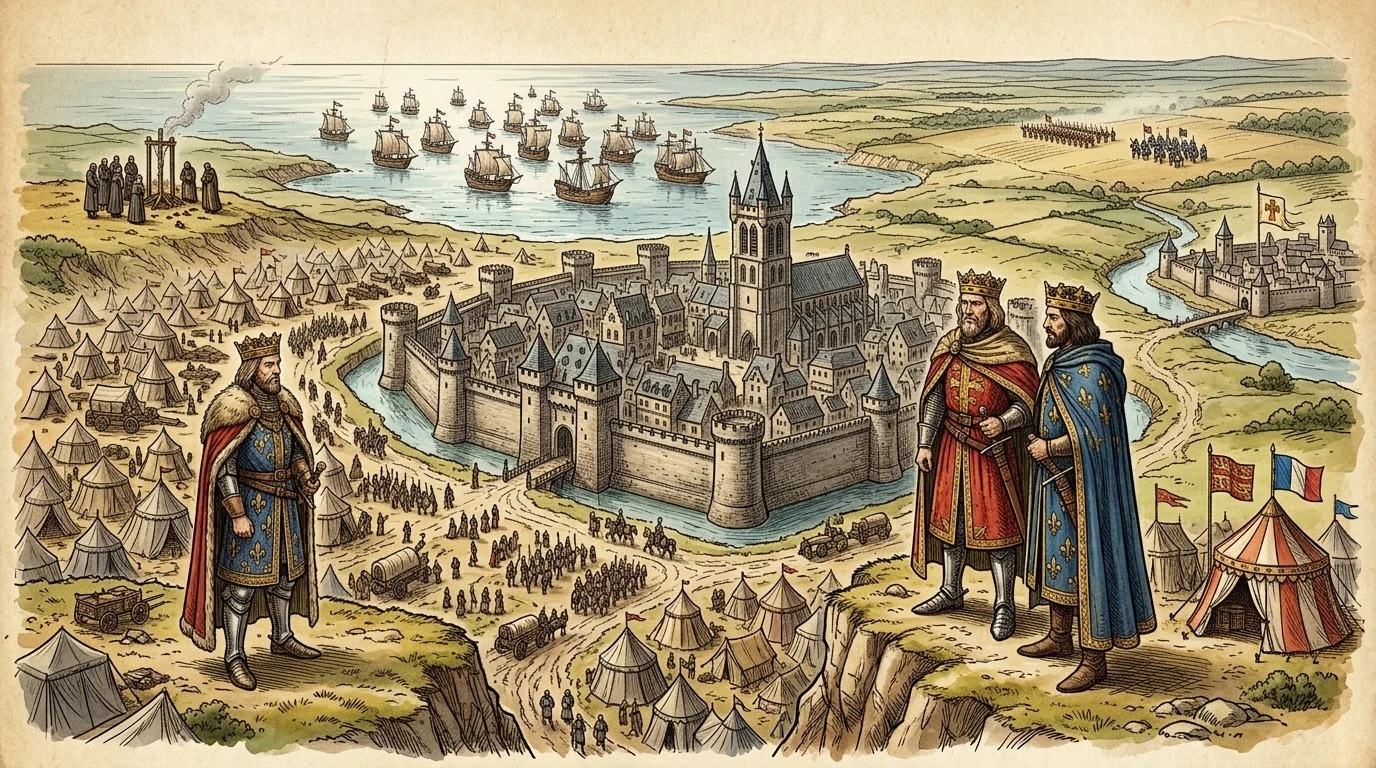
In the frosty year of 1337, inside a miniature snow globe kingdom balanced precariously on a child's forgotten windowsill, King Edward III of England, the ambitious claimant to the French throne, faced King Philip VI of France, the determined defender of his realm. Geoffrey Chaucer, a young, observant courtier, watched with a mix of apprehension and curiosity. John Talbot, a seasoned English commander, stood ready for battle. But how did this seemingly small dispute inside a discarded plaything ignite a century of conflict? On the windswept fields of this frozen world, their destinies were about to clash, yet where did this icy war truly begin?
Page 2
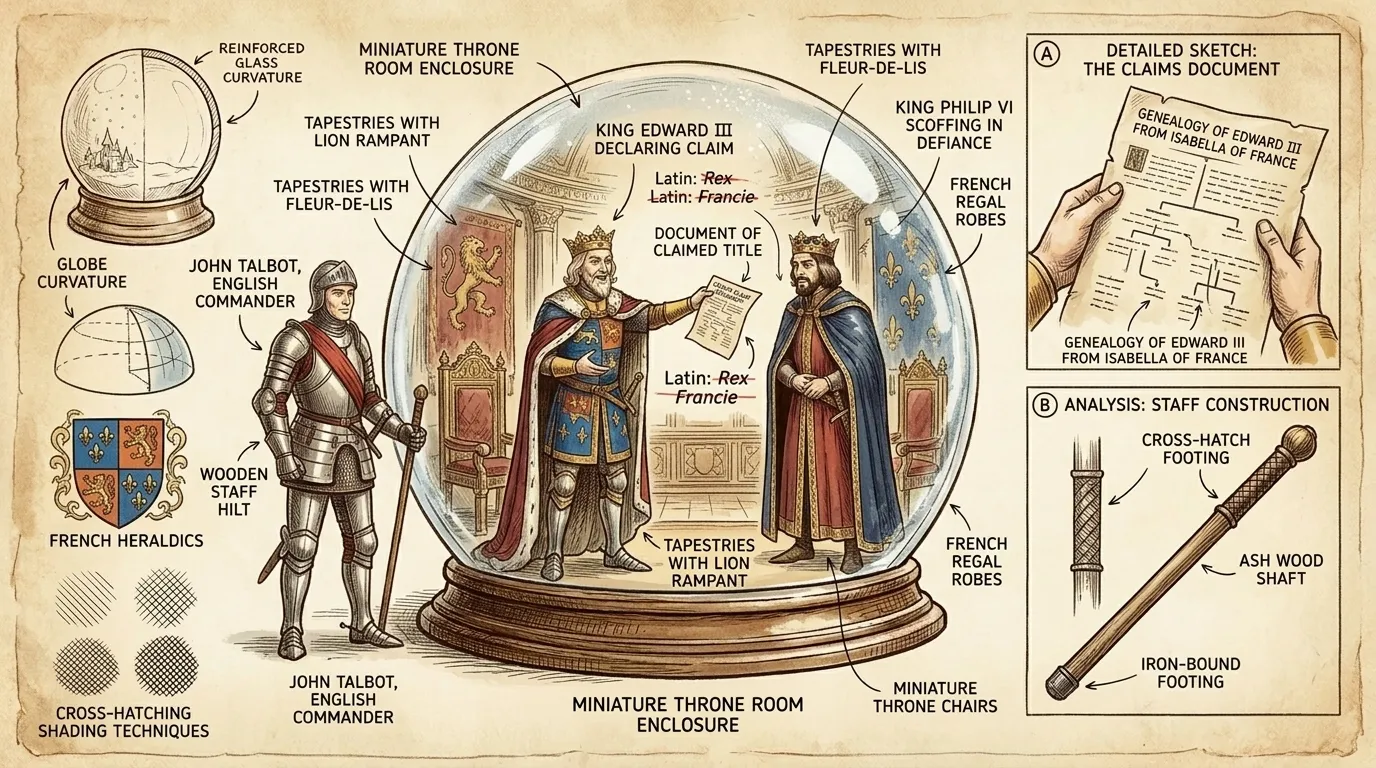
"The French crown is rightfully ours, Philip!" King Edward III declared in his grand throne room. John Talbot, stood beside Edward, his hand resting on the hilt of his sword. "My mother was Isabella, daughter of Philip IV. The line of succession is clear!" But King Philip VI scoffed. "The Salic law prevents inheritance through the female line. The French throne belongs to a Valois, not an Englishman!" The argument inside the snowglobe grew loud. "This is not your realm," Talbot muttered, his eyes narrowing, "We'll make it so."
Page 3
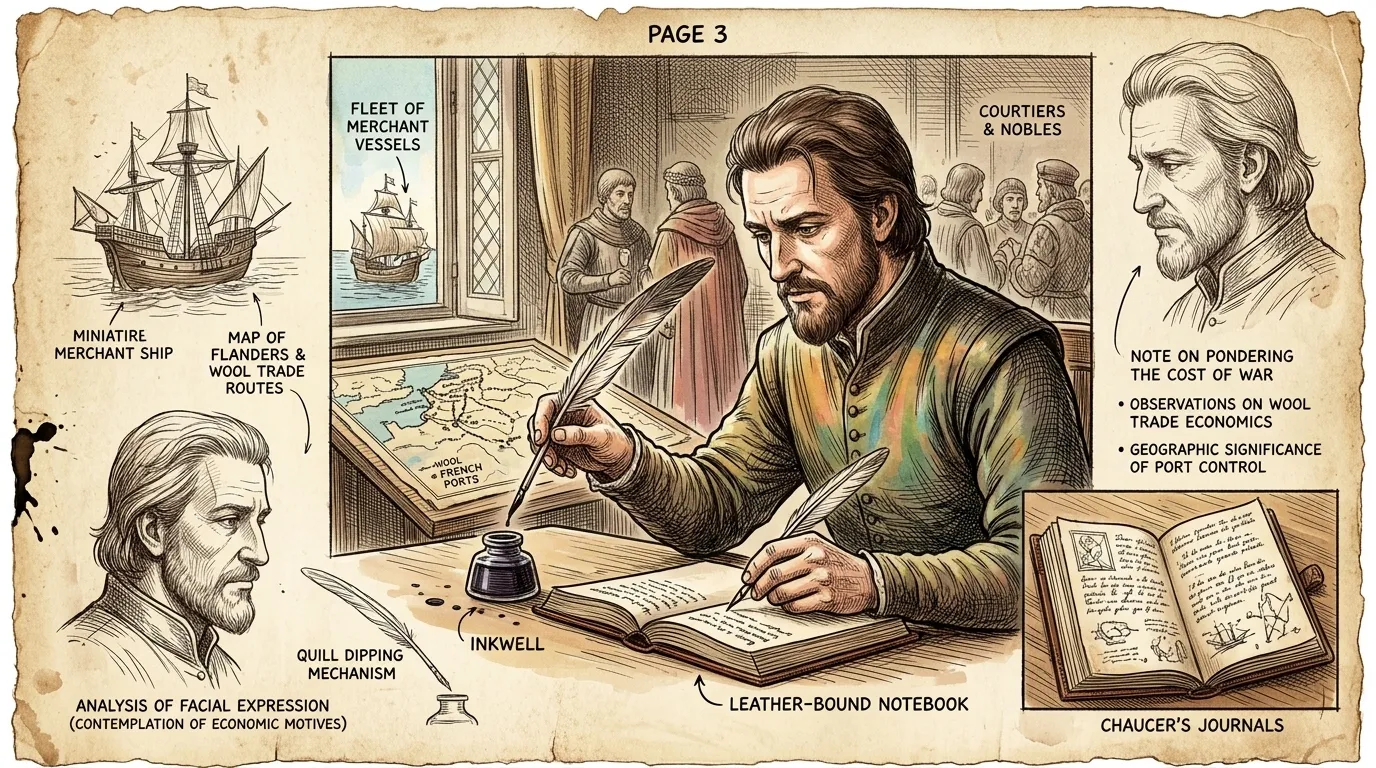
Geoffrey Chaucer, scribbling in his notebook, overheard the royal advisors discussing finances. "The wool trade with Flanders is vital, but the French King taxes it heavily!" one advisor exclaimed. Chaucer paused, dipping his quill, realizing the economic motives behind the impending conflict. "If we control the French ports," another added, "England's wealth will be unmatched!" "As Aristotle said," Chaucer mused softly, remembering the philosopher's words, "'The ultimate value of life depends upon awareness and the power of contemplation rather than upon mere survival'— and both our kingdoms are now threatened."
Page 4
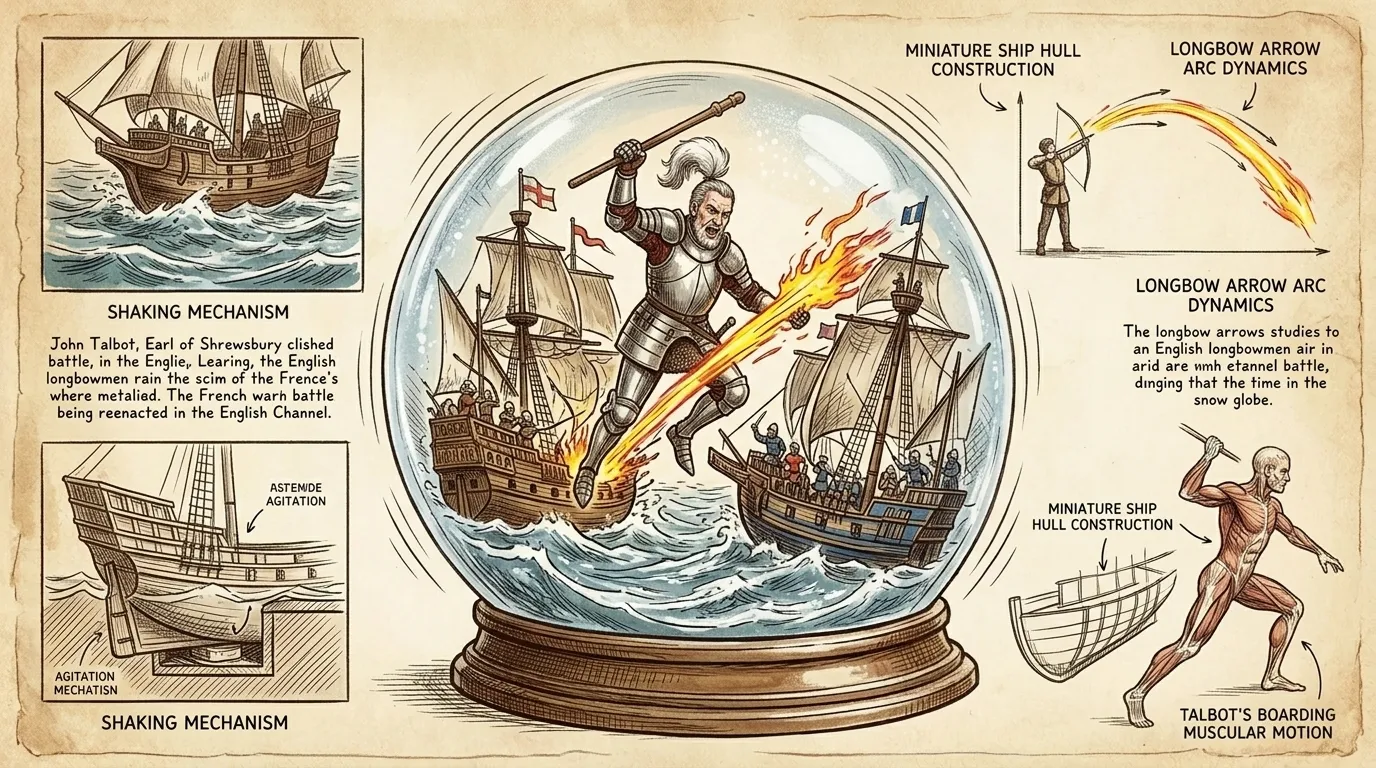
The war began at sea, with English and French ships clashing in the English Channel. "Prepare to board!" John Talbot shouted, his voice barely audible above the roar of battle. English longbowmen rained arrows onto the French decks, while French soldiers hurled insults and returned fire. The small snow globe violently shook. "For England!" Talbot bellowed, leaping onto the enemy ship, sword raised high.
Page 5
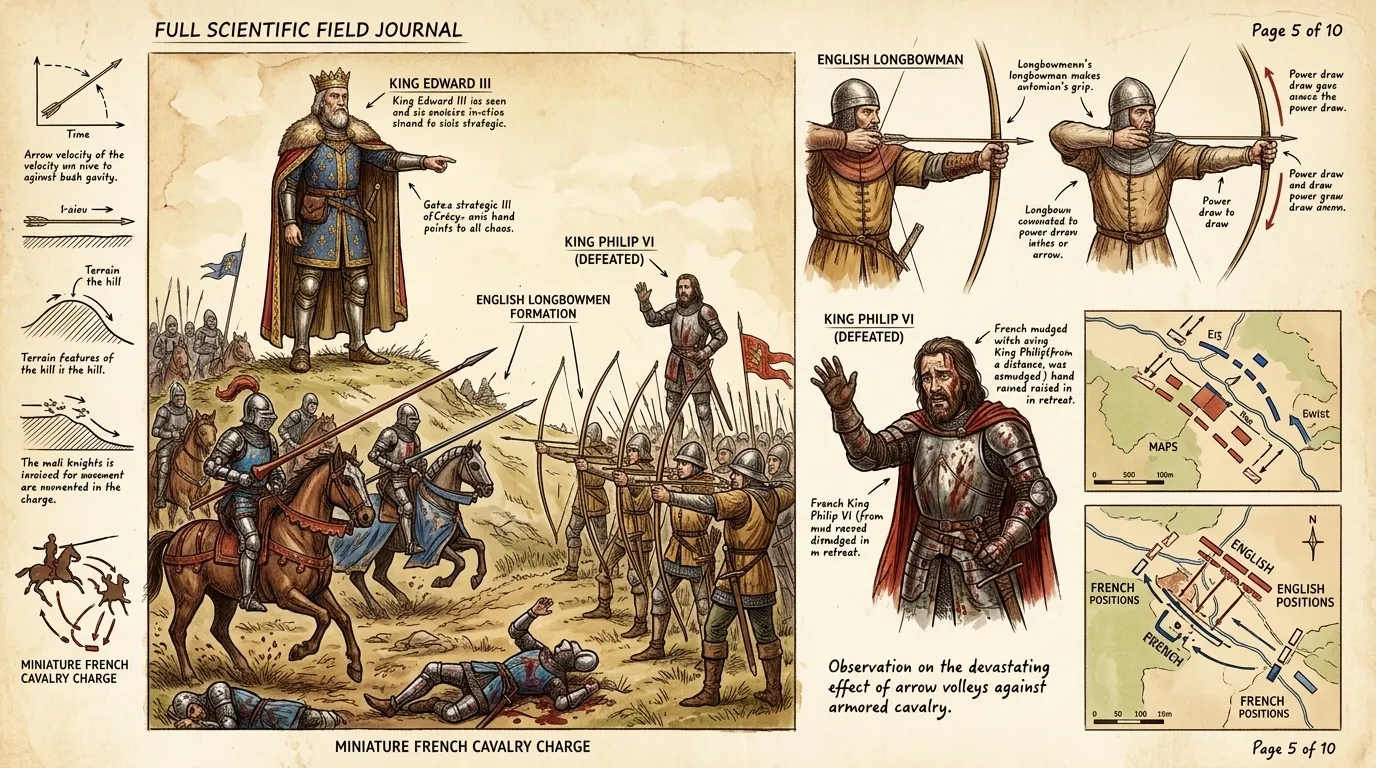
King Edward III stood upon a hill, surveying the battlefield at Crécy. French knights charged uphill against the English longbowmen. King Philip VI, leading the French army, watched in dismay as his knights fell in droves. "They are unstoppable!" Philip cried, his armor stained with mud and dust. He ordered a retreat, but it was too late; the field lay covered with French dead.
Page 6
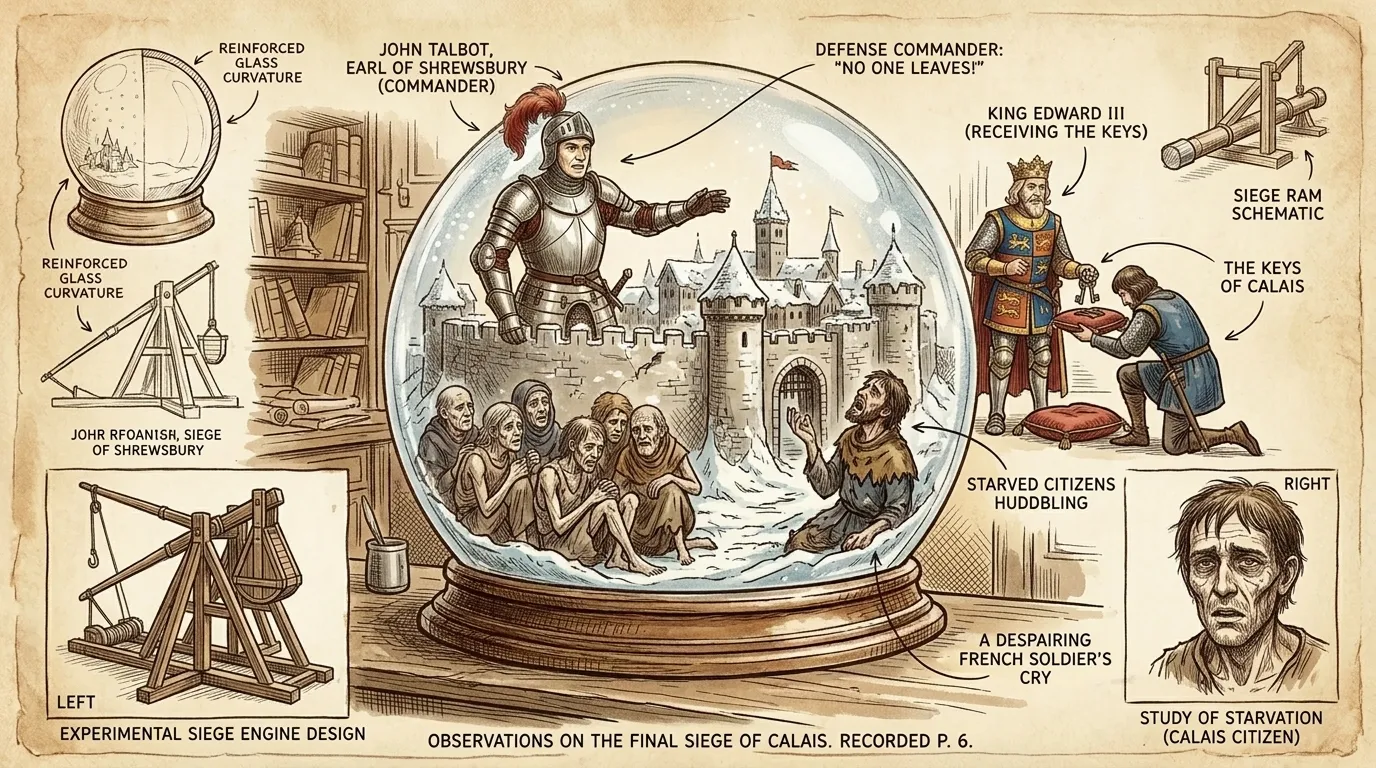
The English laid siege to Calais, a vital French port. "No one leaves this city!" John Talbot commanded, patrolling the walls. The citizens of Calais, starving and desperate, prepared for the inevitable surrender. "We can hold no longer," a French soldier cried, his voice hoarse. King Edward demanded the city's keys and six prominent citizens as hostages.
Page 7
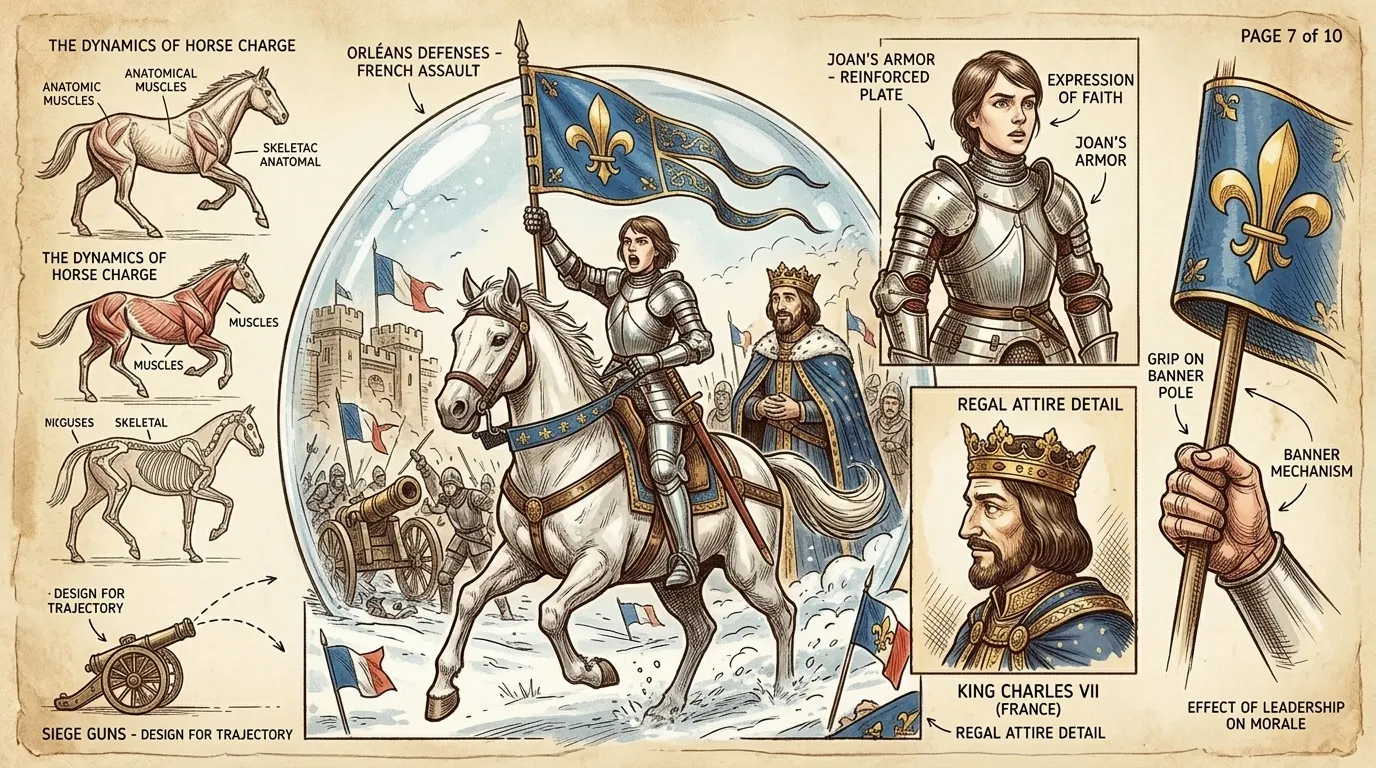
Years later, a young peasant girl named Joan of Arc emerged in France. "I have heard the voices of saints," she declared to the Dauphin Charles. "They command me to drive the English from France and crown you King in Reims!" Charles, hesitant but desperate, granted her command of the French army. Joan, clad in shining armor, raised her banner high. "God is with us!" she shouted, leading the charge at Orléans.
Page 8
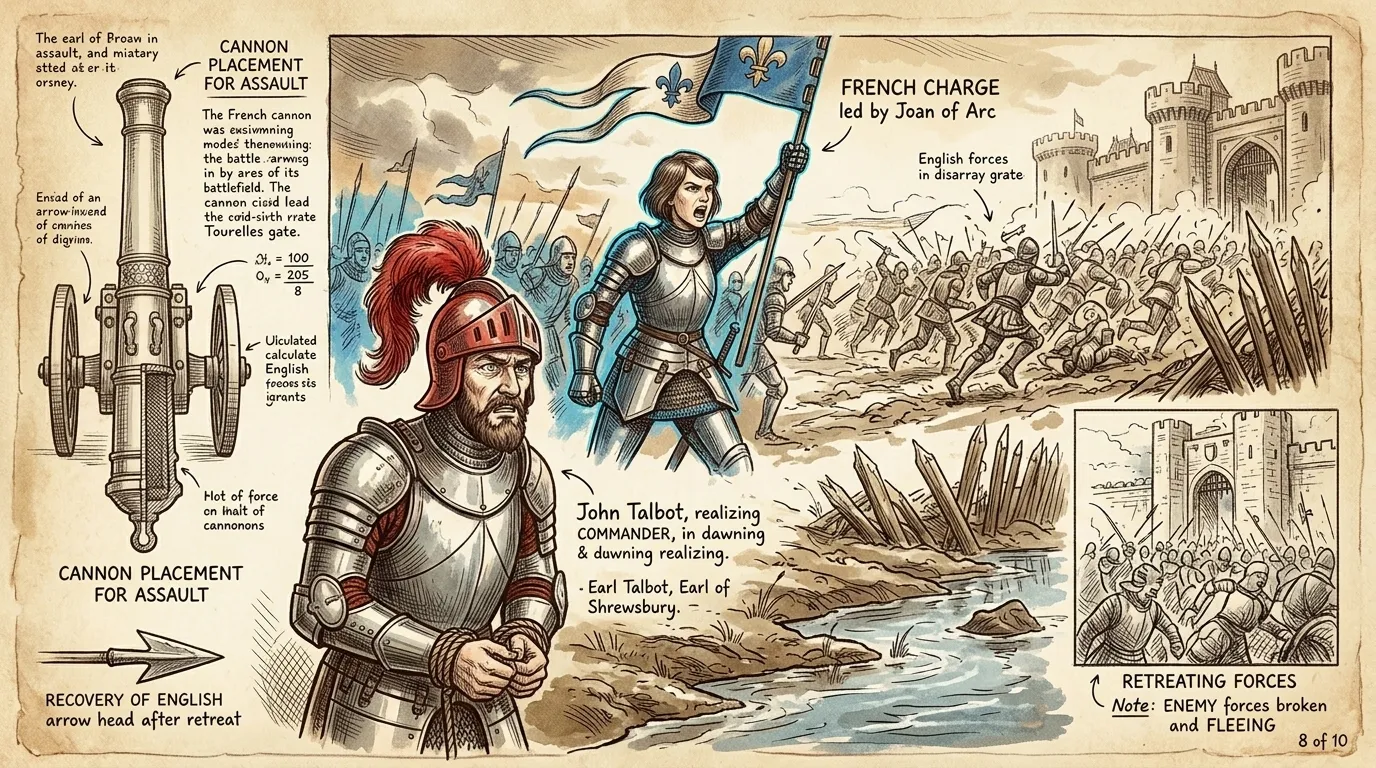
The French army, inspired by Joan of Arc, lifted the siege of Orléans. "For France!" Joan cried, leading the charge. The English, demoralized and outmatched, retreated in disarray. John Talbot, captured during the battle, watched in disbelief. "This is witchcraft!" he exclaimed, shaking his head. Now he knew that what seemed like an endless winter, might finally break into spring. "I never believed our kingdom inside a ball could change, but Joan has brought new life."
Page 9
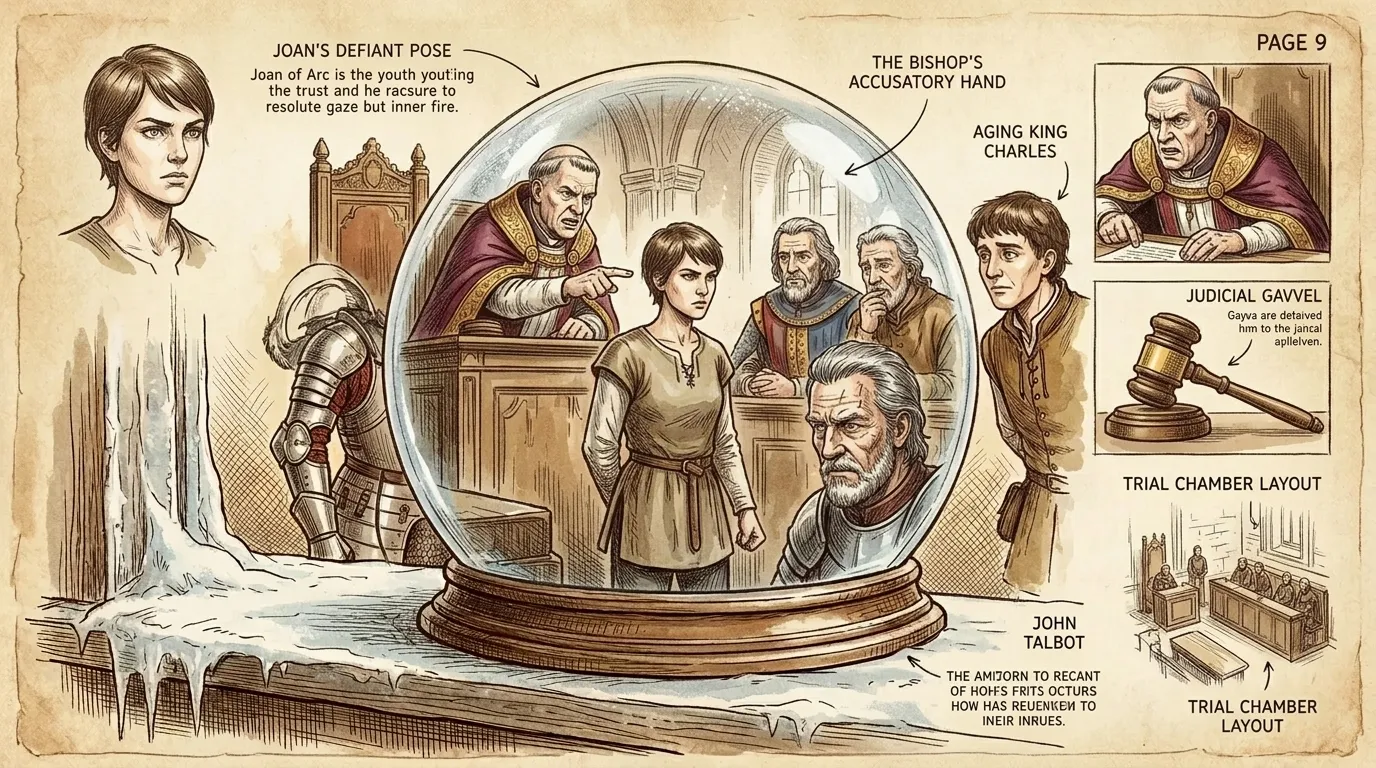
Captured by the English, Joan of Arc was put on trial for heresy. Bishop Pierre Cauchon, a stern and unforgiving cleric, presided over the proceedings. "Do you deny the voices you claim to hear?" Cauchon demanded, his voice echoing through the chamber. Joan, defiant and unwavering, refused to recant. "My voices come from God," she insisted, her eyes filled with righteous fire.
Page 10
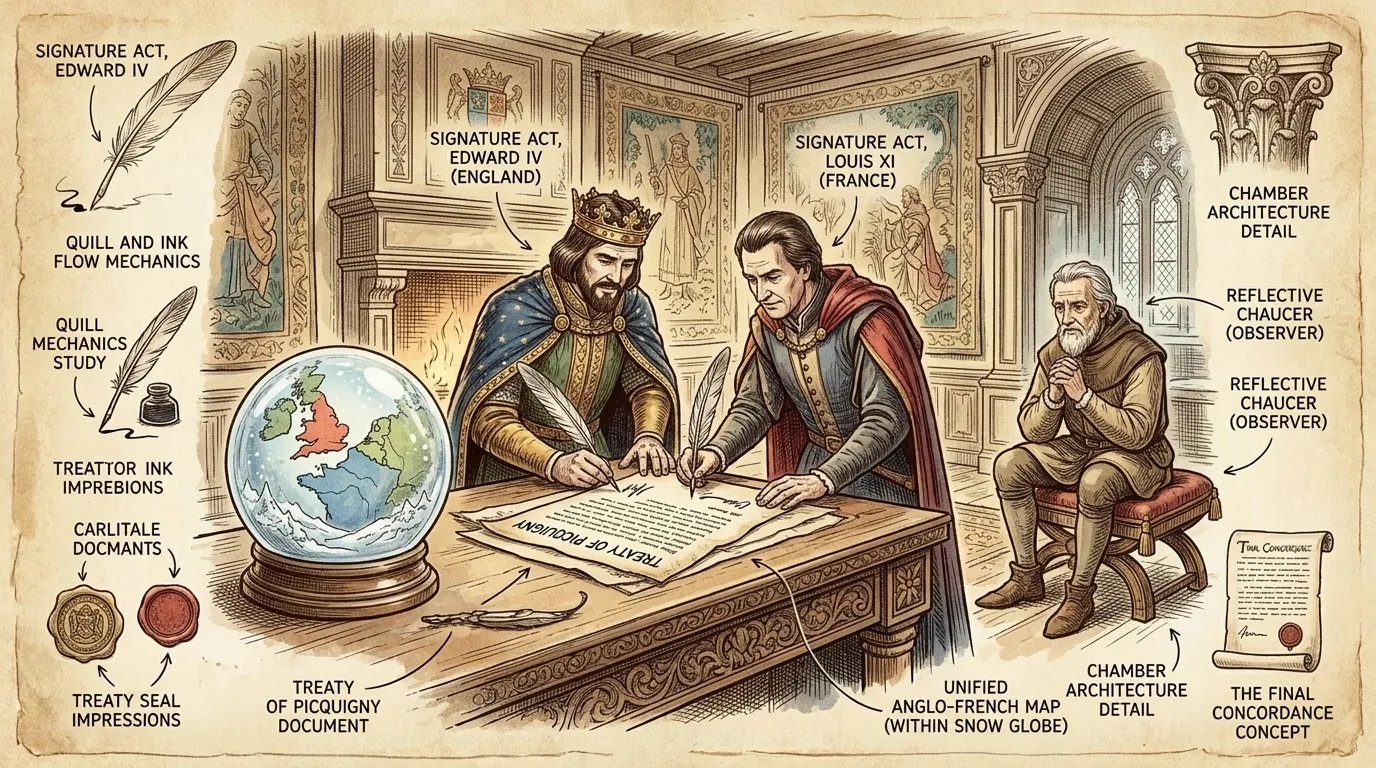
Though Joan of Arc was burned at the stake, her sacrifice inspired the French to continue fighting. King Louis XI and King Edward IV signed the Treaty of Picquigny. The war ended, with England's claim to the French throne abandoned. The Hundred Years' War was over, but its impact resonated through generations, forever shaping the destinies of England and France inside the snow globe. Geoffrey Chaucer would later pen: "All good things must come to an end."
About this story
- Historical figures: King Henry V, King Edward III, King Philip VI
- Location: United Kingdom & France
- Period: Middle Ages
- Audience: kids (ages 6–12)
Questions and answers
Questions and answers about The Hundred Years’ War — United Kingdom & France (1337)
Read Wonder History on your phone
Wonder History is available on Android and iPhone and iPad. Get Wonder History on Google Play · Get Wonder History on the App Store.
More Wonder History stories
- The Indus Valley: A Civilization Lost and Found (2600 BC)
- The Industrial Revolution (18th–19th Century, United Kingdom & Europe)
- The Invention of the Gutenberg Printing Press (1440) - Germany
- The Iranian Revolution (1978, Persia)
- The Last Stand at Thermopylae (480 BC, Greece)
- The Lisbon Earthquake (1755, Portugal)