The Last Stand at Thermopylae (480 BC, Greece)
The Last Stand at Thermopylae (480 BC, Greece) — an illustrated history story, featuring King Leonidas, King Xerxes I, Ephialtes, set in Greece. 10 illustrated pages, free to read on Wonder History.
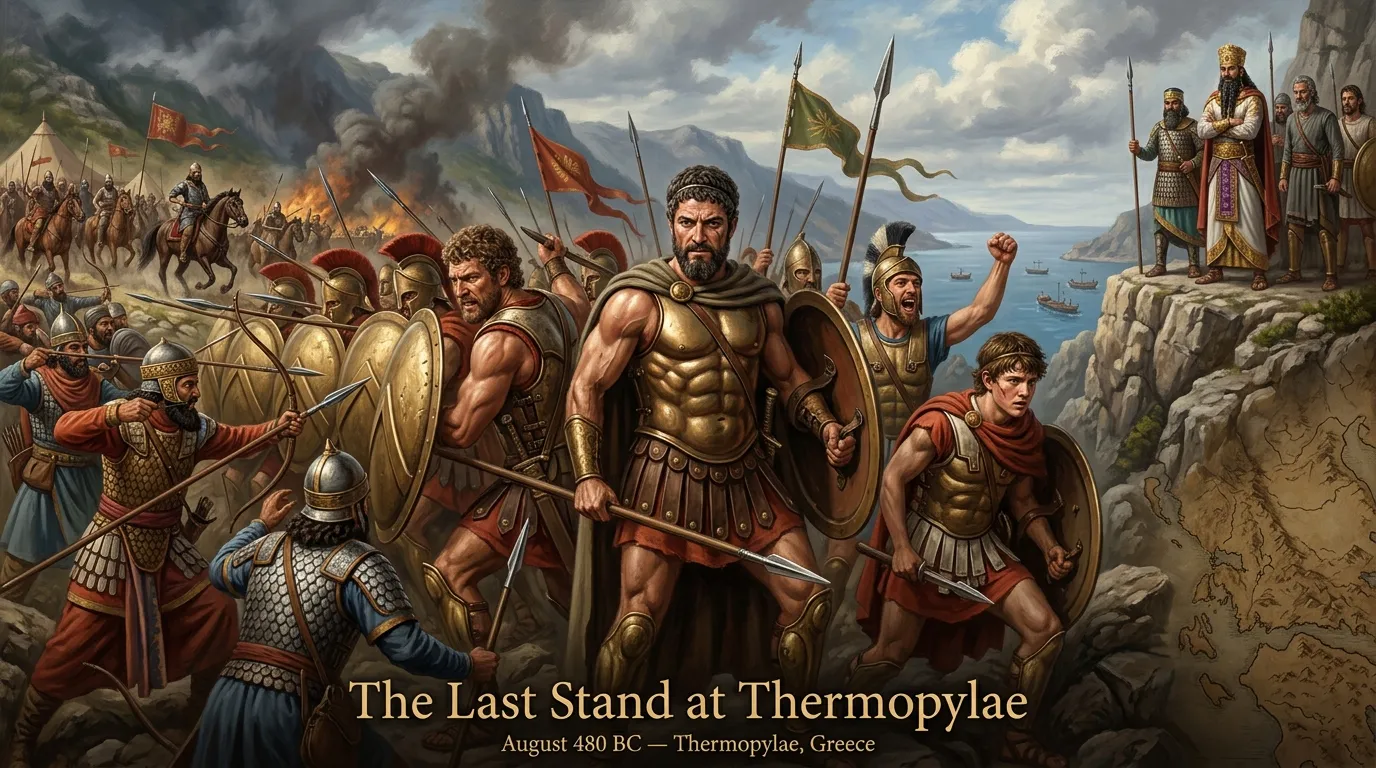
Page 1
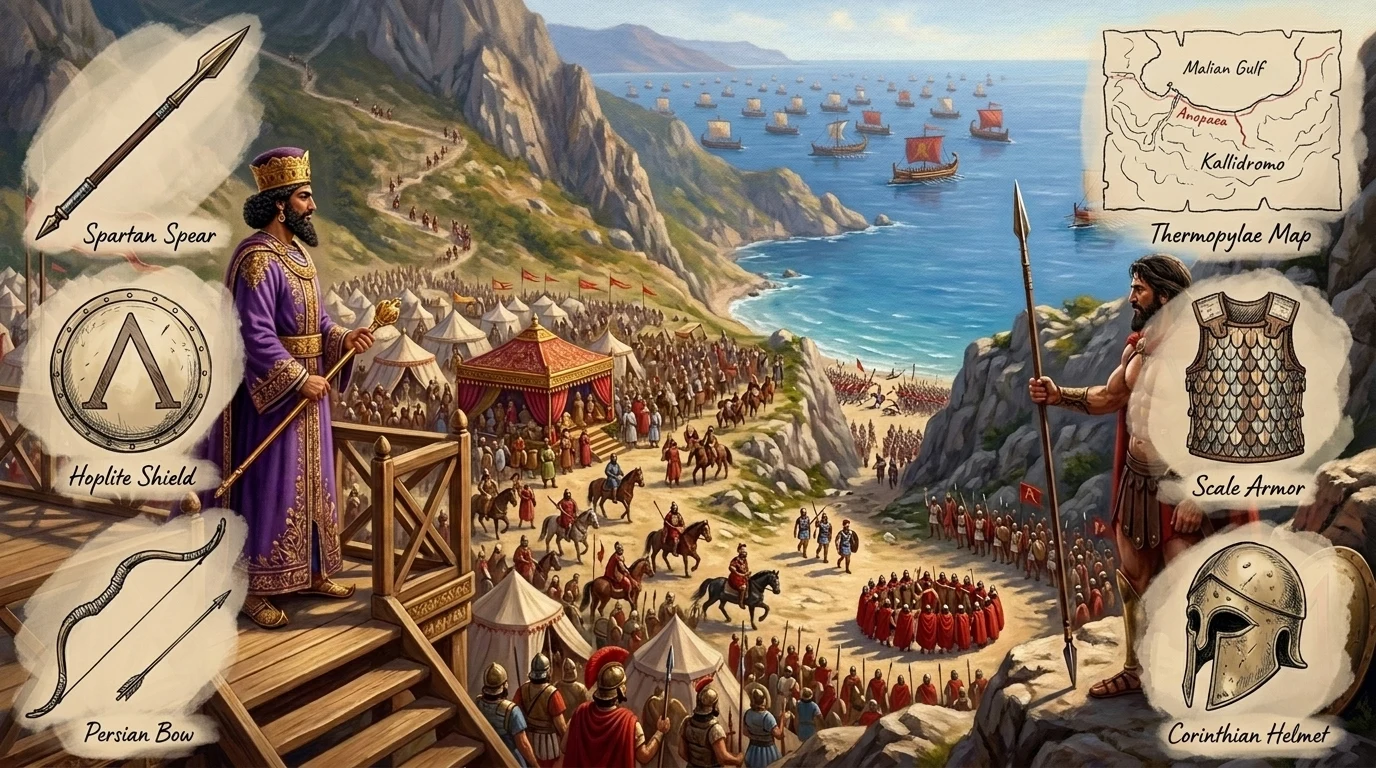
In 480 BCE, the mighty Persian Empire, stretching from Anatolia to India, cast a colossal shadow across the ancient world. King Xerxes I, commanding an army numbering hundreds of thousands, embarked on an audacious campaign to conquer the independent city-states of Greece, securing the trade routes of the Aegean Sea and expanding his vast dominion.
Page 2
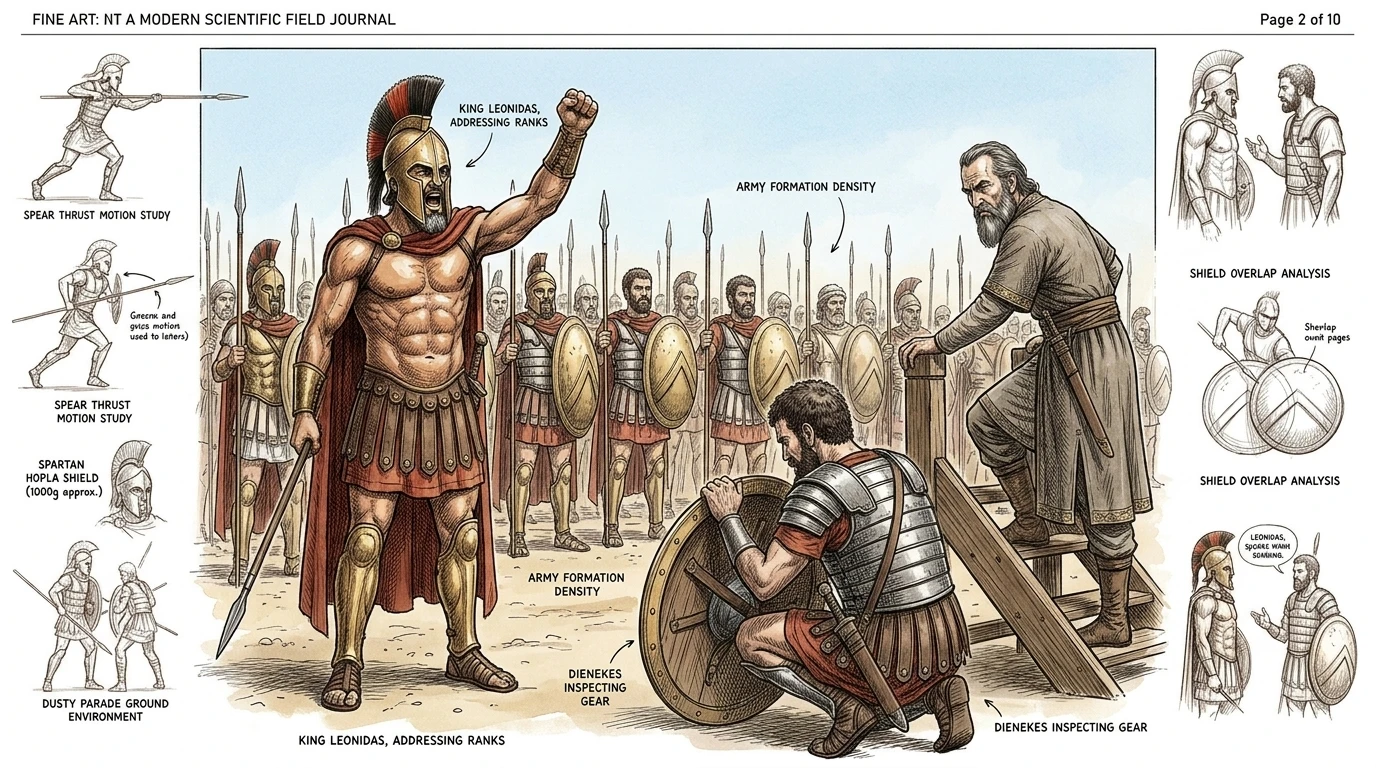
Among the beleaguered Greek states, fierce Sparta refused to yield. King Leonidas, a powerful, muscular man in his late 40s, addressed his chosen force: three hundred of his finest Spartans, alongside several thousand allied Greek soldiers, all arrayed for war. "We march to Thermopylae, the Hot Gates," Leonidas declared, his voice resonating across the disciplined ranks. "A narrow pass where numbers mean little, but courage means everything."
Page 3
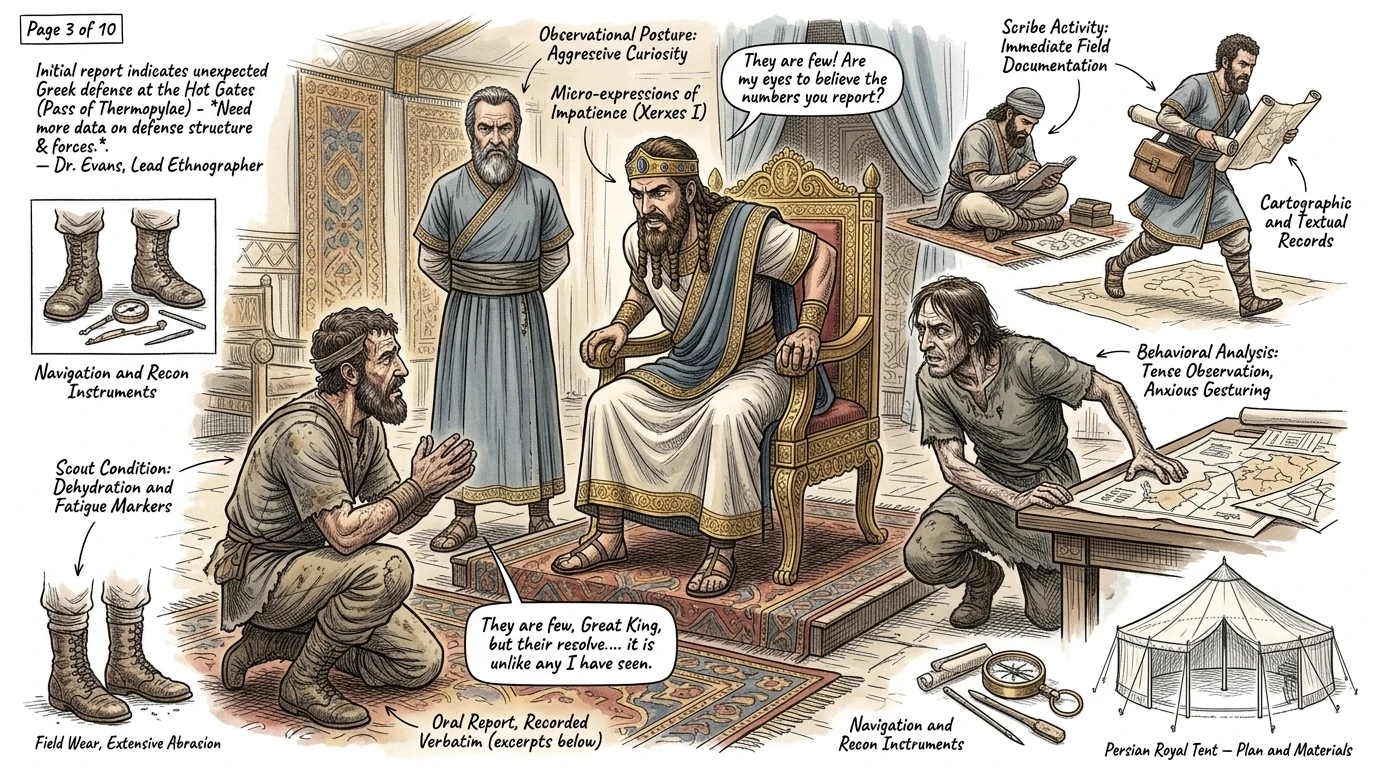
Days later, Persian scouts, having traversed the rugged terrain, returned to King Xerxes' grand camp, their faces etched with disbelief. "My Lord, a small band of Greeks, Spartans among them, blocks the Hot Gates!" one scout reported, kneeling before the Persian throne. King Xerxes I, his dark eyes betraying impatience, leaned forward. "Are they mad? To stand against my countless thousands?"
Page 4
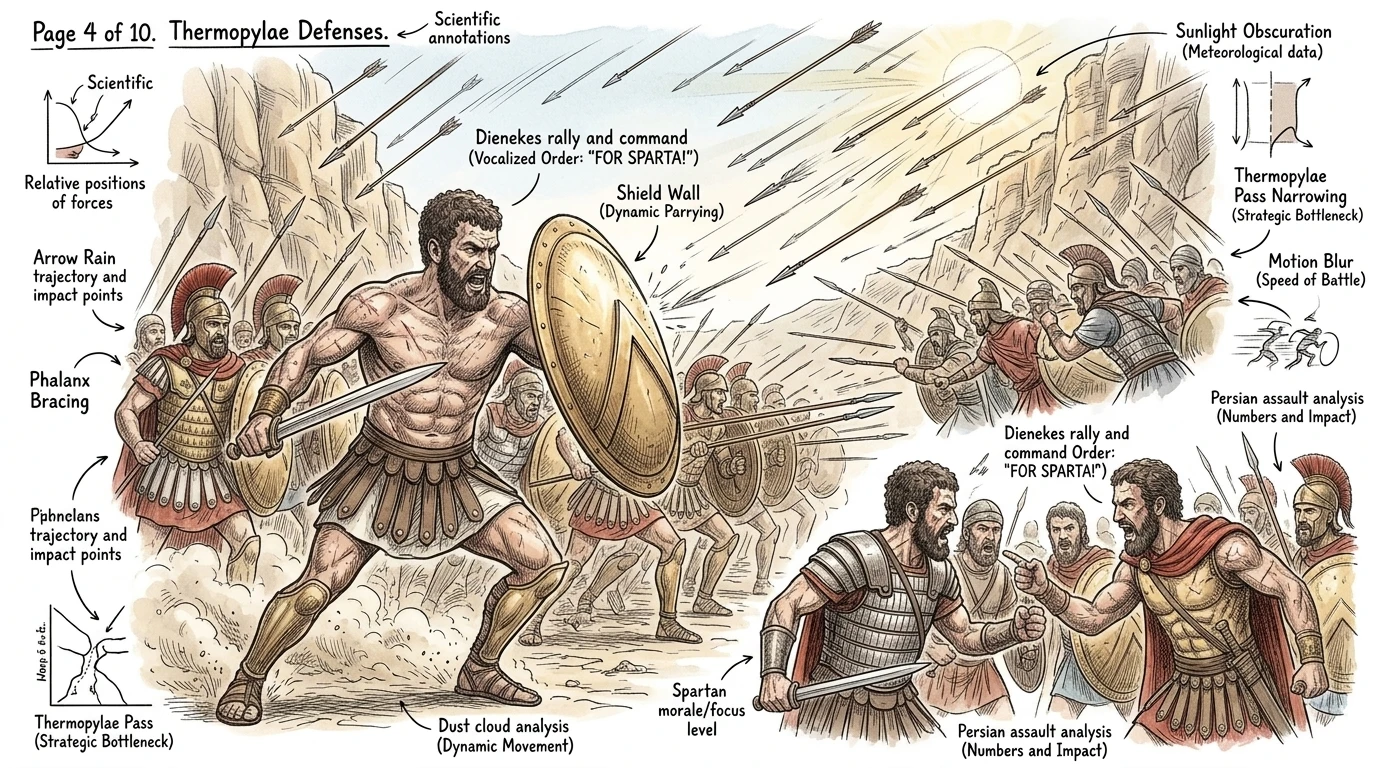
For two grueling days, the Spartan phalanx held the narrow pass, repelling wave after wave of Persian assaults. Dienekes, a heavily muscled warrior in his early 30s, his face grim and scarred, parried a blow with his shield, shouting, "Our spears will darken the sun!" As dust and arrows rained down, he declared to his fellow soldiers, "Then we shall fight in the shade! That, an old Spartan trainer once told me, is the mark of true resolve!"
Page 5
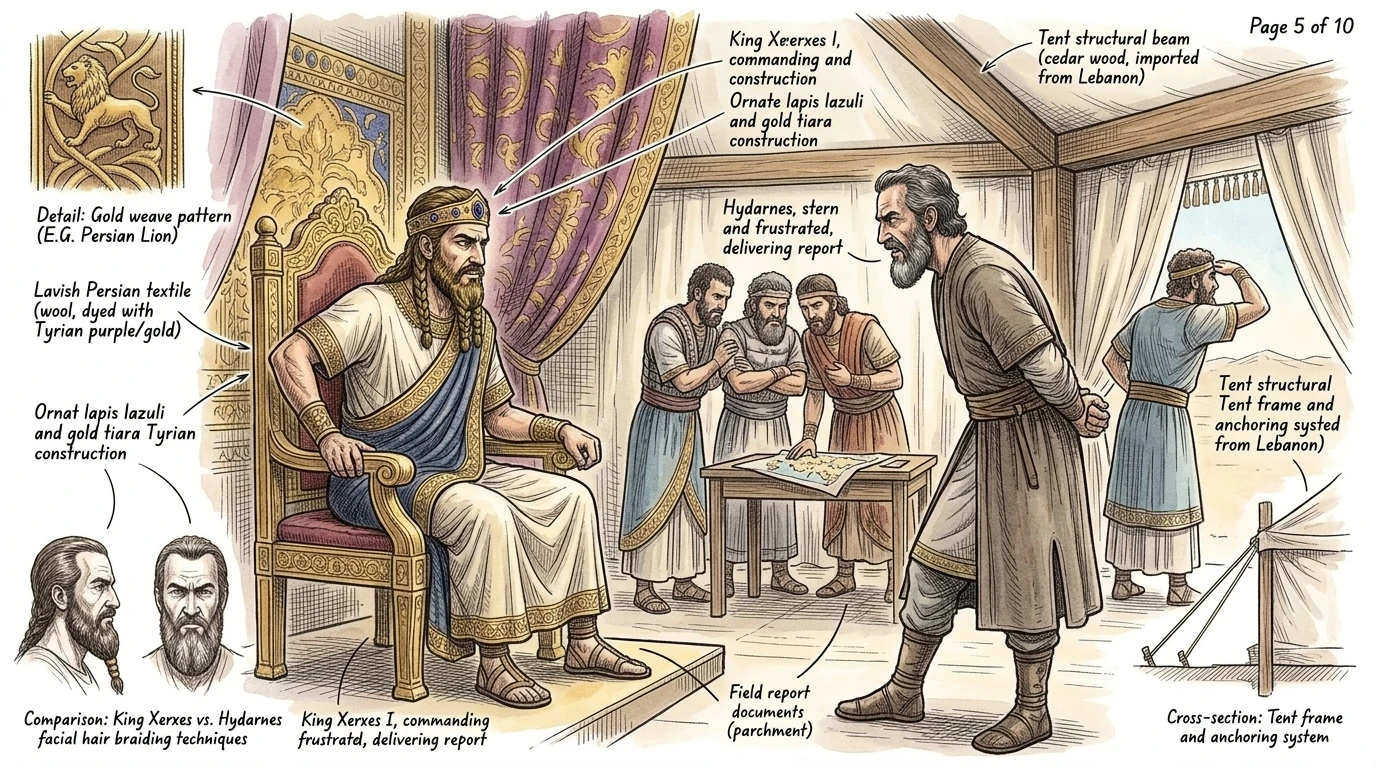
Xerxes, seething with rage at his army's heavy losses, unleashed his elite Immortals, thousands of his finest warriors, upon the Spartans. Yet, even their fearsome reputation could not break the Greek line. Hydarnes, a stern, authoritative man in his 50s, commander of the Immortals, returned to Xerxes' pavilion, his face dark with frustration. "My Lord, the Greeks, they are immovable! The pass is a slaughterhouse for our men!"
Page 6
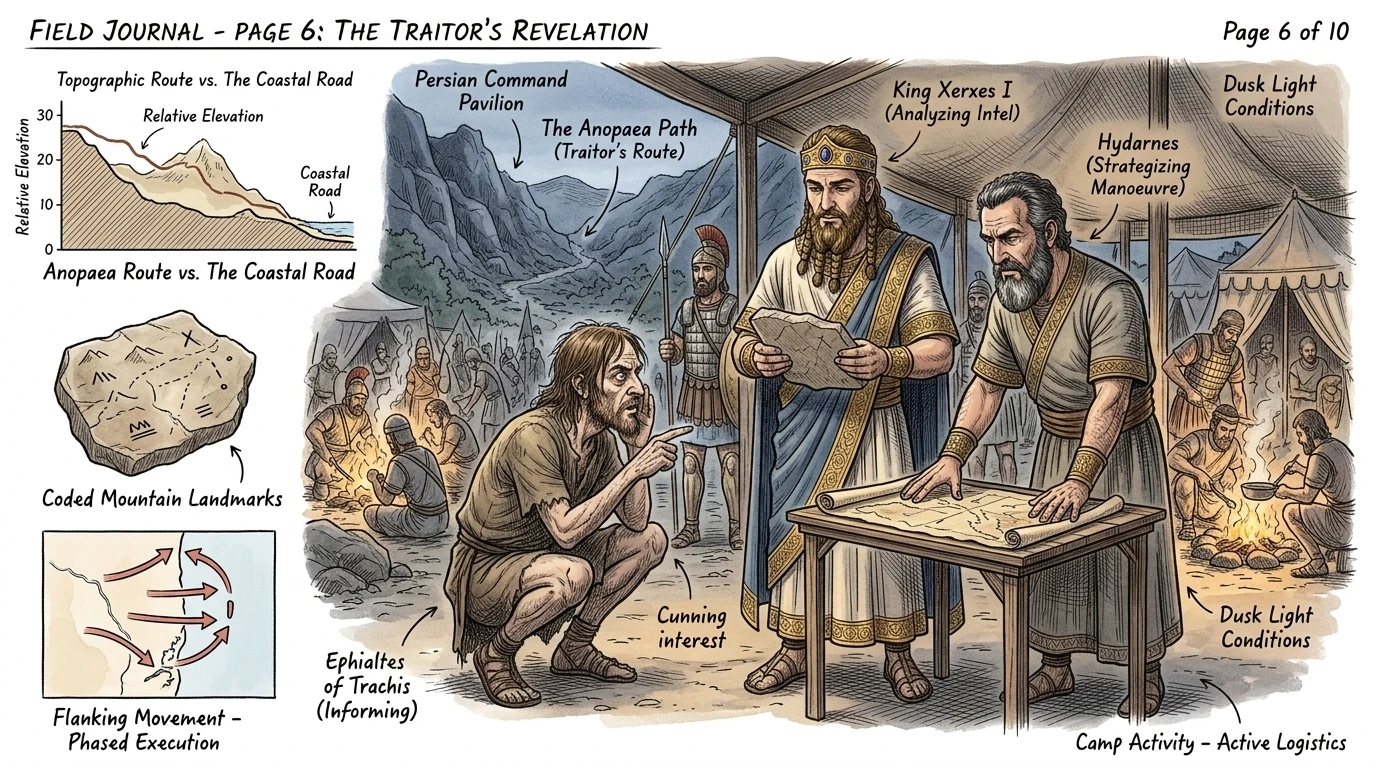
Despair began to creep through the Persian camp until a gaunt, shifty-eyed local named Ephialtes, in his late 30s, approached Xerxes' guards. "I know a hidden goat path, a secret route through the mountains that leads behind the Greek lines," he whispered conspiratorially, his eyes darting nervously. Xerxes and Hydarnes listened, their expressions changing from despair to cunning. This unexpected passage, like a sudden change in a flowing river, could reverse the tide of battle.
Page 7
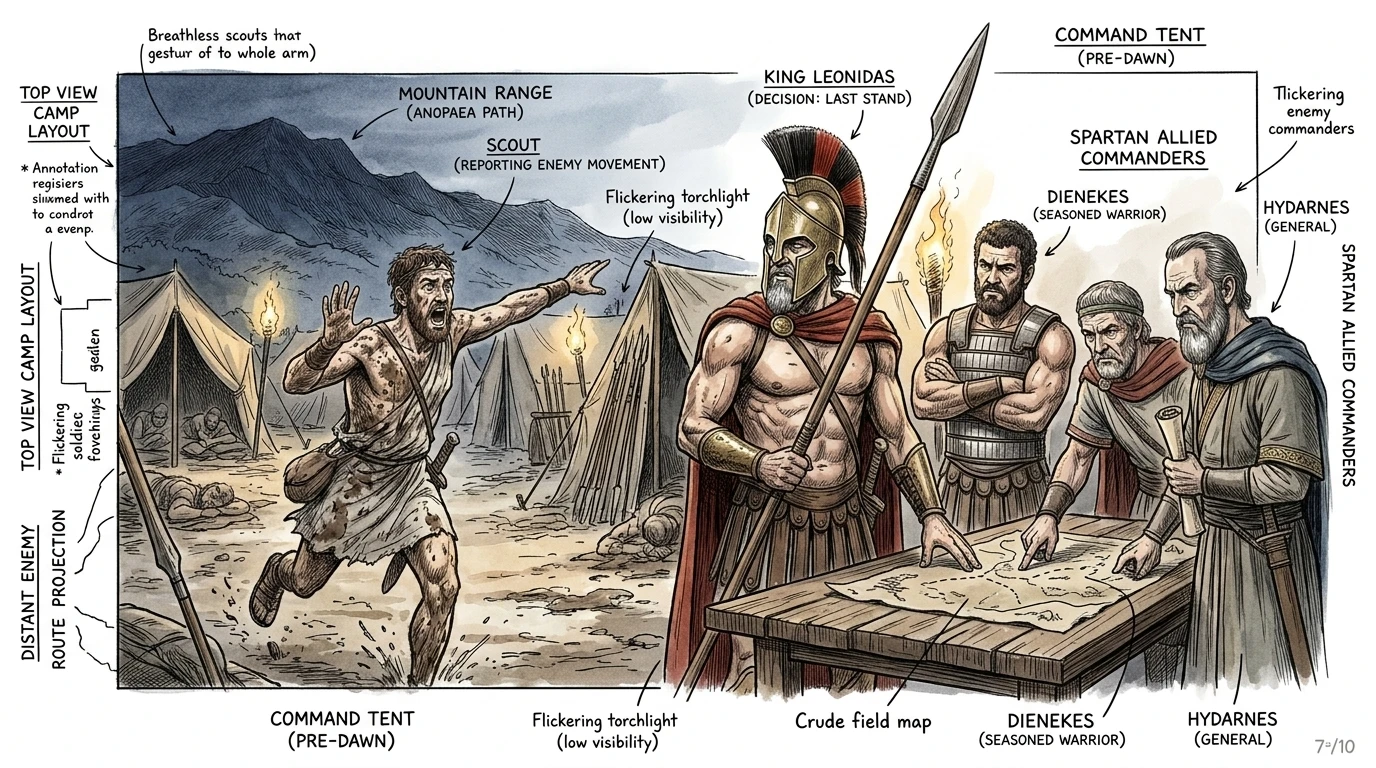
A scout, breathless and mud-splattered, burst into Leonidas's camp before dawn. "My King! Persians are moving along the Anopaea path! We are flanked!" Leonidas, a powerful, muscular man in his late 40s, his expression stern, grasped his spear. "Our stand has bought time," he declared, turning to his allied commanders. "You must leave now. Save the main Greek army to fight another day. We, the Spartans, will hold the pass to the last man!"
Page 8
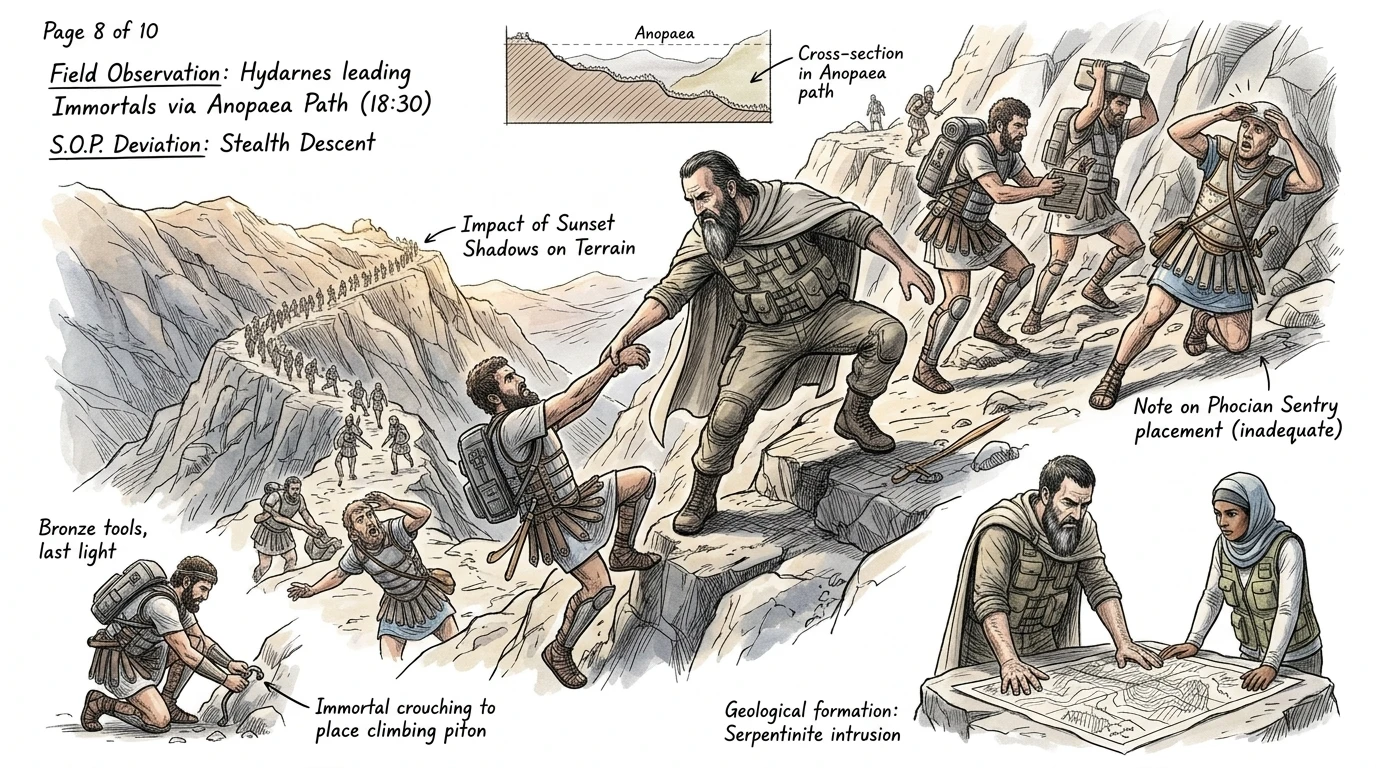
As the sun began to rise, Hydarnes, leading thousands of Immortals, descended the treacherous Anopaea path, sweeping around the mountain. They fell upon the unsuspecting Phocian guards with a sudden, devastating attack, a brutal display of the path's true, deadly purpose. The 'Hot Gates,' a symbol of impenetrable defense to the Greeks, was now revealed to the Persians as a deceptive trap, a gateway to a decisive flank.
Page 9
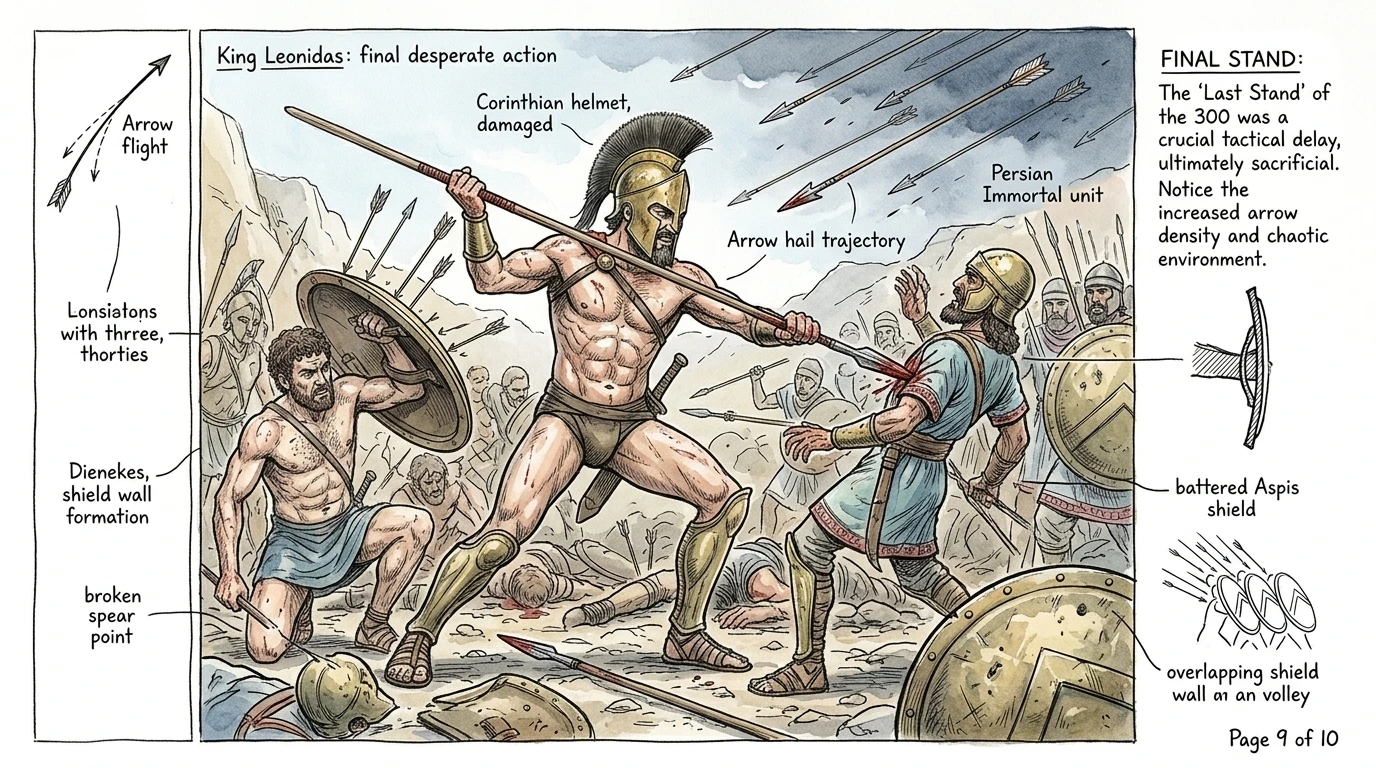
Surrounded and outnumbered, Leonidas and his remaining Spartans, joined by loyal Thespians and Thebans, fought with legendary ferocity. "Remember Sparta!" Leonidas bellowed, thrusting his spear into a foe, before falling under a hail of Persian arrows. His warriors, now a tragic symbol of ultimate sacrifice, formed a final, desperate circle, fighting to the last man, their shields battered, their spears broken, defiantly facing overwhelming odds.
Page 10
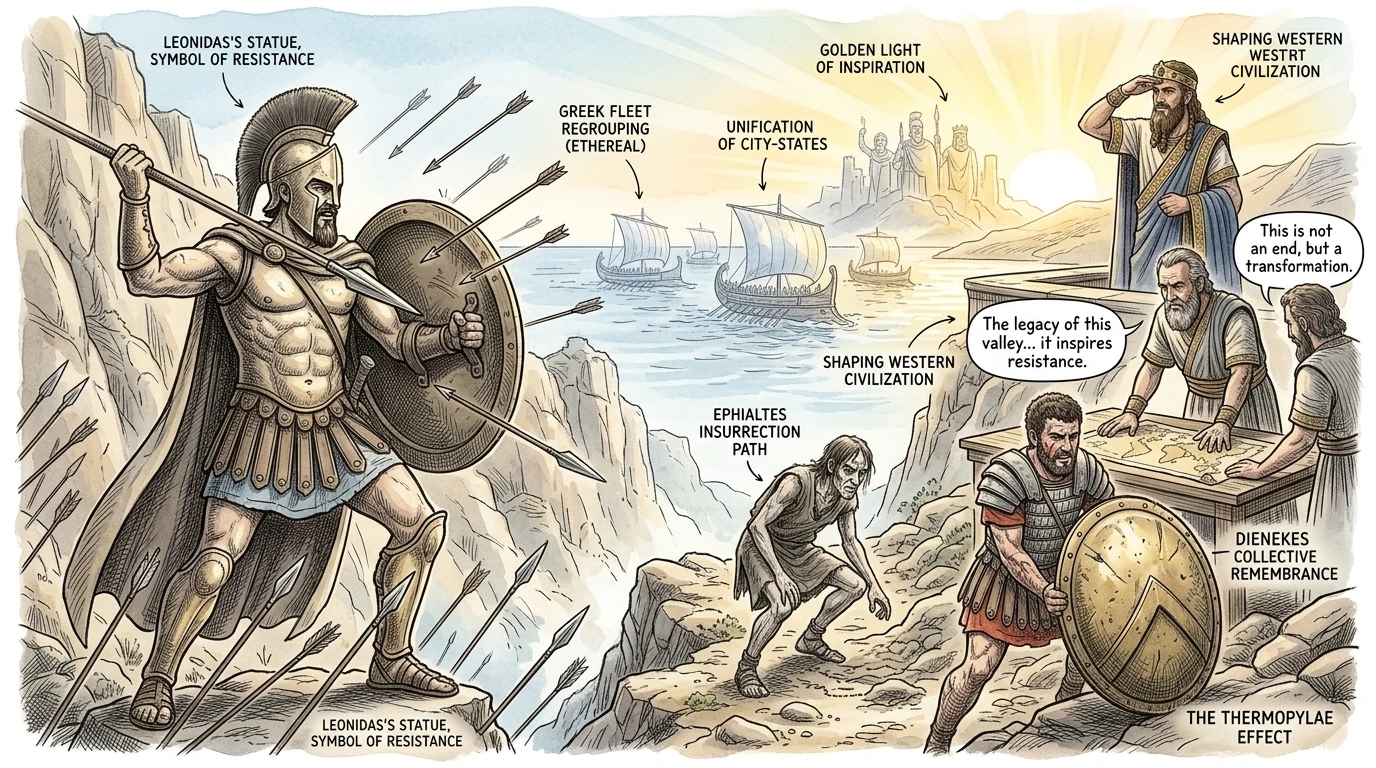
Though the Persians eventually swept through Thermopylae, the heroic sacrifice of Leonidas and his men bought crucial time. Their delay allowed the Greek fleet to regroup and the city-states to unify against the invaders. The 'Last Stand at Thermopylae' became an enduring legend, a powerful symbol of courage and resistance against tyranny, inspiring generations and forever shaping the course of Western civilization.
About this story
- Historical figures: King Leonidas, King Xerxes I, Ephialtes
- Location: Greece
- Period: Ancient
- Audience: kids (ages 6–12)
Questions and answers
Questions and answers about The Last Stand at Thermopylae (480 BC, Greece)
Read Wonder History on your phone
Wonder History is available on Android and iPhone and iPad. Get Wonder History on Google Play · Get Wonder History on the App Store.