The Mongol Conquests — Asia & Europe (1241, Asia & Europe)

The Mongol Conquests — Asia & Europe (1241, Asia & Europe) — an illustrated history story, featuring Batu Khan, Genghis Khan (Temujin), Subutai, set in Asia & Europe. 10 illustrated pages, free to read on Wonder History.

The Mongol Conquests — Asia & Europe (1241, Asia & Europe) — book cover — Wonder History
The Mongol Conquests — Asia & Europe (1241, Asia & Europe) — an illustrated history story, featuring Batu Khan, Genghis Khan (Temujin), Subutai, set in Asia & Europe. 10 illustrated pages, free to read on Wonder History.

Page 1

April 9, 1241: King Henry II the Pious of Poland, Batu Khan of the Mongol Golden Horde, Subutai the brilliant Mongol general, and Ögedei Khan, heir to Genghis…
April 9, 1241: King Henry II the Pious of Poland, Batu Khan of the Mongol Golden Horde, Subutai the brilliant Mongol general, and Ögedei Khan, heir to Genghis Khan's empire, were about to meet in a clash that would decide Europe's fate. At the Battle of Legnica, near present-day Poland, tens of thousands of Mongol cavalry faced a desperate coalition of Polish and European knights. But how did the Mongol Empire, stretching from Asia, come to threaten the heart of Europe?

April 9, 1241: King Henry II the Pious of Poland, Batu Khan of the Mongol Golden Horde, Subutai the brilliant Mongol general, and Ögedei Khan, heir to Genghis Khan's empire, were about to meet in a clash that would decide Europe's fate. At the Battle of Legnica, near present-day Poland, tens of thousands of Mongol cavalry faced a desperate coalition of Polish and European knights. But how did the Mongol Empire, stretching from Asia, come to threaten the heart of Europe?

Page 2
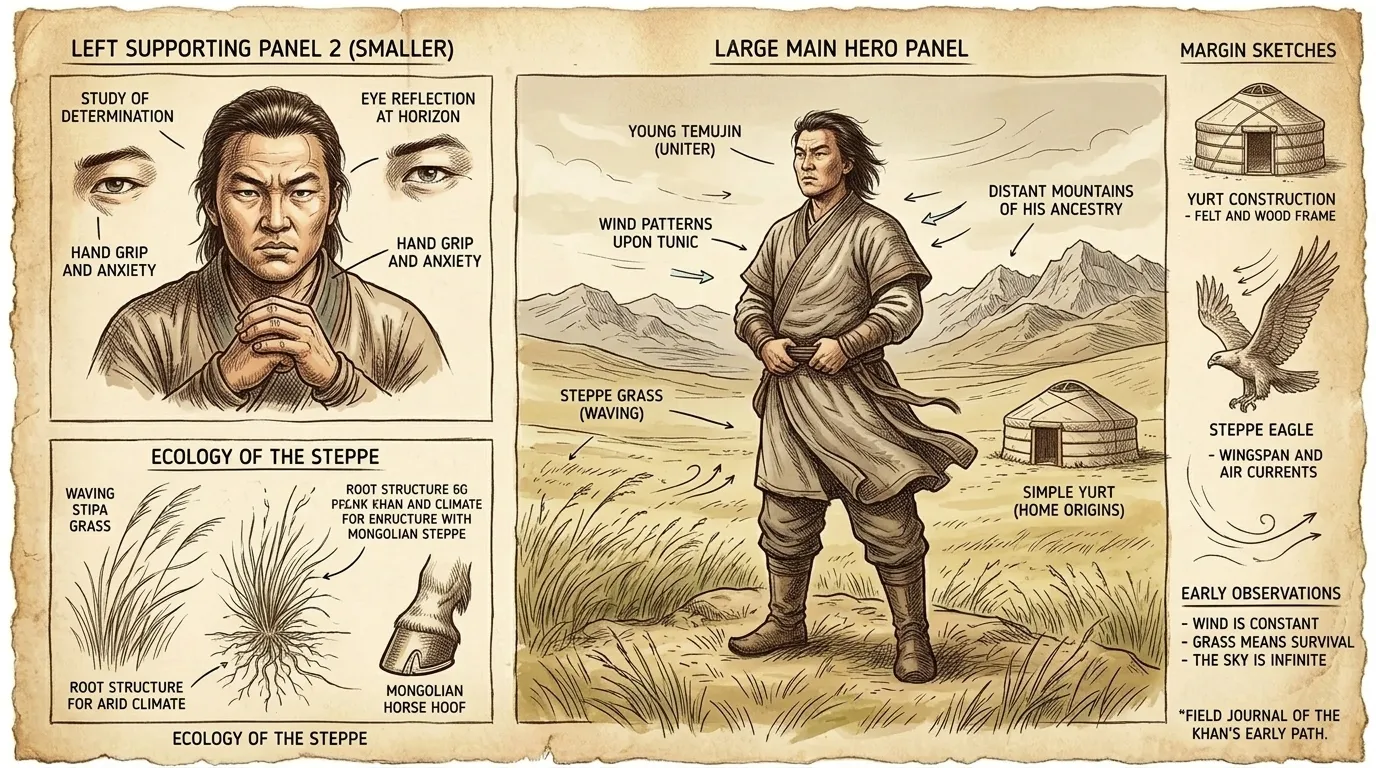
Temujin, later known as Genghis Khan, rose from humble beginnings on the harsh Mongolian steppes. 'We must always act so that our decisions have lasting…
Temujin, later known as Genghis Khan, rose from humble beginnings on the harsh Mongolian steppes. 'We must always act so that our decisions have lasting consequences for generations to come,' Genghis Khan often declared. As a young man, he faced betrayal and hardship, experiences that forged his resolve to unite the warring Mongol tribes.

Temujin, later known as Genghis Khan, rose from humble beginnings on the harsh Mongolian steppes. 'We must always act so that our decisions have lasting consequences for generations to come,' Genghis Khan often declared. As a young man, he faced betrayal and hardship, experiences that forged his resolve to unite the warring Mongol tribes.

Page 3

By 1206, Temujin had united the Mongol tribes and proclaimed himself Genghis Khan, 'Universal Ruler'. 'Now,' he declared to his assembled generals, 'we will…
By 1206, Temujin had united the Mongol tribes and proclaimed himself Genghis Khan, 'Universal Ruler'. 'Now,' he declared to his assembled generals, 'we will bring the world to its knees!' The newly unified Mongol nation quickly turned its attention to its neighbors, initiating a series of devastating campaigns across Asia.

By 1206, Temujin had united the Mongol tribes and proclaimed himself Genghis Khan, 'Universal Ruler'. 'Now,' he declared to his assembled generals, 'we will bring the world to its knees!' The newly unified Mongol nation quickly turned its attention to its neighbors, initiating a series of devastating campaigns across Asia.

Page 4

Ögedei Khan inherited the leadership upon Genghis Khan's death in 1227, continuing his father's expansionist policies. 'The empire must grow, expand, and bring…
Ögedei Khan inherited the leadership upon Genghis Khan's death in 1227, continuing his father's expansionist policies. 'The empire must grow, expand, and bring all peoples under our banner,' he proclaimed from Karakorum, the Mongol capital. He appointed skilled generals like Subutai and Batu Khan to lead new offensives, targeting territories far beyond Mongolia's borders.

Ögedei Khan inherited the leadership upon Genghis Khan's death in 1227, continuing his father's expansionist policies. 'The empire must grow, expand, and bring all peoples under our banner,' he proclaimed from Karakorum, the Mongol capital. He appointed skilled generals like Subutai and Batu Khan to lead new offensives, targeting territories far beyond Mongolia's borders.

Page 5

The Mongol Conquests — Asia & Europe (1241, Asia & Europe) — page 5 illustration — Wonder History

Subutai, a brilliant strategist, masterminded many of the Mongol victories. Before their invasion of Europe, Subutai studied European geography meticulously, recognizing the importance of the rivers. He whispered to Batu Khan, 'Knowledge is the true weapon; with accurate maps and river locations, we'll conquer the land without horses'.

Page 6
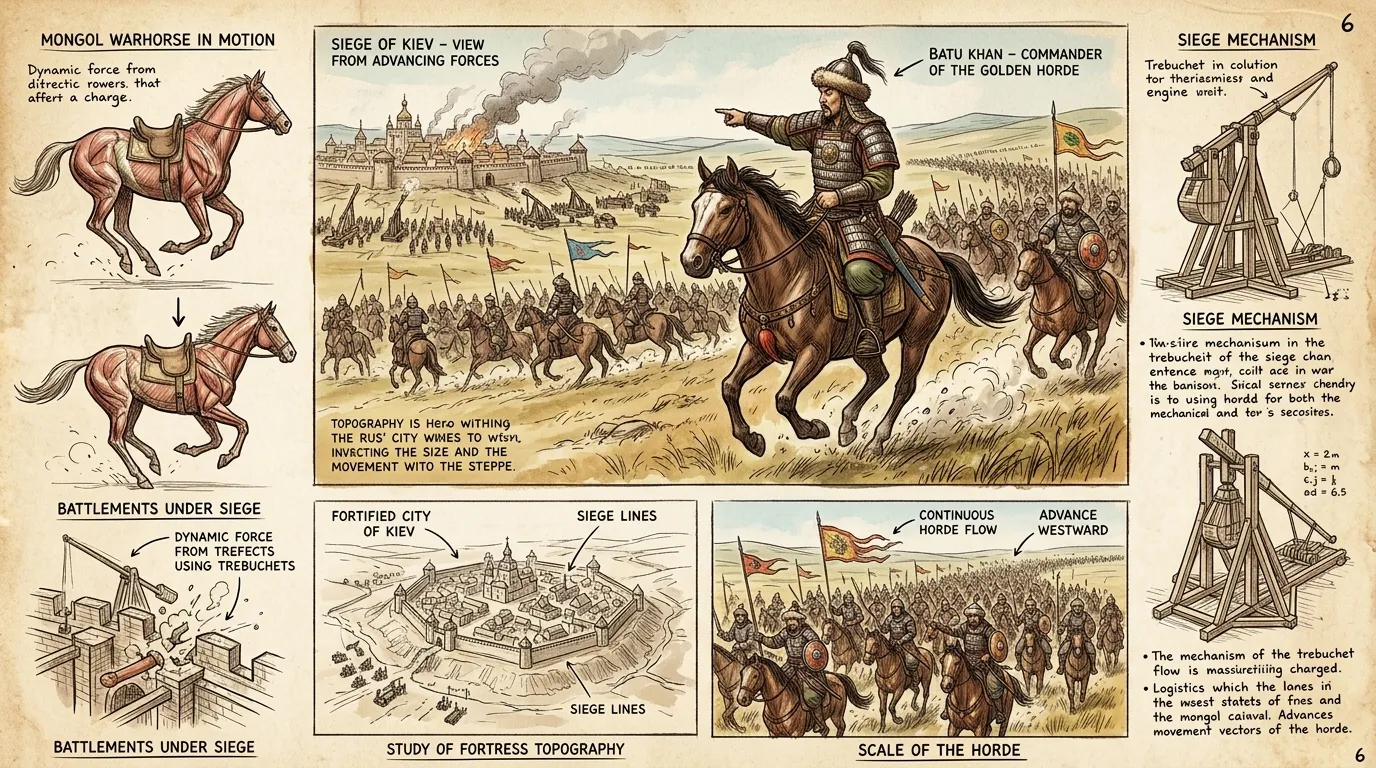
In 1237, Batu Khan, grandson of Genghis, led the Mongol armies westward, initiating the invasion of Rus'. City after city fell before the Mongol onslaught as…
In 1237, Batu Khan, grandson of Genghis, led the Mongol armies westward, initiating the invasion of Rus'. City after city fell before the Mongol onslaught as news of their brutality spread. Resistance was fierce, but ultimately futile, against the Mongols' superior tactics and horsemanship.

In 1237, Batu Khan, grandson of Genghis, led the Mongol armies westward, initiating the invasion of Rus'. City after city fell before the Mongol onslaught as news of their brutality spread. Resistance was fierce, but ultimately futile, against the Mongols' superior tactics and horsemanship.

Page 7

News of the Mongol advance terrified the kingdoms of Europe. King Henry II the Pious of Poland rallied his forces, including Polish knights and mercenaries from…
News of the Mongol advance terrified the kingdoms of Europe. King Henry II the Pious of Poland rallied his forces, including Polish knights and mercenaries from across Europe. Facing a seemingly unstoppable enemy, Henry declared to his assembled troops, 'Let us fight with courage and faith, and trust in God to protect us!'

News of the Mongol advance terrified the kingdoms of Europe. King Henry II the Pious of Poland rallied his forces, including Polish knights and mercenaries from across Europe. Facing a seemingly unstoppable enemy, Henry declared to his assembled troops, 'Let us fight with courage and faith, and trust in God to protect us!'

Page 8

At the Battle of Legnica, the Mongol tactics proved devastating. Subutai feigned a retreat, luring the European knights into a trap.
At the Battle of Legnica, the Mongol tactics proved devastating. Subutai feigned a retreat, luring the European knights into a trap. Mongol archers unleashed a hail of arrows, decimating the charging knights before the main Mongol cavalry engaged. King Henry fought bravely, but he was eventually overwhelmed and killed.

At the Battle of Legnica, the Mongol tactics proved devastating. Subutai feigned a retreat, luring the European knights into a trap. Mongol archers unleashed a hail of arrows, decimating the charging knights before the main Mongol cavalry engaged. King Henry fought bravely, but he was eventually overwhelmed and killed.

Page 9

The Mongol victory at Legnica opened the path to Europe, but Ögedei Khan's death in distant Mongolia forced Batu Khan to withdraw.
The Mongol victory at Legnica opened the path to Europe, but Ögedei Khan's death in distant Mongolia forced Batu Khan to withdraw. The Mongols never fully conquered Europe. They turned east, consolidating their power in the Kipchak Khanate, also known as the Golden Horde, and controlled vast territories for centuries.

The Mongol victory at Legnica opened the path to Europe, but Ögedei Khan's death in distant Mongolia forced Batu Khan to withdraw. The Mongols never fully conquered Europe. They turned east, consolidating their power in the Kipchak Khanate, also known as the Golden Horde, and controlled vast territories for centuries.

Page 10

Though the Mongols did not conquer all of Europe, the Golden Horde left a lasting impact. The political landscape of Eastern Europe was forever altered, new…
Though the Mongols did not conquer all of Europe, the Golden Horde left a lasting impact. The political landscape of Eastern Europe was forever altered, new trade routes emerged, and the influence of the Mongol Empire shaped the cultures of Russia, Central Asia, and beyond for generations. 'The moving finger writes; and, having writ, moves on,' many affected citizens quoted the Persian poet Omar Khayyam, reflecting on the conquests.

Though the Mongols did not conquer all of Europe, the Golden Horde left a lasting impact. The political landscape of Eastern Europe was forever altered, new trade routes emerged, and the influence of the Mongol Empire shaped the cultures of Russia, Central Asia, and beyond for generations. 'The moving finger writes; and, having writ, moves on,' many affected citizens quoted the Persian poet Omar Khayyam, reflecting on the conquests.

About this story

  • Historical figures: Batu Khan, Genghis Khan (Temujin), Subutai
  • Location: Asia & Europe
  • Period: Middle Ages
  • Audience: general readers

Questions and answers

Questions and answers about The Mongol Conquests — Asia & Europe (1241, Asia & Europe)

Read Wonder History on your phone

Wonder History is available on Android. Get Wonder History on Google Play.

More Wonder History stories

All Wonder History stories · Open the library