The Opium Wars — China (1839, China)
The Opium Wars — China (1839, China) — an illustrated history story, featuring Lin Zexu, Charles Elliot, Emperor Daoguang, set in China. 10 illustrated pages, free to read on Wonder History.
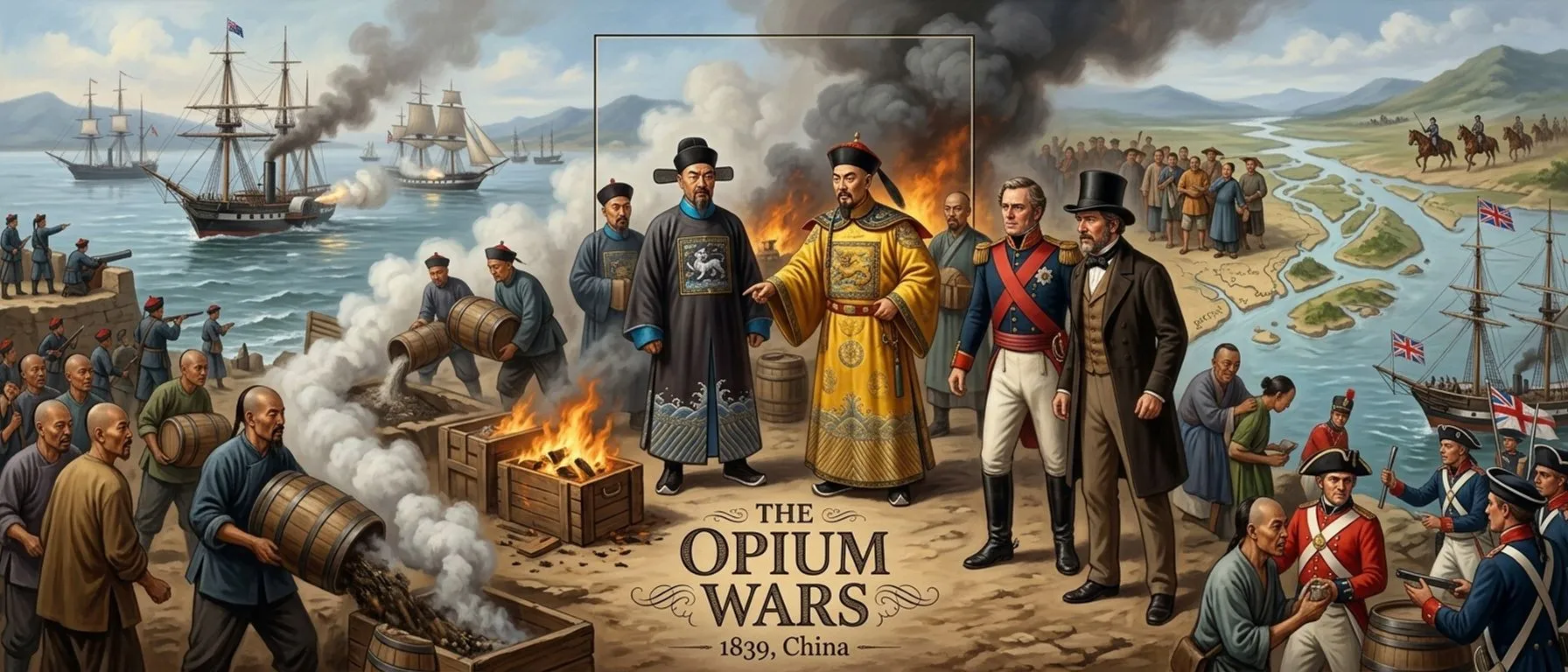
Page 1
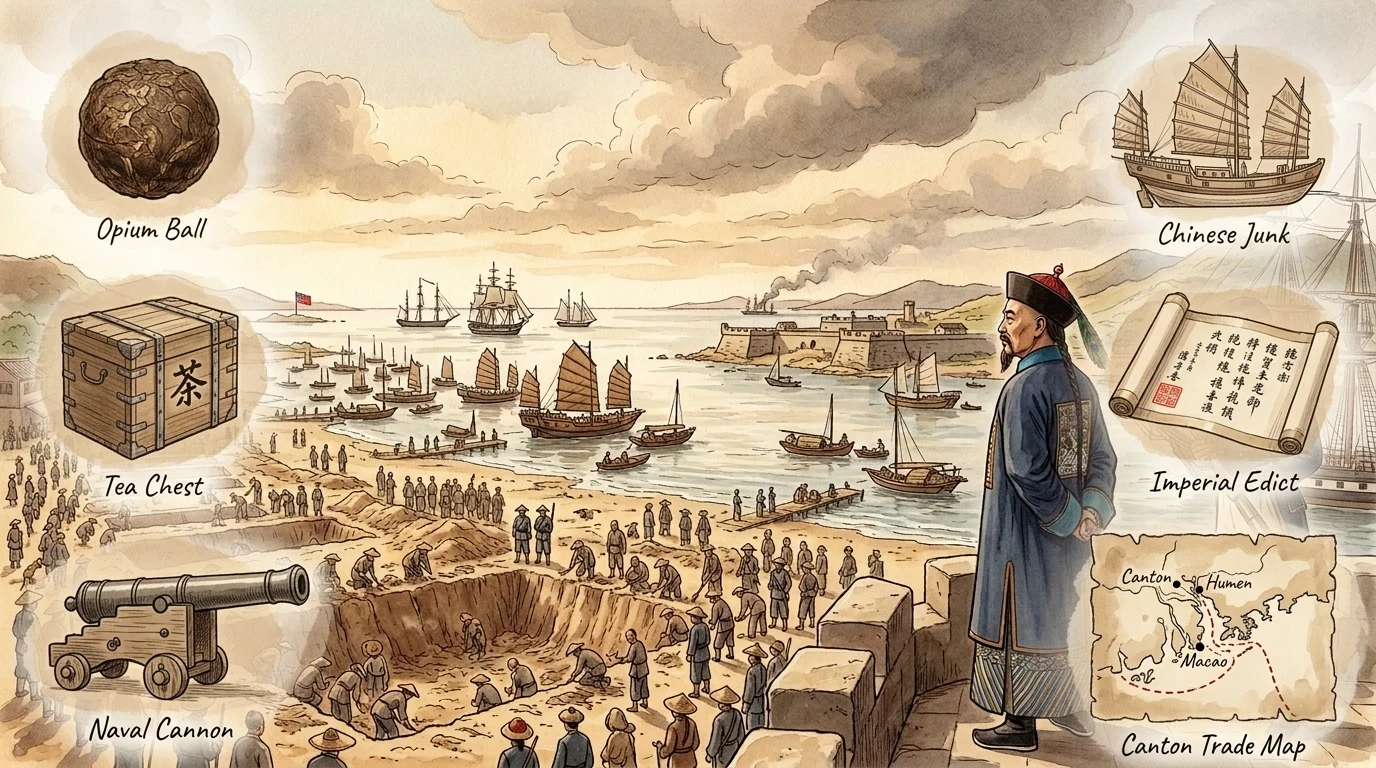
On June 21, 1839, Commissioner Lin Zexu, the stern imperial official, oversaw the destruction of 1.2 million kilograms of opium at Humen. Captain Charles Elliot, the British Superintendent of Trade, watched with growing fury. But how did diplomatic tensions and lucrative trade turn into the first Opium War? As Confucius said, 'Study the past if you would define the future.' We must understand how this began.
Page 2

The roots of the conflict lay in the insatiable British demand for Chinese tea, porcelain, and silk. The British East India Company, seeking to balance its trade deficit, began to export opium grown in India to China. 'The Emperor will not permit a single pipe!' Lin Zexu later wrote in a letter to Queen Victoria, expressing the Qing court's frustration with the opium trade.
Page 3
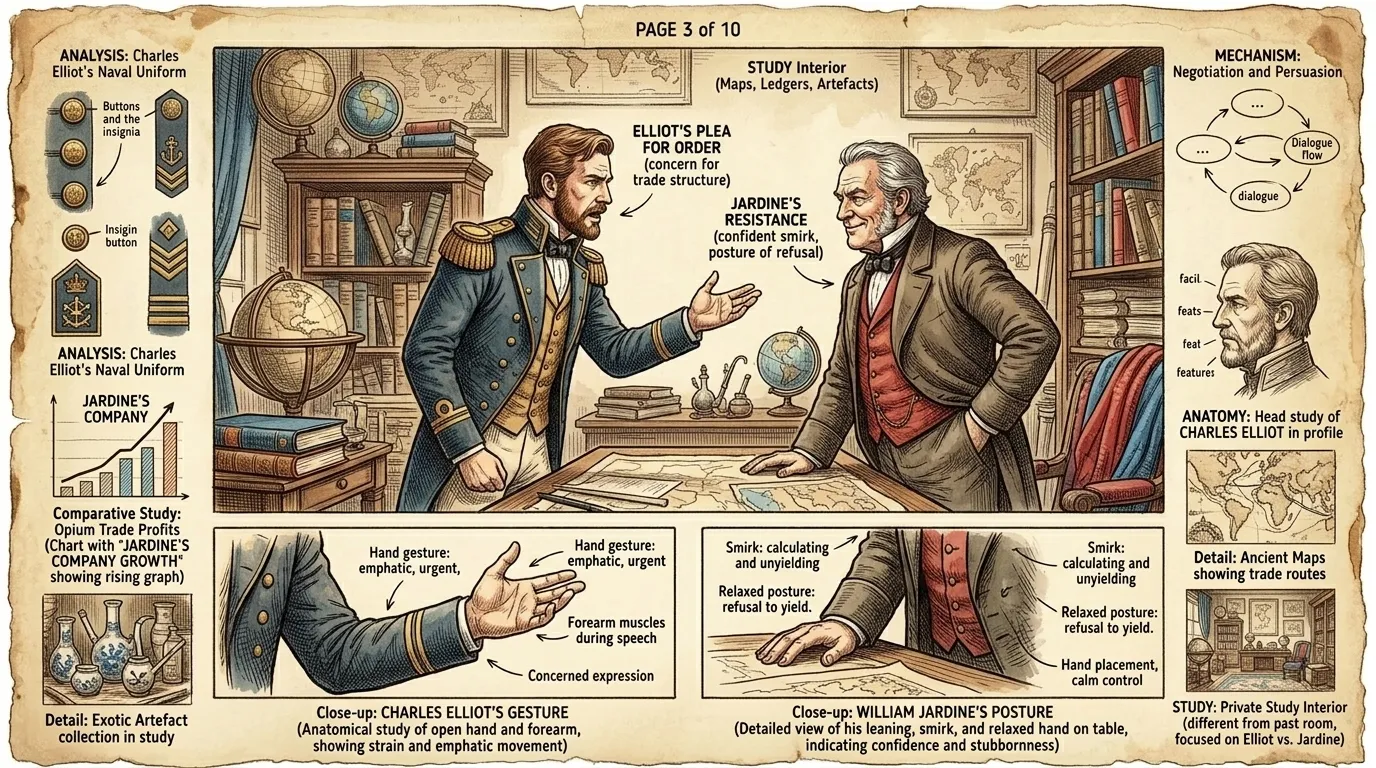
'This cannot continue,' Captain Elliot said to William Jardine, head of Jardine Matheson. 'The Qing government will not tolerate this blatant disregard for their laws.' Jardine, a stout man with graying hair and a shrewd look in his eyes, responded, 'The profits are too significant, Elliot. We must find a way to continue the trade, legally or otherwise.'
Page 4

In 1839, Emperor Daoguang appointed Lin Zexu as Imperial Commissioner, tasking him with eradicating the opium trade. 'We must protect our people from this poison,' the Emperor declared. Lin Zexu arrived in Canton with unwavering resolve, ordering the seizure of all opium held by British merchants.
Page 5
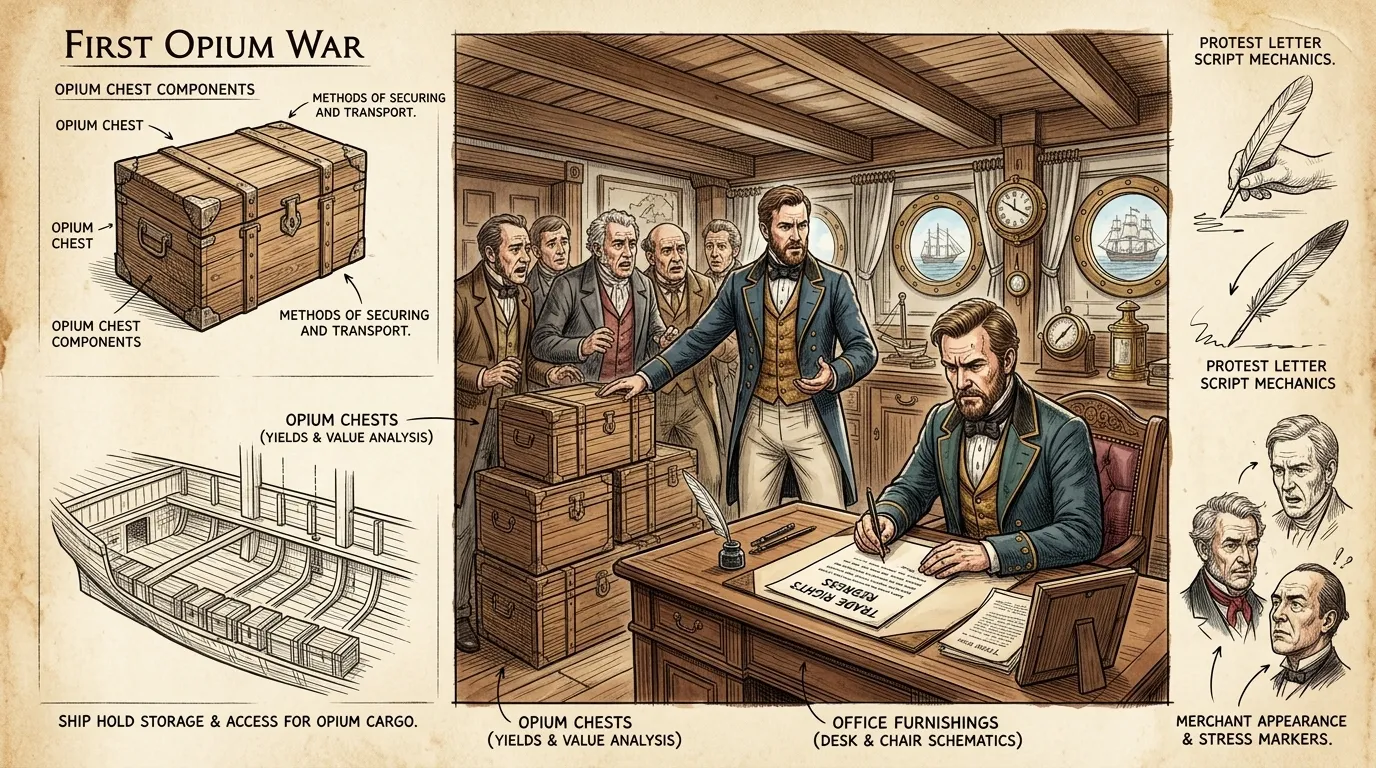
Captain Elliot, under pressure from British merchants, ordered the surrender of all opium to the British government, promising compensation. He then sent a formal protest to the Qing authorities. 'This is a violation of our trade rights,' Elliot argued. 'We demand redress!'
Page 6

The destruction of the opium at Humen sparked outrage in Britain. Lord Palmerston, the Foreign Secretary, saw an opportunity to expand British influence in China. 'We cannot allow China to dictate the terms of trade,' Palmerston declared in Parliament. 'We must defend our interests!'
Page 7
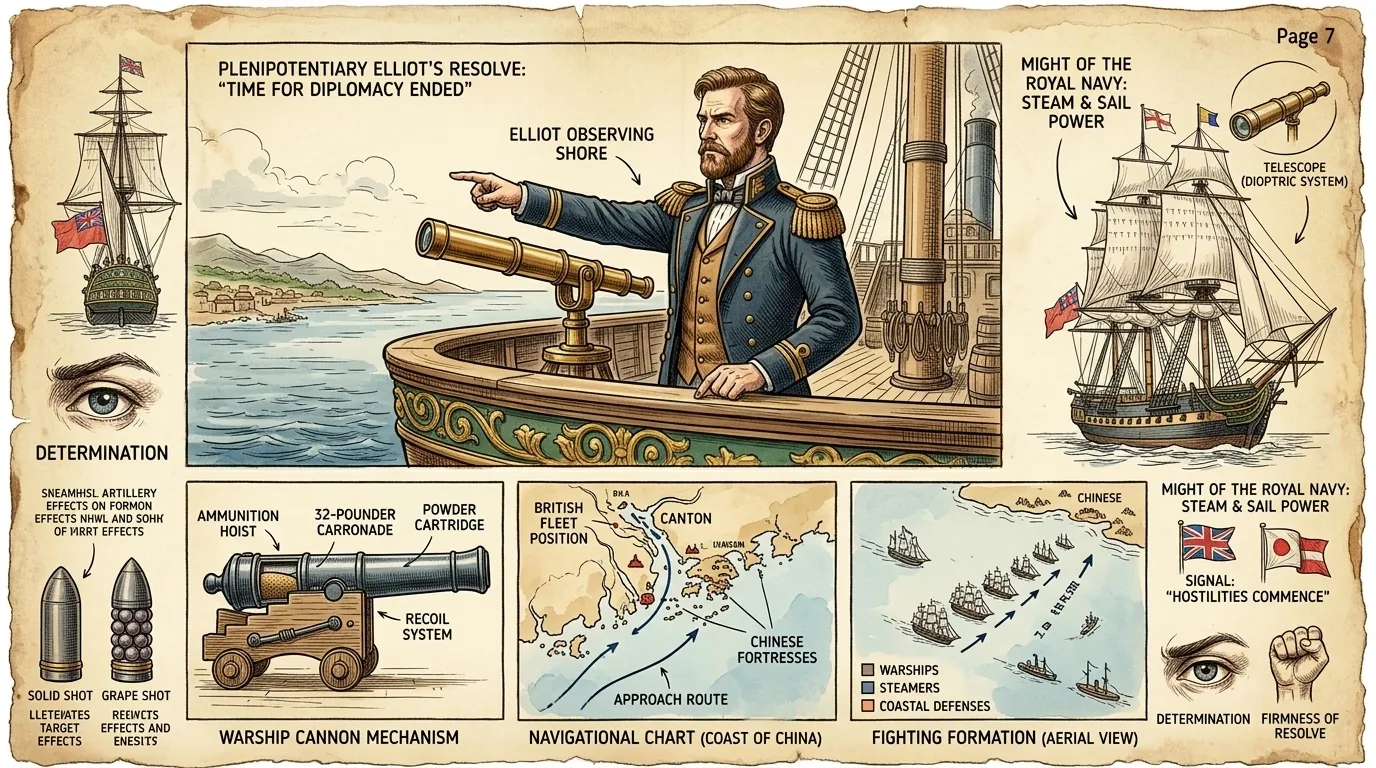
'The time for diplomacy is over,' said Captain Elliot, now promoted to Plenipotentiary. 'We must show the Qing court the strength of the British Empire!' The British fleet, armed with advanced weaponry, sailed towards China, initiating hostilities in 1840.
Page 8
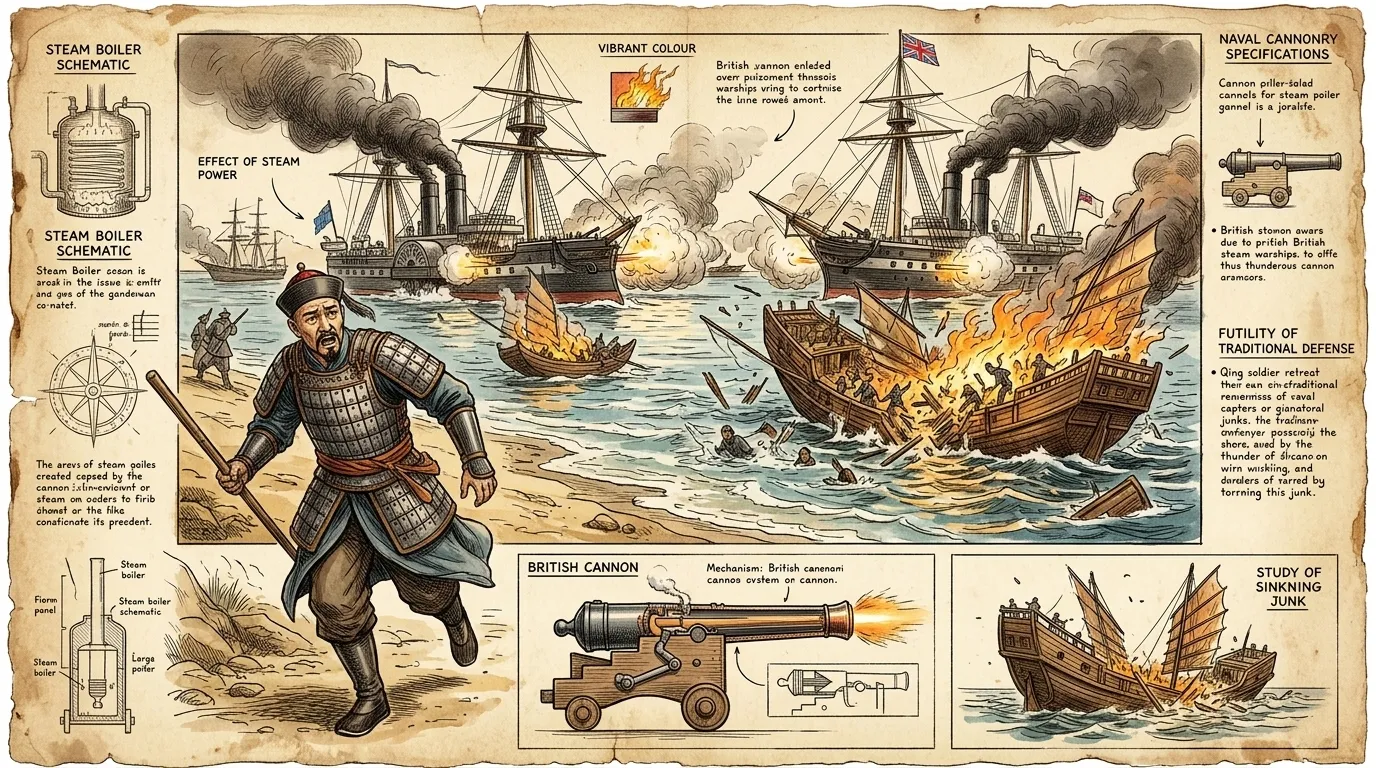
The technologically superior British forces swiftly defeated the Qing armies. Key cities like Canton and Ningbo fell to the British. Chinese junks were no match for British warships. A Qing soldier cried, 'Their cannons are like thunder, our swords are useless!' as they retreated from a lost battle.
Page 9
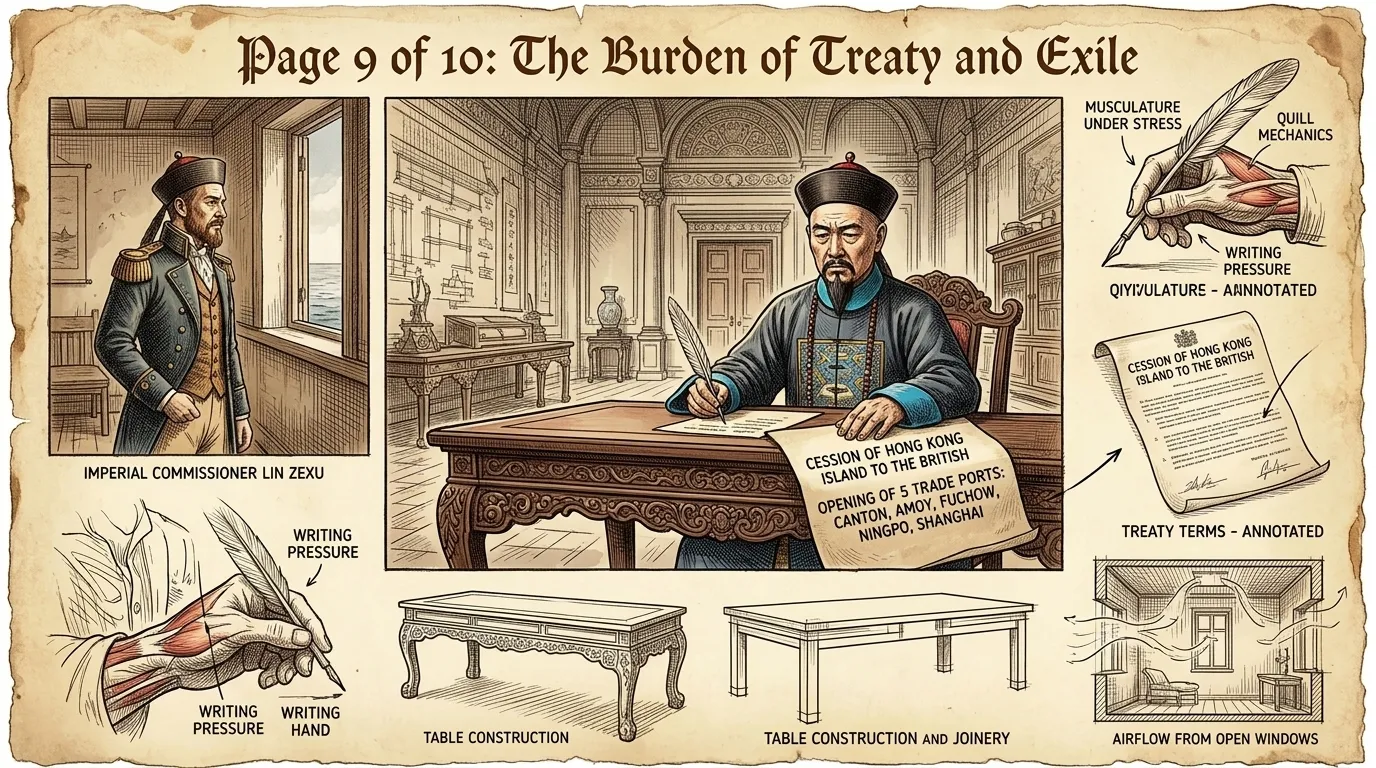
In 1842, the Treaty of Nanking was signed, forcing China to cede Hong Kong to Britain and open several ports to British trade. China was also forced to pay a large indemnity. 'This treaty is a national humiliation,' Lin Zexu lamented, stripped of his official position.
Page 10
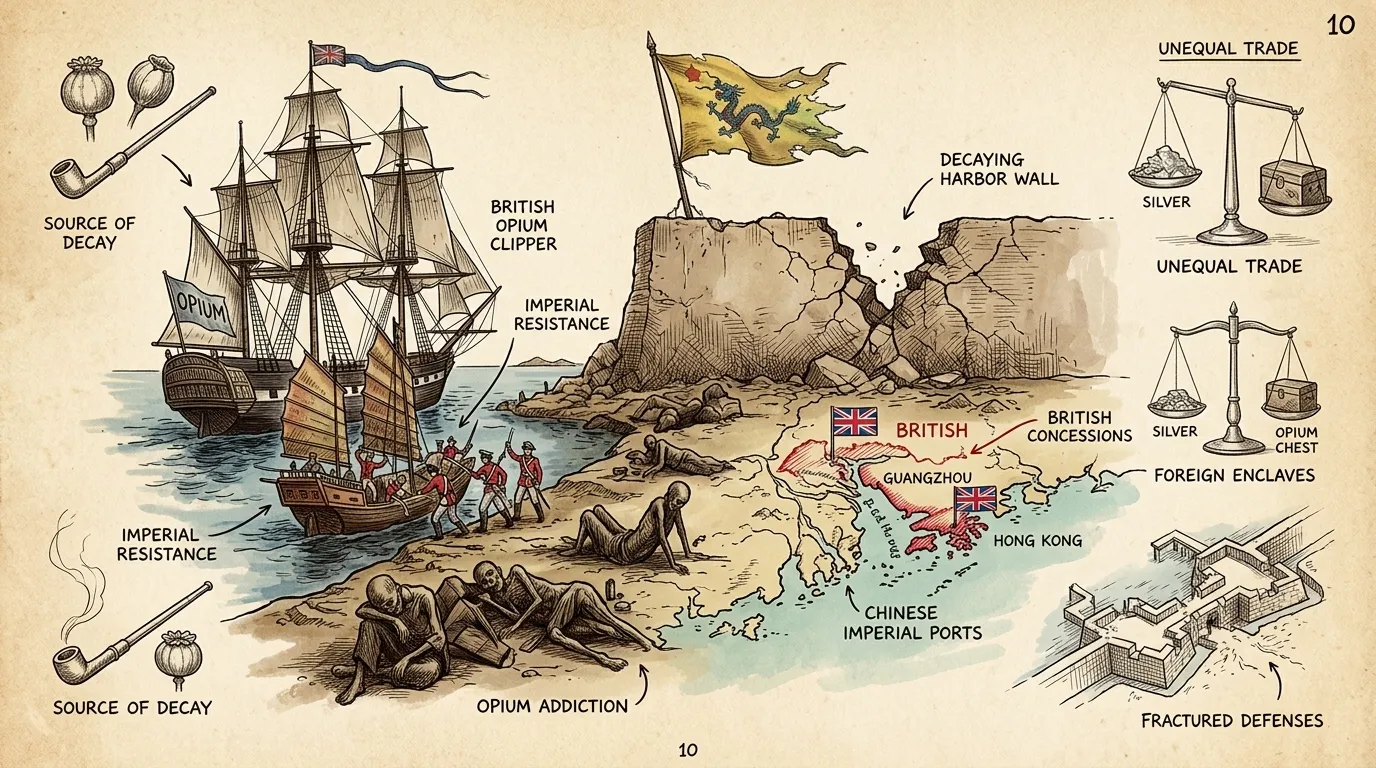
The Opium Wars marked the beginning of a century of humiliation for China, weakening the Qing dynasty and opening the door to further foreign intervention. The opium trade continued to plague the country, creating widespread addiction and social problems. The legacy of this conflict continues to shape China's relationship with the West today.
About this story
- Historical figures: Lin Zexu, Charles Elliot, Emperor Daoguang
- Location: China
- Period: Modern
- Audience: general readers
Questions and answers
Questions and answers about The Opium Wars — China (1839, China)
Read Wonder History on your phone
Wonder History is available on Android. Get Wonder History on Google Play.