The Peasant's Revolt of 1381 (1381, United Kingdom)
The Peasant's Revolt of 1381 (1381, United Kingdom) — an illustrated history story, featuring Wat Tyler, King Richard II, John Ball, set in United Kingdom. 10 illustrated pages, free to read on Wonder History.

Page 1
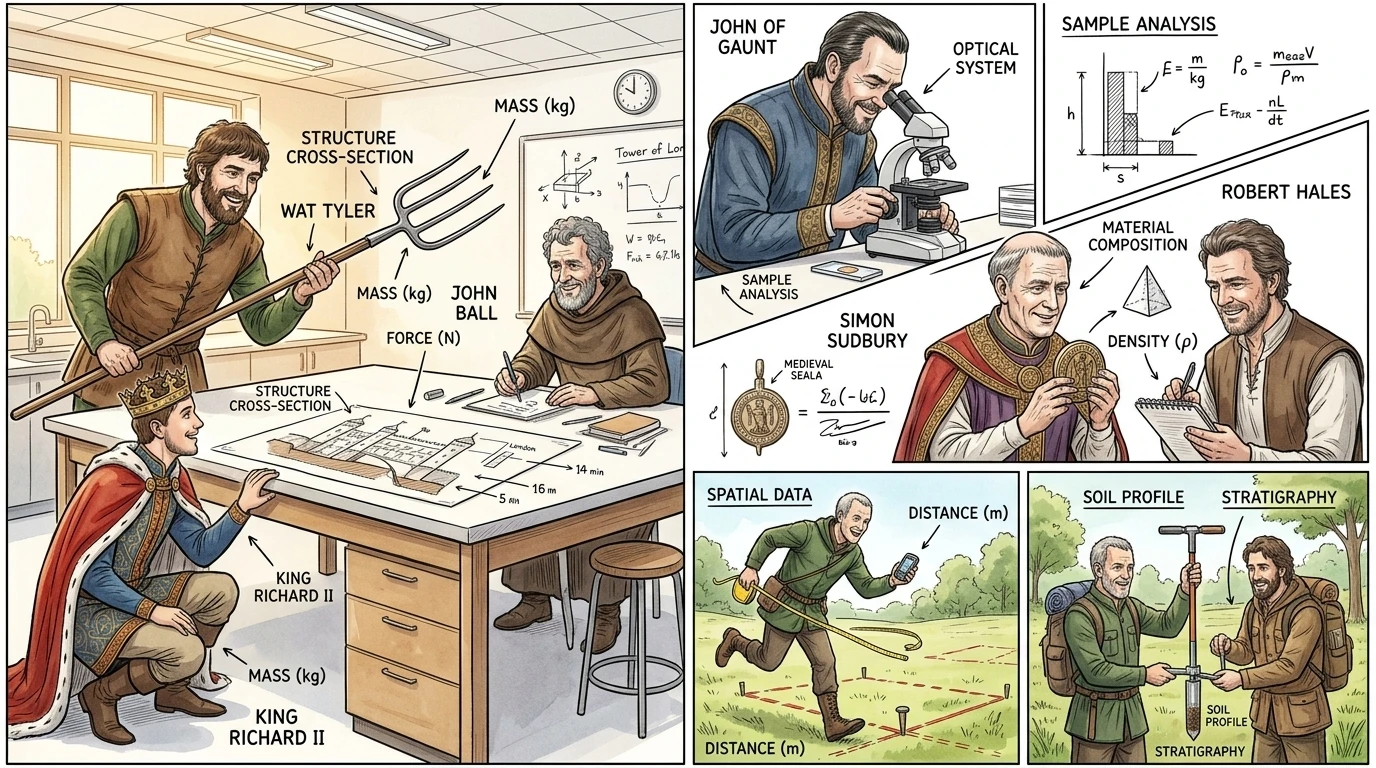
On June 15, 1381, the Tower of London was breached, and Simon Sudbury, Archbishop of Canterbury and Lord Chancellor, was dragged to Tower Hill. Wat Tyler, the charismatic leader of the peasant army, raised his sword. The air crackled with energy as thousands of rebels surged forward, their pitchforks and scythes glinting in the sun.
Page 2
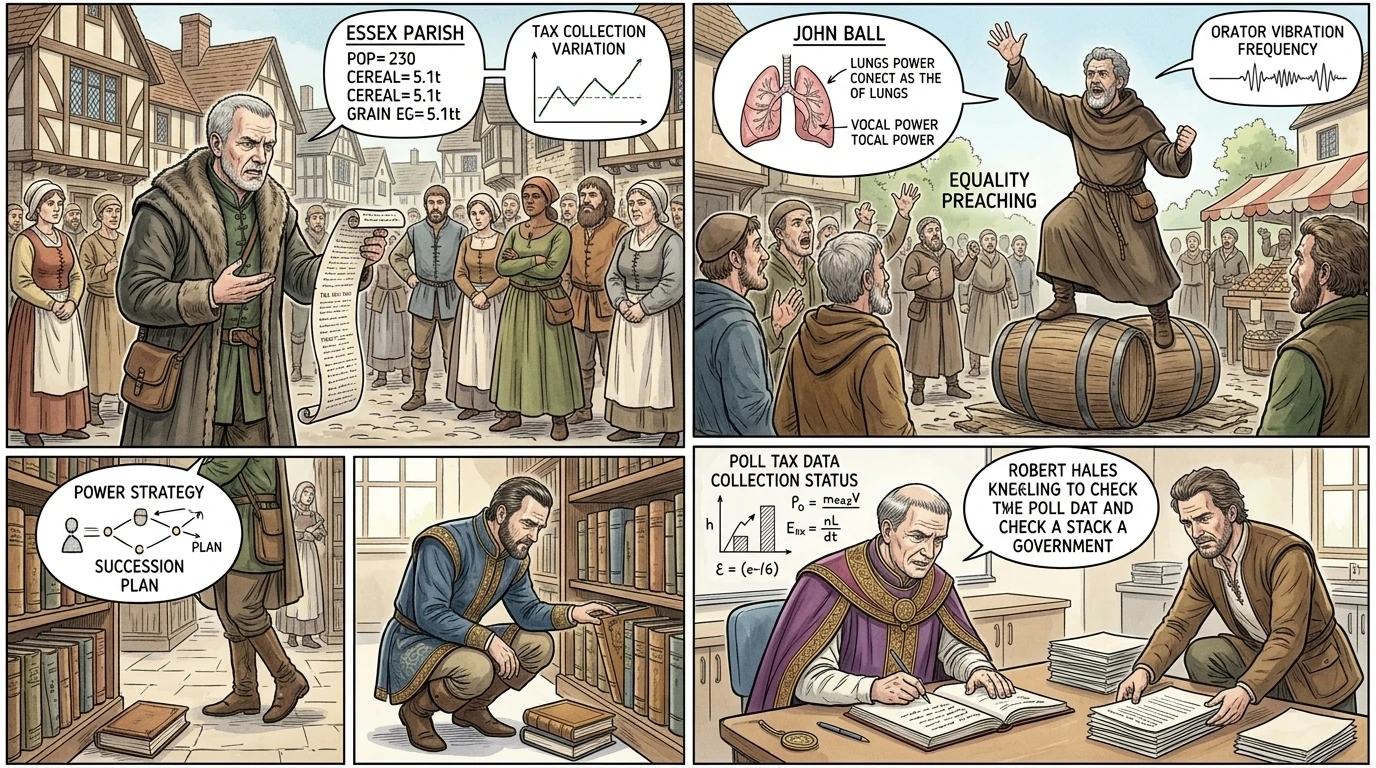
It began with Thomas Bampton, a tax collector in Essex, demanding unpaid poll taxes. Villagers in Brentwood refused to pay, inciting an army of peasants to form and march on London. John Ball, a radical Lollard priest, preached messages of equality: "When Adam delved and Eve span, who was then the gentleman?" His words fueled the uprising, but resentment had been brewing for years.
Page 3
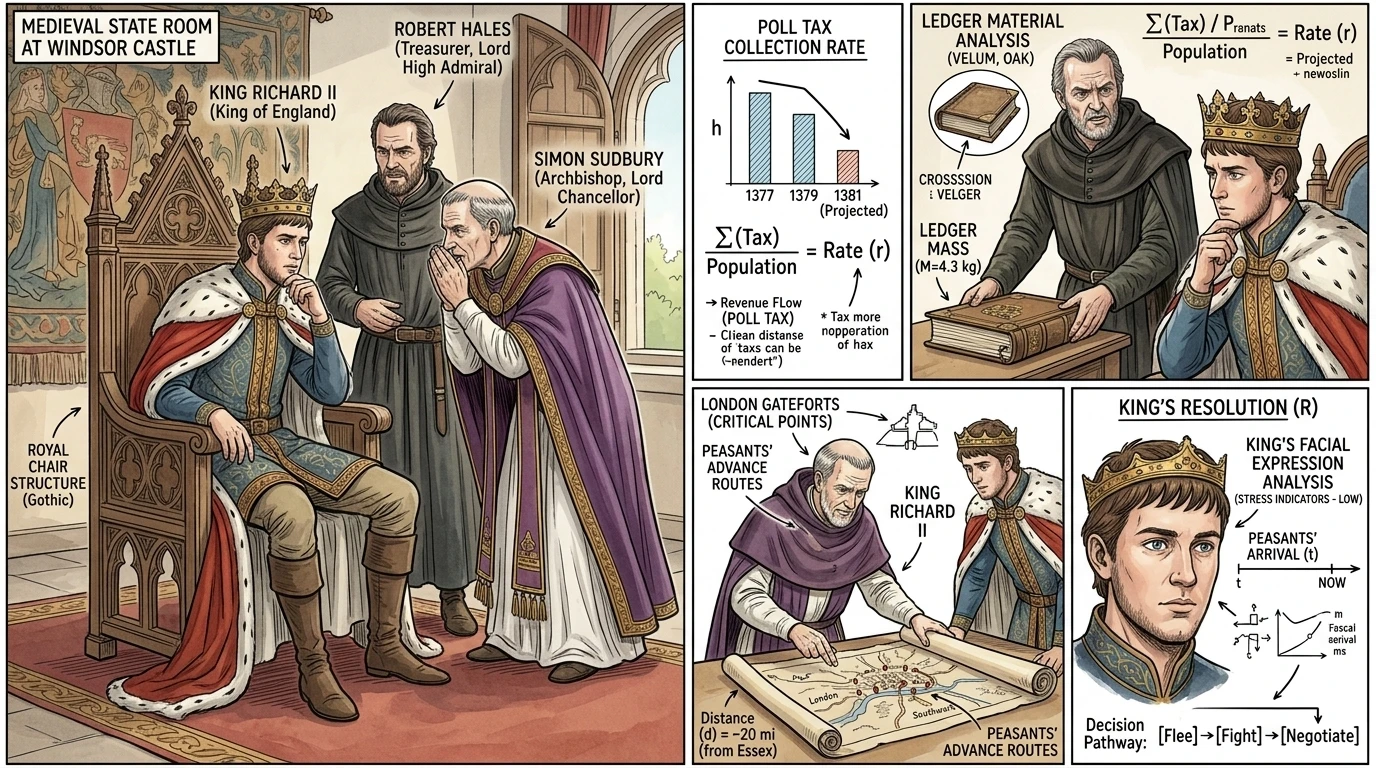
King Richard II, barely fourteen years old, received word of the unrest at Windsor Castle. His uncle, John of Gaunt, Duke of Lancaster, was away in Scotland, leaving the young king vulnerable. Robert Hales, the Treasurer of England, advised Richard to stand firm against the rebels. Richard refused, but Simon Sudbury whispered something into his ear. "We must negotiate to save the crown", said Sudbury.
Page 4
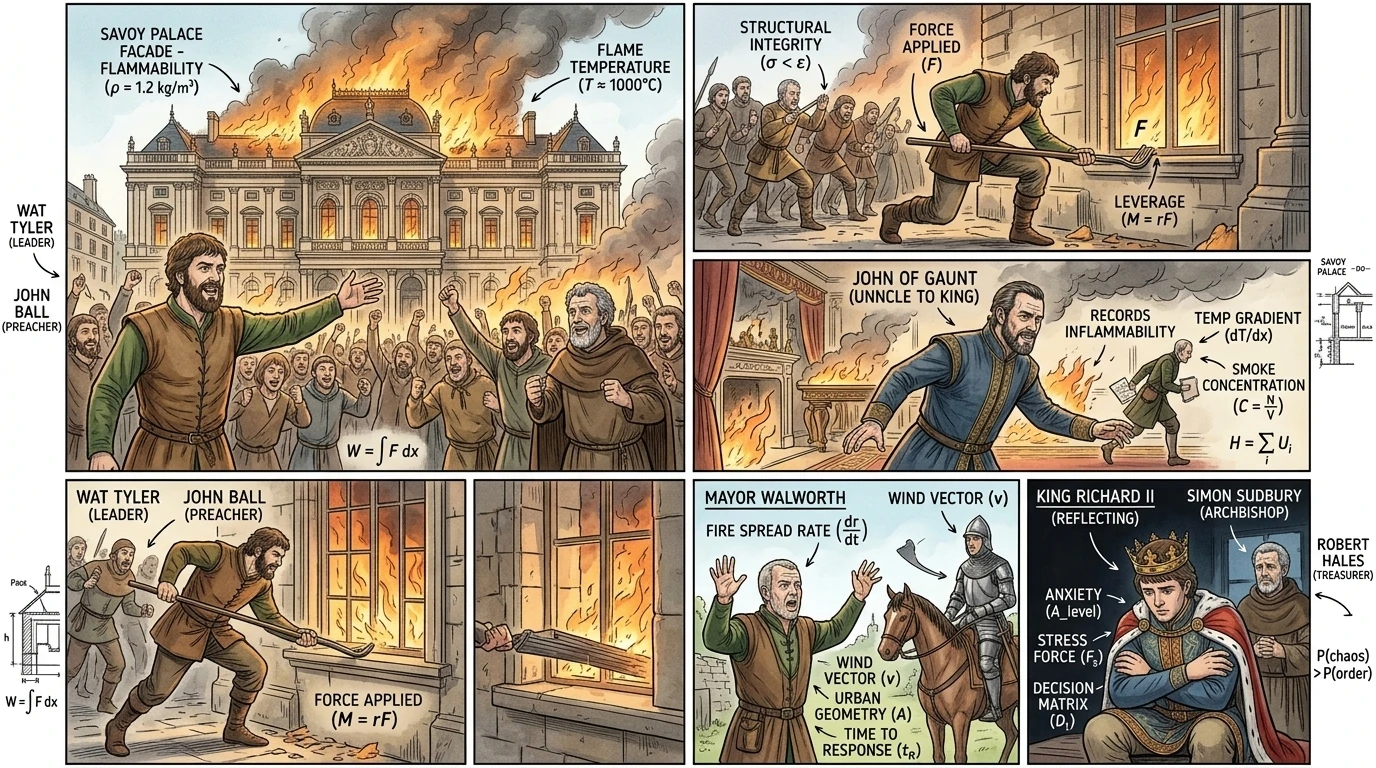
On June 13th, the rebels entered London. They burned John of Gaunt's Savoy Palace in retaliation for his heavy taxation policies. The mob, incited by Wat Tyler, swarmed through the city. "Let's tear down these symbols of opulence and oppression!" Wat Tyler exclaimed, his voice booming over the crowd.
Page 5

Richard II met with the rebels at Mile End. He promised to abolish serfdom and pardon all rebels. Many peasants, believing his word, returned home. But Wat Tyler and a smaller contingent remained, distrustful of the king's intentions. He spoke to his people, 'The king may have pardoned us, but our true revolt is not yet over.'
Page 6
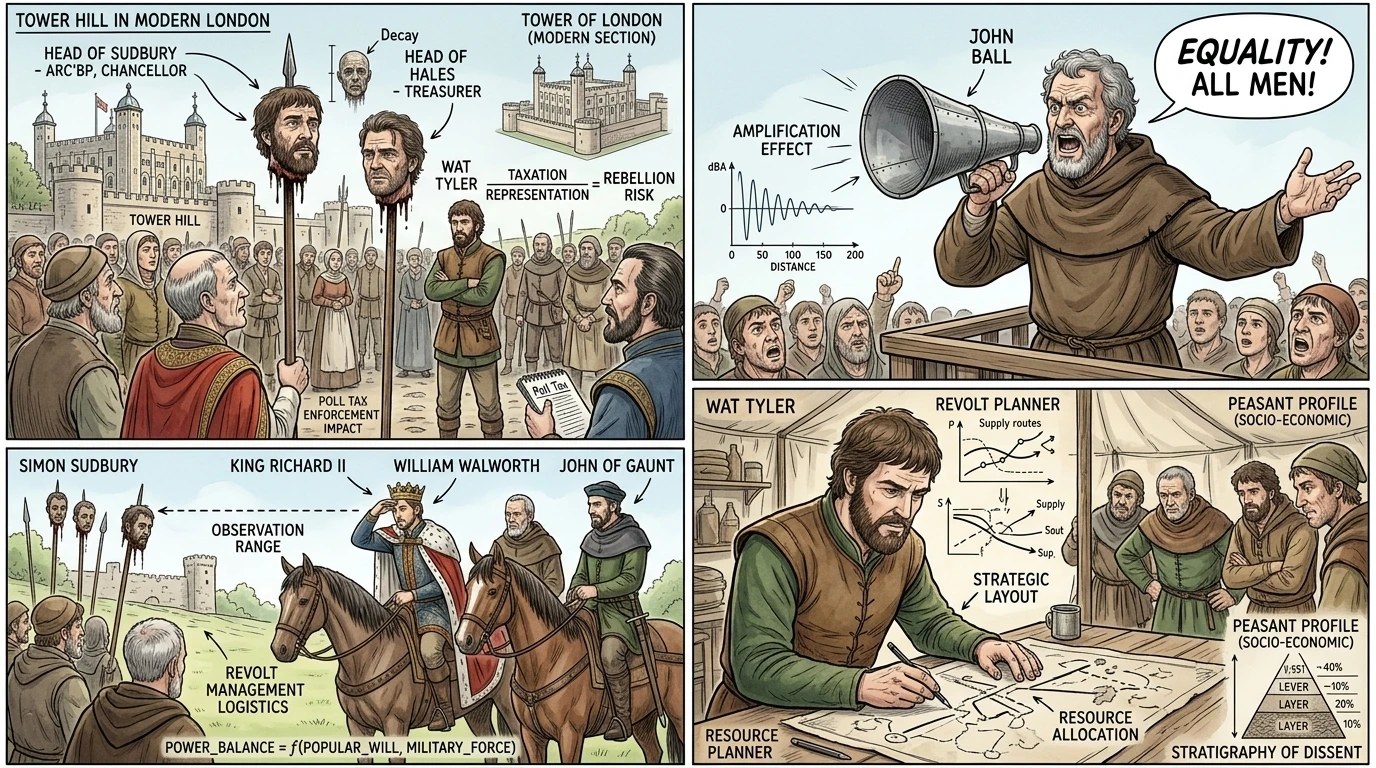
Simon Sudbury, Archbishop of Canterbury and Lord Chancellor, was seized from the Tower and brought to Tower Hill. Robert Hales, the unpopular Treasurer, was also captured. They were both summarily executed, their heads displayed on pikes. The peasants were making a statement. John Ball screamed at them with a megaphone: 'Your actions have shown the people what this clockwork world is made of.'
Page 7
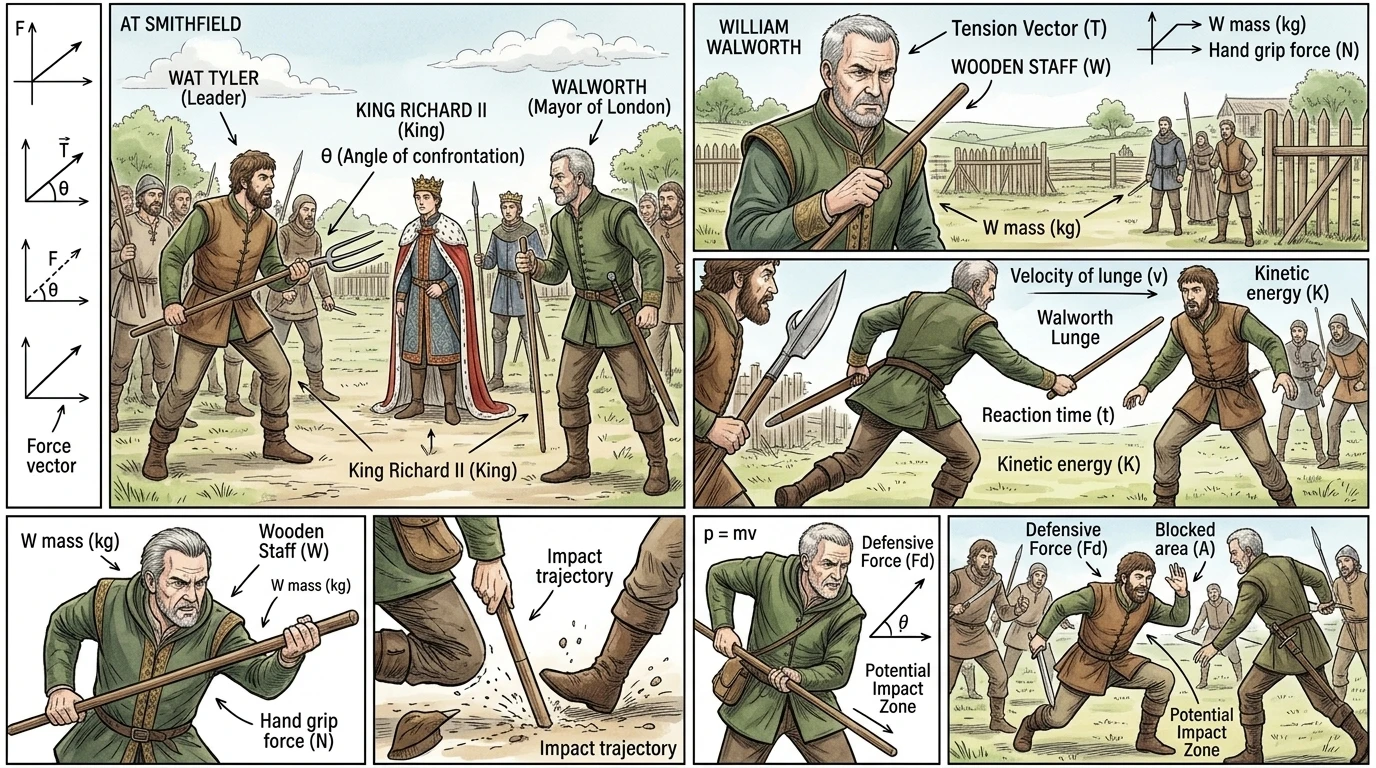
Richard II arranged a second meeting at Smithfield. Wat Tyler arrived with his followers, armed and defiant. William Walworth, the Mayor of London, grew suspicious of Tyler's intentions. "You will not get away with this." Walworth unsheathed his sword and attacked.
Page 8
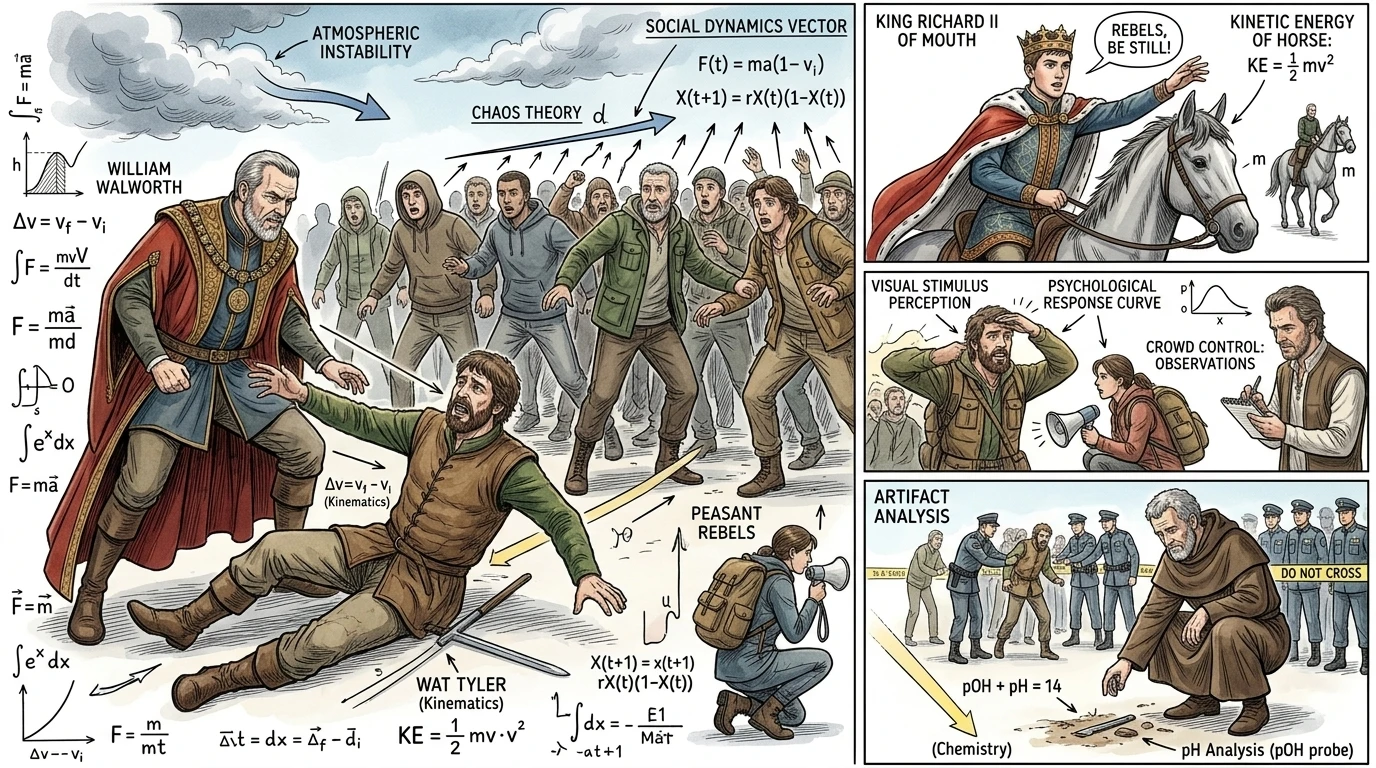
William Walworth struck Wat Tyler down. The rebel army was thrown into disarray. Richard II, displaying unexpected courage, rode forward. "Sirs, will you kill your King? I will be your captain," he declared, seizing control of the situation. The people stepped back. King Richard had won.
Page 9
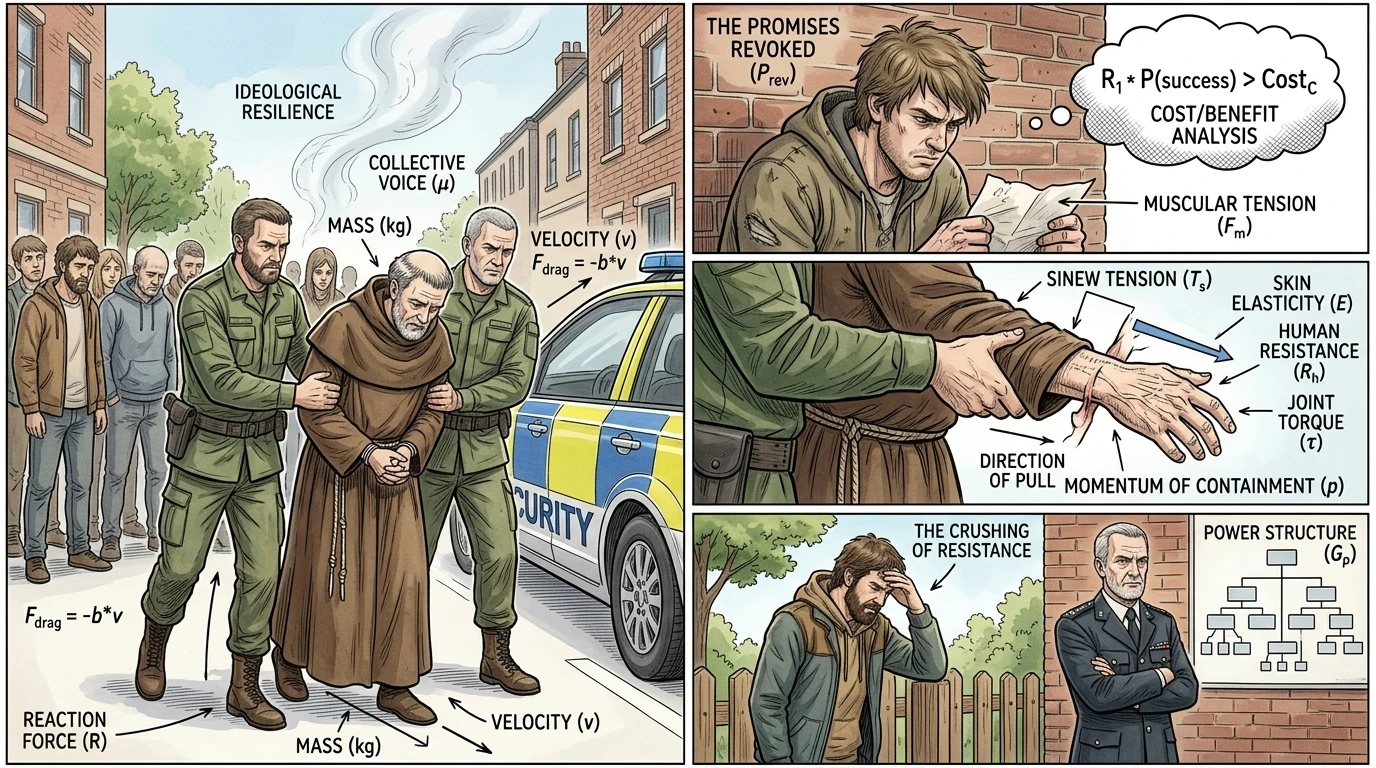
The revolt was crushed. The promises made at Mile End were revoked. John Ball was captured and executed. The peasants had failed to achieve their immediate goals. As Shakespeare wrote, 'The web of our life is of a mingled yarn, good and ill together.' Nothing changed except that their voices were heard.
Page 10
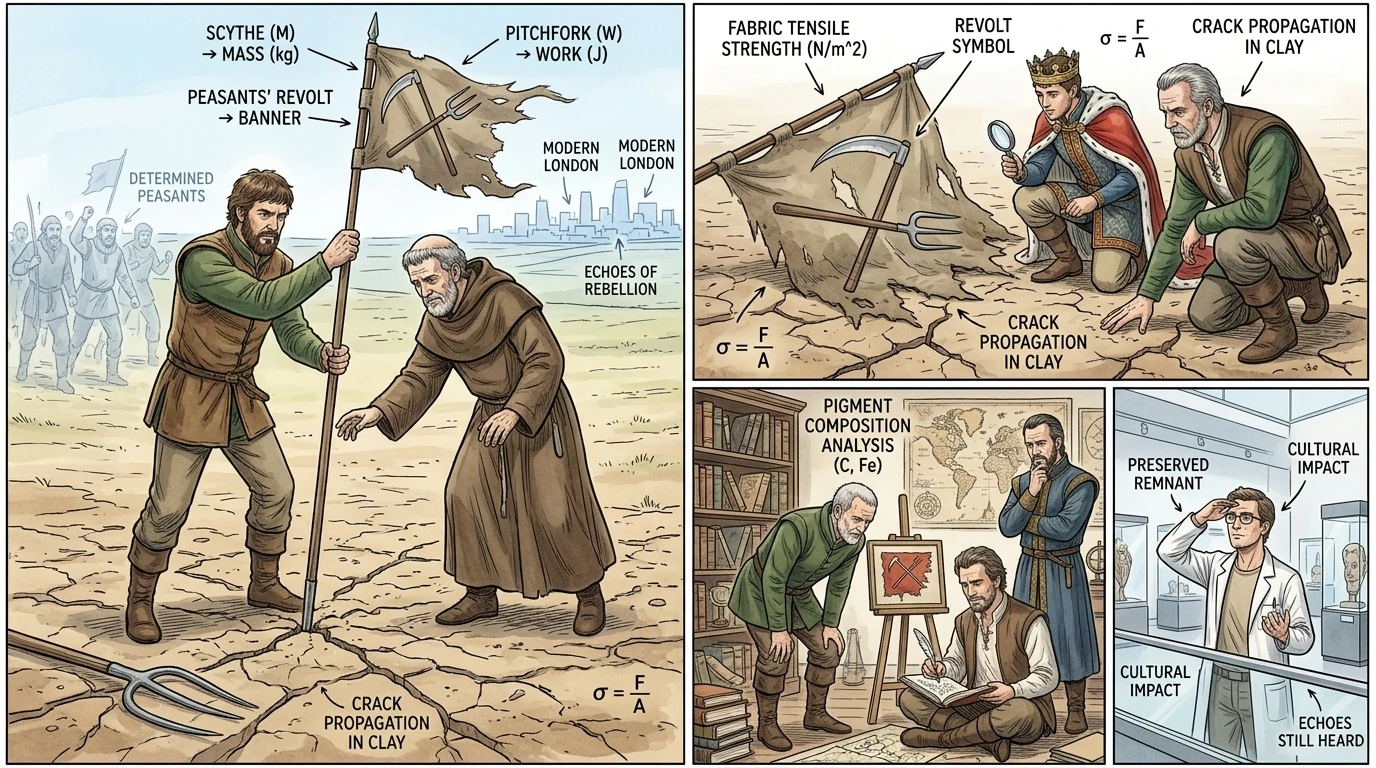
Though the Peasants' Revolt failed to overthrow the feudal system, it exposed the deep-seated resentment of the lower classes. It challenged the authority of the monarchy and the Church. It remains a powerful symbol of resistance against injustice. The echoes of rebellion can be heard in London today.
About this story
- Historical figures: Wat Tyler, King Richard II, John Ball
- Location: United Kingdom
- Period: Middle Ages
- Audience: general readers
Questions and answers
Questions and answers about The Peasant's Revolt of 1381 (1381, United Kingdom)
Read Wonder History on your phone
Wonder History is available on Android. Get Wonder History on Google Play.
More Wonder History stories
- The Potato Famine Devastates Ireland (1845, Ireland)
- The Printing Press Revolution — Germany (1517, Germany)
- The Protestant Reformation — Germany & Europe (1517, Germany & Europe)
- The Qing Dynasty Rise — China (1644, China)
- The Renaissance Begins in Florence (1410, Florence)
- The Rise and Fall of the Mughal Empire — India (1707, India)