The Printing Press Revolution — Germany (1517, Germany)
The Printing Press Revolution — Germany (1517, Germany) — an illustrated history story, featuring Martin Luther, Johannes Gutenberg, Emperor Maximilian I, set in Germany. 10 illustrated pages, free to read on Wonder History.
Page 1

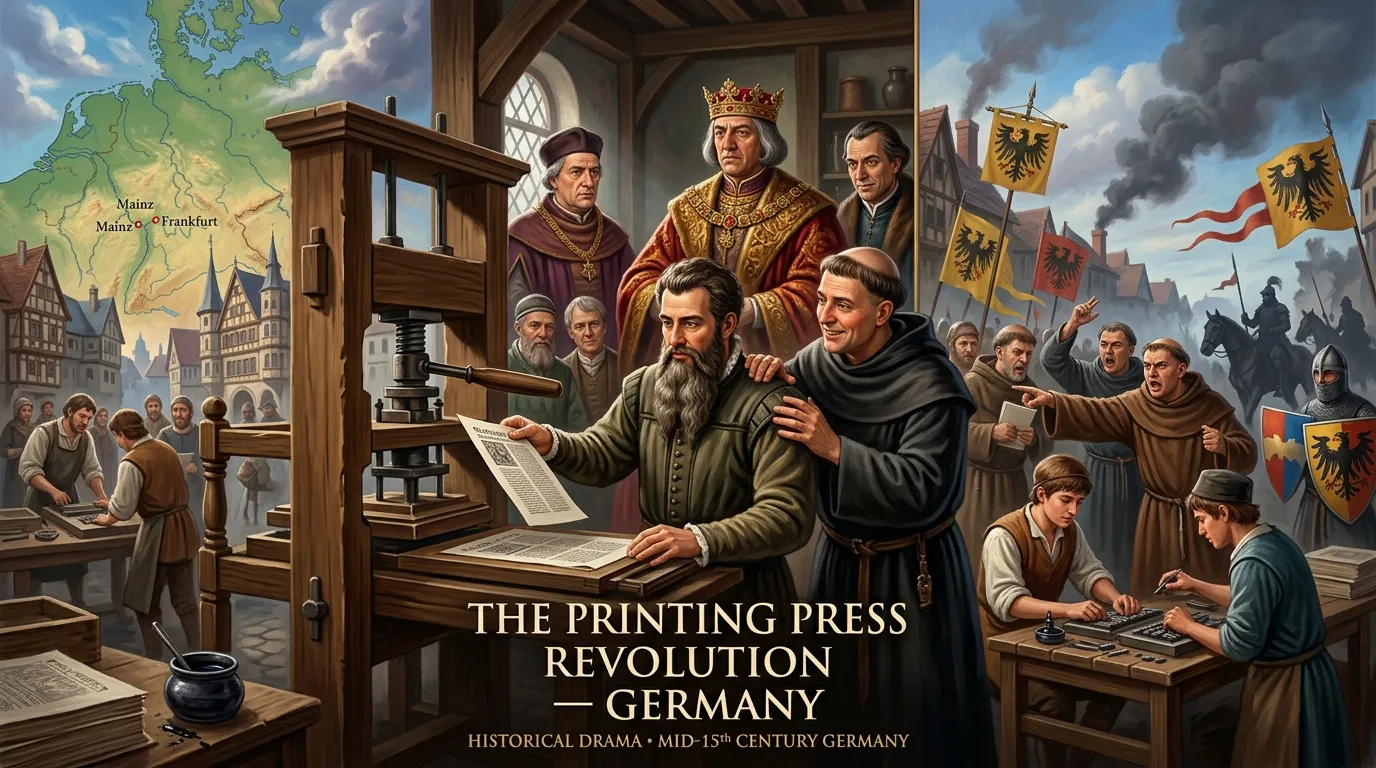
October 31, 1517. Martin Luther, the defiant theologian; Johannes Gutenberg, the long-deceased inventor of the printing press; Emperor Maximilian I, the worried ruler; and Albrecht of Brandenburg, the ambitious Archbishop – their legacies were about to intertwine in earth-shattering ways. Ninety-five theses, hammered onto a church door, would soon ignite a revolution fueled by ink and movable type. But how could a simple device reshape the Holy Roman Empire?
Page 2

Young Martin agonized over his place in God's eyes. "I was a good monk, and yet my conscience was full of doubt!" he confided to Johann von Staupitz, his mentor. Staupitz, the vicar general of the Augustinian order, a kind man with gentle eyes, encouraged him to study scripture. "Look to Christ, Martin, and find peace in His word," Staupitz advised, handing him a worn leather-bound Bible.
Page 3
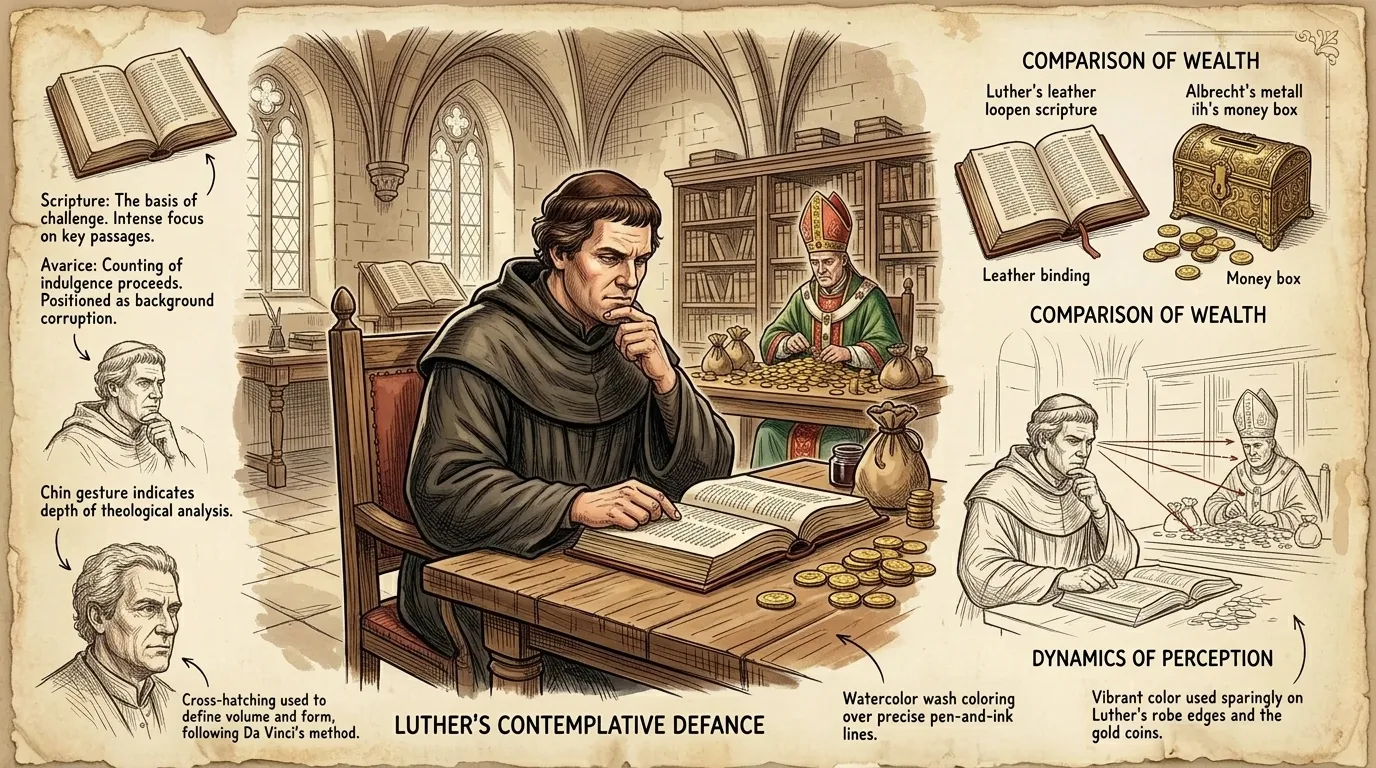
"Indulgences are a fraud!" Luther declared, studying the scriptures. He knew Albrecht of Brandenburg profited handsomely from selling indulgences – pardons for sins, in exchange for payment. "It is as Leonardo da Vinci said, 'I love those who can smile in trouble,'" Luther muttered. "But profiting from people's faith is hardly something to smile about."
Page 4

Albrecht, in need of funds to pay the Pope for his Archbishopric, had employed Johann Tetzel, a flamboyant Dominican friar. "As soon as the coin in the coffer rings, the soul from purgatory springs!" Tetzel cried, waving a parchment indulgence before a crowd in Jüterbog. A woman clutching a small purse steps forward to buy an indulgence for her deceased husband.
Page 5

Gutenberg's printing press, invented decades earlier, was now transforming Europe. "Imagine the possibilities!" Johann Fust, Gutenberg's former financier, told his apprentice, Peter Schöffer. "No longer will knowledge be chained to monasteries! We can spread information faster than ever before!"
Page 6

Copies of Luther's Ninety-Five Theses spread like wildfire, thanks to the printing press. "Have you seen this?" Maximilian I exclaimed, holding a printed sheet. "This monk challenges the very foundation of the Church!" He handed the document to an advisor, his face grim.
Page 7

"We must debate these issues!" Luther insisted at the Diet of Worms in 1521. To Johann von Staupitz, he said in a hushed tone, "'Here I stand; I can do no other,' remember? That's what I told the Emperor. I will not recant unless convinced by Scripture and reason!" The Diet erupted in protest, the Emperor glaring at the defiant monk.
Page 8
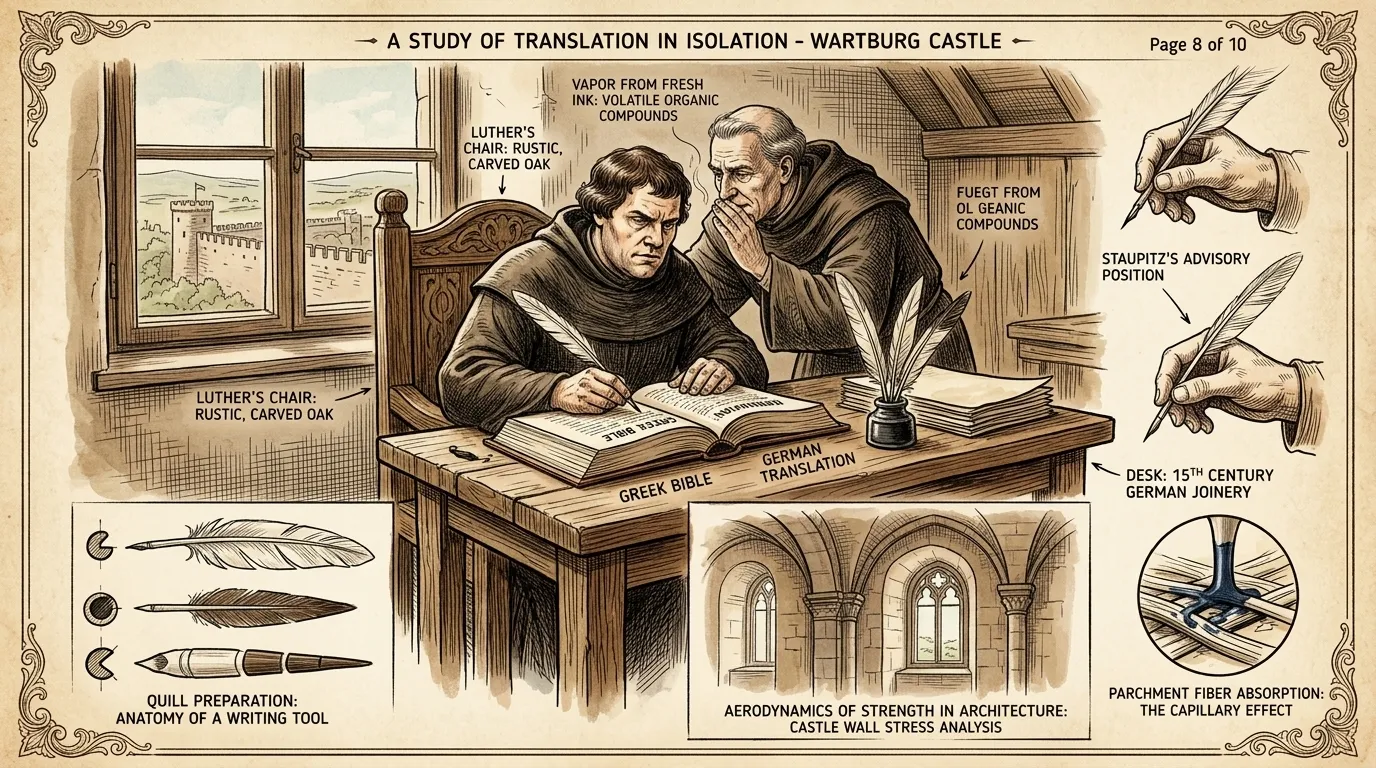
Luther, declared an outlaw, was secretly taken to Wartburg Castle for his own safety. "Here, you will be safe to translate the Bible into German," Staupitz whispered, arranging a quill and parchment on the desk. "This will put the Word of God in the hands of the common people!"
Page 9

Luther's German Bible, printed and widely distributed, empowered individuals to interpret scripture for themselves. "At last, I can read God's word in my own language!" a farmer exclaimed, reading aloud to his family by the fire. His wife and children listened intently, their faces illuminated by the warm glow.
Page 10

The printing press revolutionized not just religion, but all of European society. Knowledge was democratized, fueling scientific inquiry and challenging established power structures. Centuries later, the legacy of the Printing Press Revolution continues to shape our world.
About this story
- Historical figures: Martin Luther, Johannes Gutenberg, Emperor Maximilian I
- Location: Germany
- Period: Early Modern
- Audience: kids (ages 6–12)
Questions and answers
Questions and answers about The Printing Press Revolution — Germany (1517, Germany)
Read Wonder History on your phone
Wonder History is available on Android. Get Wonder History on Google Play.
More Wonder History stories
- The Protestant Reformation — Germany & Europe (1517, Germany & Europe)
- The Qing Dynasty Rise — China (1644, China)
- The Renaissance Begins in Florence (1410, Florence)
- The Rise and Fall of the Mughal Empire — India (1707, India)
- The Rise of the Ottoman Empire — Anatolia & Southeast Europe (1453, Anatolia & Southeast Europe)
- The Rise of the Roman Empire — Mediterranean (48 BC, Mediterranean)