The Punic Wars — Rome & Carthage (202 BC)
The Punic Wars — Rome & Carthage (202 BC) — an illustrated history story, featuring Hannibal Barca, Scipio Africanus, Cato the Elder, set in Rome & Carthage. 10 illustrated pages, free to read on Wonder History.

Page 1
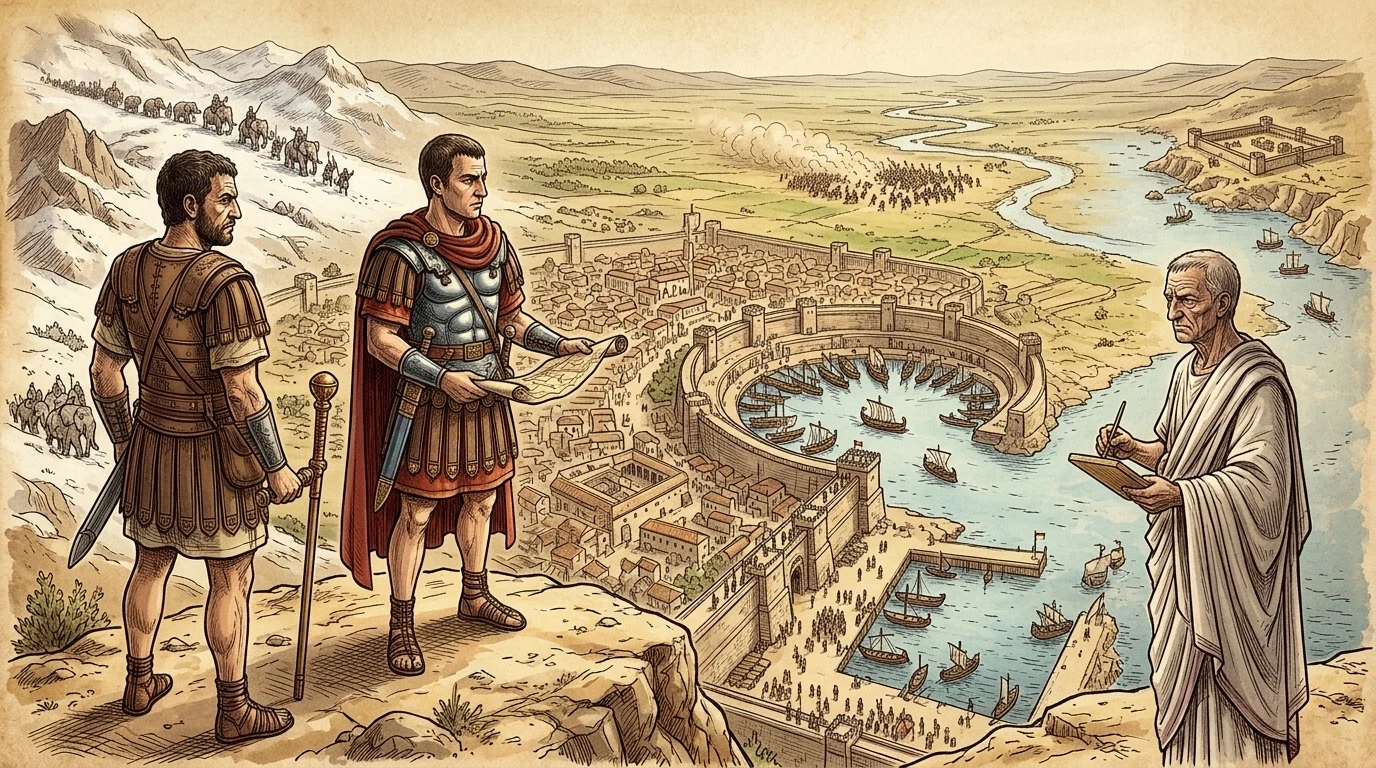
October 19, 202 BC, near Zama, North Africa: Hannibal Barca, the Carthaginian general who crossed the Alps, faced Scipio Africanus, the Roman commander who dared to invade Carthaginian lands. Cato the Elder, a stern Roman senator, watched with grim satisfaction, already envisioning Carthage's doom. The Punic Wars—a century-long struggle for dominance—had reached their bloody climax, deciding the fate of two great civilizations. But where did this conflict begin?
Page 2
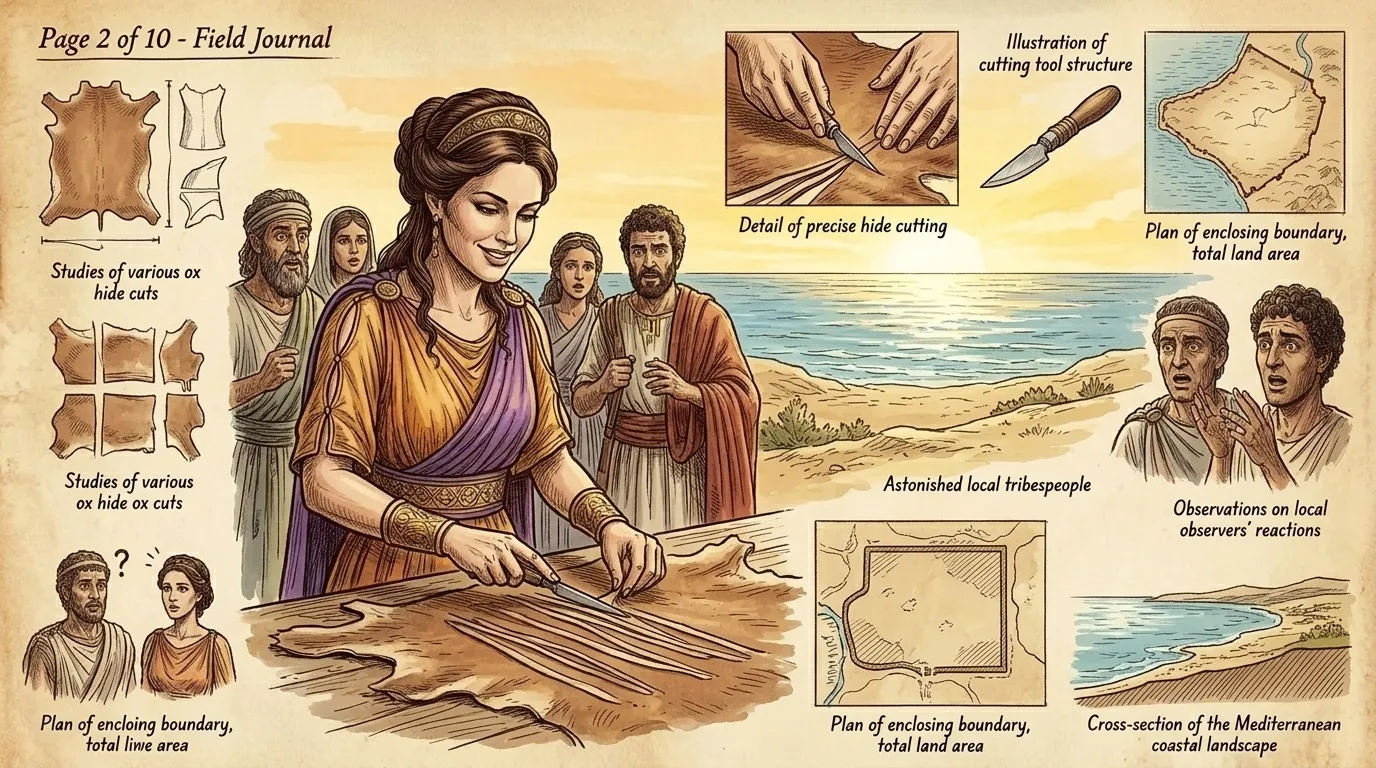
Centuries earlier, in 814 BC, the Phoenician princess Dido, fleeing tyranny, arrived on the shores of North Africa. She bartered shrewdly with the local tribes, gaining just enough land, as the legend goes, 'as could be encompassed by an ox hide.' Dido cleverly cut the hide into thin strips, forming a boundary that enclosed the land that would become Carthage. 'From small beginnings come great things, isn't that how it goes?' Dido exclaimed, surveying her newly claimed land.
Page 3
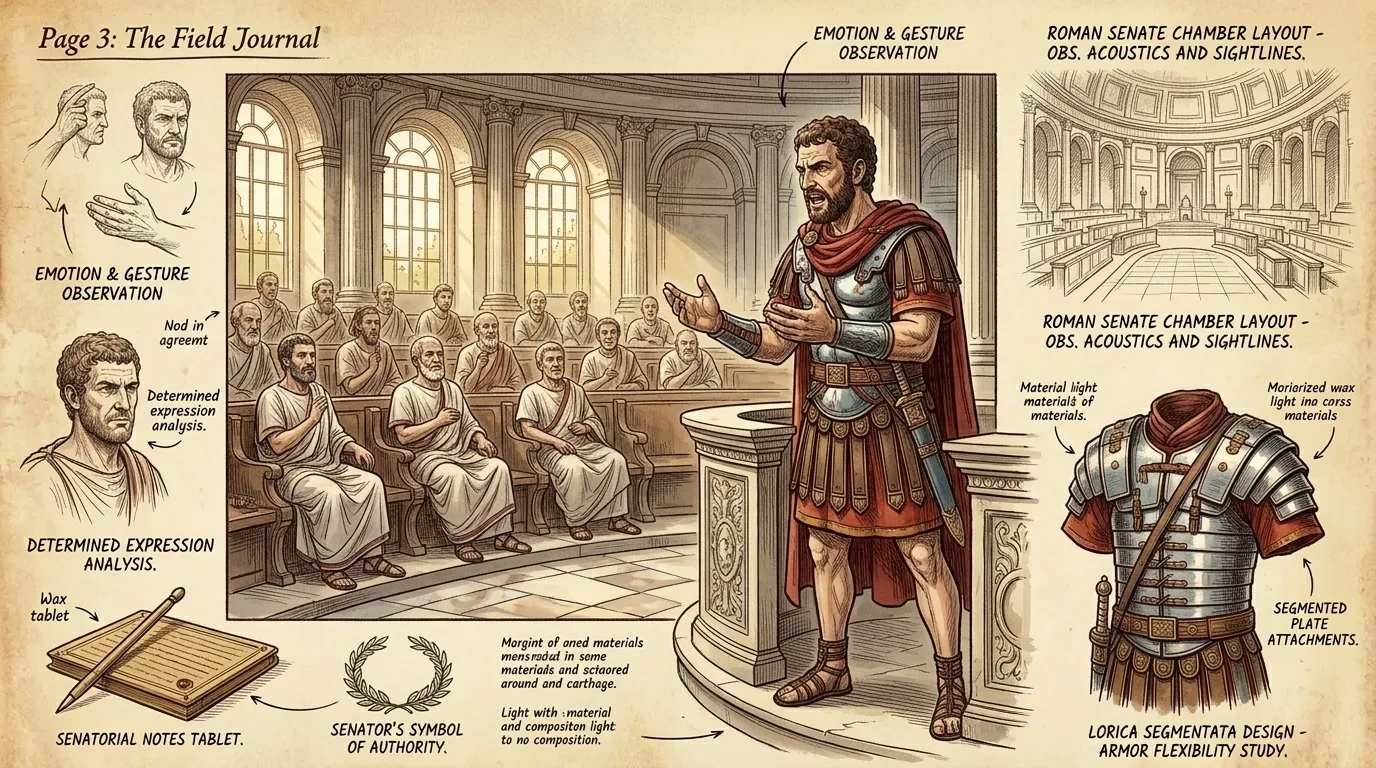
Meanwhile, across the sea, Rome was steadily expanding. Their republic, fueled by ambition and military prowess, saw Carthage as both a rival and a target. 'They control the seas, the trade,' grumbled Regulus, a Roman consul, at the Senate, 'If we want to become a true empire, Carthage must fall!'. His words echoed through the chamber, planting a seed of conflict.
Page 4

In 264 BC, the First Punic War erupted when Rome intervened in a dispute in Sicily, a strategic island coveted by both powers. Roman legions landed on the island, clashing with Carthaginian forces. 'For Rome!' shouted a Centurion as he drew his gladius, charging into the fray.
Page 5
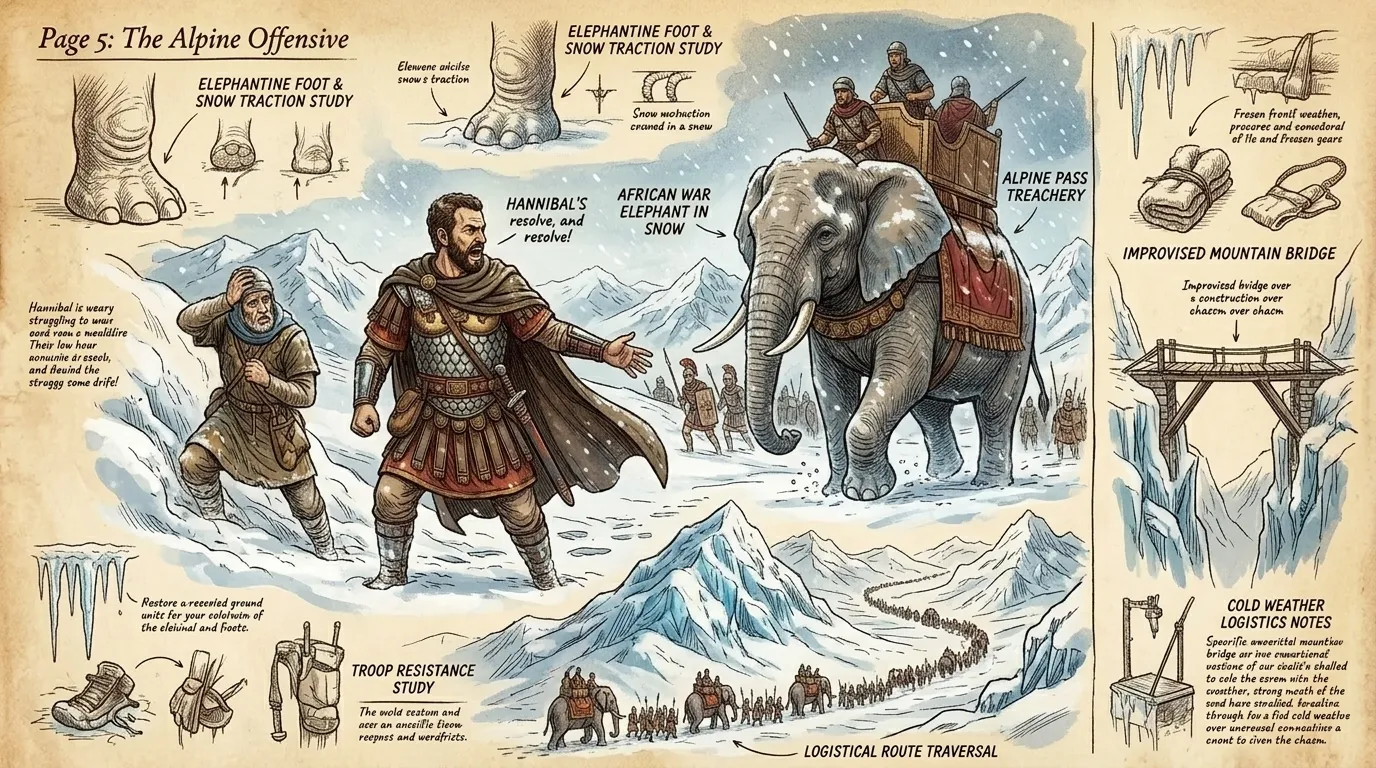
Decades later, Hannibal Barca, a brilliant Carthaginian general, sought to strike at the heart of Rome. In 218 BC, he led his army, including war elephants, across the treacherous Alps. The snow fell heavily as his troops struggled through the mountain passes. Hannibal turned to his troops with a resolute face and said: 'I find that the harder I work, the more luck I seem to have' said Thomas Jefferson, and so let's get to work.
Page 6
In 216 BC, at Cannae, Hannibal delivered a devastating defeat to the Roman army. He masterfully encircled the Romans, annihilating their forces. Over 50,000 Roman soldiers perished in a single day. The river ran red with blood, a testament to Hannibal's tactical genius.
Page 7
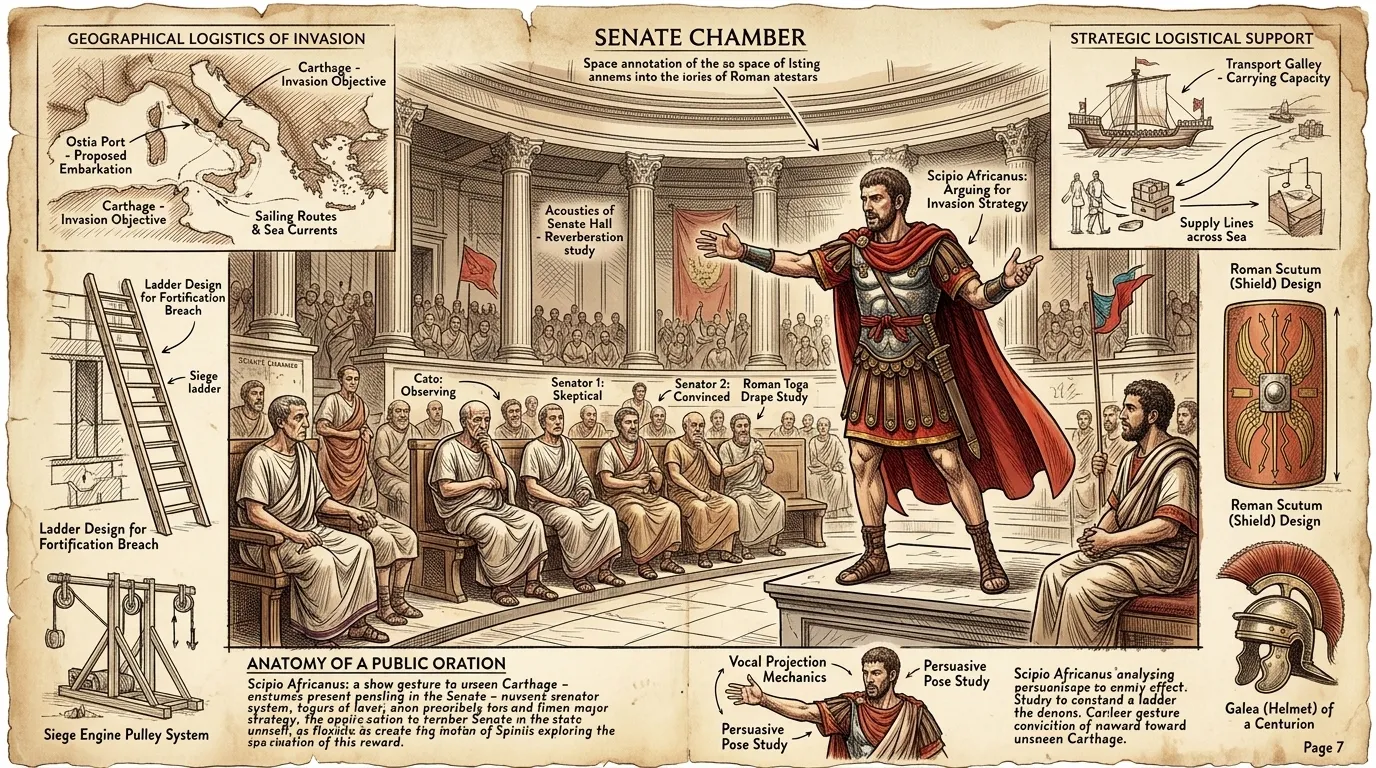
Scipio Africanus, a young and ambitious Roman general, recognized that the key to defeating Hannibal was to strike at Carthage itself. He convinced the Senate to authorize an invasion of North Africa. 'We must carry the war to their doorstep,' he declared.
Page 8
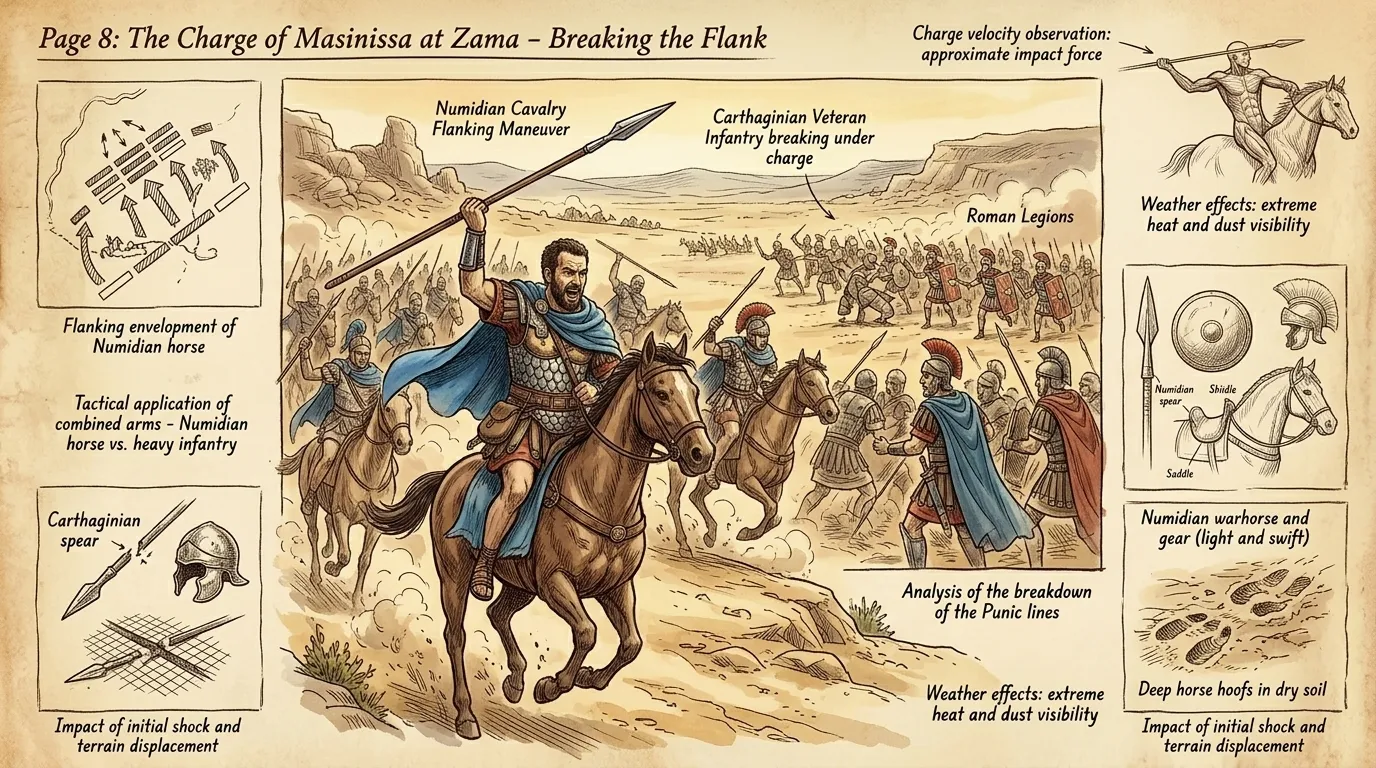
At Zama, Scipio faced Hannibal in a decisive battle. The Roman legions, reformed and revitalized, clashed with Hannibal's weary veterans. Scipio deployed his cavalry, led by the Numidian prince Masinissa, to great effect. Masinissa shouted in his native tongue as he lead his Numidian warriors. "Charge, for Rome, for Numidia!"
Page 9

Even after Zama, Cato the Elder remained fixated on Carthage's destruction. He ended every Senate speech with the same chilling words: 'Carthago delenda est!'—'Carthage must be destroyed!' His eyes were dark with hate and the obsession of an old man's single-minded goal.
Page 10
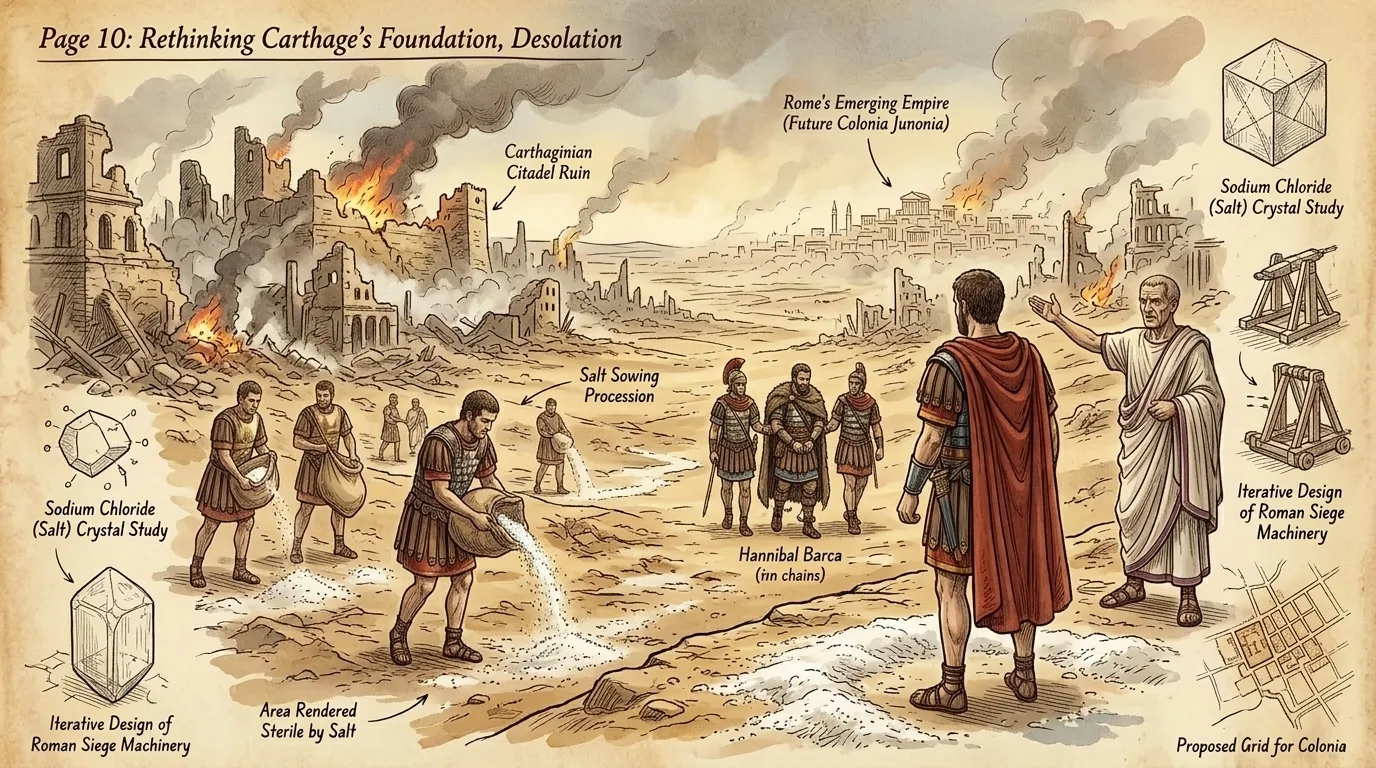
In 146 BC, Rome finally conquered and destroyed Carthage, ending the Punic Wars. They razed the city to the ground, sowing salt into the earth. Yet, from the ashes, Rome emerged as the dominant power in the Mediterranean, laying the foundation for its vast empire. New settlements would later rise on the ground of the old. Rome had learned from its rival and it would eventually eclipse it in every way.
About this story
- Historical figures: Hannibal Barca, Scipio Africanus, Cato the Elder
- Location: Rome & Carthage
- Period: Ancient
- Audience: general readers
Questions and answers
Questions and answers about The Punic Wars — Rome & Carthage (202 BC)
Read Wonder History on your phone
Wonder History is available on Android and iPhone and iPad. Get Wonder History on Google Play · Get Wonder History on the App Store.