The Rise of the Ottoman Empire — Anatolia & Southeast Europe (1453, Anatolia & Southeast Europe)
The Rise of the Ottoman Empire — Anatolia & Southeast Europe (1453, Anatolia & Southeast Europe) — an illustrated history story, featuring Mehmed II, Constantine XI Palaiologos, Çandarlı Halil Pasha, set in Anatolia & Southeast Europe. 10 illustrated pages, free to read on Wonder History.
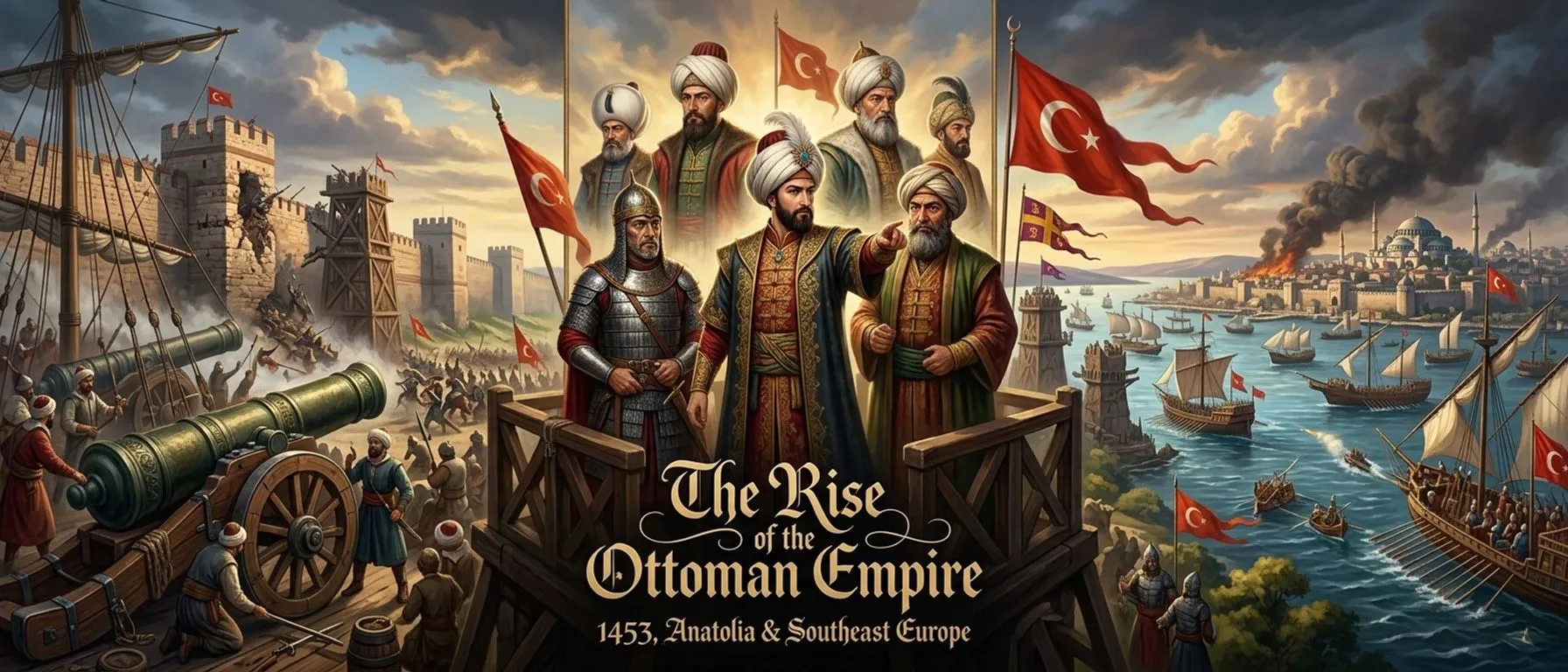
Page 1
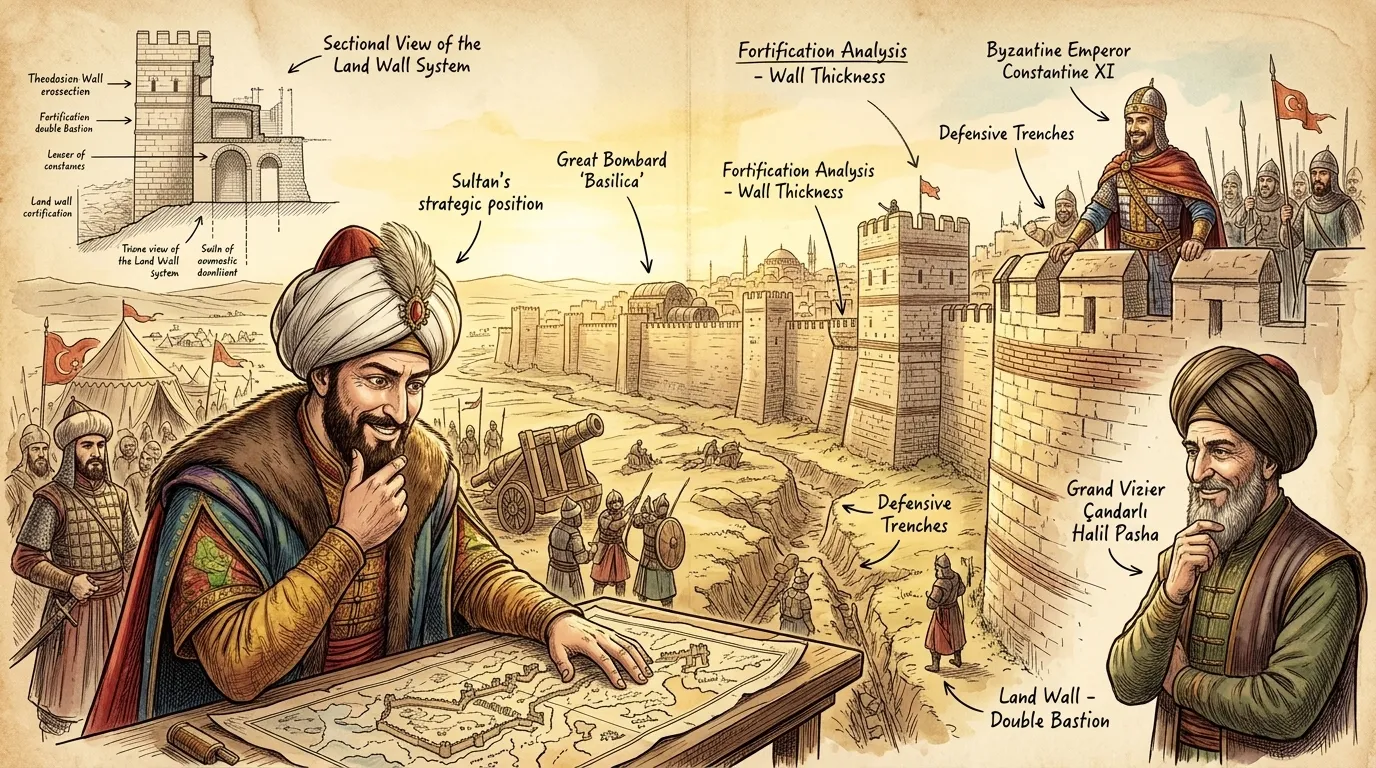
On May 29, 1453, Sultan Mehmed II, the Conqueror, stood before the seemingly impenetrable walls of Constantinople with an army of over 80,000 Ottoman soldiers. Emperor Constantine XI Palaiologos, the last Byzantine Emperor, rallied his dwindling force of 7,000 defenders within the city. Grand Vizier Çandarlı Halil Pasha, a seasoned advisor, watched the siege unfold with a mixture of hope and trepidation. The fate of the Eastern Roman Empire hung in the balance, but how did these forces come to clash at this ancient city?
Page 2
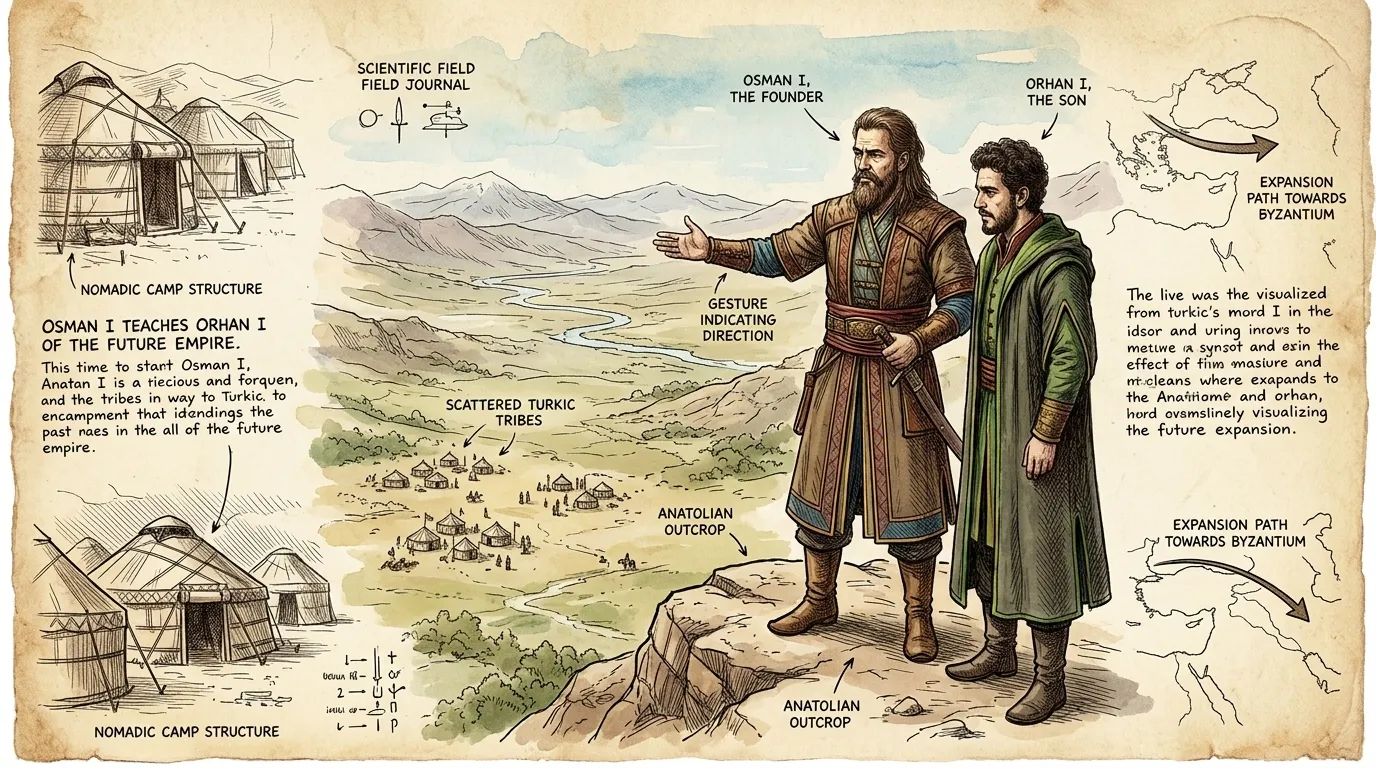
Osman I, the founder of the Ottoman dynasty, began his rise in Anatolia in the late 13th century. "Small streams make great rivers," Osman told his son Orhan, as he consolidated power among scattered Turkic tribes. Orhan I continued his father's legacy by expanding Ottoman territory into the Byzantine Empire. This initial growth laid the foundation for the empire that would one day challenge Constantinople.
Page 3
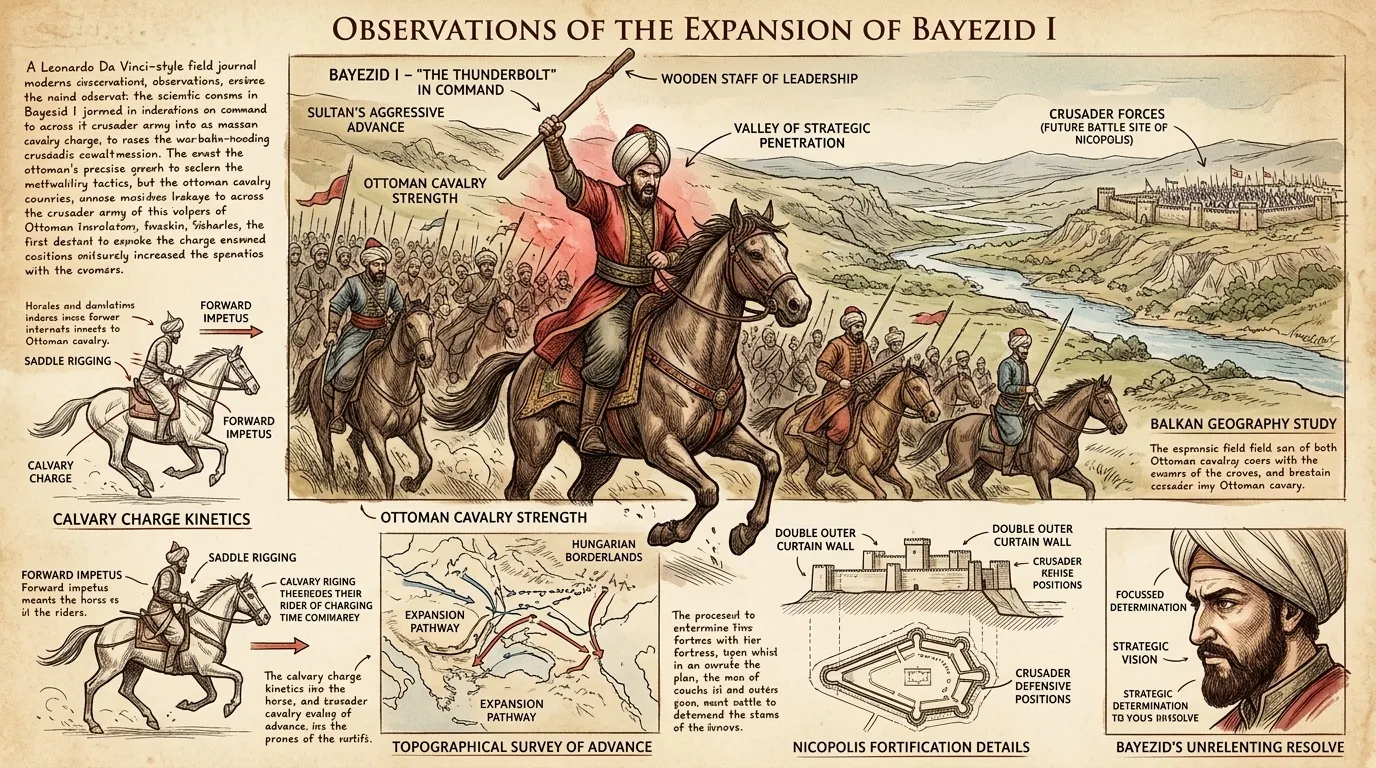
Bayezid I, known as 'The Thunderbolt,' aggressively expanded Ottoman domains into Southeast Europe. "We shall see if Allah grants me the honor of unifying all the lands of Islam," Bayezid declared before his campaigns. However, his ambition drew the attention of Europe, leading to the Battle of Nicopolis in 1396 against a Crusader army. Although victorious, this clash foreshadowed future conflicts with Western powers.
Page 4
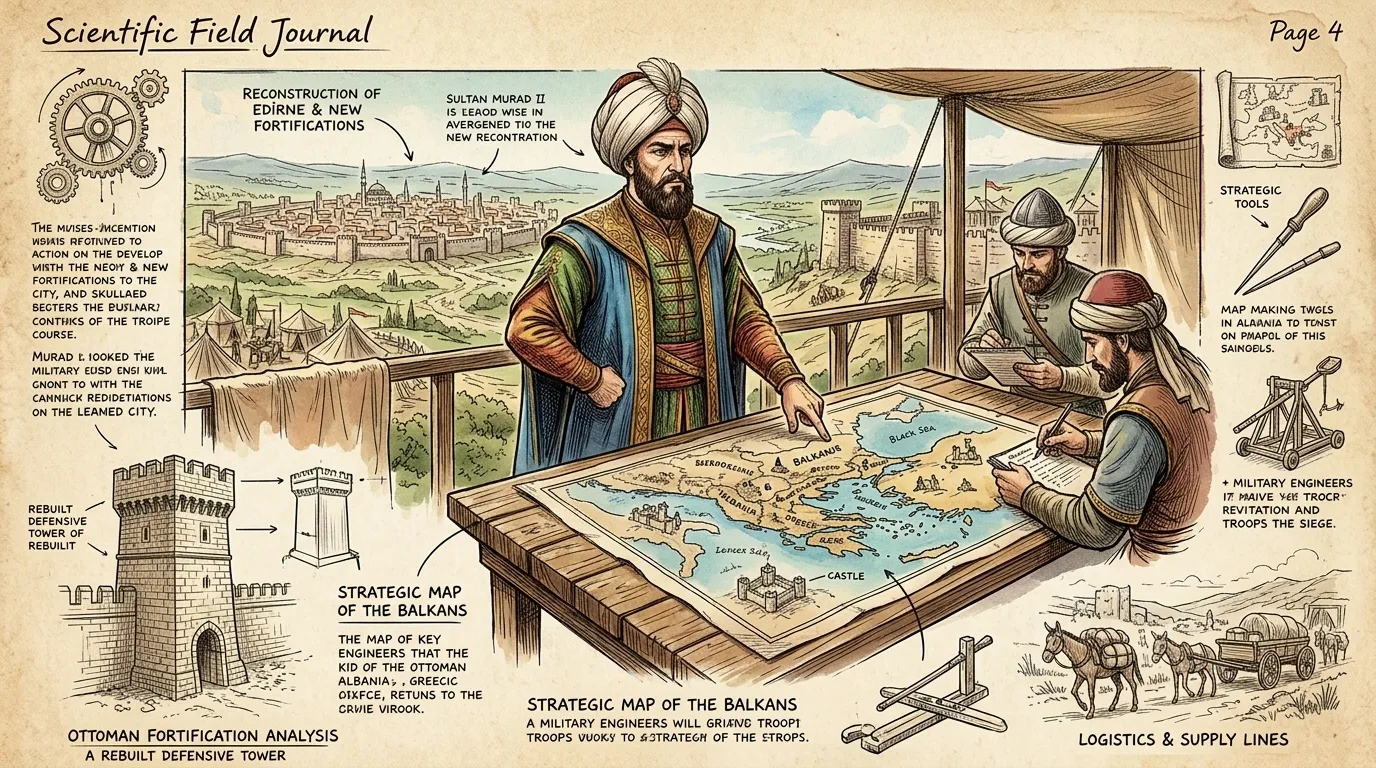
Murad II, Mehmed II's father, stabilized the empire after the devastating Timurid invasion led by Tamerlane. Facing rebellions and external threats, Murad focused on consolidating Ottoman control over the Balkans. He pushed further into Greece and Albania, setting the stage for his son's ultimate conquest. 'The greatest glory lies not in never falling, but in rising every time we fall,' Murad said, quoting Confucius, as he rebuilt the empire.
Page 5
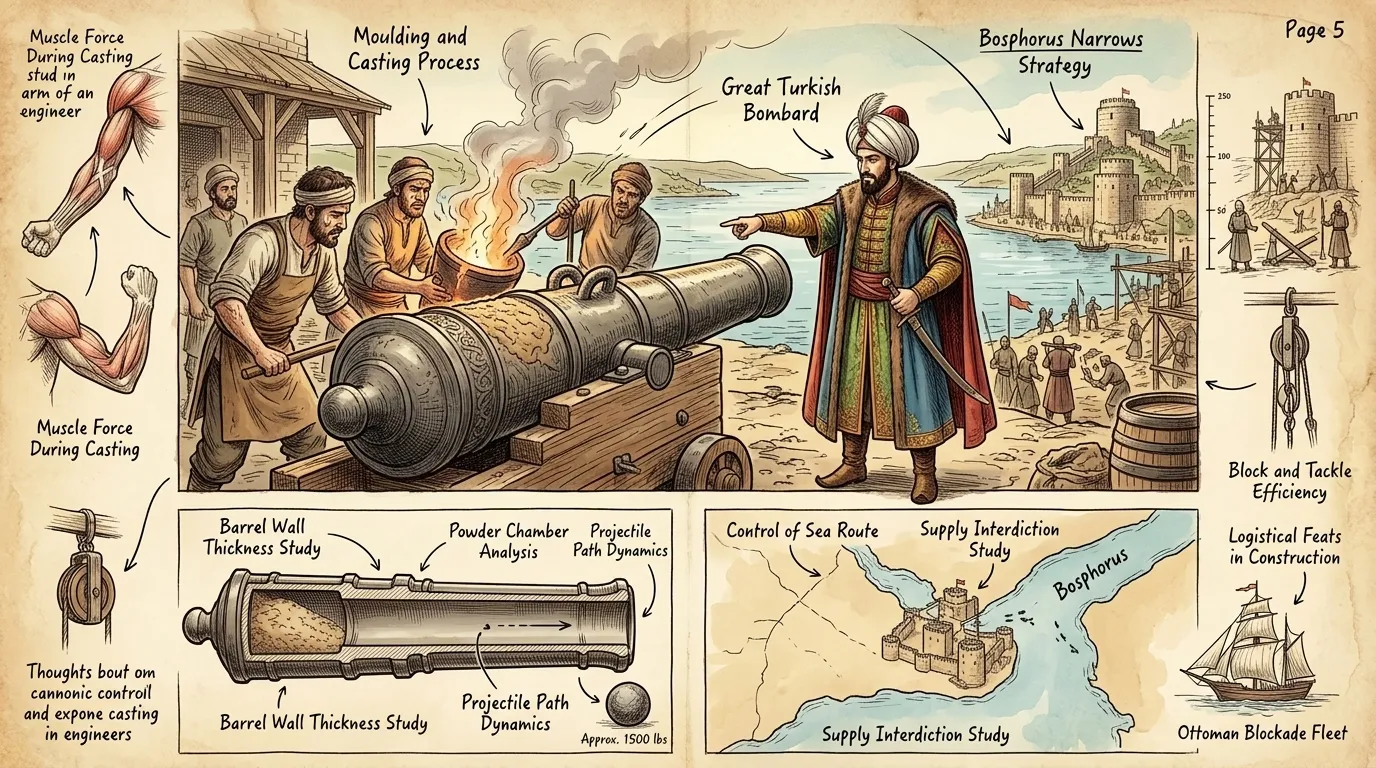
Upon ascending the throne, Mehmed II immediately focused on capturing Constantinople. He commissioned the construction of the Rumelihisarı fortress on the European side of the Bosphorus, cutting off the city's access to the Black Sea. He also ordered the casting of massive siege cannons, including the Great Turkish Bombard. 'Fortune favors the bold,' Mehmed proclaimed, as his engineers prepared for the siege.
Page 6
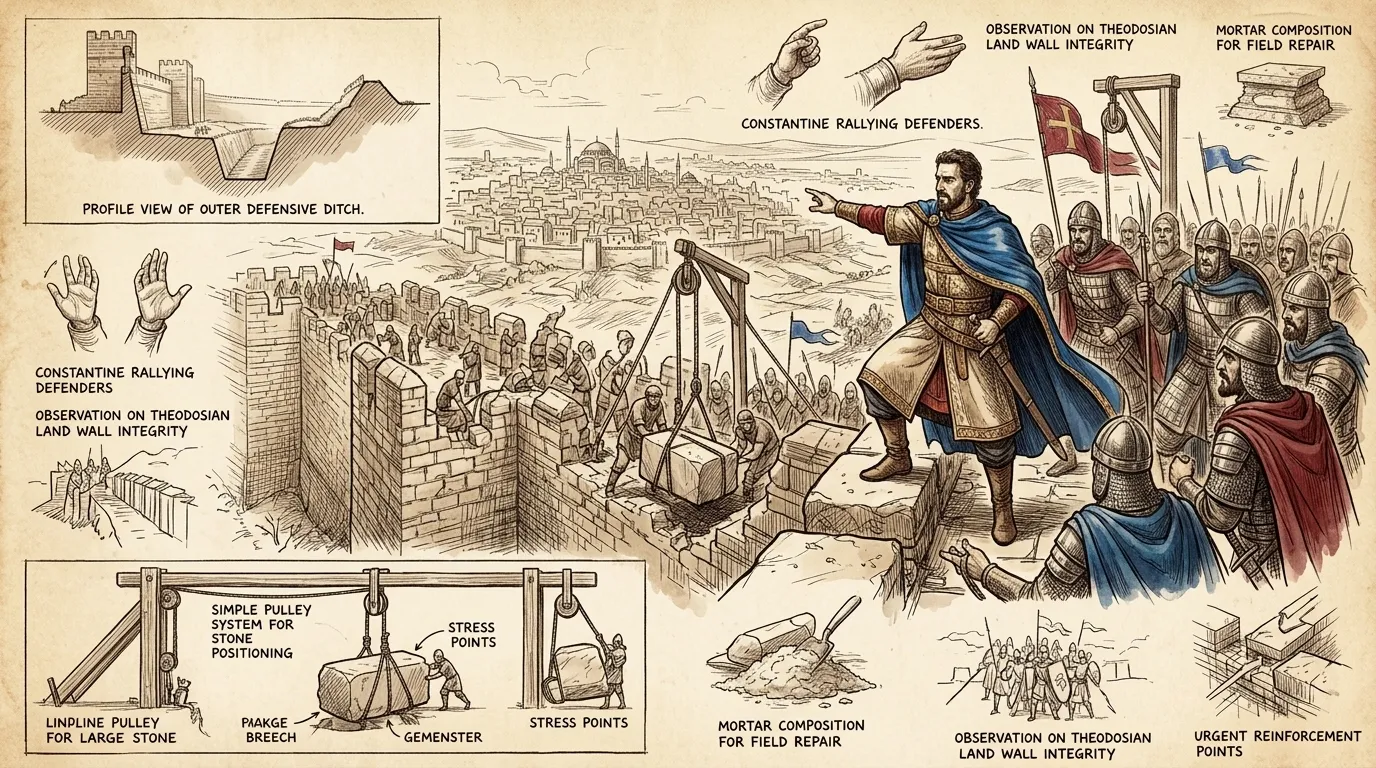
Emperor Constantine XI desperately sought aid from Western Europe, but received little support. He strengthened the city's defenses, repairing the Theodosian Walls, an ancient system of fortifications. Despite being outnumbered, Constantine inspired his troops to defend their capital to the last man. 'Men are only as good as their word,' Constantine reminded his troops, vowing to protect the city or die trying.
Page 7
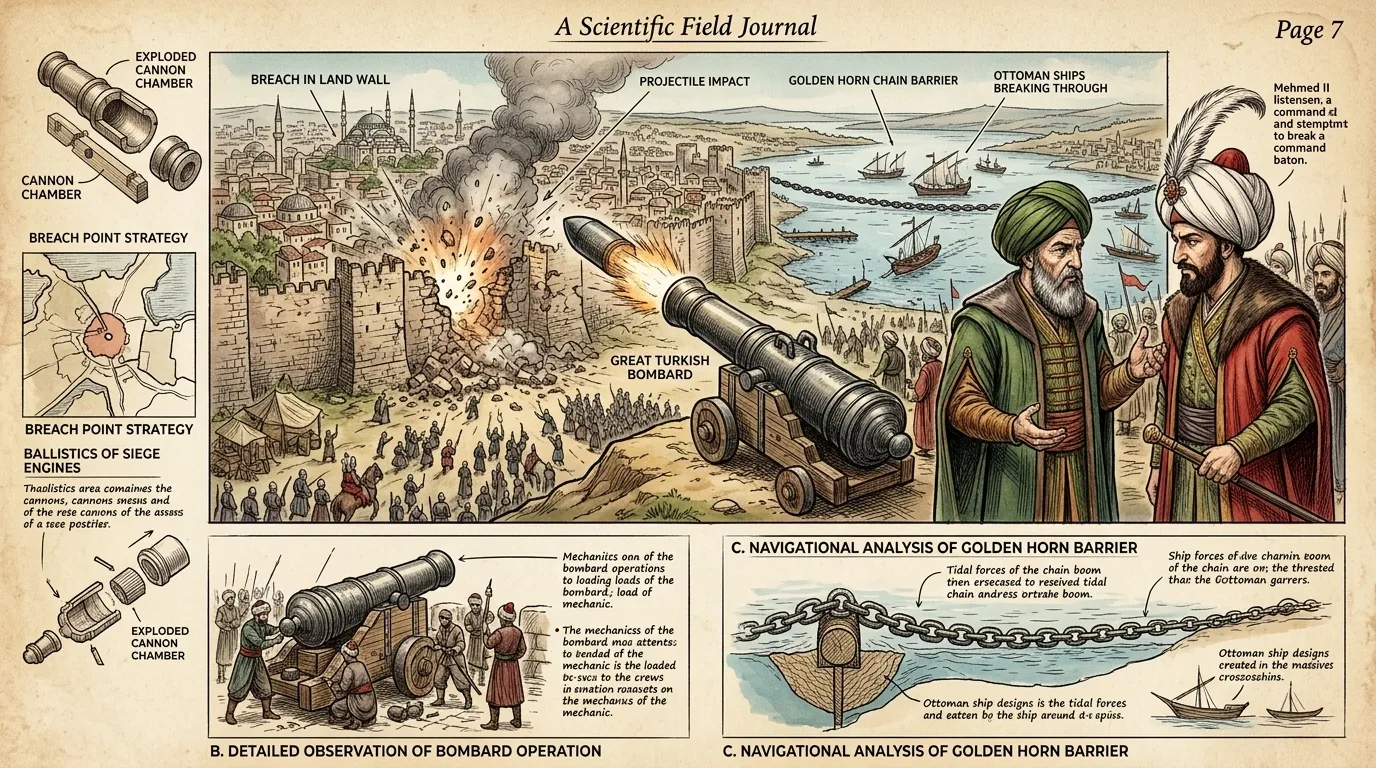
On April 6, 1453, the Ottoman siege of Constantinople officially began. The Great Turkish Bombard relentlessly pounded the city walls, creating breaches in the ancient fortifications. Ottoman ships attempted to break through the Golden Horn, but were repelled by a chain barrier. Grand Vizier Çandarlı Halil Pasha cautioned, 'Patience is bitter, but its fruit is sweet,' reminding Mehmed to remain focused on the long game.
Page 8
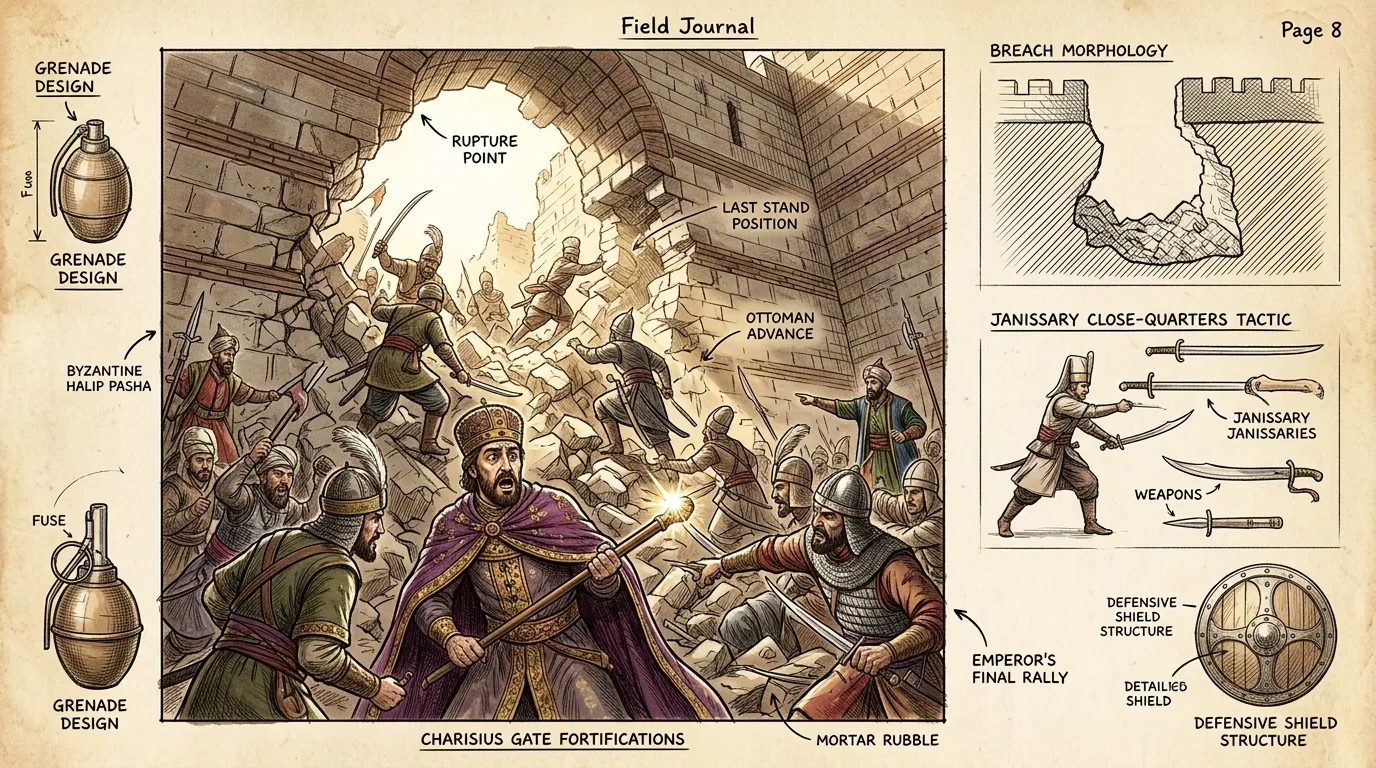
After weeks of intense fighting, the Ottoman forces finally breached the walls near the Charisius Gate. A small group of Janissaries, elite Ottoman soldiers, stormed through the gap, engaging in fierce hand-to-hand combat. Emperor Constantine XI led a last stand, fighting bravely before being overwhelmed. Mehmed's triumph was complete; the city fell.
Page 9
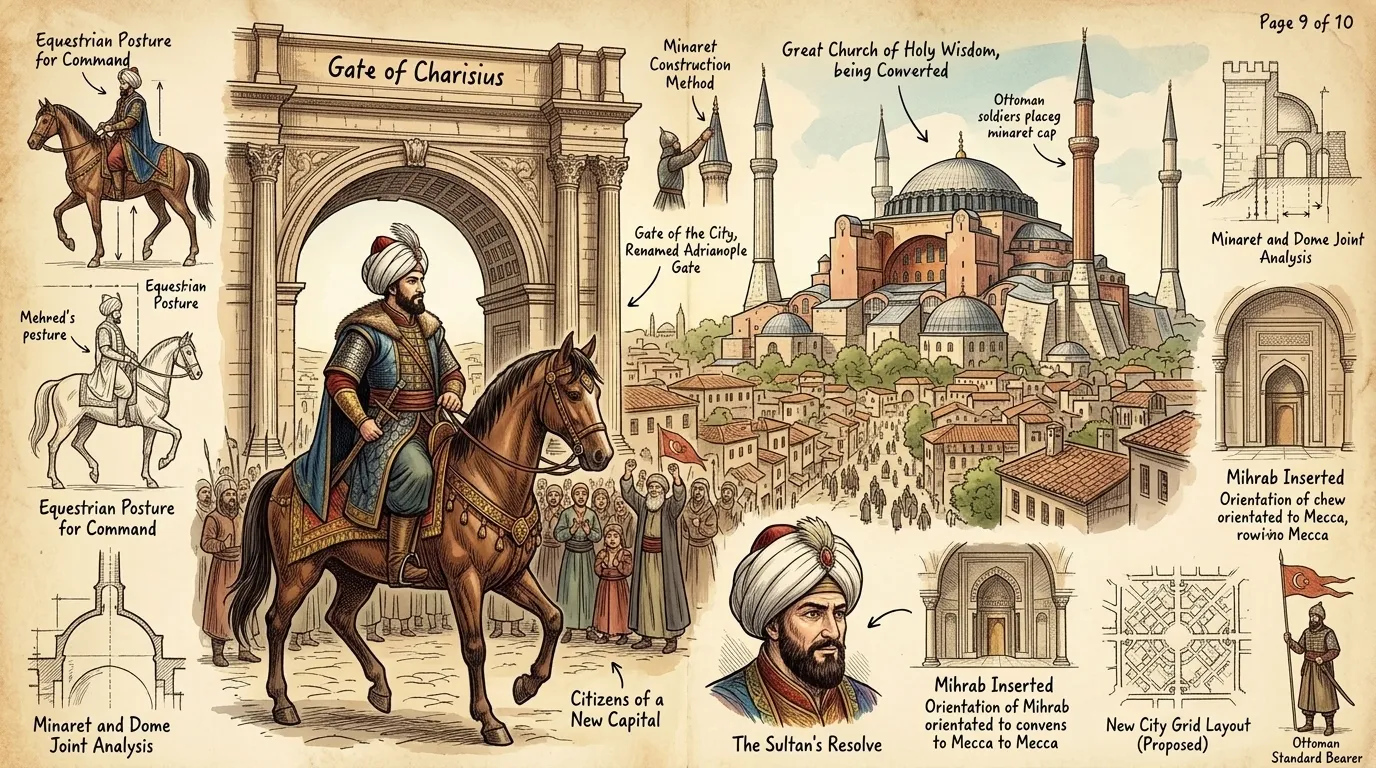
Mehmed II entered Constantinople as a conqueror, renaming it Istanbul and making it the new capital of the Ottoman Empire. He transformed the Hagia Sophia into a mosque, symbolizing the triumph of Islam. 'I am the master of all that I survey,' Mehmed thought, echoing the words of the poet William Cowper, as he secured his legacy.
Page 10
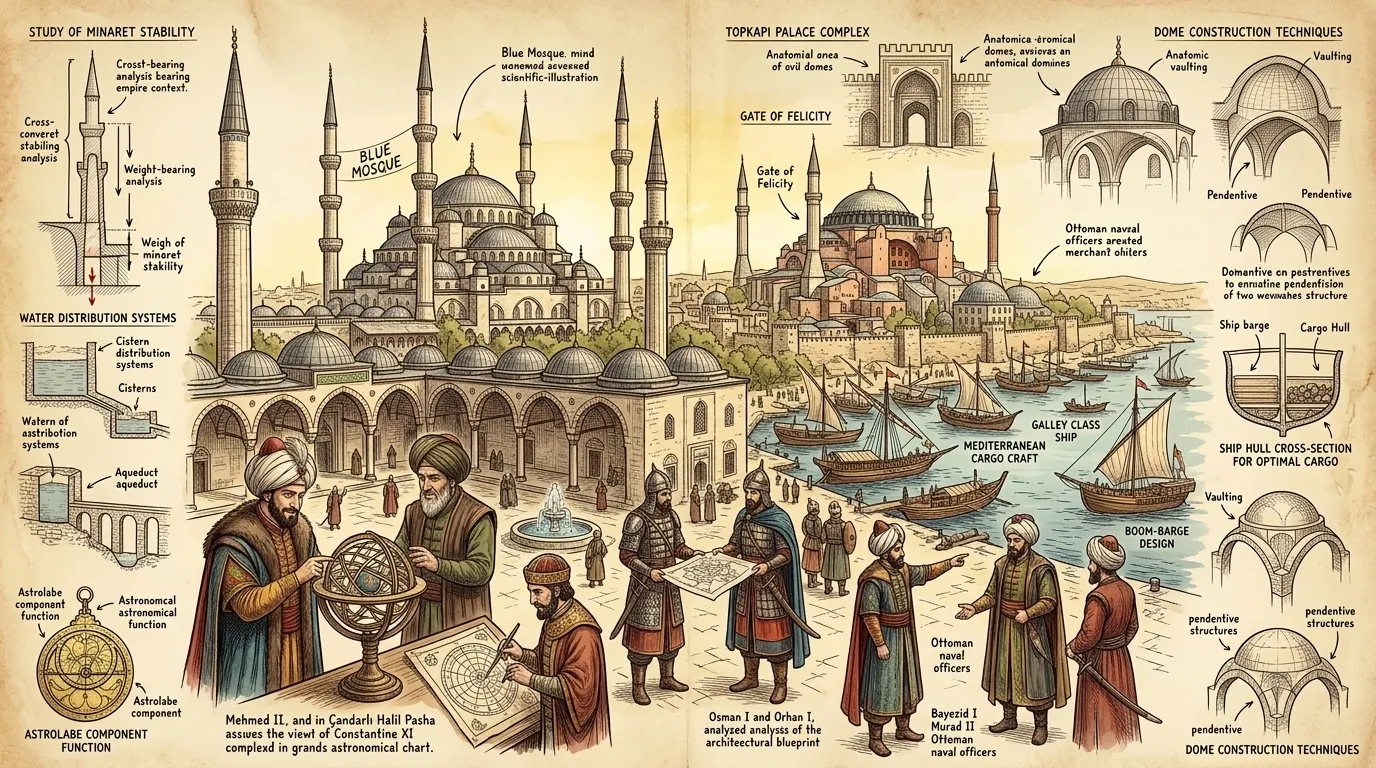
The fall of Constantinople marked the end of the Byzantine Empire and the rise of the Ottoman Empire as a major world power. For centuries, Istanbul remained the heart of Ottoman civilization, a center of trade, culture, and Islamic scholarship. The Ottoman legacy shaped the political and cultural landscape of Southeast Europe and the Middle East, leaving an indelible mark on history.
About this story
- Historical figures: Mehmed II, Constantine XI Palaiologos, Çandarlı Halil Pasha
- Location: Anatolia & Southeast Europe
- Period: Middle Ages
- Audience: general readers
Questions and answers
Read Wonder History on your phone
Wonder History is available on Android. Get Wonder History on Google Play.
More Wonder History stories
- The Rise of the Roman Empire — Mediterranean (48 BC, Mediterranean)
- The Rise of Vienna as a Musical Capital (1750, Vienna)
- The Sack of Rome by the Visigoths (410 AD, Rome)
- The Salt March of India (1930, India)
- The Scientific Revolution — Europe (1473, Europe)
- The Scramble for Africa — Africa (1884, Africa)