The Russian Revolution (1917, Russia)

The Russian Revolution (1917, Russia) — an illustrated history story, featuring Vladimir Lenin, Tsar Nicholas II, Empress Alexandra, set in Russia. 10 illustrated pages, free to read on Wonder History.
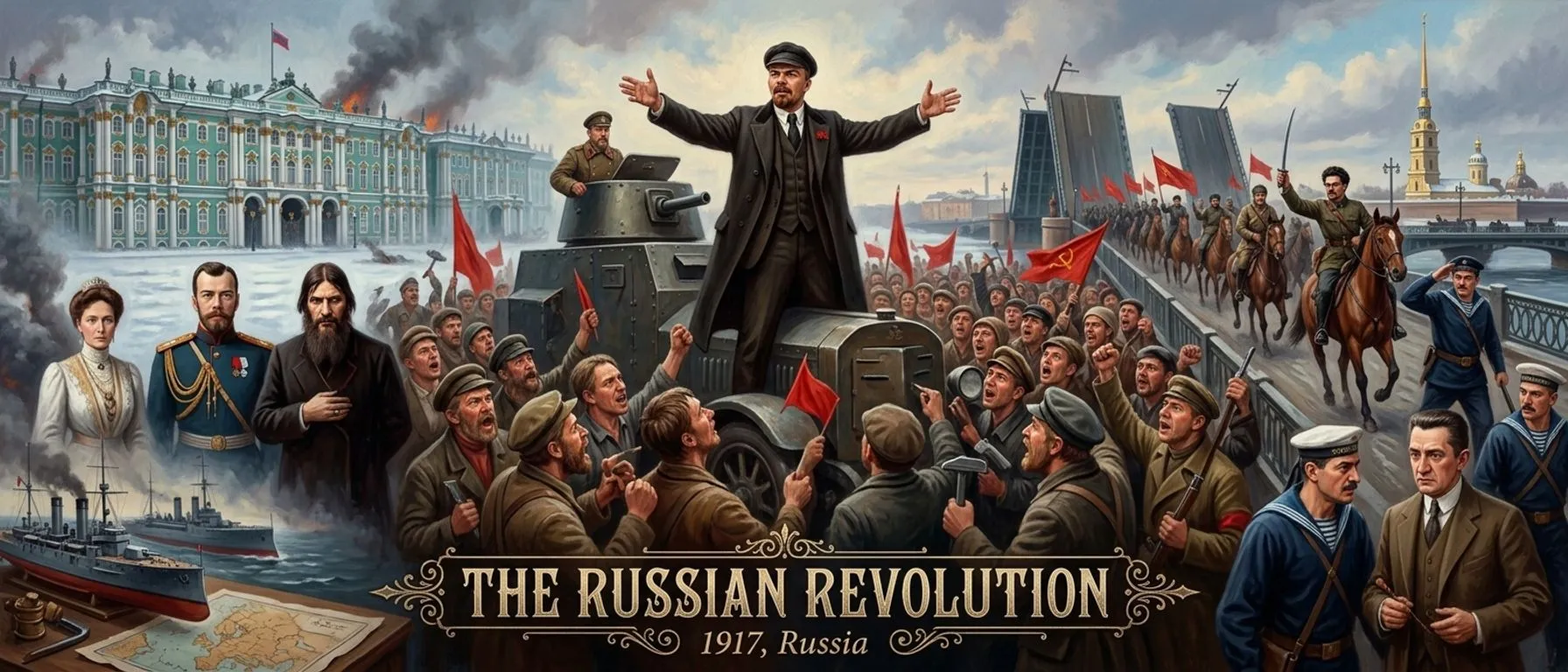
The Russian Revolution (1917, Russia) — book cover — Wonder History
The Russian Revolution (1917, Russia) — an illustrated history story, featuring Vladimir Lenin, Tsar Nicholas II, Empress Alexandra, set in Russia. 10 illustrated pages, free to read on Wonder History.

Page 1
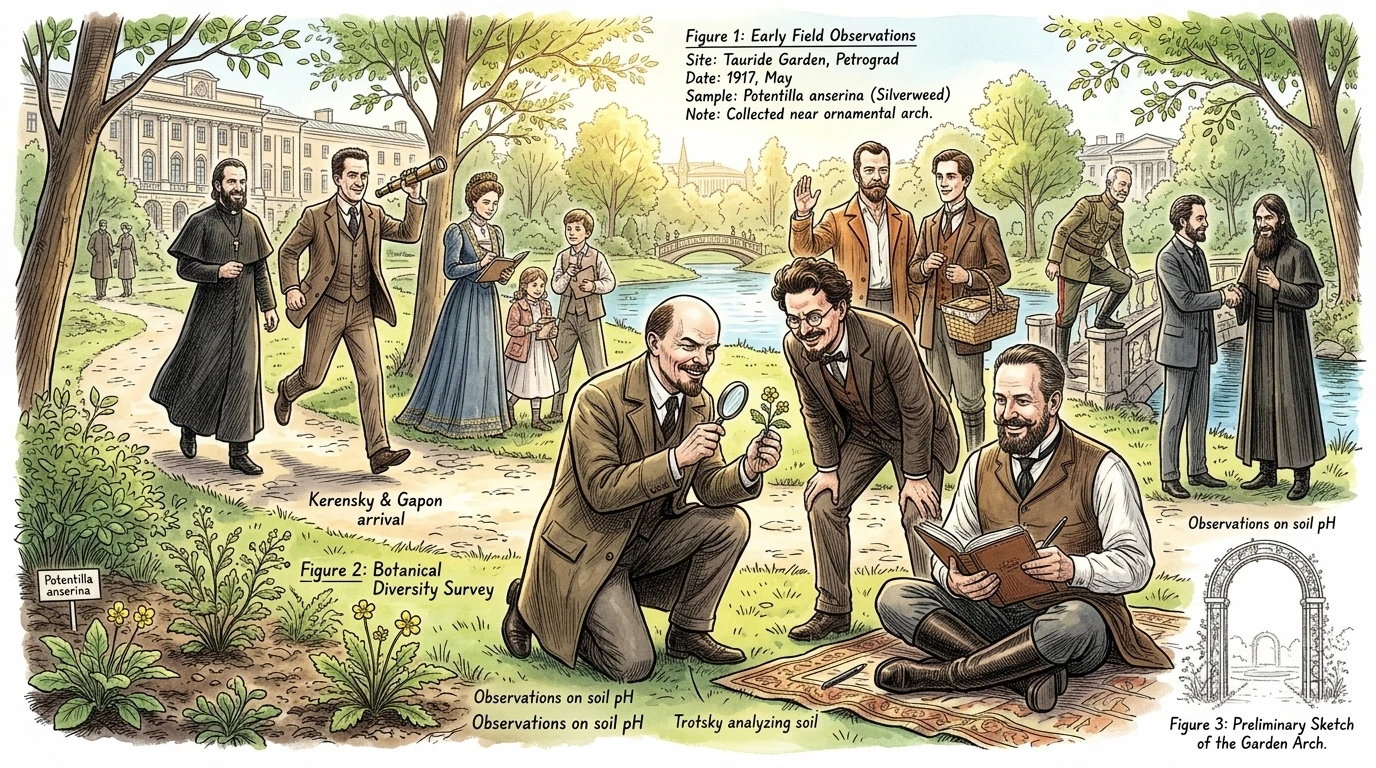
October 26, 1917. A roar erupted from the Winter Palace as soldiers and armed workers poured through the gates. Alexander Kerensky, the Prime Minister, had…
October 26, 1917. A roar erupted from the Winter Palace as soldiers and armed workers poured through the gates. Alexander Kerensky, the Prime Minister, had already fled, leaving the city to chaos. Would this be the end of the provisional government, or just another bloody day in Petrograd?

October 26, 1917. A roar erupted from the Winter Palace as soldiers and armed workers poured through the gates. Alexander Kerensky, the Prime Minister, had already fled, leaving the city to chaos. Would this be the end of the provisional government, or just another bloody day in Petrograd?

Page 2
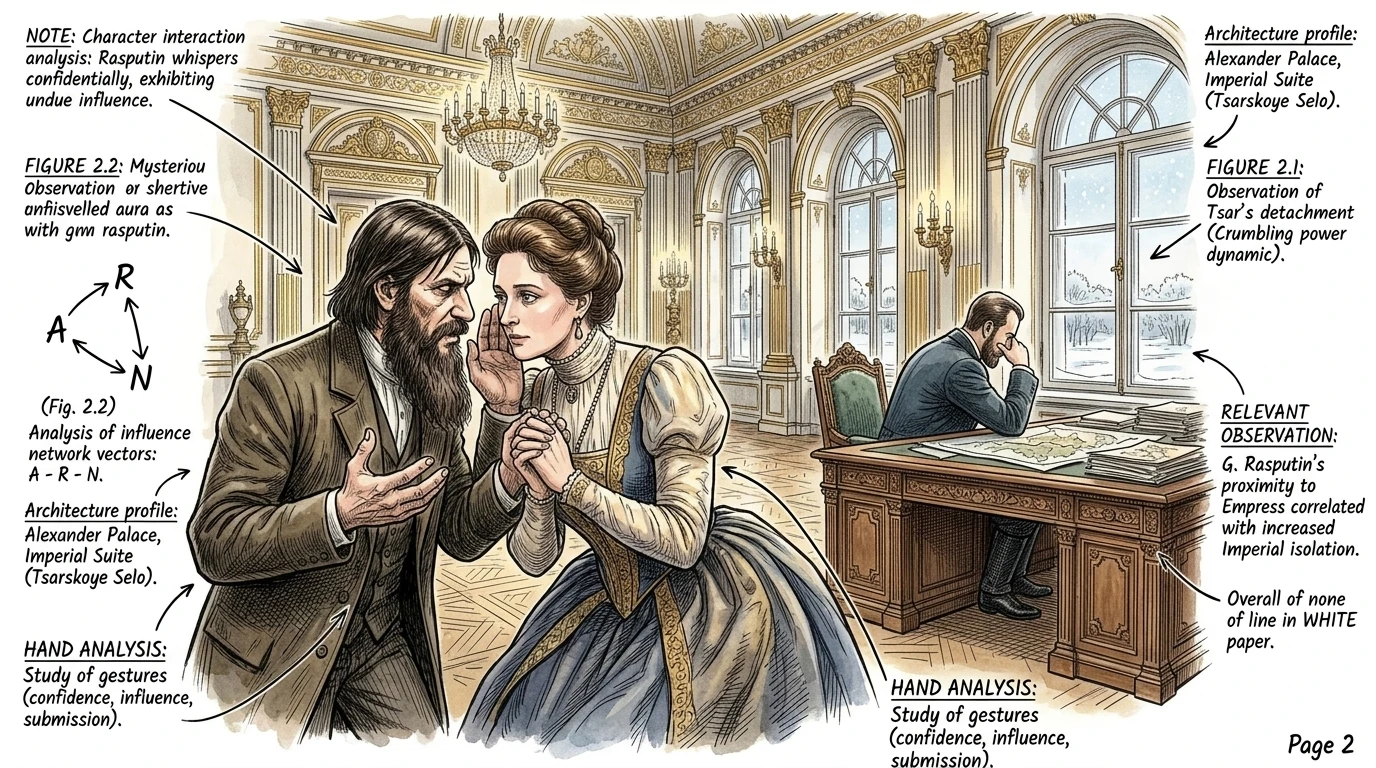
Ten months earlier, Russia was still ruled by Tsar Nicholas II, a stern and increasingly detached ruler, from the Alexander Palace in Tsarskoye Selo.
Ten months earlier, Russia was still ruled by Tsar Nicholas II, a stern and increasingly detached ruler, from the Alexander Palace in Tsarskoye Selo. His reign, however, was crumbling under the weight of war and internal strife. Grigori Rasputin, a controversial figure with a mysterious aura, held undue influence over Empress Alexandra, a regal and deeply religious woman, further weakening the monarchy.

Ten months earlier, Russia was still ruled by Tsar Nicholas II, a stern and increasingly detached ruler, from the Alexander Palace in Tsarskoye Selo. His reign, however, was crumbling under the weight of war and internal strife. Grigori Rasputin, a controversial figure with a mysterious aura, held undue influence over Empress Alexandra, a regal and deeply religious woman, further weakening the monarchy.

Page 3
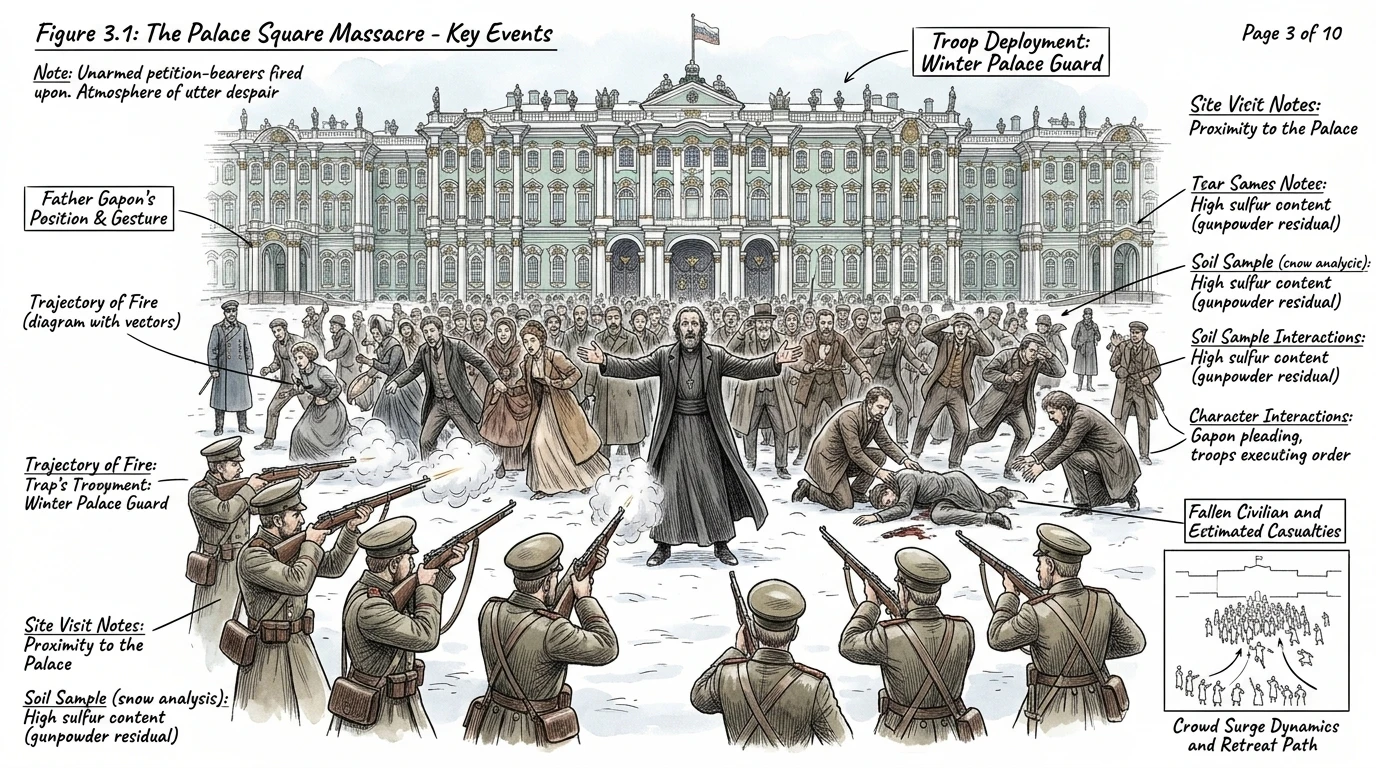
The disastrous Russo-Japanese War of 1905 exposed the Tsar's incompetence and ignited widespread discontent. Father Gapon, a charismatic priest, led a peaceful…
The disastrous Russo-Japanese War of 1905 exposed the Tsar's incompetence and ignited widespread discontent. Father Gapon, a charismatic priest, led a peaceful protest to the Winter Palace, demanding reforms. The Tsar's troops opened fire, killing hundreds of unarmed civilians.

The disastrous Russo-Japanese War of 1905 exposed the Tsar's incompetence and ignited widespread discontent. Father Gapon, a charismatic priest, led a peaceful protest to the Winter Palace, demanding reforms. The Tsar's troops opened fire, killing hundreds of unarmed civilians.

Page 4
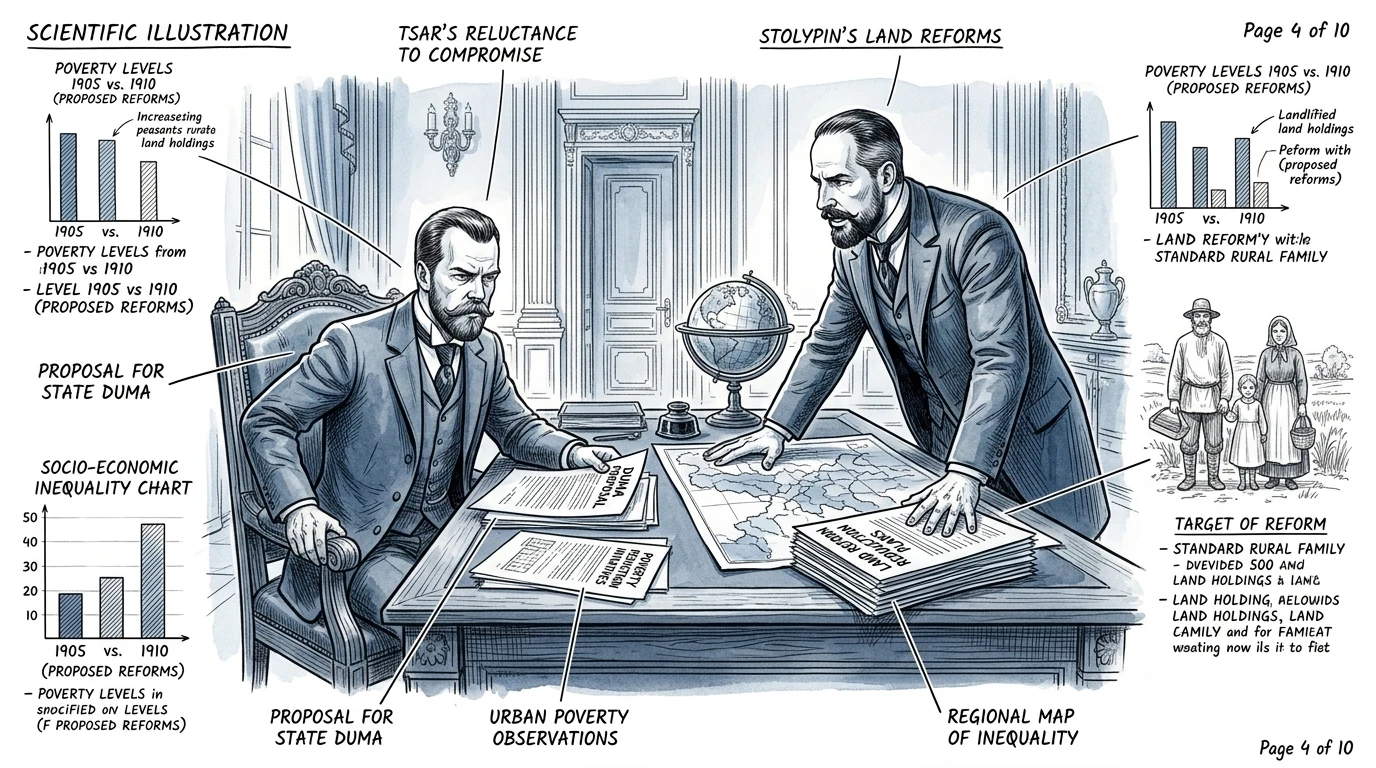
In response to the unrest, Tsar Nicholas II reluctantly agreed to create the Duma, a legislative assembly. Pyotr Stolypin, a strong figure and Prime Minister…
In response to the unrest, Tsar Nicholas II reluctantly agreed to create the Duma, a legislative assembly. Pyotr Stolypin, a strong figure and Prime Minister, initiated land reforms, aiming to create a class of independent farmers. Despite these efforts, the deep-seated problems of poverty and inequality persisted. Stolypin muttered under his breath, "You want great upheavals. We want a great Russia." He would be dead within five years, and so would the reforms.

In response to the unrest, Tsar Nicholas II reluctantly agreed to create the Duma, a legislative assembly. Pyotr Stolypin, a strong figure and Prime Minister, initiated land reforms, aiming to create a class of independent farmers. Despite these efforts, the deep-seated problems of poverty and inequality persisted. Stolypin muttered under his breath, "You want great upheavals. We want a great Russia." He would be dead within five years, and so would the reforms.

Page 5
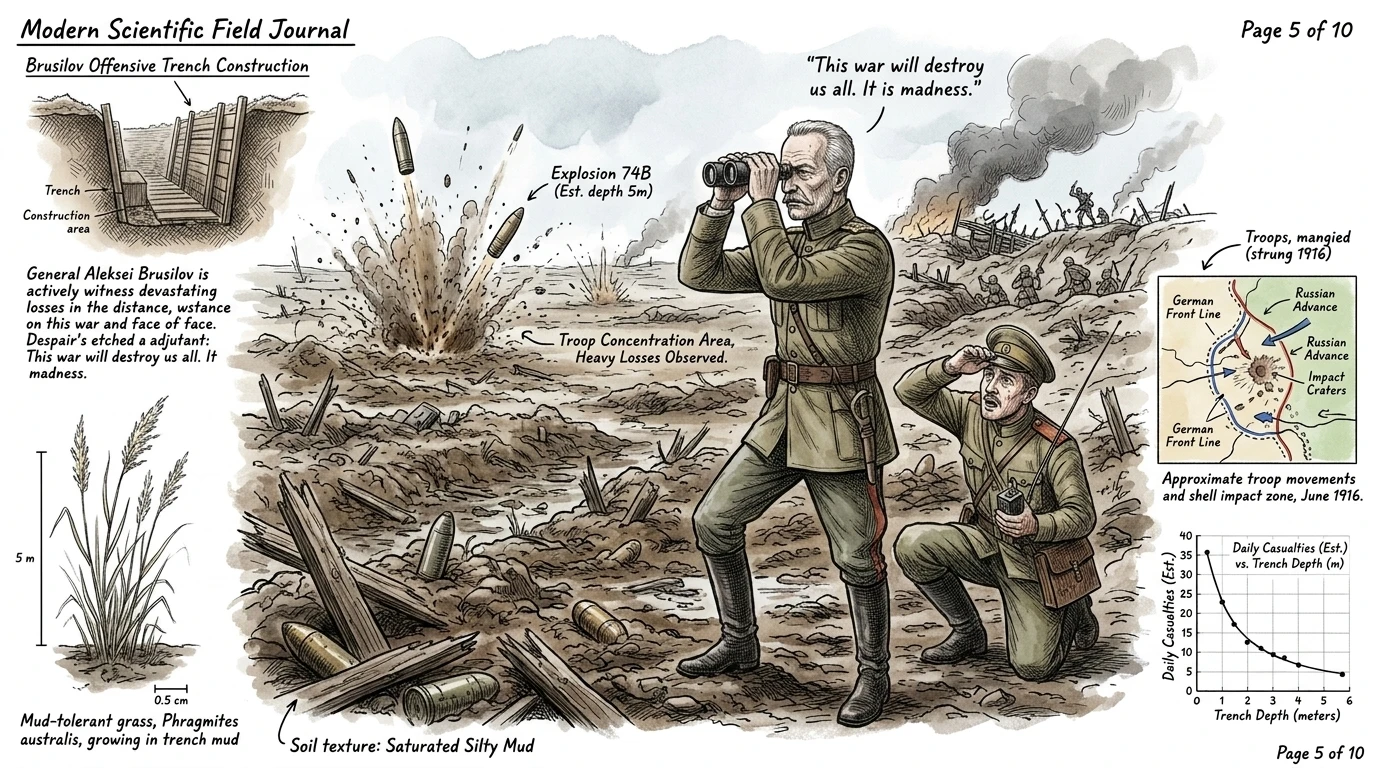
World War I proved to be the final nail in the coffin for the Tsarist regime. The Russian army suffered devastating losses, and the economy collapsed.
World War I proved to be the final nail in the coffin for the Tsarist regime. The Russian army suffered devastating losses, and the economy collapsed. General Aleksei Brusilov, a decorated military figure, led a major offensive in 1916, but it came at a terrible cost. 'This war will destroy us all,' Brusilov said to his adjutant after witnessing the senseless slaughter. 'It is madness.'

World War I proved to be the final nail in the coffin for the Tsarist regime. The Russian army suffered devastating losses, and the economy collapsed. General Aleksei Brusilov, a decorated military figure, led a major offensive in 1916, but it came at a terrible cost. 'This war will destroy us all,' Brusilov said to his adjutant after witnessing the senseless slaughter. 'It is madness.'

Page 6
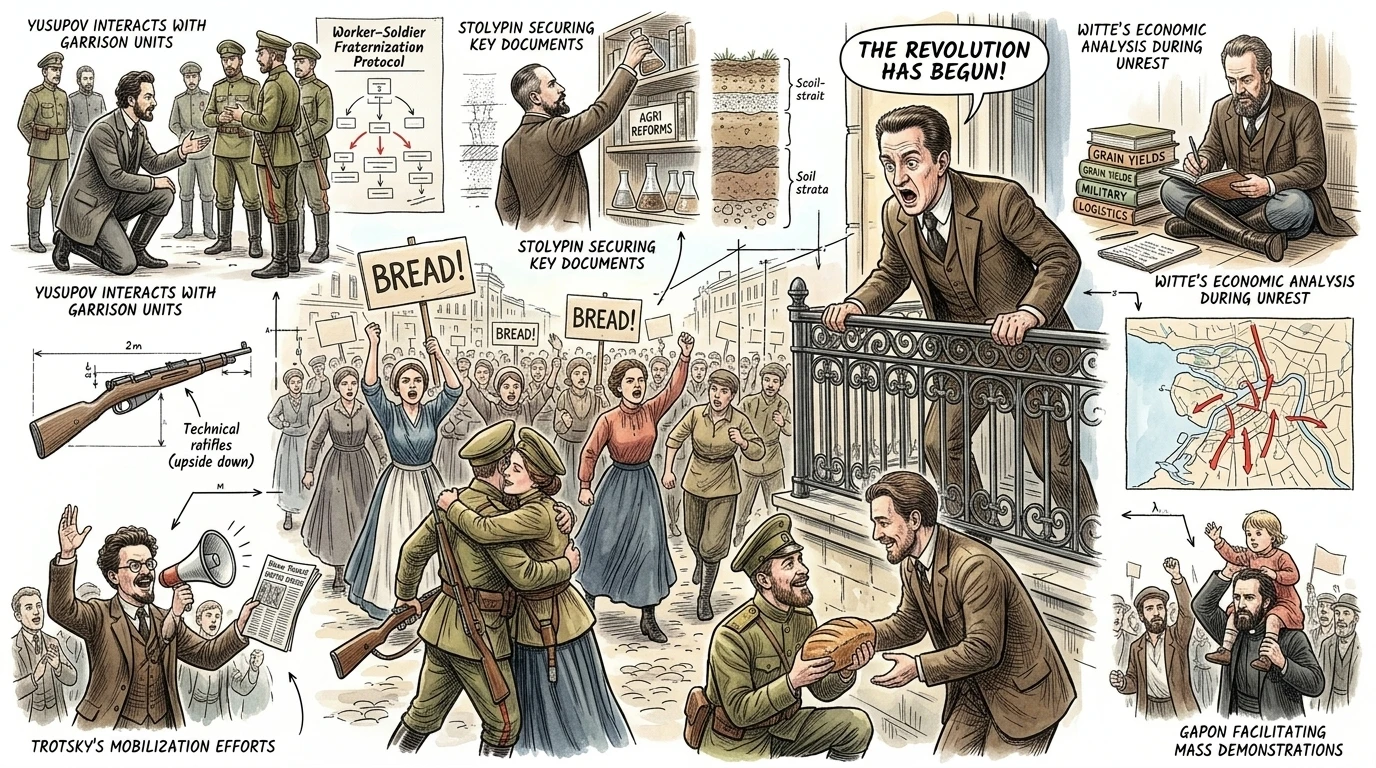
Back in Petrograd, food shortages and rising prices fueled widespread anger and strikes. In February 1917, women textile workers took to the streets, demanding…
Back in Petrograd, food shortages and rising prices fueled widespread anger and strikes. In February 1917, women textile workers took to the streets, demanding bread. Their protest ignited a massive uprising that quickly spread throughout the city. The soldiers sent to quell the protests joined the demonstrators. Kerensky, seeing the end of the monarchy, exclaimed, 'The revolution has begun!'

Back in Petrograd, food shortages and rising prices fueled widespread anger and strikes. In February 1917, women textile workers took to the streets, demanding bread. Their protest ignited a massive uprising that quickly spread throughout the city. The soldiers sent to quell the protests joined the demonstrators. Kerensky, seeing the end of the monarchy, exclaimed, 'The revolution has begun!'

Page 7
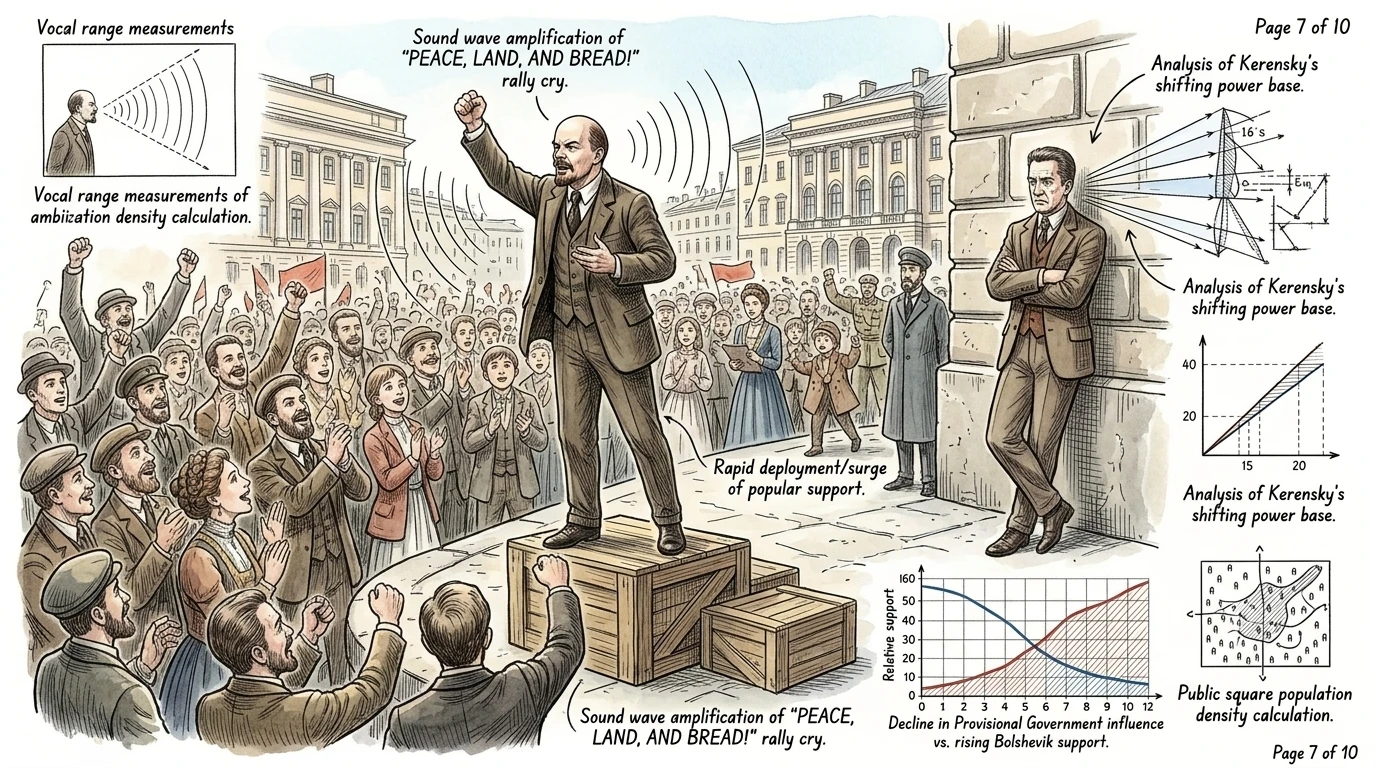
Tsar Nicholas II, realizing he had lost control, abdicated the throne. A Provisional Government was formed, led by Alexander Kerensky, promising democratic…
Tsar Nicholas II, realizing he had lost control, abdicated the throne. A Provisional Government was formed, led by Alexander Kerensky, promising democratic reforms and continued participation in the war. But the people were weary of war and yearned for peace and bread. 'Peace, Land, and Bread!' became the rallying cry of the Bolsheviks, led by Vladimir Lenin.

Tsar Nicholas II, realizing he had lost control, abdicated the throne. A Provisional Government was formed, led by Alexander Kerensky, promising democratic reforms and continued participation in the war. But the people were weary of war and yearned for peace and bread. 'Peace, Land, and Bread!' became the rallying cry of the Bolsheviks, led by Vladimir Lenin.

Page 8
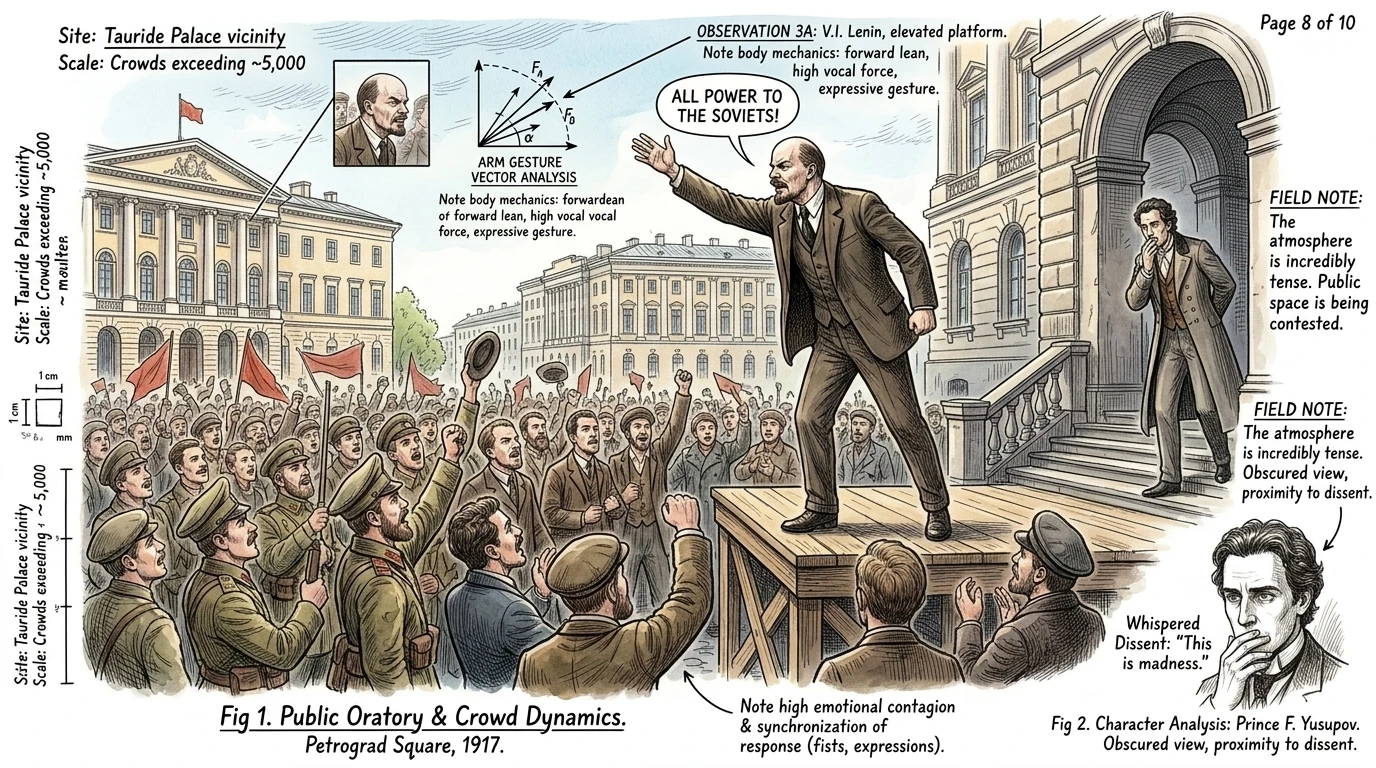
Lenin, having returned from exile, seized the moment. He declared, 'All power to the Soviets!' urging the workers and soldiers to overthrow the Provisional…
Lenin, having returned from exile, seized the moment. He declared, 'All power to the Soviets!' urging the workers and soldiers to overthrow the Provisional Government. Prince Felix Yusupov, involved in the assassination of Rasputin months earlier, watched with concern. "This is madness," he whispered, "but perhaps it's the madness Russia needs."

Lenin, having returned from exile, seized the moment. He declared, 'All power to the Soviets!' urging the workers and soldiers to overthrow the Provisional Government. Prince Felix Yusupov, involved in the assassination of Rasputin months earlier, watched with concern. "This is madness," he whispered, "but perhaps it's the madness Russia needs."

Page 9
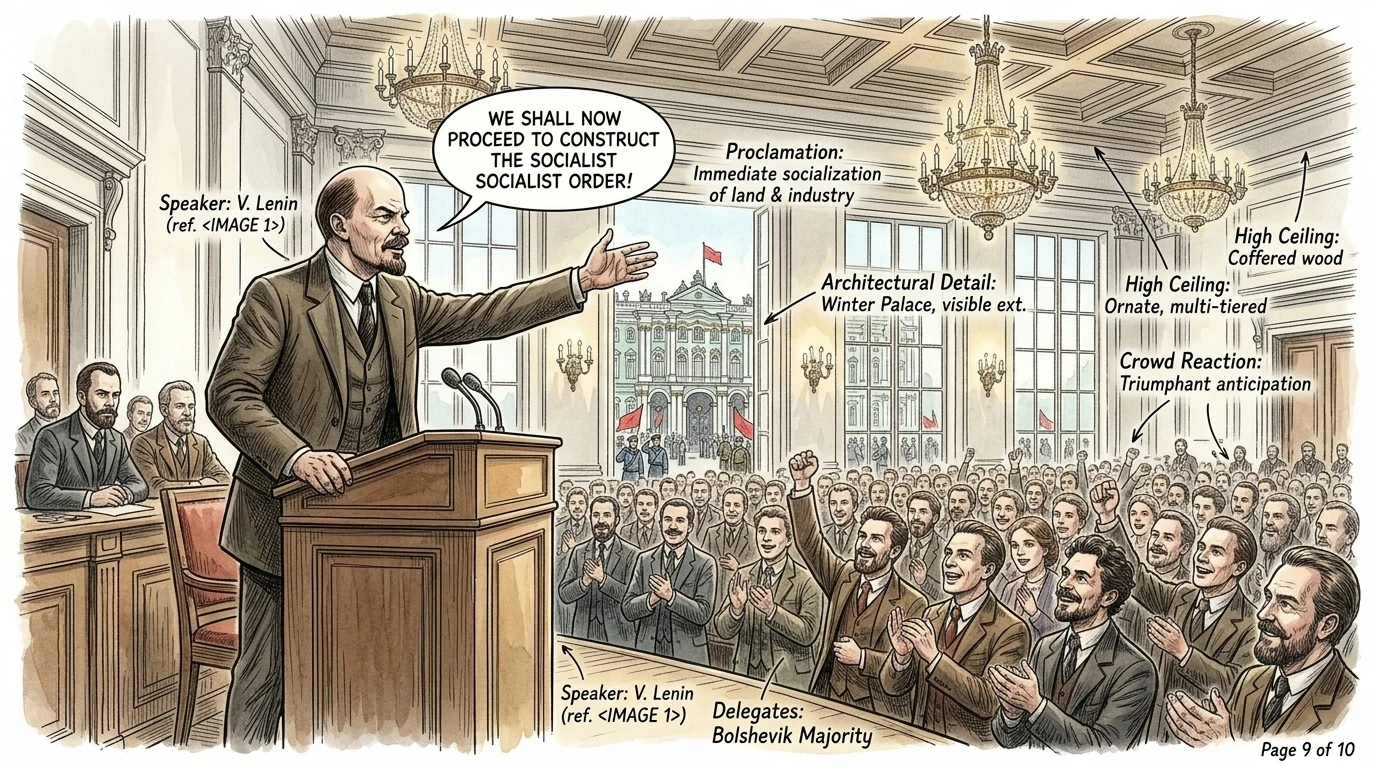
The Bolsheviks stormed the Winter Palace, the seat of the Provisional Government. Kerensky fled, and the Bolsheviks declared victory.
The Bolsheviks stormed the Winter Palace, the seat of the Provisional Government. Kerensky fled, and the Bolsheviks declared victory. Lenin, addressing the Second All-Russian Congress of Soviets, proclaimed, 'We shall now proceed to construct the socialist order!' The Russian Revolution had begun in earnest. The Bolsheviks take over the telegraph offices, train stations and other strategic sites.

The Bolsheviks stormed the Winter Palace, the seat of the Provisional Government. Kerensky fled, and the Bolsheviks declared victory. Lenin, addressing the Second All-Russian Congress of Soviets, proclaimed, 'We shall now proceed to construct the socialist order!' The Russian Revolution had begun in earnest. The Bolsheviks take over the telegraph offices, train stations and other strategic sites.

Page 10
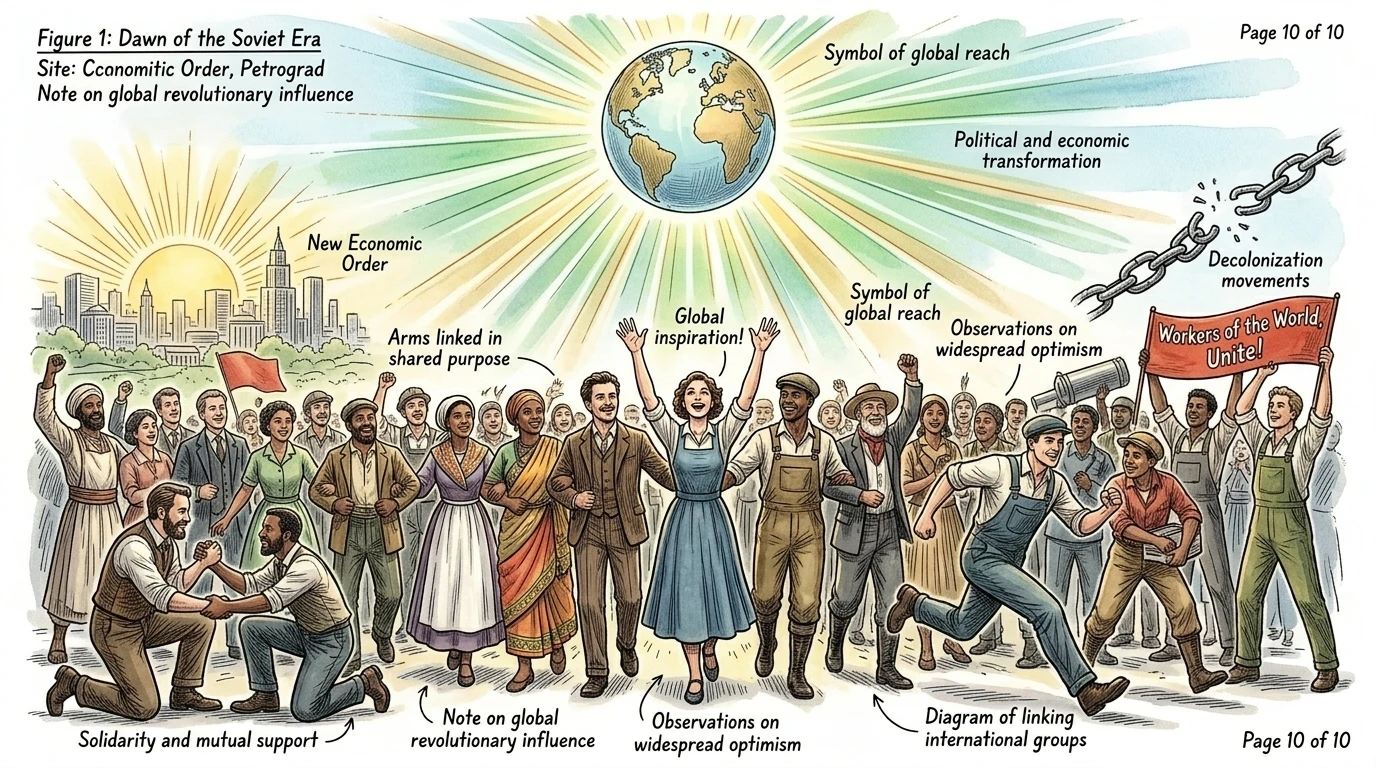
The Russian Revolution ushered in a new era, transforming Russia into the world's first socialist state. The echoes of the revolution reverberated around the…
The Russian Revolution ushered in a new era, transforming Russia into the world's first socialist state. The echoes of the revolution reverberated around the globe, inspiring communist movements and shaping the 20th century. As Karl Marx wrote, 'Workers of the world, unite!' That call for unity found fertile ground in the ruins of Tsarist Russia. A new political and economic system began to unfold.

The Russian Revolution ushered in a new era, transforming Russia into the world's first socialist state. The echoes of the revolution reverberated around the globe, inspiring communist movements and shaping the 20th century. As Karl Marx wrote, 'Workers of the world, unite!' That call for unity found fertile ground in the ruins of Tsarist Russia. A new political and economic system began to unfold.

About this story

  • Historical figures: Vladimir Lenin, Tsar Nicholas II, Empress Alexandra
  • Location: Russia
  • Period: Modern
  • Audience: general readers

Questions and answers

Questions and answers about The Russian Revolution (1917, Russia)

Read Wonder History on your phone

Wonder History is available on Android and iPhone and iPad. Get Wonder History on Google Play · Get Wonder History on the App Store.

More Wonder History stories

All Wonder History stories · Open the library