The Scramble for Africa — Africa (1884, Africa)
The Scramble for Africa — Africa (1884, Africa) — an illustrated history story, featuring Otto von Bismarck, Jules Ferry, Cecil Rhodes, set in Africa. 10 illustrated pages, free to read on Wonder History.
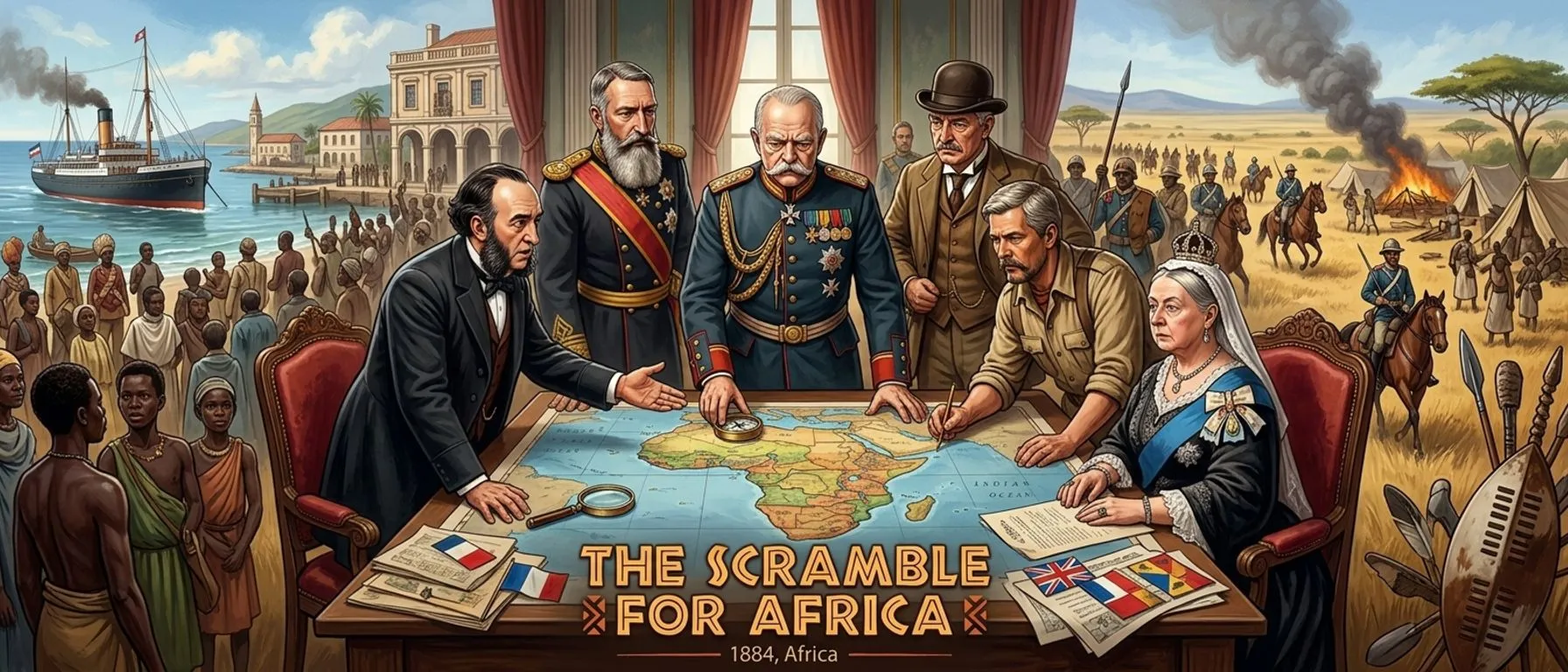
Page 1

On November 15, 1884, Otto von Bismarck, Chancellor of Germany; Jules Ferry, the French Premier; and Cecil Rhodes, the British imperialist, found themselves entangled in the web of African territory. But how did their ambitions and rivalries ignite the Scramble for Africa, carving up the continent at the Berlin Conference? Africa was about to undergo a drastic shift in power and control. But where did this ravenous hunger for African land begin?
Page 2
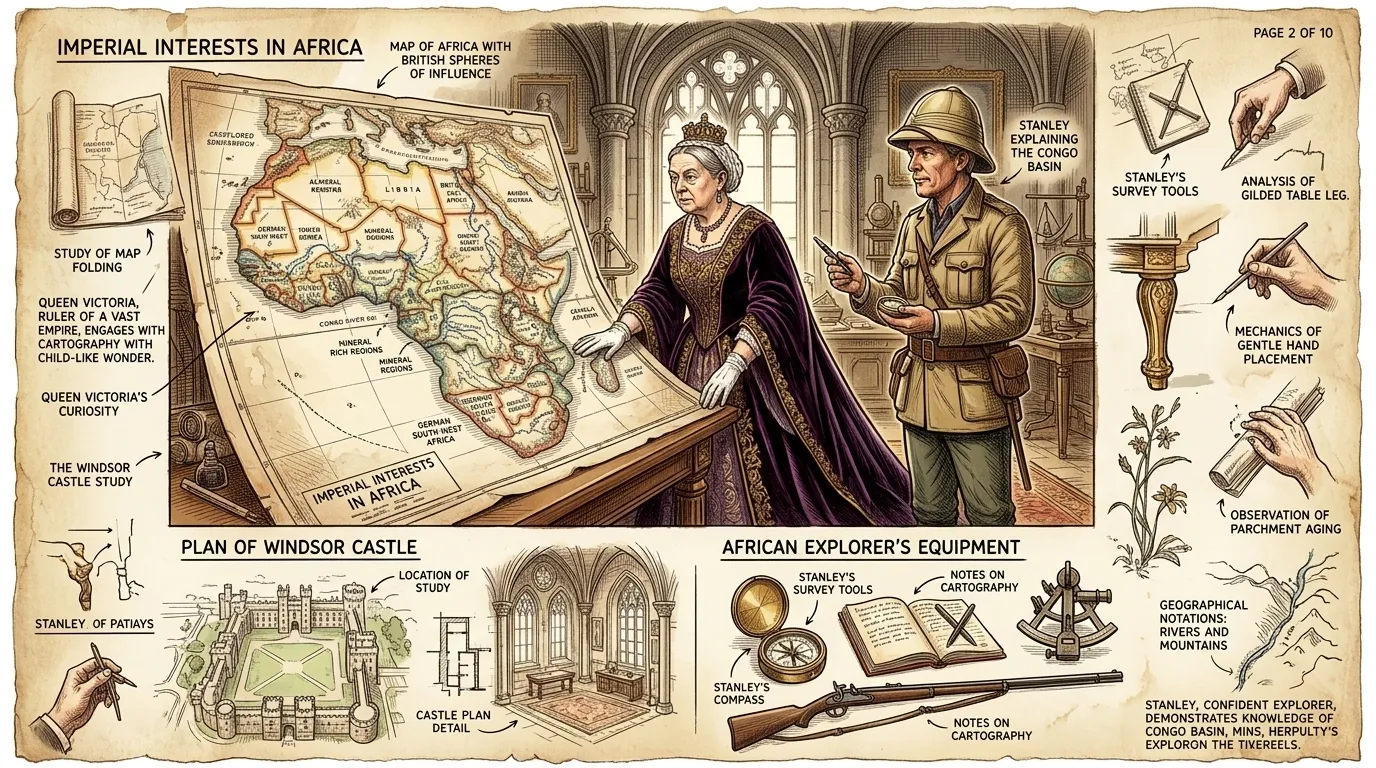
Queen Victoria, monarch of the vast British Empire, gazed upon a map of Africa spread across a table in Windsor Castle. "What is this dark continent," she asked, her voice carrying across the room, "that we know so little about, yet covet so much?" Henry Morton Stanley, the famous explorer, stood nearby, ready to enlighten her, "Your Majesty, it is a land of untapped resources and immense potential, ripe for civilization and, of course, British influence."
Page 3
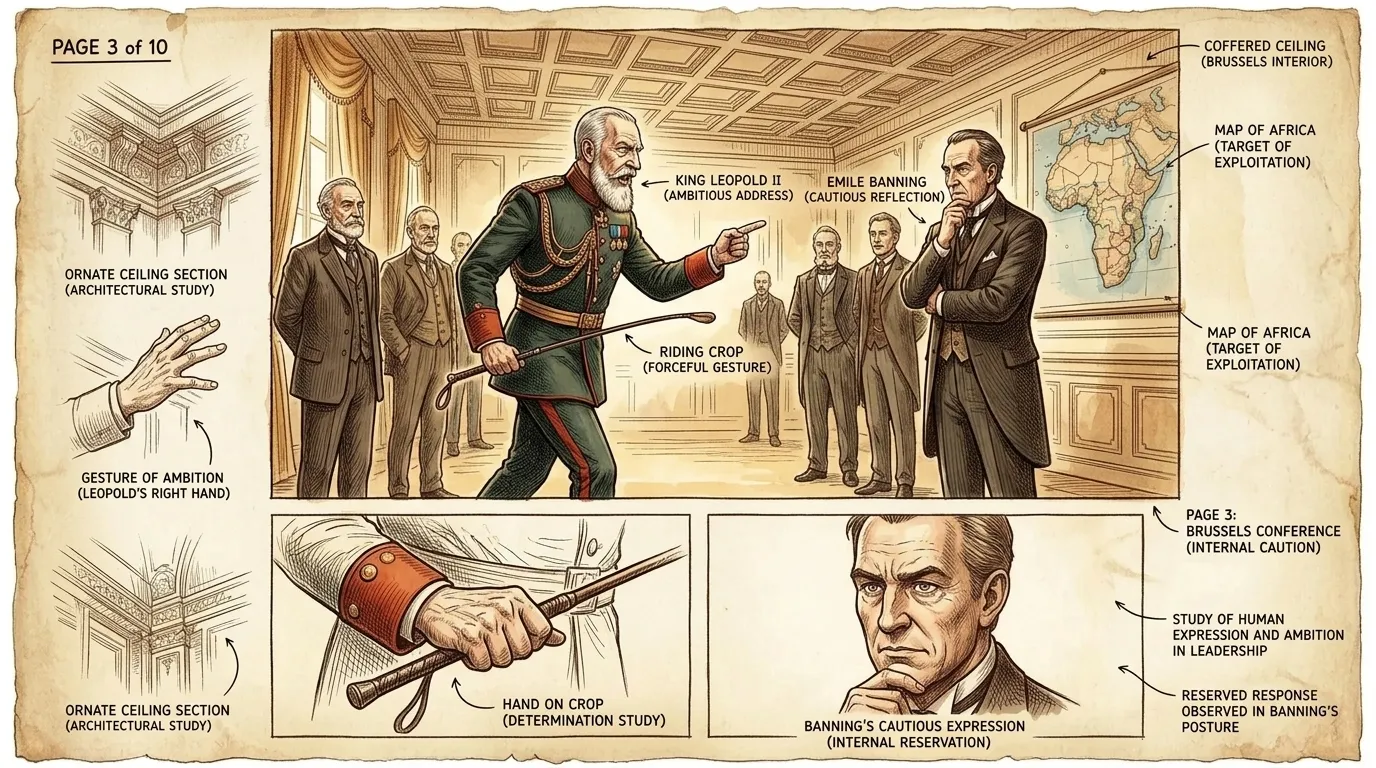
"We must act swiftly," King Leopold II of Belgium declared to his advisors in Brussels. "If we hesitate, other nations will seize the Congo Basin and its treasures before we can claim our rightful share!" He paced the room, clutching a riding crop in his hand. His advisor Emile Banning cautiously responded, "But Your Majesty, the cost and the risk involved are substantial. Is the potential reward truly worth the price?"
Page 4
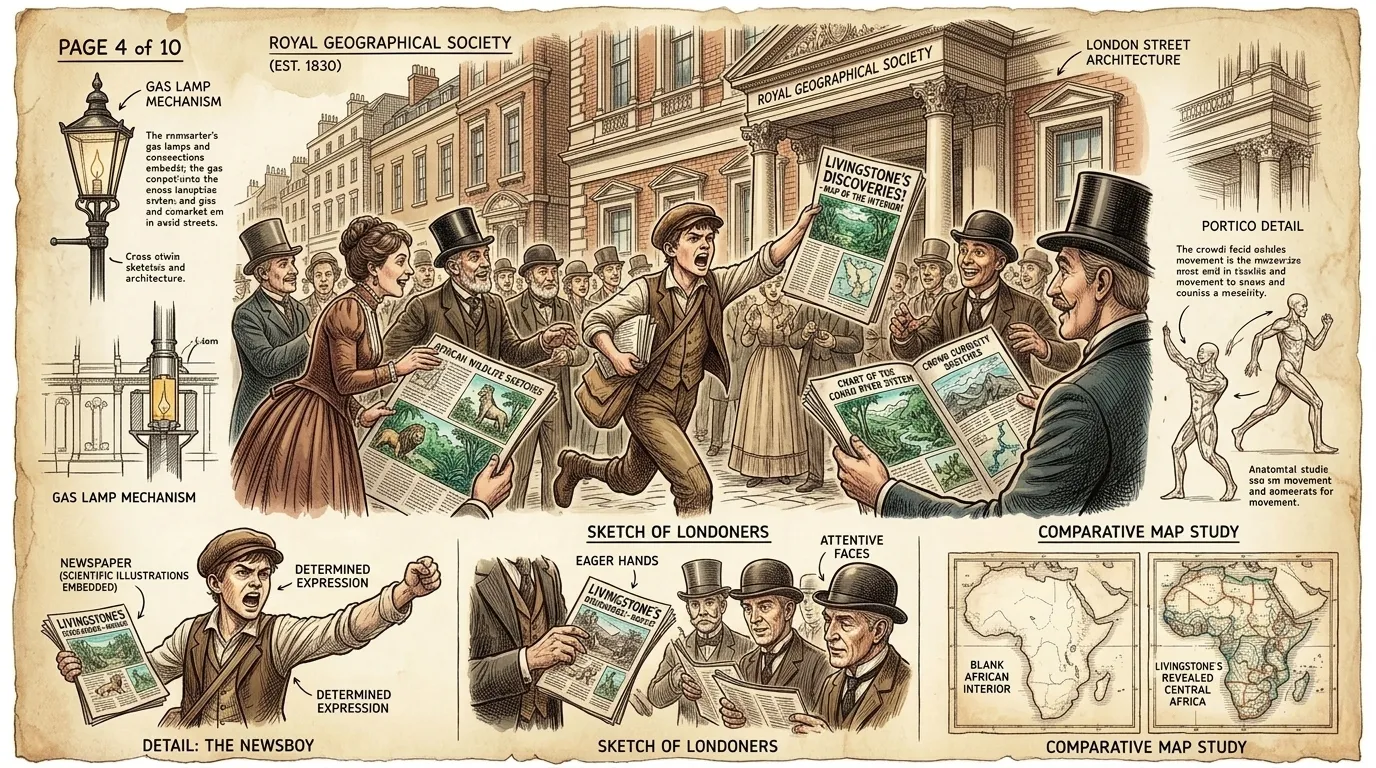
In the streets of London, a crowd gathered outside the Royal Geographical Society. David Livingstone's journals had captured the world's imagination. A newsboy shouted, "Read all about it! Livingstone's discoveries reveal the heart of Africa!" People scrambled to buy the papers, eager to learn more about the continent's hidden riches and mysterious cultures.
Page 5
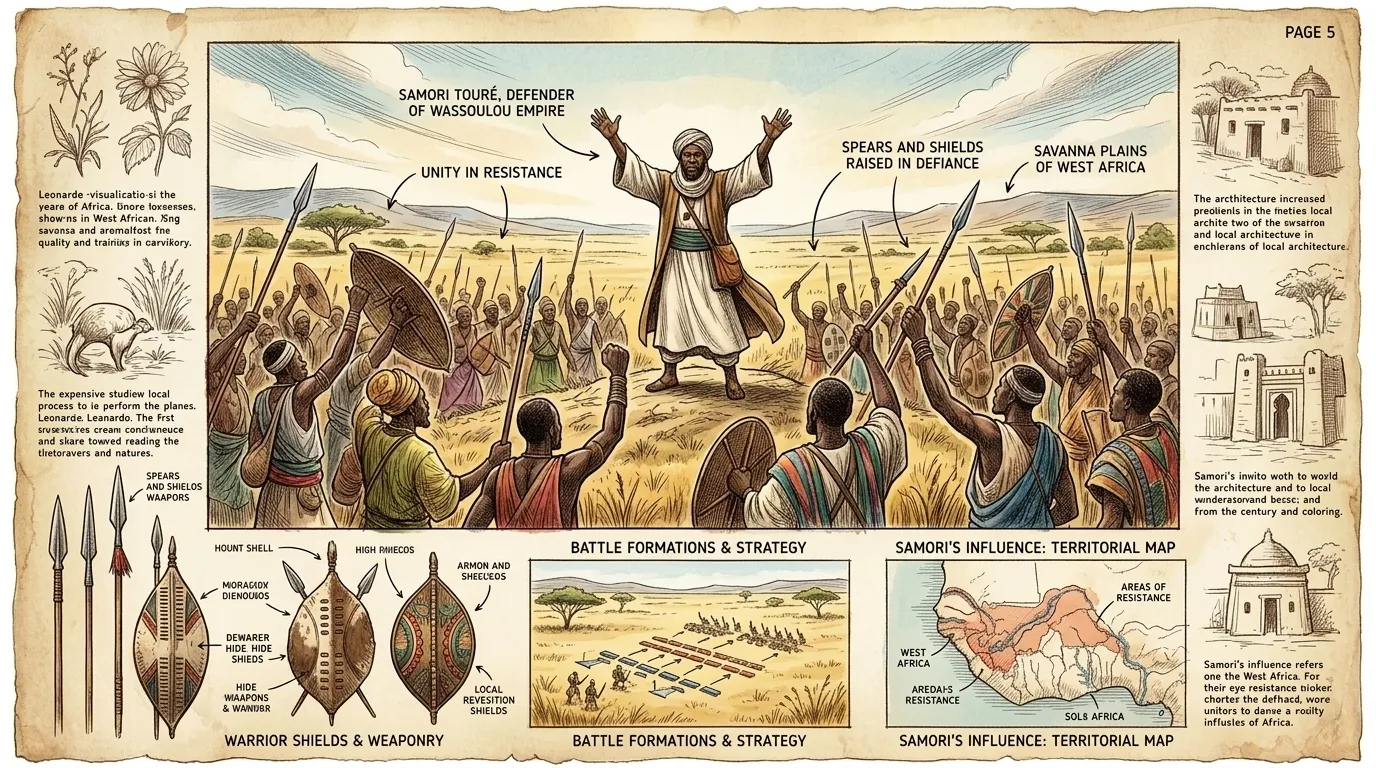
Samori Touré, the leader of the Wassoulou Empire, addressed his warriors in the West African savanna, his voice ringing with defiance. "They come for our land, for our gold, but we will not yield! We will defend our homeland with every fiber of our being!" His warriors raised their spears and shields, echoing his cry with a thunderous roar.
Page 6
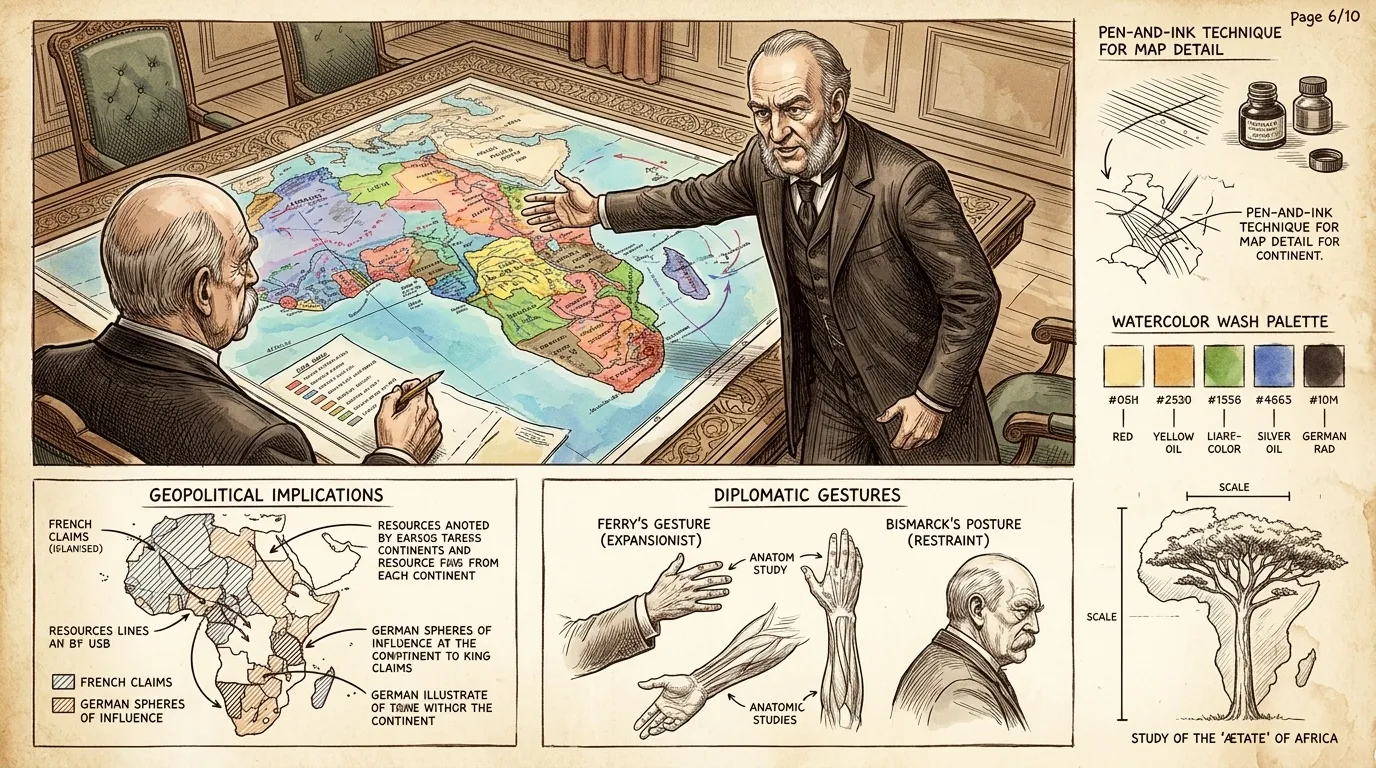
At the Berlin Conference, Jules Ferry pointed to the map of Africa. "Gentlemen," he announced, "we must establish clear rules for acquiring territory. Effective occupation is the key. We must demonstrate that we can control and develop the land we claim." Otto von Bismarck nodded in agreement, his eyes gleaming. It was a diplomatic dance, masking a brutal land grab.
Page 7

Cecil Rhodes met with his associates in Cape Town, a glint in his eye. "We must secure a railway from the Cape to Cairo!" he declared. "It will be the backbone of our empire in Africa, connecting our territories and unlocking vast wealth." He paused, then added, "As Shakespeare said, 'The world is my oyster,' and Africa, gentlemen, is ours for the taking, full of untapped potential and opportunity."
Page 8
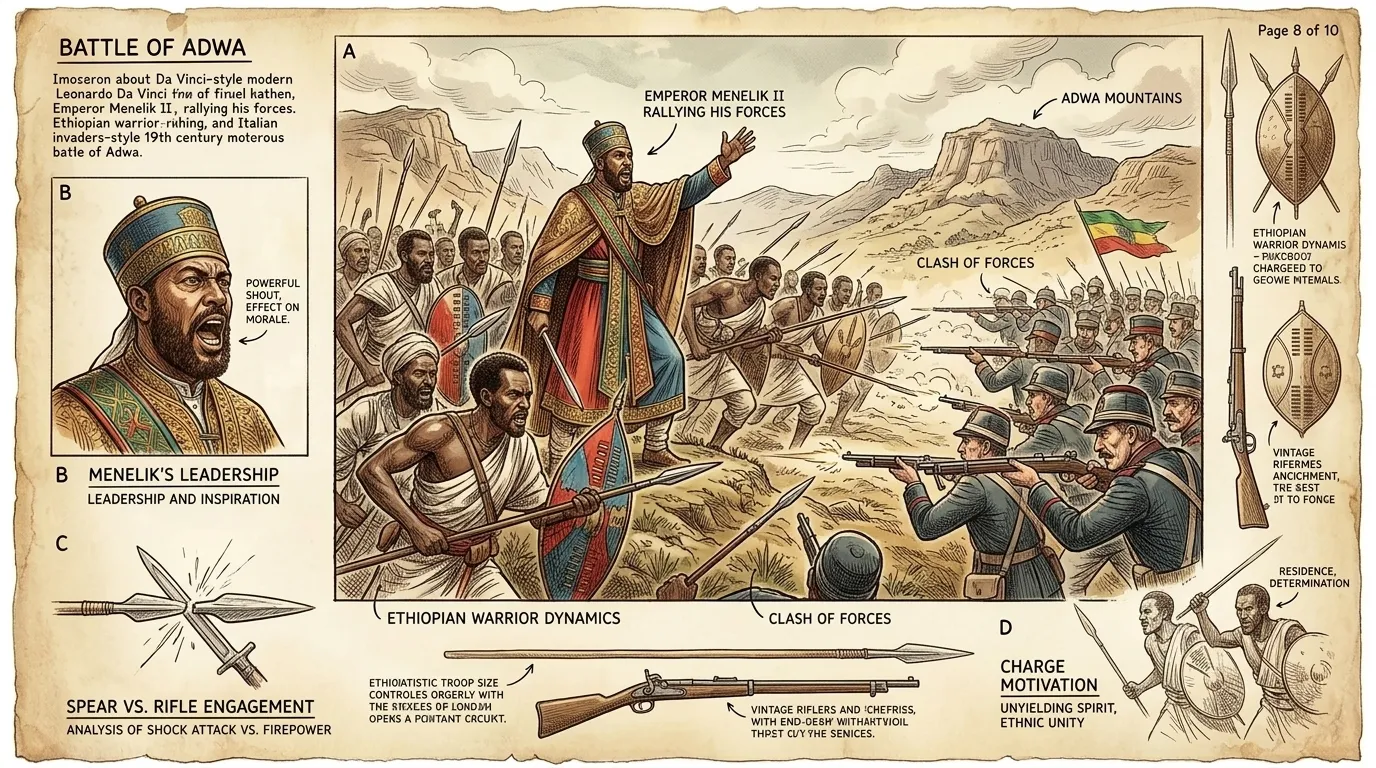
The Battle of Adwa raged in Ethiopia. Emperor Menelik II, clad in traditional robes, rallied his troops, shouting, "Our ancestors fought for this land, and so shall we! Drive these invaders from our sacred soil!" Ethiopian warriors charged into the fray, their spears clashing against Italian rifles. This battle would become a turning point.
Page 9
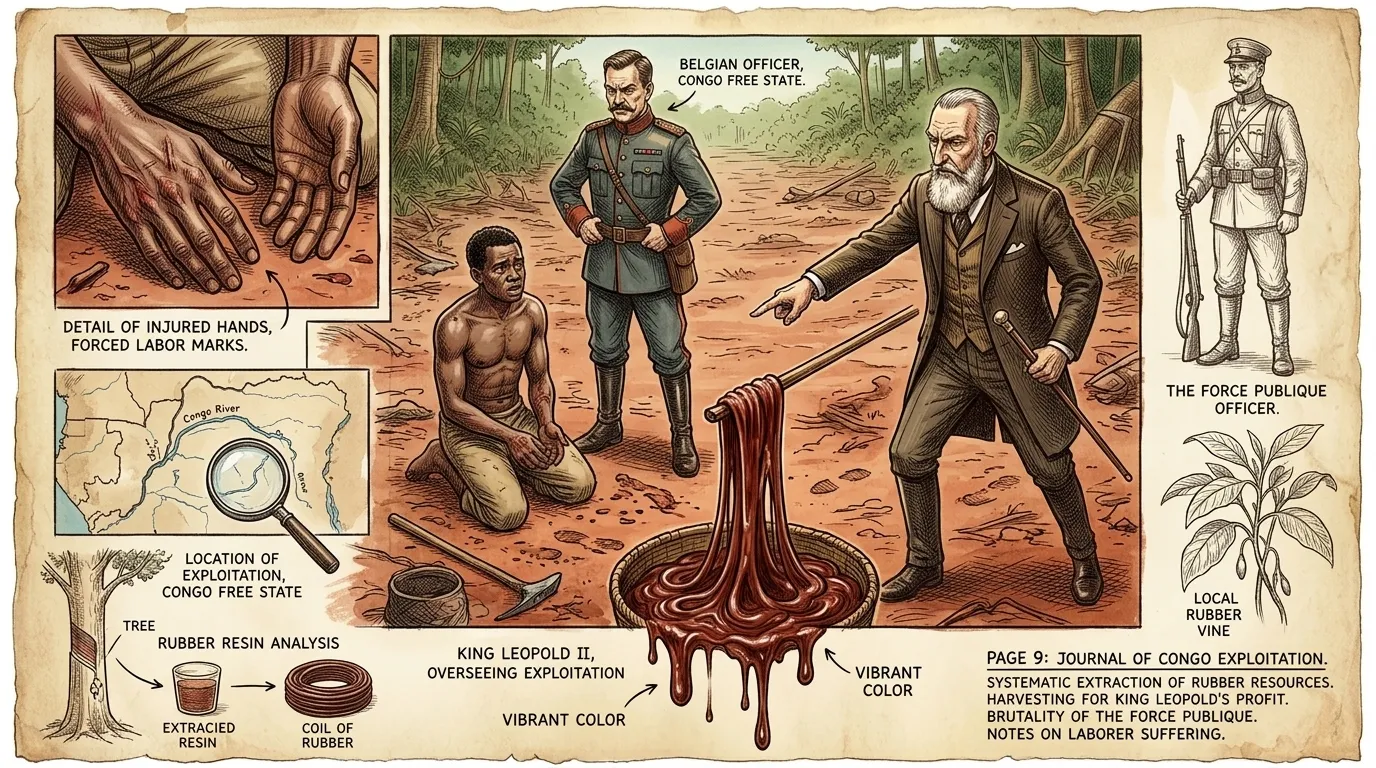
In the Congo Free State, a young Congolese man named Ifassi knelt before a Belgian officer, his eyes filled with despair. "Why do you make us harvest rubber? We are starving! My village is gone." The officer sneered, "The rubber is for the glory of Belgium. Your suffering is a small price to pay." The rubber was the lifeblood of Leopold's profit.
Page 10
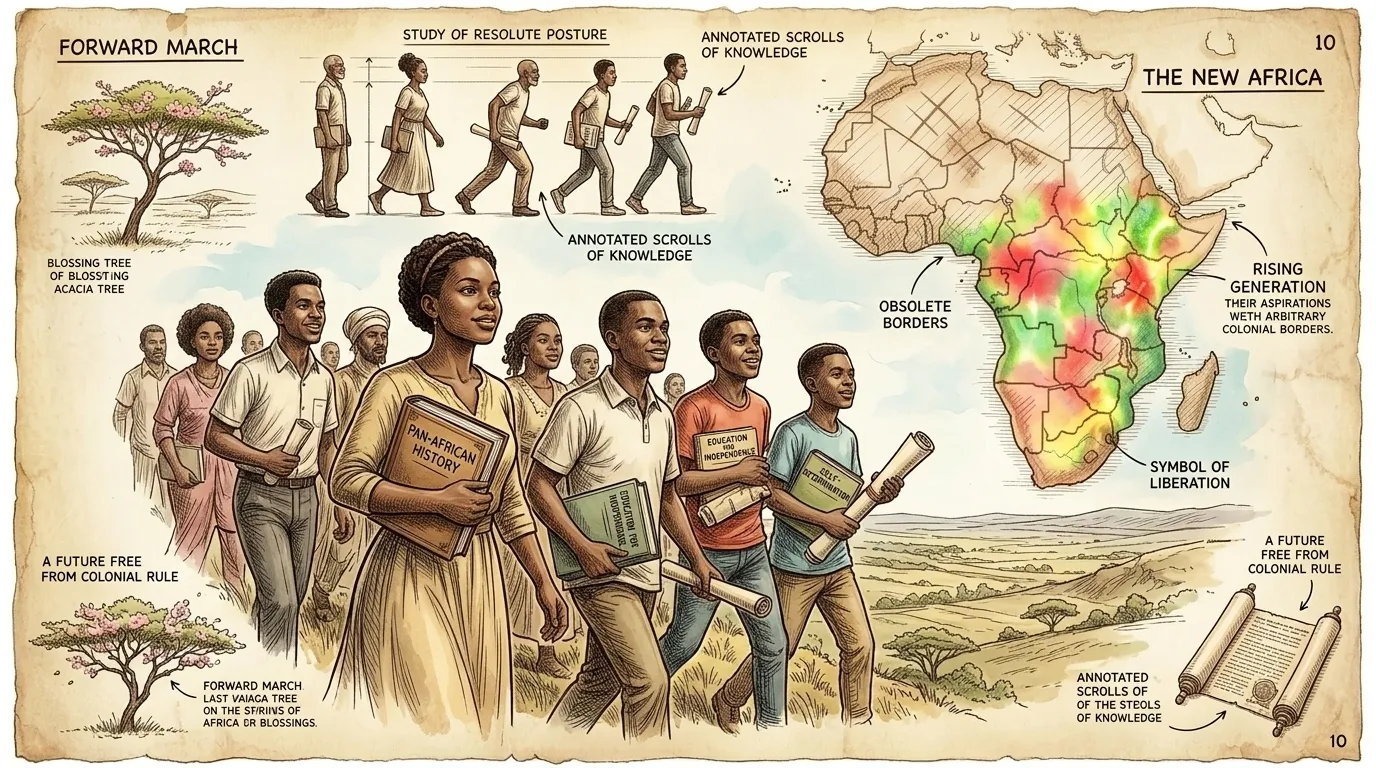
Generations later, the borders of Africa still bore the scars of the Scramble. But a new generation of Africans, educated and determined, began to rise up, demanding independence and self-determination. They learned from the past, striving to build a future free from colonial rule. The fight for true liberation had only just begun.
About this story
- Historical figures: Otto von Bismarck, Jules Ferry, Cecil Rhodes
- Location: Africa
- Period: Modern
- Audience: general readers
Questions and answers
Questions and answers about The Scramble for Africa — Africa (1884, Africa)
Read Wonder History on your phone
Wonder History is available on Android. Get Wonder History on Google Play.