The Rise of the Roman Empire — Mediterranean (48 BC, Mediterranean)

The Rise of the Roman Empire — Mediterranean (48 BC, Mediterranean) — an illustrated history story, featuring Julius Caesar, Marcus Junius Brutus, Mark Antony, set in Mediterranean. 10 illustrated pages, free to read on Wonder History.
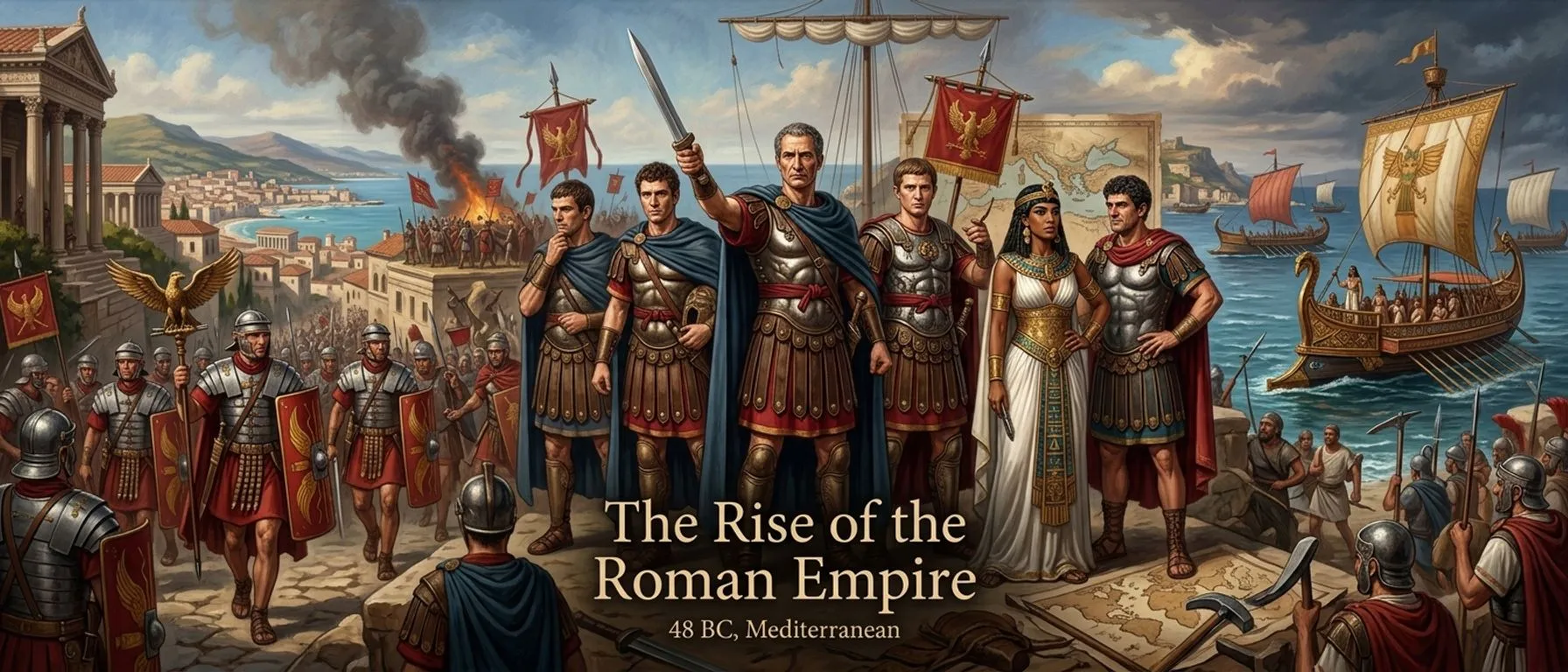
The Rise of the Roman Empire — Mediterranean (48 BC, Mediterranean) — book cover — Wonder History
The Rise of the Roman Empire — Mediterranean (48 BC, Mediterranean) — an illustrated history story, featuring Julius Caesar, Marcus Junius Brutus, Mark Antony, set in Mediterranean. 10 illustrated pages, free to read on Wonder History.

Page 1
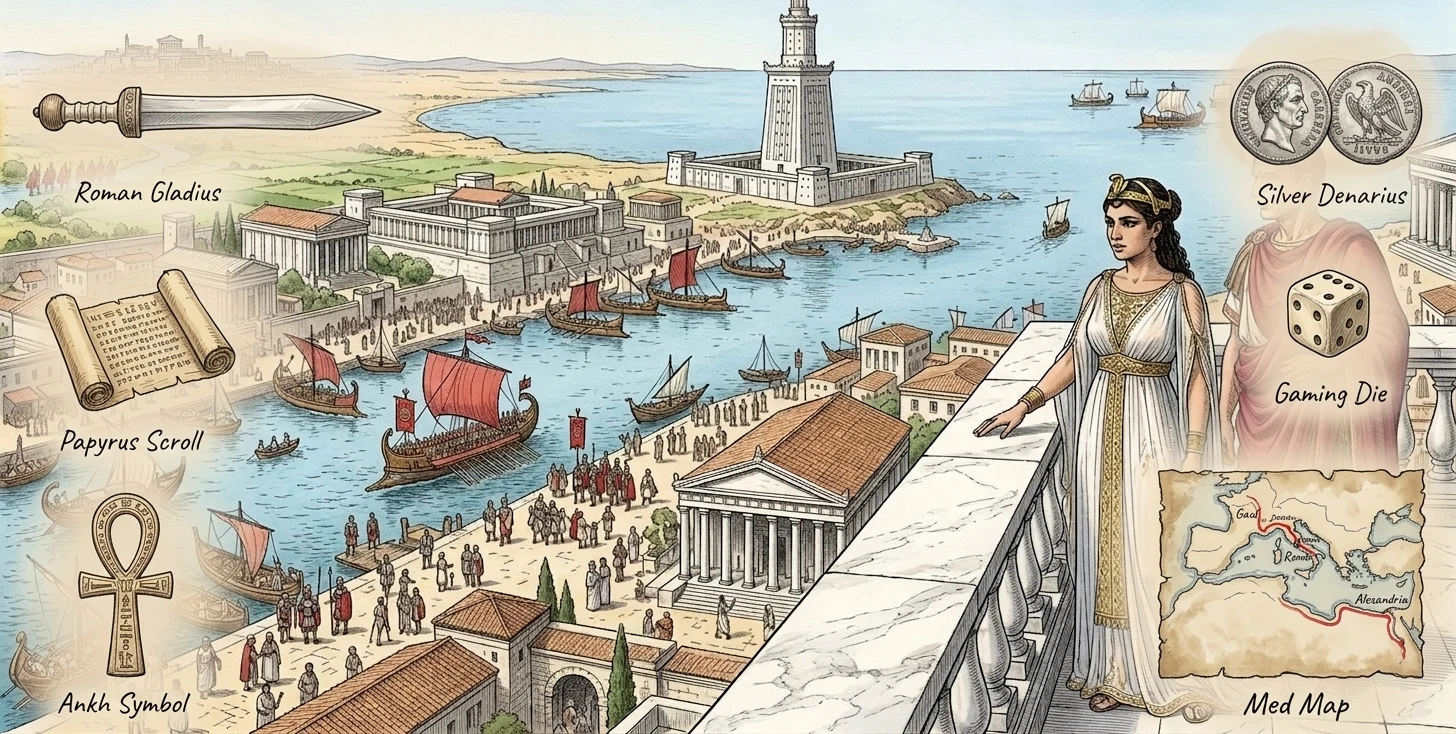
July 25, 48 BC. Julius Caesar, the ambitious general, Marcus Junius Brutus, the conflicted senator, Mark Antony, Caesar's loyal lieutenant, Octavian, his…
July 25, 48 BC. Julius Caesar, the ambitious general, Marcus Junius Brutus, the conflicted senator, Mark Antony, Caesar's loyal lieutenant, Octavian, his adopted son, and Cleopatra VII, the alluring queen of Egypt—their destinies were about to explode across the Mediterranean. Caesar's legions clashed with Pompey's forces in the climactic Battle of Pharsalus in Greece, deciding who would rule the Roman world. But how did these figures rise to such power?

July 25, 48 BC. Julius Caesar, the ambitious general, Marcus Junius Brutus, the conflicted senator, Mark Antony, Caesar's loyal lieutenant, Octavian, his adopted son, and Cleopatra VII, the alluring queen of Egypt—their destinies were about to explode across the Mediterranean. Caesar's legions clashed with Pompey's forces in the climactic Battle of Pharsalus in Greece, deciding who would rule the Roman world. But how did these figures rise to such power? "As Seneca said, 'Every new beginning comes from some other beginning's end.' It is time to understand how this all started!"

Page 2
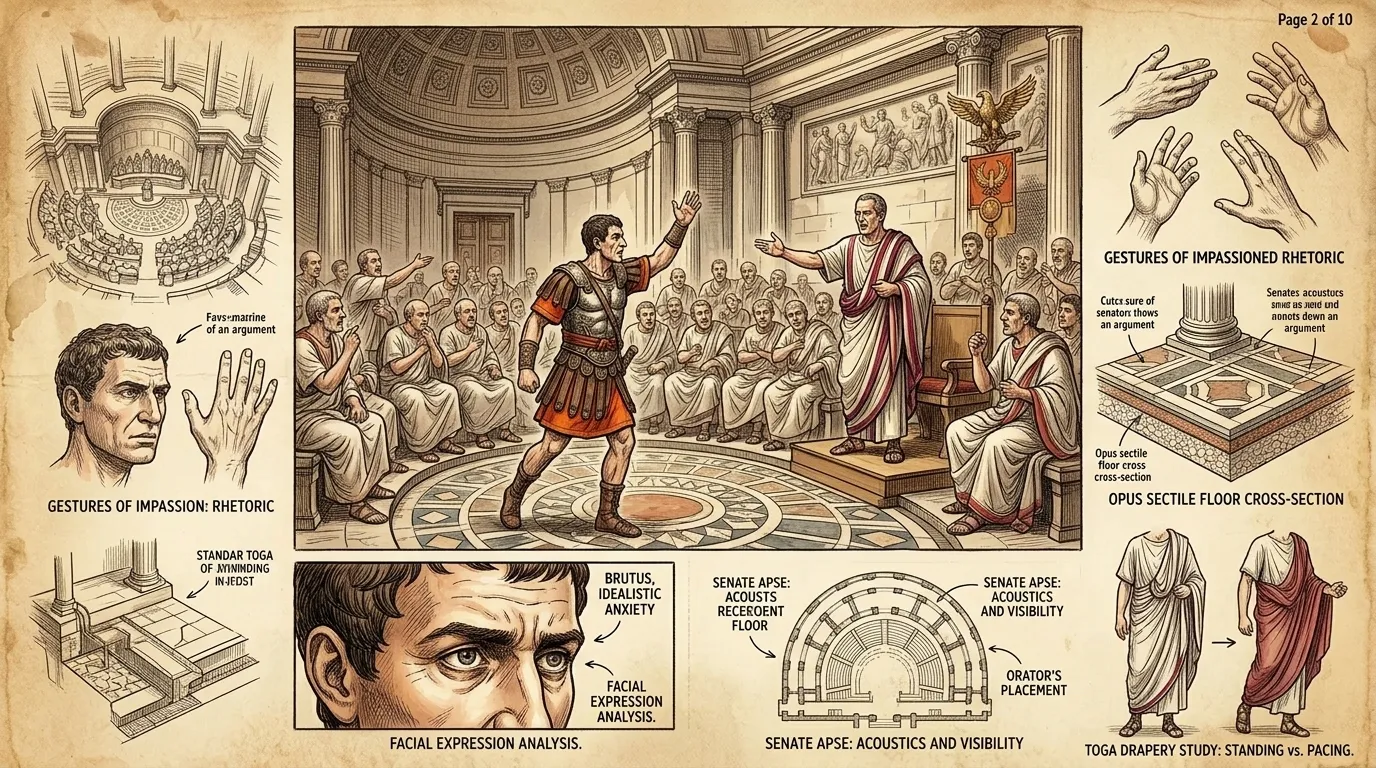
In the heart of Rome, the Senate buzzed with discontent. "Caesar's ambition knows no bounds," Marcus Junius Brutus declared, pacing before the assembled…
In the heart of Rome, the Senate buzzed with discontent. "Caesar's ambition knows no bounds," Marcus Junius Brutus declared, pacing before the assembled senators. "His victories in Gaul have made him too powerful!" Cicero, a renowned orator, added, "If we do not act, the Republic will fall to tyranny!" Their words fueled the growing resentment towards Caesar's rising star.

In the heart of Rome, the Senate buzzed with discontent. "Caesar's ambition knows no bounds," Marcus Junius Brutus declared, pacing before the assembled senators. "His victories in Gaul have made him too powerful!" Cicero, a renowned orator, added, "If we do not act, the Republic will fall to tyranny!" Their words fueled the growing resentment towards Caesar's rising star.

Page 3
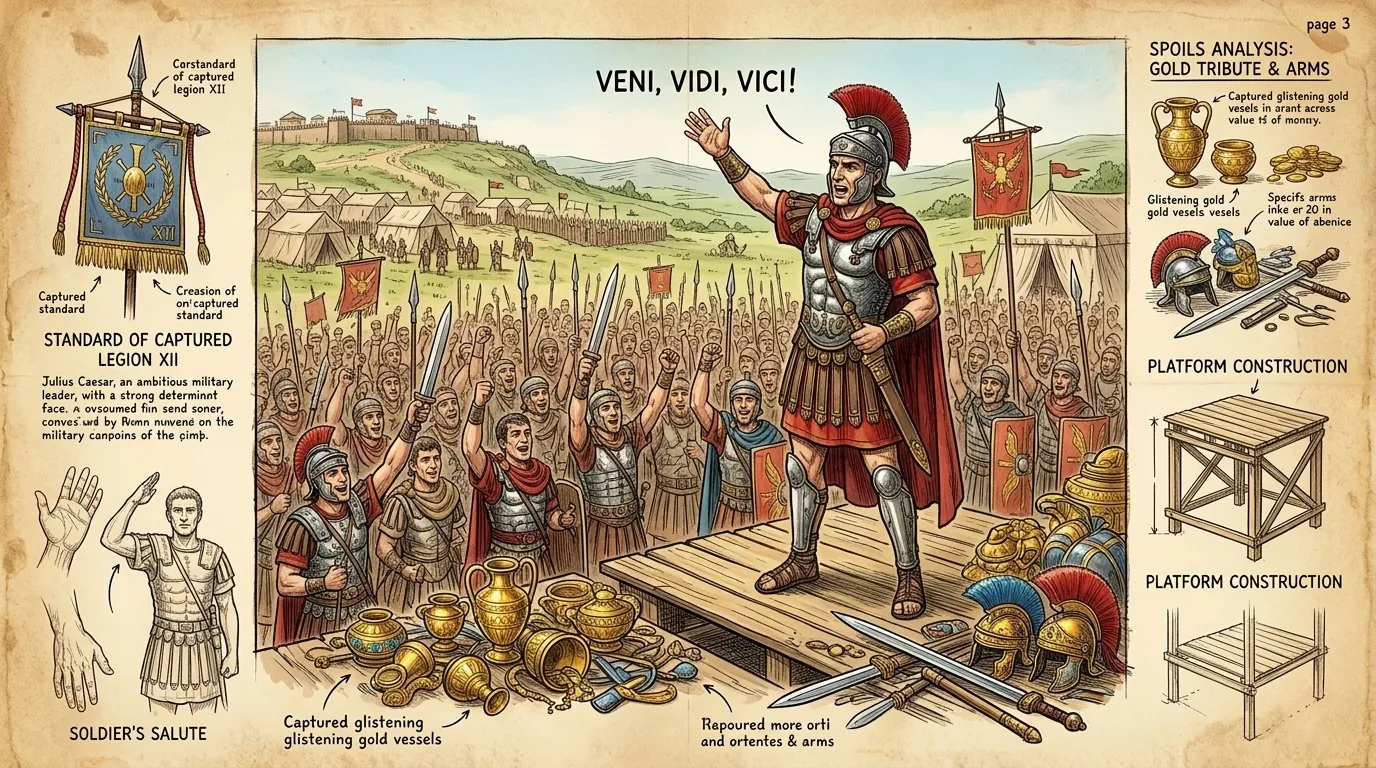
Caesar's conquest of Gaul cemented his reputation as an unparalleled military genius. "Veni, vidi, vici—I came, I saw, I conquered!" Caesar proclaimed to his…
Caesar's conquest of Gaul cemented his reputation as an unparalleled military genius. "Veni, vidi, vici—I came, I saw, I conquered!" Caesar proclaimed to his legions after a decisive victory. Soldiers cheered, raising their swords in salute to their victorious leader. The spoils of war filled the Roman treasury, enriching Caesar and his loyal followers.

Caesar's conquest of Gaul cemented his reputation as an unparalleled military genius. "Veni, vidi, vici—I came, I saw, I conquered!" Caesar proclaimed to his legions after a decisive victory. Soldiers cheered, raising their swords in salute to their victorious leader. The spoils of war filled the Roman treasury, enriching Caesar and his loyal followers.

Page 4
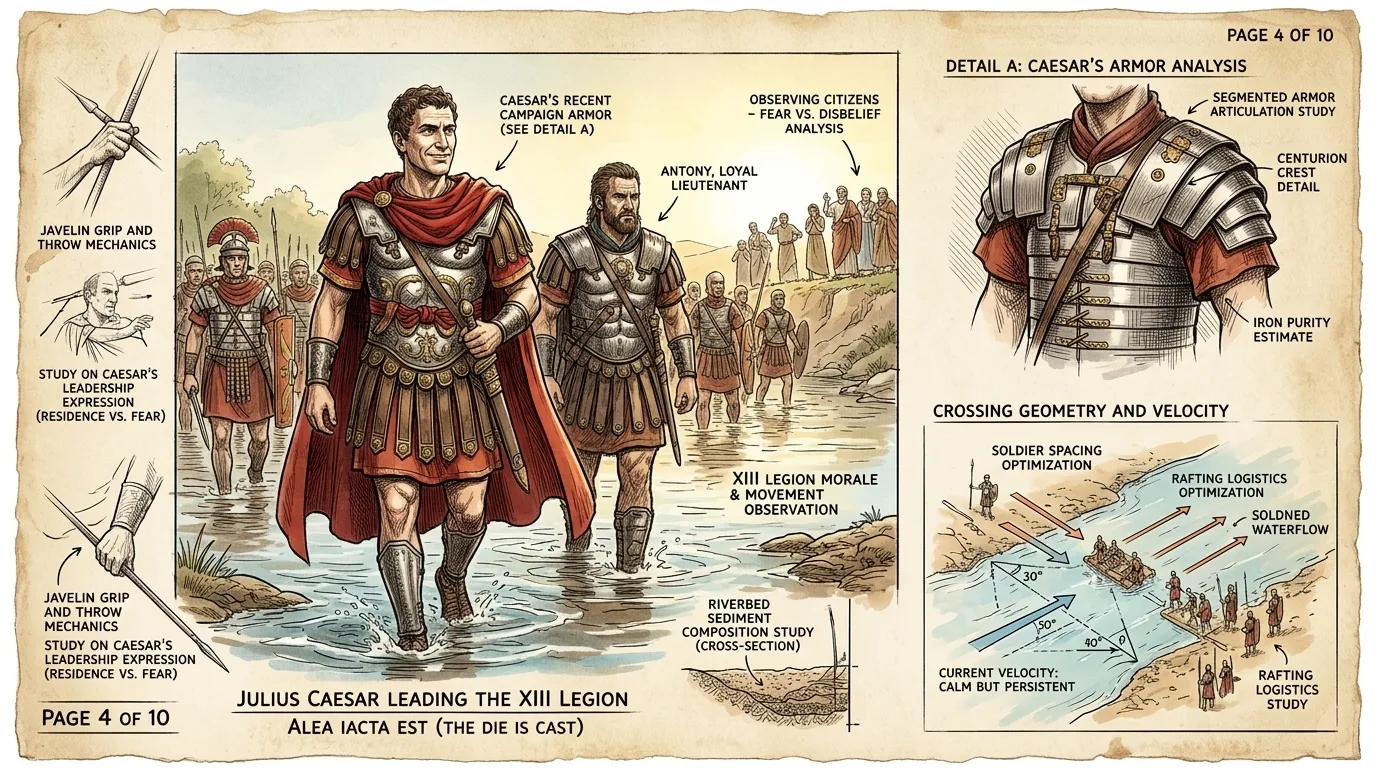
In 49 BC, Caesar made a fateful decision that plunged Rome into civil war. "Alea iacta est—the die is cast!" Caesar exclaimed as he led his XIII Gemina legion…
In 49 BC, Caesar made a fateful decision that plunged Rome into civil war. "Alea iacta est—the die is cast!" Caesar exclaimed as he led his XIII Gemina legion across the Rubicon River. Roman citizens watched in disbelief as the army marched towards Rome, defying the Senate's authority. Mark Antony, ever loyal, stood by Caesar's side, his face grim but resolute.

In 49 BC, Caesar made a fateful decision that plunged Rome into civil war. "Alea iacta est—the die is cast!" Caesar exclaimed as he led his XIII Gemina legion across the Rubicon River. Roman citizens watched in disbelief as the army marched towards Rome, defying the Senate's authority. Mark Antony, ever loyal, stood by Caesar's side, his face grim but resolute.

Page 5
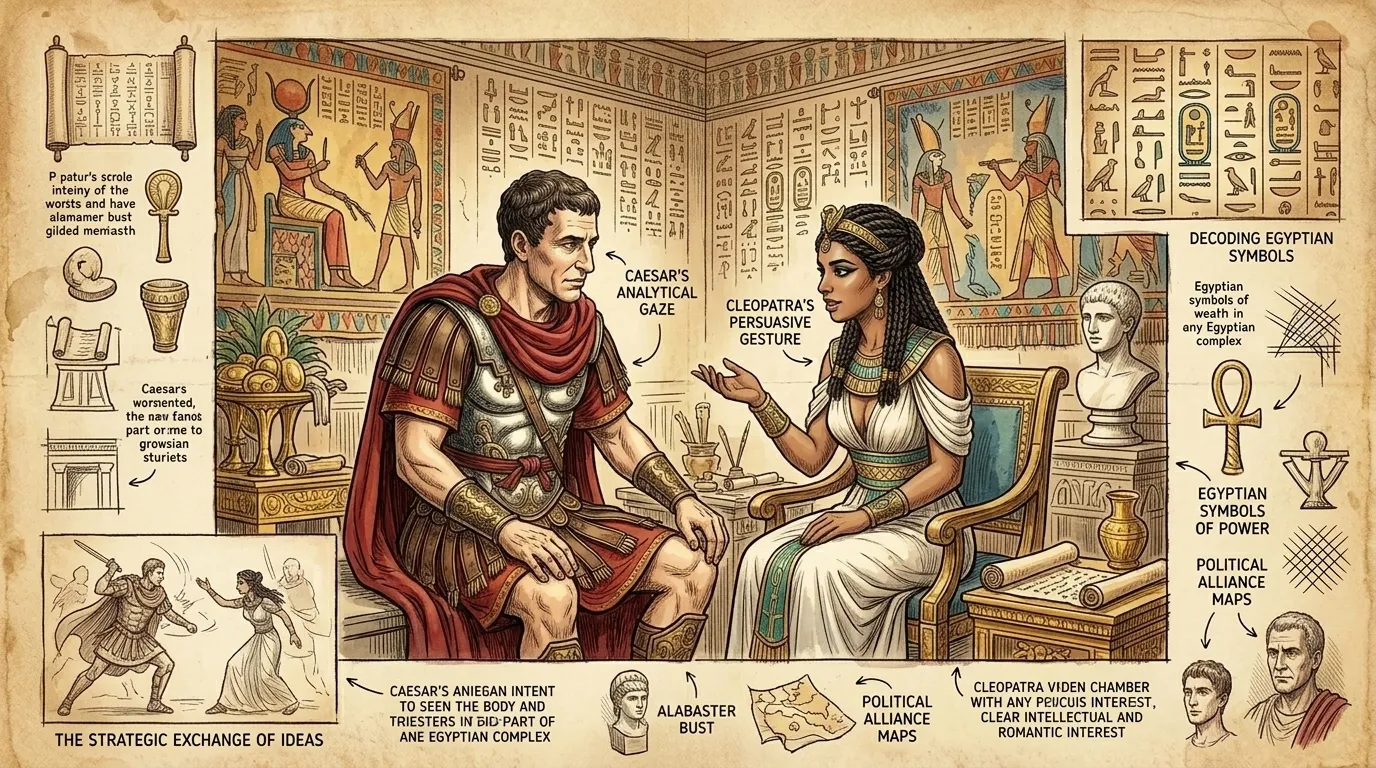
Seeking to consolidate his power, Caesar forged an alliance with Cleopatra VII, the powerful queen of Egypt. "Rome needs Egypt's wealth, and Egypt needs Rome's…
Seeking to consolidate his power, Caesar forged an alliance with Cleopatra VII, the powerful queen of Egypt. "Rome needs Egypt's wealth, and Egypt needs Rome's strength," Cleopatra stated during their meeting, her voice both regal and persuasive. Their union not only brought political stability but also ignited a passionate romance that would shape the course of history.

Seeking to consolidate his power, Caesar forged an alliance with Cleopatra VII, the powerful queen of Egypt. "Rome needs Egypt's wealth, and Egypt needs Rome's strength," Cleopatra stated during their meeting, her voice both regal and persuasive. Their union not only brought political stability but also ignited a passionate romance that would shape the course of history.

Page 6
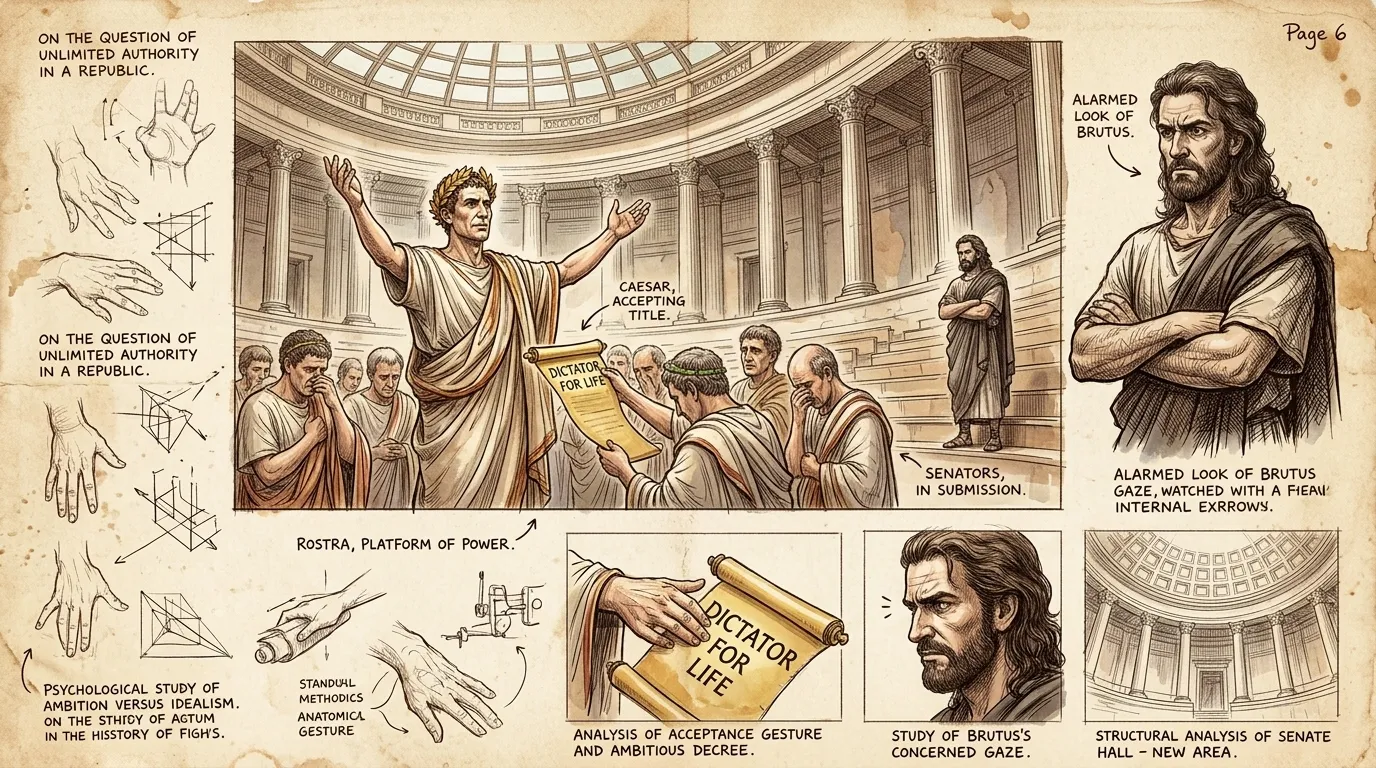
Returning to Rome, Caesar consolidated his rule, becoming dictator for life. The Senate, once a symbol of Republican ideals, was now largely subservient to his…
Returning to Rome, Caesar consolidated his rule, becoming dictator for life. The Senate, once a symbol of Republican ideals, was now largely subservient to his will. "I love the name of honour, more than I fear death," Caesar declared, accepting the title despite the growing resentment among his political rivals. Brutus, fueled by his conviction that Caesar threatened the Republic, watched with increasing alarm.

Returning to Rome, Caesar consolidated his rule, becoming dictator for life. The Senate, once a symbol of Republican ideals, was now largely subservient to his will. "I love the name of honour, more than I fear death," Caesar declared, accepting the title despite the growing resentment among his political rivals. Brutus, fueled by his conviction that Caesar threatened the Republic, watched with increasing alarm.

Page 7
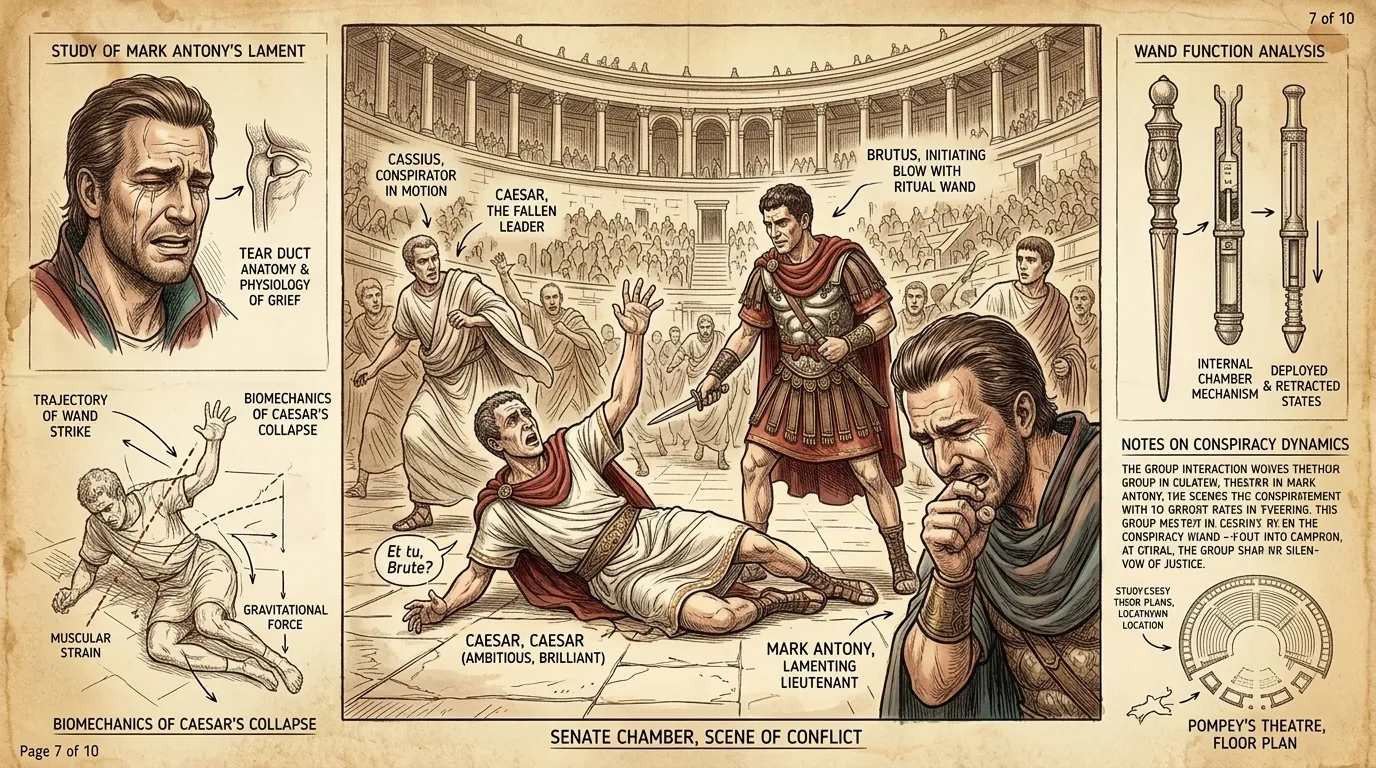
"Et tu, Brute?—Even you, Brutus?" Caesar cried out, betrayed by his close friend. On March 15, 44 BC, a group of senators, led by Brutus and Cassius…
"Et tu, Brute?—Even you, Brutus?" Caesar cried out, betrayed by his close friend. On March 15, 44 BC, a group of senators, led by Brutus and Cassius, assassinated Julius Caesar in the Theatre of Pompey. The act sent shockwaves through Rome and plunged the Republic into chaos. Mark Antony wept over Caesar's body, swearing vengeance on the conspirators.

"Et tu, Brute?—Even you, Brutus?" Caesar cried out, betrayed by his close friend. On March 15, 44 BC, a group of senators, led by Brutus and Cassius, assassinated Julius Caesar in the Theatre of Pompey. The act sent shockwaves through Rome and plunged the Republic into chaos. Mark Antony wept over Caesar's body, swearing vengeance on the conspirators.

Page 8
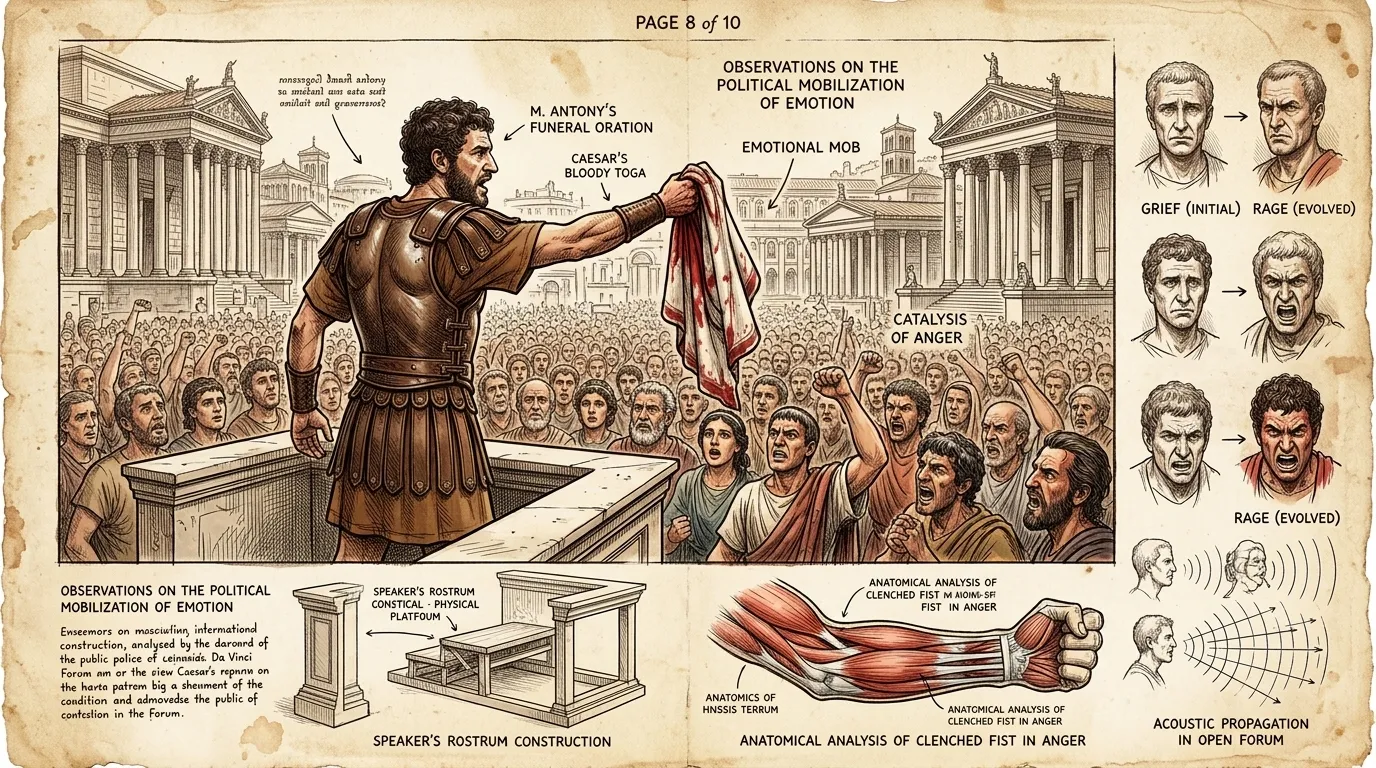
Mark Antony seized the opportunity to avenge Caesar's death and consolidate his own power. "Friends, Romans, countrymen, lend me your ears," Antony orated at…
Mark Antony seized the opportunity to avenge Caesar's death and consolidate his own power. "Friends, Romans, countrymen, lend me your ears," Antony orated at Caesar's funeral. "I come to bury Caesar, not to praise him." His powerful speech ignited the crowd, turning them against the assassins. Brutus and Cassius fled Rome, fearing for their lives.

Mark Antony seized the opportunity to avenge Caesar's death and consolidate his own power. "Friends, Romans, countrymen, lend me your ears," Antony orated at Caesar's funeral. "I come to bury Caesar, not to praise him." His powerful speech ignited the crowd, turning them against the assassins. Brutus and Cassius fled Rome, fearing for their lives.

Page 9
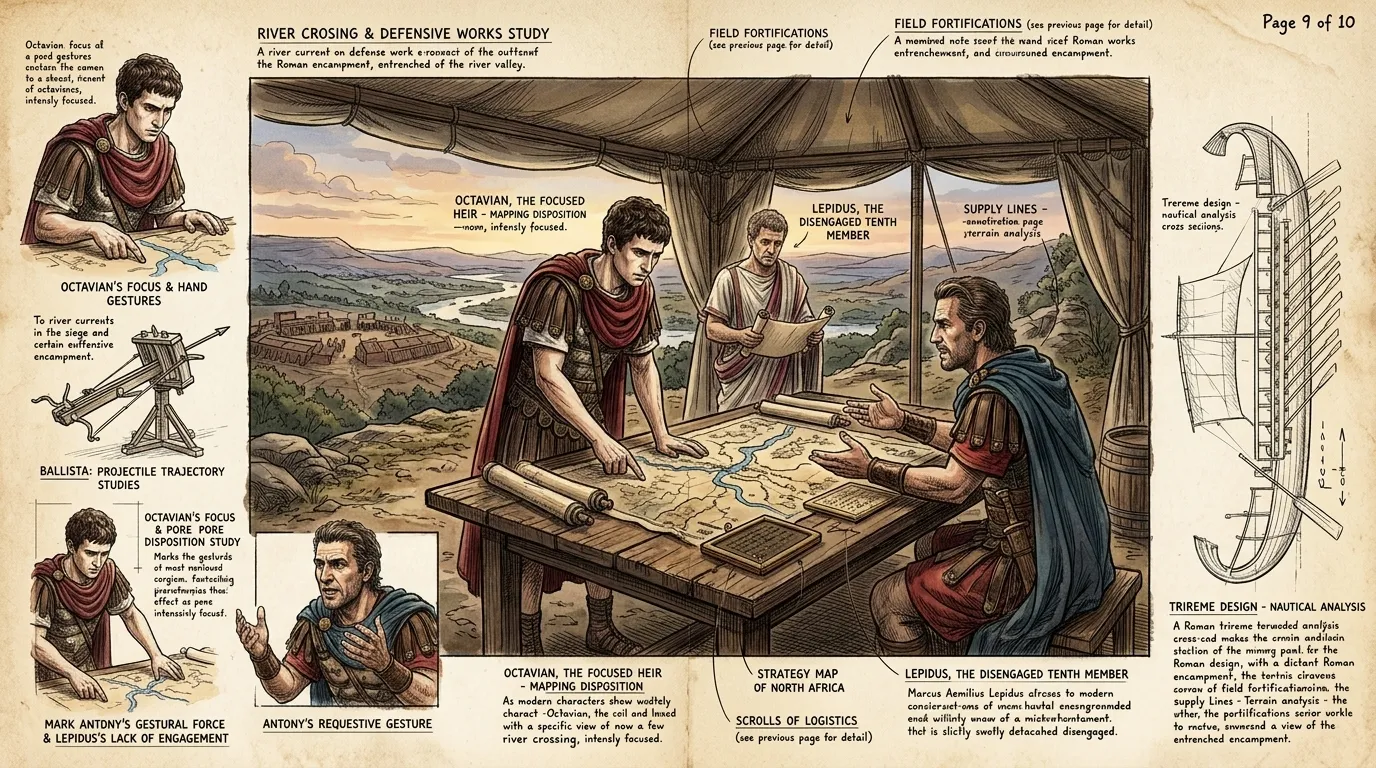
To restore order, Antony, Octavian, and Lepidus formed the Second Triumvirate, a powerful alliance that ruled Rome. Octavian, though young, proved to be a…
To restore order, Antony, Octavian, and Lepidus formed the Second Triumvirate, a powerful alliance that ruled Rome. Octavian, though young, proved to be a shrewd politician and military leader. But as Abraham Lincoln once said "A house divided against itself cannot stand."

To restore order, Antony, Octavian, and Lepidus formed the Second Triumvirate, a powerful alliance that ruled Rome. Octavian, though young, proved to be a shrewd politician and military leader. But as Abraham Lincoln once said "A house divided against itself cannot stand."

Page 10
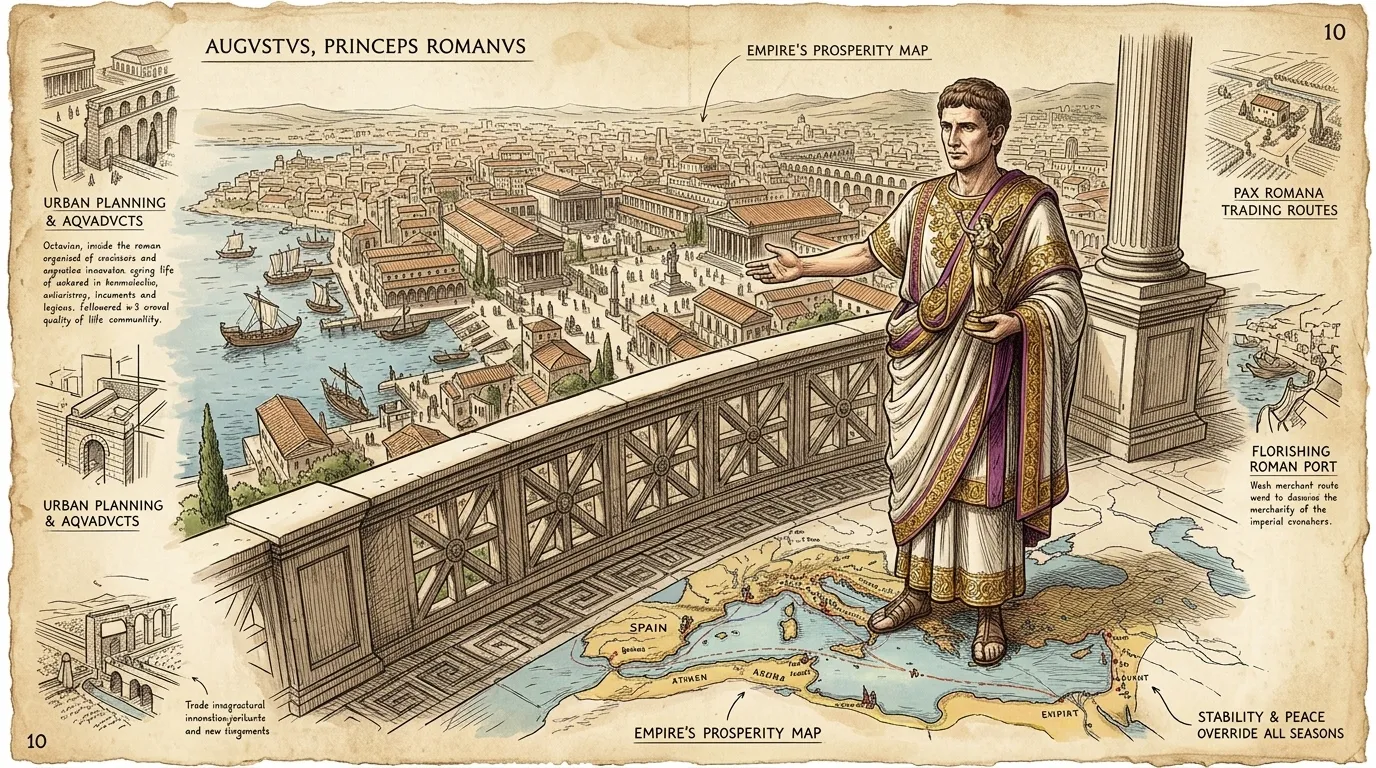
The rise of Julius Caesar and the subsequent civil wars transformed the Roman Republic into an Empire. Octavian, later known as Augustus, became the first Roman…
The rise of Julius Caesar and the subsequent civil wars transformed the Roman Republic into an Empire. Octavian, later known as Augustus, became the first Roman Emperor, ushering in an era of peace and prosperity known as the Pax Romana. The Mediterranean world was united under Roman rule, its cultures and economies intertwined.

The rise of Julius Caesar and the subsequent civil wars transformed the Roman Republic into an Empire. Octavian, later known as Augustus, became the first Roman Emperor, ushering in an era of peace and prosperity known as the Pax Romana. The Mediterranean world was united under Roman rule, its cultures and economies intertwined.

About this story

  • Historical figures: Julius Caesar, Marcus Junius Brutus, Mark Antony
  • Location: Mediterranean
  • Period: Ancient
  • Audience: general readers

Questions and answers

Questions and answers about The Rise of the Roman Empire — Mediterranean (48 BC, Mediterranean)

Read Wonder History on your phone

Wonder History is available on Android. Get Wonder History on Google Play.

More Wonder History stories

All Wonder History stories · Open the library