The Oslo Accords (1993, Middle East)
The Oslo Accords (1993, Middle East) — an illustrated history story, featuring Yitzhak Rabin, Yasser Arafat, Bill Clinton, set in Middle East. 10 illustrated pages, free to read on Wonder History.
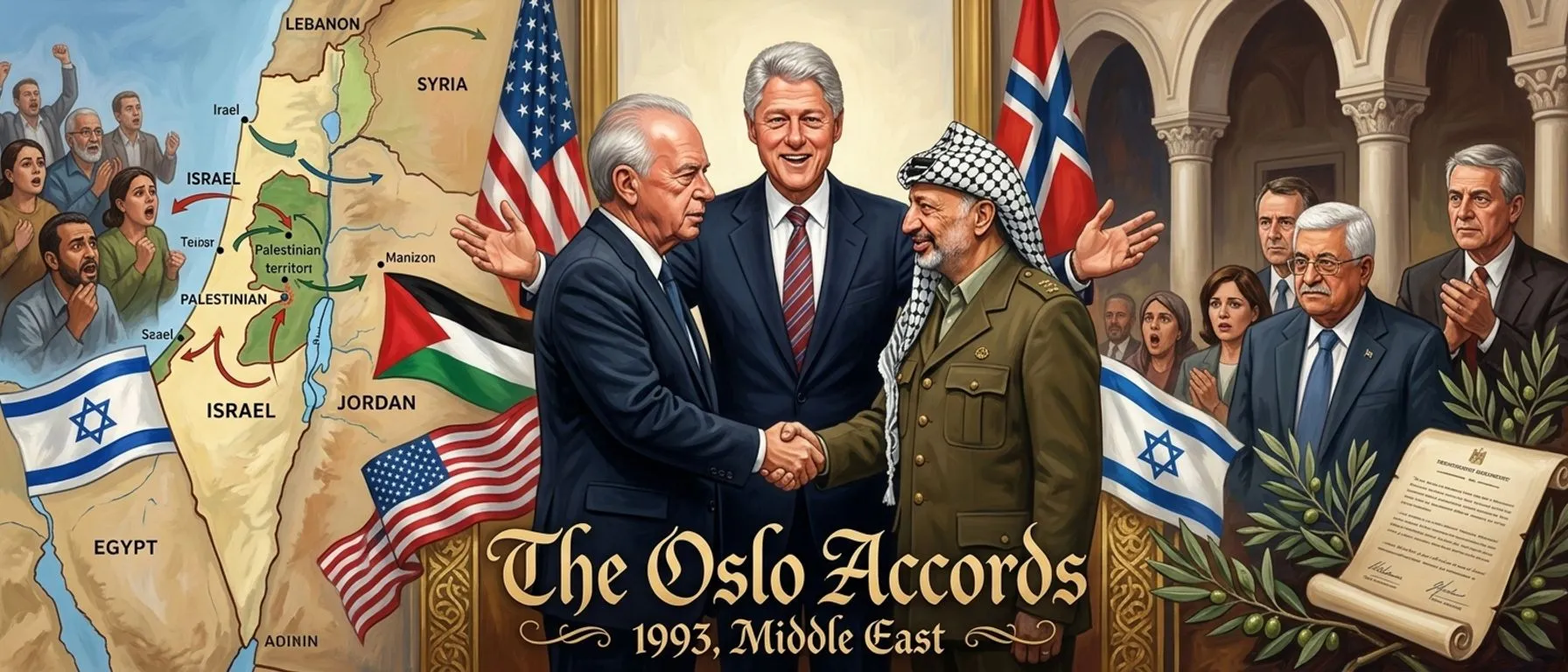
Page 1

September 13, 1993: on the White House lawn, a moment of almost unimaginable hope. Yitzhak Rabin, the Prime Minister of Israel, extended his hand. Yasser Arafat, Chairman of the Palestine Liberation Organization, hesitantly grasped it. But years of conflict preceded this fragile handshake, and the path to peace would be fraught with peril.
Page 2
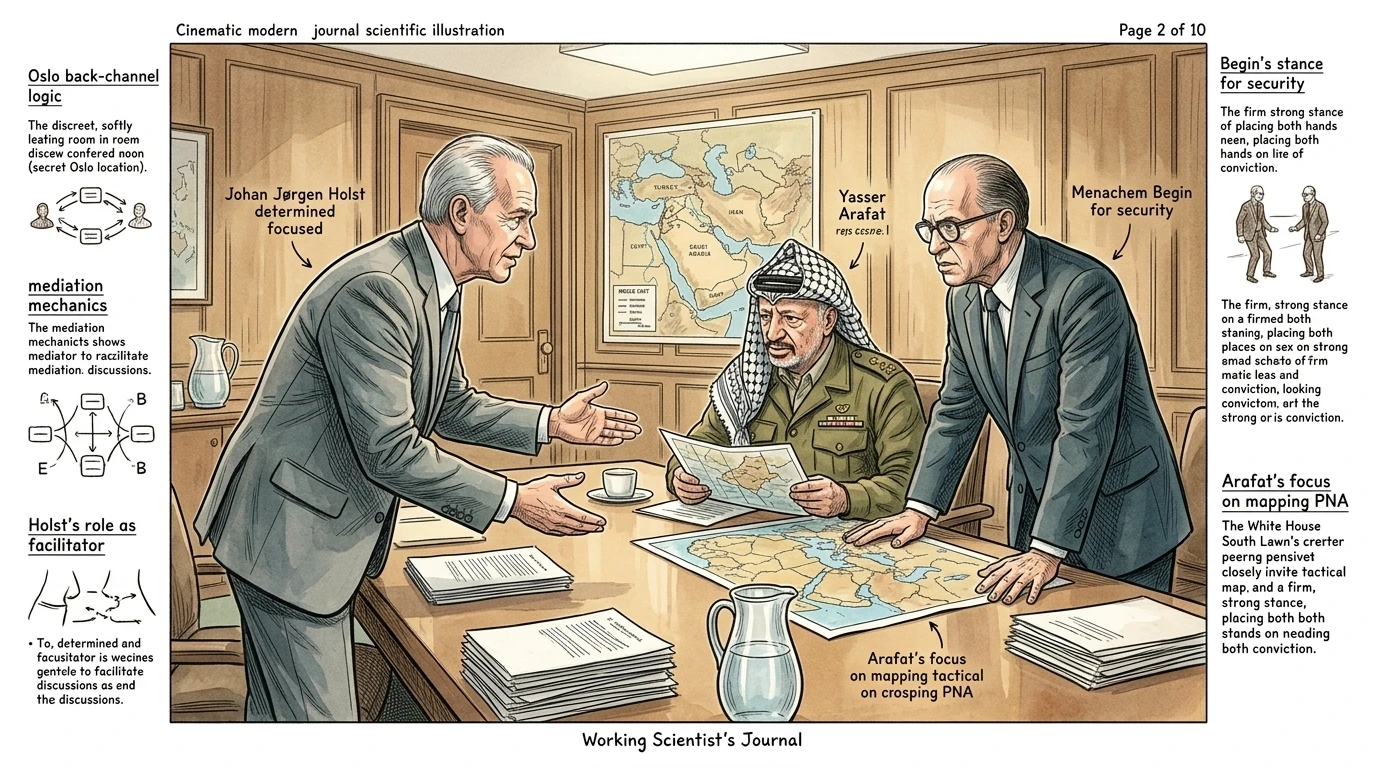
The roots of the conflict lay deep. Menachem Begin, the former Prime Minister of Israel, had long advocated for a strong, secure Israel. Yasser Arafat, meanwhile, had dedicated his life to the Palestinian cause, seeking self-determination for his people. Johan Jørgen Holst, Norway's Foreign Minister, quietly began facilitating secret talks in Oslo, hoping to bridge the divide. The Oslo Accords were daring precisely because many thought peace was impossible.
Page 3

Mahmoud Abbas, a key advisor to Arafat, understood the need for compromise. "Peace is not merely the absence of war, but the presence of justice," he told Ahmed Qurei, another high-ranking Palestinian official, during a tense meeting in Tunis. Abbas insisted, "We must be willing to make difficult choices for the sake of our children's future."
Page 4
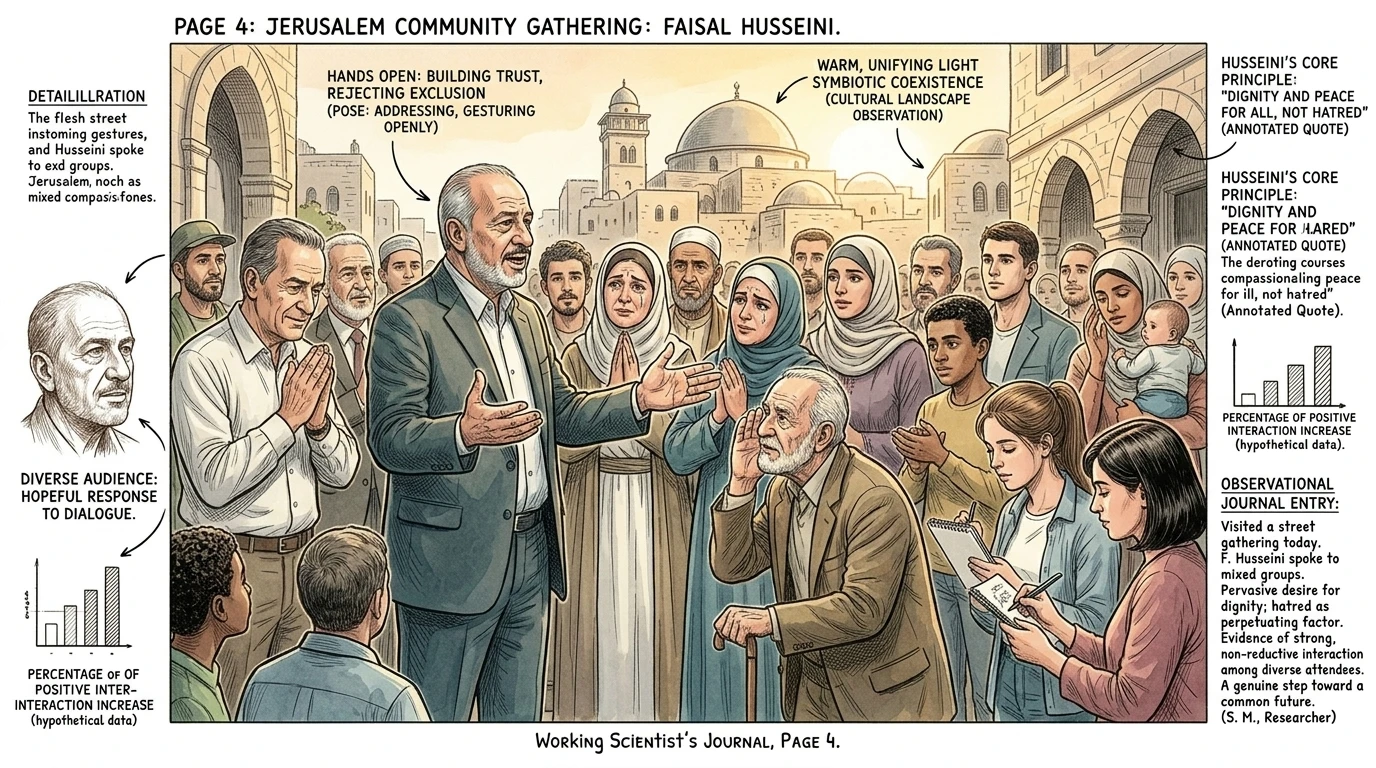
Faisal Husseini, a prominent Palestinian leader from Jerusalem, tirelessly worked to build trust between communities. He believed that coexistence was possible. "Our people yearn for a life of dignity and peace," Husseini declared at a community gathering. He reminded everyone that hatred only perpetuated suffering.
Page 5

Shimon Peres, the Israeli Foreign Minister, played a crucial role in pushing the negotiations forward. He understood the necessity of finding common ground. "'Peace is not made with friends,' Charles De Gaulle said, he reminded Rabin during a late-night discussion. 'Peace is made with enemies who become friends.' Peres argued that embracing the Oslo opportunity would define Israel's future."
Page 6

The handshake on the White House lawn: a symbolic moment, but one built on painstaking, secret negotiations. Yitzhak Rabin, ever the pragmatist, knew the risks involved. Yasser Arafat, after decades of struggle, saw a chance for a new beginning. Bill Clinton, eager to broker a historic peace, stood as a witness to history.
Page 7

The Oslo Accords were signed, granting limited self-governance to the Palestinians in the West Bank and Gaza Strip. Hope blossomed, but the road ahead remained treacherous. "'I have signed an agreement with the PLO,' Rabin declared in a somber address to the Israeli people. 'As a soldier, I never wanted to see them face-to-face. But as a leader, I must do what is necessary for peace.'"
Page 8

The celebrations were short-lived. Opposition on both sides grew fierce. Extremists rejected the compromise, threatening violence. Faisal Husseini, continued to champion peace, but faced growing threats. Mahmoud Abbas tried to quell extremist voices and remind everyone of a long-term goal.
Page 9
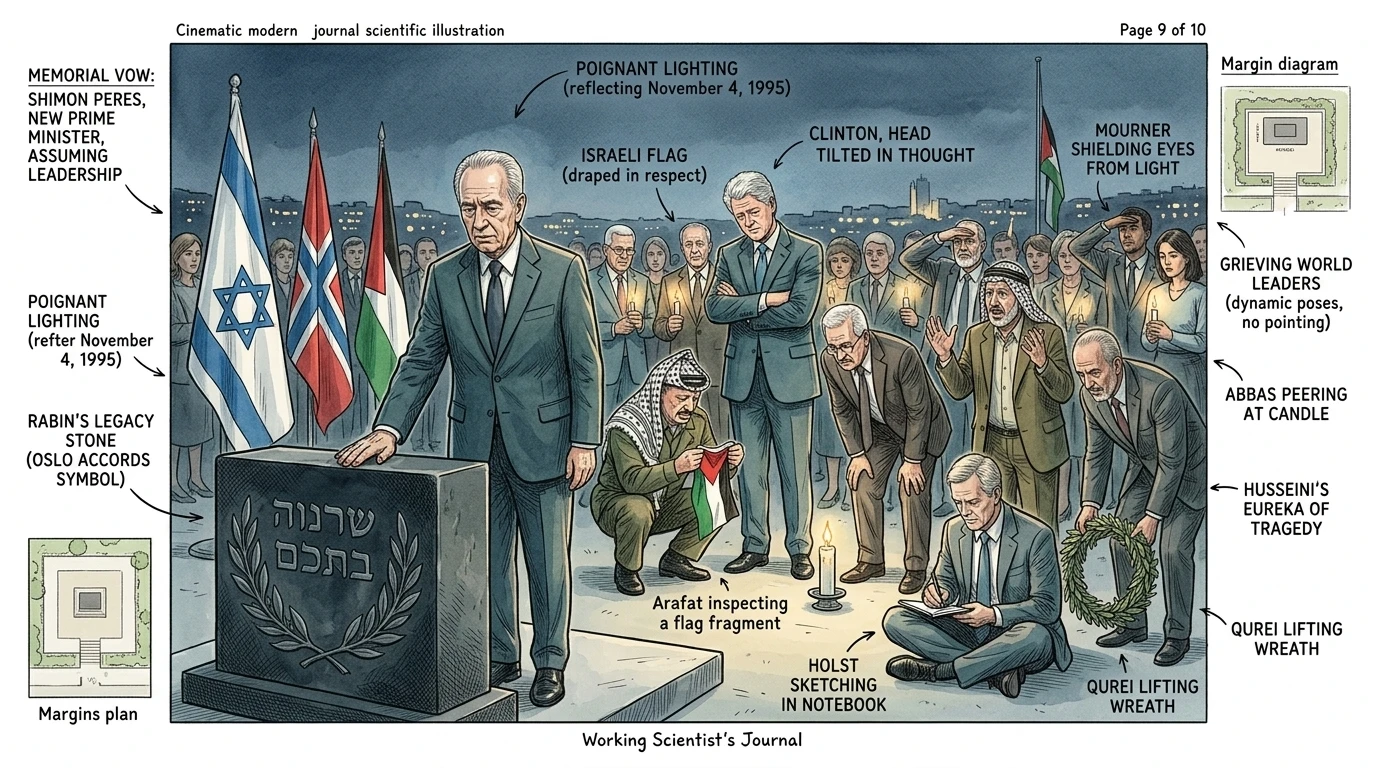
November 4, 1995: tragedy struck. Yitzhak Rabin was assassinated by an extremist opposed to the peace process. The dream of Oslo was shattered. Shimon Peres, stepped up as the new Prime Minister, vowing to carry on Rabin's legacy and not to let peace die.
Page 10

The Oslo Accords ultimately failed to deliver a lasting peace. Yet, the attempt itself remains a powerful reminder that even the most entrenched conflicts can be resolved through dialogue and compromise. The memory of that handshake on the White House lawn continues to inspire hope for a future where Israelis and Palestinians can live together in peace.
About this story
- Historical figures: Yitzhak Rabin, Yasser Arafat, Bill Clinton
- Location: Middle East
- Period: Contemporary
- Audience: general readers
Questions and answers
Questions and answers about The Oslo Accords (1993, Middle East)
Read Wonder History on your phone
Wonder History is available on Android. Get Wonder History on Google Play.
More Wonder History stories
- The Partition of India (1947, India)
- The Peasant's Revolt of 1381 (1381, United Kingdom)
- The Potato Famine Devastates Ireland (1845, Ireland)
- The Printing Press Revolution — Germany (1517, Germany)
- The Protestant Reformation — Germany & Europe (1517, Germany & Europe)
- The Qing Dynasty Rise — China (1644, China)