The Opening of the Suez Canal (1869, Mediterranean)

The Opening of the Suez Canal (1869, Mediterranean) — an illustrated history story, featuring Eugénie de Montijo, Ferdinand de Lesseps, Sa'id Pasha, set in Mediterranean. 10 illustrated pages, free to read on Wonder History.

The Opening of the Suez Canal (1869, Mediterranean) — book cover — Wonder History
The Opening of the Suez Canal (1869, Mediterranean) — an illustrated history story, featuring Eugénie de Montijo, Ferdinand de Lesseps, Sa'id Pasha, set in Mediterranean. 10 illustrated pages, free to read on Wonder History.

Page 1
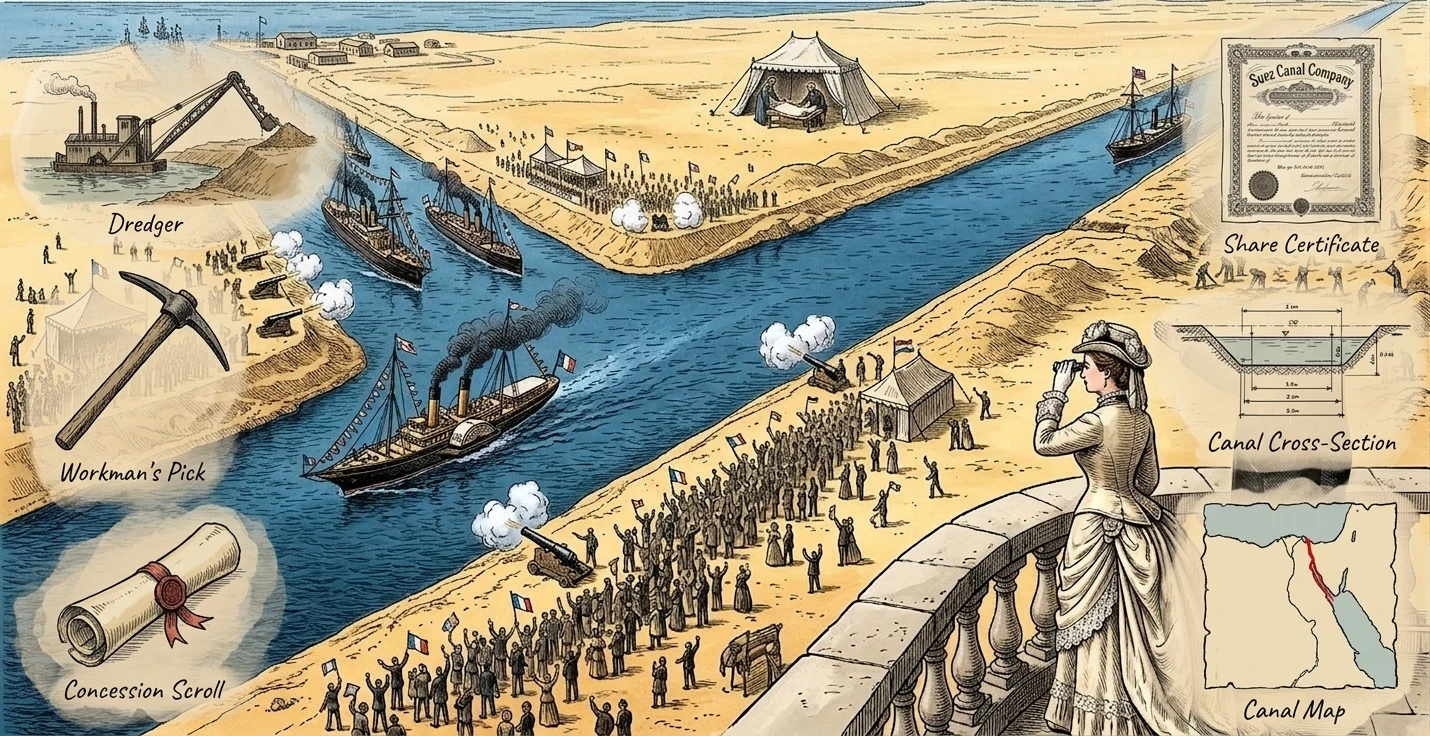
November 17, 1869. A flotilla of ships, led by the Imperial yacht Aigle carrying Empress Eugénie of France, passed triumphantly through the newly opened Suez…
November 17, 1869. A flotilla of ships, led by the Imperial yacht Aigle carrying Empress Eugénie of France, passed triumphantly through the newly opened Suez Canal. Cannons roared and crowds cheered from the banks, celebrating a project that had seemed impossible just a decade earlier. But how did this ambitious endeavor, championed by Ferdinand de Lesseps, transform global trade and geopolitics?

November 17, 1869. A flotilla of ships, led by the Imperial yacht Aigle carrying Empress Eugénie of France, passed triumphantly through the newly opened Suez Canal. Cannons roared and crowds cheered from the banks, celebrating a project that had seemed impossible just a decade earlier. But how did this ambitious endeavor, championed by Ferdinand de Lesseps, transform global trade and geopolitics?

Page 2
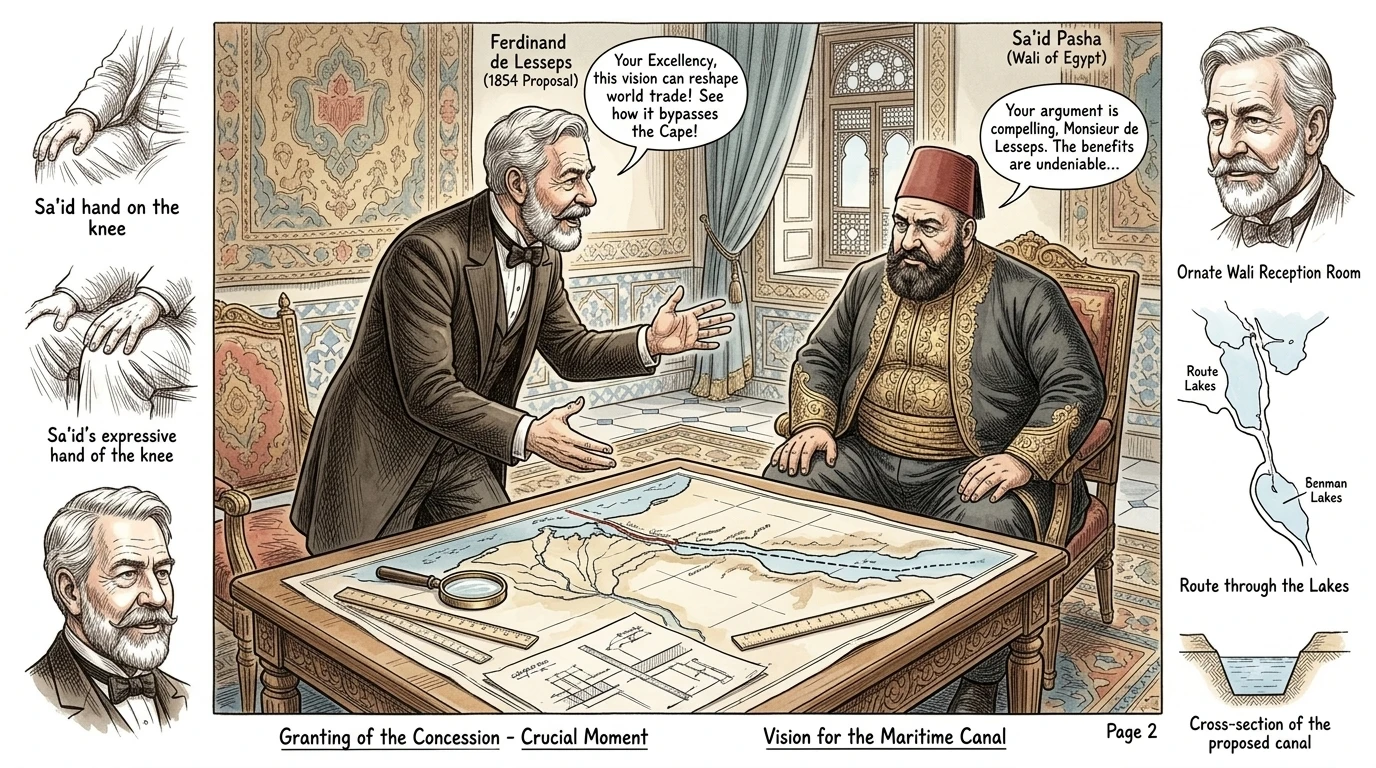
The story begins long before the first shovel of sand was turned. Ferdinand de Lesseps, a French diplomat, envisioned a canal connecting the Red Sea and the…
The story begins long before the first shovel of sand was turned. Ferdinand de Lesseps, a French diplomat, envisioned a canal connecting the Red Sea and the Mediterranean, a dream dating back to ancient times. He secured the support of Sa'id Pasha, the Wāli of Egypt and Sudan, who granted him the concession to build and operate the canal. The project faced skepticism and resistance from many, including the British, who saw it as a threat to their trade routes.

The story begins long before the first shovel of sand was turned. Ferdinand de Lesseps, a French diplomat, envisioned a canal connecting the Red Sea and the Mediterranean, a dream dating back to ancient times. He secured the support of Sa'id Pasha, the Wāli of Egypt and Sudan, who granted him the concession to build and operate the canal. The project faced skepticism and resistance from many, including the British, who saw it as a threat to their trade routes.

Page 3
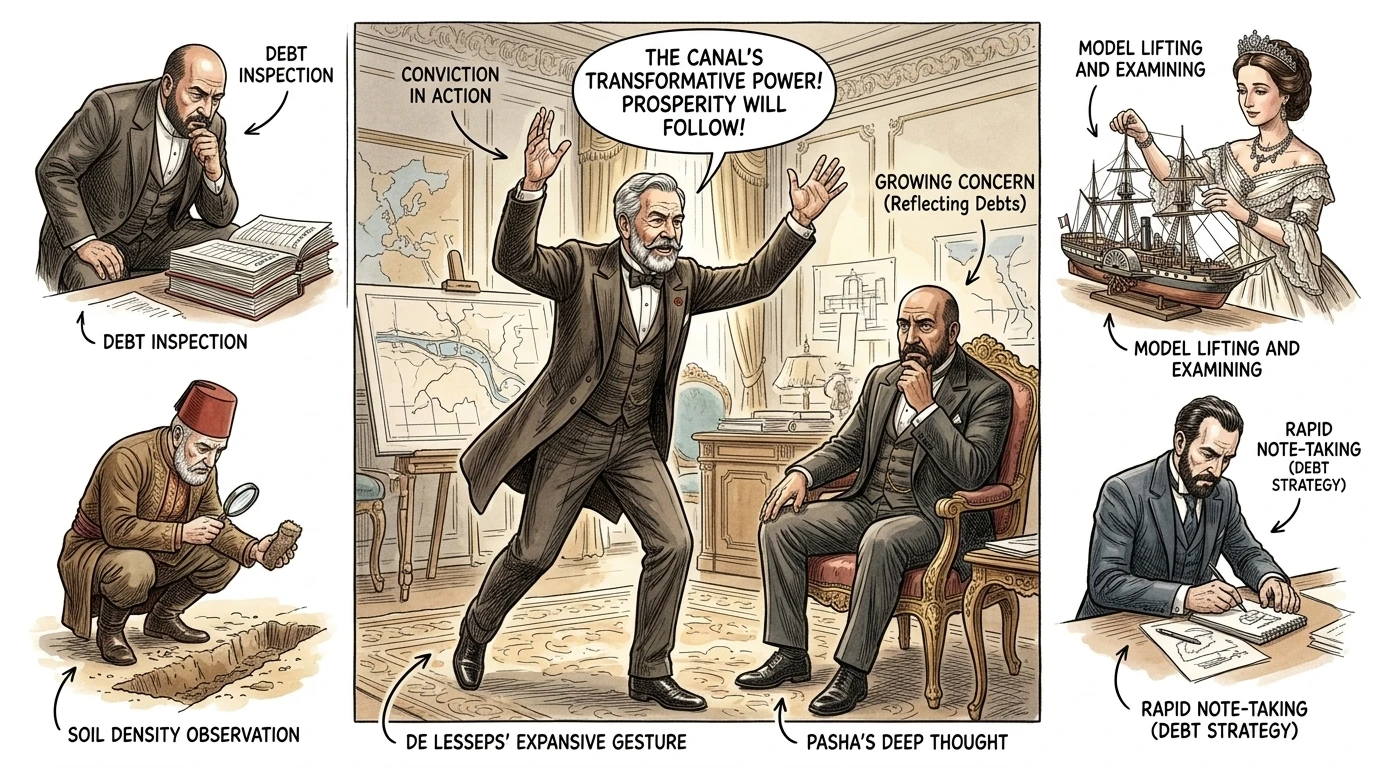
"The canal will change everything!" de Lesseps exclaimed to Isma'il Pasha, Sa'id's successor, in 1863. "It will bring prosperity to Egypt and connect East and…
"The canal will change everything!" de Lesseps exclaimed to Isma'il Pasha, Sa'id's successor, in 1863. "It will bring prosperity to Egypt and connect East and West like never before!" Isma'il, though initially supportive, soon faced mounting debts due to the project's escalating costs. He desperately sought funding from European powers, a decision that would have lasting consequences for Egyptian sovereignty.

"The canal will change everything!" de Lesseps exclaimed to Isma'il Pasha, Sa'id's successor, in 1863. "It will bring prosperity to Egypt and connect East and West like never before!" Isma'il, though initially supportive, soon faced mounting debts due to the project's escalating costs. He desperately sought funding from European powers, a decision that would have lasting consequences for Egyptian sovereignty.

Page 4

Construction was arduous and dangerous. Thousands of Egyptian laborers, conscripted under harsh conditions, toiled under the scorching sun.
Construction was arduous and dangerous. Thousands of Egyptian laborers, conscripted under harsh conditions, toiled under the scorching sun. Alois Negrelli, the Austrian engineer initially responsible for the project's technical planning, faced immense challenges in managing the workforce and overcoming engineering obstacles. Disease and exhaustion took a heavy toll, fueling resentment and discontent.

Construction was arduous and dangerous. Thousands of Egyptian laborers, conscripted under harsh conditions, toiled under the scorching sun. Alois Negrelli, the Austrian engineer initially responsible for the project's technical planning, faced immense challenges in managing the workforce and overcoming engineering obstacles. Disease and exhaustion took a heavy toll, fueling resentment and discontent.

Page 5
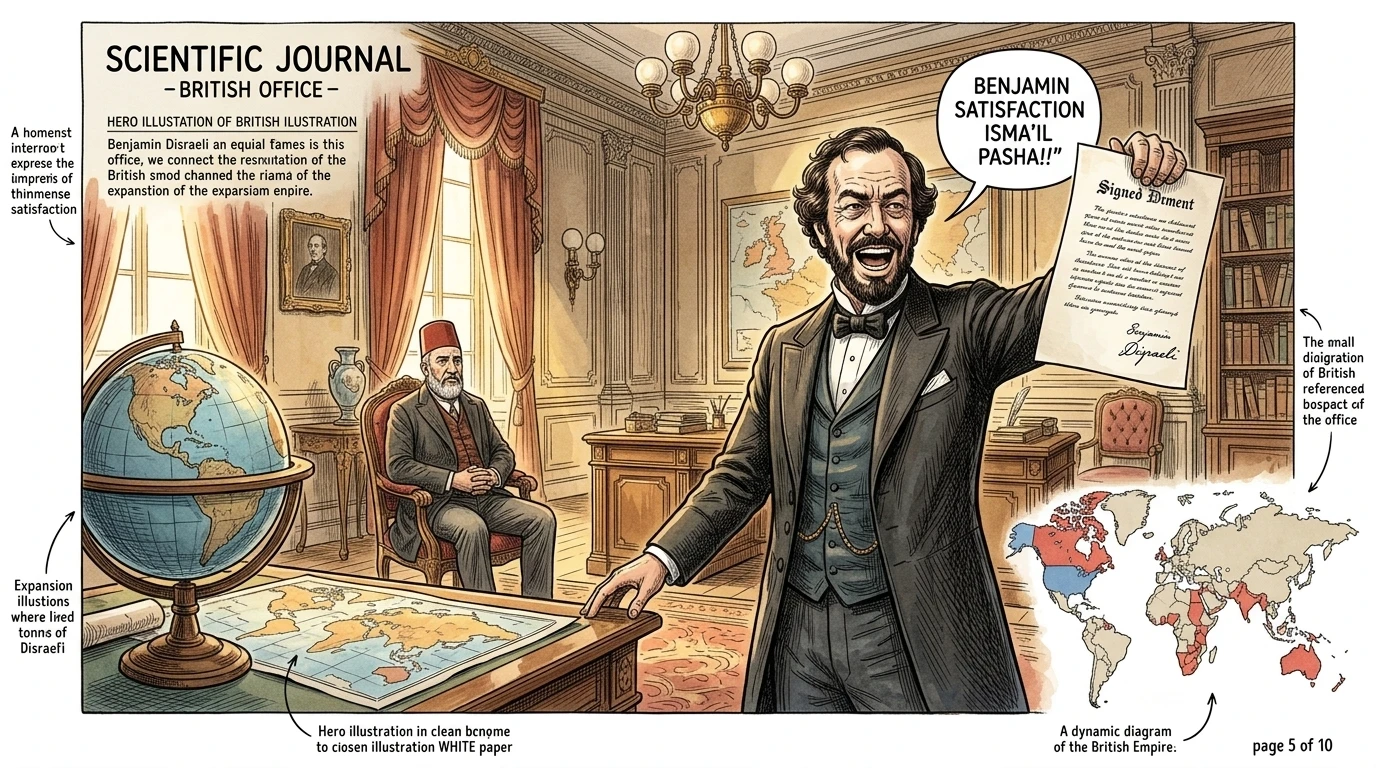
Benjamin Disraeli, then British Prime Minister, recognized the canal's strategic importance. In 1875, he seized the opportunity to purchase a significant share…
Benjamin Disraeli, then British Prime Minister, recognized the canal's strategic importance. In 1875, he seized the opportunity to purchase a significant share in the Suez Canal Company from the financially strapped Isma'il Pasha. "This," Disraeli declared, upon securing the deal, "is a triumph for Britain! It secures our access to India and strengthens our empire!"

Benjamin Disraeli, then British Prime Minister, recognized the canal's strategic importance. In 1875, he seized the opportunity to purchase a significant share in the Suez Canal Company from the financially strapped Isma'il Pasha. "This," Disraeli declared, upon securing the deal, "is a triumph for Britain! It secures our access to India and strengthens our empire!"

Page 6

The opening ceremony was a spectacle of international diplomacy and engineering achievement. Empress Eugénie, representing France's influence, was the guest of…
The opening ceremony was a spectacle of international diplomacy and engineering achievement. Empress Eugénie, representing France's influence, was the guest of honor. Leading the flotilla into the Red Sea, the cheers and cannon fire echoed across the desert. Among the dignitaries present was Nubar Pasha, the Egyptian Prime Minister, who witnessed both the glory and the impending loss of control over the canal.

The opening ceremony was a spectacle of international diplomacy and engineering achievement. Empress Eugénie, representing France's influence, was the guest of honor. Leading the flotilla into the Red Sea, the cheers and cannon fire echoed across the desert. Among the dignitaries present was Nubar Pasha, the Egyptian Prime Minister, who witnessed both the glory and the impending loss of control over the canal.

Page 7
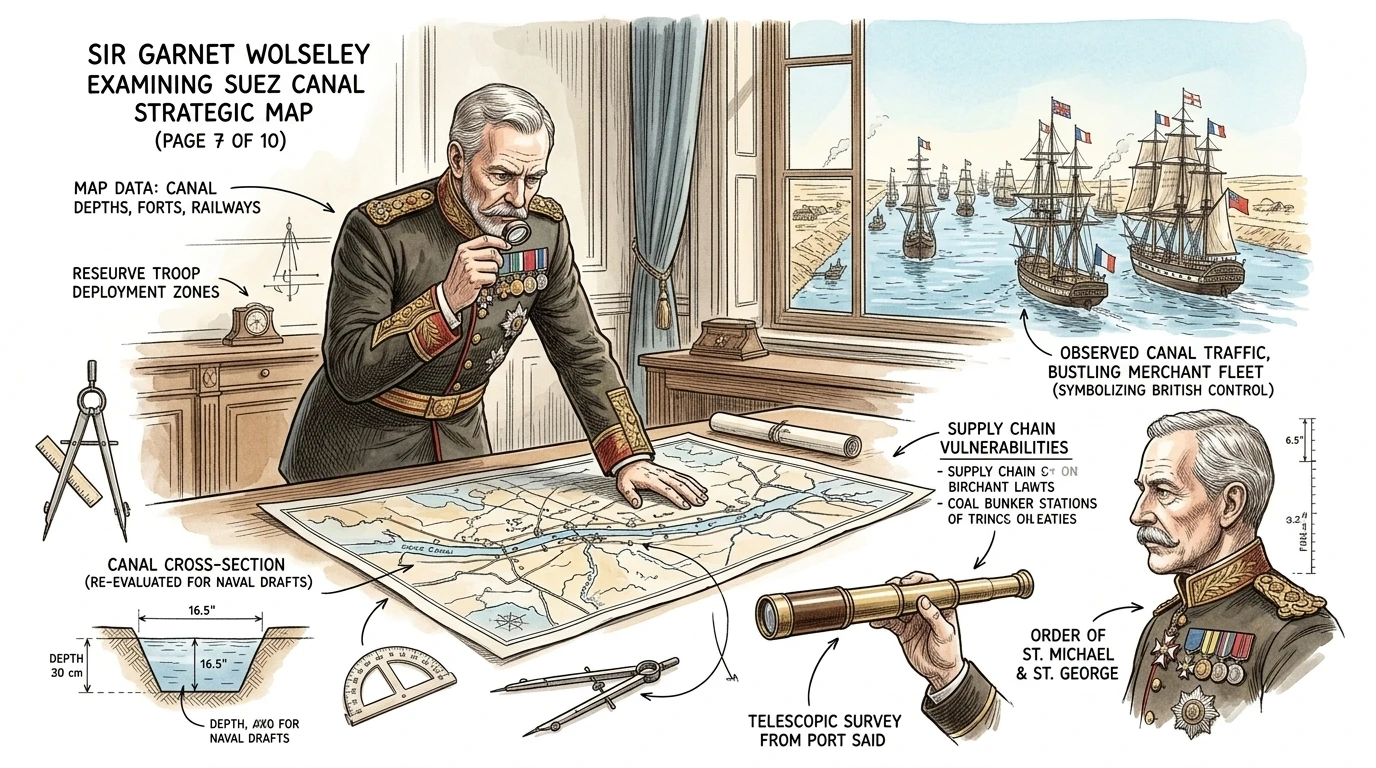
The cheers faded as the canal became a vital artery of global trade, controlled primarily by European powers. Sir Garnet Wolseley, a prominent British general…
The cheers faded as the canal became a vital artery of global trade, controlled primarily by European powers. Sir Garnet Wolseley, a prominent British general, understood the canal's strategic importance, seeing it as critical for maintaining British dominance in the region. The promise of prosperity for Egypt remained largely unfulfilled, replaced by growing foreign intervention.

The cheers faded as the canal became a vital artery of global trade, controlled primarily by European powers. Sir Garnet Wolseley, a prominent British general, understood the canal's strategic importance, seeing it as critical for maintaining British dominance in the region. The promise of prosperity for Egypt remained largely unfulfilled, replaced by growing foreign intervention.

Page 8
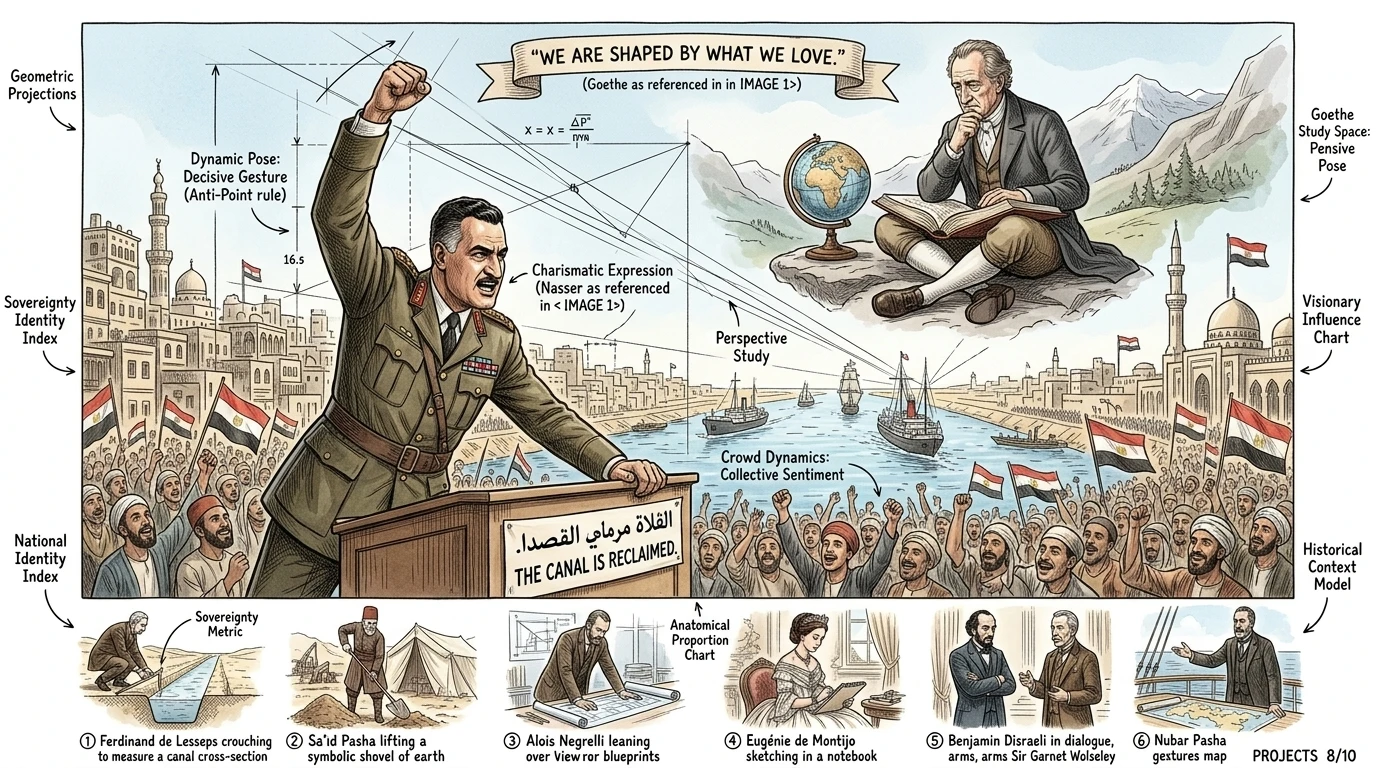
"We are shaped and fashioned by what we love," said Johann Wolfgang von Goethe, and for de Lesseps, it was the Suez Canal.
"We are shaped and fashioned by what we love," said Johann Wolfgang von Goethe, and for de Lesseps, it was the Suez Canal. But for the Egyptians, the canal became a symbol of both progress and foreign domination. Years later, Gamal Abdel Nasser would reclaim the canal for Egypt, a decisive act that triggered the Suez Crisis in 1956, a testament to the canal's enduring strategic significance.

"We are shaped and fashioned by what we love," said Johann Wolfgang von Goethe, and for de Lesseps, it was the Suez Canal. But for the Egyptians, the canal became a symbol of both progress and foreign domination. Years later, Gamal Abdel Nasser would reclaim the canal for Egypt, a decisive act that triggered the Suez Crisis in 1956, a testament to the canal's enduring strategic significance.

Page 9

The Suez Canal, despite the turmoil surrounding its history, remains a vital waterway, facilitating global trade and connecting continents.
The Suez Canal, despite the turmoil surrounding its history, remains a vital waterway, facilitating global trade and connecting continents. Its construction was a testament to human ingenuity and ambition, forever altering trade routes and geopolitical power dynamics. Yet, the story serves as a reminder of the complex interplay between progress, exploitation, and national sovereignty.

The Suez Canal, despite the turmoil surrounding its history, remains a vital waterway, facilitating global trade and connecting continents. Its construction was a testament to human ingenuity and ambition, forever altering trade routes and geopolitical power dynamics. Yet, the story serves as a reminder of the complex interplay between progress, exploitation, and national sovereignty.

Page 10

The legacy of the Suez Canal endures, a testament to human ambition and the enduring power of geography. It serves as a crucial link in the global trade…
The legacy of the Suez Canal endures, a testament to human ambition and the enduring power of geography. It serves as a crucial link in the global trade network, facilitating the movement of goods and resources across continents. But its history also reminds us that progress often comes at a cost, raising fundamental questions about power, exploitation, and the pursuit of national interests.

The legacy of the Suez Canal endures, a testament to human ambition and the enduring power of geography. It serves as a crucial link in the global trade network, facilitating the movement of goods and resources across continents. But its history also reminds us that progress often comes at a cost, raising fundamental questions about power, exploitation, and the pursuit of national interests.

About this story

  • Historical figures: Eugénie de Montijo, Ferdinand de Lesseps, Sa'id Pasha
  • Location: Mediterranean
  • Period: Modern
  • Audience: general readers

Questions and answers

Questions and answers about The Opening of the Suez Canal (1869, Mediterranean)

Read Wonder History on your phone

Wonder History is available on Android. Get Wonder History on Google Play.

More Wonder History stories

All Wonder History stories · Open the library