The Lisbon Earthquake (1755, Portugal)
The Lisbon Earthquake (1755, Portugal) — an illustrated history story, featuring King José I, Sebastião José de Carvalho e Melo, Queen Mariana Vitória, set in Portugal. 10 illustrated pages, free to read on Wonder History.
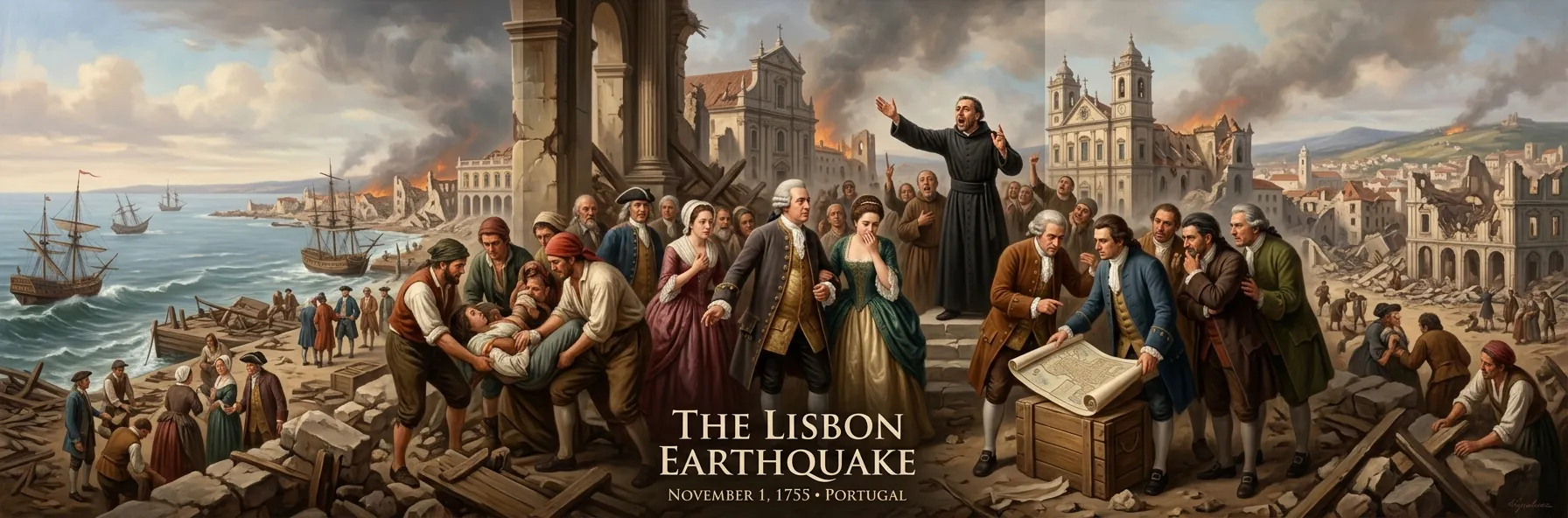
Page 1
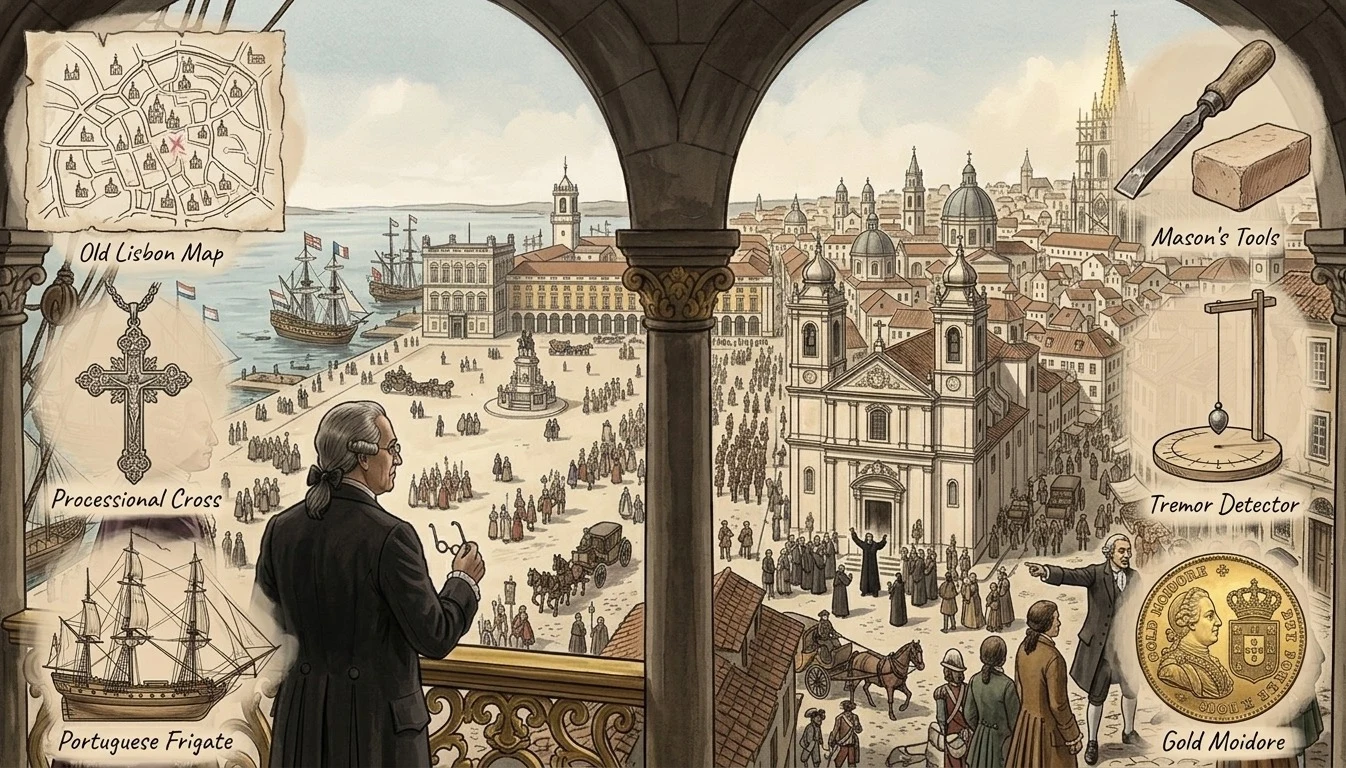
November 1, 1755. Lisbon, a city teeming with life, was celebrating All Saints' Day. Suddenly, the earth began to shake violently, buildings crumbled, and the Tagus River surged inland. King José I of Portugal barely escaped the palace, but the city around him was collapsing. How could such a devastating event alter the course of a nation?
Page 2
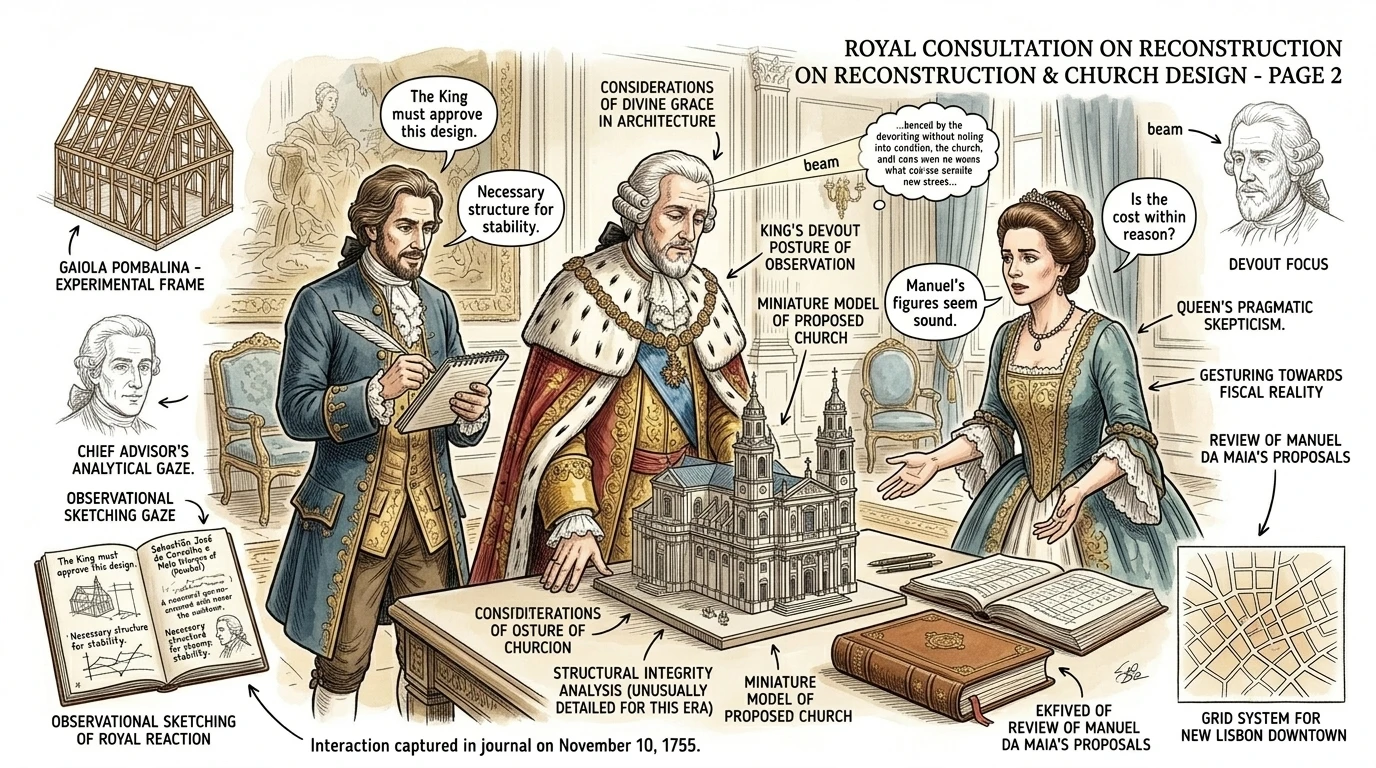
Decades before the quake, King João V, José's father, had transformed Lisbon into a grand European capital. Construction of opulent churches and palaces consumed vast sums, even as whispers of discontent grew among the populace. King José I inherited this complex legacy upon his ascension in 1750. Sebastião José de Carvalho e Melo, later the Marquis of Pombal, observed the King's devout nature alongside Queen Mariana Vitória's pragmatic concerns.
Page 3
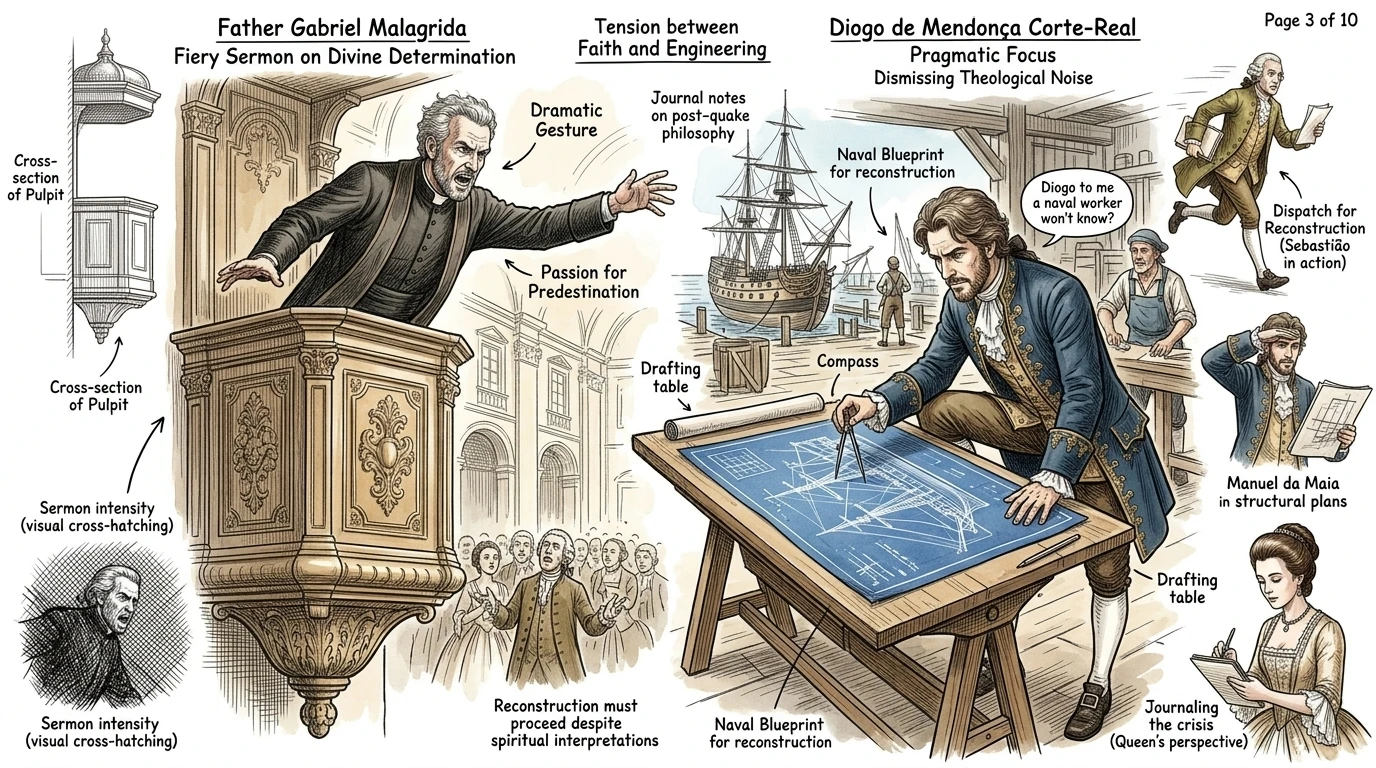
Father Gabriel Malagrida, a Jesuit priest known for his fiery sermons, warned of divine retribution. "Lisbon's sins have angered God," he thundered from the pulpit. Diogo de Mendonça Corte-Real, the Secretary responsible for naval affairs, dismissed such pronouncements. He instead focused on modernizing the Portuguese fleet for overseas trade.
Page 4
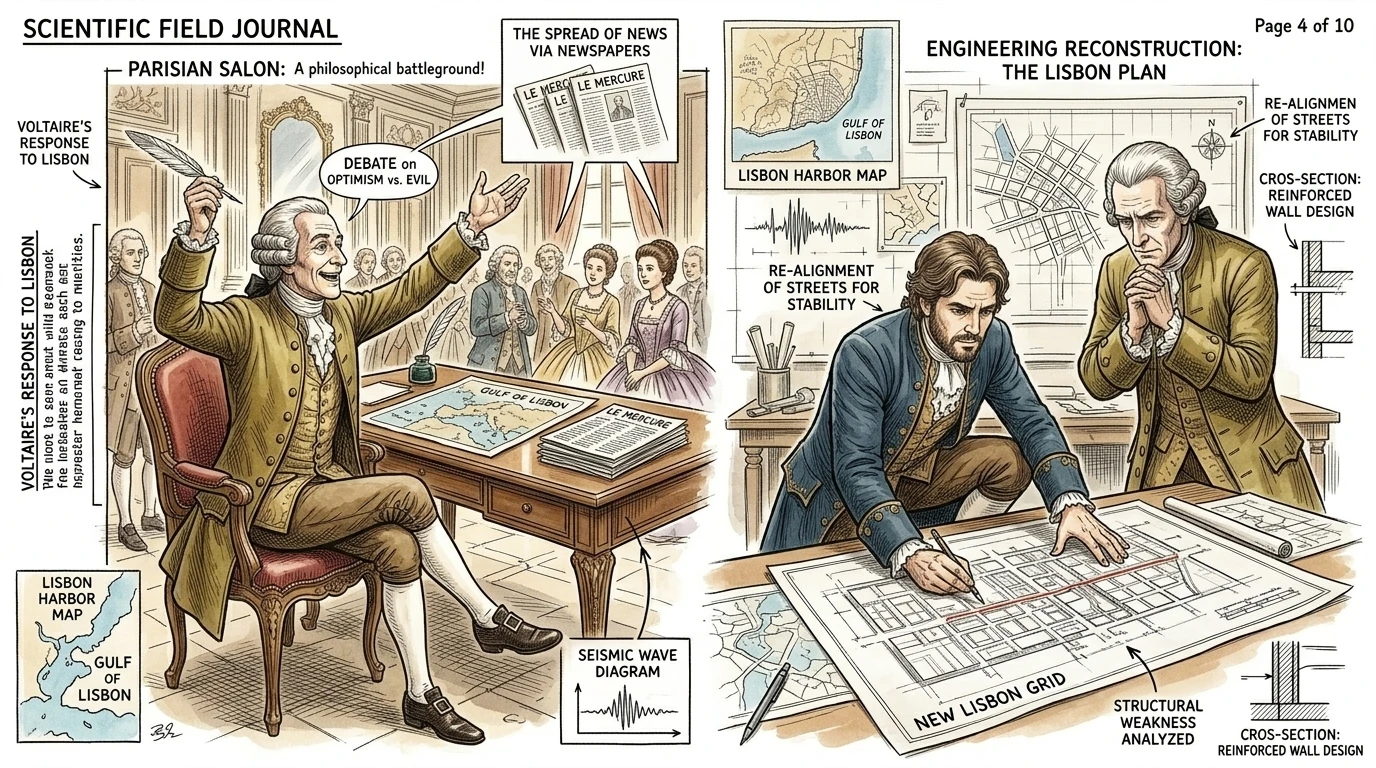
News of Lisbon's lavish lifestyle reached Voltaire in France, prompting philosophical debates across Europe. Meanwhile, Manuel da Maia, the Kingdom's chief engineer, studied the city's infrastructure. He had concerns about the stability of its buildings, especially after minor tremors in previous years. He voiced his concerns to Sebastião José de Carvalho e Melo.
Page 5

Sebastião José, recognizing the potential danger, attempted to implement building codes. But his efforts were met with resistance from wealthy merchants and nobles. They prioritized aesthetics over safety. He argued, "We must prepare for the future, even if others dismiss the possibility of disaster." They thought he was a fool, but he was very wise.
Page 6
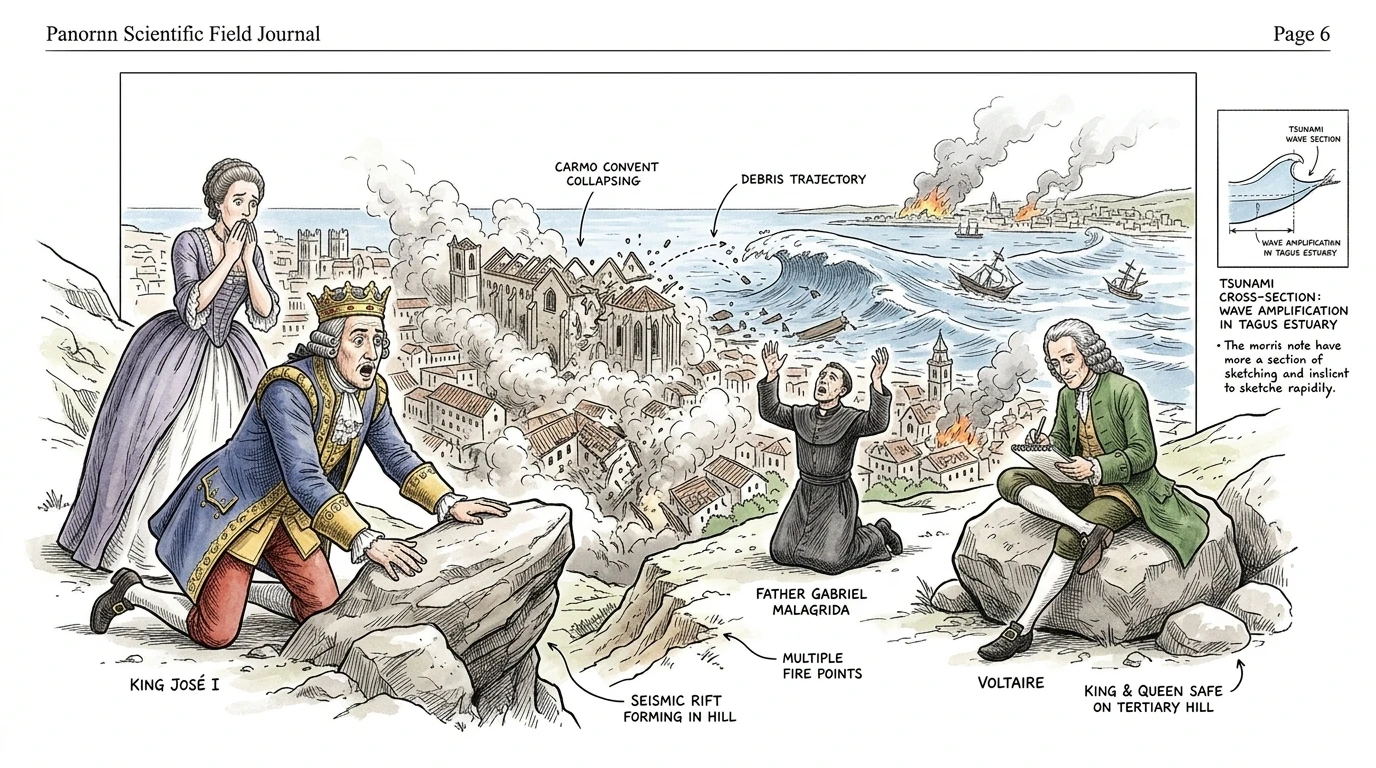
The earthquake struck on All Saints' Day, a time when Lisbon's churches were filled with worshippers. The initial tremor was followed by a tsunami that surged into the city, sweeping away buildings and people. King José I, Queen Mariana Vitória, and their court watched in horror from the hills overlooking the devastation. Lisbon, once a symbol of Portugal's power, was now in ruins.
Page 7
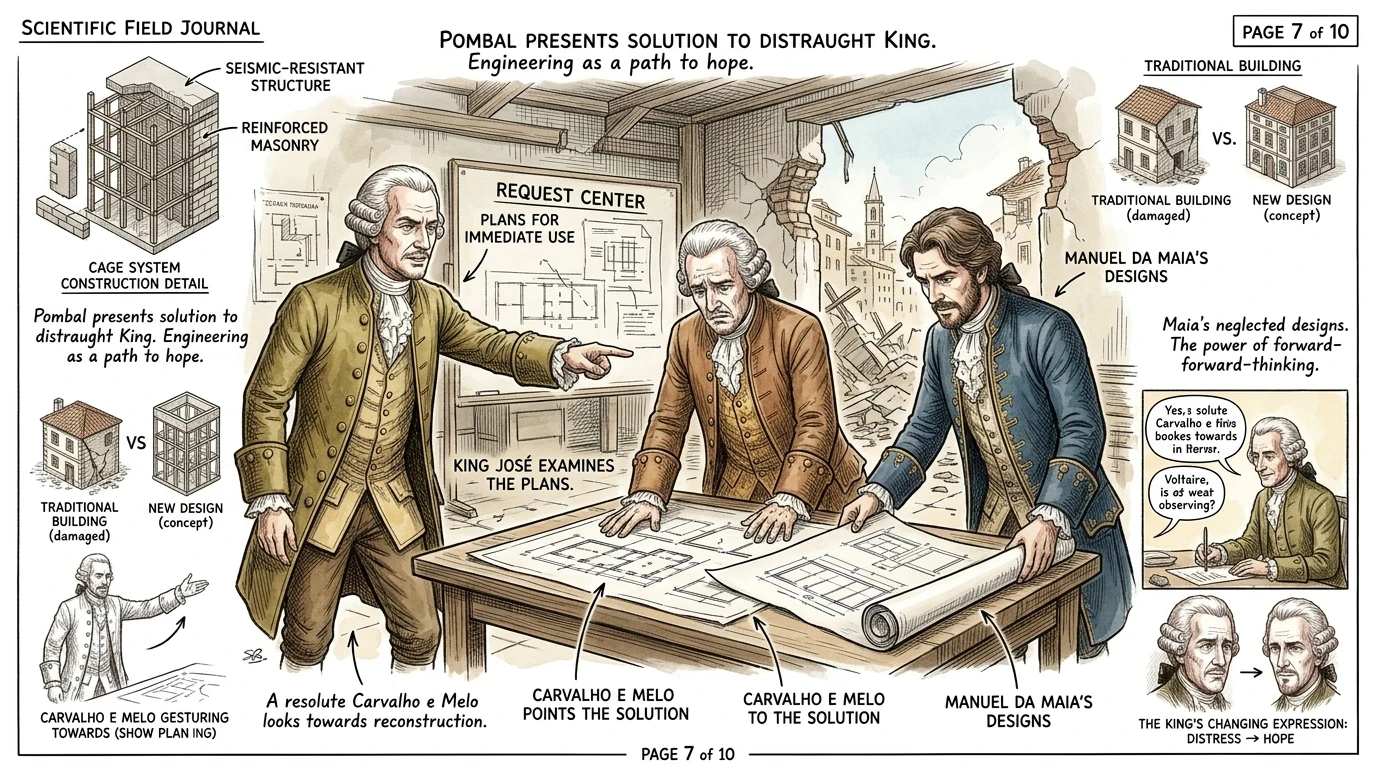
"We have to rebuild," Sebastião José declared to the distraught King. "As Voltaire said, 'No problem can withstand the assault of sustained thinking'." He insisted on taking charge of the reconstruction effort, implementing strict measures. Manuel da Maia's engineering plans were dusted off and put into immediate use.
Page 8
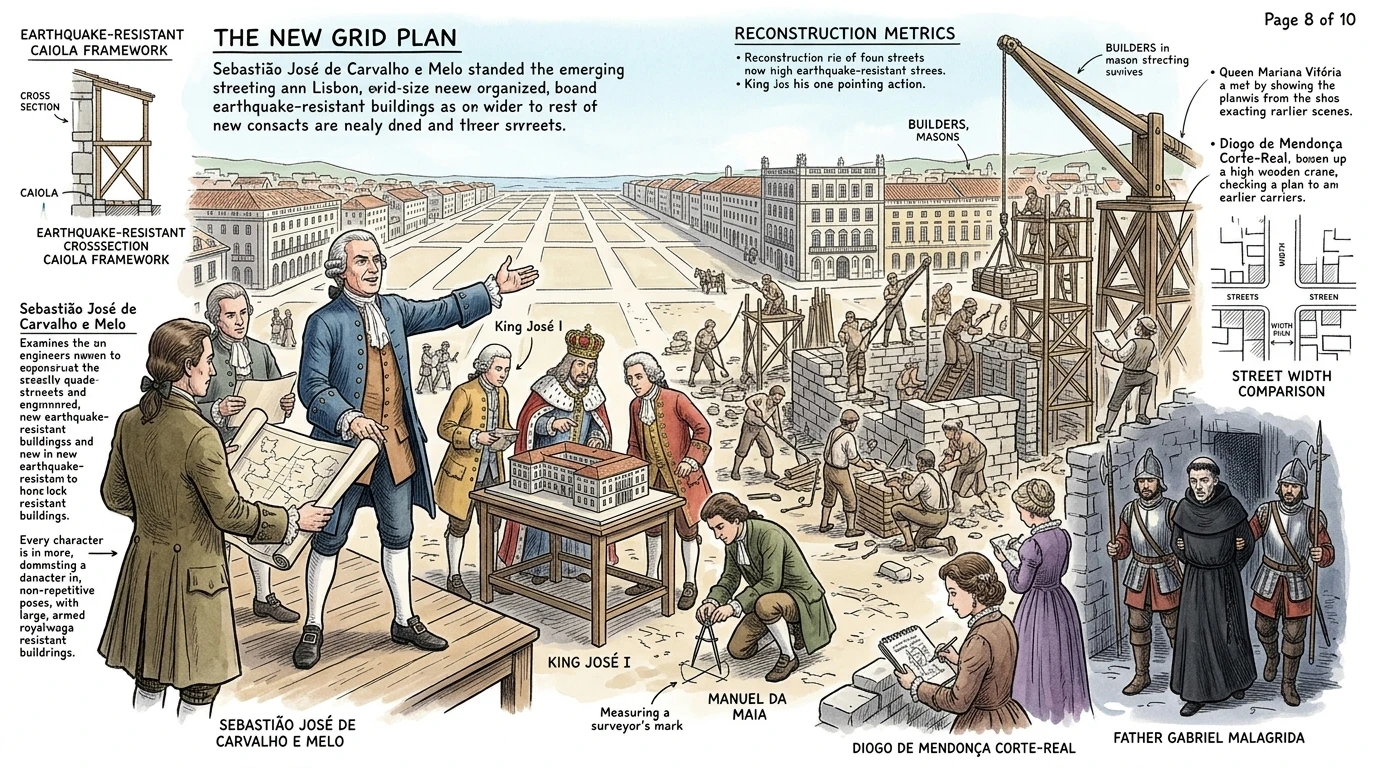
Sebastião José implemented a grid system for the new city, wide streets and earthquake-resistant buildings. He ordered the destruction of any structure not adhering to the new codes. Father Malagrida was arrested and later condemned for spreading dissent and blaming the earthquake on divine wrath. The new Lisbon was rising from the ashes, modern and resilient.
Page 9
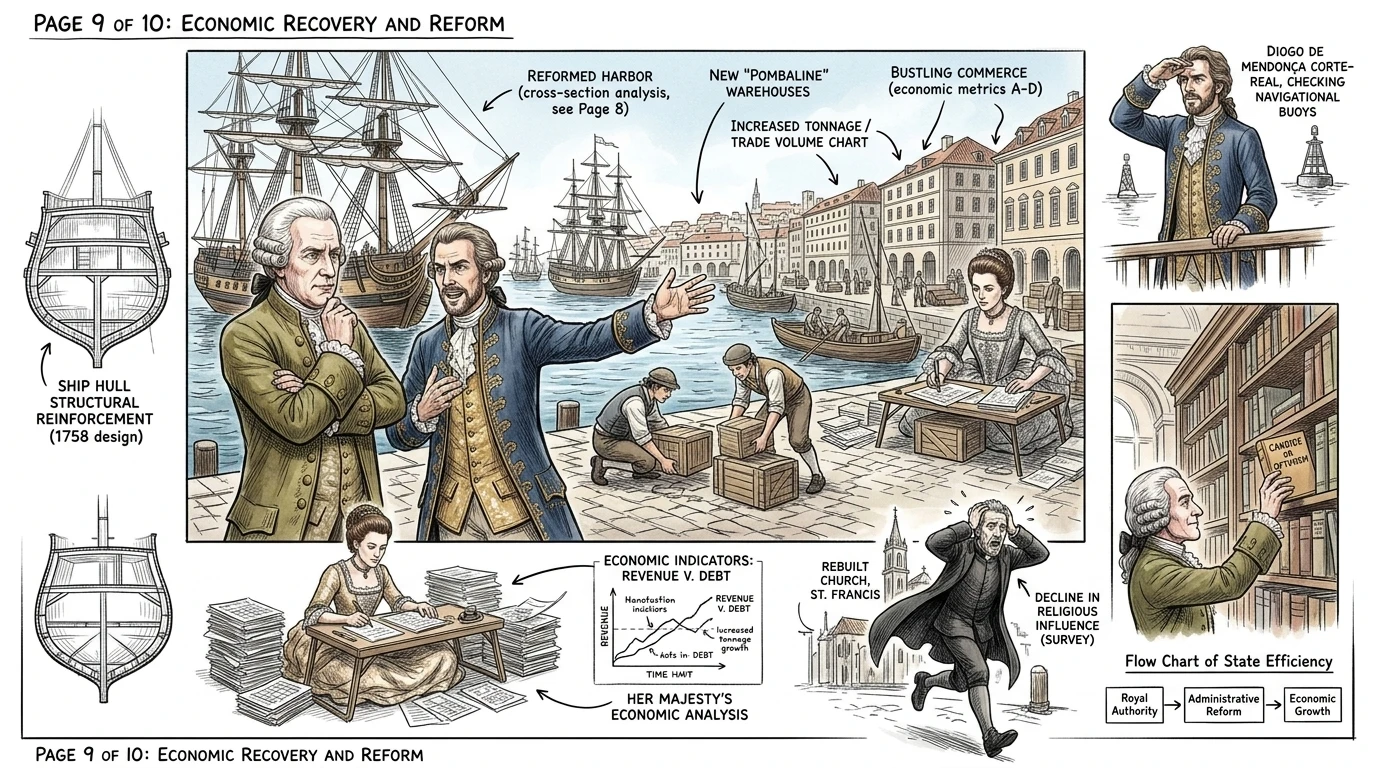
King José I, guided by Sebastião José, shifted the Portuguese focus toward trade and industry. He implemented reforms that strengthened the economy and reduced the power of the nobility. Queen Mariana Vitória, advised on financial matters, using practical judgment. A new era dawned for Portugal, forged in the crucible of disaster.
Page 10
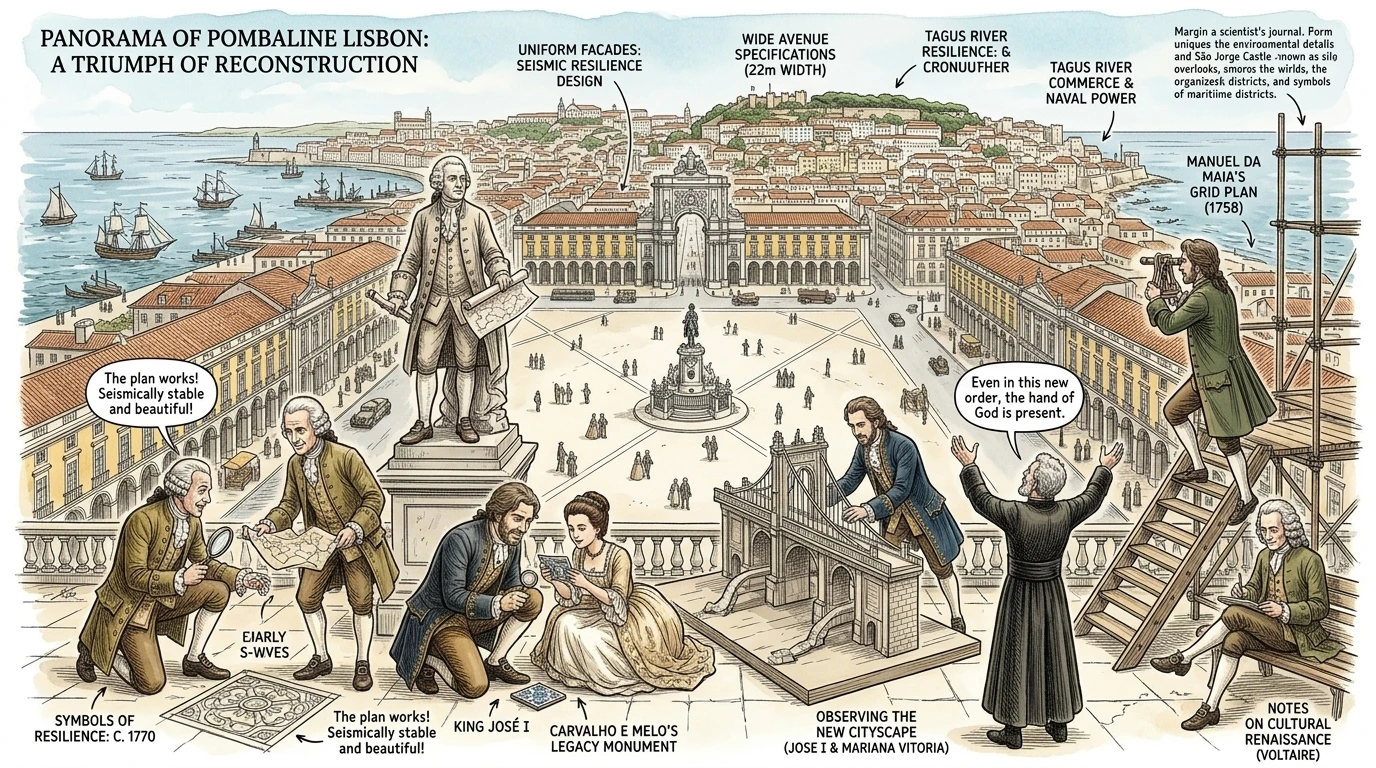
Lisbon became a symbol of resilience and urban planning. The Marquis of Pombal's reforms laid the foundation for modern Portugal. The earthquake of 1755 forever altered the course of Portuguese history, proving that even the most devastating events can pave the way for progress. A testament to human resilience when faced with disaster.
About this story
- Historical figures: King José I, Sebastião José de Carvalho e Melo, Queen Mariana Vitória
- Location: Portugal
- Period: Early Modern
- Audience: kids (ages 6–12)
Questions and answers
Questions and answers about The Lisbon Earthquake (1755, Portugal)
Read Wonder History on your phone
Wonder History is available on Android and iPhone and iPad. Get Wonder History on Google Play · Get Wonder History on the App Store.