The Haitian Declaration of Independence (1804, Haiti)
The Haitian Declaration of Independence (1804, Haiti) — an illustrated history story, featuring Jean-Jacques Dessalines, Henri Christophe, Alexandre Pétion, set in Haiti. 10 illustrated pages, free to read on Wonder History.
Page 1
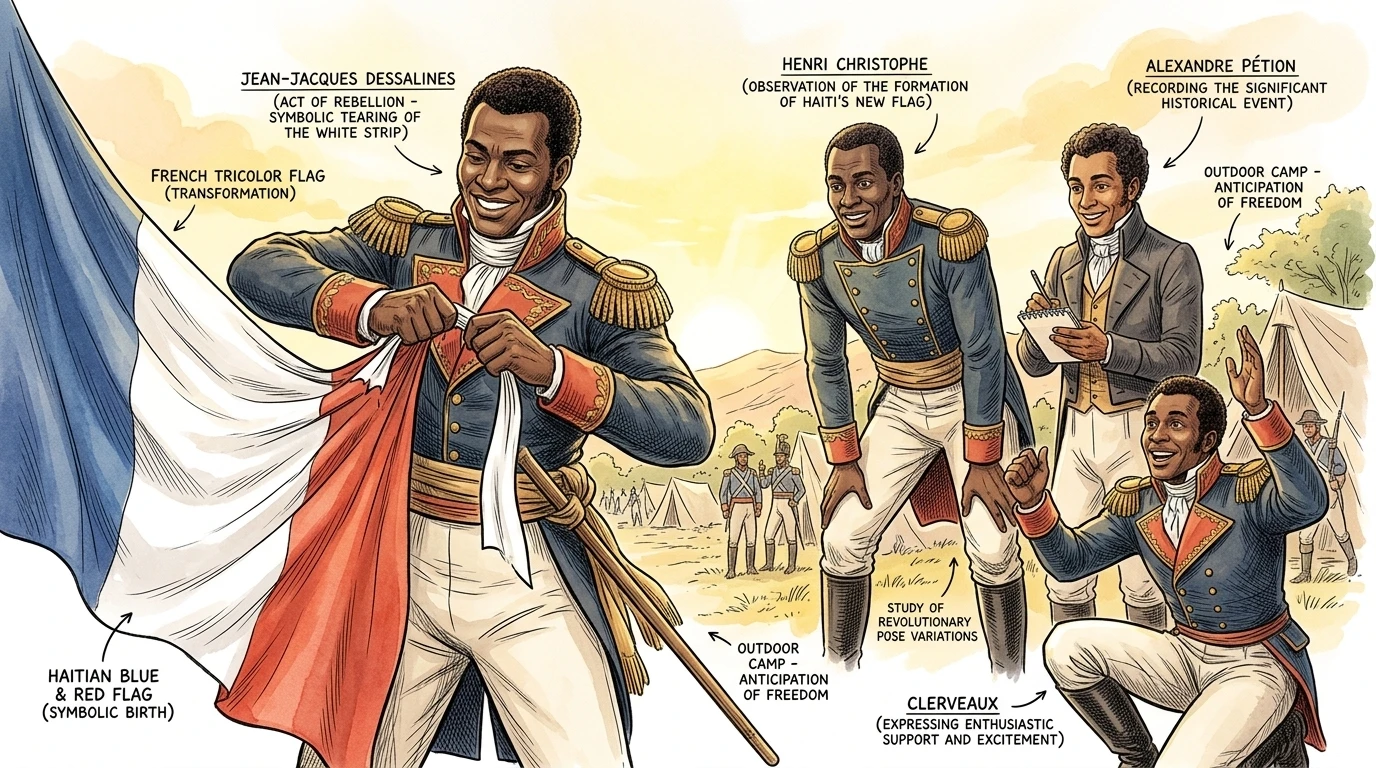
The air crackled with anticipation as Jean-Jacques Dessalines, commander of the Haitian army, unsheathed his sword. A hush fell over the assembled generals. Christophe, Pétion, and Clerveaux watched intently as Dessalines, with a flourish, tore the white from the French flag, leaving only the blue and red. "We have too long debased our manhood!" he roared, echoing the words of Frederick Douglass. "Let us show to the world that we are indeed men!"
Page 2
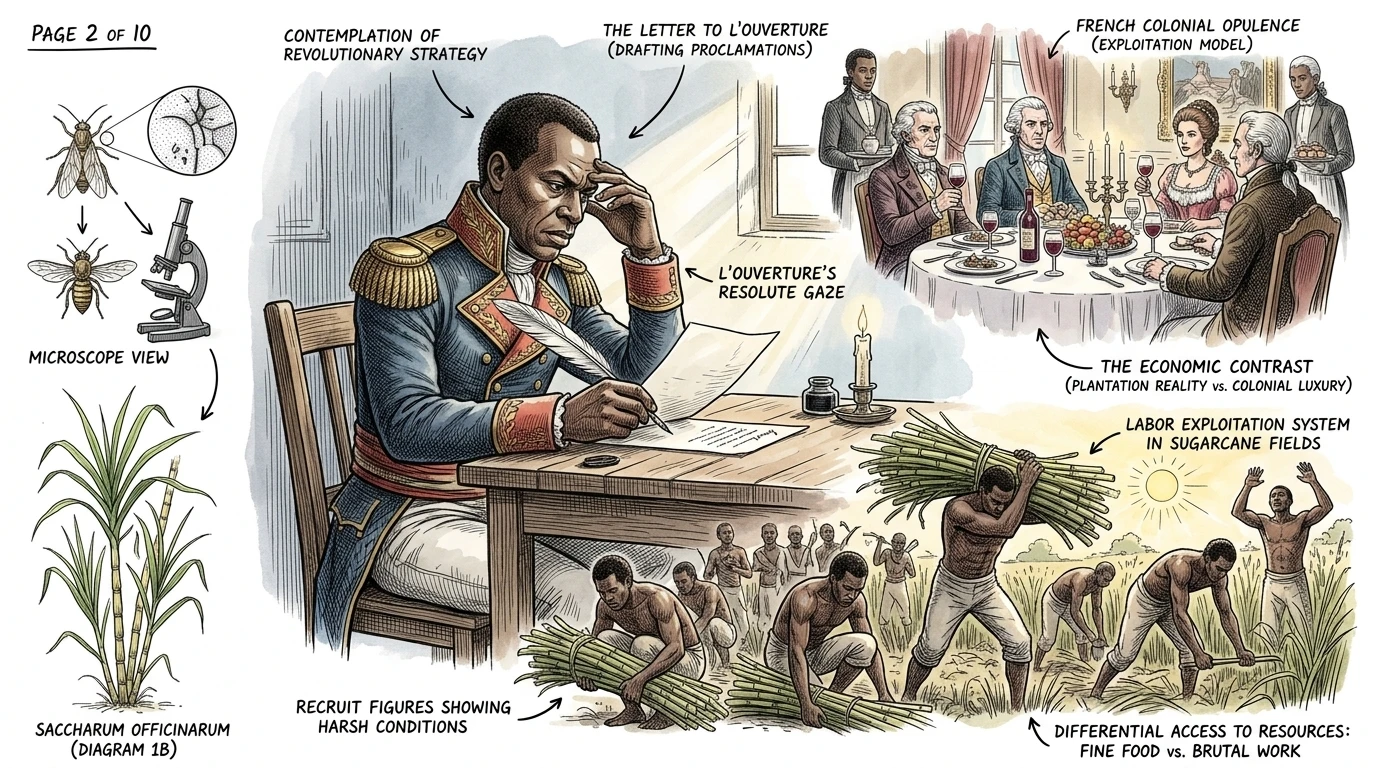
The seeds of revolution were sown long before this moment, explained Toussaint Louverture, the former leader of the revolt, in his letters from exile. The lavish lifestyles of French planters in Saint-Domingue stood in stark contrast to the brutal conditions endured by enslaved Africans. "The colony's wealth flowed from the exploitation of our people," he wrote. "It was a system built on injustice, and such systems never last."
Page 3
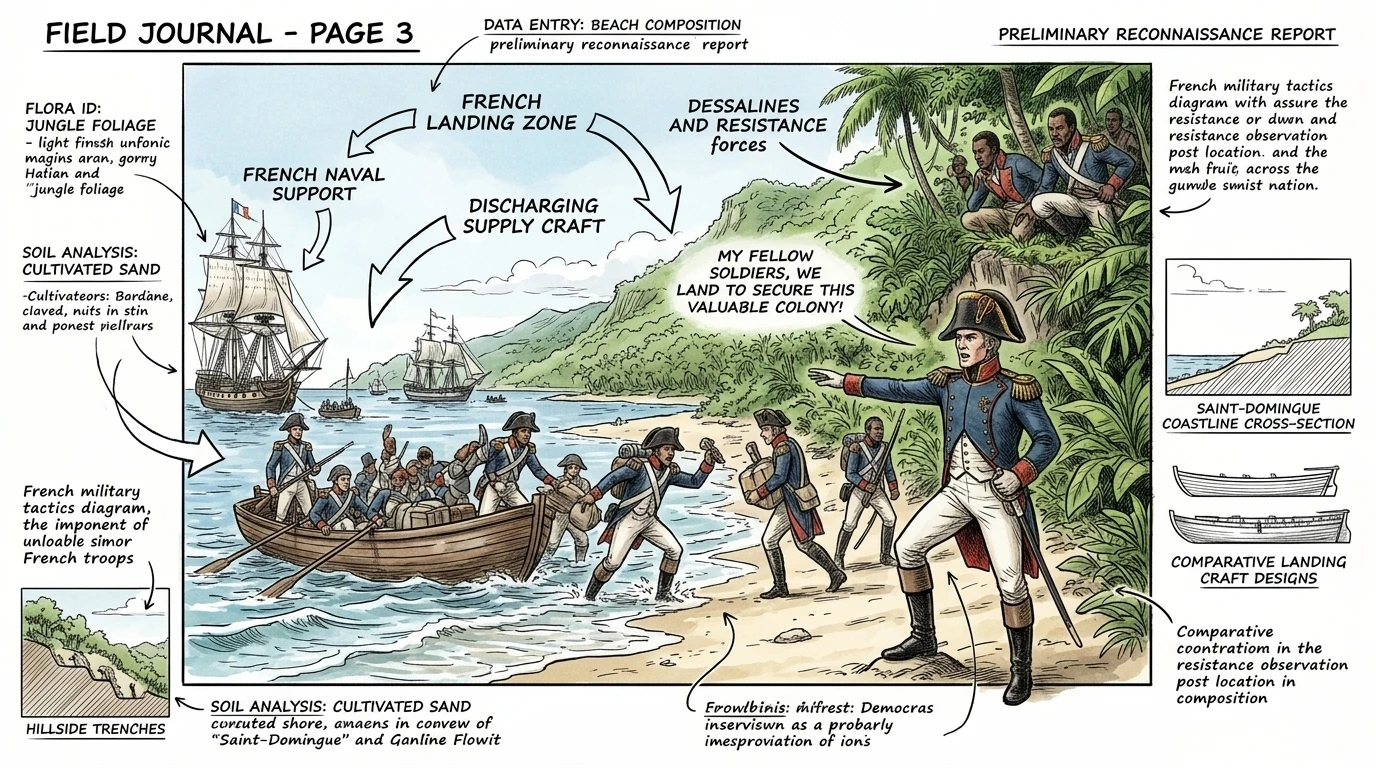
"Remember the Code Noir!" cried Charles Leclerc, commander of the French expeditionary force, to his troops as they landed on the beaches of Saint-Domingue. The laws were meant to regulate slavery, but instead codified its barbarity. "We will restore order and return this colony to its rightful owners!" he declared, his words echoing across the sands. But Dessalines's forces were waiting for them, hidden in the hills.
Page 4
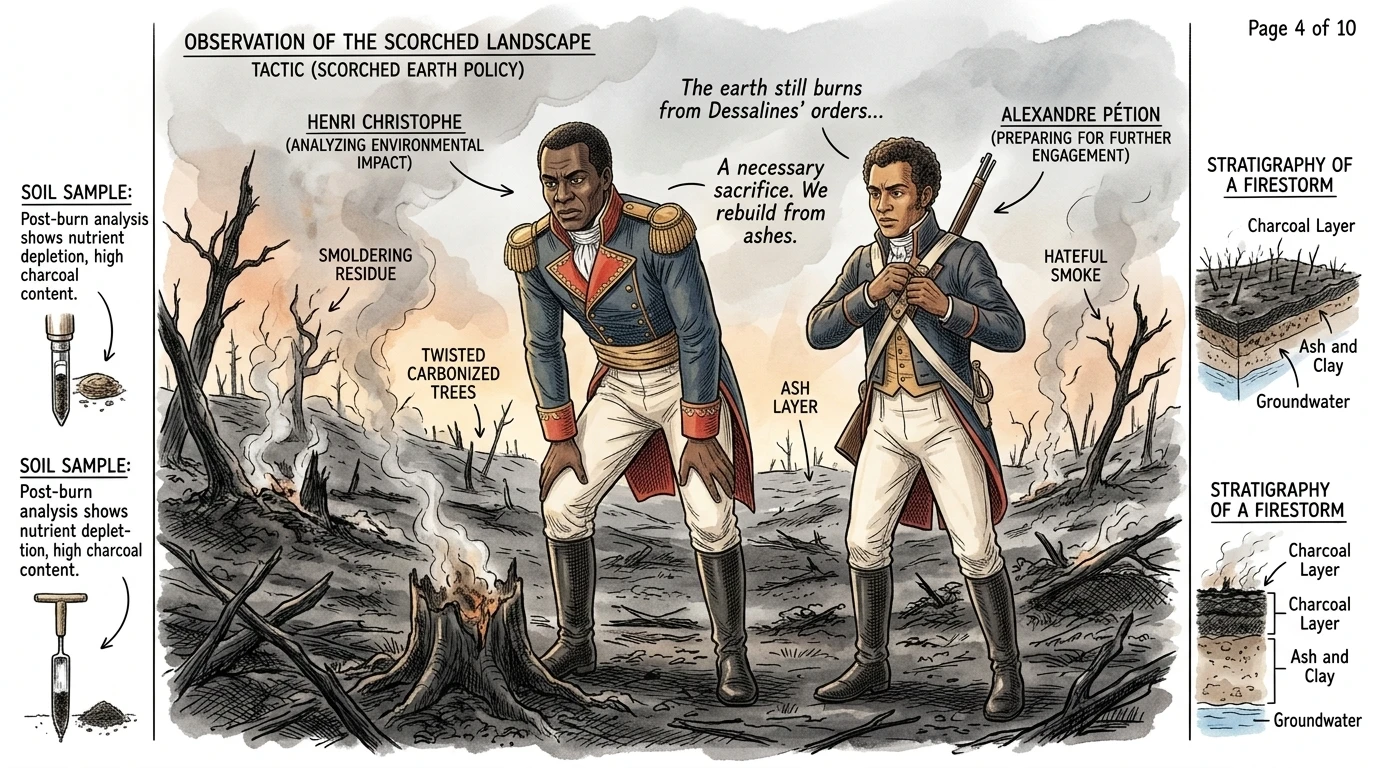
"We will not be deceived again," Henri Christophe told Pétion, as they surveyed the scorched earth tactics Dessalines had ordered. "Leclerc seeks only to reimpose slavery. We must fight with every fiber of our being!" Pétion nodded grimly, adjusting the strap of his rifle. "Dessalines is right. Freedom or death!" they declared.
Page 5
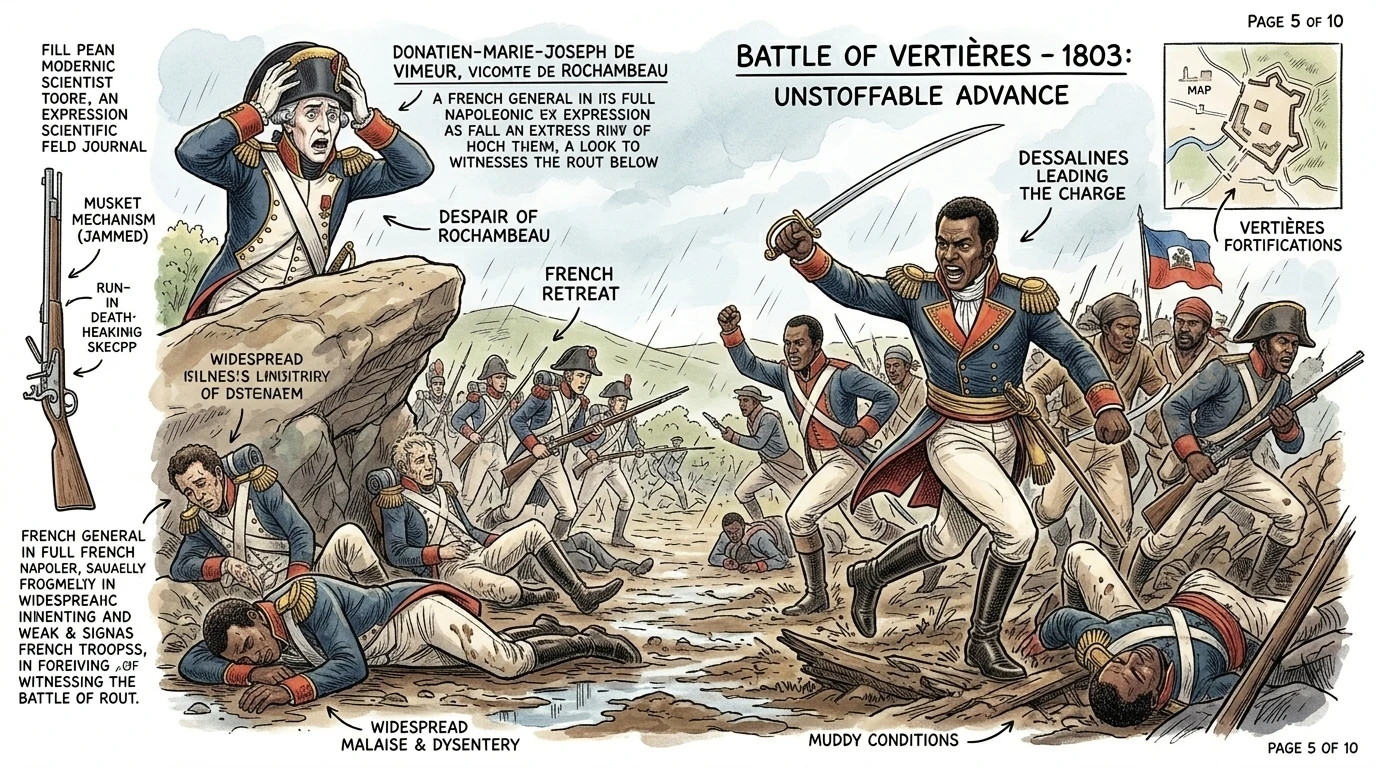
The Battle of Vertières proved to be the turning point. General Rochambeau, Leclerc's successor, watched in horror as his troops were routed by Dessalines's forces. "This island will be our grave!" he lamented. The French, weakened by yellow fever and relentless attacks, were finally defeated. The fate of Saint-Domingue was sealed.
Page 6
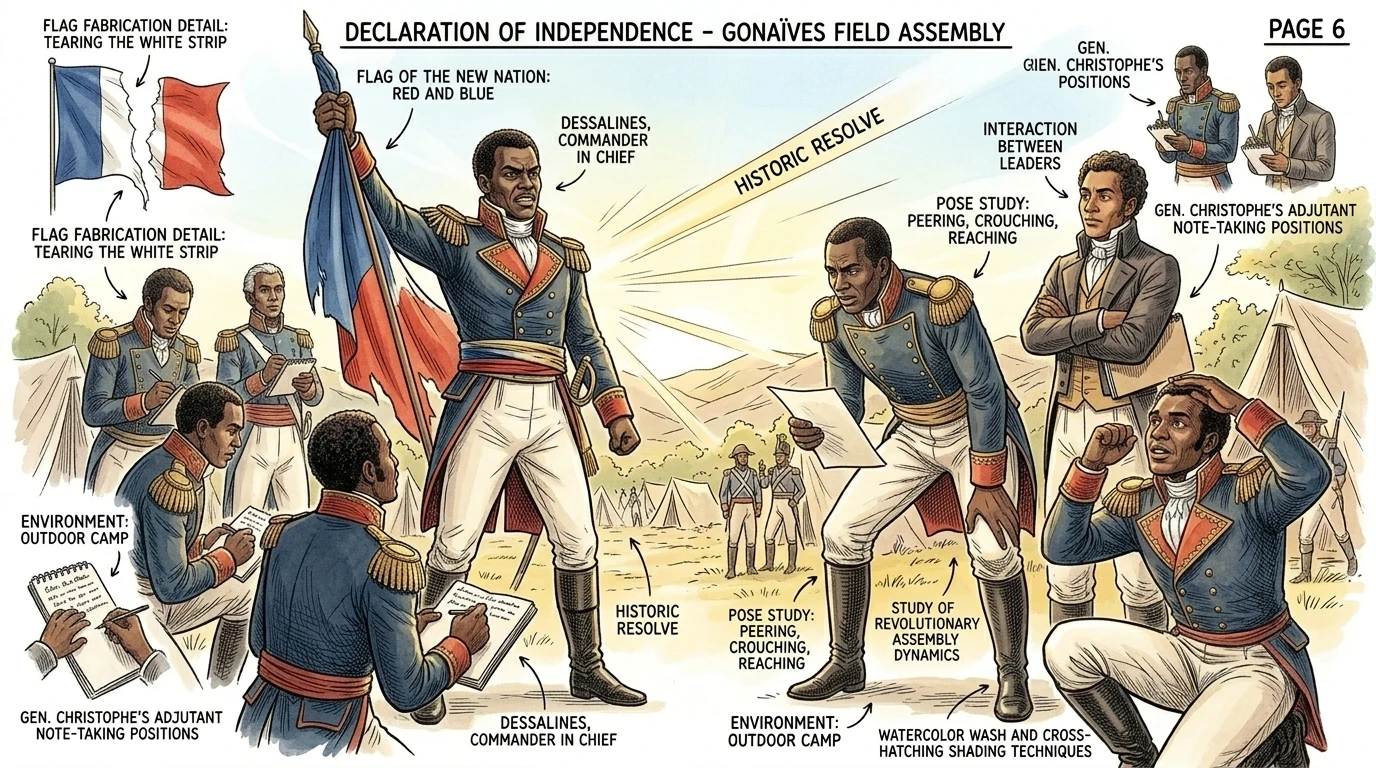
With the French defeated, Dessalines gathered the remaining generals at Gonaïves. "We must declare our independence," he proclaimed. "We must show the world that we are a free people!" He brandished the torn French flag before the assembled leaders. "Haiti will be our name, and liberty our creed!"
Page 7
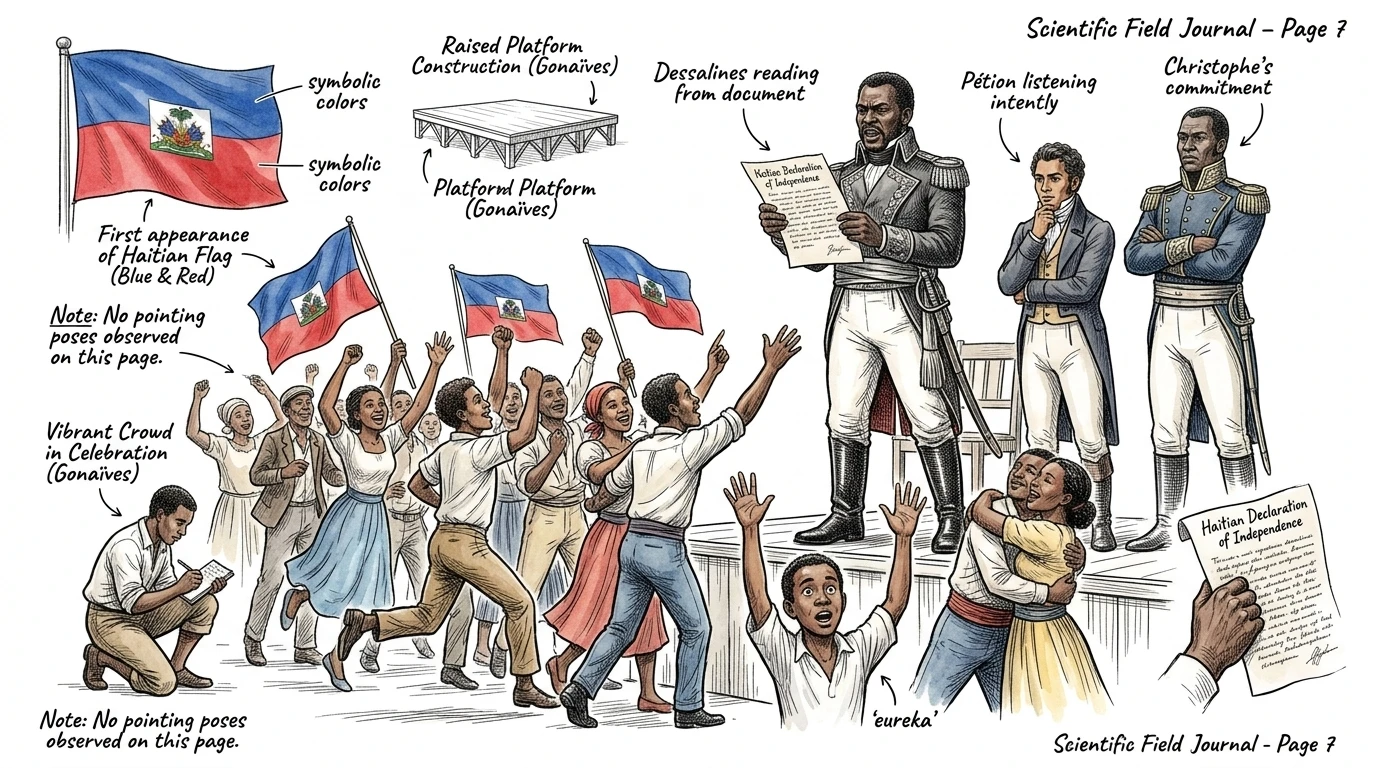
"We have asserted our rights," Dessalines declared, his voice booming as he read the Declaration of Independence to the assembled crowds in Gonaïves. "And we swear, never to submit to any foreign power." Pétion and Christophe stood at his sides, their faces resolute. The crowd erupted in cheers, waving flags and singing songs of freedom.
Page 8
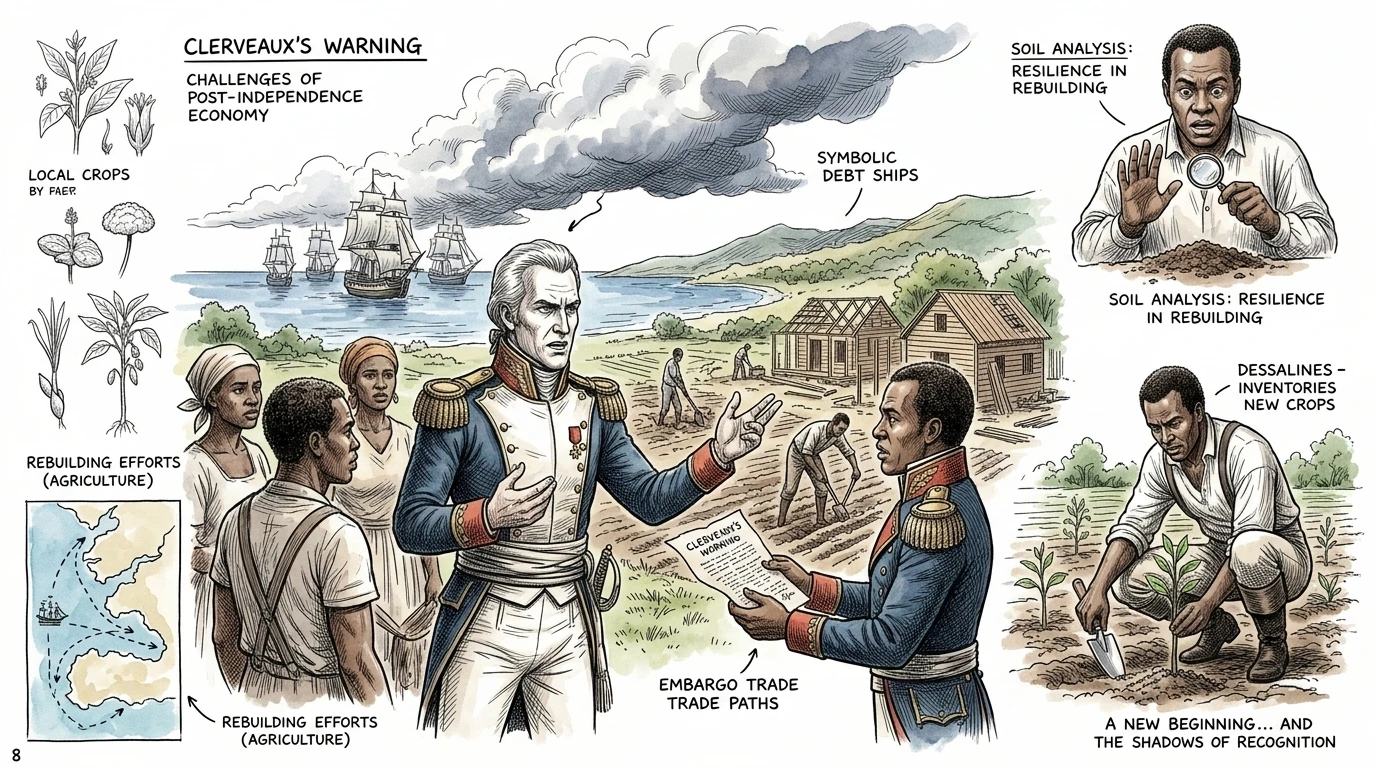
The newly independent Haiti faced immense challenges, warned Clerveaux. France and other European powers refused to recognize its sovereignty, imposing crippling trade embargoes. "Our freedom will be hard-won and even harder-kept!" he said. The country struggled to rebuild after years of war, burdened by debt and political instability.
Page 9
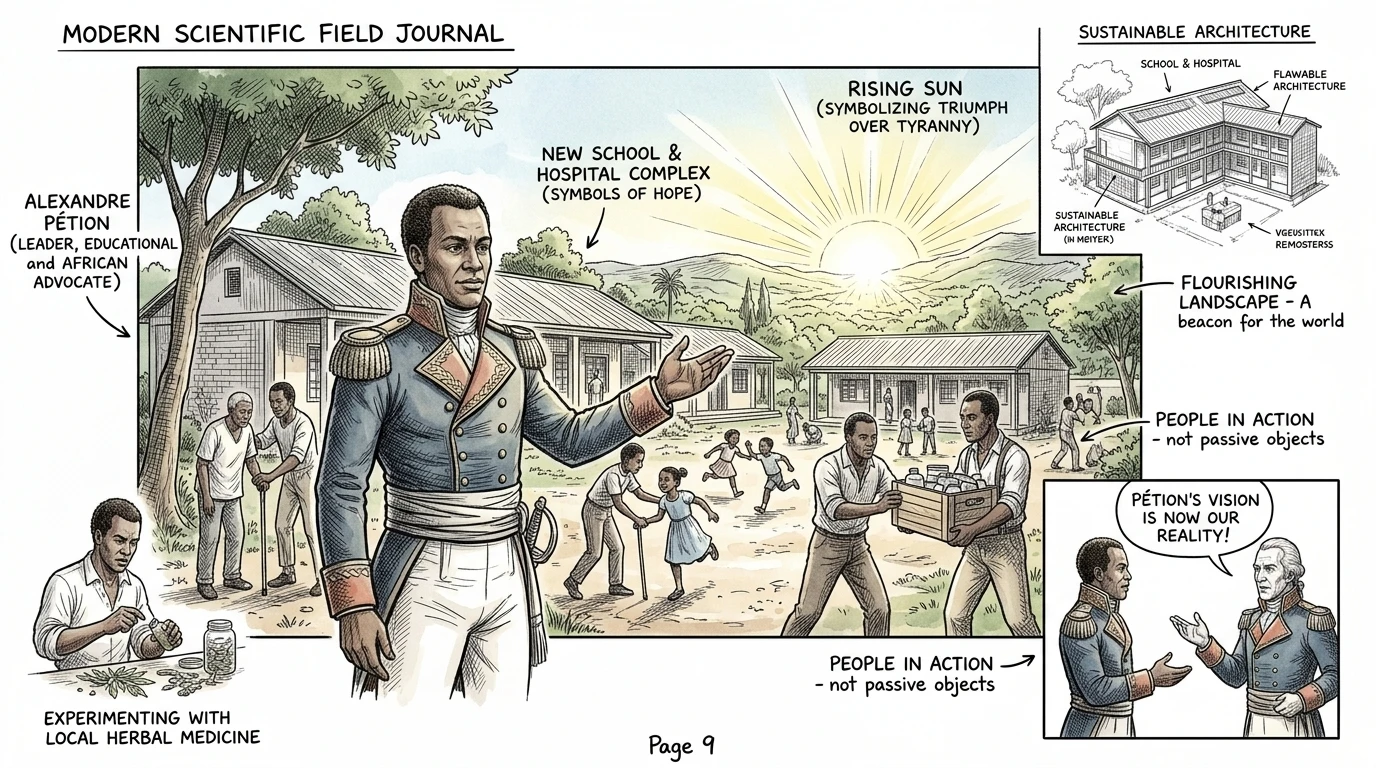
Yet, the spirit of Haiti endured. "As Victor Hugo said, 'No army can stop an idea whose time has come'," reflected Pétion, years later, as he oversaw the construction of schools and hospitals. "Haiti proved that freedom could triumph over tyranny." The nation became a beacon of hope for enslaved people around the world.
Page 10
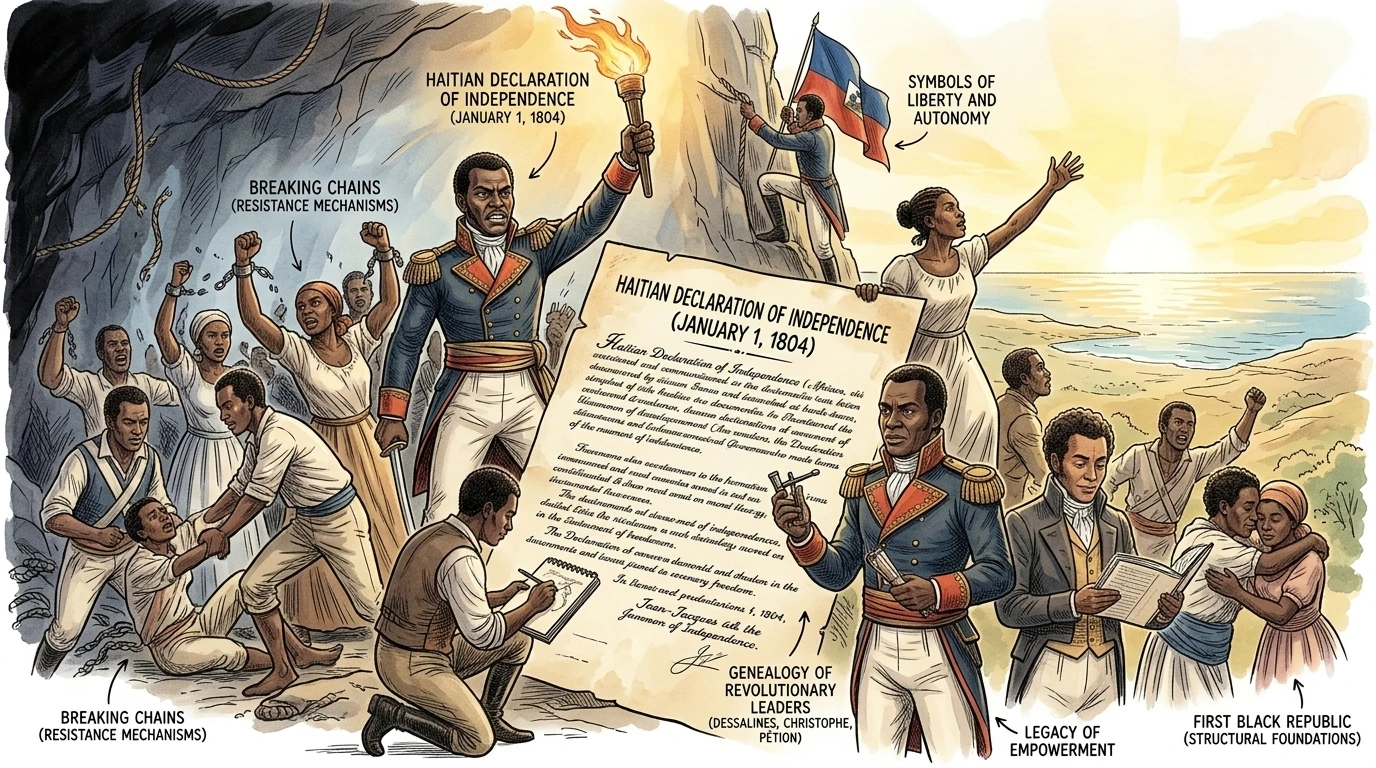
The Haitian Declaration of Independence stands as a testament to the power of resistance. Dessalines's vision of a free and independent Haiti inspired generations of freedom fighters. It was the first free black republic in the world, forever changing the course of history.
About this story
- Historical figures: Jean-Jacques Dessalines, Henri Christophe, Alexandre Pétion
- Location: Haiti
- Period: Modern
- Audience: general readers
Questions and answers
Questions and answers about The Haitian Declaration of Independence (1804, Haiti)
Read Wonder History on your phone
Wonder History is available on Android and iPhone and iPad. Get Wonder History on Google Play · Get Wonder History on the App Store.
More Wonder History stories
- The Haitian Revolution (1791–1804, Haiti)
- The Halifax Explosion (1917, Canada)
- The Helsinki Accords (1975, United States)
- The Hundred Years’ War — United Kingdom & France (1337)
- The Indus Valley: A Civilization Lost and Found (2600 BC)
- The Industrial Revolution (18th–19th Century, United Kingdom & Europe)