The Fever Map of Broad Street (1854)
The Fever Map of Broad Street (1854) — a history story. 10 illustrated pages, narrated, free to read on Wonder History.
Page 1
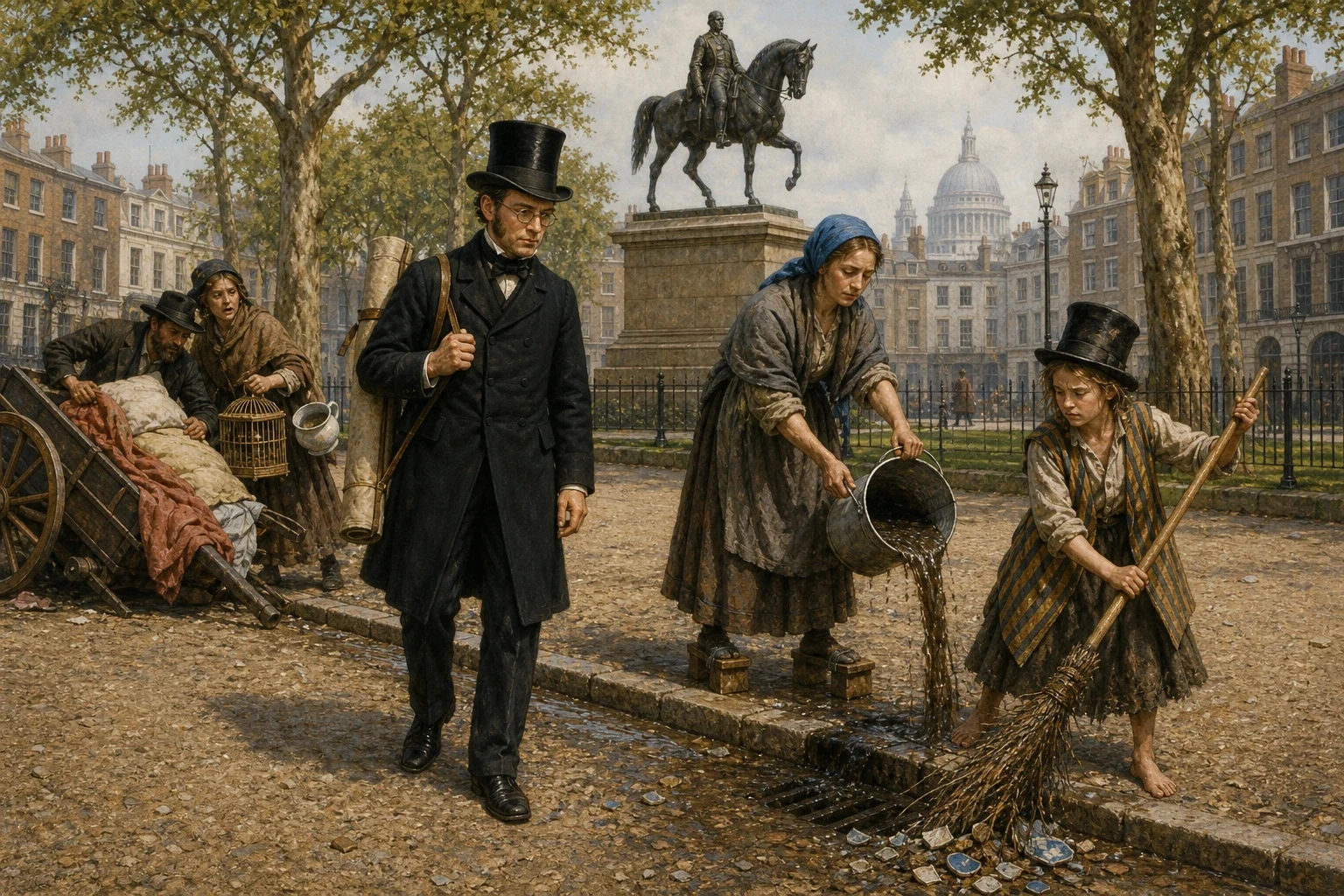
The handcart lurched over the kerb stone below the lead statue of George II and tipped sideways with a groan of splitting wood, spilling a feather mattress, a wicker birdcage and a chamber pot across the gravel of Golden Square. The fleeing family scrambled after their belongings, the father hauling at the axle while the mattress unrolled itself slowly into the dirt. Sarah Lewis, picking her way across on her clattering wooden pattens, stepped neatly over the wreck without breaking stride, tipping her tin pail of soiled washing-water down the corner gully so it ran black between the cobbles. Eliza Moss, broom taller than herself, darted ahead of the newly arrived Dr Snow, dragging the besom in short hard strokes to clear a path through the spilled bedding and broken crockery, shouting at the gawping family to mind their birdcage before it was trodden flat. Snow came on slowly behind her, map-roll bumping his spine, eyes already fixed on the gully where Sarah's water vanished.
Page 2
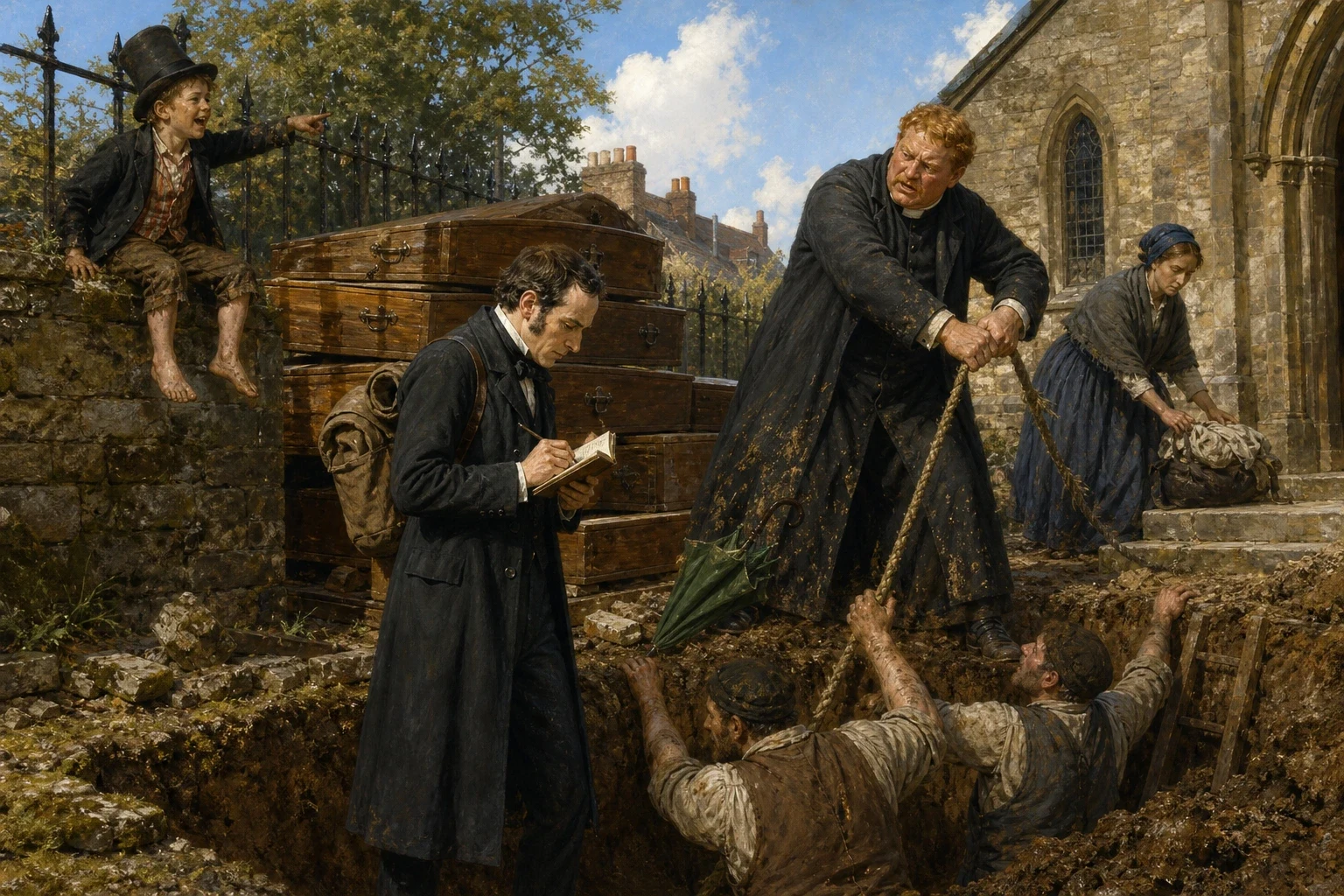
The rope shrieked over the pulley and gave, frayed threads whipping apart, and the half-lowered coffin lurched sideways into the nine-foot grave. Whitehead dropped his great umbrella flat on the gravel and lunged, both broad hands closing on the loose rope before the coffin could slide free entirely, his boots skidding in loam as he hauled backward with all his cask-wide weight. The gravediggers scrambled up from the trench to seize the other end, bracing against the raw earth wall. Sarah picked her way between the stacked coffins — piled three deep against the churchyard railings, taller than her head — and set a small bundle, no bigger than a loaf of bread, gently on the chapel step, smoothing the cloth with reddened fingers. Eliza swung herself up onto the low churchyard wall, bare feet gripping the mossy coping, and began counting aloud, pointing at each stacked box with a grubby finger for Snow, who stood below with his notebook open against his forearm, pencil scratching to keep pace with her shouted numbers.
Page 3
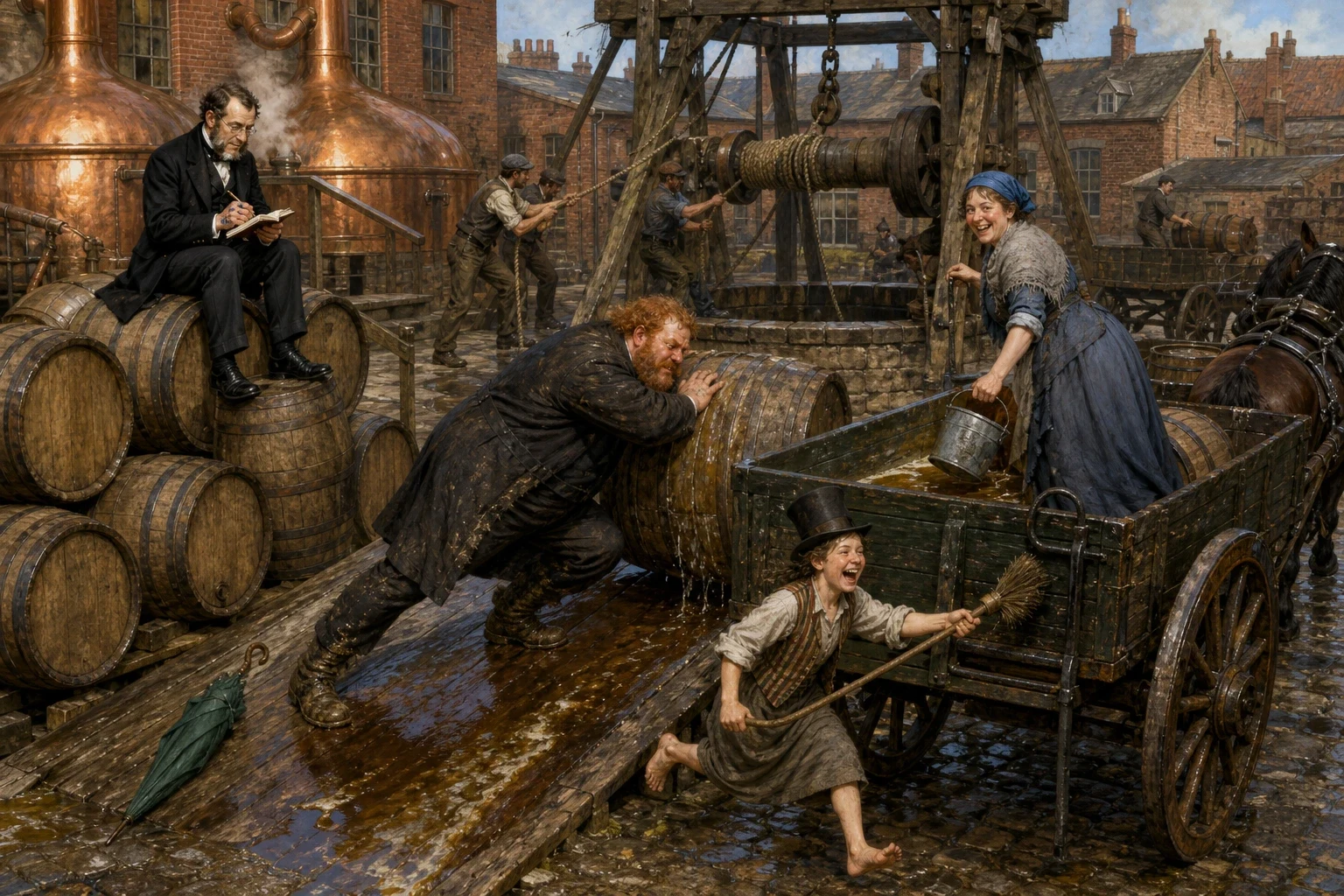
The chock slipped and the cask came alive, a barrel chest-high to a man and heavier than three of them together, booming down the loading ramp straight at the knot of carters below. Whitehead dropped his umbrella and threw himself sideways into its path, taking the full weight on his shoulder with a grunt that shook the malt dust from the beams above, and the cask shuddered, rocked, and sat still. Up on the stacked casks, three high and slick with spilled wort, Snow kept his tally steady, ink pencil scratching: seventy brewers, and not one of them touched water. Sarah, laughing at the near miss, dipped her tin pail into the running small-beer trough until it brimmed, then hauled herself up onto the departing dray by its iron step, pail sloshing against her knee. Eliza whooped and ran alongside, banging the wheel-spokes with her broom handle as the horses pulled away toward Paddington and out of Broad Street for good.
Page 4
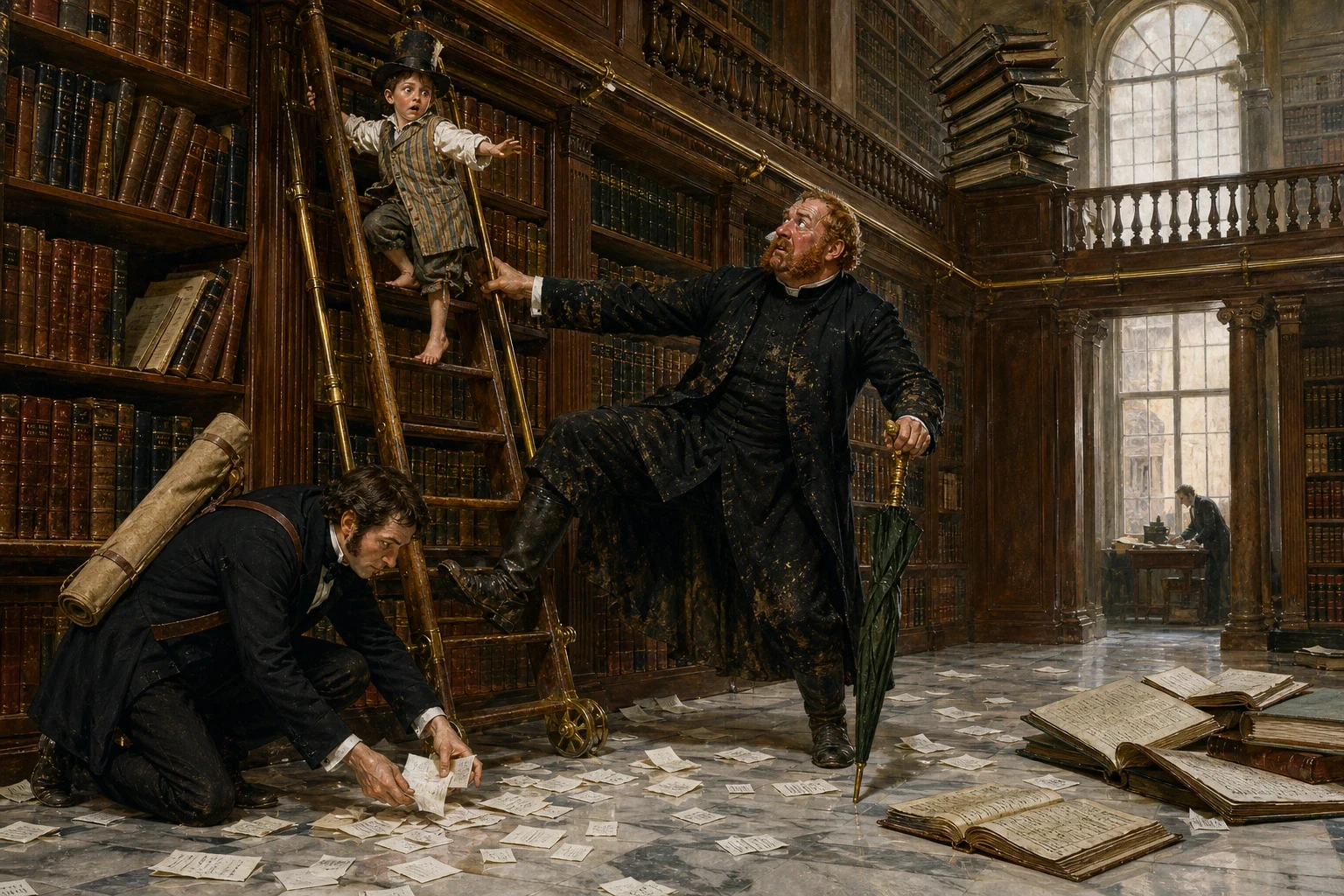
The rolling ladder stood twelve feet tall, its iron wheels hissing along the brass rail that ringed the gallery, and Eliza climbed it like a mast, barefoot and quick, hauling bound registers from the high shelf one by one into the crook of her arm. She balanced three, then four, then passed them down to Snow's waiting hands below. The fifth she stacked wrong on the balustrade, and it toppled. The whole pile went with it — eighty-three loose death returns bursting from their folds and snowing down across the marble floor in a white flurry. Eliza gasped and grabbed the ladder's rail as it lurched sideways under her shifted weight. Whitehead lunged, jamming his boot against the base and driving his umbrella's ferrule into the floor like a brake, holding the whole swaying frame steady. Snow dropped to his knees among the scattered slips, scooping them into order against his chest, muttering ages and addresses as he gathered.
Page 5
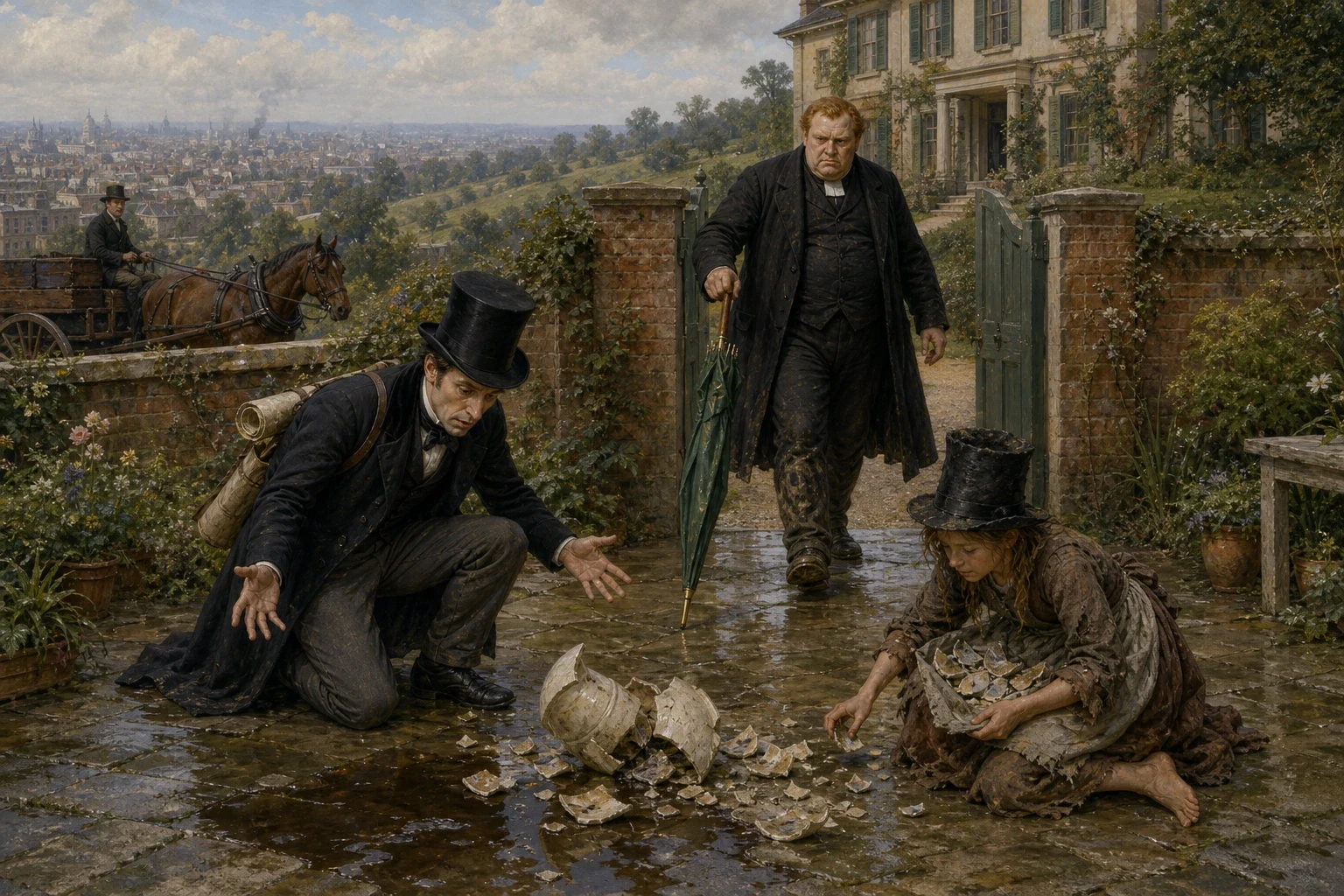
The carter grunted the stone jar down from his shoulder, setting it on the step with both hands before stepping back to wipe his brow. The house above stood shuttered, every window blind, taller than any man by two full storeys, its garden wall waist-high and choked with weeds. Snow climbed the two steps and crouched to lift the jar by its wet cord, meaning to carry it in himself since no servant came. The cord slipped through his ink-stained fingers; the jar struck the flagstones and burst apart, dark water spreading fast between the stones and over his boots. He straightened slowly, his sharp face draining of colour as the maid's words from the gate reached him again — both women dead, the widow and her niece, within a day of each other. Whitehead came through the gate at a half-run, planting his umbrella hard into the gravel to steady himself, while Eliza darted forward and snatched up the broken shards before they cut anyone's foot, pressing them into her apron.
Page 6
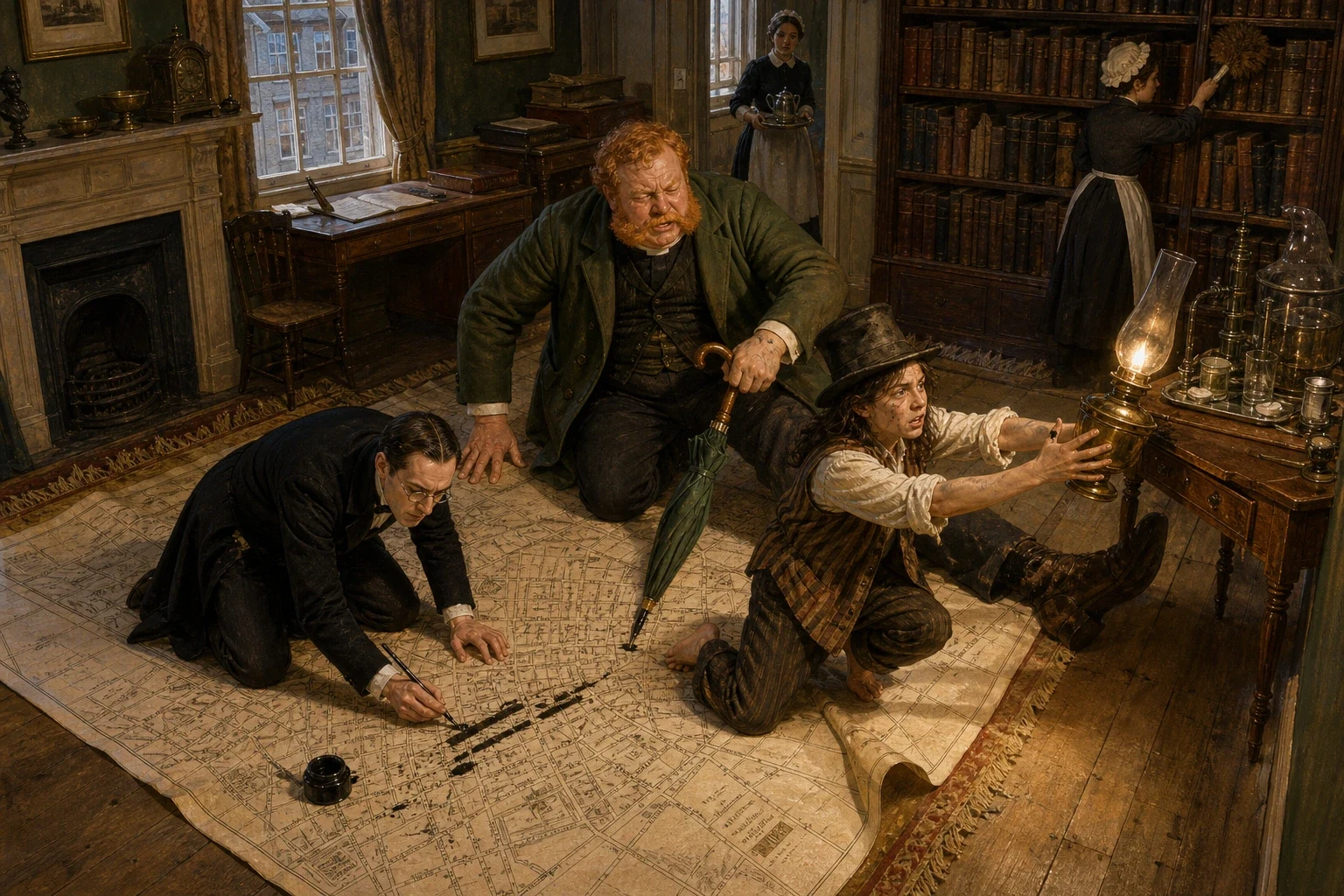
The carpet had been rolled back to the skirting boards, and on the bare floor the three of them knelt over Cheffins's street-plan, pasting it sheet by sheet into a single map eight feet long. Snow worked with a small brush, smoothing each seam flat with the edge of his palm, while Whitehead, too big to kneel comfortably, braced himself on one knee and his umbrella and pressed the curling corners down with the ferrule. Eliza crawled along the far edge on hands and knees, matching the printed streets sheet to sheet and calling out when two would not sit true. Snow dipped his pen and began inking a black bar at every house of death, bending so close his spectacles nearly touched the paper. Then Whitehead's boot caught the side table, and the oil lamp tipped toward the map's wet edge. Eliza flung herself sideways and caught it in both hands before it fell, the flame guttering, her scorched thumb pressed for a moment against the drying ink — leaving one dark print on the finished map, like a seal.
Page 7
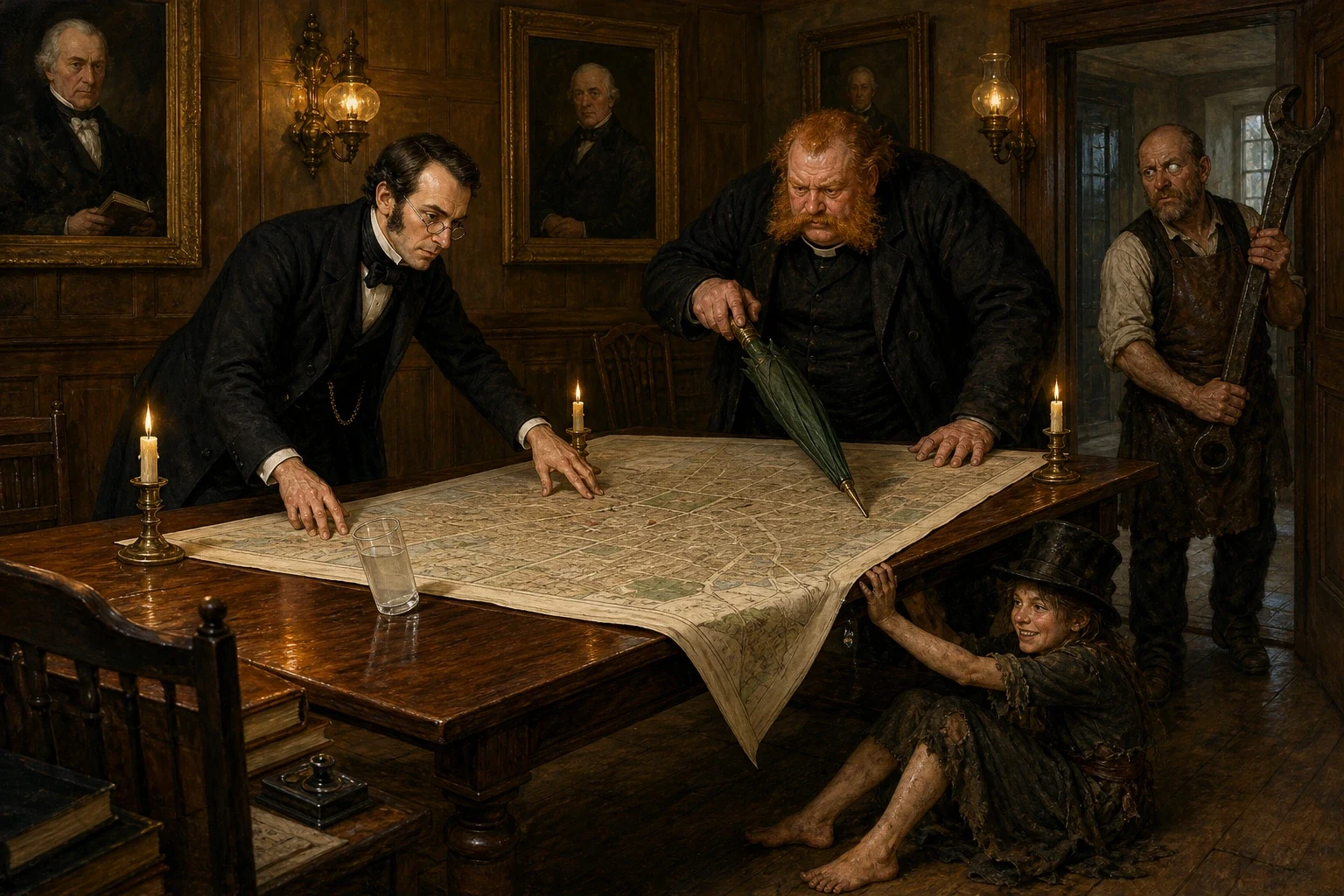
The small black-coated doctor hauled the canvas roll from his back and let it fall open down the length of the oak table, slamming a candlestick on each curling corner before it could spring shut again. Black bars marched across the paper like a crowd frozen mid-stride. Eliza wriggled under the table to catch a fifth corner trying to roll, bracing it flat with both scraped knees. Whitehead leaned his bulk across the far end, pinning the map with his umbrella's brass ferrule so the guardians along the table could see every street. The doctor filled a clean glass from a stone jar, the water clouding faintly, and pushed it skidding down the polished wood toward the assembled men. The door banged open and the huge bald brewer tramped in still in his leather apron, smelling of hops and tallow, and stood his three-foot spanner against the doorframe with a heavy clank before anyone could object to his presence among gentlemen.
Page 8
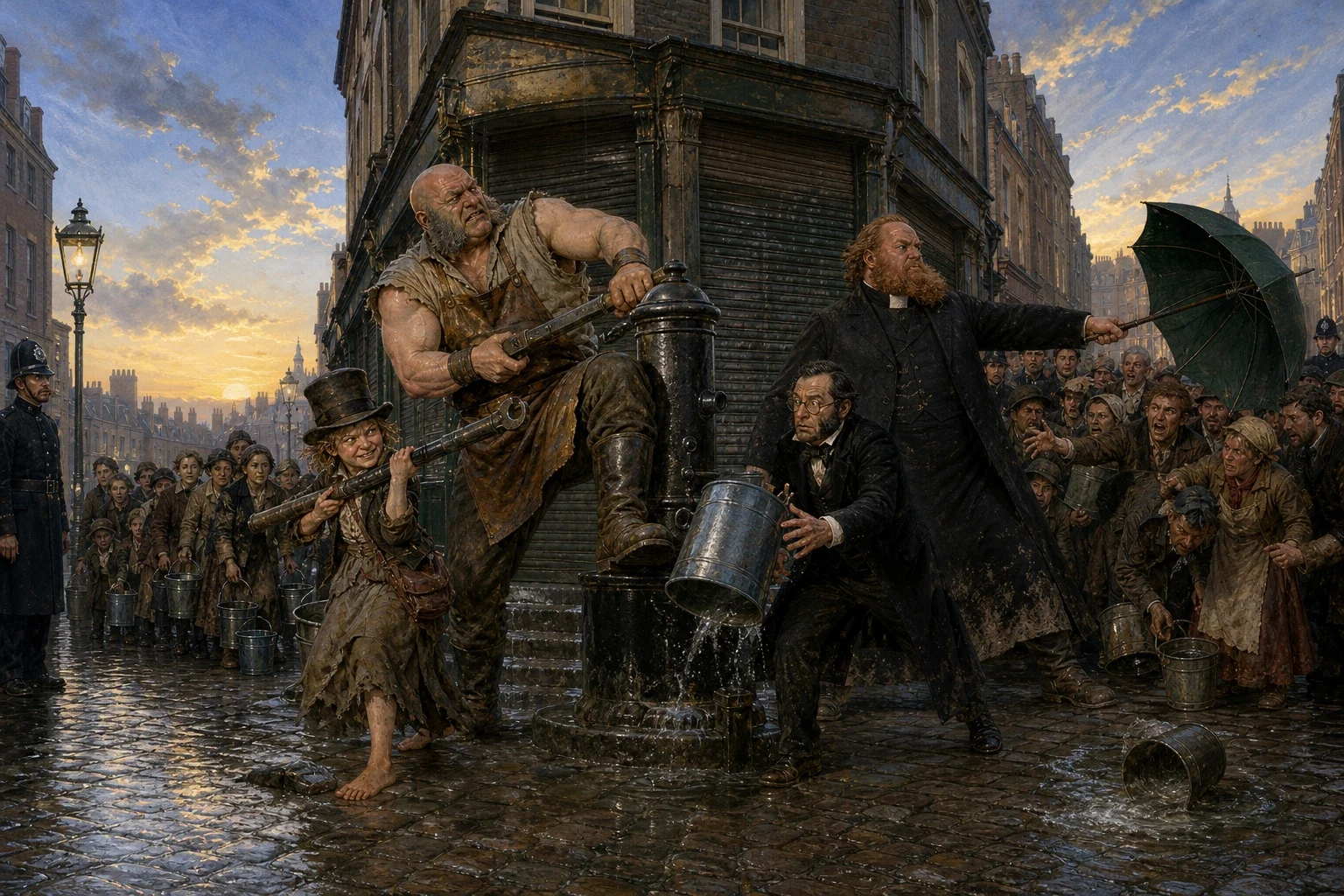
Dawn grey over Broad Street, and the queue of buckets had already begun stamping their feet against the cold when the bald bull-necked man planted his boot on the pump's waist-high iron casing and set his three-foot spanner against the bolt at its throat. He heaved, shoulders cording under the leather apron, and the bolt screamed out of its housing. The handle came free in his fists with a jolt that staggered him backward into the crowd. A woman's bucket went over, water sheeting across the cobbles in a dark fan, and the crowd erupted — shouting, surging forward, someone grabbing for the dripping handle before it could vanish. The barefoot girl darted in under the reaching arms, seized the heavy iron shaft, and hoisted it up onto her shoulder like a musket, marching it clear of grasping hands while the tall clergyman planted his umbrella crosswise to hold the crowd back and the spectacled doctor caught the toppling bucket before it could drain away entirely.
Page 9
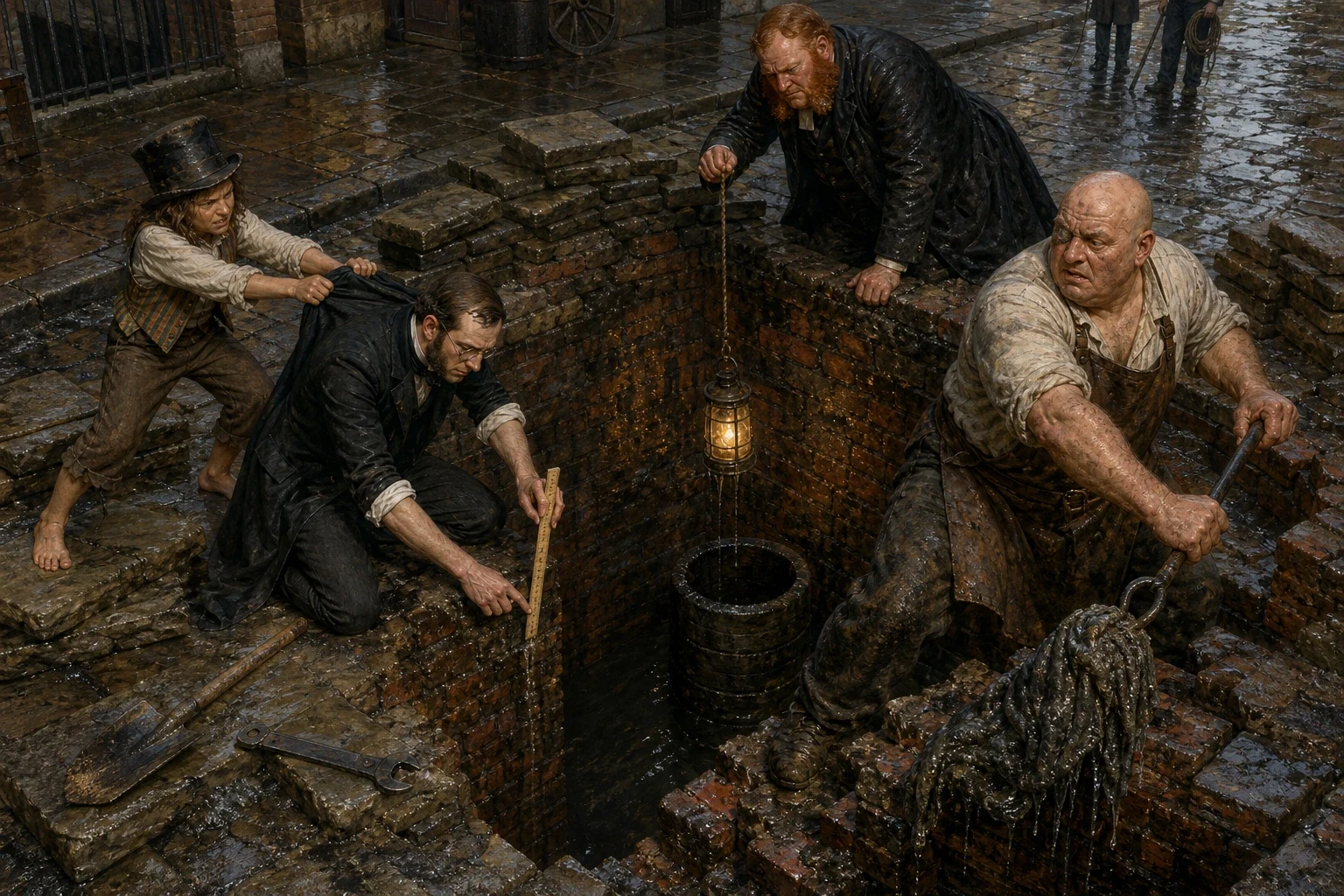
The paviours heaved up the last flagstone and flung it clattering against the wall, and a shovel broke through brick gone soft as biscuit three feet from the well shaft. A stench rose from the pit, nine feet deep, that made the men above reel back and clap sleeves to their faces. Whitehead braced his boots on the lip and paid out the lantern on its cord, lowering it hand over hand into the dark. Hemming, straddling the broken brickwork, drove his hook down into the cesspit and hauled up a soaked grey bundle, dripping and foul, that unrolled as it cleared the rim into a tangle of a baby's napkins. Snow dropped to his knees at the edge, shirt sleeves rolled, and pushed his measuring rule into the seeping wall, reading the wet line against the brick while Eliza held his collar from behind to steady him over the drop. Nobody spoke for a moment; then Whitehead swore an oath and begged God's pardon for it in the same breath.
Page 10
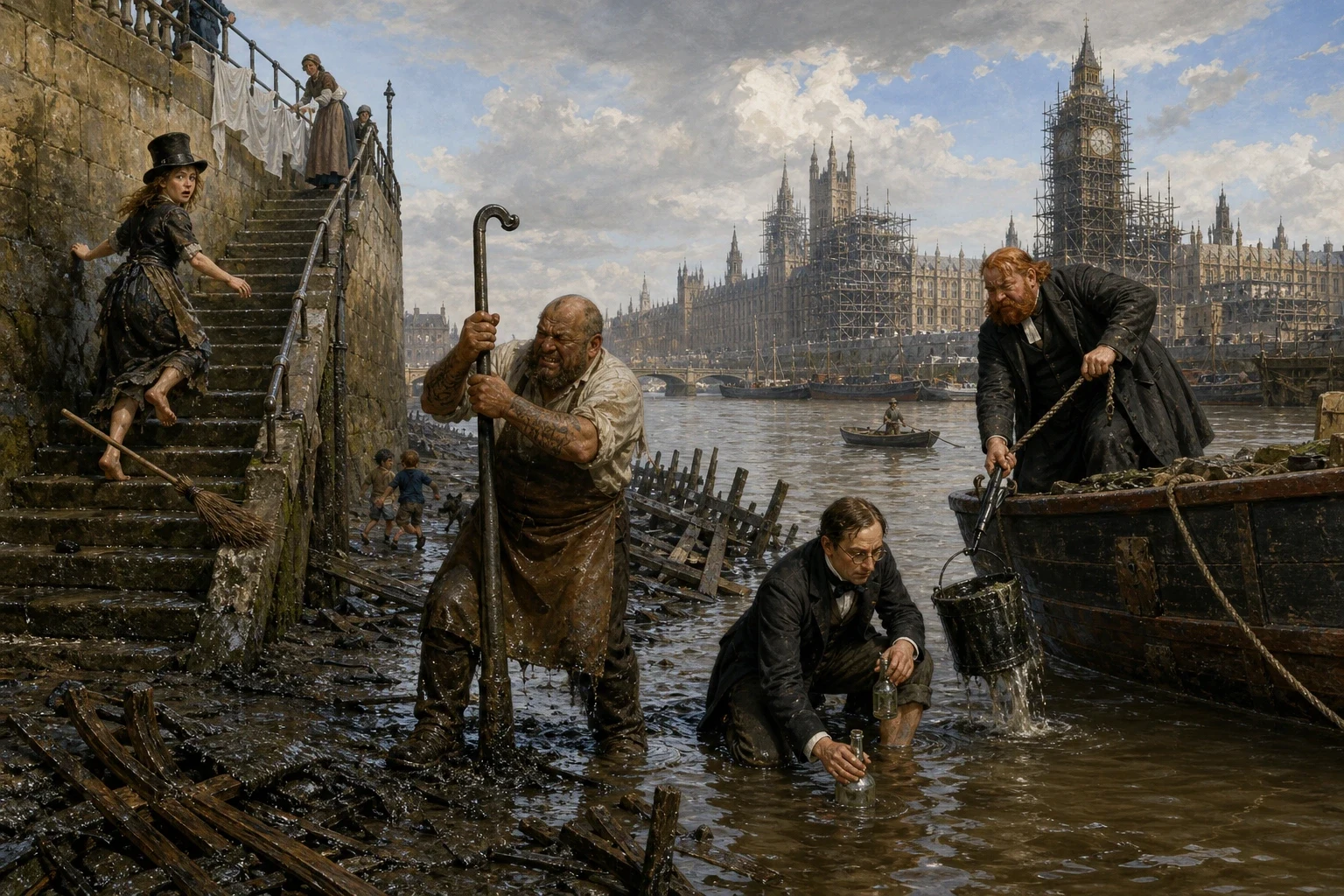
The flap at the river wall gave way with a crack like a pistol, and brown water surged across the mud in a knee-high wave, carrying rags and straw before it. Eliza screamed and scrambled up the slimed stairs two at a time, broom thrown ahead of her onto dry stone, her bare feet slipping on green weed. Hemming planted his boots wide and drove the dead pump handle, salvaged from Broad Street, upright into the silt with both hands until it stood a yard tall, a marker against the tide line. Whitehead, braced at the gunwale of a moored boat, hauled a dripping bucket hand over hand from midstream, his umbrella hooked through the rope to spare his back. Snow, trousers rolled, boots filling with the tide, crouched and filled one glass bottle from the surge at his feet, then stoppered it and held out the second for Whitehead's bucket water, labelling both before the river could claim them back.
About this story
- Audience: general readers
- Format: 10 illustrated pages, narrated, free to read on Wonder History
Read Wonder History on your phone
Wonder History is available on Android and iPhone and iPad. Get Wonder History on Google Play · Get Wonder History on the App Store.