The Invention of the Compass
The Invention of the Compass — an illustrated inventions story, set in Global. 10 illustrated pages, free to read on Wonder Inventions.
Page 1
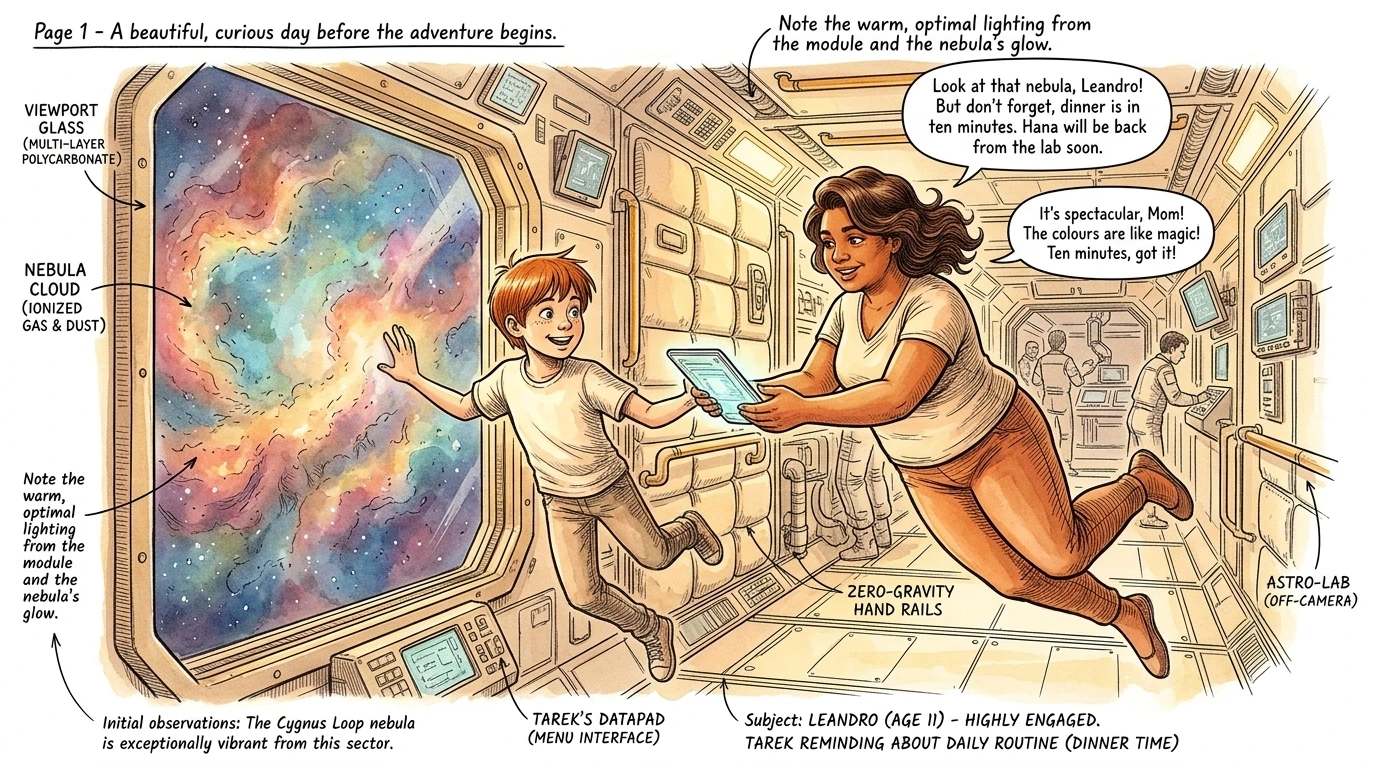
Leandro floated near the viewport, gazing at the candy-colored nebula swirling outside the space station. "Another amazing view," he sighed, adjusting his zero-gravity harness. His mom, Tarek, floated over, a datapad in hand. "Dinner will be ready soon, sweetie. Just let me finish this report – oh, and Leandro, can you pass me that magnetic compass from the supply closet?"
Page 2
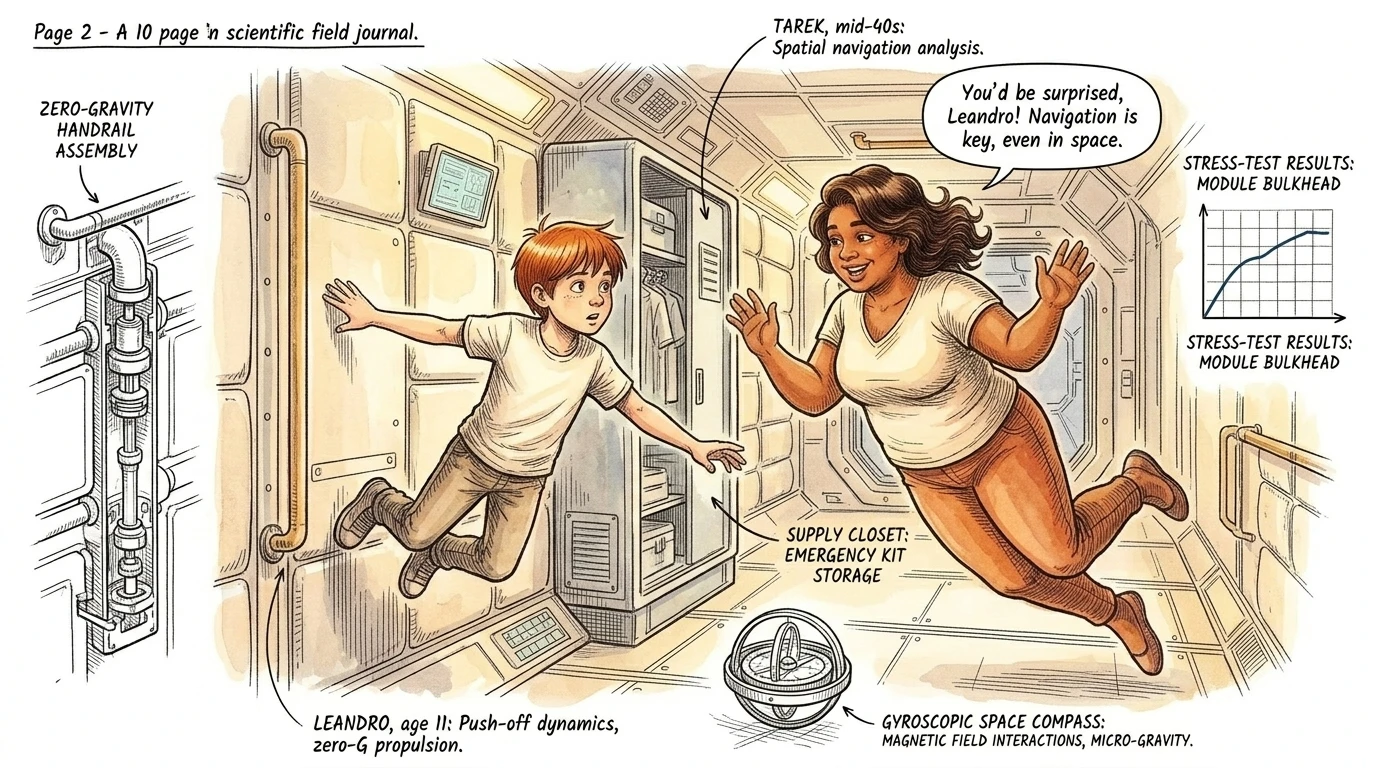
"A compass?" Leandro asked, pushing off the wall and floating towards the supply closet. "What do we even need a compass for in space?" Tarek chuckled. "Well, sometimes even up here, getting your bearings is tricky, honey," she said. "But it made me wonder... how did people navigate before compasses? Who even invented them?"
Page 3
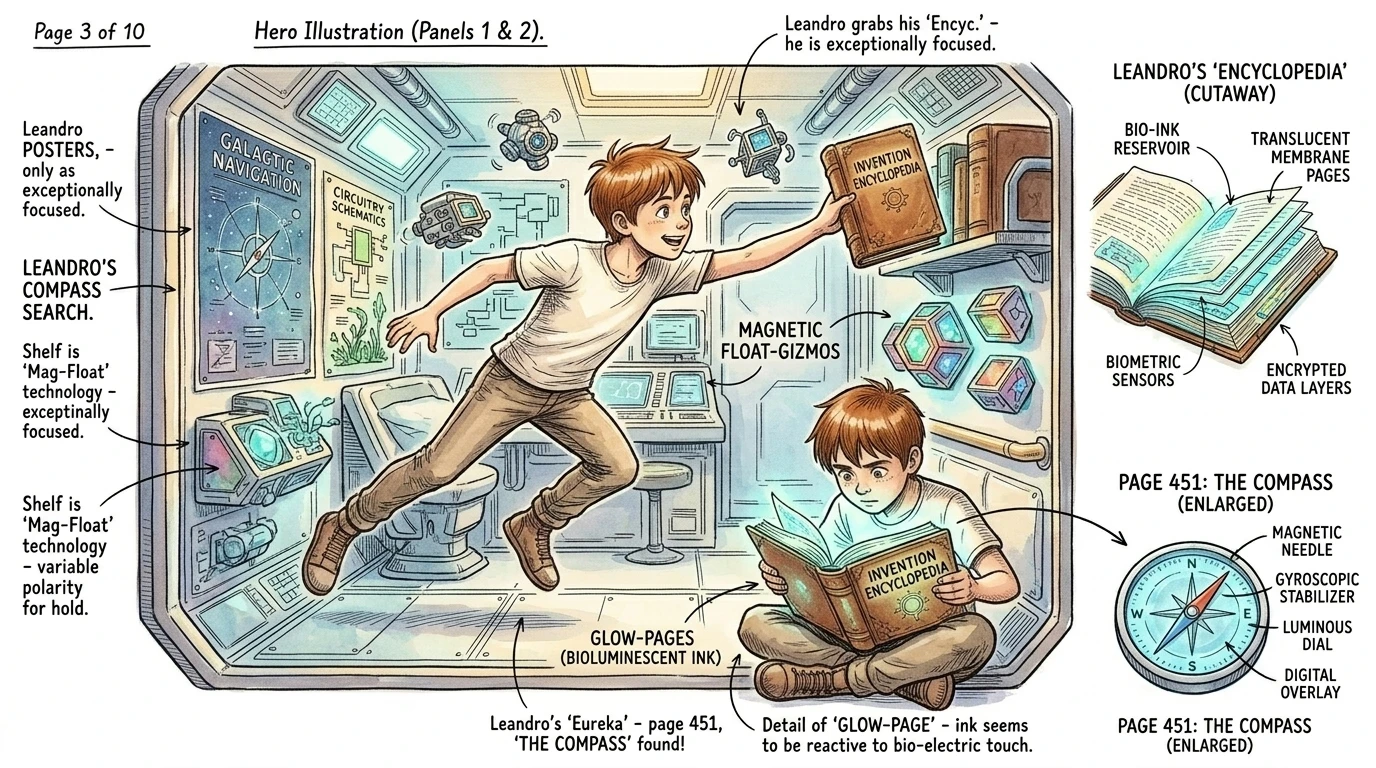
Leandro zoomed into his room, a small but colorful space filled with science posters and floating gadgets. He grabbed his worn leather-bound Invention Encyclopedia from the magnetic shelf. "Time to find out!" he exclaimed. He flipped through the glowing pages until he found the section on navigation. He muttered to himself, "Okay, compass... let's see who was crazy enough to invent this thing!"
Page 4
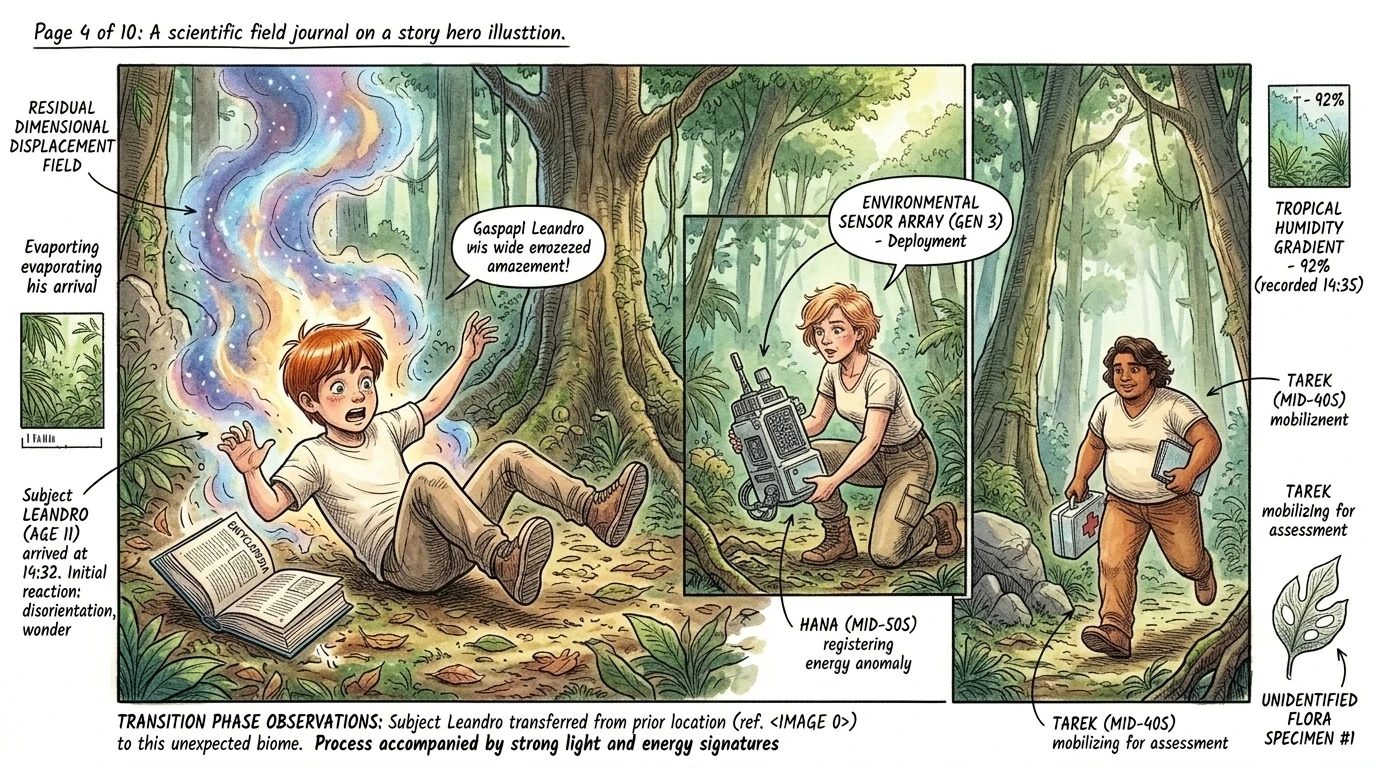
Suddenly, the room dissolved in a swirl of light and Leandro felt a strange tug. He landed with a thump onto soft earth, the Encyclopedia clattering beside him. Towering trees surrounded him, and the air was thick with humidity. "Woah!" he gasped, picking himself up. "Where am I? This isn't exactly the supply closet!"
Page 5
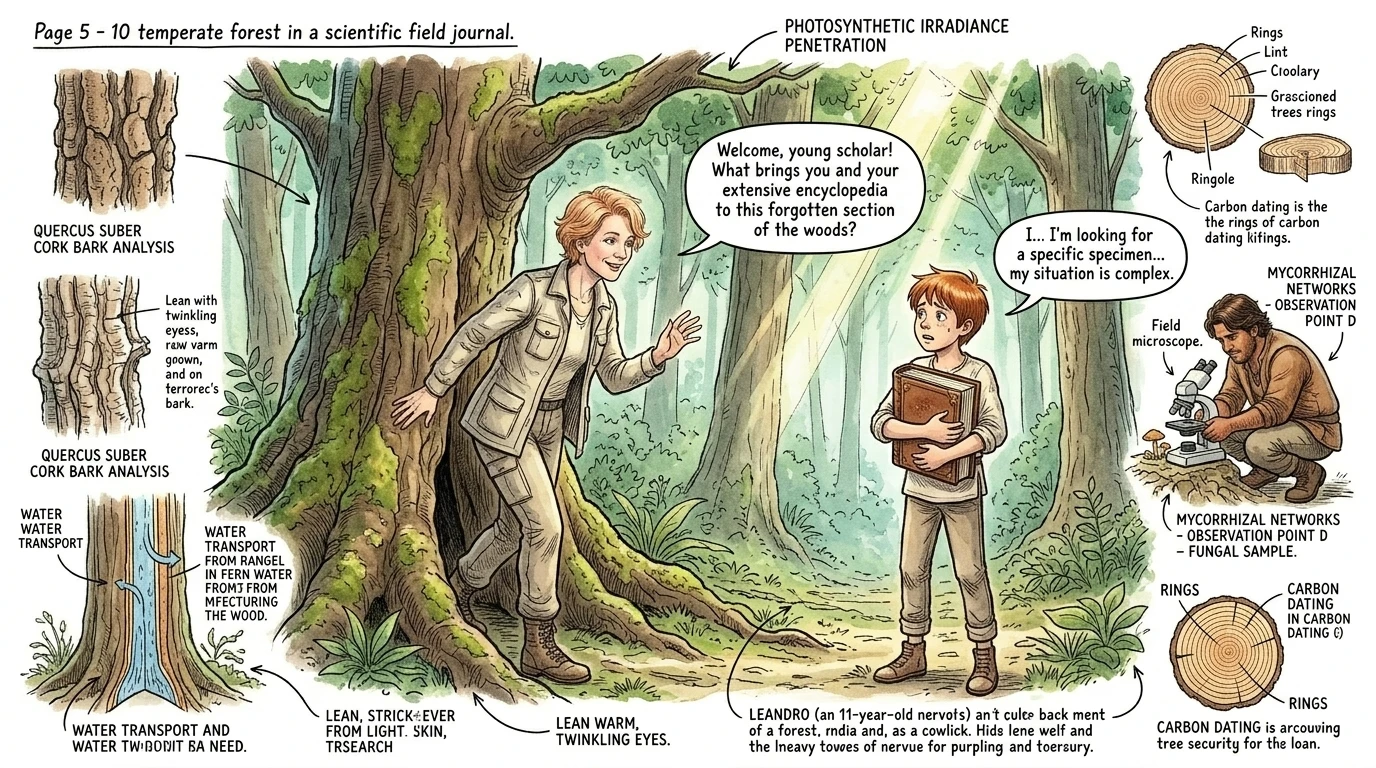
A voice startled him. "Lost, young traveler?" An older woman emerged from behind a large tree, her eyes twinkling. "I'm Hana," she said, smiling kindly. "And you seem a long way from home." Leandro nervously clutched his Encyclopedia. "I... I think I took a wrong turn," he stammered. "Are you familiar with the properties of magnetized lodestone?"
Page 6
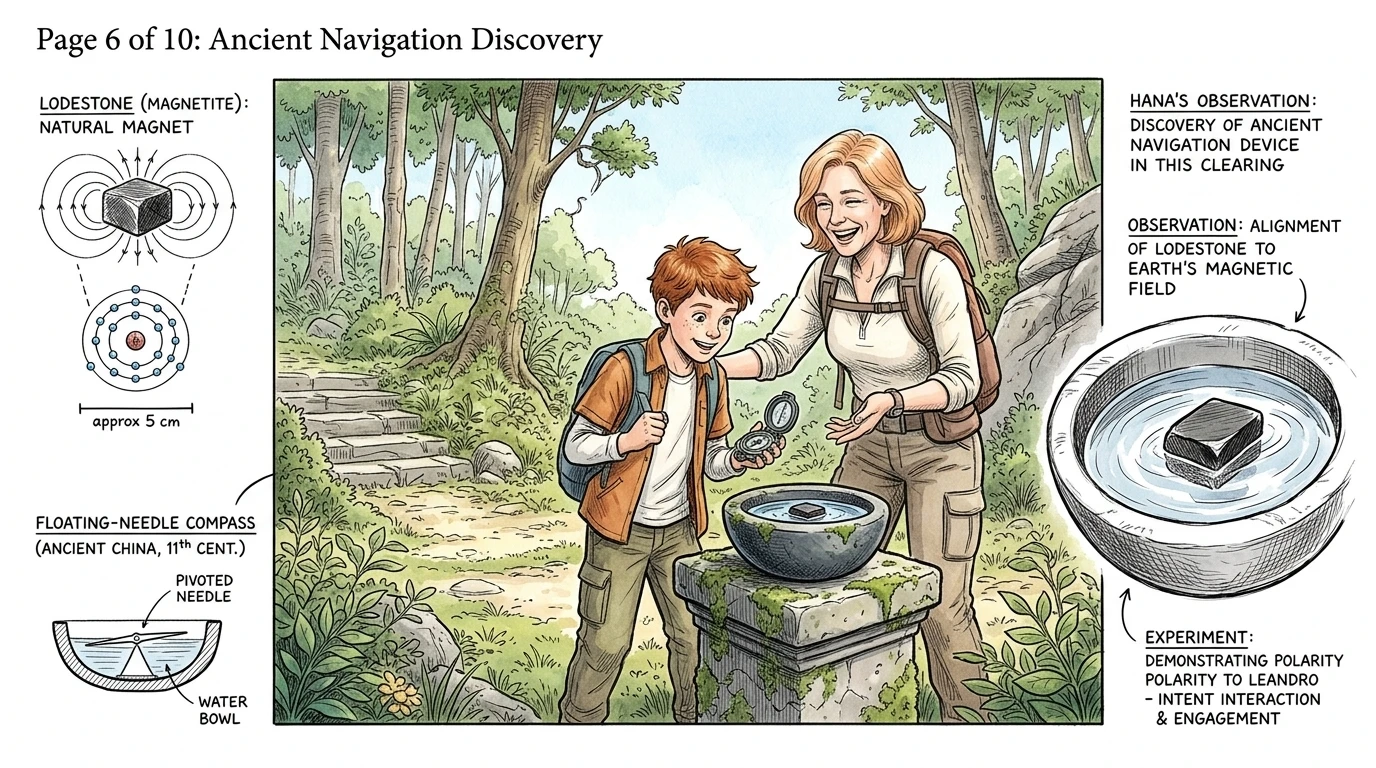
"Magnetized lodestone?" Hana laughed. "Indeed, I am! I've been experimenting with it for years!" She led Leandro to a small clearing. "Around the 11th century," Hana explained, pointing to a stone bowl filled with water and a small piece of lodestone, "Chinese scholars discovered that a sliver of this stone, when floated in water, always points south."
Page 7
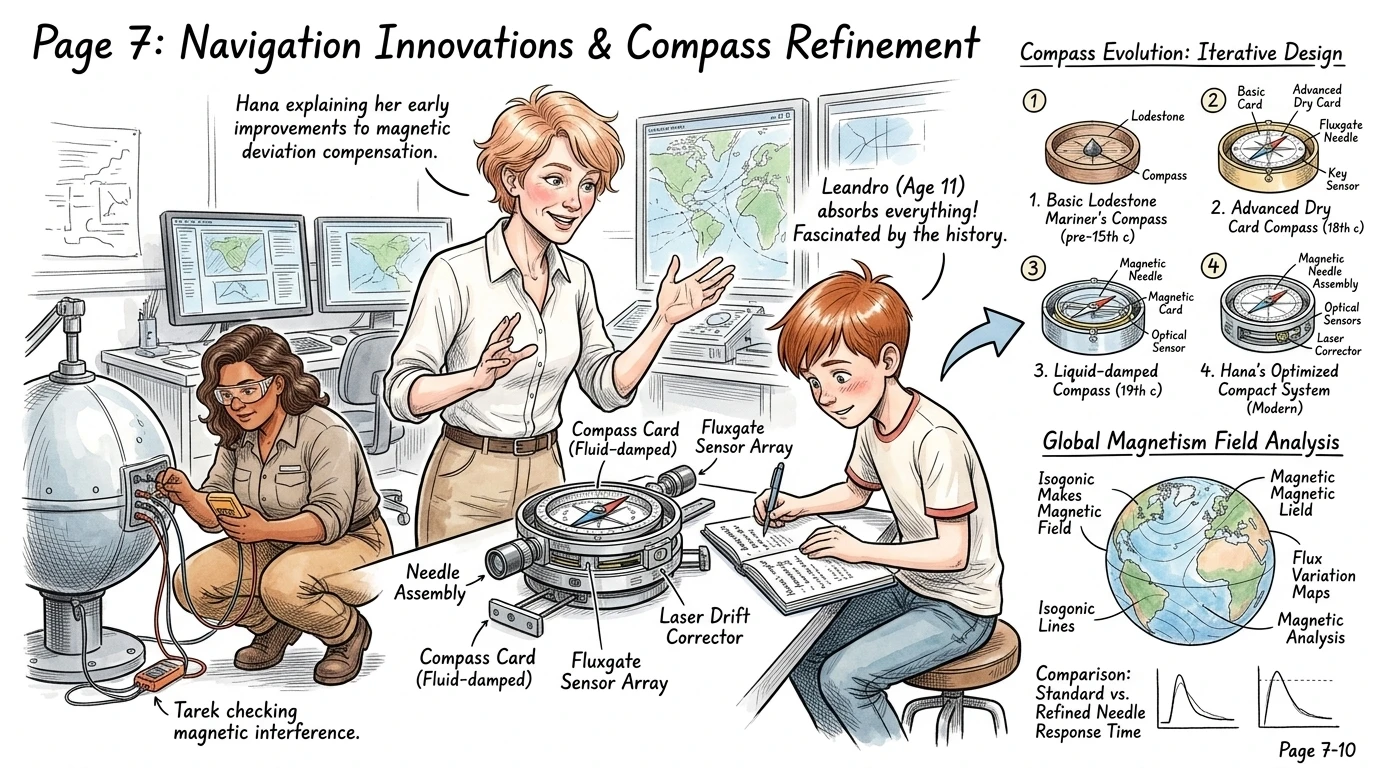
"So, you're saying you invented the compass?" Leandro asked, scribbling furiously in his notebook. "That's amazing! What was the first thing you used it for?" Hana smiled. "I wouldn't say I invented it, but I helped refine it! At first, it was mostly used for feng shui, to orient buildings," Hana explained. "But later, navigators realized its true potential. By the 12th century, they were using it for sea voyages!"
Page 8
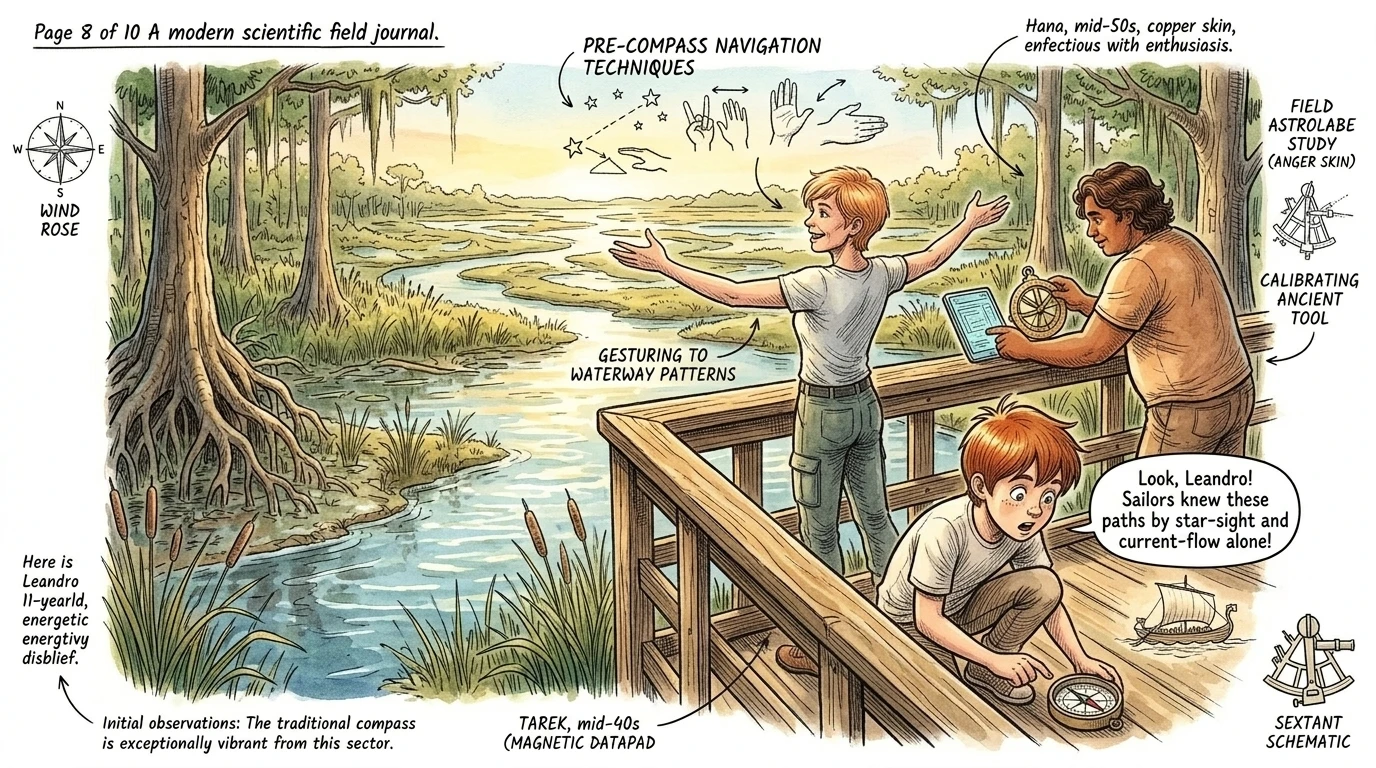
"Imagine sailing across the ocean without a compass!" Hana exclaimed, gesturing towards the winding waterways of the swamp. "Before, sailors had to stick close to the coast, relying on landmarks and the sun. Now, they could venture into the open sea! It changed everything!" She added, "Thanks to innovations like this, global trade increased exponentially, generating wealth and cultural exchange."
Page 9
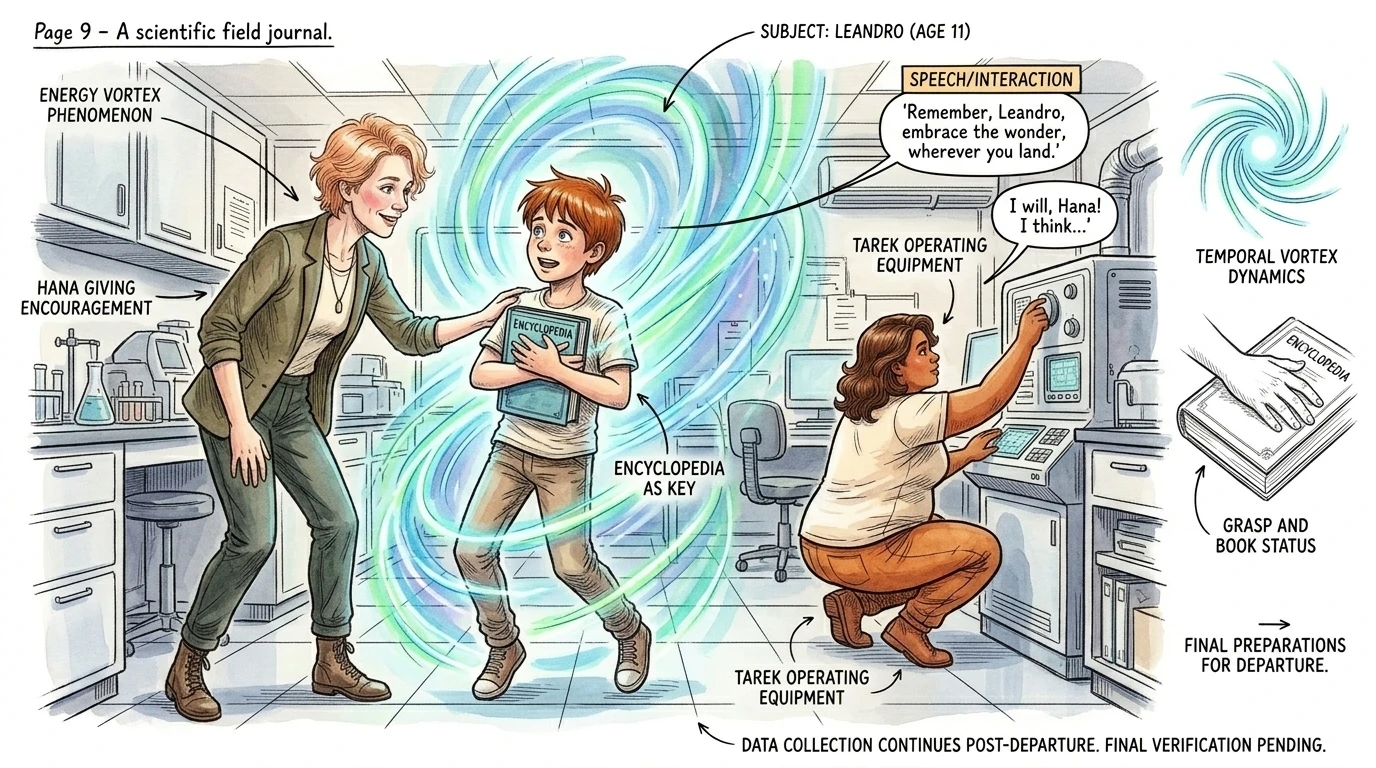
Suddenly, the familiar swirling light reappeared. "It seems your time is up," Hana said with a smile. "Remember what Leonardo da Vinci said: 'He who does not appreciate life does not deserve it.' Go now, and appreciate the wonders of your own time!" With another dizzying whirl, Leandro found himself back in his room on the space station.
Page 10
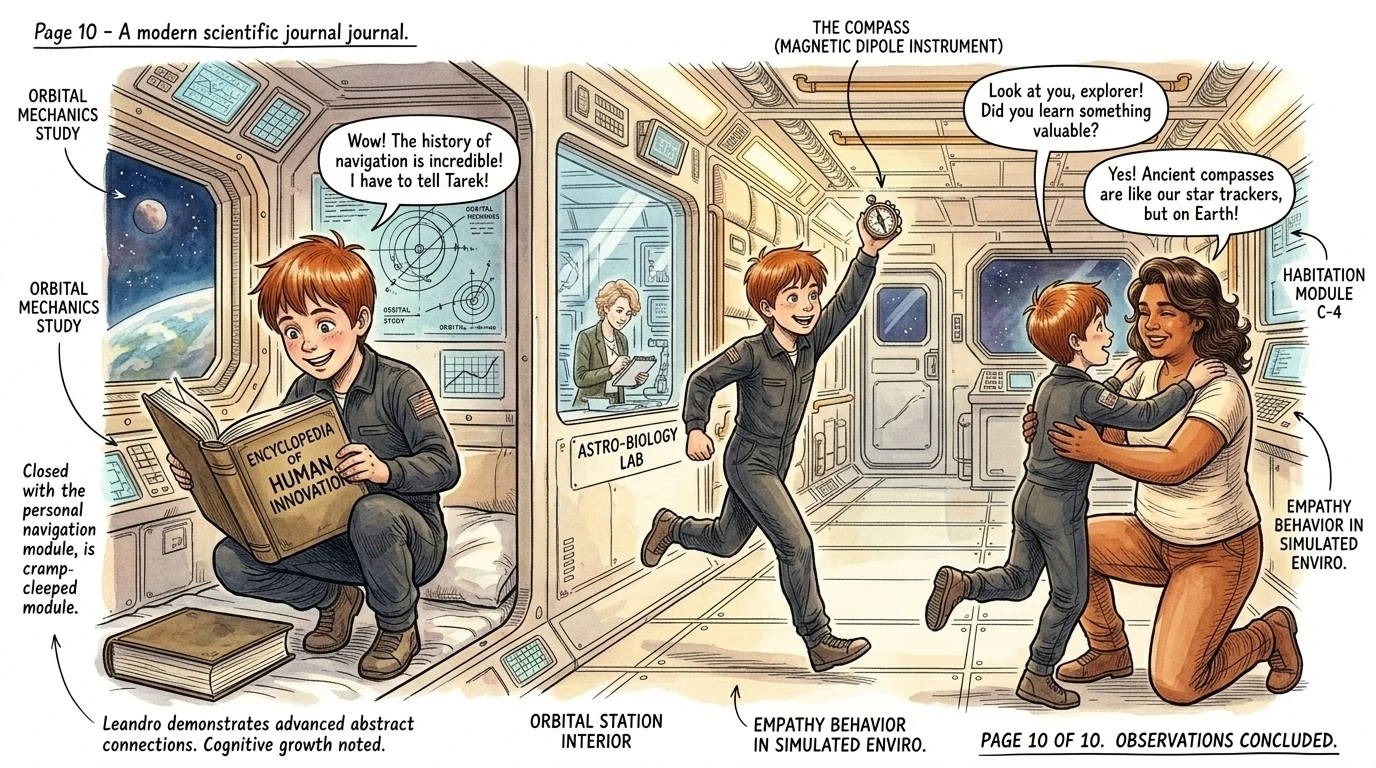
He closed the Encyclopedia and raced to find his mom. "Mom!" he shouted. "Did you know the compass was first used for feng shui? And it helped sailors explore the world!" He grinned. "Today, the navigation and GPS industry is worth billions of dollars!" Tarek smiled and hugged him. "That's incredible, Leandro! Now, how about that magnetic compass for my report?"
About this story
- Location: Global
- Audience: kids (ages 6–12)
Questions and answers
Read Wonder Inventions on your phone
Wonder Inventions is available on Android. Get Wonder Inventions on Google Play.