Crime and Punishment
A desperate theory, two murders, and the long road from a Petersburg garret to confession in Siberia
Page 1
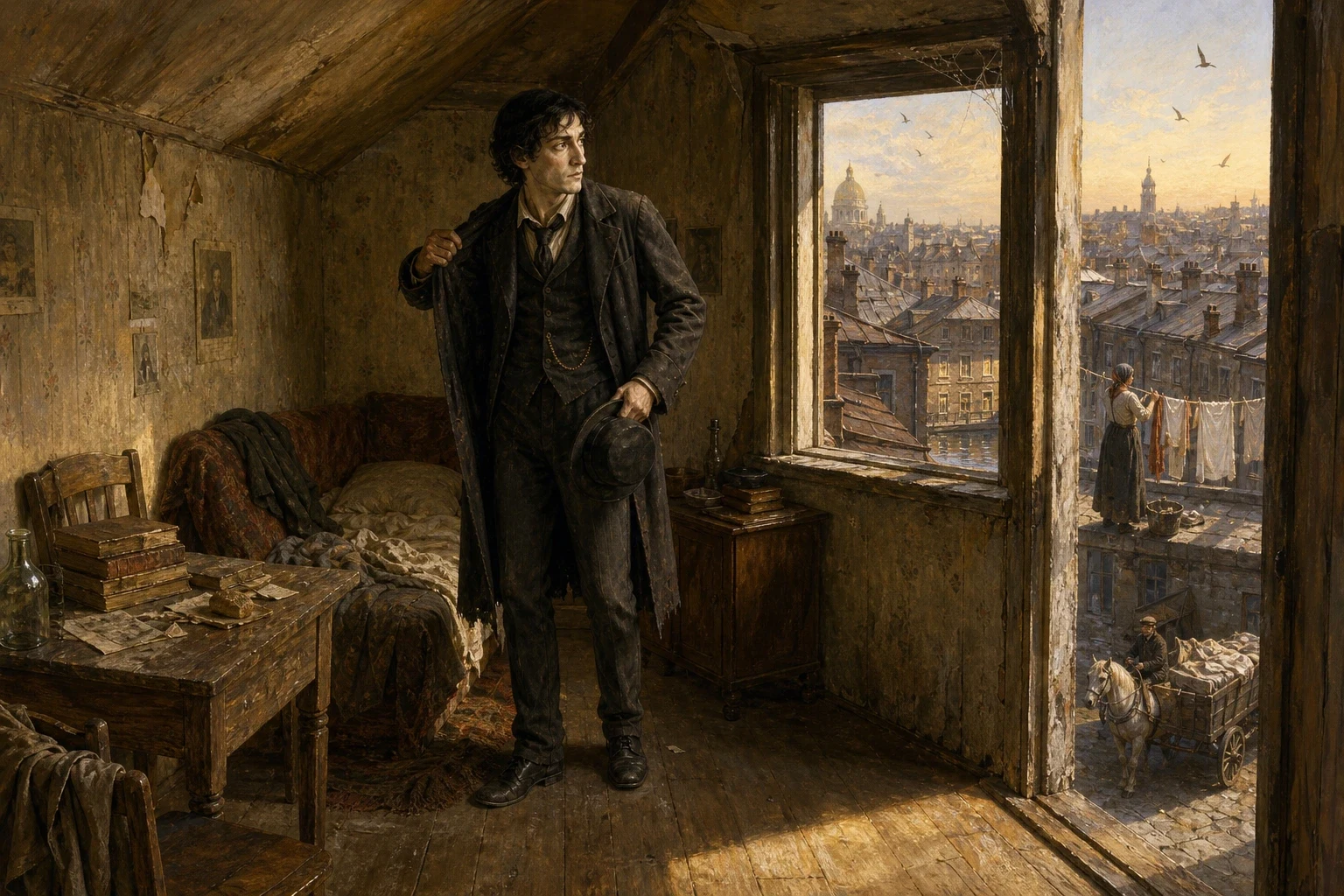
In Petersburg, in the stifling heat of July, a young man named Rodion Raskolnikov lived alone in a tiny room under the roof of a tall house on S. Place, a room so low and narrow that a tall man could hardly stand upright in it. He had been a law student once, but he had stopped attending his classes, stopped paying his rent, and stopped almost everything except thinking. For weeks he had been turning over an idea so terrible that he hardly dared look at it directly, and now, on this hot evening, he put on his shabby coat and his old hat and went out — not to do the thing yet, only to walk past the house of the old pawnbroker, Alyona Ivanovna, and look at her windows, and rehearse in his mind exactly how he would knock on her door.
Page 2
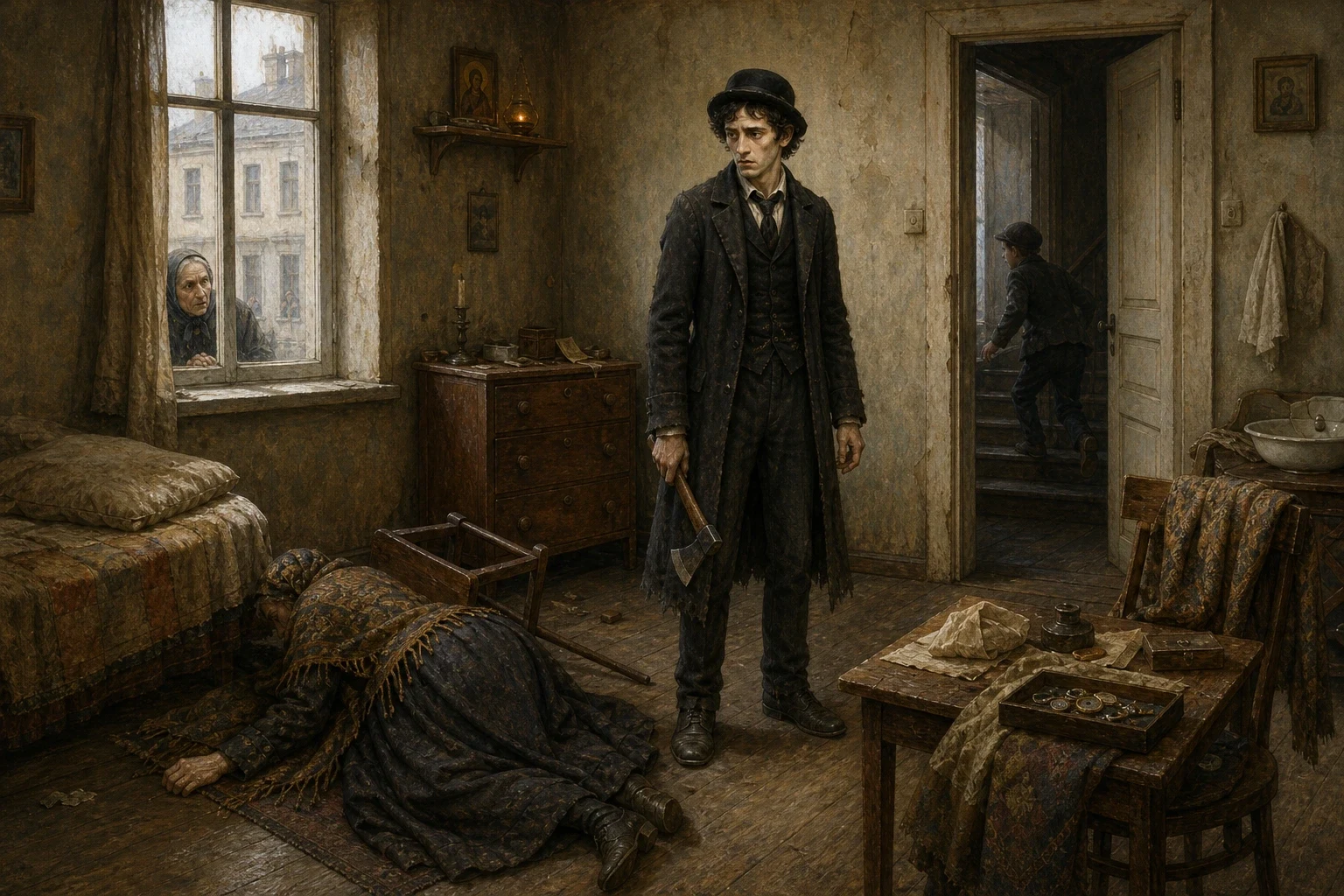
Raskolnikov climbed the dark stairs to Alyona Ivanovna's apartment and knocked, carrying a flat parcel wrapped tightly as if it held a pledge. The old woman let him in, suspicious as always, and turned her back to carry the parcel to the window for better light. In that moment Raskolnikov took the axe he had hidden under his coat and struck her from behind with all his strength. She fell without a sound. He stood over her, strangely calm, and began searching for her keys and her store of pledges — until he heard a second set of footsteps in the doorway. It was Lizaveta, the old woman's sister, come home early, standing frozen with fright at what she saw. Before she could cry out, Raskolnikov struck her too. Then the room was entirely silent, and he was alone with what he had done, the axe still in his hand.
Page 3
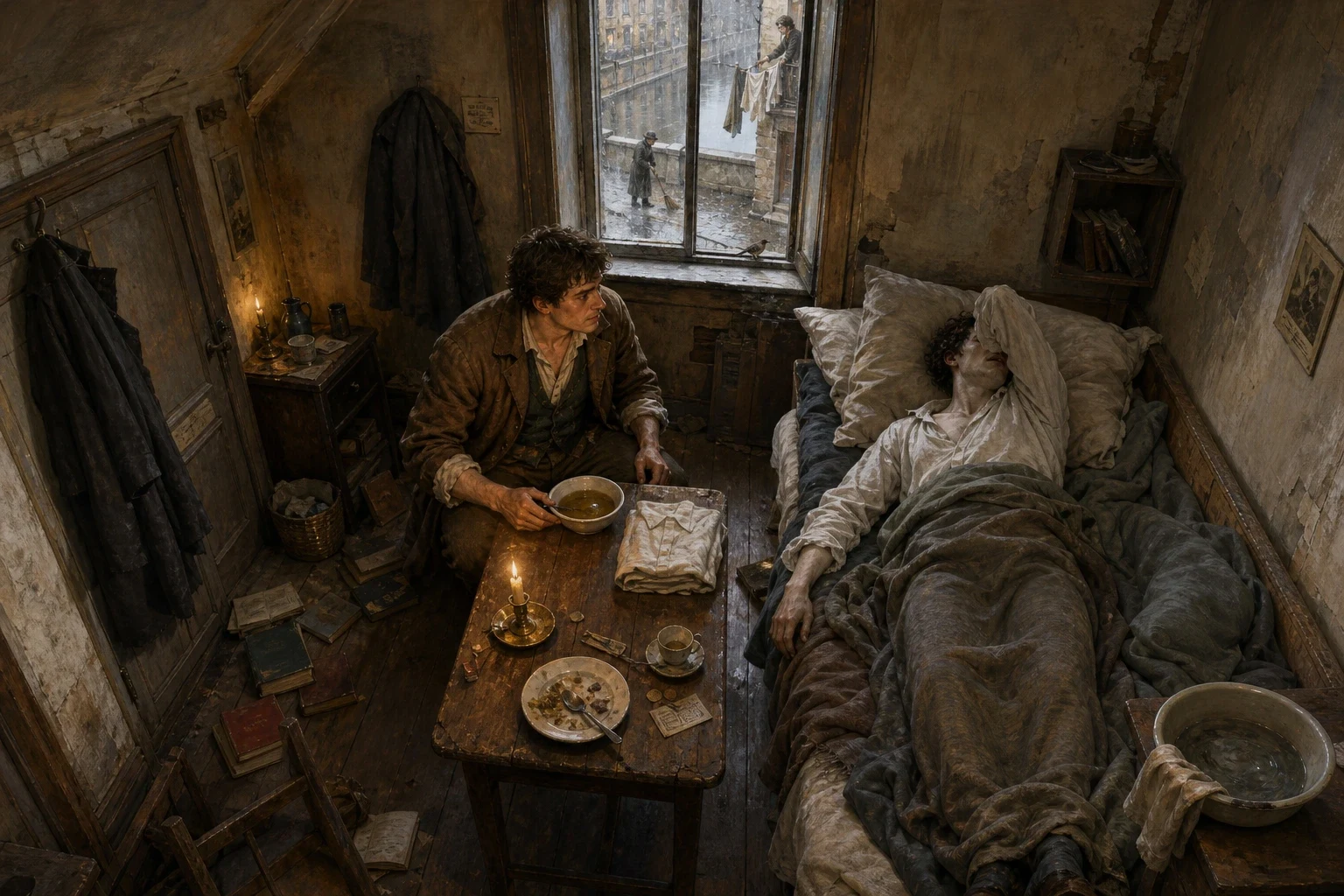
Raskolnikov took the few things he had stolen — a purse and some small trinkets, for he had been too dazed to search properly — and hid them under a heavy stone in a deserted courtyard, without even unwrapping them to see what they were. Then he went back to his garret and collapsed into a fever that lasted for days. He drifted in and out of consciousness, terrified every time anyone knocked at his door, certain each time that they had come for him. His old university friend, Razumikhin, big and kind and endlessly patient, came to sit with him, bringing food and clean clothes and news from the outside world, never once suspecting what was wrong, only that his friend seemed to be losing his mind with worry over debts.
Page 4
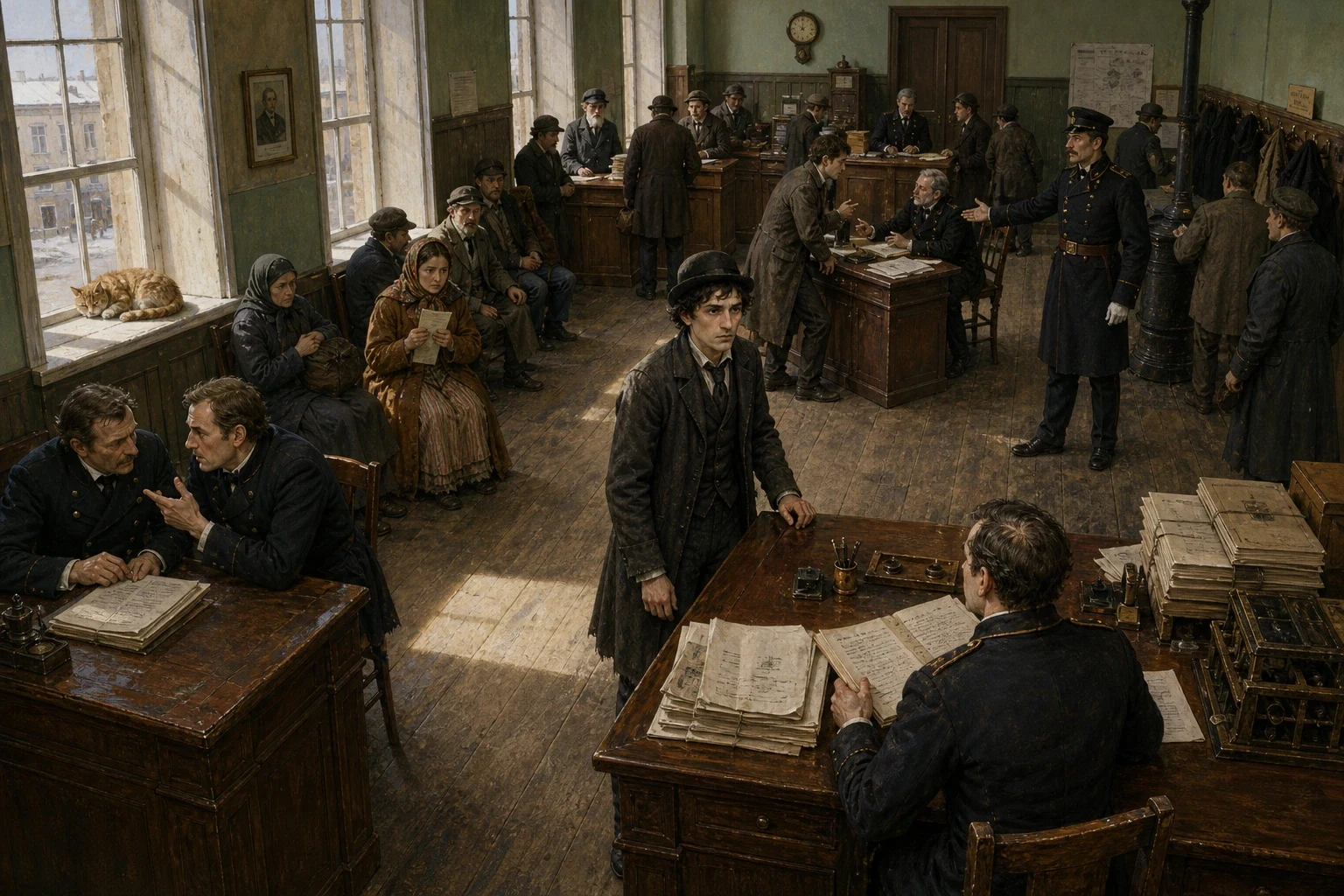
A few days later a note came ordering Raskolnikov to appear at the district police bureau — not about the murder, as it turned out, but over an old unpaid bill to his landlady. Still, walking into the crowded, noisy office terrified him more than anything had since that night. While he waited his turn, he heard two clerks nearby talking loudly and carelessly about the murder of the old pawnbroker and her sister, discussing the missing pledges and the empty apartment as though it were the most ordinary gossip in the world. The room seemed to tilt. Raskolnikov felt himself going white and cold, and for one long moment he thought he would faint, or worse, that he would simply stand up and tell them everything himself. He gripped the edge of a desk, steadied himself, and somehow answered the clerk's questions about his debt in an ordinary voice.
Page 5
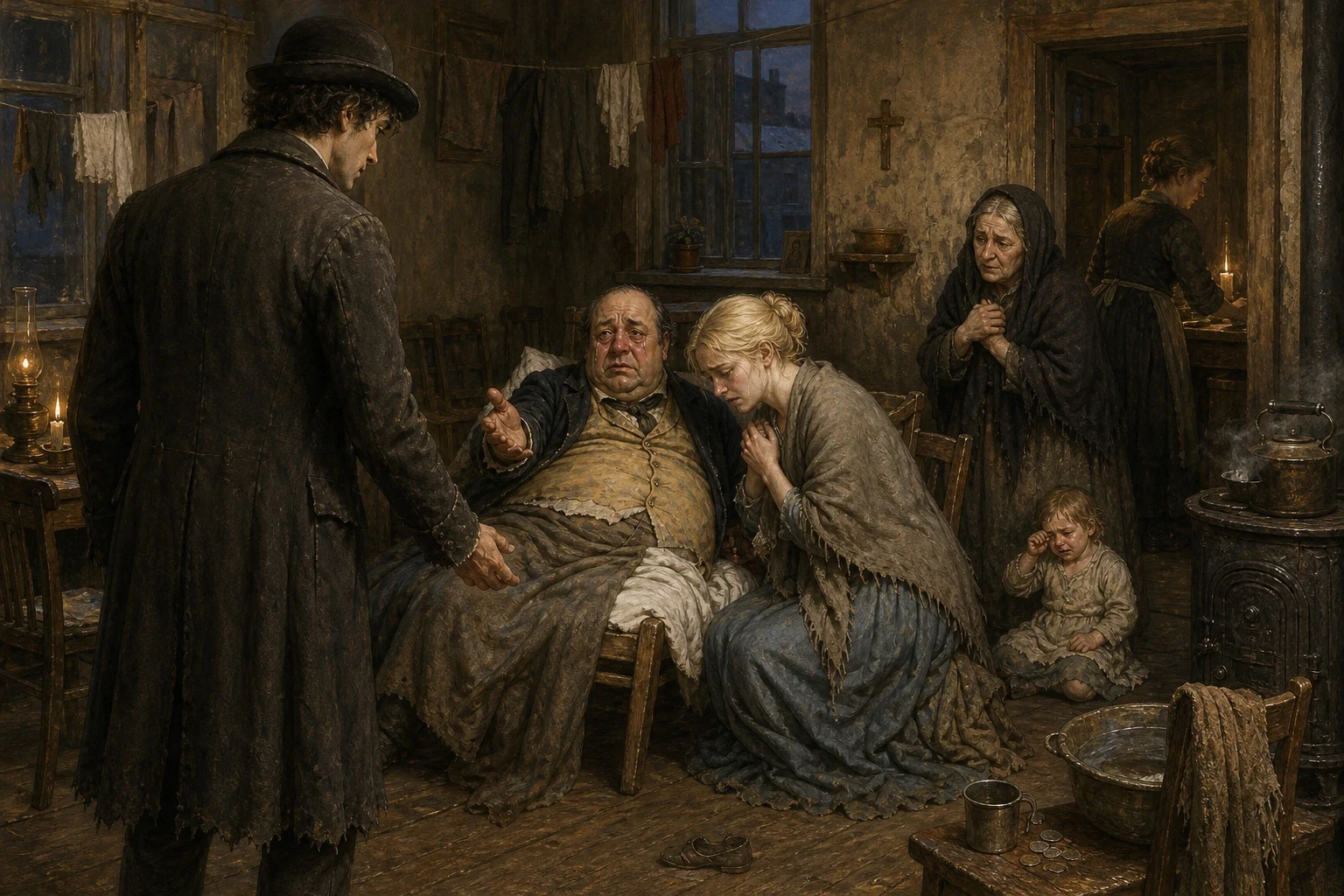
Marmeladov, a ruined former government clerk whom Raskolnikov had met rambling drunkenly in a tavern some days before, was knocked down by a carriage in the street and crushed. Raskolnikov happened to be passing and helped carry the dying man home to his family's one wretched room, where Marmeladov's wife wept and his children cried, and where Sonia — his quiet daughter, grown thin and worn far beyond her eighteen years from the life she led to support them — knelt beside her father and held him as he died. Raskolnikov, moved by a grief he could not entirely explain even to himself, pressed all the money he had left into the family's hands before he left. It was the first time he had seen Sonia's face closely, and something in her stillness and her sorrow stayed with him afterward, though he could not yet have said why.
Page 6
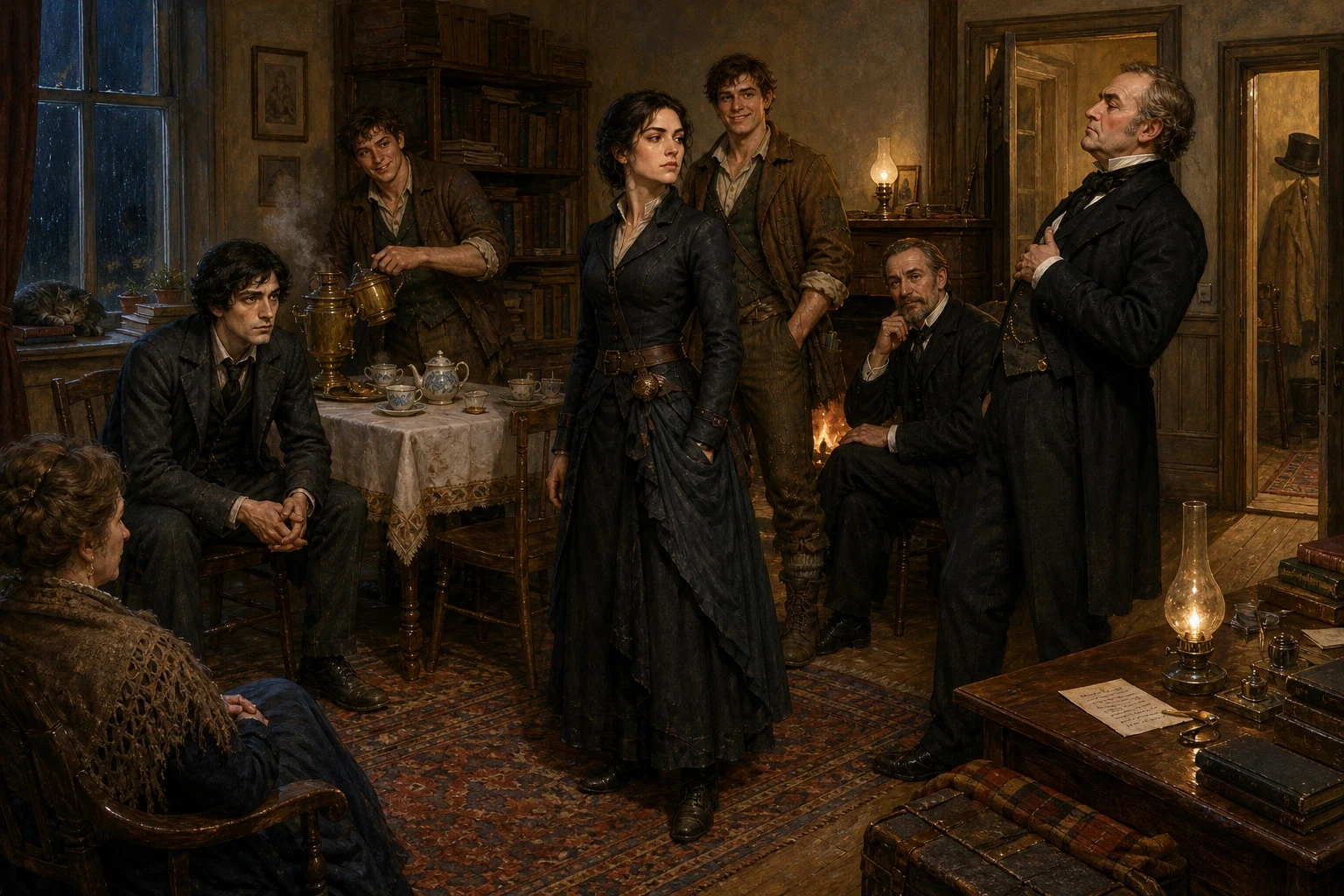
Raskolnikov's mother and his sister Dunya had come all the way from the country to Petersburg, full of hope for Dunya's engagement to a calculating, self-important man named Luzhin. At a gathering in Razumikhin's rooms, with his mother anxious and Luzhin blustering about the room, Raskolnikov said plainly what he thought of the match, and would not soften it for anyone's comfort. Dunya, who was nobody's fool and had been doubting Luzhin herself, listened to her brother's bluntness and finally saw the man clearly for what he was. Before the evening ended she had broken the engagement outright, in front of everyone, leaving Luzhin red-faced and furious and her mother bewildered but, in the end, relieved. Razumikhin, who had loved Dunya from the moment he first saw her, could hardly keep himself from showing how glad he was.
Page 7
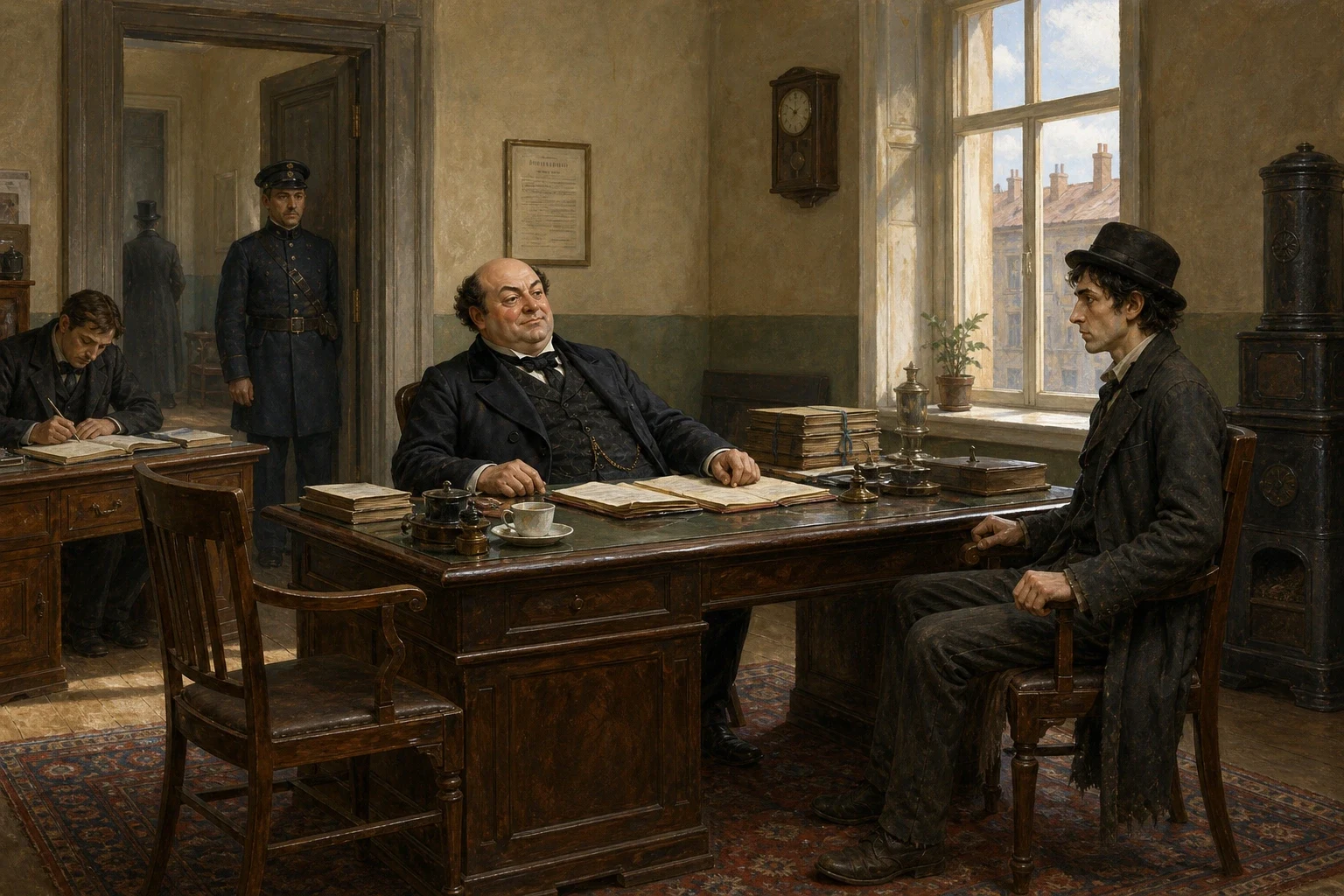
Porfiry Petrovich, the examining magistrate investigating the pawnbroker's murder, received Raskolnikov in his office with elaborate, almost mocking politeness. He brought up, as if by chance, an article Raskolnikov had once published about certain 'extraordinary men' who had the right to step over ordinary laws for the sake of some greater idea — and then circled it again and again, smiling, asking harmless-seeming questions that were not harmless at all. Raskolnikov answered as calmly as he could, certain the whole time that Porfiry already knew everything and was simply enjoying watching him twist. Neither man said the word murder once. When Raskolnikov finally left, his hands were shaking, though his face, he hoped, had given nothing away.
Page 8
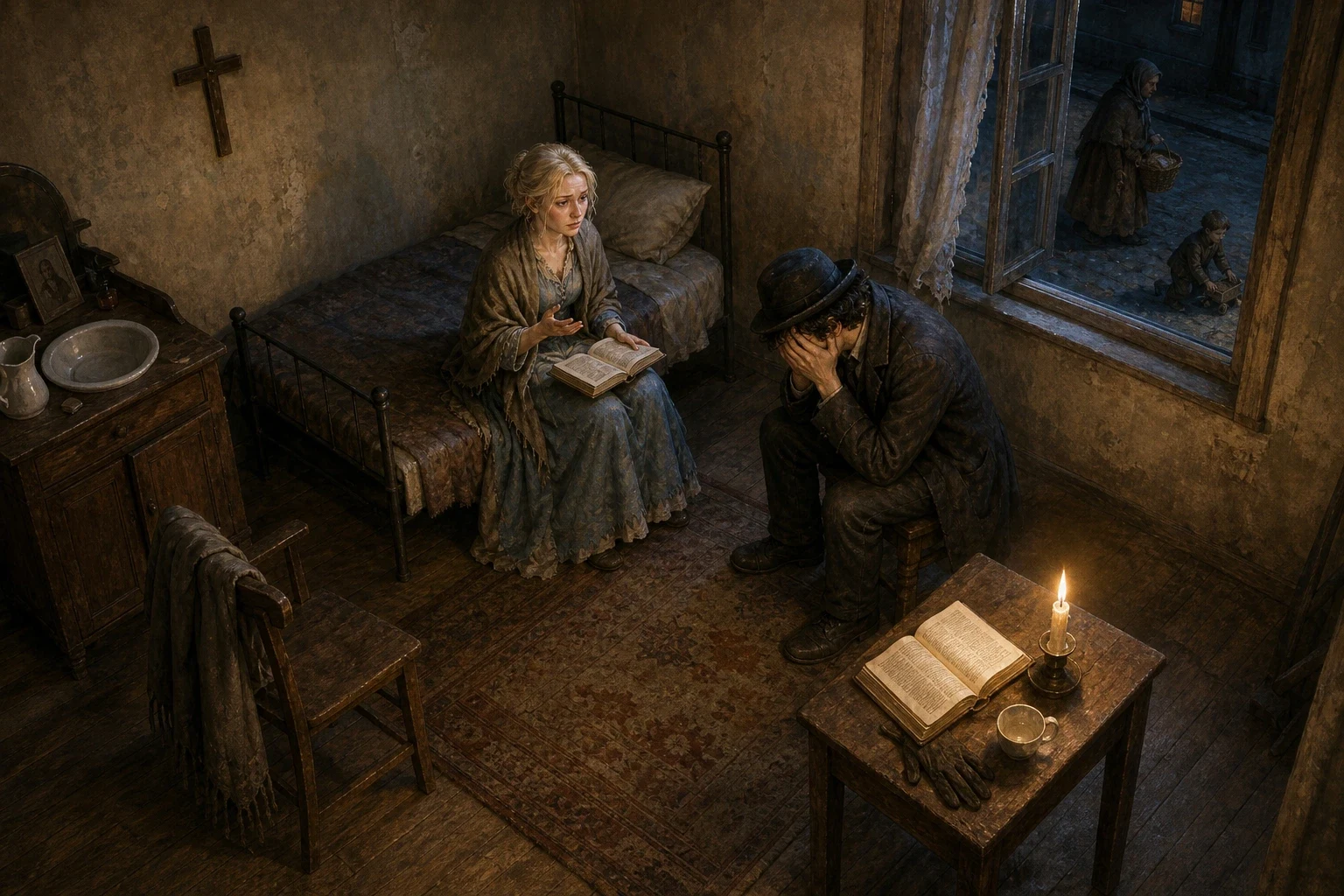
In the privacy of Sonia's bare little room, Raskolnikov finally told her the truth — that it was he who had killed the old pawnbroker and her sister Lizaveta. Sonia cried out and drew back from him in horror, but she did not run from him, and after the first shock she came to him and embraced him, weeping for him rather than against him. At his strange, insistent request she took down her old, worn Bible and read aloud to him the story of Lazarus raised from the dead, her voice trembling but steady. When she had finished, she told him plainly that he must go to the authorities and confess, and accept his suffering, and that whatever happened to him she would follow him and never leave him. Raskolnikov left her room that night no less tormented, but no longer entirely alone.
Page 9
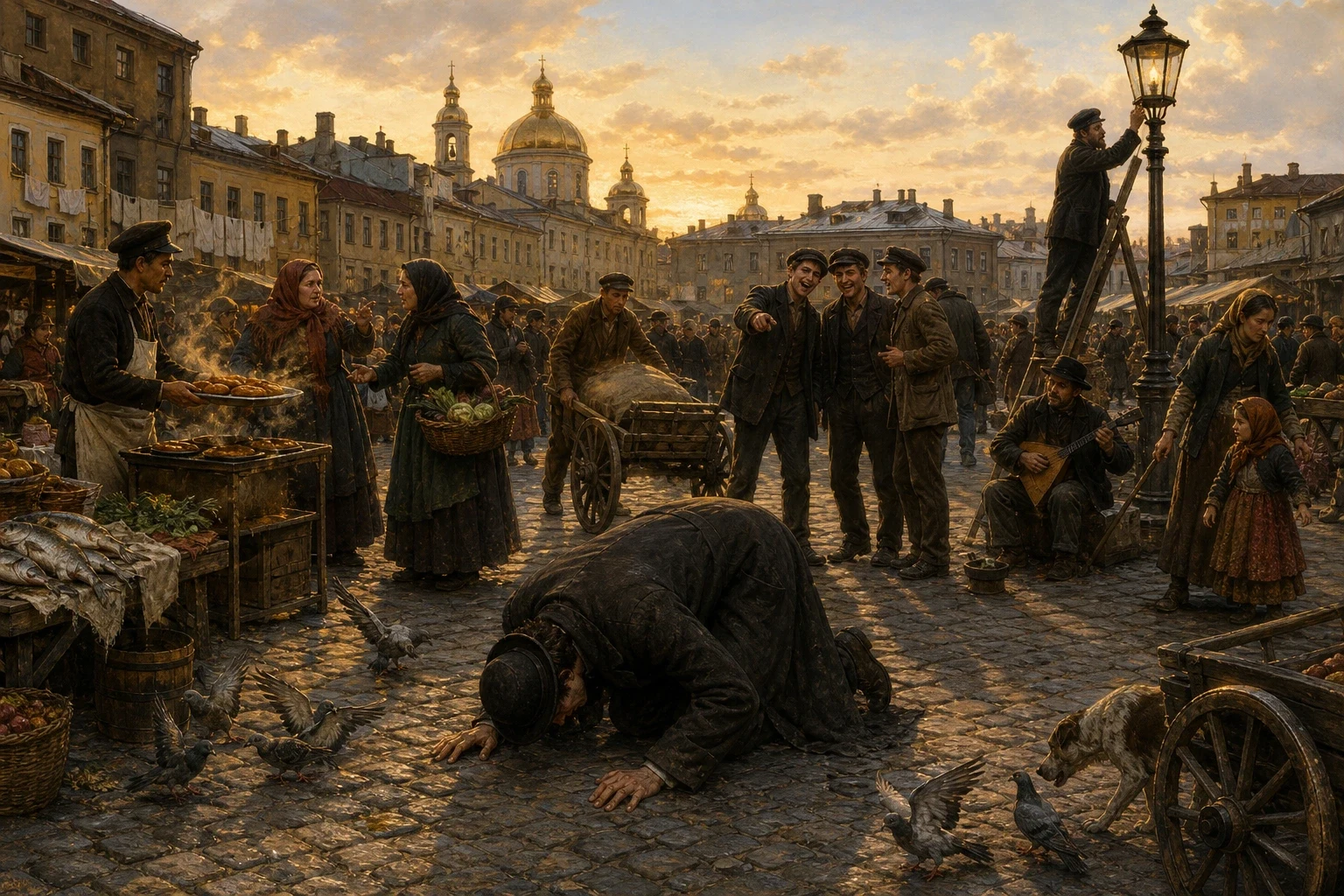
Raskolnikov walked out into the crowded Haymarket Square at evening, remembering what Sonia had told him. In the middle of all the noise and bustle of the market, he suddenly knelt down in the dirt and kissed the earth, just as she had said, while people around him laughed and jeered, taking him for a drunk. He did not care. He rose, brushed himself off, and did not go to confess that very moment after all — his courage failed him once more — but he had taken the first real step, and he knew it. He turned his steps instead toward the police bureau, walking slowly, and this time, when he reached the door, he did not turn back.
Page 10
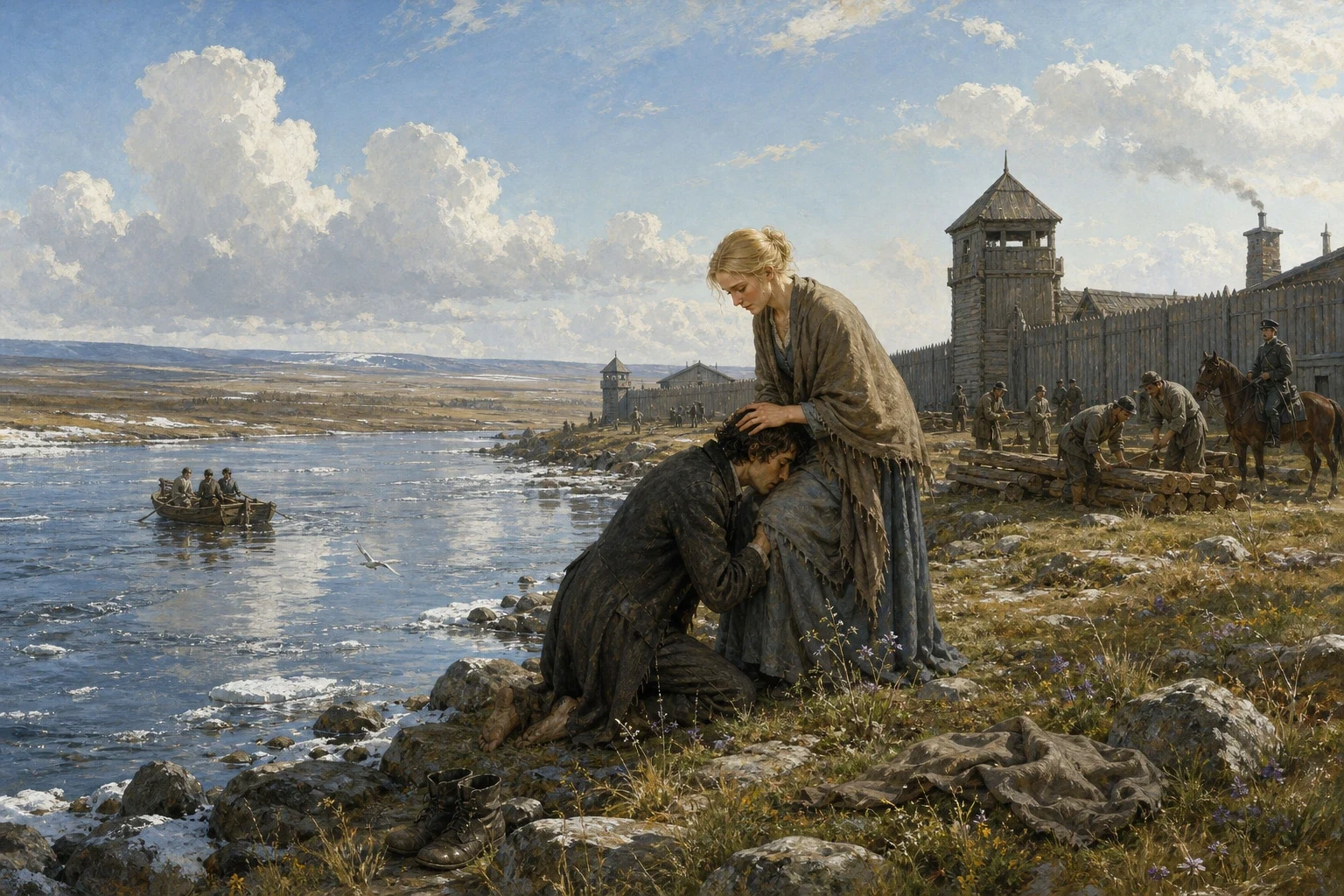
Raskolnikov confessed, was tried, and was sent to a prison camp in Siberia, and Sonia followed him there, taking lodgings nearby and visiting him whenever she was allowed. For a long time in the camp he remained proud and distant even from her, hardly speaking, still unable to feel the plain wrongness of what he had done. Then one day, by the wide river that ran past the camp, with the vast empty steppe stretching away on the far side, she came to him again, and for the first time he fell at her feet and wept, and found that he loved her completely. It was not a sudden cure, and the book does not pretend it was: seven more years of prison lay ahead of him, and a slow, difficult road toward real change. But it was, as the story tells us plainly, the beginning of a new history — the history of his gradual rebirth.
About this story
- Audience: general readers
Read Wonder Novels on your phone
Wonder Novels is available on Android. Get Wonder Novels on Google Play.