Dead Souls
A gentleman travels the back roads of Russia buying up the names of serfs who are already dead
Page 1
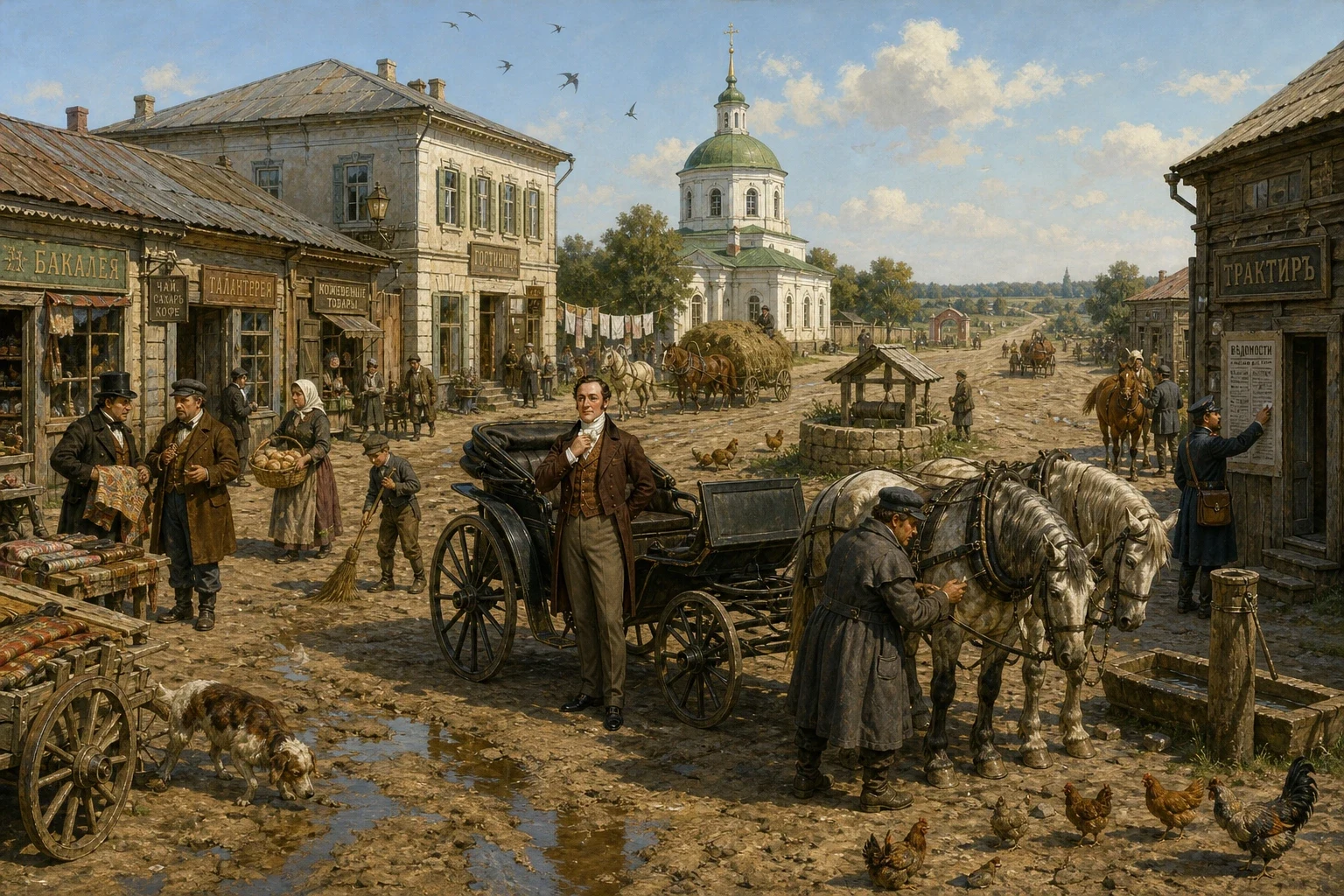
A light, well-sprung carriage rolled into the small provincial town of N. one fine morning and drew up outside the best inn on the square. Out of it climbed a gentleman — not handsome, not plain, not old, not young, a man exactly the sort nobody remembers afterward. He gave his coachman, Selifan, a few quiet instructions, straightened his brown tailcoat, and walked off at once to see the town: the shops, the newspaper stuck up outside the tavern, the church with its peeling dome, the muddy square where a drunk man lay sleeping. He asked no one anything in particular and seemed to take an interest in everything. By evening he had already learned the name of the Governor, the names of half the officials in town, and had decided — though he told no one this — that N. was a town where a careful man might do very well indeed.
Page 2
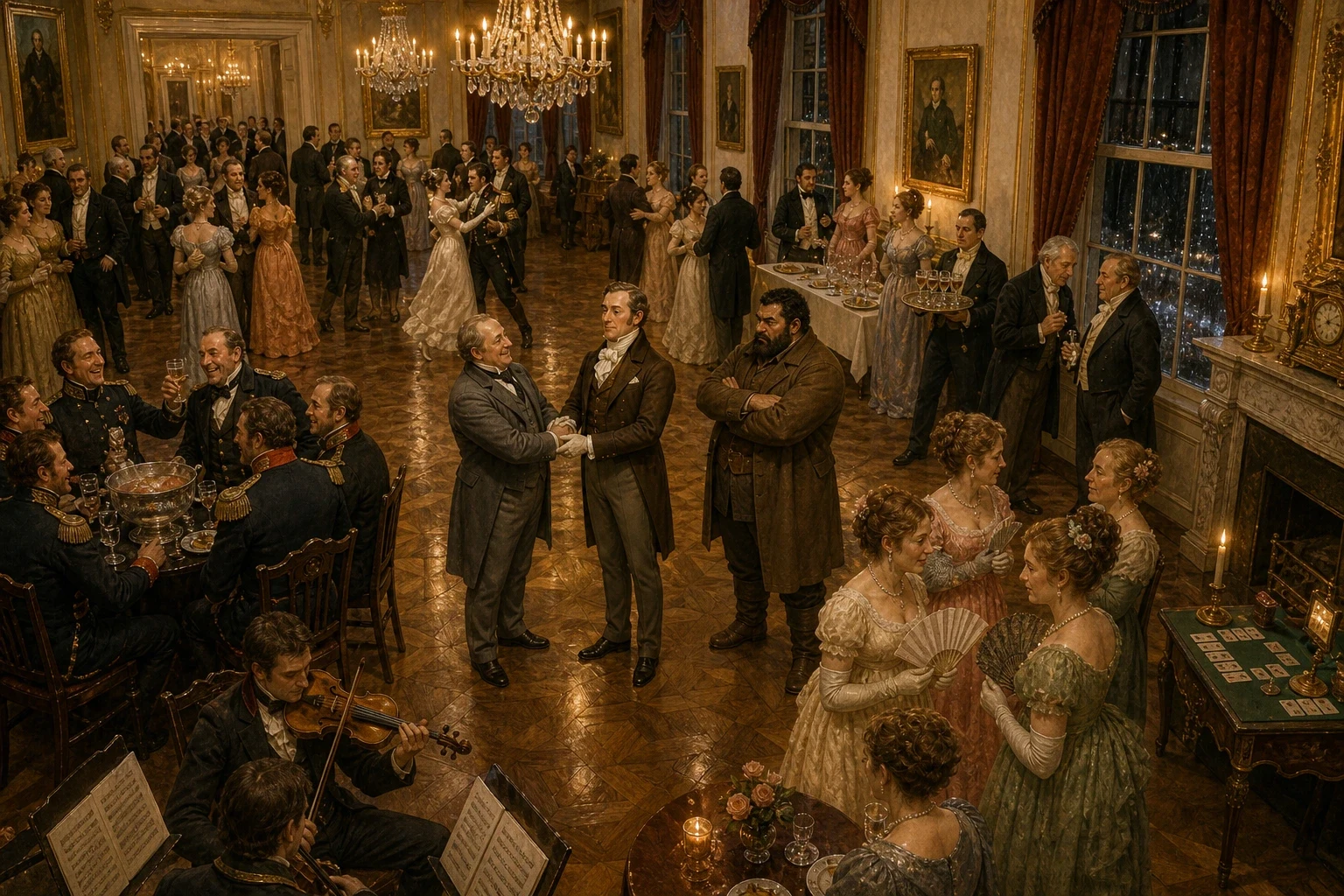
That same week the Governor gave a party, and Chichikov went, and by the end of the evening it seemed as if he had always lived in N. He agreed with everyone about everything — flattered the fat men by being thin in his opinions and the thin men by being fat in them — and every official in the room decided he was the most agreeable man they had met in years. Two landowners took to him especially. One was Manilov, a soft, smiling man who could not stop pressing his hand and inviting him to visit; the other was Sobakevich, a huge, silent man who said almost nothing but watched him carefully the whole evening and, before he left, gave him a short, blunt invitation of his own. Chichikov accepted both at once, with exactly the same warmth, and noted privately that a man who wishes to do business in the country should never refuse an invitation from a landowner.
Page 3
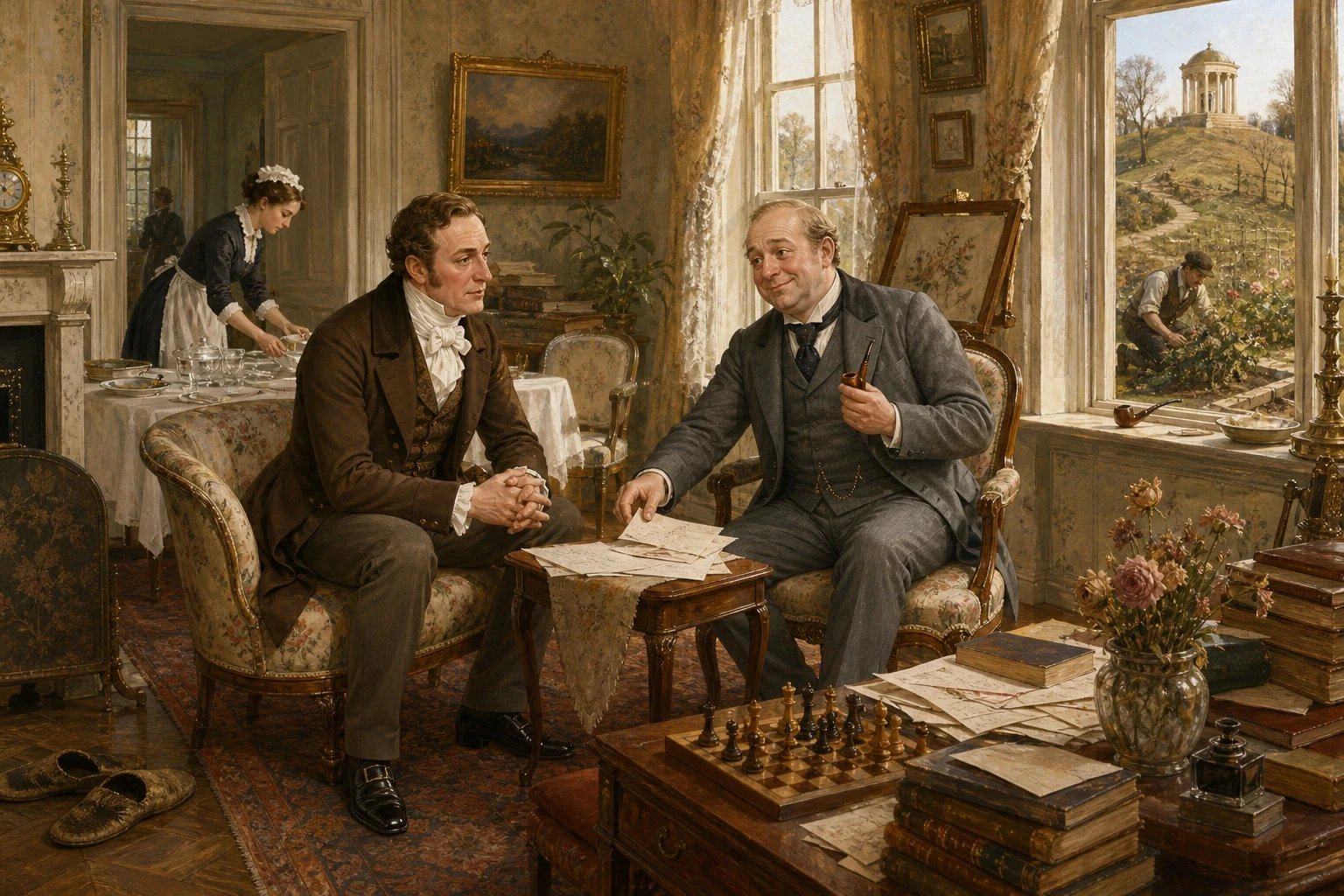
Manilov's house stood on a hill with a view he was forever praising and a garden he had never finished. He welcomed Chichikov like a brother, and after a long, syrupy dinner, Chichikov came to the point. He explained, carefully and vaguely, that he wished to purchase a certain number of Manilov's serfs — not living ones, but those who had died since the last census and were still, on paper, counted as alive, with taxes still paid on their names. Manilov blinked. He did not fully understand why anyone would want such a thing, but he did not like to seem ungenerous, and he could never bring himself to disagree with a guest he liked so much. After a show of worrying whether the arrangement was quite proper, he waved the question away and said Chichikov might simply have them, as a gift, drawing up the paper then and there without asking for a single ruble.
Page 4
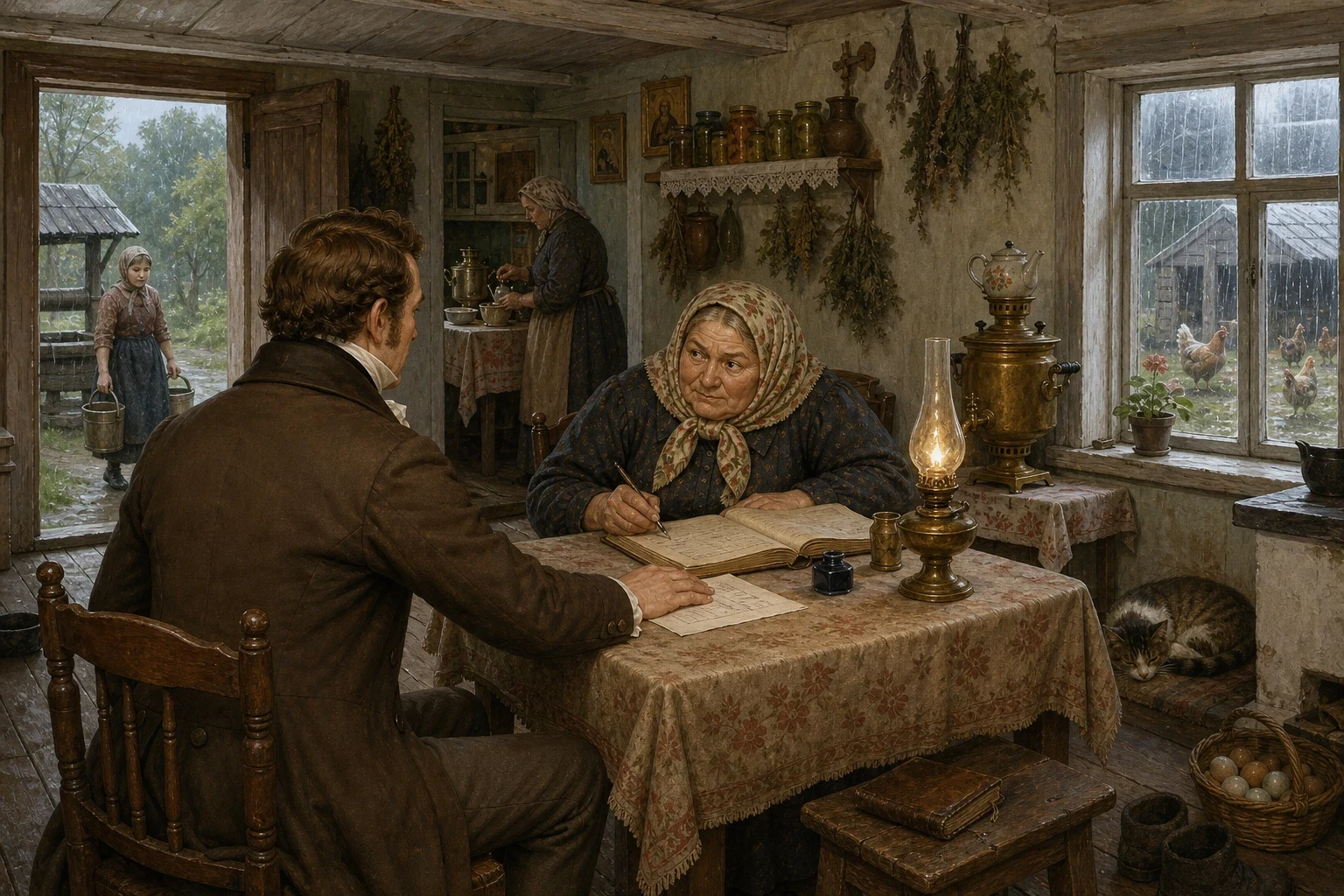
Chichikov's carriage lost its way in a heavy rain that night and overturned in the mud, and he found himself, cold and irritated, knocking at the door of a small farmhouse belonging to an elderly widow named Korobochka. She put him up kindly enough, and in the morning, once he had recovered his temper, he raised the same question he had put to Manilov — only Korobochka was not Manilov. She understood money perfectly well, though not this particular kind of it, and she fretted and hedged and worried aloud that dead souls might somehow be worth more than she knew, perhaps useful on the estate in some way she couldn't picture. Chichikov lost patience, then charmed her, then lost patience again, until at last she agreed to sell him eighteen dead souls for fifteen rubles — and even as she signed the paper, she could not stop glancing at him sideways, certain she had let something valuable go too cheap.
Page 5
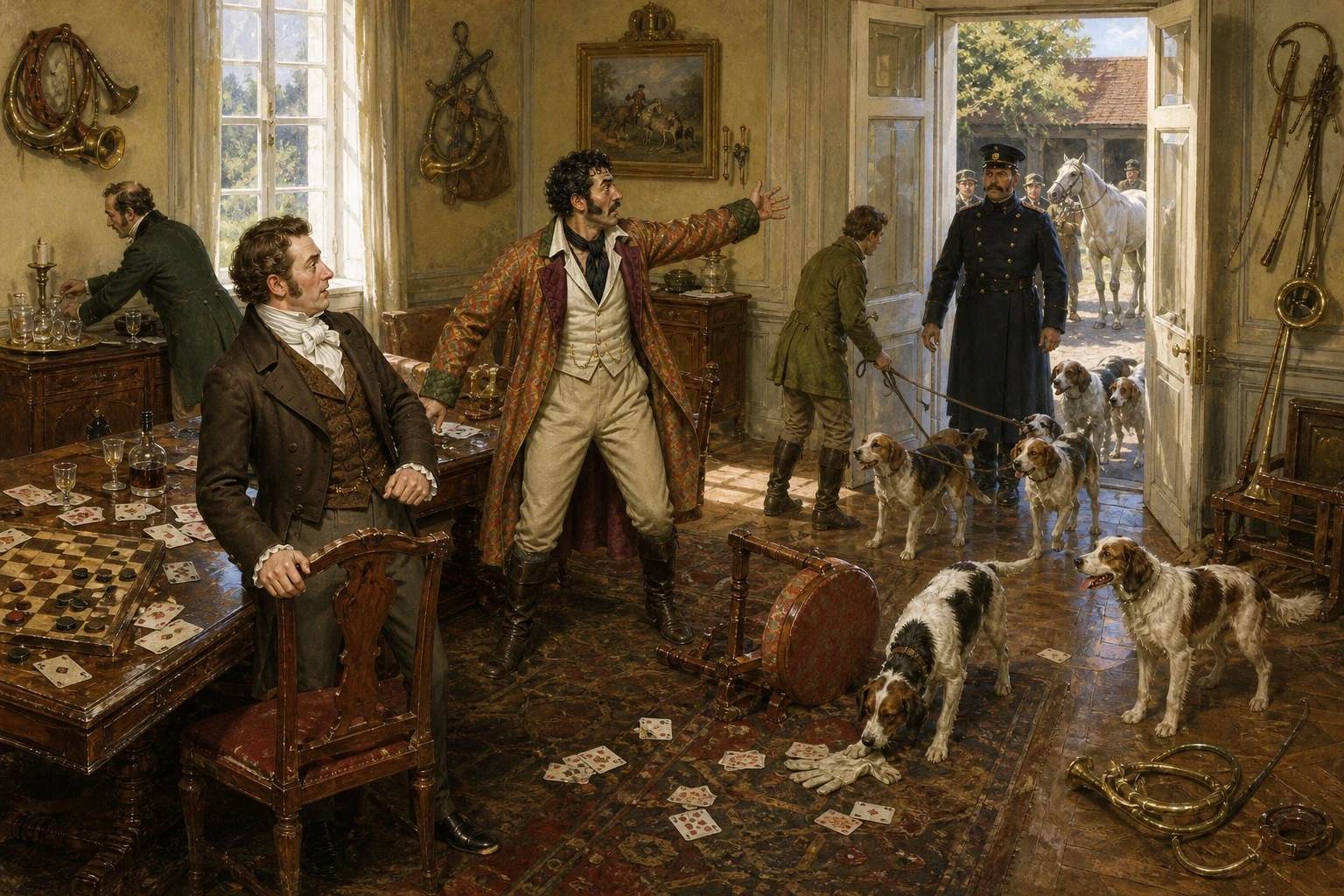
Nozdryov received Chichikov the way he received everyone — loudly, with hunting dogs underfoot and a story already halfway told. He would not simply sell his dead souls; that was no fun at all. He insisted on a game instead — first cards, which he played so shamelessly crooked that even Chichikov, who was no innocent himself, refused to go on, and then checkers, which Nozdryov tried to win by quietly moving pieces when he thought no one was looking. When Chichikov caught him at it and would not yield another move, Nozdryov's good humor vanished in an instant. He shouted for his servants to come and beat the guest for insulting him, and Chichikov, white in the face, stood up and grabbed a chair to defend himself with. At that exact moment, before a single blow could fall, a police captain strode into the room to inform Nozdryov that he was under arrest — for beating a neighboring landowner with birch rods during a drunken quarrel entirely unrelated to this one.
Page 6
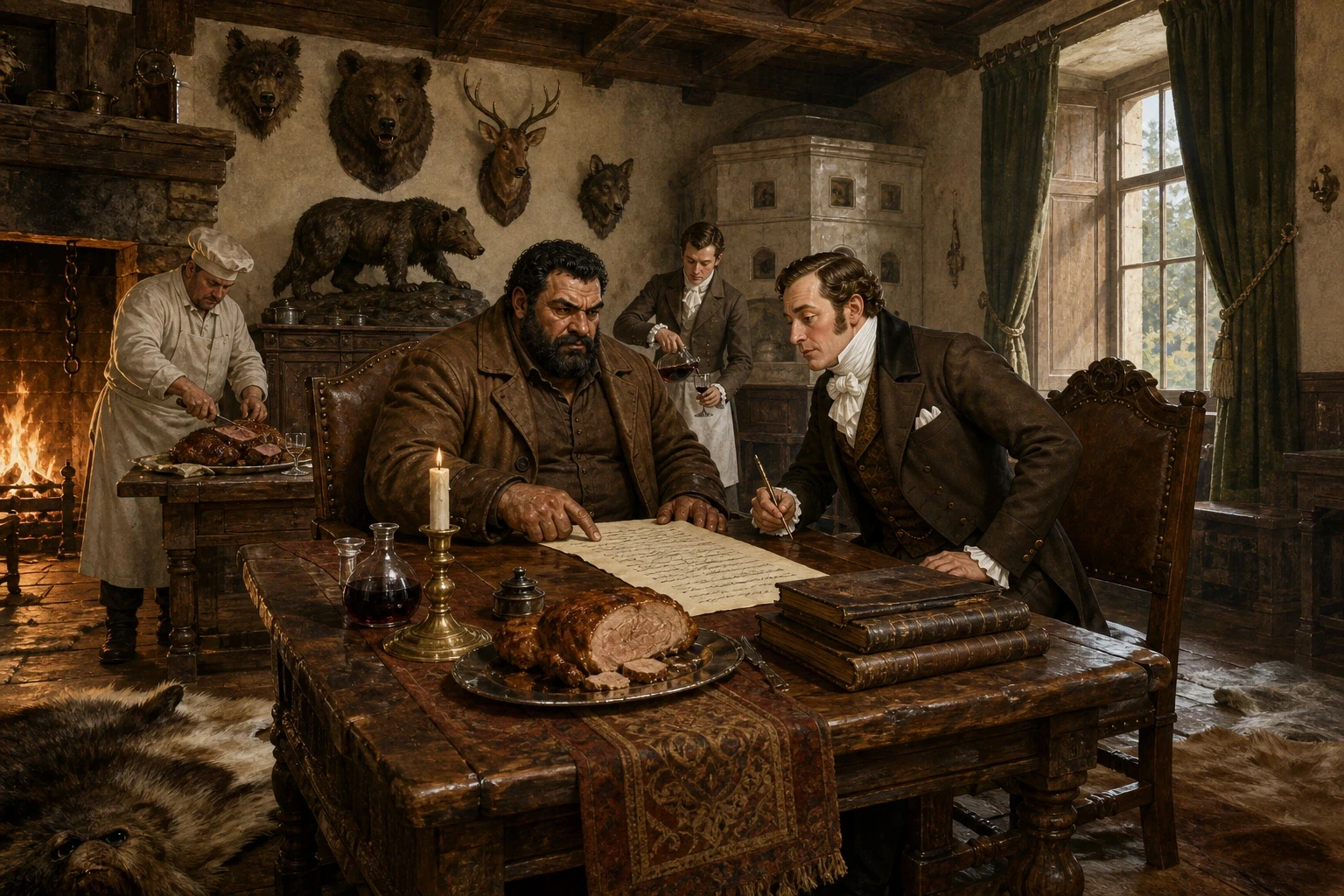
Sobakevich's house was built the way Sobakevich himself was built — solid, square, and without a single unnecessary ornament. Over a dinner heavy enough to match its owner, Chichikov raised the subject a third time, more carefully now, having learned that plain speaking worked better with some men than sentiment did. Sobakevich did not blink, did not pretend surprise, and did not pretend to be shocked at being asked to sell the names of dead men. He simply named a price — a high one — and then, as the bargaining went on, began to praise his dead serfs one by one as though they were still the finest workers in the province: this one a carpenter who could build a house with an axe alone, that one a bootmaker who never wasted a scrap of leather. Chichikov haggled him down hard, ruble by ruble, and in the end walked away with a long, carefully written list of real names — the best bargain, and the strangest conversation, of the whole journey.
Page 7
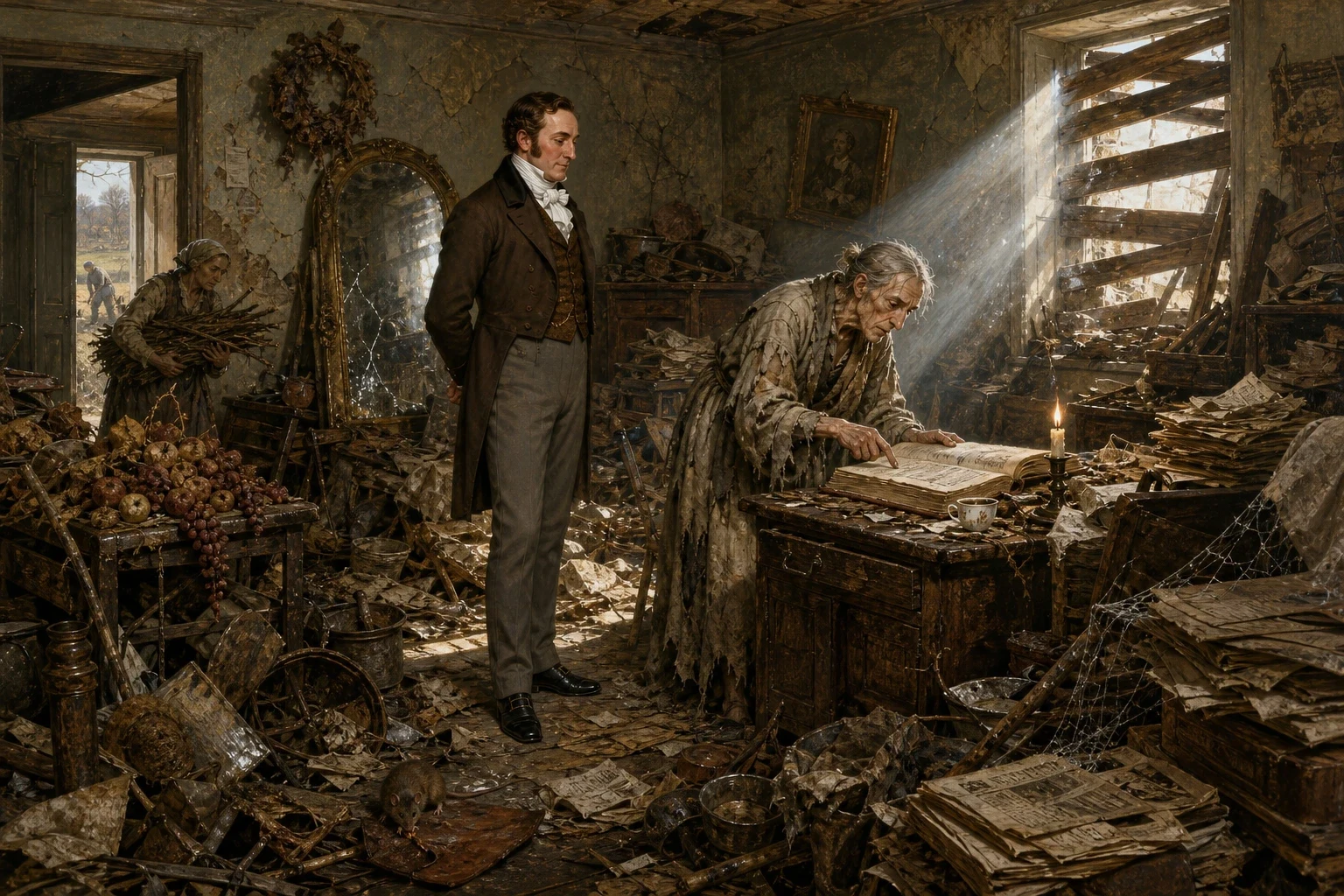
Plyushkin's estate looked abandoned from a distance — roofs falling in, windows boarded, fields gone to weed — and his house, once Chichikov finally got inside it, was worse: room after room piled with broken furniture, dried-up fruit, scraps of paper and bits of old iron that Plyushkin had been hoarding for years and would let nothing go. He was so ragged that Chichikov at first mistook him for a servant. But Plyushkin had a sharp memory for every soul who had died or run off his land, and once he understood that Chichikov wanted to take these dead and missing names off his tax books for good, his suspicion melted into something close to gratitude. He fetched his own dusty ledger and sold Chichikov well over a hundred souls — dead ones and runaways both — for almost nothing at all, delighted to be rid of a debt he had been quietly paying on for years.
Page 8
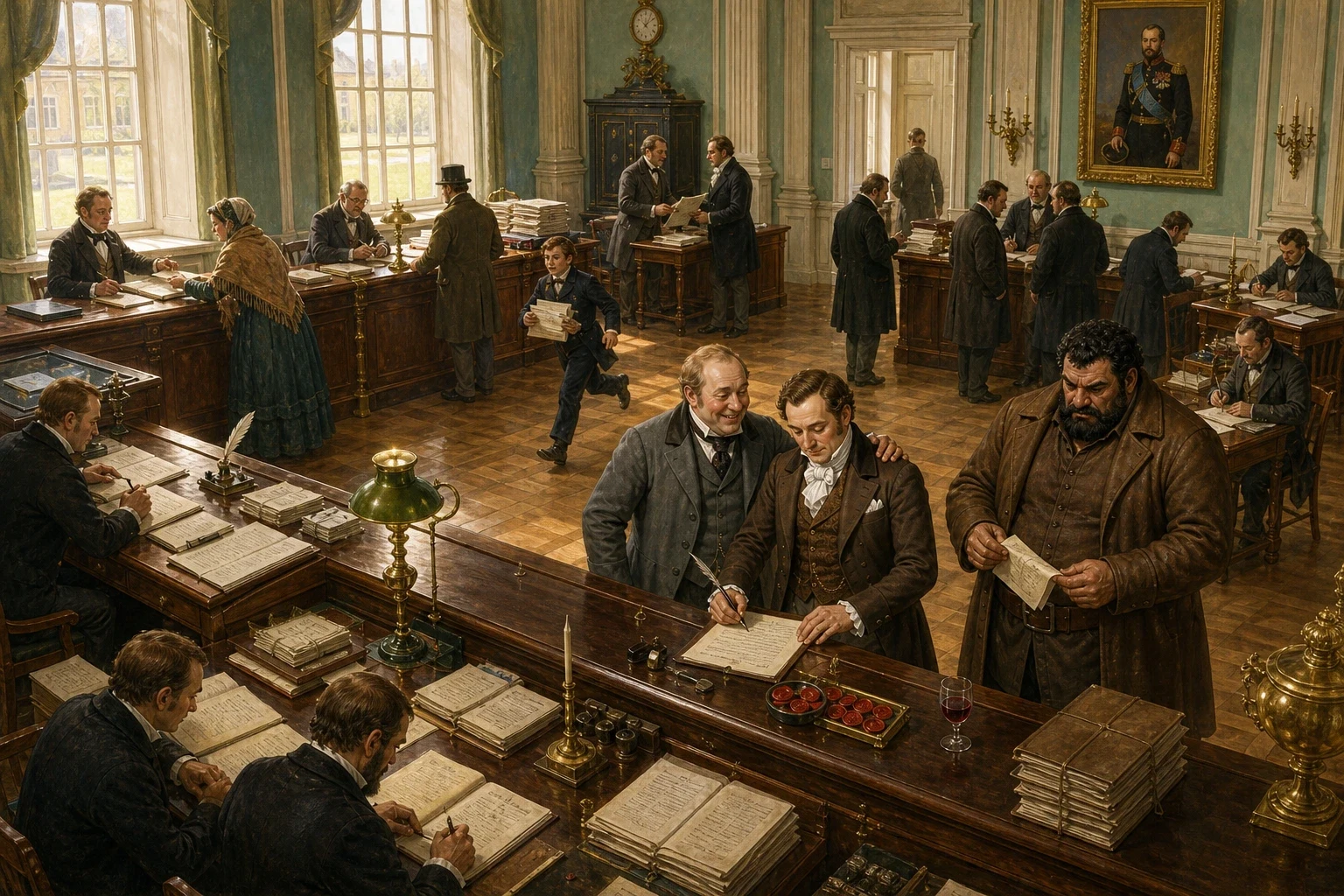
Back in the town of N., Chichikov took his bundle of purchases to the Civil Chamber to have them made legal. The clerks were slow until a little money changed hands, and then suddenly very quick indeed. Manilov and Sobakevich both came in person to witness their own sales, Manilov beaming as though he were attending his own wedding, Sobakevich signing without a word and leaving at once. When it was done, Chichikov found himself the registered owner, on paper, of several hundred souls — enough land and labor, on the books, to make him look like a very considerable man indeed. Word of it spread through the chamber within the hour, and by evening the officials of N. were toasting him at dinner as a new and rising fortune in the province, clapping him on the back and calling him, half in jest and half in earnest, their own local millionaire.
Page 9
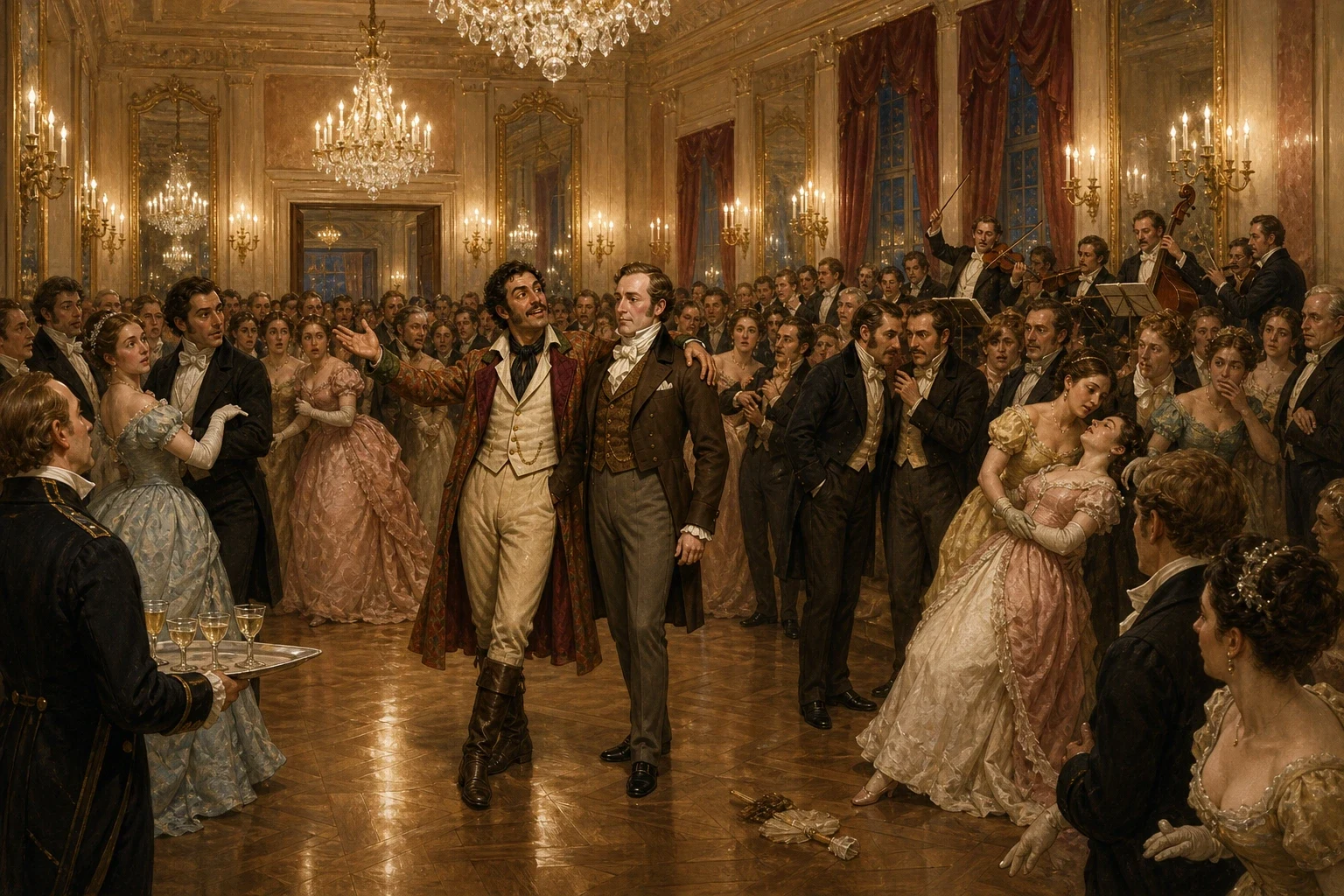
At the Governor's ball that followed, Chichikov was, for one glittering evening, the most admired man in the room — dancing, complimented, consulted on everything from crops to cravats. Then Nozdryov arrived, loud and half drunk as always, and crossed the floor straight toward him with a wide grin. Before Chichikov could stop him, Nozdryov announced, to half the ballroom at once, that his old friend Pavel Ivanovich was nothing but a trader in dead souls — that he'd been buying up dead serfs' names all over the district, and wasn't that the funniest thing anyone had ever heard? A few people laughed, assuming it was one of Nozdryov's usual tall stories. But the words had been said now, out loud, in front of everyone who mattered in N., and Chichikov felt the whole warm evening turn cold around him within the space of a single sentence.
Page 10
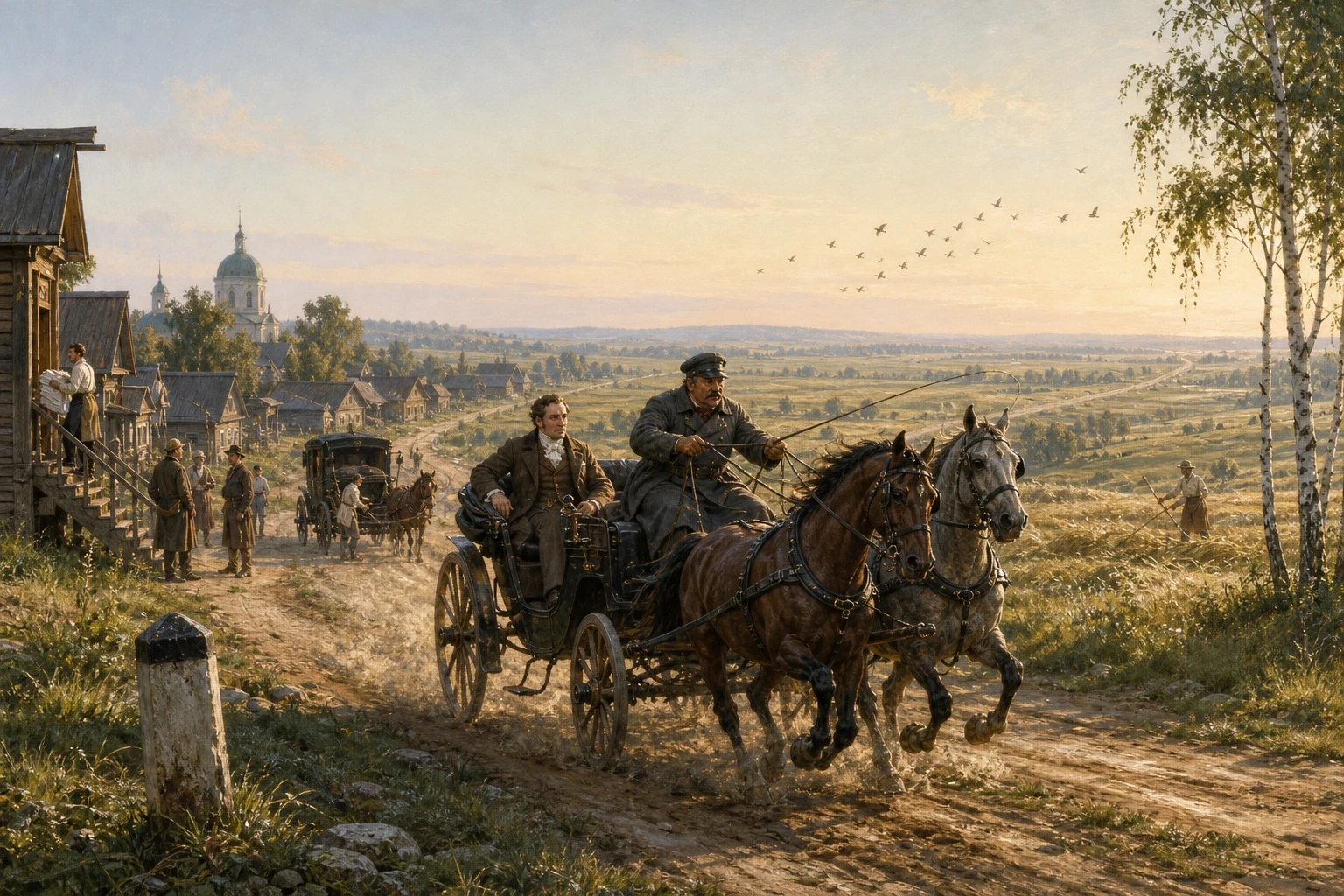
By morning the whole town of N. was talking of nothing else — some said Chichikov was a dangerous swindler, some said he must be Napoleon himself in disguise, some said far stranger things, and nobody agreed on anything except that he ought to be watched closely. Chichikov, hearing enough of this secondhand to know it was time to go, settled his accounts quietly, had Selifan harness the horses before dawn, and climbed into his carriage without waiting to say a proper goodbye to anyone. The britzka rolled out past the last houses of the town and onto the open road, picking up speed as the fields opened out on either side. Whatever he had meant to do with several hundred dead souls on paper, he carried it off with him unfinished and unexplained, the road unrolling ahead of him the way roads do in that enormous country, with no end in sight.
About this story
- Audience: general readers
Read Wonder Novels on your phone
Wonder Novels is available on Android. Get Wonder Novels on Google Play.