Far from the Madding Crowd
A shepherd, a farmer, and a soldier — and the one woman all three loved
Page 1
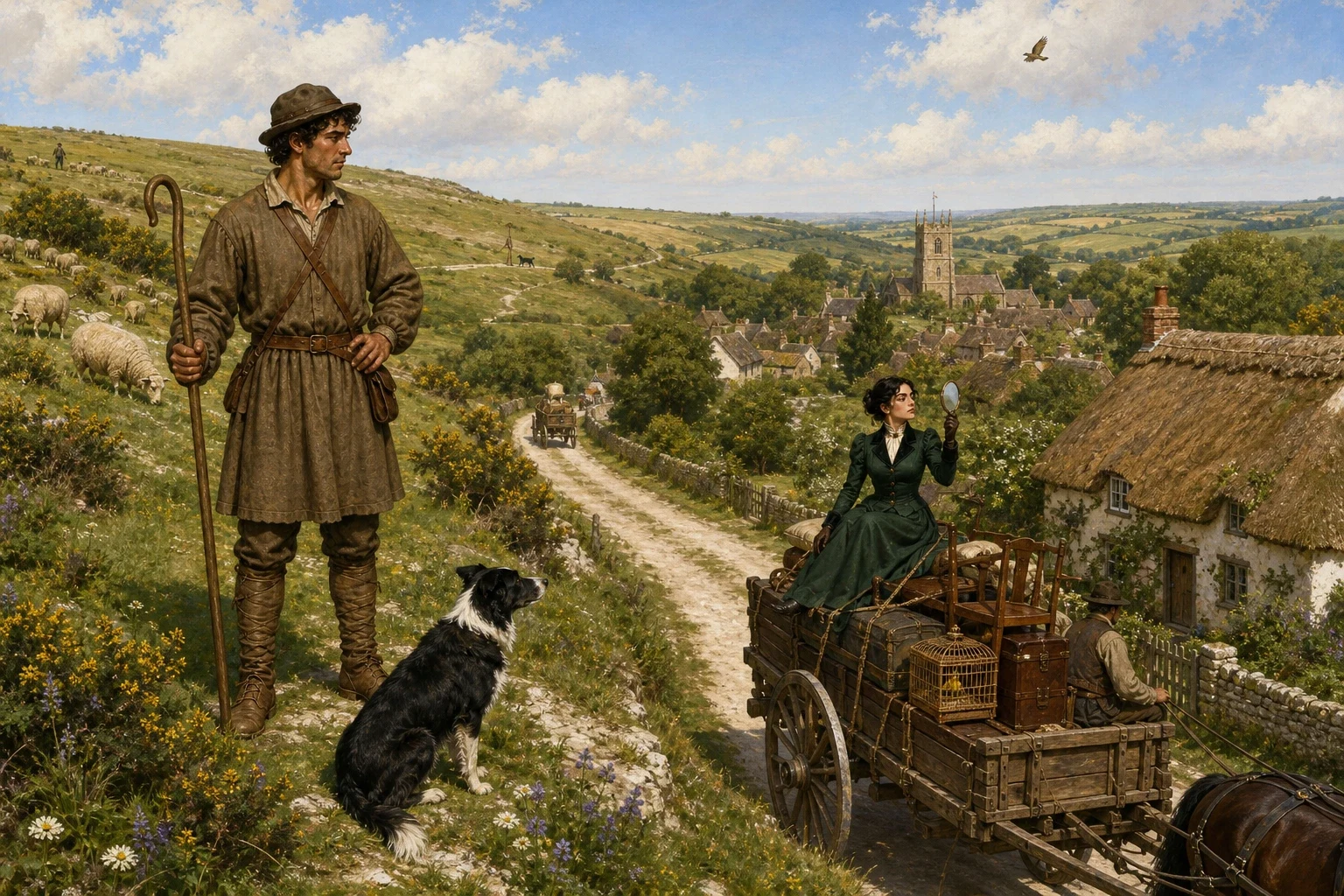
On the high, bare downs above the village of Norcombe, a young farmer named Gabriel Oak kept a small flock of sheep on land that was entirely his own, and thought himself, for a plain countryman, a fortunate one. One morning he saw a wagon come slowly along the lane below, piled with furniture and a caged canary, and perched on top of it a young woman named Bathsheba Everdene, who took out a little mirror and looked at her own face in it, simply because she could. Gabriel found out she had come to live with her aunt nearby, and before long he walked over and asked her plainly to marry him. Bathsheba looked at him for a moment and said she liked him well enough, but she did not love him, and a woman ought not to marry a man she did not love. Gabriel went back up the hill alone, disappointed but not bitter, and returned to his sheep.
Page 2
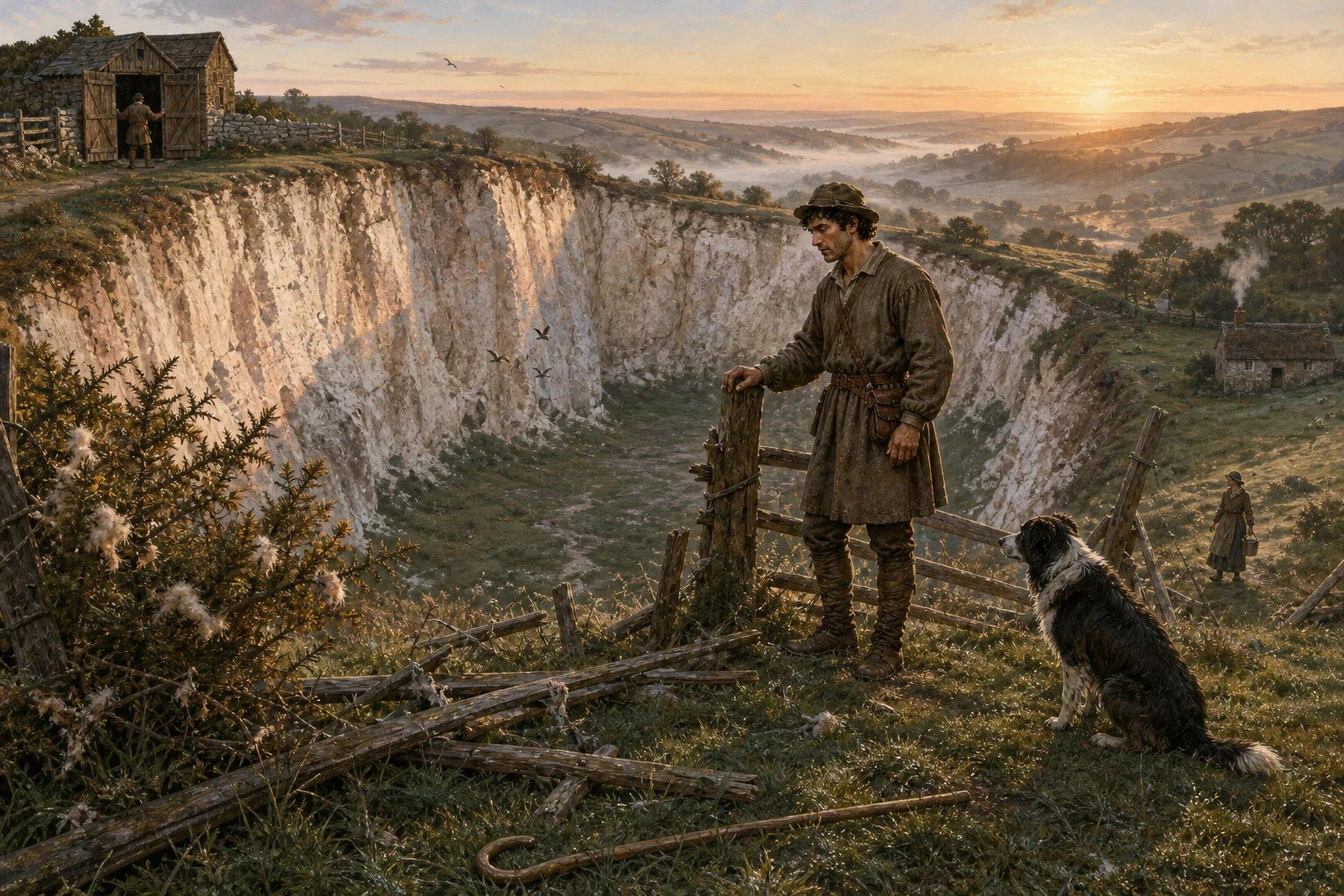
That same year, Gabriel bought a new sheepdog, a young, eager animal not yet properly trained. One night the dog, left alone with the flock, grew overexcited and drove the whole fold of ewes clean through a gap in the fence, across the open down, and over the edge of an old chalk pit that fell away sharply into a deep, enclosed hollow. Gabriel woke before dawn to find the fold empty and the dog sitting quietly by the broken fence, pleased with itself. He walked to the edge of the chalk pit and looked down, and understood at once what had happened: nearly his whole flock was lost, fallen into the hollow below, where no sheep could climb out again. The flock was not insured, for Gabriel had only just begun to farm on his own account, and with it went almost everything he owned. He stood a long time at the edge before he turned and walked back down the hill.
Page 3
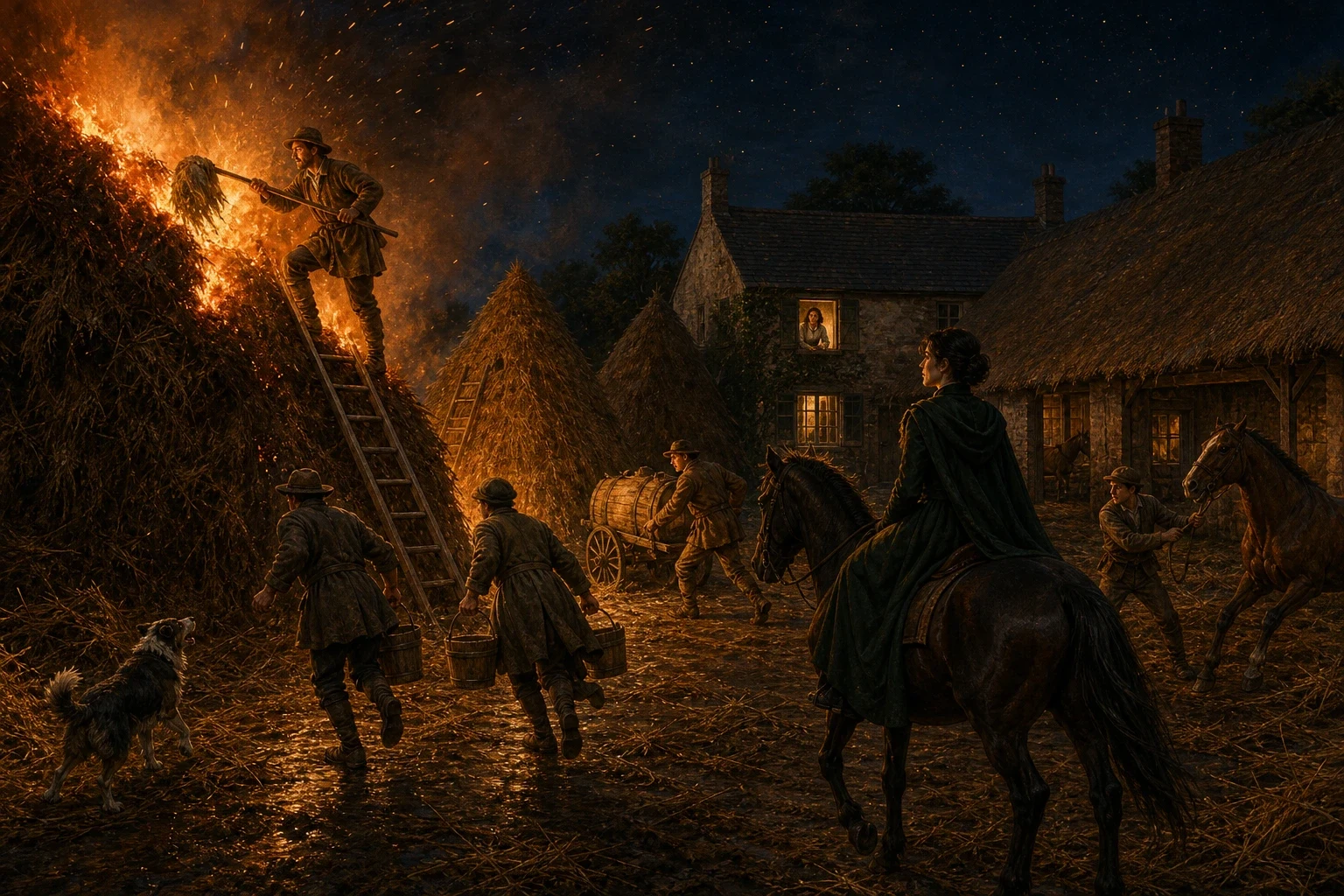
Ruined, Gabriel sold what little he had left and went looking for work as a hired shepherd. On his way through the district he saw, in the middle of the night, a hayrick on fire at a large farm, with nobody yet fighting it properly. He climbed up at once and beat out the flames along the ridge of the stack with a hook and wet sacking, working so fast and so sensibly that he saved the rick and the buildings beside it from catching too. When it was over, a cloaked young woman on horseback, the farm's new owner, thanked him and asked if he wanted work, since her shepherd had just left her. Gabriel agreed, gave his name, and only then, by her voice and her way of sitting a horse, realized with a jolt that the farm's new mistress was Bathsheba Everdene, grown richer and more her own woman since he had last seen her, now owning the whole of Weatherbury Farm by inheritance.
Page 4
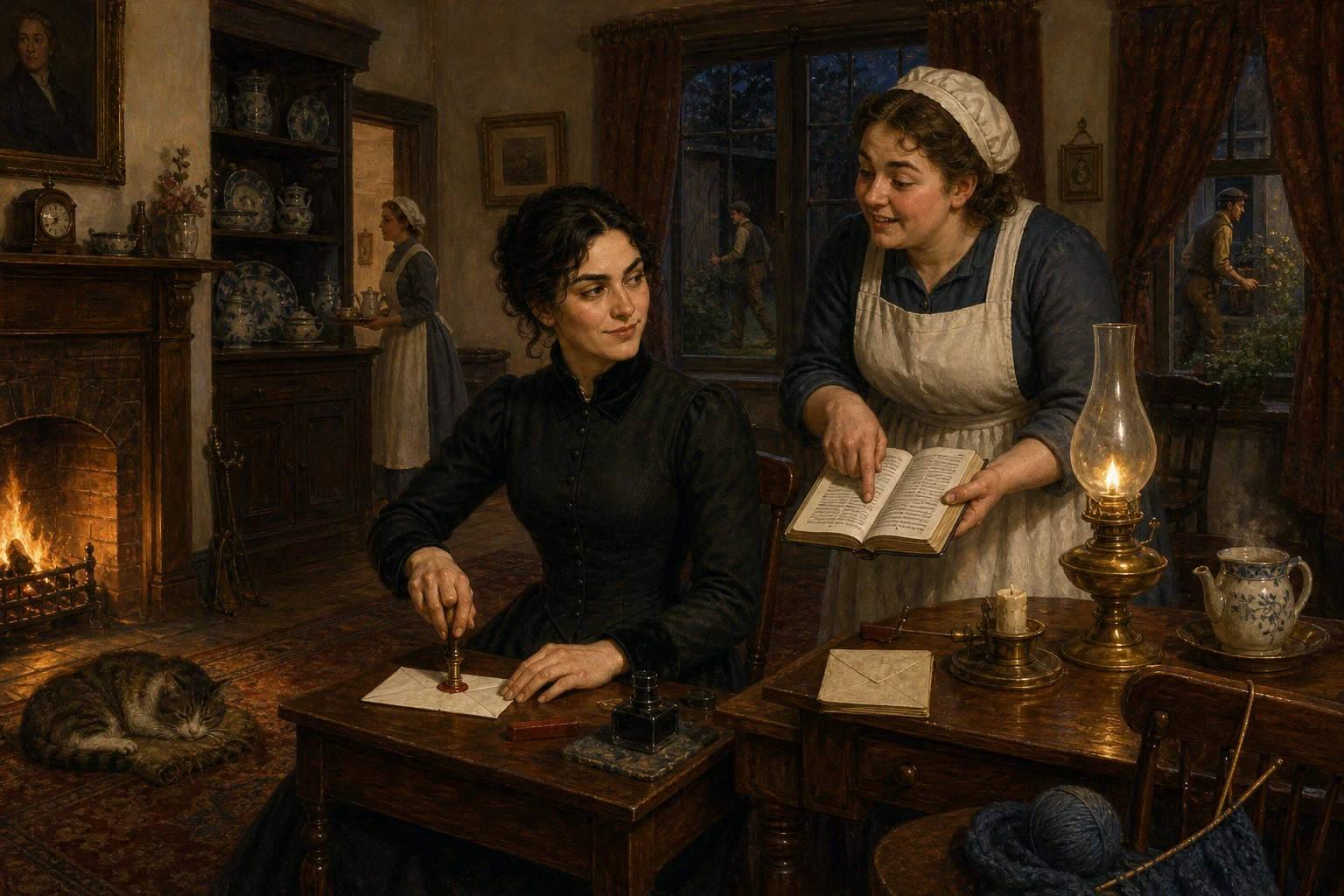
Settled now as mistress of her own farm, Bathsheba spent her evenings with Liddy Smallbury, her maid and companion, who loved nothing better than gossip and a little mischief. One such evening, talk turned to Farmer Boldwood, their grave, unmarried neighbour, who had never once looked twice at any woman in the parish. Bathsheba, bored and a little vain, wondered aloud what it would take to make such a man notice her. Liddy fetched a hymn-book and suggested they let it fall open to decide whom Bathsheba should send a valentine to, as a joke. It fell, by chance, on Boldwood's name. Laughing, Bathsheba sealed a plain valentine with nothing written inside but the words 'Marry Me,' pressed her late father's old seal into the wax, and had it sent off to Boldwood's house the next morning, thinking no more of it than of any idle game.
Page 5
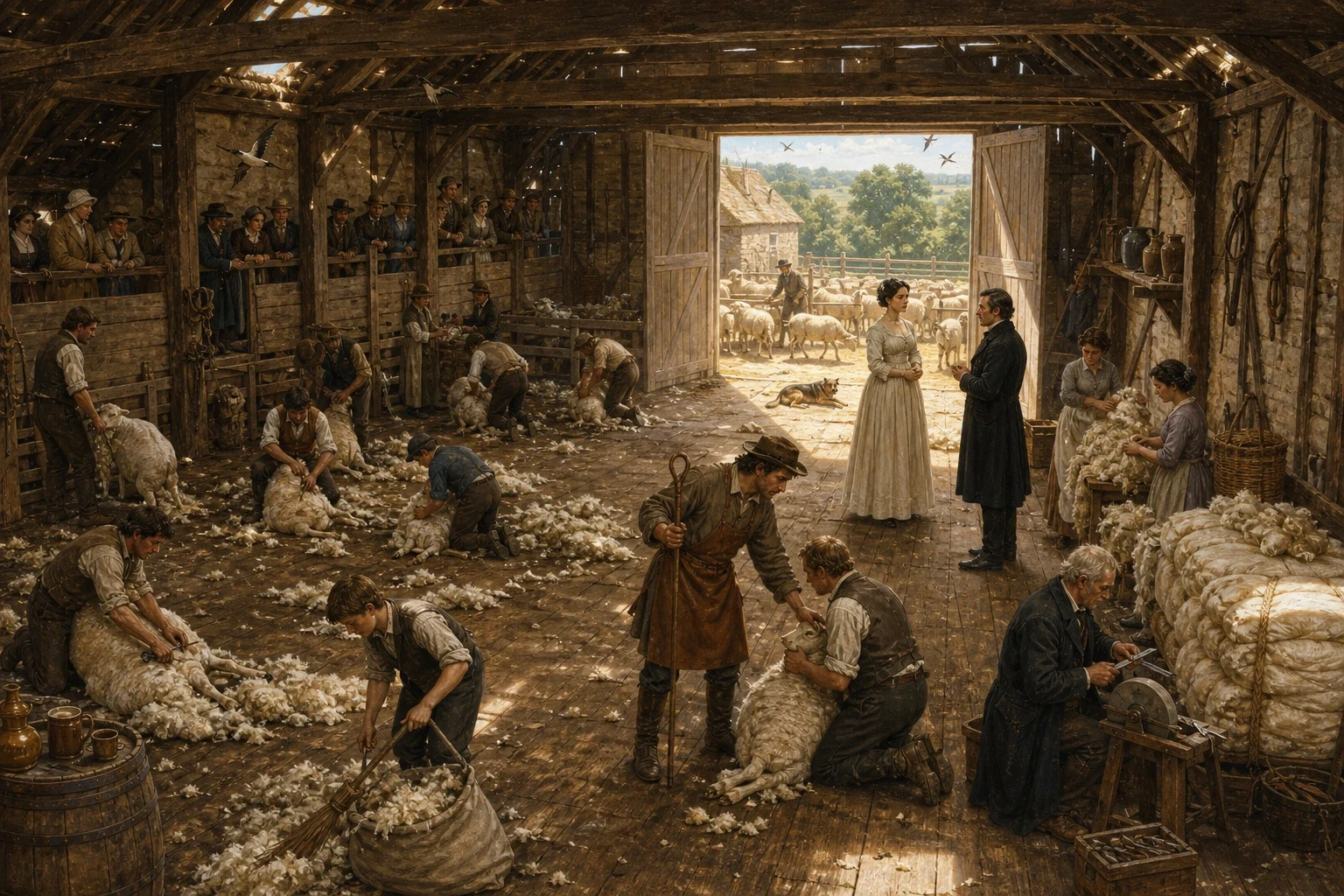
Early summer brought the yearly sheep-shearing, the great event of the farm, held inside the long old barn where generations of Weatherbury sheep had been shorn before. Gabriel, as head shepherd, oversaw the work, moving up and down the rows of kneeling shearers while Bathsheba watched over the whole business as its owner, pleased with how well her farm was run. Farmer Boldwood, who had received the valentine and had been unable to think of anything else since, came to find her there. He drew her aside near the doors and, with great seriousness, asked her to marry him, saying he had never cared for any woman before and could not now go back to not caring for her. Bathsheba, troubled and a little frightened by how much she had stirred in so serious a man over so small a joke, could not bring herself to refuse him outright, and asked only for time to think it over.
Page 6
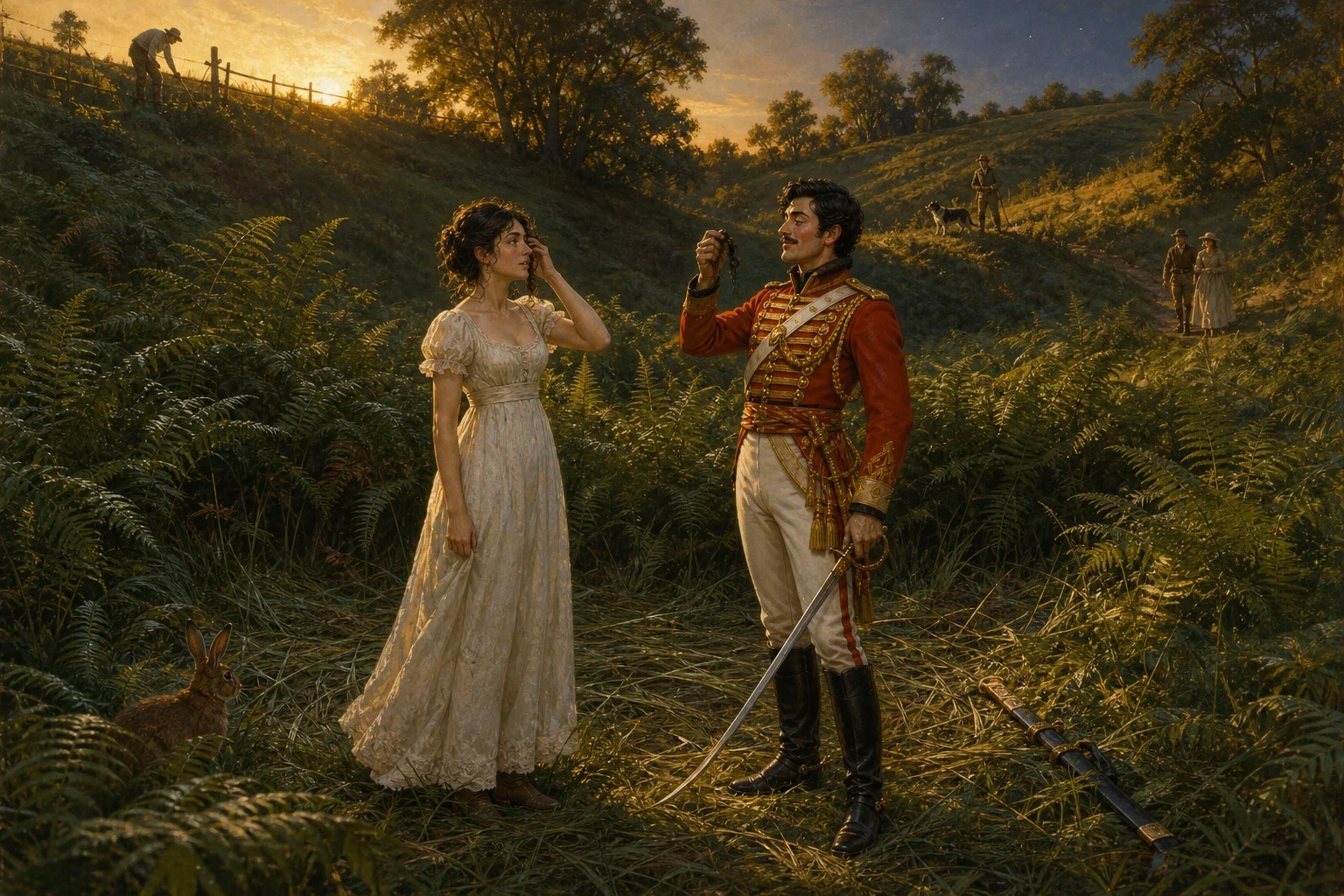
Not long after, Bathsheba met a soldier on leave, Sergeant Francis Troy, a quick, charming young man quite unlike either of her other suitors. One evening he led her into a hollow thick with tall ferns on the edge of the farm and offered to show her his skill with a sword, a thing he was genuinely good at. He drew his blade and cut and flashed it all around her in a dazzling, practiced display, the steel moving so close and so fast that she could feel the wind of it, though he never once meant to touch her and never did. When he finished, he cut a single lock of her hair clean away with the very tip of the blade, as the last stroke of the display. Bathsheba, frightened and thrilled at once, found she could think of nothing else afterward, and within weeks had fallen completely and foolishly in love with him.
Page 7
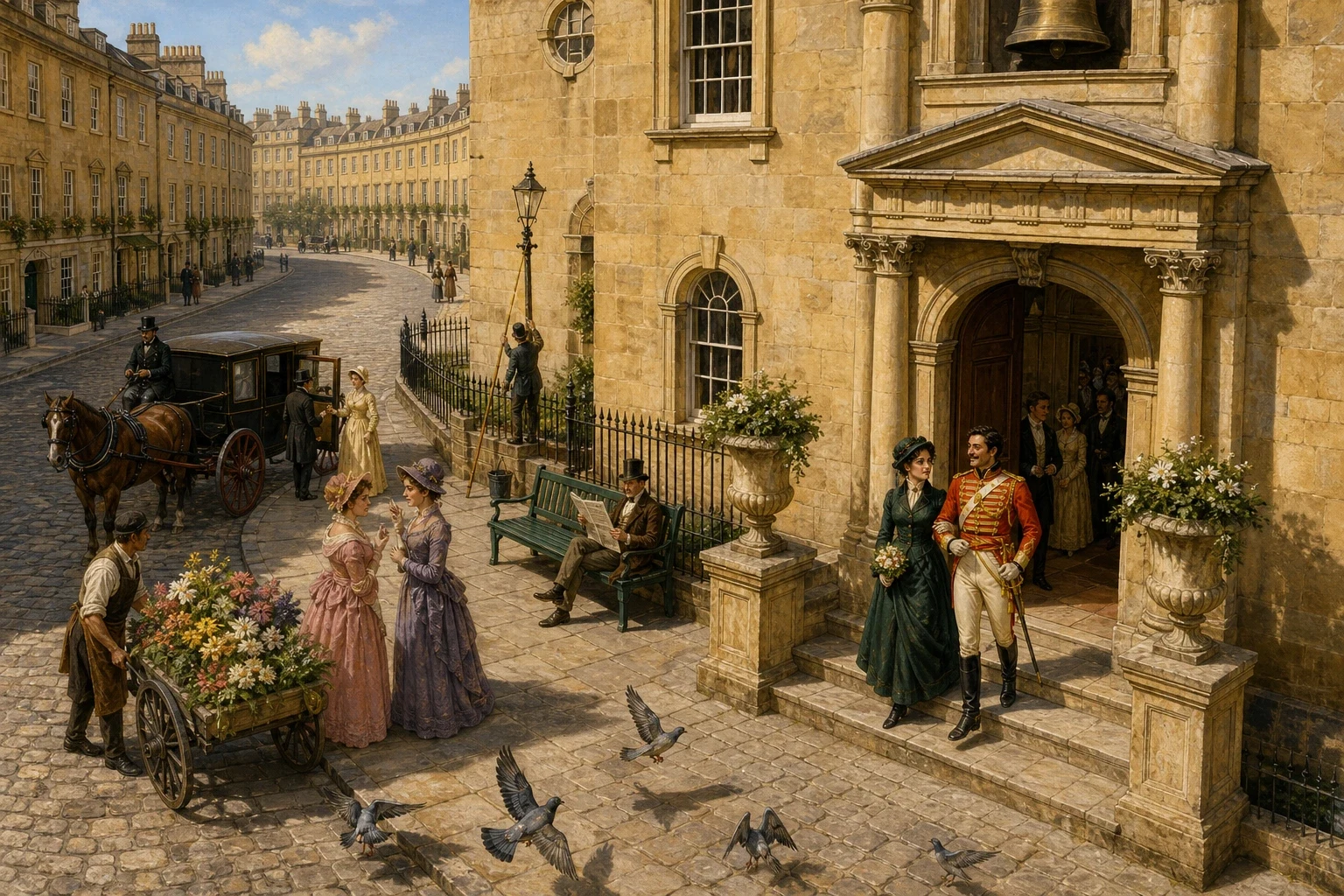
Soon after, Bathsheba heard a rumor that Troy might be about to marry another young woman, Fanny Robin, a former servant of her own, and in sudden jealous distress she set off at once for the city of Bath to find him and settle the matter for herself. What exactly passed between them there Hardy does not tell in full, only that Troy met her, and that within days, moved by her distress and his own vanity at being so wanted, he married her suddenly in a Bath church, with no family present and almost no warning given to anyone back at Weatherbury. Bathsheba returned home a married woman, Mrs. Troy, before Gabriel or Boldwood or anyone else in the parish had the least idea it was happening, and the valentine that had once seemed only a joke was now entirely overtaken by a marriage nobody at home had chosen for her.
Page 8
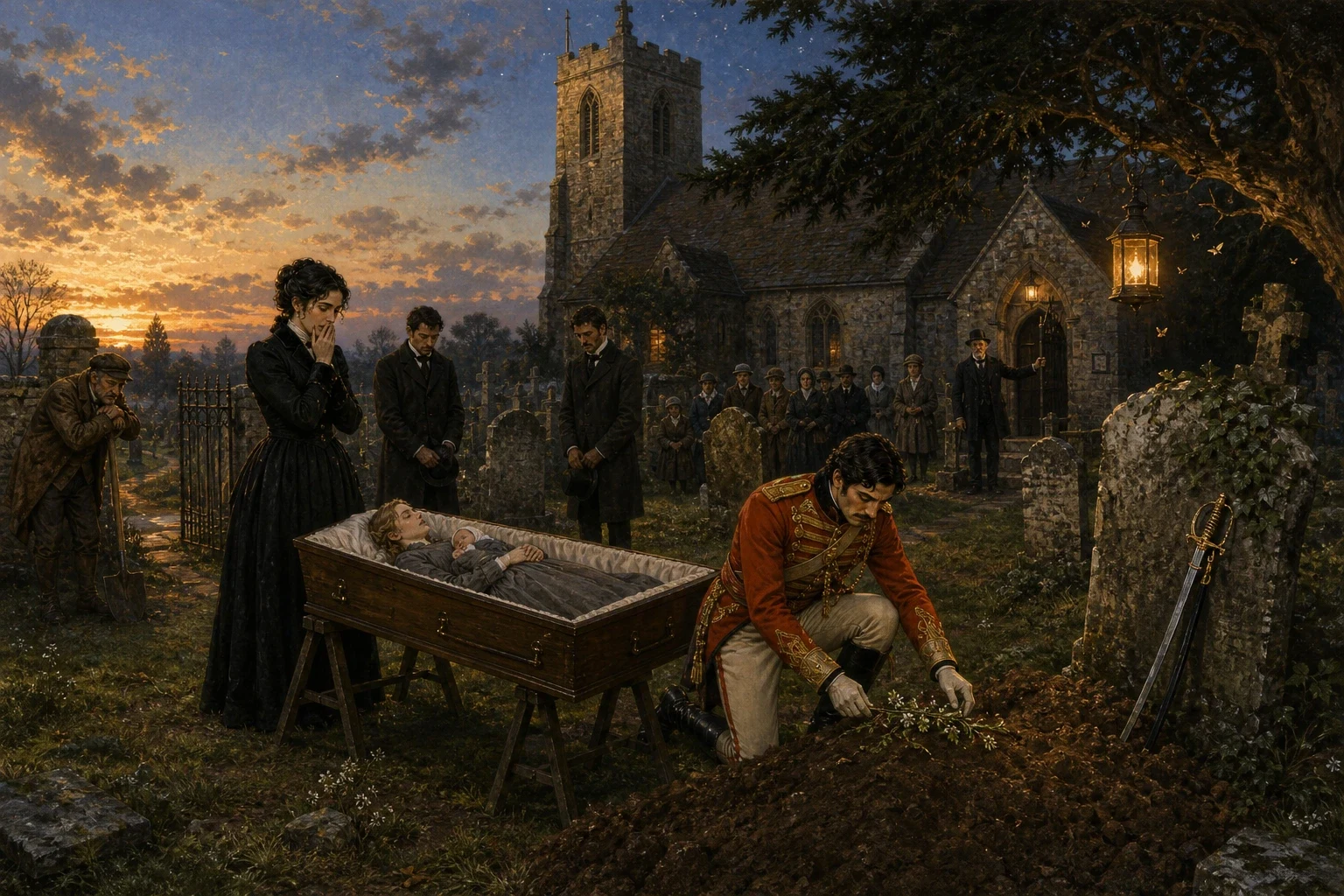
That same Fanny Robin, it turned out, had once been engaged to Troy himself, long before he ever met Bathsheba, and had followed him to Weatherbury penniless and alone. She had died in poverty, with her infant child, before anyone from the farm could help her. Her coffin was brought to be buried at Weatherbury churchyard, and Bathsheba, troubled by what she had heard, had it opened before burial and found Fanny lying dead inside with her baby in her arms, proof that Troy had loved and ruined her first. While Bathsheba stood frozen beside the open coffin, Troy himself arrived, knelt by it, kissed Fanny's dead face, and told Bathsheba plainly that this woman, not she, had been the true wife of his heart. He planted flowers on the grave the next day, then walked away to the coast, and not long after, word came that he had gone swimming in a dangerous current and drowned.
Page 9
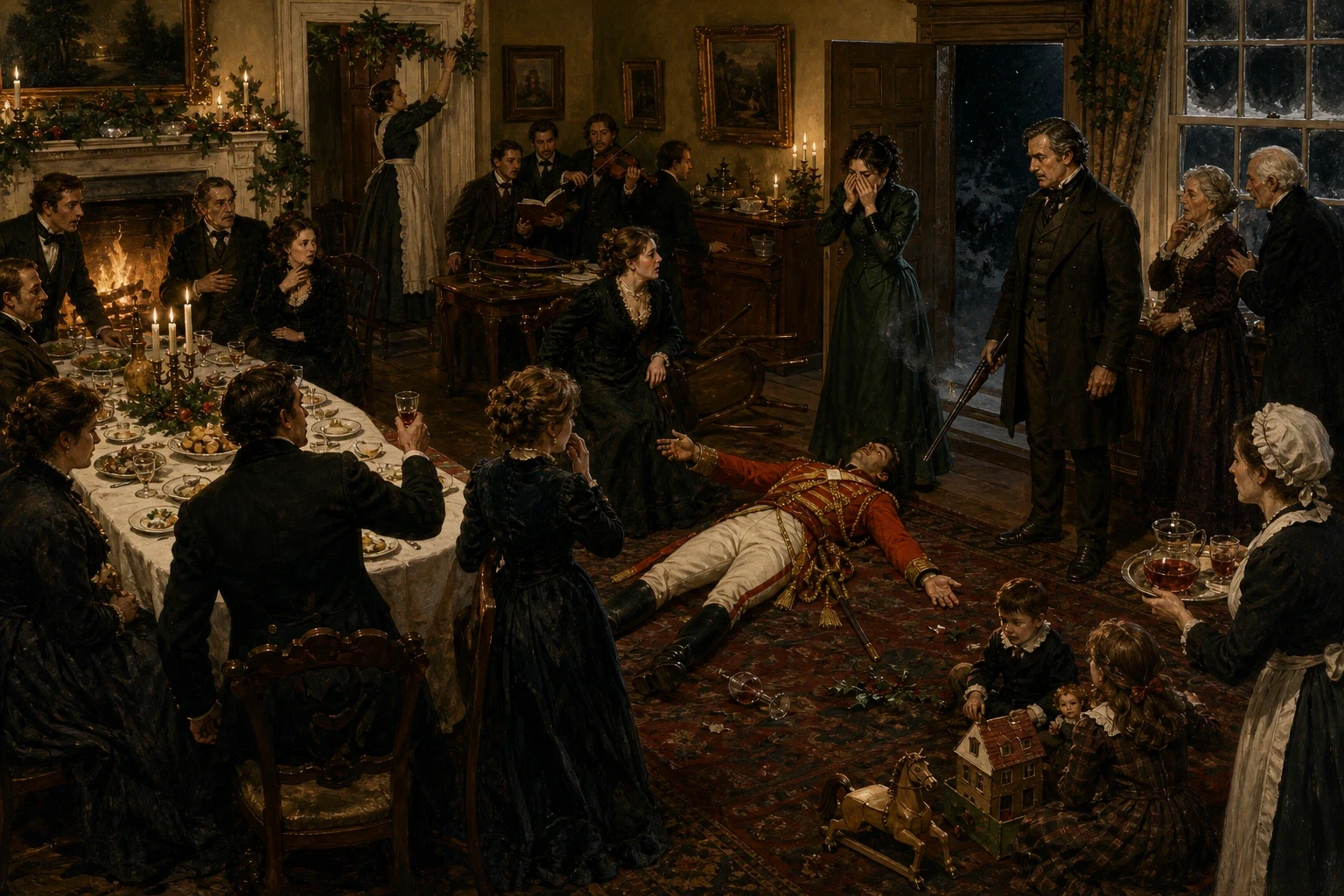
Troy, it turned out, had not drowned at all — he had nearly been carried out by a dangerous current while swimming, been rescued by strangers far along the coast, and had simply stayed away, ashamed and in no hurry to return, letting everyone believe him dead. Boldwood, who had waited years for Bathsheba, finally persuaded her, worn down and believing herself a widow, to agree at last to marry him, and held a large Christmas party at his farmhouse to mark their engagement. In the middle of the gathering, with the whole room full of guests and candlelight, the farmhouse door opened and Troy himself walked in, very much alive, and reached out to claim Bathsheba as his wife in front of everyone. Boldwood, who had kept a loaded gun nearby in the house for weeks without anyone knowing why, took it down, shot Troy dead on the spot, and then, calmly, walked out and gave himself up to the police in Casterbridge.
Page 10
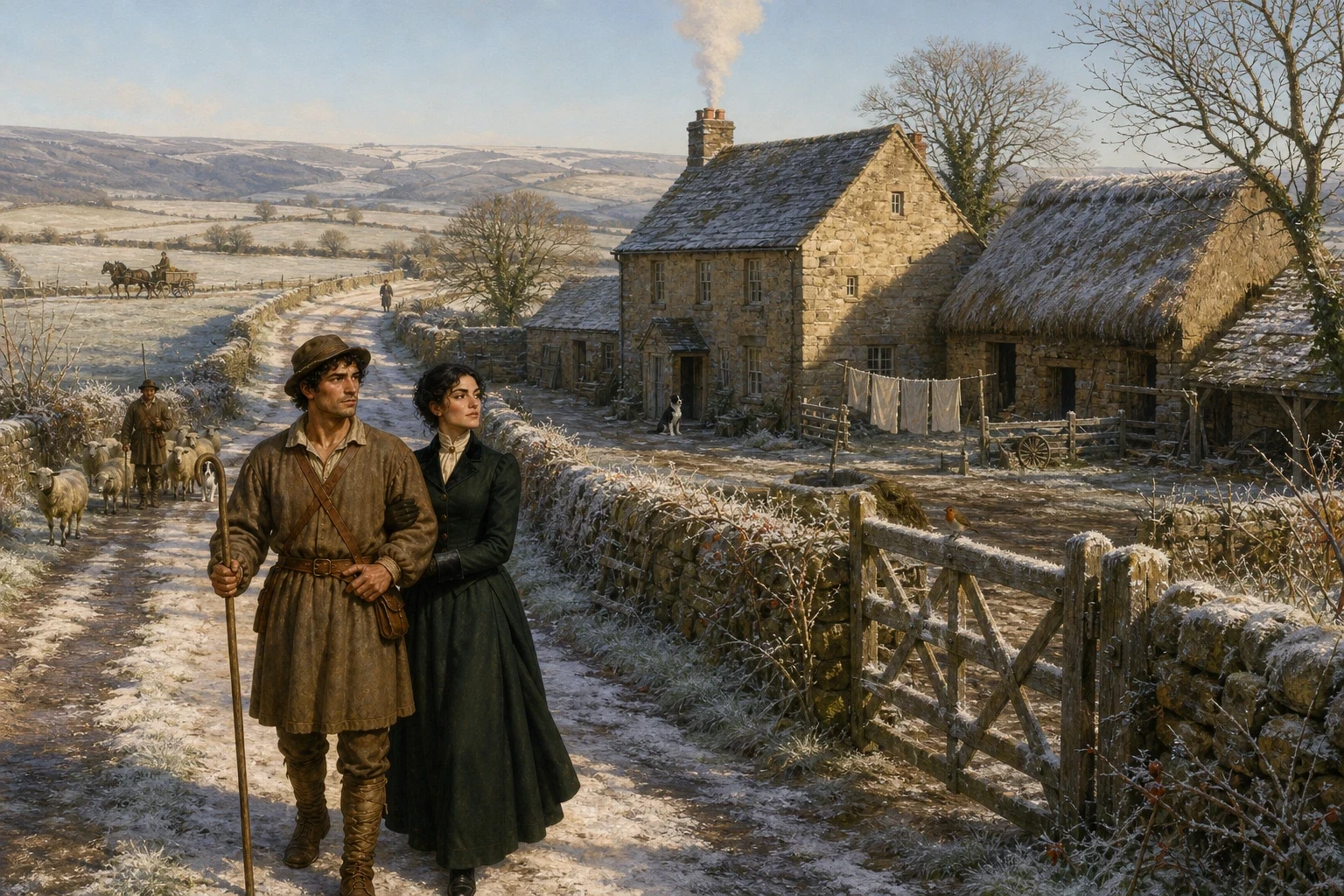
Boldwood was tried and sent away for his crime, and the parish settled slowly back into its ordinary life. Through all the years of trouble, Gabriel Oak had never once left Bathsheba's side, rising from shepherd to bailiff to the one steady, dependable person she had left, asking nothing of her and expecting nothing. One quiet morning the following winter, with no fuss, no crowd and no grand wedding breakfast, Gabriel and Bathsheba walked together to the registrar's and were married, two people who had known each other's worst years as well as their best. They came back to Weatherbury Farm as husband and wife at last, to the same fields and the same farmhouse where it had all begun, older and plainer and, after everything, finally content with one another.
About this story
- Audience: general readers
Read Wonder Novels on your phone
Wonder Novels is available on Android. Get Wonder Novels on Google Play.