Germinal
A mining town, a hungry strike, and the slow stubborn growth of something that will not stay buried
Page 1
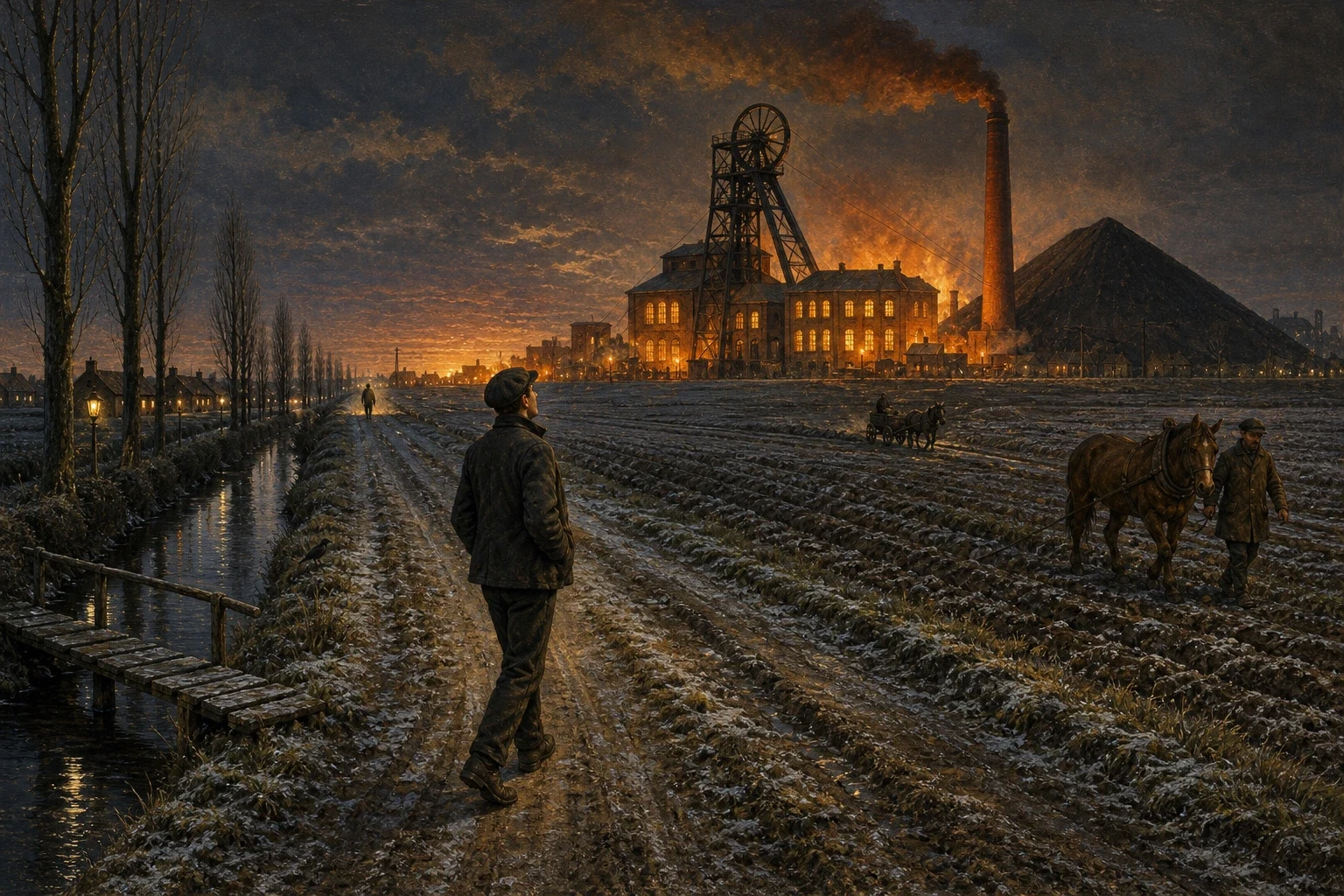
On a flat black plain in the north of France, in the cold of March, a young man named Étienne Lantier walked on through the dark with his hands in his pockets. He had been out of work for months, and he had walked a long way with nothing to eat since the day before. There was no moon, and the wind came off the fields with nothing to stop it. Far ahead, low on the horizon, four fires burned in the sky, and under them a great building loomed up with lit windows, as if the night itself had been cut open. Étienne had never seen a coal mine before. He stood at the top of the rise and looked down at it — the tall black headframe turning slowly against the stars, the smoke, the clatter of unseen machinery that never stopped, day or night. The place was called Le Voreux. It looked to him less like a building than like some huge animal crouched in the dark, breathing. He went on down toward it to ask for work.
Page 2
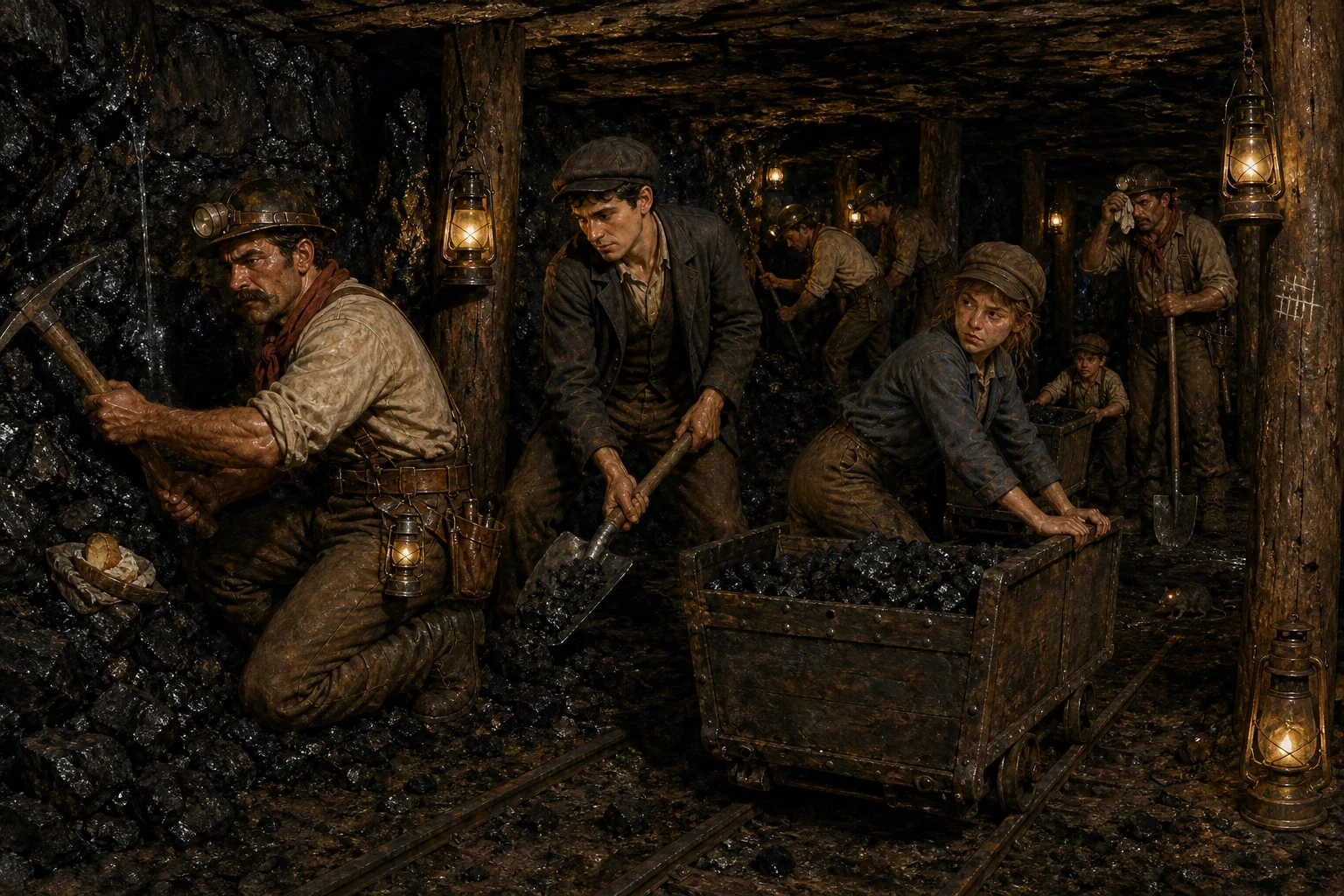
The next morning Étienne was taken on. He was given a lamp and sent down in the cage with the other men — a drop so fast and so black that his stomach seemed to fall faster than his body. Far below, he crawled along narrow tunnels, bent almost double under a ceiling of black rock, until he came to the seam where a team led by an older miner named Maheu was cutting coal with pick and shovel in heat that never let up. One of the team, pushing an empty tram along the rails, Étienne took at first for a boy — thin, filthy with coal dust, a cap pulled low. Only when she spoke did he understand she was a girl. Her name was Catherine, Maheu's daughter. Maheu set Étienne to work beside him, shoveling coal into the tram in the cramped dark, and told him plainly what the work was worth and what it cost.
Page 3
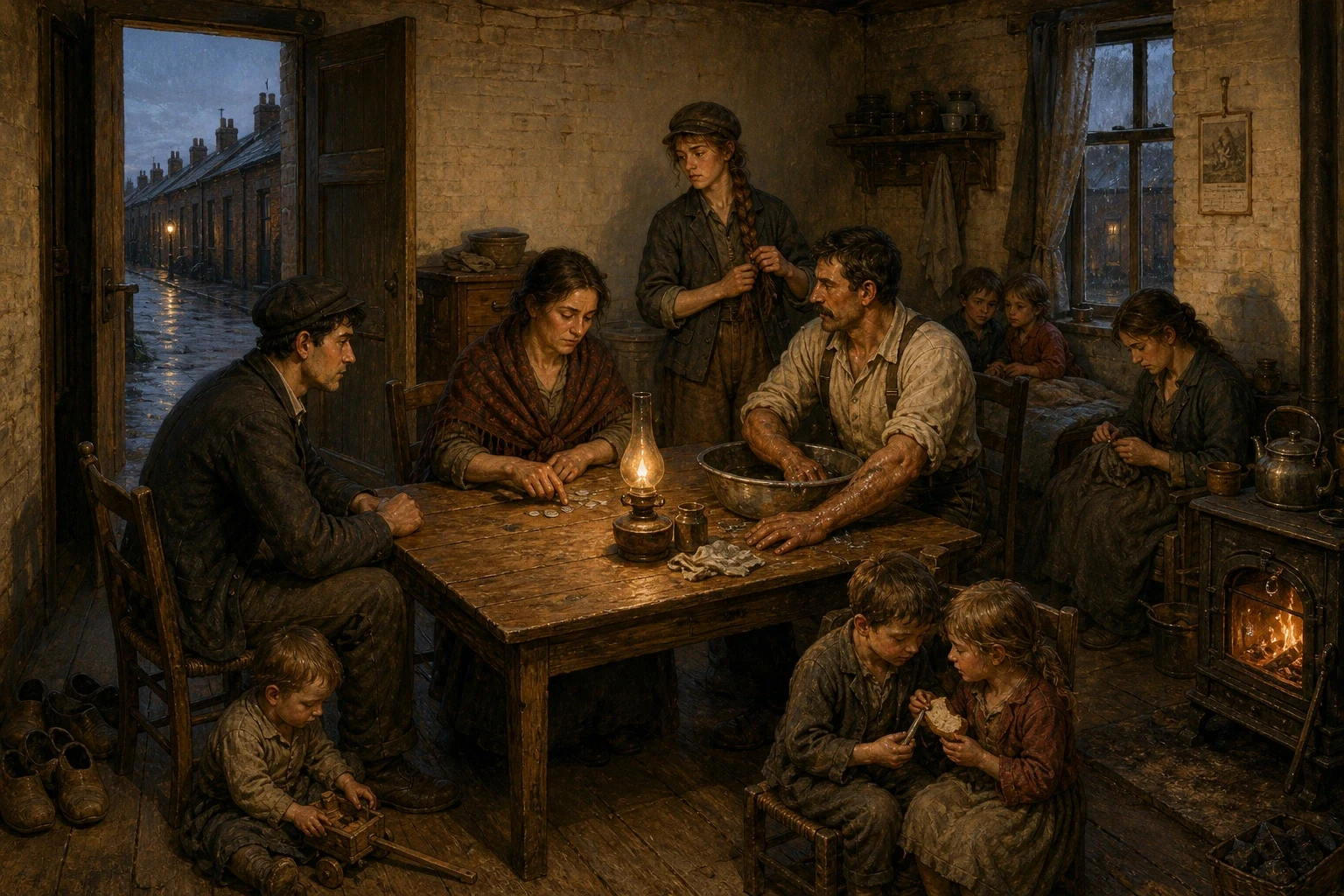
Étienne came to lodge with the Maheus in Le Coron, the long straight rows of brick cottages the mining company had built for its workers, all exactly alike, packed close together under one flat grey sky. The Maheu house held two rooms for seven children and the parents, and the money from the pit never quite stretched far enough — not with bread, not with the rent, not with what was owed to Maigrat the grocer, who gave credit to miners' wives on terms of his own choosing. La Maheude kept the household together on almost nothing, counting out coins on the table at night, worrying aloud about the winter coming. Étienne slept at the top of the stairs. In the evenings, after the pit, he sat at the long table with the family and watched Catherine braid her hair by the lamp, and little by little he came to feel at home among people who had almost nothing to give him but a place to sleep.
Page 4
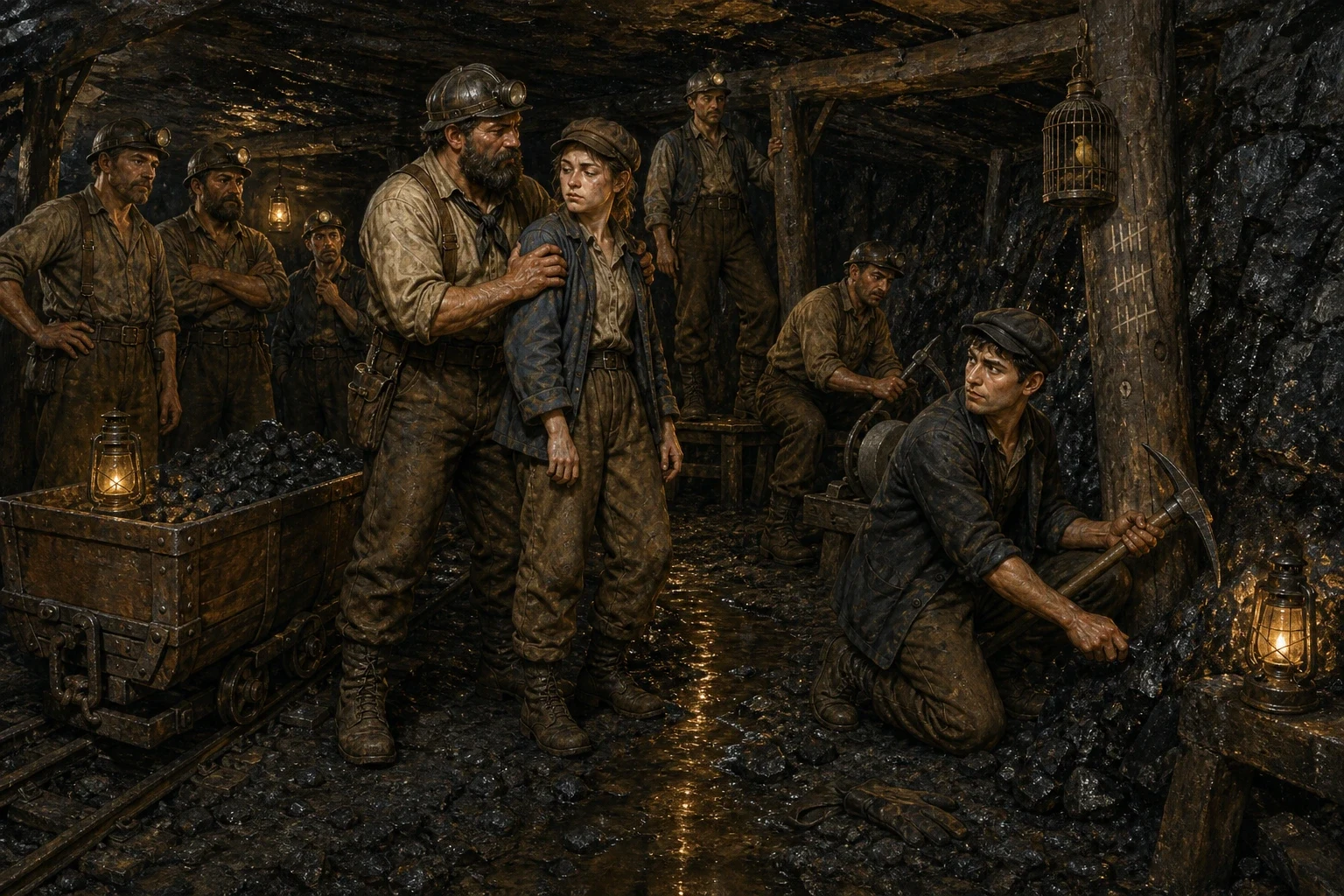
Deeper in the mine, in a narrower seam where the coal ran thin, Étienne often found himself working near Chaval, an older miner who had long had his eye on Catherine. Chaval was rough and sure of himself, and one day, in front of the whole team, he caught Catherine by the arm and kissed her hard, as if to show everyone, and especially Étienne, that she belonged to him now. Catherine did not fight him. She had known Chaval a long time, and there was a kind of resignation in the way she let it happen, the same resignation with which she carried coal twelve hours a day. Étienne said nothing. He went on swinging his pick at the black seam, telling himself it was none of his business, while something in him burned at the sight of it. After that day, Catherine was openly Chaval's girl, and Étienne understood that whatever he had hoped for had already been decided, in this dark gallery, without a word to him.
Page 5
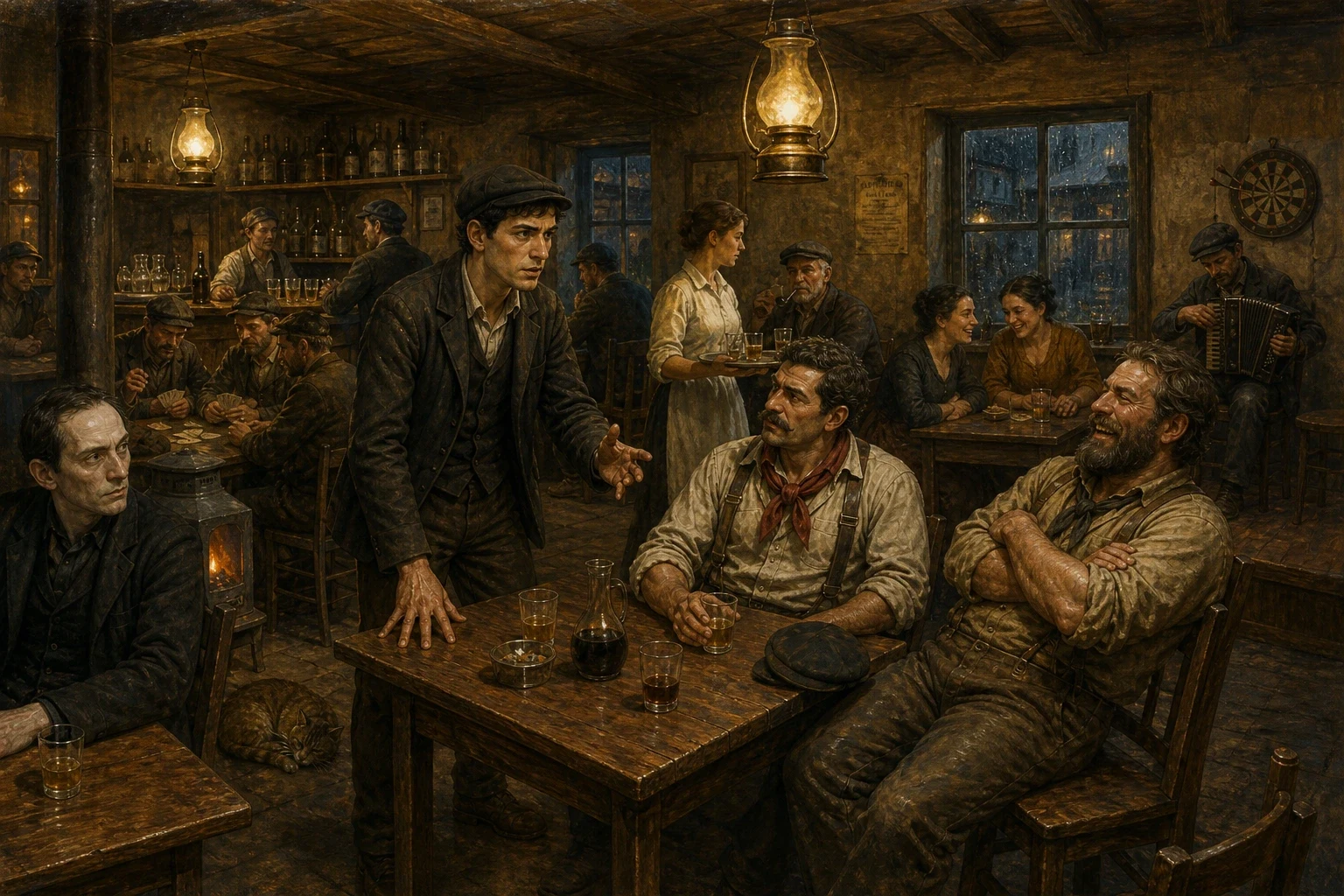
In the evenings, at a cabaret called the Avantage, Étienne began to talk about an idea that had taken hold of him from pamphlets he had read: a fund that the miners themselves would pay into, little by little, so that if the company ever cut their wages, or if they ever had to strike, they would not simply starve within the week. Maheu, cautious by nature, listened and slowly let himself be persuaded. Chaval laughed at the idea outright, calling it a dream for men who had never gone hungry. In the corner, Souvarine, the pale Russian mechanic who drank there most nights and spoke to almost no one, listened without smiling, then said quietly that a fund changed nothing — that the whole machine of masters and mines would have to be pulled down before anything truly changed. His cold certainty unsettled Étienne even as Étienne kept on arguing, night after night, for the fund he believed in.
Page 6
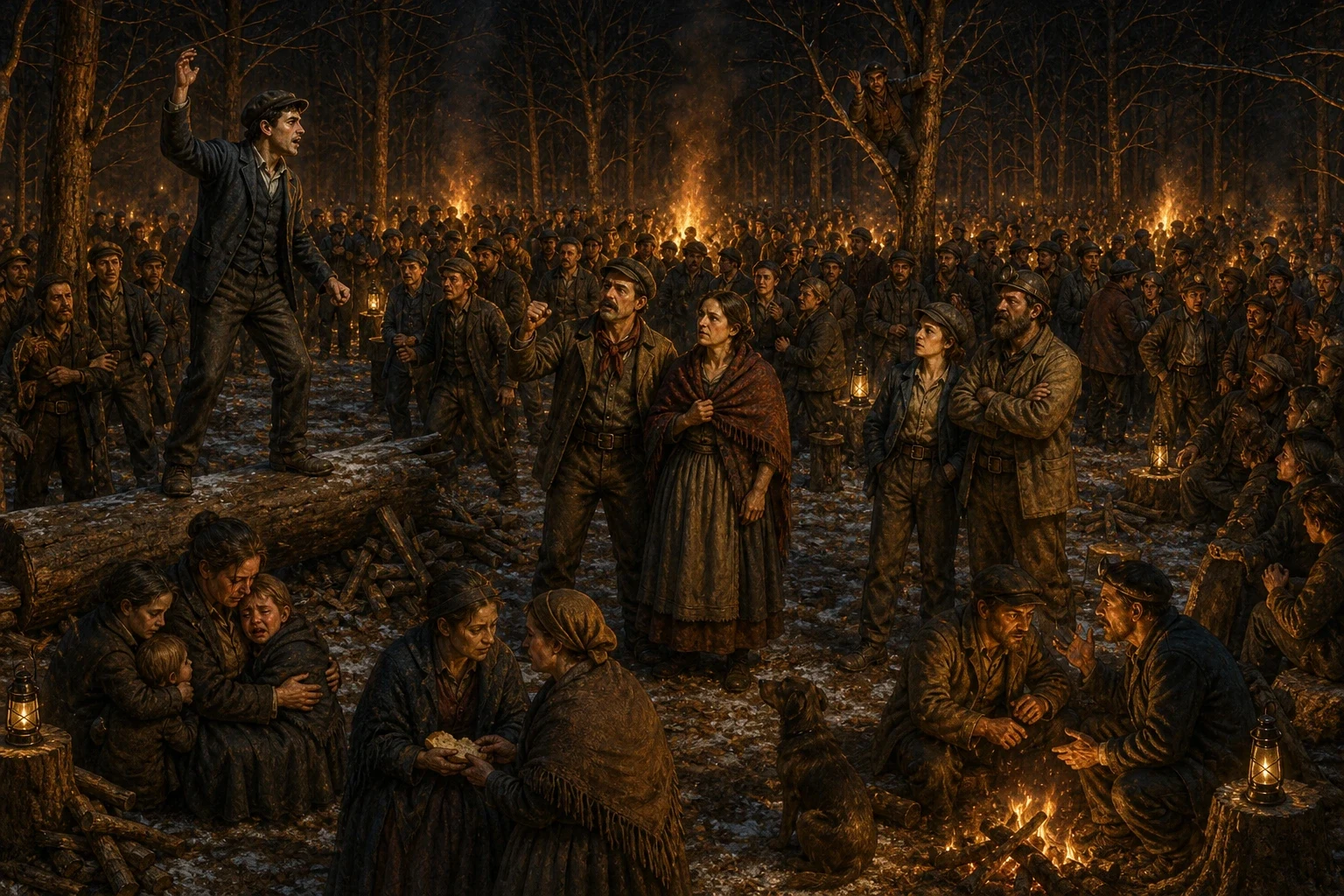
When the company announced it would pay the miners even less by changing how their timbering work was counted, the anger that had been building for months finally broke. Word went around every row at Le Coron: a meeting, after dark, at Le Plan-des-Dames, a clearing deep in the forest well away from the mine and the company's eyes. By the time Étienne arrived, hundreds of miners and their wives had already gathered among the bare winter trees, lit only by a few fires built on the ground. Maheu stood near the front with Maheude beside him; Catherine came with Chaval, who watched the crowd with his arms folded, unconvinced. Étienne climbed up onto a felled tree trunk so the whole crowd could see him, and spoke until his voice went hoarse — about the pay, about the fund, about what they owed themselves if not the company. When he finished, the crowd roared its answer. They would strike, all of them, together, starting the next morning.
Page 7
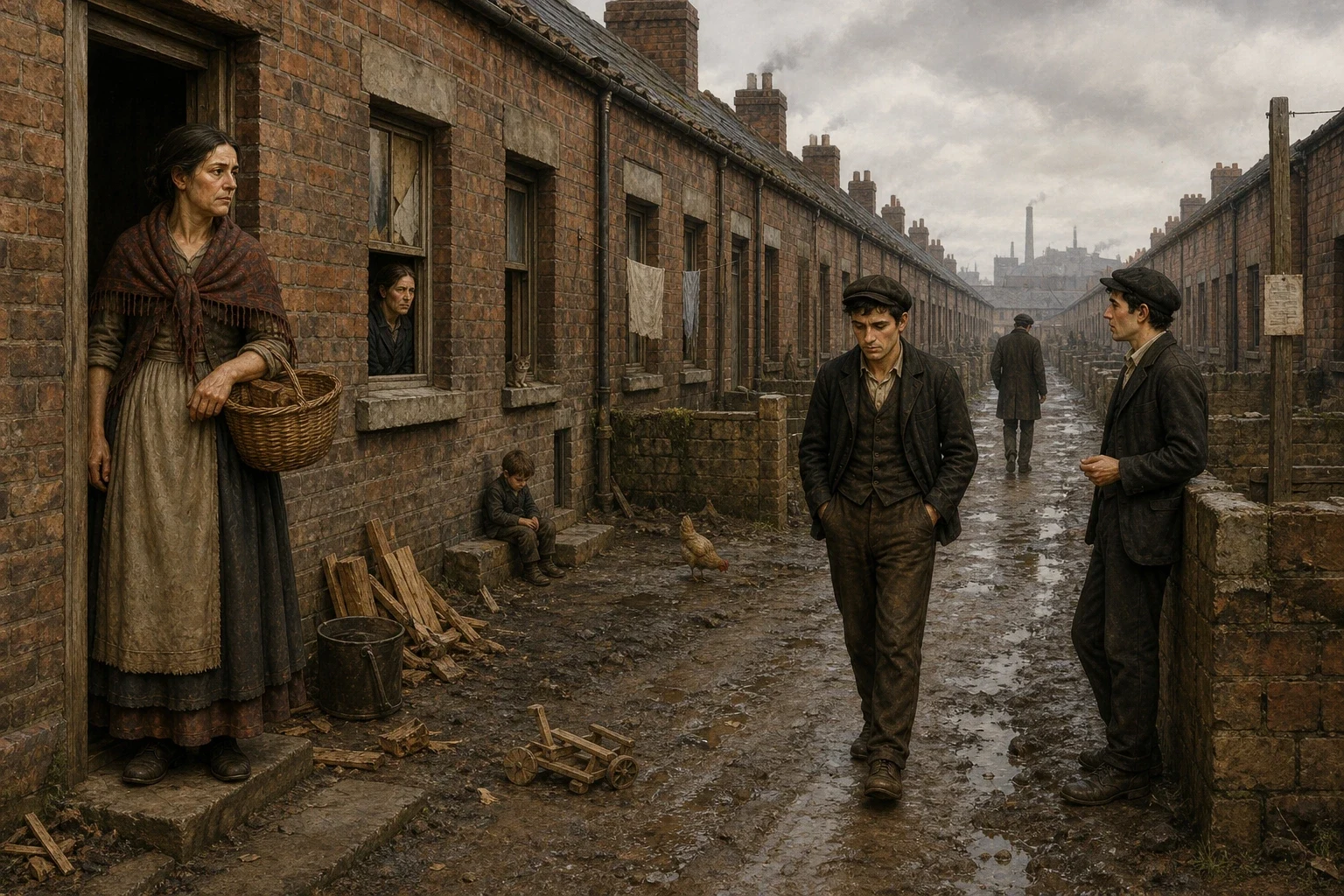
The strike held through the cold weeks that followed, but the company did not yield, and little by little hunger settled over Le Coron like another kind of winter. Maheude sold what little the family owned that could be sold and stretched what food there was until there was almost nothing left to stretch. Children cried from being hungry rather than from being hurt. Étienne, who had stood on the tree trunk and called for this, walked the rows of identical houses and felt the weight of what he had set moving. Souvarine came by sometimes, unbothered by any of it, and told Étienne plainly that the suffering was not a tragedy to be solved but a kind of plowing — that only when people had nothing left to lose would they be ready to tear the whole rotten system down rather than mend it. Étienne argued with him, but the hunger around them went on getting worse regardless of what either man believed.
Page 8
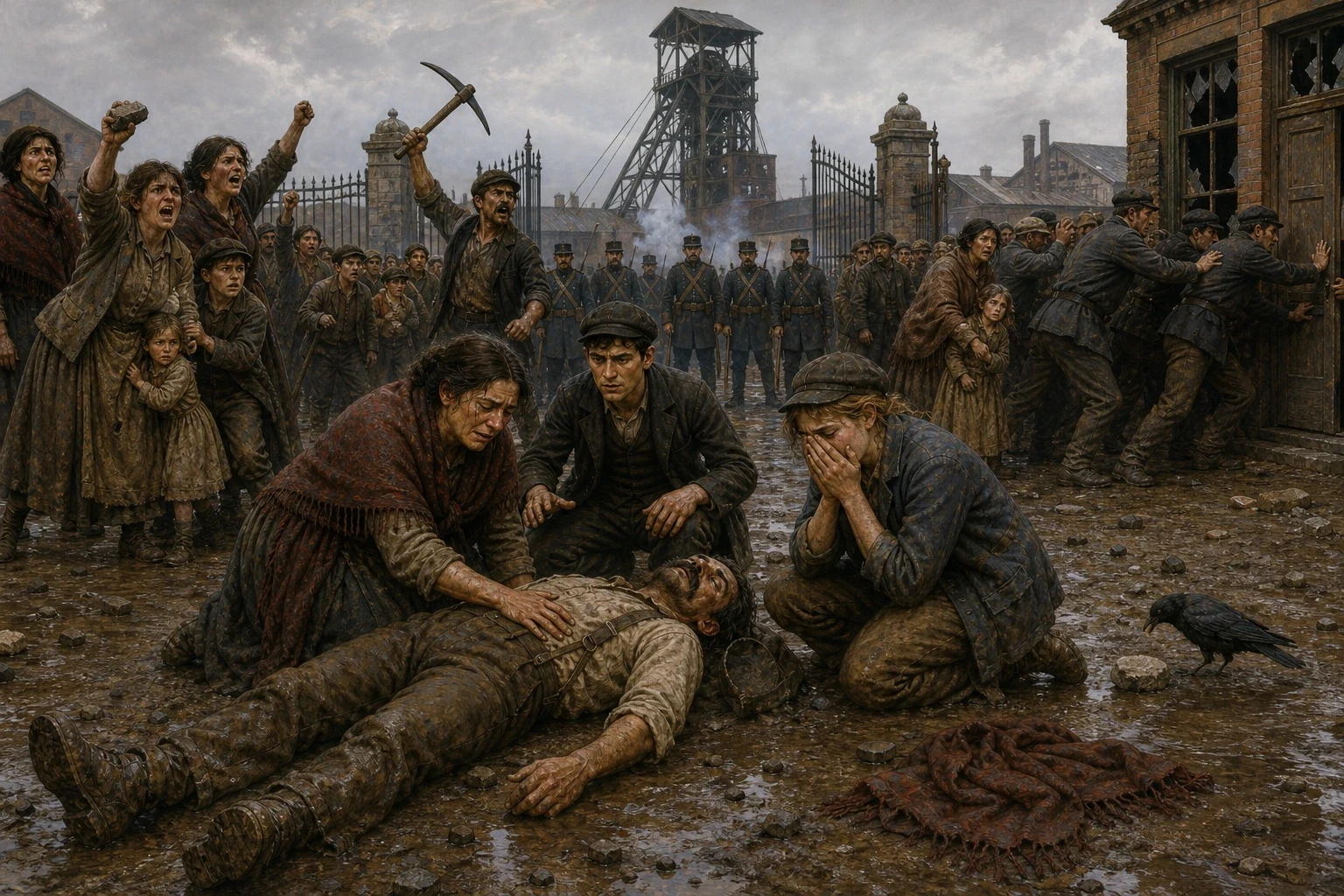
By the fifth week, hunger had turned desperation into fury, and a crowd of miners and their wives, with Étienne and Maheude at the front, set out walking from pit to pit to stop any man still working. Along the way they came to the shop of Maigrat, the grocer who had traded food for favors from miners' wives for years, and in the fury of the crowd he fled across his own rooftops and fell to his death trying to escape them. The crowd went on, angrier still, until it came to Le Voreux itself, where soldiers had been posted to guard the pit. Someone threw a stone. The soldiers, ordered to hold the line, fired into the crowd. When the smoke cleared, several lay in the mud who would not get up again — among them Maheu, Catherine's father, shot through simply for standing where he stood. Étienne knelt beside him uselessly. The strike that he had called for on a tree stump in the forest had just taken from the Maheu family the one thing it could never give back.
Page 9
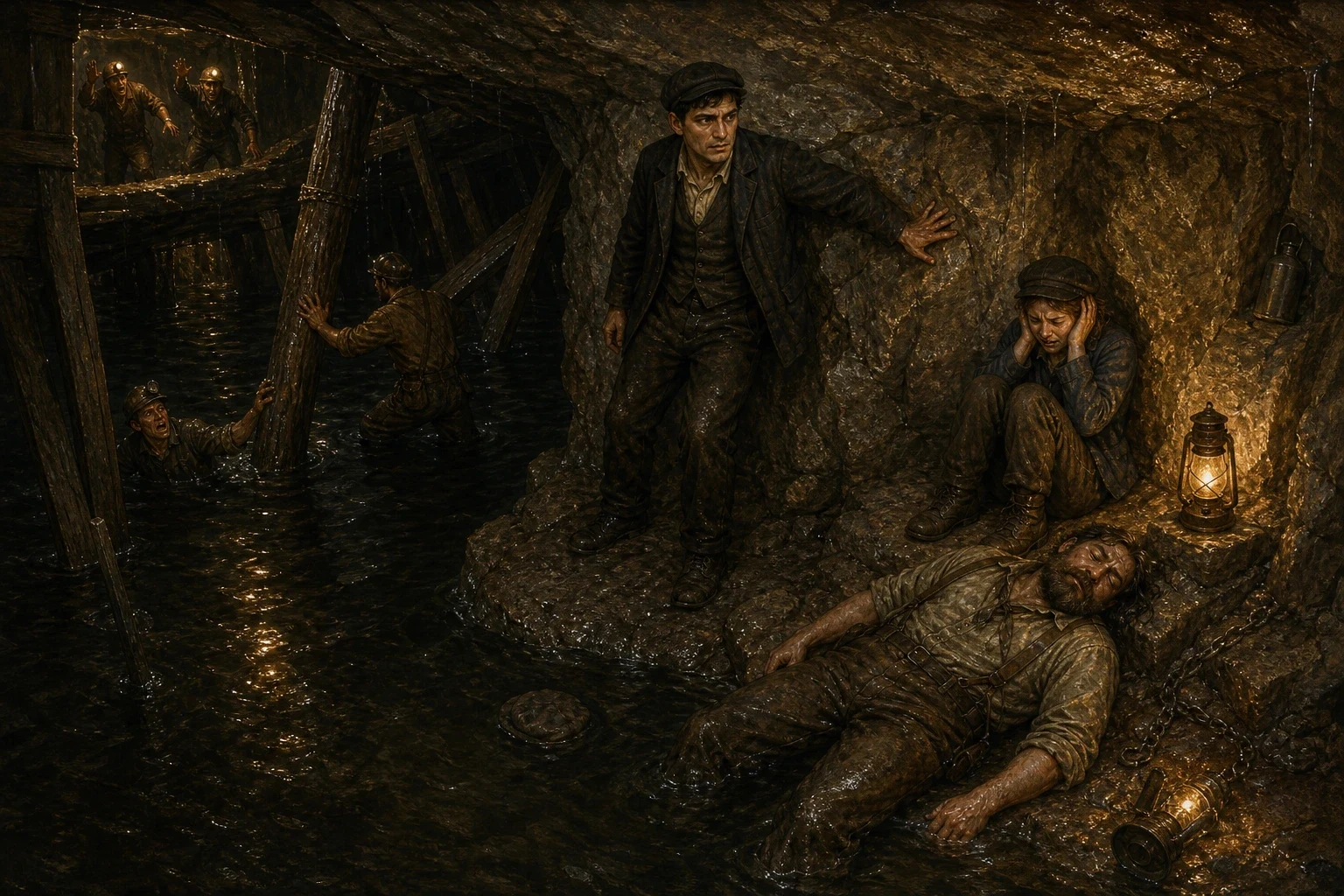
The strike broke before the company did, and the men went back to work defeated, Étienne among them. Then one night, unseen by anyone, Souvarine loosened the old timbers holding back a flooded, abandoned gallery deep beside Le Voreux's main shaft, and walked away without a word to anyone. The water burst through and flooded the mine while Étienne, Catherine and Chaval happened to be working far below. The three were trapped together on a small ledge of rock as the water rose around them, with no way up and no way out, for day after day in the dark. Hunger and fear wore at all three of them, and in the blackness Chaval's old hatred of Étienne finally broke loose; he came at him with his fists in the narrow space. The two fought where they could barely stand, and when it ended Chaval did not get up again — the rising water took him. Étienne and Catherine were left alone on the ledge, waiting, not knowing if anyone would ever reach them.
Page 10
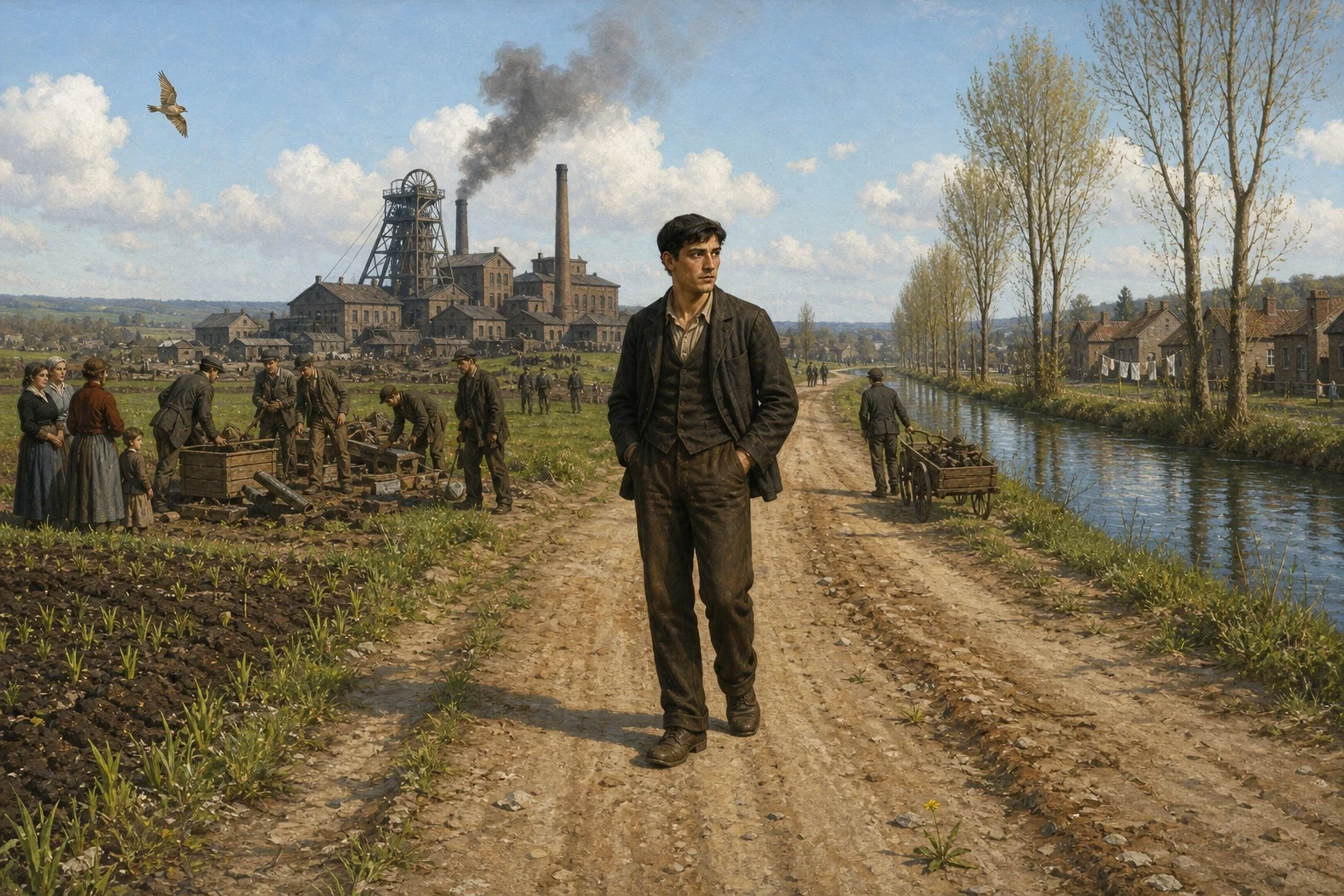
Rescuers finally broke through to the trapped gallery after many days, guided by tapping Étienne made against the rock. But Catherine did not live to see the light again. Starved and exhausted, she died in Étienne's arms in the last hours before the rescue reached them, so close to being saved that it was almost impossible to bear. Étienne himself was pulled out alive, weak and changed. He stayed in Montsou only long enough to recover and to say goodbye to Maheude, who had lost a husband and a daughter to the mine within the same season and would go on living there regardless. Then, on a clear morning in spring, Étienne walked out of the valley the same way he had walked into it, past the mine, the headframe turning as it always had, as if nothing at all had happened. The fields on either side of the road were green now, and under the quiet soil, something was still growing that no one could see yet — something that would, in its own time, break through.
About this story
- Audience: general readers
Read Wonder Novels on your phone
Wonder Novels is available on Android. Get Wonder Novels on Google Play.