Les Misérables
A stolen loaf, a forgiving Bishop, and the many lives one man spends trying to make up for it
Page 1
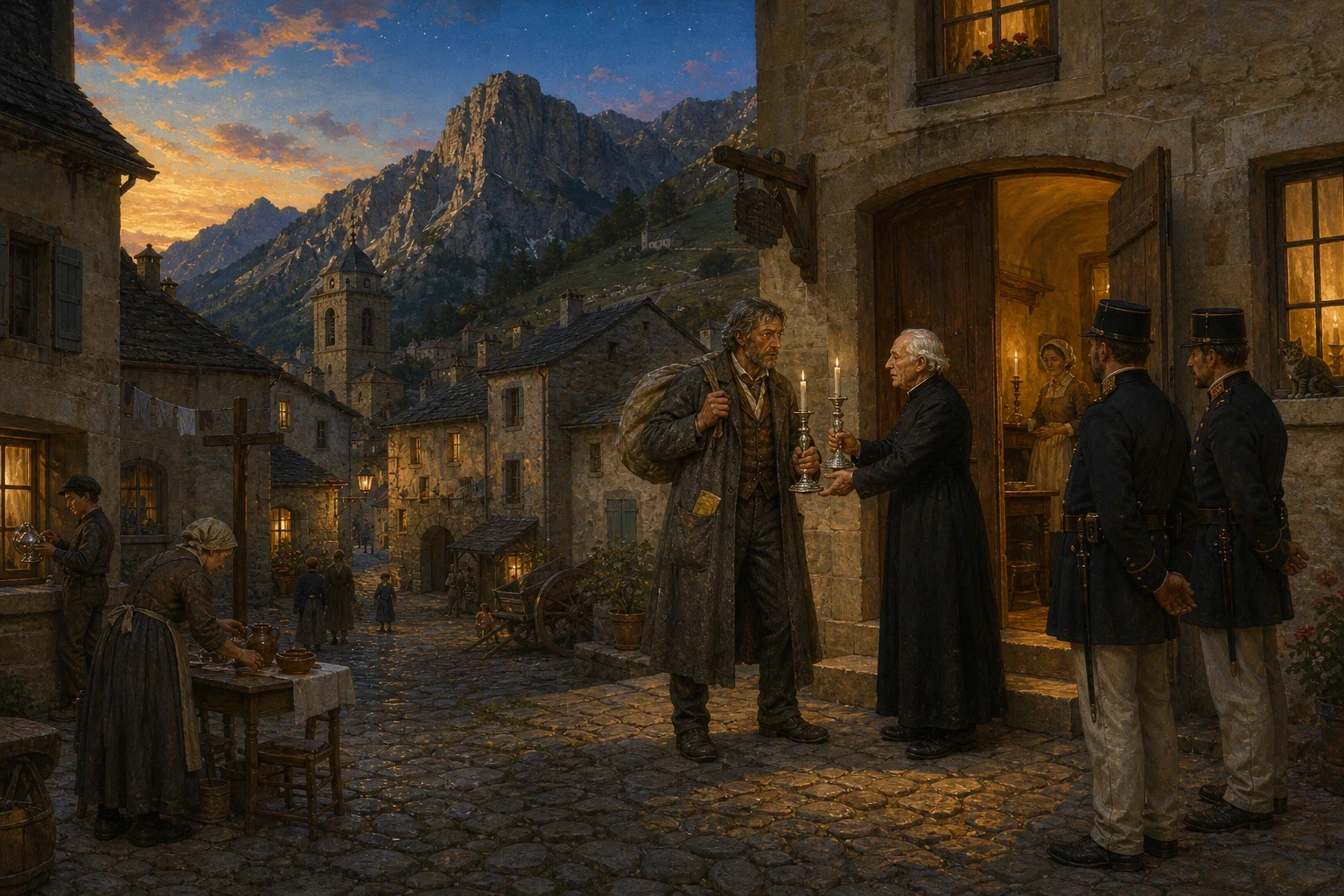
Jean Valjean had spent nineteen years in the galleys at Toulon, first for stealing a loaf of bread, then longer for trying to escape. Freed at last, he carried a yellow passport that named him a dangerous man, and in the town of Digne no inn or house would take him in — except the house of the Bishop, Monsieur Myriel, who opened his own door and set a place at his table. That night, unable to believe such kindness could be real, Valjean took the Bishop's silver plate and fled into the dark. Gendarmes caught him on the road and dragged him back. The Bishop told them he had given Valjean the silver himself — and more besides, for he fetched two silver candlesticks Valjean had left behind and pressed them into his hands. When the gendarmes were gone, the Bishop told him quietly to use the silver to become an honest man. Valjean walked out of Digne that morning changed, though he did not yet know how.
Page 2
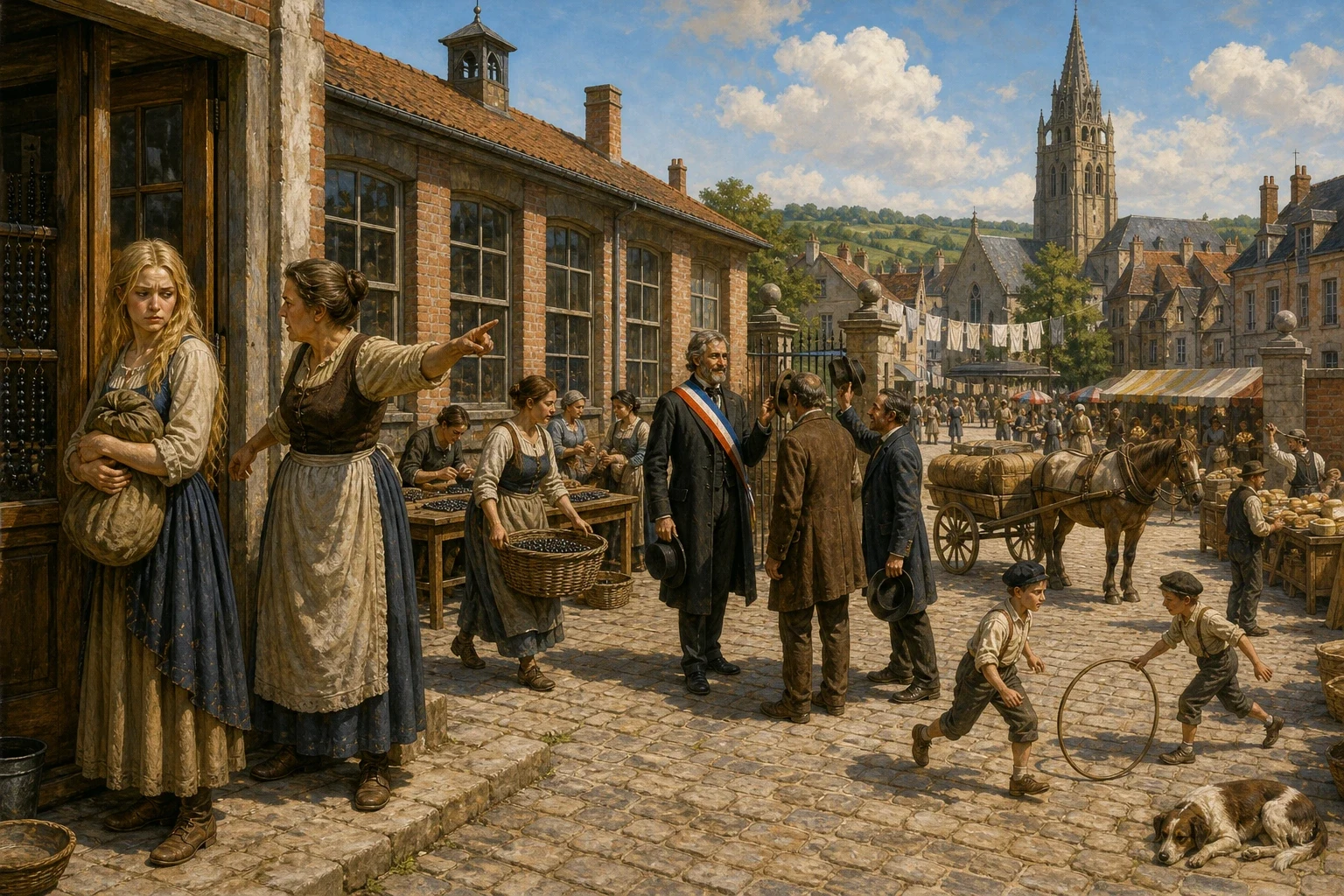
Years passed. Under the name Monsieur Madeleine, Jean Valjean built a small fortune from a black-bead factory in Montreuil-sur-Mer, used the Bishop's silver exactly as he was told, and was so fair and so generous that the town made him its mayor. He never asked a worker's past, only their present conduct — but he could not watch every corner of his own factory. Among his workers was Fantine, a young woman with golden hair, who kept one secret from everyone around her: a daughter, Cosette, boarded far away with an innkeeper's family named Thénardier, to whom Fantine sent nearly all her wages. When the forewoman learned, by an opened letter, that Fantine had a child and no husband, she dismissed her on the spot for the shame of it, while Monsieur Madeleine was away from the town and knew nothing of it until it was already done.
Page 3
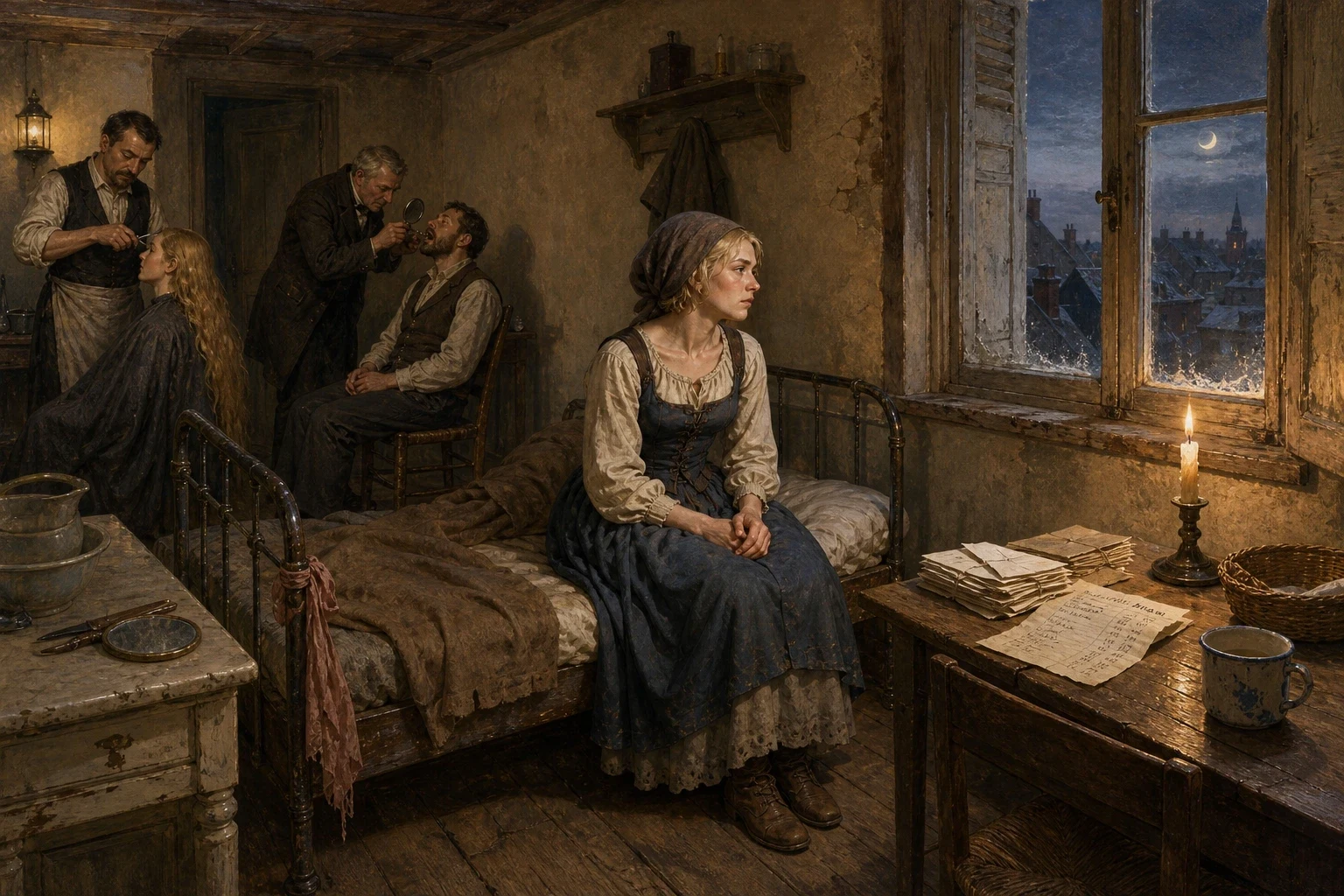
The Thénardiers wrote constantly, always asking for more money for Cosette's keep, and Fantine, out of work and alone in Montreuil, had almost nothing left to send. She sold her long golden hair to a traveling barber for a few francs, wrapping a plain scarf around her bare head afterward so the other lodgers would not see. When that money ran out, she sold her two front teeth to a traveling dentist, for her daughter's sake, and could hardly bear to smile afterward. Still the letters came, still the sums grew larger, and still there was nothing in the room left to sell. Fantine sat by her small window into the cold nights that followed, looking down at the dark street below, understanding there was now only one place left where a desperate woman without work or money could still find any at all.
Page 4
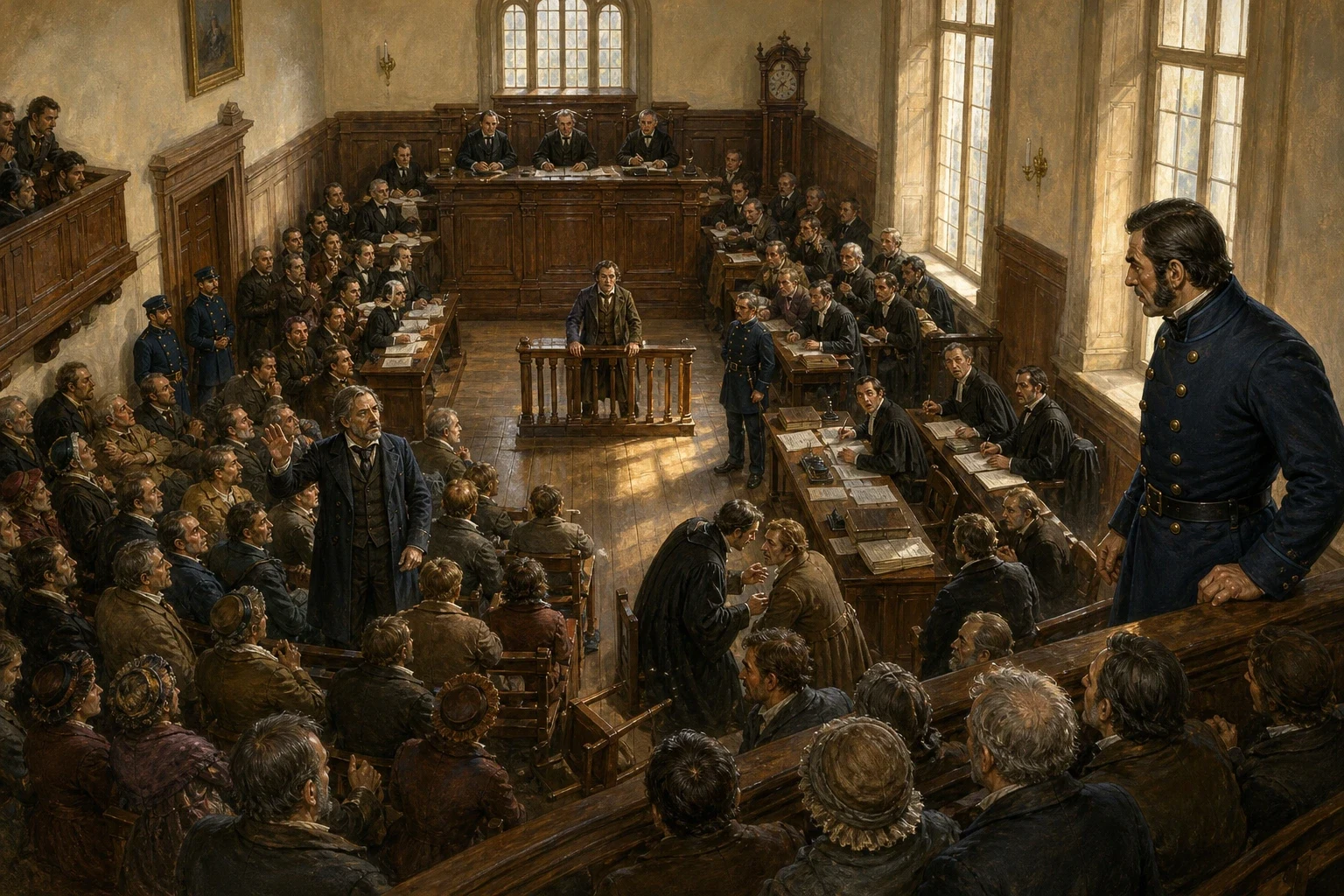
In the courthouse at Arras, a ragged, bewildered man named Champmathieu stood accused of being the escaped convict Jean Valjean, on nothing stronger than an old resemblance and the word of men who had known Valjean in the galleys years before. Inspector Javert sat watching from the gallery, certain in his bones that the real Valjean was not this bewildered stranger at all, but Monsieur Madeleine, the respected mayor of Montreuil, whom he had long suspected and now believed he had finally proven guilty behind. Valjean had come to Arras meaning only to watch, to see whether the court would convict an innocent man in his place and let him live free forever as Madeleine. But as the witnesses spoke, he found he could not let it happen. He rose from his place among the crowd, and in a calm, carrying voice, told the stunned courtroom exactly who he really was.
Page 5
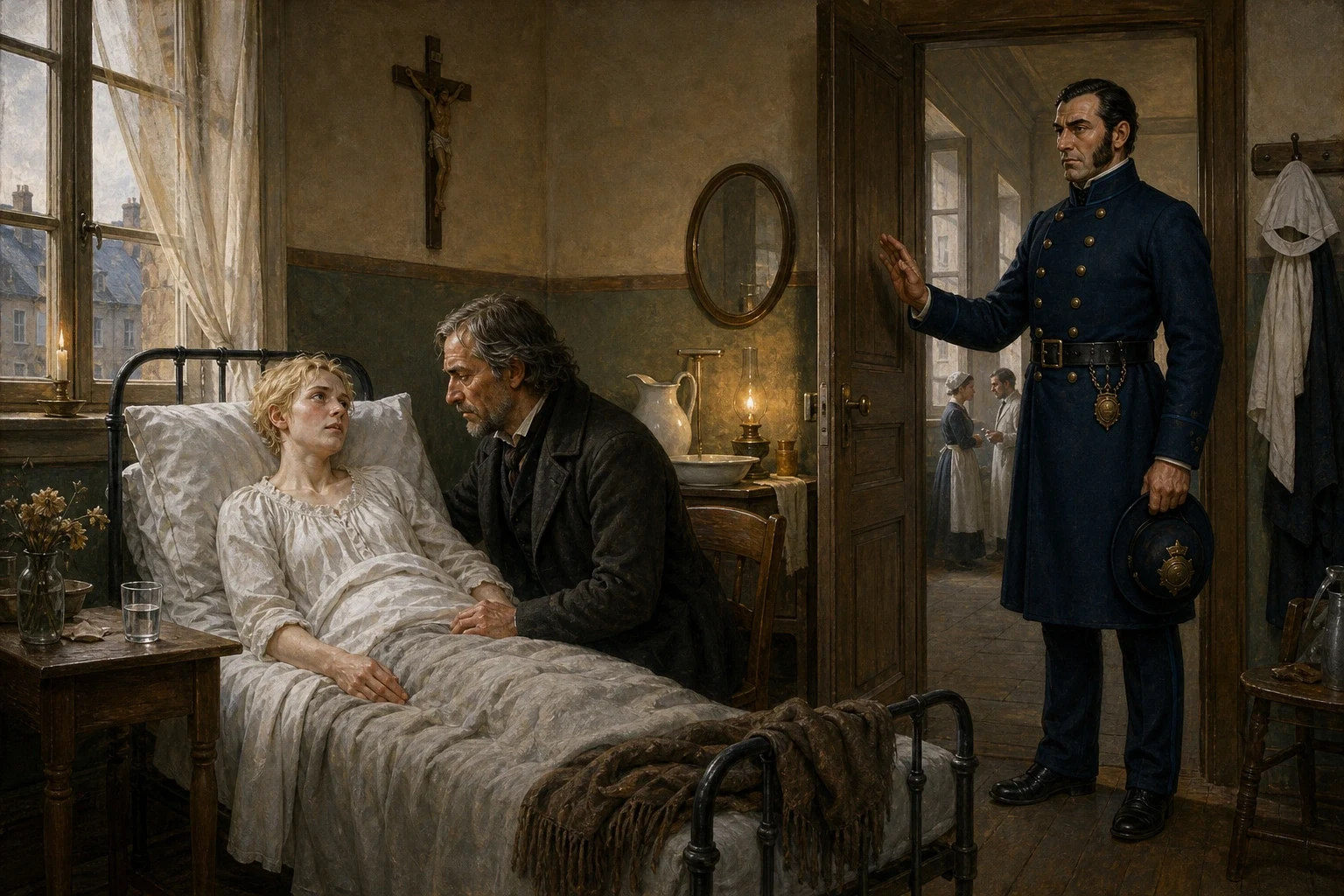
By the time Jean Valjean reached the hospital in Montreuil, Fantine was dying of the fever and hardship that had worn her down for years. He sat by her bed and promised that he would go that same day and bring Cosette back to her. For a moment Fantine's face eased, believing her daughter was already near. But before Valjean could leave the room, Inspector Javert came through the door, having finally tracked him down, and announced in his flat, correct voice that he was there to arrest the convict Jean Valjean. Fantine, hearing the word 'convict' and seeing Javert's hard face, understood at once that no child was coming for her. She sank back against the pillow, already gone, before Valjean could say anything more to comfort her. He bent low and whispered something to her that no one else in the room ever heard, then rose and did not resist as Javert took hold of his arm.
Page 6

At the inn in Montfermeil, the Thénardiers kept Cosette, Fantine's daughter, as an unpaid servant, dressed in rags while their own two daughters wore ribbons. One dark evening Madame Thénardier sent eight-year-old Cosette alone into the forest to fetch water from the spring, though the child was afraid of the dark and the bucket was nearly as heavy as she was. Partway along the forest path, a stranger's hand closed gently over hers on the bucket handle — a big, grave man who had been watching the inn. He said nothing frightening, only asked whose house she lived in, and then simply carried the water the rest of the way himself. At the inn, he told the Thénardiers he had come, on behalf of Cosette's mother, to take the girl away, and he paid every franc they demanded of him, more than they had hoped for. Within the hour, he and Cosette were walking off together into the night, her small hand in his.
Page 7
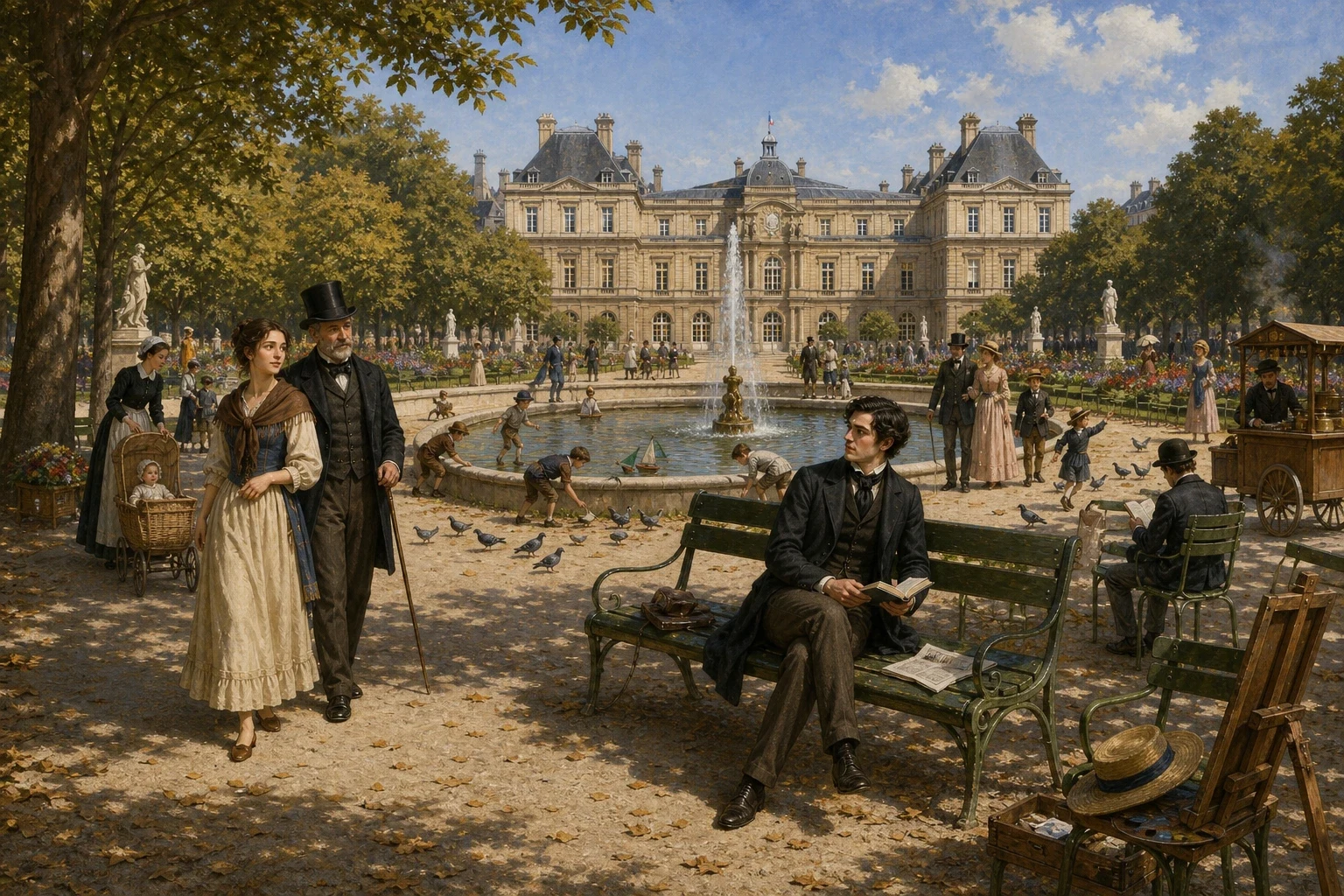
Years passed quietly. Jean Valjean and Cosette, now a young woman, lived simply in Paris, and nearly every fine afternoon they walked together in the Luxembourg Gardens. There Cosette began to notice a young man who always seemed to be reading on the same bench, Marius Pontmercy, a law student with little money and strong opinions, who in turn could not keep his eyes off her. Neither of them spoke a single word to the other for weeks. They only watched, and were watched, across the gravel paths and the fountains and the rows of chestnut trees, each returning day after day hoping only to see the other there again. Valjean, walking beside his daughter, noticed the young man too, and did not like it — he had raised Cosette alone since the night at the well, and could not yet imagine giving her to anyone else, least of all a stranger he knew nothing about.
Page 8
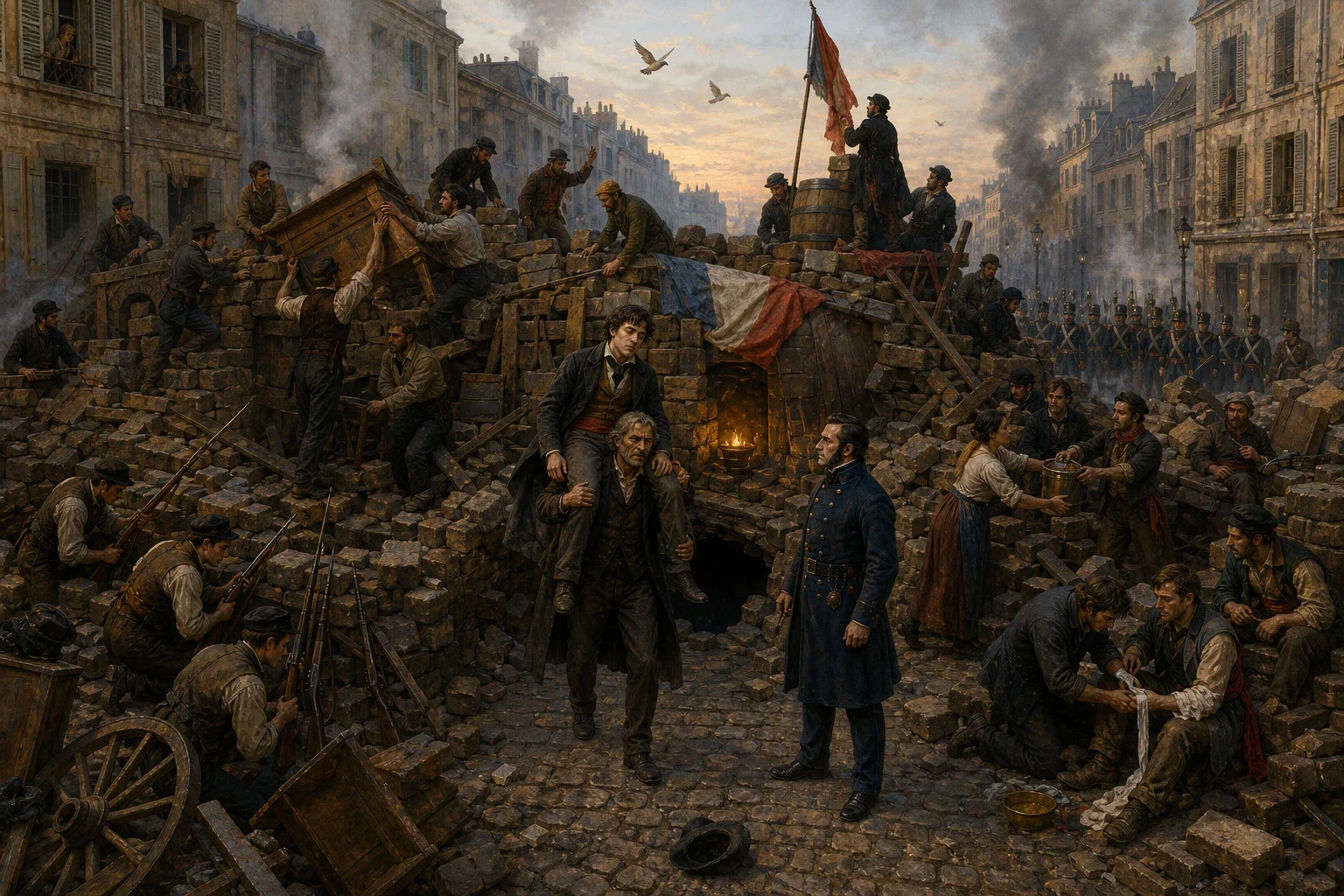
In June of 1832, Paris rose again. Students and workingmen built a barricade of carts, furniture and paving stones across the rue de la Chanvrerie, and Marius Pontmercy, who could not stay away once he knew Cosette might be lost to him forever if he did nothing, fought among them. Inside the barricade, the defenders discovered a police spy in their midst — Inspector Javert, tied to a post, waiting to be shot once the fighting ended. Jean Valjean, who had followed word of the uprising to find Marius, asked the men's leader for the right to deal with the spy himself. He led Javert around the corner, out of every other eye, and there, instead of a bullet, gave the stunned inspector his freedom and his life. Soldiers stormed the barricade before morning. Marius fell badly wounded in the last defense of it. As the barricade came apart around him, Valjean lifted Marius onto his shoulders and carried him down into an opening in the street that led under Paris.
Page 9
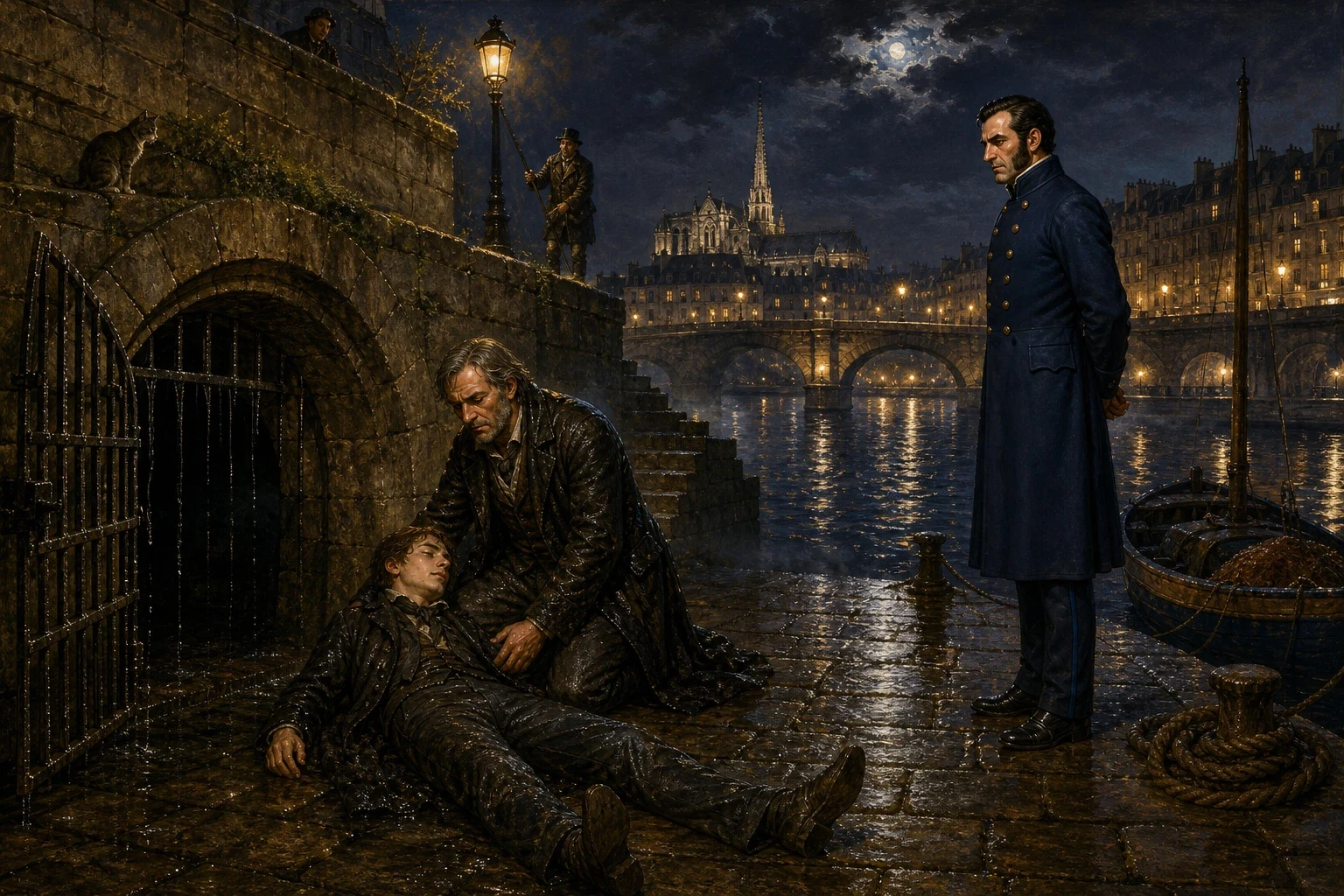
Carrying Marius on his back through the tunnels beneath Paris for hours, Jean Valjean finally reached an iron grate that opened onto the bank of the Seine. Beyond it stood the one man in Paris he least expected to find there: Inspector Javert, alone, apparently waiting. Valjean did not run and did not beg. He simply asked for help getting the wounded young man home, and gave his own address freely, as though he no longer cared whether he was arrested. Javert, who owed Valjean his life from the barricade and could not make himself repay it with handcuffs, let him go. He watched the cab Valjean hired drive away into the dark streets. Then Javert walked alone to the river's edge further down the bank, where the current ran fast and black under the bridges, and stood there a long while, unable to reconcile the law he had served all his life with the mercy he had just allowed. By morning no one had seen Inspector Javert again.
Page 10
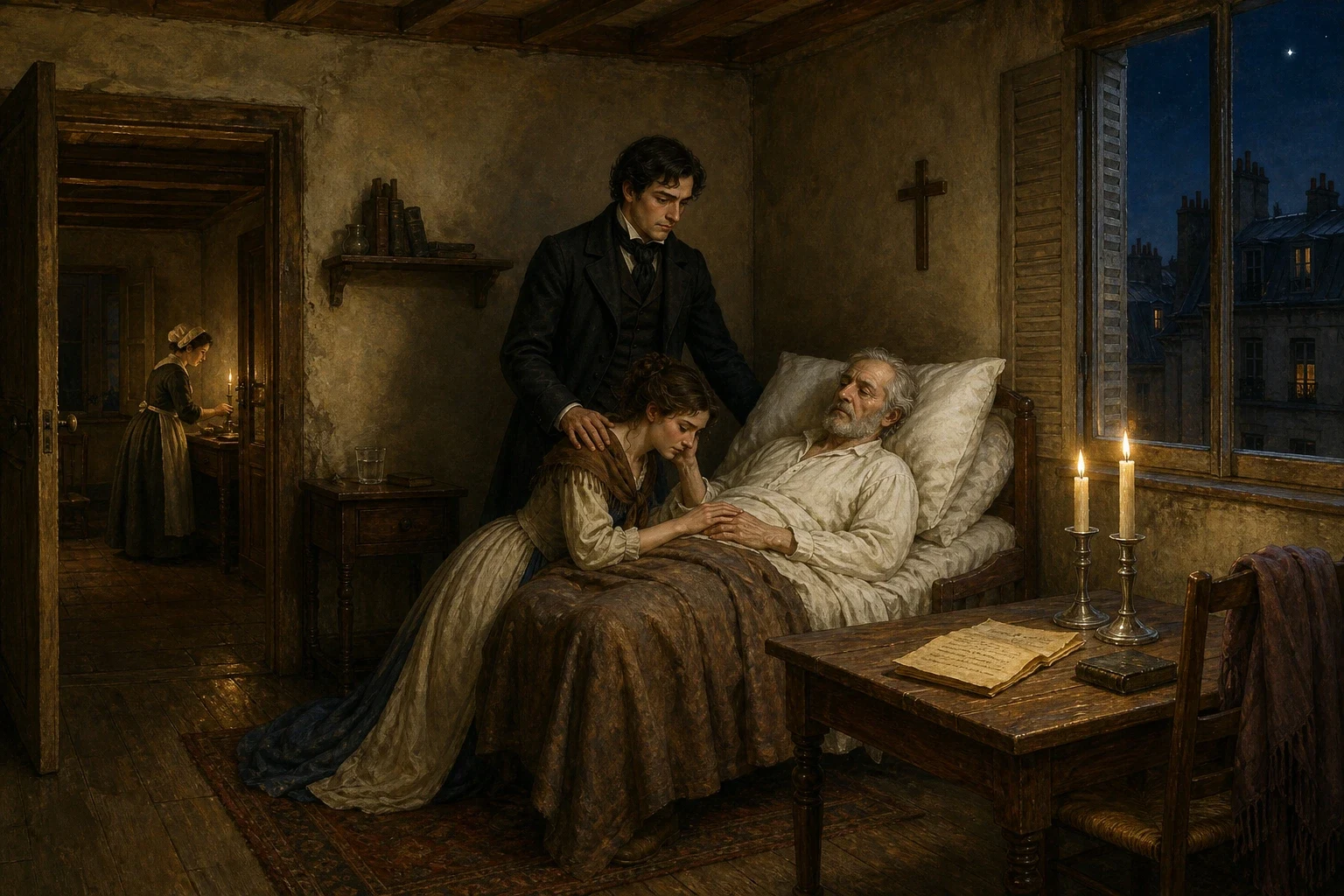
In his last years, Jean Valjean told Cosette and her new husband, Marius, the truth of his past, and quietly withdrew from their house so as not to shame them, growing weaker and more alone with every month that passed. It was only by chance that Marius learned, from Thénardier of all people, that the ragged stranger who had carried him through the sewers after the barricade was Valjean himself. He and Cosette rushed at once to the small lodging where Valjean lay dying, and found him with the two silver candlesticks from the Bishop of Digne burning on the table beside his bed, just as they had burned in his room every night of his life since Digne. Cosette knelt by him and he told her, at last and fully, who her mother had been and all that had happened at Montfermeil. He died peacefully between them that night, holding both their hands, at rest.
About this story
- Audience: general readers
Read Wonder Novels on your phone
Wonder Novels is available on Android. Get Wonder Novels on Google Play.