Moby-Dick
An old captain's hunt across the whole ocean for the one white whale that took his leg
Page 1
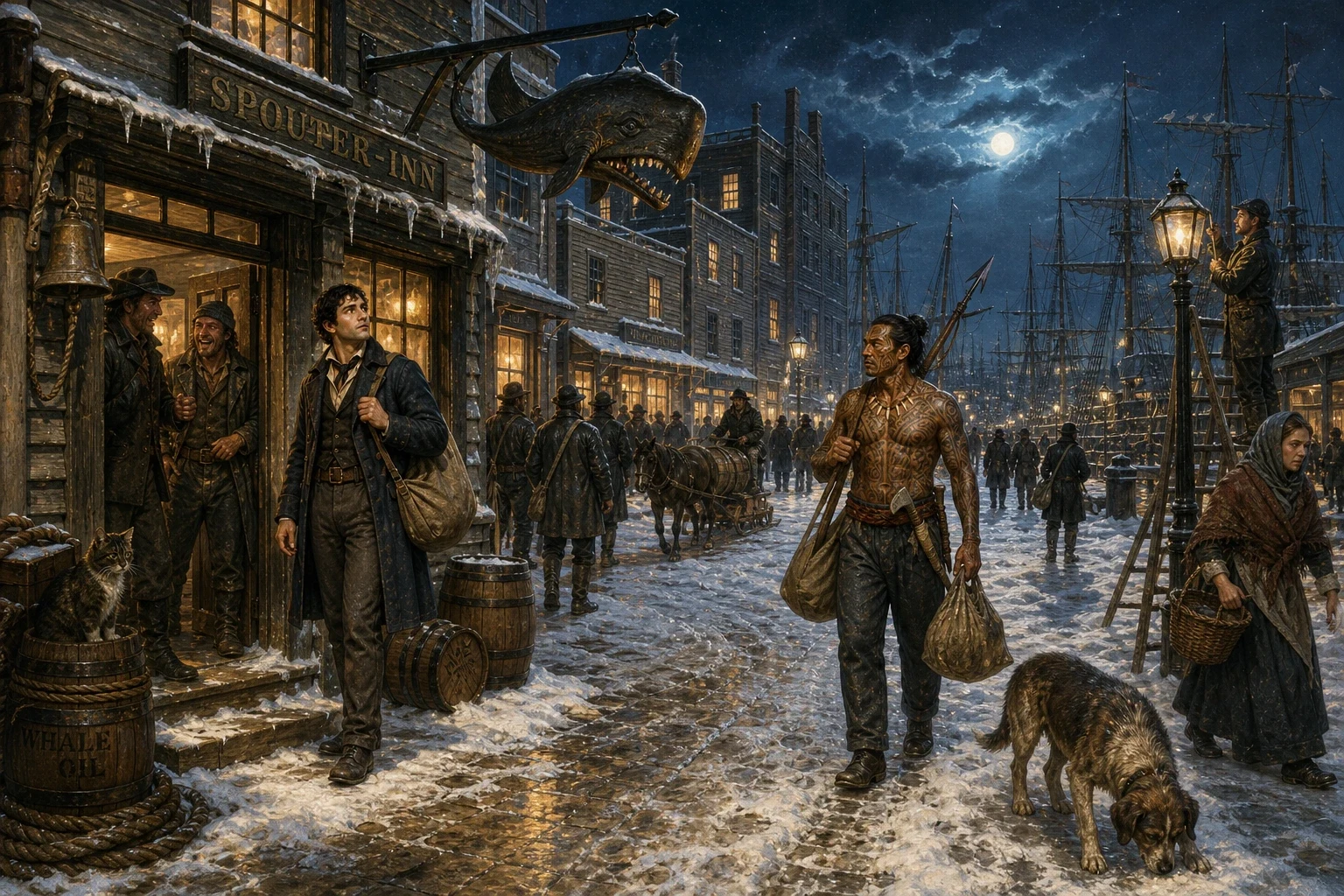
One cold December, a young man named Ishmael came down to the docks of New Bedford, Massachusetts, meaning to go to sea as a common sailor on a whaling ship, for he had no money and some restlessness in him that only the ocean seemed to answer. The town was full to the rafters with whaling men waiting for a berth, and the only bed left to be had, at an inn called the Spouter-Inn, was one he would have to share with a stranger. The landlord, Peter Coffin, told him the stranger was out that night selling shrunken heads in the street and would be back before morning. Ishmael waited, uneasy, and when the door finally opened, in came a broad, tattooed, dark-skinned harpooner carrying a tomahawk pipe and a sack of curiosities — a Pacific islander named Queequeg, a cannibal by his own account, and a prince's son besides. They were strangers at midnight and friends by breakfast.
Page 2
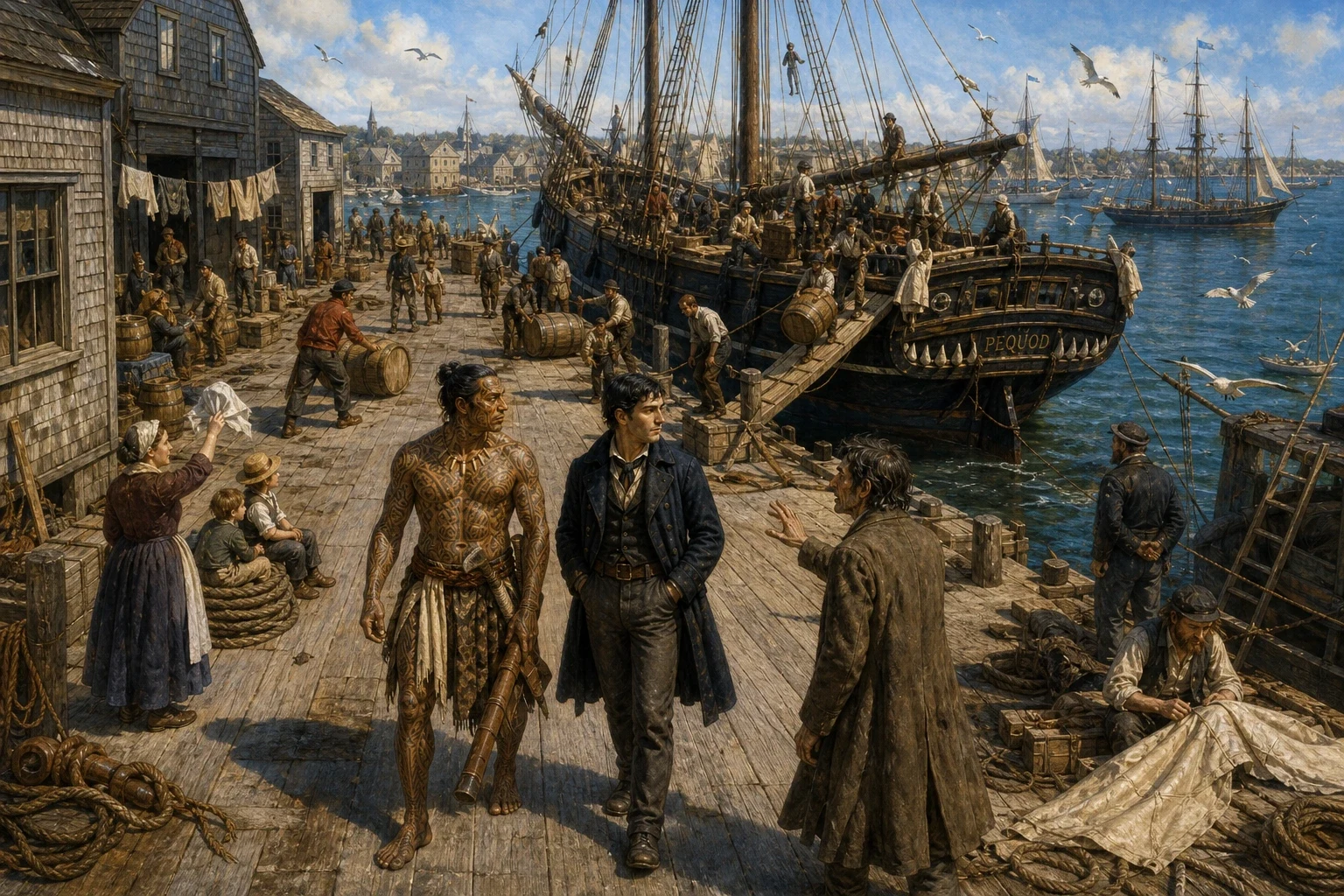
From New Bedford, Ishmael and Queequeg sailed on to the island of Nantucket, the oldest whaling port in America, to find a ship. They chose the Pequod, an old, strange, cannibal of a craft trimmed with whale teeth and bone, and signed her articles — a share of the profits instead of wages — before her owners, two retired whaling captains named Peleg and Bildad. Her own captain, Ahab, they were told, was still laid up at home, recovering from a hurt, and would not be seen until the ship was well out to sea. As they walked back along the wharf afterward, a ragged, strange-eyed man fell into step with them and asked whether they had signed on with old Ahab. When they said they had, he looked at them a long moment and said only that they had better pray for their souls, then walked off into the crowd without another word.
Page 3
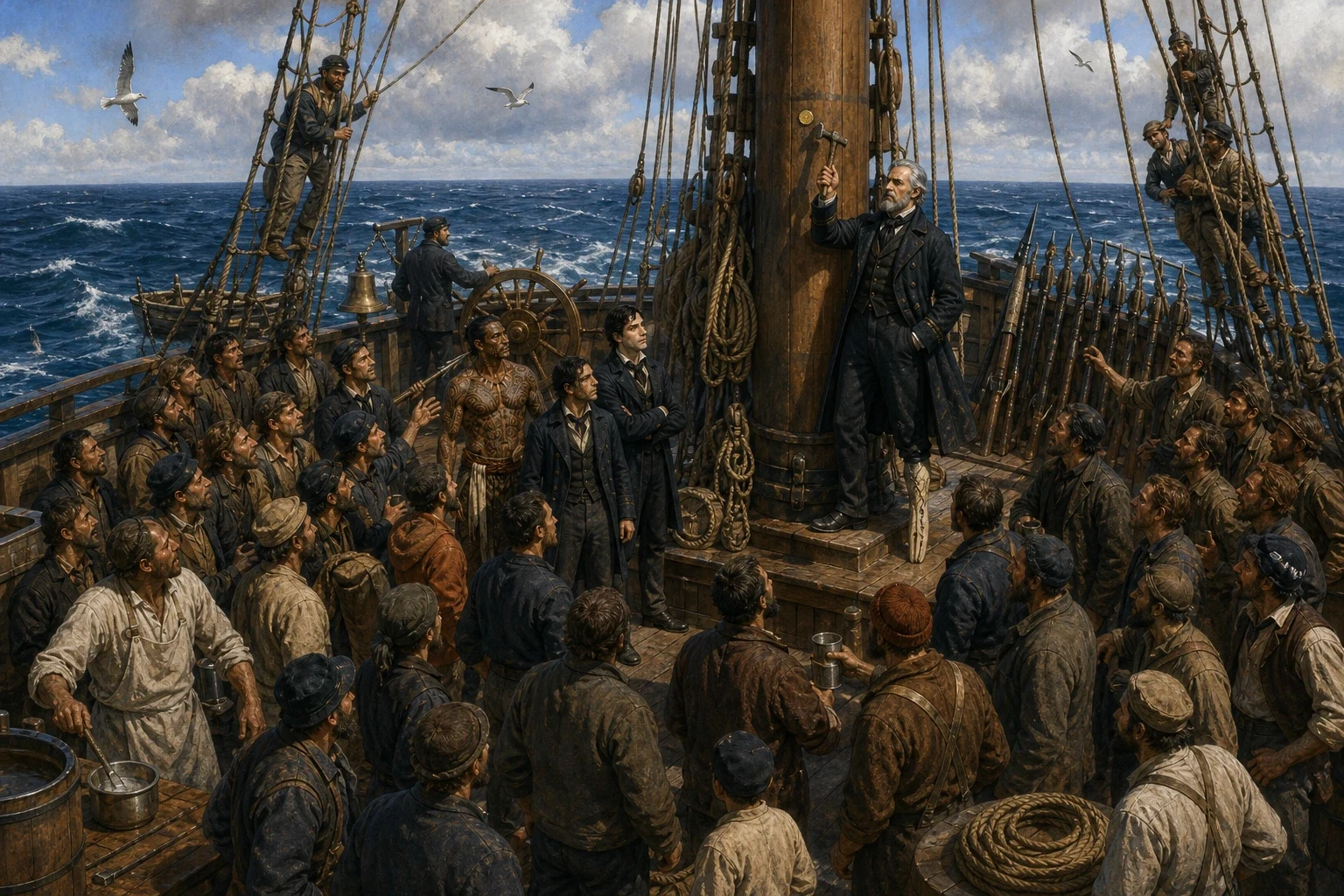
Weeks out to sea, Captain Ahab came up on deck at last — an old man with a face scarred pale down one side and a leg gone below the knee, replaced by a leg carved from a sperm whale's jawbone, so that his step rang on the planks wherever he walked. He called all hands aft, held up a bright gold doubloon, and nailed it to the mainmast with his own hammer: it would belong to the first man who raised a certain whale for him — a huge, old, white-headed sperm whale, scarred and crooked-jawed, known to whalemen as Moby Dick. That was the whale, Ahab told them, that had taken his leg from him on his last voyage, and he meant to hunt it around the world until he killed it. Starbuck, his first mate, said it was mad to chase a dumb brute for revenge, but Ahab's fire caught the crew, and they swore the oath with him, shouting and drinking round the deck.
Page 4
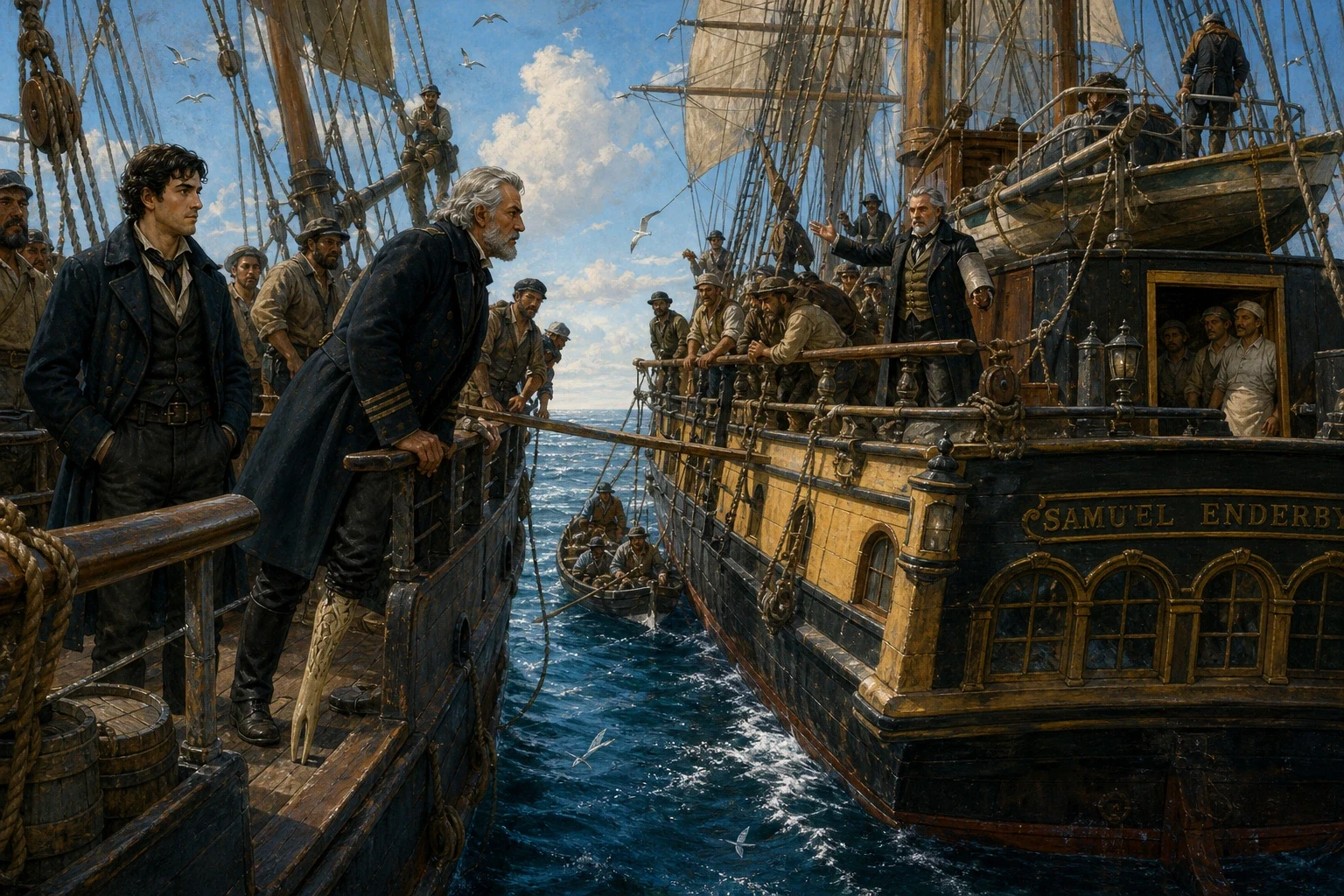
Far out in the Pacific, the Pequod came alongside another whaling ship, the Samuel Enderby of London, and the two crews gammed — swapped news, as whaling ships always did when they met at sea. Her captain, a broad, cheerful Englishman, had lost an arm himself not long before — bitten off, he said, by an enormous old white whale with a crooked jaw, the very whale Ahab had crossed the whole ocean to find. He showed Ahab the stump where his arm had been, told him exactly where and when he had last seen the whale, and said plainly that he, for his part, had had quite enough of Moby Dick and meant never to go near him again. Ahab listened to every word hungrily, asked which way the whale had been swimming, and then, the moment he had his answer, ordered his own ship away again without waiting even to finish the visit properly.
Page 5
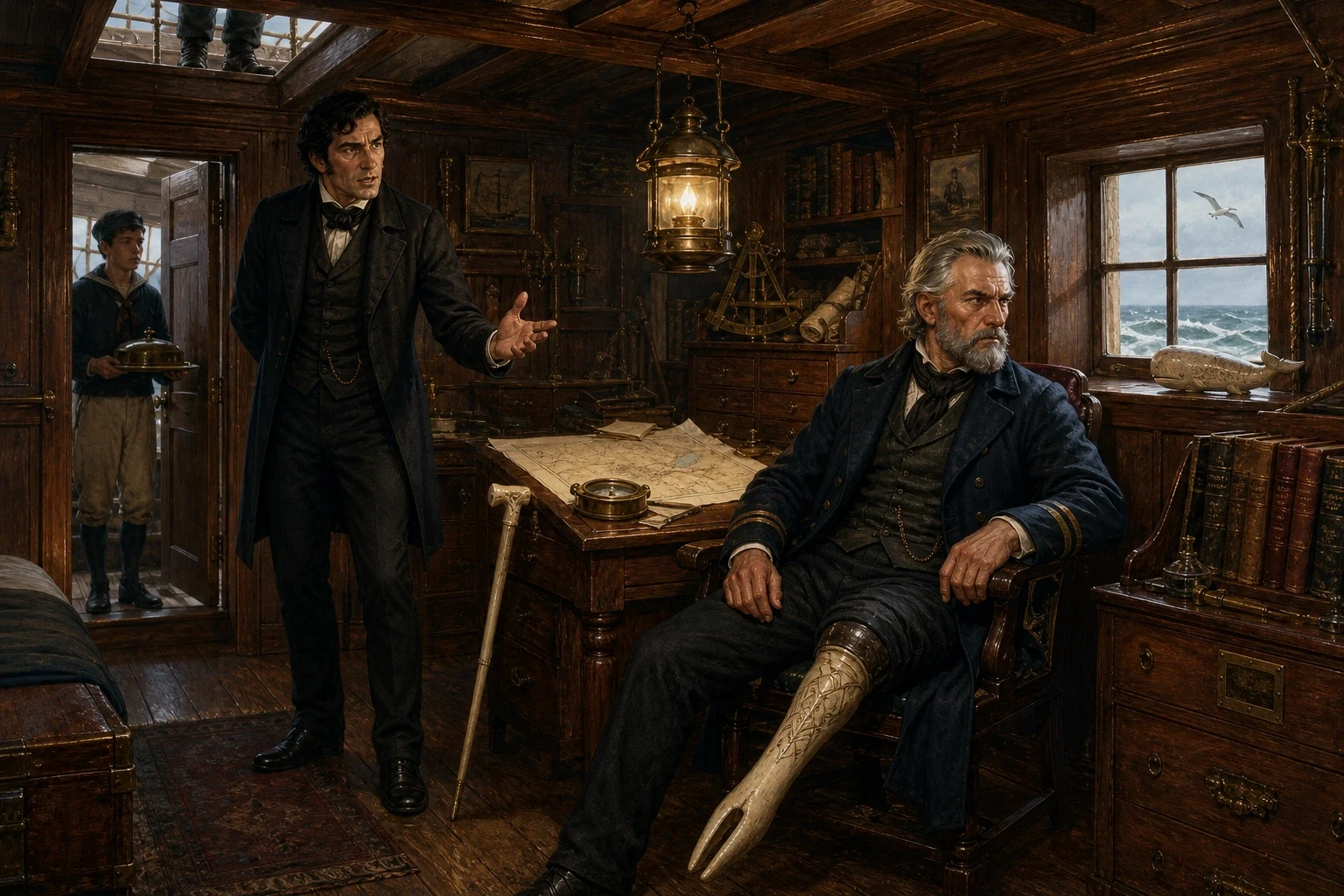
Below decks, in the captain's small cabin, Starbuck came to Ahab with plain news: the casks of whale oil in the hold were leaking, and the men ought to be let below to secure them before the whole season's profit ran to waste in the bilge. It was ordinary ship's business, the kind any captain would see to without a thought. But Ahab, lost entirely in his hunt for Moby Dick, would not spare the men from the lookout even for an hour, and told Starbuck to let the oil leak and be done with it. Starbuck pressed him once more, gently, and for a moment something in Ahab's face seemed to soften, as if the old man heard, far off, the sound of his own wife and child waiting for him at home. Then the moment passed, and Ahab sent his first mate back up to the deck with the order unchanged.
Page 6
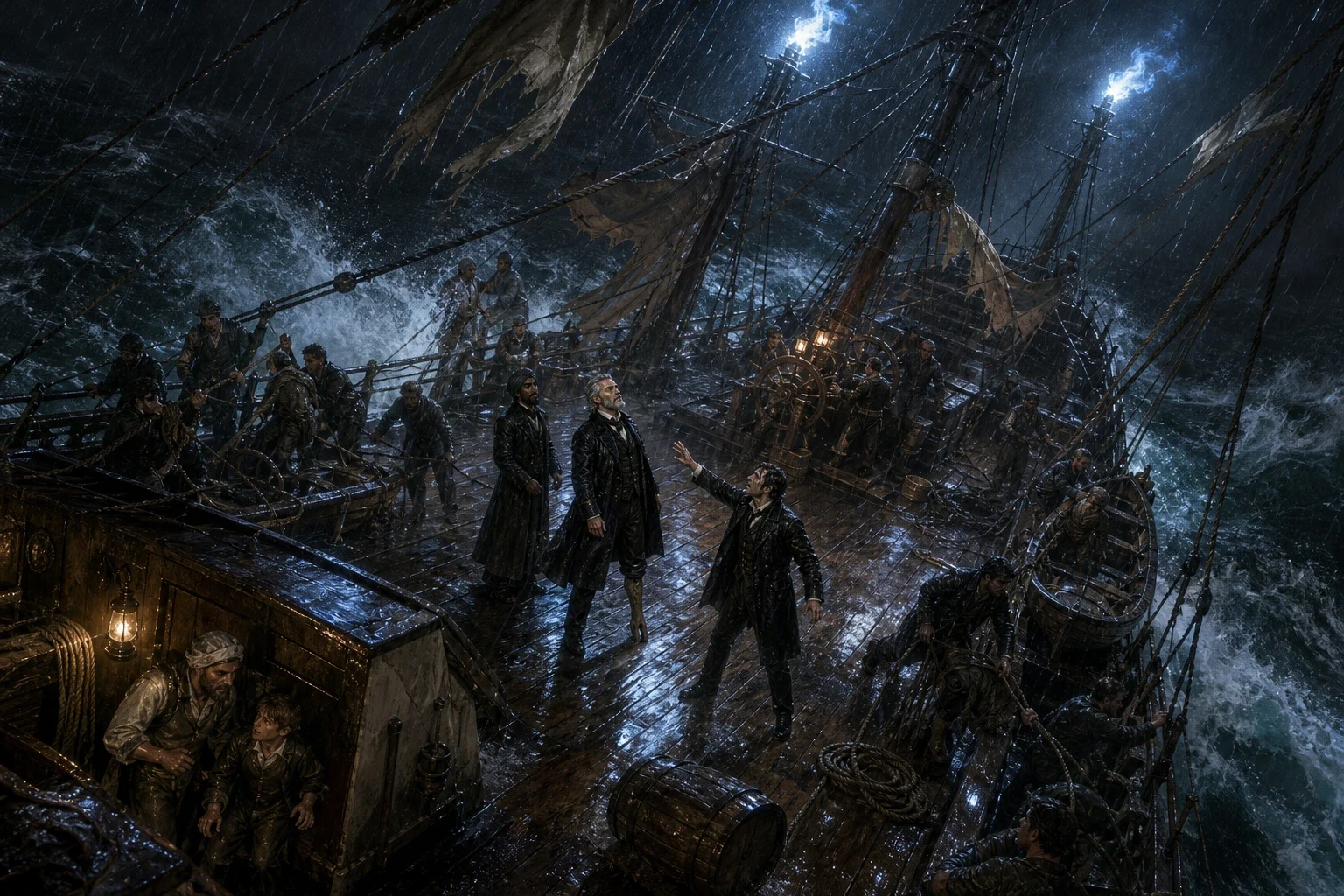
South of Japan, a great typhoon struck the Pequod in the night, tearing her sails to rags and throwing the ship nearly on her side. In the howling dark, pale blue fire crept along the tips of all three masts — corpusants, the sailors called it, a kind of lightning that gathered on the rigging without burning it, so that the whole ship seemed to burn with cold flame against the black sky. The crew huddled back from it in terror, certain it was a sign sent against the voyage, and Starbuck begged Ahab to take it as a warning and turn the ship home at last. But Ahab stood out in the open under the burning masts with his harpooner Fedallah close beside him, lifted his face to the ghostly fire, and said he had seen such fire before in other seas and was not afraid of it now. The storm passed before morning, but nothing about the voyage changed.
Page 7
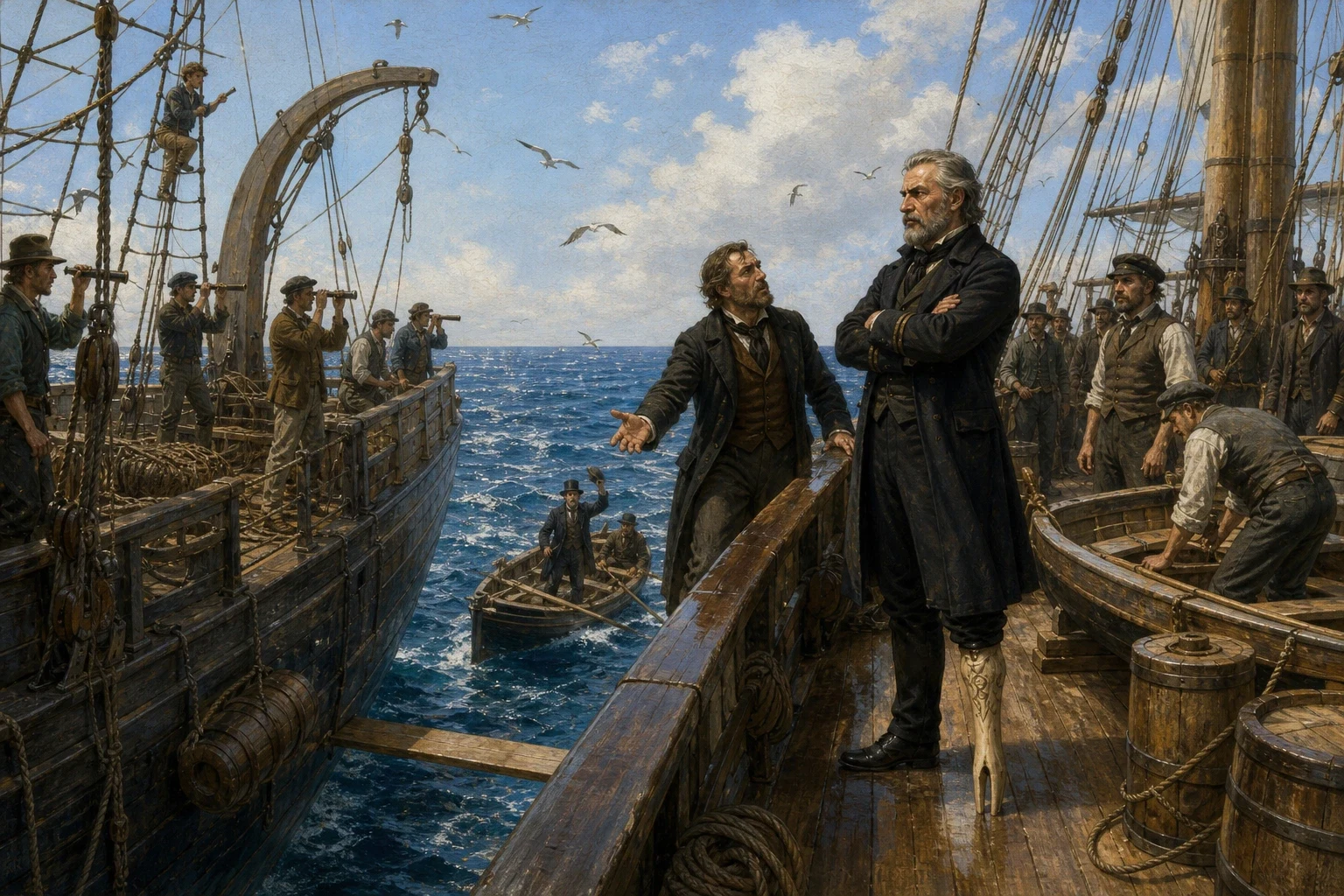
Not long after, the Pequod met another whaling ship, the Rachel, flying signals for a gam. Her captain came aboard in great distress: his own son, a boy of twelve, had gone out in one of the ship's whaleboats after a sighting and had not come back, and the captain believed the whale they'd been chasing was the very white whale Ahab was hunting. He begged Ahab to let him hire the Pequod for just one day, to help search the waters for the missing boat before giving the boy up for lost. Ahab listened, and asked only one question — which way the white whale had been seen swimming — and when he heard the answer, his face closed like a door. He refused the captain's plea, turned the Pequod's bow the way the whale had gone, and sailed on, leaving the Rachel still searching behind him.
Page 8
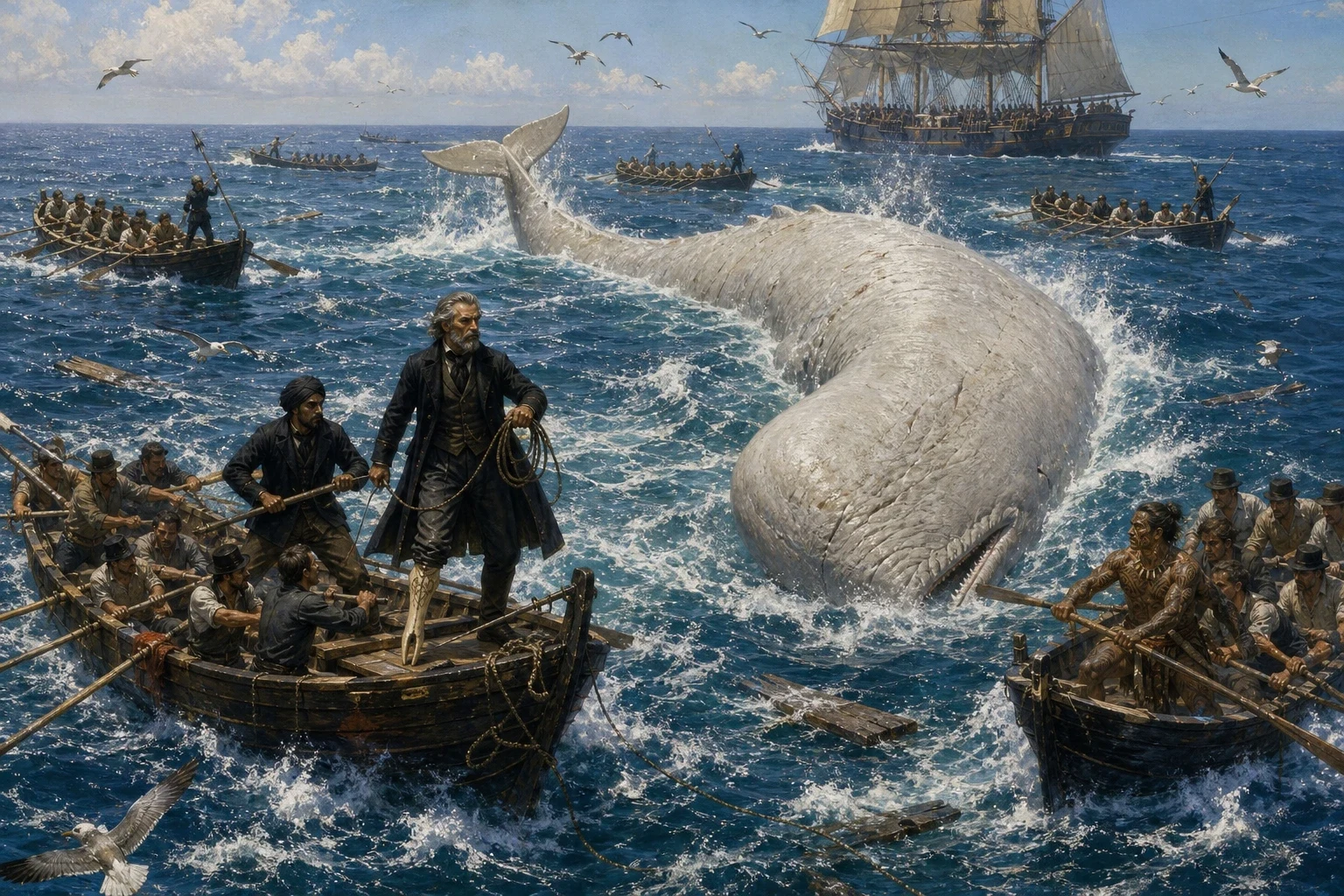
At last, from high on the mast, a lookout spotted a huge white hump breaking the water far off, and the cry everyone aboard had been waiting months to hear went up: there she blows! It was Moby Dick himself, swimming calm and unhurried on the surface, his broad wrinkled head as white as wool. Ahab had the boats lowered at once, and his own boat, with Fedallah and the rest of his secret crew pulling the oars, shot out ahead of all the others straight for the whale. Moby Dick let them come close, and then, without warning, turned on Ahab's boat, smashed it to splinters with one sweep of his great head, and tossed the men into the sea. Ahab himself was pulled out of the water half-drowned, furious rather than afraid, and swore before the whole crew that the chase was only beginning.
Page 9
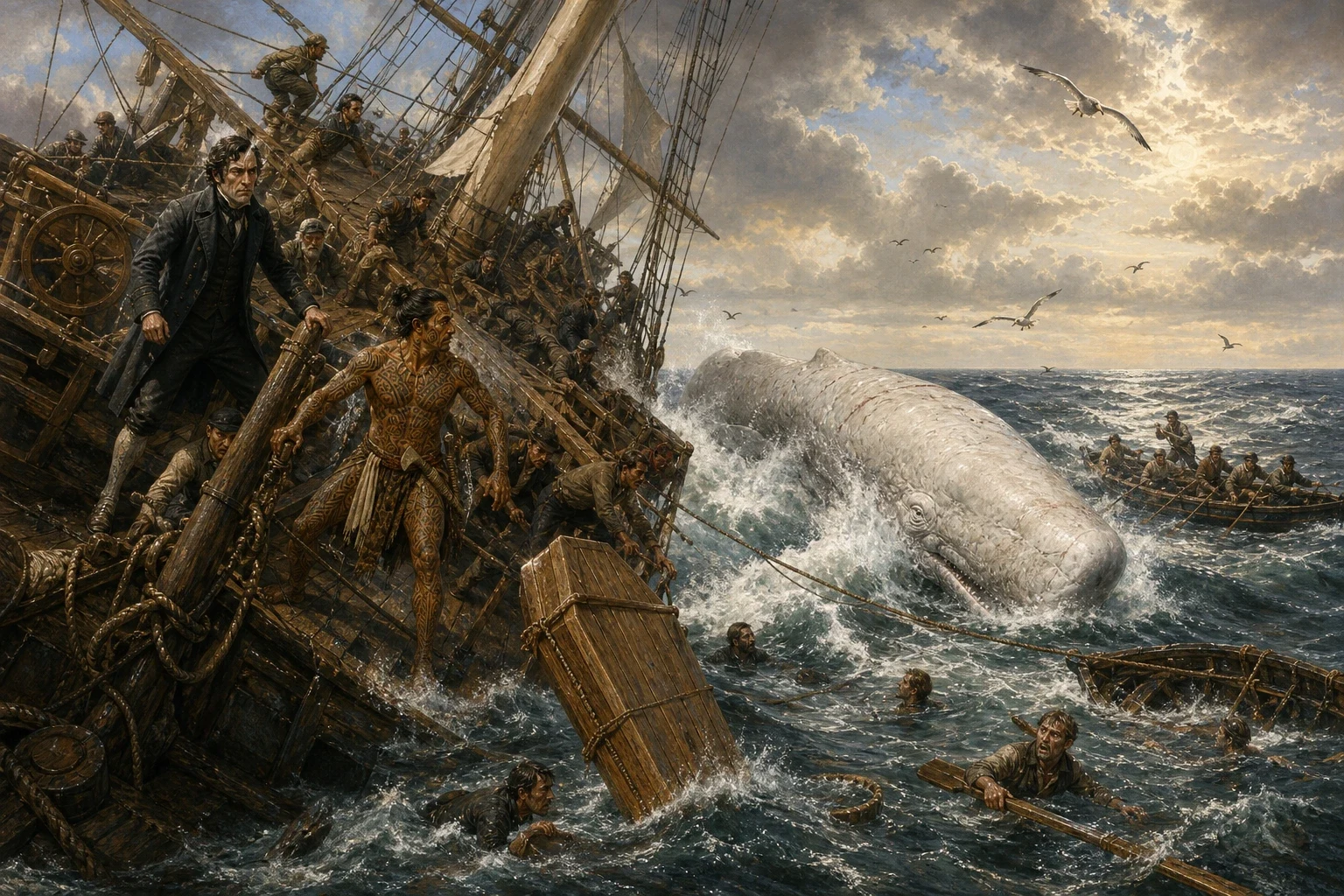
On the third day, Moby Dick turned at last on the Pequod herself. Ahab had thrown his harpoon deep into the whale's side, and as Moby Dick dove and ran, the line meant to follow him out whipped across the boat — and caught Ahab by the neck, snatching him out of his boat and down into the sea with the whale, gone before anyone could reach him. Moments later the whale turned back and drove his great head into the Pequod's hull, stoving it through, and the ship began to go down fast, dragging spars and sailors with her. Starbuck stayed at his post until the water took the ship. Queequeg's own coffin, built for him months before when he'd been sick and never used, broke loose from its lashings and floated free on the spreading water as the Pequod, and nearly everyone aboard her, went under for good.
Page 10
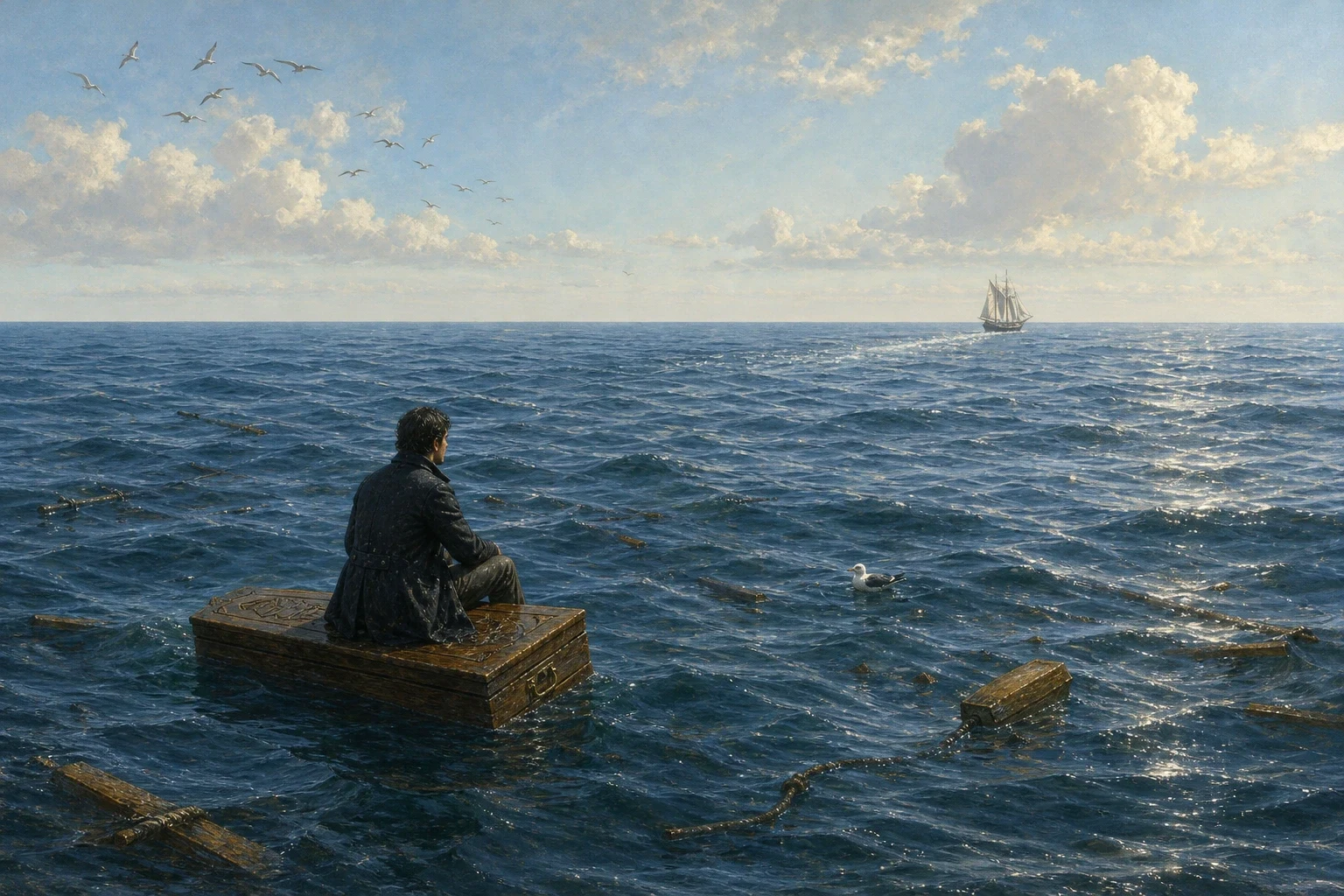
When the Pequod went down, she took the whirlpool of her own sinking with her, and it drew everything near her down too — except Ishmael, who had been thrown clear at the very start and so was spared, floating just outside the pull of the water. Queequeg's coffin, the one he'd had built for himself long before and never needed, rose to the surface beside Ishmael, buoyant and watertight, and he climbed onto it and floated there alone on the empty Pacific for a day and a night, the only living thing left on all that water. On the second day, a ship appeared on the horizon, still searching the sea for the whaleboat and the boy she had lost — it was the Rachel, turning now in her own mourning search, and it was the Rachel that found Ishmael at last and carried him home, the sole survivor of the whole voyage.
About this story
- Audience: general readers
Read Wonder Novels on your phone
Wonder Novels is available on Android. Get Wonder Novels on Google Play.