Oblomov
A nobleman so comfortable in bed that love, fortune and his own best years went by without him once getting up
Page 1
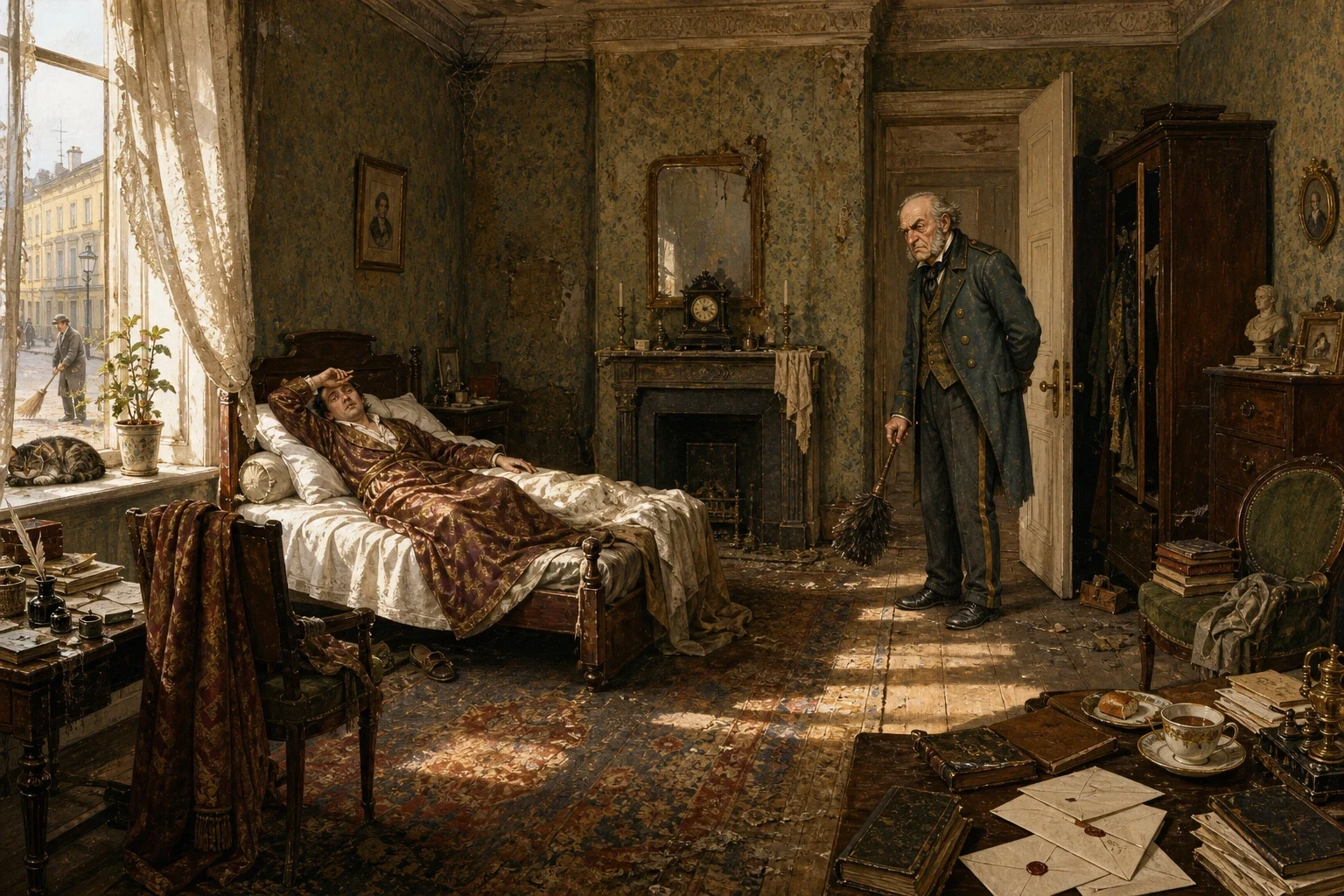
In Petersburg, in an apartment on Gorokhovaya Street, Ilya Ilyich Oblomov lay in bed, as he had lain nearly every morning of his life. He was not ill. He simply saw no reason, yet, to get up. On the table beside him lay two letters he had not opened: one from the bailiff of his estate, saying the income was falling again, and one from his landlord, saying he must either repair the flat or leave it. Both could wait. His servant Zakhar shuffled in and out, grumbling, dusting nothing, forgetting everything, as lazy in his own way as his master was in his. Callers came and went all morning — an acquaintance going visiting, another going to the office, a third going nowhere in particular — and each one invited Oblomov to come along, and each time he found, without much trouble, a reason not to. Lying down, Oblomov liked to say, was no disgrace in a man who had nothing shameful to rise for. He turned over and went back to sleep.
Page 2
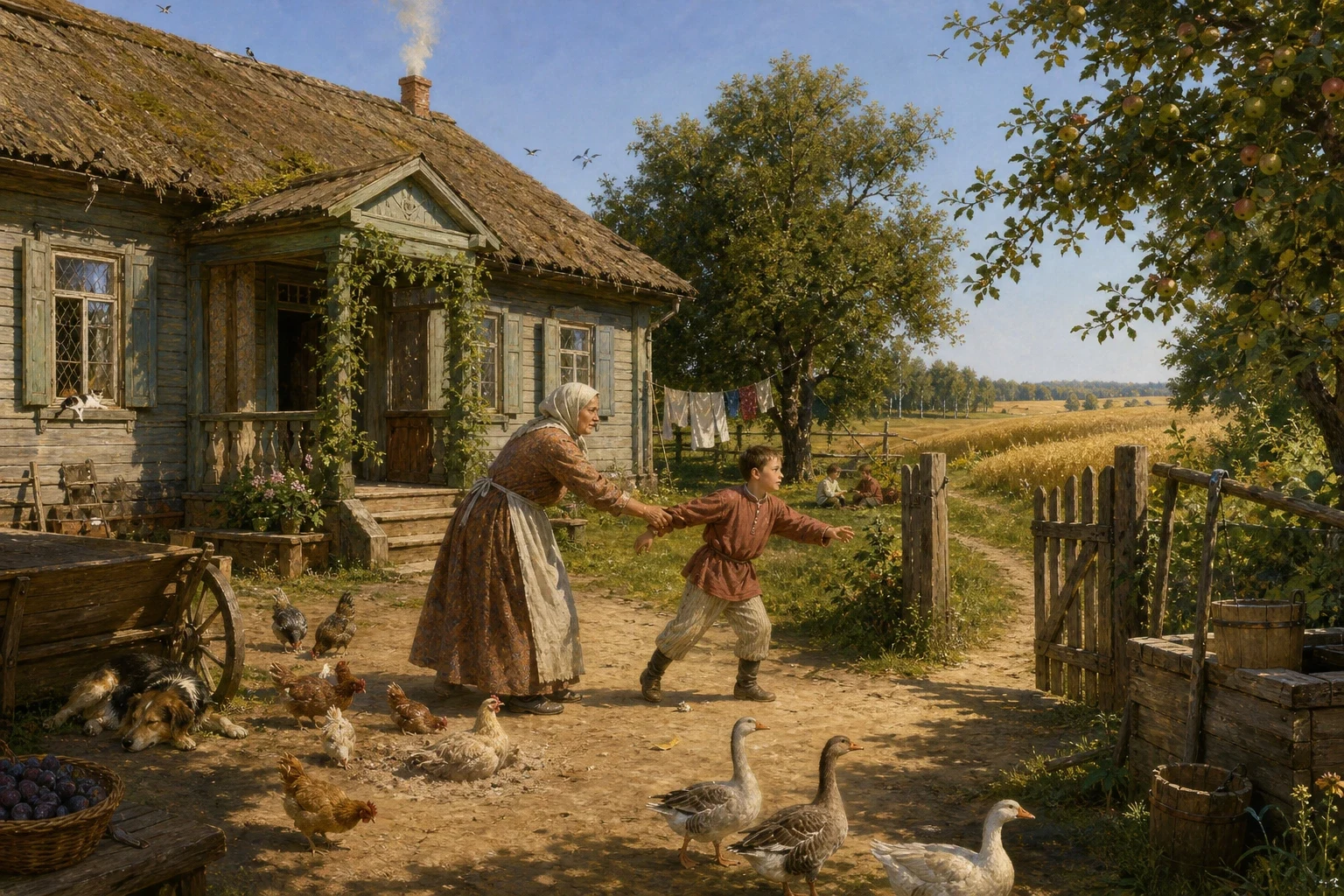
Oblomov dreamed, as he often did, of Oblomovka — the family estate far off in the heart of Russia, where he had been a child. It was a small, sleepy, sunlit world. The house dozed under its own roof; the orchard dozed under its own apple trees; even the dogs dozed in the yard. Nothing was ever urgent there. If a letter came, the whole household gathered to discuss, for a week, whether it ought to be opened. His mother and the old nurse never let him do anything for himself — not dress himself, not walk too far, not tire himself in any way — and every question the boy asked about the world beyond the village was answered the same way: it was better not to know, better to stay, better to rest. He grew up breathing that stillness in with the air, until it was not a place he remembered anymore but a shape his whole character had set hard around. He had been happy there, truly happy — and nothing since had asked him to be anything else.
Page 3
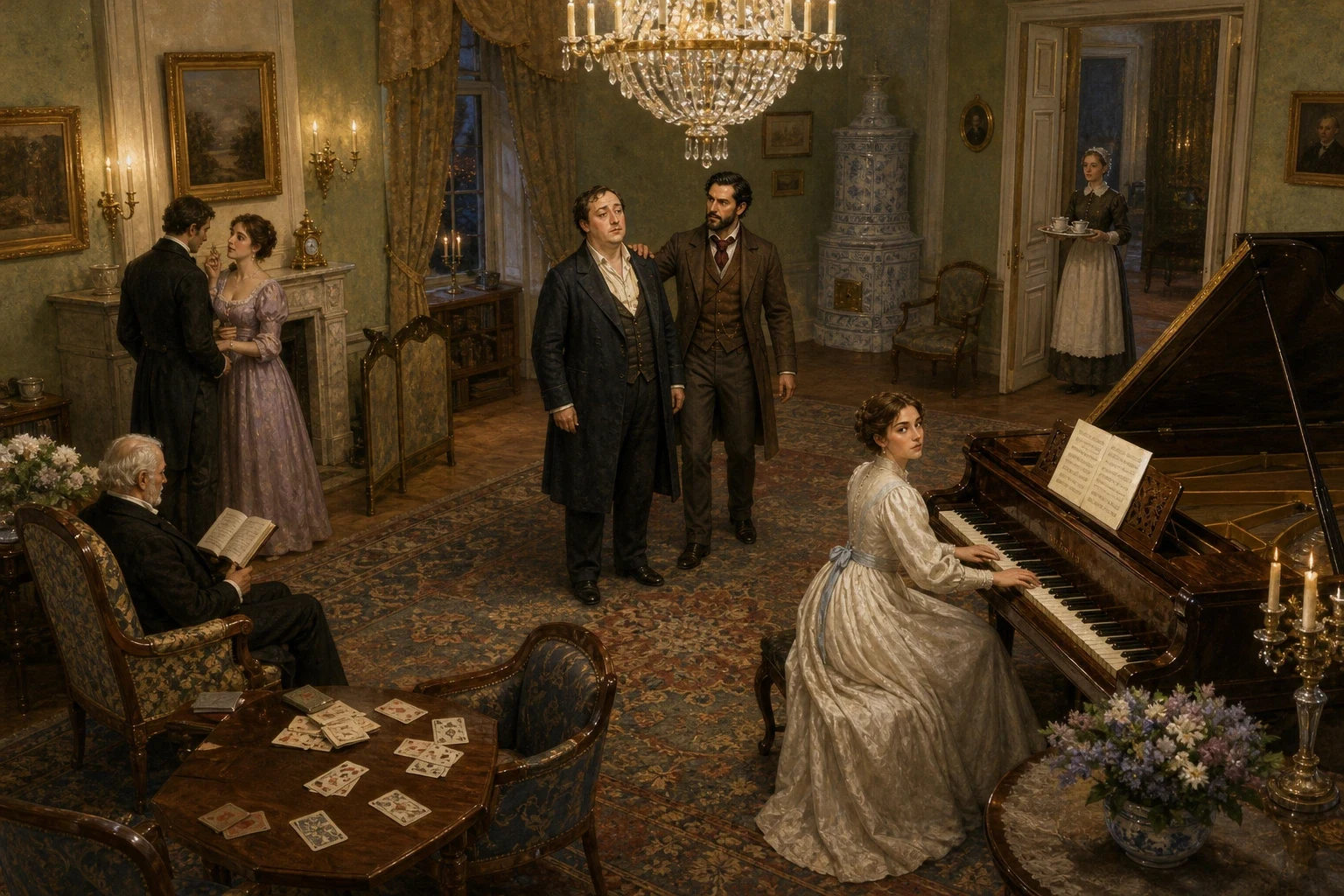
It was Andrei Stolz — Oblomov's oldest friend, as brisk and purposeful as Oblomov was idle — who finally pulled him out of his rooms and into society. Stolz had no patience for Oblomov's excuses and simply did not accept them. One evening he brought him to the house of the Ilyinskys, where their daughter Olga sat at the piano. Oblomov, dressed for once, stood by uncertainly while she sang. There was something in her singing — some seriousness, some real feeling, with nothing performed about it — that reached him in a way nothing had in years. He had expected to be bored, the way he was bored at every gathering Stolz dragged him to. Instead he found himself listening with his whole attention, and when Olga noticed him watching her and smiled, a little startled, Oblomov felt something move in him that he could not remember feeling before: not comfort, but its opposite — a kind of wakefulness.
Page 4
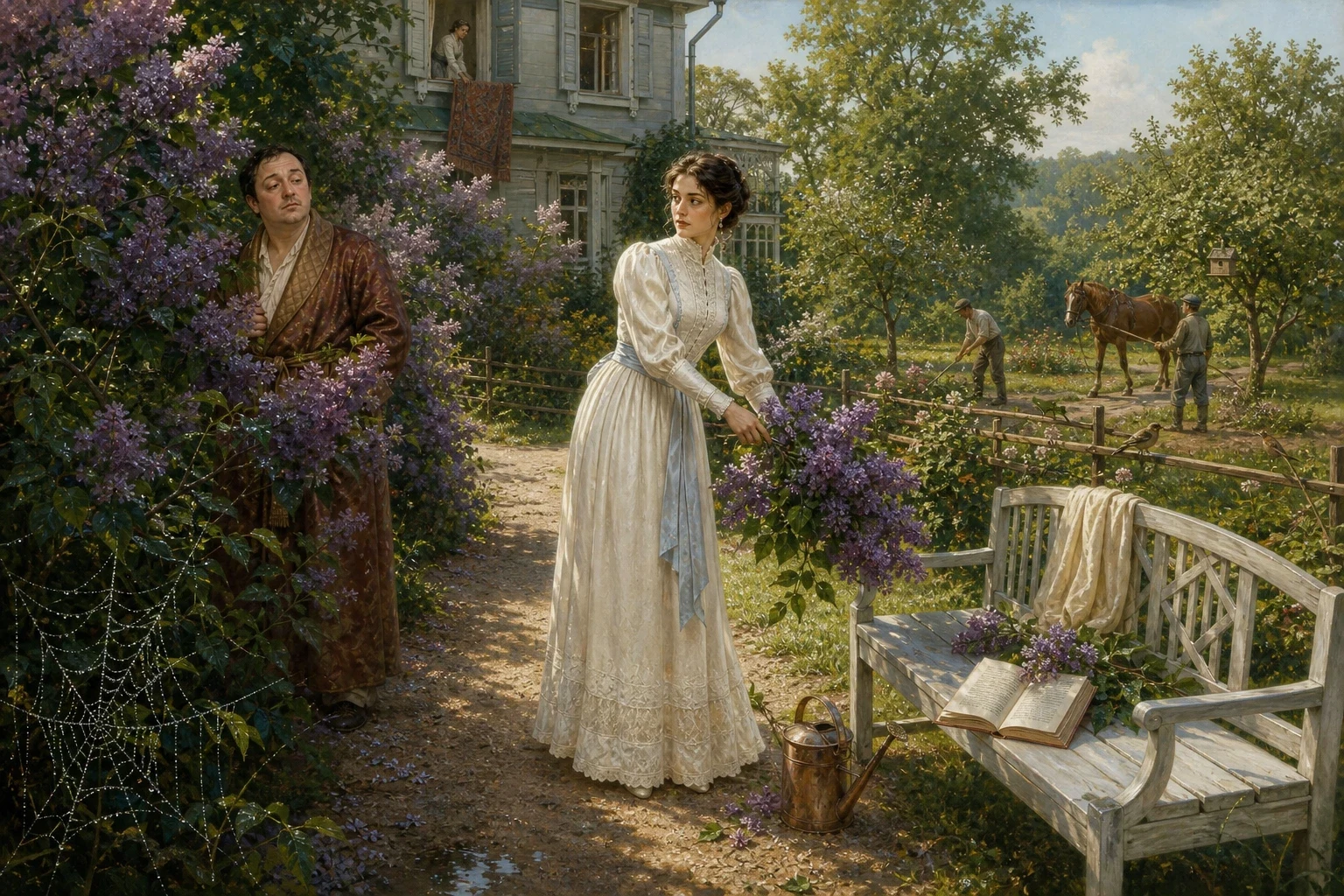
All that summer, at the Ilyinskys' country house outside Petersburg, Oblomov came alive in a way that astonished everyone who knew him, himself most of all. He walked. He rode. He read books Olga gave him and came back the next day ready to argue about them. He got up early — he, who had never in his life had a reason to get up early. One morning in the garden, before she was awake, he cut a branch of lilac in full bloom and left it where she would find it, then watched from a distance, absurdly nervous, until she came out and saw it and understood exactly who had left it there. She did not pretend not to know. From that day the lilac branch belonged to both of them, a kind of private sign of what neither of them had yet said outright. For the first time in his grown life, Oblomov wanted something enough to act on it without being pushed.
Page 5
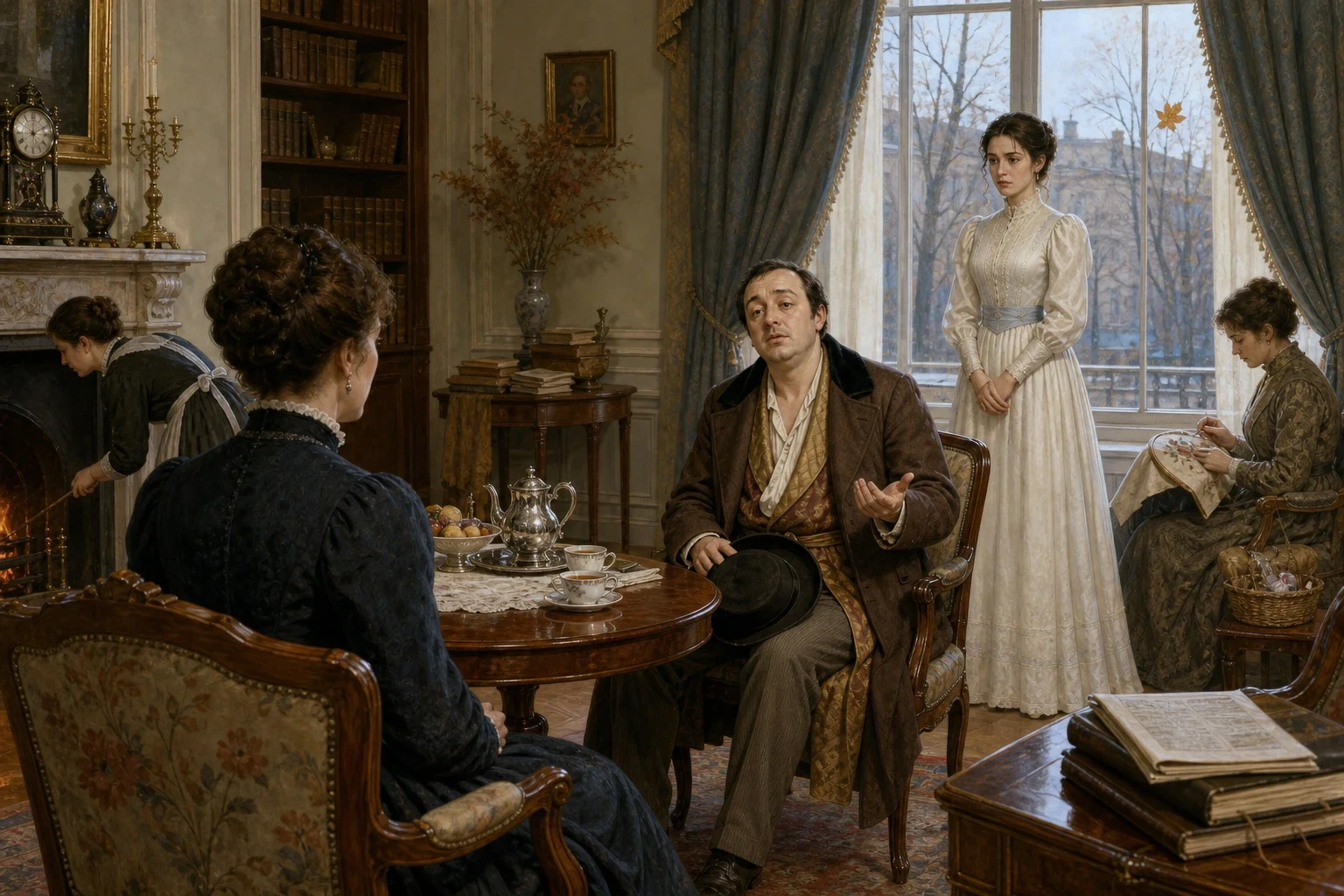
By autumn, back in town, an understanding had settled between Oblomov and Olga that they would marry. It should have been the happiest certainty of his life, and for moments it was. But every time the talk turned from feeling to arrangements — his estate, which had never once in years produced an honest account of its own income; his apartment, which needed to be given up; the wedding itself, which needed a date — Oblomov felt the old heaviness come down over him like a lid. He agreed to everything in principle and then found, each time, some reason the actual step could wait a little longer. Olga's aunt, who managed the household's practical matters, asked him directly what he intended to do about his affairs before the wedding, and Oblomov, sitting in the Ilyinskys' drawing room with his hat in his hands, heard himself promising to see to it very soon, and knew, even as he said it, that he meant nothing of the kind.
Page 6
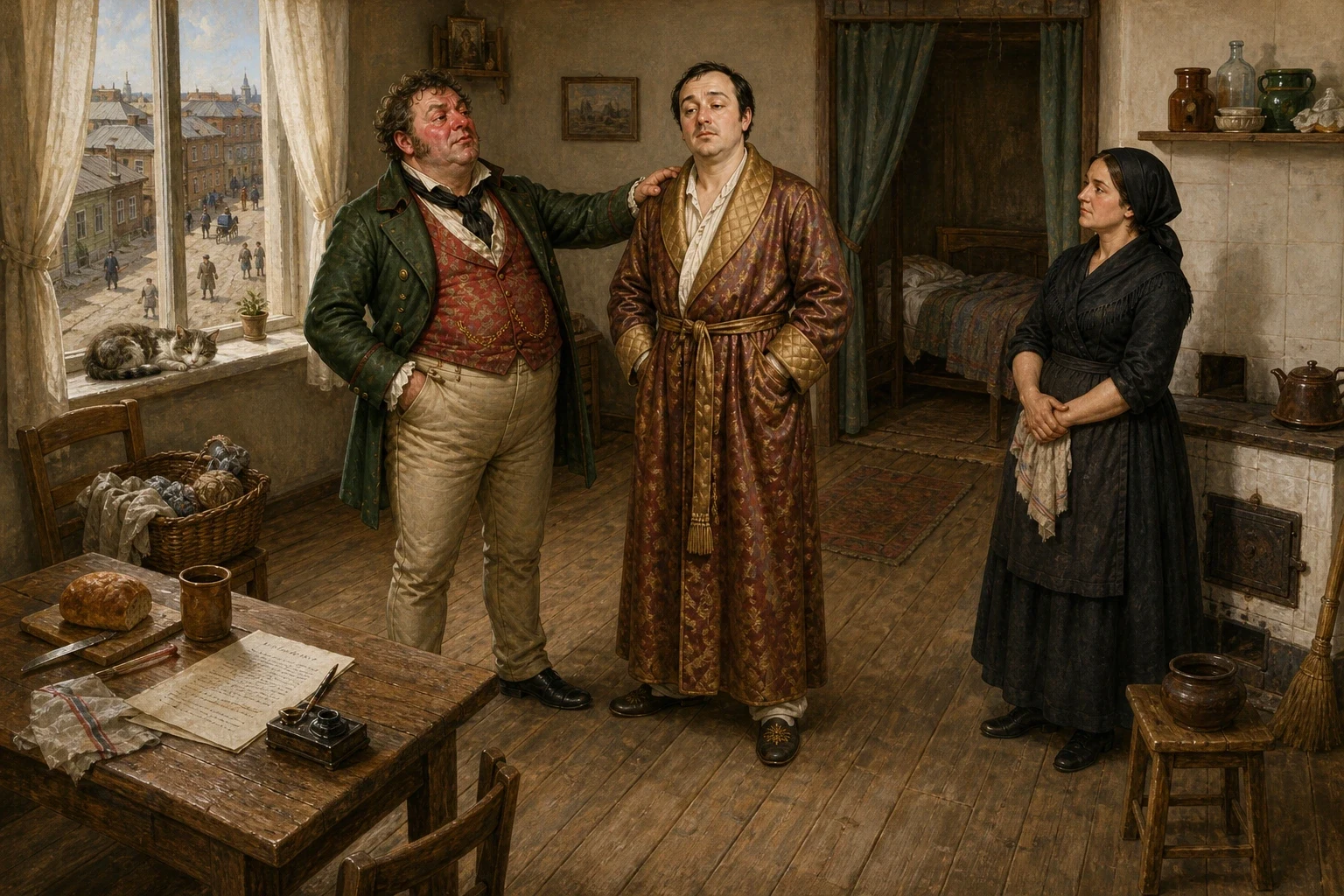
It was Tarantiev — a loud, blustering acquaintance who had attached himself to Oblomov years before and never quite let go — who found him a way to put off the wedding a little longer without ever admitting that was what he was doing. Tarantiev and his friend Ivan Matveyevich knew of rooms to let on the Vyborg side, across the river from the fashionable part of town, kept by a widow named Agafya Matveyevna Pshenitsina. It would be cheaper, Tarantiev said, and more convenient, while Oblomov's own affairs were sorted out. Oblomov, who wanted nothing so much as for someone else to settle a difficulty for him, agreed almost at once. He went to see the rooms and met their landlady: a plain, quiet, capable woman who asked him practical questions about his meals and his linen in a voice that asked nothing else of him at all. He signed the lease that same week. Neither Tarantiev nor Ivan Matveyevich mentioned that both of them stood to gain from the arrangement.
Page 7
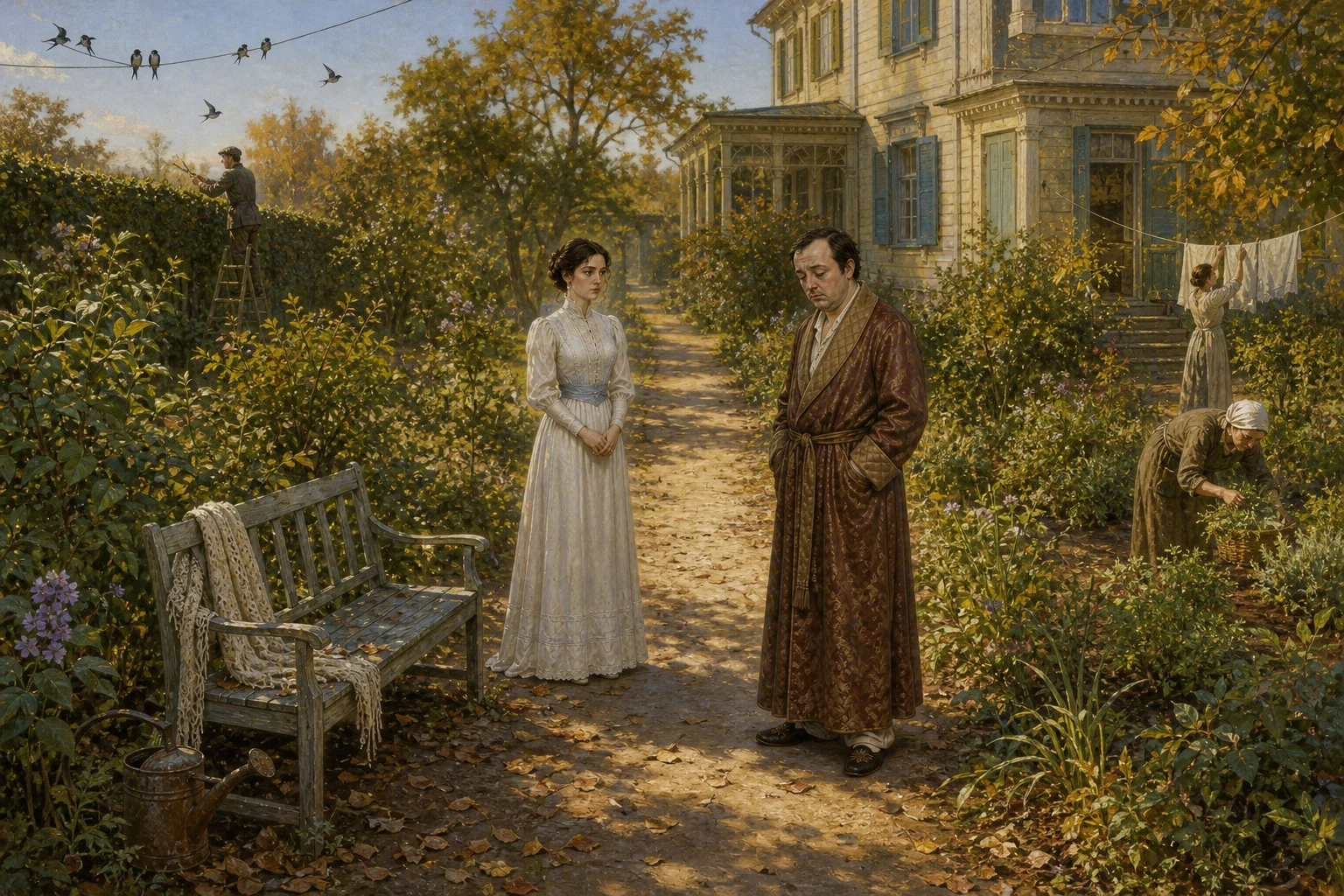
A year went by, and nothing in Oblomov's affairs had actually moved — not the estate, not the marriage, not the date that was always going to be set soon. Olga, who had waited and believed and made excuse after excuse for him, finally understood what she was looking at. She found him at the dacha again the next summer and walked with him down the garden path where, a year before, he had left her the lilac. She did not accuse him of any single failure. She told him, plainly, that it was not laziness exactly, and not even unkindness — it was something in him that simply would not rise to meet a life, any life, hers included. She said she had been in love with the man she had hoped he would become, and that man had never actually existed. Oblomov did not argue with her. He knew, standing there, that everything she said was true, and that knowing it changed nothing in him at all.
Page 8
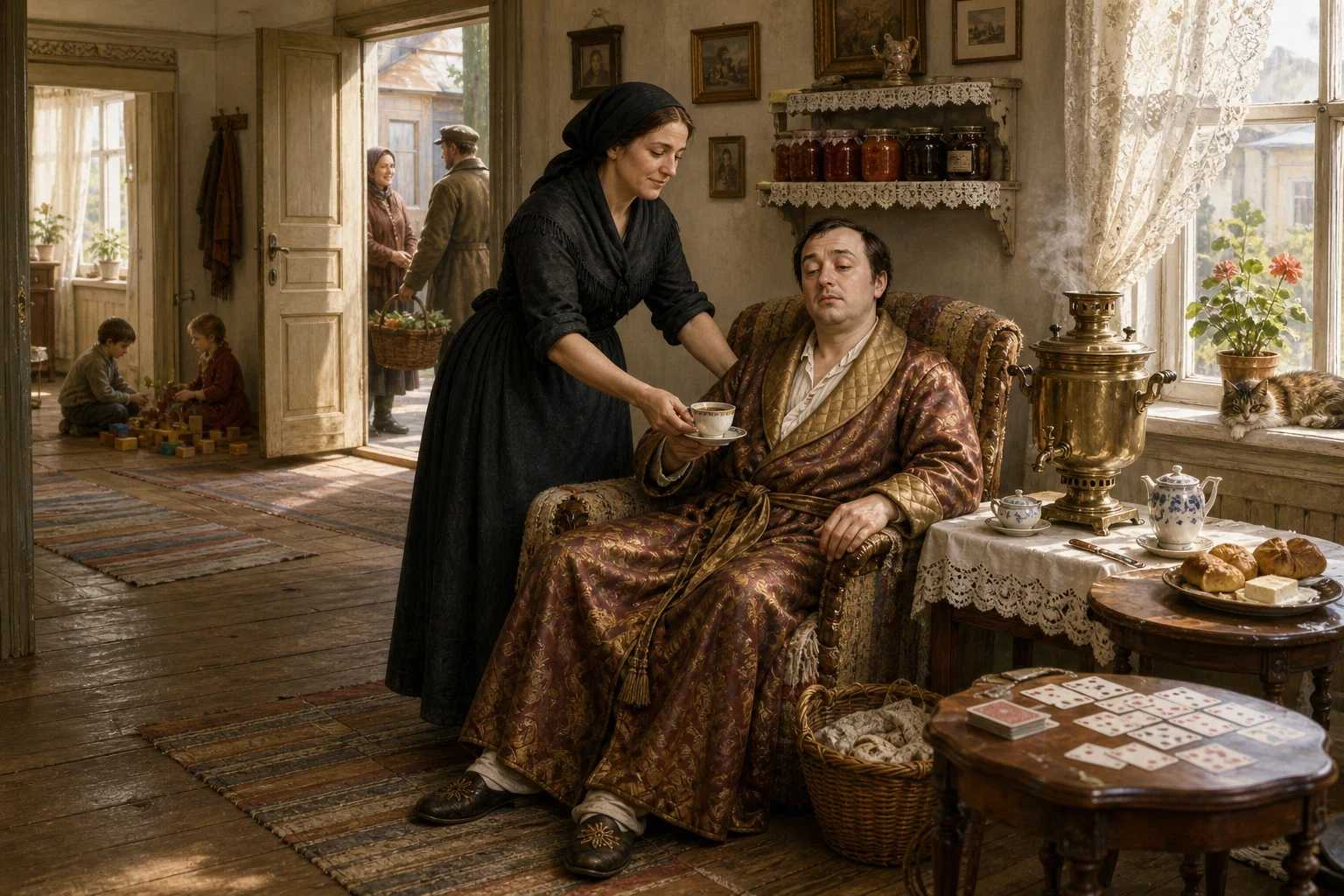
After Olga, Oblomov did not go back to Gorokhovaya Street. He stayed on in the rooms on the Vyborg side, and little by little, without either of them quite deciding it, Agafya Pshenitsina's household became his whole life. She asked for nothing from him that he did not already know how to give. She fed him well, kept his linen in order, made jam in the autumn, poured his coffee the way he liked it, and never once asked him what he meant to do about his estate or his future. There was no demand in her at all, only steady, wordless care, and Oblomov settled into it the way he had settled into his bed on Gorokhovaya Street, the way he had once settled into the stillness of Oblomovka itself. He had found, without looking for it, a second version of the childhood that had made him — and this time there would be no Stolz, no Olga, no lilac branch to pull him back out of it.
Page 9
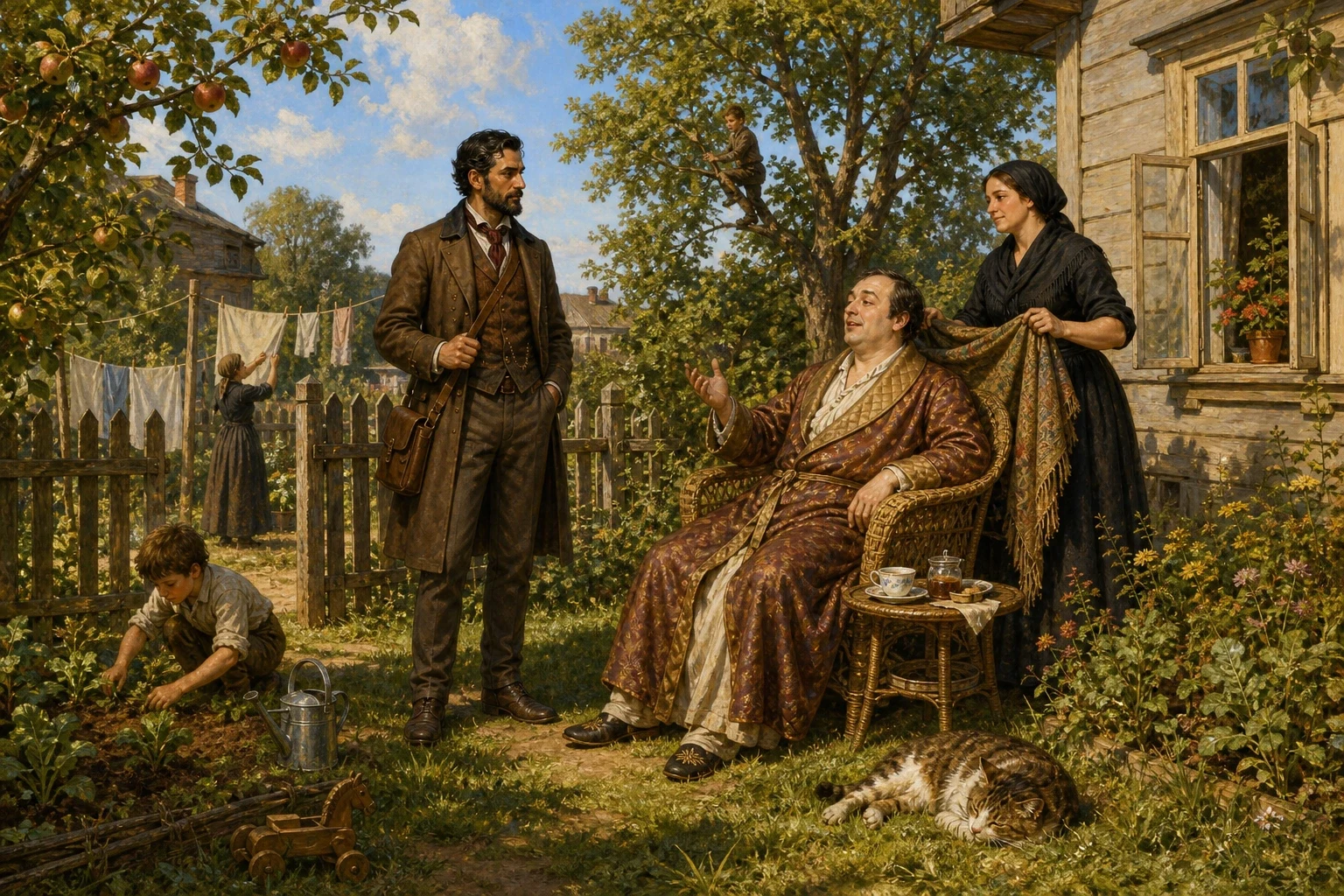
Years later, Stolz came back from his long travels abroad and went straight to find his old friend. He found him in Agafya Pshenitsina's garden, grown stout and grey, utterly at peace — and he found, too, that Tarantiev and Ivan Matveyevich had for years been quietly bleeding Oblomov's estate income through Agafya's own brother, leaving him with far less than he should have had. Stolz put a stop to what he could and secured what remained. He learned, with real feeling, that Oblomov had married Agafya at last and that they had a son together, named Andrei after him. Oblomov seemed genuinely happy telling him so. He had stopped expecting anything more of his life than this, and he did not grieve the absence of more. Not long after that visit, sitting in his usual chair in the garden in the warm sun, with his wife and his son nearby, Oblomov simply did not wake from his afternoon rest. It was, in the end, exactly the death his whole life had been arranged to allow.
Page 10

Some time after Oblomov's death, Stolz stood on a Petersburg street with a writer he knew, not far from the old apartment house on Gorokhovaya Street where this whole story had begun. The flat up there was shut now, its tenant gone. Nearby, an old man in a ragged coat was begging from passers-by, refusing every offer of proper work that came his way — it was Zakhar, who had outlived the master he had grumbled over for thirty years and wanted no other place in the world now that this one was gone. The writer asked Stolz what, in the end, had actually happened to his old friend — what had kept so much feeling and so much intelligence from ever once turning into a life. Stolz thought about it for a moment before he answered. There was no single misfortune to blame, no villain, no accident. There was only the thing itself, which needed, finally, its own name.
About this story
- Audience: general readers
Read Wonder Novels on your phone
Wonder Novels is available on Android. Get Wonder Novels on Google Play.