Notes from Underground
The bitter confession of a man from St. Petersburg's shadows
Page 1
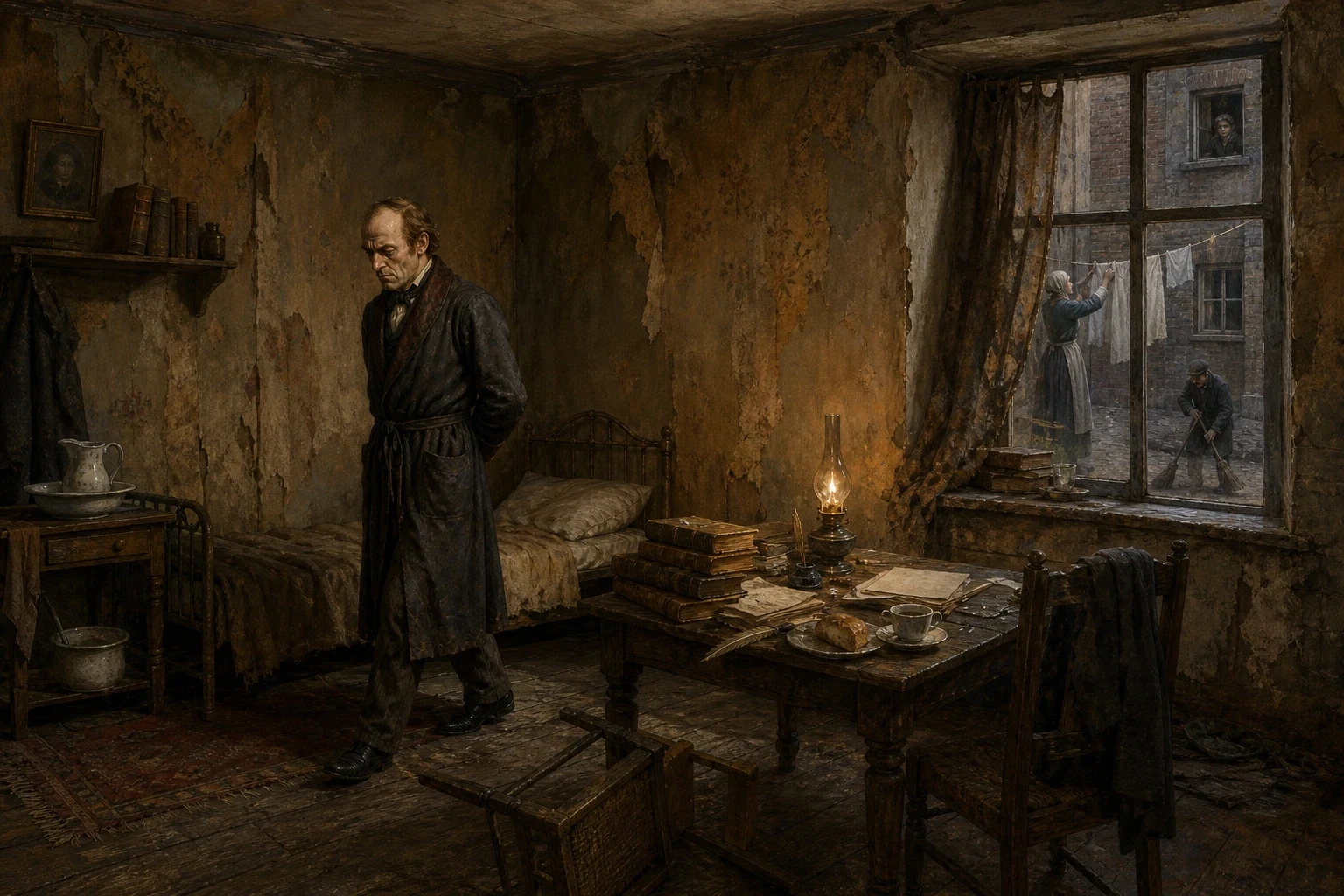
I am a sick man… I am a wicked man. I am an unattractive man. I believe my liver is diseased. This is how the Underground Man introduced himself, locked away in his small, damp apartment in St. Petersburg. For twenty years, he had lived in this corner, retreating from the world, convinced of his own uselessness yet fiercely proud of his perceived intellectual superiority. "I am a spiteful official," he muttered to himself, pacing his narrow room. He often felt a strange pleasure in his own misery, an ache in his liver that he would not have cured for anything. "It is from idleness, gentlemen, from idleness!" he declared to the invisible audience in his head. He craved to be a hero, or perhaps a villain, but he always knew he was simply nothing at all. "I do not know who I am," he thought, a tremor running through him.
Page 2

Sometimes, the Underground Man ventured out, often finding himself in a public library, not for peace but to fuel his internal debates. He scorned the idea that human beings would always choose what was rational or advantageous. "Why, gentlemen, if it were possible for you to calculate everything, to know exactly what is good for you, you would cease to exist!" he fumed, though silently, amidst the hushed reverence of the books. He railed against the 'Crystal Palace,' a vision of a perfectly rational, scientific society, believing it would strip humanity of its most vital essence: the freedom to choose, even to choose suffering. "Man is a creature that walks on two legs and is ungrateful!" he thought, a bitter smile touching his lips. He understood the dark joy in defying logic. "Even pain, gentlemen, is sometimes very pleasant!" he concluded silently, a spark of defiance in his eyes.
Page 3
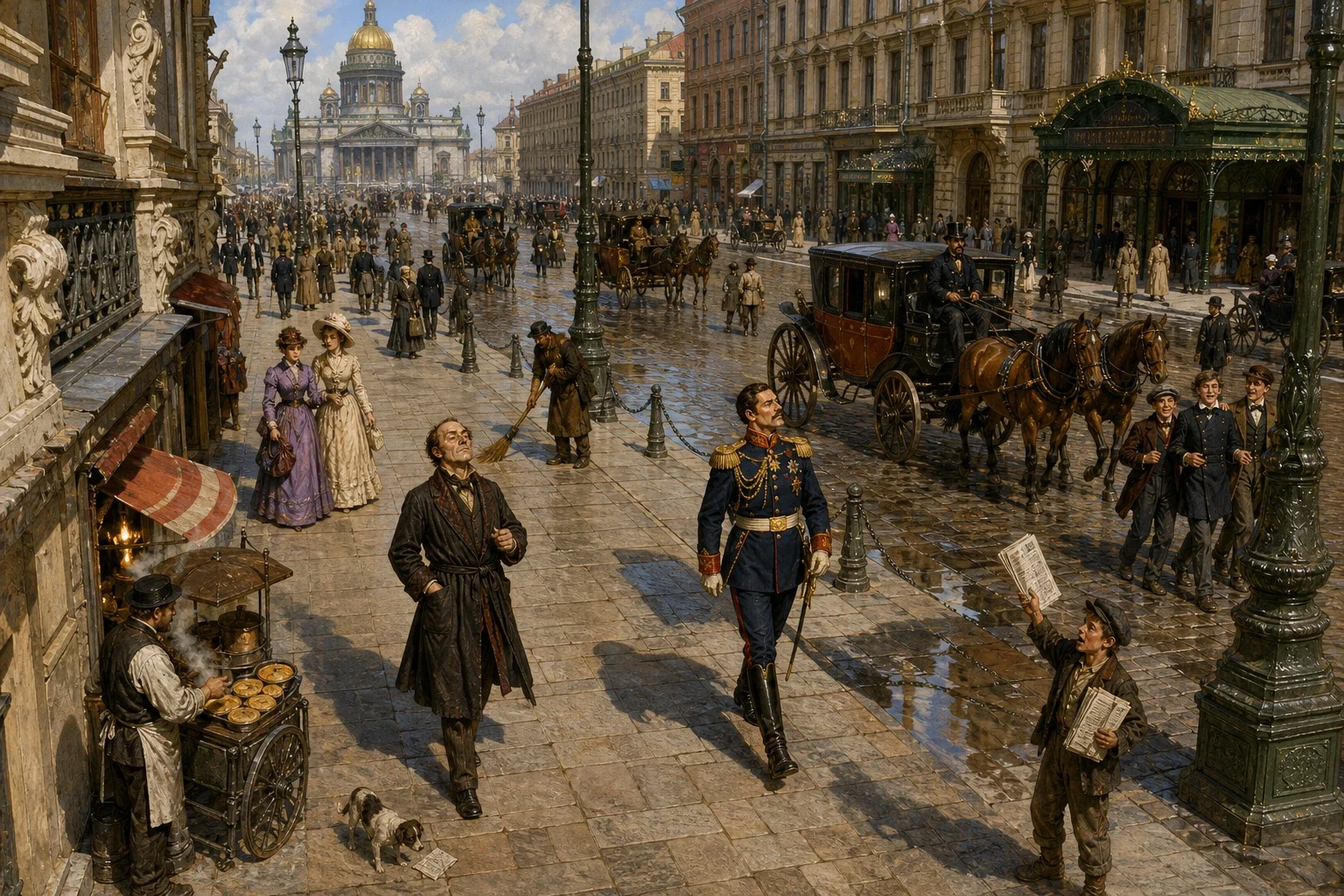
His life was not without petty dramas. One afternoon, on Nevsky Prospekt, a robust officer had moved him without so much as a glance. This small slight festered. "I will not yield to you!" the Underground Man decided, though the officer had long forgotten the incident. For weeks, he would stalk the officer, planning to bump into him, to assert his dignity. He would save every kopeck to buy a new overcoat, imagining the grand collision. Finally, the day arrived. He walked straight at the officer, head held high, and they brushed shoulders. The officer seemed not to notice. "He didn't even look back!" the Underground Man thought, a fire of humiliation burning within him. "This insult is profound!" he declared silently, convinced of his own importance. The encounter was meaningless to the world, but everything to him. The officer simply continued on his way, oblivious. "I shall remember this always!" he promised himself, his jaw tight.
Page 4
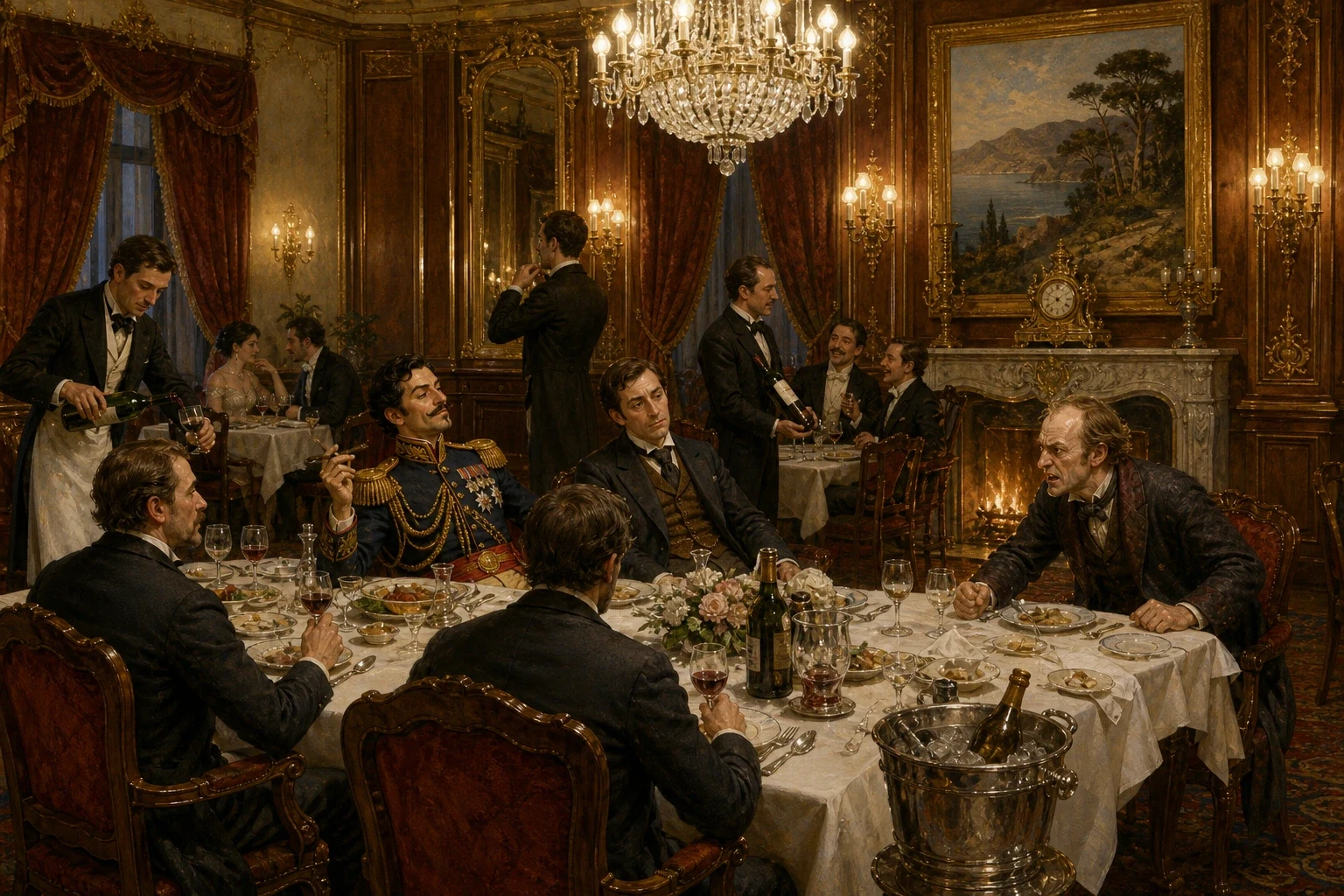
His greatest social catastrophe unfolded at a farewell dinner for Zverkov. Having forced an invitation, he arrived late, feeling both superior and desperately anxious. His old schoolmates—Simonov, Zverkov, and others—ignored him, their laughter and conversation pointedly excluding him. He tried to lecture them, to insult them, to make them acknowledge him. "You are all trivial, shallow men!" he declared, his voice trembling as he slammed his fist on the table. He banged his fist, trying to seize their attention. Zverkov, smug and successful, merely smiled. Simonov offered him money for a cab, a gesture that felt like the deepest insult. "I will not take your charity!" he yelled, his face burning. He felt a profound rage and humiliation, a desire to be accepted that was constantly at war with his need to feel above them. He could not leave, yet he could not stay. "This is an outrage!" he muttered, his eyes darting from face to face.
Page 5

After his disastrous dinner, the Underground Man, fueled by drink and a frantic need to salvage his dignity, borrowed money from Simonov and pursued his friends through the snowy streets. He imagined a grand, dramatic confrontation, a reconciliation, or perhaps a duel. He finally tracked them to a brothel, a place he usually avoided, but tonight he was desperate. He stumbled into the ornate entrance hall, disheveled and wild-eyed. Simonov met him at the door, blocking his way. "They've all gone to another room," Simonov said, a look of tired annoyance on his face. "You're not invited." The Underground Man stood, rejected, humiliated once more, the cold reality of his desperate pursuit settling heavily upon him. He was truly alone, left outside, abandoned even by his tormentors. "This is how it always ends!" he thought, his blood boiling. "My life is a constant series of indignities!" he declared silently.
Page 6
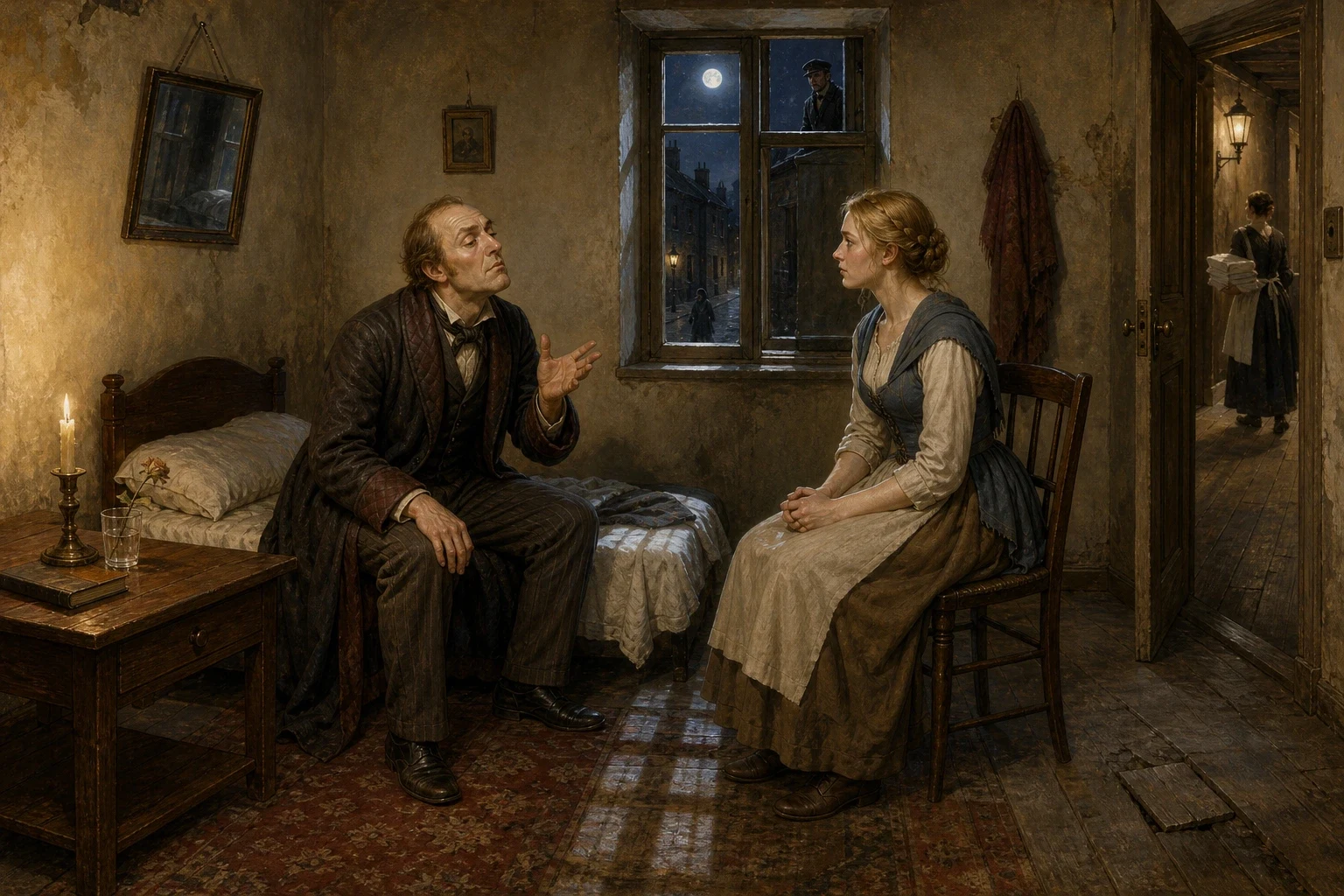
In the depths of his despair, the Underground Man found himself in a small room with Liza, a young woman who worked there. Instead of seeking comfort, he began to deliver a long, eloquent speech, painting a vivid picture of her degraded life and the grim future awaiting her. "You are throwing away your soul, Liza," he declared, his voice filled with a theatrical sorrow. He spoke of love, of salvation, of a pure, happy life that could still be hers, contrasting it with the misery of her current existence. He felt a surge of self-importance, reveling in his own words, imagining himself as her savior, her noble rescuer. Liza listened quietly, her eyes fixed on him, a strange earnestness in her gaze. He felt a deep satisfaction in his power over her, even as his words were a performance. "You could still escape this," he insisted, his voice gentle, yet sharp. "Do you understand the horror of your situation?" he asked, leaning closer, his eyes intense.
Page 7
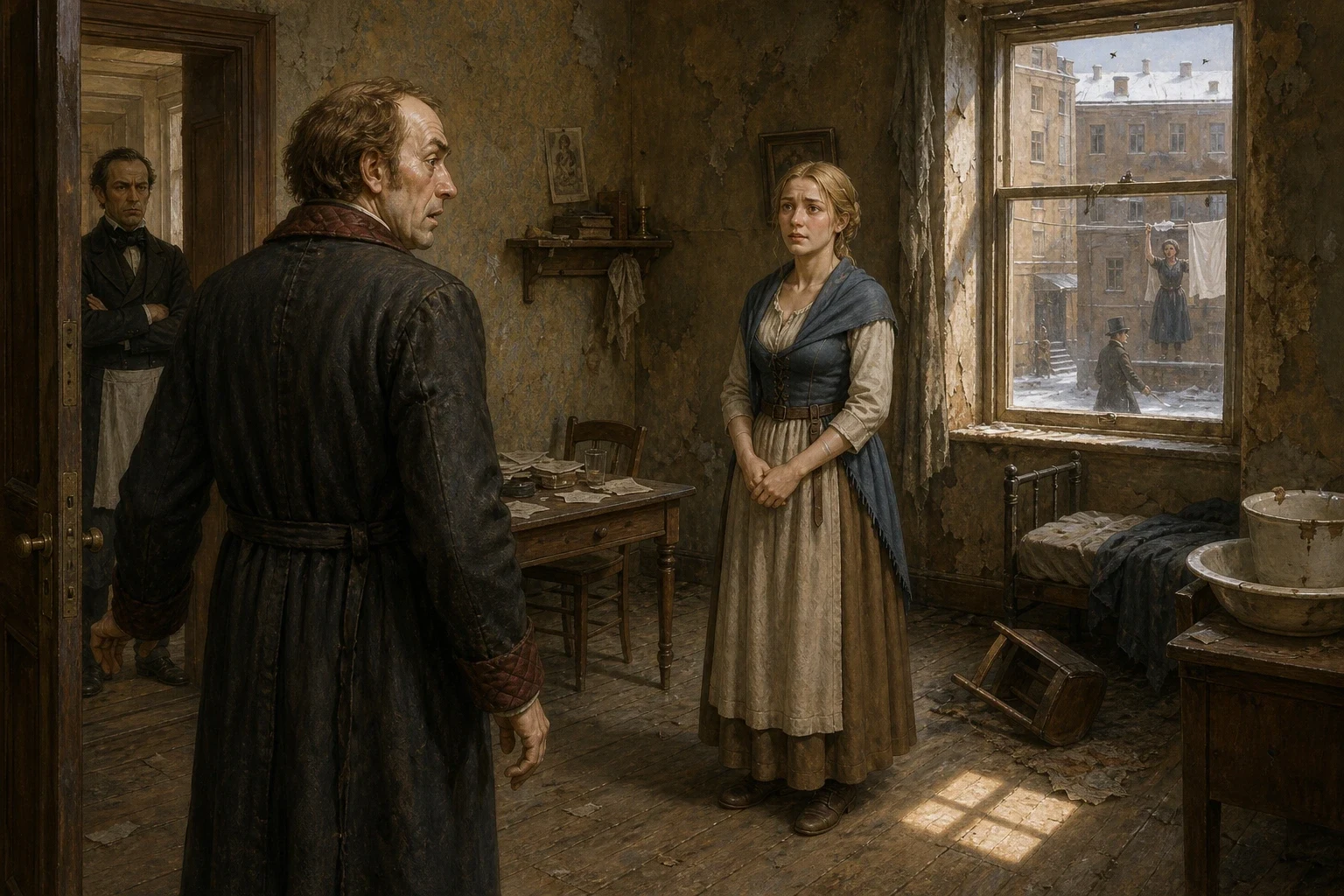
Three days later, to the Underground Man’s horror, Liza appeared at his apartment door. He was caught in his true, squalid reality, wearing a shabby dressing gown, his servant Apollon adding to his misery with his disdainful presence. "How could she find me?" he thought, his heart pounding with shame. He had been playing the hero, but now she saw him as he truly was: a miserable, pathetic figure in a wretched corner. His eloquent speeches about saving her now felt like a cruel mockery. He panicked, furious at her for invading his private humiliation. "Why have you come here?" he asked, his voice harsh, though he desperately wanted to disappear. He felt exposed, vulnerable, and deeply ashamed, utterly unprepared for this genuine human connection that shattered his carefully constructed solitude. "Leave me alone!" he hissed internally, but no words came out. Liza stood quietly, her gaze searching his face, a small package clutched in her hand.
Page 8
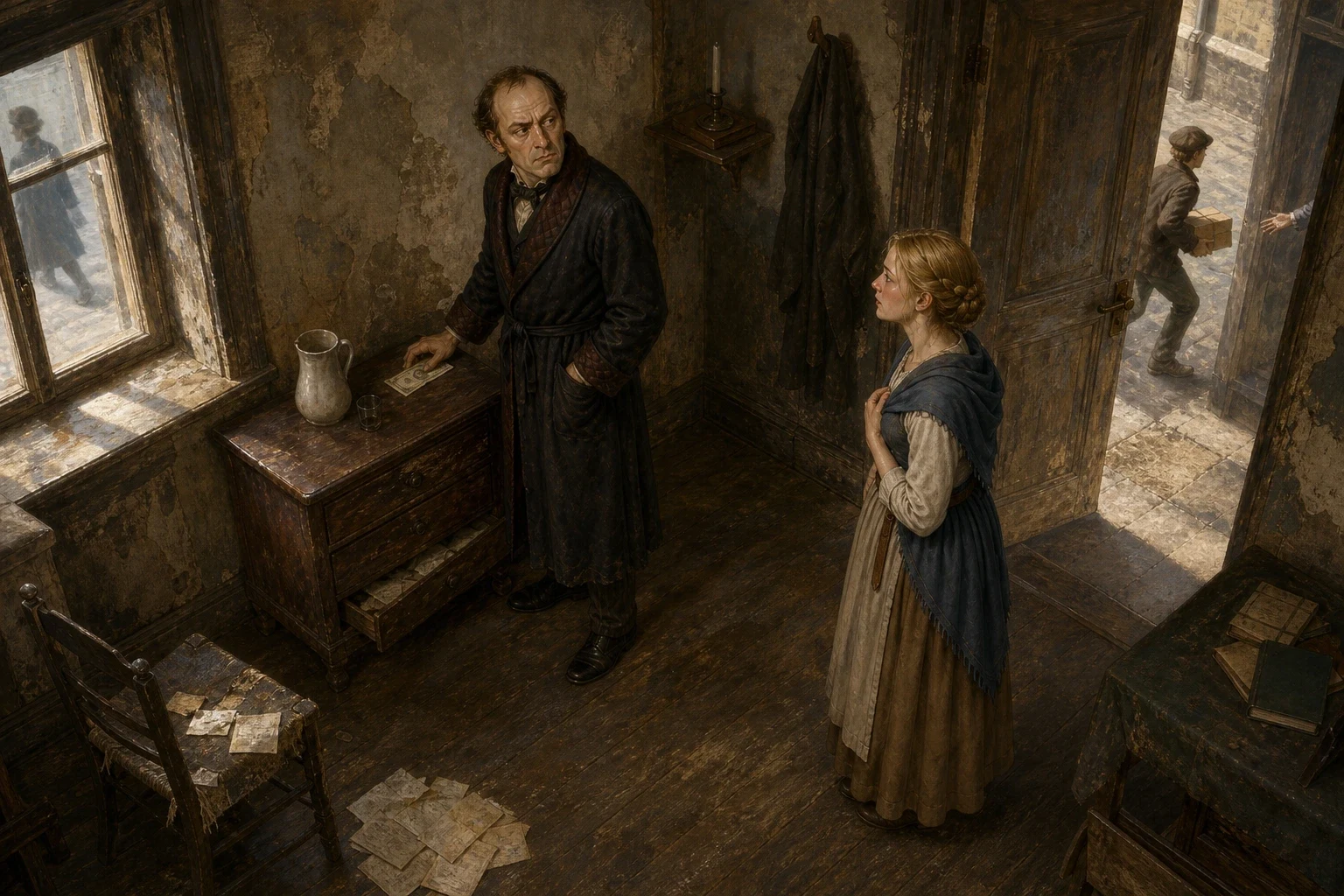
Overwhelmed by his own humiliation and the impossibility of receiving kindness, the Underground Man lashed out at Liza. He confessed his earlier speech had been nothing but a cruel performance. "I only wanted to hurt you!" he cried, his voice raw with self-hatred. He saw her tenderness as an unbearable burden, a mirror reflecting his own ugliness. He needed her to leave, to erase the uncomfortable truth she represented. As she stood silently, tears welling in her eyes, he walked quickly to a nearby surface and clumsily placed a five-ruble note there, a misguided, hurtful gesture meant to reduce their connection to a transactional one. "There, take that!" he blurted out, unable to bear the weight of her presence a moment longer. Liza looked at the money, then at him, her face filled with hurt and understanding. The act of kindness he had preached had turned to bitter ash. "Go! Just go!" he whispered, his voice desperate.
Page 9
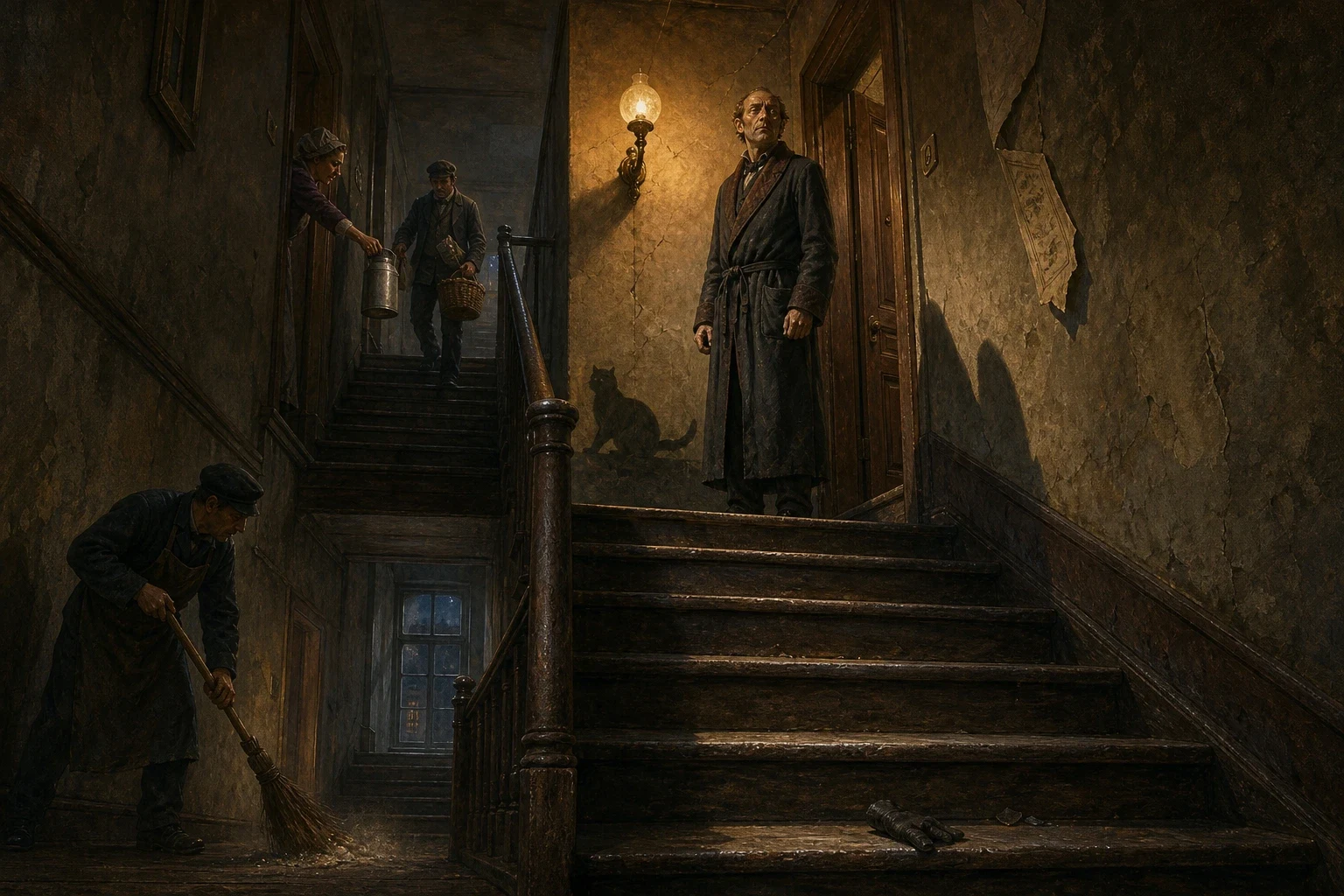
Liza left in silence. As the door to his apartment closed, the Underground Man was immediately consumed by agonizing regret and overwhelming shame. He stumbled out onto the dark, narrow landing of the staircase, listening as her footsteps receded down the steps. "I must follow her!" he thought, a desperate urge to apologize, to make amends, to undo his cruelty. But he remained rooted to the spot, paralyzed by his profound self-hatred and an inability to act on genuine impulse. His pride, his intellectual torment, held him captive. He wanted to run after her, to throw himself at her feet, but he could not move. The sound of her steps faded, and then, a distant closing of the outer door. "It's too late now," he whispered to the empty air, the weight of his inaction crushing him. "I am a coward!" he thought, utterly defeated.
Page 10
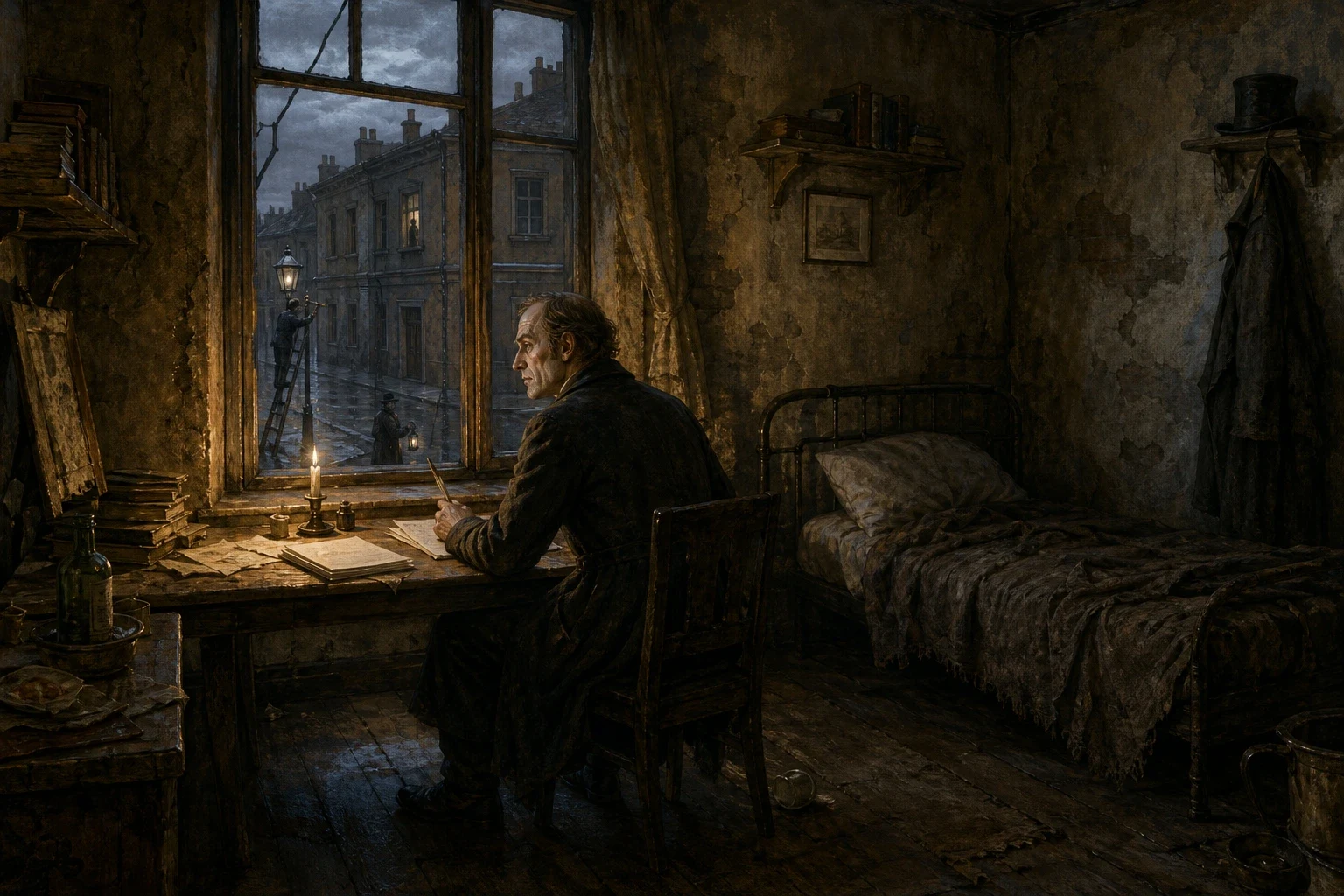
And so, the Underground Man returned to his corner, to his self-imposed isolation. His 'notes' were a record of his bitter reflections, his endless self-analysis, his inability to ever truly connect with another soul or to be a man of action. He knew he was trapped, caught in a cycle of spite and pride, unable to escape the 'underground' of his own mind. "I merely carried to an extremity what you have not dared to carry halfway," he thought, his final defense against his invisible audience. He admitted his own misery, his utter failure, yet still found a strange, defiant pride in it. His life remained a closed circle, an endless, tormenting monologue. He was one of those who lived out his life in a hole. "These notes, gentlemen, are not an apology, but a protest." His notes ended here, but his underground existence continued, just as before.
About this story
- Audience: general readers
Read Wonder Novels on your phone
Wonder Novels is available on Android. Get Wonder Novels on Google Play.