Great Expectations
An orphan, a convict in a churchyard, and a fortune that comes from the last place he ever expects

Page 1
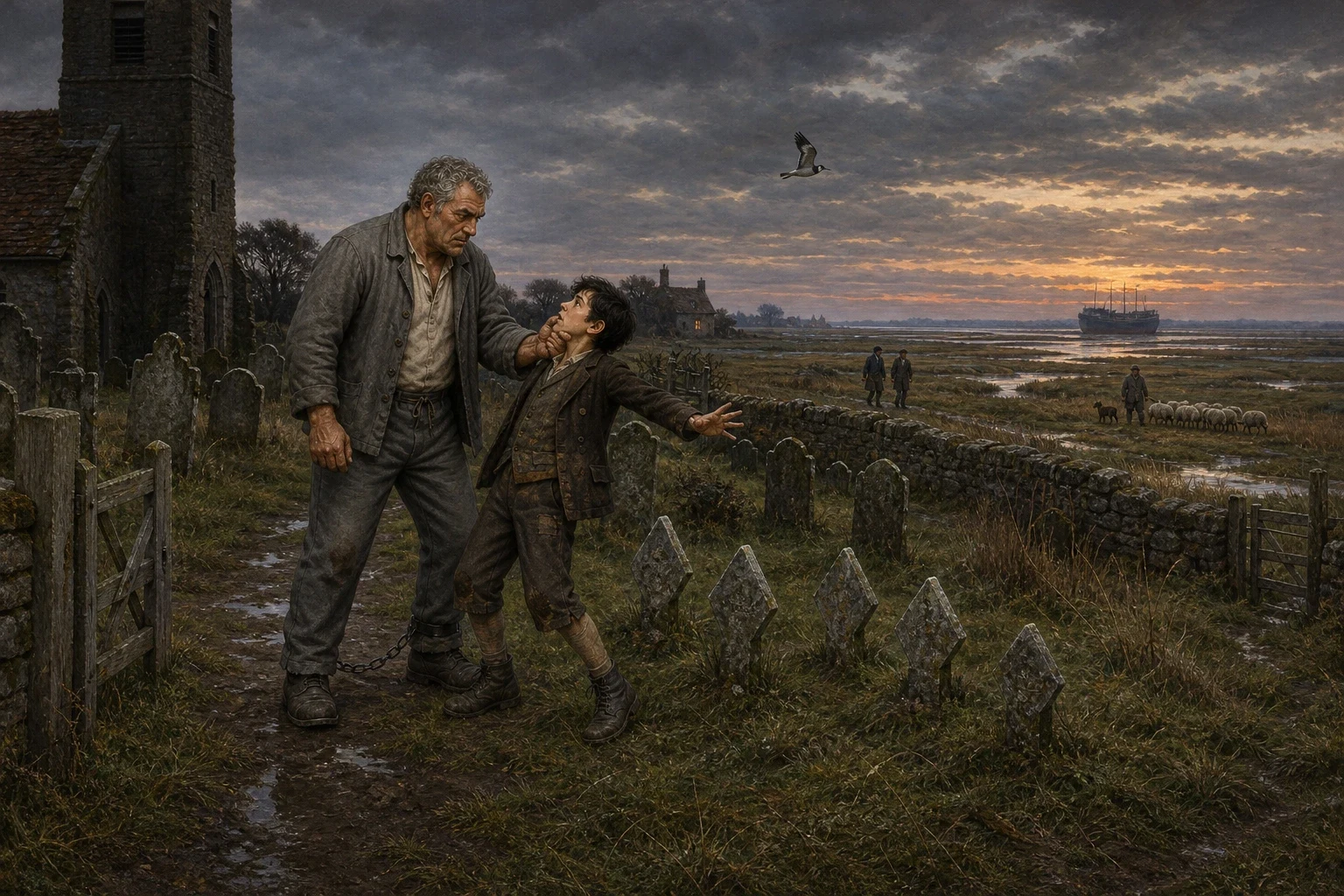
Down in the flat, cold marsh country by the river, young Pip was an orphan. His mother and father and five little brothers lay buried together under five small stone lozenges, and it was there, one grey evening, that Pip liked to sit and think about them, since he had never seen their faces. He was sitting among the graves this way when a terrible voice called out from behind a tombstone, and a huge man in grey, with a great iron chain cut short on his leg, rose up and seized him by the chin. He was an escaped convict, starving and desperate. He turned Pip upside down and emptied his pockets, then set him on a stone and told him he must bring food and a file to cut the chain, or his heart and liver would be torn out and eaten. Pip, trembling, promised everything, and ran home across the darkening marsh as fast as his legs would carry him.
Page 2
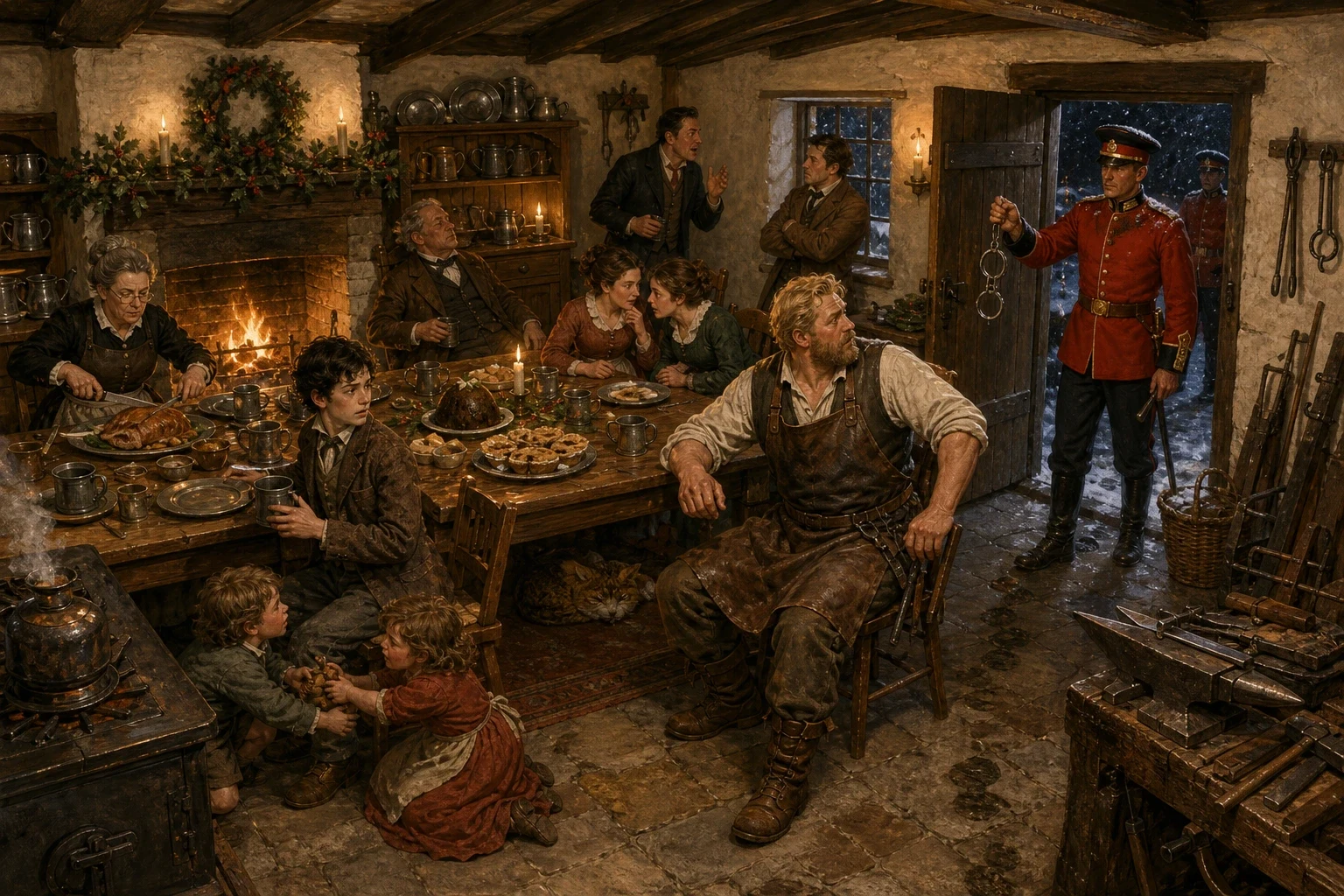
The next morning, before anyone was awake, Pip crept down to the pantry and stole bread, a rind of cheese, a meat bone, a jar of mincemeat, and a bottle of his sister's brandy, wrapping it all in a handkerchief to carry to the convict. He slipped Joe's file from the forge as well. All through the Christmas dinner that followed, with his sister's sharp-tongued relations gathered round the table, Pip sat in agony, certain every mouthful would choke him and every knock at the door would be the constables come for the thief. Then, in the middle of the pudding, there really was a hammering at the door — soldiers, with a pair of handcuffs, asking Joe the blacksmith to mend a broken file lock, since they were hunting escaped convicts out on the marsh. Pip's heart nearly stopped. But no one suspected him at all, and good-natured Joe simply took up his tools and went along with them, inviting Pip to come and watch the hunt.
Page 3
Out on the dark marsh, soldiers with lanterns and muskets spread in a long line, and Pip, riding on Joe's back, went with them. Near a ditch they found two convicts struggling together — Magwitch, the man from the churchyard, and another man, thinner and craftier, who had also escaped that night. The soldiers pulled them apart and seized them both. Magwitch saw Pip looking at him and gave no sign that they had ever met; instead, to protect the boy, he told the soldiers it was he alone who had gone after the other man, to bring him back, and that the other man, called Compeyson, was the real villain who had planned the escape and nearly killed him for it. Compeyson denied every word. Neither Pip nor Joe said anything about the stolen food. The soldiers marched both convicts away toward the black prison ship waiting out on the river, its lantern lights glowing low across the water.
Page 4
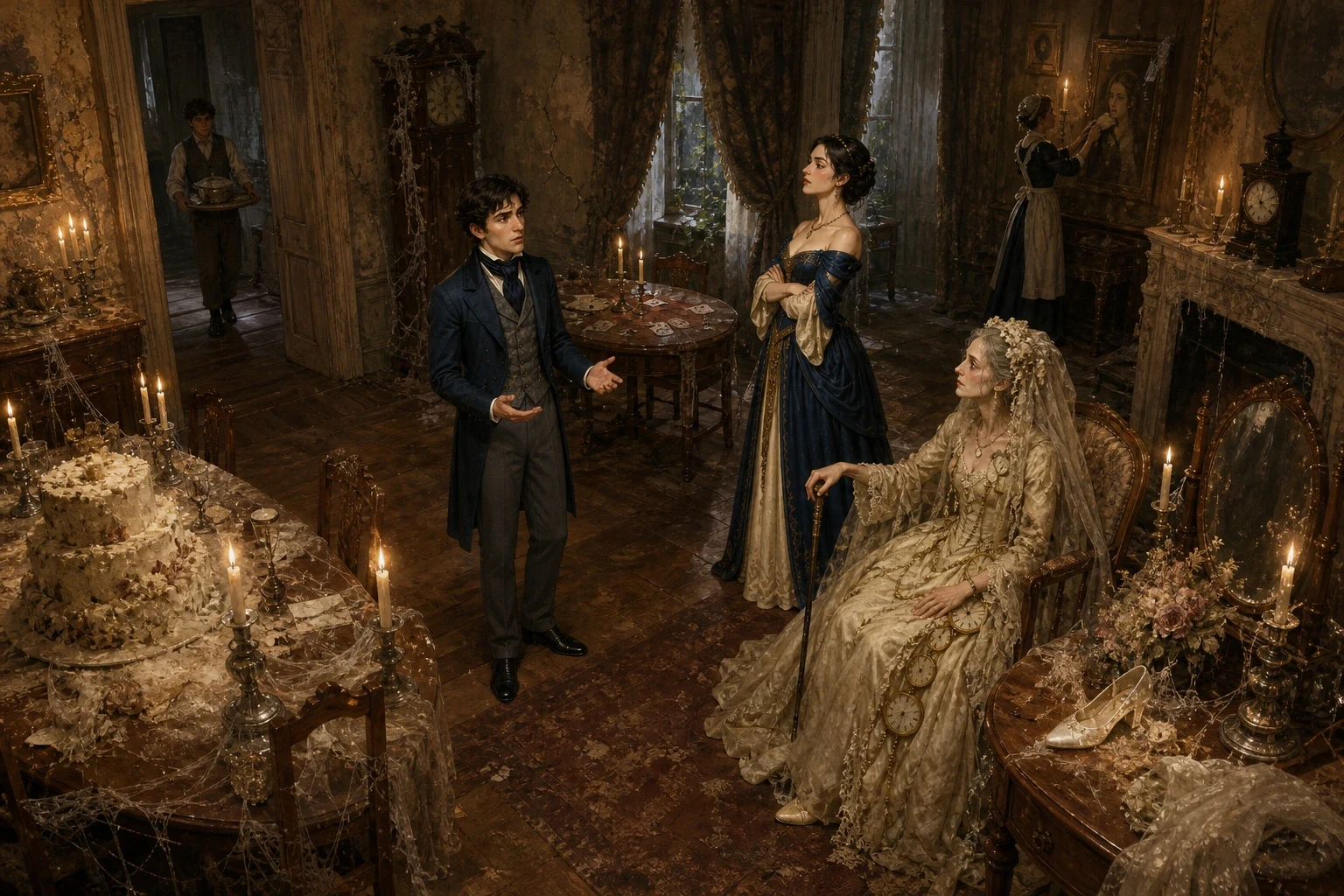
Some while later, Pip was sent to the great gloomy house called Satis House, to play for the amusement of its strange mistress, Miss Havisham. She sat always in her wedding dress, yellow and frayed with age, in a room where every clock had been stopped at twenty minutes to nine, the hour she had learned, years before, that she had been jilted at the altar. There Pip met Estella, a beautiful girl who played cards with him and called him coarse and common, making him ashamed of his thick boots and his rough hands for the first time in his life. Pip returned again and again as he grew older, always loving Estella more and always treated more coldly by her in return. At last, grown into a young gentleman, he told Miss Havisham and Estella plainly that he loved her beyond all reason — and Estella answered, gently but without any love at all, that she had no heart to give him, warning him kindly that she meant to marry another man instead.
Page 5
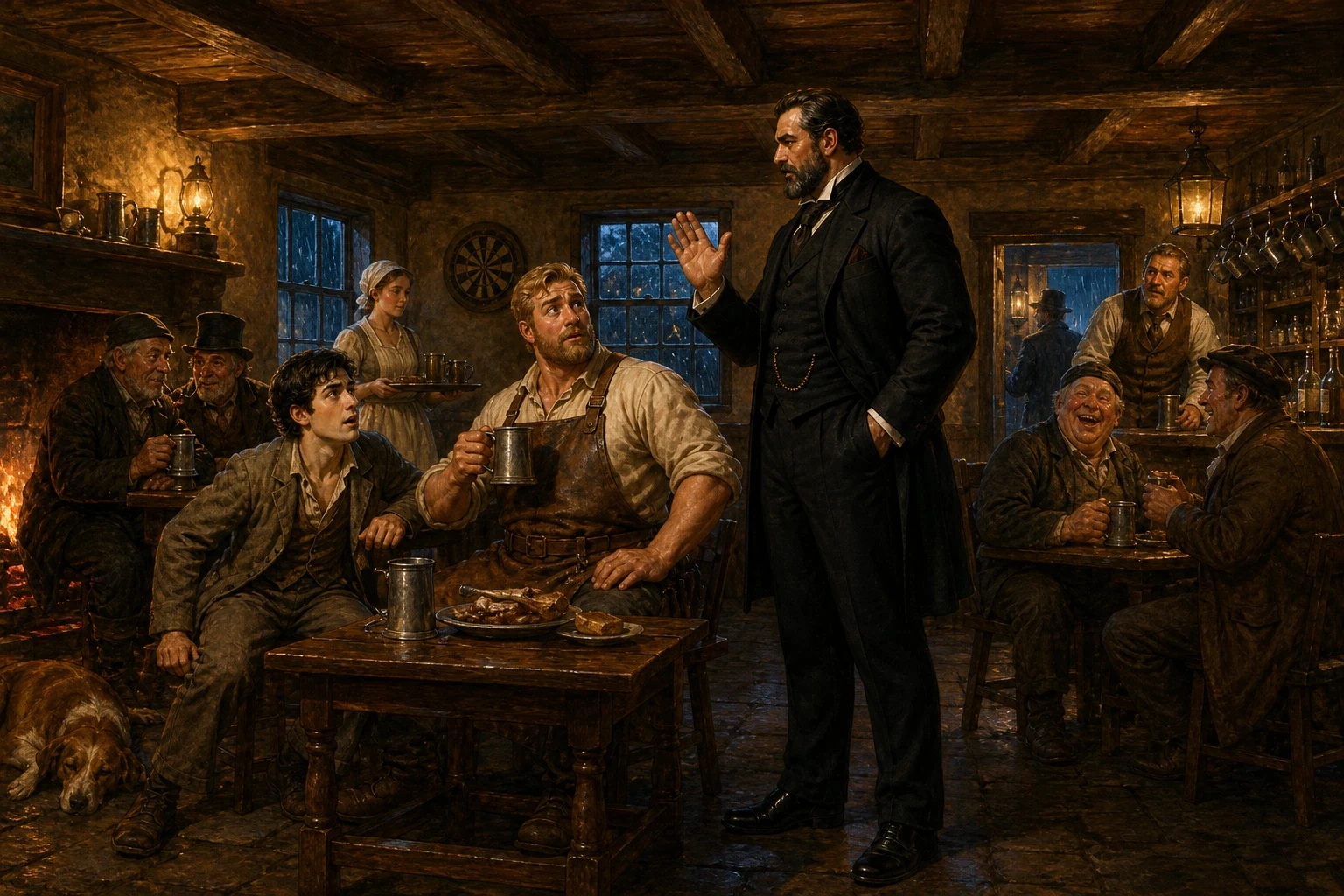
Years passed, and Pip grew up to be apprenticed to Joe at the forge, expecting to be a blacksmith all his life. Then one evening, as Pip and Joe sat together at the village inn, a stern, heavily built stranger in a fine dark suit came in asking for them both by name. He introduced himself as Mr. Jaggers, a London lawyer, and announced in his deep, commanding voice that Pip had great expectations — that he was to inherit a large fortune from a person who wished to remain secret, on the one condition that he always keep the name of Pip, and that he leave at once to be brought up as a gentleman in London. Joe, astonished and a little frightened, could hardly speak. Pip, overjoyed and already a little ashamed of his rough hands and his humble home, understood only that his whole life was about to change, and that, whoever his secret benefactor was, he felt almost certain it must be Miss Havisham herself.
Page 6
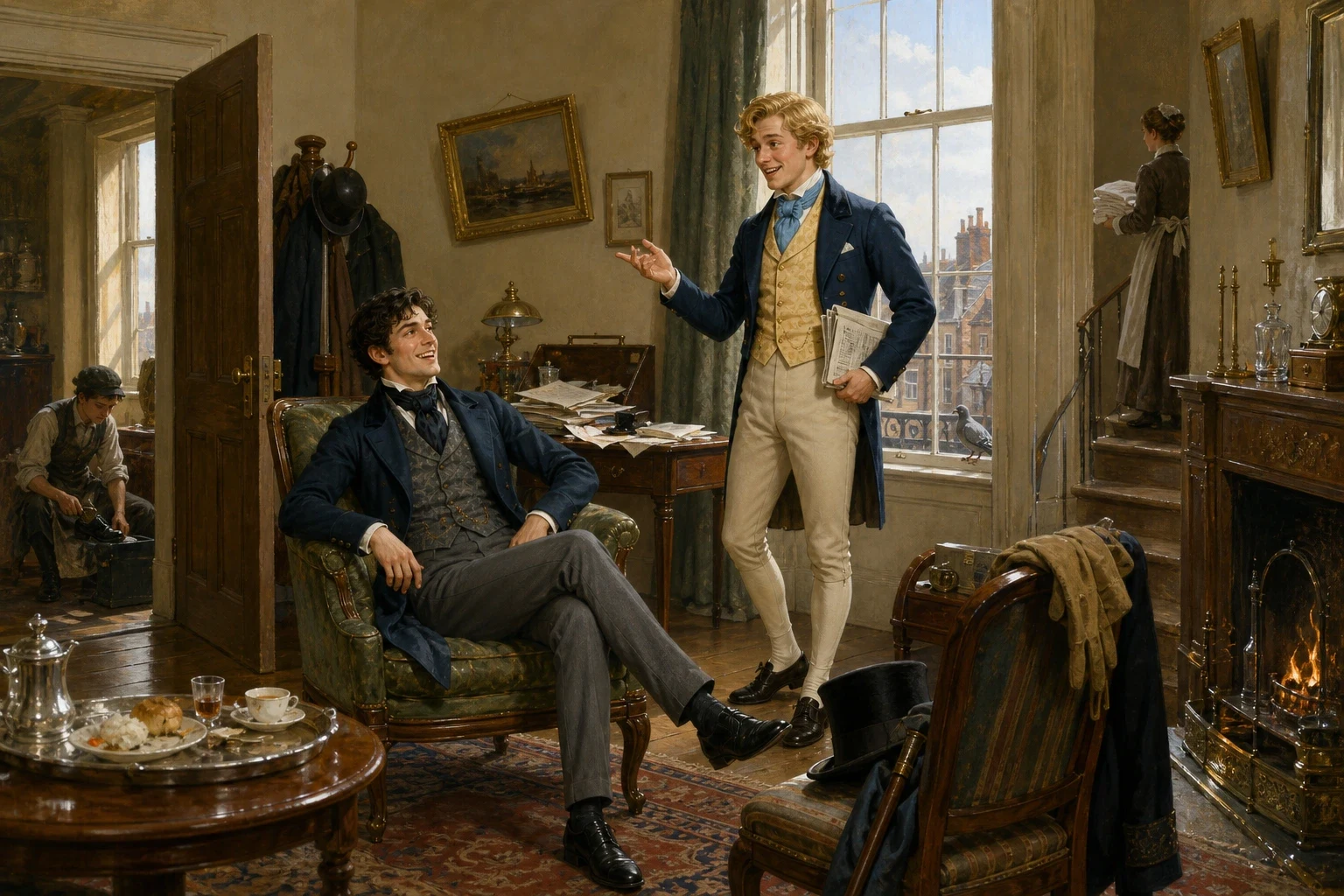
In London, Pip took rooms at Barnard's Inn with a cheerful young man named Herbert Pocket, who became his closest friend and taught him, patiently and kindly, all the manners of a gentleman that Pip had never learned. Together they ordered fine new furniture, ran up bills they could not really afford, joined a club of other young men with more money than sense, and spent their evenings talking of Herbert's hopes of going into trade and Pip's hopes, never spoken of to anyone but Herbert, of Estella. Pip still believed, without ever being told so, that Miss Havisham was secretly paying for all of it, and that she meant, in her own time, to give him Estella as well. He grew more and more ashamed of Joe and the forge the longer he stayed away, and wrote home less and less, though Herbert never once judged him for it, and remained steady and good-humoured through every one of Pip's growing debts.
Page 7
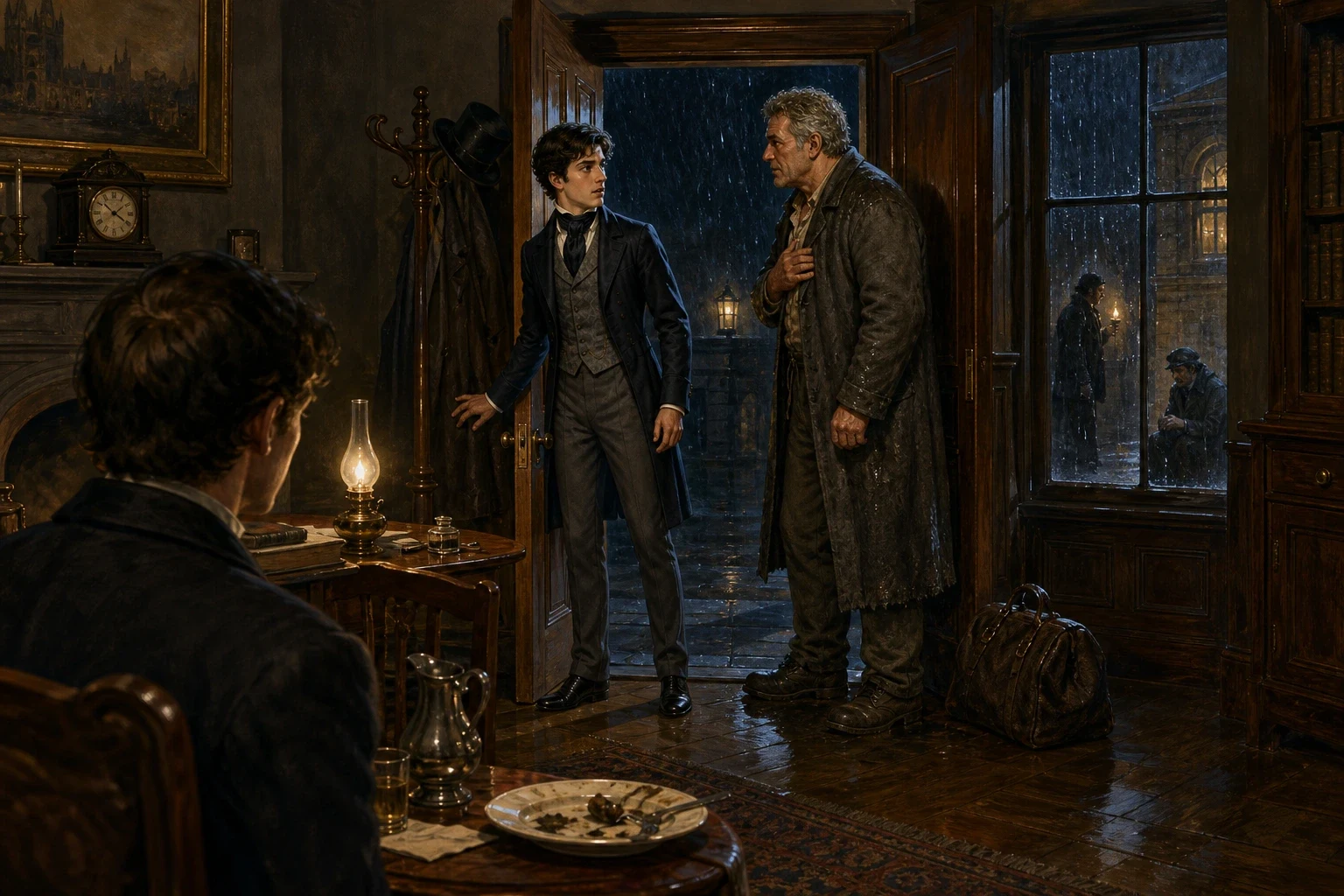
Years later, Pip had moved to better chambers at Garden Court, by the river. One wild, stormy night, with rain lashing the windows, he heard slow footsteps climbing the dark staircase outside his door. A heavily built older man stepped into the lamplight, and for a moment Pip did not know him — until he recognised, with a jolt of horror, the convict from the churchyard, Abel Magwitch, grown older and greyer but unmistakably the same man. Magwitch told him, plainly and with great feeling, the truth Pip had never once suspected: it was not Miss Havisham who had made his fortune. It was Magwitch himself, grown rich as a sheep farmer abroad, who had quietly sent money back to England for years, determined to make a gentleman of the frightened boy who had once brought him food and never betrayed him. Pip, horrified to learn his whole fortune came from a convict, felt his entire picture of his own life collapse around him in an instant.
Page 8
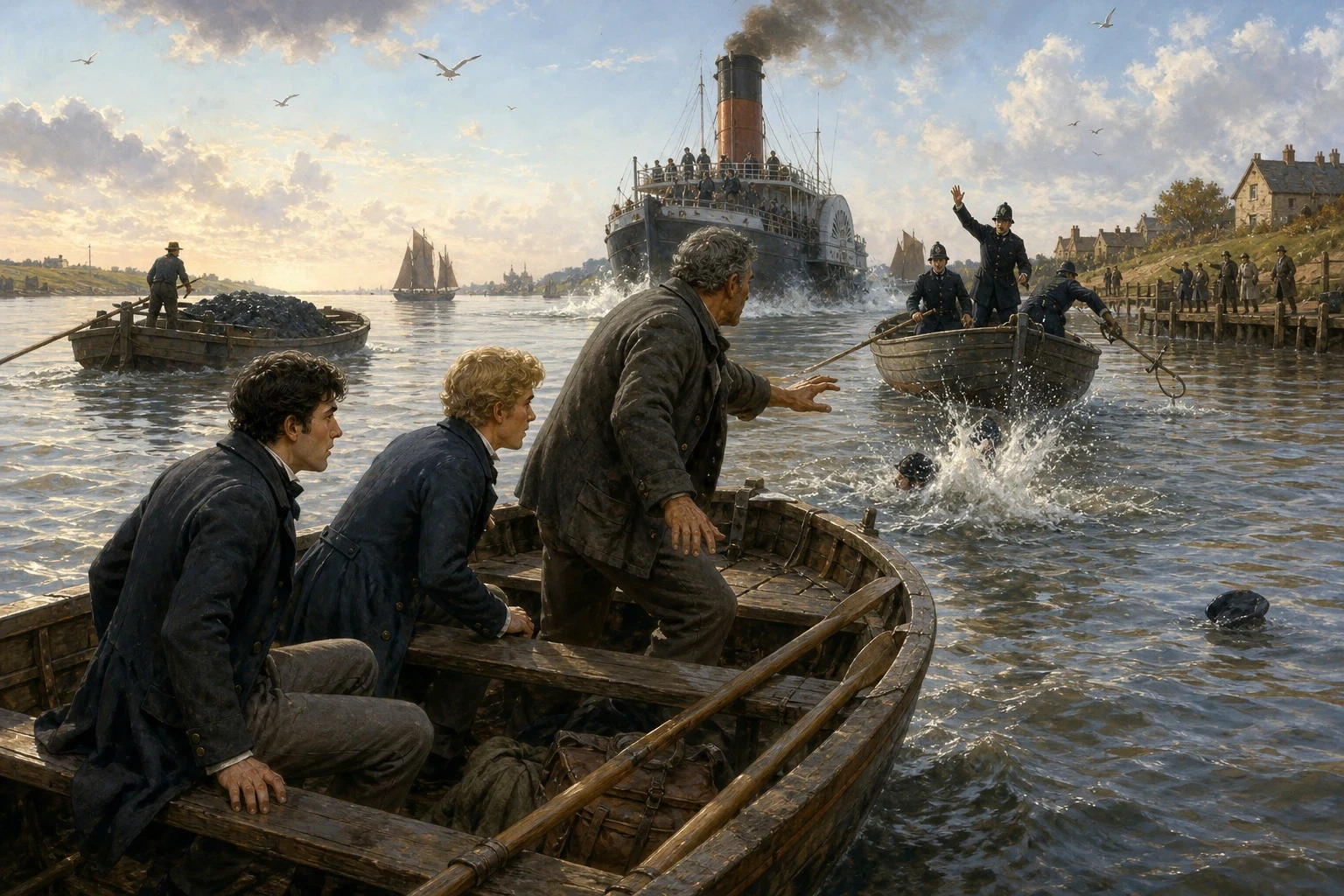
Knowing that Magwitch would be hanged if the police ever found him in England again, Pip and Herbert resolved to help him escape abroad on a foreign steamer. They hired a rowing boat and set off down the wide grey Thames before dawn, past Gravesend, watching for the steamer that was to carry Magwitch away to safety. But as the steamer came into sight, another boat shot out from the riverbank — a police boat, with an officer calling on them to surrender their passenger, and in it, to Pip's horror, sat Compeyson, Magwitch's old enemy, come to see him caught at last. In the struggle that followed, the two old enemies went overboard together into the churning water thrown up by the great steamer's wheels. Compeyson did not come up again, carried away under the water and never seen again. Magwitch was pulled from the river badly hurt, and the police boat took him, bound and guarded, straight back toward London and the prison that awaited him.
Page 9
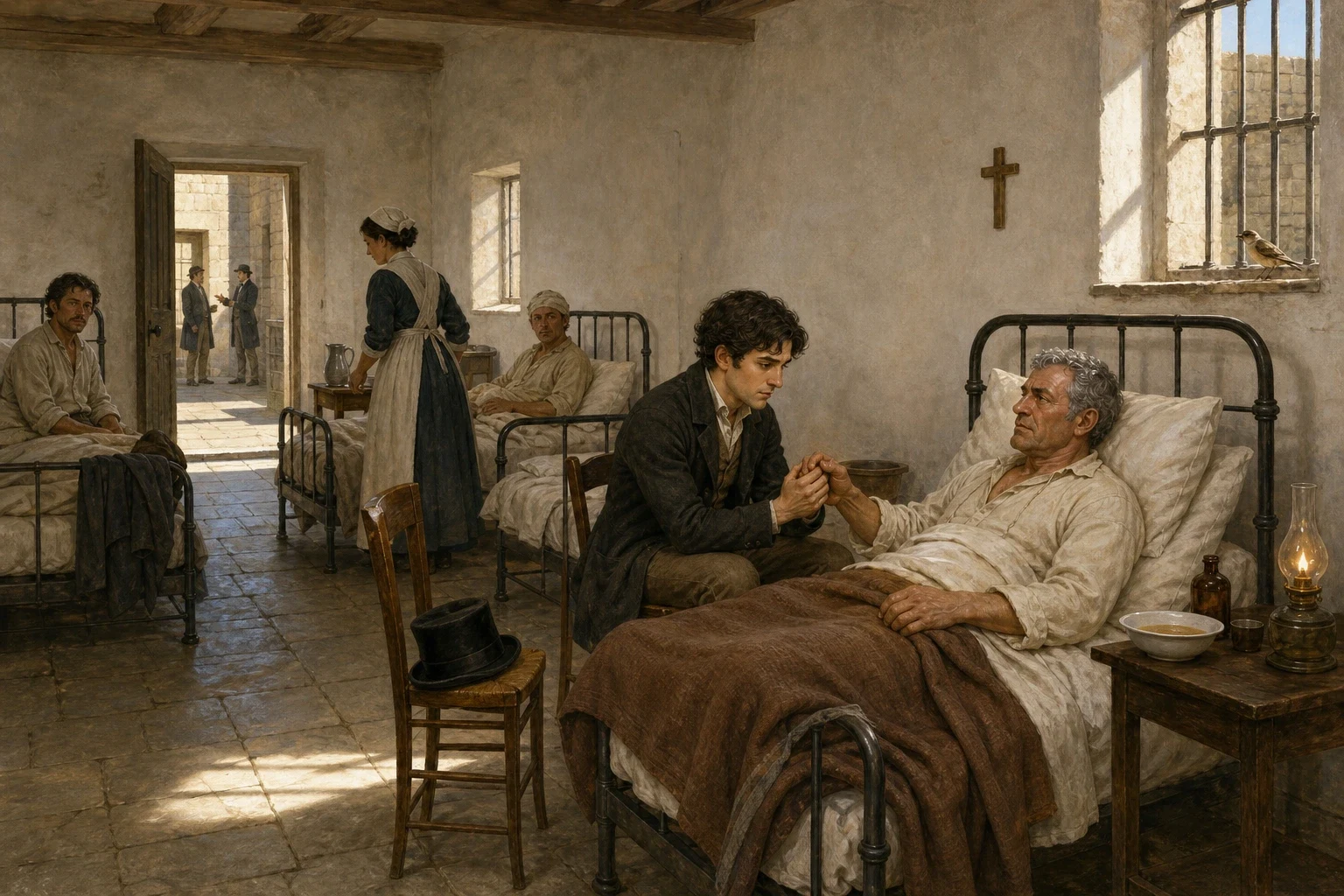
Magwitch was tried and, because he had once before broken the terms of his transportation, sentenced to die, though his injuries from the river meant he grew weaker every day in the prison infirmary before any sentence could be carried out. Pip visited him faithfully, every single day, no longer ashamed of him at all, but full of gratitude and real affection for the rough old man who had given him everything out of love for a boy who had once been kind to him in a graveyard. On what both of them understood would be one of the last days, Pip leaned close and told Magwitch something he had learned and kept secret until then — that the daughter Magwitch had lost so long ago, and had never stopped grieving for, was alive, grown into a beautiful young woman, and dearly loved. He did not say her name. Magwitch, too weak to speak, only pressed Pip's hand to his lips, and died peacefully a few moments later, with Pip still holding his hand.
Page 10
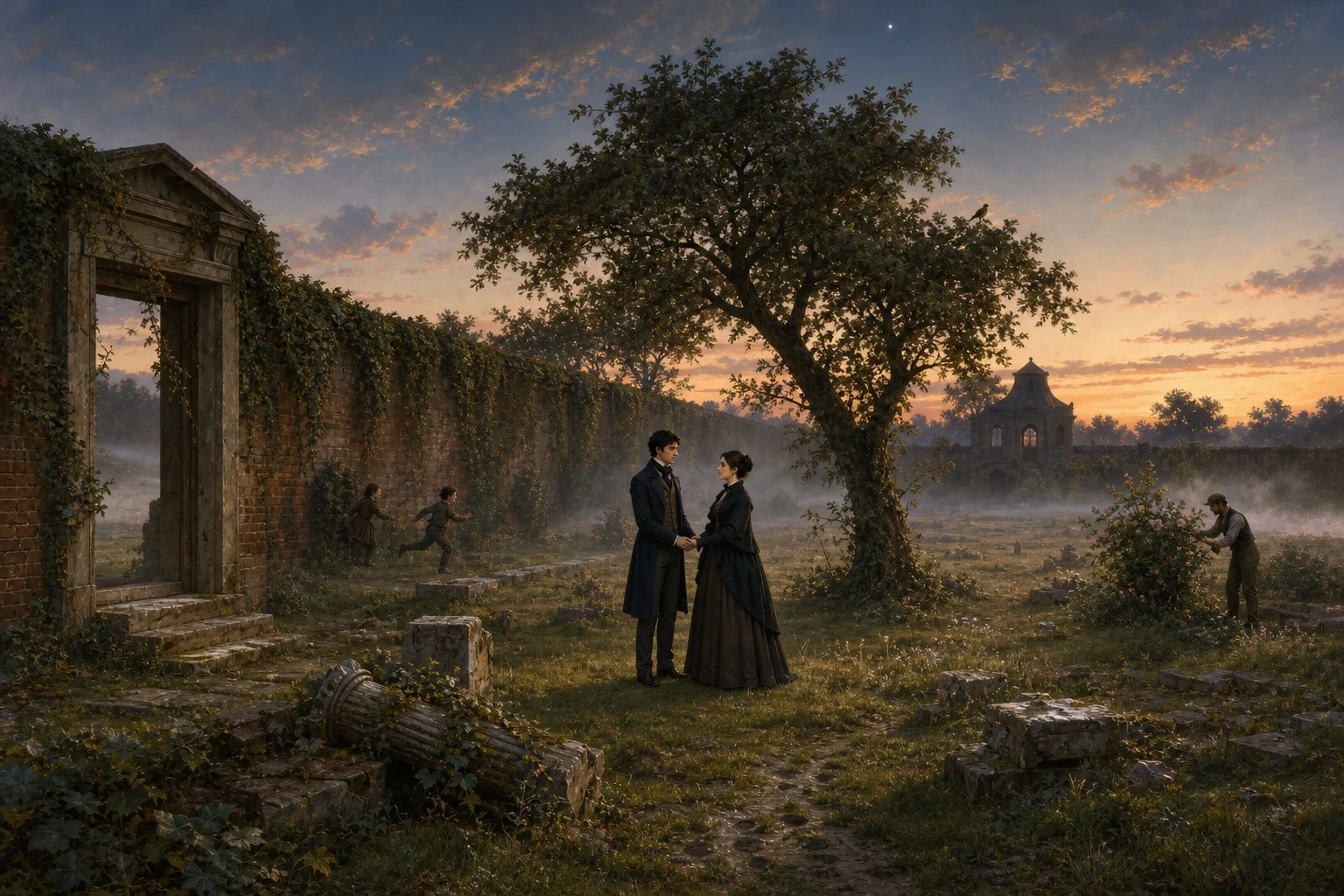
Years passed. Satis House itself was pulled down at last, until nothing remained of it at all but the old garden wall, overgrown now with ivy, and the one mulberry tree still standing where the house had been. One evening, with mist rising pale and silver over the quiet, darkening garden, Pip came back to that place once more, and found Estella there too, alone, walking slowly among the ruins. Both of them had lost a great deal since they had last stood together — she had learned at last what real feeling cost, and he had learned to live simply and honestly, without the fortune he once thought would make him someone else. They stood together quietly in the fading light, speaking gently of all that had happened, and of all that had changed in each of them. Then, as the evening mist rose higher around the broken walls, Pip took her hand, and the two of them walked out of the ruined garden together, side by side, into the quiet evening.
About this story
- Audience: kids (ages 6–12)
Read Wonder Novels on your phone
Wonder Novels is available on Android. Get Wonder Novels on Google Play.