Fathers and Sons
A young nihilist comes home to the Russian countryside, and finds that believing in nothing is harder than it sounds
Page 1
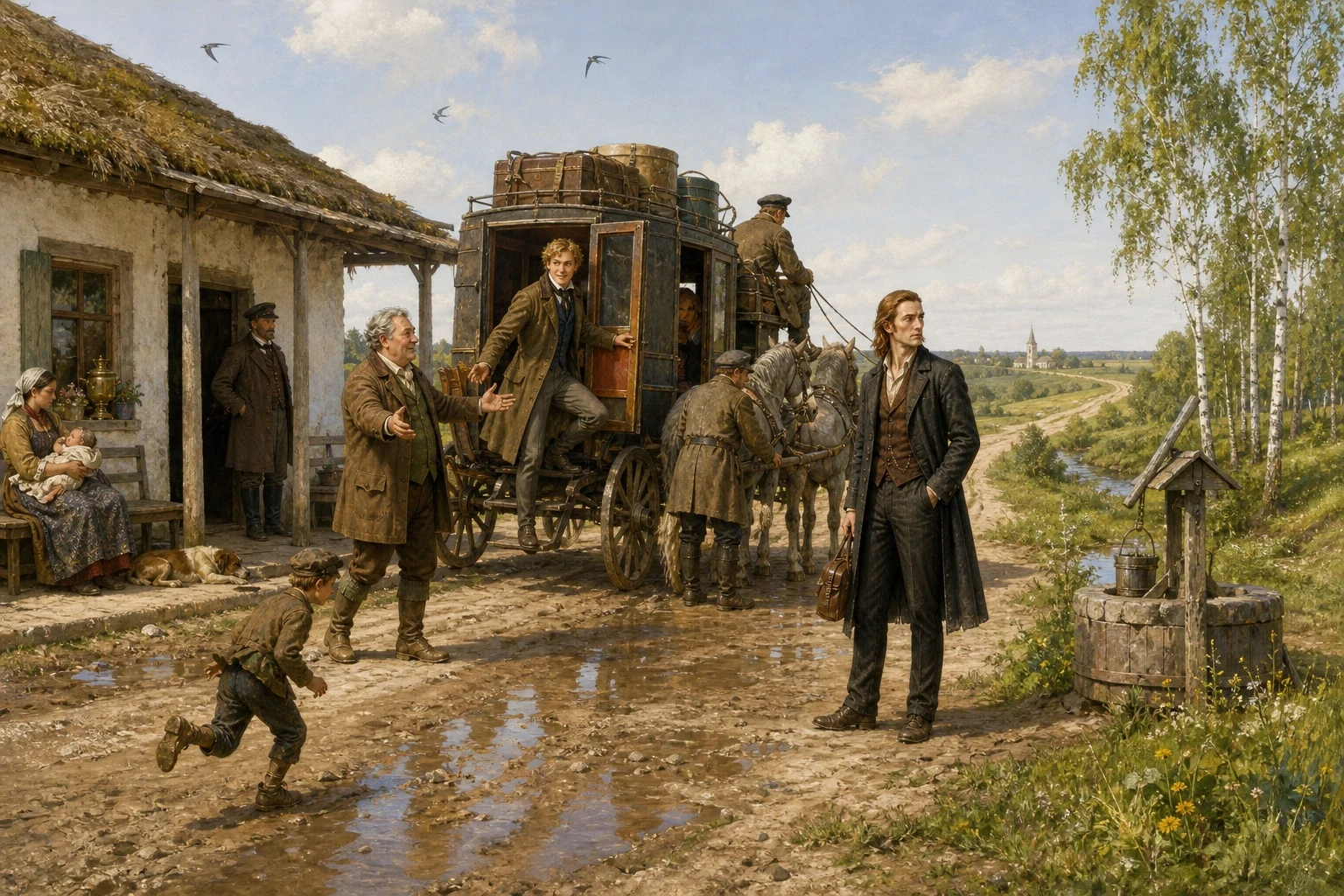
It was the year 1859, and on a warm morning in May, Nikolai Petrovich Kirsanov stood outside the posting-station on the high road, watching for the coach. He kept pulling out his watch. His son Arkady was coming home from the university at last, and Nikolai had driven out himself to meet him rather than wait at Maryino, his own small estate a few miles off. When the coach finally rattled in, out stepped Arkady, taller than his father remembered, and laughing — and behind him climbed down a tall young stranger in a long worn coat, with reddish hair and a face that seemed to study everything it looked at. 'Papa, this is my friend, Bazarov,' Arkady said. Nikolai took the stranger's hand warmly, though Bazarov barely troubled to grip it back. They loaded the trunks onto the cart and started home together down the long dusty road.
Page 2
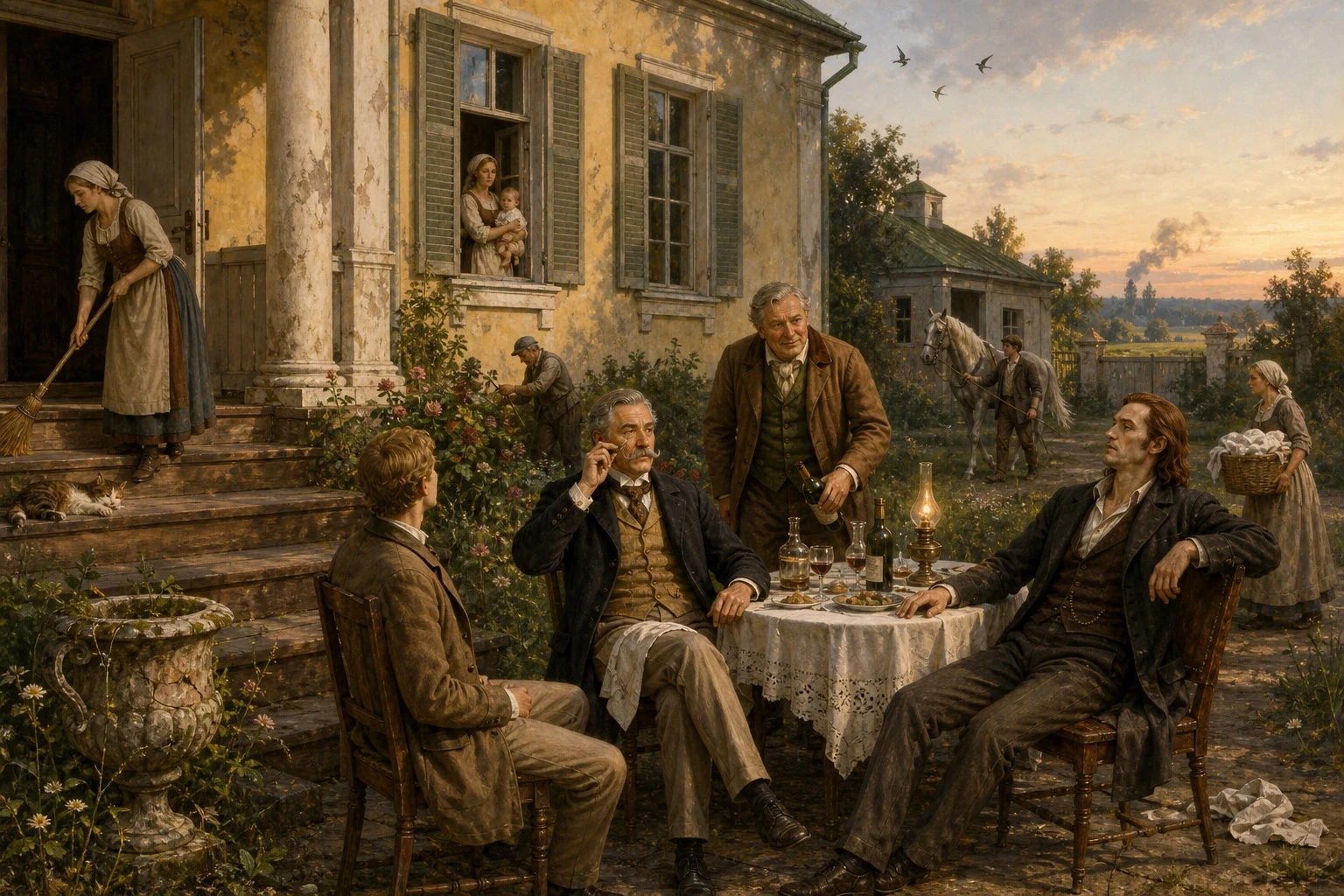
Maryino was a small, comfortable estate, a little run down since Nikolai had freed his serfs and tried, not very successfully, to farm in the new way. His brother Pavel lived there too — immaculate, elegant, a retired officer who still dressed for dinner as if he were in Petersburg, and who looked at Bazarov's plain coat and bitten fingernails with open distaste. At supper that first evening, Bazarov said plainly that he believed in nothing that could not be proven — not art, not tradition, not even love — and called himself a nihilist. Pavel's eyebrows went up sharply; he found the word, and the young man who used it, equally impertinent. Nikolai tried to smooth things over, laughing too quickly. Once, crossing the yard, Arkady caught sight of a young woman at an upstairs window holding a baby — Fenechka, his father's quiet companion, and the little half-brother he had not been told about. Pavel, passing the same window, did not look up at all.
Page 3
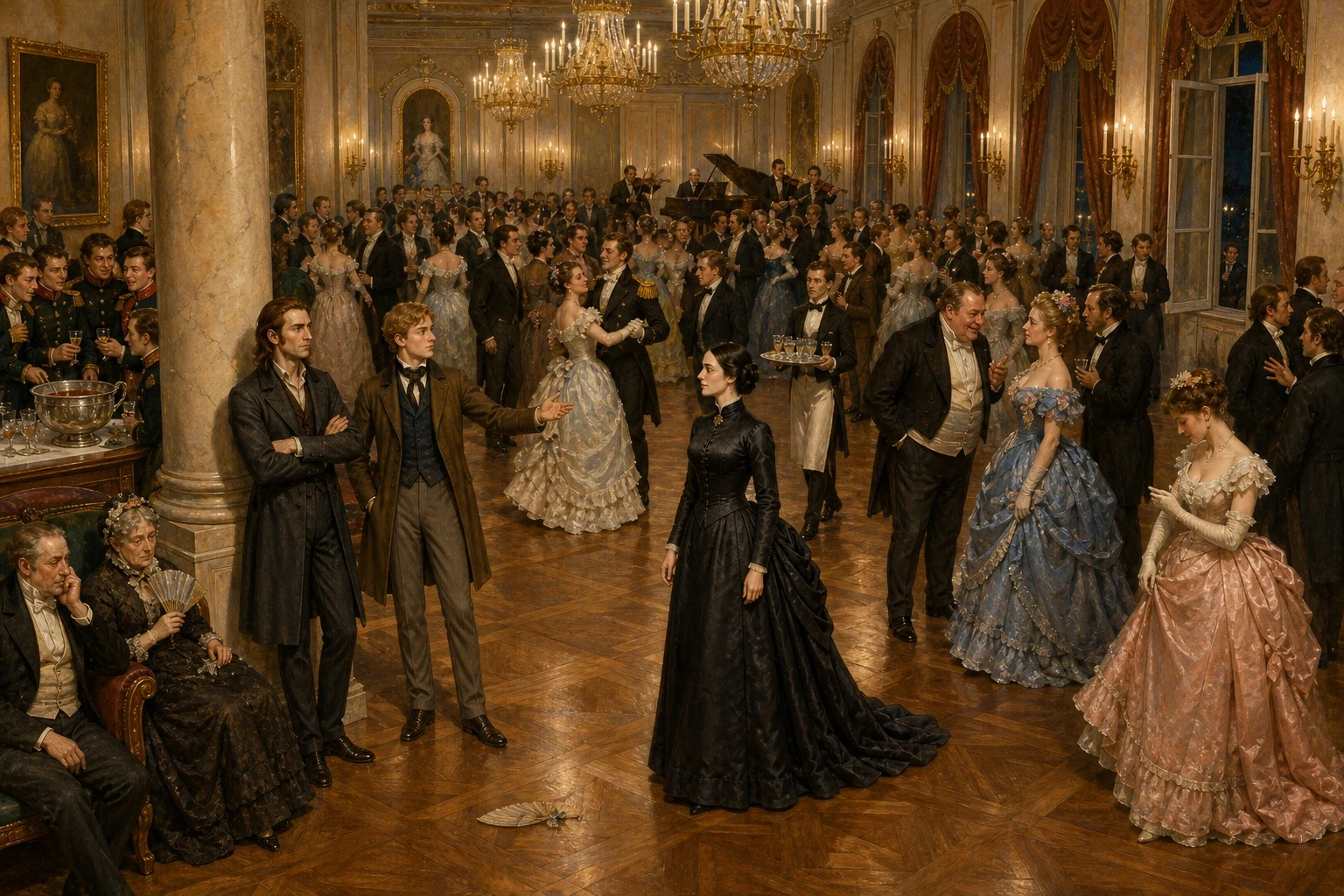
A few weeks later Arkady and Bazarov rode into the provincial town and were swept, rather against Bazarov's will, into the Governor's ball — a crowded, overheated room full of local society doing its best to look fashionable. Bazarov, who scorned such evenings as empty nonsense, stood near a pillar making sharp remarks under his breath. Then Anna Sergeyevna Odintsova arrived — a tall, striking young widow, calm and unhurried where everyone else fussed, and so clearly above the noise around her that the room seemed to quiet as she crossed it. Arkady, who had admired her from a distance before, introduced his friend. Bazarov, to his own evident surprise, found he had nothing sharp to say at all. Odintsova looked at him with the same unhurried attention she gave everything, asked him a few plain questions about his work, and invited both young men to call on her at Nikolskoye, her estate in the country, whenever they liked.
Page 4
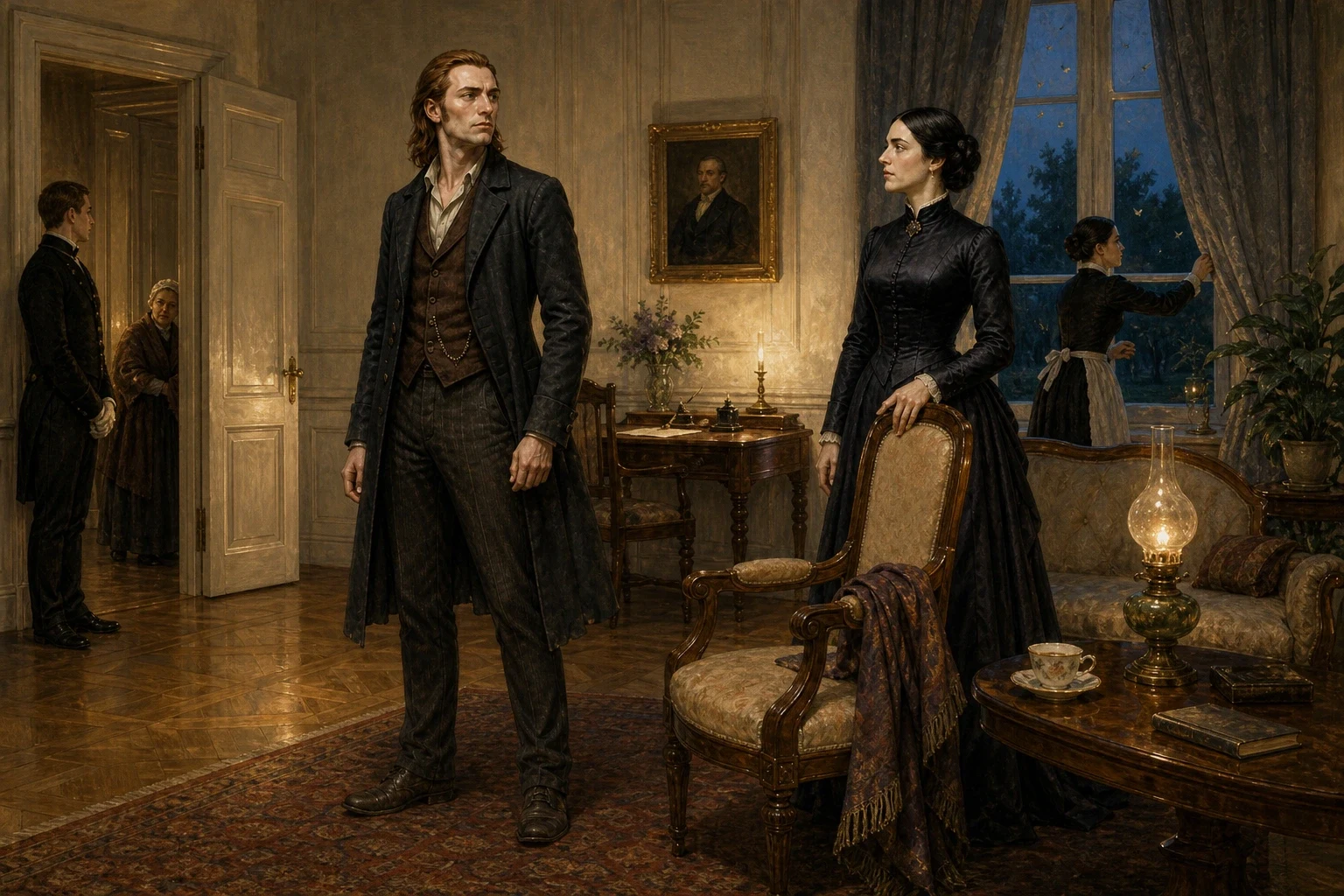
At Nikolskoye, Bazarov found himself returning again and again, telling himself each time it was only for conversation. Odintsova listened to him with the same calm interest she gave to everything, and little by little Bazarov, who did not believe in romantic love at all, realized he could think of nothing else. One evening, alone with her in her quiet drawing room, he could not keep silent any longer and told her plainly that he loved her, almost angry with himself for saying it. Odintsova went pale and drew back from him. She had enjoyed his company, his strange sharp mind, the stir he caused in her orderly life — but she had built that life carefully, after one bad marriage, and she was not willing to risk it on so much feeling. She told him, gently but firmly, that he had misunderstood her, and that it was best he leave Nikolskoye the next morning. Bazarov left the room without another word.
Page 5
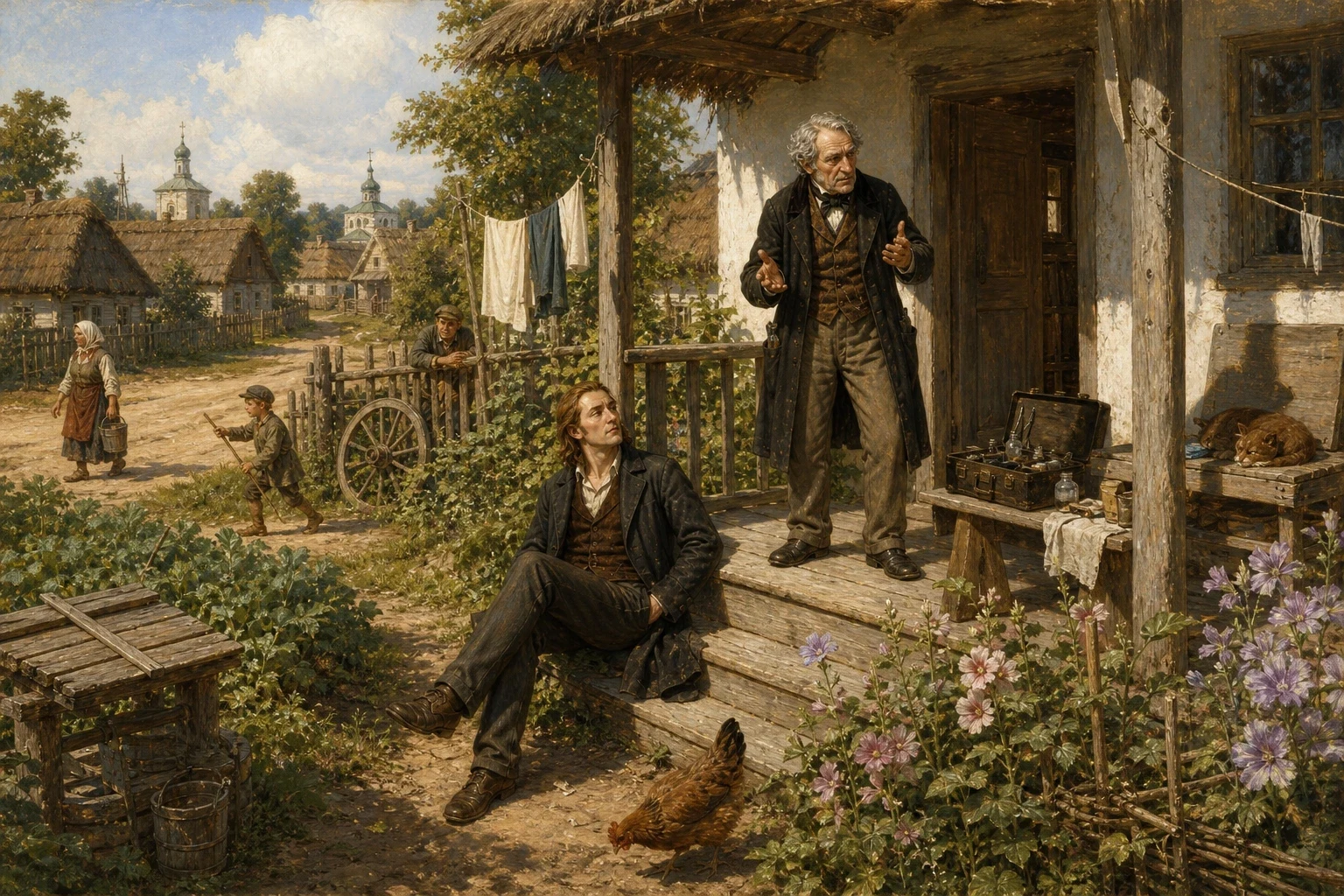
From Nikolskoye, Bazarov went home to his parents' small house in the village, the first time in three years. His father, Vasily Ivanovich, an old army doctor who still rode out to treat the peasants for a few coins or nothing at all, could hardly believe his son had come, and talked without stopping, proud and nervous all at once. His mother, Arina Vlasyevna, wept over him, fed him far more than he wanted, and hovered anxiously as though he might vanish again if she looked away. Bazarov endured their fussing with a rough, embarrassed kindness, cutting his father off whenever the old man grew too sentimental, but staying close to home all the same. He told them he had come only for a short visit and meant to work. His father, overjoyed just to have him there at all, agreed to everything before Bazarov had even finished saying it.
Page 6
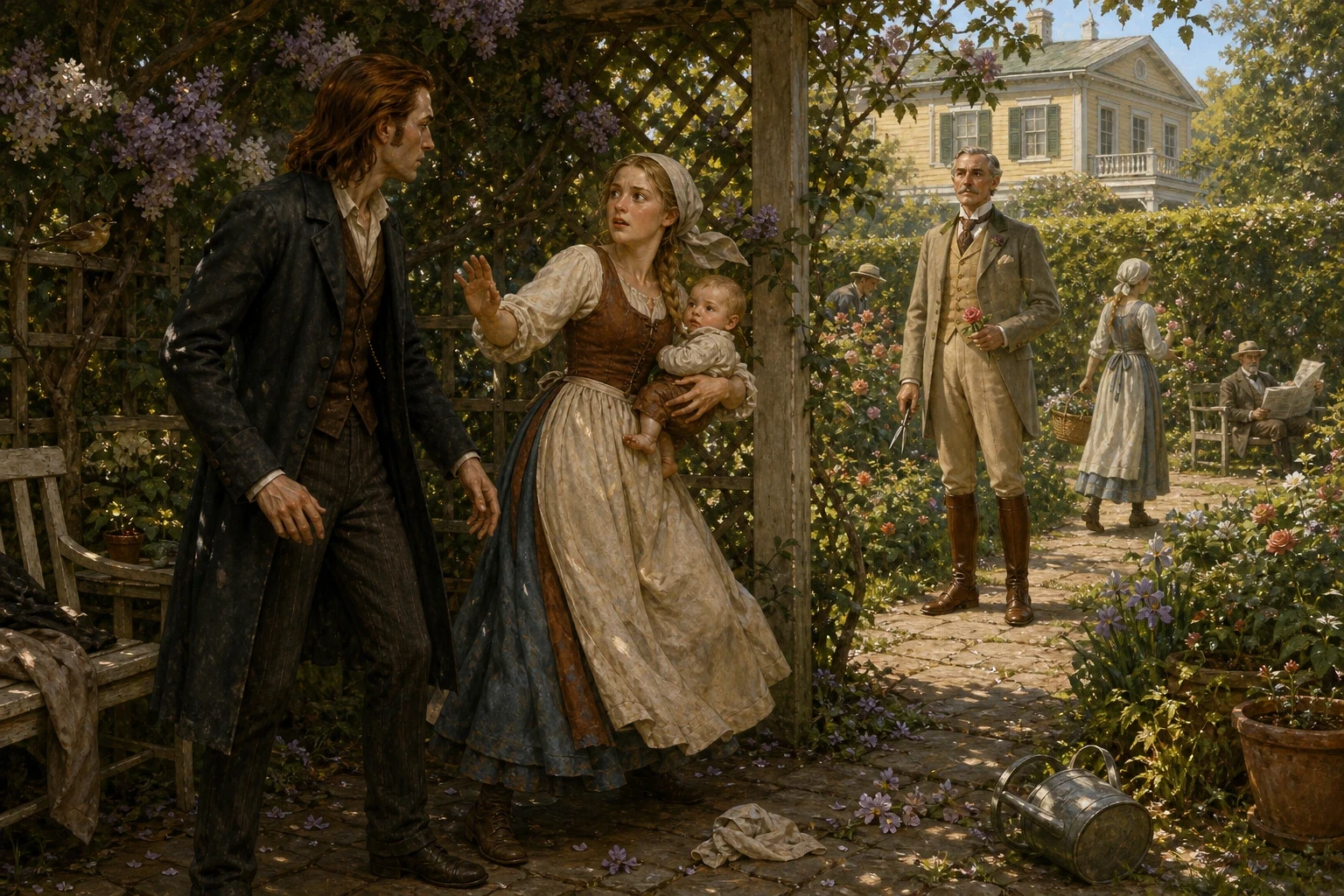
Back at Maryino, Bazarov fell into an easy, teasing friendship with Fenechka, who found him far less frightening than his sharp opinions suggested. One warm morning in the garden arbor, among the lilac bushes, their joking turned suddenly serious, and before either of them quite meant it, Bazarov kissed her. Fenechka pulled back at once, frightened and ashamed, and hurried away toward the house. Neither of them had noticed Pavel Petrovich standing just beyond the arbor, where he had come to cut roses, and who had seen the whole thing without being seen himself. Pavel said nothing to Bazarov that day, nor the next, but his face, when Bazarov glanced his way at dinner, had gone very cold and very still, and he watched the young nihilist now with something sharper than mere dislike.
Page 7
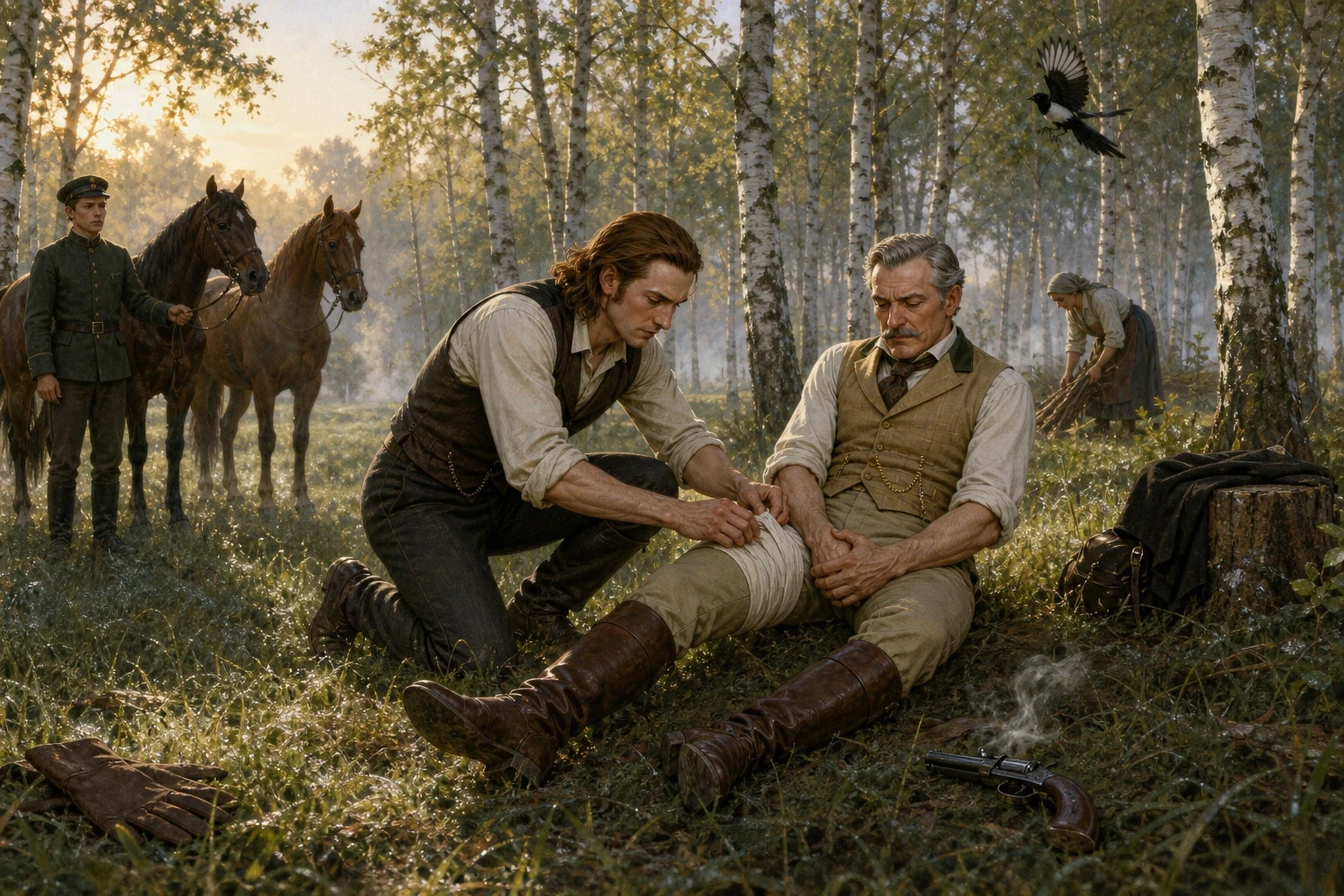
The next morning, Pavel Petrovich came to Bazarov's room and, with icy, formal courtesy, challenged him to a duel — not mentioning Fenechka by name, but both of them understood exactly why. Bazarov, amused by the whole old-fashioned business but unwilling to refuse, agreed. At dawn they met in a birch grove a little way from the house, each with a borrowed pistol, a servant standing by as witness. They paced out the distance, turned, and fired. Pavel's shot went wide. Bazarov's bullet struck Pavel in the thigh, and the older man staggered, swore under his breath, and sat down hard in the grass, gripping his leg. Bazarov, nihilist or not, was a doctor before anything else — he ran to Pavel at once and bound the wound tightly with his own handkerchief, working fast and calm. 'It is nothing,' Bazarov said. 'You will walk again within the month.' Pavel, white-faced but proud, managed something close to a nod of thanks.
Page 8
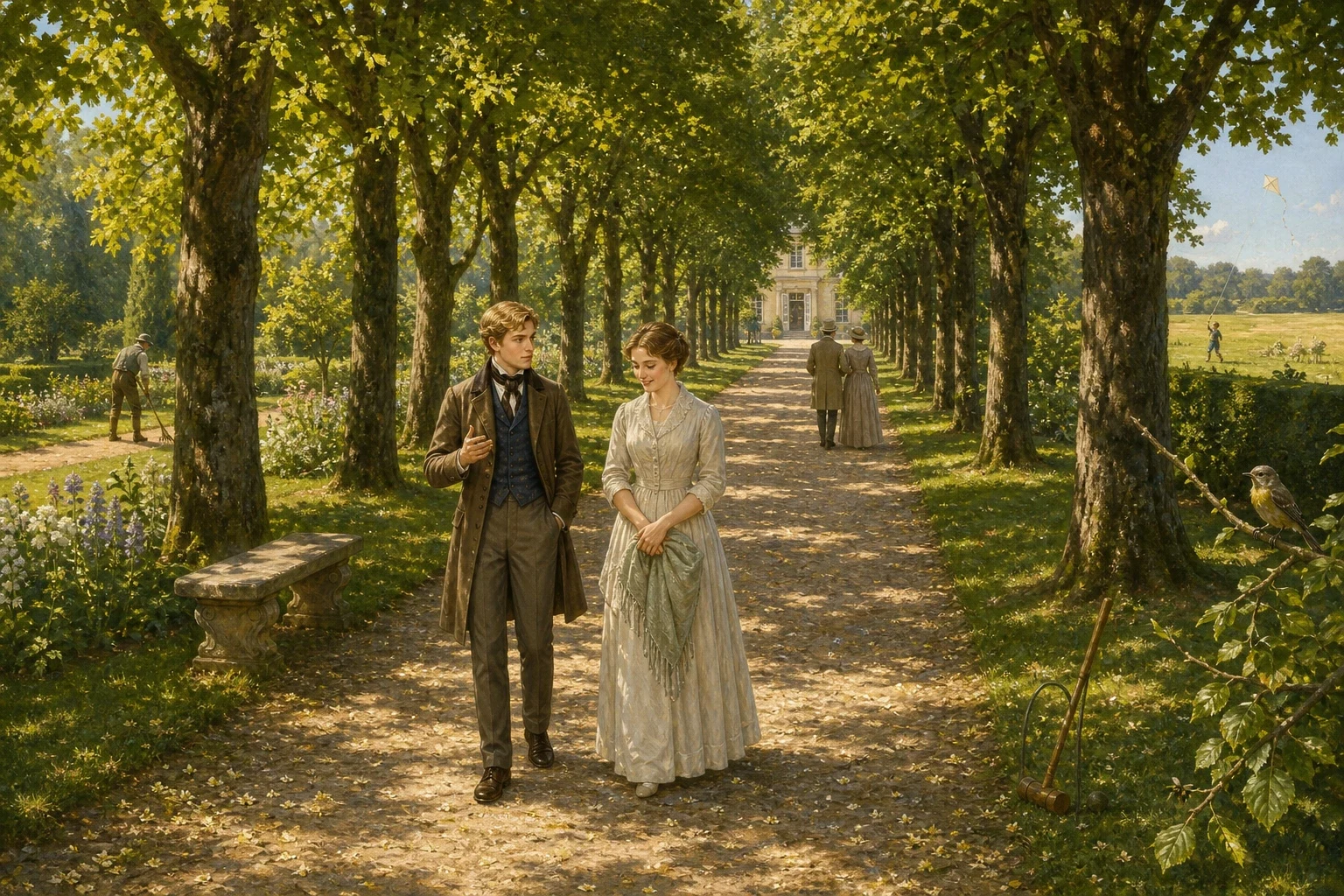
While Pavel recovered at Maryino, Arkady had drifted back to Nikolskoye on his own, drawn less by Madame Odintsova now than by her quiet younger sister, Katya, whom nobody had paid much attention to before. Katya played the piano well and loved the garden more than society, and Arkady found he could talk to her without the strain he always felt trying to keep up with Bazarov's sharp opinions. Walking together down the long lime-tree avenue at Nikolskoye one afternoon, neither of them planning it, they found themselves saying plainly what they had each been feeling for weeks. Arkady realized, almost with relief, that he did not want to be a nihilist at all — he wanted exactly this quiet life, this garden, this girl beside him. For the first time since he had brought Bazarov home to Maryino, Arkady felt he was becoming entirely himself.
Page 9
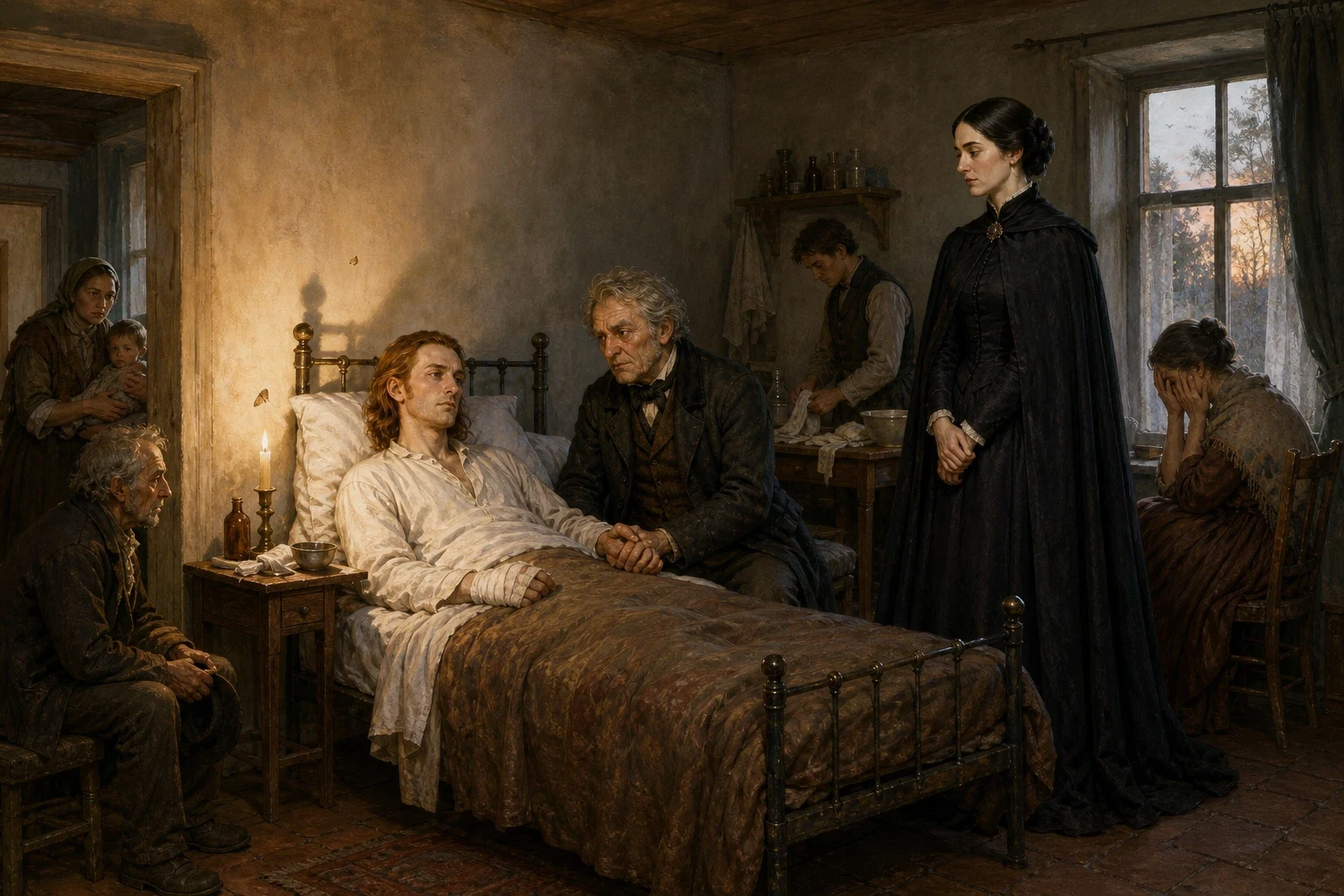
Restless and unsettled after the duel, Bazarov went home again to his parents' house and threw himself into work, riding out to treat the sick peasants in the district just as his father did. One day he was called to examine a man who had died of typhus fever, and in the course of it he cut his finger. He thought little of it at the time, but within days a fever set in that would not break. His father, the old doctor, understood at once what it meant and could do nothing to stop it. Bazarov grew weaker through the fever, lucid enough near the end to ask, almost gently, that someone send for Madame Odintsova. She came, and sat beside his bed a little while, and he told her, without bitterness now, that he was dying and that it hardly mattered. His mother wept quietly by the window. Near morning, with his father holding his hand, Bazarov died.
Page 10
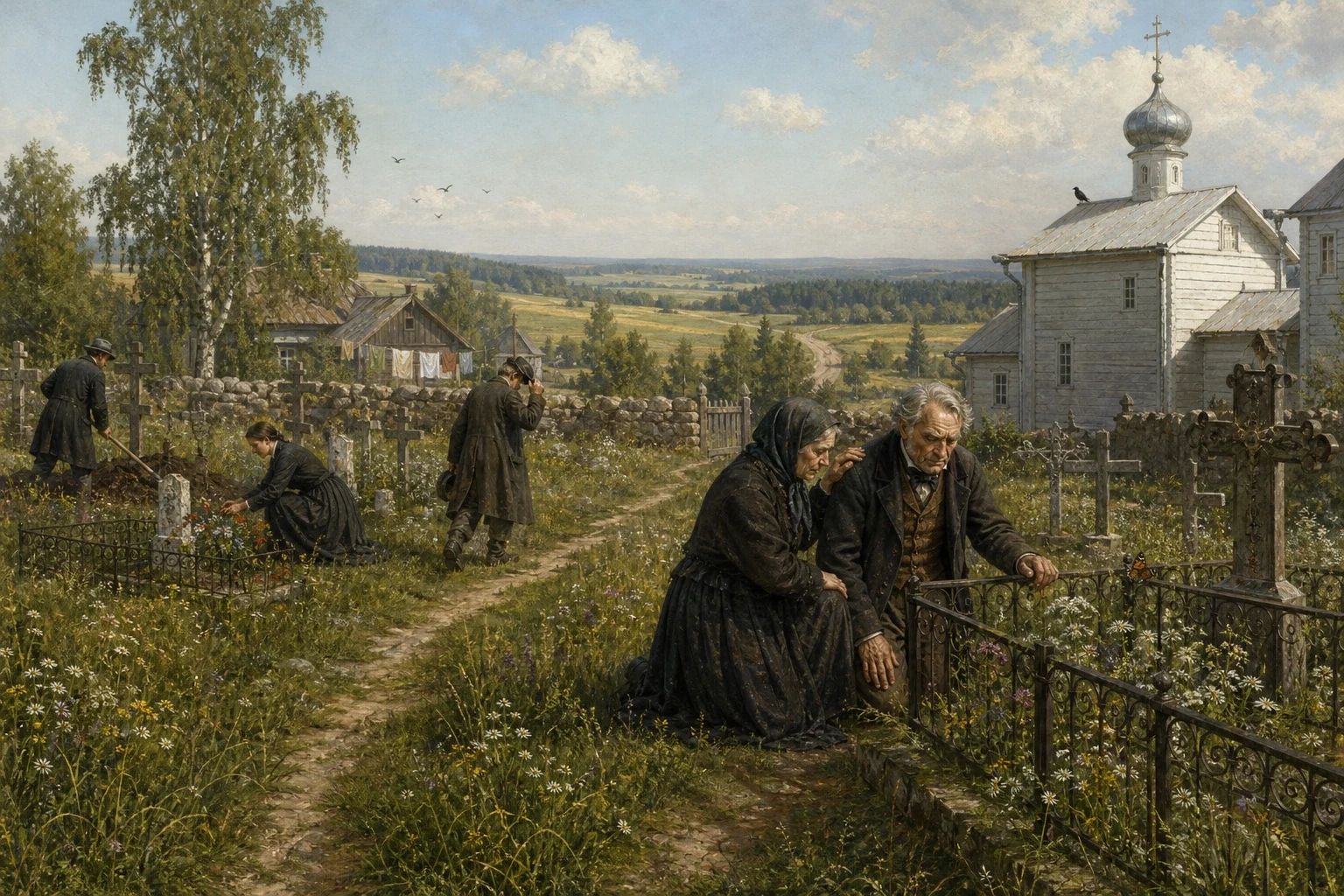
Bazarov was buried in the small churchyard of his own village, under a plain iron railing, among the humble graves of peasants he had once treated for nothing. His parents still come out to the grave together, old now, leaning on each other down the lane from their little house. They kneel by the railing for a long while without speaking, and then go home again slowly. The grass and the flowers growing on that small grave look as peaceful as anywhere else in the whole wide churchyard, and the birds sing just as sweetly above it. Whatever Bazarov believed about himself — that he was not needed, that nothing lasted, that love and nature and memory were nothing but matter — the quiet grave does not argue with him. It only lies there in the sun, among the other graves, speaking of nothing but rest, and of a peace that outlasts every argument two generations ever had.
About this story
- Audience: general readers
Read Wonder Novels on your phone
Wonder Novels is available on Android. Get Wonder Novels on Google Play.